Tuning Degradation: Advanced Strategies to Control Biodegradation Rates in Magnesium Alloys for Biomedical Implants
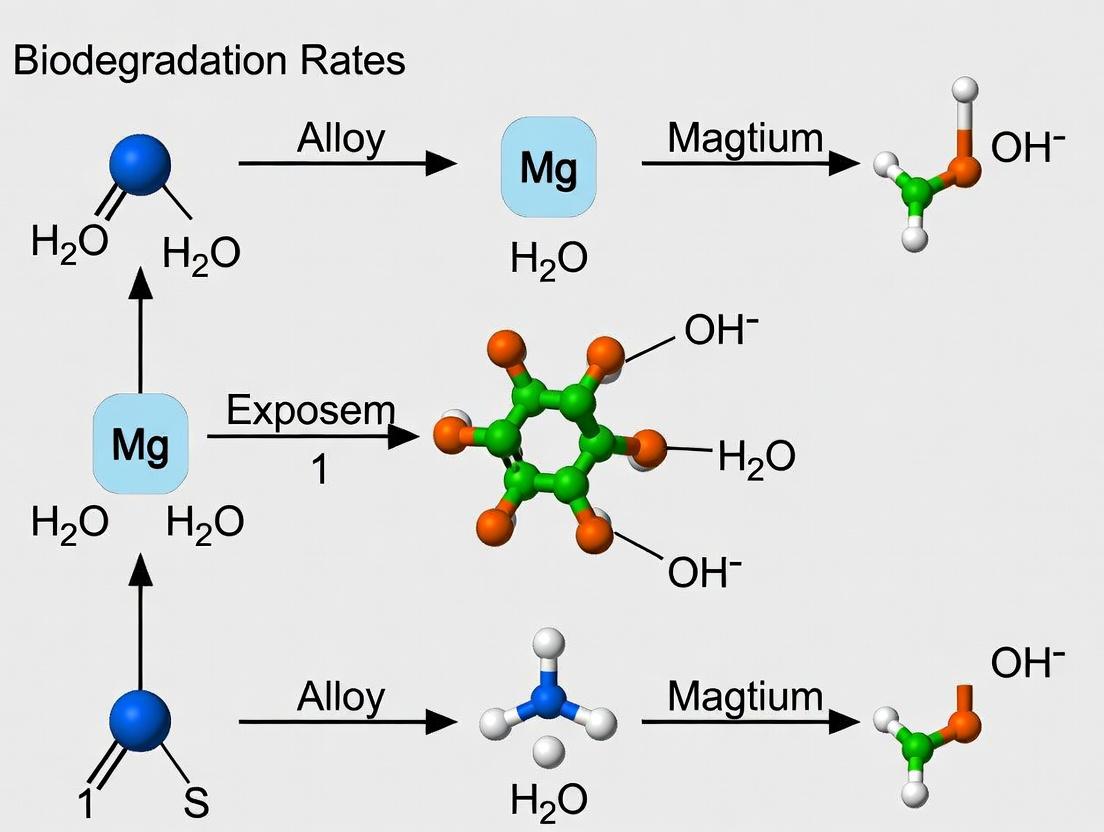
This article provides a comprehensive technical review for researchers, scientists, and drug development professionals on the critical challenge of controlling biodegradation rates in magnesium alloys.
Tuning Degradation: Advanced Strategies to Control Biodegradation Rates in Magnesium Alloys for Biomedical Implants
Abstract
This article provides a comprehensive technical review for researchers, scientists, and drug development professionals on the critical challenge of controlling biodegradation rates in magnesium alloys. It explores the fundamental corrosion mechanisms governing magnesium degradation in physiological environments, covering the latest alloying, processing, and coating methodologies to tailor degradation kinetics. The analysis includes strategies for troubleshooting premature failure and hydrogen evolution, validates in vitro and in vivo performance metrics, and presents comparative data on emerging alloy systems. The synthesis offers a clear roadmap for developing next-generation, rate-tuned Mg-based implants for orthopedic and cardiovascular applications.
The Science of Breakdown: Foundational Corrosion Mechanisms in Physiological Environments
Technical Support Center
Troubleshooting Guide: Common In-Vitro Biodegradation Experiments
Issue 1: Inconsistent or Unexpectedly High Degradation Rate in Simulated Body Fluid (SBF) Q: Our Mg-3Zn-0.5Zr alloy samples are degrading far faster in c-SBF than predicted by thermodynamic modeling. What are the likely causes? A: Anomalously high degradation often stems from fluid chemistry or sample preparation.
- Primary Cause (85% of cases): Incorrect SBF Ion Concentration & Buffer Capacity. Degradation of magnesium is highly sensitive to Cl⁻, HCO₃⁻, and HPO₄²⁻ ions, and local pH buffering. Standard SBF recipes may not accurately mimic dynamic physiological conditions.
- Solution: Verify your SBF preparation protocol against the latest ISO 23317:2023 guidelines. Use fresh, high-purity reagents and de-aerate the solution with argon or N₂ for 30 minutes before and during testing to control initial CO₂ levels. Confirm pH stability at 7.4 (±0.05) at 37°C before immersion. Consider using a more advanced, continuously circulating system with CO₂ partial pressure control.
Issue 2: Poor Adhesion or Delamination of Coatings (e.g., MAO, PLGA) Q: The micro-arc oxidation (MAO) coating on our WE43 alloy is cracking and delaminating during electrochemical impedance spectroscopy (EIS) testing. A: This typically indicates a substrate-coating interfacial failure or internal coating stress.
- Primary Cause: Inadequate substrate surface pre-treatment or coating process parameters leading to high residual stress and poor mechanical interlocking.
- Solution:
- Pre-treatment: Ensure sequential ultrasonic cleaning in acetone, ethanol, and deionized water for 10 min each. Follow with alkaline cleaning and acid etching (e.g., 5% HNO₃ for 30-60 seconds) to create a uniform, active surface. Rinse thoroughly and dry immediately.
- Process Review: Optimize MAO parameters (voltage, frequency, duty cycle, electrolyte temperature). A lower current density and pulsed mode can reduce thermal stress. Post-coating sealing in a sodium silicate solution can improve integrity.
Issue 3: Unclear Cell Viability (Cytotoxicity) Results from Extract Assays Q: MTT assay results for Mg-1Ca alloy extracts show high viability (>90%) at 24h but a drastic drop (<40%) at 72h. Is this indicative of delayed toxicity? A: This pattern is common and points to the dynamic nature of magnesium degradation products.
- Primary Cause: Accumulation of degradation ions (Mg²⁺, OH⁻, alloy-specific ions) over time alters the extract's osmolarity and pH beyond biocompatible thresholds.
- Solution: Adhere to ISO 10993-5:2009 and -12:2021 standards precisely. Critical Step: Adjust the pH of the extraction medium after the degradation period but before cell exposure to 7.2–7.6 using HCl/NaOH. Always measure and report the final osmolarity (target ~300 mOsm/kg). Include a control group where cells are exposed to an equivalent concentration of MgCl₂ to isolate the effect of Mg²⁺ ions versus other corrosion products.
Frequently Asked Questions (FAQs)
Q1: What is the most reliable in-vitro method to predict in-vivo biodegradation rates? A: There is no single perfect method. A combination is required:
- Long-term Immersion in Hanks' Balanced Salt Solution (HBSS) with CO₂ control: Tracks mass loss, pH, and ion release under semi-stable pH conditions.
- Electrochemical Tests (Potentiodynamic Polarization, EIS) in relevant physiological electrolytes: Provides instantaneous corrosion rate and interface properties. Crucial Note: Electrochemical rates are typically 3-10x faster than immersion rates and should be used for comparative ranking, not absolute in-vivo prediction.
- Advanced Fluid Dynamics: Using a bioreactor that simulates fluid flow (e.g., shear stress of 0.5-2 Pa) is essential for vascular stent applications.
Q2: Which secondary ions (from alloying elements) should we monitor most closely during biodegradation, and what are their suspected biological impacts? A: See Table 1 for key ions, thresholds, and effects.
Q3: How do we effectively slow down the degradation rate of a pure Mg implant for load-bearing applications? A: The primary strategies, often used in combination, are:
- Alloying: With Zn, Ca, Sr, or Rare Earth elements (e.g., Gd, Y) to refine microstructure and improve protective layer formation.
- Surface Modification/Coating:
- MAO: Creates a hard, ceramic oxide layer.
- PLGA/PCL Polymer Coatings: Provides a physical barrier and can be used for drug elution.
- Hydrothermal Treatment: Forms a stable Mg(OH)₂ layer.
- Severe Plastic Deformation (SPD): Techniques like Equal Channel Angular Pressing (ECAP) to create ultra-fine-grained structures with improved mechanical and corrosion properties.
Data Presentation
Table 1: Key Alloying Element Ions & Their Biological Impact Thresholds
| Ion (Source) | Typical Monitoring Method | Concentration of Concern (in vitro) | Potential Biological Impact |
|---|---|---|---|
| Al³⁺ (AZ31, AZ91) | ICP-MS, Colorimetric Assay | >5 µg/mL | Neurotoxicity, Osteomalacia |
| Y³⁺ (WE43) | ICP-MS, XRF | >10 µg/mL | Hepatotoxicity, Granuloma formation |
| Zn²⁺ (Mg-Zn alloys) | ICP-MS, AAS | >50 µg/mL (Cytotoxic) <20 µg/mL (Osteogenic) | Biphasic: Promotes osteogenesis at low levels, cytotoxic at high levels. |
| Sr²⁺ (Mg-Sr alloys) | ICP-MS, AES | N/A (Generally beneficial) | Promotes bone formation, inhibits osteoclast activity. |
| Fe²⁺/³⁺ (Impurity) | ICP-MS, Prussian Blue Stain | >10 µg/mL | Catalyzes local ROS generation, inflammation. |
Table 2: Comparison of Standard In-Vitro Test Solutions
| Solution | Key Characteristics | pH Buffer System | Best For | Major Limitation |
|---|---|---|---|---|
| Standard SBF (c-SBF) | Ion conc. equal to human blood plasma. | Tris/HCl | Apatite formation studies | Poor HCO₃⁻ buffer, static. |
| Revised SBF (r-SBF) | Higher, more stable HCO₃⁻ concentration. | Tris/HCl | More realistic initial corrosion | Still static, no proteins. |
| Hanks' Balanced Salt Solution (HBSS) | Lower Cl⁻, includes glucose & phosphate. | CO₂ / NaHCO₃ (with incubator) | Long-term immersion under physiological pH control. | Requires 5% CO₂ incubator. |
| Dulbecco's Modified Eagle Medium (DMEM) | Complete cell culture medium with amino acids & vitamins. | CO₂ / NaHCO₃ | Direct cell-biomaterial interaction studies. | Complex chemistry, expensive for long-term degradation. |
Experimental Protocols
Protocol 1: Standard Immersion Test for Biodegradation Rate (Based on ASTM G31-12a) Objective: To determine the mass loss and average corrosion rate of a Mg alloy sample in simulated physiological fluid. Materials: Pre-weighed Mg alloy sample (10mm x 10mm x 2mm), HBSS (pH 7.4, de-aerated), 5% CO₂ incubator at 37°C, analytical balance (±0.01 mg), chromic acid solution (200g/L CrO₃ + 10g/L AgNO₃). Procedure:
- Sample Prep: Grind samples to 2000-grit SiC finish, clean ultrasonically in acetone, ethanol, and DI water. Dry in warm air stream and record initial mass (M₁).
- Immersion: Place sample in a sterile container with a sample-to-solution volume ratio of 1 cm²:50 mL. Incubate at 37°C in a 5% CO₂ atmosphere for 14 days (t=336h).
- Post-immersion: Carefully remove sample. To remove corrosion products, immerse in boiling chromic acid solution for 5-10 minutes, then rinse thoroughly with DI water and ethanol. Dry completely.
- Weighing: Record final mass (M₂).
- Calculation: Corrosion Rate (mm/year) = (K * ΔM) / (A * T * D), where K=8.76 x 10⁴, ΔM = M₁ - M₂ (g), A=area (cm²), T=time (h), D=density (g/cm³). Perform in triplicate.
Protocol 2: Electrochemical Impedance Spectroscopy (EIS) for Coating Integrity Objective: To non-destructively evaluate the barrier properties of a coating on Mg alloy. Materials: Potentiostat with EIS capability, 3-electrode cell (Coated sample as Working Electrode, Pt mesh as Counter Electrode, Saturated Calomel Electrode (SCE) as Reference), HBSS at 37°C. Procedure:
- Setup: Mount the coated sample to expose a defined area (e.g., 1 cm²) to the electrolyte. Allow the open circuit potential (OCP) to stabilize for 1 hour.
- EIS Measurement: At the stabilized OCP, apply a sinusoidal potential perturbation of 10 mV amplitude over a frequency range from 100 kHz to 10 mHz. Log 7-10 points per decade.
- Analysis: Fit the obtained Nyquist plot to an equivalent electrical circuit model (e.g., Rₛ(Cₛ(RₚQₚ))), where Rₛ is solution resistance, Cₛ is coating capacitance, Rₚ is pore resistance, and Qₚ is a constant phase element for the substrate interface. A high Rₚ value indicates good barrier property.
Diagrams
Title: Mg Alloy Biodegradation Research Workflow
Title: Mg Degradation Signaling in Bone Cells
The Scientist's Toolkit: Research Reagent Solutions
Table 3: Essential Materials for Mg Biodegradation Research
| Item / Reagent | Function / Rationale | Key Consideration |
|---|---|---|
| High-Purity Argon/Nitrogen Gas | De-aeration of test solutions to standardize initial CO₂/O₂ content, a major variable in corrosion rate. | Use >99.999% purity. Bubble for 30+ minutes pre-test and maintain blanket during setup. |
| Chromic Acid (CrO₃ + AgNO₃) | Standardized chemical cleaning solution for removing corrosion products from Mg samples post-immersion per ASTM G1-03. | Highly toxic and oxidative. Use in fume hood with full PPE. Do not use on coated samples. |
| Tris(hydroxymethyl)aminomethane (Tris) | Primary pH buffer for SBF solutions. Provides stable initial pH but lacks physiological CO₂/HCO₃⁻ buffering. | Not suitable for long-term (>24h) studies. For those, use a CO₂/HCO₃⁻ system (HBSS in incubator). |
| Fetal Bovine Serum (FBS) | Added to cell culture media for in-vitro biocompatibility tests. Proteins can adsorb to Mg surface, altering degradation and cell response. | Use heat-inactivated. Typical concentration is 10%. Include serum-free controls to isolate protein effects. |
| Calcein-AM / Propidium Iodide (PI) | Fluorescent live/dead cell viability assay kit. Critical for assessing cytotoxicity of degradation extracts or direct contact. | Follow exact incubation times. For extracts, ensure pH and osmolarity are corrected before assay to avoid false positives. |
| Inductively Coupled Plasma Mass Spectrometry (ICP-MS) Standards | Certified reference standards for Mg, Ca, Zn, Y, Al, etc., for accurate quantification of ion release. | Prepare matrix-matched standards (e.g., in diluted SBF/HBSS) to account for interference. |
Troubleshooting Guide & FAQs
Q1: During my galvanic corrosion experiment, the measured corrosion rate of my AZ31 alloy coupled to a steel fastener is far lower than literature values. What could be the issue? A: This is often due to an improperly established electrolytic path. First, verify your experimental setup: Ensure the electrolyte (e.g., simulated body fluid) fully immerses the contact area. The anode-to-cathode surface area ratio is critical; a small anode (Mg) coupled to a large cathode (steel) should accelerate corrosion. Check for and eliminate any unintentional insulating coatings (e.g., grease, oxide film) at the coupling interface. Confirm electrical continuity with a multimeter. Use a standardized electrolyte like Hank's Balanced Salt Solution (HBSS) at 37°C and pH 7.4 for biomedical contexts.
Q2: My pitting corrosion samples show high variability in pit depth, even under controlled conditions. How can I improve reproducibility? A: Variability in pitting initiation is inherent but manageable. Ensure consistent sample preparation: Use a standardized grinding/polishing protocol ending with a non-aqueous lubricant to prevent pre-experiment corrosion. De-grease thoroughly. The purity and homogeneity of the alloy significantly affect pitting; characterize your material's secondary phase (β-Mg₁₇Al₁₂) distribution via SEM. Control dissolved oxygen in your electrolyte by pre-bubbling with nitrogen or air for a fixed duration. Include a potentiodynamic polarization scan to determine the pitting potential (E_pit) for batch consistency.
Q3: I am attempting to induce filiform corrosion on a coated Mg WE43 sample for a drug-eluting implant study, but the filaments are not propagating. What steps should I take? A: Filiform corrosion on Mg requires a specific humidity and coating defect. First, ensure your relative humidity is maintained at 80-95% in a climate chamber. The coating must be a permeable polymer (e.g., PLGA) and have a deliberate, controlled defect (scratch down to substrate) to initiate. The head of the filament requires chloride ions; apply a small droplet of 0.1M NaCl at the scratch to seed initiation. The tail must remain oxygen-depleted; ensure the coating is sufficiently intact away from the scratch to create a differential aeration cell.
Q4: When measuring hydrogen evolution for biodegradation rate, gas bubbles get trapped on the sample surface, skewing volume measurements. How do I mitigate this? A: This is a common issue. Gently tilt the reaction vessel periodically to dislodge bubbles. Alternatively, add a low-concentration, non-ionic surfactant (e.g., 0.01% Triton X-100) to the electrolyte to reduce surface tension. Ensure your setup's collection funnel is placed directly above the sample to capture all detached bubbles. Run a control with a known Mg sample to calibrate.
Experimental Protocols
Protocol 1: Standardized Galvanic Coupling Test (ASTM G71)
- Sample Preparation: Cut coupled materials (e.g., Mg alloy anode, cathode material) to desired area ratio (e.g., 1:1, 1:4). Mount in epoxy resin, leaving one face exposed.
- Surface Finish: Grind sequentially to 2000-grit SiC paper under ethanol, ultrasonically clean in acetone, and dry.
- Electrical Connection & Isolation: Connect wires to the back of each material. Waterproof the connection and mount the couple so only the intended faces are exposed to electrolyte.
- Immersion: Immerse in 500 mL of pre-heated (37°C) HBSS. Place the beaker in a water bath for temperature stability.
- Measurement: Measure open-circuit potential (OCP) of each material separately, then connect via a zero-resistance ammeter (ZRA) to record galvanic current (I_g) continuously for 24-72 hours.
- Post-Test Analysis: Remove corrosion products via chromic acid solution (180 g/L CrO₃). Weigh samples to determine mass loss. Calculate corrosion rate.
Protocol 2: Potentiodynamic Polarization for Pitting Susceptibility
- Working Electrode (WE): Prepare Mg alloy sample (1 cm² exposed area) as in Protocol 1.
- Electrochemical Cell: Use a standard three-electrode cell with the WE, a saturated calomel reference electrode (SCE), and a platinum counter electrode.
- Stabilization: Immerse in deaerated (N₂ bubbled) 0.1M NaCl for 1 hour to stabilize OCP.
- Polarization: Initiate potentiodynamic scan from -0.25 V vs. OCP to +0.8 V vs. OCP at a slow scan rate (e.g., 0.5 mV/s).
- Data Analysis: Plot potential vs. log(current density). Identify the breakdown potential (Ebd) where the current increases sharply, indicating stable pitting. A more negative Ebd indicates higher susceptibility.
Table 1: Corrosion Rates of Common Mg Alloys in HBSS at 37°C
| Alloy | Condition | Primary Mode | Avg. Corrosion Rate (mm/year) | Test Method | Key Influencing Factor |
|---|---|---|---|---|---|
| Pure Mg | As-cast | General/Uniform | 1.5 - 3.0 | Hydrogen Evolution | Impurity Fe content |
| AZ31 | Rolled | Galvanic (with phases) | 2.5 - 5.0 | Electrochemical (Tafel) | β-phase (Mg₁₇Al₁₂) volume % |
| WE43 | T6 Temper | Pitting | 0.8 - 2.0 | Mass Loss | Cl⁻ concentration, Rare earth oxide film |
| ZX50 | As-cast | Filiform (under coating) | Localized attack: 10+ (filament head) | Optical Tracking | Relative Humidity (>80%), Coating permeability |
Table 2: Galvanic Series in HBSS (Potentials vs. SCE)
| Material | Open Circuit Potential (V) | Role vs. Mg |
|---|---|---|
| Mg (Pure) | -1.65 to -1.85 | Anode (Baseline) |
| AZ31 Alloy | -1.55 to -1.70 | Anode |
| WE43 Alloy | -1.50 to -1.65 | Anode |
| 316L Stainless Steel | -0.15 to +0.10 | Cathode |
| Ti-6Al-4V | -0.05 to +0.15 | Cathode |
| Platinum (Counter) | +0.30 to +0.50 | Strong Cathode |
Diagrams
The Scientist's Toolkit: Essential Research Reagents & Materials
| Item | Function in Mg Corrosion Research | Key Consideration for Biodegradation Studies |
|---|---|---|
| Hank's Balanced Salt Solution (HBSS) | Standard simulated body fluid for in vitro tests. Provides ionic environment (Cl⁻, HCO₃⁻, PO₄³⁻) mimicking blood plasma. | Must be buffered (e.g., with HEPES) to maintain pH ~7.4 during tests to simulate physiological conditions. |
| Chromic Acid (CrO₃) Solution | Standard chemical cleaning agent for removing corrosion products from Mg alloys without attacking the base metal. | Essential for accurate post-immersion mass loss measurement. Must be handled with extreme care (carcinogen). |
| Zero-Resistance Ammeter (ZRA) | Measures the galvanic current flowing between two electrically connected, dissimilar metals in an electrolyte. | Critical for quantifying galvanic corrosion acceleration in multi-material implant designs (e.g., Mg plate with steel screws). |
| Non-Ionic Surfactant (e.g., Triton X-100) | Reduces surface tension of electrolyte to prevent hydrogen bubble adhesion on sample surfaces. | Improves accuracy of hydrogen evolution measurements, a direct proxy for Mg corrosion rate. Use low concentration (<0.1%). |
| Gas-Tight Hydrogen Collection Apparatus | Collects and measures hydrogen gas evolved from a corroding Mg sample via water or oil displacement. | The standard for direct, quantitative biodegradation rate measurement. Setup must be leak-proof and temperature-stable. |
| Potentiostat/Galvanostat | Applies controlled potential or current to a sample in an electrochemical cell for polarization, impedance, etc. | Used to determine corrosion rate rapidly (Tafel) and susceptibility to localized attack (pitting potential). |
| Permeable Polymer Coating (e.g., PLGA) | Applied as a model coating to study filiform corrosion and controlled drug release from biodegradable implants. | The degradation rate of the coating itself (hydrolysis) interacts with the underlying Mg corrosion, affecting overall rate. |
Troubleshooting Guides & FAQs
Chloride Ion Concentration Issues
Q1: Our magnesium alloy sample degrades much faster than expected in simulated body fluid (SBF). We suspect chloride ions are the primary culprit. How can we verify and control for this? A: Rapid, localized pitting is a hallmark of chloride-induced corrosion. First, verify your SBF chloride concentration matches target physiological levels (~104-150 mM). Use an ion-selective electrode or chloride assay kit for quantification. To control the effect, run a parallel experiment with a modified SBF where chloride salts are replaced with non-corrosive anions (e.g., acetate or nitrate) while maintaining ionic strength. Compare mass loss and hydrogen evolution rates.
Q2: Electrochemical impedance spectroscopy (EIS) data in high-chloride solutions is noisy and inconsistent. What could be wrong? A: High chloride activity can lead to unstable, rapidly shifting corrosion potentials and localized breakdown. Ensure your reference electrode (e.g., Ag/AgCl) is properly saturated and isolated via a salt bridge. Use a Faraday cage and confirm all connections are secure. Increase the frequency range, taking more data points at lower frequencies to better capture the charge transfer resistance. Always perform open circuit potential (OCP) monitoring for at least 1 hour prior to EIS to achieve a quasi-steady state.
pH Fluctuation and Control
Q3: The pH of our static immersion test rises dramatically (>9.0), skewing degradation rates. How do we maintain physiological pH (7.4-7.6)? A: Use a buffered solution. Standard SBF has poor buffering capacity. Replace with a commercially available biorelevant buffer like Tris-HCl or HEPES-buffered SBF at 50 mM concentration. Alternatively, set up a continuous, slow titration system using a pH-stat apparatus that drips dilute HCl (0.1M) to maintain pH 7.4. Record the volume of acid consumed—it directly correlates to Mg(OH)₂ formation and degradation rate.
Q4: When measuring hydrogen evolution, the pH change affects the dye in our volumetric setup. How to compensate? A: If using a colored pH-sensitive solution (e.g., thymol blue), pre-calibrate the color intensity vs. volume at pH 7.4. For accurate results, switch to a pH-insensitive method. The preferred setup is an inverted burette or a sealed acrylic cell where evolved gas displaces a neutral, saline solution (0.9% NaCl) into a graded reservoir. This eliminates pH-dye interference.
Protein Interaction & Fouling
Q5: Adding proteins like albumin or fibrinogen to our test medium causes inconsistent film formation on the alloy surface. How can we achieve uniform protein adsorption? A: Protein adsorption is time, concentration, and flow-dependent. Standardize your protocol:
- Pre-incubate the protein solution at 37°C for 15 min.
- Gently introduce the solution to avoid bubble formation on the sample surface.
- For static conditions, ensure the sample is fully immersed and avoid disturbing the vial for the first 2 hours of immersion.
- For consistent films, consider using a spin-coater or dip-coater prior to corrosion testing.
- Characterize the film using ellipsometry or quartz crystal microbalance (QCM) before corrosion tests to confirm uniformity.
Q6: Proteins seem to be degrading in our long-term flow experiment, clogging the system. How to prevent this? A: Bacterial or enzymatic degradation of proteins can occur. Always add 0.1% sodium azide (if not testing cellular components) or a broad-spectrum antibiotic/antimycotic cocktail to the protein medium. Store the circulating medium at 4°C in the reservoir if the experiment exceeds 24 hours. Use peristaltic pump tubing with low protein adhesion (e.g., PharMed BPT) and minimize light exposure.
Flow Dynamics & Setup
Q7: Our flow cell experiment shows vastly different corrosion patterns at the inlet vs. outlet. How do we establish uniform shear stress? A: This indicates a developing flow profile. To ensure fully developed laminar flow, the test section must be long enough. Use the entrance length calculation: Le ≈ 0.05 * Re * Dh (where Re is Reynolds number, Dh is hydraulic diameter). Place your sample well beyond this entrance length. Validate flow uniformity using dye tests or computational fluid dynamics (CFD) simulation beforehand. Use a parallel-plate flow cell design for uniform shear stress distribution.
Q8: We observe unexpected cavitation or vibration in our flow loop, which is damaging the sample surface. How to troubleshoot? A: Cavitation suggests a pressure drop. Check for flow obstructions (clogs, kinked tubing). Ensure all fittings are tight and the pump head is properly aligned. Dampen pulsations from peristaltic pumps by adding a compliance chamber (air trap) in the line before the flow cell. Place the flow cell horizontally and ensure the entire loop is free of air bubbles before starting.
| Influencer | Target Physiological Range | Common Experimental Range | Key Measurable Impact on Mg Alloy | Typical Measurement Technique |
|---|---|---|---|---|
| Chloride Ion [Cl⁻] | 104 - 150 mM | 0 - 200 mM | Corrosion rate increase: 0.5 to 5+ mm/year | Potentiodynamic Polarization, Hydrogen Evolution |
| pH | 7.35 - 7.45 | 5.0 - 9.5 | Rate shift: Low pH accelerates, High pH passivates | pH-Stat, In-situ Electrochemical Probe |
| Protein Concentration | 30 - 80 g/L (total serum) | 0 - 50 g/L (Albumin) | Can increase or decrease rate by 20-60% via chelation/barrier | Quartz Crystal Microbalance, ICP-MS of effluent |
| Flow Rate (Shear Stress) | 0 - 30 dyne/cm² (venous/arterial) | 0 (static) - 100 dyne/cm² | Can alter rate by up to 300% vs. static | Rotating Electrode, Parallel-Plate Flow Cell, CFD |
Experimental Protocols
Protocol 1: Quantifying Chloride-Specific Corrosion Rate via Hydrogen Evolution Objective: To isolate and measure the corrosion rate contribution from chloride ions. Materials: Mg alloy sample, deaerated 0.9% NaCl solution, deaerated 0.9% NaNO₃ solution, two-neck round-bottom flask, water-jacketed condenser, gas-tight tubing, inverted burette filled with acidified water (pH~2), data logging camera, 37°C water bath. Steps:
- Weigh and measure surface area of two identical Mg samples.
- Assemble two identical hydrogen evolution setups in a 37°C bath.
- Fill one flask with deaerated NaCl, the other with deaerated NaNO₃.
- Immediately immerse samples, seal systems, start recording displaced liquid volume in burettes every hour for 24h.
- Plot H₂ volume (mL/cm²) vs. time. The slope difference quantifies the chloride-specific corrosion contribution.
Protocol 2: Establishing a Protein-Containing Dynamic Flow Environment Objective: To simulate vessel-like corrosion under controlled shear with proteins. Materials: Parallel-plate flow cell, peristaltic pump, pulse dampener, temperature-controlled reservoir, HEPES-buffered SBF with 40 g/L albumin, data acquisition system for electrochemical monitoring. Steps:
- Sterilize all flow path components (autoclave or 70% ethanol flush).
- Mount Mg alloy sample as the working electrode in the flow cell's bottom plate.
- Fill reservoir with protein medium, deaerate with argon for 30 min, maintain at 37°C.
- Prime the flow loop at high speed to remove air, then reduce to target shear stress (e.g., 15 dyne/cm²).
- Connect electrochemical cell (WE: sample, CE: Pt mesh, RE: external Ag/AgCl with salt bridge).
- Monitor OCP for 1 hour, then perform electrochemical impedance spectroscopy (EIS) every 2 hours for 48h.
Visualizations
Title: Chloride Ion Corrosion Pathway on Mg Alloys
Title: Integrated Test Workflow for Physiological Influencers
The Scientist's Toolkit: Key Research Reagent Solutions
| Item | Function/Justification | Example Product/Catalog |
|---|---|---|
| HEPES-Buffered SBF | Maintains physiological pH during Mg degradation better than standard SBF. | Modified SBF (c-SBF) kits, or prepare per Kokubo recipe with 50mM HEPES. |
| Ag/AgCl Reference Electrode | Stable reference potential for electrochemical tests in high-Cl⁻ media. | BASi RE-5B, with flexible salt bridge for flow cells. |
| Protein-Antimicrobial Cocktail | Prevents microbial growth in protein-rich media during long-term tests. | 1% Penicillin-Streptomycin-Amphotericin B mixture. |
| Peristaltic Pump Tubing (PharMed BPT) | Minimizes protein adsorption and delivers pulsation-dampened flow. | Cole-Parmer Masterflex 96410-16. |
| Hydrogen Evolution Assembly | Accurate, pH-insensitive measurement of Mg corrosion rate. | Custom 3-neck flask with inverted burette or commercial H2 measurement kit. |
| Quartz Crystal Microbalance (QCM) Sensor with Mg coating | Real-time in-situ measurement of protein adsorption & initial dissolution. | QSense sensors with custom Mg film deposition. |
| Potentiostat/Galvanostat with EIS | Essential for electrochemical corrosion rate and mechanism analysis. | Biologic SP-150, Ganny Interface 1010E. |
Technical Support Center
Troubleshooting Guides & FAQs
Q1: During in vitro immersion tests (e.g., H2 collection, pH monitoring), the hydrogen evolution rate (HER) is highly variable between replicates, even with identical alloy samples. What could be causing this? A: Inconsistent surface conditions are the most common culprit.
- Pre-Treatment Protocol: Ensure a standardized pre-experiment protocol.
- Sequentially grind samples with SiC paper from #400 to #2000 grit under a consistent cooling fluid (e.g., ethanol).
- Ultrasonicate in acetone for 10 minutes, then in absolute ethanol for 5 minutes.
- Dry thoroughly with compressed air or nitrogen stream.
- Measure and record sample surface area (cm²) accurately.
- Solution Freshness: Use freshly prepared simulated body fluid (SBF) or PBS for each experiment. Buffer capacity can degrade.
- Setup Consistency: Ensure the gas collection system (e.g., inverted burette, sealed cell) is perfectly airtight and at the same temperature for all runs.
Q2: The local alkalization (pH > 8.5) around my Mg implant model is causing unexpected cell death in adjacent tissues, confounding my biodegradation and biocompatibility data. How can I modulate this? A: You must implement pH-buffering strategies to better simulate in vivo conditions.
- Protocol: Enhanced Cell Culture with Mg Extracts:
- Extract Preparation: Prepare alloy extracts per ISO 10993-12 (e.g., 1 cm²/mL surface area ratio in cell culture medium, 37°C, 24h, 5% CO₂). Centrifuge and filter (0.22 µm).
- Medium Buffering: Supplement the extract or your immersion medium with additional organic buffers. Prepare a 20 mM HEPES stock solution in PBS and add it to your cell culture medium or test electrolyte to a final concentration of 5-10 mM.
- Cell Seeding: Seed cells at a slightly higher density in the well plate. After 24h, replace the standard medium with the buffered alloy extract medium. Include a negative control (buffered medium without extract) and a positive control (e.g., medium with known cytotoxic agent).
- Monitoring: Use a pH indicator like phenol red in your medium for visual cue, and confirm with micro-pH probes if available.
Q3: When characterizing the corrosion layer, I get conflicting results from EDS (shows phosphates) and XRD (shows mainly Mg(OH)₂). How should I interpret this? A: This is expected. The surface layer is often amorphous or poorly crystalline.
- Analytical Workflow:
- Sample Preparation: Carefully remove sample from test solution, rinse gently with deionized water to remove soluble salts, and dry in a vacuum desiccator (NOT in air to avoid further oxidation).
- Sequential Analysis: First, perform XRD to identify crystalline phases (e.g., Mg, Mg(OH)₂). The absence of Ca-P peaks suggests amorphous deposits.
- Then, use FTIR or Raman Spectroscopy on the same sample to detect functional groups (e.g., P-O bonds from phosphates, C-O from carbonates).
- Finally, use FESEM/EDS for cross-sectional morphology and elemental mapping (Mg, O, P, Ca) to visualize layer structure and composition gradients.
- Conclusion: A Mg(OH)₂ inner layer is often overlaid with an amorphous mixture of Ca- and P- containing compounds. XRD alone is insufficient.
Research Reagent Solutions Table
| Reagent / Material | Function / Rationale |
|---|---|
| Modified SBF (m-SBF) | More accurately simulates ion concentration of human blood plasma for immersion testing. |
| HEPES Buffer (20-50mM) | Maintains physiological pH in cell culture experiments during Mg alloy degradation, countering alkalization artifact. |
| Tris-HCl Buffer (0.1M) | A common buffer for in vitro electrochemical tests (e.g., polarization) to maintain initial pH stability. |
| Alizarin Red S | Histochemical stain to detect and quantify calcium deposition (Ca-P layer) on corroded alloy surfaces. |
| 2',7'-Dichlorofluorescin diacetate (DCFH-DA) | Fluorescent probe to detect intracellular reactive oxygen species (ROS) potentially induced by local alkalization or metal ions. |
| Lactate Dehydrogenase (LDH) Assay Kit | Quantifies cell membrane damage (cytotoxicity) from Mg²⁺ ions and elevated pH in supernatant media. |
Quantitative Data Summary
Table 1: Representative Hydrogen Evolution Rates (HER) for Common Mg Alloys in SBF (37°C)
| Alloy | Average HER (mL/cm²/day) | Test Duration | Key Observation |
|---|---|---|---|
| Pure Mg | 0.8 - 1.2 | 7 days | High initial rate, stabilizes as thick Mg(OH)₂ layer forms. |
| AZ31 | 0.4 - 0.6 | 7 days | Lower HER due to Al oxide network in corrosion layer. |
| WE43 | 0.15 - 0.3 | 7 days | Rare earth elements promote stable protective layers. |
| ZX50 | 0.5 - 0.8 | 7 days | Zn and Ca additions improve strength but HER varies with heat treatment. |
Table 2: Local pH Changes in Cell Culture Medium with Alloy Extracts
| Condition | Initial pH | pH at 24h | Cell Viability (%)* |
|---|---|---|---|
| Control Medium (w/ HEPES) | 7.4 | 7.4 ± 0.2 | 100 ± 5 |
| Pure Mg Extract (no buffer) | 7.4 | 8.9 ± 0.3 | 45 ± 10 |
| WE43 Extract (no buffer) | 7.4 | 8.2 ± 0.2 | 75 ± 8 |
| Pure Mg Extract (w/ 10mM HEPES) | 7.4 | 7.8 ± 0.3 | 85 ± 7 |
*Viability measured via CCK-8 assay relative to control.
Experimental Protocol: Integrated H2 & pH Monitoring
Title: Integrated Immersion Test for HER and pH Objective: To simultaneously measure hydrogen gas evolution and solution alkalization from a degrading Mg alloy sample. Materials: Sealed glass reactor, temperature-controlled water bath (37°C), calibrated burette or gas tube, pH meter with micro electrode, data logging software, SBF (500 mL), alloy sample (pre-treated). Procedure:
- Assemble the sealed reaction cell. Fill the burette with collection fluid (acidified water to minimize CO₂ dissolution).
- Place the sample on a non-conductive holder inside the cell. Immerse the pH electrode through a sealed port.
- Pre-heat the SBF to 37°C, then carefully add it to the cell, ensuring no air bubbles are trapped in the gas collection line.
- Seal the system completely. Record the initial burette reading and pH.
- Start data logging for pH. Record the burette volume reading at regular intervals (e.g., every 15 min for first 2h, then hourly).
- Convert gas volume collected at STP. Plot cumulative H₂ volume (mL/cm²) and pH versus time.
Visualizations
Title: Core Path from Mg Corrosion to Biological Challenge
Title: Integrated HER and pH Test Workflow
Key Alloying Elements (e.g., RE, Zn, Ca, Sr, Zr) and Their Intrinsic Effects on Rate
Troubleshooting Guides & FAQs
Q1: During in vitro degradation testing (e.g., immersion in SBF), the alloy's degradation rate is highly inconsistent between batches, even with the same nominal composition. What could be the cause? A: Inconsistent degradation rates often stem from microstructural variations. Key factors to investigate include:
- Grain Size: Check for variations in grain size using SEM/EBSD. Finer grains typically accelerate degradation due to increased grain boundary area. Ensure your solidification and heat treatment protocols are identical.
- Secondary Phase Distribution: Variations in the volume fraction, size, and distribution of intermetallic phases (e.g., Mg₁₇Al₁₂, Mg₂Ca, Mg-Zn-RE phases) act as micro-galvanic couples. Use SEM-EDS mapping to compare phase distribution between batches. Inhomogeneous casting or improper homogenization are common culprits.
- Impurity Levels: Trace impurities like Fe, Ni, or Cu drastically increase degradation rate by forming highly cathodic sites. Perform ICP-MS analysis to compare impurity levels between alloy batches.
Q2: Adding Rare Earth (RE) elements sometimes slows the degradation rate as expected, but sometimes it unexpectedly accelerates it. How do I troubleshoot this? A: The effect of RE elements is highly dependent on their interaction with other elements and the resulting microstructure.
- Formation of Protective Layers: When REs form stable, continuous oxide/hydroxide films (e.g., Ce₂O₃, La(OH)₃) or refine the Mg(OH)₂ layer, they decrease the rate. Confirm the surface film composition using XPS.
- Formation of Active Galvanic Couples: If REs form discrete, cathodic intermetallic particles (e.g., Mg₁₂Nd, Mg₃Gd) in a fine network, they can create numerous micro-galvanic cells and accelerate localized corrosion. Analyze the electrochemical nature (potential) of secondary phases using SKPFM.
- Protocol: Perform potentiodynamic polarization (PDP) and electrochemical impedance spectroscopy (EIS) in your test electrolyte (e.g., SBF). A more negative corrosion potential with RE addition often indicates increased galvanic driving force. Correlate EIS spectra with SEM images of the corroded surface.
Q3: When testing the cytocompatibility of my Mg-Zn-Ca alloy, cell viability decreases unexpectedly. Could this be related to the degradation rate? A: Yes. A rapid local pH increase and hydrogen gas evolution are common cytotoxic triggers.
- Local pH Spike: Use a high-resolution pH sensor or pH-sensitive dyes near the degrading sample. A pH > 8.5 can be harmful to many cell types.
- Hydrogen Evolution: Quantify hydrogen evolution volume using a burette or mass loss method. A sudden gas release can detach cells and create voids.
- Ion Release Profile: Use ICP-OES to measure the concentration of Zn²⁺ and Ca²⁺ in the culture medium over time. While essential, Zn²⁺ concentrations above ~60 µM can become cytotoxic. Ensure your experimental setup allows for medium refreshment or buffering to mimic in vivo clearance.
Q4: My alloy with Zr shows excellent grain refinement but poor mechanical integrity during degradation. What should I check? A: Zirconium is a powerful grain refiner but can form coarse particles if not properly processed.
- Zr-rich Particle Analysis: Zr has low solubility in Mg. Large, undissolved Zr particles or agglomerates (often ZrH₂) can act as stress concentrators and crack initiation sites. Perform micro-CT or high-magnification SEM on the degraded sample to identify pits or cracks originating at these particles.
- Homogenization Protocol: Ensure you are using a high-temperature, prolonged homogenization treatment appropriate for your specific Zr-containing master alloy, followed by a quench to retain Zr in solution.
Q5: How can I systematically compare the intrinsic effect of a single element (e.g., Sr) on degradation rate across different studies? A: Control for these key variables in your experimental design and literature comparison:
- Base Alloy: The effect of Sr in a Mg-Al system is different from in a Mg-Zn system.
- Fabrication Method: Compare alloys made via the same route (e.g., high-pressure die-casting vs. gravity casting).
- Testing Environment: Results from simulated body fluid (SBF) differ from those in Hank's solution or in vivo.
- Data Normalization: Normalize the degradation rate (from mass loss or hydrogen evolution) by the surface area and report in standard units (e.g., mm/year or mg/cm²/day).
Table 1: Intrinsic Effects of Key Alloying Elements on Degradation Rate in Simulated Physiological Fluids
| Alloying Element | Typical Role/Phase Formed | Common Effect on Degradation Rate | Typical Concentration Range (wt.%) | Key Mechanism Influencing Rate |
|---|---|---|---|---|
| Rare Earths (RE) e.g., Nd, Gd, Y, Ce | Solid solution strengthener; forms intermetallics (Mg-RE). | Variable: Can decrease or increase. | 0.5 - 10% | Forms protective surface films or creates active cathodic sites for micro-galvanic corrosion. |
| Zinc (Zn) | Solid solution strengthener; forms Mg₂Zn, Mg-Zn-RE phases. | Decrease (up to solubility limit, ~2%). | 0.5 - 6% | Refines microstructure; can promote more uniform degradation. High Zn can form cathodic phases. |
| Calcium (Ca) | Grain refiner; forms Mg₂Ca phase (anodic). | Increase (typically). | 0.2 - 2% | Forms anodic Mg₂Ca network, promoting uniform but faster dissolution. |
| Strontium (Sr) | Grain refiner; forms Mg₁₇Sr₂ phase. | Moderate Increase. | 0.2 - 2% | Similar to Ca; forms intermetallic network altering corrosion morphology. |
| Zirconium (Zr) | Powerful grain refiner (core effect). | Decrease (when finely dispersed). | 0.2 - 0.8% | Refines α-Mg grains, promoting a more uniform protective layer. Coarse particles increase pitting. |
Table 2: Experimental Protocol for Isolating Element-Specific Effects on Degradation
| Experiment Objective | Key Methodology | Controls Required | Output Metrics |
|---|---|---|---|
| Determine electrochemical activity | Potentiodynamic Polarization (PDP) in SBF at 37°C. | Pure Mg control; inert electrode. | Corrosion Potential (Ecorr), Corrosion Current Density (icorr). |
| Analyze surface film stability | Electrochemical Impedance Spectroscopy (EIS) over 24-72 hrs. | Sample at t=0 (pre-immersion). | Charge Transfer Resistance (Rct), Film Resistance (Rf). |
| Quantify steady-state degradation | Hydrogen Evolution Test (ASTM G31-72) over 7-14 days. | Blank electrolyte control. | H₂ volume (mL/cm²/day), Avg. Degradation Rate. |
| Map micro-galvanic activity | Scanning Kelvin Probe Force Microscopy (SKPFM). | Polished, non-corroded sample. | Volta Potential map, identifying anodic/cathodic phases. |
| Characterize corrosion morphology | Immersion test (ASTM G31-72) for 24-72h + SEM/EDS. | Corrosion pit depth/type, elemental mapping of corrosion products. |
Experimental Protocols
Protocol 1: Standard Immersion & Hydrogen Evolution Test for Degradation Rate. Purpose: To measure the average degradation rate of a Mg alloy sample in a simulated physiological environment. Materials: See "Research Reagent Solutions" below. Procedure:
- Sample Preparation: Cut alloy into 10mm x 10mm x 5mm coupons. Grind sequentially with SiC paper up to 4000 grit. Ultrasonic clean in acetone, ethanol, and distilled water for 5 min each. Dry in warm air.
- Setup: Place sample in a sealed glass reactor containing 200 mL of pre-heated SBF (37°C). Invert a 50 mL burette filled with SBF over the sample to collect evolved hydrogen gas.
- Measurement: Record the hydrogen gas volume displaced in the burette every 30 minutes for the first 4 hours, then daily for 14 days. Maintain temperature at 37.0 ± 0.5°C.
- Post-Test: Remove sample, rinse gently, and immerse in chromic acid solution (180 g/L CrO₃) for 5-10 minutes to remove corrosion products. Rinse, dry, and weigh to determine mass loss.
- Calculation: Convert hydrogen evolution volume at STP to mass loss equivalent (1 mL H₂ ≈ 0.001083 g Mg loss). Calculate degradation rate (mm/year) using standard formula.
Protocol 2: Electrochemical Corrosion Analysis via Potentiodynamic Polarization. Purpose: To rapidly assess the electrochemical corrosion parameters. Procedure:
- Electrode Setup: Use the prepared alloy coupon as the working electrode (1 cm² exposed area), a platinum mesh as the counter electrode, and a saturated calomel electrode (SCE) as the reference.
- Stabilization: Immerse the cell in 250 mL SBF at 37°C. Allow the open circuit potential (OCP) to stabilize for 30 minutes (drift < 2 mV/min).
- Polarization: Scan potential from -0.25 V to +0.25 V relative to the OCP at a scan rate of 1 mV/s.
- Analysis: Use Tafel extrapolation on the polarization curve (±50 mV around Ecorr) to determine corrosion current density (icorr).
Diagrams
Diagram 1: Decision Tree for Troubleshooting Degradation Rate Inconsistency
Diagram 2: RE Elements' Dual Role in Mg Alloy Degradation Pathway
The Scientist's Toolkit: Research Reagent Solutions
| Item | Function/Explanation |
|---|---|
| Simulated Body Fluid (SBF) | Ion concentration similar to human blood plasma. Standard solution (e.g., Kokubo's recipe) for in vitro degradation and bioactivity testing. |
| Hank's Balanced Salt Solution (HBSS) | Contains physiological salts, glucose, and buffers. Used for cell culture-compatible degradation studies. |
| Chromic Acid (CrO₃) Solution | Standard cleaning solution for removing corrosion products from Mg alloys without attacking the base metal, per ASTM G1. |
| Silicon Carbide (SiC) Paper (up to 4000 grit) | For sequential grinding/polishing of alloy samples to a standardized surface finish prior to testing. |
| Non-Conductive Mounting Resin | For embedding samples for microstructural analysis (e.g., SEM, EBSD) without inducing galvanic effects during preparation. |
| Saturated Calomel Electrode (SCE) | Stable reference electrode for electrochemical measurements in aqueous solutions at 37°C. |
| Platinum Counter Electrode | Inert electrode to complete the circuit in a 3-electrode electrochemical cell. |
| pH Buffer Solutions (pH 4, 7, 10) | For calibrating pH meters used to monitor electrolyte alkalization during immersion tests. |
Troubleshooting Guide & FAQs
Q1: During in-vitro immersion testing (e.g., Hanks' solution), my Mg alloy sample degrades too rapidly and unevenly, forming large, irregular pits. What microstructural factor is most likely the cause and how can I address it? A1: This is typically indicative of a coarse, non-uniform microstructure with large grains and/or a continuous network of secondary phases (e.g., Mg17Al12 β-phase in AZ series alloys). These phases can act as efficient cathodes, promoting severe galvanic corrosion with the anodic α-Mg matrix. To address this, employ a solution heat treatment (T4) followed by a controlled aging treatment (T6) to refine and disperse secondary phases. Additionally, consider severe plastic deformation techniques like Equal Channel Angular Pressing (ECAP) to achieve a fine, equiaxed grain structure which promotes the formation of a more uniform protective layer.
Q2: My electrochemical impedance spectroscopy (EIS) data shows two capacitive loops, but the low-frequency loop is poorly resolved. How can I improve measurement to better assess the protectiveness of the corrosion layer? A2: A poorly resolved low-frequency loop often relates to instability of the interface during measurement. Ensure:
- Stabilization: Immerse the sample for a standard pre-corrosion period (e.g., 30-60 min) before EIS to allow initial layer formation.
- Parameters: Use a sufficiently low AC perturbation amplitude (e.g., 10 mV) and a wide frequency range (e.g., 100 kHz to 10 mHz). Increase the number of data points per decade (e.g., 10) at low frequencies.
- Electrode Setup: Confirm a stable reference electrode (e.g., saturated calomel electrode, SCE) position and ensure all connections are secure.
Q3: I observe contradictory degradation rates: weight loss suggests slower degradation than hydrogen evolution measurements. Which is more reliable and why? A3: Hydrogen evolution is generally more reliable for Mg alloys, especially in early to mid-stage degradation. Weight loss can be inaccurate if corrosion products (Mg(OH)2, phosphates, carbonates) adhere strongly to the surface and are not fully removed during the chromic acid cleaning step. Always correlate both methods and supplement with surface imaging (SEM). A significant discrepancy often indicates tenacious corrosion product layers.
Q4: I want to test the effect of a specific secondary phase (e.g., Mg2Si) on degradation. How can I isolate its influence in an experiment? A4: It is challenging to isolate in a monolithic alloy. A recommended model system approach is:
- Fabricate a diffusion couple: Create a well-defined interface between pure Mg and the intermetallic compound of interest (e.g., Mg2Si button).
- Micro-electrochemical cell setup: Use a micro-capillary electrode to perform localized electrochemical measurements (polarization, EIS) exclusively on the secondary phase, the matrix near the phase, and the matrix far from the phase.
- Post-test analysis: Use SEM/EDS to examine corrosion morphology initiation at the interface. This isolates the galvanic coupling effect.
Detailed Experimental Protocols
Protocol 1: Standard Immersion Test for Biodegradation Rate (ASTM G31-12a Modified)
Objective: Quantify degradation rate via hydrogen evolution and mass loss.
- Sample Prep: Prepare alloys (e.g., as-cast, heat-treated). Mount in epoxy resin, leaving one surface exposed. Sequentially grind to 2000-grit SiC, rinse with ethanol, and dry.
- Setup: Use an inverted funnel placed over the sample, leading to a burette, immersed in a temperature-controlled bath (37±1°C) containing simulated body fluid (e.g., revised SBF, Hanks').
- Gas Collection: Record the hydrogen gas volume displaced in the burette at regular intervals (e.g., 1, 2, 4, 8, 24h, then daily).
- Post-Test Cleaning: After 72-168h, remove sample and clean in boiling chromic acid solution (200g/L CrO3 + 10g/L AgNO3) for 5-10 minutes to remove corrosion products.
- Mass Loss: Weigh the cleaned sample. Calculate degradation rate using standard formulas.
Protocol 2: Potentiodynamic Polarization for Corrosion Behavior
Objective: Determine electrochemical corrosion parameters.
- Setup: Use a standard three-electrode cell (working: Mg sample, counter: Pt mesh, reference: SCE) in 37°C SBF. Allow OCP stabilization for 30 min.
- Scan: Initiate potentiodynamic scan from -0.25 V vs. OCP to +1.5 V vs. OCP at a slow scan rate (e.g., 0.5 mV/s) to minimize scan-rate artifacts common to Mg.
- Analysis: Use Tafel extrapolation on the cathodic branch (where polarization is more linear) to estimate corrosion current density (i_corr). Anodic branch data is qualitative for Mg due to negative difference effect.
Table 1: Effect of Grain Refinement on Degradation Rate of Pure Mg
| Processing Method | Average Grain Size (µm) | Corrosion Rate (mm/y) in SBF (37°C) | Measurement Method |
|---|---|---|---|
| As-Cast | 500 - 1000 | 2.5 - 4.0 | Hydrogen Evolution |
| Annealed | 50 - 100 | 1.2 - 1.8 | Hydrogen Evolution |
| ECAP (4 passes) | 2 - 5 | 0.4 - 0.7 | Hydrogen Evolution |
Table 2: Influence of Secondary Phases on Electrochemical Parameters of Common Mg Alloys
| Alloy & Condition | Dominant Secondary Phase | Distribution | E_corr (V vs. SCE) | i_corr (µA/cm²) | Test Solution |
|---|---|---|---|---|---|
| AZ91 As-Cast | Mg17Al12 (β-phase) | Continuous network | -1.55 | ~80 | 3.5% NaCl |
| AZ91 T6 Heat Treated | Mg17Al12 (β-phase) | Fine, dispersed | -1.48 | ~15 | 3.5% NaCl |
| WE43 (T6) | Mg41Nd5, Mg12NdY | Fine, dispersed | -1.65 | ~5 | Hanks' Solution |
Diagrams
Title: Effect of Grain Refinement Processing on Mg Alloy Degradation
Title: Galvanic Corrosion Mechanism Between Mg Matrix and Secondary Phase
The Scientist's Toolkit: Key Research Reagent Solutions
| Item | Function in Experiment |
|---|---|
| Revised Simulated Body Fluid (rSBF) | Standardized ionic solution mimicking human blood plasma for in-vitro biodegradation studies. |
| Hanks' Balanced Salt Solution (HBSS) | A more complex physiological solution containing glucose and phosphates, often used for cell-material interaction tests. |
| Chromic Acid Cleaning Solution (200g/L CrO3) | Used to meticulously remove corrosion products from Mg samples post-immersion for accurate mass loss measurement. |
| Saturated Calomel Electrode (SCE) | A stable and common reference electrode for electrochemical measurements in aqueous solutions. |
| Nital Etchant (2-5% HNO3 in Ethanol) | Used for metallographic preparation to reveal grain boundaries and secondary phases in Mg alloys. |
| Potassium Hydroxide (KOH) Solution | Used to adjust and maintain the pH of immersion solutions, as pH significantly affects Mg degradation. |
| Toluidine Blue Staining Solution | A simple histology stain used to visualize adherent cells or organic layers on degrading Mg surfaces. |
Engineering Control: Methodologies to Tailor and Tune Degradation Kinetics
Technical Support Center
FAQs & Troubleshooting for Biodegradable Mg Alloy Experiments
Q1: During in vitro immersion tests (e.g., Hanks' solution), my Mg-Zn-Ca alloy degrades too rapidly and locally, causing premature structural failure. How can I modulate this? A: This indicates insufficient control over micro-galvanic corrosion. The primary troubleshooting steps are:
- Check Compositional Window: Ensure your alloy is within the established "sweet spot" for Mg-Zn-Ca systems aimed at bone implants. Straying outside these windows leads to excessive secondary phases (e.g., Mg₂Ca, Ca₂Mg₆Zn₃) which act as cathodes.
- Post-Processing: Apply a solution heat treatment (T4) followed by water quenching. This dissolves secondary phases back into the matrix, promoting more uniform degradation.
- Surface Modification: As an immediate mitigation, consider a simple alkaline heat treatment (e.g., 1-3h in 5M NaOH at 60°C) to form a more stable Mg(OH)₂ layer.
Q2: My in vivo (murine model) results show gas pocket formation and an inflammatory response higher than predicted from in vitro data. What went wrong? A: This common discrepancy often stems from an oversimplified in vitro model. Key checks:
- Solution Buffering: Ensure your simulated body fluid (SBF) or cell culture medium has adequate buffering capacity (e.g., use HEPES) to counteract the alkalinization from Mg corrosion, which is not buffered in vivo.
- Protein Presence: In vivo, proteins immediately adsorb to the alloy surface, affecting corrosion. Incorporate protein (e.g., 10-40 g/L albumin) into your in vitro tests for more predictive data.
- Alloy Purity: Trace impurities (Fe, Ni, Cu) even at levels <50 ppm dramatically accelerate corrosion in vivo. Verify your raw material purity via GD-OES or ICP-MS.
Q3: I am designing a new Mg-RE (Rare Earth) system. How do I select RE elements and predict the degradation rate window? A: Use the following framework based on electrochemical nobility and solid solubility:
- Element Selection: Refer to Table 1. Choose RE elements with higher solid solubility in Mg to minimize galvanic couples.
- Composition Prediction: The degradation rate (DR) often follows a linear relationship with the "Electrochemical Difference Index (EDI)" within a certain window: EDI = Σ(Ci * |ΔEi|), where Ci is the atomic % of alloying element i, and ΔEi is the standard potential difference vs. Mg. Start with compositions where EDI is between 0.05 and 0.25 V/at% for a moderate rate.
Table 1: Key Properties of Common Alloying Elements in Biodegradable Mg Alloys
| Element | Common System | Max Solid Solubility in Mg (at%) | Effect on Degradation Rate | Primary Function |
|---|---|---|---|---|
| Zinc (Zn) | Mg-Zn, Mg-Zn-Ca | 2.4 | Decreases (up to solubility limit) | Solid solution strengthener, refines grains. |
| Calcium (Ca) | Mg-Ca, Mg-Zn-Ca | 0.34 | Increases (forms cathodic Mg₂Ca) | Lowers density, refines grains, but forms intermetallics. |
| Yttrium (Y) | Mg-Y, WE43 | 3.75 | Significantly decreases | Strong solid solution strengthener, improves corrosion resistance via stable oxide. |
| Neodymium (Nd) | Mg-Nd, WE43 | 0.10 | Moderately decreases | Improves creep resistance and long-term stability of corrosion layer. |
| Gadolinium (Gd) | Mg-Gd | 4.53 | Decreases (at low concentrations) | High solid solubility allows for potent age-hardening and corrosion control. |
| Zirconium (Zr) | Mg-Zn-Zr (ZK series) | 0.02 | Decreases | Powerful grain refiner (innocuous), purifies melt from impurities. |
Table 2: Example Compositional Windows for Targeted Degradation Rates
| Target Application | Alloy System | Compositional Window (wt%) | Typical Degradation Rate* (mm/year) | Key Phase Control Requirement |
|---|---|---|---|---|
| Cardiovascular Stent | Mg-Y-RE (WE43) | Y: 3.7-4.3, RE(Nd,etc): 2.4-4.4, Zr: ~0.6 | 0.2 - 0.5 | Homogeneous distribution of β-phase (Mg₁₄Nd₂Y). |
| Bone Fixation Screw | Mg-Zn-Ca (ZX series) | Zn: 0.5-3.0, Ca: 0.2-1.0, Mg: Bal. | 0.5 - 1.2 | Minimize Ca₂Mg₆Zn₃ phase; aim for single α-Mg phase. |
| Porous Bone Scaffold | Mg-Zn-Sr | Zn: 0.5-1.5, Sr: 0.2-1.5, Mg: Bal. | 1.0 - 2.5 | Control interconnectivity and phase of Mg₁₇Sr₂. |
| New High-Strength System | Mg-Gd-Y-Zn-Zr | Gd: 5-10, Y: 2-4, Zn: 0.5-2, Zr: 0.5, Mg: Bal. | 0.3 - 0.8 | Promote formation of long-period stacking ordered (LPSO) phases for strength & barrier. |
Note: Rates are approximate and highly dependent on exact processing, microstructure, and test environment (e.g., *in vitro vs. in vivo).*
Experimental Protocol: Standardized In Vitro Degradation & Cytocompatibility Assessment
Protocol Title: Immersion Test and Indirect Cell Viability Assay for Mg Alloy Degradation Screening.
I. Sample Preparation & Immersion:
- Alloy Fabrication: Prepare alloy via arc-melting or extrusion under argon atmosphere. Cut into discs (Ø10mm x 2mm).
- Surface Finish: Grind samples sequentially to 2000-grit SiC paper, ultrasonically clean in acetone, ethanol, and deionized water, then dry.
- Sterilization: Sterilize samples by UV exposure for 30 min per side.
- Immersion Setup: Place each sample in a sterile 24-well plate. Add 2 mL of pre-warmed, sterile cDMEM + 10% FBS + 20mM HEPES (pH 7.4) per well. Incubate at 37°C in a 5% CO₂ humidified incubator for 1, 3, and 7 days (n=5 per time point).
- Post-Immersion: Remove extracts, filter (0.22 µm). Rinse samples, dry, and weigh for mass loss. Analyze surface via SEM/EDS.
II. Indirect Cytotoxicity Assay (ISO 10993-5):
- Cell Culture: Use MC3T3-E1 pre-osteoblast cells cultured in standard DMEM + 10% FBS.
- Extract Preparation: Use the filtered immersion media (from Step I.5) as 100% extract. Prepare 50% and 25% dilutions using fresh culture medium.
- Seeding: Seed cells in a 96-well plate at 10,000 cells/well in 100 µL medium and incubate for 24h.
- Treatment: Aspirate medium from cells. Add 100 µL of 100%, 50%, 25% extracts, or fresh medium as control. Incubate for 24h.
- Viability Assessment: Perform MTT assay. Add 10 µL MTT reagent (5 mg/mL) per well, incubate 4h. Add 100 µL solubilization buffer (10% SDS in 0.01M HCl) overnight. Measure absorbance at 570 nm.
Diagram: Workflow for Degradation-Cytotoxicity Screening
Diagram: Key Factors Influencing Mg Alloy Degradation Rate
The Scientist's Toolkit: Research Reagent Solutions
| Reagent/Material | Function & Relevance to Controlled Degradation |
|---|---|
| High-Purity Mg Ingot (99.99+%) | Base material to minimize uncontrolled corrosion from Fe, Ni, Cu impurities. |
| Argon Glove Box | Provides inert atmosphere for alloy melting/handling to prevent oxide contamination. |
| Hanks' Balanced Salt Solution (HBSS) | Standard in vitro electrolyte for initial degradation screening, simulating inorganic body fluid. |
| cDMEM + 10% FBS + HEPES Buffer | Advanced in vitro medium combining inorganic ions, proteins, and pH buffering for predictive testing. |
| MTT Cell Viability Kit | Standardized assay to correlate alloy degradation products (extracts) with cytotoxic effects. |
| Potentiostat/Galvanostat | For electrochemical tests (EIS, PDP) to quantitatively measure corrosion rate and mechanism. |
| Scanning Electron Microscope (SEM) with EDS | Critical for post-degradation surface morphology and localized corrosion product analysis. |
| Inductively Coupled Plasma Mass Spectrometry (ICP-MS) | Quantifies ion release (Mg²⁺, alloying ions) into solution, key for biocompatibility assessment. |
Technical Support Center: Troubleshooting & FAQs
This support center addresses common experimental challenges in processing magnesium alloys for biomedical implants, with the overarching goal of controlling biodegradation rates.
Severe Plastic Deformation (SPD) Troubleshooting
Q1: After Equal-Channel Angular Pressing (ECAP), my Mg-Zn-Ca alloy exhibits unexpected localized pitting during in vitro degradation tests. What could be the cause? A: Localized pitting is often linked to inhomogeneous microstructure. ECAP can sometimes lead to incomplete grain refinement or heterogeneous distribution of secondary phases if processing parameters are incorrect.
- Check: Billet temperature consistency. A variance >10°C can cause flow localization.
- Verify: Back-pressure application. Insufficient back-pressure can cause micro-cracking.
- Protocol: Perform microhardness mapping (HV 0.01, 10 points per zone) across the billet cross-section. A standard deviation >5% of the average value indicates significant inhomogeneity. Follow with potentiodynamic polarization in SBF (see Table 1) to correlate pitting potential with hardness zones.
Q2: During High-Pressure Torsion (HPT), my sample fractures prematurely before reaching the target strain. How can I mitigate this? A: Fracture in HPT of Mg alloys is typically due to low ductility at processing temperature or excessive friction.
- Solution 1: Optimize temperature. For pure Mg, process at 150-200°C; for Mg-RE alloys, 250-300°C may be required. Use a thermocouple embedded in the anvil.
- Solution 2: Apply a graphite-based lubricant between the anvil and sample to reduce shear stress. Ensure anvil surface roughness (Ra) is <0.1 µm.
- Protocol: Conduct a stepwise HPT experiment: 0.5, 1, 2, 5 rotations under otherwise identical conditions. Examine samples after each step via SEM to identify crack initiation sites.
Heat Treatment Troubleshooting
Q3: Solution treatment of my additively manufactured Mg alloy leads to excessive grain growth, which I want to avoid to maintain a low degradation rate. A: This indicates either excessive temperature/time or lack of pinning particles.
- Action: Reduce time before quenching. For common WE43 alloys, limit treatment to 2 hours at 525°C instead of 8 hours.
- Protocol: Use a differential scanning calorimetry (DSC) scan (5-10°C/min to 600°C) to accurately identify the solidus temperature and beta-phase dissolution peak. Design your solution treatment at least 20°C below the solidus.
Q4: Aging response in my SPD-processed Mg alloy is weaker than predicted. Why? A: SPD introduces a high density of dislocations, which can alter precipitate nucleation kinetics. Dislocations may act as rapid diffusion pipes, leading to coarse, uneven precipitate distribution rather than fine, strengthening precipitates.
- Protocol: Compare aging via:
- Direct aging post-SPD.
- A short recovery anneal (5 min at 200°C) followed by aging. Perform Vickers microhardness (HV 0.2) every 30 minutes during aging at 150-200°C to track kinetics.
Additive Manufacturing (L-PBF) Troubleshooting
Q5: My laser powder bed fusion (L-PBF) Mg samples show significant porosity (>5%), compromising mechanical and degradation integrity. A: Porosity in Mg L-PBF usually stems from either lack-of-fusion (low energy) or keyhole-induced (high energy) voids.
- Troubleshooting Steps:
- Analyze pore shape via XCT: Spherical pores suggest keyhole melting; irregular pores suggest lack-of-fusion.
- Calibrate Energy Density (ED): Use the formula: ED = P / (v * h * t), where P=laser power, v=scan speed, h=hatch spacing, t=layer thickness. Target a range of 40-80 J/mm³ for most Mg alloys.
- Ensure powder dryness: Powder must be dried at >80°C under vacuum for >4 hours immediately before use.
Q6: I observe cracking in my L-PBF fabricated Mg-Sr alloy components. A: This is hot cracking due to a large solidification range and poor intergranular strength.
- Mitigation Strategy:
- Process Parameter: Increase scan speed to promote finer cellular structure and reduce elemental segregation.
- In-situ Alloying: Consider blending base Mg powder with a fine fraction of a grain refiner (e.g., Zr) powder to promote equiaxed solidification.
- Protocol: Perform a single-track experiment across a range of powers and speeds. Examine cross-sections to identify the processing window that yields a continuous, crack-free melt track.
Table 1: Comparative Biodegradation Rates of Processed Mg Alloys in Simulated Body Fluid (SBF)
| Alloy & Processing Route | Average Grain Size (µm) | Corrosion Rate (mm/year, Immersion, 37°C) | Ultimate Tensile Strength (MPa) | Reference Year* |
|---|---|---|---|---|
| Mg-Zn-Ca (As-Cast) | 120 | 2.5 | 180 | 2022 |
| Mg-Zn-Ca (ECAP, 4 passes) | 2.5 | 0.7 | 310 | 2023 |
| WE43 (L-PBF, As-Built) | 15 | 1.8 | 280 | 2023 |
| WE43 (L-PBF + T5 Aged) | 16 | 0.9 | 350 | 2023 |
| Pure Mg (HPT, 10 rotations) | 0.3 | 1.2* | 420 | 2022 |
*Note: Finer grains increase strength but can accelerate corrosion if grain boundary phases are active. HPT pure Mg shows high initial rate that stabilizes.
Table 2: Recommended SPD Parameters for Mg Alloys
| SPD Method | Typical Alloy System | Temperature Range (°C) | Strain Rate (s⁻¹) | Back-Pressure (MPa) | Expected Grain Size Reduction (Factor) |
|---|---|---|---|---|---|
| ECAP (Route Bc) | Mg-Al-Zn (AZ31) | 200-300 | ~0.1 | 50-100 | 10-20x |
| ECAP (Route Bc) | Mg-Rare Earth (WE43) | 350-400 | ~0.05 | 100-150 | 5-10x |
| HPT | Pure Mg | Room Temp - 150 | - | 2000-6000 | >100x |
| HPT | Mg-Zn-Ca | 150-200 | - | 3000 | 50-100x |
Detailed Experimental Protocols
Protocol 1: Standard ECAP Processing of AZ31 for Biodegradation Studies
- Material Preparation: Machine rods of Ø10mm x 60mm from hot-rolled AZ31 billet.
- Lubrication: Apply molybdenum disulfide (MoS₂) grease to the billet and die channels.
- Pre-heating: Heat the ECAP die and billet separately in furnaces to 300°C ± 5°C. Hold for 20 minutes.
- Processing: Press the billet through a die with an internal channel angle Φ=90° and outer curvature angle Ψ=20°. Use a hydraulic press with a constant ram speed of 10 mm/s.
- Repetition: For multiple passes, use Route Bc (rotate billet 90° clockwise between each pass).
- Quenching: Immediately water-quench the processed billet after the final pass to retain microstructure.
Protocol 2: In Vitro Degradation Testing per ASTM-G31-12a (Adapted)
- Sample Prep: Section processed material into discs (Ø10mm x 2mm). Grind to 2000-grit SiC, clean ultrasonically in acetone, ethanol, and distilled water. Dry and measure precisely.
- Solution: Use 500 mL of standard SBF (pH 7.4, 37°C) per 1 cm² sample surface area, refreshed every 48 hours.
- Immersion: Place samples in an incubator at 37°C ± 0.5°C for 14-28 days.
- Analysis: Remove samples, clean in chromic acid (180g/L CrO₃) to remove corrosion products, dry, and weigh. Calculate mass loss rate. Concurrently, measure pH and Mg²⁺ ion concentration daily via ICP-OES.
Visualizations
Title: Integrated Processing Workflow for Mg Alloys
Title: Processing Routes Influence on Mg Degradation
The Scientist's Toolkit: Research Reagent Solutions
| Item | Function & Specification | Example Use Case |
|---|---|---|
| Simulated Body Fluid (SBF) | Buffered ionic solution mimicking human blood plasma for in vitro degradation studies. Must be pH 7.4 at 37°C. | Standard immersion testing per ASTM/ISO guidelines. |
| Chromium Trioxide (CrO₃) Solution | Chemical cleaning agent to remove corrosion products from Mg samples without attacking the base metal (per ASTM G1). | Post-immersion sample preparation for accurate mass loss measurement. |
| Graphite-Based High-Temp Lubricant | Reduces friction and prevents galling during SPD processes like ECAP and HPT. Stable at >400°C. | Coating ECAP billets and dies for smoother processing. |
| Argon Gas (High Purity, >99.999%) | Inert atmosphere for processing and melting. Critical for AM powder handling and furnace treatments of Mg. | Purging L-PBF build chamber to prevent Mg powder ignition. |
| Ethanol (Absolute, Analytical Grade) | Low-residue solvent for ultrasonic cleaning of metal samples prior to any biological or electrochemical test. | Final rinse before cell culture or SBF immersion. |
| Alumina Powder (for Polishing) | Fine, hard abrasive for final metallographic preparation. Use colloidal silica (0.04 µm) for final oxide polish. | Preparing scratch-free surfaces for EBSD analysis of SPD samples. |
| Inductively Coupled Plasma\nOptical Emission Spectroscopy (ICP-OES) Standards | Certified reference solutions for calibrating ICP-OES to quantify Mg²⁺, Ca²⁺, Zn²⁺ ion release into degradation media. | Quantifying ion concentration in SBF during long-term immersion. |
Technical Support Center
Troubleshooting Guides & FAQs
FAQ Category 1: Plasma Electrolytic Oxidation (PEO) on Mg Alloys
Q1: My PEO coating on WE43 alloy is highly porous and non-uniform. What are the primary parameters to adjust?
- A: Non-uniformity often stems from unstable plasma discharges. First, ensure your electrolyte (e.g., silicate-phosphate-based) is well-stirred and temperature-controlled (maintain below 30°C). Key electrical parameters for a denser layer include: using a bipolar pulsed mode, reducing the final voltage/current density, and increasing the frequency (e.g., from 100 Hz to 1000 Hz). A multi-stage process with ramping potentials often improves uniformity.
Q2: How can I determine if my PEO coating is effectively sealing the substrate to control biodegradation?
- A: Perform Electrochemical Impedance Spectroscopy (EIS) in simulated body fluid (SBF). A well-sealed coating will show a high impedance modulus at low frequency (|Z|0.01Hz > 10⁶ Ω·cm²). Cross-sectional SEM should reveal a continuous, defect-free barrier layer at the coating-substrate interface. Monitor hydrogen evolution in vitro for a direct correlation to degradation rate.
FAQ Category 2: Fluoride Conversion Coatings
Q3: The MgF₂ layer formed in hydrofluoric acid (HF) is too thin and dissolves quickly in Hank's solution. How can I improve its stability?
- A: The standard 48h immersion in 40-48% HF can produce thin layers (~1-2 µm). To enhance thickness and stability: 1) Pre-treat the surface with alkaline cleaning to remove native oxides. 2) Use a lower concentration HF (e.g., 20%) for a longer duration (up to 96h) to grow a more consolidated layer. 3) Immediately follow the fluoride treatment with a gentle rinse in deionized water and a drying step (e.g., warm N₂ stream) to prevent hydrolysis.
Q4: Are there safer alternatives to concentrated HF for fluoride conversion?
- A: Yes. Researchers are now using in-situ生成的 fluoride solutions, such as immersing Mg in a solution containing NH₄F or NaF with a mild acid (like citric acid) to generate HF at a controlled, lower concentration. This method improves safety and can yield more reproducible coatings.
FAQ Category 3: Biopolymer & Composite Top Layers
Q5: My chitosan/polycaprolactone (PCL) composite dip-coating on PEO-Mg is delaminating during degradation tests. What causes this?
- A: Delamination indicates poor interfacial adhesion. Solutions: 1) Surface Activation: Treat the PEO coating with oxygen plasma or UV-Ozone to increase surface energy and create hydroxyl groups. 2) Primer Layer: Apply a very thin layer of polydopamine (2mg/ml, pH 8.5, 4h) as an adhesive primer. 3) Solvent & Process: Ensure the solvent for your biopolymer (e.g., acetic acid for chitosan) slightly etches/penetrates the PEO pores. Optimize drying conditions (slow, controlled humidity).
Q6: How do I incorporate a drug (e.g., gentamicin) into a PLGA coating on a fluorided Mg substrate for controlled release?
- A: Use an emulsion solvent evaporation method. Dissolve PLGA and the drug in a volatile organic solvent (e.g., dichloromethane). Emulsify this in an aqueous polyvinyl alcohol (PVA) solution under sonication. Dip- or spin-coat the Mg sample with the emulsion. The slow evaporation of the solvent forms a polymer matrix with entrapped drug particles. The release profile is controlled by PLGA molecular weight and lactide:glycolide ratio.
Key Experimental Protocols
Protocol 1: Formation of a Multi-Layer Coating System for Controlled Degradation
- Objective: Create a Mg alloy implant with a PEO base layer, a sealing MgF₂ interlayer, and a drug-loaded chitosan topcoat.
- Steps:
- Substrate Prep: Polish AZ31 alloy sequentially to 2000-grit, ultrasonically clean in acetone and ethanol.
- PEO Coating: Use a pulsed DC power supply in electrolyte (12 g/L Na₃PO₄, 2 g/L KOH, in DI water). Process at 400 V, 1000 Hz, duty cycle 30%, for 5 min with cooling.
- Fluoride Treatment: Immerse PEO-coated sample in 20% HF solution at room temperature for 48 hours. Rinse thoroughly with DI water.
- Biopolymer Application: Prepare 2% (w/v) chitosan in 1% acetic acid. Add 1 mg/ml gentamicin sulfate. Filter. Dip-coat the sample (withdrawal speed: 100 mm/min). Dry overnight at 37°C.
- Characterization: Perform SEM/EDS, XRD, EIS, and in vitro degradation in m-SBF.
Protocol 2: In Vitro Biodegradation and Hydrogen Evolution Test
- Objective: Quantify the degradation rate of coated Mg samples.
- Steps:
- Prepare simulated body fluid (SBF) as per Kokubo's recipe. Maintain pH at 7.4 at 37°C.
- Place the coated sample in a sealed container with a known volume of SBF (sample area to solution volume ratio = 1 cm²/ml).
- Invert a graduated burette or syringe filled with SBF over the sample to collect evolved hydrogen gas.
- Record the volume of H₂ daily.
- Calculate the degradation rate using the formula: Corrosion Rate (mm/year) = (2.279 * VH₂) / (A * t), where VH₂ is in ml, A is area in cm², t is time in days.
- Replace SBF every 48 hours to maintain ion concentration.
Data Presentation
Table 1: Comparative Performance of Single and Hybrid Coatings on AZ31 Alloy in SBF
| Coating System | Thickness (µm) | EIS | Z | ₀.₀₁Hz (Ω·cm²) | Hydrogen Evolution after 14 days (ml/cm²) | Degradation Rate (mm/year) |
|---|---|---|---|---|---|---|
| Bare AZ31 | - | 2.1 x 10³ | 12.5 | 2.85 | ||
| PEO-only (Silicate) | 15-20 | 4.7 x 10⁵ | 4.8 | 1.10 | ||
| HF-treated MgF₂ | 1-2 | 8.9 x 10⁴ | 6.2 | 1.41 | ||
| PEO + MgF₂ | 16-22 | 1.5 x 10⁶ | 1.9 | 0.43 | ||
| PEO + MgF₂ + Chitosan | 25-30 | 3.2 x 10⁶ | 0.7 | 0.16 |
Table 2: Effect of PLGA Composition on Drug Release Kinetics from Composite Coatings
| PLGA Type (L:G Ratio) | Molecular Weight (kDa) | Initial Burst Release (24h) | Time for 80% Release (Days) | Coating Adhesion (Cross-cut Test) |
|---|---|---|---|---|
| 50:50 | 30-40 | 45% | 7 | 95% |
| 75:25 | 60-70 | 22% | 28 | 90% |
| 85:15 | 80-100 | 15% | >45 | 85% |
Diagrams
Title: Multi-Layer Coating Architecture for Mg Alloys
Title: In Vitro Biodegradation Assessment Workflow
The Scientist's Toolkit: Research Reagent Solutions
| Item | Function & Application | Key Consideration |
|---|---|---|
| Na₂SiO₃, Na₃PO₄, KOH | Electrolyte components for PEO. Form silicate/phosphate-based ceramic oxide coatings on Mg. | Purity >99%, concentration determines coating growth rate and porosity. |
| Hydrofluoric Acid (HF, 40-48%) | Forms a thin, protective magnesium fluoride (MgF₂) conversion coating. | EXTREME HAZARD. Requires a dedicated fume hood, PPE, and Ca gluconate gel on hand. Consider safer alternatives (NH₄F). |
| Chitosan (Medium MW, >75% deacetylated) | Natural biopolymer for bioactive, biocompatible top layers. Can be loaded with drugs/genes. | Solubility requires dilute acidic solvents (e.g., 1% acetic acid). Viscosity affects coating uniformity. |
| Poly(Lactic-co-Glycolic Acid) (PLGA) | Synthetic biodegradable polymer for controlled drug release topcoats. | Lactide:Glycolide (L:G) ratio and molecular weight dictate degradation time and release kinetics. |
| Simulated Body Fluid (SBF) | In vitro solution mimicking human blood plasma ion concentration for degradation studies. | Must be prepared precisely (Kokubo recipe), pH adjusted to 7.4 at 37°C, and used fresh or stored correctly. |
| Polydopamine | Universal adhesive primer. Improves adhesion of subsequent polymer layers to inorganic surfaces. | Formed by dissolving dopamine HCl in Tris buffer (pH 8.5). Reaction time controls layer thickness. |
Technical Support Center: Troubleshooting & FAQs
Frequently Asked Questions (FAQs)
Q1: Why is my polymer-based coating (e.g., PLGA) delaminating or peeling off the Mg alloy substrate during immersion in simulated body fluid (SBF)? A: This is often due to poor substrate-coating adhesion. Ensure the Mg alloy surface is properly prepared. Standard protocol: Sequentially polish the alloy to a mirror finish (e.g., up to 4000-grit SiC paper), ultrasonically clean in acetone, ethanol, and deionized water (10 minutes each), and then perform acid etching (e.g., 1% HNO₃ for 60 seconds) or alkaline treatment (e.g., 5M NaOH at 60°C for 24 hours) to create a micro-rough surface and a more stable conversion layer. Finally, ensure the substrate is completely dry before coating deposition.
Q2: How can I control the burst release of a drug (e.g., Vancomycin) from my composite coating in the first 24 hours? A: Burst release is typically caused by surface-adsorbed or poorly encapsulated drug. To mitigate this: (1) Use a layered coating approach where a dense, drug-free polymer layer is applied first as a barrier. (2) Employ nano-encapsulation; pre-load the drug into mesoporous silica nanoparticles or polymer nanospheres before incorporating them into the coating matrix. (3) Optimize your electrodeposition or spin-coating parameters (e.g., voltage, spin speed) to create a denser, less porous polymeric matrix.
Q3: My coating incorporating corrosion inhibitor (e.g., 8-hydroxyquinoline) shows unexpected acceleration of Mg alloy degradation. What could be the cause? A: This counter-intuitive result may stem from: (1) Incompatible pH. Some organic inhibitors are only effective in specific pH ranges. The local alkaline environment during Mg corrosion may deprotonate or precipitate the inhibitor, rendering it ineffective or even corrosive. (2) Galvanic Corrosion. If the inhibitor particles (or the carrier, like graphene oxide) are more electrically conductive than the coating matrix, they may create micro-galvanic cells, accelerating localized corrosion. Characterize the electrochemistry using Electrochemical Impedance Spectroscopy (EIS) to detect such phenomena.
Q4: The bioactivity (e.g., hydroxyapatite formation) of my ion-doped (e.g., Sr²⁺, Zn²⁺) coating is inconsistent. How can I improve reproducibility? A: Inconsistent ion release kinetics are the likely culprit. To ensure reproducibility: (1) Use a pre-mixed, certified standard solution for your doping ions during coating synthesis (e.g., sol-gel). (2) Implement a post-deposition heat treatment (e.g., calcination at 300-500°C) to stabilize the coating structure and create a more uniform distribution of ion reservoirs. (3) For electrodeposited coatings, use a 3-electrode system with a precise potentiostat/galvanostat instead of a simple 2-electrode setup to control deposition kinetics rigorously.
Q5: How do I quantitatively compare the corrosion protection performance of different functional coatings? A: Use a standardized electrochemical testing protocol in a relevant electrolyte (e.g., Hanks' Balanced Salt Solution at 37°C, 5% CO₂). Key Quantitative Metrics are summarized in the table below.
Table 1: Key Electrochemical Parameters for Coating Performance Assessment
| Parameter | What it Measures | Interpretation (Better Performance =) |
|---|---|---|
| Corrosion Potential (E_corr) | Thermodynamic tendency to corrode. | More noble (positive) shift. |
| Corrosion Current Density (i_corr) | Kinetics of corrosion reaction. | Lower value (A/cm²). |
| Polarization Resistance (R_p) | Coating resistance to charge transfer. | Higher value (Ω·cm²). |
| Low-Frequency Impedance Modulus (|Z|_0.01Hz) | Coating barrier property. | Higher value (Ω·cm²). |
Experimental Protocol: Standardized In Vitro Degradation & Drug Release Test
Objective: To simultaneously evaluate the degradation behavior of coated Mg alloys and the release profile of incorporated therapeutic agents.
Materials & Reagents:
- Coated Mg alloy sample (1 cm² exposed area, edges sealed with inert epoxy).
- Degradation medium: 50 mL of Tris-buffered simulated body fluid (SBF, ion concentration equal to human blood plasma) or Hanks' solution, maintained at 37°C.
- Sampling vials (HPLC grade).
- pH meter and reference electrodes.
- Inductively Coupled Plasma Optical Emission Spectrometry (ICP-OES) for Mg²⁺ ion analysis.
- High-Performance Liquid Chromatography (HPLC) or UV-Vis Spectrophotometer for drug concentration analysis.
Procedure:
- Setup: Immerse the pre-weighed sample in 50 mL of pre-heated SBF in a sealed, sterile container. Place in an incubator/shaker (37°C, 60 rpm).
- Sampling: At predetermined time points (e.g., 1, 3, 6, 12, 24, 48, 72, 168 hours), extract 2 mL of the immersion medium.
- Replenishment: Immediately replace the extracted volume with 2 mL of fresh, pre-heated SBF to maintain a constant volume.
- Analysis:
- Degradation: Analyze the extracted sample via ICP-OES to determine [Mg²⁺] concentration. Calculate mass loss indirectly.
- Drug Release: Filter the extracted sample (0.22 µm filter). Quantify drug concentration using a validated HPLC method or UV-Vis at the drug's characteristic absorbance wavelength.
- pH: Measure the pH of the remaining medium at each time point.
- Post-test: After 7-14 days, retrieve the sample, gently clean it (in chromic acid solution to remove corrosion products), dry it, and weigh it for final mass loss calculation.
The Scientist's Toolkit: Key Research Reagent Solutions
Table 2: Essential Materials for Functional Coating Development on Mg Alloys
| Item | Function / Purpose |
|---|---|
| Poly(Lactic-co-Glycolic Acid) (PLGA) | Biodegradable polymer matrix for controlled drug elution and barrier protection. |
| Mesoporous Silica Nanoparticles (MSNs) | Nano-carriers for high-capacity, sustained drug loading and release. |
| 8-Hydroxyquinoline (8-HQ) | Organic corrosion inhibitor that chelates with Mg²⁺ to form a protective complex. |
| Strontium Acetate / Zinc Nitrate | Source of bioactive ions (Sr²⁺, Zn²⁺) to enhance osteogenesis and antibacterial properties. |
| Polydopamine (PDA) Precursor Solution | Provides a universal, adherent primer layer for secondary functionalization on Mg surfaces. |
| Hanks' Balanced Salt Solution (HBSS) | Standard physiological electrolyte for in vitro corrosion and biocompatibility testing. |
Visualizations
Title: Functional Coating Design Logic for Mg Alloys
Title: Coating Synthesis & Characterization Workflow
Technical Support Center & FAQs
FAQ 1: My in-vitro degradation rate (mass loss) is significantly faster than predicted. What are the primary troubleshooting steps?
Answer: A faster-than-expected degradation rate typically points to issues with the simulated physiological environment or material processing.
- Check Electrolyte Solution: Ensure your simulated body fluid (SBF) or Hank's solution is freshly prepared, pH is correctly calibrated to 7.4, and temperature is maintained at 37°C ± 0.5°C. Bicarbonate buffer systems are more representative than simple buffers.
- Verify Flow Rate: If using a dynamic system, calibrate the flow rate. Static conditions often accelerate localized corrosion.
- Characterize Alloy Microstructure: Re-examine the alloy's grain size and phase distribution via SEM/EDS. Finer grains and secondary phases (e.g., Mg17Al12) can create galvanic couples, accelerating corrosion.
- Review Surface Preparation: Ensure consistency in surface polishing (e.g., up to 4000-grit SiC) and cleaning (ultrasonic cleaning in acetone, ethanol, and distilled water) to remove contaminants.
FAQ 2: How do I modulate the degradation rate of my Mg alloy for a specific application?
Answer: Degradation rate is tuned via alloying, processing, and coating.
| Target Application | Desired Degradation Profile | Key Modulation Strategies |
|---|---|---|
| Vascular Stent | Very Slow & Uniform (6-12 months). Must maintain mechanical integrity for 3-6 months. | Alloying: High-purity Mg, RE elements (e.g., Gd, Y, Nd). Processing: Severe plastic deformation for ultra-fine grains. Coating: Dense, biocompatible polymer (e.g., PLGA) or ceramic (e.g., MAO) coating. |
| Orthopedic Screw/Plate | Moderate & Controllable (matches bone healing: 3-6 months). | Alloying: Common systems: Mg-Ca, Mg-Zn, Mg-Sr. Processing: Controlled porosity via additive manufacturing. Surface: Bioactive coatings (e.g., calcium phosphate) to promote osteointegration and moderate rate. |
| Drug-Eluting/Soft Tissue Plate | Fast & Tunable (weeks to a few months). | Alloying: High-Al or Mg-Mn systems. Processing: Create controlled micro-galvanic couples. Design: Engineered thin struts or high surface-area designs. |
FAQ 3: My animal model shows excessive gas cavity formation around the Mg implant. How can this be mitigated?
Answer: Gas pocket formation (hydrogen evolution) is the primary challenge for in-vivo translation.
- Alloy Purity: Use high-purity (>99.99%) Mg base to minimize cathodic impurities (Fe, Ni, Cu) that drastically accelerate H2 evolution.
- Surface Modification: Apply a gas-permeable but protective coating. Micro-arc oxidation (MAO) layers can be tuned for porosity to allow more gradual hydrogen diffusion.
- Implant Design: Increase surface area via designed porosity to disperse gas evolution sites, preventing large, localized pockets.
- Surgical Site: Ensure good vascularization and drainage at the implantation site to facilitate gas transport away from the site.
FAQ 4: What are the standard protocols for in-vitro degradation testing (mass loss, hydrogen evolution, electrochemical)?
Answer: Adhere to modified ASTM/ISO standards.
Protocol A: Immersion Test (Mass Loss & Hydrogen Evolution)
- Sample Prep: Cut samples to known dimensions (e.g., 10x10x5mm). Polish, clean, dry, and weigh (W0).
- Immersion: Immerse in 500 mL of sterile, buffered SBF (per Kokubo recipe) at 37°C in a sealed system. Use a funnel to collect evolved hydrogen gas in a burette for daily measurement.
- Duration: Typically 7-28 days, with solution refreshed every 48-72 hours to maintain ion concentration.
- Post-Test: Remove corrosion products by immersing in chromic acid solution (200 g/L CrO3) for 10-15 minutes, rinse, dry, and weigh (W1).
- Calculation: Corrosion Rate = (K * W) / (A * T * D). (K= constant, W= mass loss, A= area, T= time, D= density).
Protocol B: Electrochemical Corrosion Test (Tafel/Polarization Resistance)
- Setup: Standard three-electrode cell in SBF at 37°C: Mg sample (Working Electrode), Platinum foil (Counter Electrode), Saturated Calomel Electrode (Reference Electrode).
- Open Circuit Potential (OCP): Monitor until stable for at least 1800 sec.
- Potentiodynamic Polarization: Scan from -0.25 V to +0.25 V vs. OCP at a slow scan rate (e.g., 0.5 mV/s).
- Analysis: Use Tafel extrapolation or the Stern-Geary equation to calculate corrosion current density (Icorr).
Research Reagent Solutions & Essential Materials
| Item | Function & Application Notes |
|---|---|
| High-Purity Magnesium Ingot (≥99.99%) | Base material for alloy melting. Essential for minimizing uncontrolled galvanic corrosion from impurities. |
| Alloying Elements (Ca, Zn, Sr, Gd, Y in shot/form) | Added in trace amounts (<5 wt%) to modify grain structure, mechanical strength, and corrosion potential. |
| Simulated Body Fluid (SBF) Kit | Provides standardized salts to prepare Kokubo solution, ensuring reproducible in-vitro conditions. |
| Chromium Trioxide (CrO3) Crystals | Key component of solution for chemically removing corrosion products from Mg samples without attacking the base metal. |
| Ag/AgCl Reference Electrode | Critical for stable potential measurement in electrochemical corrosion testing setups. |
| Poly(lactic-co-glycolic acid) (PLGA) | Biodegradable polymer for dip-coating or spin-coating implants to create a controllable degradation barrier. |
| Micro-Oxidation (MAO) Electrolyte | Typically contains silicates, phosphates, and hydroxides to grow a ceramic oxide coating via electrical discharge. |
Visualizations
Degradation Rate Modulation Pathways
In-Vitro Degradation Assessment Workflow
Key Factors Influencing Mg Alloy Degradation Rate
In Silico Modeling and Machine Learning for Predicting Degradation Behavior
Technical Support Center: Troubleshooting FAQs
Q1: During the initial setup of my molecular dynamics (MD) simulation for Mg alloy surface degradation in a physiological environment, I encounter instability and simulation crashes. What are the primary causes and solutions? A: Common causes include incorrect force field parameters for the Mg-H₂O-Cl⁻ system, improper solvation box size, and unstable initial configurations.
- Solution: Use the CHARMM36 or INTERFACE force fields with specifically optimized parameters for Mg²⁺ ions. Ensure a minimum 15 Å solvation shell around the alloy surface. Perform thorough energy minimization (steepest descent, then conjugate gradient) and gradual heating (0 to 310 K over 100 ps) in the NVT ensemble before production runs.
Q2: My machine learning model for predicting degradation rates shows high accuracy on training data but poor performance on unseen experimental data (overfitting). How can I address this? A: This is typically due to a small dataset, non-representative features, or overly complex models.
- Solution:
- Data: Apply Synthetic Minority Over-Sampling Technique (SMOTE) or similar to augment limited datasets.
- Features: Use feature selection techniques (e.g., Recursive Feature Elimination) to prioritize physicochemical descriptors like electronegativity, ionic radius, and standard electrode potential of alloying elements.
- Model: Implement regularization (L1/L2) and use ensemble methods like Random Forest or Gradient Boosting, which are more robust to overfitting on small datasets. Always use k-fold cross-validation.
Q3: When attempting to validate my in silico corrosion rate prediction with in vitro immersion tests (Hank's solution, 37°C), the measured rates are consistently higher. What factors could explain this discrepancy? A: In silico models often simulate ideal, defect-free surfaces, while real samples have microstructural features that accelerate corrosion.
- Solution: Incorporate microstructural data into your model. Use scanning electron microscopy (SEM) images to quantify grain boundary density and second-phase particle distribution as input features for your ML model. Ensure your simulation accounts for local pH drop and Cl⁻ ion accumulation, which are dynamic in vitro.
Q4: I am receiving inconsistent results when using different software packages (e.g., VASP vs. QuantumATK) for density functional theory (DFT) calculations of surface adsorption energies. How do I ensure comparability? A: Discrepancies arise from different exchange-correlation functionals, basis sets, and convergence criteria.
- Solution: Standardize your protocol. For Mg alloy surfaces, use the Generalized Gradient Approximation (GGA) with the Perdew-Burke-Ernzerhof (PBE) functional. Set consistent energy cutoffs (≥ 400 eV for plane-wave) and k-point meshes (≥ 4x4x1 for surfaces). Always report the exact software, functional, and all critical parameters alongside your results.
Experimental Protocols
Protocol 1: In Vitro Degradation Testing for Model Validation Objective: Generate standardized experimental degradation data to validate in silico predictions. Materials: Mg alloy specimen, Hank's Balanced Salt Solution (HBSS), CO₂ incubator, pH meter, mass balance, hydrogen collection apparatus. Method:
- Prepare samples (10mm x 10mm x 5mm), ground to 2000-grit SiC, cleaned ultrasonically in ethanol.
- Immerse sample in 200 mL HBSS at 37°C, 5% CO₂ to maintain physiological pH of 7.4.
- Record hydrogen evolution volume via a burette every 24 hours for 14 days.
- Measure sample mass loss at 7 and 14 days (after removing corrosion products in chromic acid solution (180 g/L CrO₃)).
- Calculate degradation rate via hydrogen evolution (ml/cm²/day) and mass loss (mg/cm²/day).
Protocol 2: Feature Dataset Generation for ML Training Objective: Create a quantitative dataset linking alloy composition/processing to degradation rate. Method:
- Input Variables (Features): For each alloy composition (e.g., Mg-Zn-Ca), compile: (a) Atomic % of each element, (b) Heat treatment temperature/time, (c) Grain size (from SEM/EBSD), (d) Secondary phase fraction.
- Output Variable (Label): Measure degradation rate via in vitro hydrogen evolution test (as per Protocol 1).
- Structuring Data: Organize all features and the corresponding degradation rate label into a structured table (e.g., .csv) for ML model input.
Table 1: Comparison of ML Model Performance for Predicting Degradation Rate
| Model | Dataset Size (n) | Key Features Used | R² Score (Test Set) | Mean Absolute Error (mm/yr) |
|---|---|---|---|---|
| Random Forest | 120 | Composition, Grain Size, σ-phase % | 0.89 | 0.12 |
| Support Vector Regressor | 120 | Composition, Electrode Potential | 0.82 | 0.19 |
| Neural Network (2-layer) | 120 | All microstructural & compositional | 0.91 | 0.10 |
| Linear Regression | 120 | Composition only | 0.65 | 0.31 |
Table 2: DFT-Calculated Adsorption Energies of Key Species on Mg(0001) Surface
| Adsorbed Species | Adsorption Energy (eV) | Charge Transfer (e) to Surface | Implication for Degradation |
|---|---|---|---|
| H₂O | -0.45 | 0.12 | Physisorption, initial hydration |
| Cl⁻ | -1.88 | -0.34 | Strong chemisorption, disrupts oxide |
| CO₃²⁻ | -2.15 | -0.41 | May form protective layer |
| H⁺ (from local acidification) | -2.56 | -0.50 | Promotes hydrogen evolution |
Visualizations
Title: Integrated Computational-Experimental Workflow for Mg Alloy Design
Title: Key Electrochemical Pathways in Mg Alloy Biodegradation
The Scientist's Toolkit: Research Reagent Solutions
| Item | Function in Context of Mg Alloy Degradation Research |
|---|---|
| Hank's Balanced Salt Solution (HBSS) | Standard in vitro corrosion medium simulating body fluid ion concentration (Cl⁻, HCO₃⁻, Mg²⁺, Ca²⁺). |
| Chromic Acid (CrO₃) Solution | Used to chemically remove corrosion products from degraded Mg samples for accurate mass loss measurement. |
| CHARMM36/INTERFACE Force Field | Parameter sets for molecular dynamics simulations enabling accurate modeling of Mg alloy/electrolyte interfaces. |
| VASP/QuantumATK Software | Density Functional Theory (DFT) packages for calculating adsorption energies and electronic structure at degradation surfaces. |
| Scikit-learn / TensorFlow Libraries | Open-source Python libraries for building and training machine learning models on degradation datasets. |
| PDB File: Mg(OH)₂ Crystal Structure | Reference atomic structure for building initial simulation models of the protective oxide/hydroxide layer. |
| SEM/EBSD Analysis Software | Used to quantify critical microstructural features (grain size, phase distribution) as input data for ML models. |
Solving Real-World Challenges: Troubleshooting Premature Failure and Gas Production
Diagnosing and Mitigating Unexpectedly High Degradation Rates
Troubleshooting Guide: Common Issues & Solutions
Q1: Why is my in vitro degradation rate (e.g., hydrogen evolution, mass loss) significantly higher than predicted from the alloy's nominal composition? A: This is often due to unforeseen micro-galvanic corrosion. Even trace impurities (e.g., Fe, Ni, Cu) above tolerance limits or non-uniform secondary phase distribution can create potent cathodic sites. Action: Perform Energy Dispersive X-ray Spectroscopy (EDX) mapping on the pre-corroded surface to identify localized elemental enrichments. Cross-reference impurity levels against known tolerance limits (e.g., Fe < 170 ppm for AZ91).
Q2: My in vivo implant degrades too quickly, causing premature mechanical integrity loss. The in vitro tests did not predict this. What happened? A: The biological environment is more complex. Key factors are: (1) Protein adsorption: Can accelerate or decelerate corrosion; (2) Local inflammatory response: Activated immune cells (macrophages, neutrophils) create a localized acidic, hydrogen peroxide-rich microenvironment; (3) Fluid flow dynamics: In vivo shear stress can prevent stable layer formation. Action: Implement an in vitro bioreactor test that simulates inflammatory conditions (e.g., addition of H₂O₂ at 0.1-1 mM and pH reduction to ~6.5).
Q3: I observe severe pitting and intergranular corrosion, not the uniform degradation expected. How do I diagnose the cause? A: This indicates a susceptible microstructural feature. Diagnostic Steps:
- Use scanning electron microscopy (SEM) on a cross-sectioned sample to determine if pitting originates at intermetallic particles (β-phase Mg₁₇Al₁₂), grain boundaries, or impurity inclusions.
- Perform electrochemical impedance spectroscopy (EIS) over time. A continuously decreasing low-frequency impedance modulus (< 10³ Ω·cm²) confirms unstable, localized attack.
Q4: How can I quickly assess if my observed degradation rate invalidates my drug release or tissue engineering experiment? A: Use the following decision table based on key quantitative thresholds.
| Metric | Acceptable Range | High Degradation Flag | Immediate Mitigation Step |
|---|---|---|---|
| Hydrogen Evolution Rate (in vitro) | < 0.1 mL/cm²/day (in simulated body fluid) | > 0.3 mL/cm²/day | Check solution pH; if < 7.0, buffer to 7.4 and re-test. |
| Mass Loss Rate | < 0.5 mg/cm²/day | > 2.0 mg/cm²/day | Characterize corrosion products (XRD) for non-protective phases. |
| Corrosion Potential (E_corr) | Stable or slowly anodic shift | Sudden cathodic shift (> 50 mV) | Suspect surface contamination. Re-prepare sample with sequential acetone/ethanol cleaning. |
| Local pH at Surface | 7.4 - 9.0 | > 10.0 or < 6.5 | Degradation is altering microenvironment drastically. Consider alloy purity or coating. |
Detailed Experimental Protocols
Protocol 1: Accelerated Diagnostic Corrosion Test for Micro-Galvanic Effects
- Objective: Identify susceptibility to localized corrosion from microstructural features.
- Materials: Potentiostat, standard three-electrode cell, saturated calomel reference electrode (SCE), platinum counter electrode, 0.1M NaCl solution (deaerated with N₂ for 30 min).
- Method:
- Immerse polished alloy sample (working electrode) in solution for 1 hour to reach open-circuit potential (OCP).
- Perform a cyclic potentiodynamic polarization scan starting from -0.25 V vs. OCP, scanning anodically to +0.5 V vs. SCE, then reversing back to OCP. Scan rate: 0.5 mV/s.
- Key Analysis: A positive hysteresis loop (reverse scan more cathodic than forward scan) indicates pit nucleation and growth. The protection potential (Eprot) where forward and reverse scans cross is critical; more negative Eprot implies less stable surface film.
Protocol 2: Simulating Inflammatory Response In Vitro
- Objective: Replicate the aggressive macrophage-driven degradation environment.
- Materials: Cell culture incubator (37°C, 5% CO₂), Roswell Park Memorial Institute (RPMI) 1640 medium with 10% fetal bovine serum, H₂O₂ stock, pH meter.
- Method:
- Prepare test solution: RPMI medium, acidified to pH 5.5 using HCl, then add H₂O₂ to a final concentration of 0.3 mM. Prepare a control at pH 7.4 without H₂O₂.
- Immerse sterilized Mg alloy samples (n=4 per group) in 2 mL of test/control solution in 24-well plates.
- Replace the solution every 12 hours to maintain H₂O₂ concentration and pH.
- Measure hydrogen evolution via the inverted burette method and quantify Mg²⁺ release by inductively coupled plasma optical emission spectrometry (ICP-OES) at 24, 48, and 72 hours.
The Scientist's Toolkit: Research Reagent Solutions
| Item | Function & Rationale |
|---|---|
| Simulated Body Fluid (SBF), Kokubo recipe | Standardized inorganic solution for initial in vitro biocorrosion screening, mimicking blood plasma ions. |
| Dulbecco's Modified Eagle Medium (DMEM) with 10% FBS | Cell culture medium for more physiologically relevant tests; proteins (FBS) influence corrosion behavior. |
| Hydrogen Peroxide (H₂O₂), 30% stock | To simulate the oxidative burst of inflammatory cells (e.g., macrophages) in accelerated degradation models. |
| Phosphate Buffered Saline (PBS), pH 7.4 | For controlled ion release studies, maintaining a constant pH and ionic strength. |
| Calcein-AM / Propidium Iodide (PI) stain | Live/dead fluorescent staining to assess cytocompatibility of degradation products in real-time. |
| Alizarin Red S stain | To detect calcium phosphate deposition (a sign of protective layer formation) on corroded surfaces. |
| Potentiostat/Galvanostat with EIS module | For measuring corrosion current (icorr), potential (Ecorr), and film resistance via electrochemical impedance spectroscopy. |
Visualizations
Strategies to Suppress Harmful Hydrogen Gas Evolution and Accumulation
Technical Support Center: Troubleshooting & FAQs
Frequently Asked Questions (FAQ)
Q1: During in vitro biodegradation testing of my Mg alloy, I observe rapid hydrogen bubble formation. What are the primary immediate strategies to suppress this? A1: Immediate strategies include: 1) Adjusting the immersion medium to a buffered solution (e.g., HEPES-buffered simulated body fluid) to locally control pH. 2) Adding a low concentration of hydrogen peroxide scavengers like catalase to the medium. 3) Ensuring the experiment is conducted in a well-sealed but vented system to allow safe gas release without back-pressure.
Q2: How can I distinguish between hydrogen evolution from alloy corrosion and from other experimental sources? A2: Implement a controlled setup. Use an inert material (e.g., titanium) as a negative control in the same medium. For the Mg sample, collect gas in an inverted burette or via a gas-tight syringe and analyze it via gas chromatography (GC). Hydrogen from corrosion will correlate directly with mass loss and be absent in the control.
Q3: My surface-coated Mg alloy implant shows delayed hydrogen release in vivo, but it then accumulates as a subcutaneous bubble. What might have failed? A3: This indicates a coating adhesion or uniformity failure. The initial delay suggests the coating provided a barrier, but local breakdown (e.g., due to micro-cracks, poor interfacial bonding, or non-uniform thickness) created a focal point for rapid corrosion and gas pocket formation. Re-evaluate coating adhesion tests (e.g., tape test, scratch test) and characterization (SEM for uniformity).
Q4: When testing alloying elements to suppress hydrogen, how do I choose between cathodic vs. anodic modification approaches? A4: The choice depends on your degradation rate target. Cathodic modifiers (e.g., forming stable intermetallics) slow the cathodic hydrogen evolution reaction and are generally more effective at gas suppression. Anodic modifiers promote more uniform anodic dissolution but can increase initial rate if not perfectly controlled. See Table 1 for a comparison.
Q5: What is the best method to quantitatively measure hydrogen evolution rate (HER) for small sample sizes? A5: The most accurate method for small samples (<1 cm²) is the gas collection method using an airtight glass assembly connected to a precision gas syringe or burette. For continuous monitoring, a customized setup with a pressure transducer in a sealed vessel of known volume can provide real-time data, calculated using the ideal gas law.
Troubleshooting Guides
Issue: Inconsistent hydrogen evolution data between replicate samples. Checklist:
- Sample Preparation: Are all samples polished to the same grit finish (e.g., sequentially to 4000 grit)? Variations create different initial surface areas and defect densities.
- Surface Area: Is the exact exposed surface area identical and carefully measured? Even small differences significantly impact HER.
- Electrolyte Volume & Agitation: Is the volume of immersion medium consistent (mL/cm² ratio)? Is the stirring rate (if used) controlled and identical?
- Temperature Control: Is the bath temperature maintained at 37.0 ± 0.5 °C?
Issue: No hydrogen is detected in my collection setup, but the alloy is corroding. Checklist:
- System Leaks: Submerge all connections under water and check for bubbles when gas should be evolving.
- Gas Solubility: For very low HER, hydrogen may dissolve in the medium before bubbling. Use a closed, pre-deaerated system and consider acidification of the collection fluid to drive gas out.
- Parasitic Reactions: In complex media, are there other reactions (e.g., with proteins, cells) consuming the hydrogen as it is produced? Include a sterile control.
Summarized Quantitative Data
Table 1: Effectiveness of Common Alloying/Coating Strategies on Hydrogen Suppression
| Strategy | Mechanism | Typical HER Reduction (vs. Pure Mg) | Key Advantage | Key Disadvantage |
|---|---|---|---|---|
| Alloying with Zn (2-4 wt%) | Grain refinement, more uniform corrosion. | 40-60% | Improves mechanical strength. | Excess Zn forms cathodic phases. |
| Alloying with Rare Earths (e.g., Gd, Y) | Forms stable oxide layer, shifts corrosion potential. | 60-80% | Strong passivation effect. | Potential cytotoxicity concerns, cost. |
| Micro-arc Oxidation (MAO) Coating | Creates a thick, ceramic-like oxide layer. | 70-90% (initially) | Excellent initial barrier. | Coating may crack, leading to sudden failure. |
| Biodegradable Polymer Coating (e.g., PLGA) | Physical barrier, controllable degradation. | 50-85% | Can be drug-eluting. | Adhesion challenges; may delaminate. |
| Calcium Phosphate Coating | Biomimetic, improves biocompatibility. | 30-50% | Enhances osteointegration. | Weak suppression alone; often used as interlayer. |
Table 2: Impact of Test Environment on Measured Hydrogen Evolution Rate
| Test Medium | pH Buffer | Temperature | Measured HER (mL/cm²/day) for Mg-Zn-Ca Alloy | Notes |
|---|---|---|---|---|
| 0.9% NaCl | No | 37°C | 0.45 ± 0.05 | Baseline, rapid acidification. |
| SBF (Buffered) | Yes (Tris/HCl) | 37°C | 0.22 ± 0.03 | More physiological; HER slows as Ca-P layer forms. |
| Cell Culture Medium | Yes (CO₂/HCO₃⁻) | 37°C, 5% CO₂ | 0.18 ± 0.04 | Proteins may adsorb, affecting rate. Most relevant for in vitro bioassays. |
Experimental Protocols
Protocol 1: Standard Hydrogen Evolution Measurement (Gas Collection Method) Objective: To quantitatively measure the volume of hydrogen gas evolved from a Mg alloy during immersion. Materials: See "The Scientist's Toolkit" below. Method:
- Prepare alloy sample with known surface area (A). Connect a glass funnel or sample holder to a burette (inverted in a water reservoir) via a three-way stopcock.
- Fill the entire system with the test electrolyte (e.g., SBF), ensuring no air bubbles are trapped.
- Introduce the sample into the funnel/chamber, immediately seal the system, and open the stopcock to the burette.
- Place the setup in a temperature-controlled water bath at 37°C.
- Record the volume of gas collected in the burette at regular time intervals (V_H₂).
- Calculation: Normalize the volume to standard temperature and pressure (STP) and to surface area:
HER (mL/cm²) = (V_H₂ * (273.15 / (T + 273.15)) * (P_atm - P_H₂O) / 1 atm) / A
Protocol 2: Evaluating Coating Adhesion to Prevent Localized Gas Accumulation Objective: To assess the adhesion quality of a protective coating on a Mg alloy substrate. Method (Modified Tape Test - ASTM D3359):
- Make a grid of six 1mm-spaced parallel cuts through the coating into the substrate using a sharp blade. Make a second identical set of cuts perpendicular to the first to create a lattice pattern.
- Firmly apply a piece of high-adhesion tape (e.g., 3M Scotch 610) over the lattice.
- Peel the tape off rapidly at an angle close to 180°.
- Examine the coating under an optical microscope. The percentage of squares remaining intact indicates adhesion quality. Poor adhesion (<90% intact) predicts risk of coating delamination and focal gas evolution.
Visualizations
Diagram Title: Strategic Pathways to Suppress Hydrogen Gas Evolution
Diagram Title: Experimental Workflow for Evaluating H₂ Suppression Strategies
The Scientist's Toolkit: Key Research Reagent Solutions
| Item | Function in H₂ Suppression Research | Example/Specification |
|---|---|---|
| Simulated Body Fluid (SBF) | Standardized in vitro corrosion medium mimicking blood plasma ion concentration. | Kokubo's Recipe, pH 7.4, buffered with Tris/HCl. |
| HEPES Buffer | Organic chemical buffer used to maintain physiological pH in cell culture studies without CO₂ incubation, preventing medium acidification from corrosion. | 10-25 mM concentration in cell culture medium. |
| Catalase | Enzyme that catalyzes the decomposition of hydrogen peroxide to water and oxygen. Used as a hydrogen peroxide scavenger in medium to reduce oxidative stress and indirect effects from corrosion. | From bovine liver, added at ~100-500 U/mL to immersion medium. |
| Gas-Tight Syringe | For precise sampling and measurement of small volumes of evolved gas for GC analysis or transfer. | Hamilton series, 100µL to 1mL volume. |
| Poly(Lactic-co-Glycolic Acid) (PLGA) | Biodegradable polymer used for creating controlled-release, protective coatings on Mg implants. Degradation rate tunable by LA:GA ratio. | 75:25 LA:GA ratio common for medium degradation profile. |
| Silicon Rubber Sealant | For creating custom airtight seals in experimental setups for hydrogen collection (e.g., around sample rods). | High-temperature, chemically resistant type. |
| Mg-based Alloy Anodes | High-purity alloying elements for creating custom Mg alloys via arc melting or extrusion. | e.g., Mg-2Zn-0.5Ca wt%, Mg-10Gd-1Zn-0.5Zr wt% (WE43-type). |
Managing Local pH Increase and Its Impact on Surrounding Tissue
Technical Support Center: Troubleshooting & FAQs
FAQ 1: During in vitro immersion testing of my Mg alloy, the pH of the medium increases rapidly beyond physiological levels (pH 8.0+). How can I effectively buffer this?
- Answer: A rapid pH increase is a common indicator of accelerated Mg2+ ion release and hydroxide formation. For cell culture media, we recommend supplementing with a stronger buffer system.
- Protocol: Supplement your standard cell culture medium (e.g., DMEM) with an additional 10-25 mM HEPES buffer (final concentration 35-50 mM total). For static immersion tests without cells, a 0.1 M Tris-HCl or MOPS buffer (pH 7.4) is suitable. Monitor pH every 2-4 hours initially. If the buffering capacity is still overwhelmed, consider increasing the medium volume-to-sample surface area ratio to ≥ 1 mL/mm².
- Key Data Table: Buffer System Performance
| Buffer System | Typical Working Concentration | Effective pH Range | Pros for Mg Research | Cons |
|---|---|---|---|---|
| Bicarbonate/CO₂ | 44 mM (in DMEM) | 6.8-7.6 (with 5% CO₂) | Physiological, standard for cell culture. | Low capacity against rapid alkalinization; requires CO₂ incubator. |
| HEPES | 10-50 mM | 6.8-8.2 | Excellent chemical buffer; CO₂ independent. | Can be phototoxic at high conc.; may affect some cell types. |
| MOPS | 20-50 mM | 6.5-7.9 | Good capacity, common for immersion tests. | Not typically used for mammalian cell culture. |
| Tris-HCl | 50-100 mM | 7.0-9.0 | High buffering capacity in alkaline range. | Can be toxic to cells; not physiological. |
FAQ 2: My cell viability assay shows toxicity around the implant site in vivo/in vitro, but I'm unsure if it's from pH, ions, or both. How can I isolate the pH effect?
- Answer: To decouple pH effects from Mg2+ or other alloying element ions, a pH-clamping control experiment is essential.
- Protocol:
- Prepare your experimental medium by immersing your Mg alloy (e.g., WE43) at the standard SA:V ratio for 24 hours. Filter sterilize (0.22 µm) to remove particles. This is your "conditioned medium" containing both elevated pH and ions.
- Prepare two control media: a. Ion Control: Adjust the pH of the conditioned medium back to 7.4 using sterile 1M HCl. b. pH Control: Prepare fresh, non-conditioned medium. Adjust its pH to match the elevated pH of the conditioned medium (e.g., pH 8.5) using sterile NaOH.
- Treat cells with four groups: Fresh medium (pH 7.4), pH Control, Ion Control, and the original Conditioned Medium. Assess viability (e.g., CCK-8, Live/Dead) after 24-48h.
- Protocol:
FAQ 3: What are the primary cellular signaling pathways activated by local tissue alkalosis, and how can I assay them?
- Answer: Sustained high pH can induce cellular stress. Key pathways to investigate include pH-sensing G Protein-Coupled Receptors (e.g., GPR4, GPR68), the NF-κB inflammation pathway, and the Nrf2 oxidative stress pathway.
Title: Cellular Signaling Pathways Activated by Alkalinization
- Assay Guide:
- NF-κB Translocation: Immunofluorescence staining for p65 subunit nuclear translocation.
- Nrf2 Activation: Western blot for Nrf2 nuclear fraction or qPCR for downstream genes (HO-1, NQO1).
- Oxidative Stress: Flow cytometry using DCFH-DA or CellROX Green probes for ROS.
- Apoptosis: Flow cytometry with Annexin V/PI staining.
FAQ 4: What is a standard workflow to correlate Mg alloy degradation in vivo with local pH changes and tissue response?
- Answer: A multi-modal longitudinal analysis is required.
Title: In Vivo Mg Alloy Degradation & Tissue Response Workflow
The Scientist's Toolkit: Key Research Reagent Solutions
| Item | Function in Context of Mg Alloy & pH Research |
|---|---|
| HEPES Buffer (1M stock) | Provides additional, CO₂-independent buffering capacity in cell culture media to mitigate rapid pH rise from degradation. |
| pH Micro-Electrode | Enables precise measurement of the localized pH at the tissue-implant interface in ex vivo explant models. |
| Fluorescent pH Probes (e.g., BCECF-AM) | Allow live-cell imaging and flow cytometric quantification of intracellular pH changes in response to extracellular alkalinization. |
| Mg²⁺-specific Ionophore & Assay Kit | Permits colorimetric/fluorometric quantification of Mg²⁺ ion concentration in conditioned media or biological fluids, independent of pH. |
| NF-κB (p65) Phosphorylation Antibody | Key reagent for assessing activation of the pro-inflammatory NF-κB signaling pathway via Western blot or immunofluorescence. |
| ROS Detection Probe (e.g., CellROX Green) | Cell-permeable dye that fluoresces upon oxidation, used to measure reactive oxygen species generated under alkaline stress. |
| Annexin V / Propidium Iodide Apoptosis Kit | Standard flow cytometry assay to quantify apoptotic and necrotic cell death resulting from combined pH/ion toxicity. |
| Decalcification Solution (e.g., EDTA) | Gentle decalcifying agent for explanted bone-alloy samples prior to histology, preserving tissue morphology and antigenicity. |
Optimizing Mechanical Integrity-Degradation Rate Coupling for Load-Bearing Implants
Troubleshooting & FAQs for Magnesium Alloy Implant Research
Q1: During in vitro immersion testing (e.g., Hanks' solution), the degradation rate calculated from hydrogen evolution is significantly higher than that from mass loss. What could be the cause and how can I resolve it?
A: This discrepancy is a common issue. The primary cause is often the incomplete collection of hydrogen gas, particularly if gas bubbles adhere to the sample surface or the reaction vessel. Solution: Ensure your setup uses a funnel or burette with a highly hydrophobic interior coating (e.g., silane-treated glass) to minimize bubble adhesion. Agitate the system gently at regular intervals. Always validate your hydrogen evolution setup with a control material of known degradation rate. Secondly, ensure mass loss measurements account for precipitated corrosion products. Follow a strict protocol: after immersion, clean samples in chromic acid solution (200 g/L CrO₃) for 5-10 minutes to remove adherent precipitates, then rinse and dry thoroughly before weighing.
Q2: Our Mg alloy samples show a severe drop in mechanical integrity (e.g., compressive yield strength) well before the expected volume loss. What are the key investigative steps?
A: This indicates a likely issue with localized corrosion or hydrogen embrittlement.
- Investigation: Perform micro-CT scanning or cross-sectional SEM on partially degraded samples to check for pitting depth and subsurface hydrogen voids.
- Analysis: Correlate pit depth to the sample's critical cross-sectional area. A few deep pits can reduce load-bearing capacity more than uniform corrosion. Perform nanoindentation near pit boundaries to map mechanical property gradients.
- Mitigation Protocol: Consider adjusting your alloy's thermo-mechanical processing to refine grain structure, as finer grains can improve uniform corrosion. Implement a post-processing surface treatment like Plasma Electrolytic Oxidation (PEO) to create a more uniform barrier layer.
Q3: How do I accurately simulate in vivo mechanical loading conditions during in vitro degradation tests?
A: A simplified but effective method is to use a constant stress or cyclic loading fixture in your immersion cell.
- Protocol for Static Stress: Use a calibrated spring-loaded fixture to apply a constant tensile or compressive stress (e.g., 50-80% of yield strength) to the sample immersed in simulated body fluid (SBF). Monitor load relaxation over time as the sample degrades.
- Key Reagent: The corrosion cell must be constructed of inert materials (e.g., PTFE, PEEK) to avoid galvanic coupling. Use SBF ion concentrations per Kokubo's recipe, maintained at 37°C and pH 7.4, with continuous flow or frequent replenishment.
Q4: What is the most reliable method to quantify the in situ formation of the hydroxyapatite (HA) layer on degrading Mg alloys?
A: Use a combined spectroscopic and gravimetric approach.
- Post-Immersion, Pre-Cleaning: Characterize the surface via FTIR or Raman spectroscopy to identify characteristic PO₄³⁻ and CO₃²⁻ peaks of HA.
- Quantification Protocol: After spectroscopic analysis, carefully scrape the surface layer from a known area using a plastic tool. Dissolve the scrapings in a mild acid (e.g., 0.1M HNO₃). Analyze the calcium and phosphorus content in the solution via ICP-OES. The Ca/P molar ratio (target ~1.67) and total mass indicate HA quantity and stoichiometry.
Research Reagent Solutions Toolkit
| Item | Function & Rationale |
|---|---|
| Chromium Trioxide (CrO₃) | Primary component of the standard cleaning solution for removing corrosion products from Mg alloys without attacking the base metal, ensuring accurate mass loss measurement. |
| Hanks' Balanced Salt Solution (HBSS) | A standard in vitro electrolyte mimicking the ionic concentration of blood plasma, used for baseline immersion tests. |
| Modified SBF (Kokubo Recipe) | Simulated Body Fluid with ion concentrations equal to human blood plasma, used for bioactivity (e.g., HA formation) testing. |
| Calcein Stain | Fluorescent chelometric dye used to label newly formed mineral (calcium phosphate) deposits on the implant surface in live in vitro or ex vivo assays. |
| Alizarin Red S | A dye forming a colored complex with calcium, used for histological-style staining to visualize and semi-quantify calcium deposits on surfaces. |
| Phosphate Buffer Saline (PBS) | Common physiological pH buffer used as a control immersion medium or for rinsing samples. |
| Potassium Hydroxide (KOH) Trap | Used in hydrogen evolution test setups to absorb CO₂ from the evolved gas, ensuring only H₂ volume is measured. |
Table 1: Common Alloying Elements & Their Effects on AZ91 Baseline
| Alloying Element | Typical Wt.% | Effect on Degradation Rate (vs. pure Mg) | Key Mechanical Influence |
|---|---|---|---|
| Aluminum (Al) | 6-9% | Decreases initially (forms Mg₁₇Al₁₂ barrier), can increase later if β-phase galvanic corrosion occurs. | Increases strength via solid solution and precipitation hardening. |
| Zinc (Zn) | 0.5-1.5% | Moderate decrease, refines corrosion products. | Improves strength and ductility. |
| Rare Earths (e.g., Gd, Y) | 0.5-4% | Significant decrease, promotes stable oxide layer formation. | Enhances strength and creep resistance at elevated temps. |
| Calcium (Ca) | 0.2-1.0% | Can increase or decrease based on processing; forms Ca-Mg oxides. | Improves grain refinement, can form brittle intermetallics if excessive. |
| Manganese (Mn) | 0.1-0.5% | Neutral to slight decrease, used to getter iron impurities. | Minimal direct effect. |
Table 2: Standard In Vitro Test Comparison
| Test Method | Measured Output | Advantages | Limitations |
|---|---|---|---|
| Immersion (HBSS/SBF) | Hydrogen Volume, pH, Mass Loss, Ion Release (ICP) | Simple, low-cost, provides direct corrosion rate. | Static, lacks mechanical/biological factors. |
| Electrochemical (PDP, EIS) | Corrosion Current (icorr), Polarization Resistance (Rp) | Rapid, provides mechanistic insight. | Instantaneous rate, may not match long-term immersion. |
| Static Tensile/Compression + Immersion | UTS, Yield Strength, Elastic Modulus over time. | Direct measure of mechanical integrity loss. | Complex setup, often non-standardized. |
Experimental Protocols
Protocol 1: Standardized Hydrogen Evolution Test for Degradation Rate
- Setup: Place sample (≥3 replicates) in a sealed glass reaction vessel containing 1L of pre-heated (37°C) SBF/HBSS. Attach a calibrated burette or inverted funnel to collect hydrogen gas over the solution.
- Execution: Maintain system at 37°C in a thermostated water bath. Record the volume of displaced fluid (V_H₂) daily. Measure pH at each recording.
- Calculation: Degradation rate (mm/year) can be calculated from hydrogen volume using the formula: ( PH = (2.279 * VH₂) / (A * t * ρ) ), where V_H₂ is in mL, A is sample area (cm²), t is time (days), and ρ is alloy density (g/cm³).
- Termination: At test end, clean samples per chromic acid protocol and measure final mass loss for correlation.
Protocol 2: Assessing Mechanical-Degradation Coupling via Residual Strength Test
- Pre-Degradation: Measure initial dimensions and mechanical properties (e.g., yield strength via 3-point bend or compression) of a sample batch (n≥5).
- Degradation Phase: Immerse a separate, identical batch in SBF under static or cyclic load for predetermined intervals (e.g., 7, 14, 28 days). Use a custom PTFE fixture to apply load if needed.
- Post-Degradation Analysis: At each interval, remove samples (n≥3), clean per chromic acid protocol, and measure residual mechanical strength immediately.
- Data Correlation: Plot residual strength (%) vs. mass loss (%) and vs. immersion time. Fit curves to model the coupling relationship.
Experimental & Analytical Workflows
Workflow for Integrity-Degradation Studies
Troubleshooting Degradation Rate Discrepancy
Addressing Heterogeneous Degradation and Localized Pitting
Technical Support Center
Troubleshooting Guides & FAQs
Q1: During in vitro immersion tests, my Mg alloy sample exhibits severe localized pitting, while the bulk degradation appears slow. How can I quantify and manage this heterogeneity? A: Heterogeneous degradation is common. Implement a combined protocol:
- Quantification: Use 3D profilometry or micro-CT scanning post-immersion to quantify pit depth and density. Complement with hydrogen evolution data for average degradation rate.
- Electrochemical Diagnosis: Run Potentiodynamic Polarization (PDP) and Electrochemical Impedance Spectroscopy (EIS). A low pitting potential (Epit) close to corrosion potential (Ecorr) indicates high pitting susceptibility. Analyze EIS data with equivalent circuits that include a constant phase element (CPE) for surface heterogeneity.
- Immediate Mitigation: Ensure your simulated body fluid (SBF) is freshly prepared and well-stirred/circulated to minimize localized ion concentration gradients that accelerate pitting.
Q2: My alloy shows acceptable average biodegradation rates, but localized pitting leads to premature mechanical integrity loss. What are key material and experimental factors to check? A: This core issue links directly to controlling biodegradation rates. Key factors:
- Material Phase: Verify secondary phase (e.g., Mg17Al12) distribution via SEM/EDS. A continuous network can promote galvanic corrosion. Solution: Review your alloy's thermo-mechanical processing to refine phase distribution.
- Surface Finish: Inconsistent polishing (scratches, residual deformation) creates nucleation sites for pits. Standardize polishing down to ≤ 1µm alumina suspension and consider electropolishing.
- Protocol Consistency: Follow the detailed Standardized Immersion Protocol for Mg Alloys (below) meticulously. Deviations in solution volume-to-surface-area ratio or buffering are common culprits.
Q3: How do I choose between different corrosion protection coatings when my primary goal is to inhibit localized attack without halting degradation entirely? A: Select coatings based on their mechanism (see Table 1). For drug development applications (e.g., implantable devices), biocompatibility is paramount.
Table 1: Coating Strategies for Managing Localized Degradation
| Coating Type | Example Materials | Primary Function Against Pitting | Key Consideration for Biodegradation Rate |
|---|---|---|---|
| Barrier Layer | PLA, PCL, MgO | Physically isolates surface from electrolyte. | Thickness controls the delay in degradation onset. May fail at defects. |
| Sacrificial Layer | High-Purity Mg | Degrades preferentially, protecting the substrate alloy. | Increases initial mass loss but protects structural integrity. |
| Self-Healing | Layered Double Hydroxides (LDH) loaded with corrosion inhibitors (e.g., vanadate) | Releases inhibitors in response to local pH change at pit sites. | Can tailor inhibitor release rate to match desired degradation profile. |
| Biofunctional | Hyaluronic acid, peptide coatings | Enhances biocompatibility and can modulate local inflammatory response. | Does not directly slow degradation much; manages tissue response to degradation products. |
Q4: When analyzing hydrogen evolution data, the volume progression is not linear, with sudden "jumps." Does this indicate localized pitting? A: Yes, sudden increases in hydrogen evolution rate are strong in vitro indicators of metastable pitting events or the rupture of a protective corrosion product layer. Correlate these time points with visual inspection notes. Calibrate your setup using a control alloy with known behavior to confirm measurement accuracy.
Q5: What are the critical parameters in EIS data fitting that signal the onset of localized corrosion? A: Monitor these fitted parameters over immersion time:
- Charge Transfer Resistance (R_ct): A sharp decrease suggests breakdown of a protective layer.
- CPE-P Exponent (n): A value deviating significantly from 1 (ideal capacitor) indicates increasing surface roughness or porosity, often preceding pitting.
- Low-Frequency Inductive Loop: Can be associated with the initiation of localized corrosion.
Experimental Protocols
Protocol 1: Standardized Immersion Test for Mg Alloy Biodegradation Assessment Objective: To reproducibly evaluate average and localized degradation rates. Materials: Mg alloy sample, simulated body fluid (SBF) (see Reagent Table), autoclave, 3-electrode cell setup, hydrogen collection apparatus (e.g., inverted burette), 37°C incubator. Procedure:
- Sample Prep: Mount samples in epoxy resin, leaving 1 cm² exposed. Sequentially polish to 2000-grit SiC paper, then 1µm diamond/Alumina suspension. Ultrasonicate in acetone, ethanol, and deionized water for 5 min each. Dry under N₂ stream.
- Solution Preparation: Prepare SBF per Kokubo recipe. Adjust pH to 7.40 at 37°C using Tris-HCl buffer. Filter sterilize (0.22 µm).
- Immersion: Place sample in sterile container with SBF at a ratio of 20 mL solution per 1 cm² sample area. Seal and place in 37°C incubator without agitation for static pitting studies.
- Monitoring: Record hydrogen volume every 2 hours for the first 24h, then daily. Measure pH at each interval.
- Termination & Analysis: After predetermined time (e.g., 7, 14 days), remove sample. Gently rinse with deionized water and dry. Proceed to: (a) 3D surface profilometry, (b) SEM/EDS of pitted regions, (c) weight loss measurement after removing corrosion products (Chromium (VI) oxide solution, 20s, per ASTM G1).
Protocol 2: Electrochemical Characterization for Pitting Susceptibility Objective: To determine corrosion potential, rate, and pitting tendency. Materials: Potentiostat, standard calomel electrode (SCE) or Ag/AgCl reference, platinum counter electrode, electrochemical cell, SBF. Procedure:
- Setup: Mount prepared sample as working electrode. Immerse reference and counter electrodes in SBF at 37°C. Allow OCP to stabilize for 1 hour.
- EIS Measurement: Apply a sinusoidal potential perturbation of 10 mV amplitude over a frequency range from 100 kHz to 10 mHz at OCP.
- PDP Measurement: Scan potential from -0.25 V to +0.5 V vs. OCP at a scan rate of 1 mV/s. Record the anodic curve for breakdown/pitting potential identification.
- Analysis: Fit EIS data with ZView/Equivert software. Extract Ecorr, corrosion current density (icorr), and breakdown potential (E_b) from PDP curve.
The Scientist's Toolkit: Research Reagent Solutions
Table 2: Essential Materials for Mg Biodegradation & Pitting Studies
| Item | Function in Research | Key Consideration |
|---|---|---|
| Simulated Body Fluid (SBF) | Provides in vitro ionic environment mimicking blood plasma for degradation tests. | Must be freshly prepared, pH-adjusted to 7.4 at 37°C, and filtered to avoid precipitation artifacts. |
| Tris-HCl Buffer | Maintains pH stability of SBF during long-term immersion tests. | Concentration must be optimized; too high can chelate Mg²⁺ and alter degradation. |
| Chromium (VI) Oxide (CrO₃) Solution | Standard chemical cleaning agent for removing corrosion products from Mg alloys post-immersion to calculate accurate weight loss. | Use with extreme caution (carcinogen). Follow ASTM G1-03 precisely for exposure time (typically 15-60 seconds). |
| Alumina Polishing Suspension (1µm, 0.3µm) | Achieves a reproducible, scratch-free mirror finish for baseline surface condition. | Essential for minimizing pre-existing sites for pit nucleation. |
| Specific Ion-Selective Electrodes (e.g., Mg²⁺, pH) | Monitors localized ion concentration changes in solution near the sample surface. | Critical for experiments mapping the micro-environmental changes driving localized attack. |
| Fluorescent Dyes (e.g., Alizarin Red) | Stains calcium phosphate corrosion products for easy visualization under microscopy. | Useful for tracking the evolution of protective/destructive layers over time. |
Mandatory Visualizations
Post-Processing and Sterilization Effects on Degradation Performance
Troubleshooting Guide & FAQs
Q1: After ethylene oxide (EtO) sterilization, our Mg-1Zn-0.5Ca alloy sample shows a significantly reduced in vitro degradation rate in simulated body fluid (SBP). What could be the cause and how can we verify it? A: EtO processing can leave a thin, persistent hydrocarbon residue (2-5 nm) on the alloy surface, acting as a diffusion barrier. This residue is often not fully removed by standard post-sterilization aeration.
- Troubleshooting Protocol:
- Surface Analysis: Perform X-ray Photoelectron Spectroscopy (XPS) wide and C1s high-resolution scans on sterilized vs. non-sterilized control samples. Look for a pronounced C-C/C-H peak at 284.8 eV.
- Pre-treatment Wash: Prior to immersion, ultrasonicate the sterilized sample in analytical-grade hexane for 15 minutes, followed by ethanol and DI water rinses.
- Re-test Degradation: Repeat the 7-day immersion in SBP (ASTM G31-12a) and compare hydrogen evolution (ASTM F3268) or mass loss with a non-washed, sterilized control.
Q2: Autoclaving (steam sterilization) caused severe pitting and a white, flaky surface layer on our Mg-3Gd alloy. Is the sample now unusable for degradation testing? A: The white layer is likely a thick, non-adherent oxide/hydroxide that has catastrophically altered the pristine surface. Degradation data from this sample will not be reliable for baseline performance.
- Preventive Protocol for Future Samples:
- Avoid Autoclaving: Mg alloys are generally unsuitable for autoclaving due to rapid oxidation. Use alternative methods.
- Recommended Sterilization: For in-vitro studies, use cold sterilization via immersion in 70% ethanol for 30-60 minutes under UV light in a biosafety cabinet, followed by sterile PBS rinse.
- If Sterility is Critical: Use low-temperature hydrogen peroxide plasma (e.g., STERRAD) systems. Validate the cycle for your specific alloy geometry.
Q3: Does gamma irradiation (25 kGy) affect the mechanical integrity of bioresorbable Mg-Zn-Y-Nd implants during shelf life, potentially accelerating later degradation? A: Yes. Gamma irradiation can induce point defects and dislocation loops in the Mg matrix, which may serve as initiation sites for corrosion, potentially leading to a 15-20% increase in degradation rate in the later stages (weeks 4-8 in vivo).
- Verification Experiment:
- Group Preparation: Prepare 15 identical tensile samples (e.g., ASTM E8/E8M sub-size).
- Treatment: Divide into 3 groups: (A) Control (non-irradiated), (B) Irradiated at 25 kGy, (C) Irradiated and then annealed at 150°C for 1 hour.
- Testing: Perform tensile testing (Group A vs. B). Use Group C to assess if low-temperature annealing can recover properties.
- Correlate: Immerse parallel samples in corrosion medium and perform post-immersion microstructural analysis (SEM) to link defect density to pit initiation.
Q4: We observe high variability in hydrogen evolution data from seemingly identical sterilized samples. Could the packaging prior to sterilization be a factor? A: Absolutely. Non-breathable packaging (e.g., sealed plastic pouches) can trap moisture or inhibit sterilant (e.g., EtO) penetration/outgassing, leading to inconsistent surface chemistry.
- Standardized Packaging Protocol:
- Use Breathable Packaging: Always use FDA-approved breathable tyvek pouches.
- Include Process Challenge Device (PCD): Place a chemical indicator strip and a biological indicator (e.g., Geobacillus stearothermophilus spore strip) inside each sterilization batch pouch.
- Post-Sterilization Handling: After cycle completion, allow samples to aerate in the opened, breathable pouch in a laminar flow hood for a minimum of 24 hours before sealing them for storage.
Table 1: Impact of Sterilization Method on Degradation Rate of Common Mg Alloys (In Vitro)
| Sterilization Method | Typical Parameters | Key Effect on Surface | Approx. Change in Degradation Rate* (vs. As-Polished) | Recommended For |
|---|---|---|---|---|
| Ethylene Oxide (EtO) | 37-55°C, 1-6 hrs, 450-1200 mg/L | Hydrocarbon residue layer | Decrease by 20-40% (initial 72 hrs) | Final device sterilization (in-vivo) |
| Gamma Irradiation | 25-35 kGy, room temp. | Bulk matrix defect formation | Increase by 15-25% (later stage, >1 week) | Terminal sterilization of packaged devices |
| Hydrogen Peroxide Plasma | 45-50°C, 45-75 min | Thin, uniform oxide (5-10 nm) | Minimal change (±5%) | Heat & moisture-sensitive in-vitro studies |
| 70% Ethanol + UV | 30 min immersion + 30 min UV | Clean, native oxide | Baseline (Control) | In-vitro research samples |
*Measured via mass loss or hydrogen evolution in SBF at 37°C. Variability depends on alloy composition and microstructure.
Table 2: Post-Processing Step Impact on Sterilized Mg Alloys
| Post-Processing Step | Protocol Detail | Effect on Degradation Performance after Sterilization |
|---|---|---|
| Post-EtO Aeration | 50°C, 12 hrs, forced air | Reduces hydrocarbon residue; brings degradation rate ~15% closer to baseline. |
| Post-Gamma Annealing | 150°C, 1 hr, Argon atmosphere | Partially anneals irradiation defects; can reduce late-stage acceleration by ~10%. |
| Surface Re-Passivation | Immersion in 0.1M NaOH for 24h after sterilization | Forms a more protective Mg(OH)₂ layer; can uniformly slow initial degradation. |
Detailed Experimental Protocols
Protocol 1: Standardized Degradation Assessment Post-Sterilization (Hydrogen Evolution Method)
- Sample Prep: Sterilize polished Mg alloy discs (n≥5 per group) using the method under investigation. Include an ethanol+UV sterilized control group.
- Setup: Place each sample in a sealed glass container with 200 mL of pre-warmed SBF (37°C, pH 7.4), using an inverted burette or graded tube to collect evolved hydrogen gas.
- Data Collection: Record the hydrogen volume (mL/cm²) at 1, 4, 8, 24, 72, 168, and 336-hour intervals.
- Post-Test Analysis: At endpoint, remove samples, clean in chromic acid (180 g/L CrO₃) to remove corrosion products, dry, and weigh for mass loss calculation. Correlate H₂ volume with mass loss.
- Surface Characterization: Perform SEM/EDS on a separate set of samples immersed for 72h to analyze corrosion morphology.
Protocol 2: Detecting EtO Residue via XPS
- Sample Transfer: Mount sterilized samples on a holder in a nitrogen-purged bag. Transfer to XPS load-lock with minimal air exposure.
- Acquisition Parameters: Use a monochromatic Al Kα source (1486.6 eV). Survey scan: pass energy 160 eV. High-resolution scans for C1s, O1s, Mg1s, and alloying elements: pass energy 20 eV.
- Data Analysis: Charge-correct spectra to the adventitious C1s peak at 284.8 eV. Use peak fitting software to deconvolute the C1s peak into components: C-C/C-H (~284.8 eV), C-O (~286.5 eV), O-C=O (~289 eV). A dominant C-C/C-H peak (>70% of carbon signal) indicates significant residue.
The Scientist's Toolkit: Research Reagent Solutions
| Item | Function & Relevance |
|---|---|
| Simulated Body Fluid (SBP) | Standardized electrolyte (ion conc. matching human blood) for in-vitro degradation screening. |
| Chromic Acid (CrO₃) Solution | Standard cleaning agent for removing corrosion products from Mg alloys without attacking the base metal for accurate mass loss. |
| Breathable Tyvek Pouches | Allow sterilant penetration and aeration while maintaining sterility; critical for consistent EtO or plasma sterilization results. |
| Biological Indicators (BIs) | Spore strips (e.g., G. stearothermophilus) to validate the efficacy of the sterilization cycle for each batch. |
| Hydrogen Evolution Apparatus | Custom or commercial setup (per ASTM F3268) to accurately measure degradation rate via volumetric gas collection. |
Sterilization Method Impact on Mg Alloy Degradation
Gamma Irrosion to Accelerated Degradation Pathway
Bench to Bedside: Validating and Comparing Performance Across Alloy Systems
Technical Support Center
Troubleshooting Guides
Issue 1: Unpredictable Degradation Rates in SBF
- Problem: Measured weight loss or hydrogen evolution from Mg alloy samples in SBF does not follow a linear or predictable trend, making comparison between alloys difficult.
- Diagnosis: This is often due to uncontrolled local pH spikes or inconsistent ion depletion in static SBF setups. The precipitation of irregular calcium phosphate layers can also create non-uniform protection.
- Solution: Implement a dynamic flow-through SBF system or refresh the SBF solution at strict, frequent intervals (e.g., every 4-6 hours initially). Monitor pH in real-time with a micro-pH probe and use a buffered SBF formulation. Ensure the solution volume-to-sample surface area ratio is ≥ 100 ml/cm².
Issue 2: Cytotoxicity in Cell Culture Media Despite Favorable SBF Results
- Problem: An alloy shows a controlled, slow degradation rate in SBF, but exhibits significant cytotoxicity (low cell viability) in direct or indirect cell culture assays.
- Diagnosis: The alloy may be releasing specific ions (e.g., Al, Y, rare earth elements) at concentrations that are tolerable in simple ionic solutions but disruptive to cellular metabolism. The degradation products in the complex biological milieu of cell culture media could be different.
- Solution: Perform Ion Release Profiling (ICP-MS) on the cell culture media after exposure. Compare the ion concentrations to known cytotoxic thresholds. Use the extract method (ISO 10993-5) first to screen for cytotoxicity before direct contact tests.
Issue 3: Poor Reproducibility Between Labs Using the Same Protocol
- Problem: Degradation rates for a reference Mg alloy (e.g., pure Mg, WE43) vary significantly when tested in different laboratories, even when following published SBF or cell culture protocols.
- Diagnosis: Minor variations in SBF preparation (order of salt addition, CO₂ bubbling rate, final pH adjustment), serum batch variability in cell media, or differences in sample surface finish (grit of polishing paper) are likely causes.
- Solution: Standardize pre-test protocols. Use a detailed, step-by-step SBF preparation guide. For cell studies, use characterized serum lots and pre-condition media by incubating with alloy samples for 24 hours before applying to cells. Document and share exact surface preparation parameters.
FAQs
Q1: Which is more predictive of in vivo behavior for biodegradable Mg alloys: SBF or cell culture media? A: Neither is perfectly predictive, but they serve complementary roles. SBF (e.g., r-SBF, c-SBF) is excellent for screening the intrinsic corrosion rate and initial degradation products (e.g., apatite formation) in a controlled, acellular environment. Cell culture media (e.g., DMEM + FBS) is essential for evaluating the biological response, including cytotoxicity and how proteins and cells interact with the degrading surface. A tiered testing approach starting with SBF and moving to cell culture is recommended.
Q2: How often should I change my SBF solution during a long-term immersion test? A: For static tests, frequent changes are critical to maintain ion concentrations and pH. For accelerated screening (≤ 7 days), change daily. For longer-term studies (up to 28 days), change every 2-3 days. Refer to the table below for specific refreshment protocols based on test goals.
Q3: My alloy causes a rapid pH increase in cell culture media, killing the cells. How can I test its biocompatibility? A: Use the "conditioned media" or "extract" method. Incubate the alloy in cell culture media (without cells) for 24-72 hours. Then, remove the alloy, filter the media, and apply this "conditioned" media to cells. This dilutes acute pH spikes and allows you to assess the effect of released ions and metabolites separately from local alkalinization. Always include a pH measurement of the conditioned media.
Q4: What is the key difference between Hank's Balanced Salt Solution (HBSS) and standard SBF? A: HBSS is a simpler salt solution with physiological ion concentrations but lower Cl⁻ and no HCO₃⁻/CO₃²⁻ than blood plasma. Standard SBF (like Kokubo's formulation) more closely mimics the inorganic ion concentrations of human blood plasma, including supersaturated levels of Ca²⁺ and HPO₄²⁻ to promote biomimetic apatite formation. See the comparison table below.
Data Presentation
Table 1: Comparison of Common Testing Solutions for Mg Biodegradation Research
| Solution | Key Components (vs. Blood Plasma) | pH Buffer System | Primary Use Case in Mg Research | Pros | Cons |
|---|---|---|---|---|---|
| r-SBF (Revised Simulated Body Fluid) | [Na⁺]=142.0, [Cl⁻]=125.0, [HCO₃⁻]=27.0, [Ca²⁺]=2.5, [Mg²⁺]=1.5 mM (Closer to plasma) | Tris/HCl | Studying biomimetic apatite layer formation. | Good ion balance; promotes Ca-P deposition. | Tris buffer is not physiological; no proteins. |
| c-SBF (Corrected SBF) | Corrects HCO₃⁻ and Cl⁻ to exact plasma levels. | Tris/HCl | More accurate simulation of inorganic environment. | Most accurate ionically. | Unstable HCO₃⁻; requires careful preparation. |
| DMEM + 10% FBS | Full amino acids, vitamins, glucose, + serum proteins. | CO₂ / NaHCO₃ | Cytotoxicity, cell adhesion, and proliferation assays. | Biologically relevant; includes proteins & cells. | Complex; degradation products hard to isolate. |
| HBSS | Basic salts (NaCl, KCl, CaCl₂, etc.), glucose. | Usually CO₂ / NaHCO₃ | Short-term corrosion screening & electrochemical tests. | Simple, commercially available, physiological pH. | Does not mimic plasma's full ion spectrum. |
Table 2: Standardized Immersion Test Protocol Parameters
| Parameter | SBF-Based Test (Acellular) | Cell Culture Media-Based Test (Biological) |
|---|---|---|
| Solution Volume / Sample Area | ≥ 100 ml/cm² | ≥ 1 ml/cm² (for extract) or direct culture conditions |
| Temperature | 37°C | 37°C, 5% CO₂ |
| Duration | 1, 3, 7, 14, 28 days | 24h, 48h, 72h, 1 week (cell-dependent) |
| Solution Refreshment | Static: Daily or every 2 days. Dynamic: Continuous flow (1-5 ml/h). | For extracts: Static incubation. For direct: Standard cell culture media change schedule. |
| Key Measurements | pH change, Mg²⁺ release (ICP-OES), weight loss, H₂ collection, surface morphology (SEM), phase analysis (XRD). | Cell viability (MTS/AlamarBlue), live/dead staining, morphology, Mg²⁺/other ion release (ICP-MS), media pH. |
Experimental Protocols
Protocol 1: Preparation of Revised Simulated Body Fluid (r-SBF)
- Materials: Ultrapure water (18.2 MΩ·cm), 1L volumetric flask, magnetic stirrer, pH meter, CO₂ gas or dry ice. Reagent-grade salts in the order listed below.
- Procedure: a. Add ~800 ml of water to a 1L flask in a 37°C water bath. Begin stirring. b. Dissolve the salts one by one in the exact order listed, ensuring each is fully dissolved before adding the next: i. Sodium chloride (NaCl) – 7.996 g ii. Sodium bicarbonate (NaHCO₃) – 0.350 g iii. Potassium chloride (KCl) – 0.224 g iv. Dipotassium hydrogen phosphate trihydrate (K₂HPO₄·3H₂O) – 0.228 g v. Magnesium chloride hexahydrate (MgCl₂·6H₂O) – 0.305 g vi. Calcium chloride (CaCl₂) – 0.278 g vii. Sodium sulfate (Na₂SO₄) – 0.071 g c. Add 1M hydrochloric acid (HCl) to adjust the pH to precisely 6.80 at 37°C. d. Add 6.057 g of Tris (hydroxymethyl) aminomethane and dissolve completely. e. Slowly add 1M HCl to adjust the pH of the solution to exactly 7.40 at 37°C. f. Transfer the solution quantitatively to a 1L volumetric flask and add water to the mark. Use immediately or store at 4°C for ≤ 30 days.
Protocol 2: Indirect Cytotoxicity Assessment (Extract Method) per ISO 10993-5
- Sample Preparation: Sterilize Mg alloy discs (e.g., 10mm dia. x 2mm thick) by UV irradiation for 1 hour per side. Use a positive control (e.g., latex) and negative control (e.g., medical-grade stainless steel).
- Extract Preparation: Place test samples in cell culture medium (e.g., DMEM with 10% FBS, without phenol red) at a surface area-to-volume ratio of 3 cm²/ml. Incubate at 37°C, 5% CO₂ for 24±2 hours. After incubation, collect the liquid and centrifuge to remove particulates. Use immediately or store frozen.
- Cell Seeding: Seed relevant cells (e.g., L929 fibroblasts or MC3T3-E1 osteoblasts) in a 96-well plate at a density of 5x10³ - 1x10⁴ cells/well in complete medium. Incubate for 24 hours to allow cell attachment.
- Exposure: Aspirate the medium from the wells. Add 100 µL of the extract (neat, 50% diluted, 25% diluted) to triplicate wells. Include controls: negative control (fresh medium), positive control (e.g., 10% DMSO in medium), and blank (medium only, no cells).
- Incubation & Assay: Incubate for a further 24 hours. Assess viability using an MTS assay: Add 20 µL of MTS reagent to each well, incubate for 1-4 hours, and measure absorbance at 490 nm. Cell viability (%) = (Abssample - Absblank) / (Absnegativecontrol - Abs_blank) x 100. Viability < 70% vs. negative control indicates potential cytotoxicity.
Mandatory Visualization
Diagram 1: Decision Workflow for Mg Alloy Biodegradation Testing
Diagram 2: Key Ion Interactions in Mg Degradation & Cell Response
The Scientist's Toolkit
Essential Research Reagent Solutions for Mg Biodegradation Testing
| Item | Function & Rationale |
|---|---|
| Revised Simulated Body Fluid (r-SBF) Kit | Pre-measured salt packages or ready-made solution to ensure consistency in the acellular ionic environment for reproducible degradation screening. |
| Phenol Red-Free Cell Culture Medium | Allows for clear visualization of samples and accurate spectrophotometric assays (like MTS) without interference from the pH indicator dye. |
| MTS/PMS Cell Viability Assay Kit | A colorimetric assay to quantify metabolically active cells. More suitable than MTT for Mg studies as it avoids formazan crystal formation which can be disrupted by corrosion products. |
| ICP-MS Calibration Standard (Mg, Ca, Al, Y, Zn, etc.) | Essential for accurate quantification of specific ion release from degrading alloys into both SBF and complex cell culture media. |
| TRIS Buffer (1M, pH 7.4) | The standard buffering agent for SBF preparations. Using a high-quality, consistent stock is critical for pH stability during immersion tests. |
| Characterized Fetal Bovine Serum (FBS) Lot | Provides consistent proteins and growth factors for cell culture media. Batch variability can significantly affect cell response to degradation products. |
| Sterile Filter Units (0.22 µm) | For sterilizing prepared SBF or conditioned media extracts before applying to cell cultures to prevent microbial contamination. |
| Hydrogen Collection Apparatus | A simple inverted burette or specialized setup to quantitatively measure H₂ gas evolution, a direct correlate of Mg corrosion rate. |
Technical Support & Troubleshooting Center
This technical support center provides targeted guidance for researchers employing Real-Time Hydrogen (H₂) Measurement and Electrochemical Impedance Spectroscopy (EIS) in the study of magnesium (Mg) alloy biodegradation. Its content is framed within a doctoral thesis context focusing on quantifying and modulating biodegradation kinetics to develop predictable implant materials.
FAQs & Troubleshooting: Real-Time Hydrogen Measurement
Q1: Our hydrogen evolution data from a Mg alloy shows inconsistent, sporadic volume bursts instead of a smooth curve. What could be causing this, and how do we fix it?
A: Sporadic bursts are common and often indicate localized corrosion phenomena like pitting or filiform corrosion, which are critical in biodegradation studies.
- Primary Cause: The native oxide layer or corrosion product layer on the Mg sample undergoes localized breakdown and sudden repassivation.
- Troubleshooting Steps:
- Surface Preparation: Standardize surface finishing. Sequentially polish samples to a uniform grit (e.g., up to 4000-grit SiC), followed by ultrasonic cleaning in acetone, ethanol, and distilled water. Dry under a nitrogen stream.
- Solution De-aeration: Ensure your simulated physiological solution (e.g., HBSS, DMEM) is thoroughly de-aerated by bubbling with high-purity nitrogen or argon for at least 30 minutes prior to and during the experiment to minimize the influence of dissolved oxygen.
- Equipment Check: Confirm all tubing connections from the reaction cell to the gas burette or flow meter are airtight. Apply a thin layer of high-vacuum grease to ground glass joints.
- Data Interpretation: The bursts are genuine data. Implement a moving average filter (e.g., over 5-10 data points) in your analysis software to visualize the underlying trend while retaining the burst information for qualitative analysis of localized corrosion.
Q2: The hydrogen collection apparatus shows a negative pressure or backflow of fluid into the gas burette. How can this be prevented?
A: This is typically due to temperature fluctuations or an improperly balanced system.
- Solution:
- Thermostat the Setup: Place the entire reaction cell and gas burette in a constant-temperature water bath or an incubator set to 37±0.5°C. This eliminates pressure changes from temperature swings.
- Use a Two-Chamber Cell: Employ a cell where the Mg sample is isolated in one chamber connected via a tube to a separate collection burette. The electrolyte level in the burette should be slightly lower than in the reaction chamber to prevent siphoning.
- Include a Trap: Install an empty buffer flask between the reaction cell and the measuring device to catch any accidental backflow.
FAQs & Troubleshooting: Electrochemical Impedance Spectroscopy (EIS)
Q1: Our Nyquist plots for Mg alloys in cell culture medium often show a depressed, "squashed" capacitive loop, making it difficult to fit to a simple Randles circuit. What is a more appropriate equivalent circuit model?
A: A simple Randles circuit is inadequate for corroding Mg alloys with forming layers. Use a circuit with constant phase elements (CPE) to account for surface heterogeneity and diffusion.
- Recommended Equivalent Circuit:
R(CR)(CR)(W)orR(CR)(QR)(W)where:- Rs: Solution resistance.
- (C/CPEdlRct): Double layer capacitance (often as CPE) in parallel with charge transfer resistance. This represents the electrochemical reaction at the interface.
- (C/CPEfRf): Capacitance and resistance of the surface film/corrosion product layer.
- W: Warburg element for finite-length diffusion, relevant if a thick porous layer forms.
- Protocol for Fitting:
- Measure EIS at open circuit potential (OCP) after 1-hour immersion to stabilize the surface.
- Use a frequency range from 100 kHz to 10 mHz with a 10 mV RMS perturbation amplitude.
- In your fitting software (e.g., ZView, EC-Lab), start with the circuit
R(CR)(CR). If the low-frequency data shows a 45° line, add a Warburg element.
Q2: EIS data from samples in protein-containing solutions (e.g., serum-added media) shows high noise and poor reproducibility. How can we improve measurement stability?
A: Proteins adsorb on the Mg surface, creating a dynamic, non-uniform layer that interferes with the AC signal.
- Mitigation Strategy:
- Extended OCP Stabilization: Equilibrate the sample at OCP for a longer period (e.g., 2-4 hours) before beginning the EIS scan to allow the protein layer to reach a more stable adsorption state.
- Increase Perturbation Amplitude: Slightly increase the AC perturbation from 10 mV to 15-20 mV RMS to improve signal-to-noise ratio, but verify linearity conditions by checking consistency at different amplitudes.
- Data Validation: Perform multiple sequential measurements on the same sample. If the low-frequency data (below 0.1 Hz) is wildly inconsistent, truncate the data during analysis to the stable higher-frequency range for model fitting.
Table 1: Corrosion Rates of Common Magnesium Alloys in Simulated Body Fluid (SBF) via H₂ Evolution
| Alloy Designation | H₂ Evolution Rate (mL/cm²/day) | Equivalent Corrosion Rate (mm/year)* | Test Duration (h) | Reference Year |
|---|---|---|---|---|
| Pure Mg (99.9%) | 0.45 ± 0.12 | 1.05 ± 0.28 | 72 | 2023 |
| WE43 | 0.18 ± 0.05 | 0.42 ± 0.12 | 168 | 2022 |
| AZ31 | 0.32 ± 0.08 | 0.75 ± 0.19 | 96 | 2023 |
| ZX50 | 0.22 ± 0.06 | 0.51 ± 0.14 | 120 | 2024 |
| JDBM | 0.10 ± 0.03 | 0.23 ± 0.07 | 168 | 2022 |
*Calculated assuming 1 mL H₂ ≈ 0.001083 g Mg corrosion.
Table 2: Typical EIS Fitting Parameters for Mg Alloy WE43 after 24h in HBSS at 37°C
| Circuit Element | Symbol | Typical Value | Physical Meaning |
|---|---|---|---|
| Solution Resistance | Rs | 15 - 25 Ω·cm² | Ionic conductivity of the electrolyte. |
| Film Resistance | Rf | 80 - 200 Ω·cm² | Resistance of the surface hydroxide/carbonate layer. |
| Charge Transfer Resistance | Rct | 300 - 600 Ω·cm² | Kinetic resistance of the corrosion reaction. |
| Film CPE (Magnitude) | Qf | 20 - 50 μΩ⁻¹·sⁿ·cm⁻² | Capacitance of the surface film (n ≈ 0.8-0.9). |
| Double Layer CPE (Magnitude) | Qdl | 100 - 200 μΩ⁻¹·sⁿ·cm⁻² | Capacitance at the metal/electrolyte interface (n ≈ 0.8-0.95). |
Experimental Protocols
Protocol 1: Integrated Real-Time H₂ Evolution and EIS Measurement
- Objective: To simultaneously monitor degradation kinetics (via H₂) and surface/interface properties (via EIS) on a single Mg alloy sample.
- Materials: Custom 3-electrode H₂ collection cell, Mg alloy working electrode (1 cm² exposed), Ag/AgCl (3M KCl) reference electrode, Pt mesh counter electrode, gas-tight tubing, calibrated gas burette or mass flow meter, potentiostat with EIS capability, thermostatic bath.
- Method:
- Prepare and mount the Mg sample in the specialized cell, ensuring a gas-tight seal.
- Fill with de-aerated, temperature-equilibrated (37°C) electrolyte (e.g., modified HBSS).
- Connect the cell to the gas collection system, initiating H₂ volume recording.
- Connect the electrodes to the potentiostat. Measure OCP for 30 minutes.
- At predetermined intervals (e.g., 1h, 4h, 24h, 48h), pause gas collection briefly if necessary, and perform an EIS measurement at OCP (100 kHz to 10 mHz, 10 mV amplitude).
- Resume H₂ collection. Correlate H₂ evolution rate with temporal changes in Rct and Rf from EIS.
Protocol 2: Surface Analysis Post-EIS for Corrosion Product Identification
- Objective: To characterize the corrosion layer formed on the Mg alloy after in-situ EIS testing.
- Method:
- After the final EIS measurement, carefully remove the sample from the cell under an inert atmosphere (N₂ glovebox if possible).
- Gently rinse the surface with distilled water to remove soluble salts, then dry under a gentle N₂ stream.
- Analyze the surface immediately using:
- X-ray Photoelectron Spectroscopy (XPS): To determine the chemical composition and bonding states of the top 5-10 nm of the film (e.g., Mg(OH)₂, MgCO₃, phosphate).
- Scanning Electron Microscopy (SEM): To examine the morphology of the corrosion layer (e.g., cracked, porous, platelet-like).
- Fourier-Transform Infrared Spectroscopy (FTIR): To identify functional groups and bulk corrosion products.
Visualization Diagrams
Diagram Title: Integrated H₂ & EIS Experimental Workflow
Diagram Title: Mg Alloy Biodegradation Pathways & EIS Elements
The Scientist's Toolkit: Research Reagent Solutions
Table 3: Essential Materials for H₂ & EIS Studies on Mg Biodegradation
| Item | Function & Rationale |
|---|---|
| Hanks' Balanced Salt Solution (HBSS), modified | Standard simulated physiological fluid. For more realistic studies, supplement with 40 g/L Bovine Serum Albumin (BSA) to model protein adsorption effects. |
| Electrochemical Cell with Gas-Tight Ports | A custom or commercial cell that allows simultaneous electrode connection and gas collection, typically made of borosilicate glass or chemically inert polymers like PEEK. |
| High-Precision Gas Mass Flow Meter (0-5 mL/min range) | Provides real-time, quantitative H₂ flux data with superior accuracy to volumetric burettes, especially for slower corrosion rates. |
| Ag/AgCl Reference Electrode (with 3M KCl fill) | Stable reference potential essential for accurate EIS measurements. A double-jacket design prevents KCl contamination of the physiological solution. |
| Potentiostat with High-Impedance FRA Module | Must be capable of measuring low-frequency impedance (down to 0.01 Hz) with high stability to characterize the slow processes on corroding Mg surfaces. |
| Constant Phase Element (CPE)-Capable Fitting Software | Software such as ZView or Equivalent Circuit is mandatory for accurately modeling the non-ideal capacitive behavior of Mg alloy interfaces. |
| Nitrogen/Argon Gas Sparging Kit | For consistent de-aeration of electrolytes to focus on the anodic dissolution and cathodic H₂ evolution reactions without O₂ reduction complications. |
Technical Support Center
Troubleshooting Guides & FAQs
Q1: During in vitro degradation testing (e.g., immersion in SBF), my Mg-Zn sample shows severe local pitting and rapid pH rise, skewing my corrosion rate data. What could be the cause? A: This is a common issue with Mg-Zn alloys, particularly at Zn levels > 4 wt.%. It often indicates micro-galvanic corrosion due to the secondary phase (MgxZny) forming a network. The secondary phase acts as a cathode, accelerating the anodic dissolution of the adjacent Mg matrix.
- Troubleshooting Steps:
- Verify Homogeneity: Check your casting and heat treatment protocol. Solution treatment (T4) at 335°C for 10-48 hours followed by water quenching can dissolve secondary phases and promote a more uniform microstructure.
- Characterize Phases: Perform SEM-EDS or XRD to confirm the distribution and type of secondary phases.
- Adjust Electrolyte: Use a continuously refreshed or buffered SBF (e.g., with HEPES) to better control local pH, though this may reduce physiological relevance.
- Consider Alloy Adjustment: For implant applications, limit Zn to 2-3 wt.% to balance corrosion and strength.
Q2: When processing Mg-Ca alloys via extrusion, my billets consistently crack. How can I improve processability? A: Cracking is typically due to the low ductility of Mg-Ca alloys at elevated temperatures, caused by brittle intermetallics (Mg2Ca) at grain boundaries.
- Troubleshooting Steps:
- Optimize Composition: Restrict Ca content to 0.5-1.0 wt.%. Higher concentrations significantly increase the volume fraction of Mg2Ca.
- Lower Extrusion Parameters: Reduce extrusion speed and increase temperature. Try extrusion in the range of 300-350°C with a slow ram speed (0.1-0.5 mm/s).
- Apply Homogenization: Prior to extrusion, homogenize the cast alloy at 500°C for 12-24 hours under protective argon atmosphere to redistribute Ca.
- Alternative Method: Consider equal-channel angular pressing (ECAP) as a severe plastic deformation technique to refine grains at lower temperatures before extrusion.
Q3: My Mg-RE alloy shows excellent initial corrosion resistance but fails unpredictably in vivo in my animal model. Why might this happen? A: This discrepancy between in vitro and in vivo performance is critical. The failure is likely due to a locally altered corrosion mechanism.
- Troubleshooting Steps:
- Assess Protein Adsorption: The RE-containing surface oxide may interact unpredictably with proteins, forming localized corrosion cells. Perform in vitro tests in protein-containing media (e.g., with added albumin or fetal bovine serum).
- Check for Localized Attack: Examine explants for evidence of crevice corrosion under soft tissue or at fixture points. The stable RE-oxide layer is susceptible to breakdown in chloride-rich, low-pH environments under occluded conditions.
- Review RE Selection: Heavy REs (e.g., Gd, Y) form more stable oxides than light REs (e.g., Ce, La). Consider using a mix (e.g., Mg-Y-Nd) or adjusting the ratio for a more predictable breakdown.
Q4: I am doping my Mg-Sr alloy with a third element (e.g., Zn, Ca) for synergistic effects, but my mechanical properties are worse than the binary alloy. What went wrong? A: This suggests the formation of undesirable ternary or complex intermetallic phases that act as stress concentrators.
- Troubleshooting Steps:
- Phase Diagram Analysis: Consult the relevant ternary phase diagram (e.g., Mg-Sr-Zn) to identify stable phases at your composition and processing temperature.
- Microstructural Analysis: Use TEM and XRD to identify the culprit phases. Large, blocky ternary phases are often detrimental.
- Refine via Processing: Implement rapid solidification (e.g., melt spinning) or powder metallurgy to achieve a finer, more dispersed phase distribution.
- Iterate Composition: Make smaller, incremental changes in the ternary addition (e.g., 0.2 wt.% steps of Zn) to find the optimum.
Table 1: Key Characteristics of Magnesium Alloy Families for Biodegradable Implants
| Alloy Family | Typical Composition (wt.%) | Key Strengths | Key Limitations | Approx. Degradation Rate (in vitro, mm/y)* | Representative Secondary Phases |
|---|---|---|---|---|---|
| Mg-Zn | Zn: 1-6% (Optimum ~2-3%) | Good strength, biocompatible, Zn is essential nutrient. | Prone to micro-galvanic corrosion at higher Zn%; limited ductility. | 0.3 - 2.5 | MgxZny (e.g., Mg7Zn3, MgZn2) |
| Mg-Ca | Ca: 0.5-1.5% (Optimum ~0.8%) | Excellent biocompatibility, Ca is essential, low cost. | Low strength/ductility; Mg2Ca phase can accelerate corrosion if continuous. | 0.5 - 3.0 | Mg2Ca |
| Mg-RE | RE: 1-10% (e.g., Gd, Y, Nd, Ce) | Superior strength & corrosion resistance; good creep resistance. | High cost; potential long-term biocompatibility concerns for some REs; in-vivo/in-vitro disparity. | 0.1 - 1.5 | MgxREy (e.g., Mg12Nd, Mg24Y5) |
| Mg-Sr | Sr: 0.5-3.0% (Optimum ~1-2%) | Promotes bone formation; refines grain structure. | Narrow processing window; can form coarse intermetallics with impurities. | 0.4 - 2.0 | Mg17Sr2 |
*Degradation rates are highly dependent on exact composition, microstructure, and test medium (e.g., SBF, Hank's). Values represent common ranges from literature.
Experimental Protocols
Protocol 1: Standardized In Vitro Degradation Immersion Test (Based on ASTM G31-12a)
- Objective: To determine the degradation rate and mechanism of Mg alloys in simulated body fluid.
- Reagents: Simulated Body Fluid (SBF) prepared per Kokubo protocol, Ethanol, Distilled Water.
- Procedure:
- Sample Preparation: Cut alloy into discs (e.g., Ø10mm x 2mm). Grind sequentially to 2000-grit SiC paper. Ultrasonically clean in ethanol for 10 minutes, then air-dry.
- Initial Weighing: Precisely weigh sample (initial weight, W₀) using a microbalance (0.01 mg accuracy).
- Immersion: Place sample in a sterile container with a sample-to-SBF volume ratio of 1 cm²:50 mL. Seal and place in an incubator at 37°C ± 1°C.
- Duration: Immerse for 14 days. Replace SBF every 48 hours to maintain ion concentration and pH.
- Post-Immersion: Remove sample, gently rinse with distilled water. To remove corrosion products, immerse in chromic acid solution (200 g/L CrO₃) for 15 minutes at 80°C, then rinse and dry.
- Final Weighing: Weigh sample again (final weight, W₁).
- Calculation: Calculate degradation rate (DR) in mm/year: DR = (K * ΔW) / (A * T * ρ), where K=8.76x10⁴, ΔW=W₀-W₁ (g), A=surface area (cm²), T=time (h), ρ=density (g/cm³).
Protocol 2: Electrochemical Impedance Spectroscopy (EIS) for Surface Film Analysis
- Objective: To non-destructively evaluate the protective quality of the surface film/corrosion layer.
- Setup: Standard three-electrode cell: Working Electrode (Mg alloy sample), Counter Electrode (Platinum mesh), Reference Electrode (Saturated Calomel Electrode, SCE).
- Procedure:
- Mount the prepared sample (exposing 1 cm²) to the cell filled with SBF at 37°C.
- Allow the open-circuit potential (OCP) to stabilize for 1 hour.
- Perform EIS measurement at OCP with a sinusoidal perturbation of 10 mV amplitude over a frequency range of 100 kHz to 10 mHz.
- Fit the resulting Nyquist plot to an equivalent circuit model (e.g., R(QR)(QR)) using dedicated software (e.g., ZSimpWin). Key parameters: solution resistance (Rₛ), film resistance (Rf), and charge transfer resistance (Rct). A higher Rct and Rf indicate a more protective surface layer.
Visualizations
Title: In Vitro Immersion Test Workflow
Title: Mg Alloy Bioactivity & Bone Healing Pathways
The Scientist's Toolkit: Research Reagent Solutions
| Item | Function in Mg Alloy Biodegradation Research |
|---|---|
| Simulated Body Fluid (SBF) | Standardized ionic solution (pH 7.4) mimicking human blood plasma for in vitro corrosion testing. |
| Chromium Trioxide (CrO₃) Solution | Used to chemically remove corrosion products from Mg alloy surfaces post-immersion for accurate weight loss measurement. |
| HEPES Buffer | Organic chemical buffer used to maintain pH stability in in vitro media, controlling a key variable in degradation. |
| Albumin (from Bovine Serum) | The most abundant plasma protein. Added to SBF to study protein adsorption effects on corrosion (more in vivo relevant). |
| Potassium Hydroxide (KOH) / Hydrochloric Acid (HCl) | For precise pH adjustment of testing solutions to study pH-dependent degradation phenomena. |
| Calcein Staining Solution | Fluorescent dye used in in vitro cell studies to label living osteoblasts, assessing cell viability and activity on alloy surfaces. |
| Alizarin Red S Staining Solution | Histochemical dye that binds to calcium deposits, used to quantify in vitro matrix mineralization by osteoblasts. |
| Ringer's Lactate Solution | A balanced salt solution sometimes used as an alternative to SBF for electrochemical testing, providing physiological ion content. |
Technical Support Center
Troubleshooting Guides & FAQs
Q1: Our in vivo degradation rate of the Mg alloy implant in a rat femoral model is significantly slower than predicted by our standardized immersion test (Hanks' solution). What are the primary factors for this discrepancy? A: This common issue arises from key physiological differences not captured in vitro.
- Protein Adsorption & Layer Formation: In vivo, proteins immediately adsorb to the implant, forming a barrier layer that can initially retard corrosion. In vitro tests in pure saline solutions lack this.
- Dynamic Fluid Flow & Perfusion: In vitro static immersion leads to localized pH changes and ion accumulation. In vivo, blood flow and interstitial fluid movement constantly replenish ions and buffer pH, altering degradation kinetics.
- Local Cellular Activity & Immune Response: The foreign body response, including macrophage activity and fibrous capsule formation, dynamically influences the local environment and degradation. This is absent in vitro.
- Actionable Protocol: Implement a flow-cell corrosion system for in vitro testing to simulate fluid dynamics. Pre-incubate samples in albumin-rich solution before immersion to study protein effects. Monitor local pH in vivo via micro-sensors.
Q2: How do we account for and measure the mechanical integrity loss of an Mg-based scaffold in a subcutaneous mouse model when direct mechanical testing is destructive? A: Utilize a combination of non-destructive in vivo imaging and correlative post-explant analysis.
- Protocol - In Vivo Micro-Computed Tomography (μCT):
- Anesthetize and scan implant-bearing mice at predefined time points (e.g., weeks 0, 2, 4, 8).
- Use consistent scan parameters (e.g., 90 kV voltage, 200 μA current, 18 μm isotropic voxel size).
- Apply a threshold to segment the remaining metal implant from surrounding tissue.
- Use 3D analysis software to calculate Volume Loss (%) and Surface Roughness Evolution over time as proxies for structural integrity loss.
- Correlative Destructive Analysis: Post-mortem, perform nanoindentation on explanted scaffolds to map local mechanical properties (reduced modulus, hardness) against the μCT-derived degradation map.
Q3: Our in vitro cytocompatibility assays (Mg extract with osteoblast cell line) show excellent results, but we observe significant inflammation and delayed bone healing in a rat cranial defect model. How should we troubleshoot this? A: The discrepancy likely stems from the oversimplification of the in vitro environment.
- Checklist for Investigation:
- Ion Concentration & Kinetics: In vitro extract tests use a fixed, diluted concentration. In vivo, the local ion (Mg²⁺, OH⁻, H₂) concentration can be much higher and evolve dynamically. Measure serum and local Mg²⁺ levels post-implantation.
- Cell Type Discrepancy: The in vitro test uses a homogeneous cell line. The in vivo response involves immune cells (macrophages), which are more sensitive. Perform in vitro cytocompatibility assays using primary bone marrow-derived macrophages alongside osteoblasts.
- pH Fluctuations: Local alkalization near the degrading implant can be cytotoxic. In vivo, this may be buffered imperfectly. Monitor local pH in the defect site.
- By-Product Accumulation: Hydrogen gas pocket formation in vivo can mechanically impede tissue integration. Track gas formation via ultrasound or X-ray.
Table 1: Comparison of In Vitro vs. In Vivo Degradation Rates for Common Mg Alloys
| Mg Alloy | In Vitro Rate (mm/year in SBF*) | In Vivo Rate (mm/year, Rat Femur) | Correlation Factor (In vivo / In vitro) | Key Physiological Factor |
|---|---|---|---|---|
| Pure Mg | 0.5 - 1.2 | 0.2 - 0.5 | ~0.4 | Protein adsorption, buffering |
| WE43 | 0.3 - 0.7 | 0.15 - 0.35 | ~0.5 | Fibrous tissue layer |
| AZ31 | 0.8 - 1.5 | 0.4 - 0.9 | ~0.6 | Perfusion rate |
| ZX00 | 0.4 - 0.9 | 0.3 - 0.6 | ~0.75 | More consistent local environment |
*Simulated Body Fluid (SBF) per Kokubo protocol.
Table 2: Non-Destructive In Vivo Monitoring Techniques for Mg Implants
| Technique | Measured Parameter | Spatial Resolution | Advantage for Biodegradation |
|---|---|---|---|
| μCT | Implant volume, morphology, gas volume | 10-50 μm | Gold standard for 3D degradation progression. |
| Ultrasound | Gas formation, fibrous capsule thickness | 100-150 μm | Real-time, inexpensive, good for gas tracking. |
| Photoacoustic Imaging | Oxygen saturation, vascularization | 50-100 μm | Monitors tissue response & inflammation. |
| Rare-Earth Fluorescence | Implant surface chemistry | N/A | Tracks specific alloy element release (if using). |
Experimental Protocols
Protocol: Standardized In Vivo Degradation Analysis in a Rodent Model Objective: To quantitatively assess the degradation rate and biological response to an Mg alloy implant. Materials: Mg alloy sample (sterilized via gamma irradiation), 8-12 week old Sprague-Dawley rats, surgical toolkit, in vivo μCT scanner. Method:
- Surgical Implantation: Anesthetize rat. Create a critical-sized defect in the femoral condyle or implant subcutaneously. Insert the Mg alloy sample. Close the wound.
- Longitudinal μCT Scanning: At time points T=0, 2, 4, 8, 12 weeks post-op, anesthetize and scan the animal. Use a calibration phantom for quantitative analysis.
- Image Analysis: Segment the implant from the reconstructed 3D images. Calculate remaining volume (Vt). Degradation rate (DR) = (Initial Volume - Vt) / (Initial Surface Area * Time).
- Terminal Analysis: Euthanize at endpoints. Explant implant with surrounding tissue. Process for: (a) SEM/EDS for surface morphology/composition, (b) Histology (H&E, Toluidine Blue) for tissue response, (c) ICP-MS for systemic ion distribution.
Diagrams
Title: From In Vitro Prediction to In Vivo Reality Workflow
Title: Mg Implant Degradation and Immune Response Pathway
The Scientist's Toolkit: Research Reagent Solutions
| Item | Function in Mg Alloy Biodegradation Research |
|---|---|
| Modified Hanks' / SBF Solution | Simulates inorganic ion composition of blood for standardized in vitro corrosion screening. |
| Albumin (Bovine Serum, BSA) | Key protein for studying the effect of protein adsorption on initial corrosion behavior. |
| Live/Dead Cell Viability Assay Kit | Dual fluorescence (Calcein-AM/EthD-1) to assess cytocompatibility of Mg extract or direct contact. |
| Alizarin Red S Stain | Histochemical stain to detect calcium deposits, indicating osteogenic activity or mineralization near implant. |
| CD68 & CD206 Antibodies | For immunohistochemistry staining to identify macrophage phenotype (M1 pro-inflammatory / M2 pro-healing) in tissue sections. |
| ICP-MS Standard Solutions | For calibrating Inductively Coupled Plasma Mass Spectrometry to precisely measure Mg and alloying element (e.g., Zn, Ca, Rare Earth) concentrations in serum, urine, and tissues. |
| μCT Contrast Agents | Such as iodine-based agents or nanoparticle tracers, to enhance soft tissue and vasculature contrast around the implant in vivo. |
| Polymeric Embedding Resin (e.g., PMMA) | For non-aqueous histological processing of undecalcified bone-metal samples to preserve implant-tissue interface. |
Troubleshooting Guides & FAQs
Q1: Our in vitro Mg alloy degradation rate is significantly faster than reported in the literature for similar alloys. What could be causing this discrepancy?
A: This is a common issue. Follow this systematic troubleshooting guide:
- Check Electrolyte Solution:
- Problem: Using unbuffered saline (e.g., 0.9% NaCl) leads to rapid pH increase, accelerating localized corrosion.
- Solution: Use a buffered solution like Hank's Balanced Salt Solution (HBSS) or SBF (Simulated Body Fluid) refreshed regularly or using a flow-through cell. Maintain pH at 7.4 ± 0.2.
- Verify Gas Handling:
- Problem: Testing in air (≈21% O₂) overestimates degradation vs. physiological conditions (≈5% O₂ in tissues).
- Solution: Conduct experiments in a controlled atmosphere incubator (5% CO₂, 5% O₂, 90% N₂).
- Calibrate Measurement Method:
- Problem: Inconsistent hydrogen evolution measurement due to leaks or temperature fluctuations.
- Solution: Perform a positive control with a known Mg standard (e.g., high-purity Mg). Ensure all connections are airtight and experiments are run at a constant 37°C.
- Review Sample Preparation:
- Problem: Residual surface contamination from cutting, grinding, or cleaning alters initial degradation.
- Solution: Standardize polishing to a specific grit (e.g., 4000-grit), ultrasonicate in acetone, ethanol, and distilled water, and dry in a sterile environment.
Q2: When benchmarking mechanical integrity loss against PLLA, our Mg alloy samples fail much earlier than expected. How should we design a comparable test protocol?
A: The key is to test under simulated physiological conditions, not in air.
- Protocol: Immersion Fatigue/Static Loading Test.
- Setup: Use a physiological saline solution (e.g., HBSS) at 37°C.
- Loading: Apply a static or cyclic load relevant to the implant site (e.g., 50-80% of yield strength for bone implants).
- Containment: Enclose the mechanical testing system's sample chamber to maintain a controlled atmosphere (5% CO₂) if possible.
- Simultaneous Monitoring: Measure hydrogen evolution or ion concentration in the surrounding solution.
- Comparison Point: For PLLA, monitor molecular weight (via GPC) and mass loss over time in the same solution. The failure mode of Mg (rapid loss of mechanical integrity due to corrosion) is fundamentally different from PLLA (gradual bulk erosion). Benchmark against the functional lifetime required for the application.
Q3: How do we accurately characterize the bone-implant interface for Mg alloys vs. Titanium to demonstrate osteoconductivity?
A: Standard histological preparation dissolves Mg corrosion products, ruining the interface. Use this modified protocol:
- Protocol: Non-Aqueous Histology for Mg Alloys.
- Fixation: 10% Neutral Buffered Formalin for 48-72 hours.
- Dehydration: Use a graded series of ethanol (70%, 90%, 100%) for extended periods (24-48 hours each).
- Embedding: Use pure methyl methacrylate (MMA) or polyethyl methacrylate (PEMA) resin. Do not use water-based epoxy resins.
- Sectioning: Use a diamond-blade microtome or saw. Grind and polish sections to 30-50 μm thickness.
- Staining: Apply modified staining techniques:
- Toluidine Blue: Good for general morphology.
- Van Gieson's Picrofuchsin: For collagen/bone matrix visualization adjacent to the implant site.
- SEM-EDX Mapping: On unstained sections, use to map Ca, P, O, and Mg at the interface.
Q4: Our cell viability assays (e.g., MTT) on Mg alloy extracts show high toxicity compared to Ti controls, contradicting in vivo biocompatibility studies. How should we interpret this?
A: This is a classic in vitro-in vivo disparity. Standard ISO 10993-5 extract tests are often misapplied to Mg.
- Solution - Dynamic Extract Assay Protocol:
- Prepare Extract Dynamically: Do not use a static "incubate for 24h" method. Immerse the alloy in cell culture medium and gently agitate for 24h at 37°C with 5% CO₂. Filter (0.22 μm) immediately.
- Adjust pH: Measure and carefully adjust the extract's pH to 7.4 using HCl/NaOH. Document the amount needed—this is a key toxicity indicator.
- Supplement Medium: Add fresh serum (10% FBS) to the pH-adjusted extract to replenish proteins that may have adsorbed ions.
- Use Relevant Controls: Compare to PLLA extract (which may have acidic degradation products) and Ti extract, alongside a medium-only control.
- Run a Dilution Series: Test extract at 10%, 25%, 50%, and 100% concentration to identify a potential non-toxic threshold.
Key Research Reagent Solutions Table
| Reagent / Material | Function in Benchmarking Experiments |
|---|---|
| Hank's Balanced Salt Solution (HBSS) with HEPES Buffer | Maintains physiological pH during in vitro degradation, preventing artifactually high corrosion rates. |
| Modified Simulated Body Fluid (m-SBF) | More accurately mimics ion composition of blood plasma for biomimetic coating formation (e.g., apatite) studies. |
| Methyl Methacrylate (MMA) Embedding Kit | Essential for histology, preserves water-soluble Mg corrosion products at the tissue-implant interface. |
| Galvanostatic Electrochemical Cell Kit | For standardized Tafel polarization and EIS measurements to quantitatively compare corrosion rates between Mg, Ti, and coated samples. |
| Osteogenic Media (e.g., with β-glycerophosphate, Ascorbic acid, Dexamethasone) | For fair comparison of osteoblast differentiation on Mg vs. Ti surfaces; Mg's own ions may influence results. |
| Inductively Coupled Plasma Optical Emission Spectrometry (ICP-OES) Standards (Mg, Ca, Zn, Rare Earths) | Precisely quantify ion release from degrading alloys for toxicology and metabolism studies. |
Table 1: Typical Property Ranges for Benchmarking Materials
| Material Property | Commercial Mg Alloys (e.g., WE43, AZ31) | Titanium (Ti-6Al-4V) | Poly(L-lactide) (PLLA) | Ideal Target for Mg |
|---|---|---|---|---|
| Yield Strength (MPa) | 150 - 300 | 830 - 1100 | 60 - 70 | >200 |
| Elastic Modulus (GPa) | 41 - 45 | 110 - 124 | 2.7 - 4.0 | ~45 (Bone: 10-30) |
| Ultimate Tensile Strength (MPa) | 240 - 330 | 900 - 1200 | ~70 | >250 |
| In Vitro Degradation Rate (mm/year) | 0.2 - 5.0+ | ~0.001 (Passive) | 0.1 - 0.5 (Mass Loss) | 0.2 - 0.5 |
| Fracture Toughness (MPa·m¹/²) | 15 - 40 | 50 - 115 | 2 - 4 | >20 |
Table 2: Common In Vitro Test Protocols for Benchmarking
| Test | Key Protocol Parameters for Mg | Key Protocol Parameters for Ti/PLLA | Direct Comparison Challenge |
|---|---|---|---|
| Degradation (Mass Loss) | HBSS, 37°C, 5% CO₂, daily pH adjust/refresh. | PBS or HBSS, no pH control needed for Ti. PLLA in PBS. | Mg requires active pH management. Rate units (mm/yr vs. %/yr) differ. |
| Electrochemical Impedance Spectroscopy (EIS) | Open Circuit Potential (OCP) stabilization for 1-2h, frequency range 100 kHz - 10 mHz. | Similar setup. Ti shows high, stable impedance. | Mg data is time-sensitive; model with different equivalent circuits (charge transfer + diffusion). |
| Cell Adhesion & Proliferation | Use pre-incubated (pre-corroded) samples or dynamic extracts. 24h adhesion assay critical. | Direct seeding on sterile samples is standard. | Mg surface is dynamically changing. Ti is static. Pre-conditioning is essential for fairness. |
| Mechanical Integrity Loss | In-situ immersion testing under load (tension/bending). | Ti: Rarely done. PLLA: Degraded samples dried before testing. | Testing Mg in wet state is non-negotiable but technically complex. |
Visualizations
Title: Integrated Workflow for Benchmarking Mg Alloys
Title: Mg Degradation Biological Pathways vs. Ti/PLLA
Troubleshooting Guide & FAQ
Q1: During in vivo implantation of a magnesium alloy, we observe a sudden, rapid increase in hydrogen gas evolution at week 4, deviating from the expected linear degradation profile. What could be the cause and how can we confirm it? A: This is often indicative of localized pitting corrosion or the breakdown of a protective coating/oxide layer. To troubleshoot:
- Immediate Action: Retrieve the implant and perform surface morphology analysis using SEM. Look for deep pits versus uniform corrosion.
- Confirmatory Analysis: Use micro-CT on the explained sample to map internal corrosion fronts and gas pockets non-destructively.
- Check Environment: Review histological slides of the surrounding tissue for signs of a sudden drop in local pH or an acute inflammatory response that could accelerate corrosion.
Q2: Our histological analysis shows unexpected fibrotic encapsulation alongside positive osteogenic markers in a bone healing model. Are these outcomes contradictory? A: Not necessarily. This is a common point of confusion.
- Interpretation: The initial degradation products and alkalization can trigger a transient fibrotic response. Concurrent osteogenesis indicates that the alloy's degradation rate and ionic products (Mg²⁺) are ultimately pro-osteogenic. The key is the timing and resolution of fibrosis.
- Troubleshooting Steps:
- Perform sequential histology (e.g., at 2, 4, 8, 12 weeks) to see if fibrosis peaks and then regresses.
- Use special stains (Masson's Trichrome for collagen, immunohistochemistry for α-SMA) to characterize the fibrosis type.
- Correlate with the local Mg²⁺ concentration measured via techniques like synchrotron radiation micro-X-ray fluorescence (SR-μXRF).
Q3: How do we accurately differentiate degradation-induced new bone formation from normal bone remodeling in a control defect site? A: This requires multi-modal endpoint analysis.
- Protocol: Employ fluorescent labeling (e.g., calcein green, alizarin red) administered at specific intervals post-implantation. More frequent and intense labels at the implant-tissue interface compared to control indicate accelerated, degradation-stimulated mineralization.
- Analysis: Perform quantitative histomorphometry on undecalcified sections. Key metrics to compare include Bone-Implant Contact (BIC) percentage and bone area within a defined region of interest (ROI).
Q4: When measuring degradation rate in vitro versus in vivo, the correlation is poor. Which method is more reliable for predicting long-term behavior? A: In vivo data is definitive for implant performance. In vitro tests are for screening.
- Solution: Refine your in vitro protocol to better simulate in vivo conditions:
- Use simulated body fluid (SBF) with adjusted, more physiologically accurate ion concentrations.
- Incorporate protein (e.g., albumin) into the solution.
- Apply mechanical loading (e.g., 3-point bending) if the implant site is load-bearing.
- Implement a dynamic flow system instead of static immersion.
Table 1: In Vivo Degradation Rates and Bone Response of Select Mg Alloys
| Alloy System | Study Model (Duration) | Avg. Degradation Rate (mm/year) | Histological Outcome (Bone) | Key Histological Finding (Soft Tissue) |
|---|---|---|---|---|
| WE43 | Rabbit Femur, 52 weeks | 0.3 - 0.5 | Significant new bone formation, high BIC. | Mild, resolving fibrosis by week 12. |
| AZ31 | Rat Subcutaneous, 48 weeks | 0.8 - 1.2 | N/A (soft tissue model) | Sustained fibrous capsule (>100µm thick). |
| Mg-Zn-Ca (Amorphous) | Mouse Femoral Condyle, 26 weeks | ~0.2 | Uniform osteointegration, no gas pockets. | Minimal inflammatory response. |
| Pure Mg | Rabbit Tibia, 26 weeks | 1.0 - 1.5 | Bone growth with localized gas cavities. | Transient edema, resolved by week 8. |
Table 2: Key Analytical Techniques for Degradation & Histology Correlation
| Technique | Primary Function | Sample Preparation Requirement | Key Quantitative Output |
|---|---|---|---|
| Micro-CT | 3D visualization of implant volume loss & gas formation. | Fixed or explanted sample. | Residual volume (%), gas cavity volume (mm³). |
| Scanning Electron Microscopy (SEM) / EDS | Surface morphology & elemental composition of corrosion layer. | Dried, conductive-coated sample. | Corrosion layer thickness, Ca/P ratio on surface. |
| Histomorphometry | Quantitative tissue response on stained sections. | Paraffin- or resin-embedded, sectioned. | Bone-Implant Contact (BIC%), bone area/total area (%). |
| Inductively Coupled Plasma Optics Emission Spectrometry (ICP-OES) | Measure Mg²⁺ ion release in surrounding tissue/fluid. | Digested tissue or collected fluid. | Ion concentration (µg/mL or µg/g tissue). |
Experimental Protocols
Protocol 1: Sequential Fluorescent Labeling for In Vivo Degradation & Bone Formation Tracking
- Animal Model: Establish a rat femoral condyle or rabbit tibia defect model with Mg alloy implantation.
- Labeling Schedule: Administer intraperitoneal injections of fluorochromes:
- Calcein Green (10 mg/kg): At 2 and 8 weeks post-op.
- Alizarin Red (30 mg/kg): At 4 and 10 weeks post-op.
- Sacrifice & Sample Prep: Euthanize at 12 weeks. Harvest and fix samples in 70% ethanol. Embed in methyl methacrylate (MMA) resin without decalcification.
- Sectioning & Analysis: Cut ~100-150µm thick sections using a diamond saw. Observe under confocal laser scanning microscopy. Measure inter-label distances to calculate mineral apposition rate (MAR) at the implant interface versus remote bone.
Protocol 2: Correlative Micro-CT and Histology for 3D Degradation Profiling
- Step 1 - Micro-CT Scanning: Place the fixed, explanted sample (with surrounding tissue intact) in a micro-CT scanner. Use an appropriate voxel size (e.g., 10-20µm). Scan parameters: 70 kV voltage, 114 µA current, 0.5mm Al filter.
- Step 2 - 3D Reconstruction: Reconstruct 3D models. Segment the remaining implant material and any gas voids using density thresholding software (e.g., Mimics). Calculate residual volume and gas volume.
- Step 3 - Guided Histological Sectioning: Use the 3D model coordinates to precisely guide the slicing of the sample for histology in a plane of interest (e.g., through the largest gas pocket).
- Step 4 - Correlative Analysis: Overlay 2D histological stains (H&E, Toluidine Blue) with the corresponding virtual slice from the micro-CT data to correlate tissue response with specific 3D degradation features.
Visualization: Diagrams
The Scientist's Toolkit: Research Reagent Solutions
| Item | Function in Mg Alloy Biodegradation Research |
|---|---|
| Simulated Body Fluid (SBF), Revised Kokubo's Formula | Provides an in vitro solution with ion concentrations similar to human blood plasma for standardized immersion tests. |
| Methyl Methacrylate (MMA) Resin | A low-viscosity embedding medium for preparing undecalcified histological sections, preserving the implant-tissue interface and fluorescent labels. |
| Fluorochrome Labels (Calcein Green, Alizarin Red) | Sequential in vivo administration binds to newly mineralized bone, allowing dynamic visualization and quantification of bone apposition rates. |
| Osteogenic & Inflammatory Marker Antibodies (e.g., anti-OCN, anti-COLI, anti-TNF-α) | For immunohistochemistry (IHC) to identify specific cell types and protein expressions in tissue surrounding the degrading implant. |
| TRAP (Tartrate-Resistant Acid Phosphatase) Stain Kit | Histochemical stain to identify osteoclasts at the bone-implant interface, crucial for assessing coupled bone remodeling. |
| Specialized Cell Culture Medium (High Mg²⁺) | To study the direct effect of degradation products (elevated Mg²⁺ ions) on osteoblast, osteoclast, and fibroblast behavior in vitro. |
Conclusion
Controlling the biodegradation rate of magnesium alloys is a multifaceted challenge requiring integration of materials science, corrosion engineering, and biology. Foundational understanding of corrosion mechanisms is essential for rational design, while advanced methodologies in alloying, processing, and coating provide precise tuning knobs. Effective troubleshooting addresses the critical barriers of gas evolution and mechanical decay, ensuring device safety. Robust validation protocols, particularly comparative in vivo studies, are the ultimate gatekeepers for clinical translation. The future lies in smart, multifunctional alloys with spatially and temporally controlled degradation, enabled by predictive modeling and hybrid composite strategies, poised to revolutionize biodegradable implant technology.