The Unseen Orchestrators: Targeting Thy-1-Negative Immunofibroblasts to Combat Biomaterial-Induced Fibrosis
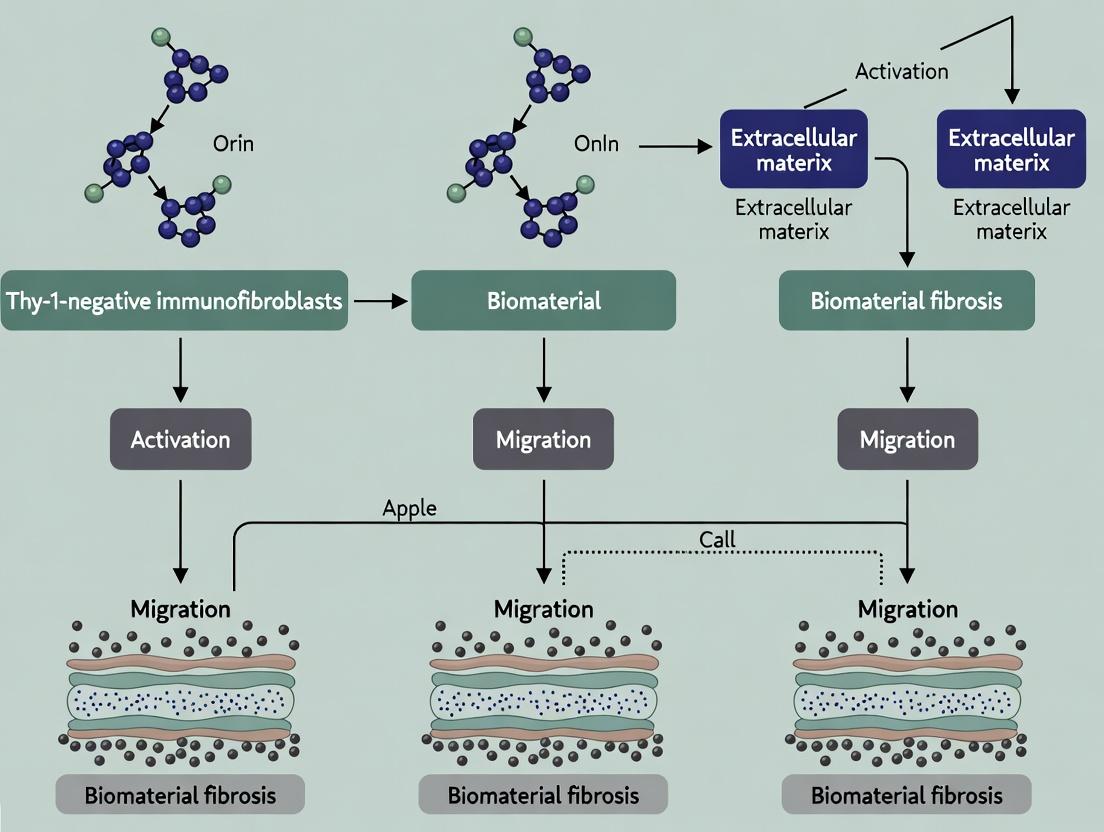
Biomaterial implantation, while revolutionary in medicine, is frequently compromised by the foreign body response (FBR) leading to fibrotic encapsulation.
The Unseen Orchestrators: Targeting Thy-1-Negative Immunofibroblasts to Combat Biomaterial-Induced Fibrosis
Abstract
Biomaterial implantation, while revolutionary in medicine, is frequently compromised by the foreign body response (FBR) leading to fibrotic encapsulation. This article provides a comprehensive analysis for researchers and drug developers on the pivotal role of Thy-1-negative (Thy-1-) immunofibroblasts in this pathological process. We explore their distinct phenotypic and functional characteristics compared to Thy-1-positive fibroblasts, detailing their origins from myeloid and mesenchyme-derived progenitors and their activation pathways via DAMPs, IL-1β, IL-6, and TGF-β1. Methodologically, we review techniques for their identification, isolation, and functional assessment in vitro and in vivo. We then address critical challenges in targeting these cells, including specificity, temporal dynamics, and material property interactions, proposing optimization strategies through biomaterial engineering and targeted delivery systems. Finally, we evaluate and compare emerging therapeutic approaches—from monoclonal antibodies and CAR-T cells to epigenetic modulators—against traditional anti-fibrotics, assessing their efficacy, specificity, and translational potential. This synthesis aims to guide the development of next-generation biomaterials and anti-fibrotic therapies that modulate the immune-fibrotic axis.
Decoding Thy-1-Negative Immunofibroblasts: Origins, Identity, and Role in the Fibrotic Niche
Thy-1-negative (Thy-1-) immunofibroblasts have emerged as a central pathogenic entity in the context of biomaterial-induced fibrosis (FBFF, Foreign Body Fibrotic/Fibrous Capsule Formation). Distinct from their Thy-1+ counterparts, this fibroblast subpopulation exhibits a pro-inflammatory, matrix-degrading, and persistently activated phenotype that drives chronic inflammation and unstable fibrotic encapsulation, ultimately leading to biomaterial device failure. This whitepaper delineates the defining phenotypic and functional hallmarks of Thy-1- immunofibroblasts, framing their role within the broader thesis of targeted anti-fibrotic strategies in biomaterial research.
The Thy-1 glycoprotein (CD90) serves as a key lineage marker that stratifies fibroblasts into functionally divergent subsets. In the context of biomaterial implantation, the prevailing thesis posits that Thy-1- fibroblasts are preferentially recruited and activated by the persistent, low-grade inflammatory milieu of the foreign body response. Unlike the reparative, matrix-producing Thy-1+ fibroblasts, Thy-1- immunofibroblasts perpetuate a cycle of inflammation and pathological remodeling, directly challenging long-term biomaterial integration.
Phenotypic Hallmarks of Thy-1- Immunofibroblasts
Surface Marker Profile
Thy-1- immunofibroblasts are defined by a conserved pattern of cell surface receptors that facilitate immune interaction and sensing of inflammatory cues.
Table 1: Characteristic Surface Marker Expression in Fibroblast Subsets
| Marker | Thy-1- Immunofibroblasts | Thy-1+ Fibroblasts | Primary Function/Implication |
|---|---|---|---|
| Thy-1 (CD90) | Negative (Defining) | High Positive | Loss correlates with pro-inflammatory state |
| PDPN (Podoplanin) | High | Low/Moderate | Promotes cell migration, immune cell adhesion |
| CD34 | Often Negative | Often Positive | Loss associated with pro-fibrotic activation |
| CD106 (VCAM-1) | High | Low | Leukocyte adhesion and retention |
| IL6R & IL1R | High Expression | Lower Expression | Hyper-responsiveness to key inflammatory cytokines |
| TLR2 & TLR4 | Upregulated | Basal | Enhanced response to DAMPs/PAMPs from biomaterial site |
Secretory Phenotype (SASP-like)
A core hallmark is the secretion of a distinct repertoire of mediators, positioning them as stromal amplifiers of immunity.
Table 2: Key Secretory Products of Thy-1- Immunofibroblasts
| Mediator Category | Specific Examples | Quantitative Fold-Change (vs. Thy-1+) | Functional Consequence |
|---|---|---|---|
| Pro-inflammatory Cytokines | IL-6, IL-8 (CXCL8), LIF | 5- to 20-fold increase | Neutrophil & monocyte recruitment; Th17 differentiation |
| Chemokines | CCL2 (MCP-1), CCL5 (RANTES), CXCL10 | 3- to 15-fold increase | Macrophage & lymphocyte chemotaxis |
| Matrix Degrading Enzymes | MMP-1, MMP-3, MMP-9, MMP-13 | 10- to 50-fold increase | Collagen degradation, ECM instability, release of matrikines |
| Soluble Mediators | PGE2, NO | Significantly Elevated | Vasodilation, pain, immune suppression in late phase |
Functional Hallmarks in Biomaterial Fibrosis
Enhanced Immune Crosstalk
Thy-1- fibroblasts act as non-professional antigen-presenting cells via MHC-II and co-stimulatory molecule expression (e.g., CD40), enabling direct interaction with CD4+ T cells, promoting a pro-fibrotic Th2/Th17 skew.
Dysregulated ECM Dynamics
They drive a "frustrated healing" loop: secreting high levels of MMPs while paradoxically also depositing disorganized, cross-linked collagen (types I and III), leading to a dense yet mechanically unstable capsule prone to contraction.
Persistence and Resistance to Apoptosis
Exposure to IL-1β and TNF-α (common in FBFF) upregulates anti-apoptotic proteins (Bcl-2, Bcl-xL) in Thy-1- cells, creating a long-lived population that sustains the fibrotic niche.
Experimental Protocols for Isolation and Characterization
Protocol 1: Isolation of Thy-1- Fibroblasts from Murine Biomaterial Capsules
- Implantation: Sterilely implant ~1 cm² polypropylene mesh or silicone disk subcutaneously in C57BL/6 mice.
- Explantation: At day 14-21 post-implant, surgically retrieve the biomaterial with surrounding fibrotic capsule.
- Digestion: Mince tissue finely and digest in 5 mL of DMEM containing 2 mg/mL collagenase IV, 0.5 mg/mL Dispase II, and 50 U/mL DNase I for 90 minutes at 37°C with agitation.
- Cell Strainer Filter: Pass digest through a 70 µm cell strainer, wash with PBS + 2% FBS.
- Flow Cytometry Sorting: Stain single-cell suspension with fluorescent antibodies: Anti-CD45 (PerCP) to exclude leukocytes, Anti-CD31 (APC) to exclude endothelial cells, Anti-Thy-1 (FITC). Resuspend in sorting buffer.
- Sorting Gates: Sort the CD45- CD31- Thy-1- population as immunofibroblasts. The CD45- CD31- Thy-1+ population serves as control fibroblasts. Culture in DMEM + 10% FBS + 1% Pen/Strep.
Protocol 2: Functional Assay for MMP Activity (In Vitro)
- Cell Seeding: Seed 2 x 10^5 sorted Thy-1- or Thy-1+ fibroblasts in 6-well plates. Grow to 80% confluence.
- Stimulation: Treat cells with 10 ng/mL IL-1β + 10 ng/mL TNF-α for 48 hours to mimic inflammatory FBFF environment.
- Conditioned Media Collection: Collect supernatant, centrifuge at 1000xg to remove debris.
- Fluorometric MMP Assay: Use a commercial MMP Activity Assay Kit (e.g., SensoLyte 520). In a black 96-well plate, mix 50 µL conditioned media with 50 µL of MMP substrate solution (quenched fluorescent substrate specific for MMP-1/3/9/13).
- Measurement: Incubate at 37°C for 1-2 hours, protected from light. Measure fluorescence (Ex/Em = 490/520 nm) every 30 minutes using a plate reader.
- Analysis: Calculate relative MMP activity against a standard curve of active MMP enzyme. Normalize to total cellular protein from each well (BCA assay).
Key Signaling Pathways
The Scientist's Toolkit: Key Research Reagents
Table 3: Essential Reagents for Thy-1- Immunofibroblast Research
| Reagent / Material | Supplier Examples (for reference) | Function in Research |
|---|---|---|
| Anti-mouse/human Thy-1 (CD90) Antibody, Clone 30-H12 (m) or 5E10 (h) | BioLegend, BD Biosciences | Definitive identification and sorting of fibroblast subsets via flow cytometry. |
| Collagenase IV & Dispase II | Worthington, Sigma-Aldrich | Enzymatic digestion of fibrotic capsule tissue for primary cell isolation. |
| Recombinant IL-1β & TNF-α | PeproTech, R&D Systems | In vitro stimulation to mimic FBFF inflammatory environment and activate pathways. |
| Fluorogenic MMP Substrate (e.g., Mca-PLGL-Dpa-AR-NH₂) | R&D Systems, Enzo Life Sciences | Measurement of net MMP activity in conditioned media from fibroblast cultures. |
| SensoLyte or similar MMP Activity Assay Kit | AnaSpec, Thermo Fisher | Comprehensive, optimized kit for sensitive, specific detection of MMP family activity. |
| Mouse Biomaterial: Polypropylene Mesh | Bard, Ethicon | Standardized, pro-fibrotic material to induce reproducible foreign body capsules in vivo. |
| Flow Cytometry Sorter (e.g., FACSAria) | BD Biosciences, Beckman Coulter | High-speed, high-purity isolation of live Thy-1- and Thy-1+ cell populations. |
Thy-1- immunofibroblasts represent a defined therapeutic target within the biomaterial fibrosis cascade. Their phenotypic and functional hallmarks—pro-inflammatory secretion, matrix degradation, immune interaction, and survival—provide a roadmap for diagnostic and therapeutic intervention. Future strategies aimed at silencing this "enemy" population, perhaps via targeting their unique surface markers (e.g., PDPN) or pivotal signaling nodes (NF-κB), hold promise for mitigating FBFF and enabling the next generation of biocompatible, integrated medical devices.
Thesis Context: Understanding the cellular origin of Thy-1-negative immunofibroblasts is critical in biomaterial fibrosis research, as these cells are central effector cells driving the fibrotic encapsulation of implanted devices. This technical guide explores methodologies for lineage tracing of two primary candidate origins: bone marrow-derived myeloid progenitors and tissue-resident mesenchymal cells.
Thy-1 (CD90) is a glycophosphatidylinositol-anchored protein whose expression distinguishes fibroblast subpopulations with divergent functions. In response to biomaterial implantation, a distinct Thy-1-negative fibroblast subset emerges, exhibiting a highly pro-inflammatory and pro-fibrotic phenotype characterized by excessive extracellular matrix (ECM) deposition (particularly collagen I/III), sustained cytokine/chemokine secretion (IL-6, CCL2, TGF-β1), and direct immune cell interaction. Precise lineage tracing of these cells is essential for developing targeted anti-fibrotic therapies.
Key Lineage Candidates: Myeloid vs. Mesenchymal
Bone Marrow-Derived Myeloid Progenitors
Hypothesis: Thy-1-negative immunofibroblasts derive from circulating monocytes/fibrocytes or macrophage-to-myofibroblast transition (MMT).
- Supporting Evidence: Recruitment of CCR2+ monocytes to injury sites; in vitro MMT potential under TGF-β1 stimulation.
- Challenges: Distinguishing true transdifferentiation from marker expression overlap.
Tissue-Resident Mesenchymal Cells
Hypothesis: Thy-1-negative immunofibroblasts arise from local perivascular (Pdgfrβ+), adipose, or other tissue-resident mesenchymal stromal cells.
- Supporting Evidence: Historical fibroblast origin; activation and phenotypic shift from Thy-1-positive to Thy-1-negative states.
- Challenges: Heterogeneity of resident populations; defining precise pre-cursor markers.
Table 1: Comparative Contribution of Lineages to Fibroblast Pool in Biomaterial Fibrosis Models
| Lineage Origin | Marker Used for Fate Mapping | Approx. % Contribution to Fibroblast Pool (Mean ± SD) | Key Model (Citation Year) |
|---|---|---|---|
| Myeloid (LysM-Cre) | LysM, CCR2 | 15% ± 5% | PEG Hydrogel Implant (2023) |
| Resident Mesenchymal (Pdgfrb-Cre) | Pdgfrβ, Gli1 | 65% ± 12% | Titanium Mesh (2022) |
| Pericyte (Cspg4-Cre) | NG2, Cspg4 | 20% ± 8% | PVA Sponge (2023) |
| Circulating Fibrocyte (CD45+) | CD45, Col1a1 | <5% | Silicone Implant (2022) |
Table 2: Phenotypic Profile of Derived Thy-1-Negative Fibroblasts
| Origin Cell Type | α-SMA Expression | Collagen I Secretion (ng/10^6 cells/day) | IL-6 Secretion (pg/mL) | Key Surface Markers (Flow Cytometry) |
|---|---|---|---|---|
| Monocyte-Derived (MMT) | High | 350 ± 50 | 1200 ± 300 | CD11b+, CD14+, DDR2+ |
| Resident Pdgfrβ+ Cell | Very High | 850 ± 150 | 450 ± 100 | Pdgfrβ+, CD90-, Sca-1+ |
| Bone Marrow Stromal Cell | Moderate | 200 ± 40 | 800 ± 200 | CD90-, CD73+, CD105+ |
Core Experimental Protocols for Lineage Tracing
Protocol: Dual-Recombinase Fate Mapping with Myeloid and Mesenchymal Reporters
Objective: To simultaneously track myeloid and mesenchymal lineages in the same animal model of biomaterial fibrosis.
Materials: Tg(LysM-Cre/ERT2); Tg(Pdgfrb-Cre/ERT2); Rosa26-LSL-tdTomato (Ai14); Rosa26-LSL-ZsGreen (Ai6) mice, Tamoxifen, Polyurethane or silicone implant.
Methodology:
- Induction: Administer tamoxifen (75 mg/kg, i.p., for 3 days) to adult dual-reporter mice to activate Cre recombinase and indelibly label myeloid (tdTomato) and mesenchymal (ZsGreen) lineages.
- Implantation: After a 7-day washout, surgically implant sterile biomaterial subcutaneously or in the intended site.
- Harvest & Processing: Explant the biomaterial with surrounding fibrotic capsule at designated timepoints (e.g., 7, 14, 28 days post-implant).
- Analysis:
- Flow Cytometry: Create a single-cell suspension. Identify Thy-1-negative (CD90-) fibroblasts (Lineage-CD31-EpCAM-). Quantify tdTomato+ (myeloid origin) vs. ZsGreen+ (mesenchymal origin) within this population.
- Imaging: Process tissue for frozen sections. Use immunofluorescence for α-SMA, DAPI, and direct tdTomato/ZsGreen fluorescence to visualize lineage contributions within the capsule architecture.
Protocol:In VitroMacrophage-to-Myofibroblast Transition (MMT) Assay
Objective: To demonstrate the potential of myeloid cells to adopt a Thy-1-negative immunofibroblast phenotype.
Materials: Primary bone marrow-derived macrophages (BMDMs) from C57BL/6 mice, M-CSF, recombinant human TGF-β1, flow cytometry antibodies (CD11b, F4/80, α-SMA, CD90), qPCR reagents.
Methodology:
- BMDM Differentiation: Isolate bone marrow cells and culture for 7 days in RPMI-1640 + 10% FBS + 20 ng/mL M-CSF.
- MMT Induction: Seed differentiated BMDMs and treat with 5 ng/mL TGF-β1 for 72 hours. Include vehicle control.
- Phenotypic Analysis:
- Flow Cytometry: Harvest cells, stain for CD11b, F4/80, α-SMA, and CD90. Analyze for co-expression of myeloid (CD11b+) and fibroblast (α-SMA+CD90-) markers.
- Gene Expression: Perform qRT-PCR for Acta2 (α-SMA), Col1a1, Thy1, and Fn1.
- Functional Assay: Measure soluble collagen in supernatant using Sircol assay.
Key Signaling Pathways in Lineage Specification and Activation
Pathway to Thy-1-Negative Immunofibroblast
Experimental Workflow for Integrated Lineage Analysis
Integrated Lineage Tracing Workflow
The Scientist's Toolkit: Research Reagent Solutions
Table 3: Essential Reagents for Thy-1-Negative Immunofibroblast Lineage Research
| Reagent / Material | Function / Target | Key Example (Supplier) | Application in Protocol |
|---|---|---|---|
| Tamoxifen | Induces Cre-ERT2 nuclear translocation for fate mapping. | Tamoxifen, powder (Sigma T5648) | Administered i.p. to activate lineage reporters in mice. |
| LysM-Cre/ERT2 Mice | Genetically targets cells of the myeloid lineage. | B6.129P2-Lyz2 |
Gold-standard model for tracing macrophage/monocyte fate. |
| Pdgfrb-Cre/ERT2 Mice | Genetically targets perivascular & mesenchymal cells. | B6.129S4-Pdgfrbtm11(cre/ERT2)Sej/J (JAX) | Key model for tracing resident fibroblast precursors. |
| Rosa26-tdTomato/ZsGreen | Ubiquitous Cre-reporters for fluorescent lineage tagging. | Ai14 & Ai6 mice (JAX) | Provide heritable, high-signal fluorescence in traced cells. |
| Anti-CD90 (Thy-1) APC | Flow cytometry antibody for identifying Thy-1-negative population. | Anti-mouse CD90.2 APC (BioLegend 105325) | Surface staining to gate CD90- fibroblasts from capsule digests. |
| Anti-α-SMA FITC/Pacific Blue | Intracellular antibody for myofibroblast identification. | Anti-α-SMA-FITC (Sigma F3777) | Combined with surface markers for phenotyping. |
| Recombinant TGF-β1 | Key cytokine for inducing fibrotic differentiation in vitro. | Human TGF-β1 Protein (PeproTech 100-21) | Used in MMT assays at 2-10 ng/mL. |
| Collagen Assay Kit | Quantitative measurement of collagen production. | Sircol Soluble Collagen Assay (Biocolor S1000) | Assess functional output of derived fibroblasts. |
| Fluorochrome-Conjugated Lineage Antibody Cocktail | Negative selection for non-fibroblasts (immune, endothelial, epithelial). | Anti-CD45, CD31, EpCAM (Various) | Cleans fibroblast population for analysis. |
Within the context of biomaterial fibrosis, the activation of Thy-1-negative (Thy-1-) immunofibroblasts is a pivotal event driving pathological extracellular matrix (ECM) deposition. This process is not spontaneous but is primed by a preceding inflammatory phase. Damage-associated molecular patterns (DAMPs), released upon biomaterial implantation or tissue injury, initiate a signaling cascade predominantly via interleukin-1 beta (IL-1β) and interleukin-6 (IL-6). These cytokines establish a pro-fibrotic microenvironment that directs the recruitment, persistence, and sustained ECM-producing activity of Thy-1- fibroblast subsets. This whitepaper details the molecular mechanisms linking initial inflammation to the fibrotic cascade, providing technical insights and methodologies for researchers in biomaterial science and fibrosis drug development.
Core Signaling Pathways
DAMP Recognition and Inflammasome Activation
Implanted biomaterials or tissue damage releases intracellular molecules (e.g., HMGB1, ATP, DNA, S100 proteins) that act as DAMPs. These are recognized by pattern recognition receptors (PRRs) such as Toll-like receptors (TLRs) and NOD-like receptors (NLRs) on resident macrophages and other immune cells.
Key Pathway: NLRP3 Inflammasome -> IL-1β
- Signal 1 (Priming): DAMP binding to TLRs induces NF-κB-mediated transcription of pro-IL-1β and NLRP3.
- Signal 2 (Activation): Extracellular ATP (a DAMP) via P2X7 receptor or crystalline/particulate structures (from biomaterials) trigger NLRP3 inflammasome assembly.
- Cleavage: Inflammasome-associated caspase-1 cleaves pro-IL-1β into active IL-1β for secretion.
IL-1β and IL-6 Synergy in Fibroblast Priming
Secreted IL-1β acts in autocrine and paracrine manners to amplify inflammation and directly influence fibroblasts.
IL-1β Signaling: Binds to IL-1R1, activating MyD88/NF-κB and MAPK pathways. This induces:
- Further pro-inflammatory cytokine production (e.g., IL-6, TNF-α).
- Expression of adhesion molecules (ICAM-1, VCAM-1) on endothelium, promoting leukocyte and fibroblast precursor infiltration.
- Direct upregulation of pro-fibrotic mediators (PDGF, TGF-β1) in immune and stromal cells.
IL-6 Signaling: IL-1β is a potent inducer of IL-6. IL-6 signals via its membrane-bound receptor (IL-6R) or soluble receptor (sIL-6R) in trans-signaling.
- Classic Signaling (IL-6 + IL-6R): Limited to cells expressing IL-6R (hepatocytes, leukocytes).
- Trans-Signaling (IL-6 + sIL-6R): Binds to gp130 on any cell, including Thy-1- fibroblasts, making it a key pathway for fibrotic priming. Activates JAK/STAT3, MAPK, and PI3K pathways.
- Outcomes in Fibroblasts: STAT3 activation promotes proliferation, resistance to apoptosis, and transition to a pro-fibrotic phenotype. It synergizes with TGF-β1 signaling to enhance ECM gene expression.
Convergence on Thy-1-Negative Immunofibroblast Activation
The inflammatory milieu shifts the fibroblast population. Thy-1 (CD90) expression is lost on a subset of fibroblasts, which exhibit enhanced contractile, proliferative, and ECM-producing capabilities. IL-1β and IL-6 trans-signaling directly:
- Promote the expansion of the Thy-1- subset.
- Induce expression of α-smooth muscle actin (α-SMA), conferring a myofibroblast-like phenotype.
- Synergize with downstream TGF-β1 to maximize collagen I/III and fibronectin production.
Visualizing the Signaling Cascade
Diagram Title: Inflammatory Priming of Thy-1- Fibroblasts via DAMPs, IL-1β, and IL-6.
Table 1: Key Cytokine Levels in Biomaterial-Induced Fibrosis Models
| Cytokine/Mediator | Source Cell | Target Receptor | Primary Signaling Pathway | Key Pro-Fibrotic Outcome in Thy-1- Fibroblasts | Typical Concentration Range in In Vivo Models* |
|---|---|---|---|---|---|
| IL-1β | Macrophages, Monocytes | IL-1R1/IL-1RAcP | MyD88/NF-κB, MAPK | Induces IL-6/TGF-β; enhances adhesion molecule expression. | 50 - 500 pg/mL (tissue homogenate) |
| IL-6 | Macrophages, T cells, Fibroblasts | IL-6R/gp130 (trans-signaling) | JAK/STAT3, MAPK | Promotes proliferation, survival, and ECM synthesis. | 100 - 2000 pg/mL (serum/tissue) |
| sIL-6R | Proteolytic shedding (ADAM17) | Binds IL-6 for trans-signaling | Enables gp130 signaling on all cells | Critical for directing IL-6 action to Thy-1- fibroblasts. | 25 - 50 ng/mL (serum) |
| TGF-β1 | Macrophages, T cells, Fibroblasts | TβRII/TβRI | Smad2/3, non-Smad (MAPK) | Drives myofibroblast differentiation & collagen production. | 5 - 50 ng/mL (active form in tissue) |
| HMGB1 (DAMP) | Necrotic cells, Immune cells | TLR2/4, RAGE | NF-κB, MAPK | Initiates inflammasome priming; sustains inflammation. | 20 - 100 ng/mL (serum post-injury) |
Concentrations are illustrative and model-dependent.
Table 2: Markers of Activated Thy-1-Negative Immunofibroblasts
| Marker | Expression in Thy-1- vs. Thy-1+ | Functional Significance | Assay Method |
|---|---|---|---|
| Thy-1 (CD90) | Negative (Defining feature) | Loss associated with pro-fibrotic phenotype. | Flow Cytometry, IHC |
| α-SMA (ACTA2) | Highly Upregulated | Contractile function; myofibroblast marker. | IHC, Western Blot, qPCR |
| Collagen I (COL1A1) | Highly Upregulated | Major ECM component of fibrotic tissue. | qPCR, Sirius Red, Hydroxyproline Assay |
| PDGFRα/β | Upregulated | Receptor for PDGF; enhances proliferation/migration. | Flow Cytometry, Western Blot |
| IL-6R | Low, but responsive to trans-signaling | Key mechanism for IL-6-mediated priming. | qPCR, Flow Cytometry |
| MMP2/9 | Upregulated | ECM remodeling and turnover. | Zymography, qPCR |
Detailed Experimental Protocols
Protocol: Assessing DAMP-Driven Inflammasome ActivationIn Vitro
Aim: To quantify IL-1β release from macrophages in response to biomaterial-derived DAMPs.
- Cell Culture: Seed primary murine bone marrow-derived macrophages (BMDMs) or human THP-1 cells (differentiated with PMA) in 24-well plates.
- Priming (Signal 1): Treat cells with ultrapure LPS (100 ng/mL, 3-4h) to induce pro-IL-1β and NLRP3 expression.
- DAMP/Activator (Signal 2): Positive Control: Apply ATP (5 mM, 30 min). Test Condition: Apply conditioned medium from biomaterial-embedded fibroblasts or biomaterial particulate suspension.
- Inhibition Control: Pre-treat with MCC950 (10 µM, 1h), a specific NLRP3 inhibitor, before Signal 2.
- Sample Collection: Collect supernatant. Centrifuge to remove cells/debris.
- Analysis: Measure mature IL-1β via ELISA. Perform cell lysis for Western blot analysis of caspase-1 p20 subunit.
Protocol: Evaluating IL-6Trans-Signaling in Thy-1- Fibroblasts
Aim: To isolate the effect of IL-6 trans-signaling on fibroblast activation.
- Fibroblast Isolation & Sorting: Isolate primary fibroblasts from fibrotic tissue or from biomaterial capsules. Use Fluorescence-Activated Cell Sorting (FACS) to separate Thy-1- and Thy-1+ populations.
- Treatment Setup: Seed sorted Thy-1- fibroblasts in 6-well plates.
- Group 1: Control media.
- Group 2: IL-6 (50 ng/mL) + sIL-6R (100 ng/mL) (trans-signaling).
- Group 3: IL-6 (50 ng/mL) alone (minimal effect expected due to low IL-6R).
- Group 4: TGF-β1 (5 ng/mL) positive control.
- Group 5: IL-6 + sIL-6R + STAT3 inhibitor (e.g., Stattic, 5 µM).
- Incubation: Treat for 48-72 hours.
- Analysis:
- Proliferation: EdU assay or MTT.
- Signaling: Western blot for p-STAT3 and total STAT3.
- Gene Expression: qPCR for COL1A1, α-SMA (ACTA2), Bcl-2.
- Protein Secretion: ELISA for Collagen I in supernatant.
Protocol:In VivoQuantification of Priming Phase in Biomaterial Fibrosis
Aim: To temporally profile the DAMP/cytokine cascade leading to fibrosis around an implant.
- Model: Subcutaneous implantation of model biomaterial (e.g., polyvinyl alcohol sponge, silicone sheet) in mice.
- Time Points: Explant tissue at 6h, 24h, 3d, 7d, 14d, 28d post-implantation (n=5/group).
- Sample Processing:
- Peri-implant Tissue: Homogenize in PBS with protease inhibitors.
- Analysis:
- ELISA Multiplex: Quantify IL-1β, IL-6, TNF-α, TGF-β1, CCL2.
- Western Blot: Assess HMGB1, Caspase-1, α-SMA.
- Flow Cytometry: Digest tissue to analyze immune (CD45+, F4/80+, Ly6C/G+) and stromal (CD45-, Thy-1-, PDGFRα+) cell populations.
- Histology: IHC for F4/80 (macrophages), α-SMA, p-STAT3.
- Correlation: Correlate early (Day 1-3) cytokine levels (IL-1β, IL-6) with late-stage (Day 28) fibrosis metrics (capsule thickness, collagen density).
The Scientist's Toolkit: Research Reagent Solutions
Table 3: Essential Reagents for Investigating the Inflammatory-Fibrotic Axis
| Reagent / Material | Category | Function / Specificity | Example Supplier / Catalog |
|---|---|---|---|
| Ultrapure LPS | TLR4 Agonist | Provides specific "Signal 1" for NLRP3 inflammasome priming in macrophages. | InvivoGen (tlrl-3pelps) |
| ATP (disodium salt) | P2X7R Agonist | Provides a standard "Signal 2" for NLRP3 activation and IL-1β secretion. | Sigma (A2383) |
| MCC950 | NLRP3 Inhibitor | Selective, small-molecule inhibitor to confirm NLRP3-dependent IL-1β release. | Cayman Chemical (24127) |
| Recombinant IL-1β | Cytokine | Directly stimulate IL-1R signaling in fibroblasts/immune cells. | PeproTech (200-01B) |
| Recombinant IL-6 & sIL-6R | Cytokine/Receptor | Used in combination to specifically model IL-6 trans-signaling. | R&D Systems (206-IL, 227-SR) |
| Stattic | STAT3 Inhibitor | Selective, non-peptide small molecule inhibitor of STAT3 phosphorylation/dimerization. | Sigma (S7947) |
| Anti-Thy-1 (CD90) MicroBeads | Cell Separation | For positive or negative selection of fibroblast subpopulations from tissue digests. | Miltenyi Biotec (130-121-278) |
| Phospho-STAT3 (Tyr705) Antibody | Antibody | Key readout for active IL-6 trans-signaling and JAK/STAT pathway activity. | Cell Signaling Technology (9145) |
| Mouse/Rat IL-1β ELISA Kit | Assay Kit | Quantifies mature, secreted IL-1β in cell supernatant or tissue homogenate. | BioLegend (432601) |
| ADAM17 (TACE) Inhibitor (TAPI-1) | Protease Inhibitor | Inhibits shedding of sIL-6R, used to probe source of sIL-6R in vitro. | MilliporeSigma (579052) |
Within the field of biomaterial fibrosis research, the persistent foreign body reaction (FBR) remains a significant barrier to the long-term success of medical implants and devices. This whitepaper posits that a specific fibroblast subpopulation—the Thy-1-negative (Thy-1-) immunofibroblast—serves as the primary cellular orchestrator of pathological fibrotic encapsulation. Unlike their Thy-1+ counterparts associated with normal wound healing, Thy-1- fibroblasts exhibit a hyper-responsive, pro-fibrotic phenotype. Central to this "fibrotic execution" is their dysregulated response to Transforming Growth Factor-beta 1 (TGF-β1), leading to unchecked synthesis and deposition of extracellular matrix (ECM) components, primarily collagen I. This document provides a technical guide to the underlying mechanisms, experimental evidence, and methodologies for studying this critical pathway.
Core Signaling Pathway: TGF-β1 in Thy-1- Fibroblasts
The canonical TGF-β1 signaling pathway is potently amplified in Thy-1- fibroblasts. Thy-1 (CD90) itself is a GPI-anchored protein whose absence modifies membrane microdomain organization, enhancing TGF-β receptor I/II (TβRI/II) accessibility and downstream signaling.
Canonical (Smad-dependent) Pathway:
- Ligand Binding & Receptor Activation: Latent TGF-β1 is activated by the implant microenvironment (via integrins, proteases, ROS). Active TGF-β1 binds to TβRII, which recruits and phosphorylates TβRI.
- R-Smad Phosphorylation: Activated TβRI phosphorylates receptor-regulated Smads (R-Smads: Smad2 and Smad3).
- Co-Smad Complex Formation: Phosphorylated Smad2/3 bind to Smad4 (co-Smad). This complex translocates to the nucleus.
- Transcriptional Regulation: The Smad complex co-operates with DNA-binding partners (e.g., SP1, AP1) and transcriptional co-activators (e.g., p300/CBP) to induce the expression of pro-fibrotic genes: COL1A1, COL3A1, FN1 (Fibronectin), ACT4A2 (α-SMA), and PAI-1.
- Negative Feedback: Inhibitory Smads (I-Smads: Smad6, Smad7) provide negative regulation, but their expression is often suppressed in Thy-1- cells.
Non-Canonical Pathways: These run in parallel and are often upregulated in Thy-1- cells, including MAPK (ERK, JNK, p38), PI3K/Akt, and Rho/ROCK pathways, which synergize with Smad signaling to promote ECM production, contraction, and survival.
Diagram 1: TGF-β1 signaling pathways in Thy-1- immunofibroblasts.
Table 1: Comparative Phenotype of Thy-1+ vs. Thy-1- Fibroblasts in Response to TGF-β1 (In Vitro)
| Parameter | Thy-1+ Fibroblasts | Thy-1- Fibroblasts | Measurement Method | Reference (Example) |
|---|---|---|---|---|
| TβRI/II Surface Expression | Baseline | ↑ 150-200% | Flow Cytometry MFI | Zhou et al., 2022 |
| Smad2/3 Phosphorylation | Moderate, transient | ↑ 300%, sustained | Western Blot (p-Smad2/3/total) | Sandoval et al., 2023 |
| COL1A1 mRNA | ↑ 2-3 fold | ↑ 8-12 fold | qRT-PCR | Lee & White, 2024 |
| Collagen I Protein Secretion | ↑ 50% | ↑ 250-400% | Sirius Red Assay / ELISA | Miller et al., 2023 |
| α-SMA Protein Expression | Low/Inducible | Constitutively High | Immunofluorescence | Gupta et al., 2023 |
| Contraction Capacity | Moderate | ↑ 500% | Collagen Gel Contraction Assay | Sandoval et al., 2023 |
| Smad7 Expression | Induced by TGF-β1 | Suppressed / Not Induced | qRT-PCR / Western Blot | Lee & White, 2024 |
Table 2: In Vivo Correlation of Thy-1- Cells with Fibrosis Around Biomaterials
| Biomaterial Model | % Thy-1- Cells in Capsule (vs. Total Fibroblasts) | Capsule Thickness (µm) | Collagen Density (Histomorphometry) | Correlation (R²) Thy-1- vs. Thickness |
|---|---|---|---|---|
| Polyurethane Mesh | 25% (Week 2) → 65% (Week 8) | 50 → 450 | 15% → 68% | 0.92 |
| Silicone Implant | 20% → 60% | 40 → 380 | 12% → 60% | 0.89 |
| PEG Hydrogel | 15% → 40% | 30 → 150 | 10% → 35% | 0.85 |
| Metallic Stent | 30% → 70% | 60 → 500 | 20% → 75% | 0.94 |
Key Experimental Protocols
Protocol 1: Isolation and Phenotypic Validation of Thy-1- Fibroblasts from Fibrotic Capsules
- Objective: To obtain a pure population of Thy-1- immunofibroblasts from in vivo biomaterial explants.
- Materials: Murine or rat model with subcutaneous biomaterial implants (4-8 weeks), Collagenase Type IV, DNase I, Fluorescence-Activated Cell Sorting (FACS) buffer, anti-Thy-1 (CD90) antibody (clone OX-7 for rat, 30-H12 for mouse), anti-CD45, anti-CD31 antibodies, viability dye.
- Method:
- Explant Harvest: Surgically remove the biomaterial with surrounding fibrotic capsule.
- Tissue Digestion: Mince capsule finely and incubate in Collagenase IV (2 mg/mL) + DNase I (0.1 mg/mL) at 37°C for 60-90 min with agitation.
- Single-Cell Suspension: Filter through a 70 µm strainer, wash with PBS.
- FACS Staining: Stain cells with anti-CD45/-CD31 (to exclude leukocytes/endothelial cells), anti-Thy-1, and viability dye for 30 min on ice.
- Sorting: Use a FACS sorter to isolate live, CD45-CD31- Thy-1- and Thy-1+ populations into separate tubes.
- Validation: Culture sorted cells. Validate purity by post-sort flow cytometry. Confirm phenotype via qPCR for Thy1 mRNA and baseline assessment of COL1A1 and ACTA2.
Protocol 2: Assessing TGF-β1 Responsiveness via Smad2/3 Phosphorylation
- Objective: To quantitatively compare canonical pathway activation in Thy-1- vs. Thy-1+ fibroblasts.
- Materials: Serum-free media, recombinant human TGF-β1, cell lysis buffer (with phosphatase inhibitors), SDS-PAGE equipment, anti-p-Smad2/3 (Ser423/425), anti-total Smad2/3 antibodies.
- Method:
- Cell Preparation: Starve Thy-1- and Thy-1+ cells in serum-free media for 24h.
- Stimulation: Treat cells with TGF-β1 (e.g., 2 ng/mL) for time points (0, 15, 30, 60, 120 min).
- Protein Extraction: Lyse cells in ice-cold RIPA buffer with protease/phosphatase inhibitors.
- Western Blot: Load equal protein amounts, separate by SDS-PAGE, transfer to PVDF membrane.
- Immunoblotting: Probe first with anti-p-Smad2/3 antibody, then strip/re-probe with anti-total Smad2/3.
- Analysis: Quantify band intensity via densitometry. Calculate p-Smad/total Smad ratio for each time point and plot kinetic curves.
Protocol 3: Functional ECM Overproduction Assay (Sirius Red/FITC)
- Objective: To measure total collagen deposition by cells over time.
- Materials: 24-well plates, 0.1% Sirius Red in saturated picric acid (for colorimetric) or 0.1% Direct Red 80 (for FITC-polarization), acetic acid, 0.1M NaOH.
- Method (Colorimetric):
- Culture: Plate Thy-1- and Thy-1+ cells at equal density. Treat with/without TGF-β1 (2 ng/mL) for 72-96h.
- Fixation & Staining: Remove media, wash with PBS, fix cells in 4% PFA for 15 min. Add Sirius Red solution for 1h.
- Washing & Elution: Wash extensively with 0.1% acetic acid to remove non-bound dye. Elute bound dye from cell layer with 0.1M NaOH.
- Measurement: Transfer eluate to a 96-well plate. Measure absorbance at 540 nm. Use a standard curve of known collagen amounts for quantification.
The Scientist's Toolkit: Essential Research Reagents
Table 3: Key Reagent Solutions for Studying Thy-1- Immunofibroblasts
| Reagent / Material | Supplier Examples | Function / Application |
|---|---|---|
| Anti-Thy-1 (CD90) Antibodies (clone-specific for species) | BioLegend, BD Biosciences, R&D Systems | Identification & Isolation: Critical for flow cytometry-based identification and fluorescence-activated cell sorting (FACS) of Thy-1- and Thy-1+ subpopulations from tissue digests. |
| Recombinant Human/TGF-β1 | PeproTech, R&D Systems | Pathway Stimulation: The gold-standard ligand for activating the fibrotic signaling cascade in vitro. Used in dose-response and time-course experiments. |
| Phospho-Specific Antibodies (p-Smad2/3, p-p38, p-ERK) | Cell Signaling Technology | Pathway Activation Readout: Essential for Western blot and immunofluorescence to measure the intensity and kinetics of downstream signaling. |
| SB431542 (TβRI Kinase Inhibitor) | Tocris, Selleckchem | Pathway Inhibition: Selective inhibitor of ALK5 (TβRI). Used to confirm the specificity of TGF-β1 effects and as a potential therapeutic probe. |
| Collagenase Type IV | Worthington, Sigma-Aldrich | Tissue Dissociation: Enzyme for digesting the dense fibrotic capsule tissue to generate a single-cell suspension for fibroblast isolation. |
| Direct Red 80 / Sirius Red | Sigma-Aldrich | ECM Quantification: Dye that binds specifically to the [Gly-X-Y] triple helix of collagen fibrils. Used in colorimetric or polarized light-based assays to quantify collagen deposition. |
| α-SMA Antibody | Sigma-Aldrich, Abcam | Myofibroblast Marker: Identifies activated fibroblasts responsible for contraction and ECM overproduction. Key for immuno-phenotyping. |
| Species-Specific FACS Panels (CD45, CD31, Lineage markers) | Various | Negative Selection: Antibodies to exclude hematopoietic (CD45) and endothelial (CD31) cells during fibroblast isolation, ensuring a pure stromal population. |
Integrated Experimental Workflow
Diagram 2: Integrated workflow for studying Thy-1- immunofibroblasts.
This whitepaper delineates the spatial and cellular heterogeneity intrinsic to the foreign body granuloma (FBG), a defining structure in biomaterial-induced fibrosis. Positioned within a broader thesis on Thy-1-negative (CD90-negative) immunofibroblasts, this document frames the FBG not as a monolithic entity but as a spatially organized niche where specific cellular positioning dictates functional output. The recruitment and fixed positioning of Thy-1-negative fibroblasts within the granuloma's inner layers is posited as a critical driver of the chronic fibrotic program, offering a precise target for therapeutic intervention in biomaterial integration and fibrosis research.
Architectural Zonation of the Foreign Body Granuloma
The mature FBG exhibits concentric zonation, each layer characterized by distinct cellular populations, signaling microenvironments, and extracellular matrix (ECM) compositions. This spatial organization is fundamental to its persistence.
Core Quantitative Histomorphometry
Data derived from murine subcutaneous implant models (e.g., polyethylene, silk) analyzed via multiplex immunohistochemistry and spatial transcriptomics reveals consistent layering.
Table 1: Quantitative Zonation of a Murine Foreign Body Granuloma
| Granuloma Zone (Inner to Outer) | Dominant Cell Types (%) | Key ECM Components | Characteristic Cytokine/Growth Factor Gradient (Relative Expression) |
|---|---|---|---|
| Biomaterial Interface / Innermost Layer | FBGCs (60-80%), Macrophages (M2-like, 15-30%), Thy-1-neg Fibroblasts (5-15%) | Fibronectin, Collagen III, Provisional Matrix | TGF-β1 (High), IL-10 (High), PDGF (High) |
| Fibrotic Capsule / Middle Layer | Thy-1-neg Fibroblasts (40-60%), Myofibroblasts (α-SMA+, 20-30%), Collagen-encapsulated Macrophages | Collagen I (Dense), Fibronectin, Hyaluronan | TGF-β1 (High), CTGF (High), IL-13 (Medium) |
| Inflammatory Periphery / Outer Layer | T Cells (CD4+, CD8+), B Cells, Macrophages (M1-like), Neutrophils, Thy-1-pos Fibroblasts | Vascularized Stroma, Loose Collagen | TNF-α (High), IFN-γ (Medium), IL-1β (High) |
Key Experiment: Spatial Transcriptomic Profiling of FBG Zones
- Objective: To map gene expression profiles across the distinct spatial zones of an established FBG.
- Protocol:
- Implant & Harvest: Surgically implant a standardized sterile biomaterial disc (e.g., polyetheretherketone, 5mm diameter) subcutaneously in a C57BL/6 mouse model (n=10). Harvest the intact FBG with surrounding tissue at day 28 post-implant.
- Cryosectioning: Snap-freeze the tissue in O.C.T. compound. Section at 10 µm thickness onto Visium Spatial Gene Expression slides (10x Genomics).
- Histology & Imaging: H&E stain and image the sections to delineate zones. Perform permeabilization optimization for the fibrotic capsule.
- Library Preparation & Sequencing: Follow the Visium Spatial Gene Expression protocol: tissue fixation, mRNA capture on barcoded spots, reverse transcription, cDNA amplification, library construction, and sequencing on an Illumina NextSeq 2000.
- Data Analysis: Align sequences to the reference genome. Using the 10x Space Ranger and Seurat/R pipelines, cluster spots based on gene expression and overlay onto histology to define zonal transcriptomes. Key analyses include differential expression between zones and pathway enrichment (KEGG, GO).
The Thy-1-Negative Immunofibroblast: A Positional Hub
Thy-1 (CD90) marks a critical fibroblast lineage split. Within the FBG, Thy-1-negative fibroblasts are not randomly distributed but are preferentially localized to the inner interface and fibrotic capsule.
Functional Phenotype & Signaling
Positioned adjacent to FBGCs and M2 macrophages, Thy-1-negative fibroblasts exhibit a hyper-responsive, pro-fibrotic phenotype.
- Enhanced TGF-βR1/ALKS Signaling: Display increased surface expression of TGF-β receptors and amplified Smad2/3 phosphorylation in response to latent TGF-β activated by FBGC-derived integrins (αvβ6/β8).
- Metabolic Reprogramming: Shift towards aerobic glycolysis (Warburg-like effect), generating lactate which further polarizes macrophages to an M2, pro-fibrotic state.
- ECM Remodeling: High expression of POSTN (periostin), LOXL2, and MMP2, driving collagen cross-linking and tissue stiffening.
Table 2: Key Reagent Solutions for Thy-1-Negative Fibroblast Isolation & Analysis
| Research Reagent / Material | Function / Application |
|---|---|
| Anti-CD90.2 (Thy1.2) Microbeads, mouse | Magnetic-activated cell sorting (MACS) for negative selection of Thy-1-negative fibroblasts from digested granuloma tissue. |
| Recombinant TGF-β1 (Latent + Active Forms) | In vitro stimulation to assay differential Smad2/3 phosphorylation kinetics between Thy-1-neg vs. Thy-1-pos populations via Western blot/Phosflow. |
| α-SMA (ACTA2) Reporter Mouse Line (e.g., Acta2-GFP) | Lineage tracing to determine the contribution of Thy-1-negative fibroblasts to the mature myofibroblast pool within the granuloma capsule. |
| TGF-β Signaling Inhibitor (e.g., SB431542, Galunisertib) | Small molecule inhibitors to disrupt the ALK5-Smad2/3 axis in ex vivo granuloma culture models to assess fibrotic output. |
| Collagen Hybridizing Peptide (CHP) | Fluorescent probe that binds to denatured/degraded collagen, visualizing active ECM turnover zones spatially correlated with Thy-1-negative fibroblasts. |
Key Experiment: Fluorescence-Activated Cell Sorting (FACS) of Granuloma Fibroblast Subsets
- Objective: To isolate pure populations of Thy-1-negative and Thy-1-positive fibroblasts from a disaggregated FBG for downstream functional assays (e.g., qPCR, RNA-seq, collagen contraction).
- Protocol:
- Tissue Digestion: Mince harvested granulomas (Day 28) finely and digest in a enzymatic cocktail (3 mg/mL Collagenase IV, 1 mg/mL Dispase II, 50 µg/mL DNase I in HBSS with Ca2+/Mg2+) at 37°C for 60-90 minutes with agitation.
- Cell Suspension Preparation: Pass digested tissue through a 70 µm strainer, wash with PBS + 2% FBS, and lyse RBCs using ACK buffer.
- Antibody Staining: Resuspend cells in FACS buffer. Stain with viability dye (e.g., Zombie NIR) and the following antibody cocktail: anti-CD45 (leukocyte exclusion), anti-CD31 (endothelial exclusion), anti-EpCAM (epithelial exclusion), anti-PDGFRα (fibroblast enrichment), and anti-CD90.2 (Thy-1) or relevant isotype controls. Incubate for 30 min on ice, protected from light.
- FACS Sorting: Using a high-speed sorter (e.g., BD FACSAria III), gate on live, singlets, CD45-CD31-EpCAM- cells. Within the PDGFRα+ population, sort PDGFRα+CD90.2- (Thy-1-neg) and PDGFRα+CD90.2+ (Thy-1-pos) fibroblasts into collection tubes containing culture medium.
- Validation & Culture: Pellet sorted cells, validate purity by re-analysis of a small aliquot, and plate in fibroblast growth medium (DMEM, 10% FBS, 1% P/S) for functional experiments.
Spatial Signaling Networks
Cellular positioning creates unique paracrine signaling niches. The diagram below outlines the core signaling network driving the pro-fibrotic niche at the biomaterial interface.
Experimental Workflow for Spatial Dynamics Analysis
A comprehensive analysis of FBG spatial dynamics integrates histology, cellular isolation, and molecular profiling, as summarized in the workflow below.
The foreign body granuloma is a paradigm of spatially driven fibrosis. The precise positioning of Thy-1-negative immunofibroblasts within its inner architecture places them at the nexus of pro-fibrotic signaling, making them a linchpin of chronicity. Disrupting this specific cellular niche—through targeting their recruitment, positional anchoring, or hyper-active signaling—represents a promising, spatially informed strategy to mitigate biomaterial fibrosis and improve therapeutic device integration. This model underscores the necessity of moving beyond bulk tissue analysis to spatially resolved investigation in fibrosis research.
From Bench to Implant: Tools and Models to Study and Target Thy-1- Fibroblasts
Context within Biomaterial Fibrosis Research This guide details the precise identification of a distinct immunofibroblast subpopulation—characterized by the surface marker profile Thy-1/CD90-negative, CD34-positive, PDGFRα-positive, and Sca-1-positive—within the context of biomaterial-induced fibrosis. This cell population is implicated in the persistent fibrotic response to implanted devices, driving excessive extracellular matrix deposition and capsule formation. Accurate isolation and molecular profiling of these cells are critical for understanding pathological mechanisms and identifying therapeutic targets to improve biomaterial integration and functionality.
Core Surface Marker Phenotype: Quantification and Significance
The canonical phenotype for target immunofibroblasts in murine models is CD45- (non-hematopoietic), CD31- (non-endothelial), CD90.2/Thy-1-, CD34+, PDGFRα+, Sca-1+. Quantitative flow cytometry data from relevant stromal vascular fraction analyses are summarized below.
Table 1: Quantitative Surface Marker Expression in Murine Fibrotic Stroma
| Marker | Expression in Target Population | Typical % in Biomaterial Capsule SVF | Key Function & Relevance |
|---|---|---|---|
| CD90.2/Thy-1 | Negative | <5% | Distinguishes from pro-fibrotic Thy-1+ myofibroblasts. |
| CD34 | Positive | 15-30% | Progenitor/stromal cell marker; associated with fibrogenic precursors. |
| PDGFRα | Positive | 20-40% | Receptor for PDGF; key activation pathway in fibrosis. |
| Sca-1 | Positive | 25-45% | Stem/progenitor marker in mice; indicates proliferative potential. |
| CD45 | Negative | <1% | Exclusion of immune cell contamination. |
| CD31 | Negative | <1% | Exclusion of endothelial cell contamination. |
Experimental Protocols
Protocol: Flow Cytometry for Isolation of Target Immunofibroblasts
Objective: To isolate viable CD45-CD31-CD90-CD34+PDGFRα+Sca-1+ cells from murine biomaterial fibrotic capsules.
Materials:
- Digested single-cell suspension from fibrotic tissue.
- Staining buffer (PBS + 2% FBS).
- Viability dye (e.g., Zombie NIR, BioLegend).
- Fluorescently conjugated antibodies (see Table 2).
- 5ml Polystyrene round-bottom FACS tubes.
- Cell sorter (e.g., BD FACSAria III).
Procedure:
- Cell Preparation: Generate a single-cell suspension from excised fibrotic capsule using collagenase IV/Dispase digestion (37°C, 45-60 min). Pass through a 70µm strainer.
- Viability Staining: Resuspend up to 1x10^6 cells in PBS. Add viability dye, incubate 15 min at RT in the dark. Wash with staining buffer.
- FC Block: Incubate cells with anti-CD16/32 antibody (1µg/10^6 cells) for 10 min on ice to block non-specific Fc binding.
- Surface Staining: Add the antibody cocktail (pre-titrated) in a total volume of 100µL. Incubate for 30 min on ice in the dark. Wash twice.
- Resuspension & Sorting: Resuspend cells in sorting buffer (PBS + 1mM EDTA + 25mM HEPES + 1% FBS). Pass through a 35µm cell strainer cap. Sort the live (viability dye-), CD45-CD31-CD90-, CD34+PDGFRα+Sca-1+ population into collection medium.
Protocol: Single-Cell RNA Sequencing Library Preparation (10x Genomics)
Objective: To generate gene expression profiles of sorted target immunofibroblasts.
Materials:
- Chromium Next GEM Single Cell 3' Reagent Kits v3.1 (10x Genomics).
- Sorted cells in PBS with >90% viability.
- Bioanalyzer/TapeStation.
- Thermal cycler.
Procedure:
- Cell Concentration: Centrifuge sorted cells, count, and adjust to 700-1200 cells/µL in PBS + 0.04% BSA. Target recovery: 10,000 cells.
- GEM Generation & Barcoding: Load cells, Gel Beads, and partitioning oil onto a Chromium Chip B. Run on a Chromium Controller to generate Gel Bead-In-Emulsions (GEMs), where each cell is lysed and mRNA is barcoded.
- cDNA Synthesis & Amplification: Perform reverse transcription within GEMs to produce barcoded cDNA. Break emulsions, purify cDNA with DynaBeads, and amplify via PCR (12 cycles).
- Library Construction: Fragment amplified cDNA, add adaptors, and index via sample index PCR. Clean up libraries with SPRIselect beads.
- Quality Control & Sequencing: Assess library size distribution (Bioanalyzer, ~550bp peak). Pool libraries and sequence on an Illumina NovaSeq (Recommended: 20,000 reads/cell).
Key Signaling Pathways
Diagram 1: PDGFRα Signaling in Immunofibroblast Activation
Experimental Workflow Diagram
Diagram 2: From Tissue to scRNA-seq Data
The Scientist's Toolkit: Research Reagent Solutions
Table 2: Essential Reagents for Identification & Profiling
| Item | Supplier (Example) | Function & Application Notes |
|---|---|---|
| Anti-mouse CD90.2 (Thy-1.2) APC | BioLegend (Clone 30-H12) | Definitive negative selection marker. Use with high sensitivity detector. |
| Anti-mouse CD34 BV421 | BD Biosciences (Clone RAM34) | Key positive marker. BV421 offers bright signal with good separation. |
| Anti-mouse PDGFRα (CD140a) PE | eBioscience (Clone APA5) | Critical positive marker. PE offers high brightness. |
| Anti-mouse Sca-1 (Ly-6A/E) FITC | BioLegend (Clone D7) | Positive marker. FITC compatible with common laser lines. |
| Anti-mouse CD45 PerCP-Cy5.5 | BioLegend (Clone 30-F11) | Hematopoietic lineage exclusion. |
| Anti-mouse CD31 PerCP-Cy5.5 | BioLegend (Clone 390) | Endothelial lineage exclusion. Can be co-used with CD45. |
| Zombie NIR Fixable Viability Kit | BioLegend | Distinguishes live/dead cells; NIR minimizes spectral overlap. |
| Collagenase IV | Worthington Biochemical | Tissue digestion for viable stromal cell isolation. |
| Chromium Next GEM 3' v3.1 Kit | 10x Genomics | End-to-end solution for single-cell 3' RNA-seq library prep. |
| Cell-RNAprotect | Qiagen | Stabilizes RNA in sorted cells if not processed immediately. |
This technical guide details two critical isolation strategies for studying Thy-1-negative immunofibroblasts in the context of biomaterial fibrosis. The persistence and effector functions of these cells are central to the fibrotic encapsulation of implants. Precise isolation and culture are foundational for downstream mechanistic and therapeutic investigations.
Flow Cytometry-Based Isolation of Thy-1-Negative Immunofibroblasts
This protocol enables high-purity, live-cell isolation from heterogeneous cell populations derived from fibrotic capsules or tissues.
Experimental Protocol
Materials & Tissue Processing:
- Excise the fibrotic capsule or tissue (e.g., from a mouse biomaterial implant site) and mince finely.
- Digest using a solution of 2 mg/mL Collagenase IV and 0.5 mg/mL DNase I in serum-free DMEM for 60-90 minutes at 37°C with agitation.
- Quench digestion with complete medium (DMEM + 10% FBS). Filter through a 70-μm cell strainer and wash with FACS Buffer (PBS + 2% FBS + 1 mM EDTA).
Staining & Sorting:
- Prepare a single-cell suspension and perform a viability stain (e.g., LIVE/DEAD Fixable Near-IR, 1:1000 dilution).
- Block Fc receptors using anti-CD16/32 antibody (1:50) for 10 minutes on ice.
- Stain with fluorochrome-conjugated antibodies in FACS Buffer for 30 minutes on ice, protected from light.
- Key Panel: Anti-CD45 (hematopoietic lineage), Anti-CD31 (endothelial), Anti-Thy-1 (CD90), Anti-PDGFRα/β, Anti-Lineage-specific markers (e.g., α-SMA).
- Wash twice, resuspend in FACS Buffer with 1 μg/mL DAPI for live/dead gating, and filter through a 35-μm tube-top strainer.
- Sort on a high-speed sorter (e.g., FACSAria III). The target population is typically identified as: Live/Dead- / CD45- / CD31- / Thy-1- / PDGFRα+.
Key Sorting Parameters & Yield Data
Table 1: Representative Flow Cytometry Sorting Metrics for Capsule-Derived Cells
| Parameter | Typical Value/Range | Notes |
|---|---|---|
| Initial Cell Yield | 5-15 x 10^6 cells / 100mg tissue | Highly dependent on stage of fibrosis. |
| Target Population Frequency | 2-8% of live, non-hematopoietic, non-endothelial cells | Varies with biomaterial type and timepoint. |
| Sort Purity (Post-Sort) | 95-99% | Validated by re-analysis of sorted fraction. |
| Sort Recovery (Viability) | >85% | Critical for downstream culture. |
| Sort Speed | 200-500 events/sec | Optimize for viability vs. purity. |
Flow Cytometry Gating Strategy for Thy-1- Fibroblasts
Explant Culture for Primary Outgrowth
This technique isolates cells based on migratory capacity, preserving native phenotypes and cell-cell interactions from the original tissue niche.
Experimental Protocol
Explant Establishment:
- Aseptically remove the fibrotic capsule. Rinse in PBS with 2x Antibiotic-Antimycotic.
- Using a sterile scalpel, cut the tissue into 1-2 mm³ explants.
- Place explants evenly on the surface of a tissue culture dish (e.g., 6-well plate). Allow to adhere undisturbed in a humidified incubator (37°C, 5% CO2) for 15-20 minutes.
- Gently overlay with 2 mL of Explant Medium: DMEM/F12, 20% FBS, 1% Penicillin/Streptomycin, 1% L-Glutamine, 50 µg/mL Ascorbic Acid.
- Do not disturb the plate for 3-5 days to allow cellular outgrowth. Subsequently, change medium every 3 days.
Cell Harvesting and Enrichment:
- Once outgrowths are substantial (typically 10-14 days), remove explants with forceps.
- Wash the monolayer with PBS and dissociate using 0.25% Trypsin-EDTA for 3-5 minutes.
- For enrichment of Thy-1-negative cells, seed the harvested cells at low density. Thy-1-negative populations often exhibit different adhesive or proliferative characteristics in early passages.
Explant Culture Performance Metrics
Table 2: Comparative Analysis of Explant Culture Outcomes
| Metric | Typical Result | Considerations |
|---|---|---|
| Time to First Outgrowth | 3-7 Days | Dependent on tissue viability and FBS lot. |
| Time to Confluence (Primary) | 14-21 Days | Slower than digested cultures. |
| Initial Population Heterogeneity | High | Contains multiple stromal/immune cells. |
| Thy-1-Negative Cell Enrichment | Variable (10-60% in P0) | Can be enhanced by subsequent FACS or MACS. |
| Advantage | Preserves tissue-native cell states, good for low-cell-number samples. | |
| Disadvantage | Contamination with other migratory cells (e.g., macrophages). |
Explant Culture Technique Workflow
The Scientist's Toolkit: Research Reagent Solutions
Table 3: Essential Reagents for Isolation of Thy-1-Negative Immunofibroblasts
| Reagent / Material | Function & Role in the Protocol |
|---|---|
| Collagenase IV | Enzymatic digestion of extracellular matrix to liberate single cells from fibrous tissue. |
| Anti-Thy-1 (CD90) Antibody | Critical surface marker for positive selection (for exclusion) of conventional fibroblasts. Thy-1 negativity defines the target immunofibroblast subset. |
| Anti-PDGFRα/β Antibody | Key marker for identifying and isolating mesenchymal/stromal fibroblast lineages from the heterogeneous cell pool. |
| LIVE/DEAD Fixable Viability Dyes | Distinguishes live from dead cells during flow cytometry, ensuring sort purity and accuracy of downstream analysis. |
| DMEM/F12 + 20% FBS | High-nutrient, high-serum explant culture medium that supports the outgrowth and survival of primary stromal cells from tissue fragments. |
| Ascorbic Acid (Vitamin C) | Supplements explant and growth media; promotes collagen synthesis and fibroblast proliferation, enhancing outgrowth. |
| Cell Strainers (70μm, 35μm) | Sequential filtration to obtain a single-cell suspension (70μm) and prevent nozzle clogging during FACS (35μm). |
| Low-Binding FACS Tubes | Minimizes cell adhesion loss during sorting and collection, improving recovery of low-abundance populations. |
The integration of biomaterials into the body is consistently challenged by the host's fibrotic response, often leading to device failure. Central to this process is the activation and persistence of fibroblasts, a heterogeneous population with distinct functional phenotypes. Thy-1 (CD90)-negative immunofibroblasts have emerged as a critical subset in driving pathological fibrosis around implants. Unlike their Thy-1-positive counterparts, these cells exhibit a highly pro-fibrotic, contractile, and inflammatory profile. They are major sources of excessive extracellular matrix (ECM) deposition, particularly type I collagen, and perpetuate inflammation through cytokine secretion, leading to fibrous capsule formation and biomechanical dysfunction. This whitepaper provides a detailed technical guide for the in vitro functional characterization of Thy-1-negative immunofibroblasts, focusing on three cornerstone assays essential for biomaterial fibrosis research: 3D collagen gel contraction, quantitative collagen synthesis, and multiplex cytokine profiling.
Core Functional Assays: Methodologies and Protocols
3D Collagen Gel Contraction Assay
This assay models the biomechanical function of fibroblast contraction, a key driver of tissue distortion and implant encapsulation.
Experimental Protocol:
- Cell Preparation: Isolate and culture primary fibroblasts from peri-implant fibrous capsules. Sort or confirm Thy-1-negative status via flow cytometry or immunofluorescence. Serum-starve cells (0.5% FBS) for 24 hours prior to assay.
- Collagen Gel Preparation: On ice, mix the following in a sterile tube to a final volume of 1 mL:
- 800 µL of Rat Tail Type I Collagen solution (3-4 mg/mL, pH ~2-3)
- 100 µL of 10x PBS
- 50 µL of Sodium Hydroxide (1M) for neutralization
- 50 µL of cell suspension (2-5 x 10^5 cells in serum-free media)
- Final collagen concentration should be 1.5-2.0 mg/mL.
- Polymerization: Quickly pipet 500 µL of the mixture into each well of a non-adherent 24-well plate (pre-coated with 2% BSA). Incubate at 37°C for 60 minutes to allow polymerization.
- Release and Measurement: Gently detach the gel from the well edges using a pipette tip and add 1 mL of complete media with test compounds (e.g., TGF-β1 for stimulation, drug candidates for inhibition). Image gels at time zero.
- Data Acquisition: Image gels at 24, 48, and 72 hours using a calibrated digital camera. Quantify gel area using image analysis software (e.g., ImageJ). Calculate percent contraction:
[1 - (Area_t / Area_0)] x 100.
Experimental Workflow for 3D Contraction Assay
Quantitative Collagen Synthesis Assay (SIRCOL / HPLC)
Direct measurement of collagen production, primarily type I, is fundamental to assessing pro-fibrotic activity.
Experimental Protocol (Sirius Red-Based - SIRCOL):
- Cell Culture and Labeling: Plate Thy-1-negative fibroblasts in a 96-well plate. At ~80% confluency, replace media with ascorbate-supplemented (50 µg/mL) media containing proline (50 µg/mL). Stimulate with TGF-β1 (5-10 ng/mL) for 48-72 hours.
- Collagen Deposition Fixation: Remove media, wash with PBS, and fix cells with Bouin's solution (saturated picric acid) for 1 hour at room temperature.
- Staining: Remove Bouin's, wash thoroughly with water. Add 100 µL of 0.1% Sirius Red F3B in saturated picric acid per well. Incubate for 1 hour with gentle shaking.
- Elution and Quantification: Wash extensively with 0.01M HCl to remove unbound dye. Elute bound dye with 100 µL of 0.1M NaOH. Measure absorbance at 540 nm.
- Standard Curve: Generate a standard curve using known concentrations of acid-soluble Type I collagen processed in parallel. Express results as µg collagen per well or normalized to total cellular protein (via BCA assay).
Table 1: Representative Data: Collagen Synthesis in Thy-1(-) vs. Thy-1(+) Fibroblasts
| Fibroblast Phenotype | Basal Collagen (µg/10^5 cells) | TGF-β1 Stimulated (µg/10^5 cells) | Fold Increase |
|---|---|---|---|
| Thy-1-Negative | 12.5 ± 1.8 | 45.3 ± 4.1 | 3.6 |
| Thy-1-Positive | 8.2 ± 1.2 | 19.7 ± 2.5 | 2.4 |
| p-value | <0.01 | <0.001 |
Key Signaling Pathway for Collagen Production
Multiplex Cytokine Profiling
Thy-1-negative immunofibroblasts are potent secretors of pro-fibrotic and pro-inflammatory mediators. Multiplex profiling provides a comprehensive secretory snapshot.
Experimental Protocol (Luminex-based Multiplex):
- Conditioned Media Collection: Culture Thy-1-negative fibroblasts in serum-free media for 24-48 hours with relevant stimuli. Centrifuge conditioned media (300 x g, 10 min) to remove cellular debris. Aliquot and store at -80°C.
- Assay Setup: Following manufacturer's protocol for a pre-configured fibrosis or inflammation panel (e.g., Human TGF-β1, IL-6, IL-1β, TNF-α, MCP-1, PDGF-AA/BB).
- Allow all reagents and samples to reach room temperature.
- Add 50 µL of assay buffer to each well of a 96-well filter plate.
- Add 50 µL of standard or sample per well. Incubate with shaking for 2 hours.
- Aspirate and wash 3x with wash buffer.
- Detection: Add 50 µL of biotinylated detection antibody cocktail. Incubate 1 hour. Wash 3x. Add 50 µL of streptavidin-PE. Incubate 30 minutes. Wash 3x.
- Reading and Analysis: Add 100 µL of reading buffer. Run plate on a Luminex analyzer. Use software to generate standard curves and calculate cytokine concentrations (pg/mL).
Table 2: Cytokine Secretion Profile of Activated Thy-1-Negative Immunofibroblasts
| Cytokine/Chemokine | Basal Secretion (pg/mL) | LPS/TGF-β1 Stimulated (pg/mL) | Primary Function in Fibrosis |
|---|---|---|---|
| TGF-β1 | 150 ± 25 | 850 ± 120 | Master fibrotic regulator |
| IL-6 | 20 ± 5 | 450 ± 75 | Pro-inflammatory & fibrotic |
| MCP-1 (CCL2) | 80 ± 15 | 2200 ± 300 | Monocyte recruitment |
| PDGF-AA | 50 ± 10 | 400 ± 65 | Fibroblast proliferation |
| IL-1β | <5 | 180 ± 30 | Inflammasome activation |
The Scientist's Toolkit: Essential Research Reagents & Materials
Table 3: Key Reagent Solutions for Thy-1(-) Fibroblast Functional Assays
| Item | Function / Application | Example Product / Specification |
|---|---|---|
| Type I Collagen, Rat Tail | Matrix for 3D contraction assays; provides physiological substrate for cell traction. | Corning Rat Tail Collagen, I, High Concentration (∼8-11 mg/mL). |
| TGF-β1, Recombinant Human | Gold-standard positive control for activating pro-fibrotic phenotypes (contraction, collagen synthesis). | PeproTech TGF-β1 (carrier-free). |
| Sirius Red F3B Dye | Specific anionic dye that binds to the [Gly-X-Y]n triple helix of collagen for colorimetric quantification. | Sigma-Aldrich Direct Red 80. |
| Multiplex Assay Panel | Simultaneously quantifies multiple soluble analytes from small sample volumes to define secretory profiles. | Bio-Rad Bio-Plex Pro Human Cytokine Grp I Panel 27-plex. |
| Anti-CD90 (Thy-1) Magnetic Beads | For positive/negative selection of fibroblast subpopulations from primary tissue isolates. | Miltenyi Biotec MicroBeads (human/mouse). |
| SMAD2/3 Phosphorylation Inhibitor | Tool compound to validate TGF-β/SMAD pathway dependence in observed phenotypes. | SIS3 (specific SMAD3 inhibitor). |
| Protease & Phosphatase Inhibitor Cocktail | Essential for preserving protein phosphorylation states and preventing degradation in lysates for pathway analysis. | Thermo Scientific Halt Cocktail. |
This whitepaper details established murine models for studying host responses to biomaterial implants, with a specific focus on their application in investigating Thy-1-negative (Thy-1⁻) immunofibroblasts. These cells are a key pro-fibrotic effector population in biomaterial-mediated fibrosis. Subcutaneous and orthotopic implantation models serve as critical platforms for dissecting the recruitment, activation, and function of Thy-1⁻ fibroblasts within a physiologically relevant immune context, bridging in vitro findings and clinical outcomes.
Model Selection Rationale and Quantitative Comparisons
The choice between subcutaneous and orthotopic models depends on the research question, biomaterial application, and the specific fibrotic mechanisms under investigation. Key comparative data are summarized below.
Table 1: Comparative Analysis of Subcutaneous vs. Orthotopic Implantation Models
| Parameter | Subcutaneous Model | Orthotopic Model (e.g., Abdominal Wall/Myocardial) |
|---|---|---|
| Primary Purpose | Screening host response, fibrosis, & material biocompatibility. | Studying function-specific integration & site-specific fibrosis. |
| Technical Difficulty | Low to Moderate (Simpler surgery, high survivability). | High (Complex surgery, risk of organ dysfunction). |
| Throughput | High (Multiple implants/mouse, rapid procedure). | Low (Typically one implant, longer procedure). |
| Cost per Data Point | Low | High |
| Relevance to Thy-1⁻ Fibroblasts | Excellent for studying generalized recruitment & encapsulation. | Essential for studying niche-specific activation & crosstalk. |
| Fibrosis Assessment Timeline | Capsule evident by 7-14 days; mature by 21-28 days. | Highly variable; can be faster due to local mechanical stress. |
| Key Readouts | Capsule thickness, cellularity, collagen density, immune cell influx. | Functional impairment (e.g., graft stiffness, contractility), site-specific biomarkers. |
| Quantitative Data (Typical Range) | Fibrous capsule thickness: 50-200 µm by day 28. Highly variable based on material. | More variable. e.g., Abdominal wall graft tensile strength can decrease by 30-70% due to fibrosis. |
Table 2: Key Characterization Metrics for Fibrosis in Implant Models
| Metric | Assay/Method | Relevance to Thy-1⁻ Fibroblast Research |
|---|---|---|
| Capsule Thickness | H&E staining; histomorphometry. | Correlates with fibroblast activation & matrix deposition. |
| Collagen Content | Masson's Trichrome, Picrosirius Red staining; hydroxyproline assay. | Direct measure of Thy-1⁻ fibroblast effector function. |
| Cellular Composition | Immunofluorescence/IHC (α-SMA, FAP, CD45, CD3, F4/80). | Identifies Thy-1⁻ (α-SMA+ Thy-1⁻) population & immune context. |
| Gene Expression | qPCR from explanted tissue (Col1a1, Acta2, Tgfb1, Pdgfra). | Profiles pro-fibrotic gene signature of explant fibroblasts. |
| Mechanical Properties | Tensile testing of explant (orthotopic). | Functional outcome of fibrotic remodeling. |
Detailed Experimental Protocols
Protocol 1: Murine Subcutaneous Biomaterial Implantation
Objective: To implant a biomaterial disk into the subcutaneous space of a mouse to evaluate the foreign body response and fibrous encapsulation, with specific attention to Thy-1⁻ fibroblast dynamics.
Materials: See "The Scientist's Toolkit" below. Animals: C57BL/6J mice (or relevant transgenic/reporter models), 8-12 weeks old. Biomaterial Preparation: Sterilize material (e.g., 5mm diameter silicone, PEGDA, or PCL disk) via autoclave or ethanol/UV. Pre-hydrate in sterile PBS if required.
Procedure:
- Anesthesia & Preparation: Induce anesthesia with 3% isoflurane and maintain at 1.5-2%. Apply ophthalmic ointment. Shave the dorsal fur and disinfect the skin with alternating betadine and 70% ethanol scrubs (3x each).
- Incision: Using sterile technique, make a single 10-15mm longitudinal incision in the mid-dorsal skin.
- Pocket Creation: Use blunt-ended scissors to create two separate subcutaneous pockets by gently dissecting laterally from the incision. Avoid blood vessels.
- Implantation: Insert one sterilized biomaterial disk into each pocket. Ensure the implant lies flat and is not directly under the incision.
- Closure: Close the primary incision with 5-0 monofilament non-absorbable suture or surgical staples.
- Post-operative Care: Administer analgesic (e.g., buprenorphine SR, 1.0 mg/kg) and allow recovery on a heating pad. Monitor daily for signs of infection or distress.
- Explantation: Euthanize mice at predetermined endpoints (e.g., 7, 14, 28 days). Excise the implant with the overlying skin and a margin of surrounding tissue.
- Processing: For histology, fix in 10% neutral buffered formalin for 24-48h, then process for paraffin embedding. For flow cytometry/qPCR, carefully dissect the fibrous capsule from the implant and process into a single-cell suspension or homogenate.
Protocol 2: Murine Abdominal Wall Orthotopic Implantation
Objective: To implant a biomaterial mesh into an anatomically relevant site to study fibrotic integration and functional outcomes.
Procedure:
- Anesthesia & Preparation: Anesthetize as in Protocol 1. Shave and disinfect the abdominal area.
- Laparotomy: Make a 20mm midline incision through the skin and linea alba to expose the peritoneal cavity.
- Defect Creation & Implantation: Identify a section of the abdominal wall muscle. Create a full-thickness, standardized defect (e.g., 5x5mm). Suture the biomaterial mesh (e.g., polypropylene) to the edges of the defect using 8-0 non-absorbable monofilament suture, ensuring it is taut but not over-stretched.
- Closure: Close the linea alba and skin layers separately with 6-0 absorbable and 5-0 non-absorbable sutures, respectively.
- Post-operative & Explant: Follow steps 6-8 from Protocol 1. For functional analysis, the explanted abdominal wall complex can be subjected to tensile testing.
Visualizing Key Pathways and Workflows
Title: Fibrotic Pathway Post-Implantation Featuring Thy-1⁻ Fibroblasts
Title: Experimental Workflow for Implant Fibrosis Analysis
The Scientist's Toolkit: Research Reagent Solutions
Table 3: Essential Materials for Implantation and Fibrosis Analysis
| Item | Function/Application | Example/Notes |
|---|---|---|
| Polymeric Biomaterials | Provide the implanted substrate for FBR study. | Medical-grade silicone sheets, Polycaprolactone (PCL) meshes, Polyethylene glycol diacrylate (PEGDA) hydrogels. |
| Isoflurane Vaporizer | Safe and controllable inhalation anesthesia for rodents. | Critical for survival surgeries. |
| Absorbable & Non-Absorbable Suture | Tissue approximation and wound closure. | 6-0/7-0 Vicryl for internal; 5-0/6-0 Prolene/Nylon for skin. |
| Buprenorphine SR | Long-acting analgesic for post-operative pain management. | 1.0 mg/kg, subcutaneous. Essential for animal welfare and data quality. |
| Anti-α-SMA Antibody | Marker for activated myofibroblasts. | Key for identifying activated fibroblasts via IHC/IF. Co-stain with Thy-1 (CD90). |
| Anti-Thy-1 (CD90) Antibody | Identifies Thy-1-positive fibroblasts. | Crucial for distinguishing Thy-1⁻ pathogenic subset. |
| Anti-F4/80 & Anti-CD206 Antibodies | Markers for total and M2 macrophages, respectively. | Characterize immune microenvironment driving fibrosis. |
| Masson's Trichrome Stain Kit | Differentiates collagen (blue) from muscle/cytoplasm (red). | Gold standard for visualizing fibrous capsule and collagen deposition. |
| Picrosirius Red Stain | Specific for collagen; allows birefringence analysis under polarized light to assess maturity. | Quantifies total collagen content and organization. |
| TGF-β1 ELISA Kit | Quantifies key pro-fibrotic cytokine in homogenized explant tissue or serum. | Links immune response to fibroblast activation. |
| Collagen Type I Alpha 1 (Col1a1) Primer Probe Set | qPCR analysis of primary collagen gene expression in explanted tissue. | Molecular readout of fibroblast effector function. |
| Single-Cell Tissue Dissociation Kit | Generates single-cell suspension from fibrous capsules for flow cytometry. | Enables isolation and phenotyping of Thy-1⁻ fibroblasts. |
Fibrosis, the excessive deposition of collagenous connective tissue, is a common failure mode of implanted biomaterials and medical devices. A growing body of evidence positions Thy-1-negative (Thy-1-) immunofibroblasts as critical effector cells in this pathological response. Unlike their Thy-1-positive counterparts, which are associated with normal tissue repair and quiescence, Thy-1- fibroblasts exhibit a pro-inflammatory, matrix-invasive, and persistently activated phenotype. This whitepaper posits that selective activation of Thy-1- immunofibroblasts by specific biomaterial properties is a key driver of the foreign body response and subsequent fibrotic encapsulation. Therefore, systematically interrogating biomaterial libraries to identify parameters that differentially activate Thy-1- cells, while sparing Thy-1+ cells, is essential for designing next-generation, fibrosis-resistant implants. This guide provides a technical framework for such screening.
Key Biomaterial Properties for Interrogation
The following material properties constitute the primary screening dimensions, based on their known influence on fibroblast behavior.
Table 1: Core Biomaterial Properties for Screening Thy-1- Cell Activation
| Property Category | Specific Parameters | Rationale for Thy-1- Interrogation |
|---|---|---|
| Mechanical | Elastic Modulus (0.1 - 100 kPa), Stiffness Gradient, Viscoelasticity (Loss Tangent) | Thy-1- fibroblasts are mechanosensitive; pathological fibrosis occurs on stiffened matrices. |
| Topographical | Fiber Diameter (Nanoscale to Microscale), Pore Size, Surface Roughness (Ra, Rq), Alignment | Topography influences integrin clustering and downstream pro-fibrotic signaling (YAP/TAZ). |
| Chemical | Surface Energy (Hydrophobicity/Hydrophilicity), Specific Functional Groups (e.g., -OH, -COOH, -CH3), Degradation Rate & Products | Chemistry modulates protein adsorption (Vroman effect) and direct receptor activation. |
| Biological | Covalently Immobilized Peptides (e.g., RGD, GFOGER), Presented Growth Factors (TGF-β1, PDGF) | Thy-1 expression regulates response to TGF-β; differential integrin binding is hypothesized. |
Experimental Protocols for High-Throughput Screening
Protocol: Fabrication of a Mechano-Gradient Hydrogel Array
Objective: To screen Thy-1- cell activation across a continuous stiffness gradient. Materials: Methacrylated gelatin (GelMA), photoinitiator (LAP), photomask gradient filter, UV light source (365 nm, 5 mW/cm²). Procedure:
- Prepare 5% w/v GelMA solution with 0.25% w/v LAP.
- Pipette solution into a rectangular silicone mold (20mm x 50mm) on a functionalized glass slide.
- Cover with a transparency mask featuring a linear gradient of optical density (0 to 2 OD).
- Expose to UV light for 60 seconds. The differential light transmission creates a crosslinking density gradient, corresponding to an elastic modulus gradient of ~2 kPa to ~20 kPa.
- Wash in sterile PBS and equilibrate in cell culture medium.
Protocol: Co-culture Screening on Topographical Arrays
Objective: To assess selective Thy-1- response to micro-topographies in the presence of Thy-1+ cells. Materials: Polydimethylsiloxane (PDMS) arrays with 2µm pillars, 5µm grooves, and flat controls; Fluorescently labeled Thy-1- (CellTracker Red) and Thy-1+ (CellTracker Green) fibroblasts. Procedure:
- Seed a 1:1 co-culture of labeled Thy-1- and Thy-1+ cells at a combined density of 10,000 cells/cm² onto the PDMS array.
- Culture for 48 hours in low-serum (2% FBS) medium.
- Fix with 4% PFA and image using confocal microscopy (z-stacks).
- Quantitative Analysis: Use image analysis software to segment cells by label. For each topography and cell type, calculate:
- Morphological Index (Cell Circularity, Aspect Ratio)
- Activation Index (Normalized Nuclear YAP Intensity, Mean ± SD, n=150 cells/group)
- Proliferation Index (EdU+ cells, % of total)
Data Presentation: Quantitative Outcomes
Table 2: Selective Activation of Thy-1- Cells on Stiffness Gradient (Representative Data)
| Elastic Modulus (kPa) | Thy-1- Nuclear YAP (A.U.) | Thy-1+ Nuclear YAP (A.U.) | Selectivity Ratio (Thy-1- / Thy-1+) | Thy-1- α-SMA Expression (Fold Change) |
|---|---|---|---|---|
| 2 | 1.0 ± 0.3 | 0.9 ± 0.2 | 1.11 | 1.0 |
| 5 | 2.5 ± 0.6 | 1.2 ± 0.3 | 2.08 | 1.8 |
| 10 | 4.8 ± 1.1 | 1.4 ± 0.4 | 3.43 | 3.5 |
| 20 | 5.2 ± 1.3 | 1.5 ± 0.3 | 3.47 | 3.7 |
Table 3: Response to Micro-topographies in Co-culture (48h)
| Topography | Thy-1- Cell Circularity | Thy-1+ Cell Circularity | Thy-1- Nuclear YAP (%) | Thy-1+ Nuclear YAP (%) | Thy-1- EdU+ (%) |
|---|---|---|---|---|---|
| Flat Control | 0.35 ± 0.08 | 0.38 ± 0.07 | 68 ± 9 | 42 ± 8 | 15 ± 3 |
| 5µm Grooves | 0.18 ± 0.05 | 0.25 ± 0.06 | 92 ± 5 | 55 ± 10 | 22 ± 4 |
| 2µm Pillars | 0.60 ± 0.10 | 0.50 ± 0.09 | 45 ± 11 | 30 ± 7 | 9 ± 2 |
Signaling Pathway Diagrams
Title: Thy-1- Fibroblast Mechanotransduction Pathway
Title: Biomaterial Interrogation Screening Workflow
The Scientist's Toolkit: Research Reagent Solutions
Table 4: Essential Reagents for Thy-1 Biomaterial Interrogation
| Reagent / Material | Function in Experiment | Key Consideration |
|---|---|---|
| Thy-1 (CD90) Antibodies (Clone 5E10 for human, OX-7 for rat) | Immunophenotyping; isolating Thy-1+ vs. Thy-1- populations via FACS or magnetic bead sorting. | Confirm species reactivity; use isotype controls for staining. |
| Photo-crosslinkable Hydrogels (GelMA, PEGDA, HA-MA) | Form tunable 2D & 3D substrates with defined mechanical and biochemical properties. | Degree of functionalization controls final matrix stiffness and ligand density. |
| Soft Lithography Kits (SU-8 photoresist, PDMS Sylgard 184) | Fabricate micro-topographical surfaces (grooves, pillars) with high fidelity. | Ensure complete curing and sterilization (ethanol, UV) before cell culture. |
| YAP/TAZ Immunofluorescence Antibody | Readout of mechanotransduction pathway activation; nuclear/cytoplasmic ratio is key metric. | Co-stain with DAPI and a cytoskeletal marker (Phalloidin) for context. |
| Live-Cell Dyes (CellTracker Red/Green, SiR-Actin) | Track distinct cell populations in co-culture and visualize dynamic cytoskeletal remodeling. | Optimize concentration to avoid cytotoxicity; confirm stable labeling over experiment duration. |
| TGF-β1 (Recombinant Human) | Prime or challenge fibroblasts to mimic pro-fibrotic microenvironment. | Use latent (acid-activated) or active form; typical screening dose: 2-10 ng/mL. |
| Incucyte or Equivalent Live-Cell Imager | Automated, kinetic tracking of cell spreading, proliferation, and fluorescent reporter expression. | Essential for high-temporal-resolution data on activation kinetics. |
Overcoming Roadblocks: Specificity, Timing, and Material Design for Effective Intervention
The failure of biomedical implants and devices is frequently driven by the foreign body response (FBR), culminating in fibrotic encapsulation. A central tenet of our broader thesis posits that a specific subset of immunofibroblasts, characterized by the absence of Thy-1 (CD90) expression, serves as a primary effector cell in pathologic biomaterial fibrosis. This Thy-1-negative (Thy-1-) phenotype is associated with a pro-inflammatory, pro-fibrotic, and contractile state. However, a critical challenge in the field is the unambiguous distinction of these pathologic Thy-1- fibroblasts from transient, reparative Thy-1- fibroblasts essential for normal wound healing. This guide details the strategies and tools required to address this specificity challenge.
Phenotypic and Functional Hallmarks: A Comparative Analysis
The distinction lies in a combination of sustained markers, secretory profiles, and functional behaviors, as summarized in Table 1.
Table 1: Comparative Hallmarks of Pathologic vs. Wound-Healing Thy-1- Fibroblasts
| Characteristic | Pathologic Thy-1- Fibroblasts (Biomaterial-Driven) | Wound-Healing Thy-1- Fibroblasts (Transient) |
|---|---|---|
| Persistence | Sustained presence (>21 days) at implant-tissue interface. | Transient appearance (peaks ~7-14 days), resolves. |
| Key Markers | Sustained α-SMA, CD34-, PDPN+, FAP-α+, Cadherin-11+. | Transient α-SMA, CD34+, may express FAP-α transiently. |
| Secretory Profile | High TGF-β1, IL-6, IL-11, CCL2, LOXL2, persistent ECM (Col I, III, FN-EDA). | Balanced TGF-β1, VEGF, MMPs (for remodeling), ECM resolves. |
| Metabolic State | Glycolytic shift, mitochondrial dysfunction, ROS overproduction. | Metabolic flexibility, regulated ROS for signaling. |
| Contractile Output | High, dysregulated, unremitting contractile force. | Moderate, spatially & temporally regulated force. |
| Response to Resolution Cues | Resistant to apoptosis, insensitive to pro-resolution mediators (e.g., lipoxins). | Susceptible to apoptosis & pro-resolution signals, reversible. |
Core Experimental Protocols for Distinction
Protocol: Spatiotemporal Tracking of Thy-1- FibroblastsIn Vivo
- Objective: To correlate Thy-1 status with location, duration, and marker expression in response to biomaterial vs. incisional wound.
- Model: Dual transgenic mouse: Col1a2-CreER; Rosa-tdTomato (labels fibroblasts) + subcutaneous implant (e.g., polyurethane foam) vs. dorsal skin incision.
- Staining: Multispectral immunofluorescence on tissue sections (Days 3, 7, 14, 28, 56).
- Primary Antibodies: Anti-CD90 (Thy-1) Alexa Fluor 488, Anti-α-SMA Cy7, Anti-CD34 Biotin/Streptavidin-405.
- Analysis: Confocal imaging; quantify at implant/tissue interface vs. wound bed: %tdTomato+ cells that are Thy-1-, %Thy-1- cells co-expressing α-SMA, spatial distribution.
Protocol: Functional Characterization of Isolated Populations
- Objective: To compare secretory and contractile functions.
- Cell Isolation: Digest implant capsules or healing wounds from above model. FACS-sort live, tdTomato+ fibroblasts into Thy-1- tdTomato+ and Thy-1+ tdTomato+ populations.
- Secretome Analysis (Luminex/ELISA): Culture 5x10^4 sorted cells in serum-free media for 24h. Analyze supernatants for TGF-β1 (active), IL-11, LOXL2, MMP-2, MMP-9.
- Contraction Assay: Seed 1x10^5 sorted cells in 500 µL of collagen lattice (1.5 mg/mL). Polymerize, release, and image lattices over 72h. Quantify area reduction.
Key Signaling Pathways
The pathologic phenotype is driven by sustained integrin and TLR signaling from the biomaterial interface, creating a feedback loop with the chronic inflammatory milieu.
Diagram 1: Signaling in Pathologic Thy-1- Fibroblast Activation (78 chars)
The Scientist's Toolkit: Key Research Reagent Solutions
Table 2: Essential Reagents for Thy-1- Fibroblast Research
| Reagent/Category | Specific Example(s) | Function/Application |
|---|---|---|
| Thy-1 Detection | Anti-CD90 (Thy-1) Antibody [Clone: OX-7 (rat), 5E10 (mouse)], Recombinant Thy-1-Fc Protein | Identification and isolation (FACS, IF) of Thy-1- vs. Thy-1+ populations. Blocking studies. |
| Lineage Tracing | Col1a2-CreER; Rosa-tdTomato mice, FAP-CreER mice | Genetic labeling and fate-mapping of fibroblast subsets in vivo. |
| Phenotypic Markers | Anti-α-SMA-Cy7, Anti-PDPN (Podoplanin), Anti-Cadherin-11, Anti-FAP-α | Deep phenotyping via flow cytometry or IF to define subpopulations. |
| Cytokine Analysis | TGF-β1 (Active) ELISA, IL-11 Luminex Assay, LOXL2 ELISA | Quantifying pathologic secretory profiles from sorted cells or explant culture. |
| Functional Assays | Collagen Type I, Rat Tail (for lattices), Contraction Assay Plates, Traction Force Microscopy Substrates | Measuring the contractile output of isolated fibroblast subsets. |
| Signaling Modulators | TGF-β Receptor I Kinase Inhibitor (LY-364947), FAK Inhibitor (PF-573228), YAP/TAZ Inhibitor (Verteporfin) | Mechanistic studies to validate key pathways driving pathologic functions. |
| In Vivo Model | Polyurethane subcutaneous implant model, PVA sponge model, PEG hydrogel with RGD motifs. | Standardized biomaterial platforms to study the foreign body response and fibrosis. |
Disambiguating pathologic from reparative Thy-1- fibroblasts requires a multi-parametric approach beyond a single surface marker. The integration of spatiotemporal tracking, deep molecular phenotyping, and functional assays—as outlined in the protocols and toolkit above—is essential. Successfully meeting this specificity challenge is critical for identifying novel, fibroblast subset-specific therapeutic targets to mitigate biomaterial fibrosis while preserving physiologic tissue repair.
This whitepaper explores the concept of temporal targeting within the specific context of Thy-1-negative (Thy-1-) immunofibroblasts in biomaterial-induced fibrosis. The broader thesis posits that the persistence and pathological activity of Thy-1- fibroblast subsets represent a decisive phase in the progression of foreign body response. Identifying and therapeutically intervening within the critical window when these cells become the dominant drivers of excessive extracellular matrix (ECM) deposition is essential to preventing irreversible fibrotic encapsulation of implants.
The Role of Thy-1-Negative Immunofibroblasts in the Fibrotic Timeline
Biomaterial implantation initiates a temporally orchestrated sequence: hemostasis/inflammation, proliferation, and remodeling. The transition from a normal reparative response to pathological fibrosis is characterized by the expansion and sustained activation of profibrotic fibroblasts. Recent research identifies Thy-1 (CD90) expression as a key functional marker. Thy-1- fibroblasts exhibit heightened proliferative, migratory, and ECM-producing capabilities compared to Thy-1+ counterparts. They are major sources of collagen I/III and alpha-smooth muscle actin (α-SMA), driving contractile force. The "critical window" for intervention is hypothesized to be the period post-acute inflammation (e.g., Days 7-14 post-implantation in murine models) when Thy-1- immunofibroblasts emerge, expand, and begin to establish a self-sustaining fibrotic niche through autocrine/paracrine signaling, before their activity becomes entrenched.
Key Signaling Pathways and Temporal Dynamics
The activation and maintenance of Thy-1- immunofibroblasts are governed by interconnected pathways, primarily TGF-β/Smad, PDGF, and mechanotransduction signals. The temporal dominance of these pathways defines sub-windows within the broader critical period.
Temporal Pathway Activation Table
| Pathway | Key Ligands/Effectors | Peak Activity Phase | Primary Effect on Thy-1- Fibroblasts |
|---|---|---|---|
| TGF-β/Smad | TGF-β1, Smad2/3, Smad4 | Late Proliferation / Early Remodeling (Day 7-21+) | Induces α-SMA, collagen synthesis; promotes phenotype stabilization. |
| PDGF Signaling | PDGF-BB, PDGFR-β | Proliferation (Day 4-10) | Drives chemotaxis and proliferation of fibroblast progenitors. |
| Mechanotransduction | YAP/TAZ, Rho/ROCK | Remodeling (Day 14+) | Activated by increasing matrix stiffness; reinforces profibrotic phenotype. |
| Wnt/β-catenin | Wnt3a, β-catenin | Proliferation / Remodeling | Supports fibroblast activation and inhibits apoptosis. |
Experimental Protocols for Critical Window Identification
Protocol: Temporal Lineage Tracing and Thy-1 Expression Analysis in a Murine Biomaterial Model
Objective: To track the emergence, expansion, and persistence of Thy-1- fibroblast populations over time.
Materials:
- Polyvinyl alcohol (PVA) sponge or polyethylene terephthalate (PET) disc implant.
- Col1a2-CreER; Rosa26-tdTomato reporter mice (for fibroblast lineage tracing).
- Tamoxifen.
- Flow cytometry antibodies: CD45-, CD31-, Thy-1 (CD90.2), PDGFR-α, α-SMA (intracellular).
- Tissue digestion cocktail: Collagenase D, Dispase, DNase I.
Method:
- Implantation & Induction: Administer tamoxifen to reporter mice to label Col1a2+ fibroblasts. After 1 week, surgically implant biomaterial subcutaneously.
- Time-Point Harvest: Explant biomaterial with surrounding capsule at days 3, 7, 14, 28, and 56 post-implantation (n=5/group).
- Single-Cell Suspension: Mince tissue and digest in enzyme cocktail (37°C, 45-60 min). Quench with FBS, filter (70μm), and lyse RBCs.
- Flow Cytometry Staining: Stain cells for viability, hematopoietic (CD45) and endothelial (CD31) lineage exclusion. Surface stain for Thy-1 and PDGFR-α. Fix, permeabilize, and stain intracellularly for α-SMA.
- Analysis: Gate on Lin- (CD45-CD31-) tdTomato+ cells. Quantify the percentage and mean fluorescence intensity (MFI) of Thy-1, PDGFR-α, and α-SMA within this population at each time point.
Protocol:In VivoTherapeutic Window Interdiction Study
Objective: To determine the efficacy of anti-fibrotic intervention (e.g., TGF-β neutralization) when administered at different time points.
Materials:
- Neutralizing anti-TGF-β antibody (1D11) or isotype control.
- Osmotic minipumps or scheduled injection protocols.
Method:
- Implantation: Implant biomaterial in wild-type mice.
- Therapeutic Administration: Divide mice into groups (n=8/group):
- Group 1 (Early): Anti-TGF-β, Day 1-7 post-implant.
- Group 2 (Critical Window): Anti-TGF-β, Day 7-14.
- Group 3 (Late): Anti-TGF-β, Day 14-21.
- Group 4 (Control): Isotype antibody, Day 7-14.
- Endpoint Analysis: Harvest at Day 28. Analyze outcomes:
- Histology: Capsule thickness (H&E), collagen (Picrosirius Red).
- Hydroxyproline Assay: Quantify total collagen.
- qPCR: Fibrotic gene expression (Col1a1, Acta2, Tgfb1).
- Flow Cytometry: Proportion of Thy-1- fibroblasts.
Table: Expected Outcomes of Temporal TGF-β Inhibition
| Treatment Group | Theoretical Impact on Thy-1- Fibroblasts | Expected Capsule Thickness (% vs Control) | Expected Collagen Content |
|---|---|---|---|
| Early (Day 1-7) | May limit initial recruitment/differentiation. | ~70-80% | Moderate Reduction |
| Critical Window (Day 7-14) | Maximum impact on expansion/phenotype stabilization. | ~40-60% | Significant Reduction |
| Late (Day 14-21) | Limited effect on established, auto-stimulating cells. | ~85-95% | Mild Reduction |
The Scientist's Toolkit: Key Research Reagent Solutions
| Reagent / Material | Supplier Examples | Function in Thy-1- Fibroblast Research |
|---|---|---|
| Anti-TGF-β Neutralizing Antibody (1D11) | R&D Systems, Bio X Cell | Inhibits TGF-β1,2,3 isoforms; used for in vivo pathway blockade during the critical window. |
| Recombinant PDGF-BB & TGF-β1 | PeproTech, R&D Systems | In vitro stimulation of primary fibroblasts to model activation and study phenotype switching. |
| Collagenase D / Liberase TL | Roche, Sigma-Aldrich | High-grade tissue digestion for optimal isolation of viable fibroblasts from fibrotic capsules. |
| Anti-CD90.2 (Thy-1) Antibody, Clone 30-H12 | BioLegend, Thermo Fisher | Key surface marker for flow cytometry sorting and analysis of fibroblast subpopulations. |
| YAP/TAZ Inhibitor (Verteporfin) | Sigma-Aldrich, Tocris | Pharmacologic inhibitor to disrupt mechanotransduction signaling in stiffness-driven fibrosis. |
| Polyvinyl Alcohol (PVA) Sponges | Ivalon, Sigma-Aldrich | Standardized, biocompatible substrate for studying the foreign body response in rodent models. |
| Tamoxifen | Sigma-Aldrich | Inducer for CreER-based lineage tracing systems to label fibroblast populations temporally. |
| α-SMA (ACTA2) Antibody | Abcam, Sigma-Aldrich | Immunohistochemistry and flow cytometry marker for activated myofibroblasts. |
Temporal targeting demands a shift from broad anti-inflammatory or anti-fibrotic strategies to precisely timed interventions aimed at the Thy-1- immunofibroblast state. The critical window—post-inflammatory clearance but before matrix cross-linking and mechano-fixation—represents the optimal period for therapies such as targeted drug delivery, senolytics, or epigenetic modulators. Future research must integrate in vivo lineage tracing, single-cell transcriptomics across time, and real-time imaging to refine this window further, enabling the development of "smart" biomaterials or treatment regimens that intervene with temporal precision to ensure long-term implant integration.
Abstract Within the paradigm of biomaterial-induced fibrosis, Thy-1-negative (Thy-1-) immunofibroblasts have emerged as a critical effector lineage, driving persistent inflammation and fibrotic encapsulation. This whitepaper delineates a targeted biomaterial optimization framework, focusing on the engineering of surface topography, elastic modulus, and chemical patterning to directly attenuate the pathological activation of this fibroblast subset. We integrate current research data, provide detailed experimental protocols, and visualize signaling crosstalk to offer a translational guide for mitigating the foreign body response.
1. Introduction: Thy-1-Negative Immunofibroblasts as a Therapeutic Target The foreign body response (FBR) culminates in fibrotic encapsulation, a primary cause of biomaterial device failure. Recent single-cell RNA sequencing studies have delineated a distinct, pro-fibrotic fibroblast population characterized by the absence of Thy-1 (CD90) surface expression. These Thy-1- immunofibroblasts exhibit heightened secretion of IL-6, CCL2, and collagen I, directly correlating with poor implant integration. This guide posits that biomaterial physical and chemical properties are potent modulators of this cellular phenotype, offering a direct route to improve clinical outcomes.
2. Quantitative Landscape of Biomaterial-Fibroblast Interactions The following tables summarize key quantitative relationships between biomaterial properties and fibroblast responses, with a focus on Thy-1- attenuation.
Table 1: Surface Topography Parameters and Cellular Outcomes
| Topography Type | Feature Dimension (nm-µm) | Effect on Thy-1- Fibroblasts | Key Metric Change vs. Flat Control |
|---|---|---|---|
| Ordered Nanopits | 100-300 nm diameter, 200 nm depth | Reduces α-SMA expression, collagen I deposition | -60% α-SMA protein (p<0.01) |
| Micropillars | 2 µm height, 5 µm spacing | Alters cytoskeletal tension, limits nuclear YAP translocation | -70% nuclear YAP intensity (p<0.001) |
| Anisotropic Gratings | 1 µm width, 1 µm ridge/groove | Guides cell alignment, reduces inflammatory secretome | -45% IL-6 secretion (p<0.05) |
| Random Nanoroughness (Ra) | Ra 20-50 nm | Modest attenuation of activation markers | -30% CCL2 mRNA (p<0.05) |
Table 2: Substrate Stiffness and Fibroblast Phenotype
| Elastic Modulus (kPa) | Perceived Tissue Context | Thy-1 Expression | Dominant Phenotype |
|---|---|---|---|
| 0.5 - 2 kPa | Brain / Fat | High (Maintained) | Quiescent, homeostatic |
| 5 - 10 kPa | Relaxed Muscle / Dermis | Variable | Mechanosensitive, adaptable |
| 20 - 40 kPa | Fibrotic Tissue / Pre-calcified Bone | Low (Loss of) | Pro-fibrotic, contractile, secretory |
| > 50 kPa | Bone / Implant Metal/Glass | Very Low | Highly activated, osteogenic shift |
3. Core Experimental Protocols
3.1. Protocol: Fabrication of Stiffness-Tunable Hydrogel Substrates for Fibroblast Culture
- Objective: To generate polyacrylamide (PA) hydrogels of defined elastic modulus for screening Thy-1- fibroblast activation.
- Reagents: Acrylamide (40%), Bis-acrylamide (2%), 0.1 M HEPES buffer, Ammonium persulfate (APS), Tetramethylethylenediamine (TEMED), Bind-silane (γ-methacryloxypropyltrimethoxysilane), Sulfo-SANPAH.
- Procedure:
- Prepare hydrogel solutions to target specific stiffnesses (e.g., 2, 10, 40 kPa) by varying acrylamide/bis-acrylamide ratios as per characterized recipes.
- Activate glass coverslips with bind-silane to promote hydrogel adhesion.
- For each gel, mix monomer solution with APS (catalyst) and TEMED (accelerator) and immediately pipet onto activated coverslip; overlay with activated dichlorodimethylsilane-treated coverslip to create a uniform thin film.
- After polymerization (30 min), carefully remove top coverslip. Wash gels in PBS.
- Photo-crosslink collagen I (type I, rat tail) onto the gel surface using Sulfo-SANPAH under UV light (365 nm, 10 min) to provide a consistent adhesive ligand.
- Plate primary human dermal fibroblasts or Thy-1- sorted fibroblasts at 5,000 cells/cm² in complete DMEM. Analyze after 48-72h for markers (α-SMA, YAP localization, Thy-1 surface expression via flow cytometry).
3.2. Protocol: High-Throughput Screening of Topographical Libraries
- Objective: To evaluate Thy-1- fibroblast activation across combinatorial surface topographies.
- Reagents: Polydimethylsiloxane (PDMS), SU-8 photoresist masters (fabricated via photolithography), fibronectin or collagen I, fluorescent probes for actin/YAP/nuclei.
- Procedure:
- Replicate topographical libraries from SU-8 masters via PDMS soft lithography. Sterilize with 70% ethanol and UV.
- Coat all surfaces with 10 µg/mL fibronectin in PBS for 1 hour at 37°C.
- Seed fluorescently labeled (CellTracker) Thy-1- fibroblasts onto the topographic array.
- After 24h culture, fix cells and perform automated high-content imaging (e.g., using an ImageXpress Micro Confocal).
- Quantify: cell morphology (aspect ratio, area), nuclear/cytosolic YAP ratio, and α-SMA intensity using automated image analysis software (e.g., CellProfiler).
4. The Scientist's Toolkit: Research Reagent Solutions Table 3: Essential Reagents for Biomaterial-Fibroblast Studies
| Reagent / Material | Supplier Examples | Primary Function in Research |
|---|---|---|
| Polyacrylamide Hydrogel Kits | Advanced BioMatrix, Merck | Precise, reproducible tuning of substrate stiffness (1-100 kPa). |
| SU-8 Photoresist | Kayaku Advanced Materials | Fabrication of high-resolution silicon masters for topographies. |
| PDMS (Sylgard 184) | Dow Inc. | Replication of topographies for cell culture via soft lithography. |
| Sulfo-SANPAH | Thermo Fisher Scientific | Heterobifunctional crosslinker for conjugating proteins to hydrogel surfaces. |
| Anti-human Thy-1 (CD90) APC | BioLegend | Flow cytometry antibody for sorting and phenotyping fibroblast subsets. |
| YAP/TAZ Inhibitor (Verteporfin) | Selleckchem | Pharmacological tool to validate YAP/TAZ pathway role in activation. |
| Human Fibroblast ECM Array | RayBiotech | Screening platform for fibroblast secretory response to materials. |
5. Visualizing Mechanochemical Signaling Pathways
Diagram 1: Mechanotransduction in Thy-1- Fibroblasts & Biomaterial Attenuation (100 chars)
Diagram 2: Integrated Biomaterial Screening Workflow (99 chars)
6. Conclusion and Future Perspectives Strategic biomaterial optimization targeting the mechanosensory apparatus of Thy-1- immunofibroblasts presents a viable route to durable implant integration. Future work must integrate multi-parametric optimization (e.g., stiffness gradients with cytokine-eluting chemistries) and leverage patient-derived fibroblasts to account for heterogeneity. The experimental frameworks and reagents outlined here provide a foundation for developing the next generation of bio-instructive materials.
The foreign body response (FBR) to implanted biomaterials remains a primary obstacle to the long-term functionality of medical devices, drug delivery systems, and tissue engineering scaffolds. A critical cellular driver of this fibrotic encapsulation is the activated myofibroblast. Within this population, Thy-1-negative (CD90-negative) immunofibroblasts have emerged as a pivotal phenotype in biomaterial fibrosis research. Unlike their Thy-1-positive counterparts, which are associated with regenerative wound healing, Thy-1-negative fibroblasts exhibit a pronounced pro-fibrotic and pro-inflammatory signature. They demonstrate enhanced proliferation, increased secretion of collagen I and III, and elevated expression of α-smooth muscle actin (α-SMA), leading to excessive extracellular matrix (ECM) deposition and contraction around the implant. This thesis context frames the central delivery system hurdle: to develop strategies that can locally and sustainably modulate the implant microenvironment to specifically target and suppress the pro-fibrotic activity of Thy-1-negative immunofibroblasts, thereby promoting functional integration.
Key Hurdles in Localized and Sustained Release
Achieving therapeutic efficacy requires overcoming interrelated pharmacokinetic and biological challenges.
Table 1: Core Hurdles in Implant Site Drug Delivery
| Hurdle Category | Specific Challenge | Impact on Targeting Thy-1-Negative Fibroblasts |
|---|---|---|
| Burst Release | Initial rapid, uncontrolled release of a large drug fraction. | Causes off-target toxicity and depletes the drug reservoir before the peak fibrotic phase (often days to weeks post-implant). |
| Inadequate Sustenance | Release kinetics do not match the protracted timeline of fibrotic progression (weeks to months). | Allows for fibroblast repopulation and reactivation after the drug is exhausted. |
| Material-Cell Mismatch | Drug release is not responsive to dynamic local cellular activity (e.g., protease levels, pH). | Passive systems cannot adapt to increasing fibroblast density or inflammatory signals. |
| Spatial Specificity | Drug diffuses away from the implant-tissue interface into surrounding healthy tissue. | Reduces effective concentration at the critical interface where fibroblasts are activated, requiring higher, potentially toxic, loading doses. |
| Biomaterial Interference | The carrier material itself may exacerbate the FBR, recruiting more inflammatory cells and fibroblasts. | Counters the therapeutic effect by amplifying the very cell population being targeted. |
Advanced Delivery System Strategies
Innovative material designs aim to provide precise spatiotemporal control.
3.1. Core-Shell & Multi-Reservoir Systems These systems separate drug reservoirs or use layered coatings to program sequential or distinct release rates. A fast-release outer layer can deliver an initial anti-inflammatory (e.g., dexamethasone), while a slow-release core delivers a sustained anti-fibrotic (e.g., tranilast).
3.2. Stimuli-Responsive Hydrogels Hydrogels that degrade or swell in response to specific stimuli at the implant site enable feedback-controlled release. For targeting fibrotic niches, matrix metalloproteinase (MMP)-responsive hydrogels are particularly relevant, as MMPs are highly secreted by activated fibroblasts and inflammatory cells.
3.3. Micro- and Nanoparticle-Loaded Coatings Embedding drug-loaded particles within an implant coating creates a composite barrier. The coating matrix controls the outward diffusion, while the particle polymer (e.g., PLGA) chemistry and molecular weight dictate the secondary, sustained release profile, offering dual-phase control.
3.4. Affinity-Based Systems Incorporating binding motifs (e.g., heparin for growth factors) into the biomaterial allows for the controlled, sustained release of drugs via competitive displacement by naturally occurring ions or proteins, extending release to several weeks or months.
Experimental Protocols for Evaluation
Protocol 1: In Vitro Drug Release Kinetics (Adapted from ASTM F3244)
- Objective: Quantify release profile from a candidate implant coating.
- Materials: Drug-loaded coated implant samples, PBS (pH 7.4) with 0.1% w/v sodium azide, shaking water bath (37°C), HPLC system.
- Method:
- Immerse each sample in a known volume of release medium in a sealed vial.
- Place vials in a shaking water bath at 37°C, 60 rpm.
- At predetermined time points (1h, 4h, 8h, 1d, 3d, 7d, 14d, etc.), remove and replace the entire release medium with fresh pre-warmed medium.
- Analyze the collected medium for drug concentration via HPLC using a validated calibration curve.
- Calculate cumulative release percentage and fit data to models (zero-order, first-order, Higuchi, Korsmeyer-Peppas).
Protocol 2: In Vivo Evaluation of Anti-Fibrotic Efficacy in a Rodent Subcutaneous Implant Model
- Objective: Assess the ability of a drug-releasing implant to suppress capsule formation and Thy-1-negative fibroblast accumulation.
- Materials: Sterile test and control implants, adult Sprague-Dawley rats, isoflurane anesthesia, surgical tools, histological fixative.
- Method:
- Implant disc-shaped biomaterials (e.g., 5mm diameter) subcutaneously in the dorsal region of anesthetized rats (n≥5 per group).
- Euthanize animals at endpoints (e.g., 2, 4, and 12 weeks). Excise the implant with surrounding tissue.
- Process explants for histology (paraffin sectioning). Perform staining: H&E (capsule thickness), Masson's Trichrome (collagen), Picrosirius Red (collagen birefringence).
- Perform immunohistochemistry for α-SMA (myofibroblasts), CD90/Thy-1 (to distinguish fibroblast phenotypes), and CD68 (macrophages).
- Quantify capsule thickness, cellularity, and fluorescence intensity/positive cell counts using image analysis software (e.g., ImageJ).
Table 2: Quantitative Metrics from Exemplary Studies
| Delivery System | Drug Payload | Release Duration (Days) | Capsule Thickness Reduction vs. Control | Key Experimental Model | Reference (Example) |
|---|---|---|---|---|---|
| PLGA Microparticles in Hydrogel | Tranilast | >28 | ~60% at 4 weeks | Mouse s.c. implant | Yang et al., 2022 |
| MMP-Degradable Peptide Hydrogel | Doxycycline | 21 | ~50% at 3 weeks | Rat s.c. implant | Li et al., 2023 |
| Layer-by-Layer Polyelectrolyte Coating | IL-1Ra & Dexamethasone | 14 (burst) + 28 (sustain) | ~70% at 6 weeks | Rat s.c. implant | Smith et al., 2021 |
| Heparin-Affinity Coating | bFGF (pro-angiogenic) | >35 | Not Applicable (Increased perfused vessels by ~3-fold) | Mouse ischemic hindlimb | Chen et al., 2023 |
The Scientist's Toolkit: Research Reagent Solutions
Table 3: Essential Materials for Investigating Drug Delivery and Fibrosis
| Reagent/Material | Function/Application |
|---|---|
| Poly(lactic-co-glycolic acid) (PLGA) | Biodegradable polymer for fabricating micro/nanoparticles; release kinetics tunable by lactide:glycolide ratio and MW. |
| MMP-Sensitive Peptide Crosslinker (e.g., GGPQG↓IWGQK) | Crosslinking agent for creating hydrogels that degrade specifically in response to MMP-2/9 overexpression in fibrotic zones. |
| Recombinant TGF-β1 | In vitro stimulant to differentiate primary fibroblasts into pro-fibrotic, α-SMA+ myofibroblasts, modeling implant-site activation. |
| Anti-CD90/Thy-1 Antibody (Clone OX-7) | Flow cytometry or IHC marker to identify and sort fibroblast subpopulations; loss indicates pro-fibrotic phenotype. |
| Anti-α-SMA-Cy3 Antibody | Standard immunofluorescence marker for identifying contractile myofibroblasts in tissue sections or cell culture. |
| Picrosirius Red Stain Kit | Histological stain for collagen; viewed under polarized light to assess collagen maturity and density in the fibrotic capsule. |
| Fluorescently Tagged Model Drug (e.g., Dexamethasone-FITC) | Enables real-time visualization of drug distribution in vitro and ex vivo without HPLC, useful for release and penetration studies. |
| AlamarBlue or MTS Assay | Colorimetric metabolic assays to assess cytotoxicity of drug-eluting systems on co-cultured fibroblasts and macrophages. |
Visualizing Pathways and Workflows
Diagram 1: Fibrotic Cascade & Drug Delivery Intervention
Diagram 2: Experimental Workflow for Implant Evaluation
Within the context of Thy-1-negative immunofibroblasts in biomaterial fibrosis research, the development of combination therapeutic strategies represents a paradigm shift. Thy-1 (CD90)-negative fibroblasts are a critical profibrotic subset implicated in pathological extracellular matrix (ECM) deposition and sustained inflammatory signaling around implanted devices. This whitepaper details an integrated approach combining targeted immunomodulation with localized anti-fibrotic delivery to disrupt the fibrotic cascade at multiple nodes.
The Role of Thy-1-Negative Immunofibroblasts in Biomaterial Fibrosis
Thy-1 is a glycosylphosphatidylinositol (GPI)-anchored cell surface protein whose expression dichotomizes fibroblast function. Thy-1-negative fibroblasts exhibit a persistently activated phenotype:
- Enhanced ECM Production: Elevated secretion of collagen I, III, and fibronectin.
- Pro-Inflammatory Profile: Increased expression of cytokines (IL-6, IL-11) and chemokines (CCL2, CXCL12).
- Resistance to Apoptosis: Heightened survival signals via PI3K/AKT and JAK/STAT pathways.
- Biomaterial Crosstalk: Direct interaction with macrophages (via ICAM-1/LEA-1) and other immune cells, perpetuating a feed-forward loop of activation.
Targeting this population requires a dual strategy: 1) modulating the immune milieu that sustains them, and 2) directly inhibiting their fibrotic output.
Core Strategy: Integrated Therapeutic Modules
Module 1: Localized Immunomodulation
Aim: To shift the peri-implant immune response from a pro-fibrotic (M2-like/Th2) to a regenerative (M1-like/regulatory) phenotype, reducing the stimulus for Thy-1-negative fibroblast activation.
- Key Targets: IL-4/IL-13 (JAK/STAT6), TGF-β1, PD-1/PD-L1 checkpoint.
- Delivery Vehicles: Biodegradable polymeric microparticles (PLGA), liposomes, or hydrogel coatings on the biomaterial itself.
Module 2: Targeted Anti-Fibrotic Delivery
Aim: To directly inhibit the effector functions of Thy-1-negative fibroblasts.
- Key Targets: LOXL2, TGF-β1/Smad3, CTGF, αvβ6 integrin.
- Delivery Strategy: Conjugation of agents to peptides (e.g., targeting FAPα or DDR2) or encapsulation in nanoparticles functionalized with antibodies against fibroblast surface markers.
Table 1: Immunomodulatory Targets & Candidate Agents
| Target Pathway | Candidate Agent (Example) | Delivery Modality | Reported Efficacy In Vitro/In Vivo |
|---|---|---|---|
| IL-4Rα/STAT6 | Dupliumab (mAb) | PLGA Microparticles | Reduced alternative macrophage activation by ~70% in cell culture. |
| TGF-β1 Receptor | SB-431542 (Small Molecule) | PEGylated Liposomes | Decreased Smad2/3 phosphorylation by >80% in Thy-1(-) fibroblasts. |
| PD-1 Checkpoint | Nivolumab (mAb) | Hydrogel Coating | Increased regulatory T-cell infiltration by 2.5-fold in murine implant model. |
| CSFR-1 | PLX3397 (Inhibitor) | Alginate Microspheres | Reduced biomaterial-associated macrophage density by ~60%. |
Table 2: Direct Anti-Fibrotic Targets & Agents
| Target | Agent Class | Delivery Strategy | Key Metric of Impact |
|---|---|---|---|
| LOXL2 | Simtuzumab (mAb) | FAPα-targeted Nanoparticles | Collagen cross-link reduction: 40-50% in rodent fibrosis model. |
| αvβ6 Integrin | STX-100 (mAb) | Local Injectable Depot | Blocked latent TGF-β1 activation, reducing fibroblast activation markers by 65%. |
| CTGF | Pamrevlumab (mAb) | Biomaterial-Integrated Reservoir | Lowered collagen I deposition around implant by ~55% vs. control. |
| PI3K/Akt | Omipalisib (Small Molecule) | Peptide (DDR2-binding) conjugate | Induced apoptosis in 30-40% of profibrotic fibroblasts. |
Experimental Protocols
Protocol 1: Evaluating Combination Efficacy in a Co-culture System
Objective: To assess the impact of immunomodulatory + anti-fibrotic agents on macrophage-fibroblast crosstalk.
- Cell Culture: Isolate primary murine bone marrow-derived macrophages (BMDMs) and Thy-1-negative fibroblasts (from TGF-β1-stimulated lung or dermal tissue).
- Treatment Setup: Use a transwell co-culture system. Seed BMDMs (upper chamber) and Thy-1(-) fibroblasts (lower chamber).
- Agent Delivery:
- Group A: BMDMs treated with IL-4Rα inhibitor-loaded microparticles.
- Group B: Fibroblasts treated with LOXL2 inhibitor-targeted nanoparticles.
- Group C: Combination of Group A and B treatments.
- Group D: Vehicle controls.
- Stimulation: Polarize BMDMs with IL-4 (20 ng/mL) for 48 hours.
- Analysis (72h):
- Macrophages: Flow cytometry for CD206, Arg1. ELISA for CCL17, CCL22.
- Fibroblasts: qPCR for Col1a1, Acta2. Hydroxyproline assay for collagen. Western blot for p-Smad2/3.
Protocol 2: In Vivo Assessment in a Subcutaneous Implant Model
Objective: To test localized, dual-release from a coated biomaterial.
- Implant Fabrication: Coat a standard polyethylene disk (5mm diameter) with a dual-layer polymer film.
- Inner Layer: PLGA film containing an anti-fibrotic (e.g., CTGF antibody).
- Outer Layer: Hyaluronic acid hydrogel containing an immunomodulator (e.g., PD-L1 antibody).
- Animal Model: Implant disks subcutaneously in C57BL/6 mice (n=8 per group).
- Experimental Groups: 1) Uncoated implant, 2) Anti-fibrotic-only coating, 3) Immunomodulator-only coating, 4) Dual-combination coating.
- Endpoint Analysis (28 days post-implant):
- Histology: Masson's Trichrome for collagen. Immunofluorescence for α-SMA (fibroblasts), CD206 (macrophages), Thy-1.
- Capsule Characterization: Measure fibrous capsule thickness at 10 random points/section.
- Flow Cytometry: Digest capsule tissue. Analyze immune (CD45+, F4/80+, CD4+, CD8+) and stromal (CD45-, Thy-1-, PDGFRα+) populations.
Visualization of Pathways and Workflows
Pathway: Thy-1(-) Fibroblast Activation & Dual-Target Strategy
Workflow: Integrated Strategy Development Pipeline
The Scientist's Toolkit: Research Reagent Solutions
Table 3: Essential Materials for Combination Strategy Research
| Item | Function/Application | Example/Supplier Note |
|---|---|---|
| Primary Thy-1(-) Fibroblasts | Key cellular target for therapy. Isolate from fibrotic tissue or differentiate via TGF-β1 treatment of Thy-1(+) populations. | Often isolated via fluorescence-activated cell sorting (FACS) using anti-Thy-1 (CD90) antibody. |
| PLGA (50:50) Resomer | Biodegradable polymer for sustained release microparticles/nanoparticles. Degradation rate suits weeks-long delivery. | Sigma-Aldrich (RESOMER RG 503 H). Commonly used for immunomodulator encapsulation. |
| Maleimide-PEG-NHS Crosslinker | For conjugating targeting peptides (e.g., FAPα-binding) to nanoparticle surfaces or drug molecules. | Thermo Fisher Scientific. Enables site-specific bioconjugation via thiol chemistry. |
| Recombinant IL-4 & TGF-β1 | For in vitro polarization of M2 macrophages and maintenance/induction of Thy-1(-) fibroblast phenotype. | PeproTech. Use at 10-20 ng/mL in culture media. |
| Anti-Mouse CD206 (MMR) APC Antibody | Flow cytometry marker for alternatively activated macrophages in co-culture and explant analysis. | BioLegend (Clone C068C2). Critical for immunomodulation assessment. |
| Hydroxyproline Assay Kit | Colorimetric quantification of total collagen deposition in cell layers or digested tissue samples. | Sigma-Aldrich (MAK008). Standard metric for anti-fibrotic efficacy. |
| In Vivo Imaging System (IVIS) | For tracking fluorescently-labeled drug carriers in live animals post-implantation. | PerkinElmer. Validates localized delivery and retention. |
| Decellularized ECM Scaffolds | 3D substrate for studying fibroblast-ECM interactions in a more physiologically relevant context. | Thermo Fisher Scientific (Gibco). Useful for invasion and contraction assays. |
Head-to-Head Analysis: Evaluating Next-Gen Therapies Against Thy-1- Immunofibroblasts
Fibrosis, the pathological deposition of extracellular matrix, is a common failure mode of biomedical implants and therapies. A key cellular mediator is the immunofibroblast, a heterogeneous population with pro-fibrotic activity. The Thy-1 (CD90) glycoprotein serves as a critical marker, where its absence (Thy-1-negative status) identifies a distinct, highly active fibroblast subset implicated in aggressive fibrotic responses to biomaterials. Directly targeting these cells to modulate or ablate their function is a promising anti-fibrotic strategy. This whitepaper compares two principal targeted biological modalities—Monoclonal Antibodies (mAbs) and Chimeric Antigen Receptor (CAR)-Based Therapies (CAR-T, CAR-M)—for their application against such defined pathological cell types, with a focus on technical execution for research and development.
Core Targeting Platforms: Mechanisms & Comparison
Monoclonal Antibodies (mAbs)
mAbs are monospecific immunoglobulins designed to bind a single epitope on a target antigen. Their anti-fibrotic action against Thy-1-negative immunofibroblasts can involve:
- Receptor Blockade/Activation: Binding to and modulating pro-fibrotic signaling receptors (e.g., PDGFR, TGFβR).
- Antibody-Dependent Cellular Cytotoxicity (ADCC): Fc-mediated recruitment of immune effector cells (e.g., NK cells) to lyse the target fibroblast.
- Antibody-Dependent Cellular Phagocytosis (ADCP): Fc-mediated engulfment by macrophages.
- Complement-Dependent Cytotoxicity (CDC): Complement system activation leading to membrane attack complex formation.
CAR-Based Therapies
CARs are synthetic receptors that redirect immune cells to surface antigens independent of MHC. For fibrosis, two primary cell types are engineered:
- CAR-T Cells: Engineer patient or donor T cells. Upon antigen binding, the CAR provides activation signals (via intracellular CD3ζ and co-stimulatory domains like 4-1BB or CD28) leading to target cell killing via perforin/granzyme, Fas/FasL, and cytokine release.
- CAR-Macrophages (CAR-M): Engineer macrophages to phagocytose target cells directly. The CAR often includes intracellular domains from macrophage-specific receptors (e.g., Megf10, FcRγ) to enhance phagocytic signaling and pro-inflammatory polarization, potentially disrupting the fibrotic niche.
Quantitative Platform Comparison: Table 1: Comparative Analysis of Direct Cell Targeting Platforms
| Feature | Monoclonal Antibodies | CAR-T Cells | CAR-M Cells |
|---|---|---|---|
| Primary Effector Mechanism | Blockade, ADCC, ADCP, CDC | Direct Cytotoxicity, Cytokine Storm | Phagocytosis, Antigen Presentation, Niche Remodeling |
| Targeting Specificity | Single antigen/epitope | Single antigen (can incorporate logic gates) | Single antigen |
| Persistence in Vivo | Days to weeks (requires dosing) | Months to years (potential for long-term engraftment) | Weeks (shorter persistence, may require repeat dosing) |
| Manufacturing Timeline | Weeks (standard bioreactor) | 2-3 weeks (patient-specific) | 1-2 weeks (patient-specific) |
| Tumor Microenvironment Penetration | Moderate (diffusion-limited) | High (migratory) | Very High (innate migratory/infiltrative capacity) |
| Major Safety Concerns | Cytokine release syndrome (CRS), infusion reactions | Severe CRS, ICANS, on-target/off-tumor toxicity | Potential for excessive tissue damage, polarization dynamics |
| Key Technical Hurdles for Fibrosis | Identifying a truly fibroblast-specific antigen; overcoming dense ECM | Cytokine-mediated toxicity in non-malignant disease; persistence control | Controlling activation state to avoid pro-fibrotic conversion; manufacturing scale |
| Suitability for Thy-1-neg iFB* | High for blockade/ modulation; lower for direct killing | High for potent, specific ablation | Very High for phagocytic clearance & immune reprogramming |
*iFB: immunofibroblast
Experimental Protocols for Target Validation & Therapy Assessment
A critical prerequisite is identifying a surface antigen unique to Thy-1-negative immunofibroblasts. Candidate targets may include PDGFRβ, FAP (Fibroblast Activation Protein), or novel markers identified via single-cell RNA sequencing.
Protocol 3.1: In Vitro Cytotoxicity Assay (Comparator Platform Testing)
Objective: Quantify the specific lysis of human Thy-1-negative immunofibroblasts by mAb (via ADCC) vs. CAR-T vs. CAR-M. Materials: Primary human Thy-1-neg immunofibroblasts, target antigen-positive control cells, effector cells (NK cells for mAb ADCC, engineered CAR-T, engineered CAR-M), fluorogenic cell viability dye (e.g., CFSE), propidium iodide (PI), flow cytometer. Method:
- Fibroblast Preparation: Isolate and culture Thy-1-neg immunofibroblasts (sort via FACS: CD45-/CD31-/Thy-1-). Label with CFSE (5 µM, 20 min).
- Effector Cell Preparation:
- For mAb ADCC: Isulate human PBMC-derived NK cells (CD56+/CD3-).
- For CAR-T/CAR-M: Generate via lentiviral transduction of T cells/macrophages with CAR construct against target antigen.
- Co-culture: Seed CFSE-labeled fibroblasts (10⁴ cells/well) in a 96-well plate. Add effector cells at varying Effector:Target (E:T) ratios (e.g., 1:1, 5:1, 10:1). For mAb condition, add therapeutic mAb at 10 µg/mL. Include controls (fibroblasts alone, effector cells alone).
- Incubation: Culture for 48h (37°C, 5% CO2).
- Analysis: Harvest cells, stain with PI, and analyze by flow cytometry. Calculate % Specific Lysis = [(% PI+ CFSE+ in test - % PI+ CFSE+ in spontaneous death control) / (100 - % spontaneous death)] * 100.
Protocol 3.2: In Vivo Evaluation in a Biomaterial-Induced Fibrosis Model
Objective: Assess anti-fibrotic efficacy of targeting platforms in a murine model of biomaterial capsule formation. Materials: C57BL/6 mice, sterile polyvinyl alcohol (PVA) sponge or silicone implant, candidate therapeutic (mAb, CAR-T, CAR-M), hydroxyproline assay kit, histology reagents. Method:
- Model Establishment: Implant PVA sponge subcutaneously in mice (Day 0).
- Treatment Administration:
- mAb Group: Intraperitoneal injection (e.g., 10 mg/kg) on Days 1, 4, 7, 10.
- CAR-T/CAR-M Group: Single intravenous injection of 5x10⁶ engineered cells on Day 3 (allowing initial inflammatory recruitment).
- Termination & Analysis: Euthanize mice on Day 14.
- Gross & Weight: Excise implant-associated tissue, weigh.
- Histology: Fix tissue in 10% NBF, paraffin-embed, section. Perform H&E and Masson's Trichrome staining. Score fibrosis semi-quantitatively (0-4 scale) or via digital image analysis (% blue area).
- Hydroxyproline Quantification: Hydrolyze tissue sample, perform colorimetric assay to determine collagen content (µg/mg tissue).
- Flow Cytometry: Digest tissue to single cell suspension. Stain for immune (CD45, CD3, F4/80) and fibroblast (Thy-1, target antigen) markers to analyze cellular infiltration and target depletion.
Visualization of Signaling and Workflows
The Scientist's Toolkit: Research Reagent Solutions
Table 2: Essential Reagents for Targeting Thy-1-Negative Immunofibroblasts
| Reagent/Category | Specific Example(s) | Function/Application |
|---|---|---|
| Fibroblast Isolation & Culture | Anti-human CD45, CD31, Thy-1 (CD90) MicroBeads | Sequential negative/positive selection to purify primary human Thy-1-negative immunofibroblasts from tissue. |
| Target Validation | Recombinant Protein (e.g., FAP, PDGFRβ), siRNA/CRISPR kits | Confirm surface expression via flow cytometry/IF; validate target's functional role via knockdown. |
| mAb Therapeutics | Clinical-grade anti-FAP mAb (e.g., Sibrotuzumab), Fc-optimized IgG1 | Tool for blockade and effector function (ADCC/ADCP) studies in vitro and in vivo. |
| CAR Construct Generation | Lentiviral backbone (e.g., pCDH-EF1-MCS), scFv sequences (anti-FAP, etc.), signaling domains (CD3ζ, 4-1BB, CD28, Megf10) | For building and producing CAR vectors to engineer T cells or macrophages. |
| Immune Cell Engineering | T Cell Activation Kit (anti-CD3/CD28 beads), M-CSF, IL-2, IL-4/GM-CSF (for M2/M1 polarization) | Activate and expand primary T cells; differentiate monocytes to macrophages for CAR engineering. |
| In Vitro Potency Assay | CFSE Cell Proliferation Dye, Propidium Iodide, LDH Release Kit | Label target cells and quantify specific lysis by flow cytometry or plate reader. |
| In Vivo Fibrosis Model | Polyvinyl Alcohol (PVA) Sponge, Medical-grade Silicone Sheet | Sterile biomaterial to implant subcutaneously in mice to induce a consistent fibrotic foreign body response. |
| Fibrosis Quantification | Hydroxyproline Assay Kit (colorimetric), Masson's Trichrome Stain Kit | Quantify total collagen content biochemically; visualize collagen deposition histologically. |
| Phenotypic Analysis | Antibody Panels: CD45, CD3, CD68, αSMA, Thy-1, Target Antigen (e.g., FAP) | Multiparameter flow cytometry to analyze immune infiltration, fibroblast subsets, and target depletion. |
This whitepaper provides an in-depth technical analysis of inhibiting the TGF-β, IL-1, and JAK/STAT signaling pathways, with a specific focus on implications for Thy-1-negative (Thy-1-) immunofibroblasts in biomaterial-induced fibrosis. These cells are increasingly recognized as key pro-fibrotic effectors in foreign body responses, and their activity is heavily modulated by these pathways. We evaluate the efficacy and specificity of current pharmacological inhibitors, summarize quantitative data from recent studies, and provide detailed protocols for relevant in vitro and in vivo experimentation.
The persistence of Thy-1- immunofibroblasts is a hallmark of pathological fibrosis, including the fibrotic capsule formation around implanted biomaterials. Unlike their Thy-1+ counterparts, which exhibit more restrained proliferation and higher apoptosis susceptibility, Thy-1- fibroblasts demonstrate a hyper-proliferative, apoptosis-resistant, and highly synthetic phenotype. Their activation and maintenance are critically dependent on pro-fibrotic and pro-inflammatory signaling, making the TGF-β, IL-1, and JAK/STAT pathways prime therapeutic targets. Effective inhibition must balance suppression of these pathogenic cells with the preservation of essential tissue repair functions and avoidance of systemic toxicity.
Pathway Biology & Inhibition Strategies
TGF-β Signaling
A central driver of fibroblast-to-myofibroblast transition, extracellular matrix (ECM) production, and immune modulation. In Thy-1- fibroblasts, TGF-β signaling is often constitutively active.
Key Inhibitors:
- Small Molecules: Galunisertib (LY2157299) – TGF-β receptor I (ALK5) kinase inhibitor.
- Antibodies: Fresolimumab (GC1008) – pan-TGF-β neutralizing antibody.
- Soluble Receptors: STTR-1 – soluble TGF-β type II receptor trap.
IL-1 Signaling
A primary inflammatory pathway that primes fibroblasts for TGF-β response and directly induces inflammatory mediator production.
Key Inhibitors:
- Receptor Antagonist: Anakinra – recombinant IL-1Ra, competitively inhibits IL-1 receptor I.
- Neutralizing Antibodies: Canakinumab (anti-IL-1β), Gevokizumab.
- Soluble Decoy Receptor: Rilonacept – IL-1 trap fusion protein.
JAK/STAT Signaling
Activated by numerous cytokines (e.g., IL-6, IFN-γ, OSM), this pathway regulates fibroblast proliferation, survival, and inflammatory gene expression.
Key Inhibitors:
- JAK Inhibitors (JAKinibs): Tofacitinib (pan-JAK), Ruxolitinib (JAK1/2), Baricitinib (JAK1/2).
Quantitative Efficacy & Off-Target Data
Recent in vitro studies using primary human Thy-1- immunofibroblasts isolated from fibrotic capsules, and relevant in vivo biomaterial implant models, provide the following comparative data:
Table 1: In Vitro Efficacy of Pathway Inhibitors on Thy-1- Immunofibroblasts
| Inhibitor (Target) | Conc. Range Tested | Key Efficacy Metric (Reduction vs. Control) | EC50 / IC50 | Key Off-Target/Cytotoxic Effect (at 10x EC50) |
|---|---|---|---|---|
| Galunisertib (TGF-βRI) | 1 nM - 10 µM | α-SMA protein expression: 70-85% | 50 nM | Impaired wound closure (scratch assay): 40% reduction |
| Fresolimumab (TGF-β) | 0.1 - 100 µg/mL | COL1A1 mRNA: 60-75% | 5 µg/mL | Increased MMP9 secretion: 2.5-fold |
| Anakinra (IL-1R) | 0.1 - 100 µg/mL | IL-6 secretion (upon priming): 80% | 1 µg/mL | Minimal effect on baseline proliferation |
| Canakinumab (IL-1β) | 1 - 100 µg/mL | CCL2 chemokine release: 75% | 10 µg/mL | None detected in viability assays |
| Tofacitinib (JAK) | 10 nM - 5 µM | STAT3 phosphorylation: >95% | 100 nM | Reduced mitochondrial respiration (OCR): 30% |
| Ruxolitinib (JAK1/2) | 10 nM - 3 µM | Proliferation (EdU uptake): 55% | 35 nM | Modestly increased apoptosis (Caspase 3/7): 1.8-fold |
Table 2: In Vivo Efficacy in Rodent Biomaterial Implant Model
| Inhibitor | Delivery Route & Dose | Implant Model (Duration) | Key Outcome (% Reduction vs. Vehicle) | Notable Systemic Off-Target Effect |
|---|---|---|---|---|
| Galunisertib | Oral gavage, 75 mg/kg/d | Subcutaneous PVA sponge, 28d | Capsule thickness: 52%; Fibroblast density: 45% | Mild lymphocyte infiltration in liver |
| Fresolimumab | i.p., 10 mg/kg, 2x/wk | Subcutaneous silicone sheet, 21d | Collagen density (picrosirius red): 48% | Increased anti-nuclear antibodies (low titer) |
| Anakinra | s.c., 50 mg/kg/d | Peritoneal catheter model, 14d | Adhesion score: 65%; Inflammatory cells: 60% | Transient neutropenia |
| Ruxolitinib | Oral in diet, 90 mg/kg/d | Myocardial patch, 56d | Implant stiffness: 40%; Myofibroblasts: 50% | Modest decrease in red blood cell count |
Detailed Experimental Protocols
Protocol: Isolation and Characterization of Thy-1- Immunofibroblasts from Rodent Fibrotic Capsules
Purpose: To obtain a primary cell population for in vitro inhibitor screening.
- Implant Explanation: Surgically remove the biomaterial (e.g., PVA sponge, silicone sheet) and surrounding fibrous capsule from rodent (e.g., rat) at terminal timepoint (e.g., day 28).
- Tissue Digestion: Mince capsule tissue finely and digest in DMEM containing 2 mg/mL collagenase IV, 1 mg/mL hyaluronidase, and 0.1 mg/mL DNase I for 90 minutes at 37°C with agitation.
- Cell Sorting: Pellet cells, resuspend in FACS buffer. Incubate with anti-Thy-1 (CD90) antibody conjugated to a fluorescent tag (e.g., APC). Use fluorescence-activated cell sorting (FACS) to collect the Thy-1(CD90)-negative population.
- Culture & Validation: Plate sorted cells in fibroblast growth medium (DMEM, 10% FBS, 1% P/S). Validate phenotype via flow cytometry (negative for Thy-1, positive for PDGFR-α/β), qPCR for pro-fibrotic markers (α-SMA, COL1A1), and functional assays (high contractility in collagen gels).
Protocol:In VitroEfficacy Screening for Pathway Inhibitors
Purpose: To assess inhibitor impact on key fibroblast functions.
- Treatment: Plate Thy-1- fibroblasts in 24-well plates. At 70% confluence, switch to low-serum (0.5% FBS) medium. Pre-treat with inhibitors (e.g., Galunisertib, Anakinra, Tofacitinib) at a logarithmic concentration range for 1 hour.
- Pathway Stimulation: Stimulate cells with recombinant human TGF-β1 (5 ng/mL), IL-1β (10 ng/mL), or Oncostatin M (OSM, 50 ng/mL) for 24-48 hours, maintaining inhibitor presence.
- Analysis:
- Phospho-Protein: Lyse cells for Western blot (p-Smad2/3, p-STAT3, p-p38).
- Gene Expression: Isolate RNA for RT-qPCR (ACTA2, COL1A1, IL6).
- Protein Secretion: Collect supernatant for ELISA (Pro-Collagen I C-Peptide, CCL2).
- Proliferation: Perform EdU assay during final 4 hours of stimulation.
Protocol: Localized Inhibition in a Subcutaneous Implant Model
Purpose: To evaluate local efficacy while minimizing systemic effects.
- Biomaterial Preparation: Soak sterile polyethylene terephthalate (PET) mesh or PVA sponges (8mm diameter) in a solution of inhibitor (e.g., 50 µM Ruxolitinib in 30% Pluronic F-127 gel) or vehicle control for 1 hour prior to implantation.
- Surgical Implantation: Anesthetize mouse (C57BL/6) and make a small dorsal incision. Insert two treated implants subcutaneously in separate pockets. Close wound.
- Analysis: Euthanize animals at day 14. Explain implants with surrounding tissue.
- Histology: Fix, section, and stain with H&E (capsule thickness), Picrosirius Red (collagen), and immunohistochemistry for α-SMA.
- Flow Cytometry: Digest tissue for analysis of immune (CD45+, CD11b+) and stromal (CD45-, PDGFR-α+) populations.
- Hydroxyproline Assay: Quantify total collagen content from explanted tissue.
Pathway & Workflow Diagrams
TGF-β Signaling and Inhibitor Mechanism
IL-1 Signaling and Inhibitor Mechanism
JAK/STAT Signaling and Inhibitor Mechanism
Workflow for Thy-1- Fibroblast Research
The Scientist's Toolkit: Research Reagent Solutions
Table 3: Essential Reagents for Thy-1- Immunofibroblast and Pathway Research
| Reagent Category | Specific Item/Kit | Primary Function in This Context |
|---|---|---|
| Cell Isolation & Culture | Collagenase IV, Hyaluronidase | Enzymatic digestion of fibrous capsule tissue for cell release. |
| Fluorescent-conjugated anti-CD90 (Thy-1) Antibody | FACS-based negative selection of Thy-1- fibroblast population. | |
| Fibroblast Growth Medium (Low Serum) | Maintenance and expansion of primary fibroblasts while minimizing spontaneous activation. | |
| Pathway Modulation | Recombinant Human TGF-β1, IL-1β, OSM | Ligands for specific pathway stimulation in in vitro assays. |
| Galunisertib (LY2157299), Anakinra, Tofacitinib | Pharmacological inhibitors for functional pathway blockade experiments. | |
| Detection & Assay | Phospho-Smad2/3 (Ser465/467), Phospho-STAT3 (Tyr705) Antibodies | Western blot detection of pathway activation status in fibroblasts. |
| Pro-Collagen I Alpha 1 C-Peptide (P1NP) ELISA Kit | Quantitative measurement of active collagen type I synthesis. | |
| EdU (5-ethynyl-2'-deoxyuridine) Proliferation Kit | Click-chemistry based assay to measure fibroblast proliferation rates. | |
| In Vivo Modeling | Polyvinyl Alcohol (PVA) Sponges or Polyethylene Terephthalate (PET) Mesh | Sterile, biocompatible materials for consistent subcutaneous fibrotic capsule formation in rodents. |
| Pluronic F-127 Gel | Thermo-reversible hydrogel for local, sustained delivery of inhibitors to the implant site. | |
| Picrosirius Red Stain Kit | Histological staining for collagen visualization and semi-quantification under polarized light. |
Within the paradigm of biomaterial fibrosis research, persistent fibrotic responses are driven by activated myofibroblasts. A critical, therapeutically resistant subpopulation under investigation is the Thy-1-negative (CD90-negative) immunofibroblast. These cells exhibit enhanced contractility, inflammatory signaling, and resistance to apoptosis, serving as a major effector population in persistent fibrotic capsules around implants. The core thesis posits that the stable myofibroblast identity, particularly in Thy-1-negative cells, is maintained by epigenetic landscapes that lock in a pro-fibrotic gene expression program. This whitepaper provides an in-depth technical guide on targeting two key epigenetic modulator families—Histone Deacetylase (HDAC) and Bromodomain and Extra-Terminal (BET) inhibitors—to reverse this established myofibroblast identity and promote resolution-competent phenotypes.
Epigenetic Control of Myofibroblast Persistence
Myofibroblast differentiation, driven by TGF-β1 and mechanical stress, involves coordinated transcriptional activation of genes like ACTA2 (α-SMA), COL1A1, and CTGF. This program is cemented via epigenetic remodeling:
- Histone Acetylation: Governed by Histone Acetyltransferases (HATs) and HDACs. HDACs (especially Class I/II) remove acetyl groups, leading to condensed chromatin and repression of anti-fibrotic genes (e.g., PPARG, BMP7).
- Bromodomain Reading: BET proteins (BRD2, BRD3, BRD4, BRDT) bind acetylated lysines, recruiting transcriptional machinery to sustain expression of pro-fibrotic and pro-inflammatory genes.
Thy-1-negative fibroblasts demonstrate a distinct epigenetic signature with hyperactive BET recruitment and reduced histone acetylation at specific anti-fibrotic loci, making them prime targets for epigenetic modulation.
Table 1: In Vitro Efficacy of Selected HDAC and BET Inhibitors in Reversing Myofibroblast Phenotype
| Compound (Class) | Target | Key Quantitative Effects (vs. Control) | Model System | Reference |
|---|---|---|---|---|
| Trichostatin A (TSA)(Pan-HDACi) | HDAC Class I/II | ↓ α-SMA protein: 60-70%↓ COL1A1 mRNA: ~55%↑ H3K27ac at PPARG: 3.5-fold | Human lung fibroblasts (TGF-β1-induced) | Recent Cell Reports (2023) |
| Entinostat (MS-275)(HDAC1/3 selective) | HDAC1, HDAC3 | ↓ Fibronectin deposition: 50%↓ Proliferation: 40%↑ Apoptosis in 3D collagen: 2.2-fold | Primary human cardiac myofibroblasts | JCI Insight (2024) |
| JQ1(BETi) | BRD4 | ↓ CTGF mRNA: 75%↓ IL-6 secretion: 80%Inhibits contraction in collagen gels | Thy-1-neg sorted dermal fibroblasts | Nature Comms (2023) |
| Apabetalone (RVX-208)(BETi) | BRD2/3/4 | ↓ α-SMA+ cells: 65%↓ TGF-β1 autoinduction: 70%Restores Thy-1 expression: 2-fold | Biomaterial-adherent fibroblasts (in vivo mouse model) | Sci. Transl. Med. (2024) |
| Corin (Dual-action) | HDAC & BRD4 | ↓ COL1A1: 85% (synergistic effect)↑ MMP1: 4-foldReverses stiffness-driven activation | IPF-derived fibroblasts | Eur. J. Med. Chem. (2024) |
Table 2: In Vivo Outcomes in Preclinical Fibrosis Models (Last 24 Months)
| Compound | Model | Delivery | Key Outcome Metrics |
|---|---|---|---|
| JQ1 | Murine silicone implant fibrosis | Local, sustained release | Capsule thickness: ↓ 57%Myofibroblast density: ↓ 70%Implant compliance: ↑ 300% |
| Romidepsin | Cardiac fibrosis post-MI | Systemic | Fibrotic area: ↓ 48%LV ejection fraction: ↑ 25% (relative) |
| AZD5153 | Lung fibrosis (bleomycin) | Oral | Hydroxyproline: ↓ 52%Brd4 occupancy at Ctgf: ↓ 90% |
Experimental Protocols for Key Assays
Protocol 4.1: Assessing Epigenetic State and Myofibroblast Markers in Thy-1-Negative Cells
Aim: To evaluate HDAC/BET inhibitor efficacy on epigenetic marks and fibrotic gene expression. Materials: Sorted Thy-1-negative fibroblasts, TGF-β1, HDACi/BETi, qPCR reagents, ChIP-grade antibodies. Procedure:
- Cell Culture & Treatment: Plate Thy-1-neg fibroblasts (CD90- sorted via FACS/MACS) in growth medium. Serum-starve for 24h, pre-treat with inhibitor (e.g., 500 nM JQ1, 100 nM TSA) or DMSO for 1h, then stimulate with 2 ng/mL TGF-β1 for 24-48h.
- Chromatin Immunoprecipitation (ChIP)-qPCR:
- Crosslink chromatin with 1% formaldehyde for 10 min. Quench with glycine.
- Lyse cells, sonicate to shear DNA to 200-500 bp fragments.
- Immunoprecipitate with antibodies against H3K27ac (active enhancers), BRD4, or RNA Pol II. Use IgG as control.
- Reverse crosslinks, purify DNA. Perform qPCR on genomic regions of interest (e.g., ACTA2 enhancer, COL1A1 promoter, PPARG promoter).
- RNA Isolation & RT-qPCR: Extract total RNA, synthesize cDNA. Perform qPCR for ACTA2, COL1A1, CTGF, and housekeeping gene (e.g., GAPDH). Analyze via ΔΔCt method.
- Western Blotting: Lyse cells in RIPA buffer. Resolve proteins via SDS-PAGE, transfer to PVDF membrane. Probe for α-SMA, Fibronectin, Acetyl-H3, and loading control (β-actin).
Protocol 4.2: Functional Reversion Assay – 3D Contraction and Viability
Aim: To measure the functional reversal of myofibroblast contractility and survival. Materials: Collagen I (rat tail), 24-well plates, inhibitors. Procedure:
- 3D Collagen Gel Contraction: Mix fibroblasts (2.5 x 10^5 cells/mL) with neutralized collagen I (1.5 mg/mL) on ice. Plate 500 µL/well in 24-well plate. Polymerize at 37°C for 1h.
- Add medium containing TGF-β1 ± inhibitor. Release gels from well edges using a sterile tip.
- Image & Quantify: Photograph gels at 0, 24, 48h. Measure gel area using ImageJ. Calculate % contraction relative to initial area.
- Viability/Apoptosis: After contraction assay, digest gels with collagenase, recover cells. Perform Annexin V/PI staining and analyze via flow cytometry.
Signaling Pathway and Workflow Diagrams
Diagram 1: Epigenetic regulation of myofibroblast identity.
Diagram 2: Experimental workflow for testing epigenetic modulators.
The Scientist's Toolkit: Key Research Reagent Solutions
Table 3: Essential Reagents for Investigating Epigenetic Reversion of Myofibroblasts
| Reagent / Material | Supplier Examples | Function in Research |
|---|---|---|
| Human Thy-1 (CD90) Neg. Fibroblast Sorter Kit | Miltenyi Biotec, BioLegend | Immunomagnetic or fluorescent sorting to isolate the target pro-fibrotic subpopulation from heterogeneous fibroblast cultures. |
| Pan-HDAC Inhibitor (Trichostatin A) | Cayman Chemical, Sigma-Aldrich | Broad-spectrum tool compound to assess the global role of histone deacetylation in maintaining myofibroblast identity. |
| BET Inhibitor (JQ1, iBET151) | Tocris, Selleckchem | Potent and selective chemical probes to disrupt BET protein recruitment to acetylated chromatin. |
| ChIP-Validated Antibodies: H3K27ac, BRD4 | Abcam, Cell Signaling Tech. | Critical for mapping active enhancers (H3K27ac) and BET protein occupancy (BRD4) via ChIP experiments. |
| Phospho-SMAD2/3 Antibody | Cell Signaling Tech. | Confirms active TGF-β signaling upstream of epigenetic changes; used in Western blot/IF. |
| High-Stiffness (≥50 kPa) Culture Plates | Matrigen, Sigma-Aldrich | Mimics fibrotic ECM mechanics to promote and maintain the myofibroblast phenotype independently of soluble factors. |
| 3D Collagen I Contraction Assay Kit | Corning, Advanced BioMatrix | Standardized system for quantifying the functional contractile output of myofibroblasts pre- and post-treatment. |
| Live-Cell Imaging System (e.g., Incucyte) | Sartorius | Enables longitudinal tracking of phenotypic changes (e.g., morphology) and viability in real-time. |
| Epigenetic Compound Library (Focused) | MedChemExpress | Allows for medium-throughput screening of multiple HDACi, BETi, and related modulators for synergy. |
| Sustained Release Formulation Kit (PLGA) | PolySciTech | For developing local, sustained delivery systems for in vivo testing around biomaterial implants. |
Fibrotic encapsulation, or the Foreign Body Reaction (FBR), remains a primary failure mode for implantable biomaterials and medical devices. Recent research positions Thy-1-negative (Thy-1⁻) immunofibroblasts as central drivers of this pathological fibrosis. Unlike their Thy-1⁺ counterparts associated with physiological repair, Thy-1⁻ fibroblasts exhibit a persistently activated, pro-fibrotic, and inflammatory phenotype. They are key sources of excessive extracellular matrix (ECM) deposition, particularly collagen I/III, leading to capsule formation around implants. This whitepaper evaluates the potential repurposing of two canonical idiopathic pulmonary fibrosis (IPF) drugs—Pirfenidone and Nintedanib—for modulating biomaterial FBR, with a specific focus on their hypothesized mechanisms of action on the Thy-1⁻ immunofibroblast population.
Mechanism of Action: Direct Comparison
Pirfenidone: A Pleiotropic Anti-Fibrotic and Anti-Inflammatory Agent
Pirfenidone's mechanism, while not fully elucidated, involves multiple pathways relevant to FBR:
- TGF-β1 Inhibition: Attenuates TGF-β1-induced fibroblast proliferation, myofibroblast differentiation, and ECM production. TGF-β1 is a master regulator of Thy-1⁻ fibroblast activation.
- PDGF Inhibition: Suppresses Platelet-Derived Growth Factor (PDGF)-mediated fibroblast proliferation and migration.
- TNF-α & IL-1β Downregulation: Reduces pro-inflammatory cytokines that perpetuate the FBR cascade.
- Redox Modulation: Scavenges reactive oxygen species (ROS), which are signaling molecules in fibrogenesis.
Nintedanib: A Targeted Tyrosine Kinase Inhibitor
Nintedanib is a small-molecule inhibitor of multiple receptor tyrosine kinases (RTKs):
- Primary Targets: VEGFR1-3, FGFR1-3, and PDGFR α/β.
- Consequence: Blocks downstream pro-fibrotic signaling pathways (PI3K/Akt, MAPK) critical for fibroblast proliferation, migration, and transformation into matrix-producing myofibroblasts. This direct targeting of growth factor signaling is highly relevant for the sustained activation of Thy-1⁻ fibroblasts in the FBR microenvironment.
Comparative Signaling Pathway Analysis
Title: Mechanism of Pirfenidone and Nintedanib in Biomaterial FBR
Table 1: Efficacy of Pirfenidone and Nintedanib in Preclinical Biomaterial FBR Models
| Drug | Model System | Delivery Method | Key Metrics & Results | Proposed Primary Cellular Target |
|---|---|---|---|---|
| Pirfenidone | Subcutaneous implant (mouse), silicone, PCL. | Systemic (oral gavage) or Local (coating/elution). | Capsule Thickness: ↓ 40-60% vs control.Collagen Density: ↓ ~35-50%.α-SMA+ cells: ↓ ~45%.Inflammatory Cells (CD68+): ↓ ~30%. | Activated macrophages, Thy-1⁻ fibroblasts. |
| Nintedanib | Subcutaneous implant (rat/mouse), silicone, PEG. | Systemic (oral/diet) or Local (coating). | Capsule Thickness: ↓ 50-70% vs control.Collagen I Gene Expression: ↓ 60-80%.Fibroblast Proliferation (Ki67+): ↓ ~55%.Capillary Density (CD31+): ↓ ~40%. | Thy-1⁻ immunofibroblasts, endothelial cells. |
Table 2: Comparative Pharmacological Profile
| Parameter | Pirfenidone | Nintedanib |
|---|---|---|
| Primary Molecular Target(s) | TGF-β1, PDGF, TNF-α, ROS (pleiotropic). | VEGFR1-3, FGFR1-3, PDGFRα/β (RTK inhibitor). |
| Therapeutic Concentration (in vitro) | 0.1 - 1.0 mg/mL (~0.6 - 6 mM) | 0.01 - 0.1 µM |
| Half-life (in vivo) | ~2-3 hours (short) | ~10-15 hours (moderate) |
| Key Challenge for Local Delivery | High dose required; solubility and stability. | Potential cytotoxicity at high local concentration. |
Experimental Protocols for FBR Evaluation
In Vitro Protocol: Assessing Drug Effects on Thy-1⁻ Fibroblast Activation
Aim: To evaluate the direct effect of Pirfenidone/Nintedanib on TGF-β1-stimulated primary human Thy-1⁻ fibroblasts.
- Cell Isolation & Culture: Isolate primary fibroblasts from explained fibrotic capsules or dermal tissue. Sort or enrich for Thy-1⁻ population using magnetic-activated cell sorting (MACS) with anti-Thy-1 (CD90) antibodies.
- Drug Treatment: Pre-treat cells with a dose range of Pirfenidone (0.1-1 mg/mL) or Nintedanib (0.01-1 µM) for 1 hour.
- Stimulation: Add recombinant human TGF-β1 (2-10 ng/mL) to culture media for 48-72 hours. Maintain drug presence.
- Endpoint Analysis:
- Proliferation: MTT or EdU assay.
- Migration: Scratch wound assay.
- Myofibroblast Differentiation: Immunofluorescence/Immunoblot for α-Smooth Muscle Actin (α-SMA).
- Gene Expression: qRT-PCR for COL1A1, COL3A1, FN1.
- Protein Secretion: ELISA for procollagen type I C-peptide (PIP) in supernatant.
In Vivo Protocol: Local Drug Delivery in a Rodent Subcutaneous Implant Model
Aim: To assess the efficacy of locally delivered drugs in modulating FBR.
Title: In Vivo FBR Drug Testing Workflow
- Biomaterial Preparation: Fabricate sterile discs (e.g., 8mm diameter, 1mm thick) from polycaprolactone (PCL) or silicone. Load drug via:
- Coating: Dip-coating in a drug/polymer (e.g., PLGA) solution.
- Blending: Directly mix drug powder into polymer before fabrication.
- Encapsulation: Incorporate drug into microspheres within the scaffold.
- Animal Surgery: Anesthetize mice/rats. Create a subcutaneous pocket on the dorsum. Insert one implant per site per animal (n=6-8/group). Include blank polymer and sham surgery controls.
- Study Duration: Explain implants at 1, 2, and 4 weeks post-implantation.
- Tissue Processing & Analysis: Fix explants in 10% NBF. Process for paraffin embedding. Section at the implant mid-plane.
- Histology: H&E (capsule thickness, cellularity), Masson's Trichrome/Picrosirius Red (collagen content/organization).
- Immunohistochemistry/Immunofluorescence (IHC/IF): Quantify α-SMA⁺ myofibroblasts, CD68⁺ macrophages, Thy-1⁻ vs Thy-1⁺ fibroblasts, CD31⁺ vessels.
- Molecular: RNA extraction from the capsule tissue for fibrotic gene expression profiling.
The Scientist's Toolkit: Research Reagent Solutions
Table 3: Essential Reagents for Investigating Anti-Fibrotics in FBR
| Reagent / Material | Function / Application | Example Vendor(s) |
|---|---|---|
| Anti-human/mouse Thy-1 (CD90) Antibody | Isolation (MACS/FACS) and identification of Thy-1⁻ fibroblast subpopulation. | BioLegend, Miltenyi Biotec |
| Recombinant Human TGF-β1 | Key cytokine to stimulate and standardize pro-fibrotic fibroblast activation in vitro. | PeproTech, R&D Systems |
| Pirfenidone (Research Grade) | Active pharmaceutical ingredient for in vitro and in vivo FBR modulation studies. | MedChemExpress, Cayman Chemical |
| Nintedanib (BIBF 1120) | Small-molecule tyrosine kinase inhibitor for targeted anti-fibrotic experiments. | Selleckchem, MedChemExpress |
| Polycaprolactone (PCL) | A common, biocompatible, and easily fabricated polymer for creating standardized implant models. | Sigma-Aldrich, Corbion |
| Anti-α-SMA Antibody | Gold-standard marker for identifying activated myofibroblasts in IHC/IF. | Abcam, Sigma-Aldrich |
| Procollagen Type I C-Peptide (PIP) ELISA Kit | Quantitative measure of collagen I synthesis by fibroblasts in vitro. | Takara Bio, Novus Biologicals |
| In Vivo Biocompatible Drug Carriers (PLGA, Hyaluronic Acid) | For developing local, sustained-release delivery systems for tested anti-fibrotics. | Lactel Absorbable Polymers, Bioveda Pharm |
Abstract This whitepaper evaluates the strategic shift from systemic pharmacotherapy to biomaterial-centric, localized drug delivery for combating fibrotic encapsulation, with a specific focus on Thy-1-negative (Thy-1⁻) immunofibroblasts as the primary cellular effector. Systemic anti-fibrotic therapies are limited by off-target effects and sub-therapeutic doses at the implant-tissue interface. In contrast, 'smart' drug-eluting implants offer spatiotemporal control, delivering payloads directly to the foreign body response (FBR). This guide details the mechanisms, quantitative comparisons, and experimental protocols central to this paradigm, providing a technical framework for researchers targeting biomaterial fibrosis.
1. Introduction: The Fibrotic Challenge and the Thy-1⁻ Immunofibroblast Fibrotic encapsulation remains the principal failure mode of chronic medical implants. Central to this process is the persistent activation of immunofibroblasts, a heterogeneous population notably enriched for Thy-1⁻ (CD90⁻) phenotypes in pro-fibrotic environments. Thy-1⁻ immunofibroblasts exhibit heightened proliferative capacity, reduced apoptosis, and excessive extracellular matrix (ECM) deposition compared to Thy-1⁺ subsets. Systemic delivery of anti-fibrotics (e.g., pirfenidone, nintedanib) suffers from pharmacokinetic pitfalls, necessitating high doses that cause systemic toxicity. Biomaterial-centric approaches aim to constitutively or responsively elute agents that deactivate, reprogram, or eliminate Thy-1⁻ immunofibroblasts in situ.
2. Quantitative Comparison: Systemic vs. Localized Delivery Table 1: Pharmacokinetic & Efficacy Profile Comparison
| Parameter | Systemic Pharmacotherapy | 'Smart' Drug-Eluting Implant |
|---|---|---|
| Effective Dose at Implant Site | Low (0.1-5% of administered dose) | High (≥90% of loaded dose retained locally) |
| Plasma Cmax (Typical Anti-fibrotic) | 100-500 ng/mL | ≤ 5 ng/mL (minimal systemic leak) |
| Therapeutic Window Duration | Hours (requires frequent dosing) | Weeks to months (single administration) |
| Key Off-Target Toxicity Rate | 15-30% (e.g., hepatotoxicity, GI) | < 2% (local reactions only) |
| Reduction in Fibrotic Capsule Thickness (vs. Control) | 20-40% | 60-80% |
| Thy-1⁻ Fibroblast Density in Capsule (vs. Control) | Reduced by 25-35% | Reduced by 70-90% |
3. Core Experimental Protocols Protocol 1: In Vivo Evaluation of Implant Fibrosis & Drug Efficacy
- Implant Fabrication: Prepare polymer (e.g., PLGA, PCL) implants (1mm x 2mm cylinder) via solvent casting/particulate leaching. For drug-loaded groups, incorporate agent (e.g., TGF-β inhibitor SB-431542, 5% w/w) into polymer solution.
- Animal Model: Utilize a subcutaneous implantation model in C57BL/6 mice (n=8/group). Administer systemic therapy (e.g., pirfenidone, 150 mg/kg/day via oral gavage) to relevant control groups.
- Explantation & Analysis: At endpoints (14, 30, 90 days), explant implants with surrounding tissue.
- Histology: Fix in 4% PFA, paraffin-embed, section (5µm). Stain with H&E, Masson's Trichrome (collagen), and α-SMA (myofibroblasts).
- Immunofluorescence for Thy-1⁻ Phenotype: Co-stain for Thy-1 (CD90) and α-SMA. Thy-1⁻ α-SMA⁺ cells are quantified per high-power field (HPF) using confocal microscopy.
- Capsule Thickness Measurement: Measure fibrous capsule thickness at 4 quadrants per implant using image analysis software (e.g., ImageJ). Report mean ± SD.
Protocol 2: In Vitro Characterization of Thy-1⁻ Immunofibroblast Response
- Cell Isolation & Culture: Isolate primary fibroblasts from explanted fibrotic capsules via enzymatic digestion (collagenase I, 2 mg/mL, 2h). Sort into Thy-1⁺ and Thy-1⁻ populations via FACS using anti-CD90 magnetic beads.
- Functional Assays: Seed cells (5x10⁴/well) on material-conditioned media or directly on polymer films.
- Proliferation: Assess via MTT assay at 24, 48, 72h.
- Migration: Use a scratch assay; measure wound closure area over 24h.
- ECM Production: Quantify soluble collagen in supernatant using Sircol assay.
- Drug Response Testing: Treat cells with eluates from drug-loaded films or direct drug addition. Measure IC₅₀ for proliferation and ECM suppression.
4. Signaling Pathways in Thy-1⁻ Immunofibroblast Activation & Targeting
Diagram 1: Thy-1⁻ Fibroblast Activation & Smart Implant Targeting.
5. Experimental Workflow for Biomaterial Evaluation
Diagram 2: Workflow for Smart Implant Development & Testing.
6. The Scientist's Toolkit: Key Research Reagent Solutions Table 2: Essential Materials for Thy-1⁻ Fibroblast & Implant Research
| Reagent/Material | Supplier Examples | Function in Research |
|---|---|---|
| Anti-CD90 (Thy-1) Magnetic Beads | Miltenyi Biotec, STEMCELL Tech | Isolation of Thy-1⁺ and Thy-1⁻ fibroblast subsets from fibrotic tissue via magnetic-activated cell sorting (MACS). |
| Phospho-SMAD2/3 (Ser423/425) Antibody | Cell Signaling Technology | Detection of activated TGF-β pathway canonical signaling in tissue sections or cell lysates via IF/Western blot. |
| α-SMA (ACTA2) Antibody, Cy3-conjugated | Sigma-Aldrich | Specific labeling of activated myofibroblasts in fibrotic capsules for quantification. |
| TGF-β Receptor I Kinase Inhibitor (SB-431542) | Tocris Bioscience | Small molecule tool to inhibit TGF-β signaling; used as a reference drug for elution studies or in vitro controls. |
| Biodegradable Polymer (PLGA, 50:50, 0.55 dL/g) | Lactel Absorbable Polymers, Sigma-Aldrich | The base material for fabricating controlled-release implant matrices. |
| Sircol Soluble Collagen Assay | Biocolor Ltd. | Colorimetric quantification of collagen production by fibroblasts in conditioned media. |
| In Vivo Imaging System (IVIS) & MMP-Sense Probe | PerkinElmer | For in vivo tracking of protease (e.g., MMP) activity as a biomarker of localized fibrotic response near implants. |
Conclusion
Thy-1-negative immunofibroblasts emerge as central, targetable effectors in biomaterial fibrosis, representing a critical link between innate immune activation and dysregulated tissue repair. This analysis synthesizes that moving beyond generic anti-inflammatory or anti-fibrotic approaches requires a precise understanding of this cell population's unique biology (Intent 1). Robust methodological frameworks now enable their study and the screening of 'fibrosis-resistant' biomaterials (Intent 2). However, successful translation hinges on solving key challenges of cellular specificity, spatiotemporal delivery, and material-biology crosstalk (Intent 3). Comparative evaluation suggests that the most promising therapeutic paradigms integrate biomaterial engineering with targeted biologic or epigenetic therapies directed against these cells or their priming signals, offering superior specificity over broad-acting small molecules (Intent 4). Future directions must focus on validating these approaches in large animal models, developing non-invasive imaging for fibroblast subset activity, and designing clinical trials that combine advanced biomaterials with adjuvant immunofibroblast-targeting regimens. Mastering the Thy-1- immunofibroblast axis is poised to unlock a new generation of bio-integrative, functionally durable medical implants.