Why Bones Need Blood to Rebuild
Imagine breaking a large bone and being told it might never fully heal. For millions suffering from traumatic injuries, cancers, or age-related bone loss, this is a devastating reality. Bones possess remarkable self-repair abilities—but only for small defects. When gaps exceed 2 cm (termed "critical-sized defects"), the body's natural healing fails. The culprit? Inadequate blood supply 4 .
Bone Transplantation Facts
Bone is the second most transplanted tissue after blood.
Autograft Complications
Traditional solutions carry significant risks.
Bone is the second most transplanted tissue after blood, with over 2 million procedures yearly. Yet traditional solutions like autografts (harvesting the patient's own bone) carry a 30% complication rate, including chronic pain and limited donor material. Synthetic alternatives often lack the biological signals to integrate with living tissue 3 8 . The missing link is vascularization: the intricate network of blood vessels delivering oxygen, nutrients, and stem cells to fuel regeneration. Without it, engineered bone implants become lifeless scaffolds, prone to failure 6 .
The Science of Blood-Bone Coupling
Why Vascularization Isn't Optional
Bone isn't just a static structure—it's a highly dynamic, vascularized organ. Blood vessels and bone cells engage in constant crosstalk:
- H-Type Vessels: Discovered in 2017, these specialized capillaries express high levels of CD31 and EMCN proteins. They act as "osteogenic highways," transporting bone-forming stem cells (osteoprogenitors) and secreting growth factors like PDGF-BB and SLIT3 to stimulate bone formation 6 .
- The Oxygen Highway: Hypoxia (low oxygen) after injury triggers HIF-1α production, which boosts VEGF (vascular endothelial growth factor). This sparks new vessel growth while recruiting osteoblasts 6 8 .
The Diamond Concept
Modern BTE requires four pillars:
- Osteoconductive scaffolds (3D structures guiding bone growth)
- Osteogenic cells (e.g., stem cells)
- Osteoinductive signals (growth factors like BMP-2 or VEGF)
- Mechanical stability
... with vascularization as the unifying foundation 4 .
Prevascularization: The New Gold Standard
Instead of waiting for vessels to invade implants, scientists now build blood vessels into scaffolds from the start. Key strategies include:
3D Bioprinting
Layering "bioinks" containing cells and growth factors into complex structures.
Organoid Technology
Growing self-organizing mini-tissues mimicking bone's cellular diversity.
Spotlight Experiment: Bioprinting Prevascularized Bone Organoids
In 2025, a landmark study published in Advanced Healthcare Materials achieved rapid cranial bone regeneration using 3D-bioprinted organoids 1 . Here's how they did it:
Methodology: Building a Living Patch
- Cell Cocktail:
- Human MSCs (bone precursors)
- Human Umbilical Vein Endothelial Cells (HUVECs; vessel-forming cells)
- Graphene oxide (GO) microparticles (osteogenic boosters)
- Bioink Formulation: Cells + GO encapsulated in fibrin-collagen hydrogel (mimicking natural extracellular matrix).
- Bioprinting: A 3D printer deposited the bioink layer-by-layer into a cranial defect-sized construct (15 mm diameter).
- Implantation: Grafts implanted into rats with critical-sized skull defects.
| Group | Description | Key Components |
|---|---|---|
| 1 | Control | Defect left empty |
| 2 | Scaffold Only | Fibrin-collagen hydrogel |
| 3 | Standard Organoid | MSCs + HUVECs in hydrogel |
| 4 | GO-Enhanced Organoid | MSCs + HUVECs + graphene oxide |
Results: Vessels and Bone in 4 Weeks
- Vascular Network Formation:
- Group 4 showed functional blood vessels within 7 days (confirmed by MRI and histology).
- Vessel density was 3x higher than Group 3 (p < 0.01), thanks to GO's activation of the PI3K/Akt pathway (a key regulator of endothelial cell survival).
- Bone Regeneration:
- By day 28, Group 4 covered 92% of the defect vs. 40% in Group 3.
- New bone in Group 4 exhibited 2.5x higher mechanical strength (vs. Group 3).
| Metric | Group 1 | Group 2 | Group 3 | Group 4 |
|---|---|---|---|---|
| Vessel Density (vessels/mm²) | 5 ± 2 | 30 ± 8 | 85 ± 12 | 260 ± 30 |
| Bone Coverage (%) | 8% | 15% | 40% | 92% |
| New Bone Strength (MPa) | - | 1.2 | 12.3 | 31.7 |
Why Graphene Oxide?
GO microparticles acted as "molecular accelerants," enhancing MSC differentiation by promoting focal adhesion formation—a mechanical link between cells and their matrix that activates osteogenic genes 1 .
Significance: A Leap Toward Clinical Use
This experiment proved that:
- Prevascularized organoids dramatically speed up healing (4 weeks vs. 12+ weeks in traditional grafts).
- Smart biomaterials (like GO) can replace risky growth factor injections.
- 3D bioprinting enables patient-specific bone patches for complex defects 1 7 .
The Scientist's Toolkit: Essential Reagents for Vascularized BTE
| Reagent | Function | Example in Use |
|---|---|---|
| Mesenchymal Stem Cells (MSCs) | Differentiate into osteoblasts; secrete pro-angiogenic factors (VEGF) | Sourced from bone marrow or fat; form bone matrix |
| Endothelial Cells (ECs) | Form vessel linings; self-assemble into networks | HUVECs or induced pluripotent stem cell (iPSC)-derived ECs |
| Hydrogels | Provide 3D support; mimic extracellular matrix | Fibrin, collagen, alginate—often modified with RGD peptides for cell adhesion |
| Graphene Oxide (GO) | Enhances osteogenesis; improves scaffold conductivity | Added to bioinks at 0.1–0.5% w/v to boost MSC differentiation |
| VEGF & BMP-2 | Growth factors promoting vessel formation and bone growth | Co-delivered via nanoparticles for sustained release |
| Bioceramics | Provide structural support; enhance osteoconductivity | Hydroxyapatite (HA) or β-tricalcium phosphate (β-TCP) blended into polymers |

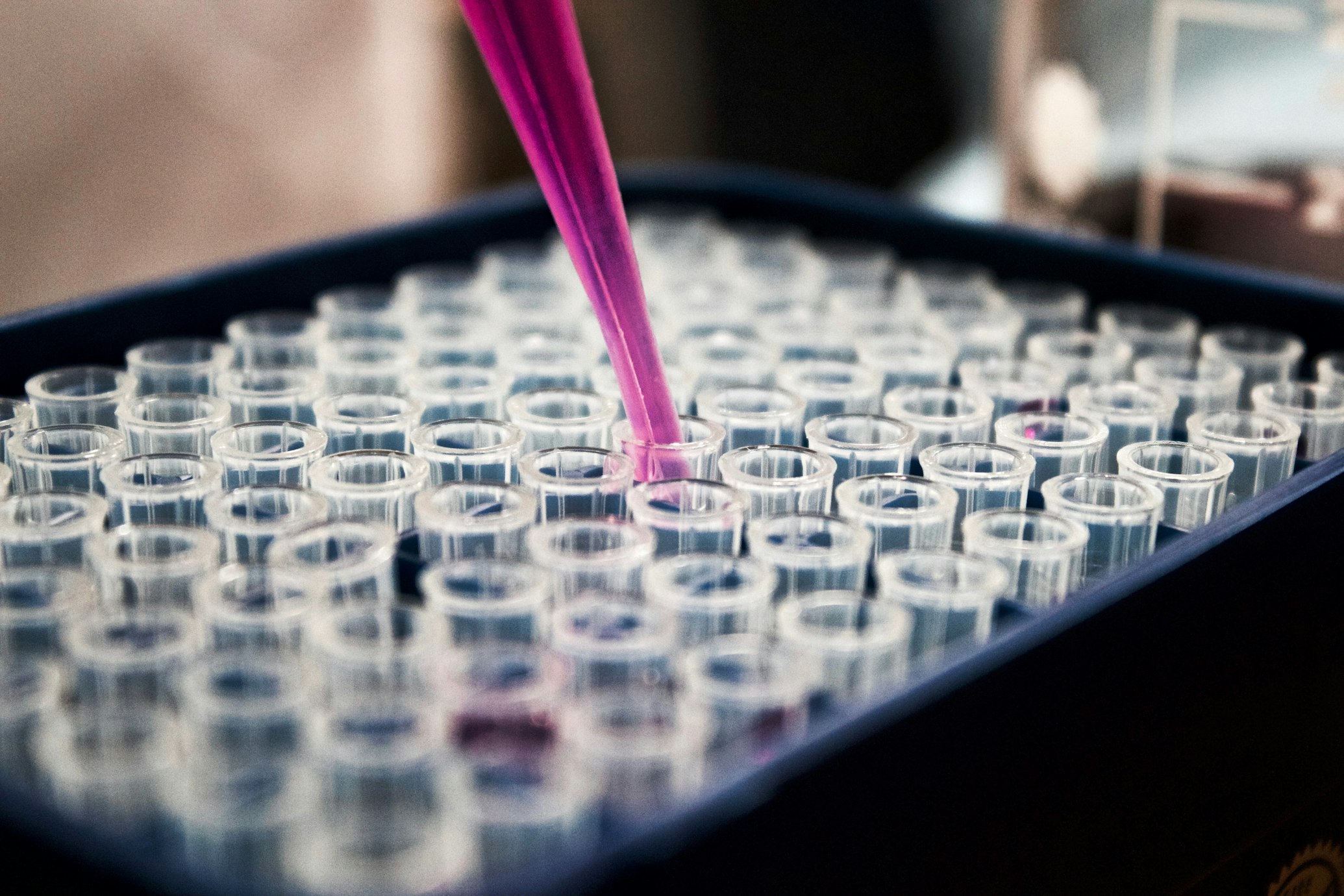
3D Bioprinting Process
Precision deposition of bioinks containing cells and growth factors.
Vascular Network Formation
Endothelial cells forming capillary-like structures in vitro.
The Future: Bioprinting, AI, and Personalized Bone Grafts
While prevascularized organoids are groundbreaking, challenges remain:
- Scalability: Producing clinical-grade organoids cost-effectively 5 .
- Nerve Integration: Vessels alone aren't enough—nerves regulate blood flow in bone 6 .
- Immune Compatibility: Ensuring off-the-shelf grafts avoid rejection .
Three Frontiers to Watch
4D Bioprinting
Scaffolds that change shape over time to guide vessel infiltration 7 .
Organoid-AI Fusion
Machine learning predicting optimal scaffold designs for individual patients .
Vascularized "Assembloids"
Combining bone, vessel, and immune cell organoids to mimic complex tissue environments 5 .
"The next decade will shift from replacing bone to regenerating it as a living, functional organ. Vascularization isn't just a feature—it's the foundation."
Conclusion: Engineering Life into Bones
Vascularization is the unsung hero of bone regeneration. By mimicking nature's blueprint—where blood and bone evolve together—researchers are moving beyond static implants to dynamic, living grafts. The 2025 bioprinting breakthrough is just one milestone in a journey toward on-demand, personalized bone repairs. As technologies converge (3D printing, stem cells, AI), the vision of lab-grown bones rivaling nature's own is no longer science fiction—it's clinical destiny.