The Hidden Language of Hydrogels
How Natural Sugars Are Revolutionizing Medicine
In the quiet laboratories where biology meets material science, researchers are decoding a secret language written in sugar—a discovery that could transform how we heal the human body.
Introduction: The Science of Healing from Within
Imagine a world where a broken bone could be repaired not with metal screws and plates, but with a soft, intelligent material that guides your own cells to regenerate the damaged tissue. Where diabetic ulcers that once resisted healing could be seamlessly closed using a substance that mimics the body's own environment. This isn't science fiction—it's the promise of advanced biomaterials known as hydrogels, three-dimensional networks of polymers that can hold up to 90% water while maintaining their structure.
Among the most exciting developments in this field are hydrogels made from natural polysaccharides, particularly two unusual sugars: dextran and pullulan. These natural polymers, derived from microbes rather than animals, represent a new generation of medical materials that communicate with the body in its own biological language. What scientists are discovering is that the specific ratio of these sugars in hydrogels creates a hidden code that determines how the body will respond—a finding that could unlock unprecedented control over the healing process .
Did You Know?
Hydrogels can absorb up to 90% of their weight in water while maintaining their structural integrity, making them ideal for mimicking natural tissues.
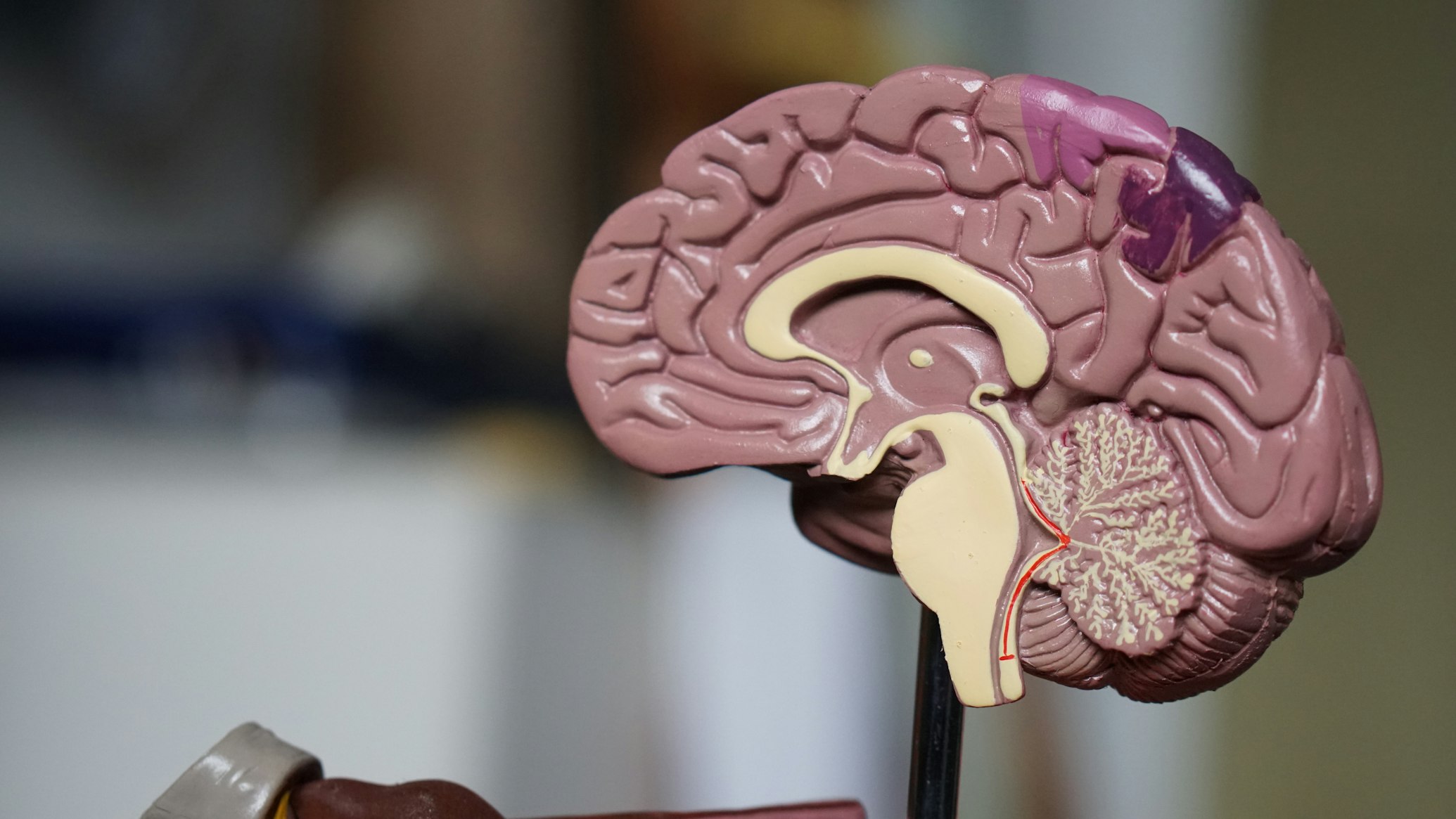
Advanced hydrogel research in a laboratory setting
The Building Blocks: Nature's Sweet Solution to Medical Challenges
At first glance, dextran and pullulan might seem like ordinary sugars, but their molecular architecture makes them uniquely suited for medical applications. Both are exopolysaccharides—compounds secreted by microorganisms into their surrounding environment. This origin story proves significant for their medical use: unlike animal-derived materials, they don't carry risks of disease transmission or provoke strong immune reactions .
Dextran, produced by bacteria such as Leuconostoc mesenteroides, has been used for decades as a blood plasma expander in emergency medicine. Its branched molecular structure creates a complex web of connections ideal for forming stable hydrogels. The dextran used in biomedical research typically has a molecular weight of around 500 kDa, providing the right balance between mechanical strength and biodegradability 2 .
Pullulan, synthesized by the fungus Aureobasidium pullulans, has a different architecture—a linear chain of glucose molecules with a unique linkage pattern that provides both flexibility and strength. With a typical molecular weight of 200 kDa for hydrogel research, pullulan contributes elasticity to the material while allowing for controlled degradation 2 .
What makes these polysaccharides particularly valuable is their versatility. They can be chemically modified and cross-linked to create materials with precise mechanical properties, and their numerous hydroxyl groups provide attachment points for bioactive molecules like growth factors or cell-adhesion peptides .
Key Characteristics of Dextran and Pullulan
| Characteristic | Dextran | Pullulan |
|---|---|---|
| Molecular Structure | Branched glucose polymer | Linear maltotriose repeats |
| Natural Source | Leuconostoc bacteria | Aureobasidium fungus |
| Molecular Weight (Typical) | 500 kDa | 200 kDa |
| Primary Role in Hydrogels | Provides rigidity | Provides elasticity |
| Historical Medical Use | Plasma expander | Pharmaceutical excipient |
Biocompatible
Low risk of immune rejection or disease transmission
Versatile
Can be chemically modified for specific applications
High Water Content
Mimics natural tissue environment
The Biocompatibility Experiment: Cracking the Sugar Code
For years, scientists had assumed that since both dextran and pullulan were naturally derived and generally biocompatible, hydrogels combining them would be similarly well-tolerated by the body. However, a pivotal study published in the Journal of Biomedical Materials Research revealed a more complex story—one where specific sugar ratios spoke a biological language that cells could understand 1 .
The Methodology: Crafting the Sugar Spectrum
Researchers designed an elegant experiment to decode this language. They created four different hydrogel formulations with varying ratios of dextran to pullulan:
- PSH-D: 100% dextran
- PSH-D(75)P(25): 75% dextran, 25% pullulan
- PSH-D(50)P(50): Equal parts dextran and pullulan
- PSH-P: 100% pullulan
The hydrogels were synthesized using sodium trimetaphosphate (STMP) as a cross-linking agent in an alkaline environment, a process that creates stable covalent bonds between the sugar molecules. The resulting materials were then carefully characterized to understand how the different compositions affected their physical properties 1 .
To test biological compatibility, the researchers implanted these hydrogels subcutaneously (under the skin) in a rat model—a standard approach for evaluating how materials interact with living tissue. The implants were left in place for 30 days, after which the surrounding tissue was examined to assess the body's response 1 .
Revelations from the Lab: A Tale of Two Sugars
The results revealed a clear relationship between composition and biological response. The 100% dextran hydrogel (PSH-D) showed the most favorable response, with minimal inflammation and a thin fibrous capsule formation—exactly what material scientists hope to see. Similarly, the 75% dextran formulation (PSH-D(75)P(25)) performed reasonably well 1 .
However, as the pullulan content increased, so did the body's inflammatory reaction. The 100% pullulan hydrogel (PSH-P) not only provoked stronger inflammation but also demonstrated another crucial limitation: it began to degrade significantly within the 30-day test period, while the other compositions remained largely intact 1 .
Meanwhile, mechanical testing revealed that pullulan content directly affected physical properties. As pullulan concentration increased, both the glass transition temperature and the maximum modulus decreased, making the hydrogels softer and less rigid 1 .
Experimental Results of Different Polysaccharide Compositions
| Hydrogel Composition | Inflammatory Response | Degradation Profile | Key Physical Properties |
|---|---|---|---|
| 100% Dextran (PSH-D) | Minimal inflammation, thin fibrous capsule | No significant degradation over 30 days | Highest modulus and glass transition temperature |
| 75%D/25%P (PSH-D(75)P(25)) | Moderate inflammatory reaction | No significant degradation over 30 days | Moderate mechanical properties |
| 50%D/50%P (PSH-D(50)P(50)) | Increased inflammatory reaction | No significant degradation over 30 days | Reduced modulus and transition temperature |
| 100% Pullulan (PSH-P) | Strongest inflammatory response | Significant degradation within 30 days | Lowest modulus and transition temperature |
The Scientific Significance
This experiment demonstrated that biocompatibility isn't a simple yes-or-no question—it exists on a spectrum influenced by specific material composition. The findings provided crucial design principles for tissue engineers:
- For applications requiring long-term stability (such as bone regeneration), dextran-rich formulations offer superior performance
- The mechanical properties of hydrogels can be fine-tuned by adjusting the dextran-to-pullulan ratio
- Different tissues might require different formulations based on their native environment and healing timeframe
As one researcher noted, "This in vitro and in vivo data can be used in the design of hydrogels appropriate for tissue engineering applications" 1 —acknowledging that the true value of the research lies in its practical application for designing better medical materials.
The Scientist's Toolkit: Essential Tools for Hydrogel Innovation
Creating advanced polysaccharide hydrogels requires both natural building blocks and sophisticated laboratory techniques. The research toolkit has evolved significantly, moving beyond simple mixtures to precision engineering of material properties.
Research Reagent Solutions for Polysaccharide Hydrogels
| Reagent/Tool | Function | Application Notes |
|---|---|---|
| Dextran (500 kDa) | Provides structural rigidity and stability | Higher molecular weight increases mechanical strength |
| Pullulan (200 kDa) | Contributes elasticity and flexibility | Linear structure allows for tighter molecular packing |
| Sodium Trimetaphosphate (STMP) | Chemical cross-linker creating covalent bonds between polymers | Creates stable networks; concentration controls mesh density |
| Calcium Chloride (CaCl₂) | Ionic cross-linker for alginate-containing formulations | Enables double-network hydrogels with enhanced toughness |
| Alginate | Adds mechanical robustness through double-network formation | Particularly valuable for load-bearing applications 2 |
| Gamma Irradiation | Sterilization method that maintains structural integrity | Critical for clinical translation and implantation 2 |
Computational Modeling
Modern hydrogel development has been revolutionized by computational modeling and artificial intelligence. Researchers now use molecular dynamics simulations to predict how polymer chains will interact before ever stepping into the laboratory. Machine learning algorithms can analyze vast datasets of material properties and biological responses to suggest optimal formulations for specific medical applications 9 .
Advanced Fabrication
The fabrication methods have similarly advanced. Techniques like 3D bioprinting allow scientists to create complex, patient-specific scaffold architectures layer by layer. 4D bioprinting takes this further by designing materials that change their shape or properties over time in response to biological cues—creating dynamic structures that evolve with the healing process 7 .
Beyond the Basics: The Future of Intelligent Hydrogels
The future of polysaccharide hydrogels lies in making them smarter and more responsive. Recent research has focused on creating "double-network hydrogels" that combine the biocompatibility of natural polymers with enhanced mechanical strength. In one innovative approach, scientists added alginate to the pullulan-dextran system, creating a material with two interconnected polymer networks: one covalently cross-linked with STMP, the other ionically cross-linked with calcium chloride. The resulting membranes were strong enough to function as guided tissue regeneration barriers, preventing unwanted cell growth while promoting healing in target areas 2 .
Smart Hydrogels
The field is also seeing exciting developments in stimuli-responsive "smart" hydrogels that react to their environment. Temperature-sensitive variants can be injected as liquids that gel at body temperature, conforming perfectly to tissue defects. pH-sensitive formulations might release therapeutic drugs only in inflamed tissues where the acidity changes, creating targeted treatment systems 7 .
Clinical Translation
Perhaps most remarkably, these advances are increasingly being translated into clinical practice. Hydrogel-based products have already received FDA approval for applications ranging from aesthetic medicine to osteoarthritis treatment. Clinical trials are exploring their use for spinal fusion, heart failure, and diabetes—bringing us closer to a future where sugar-based materials routinely help heal human bodies 6 .
Conclusion: The Sweet Spot of Regenerative Medicine
The journey to decode the hidden language of polysaccharide hydrogels reveals a fundamental truth about medical innovation: the most advanced solutions often emerge from understanding and emulating nature's own designs. Dextran and pullulan, once simple microbial sugars, have become the building blocks for a new generation of medical materials that don't just replace tissue—they actively guide the body to heal itself.
As research continues, the delicate balance between composition and compatibility remains at the heart of hydrogel design. Each ratio of dextran to pullulan tells a slightly different story to the body's cells, and scientists are steadily learning to speak this language with greater fluency. The future of healing may well be written in sugar—a sweet promise of better medicine ahead.

The future of medicine lies in biomaterials that work with the body's natural healing processes