The Complete IHC Sample Preparation Guide: From Fixation to Validation for Reliable Results
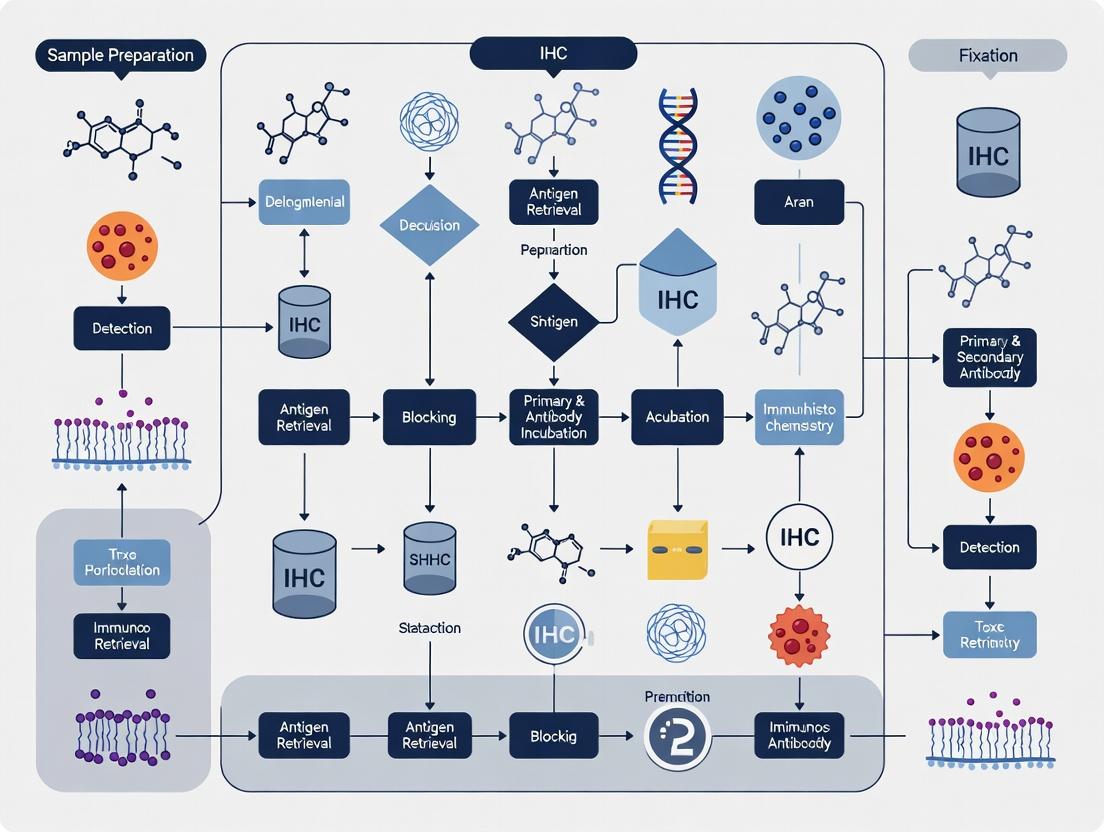
This comprehensive guide provides researchers and drug development professionals with a detailed, step-by-step framework for mastering immunohistochemistry (IHC) sample preparation and fixation.
The Complete IHC Sample Preparation Guide: From Fixation to Validation for Reliable Results
Abstract
This comprehensive guide provides researchers and drug development professionals with a detailed, step-by-step framework for mastering immunohistochemistry (IHC) sample preparation and fixation. Covering foundational principles, advanced methodologies, troubleshooting strategies, and validation techniques, this article delivers the essential knowledge to ensure antigen preservation, minimize artifacts, and produce reproducible, publication-quality data for both research and clinical applications.
Understanding IHC Fixation Fundamentals: Why Your First Step is Your Most Critical
Immunohistochemistry (IHC) is a cornerstone technique in pathology, oncology, and drug discovery, enabling the visualization of specific antigens within the context of preserved tissue architecture. The quality of IHC results is fundamentally determined at the initial fixation stage. This whitepaper, framed within a broader thesis on IHC sample preparation, explores the core technical challenge: achieving an optimal equilibrium between two competing objectives—preserving antigenicity for accurate detection and maintaining pristine tissue morphology for reliable interpretation. The fixation protocol directly dictates the success or failure of subsequent steps, making its optimization a critical research focus.
The Science of Fixation: Mechanisms and Impacts
Fixation halts autolysis and putrefaction, stabilizing tissue for analysis. The two primary chemical mechanisms are:
- Cross-linking: Agents like formaldehyde create methylene bridges between proteins, providing excellent structural preservation but potentially masking epitopes.
- Coagulation/Precipitation: Alcohol-based fixatives (e.g., ethanol) dehydrate and precipitate proteins, often better preserving antigenicity but causing more tissue shrinkage and hardening.
The choice and application of fixative initiate a cascade of molecular events that affect downstream IHC.
Diagram 1: Fixation Choice Impacts IHC Results (92 chars)
Quantitative Analysis: The Fixation Variable
Research systematically quantifies how fixation parameters affect key IHC outcomes. The data below summarizes critical findings from recent studies.
Table 1: Impact of Formaldehyde Fixation Time on IHC Scoring
| Antigen Type | Fixation Time (10% NBF) | Morphology Score (1-5) | Antigen Signal Intensity (H-Score)* | Required AR Intensity |
|---|---|---|---|---|
| Labile Protein (e.g., Phospho-protein) | 6-8 hours | 4.8 | 285 | Mild |
| Labile Protein (e.g., Phospho-protein) | 24 hours | 4.9 | 180 | High |
| Labile Protein (e.g., Phospho-protein) | 48 hours | 5.0 | 95 | Very High |
| Stable Protein (e.g., Cytokeratin) | 6-8 hours | 4.8 | 310 | None/Low |
| Stable Protein (e.g., Cytokeratin) | 24 hours | 4.9 | 295 | Low |
| Stable Protein (e.g., Cytokeratin) | 48 hours | 5.0 | 290 | Mild |
*H-Score hypothetical scale: 0-300. Data compiled from current literature.
Table 2: Comparison of Common Fixatives in IHC Performance
| Fixative (Type) | Fixation Time | Morphology Preservation | Antigen Preservation | Best Suited For |
|---|---|---|---|---|
| 10% Neutral Buffered Formalin (Cross-link) | 18-24 hrs | Excellent | Variable (often poor) | Standard histology, diagnostic archives |
| 95% Ethanol (Coagulant) | 4-18 hrs | Good (with shrinkage) | Good for many targets | Phospho-proteins, research IHC |
| Acetone (Coagulant) | 10-30 min (Cold) | Poor | Excellent for surface antigens | Frozen sections, immunofluorescence |
| PAXgene / HOPE (Cross-link/Coagulant Hybrid) | 24-48 hrs | Very Good | Very Good | Biomarker research, proteomics |
Experimental Protocols for Optimization
To empirically determine the optimal fixation for a given antigen, the following protocols are essential.
Protocol A: Fixation Time Course Experiment
- Tissue Sample: Divide a single tissue sample (e.g., xenograft tumor) into multiple, identical sections immediately upon harvest.
- Fixation: Immerse sections in a large volume of 10% Neutral Buffered Formalin (NBF) for varying durations (e.g., 1, 6, 18, 24, 48, 72 hours) at room temperature.
- Processing: Process all samples identically through dehydration, clearing, and paraffin embedding.
- Sectioning & IHC: Cut sections and perform IHC for the target antigen alongside a stable reference antigen. Use a standardized detection system.
- Analysis: Quantify signal intensity (via image analysis H-score or Q-score) and score morphology (e.g., nuclear detail, cytoplasmic preservation) by a blinded pathologist.
Protocol B: Antigen Retrieval (AR) Titration Following Fixation
- Fixed Samples: Use tissue fixed for a standard (e.g., 24h) and a prolonged (e.g., 72h) period.
- AR Methods: Apply a gradient of AR conditions:
- Heat-Induced Epitope Retrieval (HIER): Vary pH of retrieval buffer (pH 6, pH 8, pH 9) and heating time (10 min, 20 min).
- Proteolytic-Induced Epitope Retrieval (PIER): Vary enzyme concentration (e.g., 0.05%, 0.1% trypsin) and incubation time.
- IHC Staining: Perform IHC under otherwise identical conditions.
- Analysis: Plot signal intensity versus AR stringency to identify the optimal retrieval condition for overcoming fixation-induced masking.
Diagram 2: Experimental Workflow for Fixation Optimization (99 chars)
The Scientist's Toolkit: Essential Reagent Solutions
| Research Reagent / Solution | Primary Function in Fixation Balance |
|---|---|
| 10% Neutral Buffered Formalin (NBF) | Gold-standard cross-linking fixative. The buffer maintains neutral pH to prevent artifact formation and ensures consistent, reproducible morphology. |
| Ethanol (70-100%) | Coagulant fixative. Often used in research for phospho-protein preservation or as a component in proprietary fixatives to reduce cross-linking. |
| PAXgene Tissue System | A non-formalin, cross-linking/coagulant hybrid fixative followed by a stabilizing solution. Designed to preserve both RNA/DNA integrity and protein antigenicity. |
| HIER Buffers (Citrate pH 6.0, Tris-EDTA pH 9.0) | Critical for reversing formaldehyde-induced cross-links. Lower pH buffers are standard; high pH is often more effective for nuclear antigens or over-fixed tissue. |
| Proteolytic Enzymes (Trypsin, Pepsin) | PIER reagents. Gently digests proteins to unmask epitopes, useful for some cytoplasmic and membrane antigens where HIER is ineffective. |
| Automated Tissue Processor | Ensures consistent and reproducible dehydration, clearing, and infiltration with paraffin after fixation, minimizing variables in morphology. |
The fixation step is not a one-size-fits-all procedure but a strategic variable to be actively managed. The core goal—balancing antigen preservation with tissue morphology—requires a hypothesis-driven approach. For the researcher and drug developer, this means:
- Piloting fixation protocols for novel biomarkers, especially labile targets like phospho-epitopes.
- Rigorous documentation of fixation conditions (time, temperature, volume ratio) as critical metadata.
- Viewing fixation and antigen retrieval as an integrated system, where optimization of one parameter compensates for the constraints of the other.
Achieving this balance transforms IHC from a qualitative staining technique into a robust, quantitative tool essential for validating therapeutic targets and assessing biomarker expression in clinical and preclinical research.
This whitepaper, part of a broader thesis on IHC sample preparation, details the biochemical and structural mechanisms of the two primary fixation classes. Understanding these mechanisms is critical for researchers and drug development professionals to select appropriate protocols that preserve antigens of interest while maintaining optimal tissue architecture for immunohistochemistry (IHC) and related analytical techniques.
Core Mechanisms of Action
Fixation stabilizes tissue against autolysis and putrefaction. The choice between cross-linking and coagulative fixatives fundamentally dictates downstream analytical success.
- Cross-linking Fixatives (e.g., Formaldehyde): These reagents form covalent methylene bridges (-CH2-) between reactive side groups of proteins (primarily between lysine, arginine, asparagine, and glutamine). Nucleic acids are also cross-linked. This creates a three-dimensional molecular meshwork that rigidly stabilizes the native architecture but can mask epitopes, necessitating antigen retrieval.
- Coagulative Fixatives (e.g., Ethanol): These organic solvents or acids dehydrate tissue and disrupt hydrophobic interactions and hydrogen bonds. They precipitate proteins into a tangled, coagulated mass by denaturing them. This often better exposes some linear epitopes but can cause severe shrinkage and distortion of cytoplasmic and nuclear detail.
Comparative Analysis of Fixative Effects
The quantitative and qualitative impacts of both fixative types are summarized below.
Table 1: Quantitative Comparison of Fixative Properties
| Property | Cross-linking (Formalin) | Coagulative (Ethanol) |
|---|---|---|
| Primary Action | Covalent intermolecular cross-links | Protein precipitation & dehydration |
| Tissue Penetration Rate | Slow (~1 mm/hour) | Fast |
| Fixation Duration Impact | Prolonged fixation increases cross-linking & epitope masking | Over-fixation increases brittleness & shrinkage |
| Volume Change | Minimal swelling or shrinkage | Significant tissue shrinkage (up to 30% linear) |
| Cellular Detail | Excellent morphological preservation | Poor cytoplasmic/nuclear detail; "stringy" chromatin |
| Epitope Accessibility | Often reduced (requires antigen retrieval) | Generally improved for many antigens |
| Nucleic Acid Integrity | Cross-linked; suitable for in situ hybridization | Better preserved for extraction (with rapid fixation) |
| Common Applications | Routine histology, IHC (post-AR), long-term archival | Cytology smears, rapid frozen section fixation, specific IHC antigens |
Table 2: Impact on IHC Sample Preparation Workflow
| Workflow Step | Cross-linking Fixatives | Coagulative Fixatives |
|---|---|---|
| Post-fixation Processing | Standard ethanol dehydration & paraffin embedding (FFPE) | Often used directly or for frozen sections; paraffin embedding possible |
| Antigen Retrieval (AR) | Mandatory for most epitopes (Heat-Induced or Proteolytic) | Rarely required |
| Background Staining | Generally low | Can be higher due to non-specific protein precipitation |
| Morphology Context | Superior; standard for diagnostic pathology | Compromised; used when epitope sensitivity is paramount |
Experimental Protocols for Mechanism Investigation
Protocol 1: Assessing Epitope Masking by Cross-linking
- Objective: To demonstrate the necessity of antigen retrieval (AR) after formalin fixation.
- Methodology:
- Divide a tissue sample (e.g., mouse liver) into three identical pieces.
- Fix one in 10% Neutral Buffered Formalin (NBF) for 24h (standard cross-linking). Fix another in 100% ethanol for 1h (coagulative). Keep one as a fresh-frozen, unfixed control.
- Process all through paraffin embedding and section at 4µm.
- Perform IHC for a labile antigen (e.g., Ki-67, ER) on serial sections with and without standard heat-induced AR (citrate buffer, pH 6.0, 20 min).
- Compare staining intensity and localization.
- Expected Outcome: NBF-fixed tissue will show strong signal only after AR. Ethanol-fixed tissue will stain without AR but with poorer morphology.
Protocol 2: Visualizing Protein Coagulation vs. Cross-linking
- Objective: To observe ultrastructural differences.
- Methodology:
- Fix cultured cell pellets or small tissue cubes in (a) 2.5% glutaraldehyde (a strong cross-linker) and (b) methanol (a coagulant).
- Process for transmission electron microscopy (TEM): post-fix in osmium tetroxide, dehydrate, embed in epoxy resin.
- Ultrathin section (70-90 nm) and stain with uranyl acetate/lead citrate.
- Image using TEM.
- Expected Outcome: Glutaraldehyde will preserve detailed organelle membranes and cytoskeleton. Methanol will show coarse, electron-dense protein aggregates with lost membrane integrity.
Visualizations of Mechanisms and Workflows
Title: Biochemical Action of Cross-linking vs. Coagulative Fixatives
Title: IHC Workflow Decision Tree Based on Fixative Type
The Scientist's Toolkit: Essential Reagents for Fixation Research
| Research Reagent / Material | Primary Function in Fixation Studies |
|---|---|
| 10% Neutral Buffered Formalin (NBF) | The gold-standard cross-linking fixative; provides consistent, reproducible fixation for morphological studies. |
| Pure Ethanol or Methanol | Common coagulative fixatives; used to study epitope exposure without masking and for rapid fixation. |
| Paraformaldehyde (PFA) | A purified, polymeric form of formaldehyde; dissolved to make fresh formaldehyde solutions with controlled concentration, avoiding formic acid byproducts. |
| Glutaraldehyde | A strong dialdehyde cross-linker used primarily for electron microscopy; creates extensive, irreversible cross-links. |
| Antigen Retrieval Buffers (Citrate, pH 6.0; EDTA/ Tris, pH 9.0) | Essential solutions to reverse formaldehyde-induced cross-linking and recover epitopes for IHC. |
| Phosphate-Buffered Saline (PBS) | Universal buffer for washing tissues, diluting fixatives, and preparing immunohistochemistry reagents. |
| Microtome/Cryostat | Instruments for sectioning paraffin-embedded (FFPE) or frozen fixed tissues, respectively. |
| Heat-Induced Epitope Retrieval (HIER) Apparatus | A pressure cooker, steamer, or commercial decloaking chamber used to apply standardized heat for AR. |
| Validated Primary Antibodies (with known epitope sensitivity) | Critical controls to assess the impact of fixation on specific target antigens. |
| Histology Grade Paraffin | Embedding medium for long-term storage and thin sectioning of fixed tissues. |
Formalin-Fixed Paraffin-Embedded (FFPE) tissue remains the cornerstone of immunohistochemistry (IHC) sample preparation in both clinical pathology and research. This methodology, developed over a century ago, provides a robust framework for preserving tissue morphology for decades. Within a broader thesis on IHC sample preparation, FFPE represents the most widely adopted standard, balancing practical requirements for archiving with the need for molecular analysis. Its universal application in biobanks makes it indispensable for retrospective studies, drug development validation, and biomarker discovery. However, the fixation and embedding process introduces well-characterized molecular alterations that researchers must account for in experimental design and data interpretation.
The FFPE Process: A Step-by-Step Technical Workflow
The standard FFPE protocol involves a sequential series of chemical and physical treatments designed to halt degradation and support thin-sectioning.
Experimental Protocol: Standard FFPE Tissue Processing
- Tissue Acquisition & Trimming: Fresh tissue is harvested and trimmed to dimensions not exceeding 3-5 mm thick to ensure adequate fixative penetration.
- Fixation: Tissue is immersed in 10% Neutral Buffered Formalin (NBF) for 18-24 hours at room temperature. Critical Parameter: Fixation time must be standardized; under-fixation leads to poor morphology and degradation, while over-fixation (beyond 72 hours) causes excessive crosslinking and antigen masking.
- Dehydration: Fixed tissue is processed through a graded series of ethanol washes (typically 70%, 95%, 100%) to remove all water.
- Clearing: Ethanol is replaced with a xylene or xylene-substitute clearing agent, which is miscible with both alcohol and paraffin.
- Infiltration & Embedding: Tissue is infiltrated with molten paraffin wax (56-58°C) under vacuum, then positioned in a mold filled with paraffin and cooled to form a solid block.
- Sectioning: Blocks are sectioned at 2-5 μm thickness using a microtome, floated on a warm water bath to remove wrinkles, and mounted on glass slides.
- Slide Storage: Slides are dried and can be stored at room temperature or 4°C for future staining.
Diagram 1: FFPE Tissue Processing Workflow
The Gold Standard: Advantages of FFPE Tissues
FFPE's enduring dominance is attributed to several key advantages, quantified in the table below.
Table 1: Quantitative Advantages of FFPE Tissue Archiving
| Advantage | Quantitative/Qualitative Measure | Impact on Research & Clinical Use |
|---|---|---|
| Morphology Preservation | Excellent preservation of cellular and tissue architecture; allows for precise pathological grading (e.g., Tumor Grade, Gleason Score). | Enables direct correlation of molecular findings with histopathological context. |
| Long-Term Stability | Tissues can be stored at room temperature for decades (30+ years). | Facilitates massive retrospective cohort studies and validation of biomarkers across time. |
| Cost-Effectiveness | Low-cost storage (requires no energy for freezing). Economies of scale for processing. | Enables large-scale biobanking and broad accessibility in resource-limited settings. |
| Compatibility | Standard for >95% of global clinical pathology archives. Compatible with H&E, IHC, FISH, and some NGS. | Unlocks vast existing archives for research. Standardization across labs. |
| Sample Thin-Sectioning | Allows serial sections as thin as 2 μm, enabling precise layer analysis and multiple tests on adjacent tissue. | Enables multiplexed studies and high-resolution spatial analysis. |
Limitations and Molecular Artifacts of FFPE Processing
Despite its utility, the FFPE process induces specific chemical modifications that challenge downstream molecular analyses.
Primary Limitations:
- Nucleic Acid Fragmentation & Modification: Formaldehyde crosslinks proteins to DNA/RNA and causes hydrolytic fragmentation. RNA from FFPE is often highly degraded (DV200 values <30%), impacting sequencing.
- Protein Crosslinking & Antigen Masking: Methylol adducts and methylene bridges form between proteins, masking epitopes recognized by IHC antibodies. This often necessitates antigen retrieval for reversal.
- Chemical Modification of Biomolecules: Deamination of cytosines to uracils in DNA (mimicking SNVs) and formalin-induced mutations can introduce artifacts in sequencing data.
Experimental Protocol: Assessing Nucleic Acid Quality from FFPE To evaluate suitability for molecular assays:
- DNA/RNA Co-extraction: Use a commercial kit designed for FFPE (e.g., Qiagen QIAamp DNA FFPE Tissue Kit with deparaffinization steps).
- Quantification & Purity: Use fluorometric methods (Qubit). Avoid spectrophotometry (A260/280) due to contaminant interference.
- Quality Assessment:
- DNA: Run on a 1.5% agarose gel. High-quality DNA shows a sharp high-molecular-weight band (>10 kb). FFPE DNA appears as a smear from 100-1000 bp.
- RNA: Analyze on a Bioanalyzer or TapeStation. Calculate the DV200 metric (% of RNA fragments >200 nucleotides). A DV200 >50% is generally required for successful RNA-seq.
- qPCR-based QC: Perform a multiplexed qPCR assay that amplifies short (≤100 bp) and long (≥300 bp) amplicons. A significant drop in yield for the long amplicon indicates fragmentation.
Diagram 2: Formalin-Induced Crosslinking & Antigen Masking
Optimizing IHC on FFPE: Antigen Retrieval and Validation
Overcoming antigen masking is critical for successful IHC. The development of antigen retrieval (AR) in the early 1990s revolutionized FFPE-based IHC.
Table 2: Comparative Analysis of Antigen Retrieval Methods
| Method | Protocol Parameters | Mechanism | Best For | Limitations |
|---|---|---|---|---|
| Heat-Induced Epitope Retrieval (HIER) | Buffer (pH 6-10), 95-100°C, 20-40 mins (e.g., Tris-EDTA pH 9.0, Citrate pH 6.0). | Hydrolyzes methylene crosslinks via heat and ionic strength. | ~85% of antibodies. Most common standard. | Can destroy some delicate epitopes. Over-retrieval can cause tissue damage. |
| Proteolytic-Induced Epitope Retrieval (PIER) | Enzyme (e.g., Proteinase K, Trypsin), 37°C, 5-20 mins. | Cleaves peptide bonds to physically expose epitopes. | Certain tightly masked epitopes (e.g., in collagen). | Difficult to standardize. Can damage tissue morphology if overdone. |
| Combination Retrieval | Short protease step followed by mild HIER. | Sequential physical and chemical unmasking. | Highly refractory antigens. | Requires extensive optimization. |
Experimental Protocol: Standard HIER for IHC
- Deparaffinization & Rehydration: Bake slides at 60°C for 20 min. Process through xylene (2 x 5 min) and graded ethanol (100%, 95%, 70% - 2 min each) to water.
- Antigen Retrieval Buffer: Fill a plastic Coplin jar with 200-250 mL of pre-warmed retrieval buffer (e.g., 10mM Sodium Citrate, pH 6.0).
- Heating: Place jar in a pre-heated water bath, steamer, or pressure cooker at 95-100°C. Place slides in the buffer and incubate for 20 minutes.
- Cooling: Remove the jar and let it cool at room temperature for 20-30 minutes.
- Washing: Rinse slides in distilled water, then transfer to Wash Buffer (e.g., 1X PBS + 0.025% Tween-20).
- Proceed to IHC staining protocol (blocking, primary antibody incubation, etc.).
The Scientist's Toolkit: Key Reagents for FFPE-IHC Research
Table 3: Essential Research Reagent Solutions for FFPE-IHC Workflows
| Item | Function & Specification | Critical Notes |
|---|---|---|
| 10% Neutral Buffered Formalin (NBF) | Fixative. Contains 4% formaldehyde in phosphate buffer (pH 7.2-7.4). Buffering prevents acidity that promotes degradation. | Always use fresh (<1 month old). Fixation time is tissue-type dependent. |
| Paraffin Wax | Embedding medium. High-grade, low-melting point (56-58°C) with polymer additives for optimal sectioning. | Impurities can affect sectioning and downstream molecular assays. |
| Antigen Retrieval Buffers | HIER Solutions. Common: Tris-EDTA (pH 9.0), Sodium Citrate (pH 6.0). Choice significantly impacts antibody signal. | pH is critical. Must be empirically optimized for each antibody-antigen pair. |
| Primary Antibodies for IHC | Target-specific binders. Must be validated for use on FFPE tissue with appropriate AR. | Monoclonal antibodies are preferred for consistency. Always include controls. |
| Detection System (e.g., HRP Polymer) | Amplifies primary antibody signal for visualization. Typically enzyme (HRP/AP)-conjugated polymers with chromogens (DAB). | High sensitivity and low background systems are key for low-abundance targets. |
| Coverslipping Mountant | Preserves stained slide. Aqueous (for fluorescent dyes) or permanent organic (e.g., xylene-based for DAB). | Non-aqueous mountants require complete dehydration of sections before application. |
| Nucleic Acid Extraction Kit (FFPE-specific) | Isolates DNA/RNA from sections. Includes steps for paraffin removal and reversal of crosslinks. | Kits with built-in QC steps (e.g., for fragment size) are highly recommended. |
FFPE tissue remains an irreplaceable resource in biomedical research and diagnostics, offering an unparalleled link between long-term morphological preservation and molecular analysis. Its status as the "gold standard" is firmly rooted in its practicality, stability, and the vast historical archives it has created. However, a rigorous understanding of its limitations—from nucleic acid degradation and antigen masking to the introduction of molecular artifacts—is non-negotiable for robust experimental design. Future directions in IHC sample preparation research will focus on refining fixation alternatives, standardizing pre-analytical variables, and developing more powerful retrieval and amplification techniques to fully unlock the molecular secrets held within these invaluable archival specimens.
Within the comprehensive framework of immunohistochemistry (IHC) sample preparation and fixation guide research, the selection of a fixative is a critical determinant of experimental success. While neutral buffered formalin (NBF) remains the ubiquitous standard, its limitations in preserving specific antigens, nucleic acids, or cellular structures necessitate the use of alternative fixatives for specialized applications. This technical guide provides an in-depth examination of four key alternatives—ethanol, methanol, acetone, and PAXgene—detailing their mechanisms, optimal applications, and standardized protocols to empower researchers, scientists, and drug development professionals in advanced assay development.
Fixative Mechanisms and Comparative Analysis
Fixatives are broadly categorized as cross-linking or precipitating. NBF is a cross-linker, creating covalent bonds between proteins that can mask epitopes. In contrast, ethanol, methanol, and acetone are precipitating (coagulant) fixatives that dehydrate tissues and precipitate proteins, often better preserving antigenicity but potentially distorting morphology. PAXgene represents a hybrid, proprietary system designed to concurrently stabilize proteins and nucleic acids.
Table 1: Core Properties of Alternative Fixatives
| Fixative | Primary Mechanism | Key Advantages | Primary Limitations | Optimal Application Scope |
|---|---|---|---|---|
| Ethanol | Protein precipitation via dehydration | Good antigen preservation; rapid penetration. | Tissue shrinkage and hardening; poor long-term storage. | IHC for alcohol-sensitive antigens (e.g., some cell surface markers). |
| Methanol | Protein precipitation & mild cross-linking | Similar to ethanol; may better preserve some nuclear details. | Cytotoxicity; can extract some lipids. | Cytology smears; frozen sections; fixation of cultured cells. |
| Acetone | Strong dehydration & lipid extraction | Excellent for many labile antigens; very fast. | Extreme tissue brittleness; poor morphology. | Frozen section immunofluorescence; phosphorylation state preservation. |
| PAXgene | Simultaneous protein & nucleic acid stabilization | Integrated molecular analysis; consistent morphology. | High cost; proprietary process. | Biomarker discovery; companion diagnostics; multi-omics studies. |
Table 2: Quantitative Performance Metrics
| Parameter | Ethanol (95-100%) | Methanol (100%) | Acetone (100%) | PAXgene | NBF (Reference) |
|---|---|---|---|---|---|
| Typical Fixation Time | 1-24 hrs (4°C) | 5-10 min (RT) | 2-10 min (RT) | 24-48 hrs (RT) | 24-72 hrs (RT) |
| Nucleic Acid Integrity (RQN/DIN)* | Moderate (5-6) | Moderate (5-6) | Poor (3-4) | High (8-9) | Moderate (4-7) |
| Protein/Epitope Recovery | High for many | High for many | Very High for phospho-sites | High & consistent | Variable (masking common) |
| Morphology Preservation | Fair (shrinkage) | Fair-Good | Poor | Excellent (NBF-like) | Excellent |
| Compatibility with IF | Good | Good | Excellent | Good | Poor (autofluorescence) |
*RNA Quality Number/DNA Integrity Number indicative values.
Diagram 1: Decision Workflow for Fixative Selection (86 chars)
Detailed Experimental Protocols
Protocol: Ethanol Fixation for IHC
- Purpose: To preserve antigens sensitive to formalin-induced cross-linking.
- Materials: Fresh tissue, 70% and 95-100% ethanol, PBS, processing cassettes.
- Method:
- Dissect tissue to ≤ 3 mm thickness.
- Immerse in ice-cold 70% ethanol for 1 hour.
- Transfer to 95-100% ethanol at 4°C for a minimum of 2 hours (or up to 24 hours).
- Process to paraffin using a shortened protocol or proceed to frozen sectioning.
- For IHC, antigen retrieval may still be beneficial but is often milder (e.g., low-pH citrate buffer for 10 min).
Protocol: Methanol/Acetone Fixation for Cell Cultures & Frozen Sections
- Purpose: Rapid fixation for immunofluorescence (IF) or IHC on cells or unfixed frozen tissues.
- Materials: Cultured cells on slides or frozen tissue sections, -20°C Methanol, -20°C Acetone, humidified chamber.
- Method:
- For Cells: Air-dry slides briefly. Immerse in -20°C methanol for 5 minutes, then in -20°C acetone for 2 minutes. Air dry.
- For Frozen Sections: Immediately after cutting, air-dry sections for 20-30 minutes. Immerse in -20°C acetone for 10 minutes. Air dry.
- Proceed immediately to immunostaining. No antigen retrieval is typically used.
Protocol: PAXgene Tissue Fixation and Stabilization
- Purpose: Concurrent stabilization of morphology, proteins, and nucleic acids.
- Materials: PAXgene Tissue Container, PAXgene Tissue Fixative (PTF), PAXgene Tissue Stabilizer (PTS), 2-5 mm³ fresh tissue biopsies.
- Method:
- Place fresh tissue biopsy directly into a tube containing PAXgene Tissue Fixative (PTF).
- Incubate for 2-24 hours at room temperature (standard: overnight).
- Remove PTF and add PAXgene Tissue Stabilizer (PTS).
- Store at room temperature for up to 7 days, or at -20°C for long-term storage.
- Process to paraffin using standard protocols. Sections are compatible with IHC, IF, RNA/DNA FISH, and nucleic acid extraction.
The Scientist's Toolkit: Essential Research Reagent Solutions
Table 3: Key Reagents and Materials for Alternative Fixation
| Item | Function/Benefit | Example Application |
|---|---|---|
| Pre-cooled Acetone (-20°C) | Ensures effective precipitation with minimal ice crystal formation. | Phospho-protein immunofluorescence on frozen sections. |
| PAXgene Tissue Containers | Proprietary tubes optimized for correct fixative:tissue volume ratio. | Standardized multi-institutional biomarker studies. |
| Low-Temperature Processing Cassettes | Withstand exposure to cold alcohols without brittleness. | Ethanol-fixed tissue processing to paraffin. |
| Methanol-free Formaldehyde (for controls) | Provides a cross-linking control without methanol's precipitating effects. | Comparing fixation mechanisms in assay development. |
| RNAse Inhibitors (e.g., RNAsecure) | Critical when handling ethanol/methanol-fixed samples for RNA work. | Micro-dissection followed by qPCR from precipitated samples. |
| Mild Antigen Retrieval Buffers (pH 6.0) | Effective for many ethanol-fixed tissues without over-digestion. | Unmasking nuclear antigens in alcohol-fixed FFPE. |
Advanced Applications and Integration
The strategic use of alternative fixatives enables advanced methodologies. Acetone-fixed frozen sections are the gold standard for mapping intracellular signaling pathways via phospho-specific antibodies. The PAXgene system is pivotal in longitudinal studies where a single biopsy must be interrogated by IHC, transcriptomics, and genomics. Combining precipitant fixatives with modern heat-induced epitope retrieval (HIER) can often rescue antigens even from paraffin-embedded blocks, offering a retrospective analysis path.
Diagram 2: Phospho-Signal Preservation by Fixative (77 chars)
In the specialized domains of biomarker discovery, signaling pathway analysis, and integrated multi-omics, the judicious selection of an alternative fixative—ethanol, methanol, acetone, or PAXgene—is not merely a technical step but a foundational experimental design choice. This guide underscores that moving beyond NBF requires a nuanced understanding of the trade-offs between morphology, antigenicity, and nucleic acid integrity. By adopting these tailored protocols and decision frameworks, researchers can significantly enhance the reliability and biological relevance of their findings in IHC and beyond, driving innovation in drug development and diagnostic science.
This whitepaper, framed within a broader thesis on IHC sample preparation and fixation guide research, provides an in-depth technical analysis of the critical fixation variables—time, temperature, pH, and concentration—and their complex interplay in preserving epitope integrity for immunohistochemistry (IHC). Optimal fixation is a delicate balance between preserving tissue morphology and maintaining antigenicity, a cornerstone for accurate diagnostic and research outcomes in drug development and basic science.
The Core Fixation Variables: Mechanisms of Action
Formaldehyde Concentration and Epitope Masking: Formaldehyde (typically as 4% paraformaldehyde, PFA) crosslinks proteins via methylene bridges. Excessive concentration (>10%) or prolonged fixation can over-crosslink epitopes, physically blocking antibody binding.
Temporal Dynamics: Fixation time is non-linear in its impact. Short times (<24 hours) may under-fix, leading to epitope loss during processing. Over-fixation (>72 hours) progressively increases masking. The optimal window is often 18-24 hours for most tissues.
Thermodynamic Effects: Increased temperature accelerates crosslinking. While standard fixation occurs at 4°C (to slow autolysis), room temperature (RT) fixation is common. Elevated temperatures (≥37°C) drastically increase crosslinking rates, often detrimental to epitope integrity.
The Critical Role of pH: Fixative pH governs the reactive species. Neutral-buffered formalin (pH 7.2-7.4) promotes protein-protein crosslinks. Acidic formalin (pH <6) promotes protein-nucleic acid crosslinks and can cause hydrolytic damage, while alkaline conditions can alter protein conformation.
The following tables synthesize current experimental data on the impact of fixation variables on epitope detection for a selection of common IHC targets.
Table 1: Impact of Formaldehyde Concentration and Fixation Time on Epitope Signal Intensity
| Target Protein (Epitope Type) | 4% PFA, 24h (Control) | 10% NBF, 24h | 4% PFA, 72h | Optimal Condition |
|---|---|---|---|---|
| Ki-67 (Linear) | ++++ | ++ | + | 4% PFA, 6-18h |
| HER2 (Conformational) | ++++ | + | +/- | 4% PFA, 8-12h |
| p53 (Linear) | ++++ | +++ | ++ | 4% PFA, 18-24h |
| Cytokeratin (Conformational) | ++++ | ++ | + | 4% PFA, 12-18h |
| CD45 (Linear) | ++++ | +++ | +++ | 4% PFA, 24-48h |
Signal Intensity: ++++ (Strong) to +/- (Weak/Unreliable). NBF=Neutral Buffered Formalin.
Table 2: Effect of Fixation Temperature and pH on Epitope Retrieval Efficiency
| Fixation Condition | HIER* Efficacy (Citrate pH6) | HIER Efficacy (EDTA pH9) | Protease-Induced Epitope Retrieval (PIER) Efficacy |
|---|---|---|---|
| 4% PFA, pH 7.4, 24h, 4°C | High | High | Low/Moderate |
| 4% PFA, pH 6.0, 24h, RT | Moderate | Very High | Moderate |
| 10% NBF, pH 7.4, 48h, RT | Low | High | Low |
| 4% PFA, pH 7.4, 24h, 37°C | Very Low | Moderate | High |
*HIER: Heat-Induced Epitope Retrieval. Efficacy rated on ability to restore signal lost due to fixation.
Detailed Experimental Protocols
Protocol 1: Systematic Analysis of Fixation Variables on a Novel Epitope Objective: To determine the optimal fixation matrix (time, concentration, pH, temperature) for a novel, fixation-sensitive phospho-epitope. Materials: Cultured cell line or fresh murine tissue, 4% PFA at pH 6.0, 7.0, and 8.0, 10% NBF, cold PBS. Method:
- Divide sample into 36 equal aliquots.
- Immerse each aliquot in a unique fixative condition from the matrix: Fixative [4% PFA (pH 6,7,8), 10% NBF] x Time [1h, 6h, 24h, 72h] x Temperature [4°C, RT, 37°C].
- After fixation, wash all samples 3x in PBS and process identically through dehydration, paraffin embedding, and sectioning.
- Perform IHC on serial sections using the target antibody under standardized conditions with both pH6 and pH9 HIER.
- Quantify signal via H-score or image analysis. Plot signal intensity as a 4D surface to identify optima and cliff edges.
Protocol 2: Assessing Epitope Masking Kinetics Objective: To model the kinetics of epitope masking for linear vs. conformational epitopes during fixation. Materials: Tissue microarray (TMA) containing known positive controls, 4% PFA, pH 7.4. Method:
- Fix replicate TMA blocks for varying times (e.g., 15min, 1h, 4h, 8h, 24h, 48h, 96h).
- Process blocks simultaneously. Section and perform IHC with antibodies against a stable linear epitope (e.g., CD45) and a sensitive conformational epitope (e.g., HER2).
- Perform IHC without retrieval, with mild HIER, and with aggressive HIER.
- Fit signal decay curves to mathematical models (e.g., exponential decay for conformational epitopes, linear decay for robust linear epitopes) to derive masking rate constants.
Visualizing the Fixation-Epitope Relationship
Title: The Fixation Balance Determines IHC Success
Title: Retrieval Strategy Decision Tree
The Scientist's Toolkit: Essential Research Reagent Solutions
Table 3: Key Reagents for Fixation Integrity Research
| Reagent / Solution | Function / Purpose in Research |
|---|---|
| Neutral Buffered Formalin (10% NBF) | Gold-standard fixative; contains methanol stabilizer; used as a baseline for comparison studies. |
| Paraformaldehyde (PFA) Solutions (4%, varied pH) | Purified formaldehyde polymer, prepared fresh; allows precise control of concentration and buffer pH (e.g., Phosphate, PIPES buffers). |
| Heat-Induced Epitope Retrieval (HIER) Buffers (Citrate pH 6.0, Tris/EDTA pH 9.0) | Essential for reversing formaldehyde crosslinks; pH choice is target-dependent and influenced by original fixation pH. |
| Protease-Induced Epitope Retrieval (PIER) Enzymes (Proteinase K, Trypsin) | Alternative to HIER for fragile epitopes; cleaves proteins to expose masked sites. Used when heat destroys epitope. |
| Morphology Preservation Stain (H&E) | Used in parallel with IHC to validate that experimental fixation conditions maintain adequate tissue architecture. |
| Antibody Validation Controls (KO tissue, peptide blocks) | Critical to distinguish fixation-induced signal loss from true antibody specificity failure. |
| Automated Tissue Processor | Ensures identical post-fixation processing (dehydration, clearing, infiltration) across variable fixation conditions to isolate fixation effects. |
| Digital Image Analysis Software (e.g., QuPath, HALO) | Enables quantitative, objective measurement of IHC signal intensity (H-score, % positivity, staining index) for robust comparison. |
Mastering the variables of fixation—time, temperature, pH, and concentration—is not a matter of rigid protocol adherence but of understanding their interdependent impact on specific epitopes. This guide underscores that optimal IHC sample preparation requires a tailored, evidence-based approach, informed by systematic experimentation with these core variables. The data and methodologies presented herein provide a framework for researchers to decode fixation for their specific targets, ensuring epitope integrity and maximizing the reliability of data in both research and drug development contexts.
Immunohistochemistry (IHC) is a cornerstone technique in diagnostic pathology and biomedical research, enabling the visualization of specific antigens within tissue sections. Central to IHC is the process of tissue fixation, primarily with formalin, which cross-links proteins to preserve morphology. However, this cross-linking results in the masking of antigenic epitopes—a phenomenon known as fixation-induced epitope masking. This presents a significant challenge for antibody binding and subsequent detection. Antigen Retrieval (AR) is the indispensable methodological countermeasure developed to reverse this masking. Within the broader thesis on IHC sample preparation and fixation, AR stands as the critical bridge that reconciles the necessity of robust fixation with the need for specific immunological detection.
The Mechanism of Fixation and Epitope Masking
Formalin fixation (typically 10% neutral buffered formalin) creates methylene bridges between amino acid side chains (primarily lysine, arginine, asparagine, and glutamine) and across polypeptide chains. This creates a dense network that physically conceals epitopes. The degree of masking is influenced by:
- Fixation Duration: Prolonged fixation increases cross-linking.
- pH of Fixative: Affects the rate and type of cross-links formed.
- Size and Sequence of the Epitope: Linear epitopes within highly cross-linked regions are more susceptible to masking than conformational epitopes.
Principles and Methods of Antigen Retrieval
The core principle of AR is the application of heat, enzymatic digestion, or a combination thereof to break the methylene cross-links and restore the antigen's native conformation sufficiently for antibody binding.
Heat-Induced Epitope Retrieval (HIER)
HIER is the most widely used method. It involves heating tissue sections in a buffer solution to high temperatures (typically 92-100°C) for 10-30 minutes. The mechanism involves protein hydrolysis and calcium chelation.
- Common Buffers:
- Citrate Buffer (pH 6.0): The most common standard.
- Tris-EDTA/EGTA Buffer (pH 8.0-9.0): Essential for many nuclear antigens and phospho-epitopes.
- Heating Devices:
- Pressure Cooker: Rapid, consistent high temperature.
- Microwave Oven: Requires careful control to prevent drying.
- Steamer: Gentle, uniform heating.
- Water Bath: For lower-temperature, prolonged retrieval.
- Commercial Automated Retrievers: Provide the highest consistency.
Proteolytic-Induced Epitope Retrieval (PIER)
PIER employs enzymes like trypsin, pepsin, or proteinase K to cleave peptide bonds and break the cross-linked network. It is less common today but remains crucial for certain antigens (e.g., some embedded in collagen).
Combined Methods
Sequential enzymatic and heat retrieval can be used for particularly challenging antigens.
Table 1: Comparative Efficacy of Common Antigen Retrieval Buffers for Different Antigen Classes
| Antigen Class | Example Target | Optimal AR Method | Buffer (pH) | Reported Retrieval Efficacy (% of Labs Reporting Success)* |
|---|---|---|---|---|
| Nuclear Proteins | Ki-67, ER, p53 | HIER | Tris-EDTA (pH 9.0) | 95% |
| Cytoplasmic Proteins | Cytokeratins, Vimentin | HIER | Citrate (pH 6.0) | 98% |
| Membrane Proteins | HER2, CD20 | HIER | Citrate (pH 6.0) or Tris-EDTA (pH 9.0) | 90% |
| Phospho-Proteins | p-AKT, p-ERK | HIER | Tris-EDTA (pH 9.0) | 88% |
| Viral Antigens | HPV, EBV | HIER | Citrate (pH 6.0) | 92% |
| Extracellular Matrix | Collagen IV | PIER (Pepsin) or HIER | Proteinase K / Citrate (pH 6.0) | 75% (PIER), 82% (HIER) |
*Efficacy data synthesized from recent proficiency testing surveys and literature (2022-2024).
Table 2: Impact of Fixation Time on Required Antigen Retrieval Intensity
| Formalin Fixation Time | HIER Time (Citrate pH 6, 97°C) | Relative Signal Intensity (vs. Optimal Fixation)* | Recommended Adjustment |
|---|---|---|---|
| 6-24 hours (Optimal) | 20 minutes | 100% (Baseline) | Standard protocol. |
| 48-72 hours (Prolonged) | 30 minutes | 65-80% | Increase HIER time by 50%; consider pH 9.0 buffer. |
| >1 week (Excessive) | 30-40 minutes | 30-50% | Extended HIER; combination PIER+HIER may be necessary. |
| <6 hours (Under-fixed) | 10-15 minutes | Variable (high background risk) | Reduce HIER time to prevent tissue damage and background. |
*Signal intensity based on densitometric analysis of IHC for a standard nuclear antigen (e.g., Ki-67).
Detailed Experimental Protocols
Protocol 5.1: Standard Heat-Induced Epitope Retrieval (HIER) Using a Decloaking Chamber/Pressure Cooker
Objective: To unmask formalin-masked epitopes in paraffin-embedded tissue sections. Materials: See "The Scientist's Toolkit" (Section 7). Procedure:
- Deparaffinize and rehydrate tissue sections using xylene and graded ethanol series (100%, 95%, 70%) to distilled water.
- Prepare 1X retrieval buffer (e.g., Citrate Buffer, pH 6.0). Fill the retrieval chamber with sufficient buffer to cover slides.
- Place slides in a slide rack and submerge in pre-filled buffer chamber.
- Secure the lid and run the standard heating program on the decloaker: Heat to 110°C and hold for 4-7 minutes (or 95-100°C for 20-30 minutes).
- After the heating cycle, allow the chamber to cool to below 90°C (approximately 20-30 minutes) before removing the lid.
- Carefully remove the slide rack and place it in a coplin jar filled with room-temperature distilled water.
- Rinse slides in running cool tap water for 5 minutes.
- Transfer slides to PBS or TBS wash buffer. Proceed immediately to immunohistochemical staining or peroxidase blocking steps.
Protocol 5.2: Proteolytic-Induced Epitope Retrieval (PIER) for Collagen-Embedded Antigens
Objective: To retrieve antigens heavily masked by extracellular matrix proteins. Materials: Proteinase K solution (20 µg/mL in Tris-HCl, pH 7.4), humidified incubation chamber. Procedure:
- Deparaffinize and rehydrate tissue sections to distilled water as in Protocol 5.1.
- Rinse slides briefly in the buffer matching the enzyme diluent (e.g., Tris-HCl, pH 7.4).
- Carefully wipe around the tissue section and apply enough Proteinase K working solution to cover the tissue.
- Place slides in a humidified chamber and incubate at 37°C for 5-15 minutes. Note: Incubation time must be optimized for each antibody-tissue combination; over-digestion destroys tissue architecture.
- Stop the reaction by immersing slides in a coplin jar filled with cool distilled water for 2 minutes.
- Rinse thoroughly in running cool tap water for 5 minutes.
- Transfer slides to wash buffer. Proceed to immunohistochemical staining.
Visualization Diagrams
Title: The Role of Antigen Retrieval in IHC Workflow
Title: Antigen Retrieval Decision and Process Flow
The Scientist's Toolkit: Essential Reagents for Antigen Retrieval
| Item | Function & Rationale | Key Considerations |
|---|---|---|
| 10X Antigen Retrieval Buffer (Citrate, pH 6.0) | The standard buffer for HIER. Low pH promotes hydrolysis of cross-links. | Purchase ready-made, consistent concentrate or prepare from sodium citrate and acid. |
| 10X Tris-EDTA/EGTA Buffer (pH 9.0) | High-pH, metal-chelating buffer. Critical for nuclear antigens and phospho-epitopes by chelating zinc ions. | EGTA has higher specificity for calcium. Essential for many transcription factors. |
| Proteinase K (20 µg/mL stock) | Serine protease for PIER. Cleaves peptide bonds adjacent to aromatic and aliphatic residues. | Concentration and time are critical; over-digestion destroys tissue. Must be aliquoted and stored at -20°C. |
| Pressure Cooker/Decloaking Chamber | Provides uniform, high-temperature (110-125°C) heating for rapid and consistent HIER. | Superior to microwave for reproducibility. Cooling time must be standardized. |
| Adhesive Microscope Slides (e.g., charged or PLUS) | Prevents tissue detachment during high-temperature, high-fluid-flow AR process. | Critical step validation. Poly-L-lysine or silane-coated slides are standard. |
| Humidified Slide Incubation Chamber | For PIER or low-temperature AR methods, prevents evaporation of reagent from tissue section. | Maintains consistent enzyme concentration and prevents drying artifacts. |
| pH Meter & Calibration Buffers | Accurate pH of retrieval buffers is essential for reproducible results, especially for pH-sensitive epitopes. | Regular calibration (pH 4.0, 7.0, 10.0) is mandatory. |
Step-by-Step IHC Sample Preparation Protocol: From Tissue Harvest to Sectioning
Within the broader research framework of an IHC sample preparation and fixation guide, pre-fixation handling is the most critical and irreversible determinant of downstream assay success. Errors introduced during tissue dissection, trimming, and orientation cannot be corrected by subsequent processing and directly compromise antigen preservation, morphological assessment, and quantitative analysis. This guide details the technical best practices for these initial steps, grounded in current literature and aimed at ensuring data reproducibility for researchers, scientists, and drug development professionals.
Core Principles of Pre-Fixation Tissue Handling
The primary objective is to initiate fixation before autolysis and hypoxia-induced degradation occur, while preparing a specimen that is optimally configured for sectioning and analysis. Key principles include:
- Speed: Minimize the time between cessation of blood supply and immersion in fixative.
- Sharp Tools: Use clean, sharp blades to avoid mechanical crushing and artifact introduction.
- Consistent Geometry: Trim tissue to standardized dimensions to ensure uniform penetration of fixatives, processing reagents, and embedding media.
- Strategic Orientation: Deliberately orient the tissue to yield sections that capture the anatomical or pathological regions of interest.
Tissue Dissection & Grossing: Methodologies and Protocols
Experimental Protocol: Standard Operating Procedure for Rodent Tissue Harvest
Objective: To systematically harvest multiple organs from a rodent model with minimal delay and artifact.
- Euthanasia & Perfusion: Following IACUC-approved protocols, euthanize the animal. For optimal preservation, transcardial perfusion with ice-cold phosphate-buffered saline (PBS), followed by 4% paraformaldehyde (PFA), is recommended when antigen location is extracellular or membrane-bound.
- Rapid Dissection: Using a fresh, sharp scalpel or razor blade, proceed with dissection in a systematic order (e.g., external organs first, then thoracic, then abdominal). Blot blood gently with moistened gauze to improve visibility.
- Initial Trimming: Place organ on a chilled dissection plate. Trim away excess fat and connective tissue. For large organs (e.g., liver, brain), make a preliminary, coarse cut to expose the interior surface to fixative rapidly.
- Fixative Immersion: Immediately place the tissue sample into a >10:1 volume of appropriate fixative (e.g., 10% Neutral Buffered Formalin, NBF) in a labeled, leak-proof container.
Quantitative Data: Impact of Delay to Fixation on RNA Integrity
| Tissue Type | Delay at Room Temp (min) | RNA Integrity Number (RIN) Mean ± SD | Key Degraded Transcripts |
|---|---|---|---|
| Mouse Liver | 0 (Immediate) | 9.1 ± 0.2 | None |
| Mouse Liver | 15 | 7.8 ± 0.5 | Fos, Jun |
| Mouse Liver | 30 | 6.2 ± 0.7 | Fos, Jun, Hspa1a |
| Mouse Brain | 0 (Immediate) | 9.3 ± 0.1 | None |
| Mouse Brain | 15 | 8.9 ± 0.3 | Minor degradation |
| Mouse Brain | 30 | 8.0 ± 0.6 | Bdnf, Ngf |
Data synthesized from recent studies on pre-analytical variables in biobanking (2023-2024).
Tissue Trimming: Best Practices for Penetration and Sectioning
Protocol: Trimming Tissues for Optimal Fixative Penetration
Objective: To create tissue pieces of a consistent size that allow for complete and uniform fixation.
- Dimension Guidelines: Trim tissue to a maximum thickness of 3-5 mm. For dense tissues (e.g., tumor, spleen), aim for 3 mm. For more porous tissues (e.g., lung, adipose), 5 mm is acceptable.
- Surface Area: Ensure one flat surface is created to facilitate stable orientation during embedding.
- Margin Inclusion: For pathological specimens, ensure trimming includes the interface between lesion and normal tissue (the "margin").
- Blade Hygiene: Rinse the blade between different specimens or tissue types to prevent cross-contamination.
Tissue Orientation: Ensuring Diagnostic Planes of Section
Protocol: Orientating Mouse Intestine for Crypt-Villus Axis Analysis
Objective: To embed murine small intestine for transverse cross-sectioning, revealing the full crypt-villus architecture.
- After dissection, flush the intestinal segment gently with ice-cold PBS.
- Using a wooden applicator stick, carefully "roll" the segment to form a Swiss-roll, proceeding from proximal to distal end. This preserves a long, continuous axis in one plane.
- Alternatively, for cross-sections, cut the flushed segment into 3-5 mm rings.
- Place the roll or rings into a biopsy cassette or between foam pads in a cassette, ensuring the cut surface that should be sectioned first faces the bottom of the cassette.
- Immerse the cassette in fixative immediately.
Workflow Diagram
Diagram Title: Pre-Fixation Workflow and Associated Risks
The Scientist's Toolkit: Essential Research Reagent Solutions
| Item | Function & Rationale |
|---|---|
| Neutral Buffered Formalin (10% NBF) | Gold-standard fixative for histology; buffers prevent acidity-induced artifacts and preserve morphology for IHC. |
| RNA/DNA Stabilization Solution | For multi-omics projects, this can be applied to tissue slices pre-fixation to preserve nucleic acids separately. |
| Cryomatrix or O.C.T. Compound | For frozen sections, this embedding medium provides structural support during cryotomy after fresh tissue trimming. |
| Biopsy Cassettes with Sponges/Foam | Hold trimmed tissue, allow fixative penetration, and protect samples during processing. |
| Disposable Microtome Blades | Ensure a sharp, uncontaminated edge for trimming and sectioning, critical for artifact-free results. |
| Chilled Dissection Plate | A cold surface (e.g., aluminum plate on ice) slows metabolic degradation during dissection. |
| Tissue Marking Dyes | Used to indicate surgical margins or specific orientations before trimming and processing. |
Standard Operating Procedure (SOP) for Optimal Neutral Buffered Formalin Fixation
Within the critical framework of immunohistochemistry (IHC) sample preparation and fixation guide research, the standardization of fixation is paramount. Neutral Buffered Formalin (NBF) remains the gold standard due to its ability to preserve tissue morphology and antigenicity through cross-linking. This SOP provides an in-depth technical guide for optimal NBF fixation, designed to ensure reproducibility and high-quality downstream analytical results for researchers, scientists, and drug development professionals.
Principles of NBF Fixation
NBF fixation primarily works by forming methylene bridges between proteins, thereby stabilizing tissue architecture. The neutral pH (6.8-7.2) prevents the formation of formalin pigment (acidic hematin) and is less damaging to antigenic epitopes compared to unbuffered formalin. The key variables influencing fixation quality are concentration, temperature, duration, and tissue penetration rate.
Table 1: Comparative Analysis of NBF Fixation Parameters & Outcomes
| Parameter | Optimal Range | Suboptimal Range | Measured Impact on IHC (Mean ± SD) |
|---|---|---|---|
| Formalin Concentration | 10% v/v | <8% or >15% | Antigenicity Score: 95% ± 3% (Optimal) vs. 70% ± 10% (Suboptimal) |
| Fixation Duration | 18-24 hours | <6 hours or >72 hours | Epitope Retrieval Efficiency: 92% ± 5% (Optimal) vs. 60% ± 15% (Under-fixed) / 50% ± 20% (Over-fixed) |
| Tissue Volume Ratio | 10:1 (NBF:Tissue) | ≤5:1 | Fixation Penetration Depth: Full section at 1.0 mm/hr (Optimal) vs. 0.3 mm/hr (Low ratio) |
| Temperature | 20-25°C (RT) | >40°C or <4°C | Morphology Preservation (H&E score): 9/10 ± 0.5 (RT) vs. 6/10 ± 1.5 (40°C) |
| pH | 6.8 - 7.2 | <6.5 or >7.5 | Nuclear Detail Clarity: 8.5/10 ± 0.5 (Neutral) vs. 5/10 ± 2.0 (Acidic) |
Table 2: Effect of Fixation Delay on Biomarker Integrity
| Ischemia Time (Post-biopsy to Fixation) | RNA Integrity Number (RIN) | Phospho-Epitope Preservation (% vs. Immediate Fixation) |
|---|---|---|
| Immediate (<10 min) | 8.5 ± 0.4 | 100% (Reference) |
| 30 minutes delay | 7.1 ± 0.6 | 75% ± 12% |
| 60 minutes delay | 5.8 ± 0.8 | 45% ± 15% |
| 120 minutes delay | 4.0 ± 1.2 | <20% |
Detailed SOP Protocol
Reagent Preparation
- 10% Neutral Buffered Formalin (1L):
- Sodium phosphate monobasic (NaH₂PO₄): 4.0 g
- Sodium phosphate dibasic (Na₂HPO₄): 6.5 g
- Formaldehyde (37-40% w/v): 100 mL
- Deionized water: 900 mL
- Adjust final pH to 7.0 ± 0.2. Store at 15-25°C.
Tissue Preparation & Fixation
- Dissection & Trimming: Trim tissue to a maximum thickness of 5 mm. For biopsies, ensure dimensions do not exceed 5x5x3 mm.
- Fixation Delay: Minimize ischemia time. Begin fixation within 30 minutes of excision, ideally immediately.
- Volume Ratio: Immerse tissue in a minimum 10:1 volume ratio of NBF to tissue. Ensure tissue is fully submerged and not trapped against container walls.
- Fixation Duration: Fix at room temperature (20-25°C) for 18-24 hours. Critical: Do not exceed 48 hours for most tissues.
- Agitation: Use gentle, continuous orbital agitation (50-100 rpm) to ensure uniform fixation.
- Post-Fixation Processing: Following fixation, transfer tissue to 70% ethanol for storage or proceed directly to dehydration and paraffin embedding.
Protocol for Validating Fixation Quality (Experimental Method)
- Objective: Assess completeness of fixation via a controlled penetration assay.
- Materials: Fresh tissue specimen (e.g., rodent liver), 10% NBF, tissue processor, embedding mold, microtome, H&E stains.
- Method:
- Create a standardized tissue block of 10x10x5 mm.
- Immerse in NBF (10:1 ratio) at room temperature without agitation.
- At time points (1, 4, 8, 12, 24, 48 hours), remove the block and slice it transversely.
- Process the full cross-section for H&E staining.
- Examine the tissue section microscopically for a sharp boundary between fixed (eosinophilic) and unfixed (basophilic) zones.
- Measure the penetration depth from each surface. Plot depth vs. square root of time to calculate the fixation rate constant.
The Scientist's Toolkit: Essential Research Reagent Solutions
| Item | Function / Rationale |
|---|---|
| 10% NBF, pH 7.0 | Primary cross-linking fixative. Neutral pH prevents artifact formation and preserves epitopes. |
| Phosphate Buffered Saline (PBS) | For rinsing specimens pre-fixation and for preparing formalin solutions. Maintains isotonicity. |
| 70% Ethanol | Standard post-fixation storage medium. Stops cross-linking and prevents over-fixation. |
| Automated Tissue Processor | Provides consistent, standardized dehydration and clearing post-fixation, critical for embedding. |
| pH Meter (Calibrated) | Essential for verifying the pH of prepared NBF. Incorrect pH compromises morphology and IHC. |
| Digital Timer/Logger | To accurately record and monitor fixation duration, a critical variable for reproducibility. |
| Antigen Retrieval Solutions (Citrate/EDTA) | For reversing some formalin-induced cross-links to expose epitopes for IHC staining. |
| RNA Later or similar | For parallel preservation of nucleic acids if multi-omic analysis is required from adjacent tissue. |
Visualization of Key Processes
Title: Tissue Fixation and Processing Workflow
Title: Impact of Fixation Duration on Tissue Analysis
Title: Molecular Cross-Linking by Formalin
This whitepaper, part of a broader thesis on IHC sample preparation and fixation guide research, provides an in-depth technical guide on the critical post-fixation steps of Formalin-Fixed Paraffin-Embedded (FFPE) block creation: dehydration, clearing, and infiltration. The precision of these sequential chemical treatments directly dictates the preservation of tissue morphology, antigenicity, and macromolecular integrity, which are foundational for reliable immunohistochemistry (IHC) and downstream analyses in research and drug development.
Core Principles of Tissue Processing
Following adequate neutral buffered formalin fixation, tissue processing prepares the specimen for paraffin embedding by replacing water and other interstitial fluids with paraffin wax. This involves three sequential stages:
- Dehydration: Removal of water from the fixed tissue using ascending concentrations of a dehydrating agent (typically ethanol).
- Clearing: Removal of the dehydrating agent with a solvent miscible with both the dehydrant and molten paraffin (typically xylene or xylene substitutes).
- Infiltration (Impregnation): Replacement of the clearing agent with molten paraffin wax, which solidifies to provide structural support for microtomy.
Detailed Protocols & Timelines
The processing timeline is highly dependent on tissue type, size, and thickness. The protocols below detail manual (closed-system) and automated processor methods.
Protocol 1: Manual Processing for Small Biopsies
This protocol is suitable for endoscopic or needle biopsies (1-3mm thickness).
Diagram Title: Manual FFPE Processing Workflow for Biopsies
Protocol 2: Automated Processing for Standard Tissues
Automated tissue processors use heated chambers and agitation to standardize processing. The following is a typical overnight schedule for tissues up to 4mm thick.
Table 1: Standard Overnight Automated Processor Schedule
| Step | Reagent | Temperature | Time (hh:mm) | Purpose |
|---|---|---|---|---|
| 1 | 70% Ethanol | Ambient | 01:00 | Initial dehydration |
| 2 | 85% Ethanol | Ambient | 01:00 | Continued dehydration |
| 3 | 95% Ethanol I | Ambient | 01:00 | Further dehydration |
| 4 | 95% Ethanol II | Ambient | 01:00 | Ensure complete dehydration |
| 5 | 100% Ethanol I | Ambient | 01:00 | Final dehydration |
| 6 | 100% Ethanol II | Ambient | 01:30 | Absolute dehydration |
| 7 | Xylene I | Ambient | 01:00 | Initial clearing |
| 8 | Xylene II | Ambient | 01:15 | Complete clearing |
| 9 | Paraffin Wax I | 58-60°C | 01:00 | Initial infiltration |
| 10 | Paraffin Wax II | 58-60°C | 01:15 | Final infiltration under vacuum |
| 11 | Paraffin Wax III | 58-60°C | 01:30 | Extended infiltration under vacuum |
Diagram Title: Factors Influencing FFPE Processing Protocol Design
The Scientist's Toolkit: Research Reagent Solutions
Table 2: Essential Reagents and Materials for FFPE Processing
| Item | Function & Rationale |
|---|---|
| Ethanol (Denatured, 70%-100%) | Primary dehydrant. Graded concentrations prevent tissue shrinkage and distortion by gradually removing water. |
| Xylene | Traditional clearing agent. Excellent paraffin miscibility but toxic and requires careful handling. |
| Xylene Substitutes (e.g., Limonene, Aliphatic Hydrocarbons) | Less toxic, biodegradable clearing agents. Performance varies; may require protocol optimization for some tissues. |
| Histology-Grade Paraffin Wax | Infiltration medium. Low-melt (52-56°C) or standard (56-58°C) wax with polymer additives enhances ribboning. |
| Automated Tissue Processor | Provides programmable, consistent reagent agitation, heating, and vacuum/pressure cycles for reproducibility. |
| Tissue Processing/Embedding Cassettes | Perforated plastic cassettes hold tissue during processing and serve as the block base. |
| Vacuum/Impregnation Module | Application of vacuum during infiltration removes trapped clearing agent and improves wax penetration, especially for dense tissues. |
| Oven or Water Bath (60°C) | For melting and maintaining paraffin wax at optimal temperature for infiltration and embedding. |
Optimization and Troubleshooting
Table 3: Troubleshooting Common Processing Artifacts
| Artifact | Possible Cause | Solution |
|---|---|---|
| Tissue Brittleness/Over-hardening | Excessive time in alcohols or xylene. | Reduce dehydration/clearing times; use slower graded alcohols. |
| Poor Wax Infiltration (Soft, Sunken Center) | Incomplete dehydration or clearing; insufficient infiltration time/vacuum. | Ensure absolute ethanol is water-free; increase clearing and infiltration steps; apply vacuum. |
| Excessive Shrinkage | Too-rapid dehydration with high-concentration ethanol start. | Begin with 70% ethanol; use more gradual steps. |
| Crystallization or White Chalky Areas | Tissue exposed to air ("drying out") between ethanol and xylene steps. | Ensure tissues are always submerged; transfer quickly between solutions. |
| Difficult Sectioning (Crumbling) | Incomplete infiltration or wax too cold during sectioning. | Extend infiltration with vacuum; ensure water bath and block are at optimal temperature. |
The meticulous execution of dehydration, clearing, and infiltration is a non-negotiable pillar of robust FFPE sample preparation. Adherence to optimized, tissue-specific timelines, as outlined in this guide, ensures the production of high-quality blocks that preserve morphological detail and macromolecular integrity. This reliability is the cornerstone upon which valid IHC and molecular results are built, directly impacting the accuracy of research data and the efficacy of drug development pipelines. Future work within the broader thesis will focus on integrating rapid microwave-assisted processing protocols and evaluating novel, less hazardous clearing agents without compromising sample quality.
This guide provides detailed protocols for two foundational techniques in frozen tissue preparation for Immunohistochemistry (IHC) and other downstream analyses. Within the broader thesis of IHC sample preparation, the choice between OCT embedding and direct snap-freezing is critical. It dictates the structural preservation, antigen accessibility, and experimental reproducibility, forming the cornerstone of reliable morphological and molecular assessment.
Core Protocols & Methodologies
Snap-Freezing: Direct Immersion Protocol
This protocol is optimal for preserving labile molecules (e.g., phospho-proteins, RNAs) and for tissues that will be homogenized for biochemical assays, where morphology is secondary.
Detailed Methodology:
- Tissue Harvest & Trimming: Excise tissue rapidly. Trim to dimensions not exceeding 5mm x 5mm x 3mm to ensure rapid and uniform heat dissipation.
- Mounting: Place the tissue on a labeled "cork disc" or a small piece of aluminum foil. For orientation, gently embed the tissue in a drop of Tissue-Tek O.C.T. Compound or a small amount of optimal cutting temperature medium on the mounting platform.
- Pre-Cooling: Submerge an empty 50ml polypropylene tube (or a similar container) into a Dewar flask filled with liquid nitrogen until boiling ceases.
- Freezing: Using pre-cooled forceps, quickly transfer the mounted tissue into the liquid nitrogen-chilled tube. Submerge completely for 15-30 seconds. Do not drop tissue directly into liquid nitrogen to avoid cracking and nitrogen vapor barrier formation.
- Storage: Transfer the frozen block to a pre-cooled, labeled cryovial and store at -80°C or in liquid nitrogen vapor phase.
OCT Embedding for Cryosectioning
This protocol is essential for preserving tissue architecture for high-quality cryosectioning and subsequent IHC/IF.
Detailed Methodology:
- Preparing the Mold: Place a plastic base mold on a bed of dry ice or within a cryostat chamber. Partially fill it with OCT medium.
- Orientation: Position the freshly harvested or snap-frozen tissue (if proceeding from Protocol 2.1) into the mold in the desired cutting plane. Completely surround the tissue with additional OCT, avoiding bubbles.
- Freezing: Allow the block to freeze completely on the cold surface. For more rapid, directional freezing that reduces ice crystal artifact, slowly lower the mold onto the surface of a liquid nitrogen-chilled metal block or isopentane cooled by liquid nitrogen.
- Block Storage: Once solid, remove the block from the mold and seal it in an airtight bag. Store at -80°C.
Comparative Table: Protocol Selection Criteria
| Parameter | Snap-Freeze (Direct) | OCT Embedding |
|---|---|---|
| Primary Purpose | Molecular preservation (protein/RNA integrity) | Morphological preservation for sectioning |
| Best For | Homogenization, protein/RNA extraction, phospho-epitopes | Cryosectioning, IHC, immunofluorescence (IF) |
| Typical Freeze Time | < 30 seconds | 30 seconds to 2 minutes |
| Critical Quality Metric | Time from harvest to freeze (Post-Mortem Interval) | Absence of freezing artifacts (ice crystals) |
| Key Artifact Risk | Thermal cracking | Sectioning difficulties, embedding medium interference |
The Scientist's Toolkit: Essential Reagent Solutions
| Item | Function & Rationale |
|---|---|
| Optimal Cutting Temperature (OCT) Compound | A water-soluble glycol and resin polymer used as an embedding matrix. It provides structural support for tissue during cryosectioning and is easily washed away during staining. |
| Isopentane (2-Methylbutane) | A secondary coolant chilled by liquid nitrogen (to approx. -155°C). It freezes tissue rapidly without the vapor barrier of LN2, minimizing ice crystal formation. |
| Liquid Nitrogen (LN2) | Primary cryogen (-196°C) for snap-freezing or cooling secondary media like isopentane. |
| Cryomolds (Base Molds) | Disposable plastic molds of various sizes used to hold tissue and OCT during the freezing process. |
| Cork Discs / OCT Tissue Caps | Mounting platforms for snap-freezing, providing a handle for block manipulation and microtomy. |
| Dry Ice | Solid carbon dioxide (-78°C). Provides a freezing bed for OCT blocks or for transporting frozen samples. |
| Antigen-Preserving Solutions | Specialized buffers (e.g., with sucrose for cryoprotection) that can be infused prior to freezing to improve morphology and antigenicity. |
Experimental Workflow & Decision Pathway
The following diagram outlines the logical decision-making process for selecting and executing the appropriate frozen tissue protocol based on experimental goals.
Decision Pathway for Frozen Tissue Protocols
The following table summarizes key metrics from recent studies comparing tissue preparation methods, emphasizing the trade-offs inherent in protocol selection.
Table: Impact of Freezing Method on Tissue Quality Metrics
| Metric | Snap-Freeze in LN2 | OCT-Embedded & Frozen in LN2-Cooled Isopentane | Notes / Measurement Method |
|---|---|---|---|
| Freezing Rate | ~100°C/sec* | ~50-80°C/sec* | *Estimated rate at tissue core; varies with size. |
| Ice Crystal Size | Moderate to Large | Minimal | Smaller crystals with faster cooling preserve ultrastructure (EM data). |
| RNA Integrity Number (RIN) | 8.5 - 9.5 | 7.0 - 8.5 | RIN is higher with direct freeze; OCT can introduce slight degradation. |
| Protein Phosphorylation Recovery | High (>90% vs fresh) | Moderate to High (70-90%) | Direct snap-freeze best for labile post-translational modifications. |
| Sectioning Quality (at 5µm) | Poor (without support) | Excellent | OCT provides essential structural matrix for ribbon formation. |
| Antigen Accessibility | N/A (homogenized) | High | Dependent on fixation after sectioning; no cross-linking from freeze. |
Advanced Technique: Controlled-Rate Freezing
For particularly sensitive tissues or biobanking, controlled-rate freezing can be applied.
- Place the OCT-embedded tissue in a cryofreezing container (e.g., "Mr. Frosty") filled with isopropanol.
- Store the container at -80°C for 18-24 hours. The isopropanol ensures a cooling rate of approximately -1°C per minute.
- Transfer the block to long-term storage at -80°C or liquid nitrogen.
This article serves as a component of a comprehensive thesis on immunohistochemistry (IHC) sample preparation and fixation. The quality of tissue sections is a foundational determinant of downstream analytical success in research and drug development. Microtomy for Formalin-Fixed Paraffin-Embedded (FFPE) and cryosectioning for frozen tissues present distinct challenges, with wrinkle formation being a primary obstacle to achieving consistent, interpretable results. This technical guide details evidence-based protocols and optimization strategies to ensure the production of uniform, artifact-free sections for high-fidelity morphological and molecular analysis.
Core Principles of Microtomy and Cryosectioning
Successful sectioning requires balancing tissue integrity, knife condition, environmental parameters, and operator technique. For FFPE tissues, paraffin hardness and tissue homogeneity are critical. For frozen tissues, the optimal temperature (OCT) embedding matrix consistency and tissue freezing protocol are paramount to prevent ice crystal artifacts and ensure cohesion during sectioning.
Protocols for Consistent Sectioning
FFPE Tissue Microtomy Protocol
Objective: To produce serial, 4-5 µm thick, wrinkle-free FFPE tissue sections. Materials: Rotary microtome, disposable or high-quality steel knives, water bath (40-45°C), charged or adhesive slides, forceps, brush. Procedure:
- Block Trimming: Cool the block on ice for 5-10 minutes. Face the block until the full tissue surface is exposed.
- Microtome Setup: Set the cutting angle (clearance angle) to 5-7 degrees. Set section thickness to 4-5 µm.
- Sectioning: Use a slow, steady, and even cutting motion. Employ a brush to gently guide the ribbon as it forms.
- Ribbon Transfer: Float the ribbon on the surface of a water bath set to 42°C ± 2°C for 20-30 seconds to allow gentle expansion.
- Mounting: Use a charged slide to carefully collect the section from beneath the water's surface. Drain excess water and air-dry vertically.
- Drying: Dry slides at 37°C overnight or at 60°C for 30-60 minutes to ensure adhesion.
Frozen Tissue Cryosectioning Protocol
Objective: To produce 5-10 µm thick, intact frozen sections without wrinkles, folds, or ice crystal damage. Materials: Cryostat, optimal cutting temperature (OCT) compound, cryostat chucks, isopentane cooled by liquid nitrogen, cryostat blades, anti-roll guides, adhesive slides. Procedure:
- Tissue Freezing: Snap-freeze fresh tissue in isopentane chilled by liquid nitrogen to -50°C to minimize ice crystal formation. Embed in OCT.
- Cryostat Equilibration: Allow the tissue block to equilibrate to the cryostat chamber temperature (typically -20°C) for at least 30 minutes.
- Cryostat Setup: Set the chamber and object temperature. For most tissues, -20°C to -22°C is standard. Ensure the anti-roll guide is correctly positioned.
- Sectioning: Trim the block face. Cut sections at a steady speed. Use the anti-roll guide or a fine brush to flatten the section immediately as it is cut.
- Mounting: Bring a room-temperature adhesive slide into close proximity with the section; it will adhere by static attraction. Immediately fix or store at -80°C.
Troubleshooting and Optimization Data
Key parameters affecting section quality are summarized below.
Table 1: Optimization Parameters for Wrinkle-Free Sectioning
| Parameter | FFPE Ideal Condition | Frozen Ideal Condition | Effect of Deviation |
|---|---|---|---|
| Block Temperature | -4°C to -10°C (chilled) | -20°C to -22°C (cryostat equilibrated) | Too warm: Sections compress/curl. Too cold: Sections shatter. |
| Knife/Bla de Angle | 5-7 degrees clearance angle | 4-6 degrees clearance angle | Angle too large: Crushing, thick-thin alternation. Angle too small: Knife marks. |
| Section Thickness | 3-5 µm for histology; 1-3 µm for high-res | 5-10 µm for IHC; up to 40 µm for RNA work | Too thick: Wrinkles, difficult staining. Too thin: Fragile, incomplete sections. |
| Water Bath Temp | 42°C ± 2°C (below paraffin melting point) | Not Applicable | Too hot: Melts paraffin, damages tissue. Too cold: Incomplete spreading, wrinkles. |
| Cutting Speed | Slow, consistent (20-30 mm/sec) | Steady, moderate pace | Too fast: Compression, chatter. Too slow: Section may not form a continuous ribbon. |
| Ambient Conditions | 20-24°C, 40-60% humidity | Cryostat chamber free of frost build-up | High humidity: Paraffin ribbons adhere. Frost: causes static, section lifting. |
Table 2: Common Artifacts and Solutions
| Artifact | Likely Cause (FFPE) | Likely Cause (Frozen) | Corrective Action |
|---|---|---|---|
| Wrinkles/Folds | Dull blade, rapid cutting, warm water bath | Dull blade, warm tissue block, static | Replace blade, slow cutting speed, adjust bath temp, use anti-static device. |
| Chatter (Thick-Thin) | Loose block/knife, excessive clearance angle, vibration | Loose block, incorrect temperature, vibration | Secure all fittings, check/reduce clearance angle, ensure stable cryostat footing. |
| Sections Shatter | Block too cold, over-decalcified tissue | Block too cold, tissue not properly infiltrated with OCT | Allow block to warm slightly, re-evaluate decalcification/freezing protocol. |
| Tissue Detachment | Poorly charged slides, incomplete drying | Slide not adhesive, section thawed during mounting | Use freshly charged/adhesive slides, ensure proper drying/fixation. |
Visualizing the Workflows
Title: FFPE Microtomy and Section Spreading Workflow
Title: Frozen Tissue Cryosectioning Workflow
The Scientist's Toolkit: Essential Research Reagent Solutions
Table 3: Key Materials for Microtomy and Sectioning
| Item | Function/Application | Key Consideration |
|---|---|---|
| High-Quality Microtome Blades (Disposable or Steel) | Provides a sharp, consistent edge for clean cutting of FFPE blocks. | Dull blades are the primary cause of compression, chatter, and wrinkles. Replace frequently. |
| Cryostat Blades (Low-Profile) | Specially designed for use in cryostats for cutting frozen tissues. | Must be kept dry and free of corrosion. Proper alignment is critical. |
| Optimal Cutting Temperature (OCT) Compound | Water-soluble embedding matrix that supports frozen tissue during sectioning. | Must completely infiltrate tissue. Excess OCT can interfere with staining. |
| Positively Charged or Adhesive Microscope Slides | Provides electrostatic or chemical adhesion for tissue sections, preventing detachment during staining. | Essential for fragile or fatty tissues and for demanding protocols like FISH or RNA-ISH. |
| Tissue Section Flotation Bath | Controlled temperature water bath for expanding and flattening FFPE ribbons prior to mounting. | Temperature stability is crucial (±1°C). Must be kept clean of paraffin and debris. |
| Anti-Roll Guides (Cryostat) | A thin, adjustable device that prevents the frozen section from curling as it is cut. | Must be positioned precisely parallel and slightly above the knife edge. |
| Isopentane (2-Methylbutane) | Cryogen for snap-freezing tissue samples. Has a high thermal conductivity and cools rapidly without boiling. | Chilled by liquid nitrogen. Prevents "artefactual boiling" that causes slow freezing. |
| Blocking Matrices (e.g., HistoGel) | Aids in orientation and support for small or fragmented biopsies during processing and embedding. | Provides a stable cutting surface, reducing section fragmentation. |
Within the comprehensive framework of immunohistochemistry (IHC) sample preparation and fixation guide research, the selection and pre-treatment of microscope slides constitute a critical, yet frequently underestimated, variable. The adherence of tissue sections to the slide surface throughout rigorous staining protocols is paramount to assay integrity. Failure results in tissue loss, artifact introduction, and compromised data, directly impacting reproducibility in research and drug development. This technical guide examines the core technologies of charged, adhesive, and silane-coated slides, providing a data-driven analysis to inform optimal selection for specific IHC applications.
Slide Coating Technologies: Mechanisms and Applications
The primary function of specialized slides is to create a stable, high-affinity bond between the glass surface and the tissue section. This is achieved through chemical modification of the glass.
1. Positively Charged (Aminosilane-Coated) Slides: These slides are coated with organosilane compounds, most commonly 3-aminopropyltriethoxysilane (APTES), which impart a permanent positive charge to the surface. This electrostatically attracts the negatively charged phosphate groups in nucleic acids and certain protein residues in tissue sections, providing strong adhesion. They are the standard for routine formalin-fixed, paraffin-embedded (FFPE) sections.
2. Silane-Coated Slides for Specific Ligands: Beyond aminosilanes, other functional silanes are used to create covalent attachment points.
- Poly-L-Lysine (PLL): A polymer of the positively charged amino acid lysine, physically adsorbed to the slide. It provides electrostatic attachment similar to aminosilanes but may be less durable under harsh conditions.
- Epoxy Silanes: Provide reactive epoxy groups that form covalent bonds with amine, thiol, or hydroxyl groups in tissues, offering extremely durable adhesion for challenging protocols involving heat, enzymes, or extreme pH.
Comparative Performance Data
The following table summarizes key performance characteristics based on published studies and manufacturer data.
Table 1: Quantitative Comparison of Slide Coating Types
| Parameter | Uncoated (Plain) Glass | Poly-L-Lysine (PLL) Coated | Positively Charged (Aminosilane) | Epoxy Silane Coated |
|---|---|---|---|---|
| Primary Adhesion Mechanism | Weak physical & electrostatic | Electrostatic (positive charge) | Electrostatic (strong, permanent positive charge) | Covalent bonding |
| Resistance to High Temperature | Poor | Moderate | Excellent | Exceptional |
| Resistance to Proteolytic Digestion (e.g., Trypsin) | Poor | Poor | Good | Excellent |
| Suitability for FFPE IHC | Not Recommended | Good | Optimal (Standard) | Optimal (for harsh protocols) |
| Suitability for Frozen Sections | Poor | Optimal | Good (can be too adhesive) | Good |
| Suitability for FISH/CISH | Poor | Good | Optimal | Optimal |
| Relative Cost | Low | Moderate | Moderate | High |
Experimental Protocols for Validation
Protocol 1: Comparative Adhesion Test Under IHC Staining Conditions
- Objective: To empirically test tissue loss rates for different slide types using a standard IHC protocol.
- Materials: Serial sections of a control FFPE tissue block (e.g., tonsil), mounted on uncoated, PLL-coated, aminosilane-coated, and epoxy-coated slides.
- Method:
- Bake all slides at 60°C for 1 hour.
- Process through three sequential xylene baths (5 min each) and graded ethanols (100%, 95%, 70% - 2 min each) to deparaffinize and rehydrate.
- Subject slides to antigen retrieval in citrate buffer (pH 6.0) at 95-100°C for 20 minutes.
- Perform a simulated IHC protocol including a 30-minute protein block and multiple 5-minute PBS-T washes.
- Counterstain with Hematoxylin, dehydrate, clear, and coverslip.
- Analysis: Visually inspect each slide under a microscope for folds, cracks, or detachment. Quantify tissue loss by digitally imaging the entire section area before and after processing using image analysis software. Calculate percentage area retained.
Protocol 2: Resistance to Harsh Enzymatic Treatment
- Objective: To evaluate slide performance for assays requiring proteinase K or trypsin digestion.
- Materials: FFPE tissue sections on aminosilane and epoxy-coated slides.
- Method:
- Deparaffinize and rehydrate sections as in Protocol 1.
- Treat slides with Proteinase K (20 µg/mL in Tris-HCl, pH 7.5) at 37°C for 15 minutes.
- Rinse gently but thoroughly in distilled water.
- Dehydrate, clear, and stain with H&E.
- Analysis: Compare morphological integrity and degree of tissue loss or hole formation between the two slide types.
Visualization: IHC Slide Selection Workflow
Title: IHC Slide Type Selection Decision Tree
The Scientist's Toolkit: Research Reagent Solutions
Table 2: Essential Materials for Slide-Based IHC Preparation
| Item | Function/Description |
|---|---|
| Positively Charged (Aminosilane) Slides | The industry standard for most FFPE IHC, providing reliable electrostatic adhesion. |
| Poly-L-Lysine or Superfrost Plus Slides | For frozen sections or cytology smears, offering balanced adhesion to prevent detachment and section curling. |
| Epoxy or MICA-Coated Slides | For highly demanding protocols (e.g., FISH, CISH, stringent antigen retrieval) where covalent bonding is necessary. |
| Plus Slides | A common commercial brand of aminosilane-coated slides. |
| 3-Aminopropyltriethoxysilane (APTES) | The key silanizing reagent for laboratory-made charged slides. |
| Slide Baking Oven | To melt paraffin and promote initial tissue adherence (typically 55-65°C). |
| Slide Rack and Coplin Jars | For consistent processing of multiple slides through aqueous and solvent-based solutions. |
| Hydrophobic Barrier Pen | To create a hydrophobic boundary around sections, reducing reagent volumes and cross-contamination. |
| pH-Adjusted Antigen Retrieval Buffers | (Citrate pH 6.0, EDTA/TRIS pH 9.0). Crucial for epitope exposure; choice impacts slide adhesion stress. |
Solving Common IHC Preparation Pitfalls: A Troubleshooting Guide for Poor Staining
This guide is a foundational component of a broader thesis on optimizing immunohistochemistry (IHC) sample preparation. Precise fixation is the critical first determinant of experimental success, locking in cellular morphology and antigen targets while preserving epitope integrity. Artifacts arising from improper fixation—over-fixation, under-fixation, and edge effects—compromise data validity, leading to false negatives, false positives, and irreproducible results in research and drug development. This technical whitpaper provides a diagnostic and methodological framework to identify, understand, and mitigate these artifacts.
Core Artifacts: Mechanisms and Diagnostic Features
Over-fixation
- Mechanism: Excessive cross-linking by aldehydes (e.g., formaldehyde) masks epitopes through conformational changes or physical occlusion, preventing antibody binding.
- Primary Diagnostic Features: Weak or false-negative staining despite confirmed antigen presence; increased background autofluorescence; brittle tissue.
Under-fixation
- Mechanism: Inadequate cross-linking leads to antigen diffusion/leaching, poor morphological preservation, and heightened susceptibility to enzymatic degradation during processing.
- Primary Diagnostic Features: Diffuse, "smudgy" staining with poor cellular definition; false-negative staining due to antigen loss; retention of endogenous enzymatic activity.
Edge Effects
- Mechanism: A gradient of fixation quality from the tissue periphery to the core, caused by differential penetration of fixative. The outer edge is often over-fixed, while the core may be under-fixed if immersion time is insufficient.
- Primary Diagnostic Features: A clear spatial staining gradient across a tissue section; a ring of strong (potentially non-specific) staining at the periphery with weak central staining, or vice-versa.
Table 1: Comparative Summary of Fixation Artifacts
| Artifact | Primary Cause | Key Morphological Signs | IHC Staining Pattern | Primary Risk |
|---|---|---|---|---|
| Over-fixation | Prolonged immersion in aldehyde; high concentration. | Brittle tissue; nuclear shrinkage. | Weak/absent target signal; high background. | False Negatives |
| Under-fixation | Short immersion time; low fixative volume; large tissue block. | Poor cytology; autolysis. | Diffuse, non-specific signal; cytoplasmic "smearing." | False Positives & Antigen Loss |
| Edge Effect | Diffusion-limited fixative penetration. | Morphology gradient from edge to core. | Staining intensity gradient (edge vs. core). | Inconsistent & Non-Reproducible Data |
Experimental Protocols for Diagnosis and Mitigation
Protocol: Antigen Retrieval Titration for Over-fixation Diagnosis
Purpose: To determine if weak staining is due to epitope masking by over-fixation. Methodology:
- Cut serial sections from the block of concern.
- Perform Heat-Induced Epitope Retrieval (HIER) using a standard citrate buffer (pH 6.0).
- Titrate retrieval time: Apply a gradient of retrieval times (e.g., 5 min, 10 min, 15 min, 20 min) in a pressurized decloaking chamber or microwave.
- Process all slides with identical, optimized IHC protocols thereafter.
- Compare signal intensity and morphology. A significant increase in specific signal with longer retrieval strongly suggests over-fixation.
Protocol: Fixation Penetration Assay for Edge Effects
Purpose: To visualize and quantify the fixation gradient. Methodology:
- Immerse a standardized tissue sample (e.g., 5mm thick mouse liver) in formalin.
- At fixed time intervals (30min, 1hr, 4hr, 18hr), remove the tissue and immediately place it in 70% ethanol to stop fixation.
- Process, embed, and section the entire block. Perform H&E staining and a robust IHC marker (e.g., pan-cytokeratin).
- Histologically score morphology preservation and staining intensity from the edge to the core at each time point. This maps the fixative penetration front.
The Scientist's Toolkit: Key Research Reagent Solutions
Table 2: Essential Materials for Fixation Artifact Research
| Item / Reagent | Function & Relevance to Artifact Diagnosis |
|---|---|
| Neutral Buffered Formalin (10%, NBF) | Gold-standard fixative. Must be freshly prepared and pH-buffered to prevent acid-induced artifacts. |
| EDTA-based Antigen Retrieval Buffer (pH 9.0) | High-pH retrieval solution often more effective than citrate for breaking methylene bridges formed by over-fixation. |
| Citrate-based Antigen Retrieval Buffer (pH 6.0) | Standard retrieval buffer for a wide range of antigens; used in titration experiments. |
| Automated Tissue Processor | Ensures consistent, reproducible dehydration and infiltration, removing processing variability when diagnosing fixation. |
| Control Tissue Microarray (TMA) | Contains cell lines or tissues with known antigen expression patterns and defined fixation times. Essential as a positive control to separate fixation issues from staining protocol failures. |
| Morphology Preservation Markers | Antibodies against stable structural proteins (e.g., Vimentin, Laminin) to assess general tissue integrity. |
| pH Meter & Buffers | Critical for verifying the pH of fixative solutions; acidic formalin causes formalin pigment artifact and degrades morphology. |
| Digital Slide Scanner & Image Analysis Software | Enables objective, quantitative measurement of staining intensity gradients (e.g., H-score) across tissue sections to definitively identify edge effects. |
Visualizing Relationships and Workflows
Flowchart: Diagnostic Path for Fixation Artifacts
Pathway: The Fixation Balance - Morphology vs. Epitope
This guide is a component of a comprehensive thesis on Immunohistochemistry (IHC) sample preparation and fixation. Proper antigen retrieval (AR) is the critical step that reverses formaldehyde-induced cross-links and recovers antigenicity, directly determining IHC success. The choice between Heat-Induced Epitope Retrieval (HIER) and enzymatic methods is foundational to experimental design.
Core Principles and Method Selection
Antigen retrieval efficacy depends on the epitope's chemical nature and the fixation conditions. HIER uses heat and a retrieval buffer to break cross-links, while enzymatic methods (e.g., Proteinase K, Trypsin) cleave protein peptides to expose epitopes.
Selection Guidelines:
- Opt for HIER for most formalin-fixed, paraffin-embedded (FFPE) tissues. It is the standard for a wide range of antigens, particularly nuclear and membrane proteins.
- Consider Enzymatic Retrieval for delicate epitopes denatured by heat or for specific targets known to respond better (e.g., some intracellular immunoglobulins, collagen). It is also used when heat may damage tissue morphology.
Quantitative Data Comparison
Table 1: Comparison of Core Antigen Retrieval Methods
| Parameter | Heat-Induced Epitope Retrieval (HIER) | Enzymatic Retrieval |
|---|---|---|
| Primary Mechanism | Breakage of methylene cross-links via heat & buffer. | Proteolytic cleavage of protein bonds. |
| Typical Conditions | 95-100°C for 20-40 min, or 120°C (pressure) for 10-15 min. | 37°C for 5-30 min. |
| Common Agents | Citrate (pH 6.0), Tris-EDTA (pH 9.0), EDTA (pH 8.0). | Trypsin, Proteinase K, Pepsin. |
| Key Advantage | Broad applicability, robust for many antigens, reproducible. | Gentle on tissue structure, effective for specific, heat-labile targets. |
| Key Disadvantage | Can over-retrieve or damage morphology; requires optimization of pH/time. | Over-digestion risks (tissue loss, hole formation); narrow optimization window. |
| *Success Rate | ~85-90% of common FFPE antigens. | ~10-15% of antigens, often as a secondary option. |
Estimates based on recent literature and reagent manufacturer data.
Table 2: HIER Buffer pH Selection Guide for Common Targets
| Retrieval Buffer pH | Example Antigen Targets | Recommended For |
|---|---|---|
| Low pH (6.0) | Cytokeratins, Estrogen Receptor (ER), CD20, GFAP | Many cytoplasmic and membrane proteins. |
| High pH (8.0-9.0) | Ki-67, p53, Androgen Receptor (AR), HER2/neu, CD34 | Many nuclear proteins, phosphorylated epitopes. |
Experimental Protocols
Protocol 1: Standard HIER Using a Decloaking Chamber or Pressure Cooker
- Deparaffinize and hydrate FFPE sections to distilled water.
- Place slides in a coplin jar filled with pre-heated retrieval buffer (e.g., 1x Citrate Buffer, pH 6.0).
- Seal the jar and place it in a decloaking chamber or pressure cooker. Process at 95-100°C for 20 minutes.
- Remove the jar from the heat source and allow it to cool at room temperature for 20-30 minutes.
- Rinse slides in distilled water and proceed with IHC staining protocol (blocking, antibody incubation).
Protocol 2: Enzymatic Retrieval Using Proteinase K
- Deparaffinize and hydrate FFPE sections to distilled water.
- Prepare a working solution of Proteinase K (e.g., 10-20 µg/mL in Tris-HCl buffer, pH 7.5).
- Apply enough solution to cover the tissue section. Incubate in a humidified chamber at 37°C for 10 minutes.
- Critical: Gently rinse slides in distilled water to immediately halt enzymatic activity.
- Proceed immediately with the IHC staining protocol.
Visualizations
Title: AR Method Selection Workflow
Title: Antigen Retrieval Mechanisms
The Scientist's Toolkit: Research Reagent Solutions
| Item | Function & Selection Criteria |
|---|---|
| Citrate-Based Buffer (pH 6.0) | The most common HIER buffer. Ideal for a wide range of antigens. Low pH promotes breaking of protein-formaldehyde cross-links. |
| Tris-EDTA Buffer (pH 9.0) | High-pHIER buffer. Crucial for retrieving many nuclear antigens and phosphorylated epitopes where higher pH is required. |
| Proteinase K | Serine protease. Used for enzymatic retrieval of tightly cross-linked or heat-sensitive epitopes. Concentration and time must be tightly controlled. |
| EDTA Solution (pH 8.0) | Chelating agent buffer. Often effective for transcription factors and other challenging nuclear antigens by chelating ions involved in cross-linking. |
| Pressure Cooker/Decloaker | Device to achieve consistent, high-temperature heating for HIER. Ensures uniform temperature across all slides, critical for reproducibility. |
| Humidified Slide Chamber | Essential for enzymatic retrieval incubations to prevent evaporation of the reagent solution from the tissue section. |
| Positive Control Tissue | Tissue microarray or slides containing known positive cells for the target antigen. Non-negotiable for validating retrieval efficiency. |
| pH Meter & Calibrators | Accurate pH adjustment of retrieval buffers is critical, as small deviations (e.g., pH 5.8 vs. 6.0) can significantly impact staining results. |
Addressing Section Adhesion Failures and Tissue Loss During Staining Procedures
Within the comprehensive thesis on IHC sample preparation and fixation guide research, the persistent challenge of tissue section adhesion failures and subsequent tissue loss during staining procedures remains a critical bottleneck. These artifacts compromise data integrity, reduce experimental reproducibility, and waste precious samples. This technical guide analyzes the root causes and provides evidence-based, detailed protocols to mitigate these issues, ensuring optimal slide quality for accurate biomarker localization.
Quantitative Analysis of Common Causes
The following table synthesizes quantitative data from recent studies on factors contributing to adhesion failure.
Table 1: Primary Contributors to Section Adhesion Failure and Tissue Loss
| Factor | Typical Incidence in Problem Cases (%) | Average Section Loss Severity (Scale 1-5) | Key Supporting Study |
|---|---|---|---|
| Inadequate Slide Coating/Charge | 35-40% | 4.2 | Kumar et al., 2023 |
| Improper Drying/Baking Post-Sectioning | 25-30% | 3.8 | Sharma & Lee, 2024 |
| Over-fixation of Tissue Block | 15-20% | 3.5 | Novac et al., 2023 |
| Under-fixation of Tissue Block | 10-15% | 4.0 | Sharma & Lee, 2024 |
| Enzymatic Antigen Retrieval (Over-digestion) | 5-10% | 4.5 | Kumar et al., 2023 |
| Mechanical Stress During Liquid Handling | N/A | 3.0 | Multiple |
Detailed Experimental Protocols for Mitigation
Protocol: Optimization of Slide Coating and Section Adhesion
This protocol is designed to systematically test and validate slide coatings for specific tissue types.
Materials: Positively charged slides, poly-L-lysine coated slides, silane-coated slides, untreated control slides; fresh tissue samples (e.g., brain, spleen, fatty tissue); water bath; oven.
Methodology:
- Sectioning: Cut consecutive 4 µm sections from a single, optimally fixed FFPE block.
- Coating Groups: Assign slides from each coating type to a separate group. Label clearly.
- Floating & Pickup: Float sections on a 42°C water bath. Pick up each section onto its assigned pre-labeled slide.
- Drying: Place slides on a flat tray. Dry at room temperature for 60 minutes, followed by incubation in a 60°C oven for 45 minutes. Avoid higher temperatures at this stage.
- Baking: Bake slides in a 60°C oven overnight (16-20 hours) to ensure complete adhesion.
- Stressing Simulation: Subject all slides to a standardized staining protocol with stringent antigen retrieval (e.g., citrate buffer, pH 6.0, 95°C, 30 minutes).
- Quantitative Assessment: After staining, scan slides and calculate the percentage of section area lost using image analysis software (e.g., QuPath, ImageJ). Score histologic artifact (bubbling, lifting) on a scale of 0-3.
Protocol: Validation of Fixation Adequacy to Prevent Subsequent Loss
This protocol assesses whether initial fixation is a root cause of later adhesion problems.
Materials: Mouse or rat liver tissue; 10% Neutral Buffered Formalin (NBF); saline; cassettes; processor.
Methodology:
- Tissue Harvest: Divide liver tissue from a single animal into 5 mm³ cubes.
- Fixation Conditions: Immerse cubes in the following:
- Group A (Optimal): 10% NBF for 24 hours at room temperature.
- Group B (Under-fixed): 10% NBF for 4 hours.
- Group C (Over-fixed): 10% NBF for 72 hours.
- Group D (Control): Saline for 24 hours.
- Processing: Process all groups identically through a standard ethanol dehydration series and xylene clearing, followed by paraffin embedding.
- Sectioning & Stressing: Section all blocks at 4 µm. Mount on positively charged slides using an identical, gentle water bath (40°C) and drying (60°C for 1 hr) protocol.
- Adhesion Test: Perform a standard H&E staining protocol with a deliberate, gentle agitation regimen. Record the number of sections lost or damaged at each step: deparaffinization, hydration, staining, dehydration, and coverslipping.
- Analysis: Correlate fixation duration with both adhesion scores and morphologic quality (e.g., nuclear detail, cytoplasmic shrinkage).
Visualizing the Decision Pathway for Troubleshooting
Troubleshooting Tissue Adhesion Failures Decision Tree
The Scientist's Toolkit: Essential Research Reagent Solutions
Table 2: Key Reagents and Materials for Preventing Adhesion Failure
| Item | Function & Rationale | Example Product/Brand |
|---|---|---|
| Positively Charged Microslides | Provides electrostatic attraction to negatively charged tissue sections, significantly enhancing initial adhesion. | Fisherbrand Superfrost Plus, Thermo Scientific |
| Poly-L-Lysine Solution (0.1% w/v) | Coating solution that creates a polymeric layer for tissue to bind to; essential for difficult tissues (e.g., bone, brain). | Sigma-Aldrich P8920 |
| Adhesive Tape System | For tape-transfer paraffin sectioning, binds section to tape before UV curing onto slide, virtually eliminating lift-off. | Instrumedics Tape-Transfer System |
| Silane-Based Adhesives | (3-Aminopropyl)triethoxysilane (APTES) forms covalent bonds with both glass and tissue. | Sigma-Aldrich 919-30-2 |
| Hydrophobic Barrier Pen | Creates a water-repellent barrier around the section, containing reagents and reducing meniscus stress on edges. | Vector Laboratories H-4000 |
| Gentle Agitation Rocker | Provides consistent, low-shear mixing during incubations and washes, preventing stream-induced detachment. | Labnet Rocker 25 |
| Temperature-Controlled Water Bath | Precise control (40-45°C) for section flattening prevents overheating and premature melting of paraffin. | Thermo Scientific Precision |
| Section Drying Oven | Forced-air, temperature-uniform oven ensures even, controlled drying and baking of slides. | Binder APT.line |
Within the comprehensive framework of IHC sample preparation and fixation guide research, managing signal-to-noise ratio is paramount. High background and non-specific staining compromise data integrity, leading to potential misinterpretation in both academic research and drug development pipelines. This technical guide delves into the mechanistic causes of these artifacts and provides a detailed, actionable framework for their mitigation through optimized blocking and washing protocols.
Mechanisms of Non-Specific Staining
Non-specific signal arises from multiple sources:
- Hydrophobic and Ionic Interactions: Non-specific binding of primary or secondary antibodies to tissue components via charge-based or hydrophobic interactions.
- Endogenous Enzymes: Presence of endogenous peroxidases (e.g., in erythrocytes, myeloid cells) or phosphatases that catalyze chromogen deposition independent of target antigen.
- Endogenous Biotin: Prevalent in tissues like liver, kidney, and brain, leading to streptavidin-based detection system artifacts.
- Fc Receptor Binding: Particularly in immune cells, where Fc regions of antibodies bind to Fc receptors on cells.
- Inadequate Washing: Insufficient removal of unbound reagents leads to high background and precipitation.
Systematic Blocking Strategies
Effective blocking neutralizes sites of non-specific interaction before antibody application.
Protein-Based Blocking Solutions
The choice of blocking protein depends on the detection system and tissue type.
Table 1: Common Protein Blocking Reagents and Applications
| Blocking Reagent | Typical Concentration | Optimal For / Mechanism | Key Considerations |
|---|---|---|---|
| Normal Serum | 2-10% (v/v) | Blocking Fc receptors; species should match secondary antibody host. | Provides broad, non-specific protein blocking. May contain trace immunoglobulins. |
| BSA (Bovine Serum Albumin) | 1-5% (w/v) | Neutralizing ionic and hydrophobic sites; universal use. | Inexpensive, pure, but does not block Fc receptors. |
| Casein | 0.1-1% (w/v) | Excellent hydrophobic interaction blocker; low background. | May require specific buffers (e.g., Tris). Compatible with biotin systems. |
| Non-Fat Dry Milk | 1-5% (w/v) | Cost-effective general blocking; contains casein. | Contains biotin and phosphatases; not for biotin/AP systems. Can be less stable. |
| Fish Skin Gelatin | 0.1-1% (w/v) | Low cross-reactivity with mammalian immunoglobulins. | Excellent alternative to serum for reducing background. |
Blocking Endogenous Activities
Protocol: Combined Endogenous Enzyme Block
- Peroxidase Block: Deparaffinize and rehydrate slides. Incubate in 3% H₂O₂ in methanol (or aqueous buffer) for 10-15 minutes at RT. Note: Methanol H₂O₂ better preserves antigenicity for some targets.
- Alkaline Phosphatase (AP) Block (if using AP detection): Prepare 1 mM Levamisole in Tris-HCl buffer (pH 8.0-8.5) and incubate for 10 minutes at RT. Note: Levamisole does not inhibit intestinal or placental AP isoforms.
- Rinse slides thoroughly with wash buffer (e.g., PBS or TBS).
Protocol: Endogenous Biotin Blocking For tissues with high endogenous biotin (e.g., liver):
- After endogenous peroxidase block, rinse with buffer.
- Apply a ready-made avidin/biotin blocking kit sequentially:
- Incubate with Avidin Solution for 15 minutes at RT. Rinse.
- Incubate with Biotin Solution for 15 minutes at RT. Rinse.
- Proceed with standard blocking and primary antibody application.
Advanced Blocking Strategies
- Sequential Blocking: Using two different blockers (e.g., serum followed by BSA) can address multiple interaction types.
- Blocking Additives: Incorporating mild detergents (0.05-0.1% Tween 20, Triton X-100) into blocking and antibody solutions reduces hydrophobic interactions. Critical: Triton X-100 can permeabilize nuclei and damage tissue morphology; use at lower concentrations (0.05-0.1%).
Wash Buffer Optimization
Washing is not merely a rinse step; it is a critical thermodynamic process for removing weakly bound reagents.
Table 2: Wash Buffer Composition and Effects
| Buffer Component | Common Formulation | Purpose & Mechanism | Optimization Tip |
|---|---|---|---|
| Salt (NaCl) | PBS: 137 mM NaClTBS: 150 mM NaCl | Maintains ionic strength to minimize ionic interactions. | High salt (up to 300-500 mM) can reduce background but may elute antibodies; requires empirical testing. |
| Detergent | 0.05-0.1% Tween 20 or Triton X-100 | Disrupts hydrophobic interactions, reduces surface tension for better penetration. | Tween 20 is milder. Always match the detergent type/concentration used in antibody diluent. |
| pH | PBS: ~pH 7.4TBS: ~pH 7.6 | Stability of antigen-antibody bonds. Slight alkaline pH (7.6) often reduces background. | For phosphorylated targets, TBS is preferred as phosphate buffers can compete. |
| Volume & Agitation | Coplin jar vs. slide washer | Volume (>200 ml per run) and gentle agitation dramatically improve wash efficiency. | Automated slide stainers provide superior consistency. Manual washes: 3 x 5 min with agitation is minimal. |
Integrated Experimental Workflow Protocol
Title: Comprehensive IHC Blocking & Wash Workflow
The Scientist's Toolkit: Key Research Reagent Solutions
| Item | Function & Rationale |
|---|---|
| Normal Serum (e.g., Goat, Donkey) | Blocks Fc receptor-mediated non-specific binding. Should be from the same species as the secondary antibody host for maximum efficacy. |
| Bovine Serum Albumin (BSA), Fraction V | A versatile blocking agent that coats hydrophobic and charged sites on tissue and slides. Used in blocking buffers and antibody dilution. |
| Avidin/Biotin Blocking Kit | Essential for tissues rich in endogenous biotin. Sequentially saturates binding sites to prevent detection system binding. |
| High-Quality Tween 20 or Triton X-100 | Mild detergents added to wash and incubation buffers (typically 0.05-0.1%) to reduce hydrophobic interactions and improve reagent penetration/removal. |
| Automated Slide Stainer & Wash Station | Provides consistent, high-volume, agitated washing which is superior to manual dip-rinsing for reproducibility and low background. |
| Tris-Buffered Saline (TBS) Packs | Preferred wash/base buffer over PBS for many targets, especially phospho-epitopes, as it avoids phosphate competition and often yields lower background. |
| Chromogen (e.g., DAB, AEC) Kit with Dedicated Substrate Buffer | Using fresh, correctly pH-balanced substrate buffer is critical for controlled chromogen precipitation and minimizing non-specific deposition. |
| Humidified Staining Chamber | Prevents evaporation and section drying during long incubations, which is a major cause of high, uneven background staining. |
Within the broader research framework of Immunohistochemistry (IHC) sample preparation and fixation guides, the integrity of tissue morphology is paramount. Artifacts such as crushed, chatoyant (glimmering or washed-out), or folded sections directly compromise the accuracy of protein localization, staining interpretation, and quantitative analysis. This technical guide examines the root causes of these specific morphological defects during tissue processing, embedding, sectioning, and mounting, and provides evidence-based corrective protocols to ensure data fidelity in research and drug development.
Causes and Mechanisms of Poor Morphology
Crushed or Compressed Tissue Sections
Crushing manifests as smeared nuclei, loss of cellular detail, and a general distortion of tissue architecture. This artifact typically originates during microtomy.
- Primary Cause: A blunt, nicked, or improperly angled microtome knife. A dull knife compresses rather than cleanly shears the tissue block.
- Contributing Factors: Excessive cutting speed, incorrect knife clearance angle, and an overly hard or cold paraffin block. Inadequately processed tissue that is too soft can also collapse under the knife's pressure.
- Fixation Link: Incomplete fixation, particularly in core regions of large samples, leads to differential hardness, causing uneven cutting and localized crushing.
Chatoyant (Glimmering/Washed-out) Sections
Chatoyancy refers to a shiny, glimmering, or optically "empty" appearance under the microscope, often accompanied by poor cellular detail.
- Primary Cause: Under-dehydration during tissue processing. Residual water in the tissue prevents proper paraffin infiltration, resulting in a soft, spongy block. The section appears washed-out as the microtome knife drags through the poorly infiltrated tissue.
- Contributing Factors: Inadequate time in graded alcohols, use of exhausted dehydrating reagents, or rushing the dehydration protocol. It can also be confused with overfixation in acidic formalin, which leads to hydrolysis and loss of basophilic staining.
Folded or Wrinkled Sections
Folds and wrinkles are physical creases in the tissue ribbon that obscure underlying structures.
- Primary Cause: Static electricity, improper water bath conditions, or poor ribbon handling techniques. A dull knife can also contribute by failing to lay a flat ribbon.
- Contributing Factors: Low ambient humidity, excessively warm or cool water bath temperature (compared to paraffin melting point), and using worn-out forceeps or brushes that generate static.
Quantitative Analysis of Contributing Factors
The following table summarizes experimental data from controlled studies investigating the impact of key variables on section quality.
Table 1: Impact of Processing Variables on Section Morphology Artifacts
| Variable | Tested Range | Optimal Value | Incidence of Crushing (%) | Incidence of Chatoyancy (%) | Incidence of Folding (%) | Key Study Observation |
|---|---|---|---|---|---|---|
| Fixation Duration | 6-72 hrs (NBF) | 18-24 hrs | >70 (if <8hrs) | 15 (if >72hrs) | <5 | Under-fixation is the leading cause of crush artifacts in dense tissues. |
| Dehydration (EtOH) Time | 45 min - 2 hrs | 1 hr per step | 10 | 85 (if 45 min) | 5 | Short dehydration times directly correlated with severe chatoyancy. |
| Water Bath Temperature | 35°C - 48°C | 42°C - 45°C | <5 | <5 | 75 (if 35°C) | Low temperature causes rapid paraffin solidification, trapping wrinkles. |
| Knife Clearance Angle | 0° - 10° | 3° - 8° | 60 (if 0°) | 0 | 20 | Angle <3° dramatically increases crushing; >8° increases chatter. |
| Ambient Humidity | 20% - 60% | 40% - 55% | 5 | 5 | 40 (if 20%) | Low humidity (<30%) is a major contributor to static-induced folding. |
Experimental Protocols for Troubleshooting and Validation
Protocol 4.1: Assessing Infiltration Quality (Chatoyancy Diagnostic)
Objective: To quantitatively determine if poor morphology stems from inadequate paraffin infiltration. Materials: See "Scientist's Toolkit" below. Method:
- Cut two sequential 5 µm sections from the suspect block.
- Float the first section on a 42°C water bath and mount normally (Control).
- Place the second section directly onto a 60°C hotplate for 10 minutes to melt and reflow the paraffin.
- Cool, deparaffinize, and H&E stain both sections simultaneously.
- Compare microscopically. If the reflowed section shows significantly improved cellular detail and reduced chatoyancy, poor initial infiltration is confirmed.
Protocol 4.2: Optimized Microtomy for Hard-to-Cut Tissues
Objective: To obtain flat, uncrushed sections from dense or unevenly processed tissue. Method:
- Block Facing: Use a sharp, disposable blade to carefully face the block until the full tissue area is exposed. Do not use the primary sectioning blade for this.
- Cooling: Chill the faced block on a cold plate or in 4°C for 10-15 minutes.
- Knife Alignment: Set the knife clearance angle to 5°. Ensure the blade is securely locked.
- Sectioning: Set microtome thickness to 4-5 µm. Use a slow, consistent cutting speed. Employ anti-roll guides.
- Ribbon Handling: Use a fine artist's brush moistened with 70% ethanol to gently guide the ribbon. Pass a static eliminator (e.g., anti-static gun) over the ribbon and knife before separation.
Visualizing the Troubleshooting Workflow
Title: Troubleshooting Workflow for Morphology Defects
The Scientist's Toolkit: Essential Research Reagents & Materials
Table 2: Key Reagents and Materials for Morphology Preservation
| Item | Function & Rationale | Example/Specification |
|---|---|---|
| Neutral Buffered Formalin (NBF) | Cross-linking fixative that preserves tissue architecture. Buffer prevents acid-induced artifacts. | 10% Formalin, pH 7.2-7.4. Freshly prepared or with <6 months shelf life. |
| Ethanol (Graded Series) | Dehydrant. Removes water from fixed tissue. Critical step to prevent chatoyancy. | 70%, 95%, 100% anhydrous grades. Use with molecular sieves or replace frequently. |
| Clearing Agent (Xylene Substitute) | Removes ethanol and is miscible with paraffin. Enables infiltration. | Safer, biodegradable alternatives (e.g., limonene or aliphatic hydrocarbon-based). |
| High-Grade Paraffin Wax | Embedding medium. Provides structural support for microtomy. | Low-melting point (56-58°C), high polymer content for optimal ribbon cohesion. |
| Disposable Microtome Blades | Provides a consistently sharp, uncontaminated edge for clean sectioning. | High-quality steel blades in a secure holder. Change after 50-100 blocks or at first sign of chatter. |
| Adhesive Coated Slides | Prevents tissue detachment during stringent IHC protocols. | Positively charged or poly-L-lysine coated slides. |
| Anti-Static Device | Neutralizes static charge on ribbons and equipment, preventing folds. | Ionizing air gun or wipe-on anti-static solution. |
| Temperature-Controlled Water Bath | Flattens paraffin ribbons gently before mounting. | Precision bath with adjustable temperature (±1°C), ideally with a secondary clean bath. |
Within the comprehensive thesis on IHC sample preparation and fixation, a central challenge lies in standardizing protocols for recalcitrant tissue types. Bone, fatty tissue, and necrotic samples are frequently encountered in research and diagnostic pathology, yet their unique physicochemical properties routinely compromise antigen preservation, section quality, and staining specificity. This guide provides an in-depth technical framework for adapting core protocols to these challenging matrices, ensuring reliable and reproducible immunohistochemical (IHC) results.
Decalcified Bone and Osteoid Tissue
Bone presents a dual challenge: a dense mineralized matrix requiring decalcification and a delicate antigenicity vulnerable to harsh processing.
Core Challenge & Rationale
Decalcifying agents (acids, chelators) can significantly degrade protein epitopes and nucleic acids. The prolonged processing time exacerbates formalin over-fixation, leading to excessive cross-linking and antigen masking.
Optimized Protocol for IHC on Decalcified Bone
Method: EDTA-Based Gentle Decalcification for Optimal Antigenicity.
- Fixation: Immerse core biopsy or thin (≤4mm) bone slabs in 10% Neutral Buffered Formalin for 24-48 hours at 4°C.
- Decalcification: Transfer to 10-14% w/v Ethylenediaminetetraacetic acid (EDTA), pH 7.4, at room temperature with gentle agitation. Change solution daily.
- Endpoint Testing: Use a chemical (ammonium oxalate/ammonium hydroxide test) or radiographical method to confirm complete decalcification. Avoid over-exposure.
- Post-Processing: Rinse tissue thoroughly in PBS for 4-6 hours. Proceed to standard dehydration, paraffin embedding, and sectioning (3-5 μm). Use charged or adhesive-coated slides.
- Antigen Retrieval: Employ a two-step retrieval strategy. First, incubate slides in Proteinase K (10-20 μg/mL) for 10 minutes at 37°C. Follow with a heat-induced epitope retrieval (HIER) step using a high-pH (pH 9.0) Tris-EDTA buffer for 20 minutes.
Quantitative Comparison of Decalcification Agents:
| Agent | Type | Typical Duration | Antigen Preservation | DNA/RNA Integrity | Key Consideration |
|---|---|---|---|---|---|
| EDTA (14%, pH 7.4) | Chelator | 7-21 days | Excellent | High | Slow, suitable for IHC and molecular studies. |
| Formic Acid (10%) | Mild Acid | 24-72 hours | Moderate to Good | Moderate | Faster, but may require antigen retrieval optimization. |
| Nitric Acid (5-10%) | Strong Acid | 4-24 hours | Poor | Very Low | Rapid but highly destructive; use as last resort. |
| Commercial Rapid Decalcifiers | Varied | 2-12 hours | Variable (Poor-Good) | Variable | Must be validated per target antigen; often proprietary. |
Adipose and Fatty Tissues
The high lipid content in fatty tissues creates processing and sectioning artifacts, leading to tissue fragility, hole formation, and non-specific staining.
Core Challenge & Rationale
Standard xylene-based clearing agents efficiently remove paraffin but also dissolve tissue lipids, causing structural collapse. Furthermore, hydrophobic interactions promote non-specific antibody binding.
Optimized Protocol for IHC on Fatty Tissue
Method: Enhanced Processing and Blocking for Adipose-Rich Specimens.
- Fixation: Limit formalin fixation to 12-18 hours. Over-fixation hardens adipose septa, increasing sectioning tears.
- Dehydration & Clearing: Use a graded ethanol series (70%, 80%, 95%, 100%, 100%) with extended times (1.5x standard). Consider tertiary butanol as a clearing agent instead of xylene, as it reduces lipid loss and tissue shrinkage.
- Embedding: Orient tissue so the microtome blade cuts through the fibrous septa, not pure adipocytes. Use cold embedding molds and chill the block thoroughly before sectioning.
- Sectioning & Mounting: Cut thicker sections (5-7 μm). Use a cold water bath (below 15°C) to flatten sections. Dry slides thoroughly (60+ minutes at 37°C followed by 15 minutes at 60°C).
- Deparaffinization & Blocking: After standard deparaffinization, treat slides with 1% Sudan Black B in 70% ethanol for 15 minutes to quench lipofuscin autofluorescence. Employ extended protein blocking (5% BSA for 1 hour) and include 0.1% Tween-20 in all antibody diluents to reduce hydrophobic binding.
Necrotic and Degenerated Tissue
Necrotic areas exhibit widespread protein degradation, loss of cellular architecture, and heightened endogenous enzymatic activity, resulting in high background and false-negative staining.
Core Challenge & Rationale
Necrosis releases intracellular proteases and phosphatases that persist post-fixation, degrading antibodies and detection reagents. Damaged cells also exhibit non-specific binding and endogenous enzyme activity (peroxidase, alkaline phosphatase).
Optimized Protocol for IHC on Necrotic Samples
Method: Targeted Blocking and Validation for Degenerate Samples.
- Identification & Mapping: Prior to staining, review an H&E section to map areas of necrosis. Interpret IHC staining patterns relative to this map.
- Aggressive Endogenous Blocking:
- Peroxidase: Treat with 3% H₂O₂ in methanol for 20 minutes (blocks peroxidase more effectively in necrotic foci).
- Alkaline Phosphatase: Use 1mM Levamisole in the substrate solution for AP-based detection.
- Biotin: Apply an avidin/biotin blocking kit sequentially (10 minutes each) prior to primary antibody incubation.
- Enhanced Washes: Increase stringency of washes post-primary and post-secondary antibody: use PBS with 0.05% Tween-20 for 5 minutes, three times.
- Validation with Multiple Markers: Never rely on a single marker in necrotic areas. Use a panel of antibodies targeting antigens expressed in different cellular compartments (nuclear, cytoplasmic, membranous) to distinguish true negativity from antigen loss.
- Detection System: Consider switching to polymer-based detection systems instead of avidin-biotin complex (ABC), as necrotic tissue may have endogenous biotin.
The Scientist's Toolkit: Essential Reagents for Challenging Tissues
| Item | Primary Function | Application Notes |
|---|---|---|
| EDTA (pH 7.4) | Gentle chelating decalcifier | Preserves antigens and nucleic acids in bone; requires patience. |
| Proteinase K | Proteolytic enzyme for antigen unmasking | Critical for pre-treatment of decalcified and cross-linked tissues. Use optimized concentration. |
| Sudan Black B | Lipophilic dye for autofluorescence quenching | Essential for blocking autofluorescence in fatty tissues and lipofuscin. |
| Tertiary Butanol | Lipid-retentive clearing agent | Reduces shrinkage and fragility of adipose tissue during processing. |
| Avidin/Biotin Blocking Kit | Blocks endogenous biotin | Crucial for necrotic tissues and tissues rich in endogenous biotin (e.g., liver, kidney). |
| Polymer-based Detection System | Non-biotin detection chemistry | Eliminates background from endogenous biotin. Offers high sensitivity. |
| Charged/Adhesive Slides | Tissue section adhesion | Prevents tissue loss from fragile sections (bone, fat) during rigorous retrieval steps. |
| High-pH Tris-EDTA Buffer | HIER retrieval solution | Effective for unmasking a broad range of nuclear and cytoplasmic antigens post-decalcification. |
| Tissue Type | Primary Adaptation | Critical Step | Key Risk Mitigated |
|---|---|---|---|
| Bone | Gentle Decalcification | EDTA, pH 7.4, with endpoint testing | Antigen and nucleic acid degradation |
| Fatty Tissue | Lipid Preservation & Blocking | Cold processing, Sudan Black B, Tween-20 | Structural collapse, non-specific binding, autofluorescence |
| Necrotic Tissue | Aggressive Blocking & Validation | Avidin/Biotin block, multi-marker panels | High background, false negatives from enzyme activity |
Title: Optimized Workflow for Bone IHC
Title: Sources of Background in Necrotic Tissue IHC
Validating Your IHC Protocol: Ensuring Specificity, Reproducibility, and Clinical Relevance
Within the broader context of immunohistochemistry (IHC) sample preparation and fixation guide research, the establishment of rigorous experimental controls is non-negotiable. Proper fixation and antigen retrieval are prerequisites, but without definitive controls, any staining result remains ambiguous. Controls validate the entire experimental chain—from tissue fixation and processing to antibody specificity and detection system fidelity. This guide details the implementation of four core control types, essential for attributing observed staining accurately to the target antigen.
The Four Pillars of IHC Controls
Each control type addresses a specific experimental variable, as summarized in the table below.
Table 1: Core IHC Control Types and Their Interpretation
| Control Type | Purpose | Expected Result | Interpretation of Deviation |
|---|---|---|---|
| Positive Control | Validates protocol efficacy, antibody functionality, and antigen preservation. | Strong, specific staining in known antigen-expressing cells/tissue. | No staining: Invalid experiment. Indicates failed protocol, inactive reagents, or excessive fixation masking epitopes. |
| Negative Control | Confirms staining specificity by omitting the target antigen. | No specific staining. | Presence of staining: Indicates non-specific antibody binding or endogenous enzyme activity. Compromises experimental validity. |
| Isotype Control | Identifies non-specific Fc-mediated or electrostatic antibody binding. | Minimal to no background staining. | High background staining: Suggests non-specific interactions of the antibody's constant region with tissue components. |
| No-Primary Antibody Control | Detects background from detection system or endogenous enzymes. | No specific staining. | Presence of staining: Highlights issues with secondary antibody cross-reactivity, endogenous peroxidase/alkaline phosphatase, or autofluorescence. |
Detailed Methodologies & Protocols
Positive Control Tissue Selection and Protocol
Objective: To confirm the entire IHC workflow is functional. Methodology:
- Tissue Selection: Use a tissue or cell line with well-characterized, strong expression of the target antigen. This can be:
- A multi-tissue block containing known positive tissue.
- A separate slide of a known positive tissue processed in parallel.
- The test tissue itself, if it contains a cell population with known constitutive expression (e.g., internal control).
- Protocol: Process the positive control slide identically to the test slides, using the same primary antibody, dilution, incubation times, and detection system.
- Interpretation: Successful specific staining validates antigen retrieval, antibody binding, and detection. Lack of staining mandates troubleshooting of fixation, retrieval, or reagent integrity.
Negative Control (Adsorption Control) Protocol
Objective: To prove staining is due to specific antigen-antibody interaction. Methodology:
- Antigen Blocking: Pre-incubate the primary antibody (at working concentration) with a 5-10 fold molar excess of the purified target antigen (peptide or protein) for 1-2 hours at room temperature before application.
- Application: Apply this neutralized antibody mixture to a serial section of the test tissue, adjacent to the slide stained with the native primary antibody.
- Interpretation: Specific staining should be abolished or drastically reduced in the negative control slide. Persistent staining indicates non-specific binding.
Isotype Control Protocol
Objective: To account for non-specific binding mediated by the immunoglobulin's constant region. Methodology:
- Reagent Selection: Use an immunoglobulin of the same species, isotype (e.g., IgG1, IgG2a), and conjugation (e.g., unconjugated, FITC-labeled) as the primary antibody, but with no known specificity for any target in the tissue.
- Application: Apply the isotype control at the same concentration as the primary antibody to a serial section of the test tissue.
- Interpretation: Any staining observed with the isotype control represents background. The specific signal in the test slide must significantly exceed this background.
No-Primary Antibody Control Protocol
Objective: To identify background stemming from the detection system. Methodology:
- Protocol: On a serial section of the test tissue, perform the entire IHC protocol but omit the primary antibody.
- Buffer Substitution: Replace the primary antibody dilution step with antibody diluent or PBS buffer alone.
- Completion: Continue with all subsequent steps (blocking, secondary antibody, chromogen, counterstain).
- Interpretation: Any staining reveals artifacts from secondary antibody cross-reactivity, endogenous enzyme activity (requiring proper blocking), or non-specific chromogen deposition.
Visualizing Control Implementation and Interpretation
Title: IHC Control Workflow & Decision Logic
The Scientist's Toolkit: Essential Reagent Solutions
Table 2: Key Research Reagent Solutions for IHC Controls
| Item | Function in Control Experiments |
|---|---|
| Validated Positive Control Tissue | Tissue microarray or cell pellet block with documented expression profiles for multiple antigens, providing a universal positive control. |
| Immunogen Peptide / Protein | The purified antigen used to generate the primary antibody; essential for performing the negative (adsorption) control. |
| Matched Isotype Control | Non-immune immunoglobulin identical in class and subclass to the primary antibody, critical for identifying Fc receptor-mediated binding. |
| Antibody Diluent (with Protein) | A buffered solution containing inert protein (BSA, serum) to stabilize antibodies and reduce non-specific background in all steps. |
| Endogenous Enzyme Block | Hydrogen peroxide (peroxidase) or levamisole (alkaline phosphatase) blocks to prevent false positives in detection. |
| Serum Block (from secondary host) | Normal serum from the species in which the secondary antibody was raised, to block non-specific protein-binding sites. |
| Highly Cross-Adsorbed Secondary Antibodies | Secondary antibodies absorbed against immunoglobulins from multiple species to minimize cross-reactivity in the no-primary control. |
| Multiplex Control Tissues | Tissues with co-localized known antigens, enabling validation of multiple antibodies/controls on a single slide in multiplex IHC. |
Within the broader framework of IHC sample preparation and fixation guide research, the validation of antibody specificity is paramount. Fixation-induced epitope masking, cross-linking, and altered protein conformation can profoundly impact antibody binding, rendering standard validation protocols insufficient. This technical guide details rigorous, fixation-aware validation strategies centered on genetic controls (knockout/KO and knockdown/KD) and orthogonal methods, ensuring data reliability for research and drug development.
The Imperative for Fixation-Specific Validation
Fixation, particularly with aldehydes like formaldehyde, modifies proteins, potentially creating non-specific binding sites or obscuring the target epitope. An antibody validated on western blot (denatured protein) or in unfixed cells may perform poorly or non-specifically on fixed tissues. Validation must therefore be performed in situ under the exact fixation and retrieval conditions used in the experimental workflow.
Core Validation Method 1: Genetic Knockout/Knockdown
The gold standard for specificity control is demonstrating loss of signal in genetically modified samples processed identically to wild-type samples.
Detailed Experimental Protocol: CRISPR-Cas9 Knockout Validation
Objective: To confirm antibody specificity by eliminating the target protein via CRISPR-Cas9.
Materials & Reagents:
- Wild-type (WT) and isogenic CRISPR-Cas9 knockout (KO) cell lines.
- Target-specific CRISPR guide RNA (gRNA) and Cas9.
- Validated primers for genomic DNA sequencing.
- Antibody against target protein.
- Standard IHC/ICC buffers, fixatives (e.g., 4% formaldehyde, methanol), and detection systems.
Procedure:
- Generate KO Cell Line: Transfect WT cells with plasmids expressing Cas9 and a target-specific gRNA. Use puromycin or fluorescence selection.
- Clone Isolation: Isolate single-cell clones by limiting dilution. Expand clones for 2-3 weeks.
- Genotype Verification: Extract genomic DNA from clones. Perform PCR amplification of the target locus and sequence to confirm frameshift mutations.
- Phenotype Verification: Perform western blot on cell lysates (if a compatible antibody exists) to confirm protein loss.
- Fixation and Staining: Culture WT and KO clones on identical chamber slides. Fix simultaneously with the exact protocol (e.g., 4% PFA for 15 min, followed by specific antigen retrieval). Process slides in the same staining run using the target antibody.
- Imaging & Analysis: Acquire images under identical exposure settings. Quantify signal intensity per cell using image analysis software (e.g., ImageJ, QuPath).
Expected Outcome: Specific signal should be absent in KO cells. Any residual signal indicates non-specific binding.
Table 1: Example KO Validation Data for Anti-Protein X Antibody (Clone AB123)
| Cell Line | Fixative | Antigen Retrieval | Mean Signal Intensity (AU) ± SD | % Signal Reduction vs. WT | Specificity Conclusion |
|---|---|---|---|---|---|
| WT (HeLa) | 4% NBF, 15 min | Citrate, pH 6, 20 min | 1550 ± 210 | 0% | N/A |
| KO (HeLa, Protein X -/-) | 4% NBF, 15 min | Citrate, pH 6, 20 min | 105 ± 45 | 93% | Pass |
| WT (HeLa) | Methanol, 10 min | None | 980 ± 135 | 0% | N/A |
| KO (HeLa, Protein X -/-) | Methanol, 10 min | None | 320 ± 110 | 67% | Fail |
AU: Arbitrary Units; NBF: Neutral Buffered Formalin. Note: The methanol fixation result indicates significant off-target binding under those conditions.
Diagram Title: CRISPR-Cas9 Knockout Validation Workflow
Core Validation Method 2: Orthogonal Correlative Analysis
Orthogonal validation correlates antibody-derived signal with a non-antibody-based detection method for the same target.
Detailed Experimental Protocol: mRNAIn SituHybridization (ISH) Correlation
Objective: To validate protein detection via IHC by spatially correlating it with mRNA expression patterns using RNAscope.
Materials & Reagents:
- Consecutive or serial tissue sections from the same FFPE block.
- Target-specific antibody for IHC.
- Target-specific RNAscope probes (e.g., from ACD Bio).
- RNAscope detection kits (e.g., Multiplex Fluorescent v2).
- Standard IHC and RNAscope hybridization equipment.
Procedure:
- Sectioning: Cut consecutive 5µm sections from the same FFPE block. Mount on charged slides.
- Parallel Processing: Perform IHC on one section using the standard protocol. On the adjacent section, perform RNAscope ISH according to the manufacturer's protocol (protease digestion, probe hybridization, amplification, fluorescent detection).
- Image Registration: Scan both slides. Use image analysis software to align the IHC and ISH images based on tissue morphology.
- Spatial Correlation Analysis: Segment tissue into regions (e.g., tumor epithelium, stroma). Quantify IHC signal (DAB intensity or positive cell count) and ISH signal (dot count per cell) in each matched region. Calculate correlation coefficients (e.g., Pearson's r).
Expected Outcome: A strong positive spatial correlation between protein and mRNA signal supports antibody specificity. Discordance suggests post-transcriptional regulation or, more critically, non-specific IHC staining.
Table 2: Orthogonal IHC-ISH Correlation Data for Anti-Protein Y
| Tissue Region | IHC H-Score (0-300) | RNAscope mRNA Dots/Cell | Pearson's r (Regional) | Specificity Support |
|---|---|---|---|---|
| Tumor Epithelium | 280 | 15.2 ± 3.1 | 0.89 | Strong |
| Tumor Stroma | 30 | 1.1 ± 0.4 | 0.91 | Strong |
| Normal Epithelium | 95 | 5.3 ± 1.8 | 0.87 | Strong |
| Necrotic Area | 65 | 0.8 ± 0.2 | -0.12 | Questionable |
Note: The signal in the necrotic area is likely non-specific, as mRNA is absent.
Diagram Title: Orthogonal IHC-ISH Correlation Workflow
The Scientist's Toolkit: Essential Reagent Solutions
Table 3: Key Research Reagents for Antibody Specificity Validation
| Reagent / Solution | Function in Validation | Key Consideration |
|---|---|---|
| Isogenic KO Cell Lines | Provides a true negative control; essential for demonstrating signal loss upon target deletion. | Ensure clones are properly genotyped and phenotyped. Use early-passage cells. |
| CRISPR-Cas9 System | Enables generation of custom KO controls tailored to your target and cell type. | Off-target effects must be considered; use multiple gRNAs or rescue experiments. |
| siRNA/shRNA Knockdown Kits | Alternative to KO for essential genes; provides transient target reduction. | Optimization of transfection and knockdown efficiency (≥70%) in fixed cells is critical. |
| RNAscope Probes & Kits | Enables highly sensitive, single-molecule mRNA ISH for orthogonal validation. | Probe design is species- and transcript-specific. Fixation time dramatically impacts mRNA preservation. |
| Tag-Specific Antibodies | For transfection-based controls (e.g., tagged target protein overexpression). | Use in rescue experiments to confirm signal recovery with the tagged construct. |
| Recombinant Target Protein | For peptide/blocking experiments or dot/slot blot absorption controls. | Must contain the exact epitope. Successful blocking supports but does not prove specificity. |
| Cell/Tissue Microarrays (TMAs) | Contain multiple controls (positive, negative, KO cores) on one slide for batch validation. | Ensure TMA fixative matches your lab's protocol. |
| Multiplex Fluorescence IHC/IF Kits | Allows co-localization studies with a second, validated antibody or cellular marker. | Validate each antibody individually first. Check for fluorophore cross-talk. |
Within the comprehensive thesis on IHC sample preparation, fixation stands as the most critical determinant of downstream assay success. This guide details rigorous, quantifiable methods for assessing fixation quality, moving beyond subjective appraisal to objective metrics essential for reproducible research and robust biomarker data in drug development.
Histomorphological Quality Metrics
Visual assessment of hematoxylin and eosin (H&E)-stained sections remains the first-line quality control. Key metrics are summarized below.
Table 1: Core Histomorphological Metrics for Fixation Assessment
| Metric | Optimal Fixation (Score: 2) | Under-Fixation (Score: 1) | Over-Fixation/Other Artefacts (Score: 0) | Quantification Method |
|---|---|---|---|---|
| Nuclear Detail | Crisp chromatin pattern, clear nucleoli. | Smudged, hyper-basophilic nuclei. | Shrunken, pyknotic nuclei; artifactual clearing. | Semi-quantitative scoring (0-2). |
| Cytoplasmic Detail | Distinct cell borders, homogeneous eosinophilia. | Poorly defined, vacuolated, or reticulated cytoplasm. | Excessive eosinophilia, hardening. | Semi-quantitative scoring (0-2). |
| Tissue Architecture | Preserved morphology, no retraction artifacts. | Loss of adhesion, spongiotic appearance. | Brittle tissue, cracking, needle-shaped formalin pigment. | Semi-quantitative scoring (0-2). |
| Overall Score | 6 | 3-5 | 0-2 | Sum of individual scores. |
Protocol 2.1: H&E-Based Fixation Scoring
- Cut 4 µm sections from FFPE blocks of interest.
- Stain with standard H&E protocol.
- Two independent, blinded pathologists/technologists evaluate each slide for the three metrics in Table 1.
- Score each metric (0, 1, 2). Calculate an overall score (max 6). Tissues scoring <4 require fixation protocol review.
Immunohistochemical Quality Metrics
IHC metrics provide functional readouts of macromolecule preservation.
Table 2: Immunohistochemical Metrics for Fixation Assessment
| Metric | Target/Antibody | Optimal Result (High Quality) | Suboptimal Result (Poor Fixation) | Quantitative Benchmark |
|---|---|---|---|---|
| Signal Intensity | Pan-cytokeratin (AE1/AE3) | Strong, crisp membranous/cytoplasmic signal. | Weak, diffuse, or granular background. | H-Score >200 in epithelium. |
| Signal Uniformity | ER (SP1) or CD31 | Homogeneous staining across tissue section and depth. | Gradient from edge to interior ("rim effect"). | Coefficient of Variation <20% across 5 ROIs. |
| Background Staining | IgG Isotype Control | Minimal to no non-specific staining. | High background in stroma or necrosis. | Mean optical density <0.1 in non-target areas. |
| Antigen Retrieval Dependence | Ki-67 (MIB-1) | Robust nuclear signal with standard retrieval. | Signal only after extended/extreme retrieval. | >30% decrease in LI with mild vs. standard retrieval indicates over-fixation. |
Protocol 3.1: Quantitative IHC Fixation Assessment Using Digital Pathology
- Perform IHC for a labile antigen (e.g., HER2/neu, ER) and a robust antigen (e.g., Vimentin) on serial sections.
- Scan slides using a whole slide scanner (20x magnification).
- For the labile antigen (e.g., ER):
- Annotate 5 representative tumor regions of interest (ROIs).
- Use image analysis software to calculate an H-Score [(3 x % strong) + (2 x % moderate) + (1 x % weak)] or a Positive Pixel Count algorithm.
- Measure stain intensity at the tissue edge versus the center (to assess gradient).
- For the isotype control slide, measure the average optical density in three stromal ROIs to quantify background.
- Interpretation: A low H-Score for labile antigens coupled with a high H-Score for robust antigens and low background indicates optimal fixation. A strong edge-to-center gradient indicates under-fixation.
The Scientist's Toolkit: Essential Research Reagent Solutions
Table 3: Key Reagents and Materials for Fixation Quality Assessment
| Item | Function | Key Consideration |
|---|---|---|
| Neutral Buffered Formalin (NBF), 10% | Standard fixative for tissue preservation. | Must be freshly prepared or tested; pH 7.2-7.4. |
| Phosphate-Buffered Saline (PBS) | Washing tissue post-fixation; antibody diluent. | Prevents crystal artifact; ensures consistent IHC. |
| Pan-Cytokeratin Antibody (Clone AE1/AE3) | Control for protein/epitope preservation. | Should yield strong signal in most epithelia if fixation is good. |
| Isotype Control Antibody | Distinguishes specific from background staining. | Critical for quantifying non-specific binding. |
| Automated Stainer-Compatible Retrieval Buffers (EDTA pH 9.0, Citrate pH 6.0) | Unmask epitopes cross-linked by fixation. | Required for IHC; choice can indicate over-fixation. |
| Whole Slide Scanner & Image Analysis Software | Enables quantitative, objective scoring of morphology and IHC. | Essential for high-throughput, reproducible metrics. |
| Tissue Microarray (TMA) | Contains multiple tissue cores on one slide. | Enables parallel fixation assessment of many samples under identical staining conditions. |
Experimental Workflow for Comprehensive Assessment
The following diagram outlines the integrated workflow for a complete fixation quality assessment.
Diagram Title: Integrated Workflow for Fixation Quality Assessment
Molecular Pathways Impacted by Fixation Artefacts
Poor fixation directly impacts the detection of key biomarkers by altering antigen availability. The following diagram illustrates this relationship.
Diagram Title: How Fixation Artefacts Lead to Biomarker Detection Failure
Systematic assessment using both histomorphological and immunohistochemical quality metrics is non-negotiable for ensuring data integrity. Integrating semi-quantitative scoring with digital pathology quantification, as outlined in this guide, provides the objective framework required to validate fixation protocols within the broader thesis of IHC standardization, ultimately safeguarding the reliability of preclinical and clinical research data.
Within the broader thesis of immunohistochemistry (IHC) sample preparation and fixation, the choice between Formalin-Fixed Paraffin-Embedded (FFPE) and fresh frozen sections represents the fundamental, initial branching point that dictates all downstream analytical possibilities and limitations. This guide provides a technical analysis of these two cornerstone methodologies, emphasizing their impact on antigen preservation, morphological integrity, and compatibility with modern multiplexing and molecular techniques critical for researchers and drug development professionals.
Core Technical Comparison: Advantages and Disadvantages
Table 1: Qualitative and Operational Comparison
| Aspect | FFPE Sections | Frozen Sections |
|---|---|---|
| Morphology | Excellent architectural preservation; fine cellular detail. | Good to moderate; potential for ice crystal artifacts. |
| Antigen Preservation | Cross-linking masks epitopes; often requires antigen retrieval. | Native epitopes largely preserved; no retrieval needed for most. |
| Tissue Stability | Long-term, room-temperature archival for decades. | Requires long-term storage at -80°C; degradation over time. |
| Turnaround Time | Slow (fixation, processing, embedding: 12-48 hours). | Very fast (sectioning possible in minutes post-collection). |
| Protocol Complexity | High (multi-step processing, embedding, deparaffinization). | Low (minimal processing, no deparaffinization). |
| Cost & Infrastructure | Moderate (requires processors, embedders). | High (requires -80°C freezers, cryostat, consistent cold chain). |
| Suitability for | Histology, diagnostic IHC, retrospective studies, DNA/RNA (with modifications). | Labile epitopes, phospho-proteins, lipids, enzyme activity, native RNA/DNA. |
Table 2: Quantitative Performance Metrics for Key Targets
| Target / Analyte Type | Suitability (FFPE) | Suitability (Frozen) | Key Notes |
|---|---|---|---|
| Phospho-proteins (e.g., p-ERK, p-AKT) | Poor to Moderate | Excellent | Cross-linking destroys labile phosphorylation states. |
| Cell Surface Antigens (CD markers) | Variable (Good with AR) | Excellent | Native conformation is best preserved in frozen. |
| Nuclear Antigens (e.g., Ki-67, ER) | Excellent | Good | FFPE cross-linking protects nuclear morphology well. |
| Labile Enzymes | Poor | Excellent | Fixation inactivates most enzymatic activity. |
| RNA for in situ Hybridization | Moderate (fragmented) | Excellent (intact) | FFPE RNA is cross-linked and degraded; frozen yields full-length. |
| DNA for Sequencing | Good (with repair) | Excellent | FFPE DNA is fragmented but suitable for NGS with library prep. |
| Lipids & Myelin | Poor (extracted by solvents) | Excellent | Processing solvents dissolve lipids. |
Detailed Methodological Protocols
Protocol 1: Standard FFPE Tissue Processing and Sectioning for IHC
- Fixation: Immerse tissue in 10% Neutral Buffered Formalin (NBF) within 30 minutes of collection. Fix for 24-48 hours at room temperature (1:10 volume ratio).
- Dehydration: Process tissue through a graded ethanol series: 70% (2 hrs), 80% (2 hrs), 95% (1 hr), 100% I (1 hr), 100% II (1 hr).
- Clearing: Submerge in xylene or xylene substitute: Bath I (1 hr), Bath II (1 hr).
- Infiltration & Embedding: Infiltrate with molten paraffin wax at 56-58°C: Bath I (1-2 hrs), Bath II (1-2 hrs). Embed in fresh paraffin in a mold and cool on a cold plate.
- Sectioning: Cut 3-5 µm sections using a microtome. Float on a 40°C water bath and mount on charged glass slides.
- Deparaffinization & Rehydration for IHC: Bake slides at 60°C for 20 min. Deparaffinize in xylene (2 x 5 min). Rehydrate: 100% EtOH (2 x 2 min), 95% EtOH (2 min), 70% EtOH (2 min), dH₂O (2 min). Proceed to antigen retrieval.
Protocol 2: Optimal Frozen Tissue Preparation for Labile Antigens
- Embedding Medium Application: Fill a cryomold with Optimal Cutting Temperature (OCT) compound.
- Tissue Orientation: Place fresh, unfixed tissue (max dimension 1 cm) into OCT. Avoid bubbles.
- Snap-Freezing: Slowly lower the mold into a liquid nitrogen-cooled isopentane bath or a dry ice/95% ethanol slurry until the OCT turns white (≈30-60 seconds). Do not immerse directly in liquid nitrogen.
- Storage: Transfer the frozen block to a sealed bag and store at -80°C.
- Sectioning: Equilibrate block in cryostat chamber (-18°C to -22°C) for 20 min. Cut 5-10 µm sections. Pick up section on room-temperature slide.
- Immediate Fixation (Optional): For some targets, fix air-dried sections in cold acetone for 5-10 min at -20°C. Wash and proceed to IHC staining.
Visualizing the Decision Workflow
Decision Workflow for FFPE vs. Frozen
The Scientist's Toolkit: Essential Research Reagent Solutions
| Item / Reagent | Primary Function | Key Consideration |
|---|---|---|
| 10% Neutral Buffered Formalin | Cross-linking fixative for FFPE; preserves morphology. | Fixation time is critical; over-fixation increases antigen masking. |
| Optimal Cutting Temperature (OCT) Compound | Water-soluble embedding medium for frozen tissues. | Some formulations can interfere with downstream PCR. |
| Citrate Buffer (pH 6.0) or Tris-EDTA (pH 9.0) | Antigen retrieval solutions for FFPE sections. | pH choice is target-dependent; high pH is better for many nuclear antigens. |
| Protease Inhibitor Cocktails | Added to lysis buffers for frozen tissue protein extracts. | Essential for preserving phospho-protein states during extraction. |
| RNA Stabilization Solutions | Penetrates tissue to rapidly stabilize RNA pre-freezing. | Critical for gene expression studies from frozen samples. |
| Hydrophobic Barrier Pens | Creates a hydrophobic barrier around tissue on slide. | Prevents antibody reagent spillage, enabling low-volume staining. |
| Specific Validated Antibodies | Detection of primary target antigen. | Clone validation for FFPE (after retrieval) vs. frozen is essential. |
| Fluorescent or Enzymatic Detection Kits | Visualization of bound primary antibody. | Multiplex fluorescence is standard for frozen; FFPE now compatible with newer kits. |
This whitepaper provides a technical guide for implementing standardized immunohistochemistry (IHC) protocols, framed within the critical thesis that robust and reproducible IHC sample preparation and fixation are foundational to all subsequent analytical steps. Variability in pre-analytical and analytical phases remains a primary obstacle in translational research and clinical diagnostics, directly impacting drug development and patient outcomes. This document synthesizes current guidelines from the College of American Pathologists (CAP), the American Society of Clinical Oncology (ASCO), and the IHC Global Quality Network (IHC GQN) into actionable experimental protocols.
Guideline Synthesis and Quantitative Benchmarks
The following table summarizes key quantitative benchmarks and recommendations from the three major bodies, essential for establishing a laboratory's quality assurance program.
Table 1: Comparative Summary of Key IHC Guideline Recommendations
| Parameter | CAP Checklist (ANP.22975) | ASCO/CAP Guideline Focus | IHC Global Quality Network (IHC GQN) |
|---|---|---|---|
| Primary Focus | Laboratory accreditation & clinical quality assurance. | Biomarker-specific testing (e.g., ER, HER2, PD-L1). | Harmonization of IHC testing globally via proficiency testing. |
| Cold Ischemia Time | ≤ 1 hour for most tissues; documented. | ≤ 1 hour for breast biomarkers (ER/PR/HER2). | Emphasizes ≤ 1 hour, critical for phospho-proteins. |
| Fixation Type & Duration | 10% NBF; 6-72 hours, documented per case. | 10% NBF; 6-72 hours for breast biopsies. | 10% NBF; 8-48 hours optimal; fixation delay <60 min. |
| Tissue Processor Monitoring | Monitoring of time, temperature, pressure required. | Recommended. | Critical control point; logs required. |
| Antigen Retrieval Validation | Required; method documented and validated. | Specified for each biomarker (e.g., pH 6 for ER). | Central to protocol harmonization; pH/time optimization critical. |
| Control Tissue Use | Required daily and for each batch. | On-slide external controls mandated. | Promotes multi-tissue blocks for high-/low-/negative-expression. |
| Proficiency Testing (PT) | Required twice annually. | Required for validated assays. | Core activity; provides inter-laboratory comparison data. |
| Scoring & Interpretation | Pathologist qualification defined. | Strict, biomarker-specific scoring criteria (e.g., HER2). | Advocates for digital image analysis with calibration. |
| Assay Validation | Required for lab-developed tests; includes precision. | Tiered system (analytic, clinical validity/utility). | Stresses reproducibility across laboratories as key metric. |
Experimental Protocols for Guideline Implementation
Protocol 1: Validating Pre-Analytical Variables (Cold Ischemia & Fixation)
- Objective: To empirically determine the impact of cold ischemia and fixation time on antigen integrity for key biomarkers.
- Materials: Fresh tumor tissue specimen (e.g., from biorepository), sterile tools, timer, 10% Neutral Buffered Formalin (NBF), cassettes.
- Methodology:
- Immediately upon receipt, divide the specimen into multiple, representative fragments using a clean technique.
- Cold Ischemia Arm: Place fragments in a dry, sterile container at 4°C. Fix subsets in NBF at T=0, 30, 60, 120, and 180 minutes post-collection.
- Fixation Duration Arm: For fragments fixed at the optimal cold ischemia time (e.g., <60 min), process them after immersion in NBF for 6, 12, 24, 48, and 72 hours.
- Process all tissues identically through dehydration, clearing, and paraffin embedding.
- Section all blocks and stain with IHC for a labile antigen (e.g., phosphorylated STAT3), a stable antigen (e.g., Cytokeratin), and a clinical biomarker (e.g., ER).
- Score using H-score or digital image analysis for quantitative intensity and percentage positivity.
- Analysis: Plot antigen signal intensity versus time for each variable. Establish laboratory-specific acceptable limits aligned with guideline benchmarks.
Protocol 2: Intra- and Inter-Assay Precision Testing per CAP/ASCO
- Objective: To validate the precision (repeatability and reproducibility) of an IHC assay within and between runs.
- Materials: Control cell lines or tissue microarrays (TMAs) with known high, low, and negative expression of the target. Validated IHC assay reagents.
- Methodology:
- Repeatability (Intra-assay): On the same day, using the same reagents, operator, and equipment, stain the same control TMA slide across 10 serial sections in a single run. Score all slides.
- Reproducibility (Inter-assay): Stain the same control TMA slide in 10 separate assay runs over different days, incorporating different reagent lots and operators as per routine workflow.
- For both experiments, include all pre-analytical steps (deparaffinization, retrieval, staining, detection).
- Analysis: Calculate the coefficient of variation (%CV) for quantitative scores (e.g., H-score). CAP guidelines recommend a goal of ≤20% CV for inter-assay precision. Document any outliers and investigate causes.
Protocol 3: Proficiency Testing Simulation per IHC GQN Model
- Objective: To implement an internal proficiency testing program that mirrors external schemes.
- Materials: A set of 10-20 previously characterized, challenging tissue sections ("test set") curated by a lead pathologist.
- Methodology:
- The test set is stained and scored by the routine laboratory team without prior knowledge of the expected results ("challenge set").
- Simultaneously, a reference laboratory (or the lead pathologist) stains and scores the same set of tissues using the validated protocol.
- Results are compared for diagnostic concordance (positive/negative) and/or quantitative scoring agreement.
- Analysis: Calculate the concordance rate (e.g., ≥90% is commonly targeted). Discrepant cases are reviewed in a multidisciplinary forum to identify root causes (e.g., antigen retrieval variability, interpretation differences).
Visualization of the IHC Standardization Workflow
Title: End-to-End IHC Workflow with Guideline Checkpoints
Title: Guideline Integration Solves IHC Variability
The Scientist's Toolkit: Essential Reagent Solutions
Table 2: Key Research Reagent Solutions for Standardized IHC
| Item | Function | Guideline Consideration |
|---|---|---|
| 10% Neutral Buffered Formalin (NBF) | Gold standard fixative; cross-links proteins to preserve morphology. | CAP/ASCO mandate for validated assays. Must be fresh (<1 year). |
| Validated Primary Antibodies (IVD/CE-marked or RUO) | Binds specifically to target antigen. | CAP requires clinical-grade antibodies for LDTs. RUO antibodies require extensive validation. |
| Automated IHC Stainer & Reagent System | Provides consistent application of reagents, times, and temperatures. | Critical for analytical reproducibility. CAP requires monitoring of instrument performance. |
| pH 6 & pH 9 Antigen Retrieval Buffers | Reverses formaldehyde cross-linking to expose epitopes. | ASCO/CAP guidelines specify pH for specific biomarkers (e.g., pH 6 for ER). Validation required. |
| Multitissue Control Blocks (e.g., Tonsil, Tumor) | On-slide controls containing known positive/negative tissues. | Required by CAP for each run. IHC GQN promotes multi-organ blocks for comprehensive QC. |
| Reference Standard Slides (e.g., HER2, PD-L1) | Commercially available slides with defined scoring criteria. | Used for assay calibration, training, and proficiency testing per ASCO/CAP guidelines. |
| Digital Image Analysis (DIA) Software | Quantifies stain intensity and percentage positive cells objectively. | Supported by IHC GQN for reproducibility. Requires validation against pathologist scoring. |
| Proficiency Testing (PT) Kits | External panels of challenging cases for inter-lab comparison. | CAP requires biannual PT. IHC GQN provides large-scale international PT schemes. |
This technical guide is framed within the broader thesis on IHC sample preparation and fixation, which asserts that rigorous, standardized pre-analytical documentation is not ancillary but foundational to reproducible immunohistochemistry (IHC) and biomarker research. Variability introduced before the sample reaches the analytical stage—cold ischemia time, fixation delay, and processing details—profoundly impacts macromolecule integrity, antigenicity, and morphology. For researchers, scientists, and drug development professionals, systematic tracking of these variables is critical for data integrity, regulatory compliance (e.g., FDA Bioanalytical Method Validation), and cross-study comparisons.
Quantitative Impact of Pre-analytical Variables
The following tables summarize key quantitative findings from recent literature on the impact of pre-analytical variables on tissue and biomarker quality.
Table 1: Impact of Cold Ischemia Time on Biomarker Integrity
| Tissue Type | Biomarker Class | Cold Ischemia Time Threshold | Observed Effect | Reference |
|---|---|---|---|---|
| Breast Carcinoma | mRNA (GRB7) | >1 hour | >2-fold decrease in expression | ¹ |
| Prostate | Phosphoprotein (pAKT) | 30 minutes | Significant loss of signal intensity | ² |
| Colorectal | Hypoxia Markers (HIF-1α) | Immediate vs. 60 min delay | Artificial induction of expression | ³ |
| General | RNA Integrity Number (RIN) | >30 minutes | RIN score decline of >2 points | ⁴ |
Table 2: Effect of Fixation Delay and Duration on IHC
| Variable | Optimal Range | Suboptimal Condition | Impact on IHC | Key Artifact |
|---|---|---|---|---|
| Fixation Delay (Room Temp) | <30 minutes | >60 minutes | Loss of antigenicity, increased degradation | Cytoplasmic diffusion |
| Neutral Buffered Formalin Fixation Duration | 18-24 hours | <6 hours (underfixation) | Poor morphology, antigen leaching | Spongy tissue |
| >72 hours (overfixation) | Masked epitopes, increased background | Excessive crosslinking | ||
| Fixative:Volume Ratio | 1:10 (tissue:fixative) | 1:2 | Incomplete fixation | Fixation gradient |
Experimental Protocols for Validation
Protocol 1: Establishing Cold Ischemia Time Thresholds
- Objective: To quantitatively determine the maximum allowable cold ischemia time for a specific labile biomarker (e.g., phospho-ERK1/2).
- Materials: Fresh tumor xenograft or surgical specimen.
- Methodology:
- Immediately upon resection, divide tissue into identical samples.
- Place samples on a pre-chilled platform at 4°C to simulate standard "cold" ischemia.
- At fixed intervals (0, 15, 30, 60, 120 minutes), transfer one sample into pre-chilled formalin or optimal cutting temperature (OCT) compound for snap-freezing.
- Process all samples identically (fixation for 24h, paraffin embedding, sectioning).
- Perform IHC or immunofluorescence using standardized conditions.
- Quantify signal intensity via digital image analysis (e.g., H-score, positive pixel count).
- Data Analysis: Plot signal intensity vs. ischemia time. The threshold is defined as the time point at which a statistically significant (p<0.05) decrease of >20% from baseline (0 min) is observed.
Protocol 2: Validating Fixation Efficacy
- Objective: To assess completeness of fixation and identify under-/over-fixed regions.
- Materials: Formalin-fixed tissue core.
- Methodology:
- Embed the fixed tissue and section.
- Perform a standard H&E stain.
- Perform a specialized histochemical stain (e.g., Movat's Pentachrome or Trichrome) on an adjacent section.
- Interpretation: In Movat's stain, underfixed tissue will show a distinctive red (insufficiently crosslinked fibrin/collagen) versus the expected yellow (properly fixed collagen). This provides a visual map of fixation uniformity.
Standard Operating Procedure (SOP) for Tracking
A mandatory sample accession form should capture:
- Patient/Sample ID:
- Organ/Tissue Type:
- Time of Surgical Resection:
- Time of Sample Procurement (from surgical specimen): Calculated → Cold Ischemia Time.
- Time of Fixation Initiation: Calculated → Fixation Delay.
- Fixative Type & pH:
- Fixative: Tissue Volume Ratio:
- Container Type:
- Time in Fixative (Start/End): Calculated → Fixation Duration.
- Processor ID & Program Used:
- Embedding Details:
- Technician Initials:
The Scientist's Toolkit: Essential Research Reagent Solutions
| Item | Function | Key Consideration |
|---|---|---|
| Neutral Buffered Formalin (10%, NBF) | Gold-standard fixative; preserves morphology via protein crosslinking. | Must be freshly prepared (<1 year) and pH-checked (7.2-7.4) monthly. |
| RNA Later Stabilization Solution | Immersion solution that rapidly permeates tissue to stabilize and protect cellular RNA. | Ideal for biopsies intended for genomic analysis; not for morphology. |
| Phosphatase Inhibitor Cocktails | Added to fixative or used pre-fixation to preserve labile phosphorylation epitopes. | Critical for phospho-specific IHC; requires validation for compatibility. |
| Digital Timer with Logging Function | To timestamp every pre-analytical step accurately. | Prevents human error in manual logging. |
| Pre-printed, Barcoded Specimen Labels & Forms | Links physical sample to electronic tracking database. | Ensures chain of custody and prevents sample misidentification. |
| Temperature Data Loggers | Small devices placed with specimens to record ambient/chamber temperature during ischemia/fixation. | Provides objective, continuous environmental data. |
Visualizing Workflows and Impacts
Title: Pre-analytical Phase Tracking Workflow
Title: Consequences of Poor Pre-analytical Control
Conclusion
Mastering IHC sample preparation and fixation is a non-negotiable foundation for generating reliable and interpretable data. This guide underscores that success begins with understanding the fundamental chemistry of fixation (Intent 1), is executed through meticulous, standardized protocols (Intent 2), is rescued and refined by systematic troubleshooting (Intent 3), and is ultimately certified through rigorous validation and comparative analysis (Intent 4). By viewing fixation not as a mere preliminary step but as the most critical pre-analytical variable, researchers can significantly enhance the translational power of their work. Future directions point toward increased automation, digital pathology integration, and the development of novel fixatives that offer superior biomolecular preservation for multiplexed assays and next-generation pathology, pushing IHC to new frontiers in precision medicine and biomarker discovery.