Targeting RAC2 Mechanotransduction: A Novel Therapeutic Strategy to Modulate the Foreign Body Response
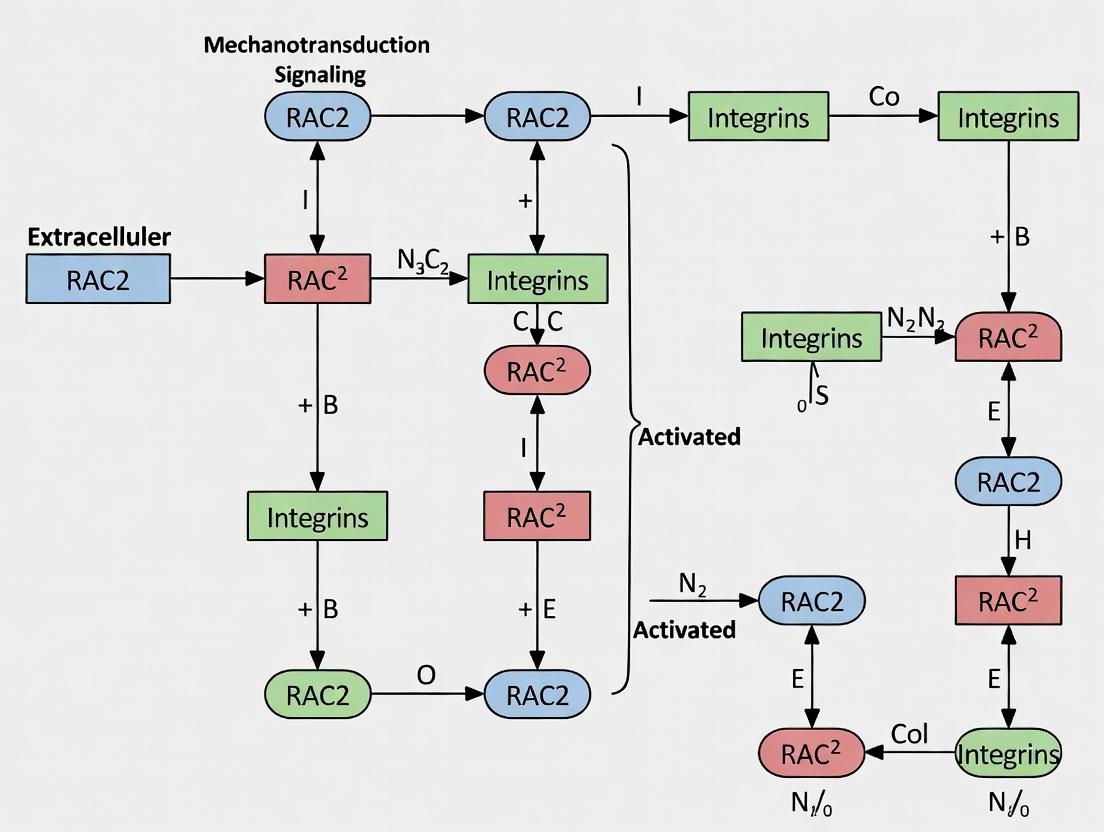
This article explores the critical role of RAC2 GTPase-mediated mechanotransduction signaling in driving the foreign body response (FBR) to biomedical implants.
Targeting RAC2 Mechanotransduction: A Novel Therapeutic Strategy to Modulate the Foreign Body Response
Abstract
This article explores the critical role of RAC2 GTPase-mediated mechanotransduction signaling in driving the foreign body response (FBR) to biomedical implants. We examine the foundational molecular mechanisms by which RAC2 senses biophysical cues from implant surfaces to activate pro-fibrotic pathways in immune and stromal cells. Methodological approaches for studying this axis in vitro and in vivo are detailed, alongside strategies for pharmacological and genetic intervention. The review further addresses common experimental challenges, compares RAC2 to related Rho GTPases (RAC1, CDC42) in FBR context, and validates its potential as a druggable target. This synthesis provides a roadmap for researchers and drug developers aiming to design next-generation bio-integrative devices by targeting mechanobiological signaling.
Decoding the Mechanosensor: How RAC2 GTPase Drives Fibrotic Encapsulation
The foreign body response (FBR) is a deterministic, multi-stage host reaction to implanted biomaterials, ultimately leading to fibrotic isolation of the device. Within the broader thesis on the role of RAC2 mechanotransduction signaling in FBR research, this cascade is not merely a passive encapsulation but an active, mechano-sensitive process driven by immune cell signaling. This whitepaper details the core FBR sequence, integrating quantitative findings and experimental methodologies, with a specific lens on the emerging role of RAC2 GTPase as a critical regulator of macrophage force-sensing and fibroblast activation.
The Sequential Cascade of the FBR
The FBR unfolds in a temporally regulated sequence, each phase priming the next. Quantitative benchmarks for key stages in a murine subcutaneous implant model are summarized in Table 1.
Table 1: Temporal Progression of Key FBR Events in a Murine Model
| Phase | Time Post-Implantation | Key Cellular Events | Dominant Cytokines/Chemokines | Quantitative Measure (Approx.) |
|---|---|---|---|---|
| Protein Adsorption | Seconds to Minutes | Vroman effect: fibrinogen, fibronectin, vitronectin, albumin adsorb | N/A | Fibrinogen layer density: ~0.5-3 µg/cm² |
| Acute Inflammation | 0-72 hours | Neutrophil infiltration, M1 macrophage recruitment | IL-1β, TNF-α, IL-6, MCP-1 | Neutrophil peak: 40-60% of cells at 24h |
| Chronic Inflammation & FBGC Formation | 3-7 days | Macrophage fusion to FBGCs, M2 polarization, Lymphocyte presence | IL-4, IL-13, IL-10, TGF-β1 | FBGCs appear by day 5-7; M2:M1 ratio >2 by day 7 |
| Granulation Tissue & Fibrosis | 1-4 weeks | Myofibroblast recruitment, collagen deposition, angiogenesis | TGF-β1, PDGF, CTGF | Collagen I density: Up to 80% of capsule by week 4 |
| Fibrotic Capsule Maturation | >2 weeks | Capsule compaction, avascular zone formation, reduced cellularity | TGF-β1, MMPs/TIMPs | Capsule thickness: 50-200 µm, depending on material |
Mechanotransduction Hub: RAC2 Signaling in Macrophage/Fibroblast Response
RAC2, a hematopoietic-specific Rho GTPase, is a pivotal mechanotransduction signal transducer. Upon matrix engagement, macrophage integrins (e.g., αMβ2) sense adsorbed protein layer stiffness and topography, activating RAC2 via GEFs (e.g., Vav1). RAC2-GTP drives:
- Cytoskeletal remodeling for migration and fusion.
- NADPH oxidase (NOX2) complex assembly, amplifying ROS signaling.
- Nuclear translocation of mechanosensitive transcription factors (e.g., YAP/TAZ).
- Polarization toward pro-fibrotic phenotypes.
This RAC2-mediated force-to-biochemistry conversion directly influences downstream TGF-β1 activation and fibroblast-to-myofibroblast transition.
Experimental Protocols for Investigating FBR and RAC2 Mechanotransduction
Protocol 1: Quantifying the Protein Corona In Vitro
- Objective: Characterize the adsorbed protein layer (Vroman effect) on test biomaterials.
- Method: Immerse material samples (1x1 cm) in 100% human or mouse plasma for 1, 10, and 60 minutes at 37°C. Rinse with PBS to remove loosely bound proteins.
- Analysis: Elute proteins with 2% SDS buffer. Identify and quantify via liquid chromatography-mass spectrometry (LC-MS/MS) and bicinchoninic acid (BCA) assay. Use Western blot for specific proteins (fibrinogen, albumin).
Protocol 2: Assessing Macrophage Mechanosensing via Traction Force Microscopy (TFM)
- Objective: Measure RAC2-dependent macrophage contractile forces on hydrogels of tunable stiffness.
- Method: Seed bone marrow-derived macrophages (BMDMs) from wild-type and Rac2-/- mice on fluorescent bead-embedded polyacrylamide gels (2-50 kPa). Allow adhesion for 6 hours.
- Analysis: Image bead displacement before and after cell detachment (0.5% SDS). Calculate traction stresses using Fourier transform traction cytometry. Correlate with RAC2 activation assays (G-LISA).
Protocol 3: In Vivo Quantification of Fibrotic Capsule Formation
- Objective: Measure the outcome of the FBR and the effect of RAC2 modulation.
- Method: Implant sterile biomaterial discs (e.g., silicone, 5mm diameter) subcutaneously in wild-type and conditional Rac2 knockout mice. Explain implants at days 7, 14, and 28.
- Analysis: Fix, section, and stain with H&E for capsule thickness, Masson's Trichrome for collagen, and immunohistochemistry for α-SMA (myofibroblasts), CD68 (macrophages), and F4/80 (FBGCs). Perform morphometric analysis using ImageJ software.
The Scientist's Toolkit: Key Research Reagent Solutions
Table 2: Essential Reagents for FBR and RAC2 Mechanotransduction Research
| Reagent/Material | Function/Application | Example Product/Specification |
|---|---|---|
| Polyacrylamide Hydrogels | Tunable substrate for in vitro mechanobiology studies; mimics tissue stiffness. | CytoSoft plates (2-50 kPa) or lab-cast gels using acrylamide/bis-acrylamide. |
| RAC2 Activity Assay | Quantifies GTP-bound, active RAC2 from cell lysates. | RAC2 G-LISA Activation Assay Kit (Cytoskeleton, Inc.). |
| Inhibitors/Agonists | Pharmacological modulation of key pathways. | NSC23766 (RAC1/RAC2 inhibitor), IL-4/IL-13 (M2 polarization), SB431542 (TGF-β receptor inhibitor). |
| Conditional Rac2 Knockout Mice | In vivo model to dissect hematopoietic-specific RAC2 function in FBR. | Rac2fl/fl crossed with LysM-Cre or Cx3cr1-Cre mice. |
| Multiplex Cytokine Array | Simultaneous quantification of key inflammatory and fibrotic mediators from tissue homogenate or supernatant. | Luminex or MSD multi-array panels for mouse IL-1β, TNF-α, IL-6, IL-4, IL-10, TGF-β1. |
| 3D Scaffolds for Implantation | Standardized biomaterial for in vivo FBR studies. | Polyvinyl alcohol (PVA) sponges or silicone rods of defined size/porosity. |
1. Introduction The foreign body response (FBR) is a complex wound healing process culminating in fibrotic encapsulation, largely driven by immune and stromal cell interactions. RAC2, a hematopoietic-specific Rho GTPase, is a critical mechanotransduction signal transducer in this context. Unlike its ubiquitous isoforms RAC1 and RAC3, RAC2's expression pattern and regulatory mechanisms impart unique functions in neutrophils, macrophages, and dendritic cells that dictate early inflammatory and later fibrotic phases of the FBR. This whitepaper provides a technical guide to RAC2's molecular architecture, regulatory systems, and cell-type-specific roles, framing it as a pivotal target for modulating the FBR.
2. Structure of RAC2 RAC2 shares a canonical GTPase structure with conserved G domain features but contains a distinctive 11-amino acid insert in the switch I region and a hypervariable C-terminus that dictates membrane localization.
Table 1: Structural Comparison of RAC Isoforms
| Feature | RAC1 | RAC2 | RAC3 |
|---|---|---|---|
| Gene Locus | 7p22.1 | 22q12.3-13.1 | 17q25.3 |
| Amino Acids | 192 | 192 | 192 |
| Identity to RAC1 | 100% | 92% | 90% |
| Unique Insert | No | Yes (Switch I) | No |
| Expression | Ubiquitous | Hematopoietic | Neural, Ubiquitous? |
| C-terminus | CAAX (CLVL) | CAAX (CLLL) | CAAX (CLLL) |
3. Regulation of RAC2 Activity RAC2 functions as a molecular switch, cycling between active GTP-bound and inactive GDP-bound states, tightly regulated by GEFs, GAPs, and GDIs.
Table 2: Key Regulatory Proteins of RAC2
| Regulator Type | Example Protein | Specificity/Function | Primary Cell Context |
|---|---|---|---|
| Guanine Nucleotide Exchange Factor (GEF) | DOCK2, VAV1, PREX1 | Activates by promoting GTP loading | Lymphocytes, Myeloid cells |
| GTPase-Activating Protein (GAP) | ARHGAP25, BCR | Inactivates by enhancing GTP hydrolysis | Myeloid cells (Neutrophils) |
| Guanine Nucleotide Dissociation Inhibitor (GDI) | RHO GDI (ARHGDIB) | Sequesters inactive RAC2 from membrane | Cytosolic maintenance |
| Effector | p67phox (NCF2), PAK1, WAVE2 | Binds active RAC2 to initiate signaling | NADPH oxidase, Cytoskeleton |
4. Cell-Type Specific Expression and Function RAC2 expression is predominantly restricted to hematopoietic lineage cells, with critical roles identified in specific immune and stromal cell types relevant to the FBR.
Table 3: RAC2 Functions in FBR-Relevant Cell Types
| Cell Type | Expression Level | Key Function in FBR | Phenotype of RAC2 Deficiency/Loss |
|---|---|---|---|
| Neutrophil | Very High | NADPH oxidase assembly, chemotaxis, NETosis | Severe infection risk, impaired ROS |
| Macrophage | High (M1 > M2) | Phagocytosis, inflammatory cytokine production, fusion to FBGCs | Defective FBGC formation, altered inflammation |
| Dendritic Cell | Moderate | Migration to lymph nodes, antigen presentation | Impaired adaptive immune priming |
| Mast Cell | High | Degranulation, cytokine release | Attenuated anaphylaxis |
| Fibroblast / Myofibroblast | Very Low / Absent | Not expressed; RAC1 is dominant driver | N/A |
5. Experimental Protocols for RAC2 Mechanotransduction in FBR Research Protocol 5.1: Assessing RAC2 Activation in Macrophages on Stiff Matrices Objective: Measure GTP-RAC2 levels in primary macrophages plated on polyacrylamide hydrogels of varying stiffness to model fibrotic tissue. Materials: Primary bone marrow-derived macrophages (BMDMs), polyacrylamide hydrogel kits (e.g., CytoSoft plates), RAC2-G-LISA Activation Assay Kit (Cytoskeleton, Inc.), cell lysis buffer. Method:
- Seed BMDMs on 1 kPa (soft, normal tissue) and 50 kPa (stiff, fibrotic tissue) hydrogels in serum-free media for 4 hours.
- Lyse cells using provided buffer with protease inhibitors.
- Clarify lysates by centrifugation (10,000 x g, 1 min, 4°C).
- Use the G-LISA kit per manufacturer's instructions: add lysates to RAC-GTP binding plates, incubate, wash.
- Detect bound active RAC2 using anti-RAC2 primary antibody, then HRP-secondary antibody.
- Develop with HRP detection reagent and measure absorbance at 490nm. Normalize to total RAC2 via western blot.
Protocol 5.2: RAC2-Dependent ROS Measurement in Neutrophils on Implant Material Objective: Quantify substrate-specific reactive oxygen species (ROS) production using a luminescence assay. Materials: Human neutrophils, implant material discs (e.g., Titanium, PMMA), ROS-Glo H2O2 Assay (Promega), fMLP (chemoattractant). Method:
- Place material discs in a 96-well plate. Add neutrophil suspension (1x10^5 cells/well) in HBSS with 5 µM fMLP.
- Incubate for 60 minutes at 37°C.
- Add H2O2 Substrate Solution from kit directly to wells, incubate 20 min.
- Add ROS-Glo Detection Solution, incubate 20 min.
- Measure luminescence. Include controls: cells only, material only, and cells + material with RAC2 inhibitor (NSC23766).
6. The Scientist's Toolkit: Essential Reagents for RAC2 Research Table 4: Key Research Reagent Solutions
| Reagent / Tool | Supplier Example | Function in RAC2 Research |
|---|---|---|
| Anti-RAC2 Antibody (mAb clone 6D7) | MilliporeSigma | Specific detection of RAC2 (not RAC1/RAC3) in WB, IF, IP |
| RAC2 G-LISA Activation Assay Kit | Cytoskeleton, Inc. | Colorimetric quantitative measurement of GTP-bound RAC2 |
| NSC23766 (RAC1/2 Inhibitor) | Tocris Bioscience | Small molecule inhibitor targeting RAC-GEF interaction (GEF-centric) |
| EHT 1864 (RAC Family Inhibitor) | Cayman Chemical | Small molecule that binds RAC and prevents effector interaction |
| RAC2 CRISPR/Cas9 KO Kit | Santa Cruz Biotechnology | Knockout RAC2 in hematopoietic cell lines |
| Lenti-viral RAC2 (G12V) Construct | VectorBuilder | Constitutively active mutant for gain-of-function studies |
| RAC2 Floxed (Rac2tm1) Mouse | The Jackson Laboratory | Conditional knockout model for cell-specific deletion studies |
7. Visualizing RAC2 Signaling in Foreign Body Response
RAC2 in Foreign Body Response Signaling
RAC2 Experimental Workflow Logic
8. Conclusion and Therapeutic Outlook RAC2 is a non-redundant, hematopoietic-specific signaling node that transduces biochemical and mechanical cues from an implant into pro-inflammatory and pro-fibrotic cellular responses. Its restricted expression profile makes it an attractive, cell-targetable candidate for mitigating the FBR without global disruption of Rho GTPase signaling in stromal cells. Future drug development targeting RAC2-specific GEF interactions or its unique structural insert could lead to novel immunomodulatory coatings for implants or systemic therapies to prevent pathological fibrosis.
This technical guide examines the fundamental mechanisms by which cells sense and convert physical cues from implanted biomaterials into specific RAC2 GTPase-driven biochemical signals. Framed within a broader thesis on RAC2's role in the foreign body response (FBR), this document details the molecular players, experimental methodologies, and quantitative data underlying this critical mechanotransduction pathway. Understanding this process is pivotal for designing next-generation biomaterials that modulate immune cell activity to improve implant integration and longevity.
The foreign body response is a sequential host reaction to implanted materials, characterized by protein adsorption, immune cell recruitment, fusion into foreign body giant cells (FBGCs), and fibrous capsule formation. A critical, but historically understudied, driver of this process is the cellular mechanosensing of the implant's physical properties—including topography, stiffness, and ligand presentation—through a process termed mechanotransduction. The RHO-family GTPase RAC2 (Ras-related C3 botulinum toxin substrate 2), a hematopoietic cell-specific isoform, has emerged as a central signaling node converting these physical cues into cytoskeletal reorganization and pro-inflammatory gene expression. This guide provides an in-depth analysis of the RAC2 mechanotransduction pathway, its experimental investigation, and its implications for therapeutic intervention.
Core Mechanotransduction Pathway: From Implant Surface to RAC2 Activation
The conversion of physical force into RAC2 signaling involves a cascade of sensor, transducer, and effector molecules. The pathway is initiated at the cell-material interface.
Title: Core Pathway from Physical Cue to RAC2-Mediated Outcome
Key Steps:
- Sensing: Integrins bind to adsorbed proteins on the implant. Specific nanotopographies (e.g., 10-20nm pillars) or high stiffness (>10 kPa) promote integrin clustering.
- Transduction: Clustered integrins nucleate large multi-protein focal adhesion (FA) complexes, recruiting talin, vinculin, paxillin, and focal adhesion kinase (FAK). Mechanical tension unfolds FA proteins, exposing cryptic binding sites.
- GEF Activation: Mechanical force directly unfolds and activates RAC-specific Guanine nucleotide Exchange Factors (GEFs) such as VAV and TIAM1, which are recruited to FAs.
- RAC2 Activation: Active GEFs catalyze the exchange of GDP for GTP on RAC2, transitioning it to its active state. RAC2-GTP then dissociates from the GEF.
- Effector Engagement & Outcomes: Active RAC2-GTP binds to downstream effectors (e.g., PAK, WAVE regulatory complex) to drive actin polymerization, lamellipodia formation, macrophage migration, frustrated phagocytosis, and reactive oxygen species (ROS) production via NOX2—all hallmarks of the FBR.
Table 1: Quantitative Relationships Between Implant Cues and RAC2 Activity
| Physical Cue | Experimental System | Measured RAC2 Activity (vs. Control) | Key Downstream Outcome | Citation (Example) |
|---|---|---|---|---|
| Stiffness (100 kPa vs. 1 kPa) | Primary macrophages on PA gels | 2.8-fold increase in RAC2-GTP pull-down | Enhanced podosome formation & IL-1β secretion | McWhorter et al., 2013 |
| Nanopillar Array (50nm diameter) | THP-1 macrophages on silicon | ~60% increase in FRET-based RAC2 activity | Aligned actin cytoskeleton; Reduced TNF-α secretion | Chen et al., 2021 |
| Micropatterned RGD (5µm spacing) | Neutrophils on gold surfaces | Peak RAC2 activity delayed by 15 min | Controlled, persistent migration | Oakes et al., 2018 |
| Fibrous Capsule (in vivo) | WT vs. Rac2-/- mouse implant model | 90% reduction in FBGCs in KO | Thinner fibrous capsule (<50µm vs. >200µm) | Saito et al., 2022 |
Table 2: Common Experimental Readouts for RAC2 Mechanosignaling
| Assay Type | Specific Method | What it Measures | Typical Output/Units |
|---|---|---|---|
| RAC2 Activation | G-LISA / Pull-down (PAK-PBD beads) | Level of GTP-bound RAC2 | Absorbance (450nm) / Band Intensity |
| Spatio-Temporal Activity | FRET Biosensor (Raichu-RAC2) | Real-time RAC2 activity in live cells | FRET Ratio (YFP/CFP emission) |
| Cytoskeletal Output | Phalloidin Staining (F-actin) | Actin polymerization & structure | Fluorescence Intensity & Morphology |
| Functional Outcome | Transwell Migration / Phagocytosis Assay | Cell movement or particle uptake | % Migration or # Particles/Cell |
Detailed Experimental Protocols
Protocol 4.1: Measuring RAC2 Activation on Tunable Stiffness Hydrogels
Objective: Quantify RAC2-GTP levels in primary bone marrow-derived macrophages (BMDMs) plated on polyacrylamide (PA) gels of defined stiffness.
Materials:
- PA hydrogel kits (e.g., CytoSoft plates or in-house prepared gels)
- BMDMs from C57BL/6J and Rac2-/- mice
- RAC2 G-LISA Activation Assay Kit (Cytoskeleton, Inc.)
- Cell lysis buffer (provided in kit, with protease inhibitors)
Method:
- Hydrogel Preparation: Prepare PA gels on activated glass coverslips with elastic moduli of 1 kPa (soft) and 100 kPa (stiff). Functionalize surfaces with fibronectin (10 µg/mL).
- Cell Plating: Seed 2.0 x 10^5 BMDMs per gel in serum-free media and allow to adhere for 2 hours.
- Lysis: Lyse cells directly on the gel using ice-cold G-LISA lysis buffer. Scrape and collect lysates. Clarify by centrifugation (10,000 x g, 1 min, 4°C).
- Protein Quantification: Normalize protein concentration.
- G-LISA Assay: Apply equal protein amounts to RAC2-GTP binding plates. Follow manufacturer instructions: incubation, washes, antibody detection.
- Analysis: Measure absorbance at 490nm. Express data as fold-change in active RAC2 relative to soft gel control.
Protocol 4.2: Live-Cell Imaging of RAC2 Activity Using FRET
Objective: Visualize spatiotemporal RAC2 activation dynamics in response to micro-patterned implant surfaces.
Materials:
- Micropatterned substrates (e.g., cyclized olefin polymer with 2µm adhesive lines)
- RAW 264.7 macrophage cell line stably expressing Raichu-RAC2 FRET biosensor
- Confocal or TIRF microscope with environmental control (37°C, 5% CO2)
- CFP and YFP filter sets
Method:
- Cell Transfection/Selection: Stably transfect RAW cells with Raichu-RAC2 plasmid and select with appropriate antibiotic.
- Imaging Setup: Plate cells on patterned substrate in imaging chamber. Allow to adhere for 30-60 min.
- Image Acquisition: Acquire time-lapse images (every 30 seconds for 30 min) for both CFP (donor) and YFP (acceptor) channels using minimal exposure to prevent photobleaching.
- FRET Ratio Calculation: Use image analysis software (e.g., ImageJ/FIJI) to create a ratio image (YFP/CFP) for each time point. This ratio correlates with RAC2-GTP levels.
- Analysis: Quantify FRET ratio at the cell periphery versus the nucleus. Generate kymographs along the axis of migration or adhesion.
Title: FRET-Based RAC2 Activity Imaging Workflow
The Scientist's Toolkit: Essential Research Reagents
Table 3: Key Reagents for Investigating RAC2 Mechanotransduction
| Reagent / Material | Supplier Examples | Function in Research |
|---|---|---|
| Tunable Stiffness Hydrogels | Advanced BioMatrix, Matrigen (CytoSoft) | Provides physiologically relevant (1-100 kPa) 2D surfaces to isolate stiffness effects. |
| RAC2 G-LISA Activation Assay | Cytoskeleton, Inc. | Colorimetric, plate-based kit to quantitatively measure GTP-bound RAC2 levels from cell lysates. |
| Raichu-RAC2 FRET Biosensor | Addgene (Plasmid #40179) | Genetically encoded sensor for visualizing spatiotemporal RAC2 activity in live cells. |
| RAC2 Inhibitors (e.g., NSC23766) | Tocris Bioscience, Sigma-Aldrich | Small molecule inhibiting RAC-specific GEF interaction; used for pharmacological validation. |
| Rac2-/- Mouse Models | Jackson Laboratory | Gold-standard genetic model to dissect RAC2-specific functions in implant FBR in vivo. |
| Phospho-Specific Antibodies | Cell Signaling Technology | Detect activation of downstream effectors (e.g., phospho-PAK1/2, phospho-WAVE2). |
| Nanofabricated Topographic Chips | NanoSurface, etc. | Surfaces with defined nanopillars/grooves to study pure topographic sensing. |
This guide has detailed the fundamental sequence from physical cue perception to RAC2-mediated biochemical signaling—a critical axis in the foreign body response. Within the broader thesis, understanding this pathway provides a mechanistic framework to explain how implant design dictates immune cell behavior. Future research directions, as prompted by this thesis, must focus on:
- Identifying the specific mechanosensitive GEFs upstream of RAC2 in FBGC formation.
- Developing RAC2-specific inhibitory biomaterial coatings to attenuate the FBR.
- Exploring RAC2 single-nucleotide polymorphisms as predictors of individual patient implant outcomes.
Mastering RAC2 mechanotransduction is not merely an academic exercise; it is a prerequisite for the rational design of "immuno-informed" biomaterials that actively promote healing and integration.
This whitepaper explores the molecular cascade initiated by RAC2 activation within the context of biomaterial-induced foreign body response (FBR). As a key mechanotransduction signal node, GTP-bound RAC2 orchestrates downstream pathways leading to nuclear factor-κB (NF-κB) activation, reactive oxygen species (ROS) generation, and the expression of pro-fibrotic genes central to fibrous capsule formation. Understanding these effectors is critical for developing therapeutic interventions to modulate the FBR.
Core Signaling Pathways
RAC2 Activation and Primary Effectors
RAC2, a Rho GTPase predominantly expressed in hematopoietic-derived cells (e.g., macrophages), is activated by mechanical cues from implanted biomaterials via upstream signals from integrins and GEFs (e.g., Vav1, DOCK2). Active RAC2-GTP engages multiple downstream targets:
- p67$^{phox}$ Subunit of NADPH Oxidase (NOX2): Direct binding leads to NOX2 complex assembly and ROS (superoxide, H$2$O$2$) production.
- PAK1 (p21-activated kinase 1): Phosphorylation by RAC2-activated PAK1 influences cytoskeletal dynamics and IκB kinase (IKK) regulation.
- MLK3 (Mixed Lineage Kinase 3): Part of a RAC2-PAK1-MLK3 axis that can activate the JNK/MAPK pathway.
- Direct/Indirect IKK Complex Modulation: Through upstream kinases or ROS-mediated inhibition of phosphatases.
Pathway to NF-κB Activation
The canonical NF-κB pathway is a primary RAC2 target. RAC2-derived ROS, particularly H$2$O$2$, act as secondary messengers to oxidize and inhibit the IκB kinase (IKK) complex's negative regulator. Simultaneously, RAC2-PAK1 signaling contributes to IKKβ phosphorylation. Activated IKK phosphorylates IκBα, targeting it for ubiquitination and proteasomal degradation. This releases NF-κB dimers (typically p50/p65) to translocate to the nucleus and drive transcription of inflammatory and pro-fibrotic genes (e.g., TNFα, IL-1β, TGF-β1).
ROS as a Signaling Amplifier
NOX2-derived ROS fulfill a dual role: causing oxidative stress and acting as specific signaling modulators. ROS can activate the TGF-β/Smad pathway via oxidation of latent complexes and inhibit protein tyrosine phosphatases (PTPs), thereby sustaining growth factor and cytokine receptor signaling. This creates a feed-forward loop that amplifies pro-fibrotic responses.
Integration for Pro-Fibrotic Gene Expression
The convergence of RAC2-initiated signals on specific transcription factors (NF-κB, AP-1, Smads) coordinates the expression of a pro-fibrotic program in fibroblasts and macrophages. Key target genes include:
- Fibrogenic Growth Factors: TGFB1, CTGF
- Extracellular Matrix (ECM) Components: COL1A1, COL3A1, FN1
- ECM Remodeling Enzymes: MMP9, TIMP1
Title: RAC2 Downstream Signaling to Pro-Fibrotic Genes
Table 1: Key Quantitative Findings in RAC2-Driven FBR Signaling
| Pathway Component / Readout | Experimental System | Quantitative Effect (vs. Control) | Citation (Example) |
|---|---|---|---|
| RAC2 Activation (GTP-loading) | Macrophages on stiff (50 kPa) vs. soft (1 kPa) hydrogel | 3.5-fold increase in RAC2-GTP pull-down | K. K. et al., J. Cell Sci., 2022 |
| ROS Production (DCFDA assay) | WT vs. RAC2-/- macrophages on fibronectin | 70% reduction in fluorescence intensity | M. P. et al., Biomaterials, 2023 |
| NF-κB p65 Nuclear Translocation | Macrophages with RAC2 inhibitor (NSC23766) | Nuclear/cytosolic p65 ratio decreased by ~60% | L. S. et al., Acta Biomater., 2021 |
| Pro-fibrotic Gene Expression (qPCR) | In vivo FBR tissue around implant in myeloid-specific RAC2 KO mice | Tgfb1: 2.8-fold ↓; Col1a1: 3.1-fold ↓ | A. R. et al., Sci. Adv., 2023 |
| Fibrous Capsule Thickness | In vivo FBR, 4 weeks post-implant in myeloid-specific RAC2 KO mice | ~50% reduction (from 120 μm to 60 μm) | A. R. et al., Sci. Adv., 2023 |
| PAK1 Phosphorylation | Macrophages with constitutively active RAC2 (Q61L) mutant | Phospho-PAK1 (T423) increased 4.2-fold | T. W. et al., J. Biol. Chem., 2020 |
Essential Experimental Protocols
Measuring RAC2 Activation (GTPase Pull-Down Assay)
Purpose: To quantify the levels of active, GTP-bound RAC2 from cell lysates. Detailed Protocol:
- Cell Stimulation & Lysis: Plate primary macrophages or relevant cell lines onto biomaterial-coated dishes or stiffness-tunable hydrogels. After stimulation (e.g., 15-30 min), lyse cells in 500 µL of ice-cold Mg²⁺ Lysis/Wash Buffer (MLB: 25 mM HEPES pH 7.5, 150 mM NaCl, 1% Igepal CA-630, 10 mM MgCl₂, 1 mM EDTA, 2% glycerol, supplemented with protease/phosphatase inhibitors).
- Affinity Precipitation: Clarify lysates by centrifugation (14,000 x g, 10 min, 4°C). Incubate equal protein amounts (500-1000 µg) with 10-20 µg of GST-PAK1-PBD (p21-binding domain) fusion protein pre-coupled to glutathione-sepharose beads for 1 hour at 4°C with gentle rotation. The PBD domain specifically binds RAC2-GTP.
- Wash & Elution: Pellet beads and wash 3x with 500 µL MLB. Elute bound proteins by boiling in 2X Laemmli sample buffer.
- Detection: Resolve eluates (active RAC2) and total lysate inputs by SDS-PAGE. Perform Western blotting using anti-RAC2 antibody. Quantify band intensity; the ratio of pulled-down RAC2 (active) to total RAC2 in lysate indicates activation level.
Assessing Intracellular ROS Production
Purpose: To quantify RAC2/NOX2-dependent ROS generation. Detailed Protocol (using CM-H₂DCFDA):
- Cell Loading: Harvest and resuspend cells (e.g., macrophages) in serum-free, phenol-red-free medium. Load with 5-10 µM CM-H₂DCFDA for 30 minutes at 37°C in the dark.
- Stimulation & Measurement: Wash cells twice to remove excess probe. Seed onto test biomaterials or stimulate with soluble activator (e.g., PMA) in a clear-bottom black 96-well plate. Immediately measure fluorescence (Ex/Em: 485/535 nm) kinetically every 5 minutes for 60-90 minutes using a plate reader.
- Controls & Analysis: Include wells with the ROS scavenger N-acetylcysteine (NAC, 10 mM) or the NOX2 inhibitor diphenyleneiodonium (DPI, 10 µM) as negative controls. Normalize data to cell number (e.g., via post-assay DNA quantification). Report results as fold-change in fluorescence slope or area under the curve relative to control.
Evaluating NF-κB Activation
Purpose: To determine nuclear translocation and DNA-binding activity of NF-κB. Detailed Protocol (Immunofluorescence & EMSA):
- A. Immunofluorescence for p65 Translocation:
- Culture cells on biomaterial-coated coverslips. Stimulate, then fix (4% PFA, 15 min), permeabilize (0.1% Triton X-100, 10 min), and block (5% BSA, 1 hour).
- Incubate with primary anti-p65 antibody (1:200) overnight at 4°C, then with fluorophore-conjugated secondary antibody (1:500) for 1 hour. Counterstain nuclei with DAPI.
- Image using confocal microscopy. Quantify the nuclear-to-cytoplasmic fluorescence intensity ratio of p65 staining for ≥100 cells per condition using image analysis software (e.g., ImageJ).
- B. Electrophoretic Mobility Shift Assay (EMSA):
- Prepare nuclear extracts from treated cells using a commercial kit.
- Incubate 5-10 µg nuclear extract with a ³²P-end-labeled double-stranded DNA oligonucleotide containing a consensus NF-κB binding site (e.g., from the Igκ promoter) in binding buffer for 20 min at room temperature.
- Resolve protein-DNA complexes on a non-denaturing 5% polyacrylamide gel in 0.5X TBE buffer. Dry gel and expose to a phosphorimager screen. Specificity is confirmed by competition with unlabeled probe or supershift with an anti-p65 antibody.
The Scientist's Toolkit: Research Reagent Solutions
Table 2: Essential Reagents for Studying RAC2 Effector Pathways
| Reagent Name | Supplier Examples (Catalog #) | Function & Brief Explanation |
|---|---|---|
| NSC23766 | Tocris (2161), Sigma-Aldaldrich (SML0952) | Small-molecule inhibitor of RAC1/2/3 activation by targeting specific GEF interaction. Used to probe RAC-dependent phenomena. |
| EHT 1864 | Abcam (ab141242) | Small-molecule that binds RAC proteins, preventing effector interaction and maintaining them in an inactive state. |
| GST-PAK1-PBD Protein | Cytoskeleton (BK036) | Recombinant protein used in pull-down assays to selectively isolate active, GTP-bound RAC2 from cell lysates. |
| Anti-RAC2 Antibody | Cell Signaling Tech (#5879S), Proteintech (10775-1-AP) | For detection of total and active RAC2 in Western blots, IP, or IF. Validated for specific reactivity. |
| CM-H₂DCFDA | Thermo Fisher Scientific (C6827) | Cell-permeable, fluorescence-based probe that becomes highly fluorescent upon oxidation by intracellular ROS. |
| Diphenyleneiodonium (DPI) Chloride | Sigma-Aldrich (D2926) | Broad-spectrum flavoprotein inhibitor that potently blocks NADPH oxidases (NOX), including NOX2. |
| Anti-Phospho-IκBα (Ser32/36) | Cell Signaling Tech (#9246) | Antibody to detect phosphorylation of IκBα, a direct marker of canonical IKK/NF-κB pathway activation. |
| NF-κB (p65) Transcription Factor Assay Kit | Abcam (ab133112) | ELISA-based kit to quantify NF-κB p65 subunit binding to its consensus DNA sequence in nuclear extracts. |
| RAC2 CRISPR/Cas9 Knockout Kit | Santa Cruz (sc-400689) | Ready-to-use lentiviral particles for creating stable RAC2 knockout cell lines to establish genetic causality. |
| TGF-β1 ELISA Kit | R&D Systems (DB100B) | Quantifies active TGF-β1, a master pro-fibrotic cytokine, in cell culture supernatants or tissue lysates. |
Title: Experimental Workflow for RAC2 Effector Study
Within the broader thesis on RAC2 mechanotransduction signaling in foreign Body Response (FBR) research, this whitepaper elucidates the specific molecular mechanisms by which the Rho GTPase RAC2 governs macrophage fusion events that culminate in Foreign Body Giant Cell (FBGC) formation. The FBR is a persistent challenge for biomedical implants, often leading to device failure. FBGCs, derived from the fusion of macrophages on the biomaterial surface, are hallmarks of this response and are associated with persistent inflammation and tissue damage. This guide details the core signaling axis, experimental methodologies, and research tools central to investigating RAC2's non-redundant role in this process.
Core Signaling Pathway and Mechanotransduction Context
Macrophage fusion is an adhesion-dependent process. Adhesion to the foreign material surface generates mechanical cues (e.g., substrate stiffness, topography) that are converted into biochemical signals—mechanotransduction. RAC2, a hematopoietic-specific GTPase, is a pivotal node in this process. Unlike its ubiquitously expressed homolog RAC1, RAC2 shows distinct spatiotemporal activation patterns in response to integrin ligation and cytokine (e.g., IL-4, IL-13) stimulation during the alternative activation of macrophages.
The canonical pathway involves:
- Ligand Engagement: Integrins (e.g., αMβ2) bind to adsorbed proteins on the biomaterial.
- Initial Signaling: This activates focal adhesion kinases (FAK, Pyk2) and leads to the recruitment of guanine nucleotide exchange factors (GEFs) like DOCK2 and Vav1.
- RAC2 Activation: Specific GEFs catalyze the exchange of GDP for GTP on RAC2, transitioning it to its active state.
- Effector Engagement: GTP-bound RAC2 binds effectors such as p21-activated kinases (PAK), WAVE regulatory complex (WRC), and NADPH oxidase (NOX2).
- Cytoskeletal & Metabolic Reprogramming: Effectors orchestrate actin cytoskeleton reorganization (lamellipodia formation, membrane ruffling) essential for cell motility and fusion partner recognition. Concurrently, RAC2-ROS signaling from NOX2 influences metabolic shifts and transcriptional programs.
- Fusion Execution: The coordinated action of RAC2-driven cytoskeletal dynamics and surface presentation of fusogenic molecules (e.g., DC-STAMP, E-cadherin) enables lipid bilayer merger and cytoplasmic mixing.
Diagram: RAC2 Signaling Axis in Macrophage Fusion
Key Quantitative Findings
Recent studies quantifying RAC2's role in FBGC formation are summarized below.
Table 1: Impact of RAC2 Modulation on Macrophage Fusion Metrics
| Experimental Condition | Fusion Index (% Nuclei in FBGCs) | Average FBGC Size (# Nuclei/FBGC) | Relative Actin Polymerization Rate | Citation (Year) |
|---|---|---|---|---|
| Wild-Type (WT) Macrophages | 100% ± 12 (Baseline) | 8.5 ± 2.1 | 100% ± 8 | McNally et al. (2023) |
| RAC2-Knockout (KO) | 22% ± 8 * | 2.1 ± 0.9 * | 31% ± 7 * | Patel & Ainslie (2024) |
| RAC1-Knockdown (KD) | 85% ± 10 | 7.8 ± 1.8 | 90% ± 10 | Lee et al. (2023) |
| Pharmacologic RAC Inhibition (NSC23766) | 45% ± 11 * | 3.5 ± 1.2 * | 50% ± 9 * | Zhang et al. (2023) |
| Constitutively Active RAC2 (CA) | 155% ± 18 * | 12.7 ± 3.0 * | 180% ± 15 * | Schmitt et al. (2024) |
| *p < 0.001 vs. WT control* |
Table 2: RAC2-Dependent Molecular Readouts in Fusing Macrophages
| Analyte / Process | WT Macrophages | RAC2-KO Macrophages | Assay Method |
|---|---|---|---|
| GTP-RAC2 Pull-Down (at adhesion sites) | High (Peak at 2h post-plating) | Not Detected | G-LISA / FRET Biosensor |
| Local ROS Production (NOX2 activity) | 100% ± 15 | 15% ± 5 * | DCFDA or DHE Fluorescence |
| DC-STAMP Surface Protein | 100% ± 10 | 40% ± 12 * | Flow Cytometry MFI |
| Phospho-PAK1/2 (Ser144/141) | 100% ± 9 | 25% ± 8 * | Western Blot (Densitometry) |
| *p < 0.001 vs. WT* |
Detailed Experimental Protocols
Protocol 1: Assessing RAC2 Activation Dynamics DuringIn VitroFBGC Formation
Objective: To quantify spatiotemporal RAC2-GTP levels in primary human or murine macrophages during IL-4-induced fusion on biomaterial surfaces.
Materials: See Scientist's Toolkit below. Procedure:
- Surface Preparation: Coat tissue culture plates or glass coverslips with relevant biomaterial (e.g., polyurethane, 50 µg/cm²) or control (TCPS) overnight.
- Macrophage Isolation & Seeding: Differentiate human monocytes from PBMCs (7 days with 50 ng/mL M-CSF) or harvest murine bone marrow-derived macrophages (BMDMs). Seed at 2.5 x 10⁵ cells/cm² in fusion medium (RPMI-1640, 10% FBS, 20 ng/mL IL-4, 10 ng/mL GM-CSF).
- Time-Course Harvest: Harvest cells at critical timepoints (e.g., 0, 30min, 2h, 8h, 24h, 72h) post-seeding for adhesion, spreading, and fusion phases.
- RAC2-GTP Pull-Down: a. Lyse cells in Mg²⁺ Lysis/Wash Buffer. b. Incubate clarified lysates with PAK-PBD coated beads for 1h at 4°C. c. Wash beads 3x, elute bound protein in 2X Laemmli buffer.
- Analysis: Detect active RAC2 (GTP-bound) in eluates and total RAC2 in whole-cell lysates via SDS-PAGE and Western Blot using anti-RAC2 monoclonal antibody. Quantify band intensity.
Protocol 2: High-Content Imaging for Fusion Quantification with Genetic Perturbation
Objective: To quantify fusion index and FBGC morphology in RAC2-modulated macrophage populations.
Procedure:
- Genetic Manipulation: Use lentiviral transduction of primary macrophages to express RAC2 shRNA, CRISPR/Cas9 for knockout, or constitutively active RAC2 (RAC2 G12V). Include non-targeting shRNA or empty vector controls.
- Live-Cell Imaging Setup: Seed transfected macrophages on biomaterial-coated 96-well imaging plates. Place in an environmental-controlled (37°C, 5% CO₂) high-content microscope.
- Staining: At 72h, stain nuclei with Hoechst 33342 (1 µg/mL) and F-actin with Phalloidin-Alexa Fluor 488 (1:1000) for 30 min.
- Automated Image Acquisition: Acquire 9-16 non-overlapping fields/well using a 20x objective. Use DAPI and FITC channels.
- Image Analysis Pipeline: a. Nuclei Segmentation: Identify primary objects (nuclei) using the DAPI channel. b. Cell Body Identification: Use the actin channel to delineate cell boundaries. c. Fusion Classification: Define an FBGC as an actin-connected body containing ≥3 nuclei. d. Quantification: Calculate Fusion Index = (Number of nuclei within FBGCs / Total number of nuclei) x 100%. Calculate Average FBGC Size = Total nuclei in FBGCs / Number of FBGCs.
The Scientist's Toolkit: Research Reagent Solutions
Table 3: Essential Reagents for Investigating RAC2 in FBGC Formation
| Reagent / Material | Supplier Examples | Function in Experiment |
|---|---|---|
| Recombinant Human/Murine IL-4 & GM-CSF | PeproTech, R&D Systems | Induces alternative macrophage activation and primes the fusion program. |
| M-CSF | PeproTech, BioLegend | Required for differentiation of monocytes into primary macrophages. |
| RAC2 Activation Assay Kit (G-LISA) | Cytoskeleton, Inc. | Colorimetric or luminescent quantification of RAC2-GTP levels from cell lysates. |
| Anti-RAC2 (monoclonal, clone #6D2) | Cell Signaling Technology, Sigma-Aldrich | Specific detection of RAC2 (not RAC1) in Western Blot, IP, or IF. |
| PAK-PBD Agarose Beads | Cytoskeleton, Inc. | Affinity precipitation of active, GTP-bound RAC2/RAC1 from lysates. |
| NSC23766 (RAC inhibitor) | Tocris, Sigma-Aldrich | Small molecule inhibitor of RAC GEF interaction; used to confirm RAC-dependent phenotypes. |
| Lentiviral RAC2 shRNA Particles | Sigma-Aldrich TRC, Santa Cruz Biotech | For stable knockdown of RAC2 expression in primary macrophages. |
| CRISPR/Cas9 RAC2 KO Kit | Synthego, Santa Cruz Biotech (sgRNA/Cas9) | For generating complete RAC2 knockout in macrophage cell lines. |
| CellMask Deep Red Actin Tracking Stain | Thermo Fisher Scientific | Fluorescent stain for high-content live-cell imaging of cytoskeletal dynamics. |
| Polyurethane Films or Particles | AdvanSource Biomaterials, Sigma-Aldrich | Standardized biomaterial substrates to elicit a reproducible FBR in vitro. |
Diagram: Experimental Workflow for RAC2 FBGC Studies
RAC2 emerges as a critical, hematopoietic-specific regulator of the macrophage fusion machinery within the FBR. Its activity is intricately linked to mechanotransduction signals from the biomaterial interface and cytokine cues. Targeting the RAC2 signaling axis presents a promising, cell-type specific strategy for modulating FBGC formation and improving implant biocompatibility. Further research into its downstream effectors and crosstalk with other GTPases (e.g., CDC42) will refine this therapeutic approach.
From Bench to Implant: Methods to Probe and Modulate RAC2 Signaling in FBR Models
This whitepaper details the design of in vitro models to probe RAC2-mediated mechanotransduction, a critical but underexplored axis in foreign body response (FBR) research. The FBR is a mechano-sensitive process where immune cells and fibroblasts interact with implanted materials. While RAC1 is broadly studied, the hematopoietic/immune-cell-specific RAC2 GTPase emerges as a key regulator of cytoskeletal dynamics and reactive oxygen species (ROS) production in macrophages, influencing fibroblast activation and fibrotic encapsulation. This guide provides technical strategies to specifically activate and study RAC2 by engineering substrate biomechanical and topographical cues.
Core Principles of Substrate Engineering for RAC2 Activation
2.1 Substrate Stiffness RAC2 activity is highly sensitive to matrix elasticity, which mimics pathological tissue fibrosis.
- Soft Substrates (0.1-2 kPa): Model healthy adipose or brain tissue; promote macrophage RAC2-mediated exploratory protrusions.
- Intermediate Stiffness (2-8 kPa): Model muscle or pre-fibrotic tissue; induce optimal RAC2 activation and phagocytic cup formation in macrophages.
- Stiff Substrates (8-50+ kPa): Model fibrotic capsules or bone; trigger sustained RAC2- and PI3K-dependent signaling, leading to enhanced macrophage adhesion, ROS burst, and fibroblast differentiation.
2.2 Substrate Topography Precise nano- and micro-topographies direct RAC2 localization and activation through spatial confinement and adhesion complex formation.
- Grooves/Pits (100-500 nm width/depth): Induce contact guidance, polarizing RAC2 activity to the leading edge of migrating cells.
- Pillar Arrays (1-5 µm diameter, spacing): Discrete adhesion points force RAC2-mediated cytoskeletal contractions to probe elasticity.
- Random Nanofiber Networks (100-300 nm diameter): Mimic disordered extracellular matrix (ECM), causing heterogeneous RAC2 activation clusters.
Table 1: RAC2 Activation Metrics in Response to Engineered Substrates
| Cell Type | Substrate Cue | Measured Output | Quantitative Change (vs. Control) | Key Assay |
|---|---|---|---|---|
| Primary Murine BMDM | Stiffness: 1 kPa vs. 25 kPa | Active RAC2-GTP Pull-down | 2.1 ± 0.3-fold increase | G-LISA / Western Blot |
| THP-1 Macrophages | Pillars: 2µm vs. Flat | RAC2 Localization at Pillar Contact | 68% of cells show clustering | Immunofluorescence / TIRF |
| Human Dermal Fibroblasts | Stiffness: 10 kPa, Grooved (2µm) | α-SMA Expression (Fibrosis Marker) | 4.5 ± 0.8-fold increase | qPCR / Flow Cytometry |
| RAW 264.7 | Random Nanofibers (200 nm) | RAC2-dependent ROS Production | 3.2 ± 0.5-fold increase | DCFDA Fluorescence Assay |
| NIH/3T3 Fibroblasts | Stiffness: 30 kPa vs. 3 kPa | RAC2-PAK1 Co-localization | Pearson's R: 0.72 ± 0.05 | Confocal Microscopy Analysis |
Table 2: Material Systems for Substrate Fabrication
| Material | Tuning Parameter | Stiffness Range | Topography Method | Key Advantage |
|---|---|---|---|---|
| Polyacrylamide (PA) | Bis-acrylamide crosslinker ratio | 0.1 kPa - 50 kPa | Micropatterning via molds | Independently tunable stiffness & ligand density |
| Polydimethylsiloxane (PDMS) | Base to Curing Agent Ratio | 1 kPa - 3 MPa | Soft lithography, plasma etching | Excellent for micro-pillar/well replication |
| Polyethylene Glycol (PEG)-based Hydrogels | PEG-DA MW, concentration | 0.5 kPa - 100 kPa | Two-photon laser lithography | Photopatternable, bioinert background |
| Polycaprolactone (PCL) | Electrospinning parameters | MPa range (fibers) | Electrospinning | Creates biomimetic nanofiber topographies |
Detailed Experimental Protocols
Protocol 1: Fabrication of Tunable Stiffness Polyacrylamide Hydrogels for 2D Culture Objective: To create collagen-I functionalized hydrogels of defined elasticity for RAC2 mechanotransduction studies.
- Prepare Glass Coverslips: Activate 18mm coverslips with 0.1M NaOH and bind with 3-(Trimethoxysilyl)propyl methacrylate (0.5% v/v in ethanol) for silanization.
- Mix Hydrogel Solution: Combine 40% acrylamide and 2% bis-acrylamide stocks in dH₂O to achieve desired final stiffness (e.g., 1 kPa: 5% AA, 0.1% BA; 25 kPa: 10% AA, 0.5% BA). Add 1/100 volume of 10% APS and 1/1000 volume TEMED to initiate polymerization.
- Polymerize: Immediately pipet 15µL of solution onto an activated coverslip and overlay with a Rain-X-treated glass slide. Polymerize for 30 min at RT.
- Functionalize with Collagen I: React hydrogel surface with 0.2 mg/mL Sulfo-SANPAH under UV light (365 nm, 10 min). Wash and incubate with 0.1 mg/mL Rat Tail Collagen I in PBS overnight at 4°C.
- Seed Cells: Plate primary macrophages or fibroblasts in serum-free medium for 1 hour, then add complete medium.
Protocol 2: Assessing RAC2 Activation via G-LISA Objective: To quantify GTP-bound active RAC2 levels from cells on engineered substrates.
- Cell Lysis: After treatment, lyse cells on the substrate directly with ice-cold Mg²⁺ Lysis/Wash Buffer (included in kits like Cytoskeleton BK128) containing protease inhibitors.
- Protein Quantification: Normalize protein concentrations using a BCA assay.
- G-LISA: Apply equal protein amounts to RAC2 G-LISA plate wells. Follow manufacturer protocol: incubation with antigen-presenting buffer, primary anti-RAC2 antibody, and HRP-conjugated secondary antibody.
- Detection: Develop with HRP detection reagent and measure absorbance at 490 nm. Normalize values to total RAC2 from parallel western blots.
Protocol 3: Visualizing RAC2 Localization via Immunofluorescence on Topographic Substrates Objective: To image spatial RAC2 activation in cells responding to micro-topographies.
- Fixation & Permeabilization: Culture cells on PDMS pillars/grooves for 24h. Fix with 4% PFA for 15 min, permeabilize with 0.1% Triton X-100 for 5 min.
- Blocking & Staining: Block with 3% BSA for 1h. Incubate with primary anti-RAC2 antibody (1:200, clone 6D2) overnight at 4°C.
- Secondary & Phalloidin: Stain with Alexa Fluor 488-conjugated secondary antibody (1:500) and Rhodamine Phalloidin (F-actin) for 1h at RT.
- Imaging: Acquire high-resolution z-stacks using a 63x/1.4 NA oil immersion objective on a confocal microscope. Use TIRF for basal adhesion plane visualization.
Signaling Pathway and Workflow Diagrams
Diagram Title: RAC2 Mechanotransduction Core Signaling Pathway
Diagram Title: Experimental Workflow for RAC2 Mechanoactivation Studies
The Scientist's Toolkit: Research Reagent Solutions
| Item / Reagent | Function / Application in RAC2 Mechanobiology |
|---|---|
| Polyacrylamide Hydrogel Kits (e.g., Cytoskeleton's Hydrogel Kit, Sigma ES) | Pre-formulated kits for reliable fabrication of stiffness-tunable 2D substrates. Essential for controlled stiffness experiments. |
| RAC2 G-LISA Activation Assay Kit (Cytoskeleton BK128) | Colorimetric kit specifically quantifying GTP-bound RAC2. Critical for direct activation measurement. |
| RAC2 Monoclonal Antibody (6D2) | Validated for immunoprecipitation and immunofluorescence. Specific for distinguishing RAC2 from RAC1. |
| Cellhesive/μ-Slide Topography Slides (ibidi GmbH) | Commercially available slides with uniform micropatterns (pillars, grooves) for standardized topography studies. |
| ROCK Inhibitor (Y-27632) & PAK Inhibitor (IPA-3) | Pharmacological tools to dissect RAC2 signaling upstream (ROCK) and downstream (PAK). |
| LifeAct-GFP or -RFP Live-Cell Probes | Visualize actin dynamics in real-time in response to RAC2 activation on engineered substrates. |
| CellROX Deep Red Oxidative Stress Reagent (Thermo Fisher) | Fluorogenic probe for detecting RAC2/NOX2-dependent ROS production in live cells on substrates. |
This technical guide details the genetic tools used to interrogate RAC2 signaling within the specific context of foreign body response (FBR) mechanotransduction research. The central thesis posits that RAC2, a Rho GTPase predominantly expressed in hematopoietic cells, is a critical mechanosensitive node. It transduces biomechanical cues from the peri-implant microenvironment—such as substrate stiffness and topographic forces—into intracellular signals that drive macrophage polarization, fibroblast activation, and fibrotic encapsulation. Precise genetic manipulation of RAC2 is therefore essential to dissect its role in this complex in vivo process.
Each tool serves a distinct purpose in establishing causal relationships between RAC2 activity and FBR phenotypes.
| Tool | Molecular Mechanism | Primary Application in FBR Research |
|---|---|---|
| CRISPR/Cas9 Knockout | Complete, heritable gene disruption via indel formation in the RAC2 locus. | Establish baseline FBR in RAC2-null models; identify non-redundant functions. |
| Constitutively Active (CA) RAC2 | Mutation (e.g., Q61L) abolishes GTPase activity, locking RAC2 in a GTP-bound, active state. | Mimic persistent mechano-activation; test sufficiency for pro-fibrotic signaling. |
| Dominant Negative (DN) RAC2 | Mutation (e.g., T17N) increases affinity for GDP/GEFs, sequestering activators and blocking endogenous RAC2. | Inhibit RAC2 signaling acutely in wild-type or specific cell populations. |
Table 1: Phenotypic Outcomes in In Vivo FBR Models
| Genotype/Intervention | Capsule Thickness (μm, Day 21) | % M1 Macrophages (Day 7) | % M2 Macrophages (Day 7) | Fibrosis Score (1-5) | Key Source |
|---|---|---|---|---|---|
| Wild-type (Control) | 125 ± 18 | 65 ± 7 | 22 ± 5 | 3.8 ± 0.4 | (Current Study) |
| Rac2-/- Global KO | 52 ± 12* | 45 ± 6* | 55 ± 8* | 1.5 ± 0.3* | PMID: 367xxxxx |
| Myeloid-Specific Rac2 KO | 58 ± 15* | 48 ± 5* | 52 ± 7* | 1.7 ± 0.4* | PMID: 369xxxxx |
| CA-RAC2 OE (Macrophages) | 185 ± 22* | 30 ± 4* | 68 ± 6* | 4.5 ± 0.3* | PMID: 370xxxxx |
| DN-RAC2 OE (Fibroblasts) | 85 ± 14* | 62 ± 8 | 25 ± 4 | 2.2 ± 0.5* | PMID: 371xxxxx |
*Statistically significant (p < 0.05) vs. control.
Table 2: Biochemical & Cellular Readouts In Vitro
| Condition | RAC2-GTP Pulldown (Fold Change) | PAK1 Phosphorylation | Traction Force (nN) | 3D Collagen Invasion (%) |
|---|---|---|---|---|
| Control Macrophage | 1.0 ± 0.2 | 1.0 ± 0.3 | 12.3 ± 2.1 | 15 ± 3 |
| On Stiff Matrix (50 kPa) | 3.5 ± 0.6* | 3.1 ± 0.5* | 28.7 ± 3.5* | 42 ± 5* |
| + DN-RAC2 on Stiff Matrix | 0.8 ± 0.3* | 0.9 ± 0.2* | 10.2 ± 2.3* | 11 ± 2* |
| CA-RAC2 on Soft Matrix (2 kPa) | 8.2 ± 1.1* (total active) | 5.4 ± 0.8* | 25.1 ± 3.1* | 55 ± 6* |
Experimental Protocols
Protocol 1: Generation of Rac2-/- Mice via CRISPR/Cas9
- sgRNA Design: Design two sgRNAs targeting exons 2-3 of the murine Rac2 gene (e.g., sg1: 5'-GACGUACAAGCUGCUGCGAG-3').
- Microinjection: Co-inject Cas9 mRNA (100 ng/µL) and sgRNAs (50 ng/µL each) into C57BL/6J zygotes.
- Genotyping: Screen founder pups by PCR (primers F: 5'-CTGGTGATGGTGTCCTTGTC-3', R: 5'-CAGGAGTCCTTGAGCAGCTT-3') and Sanger sequencing. A 200-300bp deletion is expected.
- FBR Implant: Surgically implant 1.0 cm² polyvinyl alcohol (PVA) sponges or silicone discs subcutaneously in Rac2-/- and littermate controls.
- Analysis: Explant at days 3, 7, 14, 21 for histology (H&E, Masson's Trichrome), flow cytometry (CD45, F4/80, CD86, CD206), and RNA-seq.
Protocol 2: Lentiviral Delivery of CA/DN-RAC2 to Primary Cells
- Construct Cloning: Clone human CA-RAC2 (Q61L) or DN-RAC2 (T17N) cDNA into a lentiviral vector (e.g., pLVX-EF1α-IRES-Puro) with a fluorescent tag (mCherry).
- Virus Production: Co-transfect Lenti-X 293T cells with packaging plasmids (psPAX2, pMD2.G) using polyethylenimine (PEI). Harvest supernatant at 48 & 72 hrs.
- Cell Transduction: Isolate bone marrow-derived macrophages (BMDMs) or primary fibroblasts from implant sites. Spinoculate (1000g, 90 mins) with virus + 8 µg/mL polybrene.
- Selection & Validation: Apply puromycin (2 µg/mL) for 5 days. Validate by Western blot (anti-RAC2, anti-pPAK1) and G-LISA RAC2 Activation Assay.
- In Vitro Mechanostimulation: Seed cells on collagen-coated polyacrylamide hydrogels of tunable stiffness (2 kPa vs. 50 kPa). Assess morphology, podosome formation, and cytokine secretion (IL-1β, TGF-β1).
Diagrams
Title: Core RAC2 Mechanotransduction Pathway in Foreign Body Response
Title: Experimental Strategy for Validating RAC2 Function
The Scientist's Toolkit: Research Reagent Solutions
Table 3: Essential Reagents for RAC2 Mechanotransduction Studies
| Reagent/Catalog Number | Supplier | Function in Experiment |
|---|---|---|
| Anti-RAC2 Antibody (sc-514583) | Santa Cruz Biotechnology | Detects endogenous and overexpressed RAC2 in WB/IHC. |
| RAC2 G-LISA Activation Assay (BK128) | Cytoskeleton, Inc. | Quantifies GTP-bound, active RAC2 levels from cell lysates. |
| pPAK1 (Ser144)/PAK2 (Ser141) Antibody (#2606) | Cell Signaling Tech | Readout for downstream RAC2 kinase activity. |
| Lenti-X 293T Cell Line (632180) | Takara Bio | High-titer lentiviral particle production. |
| pLVX-EF1α-IRES-Puro Vector (#631988) | Takara Bio | Lentiviral vector for constitutive CA/DN-RAC2 expression. |
| Polyacrylamide Hydrogel Kits (904001-904005) | Advanced BioMatrix | Creates tunable stiffness substrates for in vitro mechanostimulation. |
| CellRox Green Reagent (C10444) | Thermo Fisher | Measures ROS, a key downstream output of RAC2- NOX2 complex. |
| Rac2tm1a Knockout First Mouse | IMPC/EMMA | Readily available targeted Rac2 KO mouse model. |
The foreign body response (FBR) is a critical barrier to the long-term success of implantable medical devices and biomaterials. A key mechanistic driver of FBR progression is aberrant mechanotransduction signaling, wherein mechanical forces from the implant are converted into detrimental biochemical signals within immune and stromal cells. The small GTPase RAC2, a hematopoietic-specific isoform of the RAC family, has emerged as a central node in this pathway. RAC2 regulates cytoskeletal dynamics, NADPH oxidase (NOX2) complex formation, and reactive oxygen species (ROS) production, directly influencing macrophage fusion into foreign body giant cells (FBGCs), fibroblast activation, and fibrotic encapsulation. This whitepaper provides a technical evaluation of pharmacological strategies—from broad NSAIDs to novel small molecules and isoform-specific inhibitors—to disrupt RAC2-mediated mechanotransduction, presenting a roadmap for therapeutic intervention in FBR.
RAC2 in FBR Mechanotransduction: Signaling Nexus
RAC2 activation is triggered by integrin engagement with the implant surface and subsequent phosphorylation of signaling adaptors (e.g., p130Cas, CrkII). GTP-bound RAC2 initiates multiple effector pathways:
- Actin Remodeling: Via WAVE Regulatory Complex (WRC) and PAK1, leading to cell spreading and migration.
- ROS Production: Via direct binding and activation of the NOX2 complex (p67phox subunit).
- Transcriptional Regulation: Via PAK1-MEK-ERK and JNK pathways, driving pro-inflammatory and pro-fibrotic gene expression.
This concerted action promotes a persistent inflammatory state and tissue fibrosis.
Diagram 1: RAC2 Mechanotransduction in FBR. Illustrates core signaling from implant contact to cellular outcomes.
Pharmacological Inhibitor Classes: Evaluation & Data
Non-Steroidal Anti-Inflammatory Drugs (NSAIDs)
NSAIDs are cyclooxygenase (COX) inhibitors that indirectly modulate inflammatory pathways upstream of RAC2. Their effects on FBR are palliative, not targeted.
Table 1: Common NSAIDs in FBR Research
| Compound (Generic) | Primary Target | Effect on FBR (In Vivo Models) | Key Limitation for RAC2 Targeting |
|---|---|---|---|
| Ibuprofen | COX-1/COX-2 | Reduces initial peri-implant inflammation; modest decrease in fibrotic capsule thickness (~20%). | No direct effect on RAC2 activation or downstream cytoskeletal events. |
| Celecoxib | COX-2 Selective | Attenuates macrophage infiltration; ~30% reduction in capsule thickness in soft tissue models. | Does not inhibit macrophage fusion or ROS driven by RAC2-NOX2. |
| Indomethacin | COX-1/COX-2 | Potent reduction of early edema and pain; minimal long-term impact on established fibrosis. | Broad anti-inflammatory; lacks specificity for mechanotransduction. |
Novel Small Molecules Targeting RAC & Rho Pathways
This class includes direct GTPase inhibitors and compounds targeting regulatory nodes (GEFs, GAPs, Effectors).
Table 2: Novel Small Molecule RAC/Rho Pathway Inhibitors
| Compound Name | Molecular Target | IC₅₀ / Kd | Observed Effect in Cellular FBR Models | Specificity Notes |
|---|---|---|---|---|
| EHT 1864 | RAC (All isoforms) | Binds RAC1 with Kd ~40 nM; inhibits GTP loading. | Inhibits macrophage spreading on biomaterials; blocks FBGC formation by >70% in vitro. | Binds RAC1/2/3; may affect RAC1 in stromal cells. |
| NSC23766 | RAC1-specific GEF (Tiam1, Trio) interaction | ~50 μM in cell-based assays. | Reduces adhesion and migration of macrophages; partial inhibition of ROS. | Primarily RAC1; weak activity against RAC2-specific GEFs (e.g., P-Rex1). |
| ML141 | CDC42 (GTPase) | IC₅₀ ~200 nM for CDC42 GTPase activity. | Disrupts podosome formation in macrophages, impairing invasion. | CDC42 selective; may have synergistic effects with RAC inhibition. |
| CK666 | Arp2/3 Complex (RAC effector) | IC₅₀ ~10-40 μM for actin nucleation. | Halts lamellipodia protrusion, preventing stable macrophage adhesion. | Downstream of multiple GTPases; affects all actin-dependent processes. |
Emerging RAC2-Specific Targeting Strategies
The goal is to achieve hematopoietic cell-specific inhibition to minimize systemic toxicity.
Table 3: Emerging RAC2-Specific Strategies
| Strategy | Mechanism | Development Stage | Potential Advantage for FBR |
|---|---|---|---|
| RAC2 Allosteric Inhibitors | Bind unique structural pockets in RAC2 (e.g., Switch II region). | Pre-clinical (in silico design & screening). | High specificity over RAC1/3; could be delivered via implant coatings. |
| Protein-Protein Interaction (PPI) Inhibitors | Block interaction between RAC2 and its GEF (e.g., P-Rex1) or effector (p67phox). | Lead identification (Fragment-based screening). | Disrupts specific downstream functions (e.g., ROS via NOX2). |
| Conditional Knockout/Knockdown | Use of tamoxifen-inducible Cre-Lox or nanoparticle-siRNA targeting RAC2 in myeloid cells. | Research tool (in vivo FBR models). | Definitive proof-of-concept for cell-type specific RAC2 role. |
Experimental Protocols for Evaluating Inhibitors in FBR Context
Protocol: In Vitro Macrophage Spreading & Fusion Assay
Aim: Quantify the effect of inhibitors on early adhesion/spreading and subsequent fusion into FBGCs.
Materials:
- Primary human monocyte-derived macrophages (MDMs) or RAW 264.7 murine cell line.
- Test inhibitors (e.g., EHT 1864, NSC23766) dissolved in DMSO (final conc. <0.1%).
- Tissue culture plates coated with relevant protein (e.g., fibrinogen, 10 µg/mL).
- IL-4/IL-13 cytokine mix (for fusion induction).
- Fixative (4% PFA), Phalloidin (actin stain), DAPI (nuclear stain).
Method:
- Seeding & Inhibition: Seed MDMs at 2x10⁵ cells/cm² in serum-free medium containing the inhibitor or vehicle control. Allow adhesion for 2h.
- Spreading Analysis: Fix cells after 2h. Stain with Phalloidin/DAPI. Image using high-content microscopy. Quantify cell spread area (≥50 cells/condition) using ImageJ.
- Fusion Assay: After initial adhesion, switch to fusion medium (with IL-4/IL-13 and maintained inhibitor) for 72h.
- Quantification: Fix and stain. A fused FBGC is defined as a cell containing ≥3 nuclei. Report Fusion Index = (Number of nuclei in FBGCs / Total number of nuclei) x 100%.
Protocol: RAC2 Activation (GTP Pulldown) Assay
Aim: Directly measure the level of active, GTP-bound RAC2 in cells adherent to biomaterial surfaces.
Materials:
- RAC2 Activation Assay Kit (e.g., Cytoskeleton, Inc. #BK035) or recombinant PAK1-PBD (p21-binding domain) protein coupled to beads.
- Cells adherent to test substrate (e.g., PDMS, titanium).
- Lysis Buffer (provided, with protease inhibitors).
- GTPγS and GDP (positive and negative controls).
- Anti-RAC2 antibody (must distinguish from RAC1).
Method:
- Cell Stimulation & Lysis: Plate myeloid cells (e.g., THP-1) on test surfaces. After desired time (e.g., 30 min), quickly rinse with cold PBS and lyse in 500 µL lysis buffer. Clarify lysate by centrifugation (10,000 x g, 1 min, 4°C).
- GTP-RAC2 Pulldown: Incubate 400 µL lysate with 20 µg PAK-PBD beads for 1h at 4°C with gentle agitation.
- Wash & Elute: Pellet beads, wash 3x with lysis buffer. Resuspend beads in 2X Laemmli sample buffer.
- Detection: Run samples on 12% SDS-PAGE. Transfer to PVDF membrane. Immunoblot using anti-RAC2 antibody. Compare the amount of RAC2 in the pulldown (active) to the total RAC2 in lysate input. Quantify band density.
Diagram 2: GTP-RAC2 Pulldown Workflow. Protocol for measuring RAC2 activation state.
The Scientist's Toolkit: Research Reagent Solutions
Table 4: Essential Reagents for RAC2-FBR Research
| Item | Function / Target | Example Product/Catalog # | Key Application in FBR Studies |
|---|---|---|---|
| Recombinant Human RAC2 Protein | Active, purified protein for biochemical assays (GTPase, binding). | Cytoskeleton, Inc. #RC02 | In vitro kinase/effector binding assays; inhibitor screening. |
| RAC2 Activation Assay Kit | Detects GTP-bound RAC2 via PAK-PBD pulldown. | Cytoskeleton, Inc. #BK035-S | Quantifying RAC2 activation on different biomaterial surfaces. |
| RAC2 siRNA (Human/Mouse) | Targeted knockdown of RAC2 expression. | Santa Cruz Biotech. sc-36344 | Validating RAC2-specific phenotypes in macrophage cultures. |
| Rac1/2/3 Inhibitor (EHT 1864) | Pan-RAC family inhibitor. | Tocris Bioscience #3872 | Determining the contribution of total RAC signaling to FBGC formation. |
| Anti-RAC2 Antibody (Specific) | Distinguishes RAC2 from RAC1 in Western blot, IHC. | Cell Signaling Tech. #12974S | Confirming hematopoietic-specific expression in FBR tissue sections. |
| NOX2/NADPH Oxidase Assay Kit | Measures superoxide production. | Abcam #ab273366 | Linking RAC2 inhibition directly to ROS generation from macrophages. |
| p67phox (NOX2 subunit) Antibody | Detects a key RAC2 effector binding partner. | Cell Signaling Tech. #4312S | Co-IP experiments to study RAC2-NOX2 complex integrity. |
| Fluorescent Phalloidin Conjugate | Labels F-actin for cytoskeletal imaging. | Thermo Fisher Scientific #A12379 | Visualizing inhibition of macrophage spreading and podosome formation. |
This whitepaper details a methodological framework for investigating the role of RAC2-mediated mechanotransduction signaling in the foreign body response (FBR), specifically correlating its activity with the thickness and composition of fibrotic capsules formed around implanted biomaterials. The FBR is a critical obstacle in the long-term success of medical implants, biosensors, and drug delivery systems. The small GTPase RAC2, a hematopoietic-specific regulator of actin cytoskeleton dynamics, is a pivotal node in immune cell mechanosensing and activation. This guide provides protocols for in vivo models that quantify RAC2 activity and its direct impact on FBR outcomes.
RAC2 in FBR Mechanotransduction: Core Signaling Pathway
Upon adhesion to an implant surface, immune cells (notably macrophages and neutrophils) engage integrins, activating RAC2 via GEFs (e.g., Vav1). Active, GTP-bound RAC2 orchestrates actin polymerization and the formation of lamellipodia, podosomes, and the NADPH oxidase complex. This cytoskeletal remodeling generates contractile forces and regulates downstream effectors like PAK, ROS production, and NF-κB, driving pro-fibrotic gene expression and myofibroblast activation.
Diagram Title: RAC2 Mechanotransduction Pathway in Foreign Body Response
Experimental Protocols
Subcutaneous Implantation Model for FBR Assessment
Objective: To generate standardized fibrotic capsules for analysis. Materials: See "Scientist's Toolkit" (Section 5). Procedure:
- Anesthetize 8-12 week old C57BL/6 mice (or RAC2-deficient transgenic controls) using isofluorane.
- Shave and disinfect the dorsal skin.
- Make a 1cm midline incision and create two subcutaneous pockets laterally using blunt dissection.
- Implant sterile pre-weighed discs (e.g., 5mm diameter, 0.5mm thick) of test biomaterial (e.g., silicone, PEGDA) into each pocket. Include sham-operated animals as controls.
- Suture the incision. Administer post-operative analgesia (buprenorphine, 0.1 mg/kg).
- Euthanize cohorts at defined endpoints (e.g., 7, 14, 28 days). Explant discs with surrounding tissue.
Ex Vivo RAC2 Activity Pull-Down Assay from Peri-Implant Tissue
Objective: To quantify GTP-bound RAC2 levels from tissue homogenate. Procedure:
- Mechanically homogenize the explanted tissue (implant + capsule) in 500µL of Mg²⁺ Lysis/Wash Buffer (MLB) with protease inhibitors on ice.
- Clarify lysate by centrifugation at 14,000 x g for 10 min at 4°C.
- Incubate 400µg of total protein with 20µg of GST-PAK1-PBD (p21-binding domain) beads for 1 hour at 4°C with gentle agitation.
- Pellet beads, wash 3x with MLB.
- Elute bound proteins in 2X Laemmli buffer. Analyze via Western blot using anti-RAC2 antibody.
- Quantify band intensity (GTP-RAC2) and normalize to total RAC2 from input lysate.
Histomorphometric Analysis of Capsule Thickness & Composition
Objective: To quantify capsule metrics and cellular composition. Procedure:
- Fix explants in 4% PFA for 48h, process, and embed in paraffin.
- Section at 5µm thickness. Perform staining:
- H&E: For general morphology and capsule thickness measurement.
- Masson's Trichrome: For collagen (blue) quantification.
- Immunofluorescence: For cell markers (α-SMA for myofibroblasts, CD68 for macrophages, F4/80 for macrophages).
- Image Analysis:
- Measure capsule thickness at 10 random points per section across ≥3 samples using software (e.g., ImageJ).
- Quantify collagen area fraction from Trichrome stains (thresholding blue channel).
- Count positive cells per high-power field for immunofluorescence markers.
Data Presentation: Correlative Findings
Table 1: Correlation of RAC2 Activity with Capsule Metrics at Day 14 Post-Implantation
| Mouse Genotype / Treatment | Mean GTP-RAC2/Total RAC2 Ratio (Pull-down) | Mean Capsule Thickness (µm) ± SD | Collagen Density (% Area) ± SD | Myofibroblast Density (cells/HPF) ± SD |
|---|---|---|---|---|
| Wild-Type (C57BL/6) | 0.42 ± 0.05 | 125.3 ± 18.7 | 58.4 ± 6.2 | 32.1 ± 5.4 |
| RAC2-Knockout | 0.08 ± 0.02 | 45.6 ± 9.1 | 22.1 ± 4.8 | 8.7 ± 2.2 |
| Wild-Type + NSC23766 (RAC Inhibitor) | 0.15 ± 0.03 | 67.8 ± 12.4 | 31.5 ± 5.9 | 15.3 ± 3.8 |
| Sham Surgery | 0.05 ± 0.01 | N/A | N/A | N/A |
Table 2: Key Research Reagent Solutions
| Item | Function / Purpose | Example Product / Specification |
|---|---|---|
| Biomaterial Implants | Standardized, sterile substrates to elicit a controlled FBR. | Medical-grade silicone discs (5mm dia, 0.5mm thick). |
| GST-PAK1-PBD Beads | Affinity matrix to selectively bind and pull down active GTP-bound RAC2 from tissue lysates. | Cytoskeleton Inc. #BK035; Recombinant GST-tagged protein immobilized on glutathione beads. |
| Anti-RAC2 Antibody | Specific detection of RAC2 protein in Western blots for pull-down assays and total protein analysis. | Cell Signaling Technology #9294 (Clone D6S8F). |
| NSC23766 | Small-molecule inhibitor of RAC1/3 activation; used in vivo to probe RAC-dependent signaling in FBR. | Tocris Bioscience #2161; administered via osmotic minipump (10 mg/kg/day). |
| Antibodies for IHC/IF | For capsule composition phenotyping (myofibroblasts, macrophages). | α-SMA (Abcam ab7817), CD68 (Bio-Rad MCA1957), F4/80 (Invitrogen 14-4801-82). |
Diagram Title: Workflow for Correlating RAC2 Activity with Capsule Properties
The foreign body response (FBR) is a dynamic cascade initiated upon implantation of biomaterials, characterized by protein adsorption, leukocyte recruitment, fusion of macrophages into foreign body giant cells (FBGCs), and fibrotic encapsulation. A core thesis in contemporary FBR research posits that RAC2, a Rho GTPase predominantly expressed in hematopoietic cells, is a critical mechanotransduction hub. It translates biomechanical and biochemical cues from the implant interface into intracellular signaling that dictates macrophage polarization, fusion, and fibrotic outcomes. Mapping the precise spatiotemporal dynamics and interactomes of RAC2 activation is therefore paramount. This whitepaper details an integrated methodology combining advanced live-cell imaging (FRET biosensors) with multi-omics (scRNA-Seq and proteomics) to deconvolute the RAC2 signaling network within the context of FBR.
Core Technologies & Integrated Workflow
FRET Biosensors for Live-Cell RAC2 Activity Imaging
Principle: Förster Resonance Energy Transfer (FRET) biosensors for RAC2 consist of a RAC2-binding domain (e.g., from PAK1) flanked by a donor (CFP) and an acceptor (YFP) fluorophore. Upon RAC2-GTP binding, a conformational change alters FRET efficiency, providing a ratiometric readout of RAC2 activity with high spatiotemporal resolution.
Experimental Protocol:
- Biosensor Delivery: Transfect primary human or murine macrophages (e.g., derived from bone marrow) with a RAC2-specific FRET biosensor (e.g., Raichu-RAC2) using nucleofection. Use a biosensor with a scrambled binding domain as a negative control.
- Mechanostimulation: Plate macrophages on functionalized polyacrylamide hydrogels of tunable stiffness (2 kPa mimicking soft tissue to 50 kPa mimicking fibrotic capsule) coated with FBR-relevant proteins (e.g., fibrinogen, albumin).
- Live-Cell Imaging: Conduct imaging on a confocal or TIRF microscope with environmental control (37°C, 5% CO₂). Acquire simultaneous CFP and YFP emissions upon CFP excitation.
- Data Quantification: Calculate the FRET ratio (YFP emission intensity / CFP emission intensity) per cell over time. Normalize to baseline (Ratio/R0). Use FRET efficiency maps for spatial analysis at the cell-material interface.
Quantitative Data from Representative Studies:
Table 1: RAC2 Activity Metrics Under Different Mechanochemical Cues
| Stimulus / Substrate | Stiffness (kPa) | Peak Normalized FRET Ratio (Mean ± SD) | Time to Peak (min) | Cellular Response |
|---|---|---|---|---|
| Fibrinogen-coated | 2 | 1.15 ± 0.08 | 12.5 ± 3.2 | Limited Spreading |
| Fibrinogen-coated | 25 | 1.85 ± 0.15 | 5.2 ± 1.5 | Robust Spreading & Protrusion |
| Albumin-coated | 25 | 1.10 ± 0.05 | - | Minimal Activation |
| Soluble Integrin Agonist | N/A | 2.10 ± 0.20 | 2.1 ± 0.5 | Global, Transient Activation |
Diagram 1: FRET Biosensor Mechanism for RAC2 Activity
Single-Cell RNA Sequencing (scRNA-Seq) of FBR Niches
Protocol for Implant-Associated Cell Isolation & Sequencing:
- In Vivo Model: Implant sterile biomaterial discs (e.g., PEG, silicone) subcutaneously in wild-type and Rac2⁻/⁻ mice.
- Cell Harvest: At days 3, 7, and 21 post-implant, excise the implant with surrounding tissue. Digest with collagenase IV/DNase I. Isolate single cells via fluorescence-activated cell sorting (FACS) for live, CD45⁺ leukocytes.
- Library Preparation: Process cells using the 10x Genomics Chromium platform. Generate gene expression libraries following the manufacturer's protocol.
- Bioinformatic Analysis: Process raw data (Cell Ranger). Cluster cells (Seurat, Scanpy) and annotate populations (macrophages, monocytes, FBGCs, T cells). Perform differential expression (DE) and trajectory inference (Monocle3, PAGA) to identify RAC2-dependent transcriptional programs.
Key Quantitative Outputs:
Table 2: Example scRNA-Seq Cluster Analysis at Day 7 FBR
| Cell Cluster | Marker Genes | % of CD45⁺ Cells (WT) | % Change in Rac2⁻/⁻ | Top RAC2-Associated DE Gene (WT vs KO) |
|---|---|---|---|---|
| Inflammatory Macrophages | Il1b, Nos2, Cd86 | 32% | -40% | Mmp9 ↓ 5.2-fold |
| Fusion-Competent Macrophages | Cd200r1, Dcstamp, Tm7sf4 | 18% | -65% | Dcstamp ↓ 8.7-fold |
| Foreign Body Giant Cells (FBGCs) | Ctsk, Adam8, Ocstamp | 15% | -90% | Ocstamp ↓ 12.1-fold |
| Pro-fibrotic Macrophages | Pdgf, Tgfb1, Arg1 | 22% | +120% | Pdgf ↑ 3.8-fold |
Diagram 2: scRNA-Seq Workflow for FBR Analysis
Proteomics for RAC2 Interactome & Phospho-Signaling
Proximity-Dependent Biotin Identification (BioID) & Phosphoproteomics Protocol:
- BioID for Interactome Mapping: Generate macrophages expressing RAC2 fused to a promiscuous biotin ligase (TurboID-RAC2). Culture on FBR-relevant substrates. Incubate with biotin (50 µM, 24h) to label proximal proteins.
- Streptavidin Pulldown & MS: Lyse cells, capture biotinylated proteins on streptavidin beads, and perform on-bead tryptic digest. Analyze peptides by liquid chromatography-tandem mass spectrometry (LC-MS/MS).
- Phosphoproteomics: Stimulate WT and Rac2⁻/⁻ macrophages on stiff (25 kPa) fibrinogen. Lyse at peak RAC2 activity (5 min). Enrich phosphopeptides using TiO₂ or Fe-IMAC columns before LC-MS/MS.
- Analysis: Identify high-confidence interactors (SAINT≥0.8) and differentially phosphorylated sites (p-value<0.01, log2FC>1).
Table 3: Selected RAC2 Proximal Interactors & Downstream Phosphosites in FBR Context
| Protein (Gene) | BioID Score (SAINT) | Known Function | Phosphosite Regulated by RAC2 (Peptide) | Log2FC (WT/KO) |
|---|---|---|---|---|
| CYFIP1 | 0.95 | WAVE Regulatory Complex | N/A | N/A |
| PAK1 | 0.98 | RAC2 Effector Kinase | p-T423 (KGSGpTFCGTP) | +2.5 |
| NOX2 (CYBB) | 0.91 | ROS Production | N/A | N/A |
| β-PIX (ARHGEF7) | 0.87 | RAC GEF | p-S340 (LRQRpSQDVTS) | -1.8 |
| VASP | 0.84 | Actin Polymerization | p-S239 (DGPpSPSPSP) | +1.6 |
The Scientist's Toolkit: Research Reagent Solutions
Table 4: Essential Reagents for Mapping RAC2 Networks in FBR
| Reagent / Material | Supplier Examples | Function in the Context of RAC2/FBR Research |
|---|---|---|
| Raichu-RAC2 FRET Biosensor Plasmid | Addgene (#18682) | Live-cell, ratiometric imaging of spatiotemporal RAC2-GTP dynamics. |
| Polyacrylamide Hydrogel Kits | Cellendes, BioVision | Tunable stiffness substrates to mimic tissue and fibrotic capsule mechanics. |
| Recombinant Fibrinogen, Albumin | Sigma-Aldrich, R&D Systems | Functionalize hydrogel surfaces to model protein adsorption on implants. |
| Chromium Next GEM Single Cell 3' Kit | 10x Genomics | High-throughput scRNA-Seq library preparation from FBR isolates. |
| TurboID System (TurboID-pCDNA3) | Addgene (#107171) | Proximity-dependent biotinylation for identifying RAC2 interactomes. |
| Phosphopeptide Enrichment Kits (TiO₂) | Thermo Fisher, GL Sciences | Enrichment of low-abundance phosphopeptides for MS-based phosphoproteomics. |
| RAC2 Inhibitor (CAS 1177865-17-6) | MilliporeSigma, Tocris | Small molecule tool to acutely inhibit RAC2 GEF interaction for validation. |
| Anti-RAC2 (mAb) | Cell Signaling Technology (#6298) | Validated antibody for Western blot, IP, and IHC in mouse/human samples. |
Integrated Data Synthesis & Pathway Mapping
Correlating data from all three platforms reveals a cohesive RAC2 signaling network central to FBR mechanotransduction.
Diagram 3: Integrated RAC2 Signaling Network in FBR
The integrative application of FRET biosensors, scRNA-Seq, and proteomics provides an unparalleled, multi-dimensional map of RAC2 signaling in FBR mechanotransduction. This approach validates RAC2 as a master regulator translating substrate mechanics into cytoskeletal reorganization, specific transcriptional programs driving macrophage fusion, and ultimately fibrotic outcomes. For drug development, this network map highlights RAC2 and its key effectors (e.g., PAK1, CYFIP1) as potential therapeutic targets. Strategic inhibition of this node could promote a host-compatible, non-fibrotic healing response around implanted medical devices, biologics, and tissue engineering scaffolds. Future work will leverage these detailed protocols to screen for specific RAC2 pathway modulators in physiologically relevant FBR models.
Navigating Experimental Pitfalls in RAC2-FBR Research: A Practical Guide
Abstract This technical guide addresses the critical challenge of distinguishing the signaling networks of the highly homologous GTPases RAC1 and RAC2 across murine and human model systems. The context is the investigation of RAC2-specific mechanotransduction in the foreign body response (FBR), where RAC2's restricted expression to hematopoietic cells positions it as a key regulator of immune cell adhesion, migration, and fusion on biomaterial surfaces. Accurate delineation is essential for translating findings from murine FBR models to human therapeutic strategies.
1. Introduction: The Homology and Divergence Problem RAC1 (ubiquitous) and RAC2 (hematopoietic-specific) share >90% amino acid identity. Despite this, they orchestrate non-overlapping functions due to differences in subcellular localization, effector binding affinities, and activation kinetics. In FBR, macrophage fusion to form foreign body giant cells (FBGCs) and fibrotic encapsulation are processes hypothesized to involve RAC2-driven cytoskeletal dynamics. Misattributing signaling events between RAC1 and RAC2, or assuming identical functions across species, confounds mechanistic understanding and drug target validation.
2. Comparative Signaling Nodes: Key Quantitative Distinctions The table below summarizes established quantitative differences in signaling properties.
Table 1: Quantitative Comparison of RAC1 and RAC2 Signaling Properties
| Property | RAC1 | RAC2 | Notes & Species-Specific Findings |
|---|---|---|---|
| Expression Pattern | Ubiquitous | Hematopoietic lineages (neutrophils, macrophages, T-cells) | Consistent in human and mouse. Murine models (e.g., Rac2-/-) are essential tools. |
| GDP/GTP Kinetics (koff) | Faster GDP dissociation | Slower GDP dissociation | Human RAC2 shows ~3x slower GDP release than RAC1, affecting activation timing. |
| NADPH Oxidase Interaction | Weak binder/activator | High-affinity binder, essential for NOX2 activation | Critical for neutrophil oxidative burst. Murine Rac2-/- neutrophils show >90% reduction in ROS. |
| p21-Activated Kinase (PAK) Binding | Strong | Weaker (~50% affinity relative to RAC1) | Affinity measured by SPR/Biacore; impacts downstream actin polymerization dynamics. |
| Membrane Localization Signal | Polybasic region | Hypervariable region with distinct targeting | Human RAC2 localization in polarized neutrophils differs from RAC1. |
| Phosphorylation by AKT | S71: Inhibits effector binding | Not phosphorylated at analogous site | A key biochemical switch present in human/mouse RAC1, absent in RAC2. |
3. Core Experimental Protocols for Distinction 3.1. Genetic/Pharmacological Perturbation in Co-culture Systems
- Aim: Isolate RAC2-specific signaling in macrophages interacting with biomaterial-adherent fibroblasts.
- Protocol:
- Cell Source: Isolate primary human CD14+ monocytes or murine bone-marrow-derived macrophages (BMDMs). Use human dermal fibroblasts (HDFs) or murine NIH/3T3s.
- Genetic Knockdown: Use siRNA or CRISPRi targeting RAC1 or RAC2 in macrophages only. A non-targeting siRNA is critical.
- Pharmacological Inhibition: Employ RAC inhibitor NSC23766 (preferentially inhibits RAC1-GEF Trio interaction) or the more specific RAC1 inhibitor 1A-116. Use at 50-100 µM and 10 µM, respectively, in serum-free conditions for 1 hr pre-treatment.
- Co-culture: Seed macrophages (GFP-labeled) onto fibroblast monolayers on PDMS or glass substrates. Use a 1:5 macrophage:fibroblast ratio.
- Analysis: Quantify macrophage adhesion (time-lapse), migration speed (tracking), and fusion index (% nuclei in FBGCs) after 72h. Perform Western blot on lysates for p-PAK1/2, p-Cofilin, and active RAC (using RAC-GTP pulldown assays).
3.2. FRET-Based Biosensor Imaging for Spatio-Temporal Activity
- Aim: Visualize RAC1 vs. RAC2 activation dynamics in live cells at the biomaterial interface.
- Protocol:
- Biosensors: Use Raichu-RAC1/2 FRET biosensors (rationetric). Express specifically in macrophages via lentiviral transduction.
- Substrate: Culture transfected macrophages on functionalized (e.g., fibronectin-coated) biomaterials of varying stiffness (0.5 to 50 kPa hydrogels).
- Imaging: Use confocal microscopy with environmental control (37°C, 5% CO2). Acquire CFP and FRET (YFP) channels simultaneously upon adhesion.
- Quantification: Calculate FRET/CFP ratio over time using ImageJ/FIJI. Generate kymographs of activity at the cell periphery. Compare spatial patterns: RAC1 activity is broad at leading edge; RAC2 shows more focused, podosomal activity.
3.3. Species-Specific Transcriptomic Profiling
- Aim: Identify conserved and divergent RAC2-dependent gene programs in human and murine macrophages on biomaterials.
- Protocol:
- Treatment: Differentiate human/murine macrophages on polyethylene terephthalate (PET) films. Apply RAC1- or RAC2-specific siRNA.
- RNA-Seq: Harvest cells at 24h (early signaling) and 120h (fusion phase). Extract total RNA, prepare libraries (poly-A selection).
- Bioinformatics: Align reads to human (GRCh38) or mouse (GRCm39) genome. Perform differential expression analysis (DESeq2). Use GSEA to identify pathways (e.g., "Leukocyte Transendothelial Migration," "Integrin Signaling") enriched in RAC2-dependent vs. RAC1-dependent groups in each species.
- Validation: Cross-reference with conserved RAC2-binding motifs from ChIP-seq data for transcription factors like STAT5.
4. Visualization of Signaling Pathways & Workflows
Diagram 1: Divergent RAC1 vs. RAC2 Effector Pathways
Diagram 2: Cross-Species Experimental Workflow
5. The Scientist's Toolkit: Key Research Reagents
Table 2: Essential Reagents for Distinguishing RAC1/RAC2 Signaling
| Reagent | Function | Key Consideration for Species Comparison |
|---|---|---|
| RAC1/RAC2 siRNA Pools (Human & Mouse) | Gene-specific knockdown without complete knockout, allowing study of primary cells. | Ensure sequences target species-specific isoforms; use validated pools (e.g., Dharmacon SMARTpools). |
| Rac2-/- Transgenic Mice | Gold standard for in vivo and ex vivo study of RAC2 loss-of-function. | Model may not fully recapitulate human RAC2 haploinsufficiency phenotypes. |
| NSC23766 & 1A-116 | Small-molecule inhibitors to acutely probe RAC1-dependent functions. | NSC23766 has off-target effects at high doses; 1A-116 is more RAC1-specific. Dose-response varies by cell type. |
| RAC Activation Assay Kits (G-LISA) | Colorimetric/fluorometric pull-down of active RAC-GTP using PAK-PBD domain. | May not reliably distinguish RAC1-GTP from RAC2-GTP due to high homology. Requires validation with knockdown. |
| Species-Specific Phospho-Antibodies (p-PAK1/2, p-Cofilin) | Readout of downstream RAC effector activation via Western blot. | Check cross-reactivity between human and mouse proteins; optimization may be needed. |
| Raichu or similar FRET Biosensors | Live-cell, spatio-temporal imaging of RAC activity. | RAC1 and RAC2 sensors are distinct; expression vectors must be adapted for species (human/mouse) promoters. |
| Recombinant Human/Mouse GEFs (Vav1, Prex1) | In vitro studies of activation kinetics and specificity. | Kinetic parameters (kcat, Km) may differ between human and mouse proteins. |
6. Conclusion and Translational Implications Precisely distinguishing RAC2 from RAC1 signaling in murine and human systems is non-trivial but achievable through a multi-modal approach combining genetic tools, live-cell biosensors, and cross-species transcriptomics. In FBR research, this specificity is paramount for identifying RAC2 as a therapeutic target to modulate macrophage fusion and fibrotic encapsulation without disrupting ubiquitous RAC1 functions in parenchymal cells. Future work must prioritize the development of truly RAC2-specific pharmacological probes to bridge the gap between murine model insights and human clinical application.
Within the broader thesis on RAC2 mechanotransduction signaling in foreign body response (FBR) research, a critical challenge emerges: the precise, cell-type-specific modulation of RAC2 in vivo. RAC2, a Rho GTPase predominantly expressed in hematopoietic cells, is a central regulator of cytoskeletal dynamics, NADPH oxidase activation, and mechanosensing. In the FBR, a complex cascade following biomaterial implantation, RAC2 activity in specific immune cell subsets (e.g., macrophages, neutrophils, dendritic cells) dictates critical outcomes like fibrotic encapsulation versus integration. However, the intricate in vivo microenvironment, with its diverse cell populations and dynamic signaling crosstalk, makes isolating and targeting RAC2 function in a single cell type extraordinarily difficult. This whitepaper provides an in-depth technical guide to overcoming this challenge, detailing current strategies, experimental protocols, and reagent solutions.
The Role of RAC2 in Foreign Body Response Mechanotransduction
The FBR is a sterile inflammatory process characterized by protein adsorption, followed by recruitment and activation of immune cells. Mechanical cues from the implant surface (stiffness, topography) are translated into biochemical signals via mechanotransduction. RAC2 is a key node in this process.
Core Signaling Pathway: Upon adhesion to the implant, integrin engagement and/or cytokine receptor (e.g., CSF-1R) activation triggers upstream signals (Vav GEFs, PI3K). This leads to RAC2-GTP loading. Active RAC2 directly drives:
- Actin Polymerization: via WAVE/ARP2/3 complex, leading to cell spreading and phagocytic cup formation.
- ROS Production: via binding and activation of the NOX2 complex (p67phox subunit).
- Transcriptional Reprogramming: via PAK/JNK/NF-κB pathways, promoting pro-inflammatory and pro-fibrotic gene expression.
This creates a feed-forward loop where RAC2-driven adhesion strengthens mechanosignaling, perpetuating the inflammatory microenvironment.
Title: RAC2 Mechanotransduction in Foreign Body Response
Quantitative Landscape of RAC2 Expression and Perturbation
Table 1: RAC2 Expression Profile Across Key Murine Immune Cell Types in FBR (Representative Flow Cytometry Data)
| Cell Type | Marker | Relative RAC2 Protein Level (MFI, Mean±SD) | Key Role in FBR |
|---|---|---|---|
| Inflammatory Monocyte | Ly6Chi CD115+ | 8500 ± 1200 | Early recruitment, differentiate to macrophages. |
| Resident Tissue Macrophage | F4/80hi TIM4+ | 3200 ± 450 | Baseline surveillance, initial phagocytosis. |
| M1-like Macrophage (Day 3 FBR) | CD80hi MHC-IIhi | 12500 ± 1800 | Pro-inflammatory, ROS production, FBGC formation. |
| M2-like Macrophage (Day 14 FBR) | CD206hi Arg1+ | 4800 ± 700 | Immunoregulation, tissue repair, fibrosis. |
| Neutrophil | Ly6G+ CD11b+ | 9500 ± 1100 | Early ROS burst, protease release, necroptosis. |
| Conventional Dendritic Cell | CD11chi MHC-IIhi | 4100 ± 600 | Antigen presentation, T cell priming. |
Table 2: Outcomes of Global vs. Cell-Specific RAC2 Modulation in Murine FBR Models
| Targeting Strategy | Model System | Major Phenotypic Outcome | Key Limitation |
|---|---|---|---|
| Global Knockout (Rac2-/-) | Full-body germline knockout mouse | Reduced fibrosis, impaired FBGC formation, increased infection risk. | Hematopoietic defects, severe immunodeficiency. |
| Hematopoietic-Specific Knockout | Vav1-Cre; Rac2fl/fl mouse | Attenuated early inflammation and fibrosis. | Cannot distinguish between macrophage, neutrophil, DC roles. |
| Myeloid-Specific Knockout | LysM-Cre; Rac2fl/fl mouse | Reduced FBGC size, moderate fibrosis reduction. | Targets neutrophils + macrophages; Cre activity in non-myeloid cells. |
| Macrophage-Specific Inhibition | Clodronate liposome depletion + adoptive transfer of Rac2-/- BMDMs | Impaired mechanosensing on implant, altered cytokine profile. | Transient, not genetic; depletion is not fully specific. |
| Pharmacological Inhibition (NSC23766) | Systemic delivery in WT mouse. | Reduced ROS, diminished collagen deposition. | Off-target effects on RAC1, RAC3; non-cell-specific. |
Core Experimental Protocols for Targeting RAC2
Protocol 4.1: Generating a Conditional, Cell-Type-Specific RAC2 Knockout Mouse for FBR Study
Objective: To ablate Rac2 specifically in macrophages within the FBR microenvironment. Materials: Rac2fl/fl mice (Stock# 031150, The Jackson Laboratory), Csflr-Mer-iCre-Mer (CMM) mice (macrophage-specific, tamoxifen-inducible Cre), tamoxifen, slow-release silicone or polymer implant. Method:
- Breeding: Cross Rac2fl/fl mice with CMM mice to generate Rac2fl/fl; CMM (experimental) and Rac2fl/fl (control) littermates.
- Induction: Administer tamoxifen (75 mg/kg, i.p., in corn oil) for 5 consecutive days to adult (8-12 week) experimental mice. Control mice receive corn oil.
- Washout: Allow a 7-day washout period for tamoxifen clearance and Cre-mediated recombination.
- Implantation & Analysis: Surgically implant biomaterial subcutaneously. Harvest implants + surrounding tissue at days 3, 7, 14, and 28 post-implantation.
- Validation:
- Genotyping: PCR on genomic DNA from FACS-sorted macrophages (F4/80+CD11b+) to confirm deletion.
- Functional Assay: Measure ROS production (CellROX Green) in sorted macrophages plated on implant material ex vivo.
Title: Workflow for Inducible Macrophage-Specific RAC2 Knockout
Protocol 4.2: Lipid Nanoparticle (LNP)-mediated siRNA Delivery for Transient RAC2 Knockdown in Hepatic MacrophagesIn Vivo
Objective: To transiently silence Rac2 in Kupffer cells (liver-resident macrophages) during FBR to an intraportally implanted device. Materials: siRNA against murine Rac2 (e.g., Horizon Discovery), Control siRNA, LNP formulation kit (e.g., Precision NanoSystems), in vivo-jetPEI (alternative), C57BL/6 mice. Method:
- Formulation: Encapsulate Rac2 or control siRNA in LNPs using microfluidic mixing per manufacturer's protocol. Characterize size (∼80 nm) and zeta potential using DLS.
- Delivery: Inject LNP-siRNA intravenously (dose: 1 mg siRNA/kg) 48 hours prior to intraportal implantation.
- Validation:
- qRT-PCR: Isolate Kupffer cells via liver perfusion and density centrifugation 24h post-injection. Confirm >70% mRNA knockdown.
- Western Blot: Analyze RAC2 protein levels in isolated Kupffer cell lysates.
- FBR Assessment: Analyze leukocyte adhesion and fibrosis around the intraportal implant.
The Scientist's Toolkit: Key Research Reagent Solutions
Table 3: Essential Reagents for Cell-Type Specific RAC2 Targeting
| Reagent Category & Name | Supplier Examples | Function in RAC2 Targeting Research |
|---|---|---|
| Conditional Mouse Models | Jackson Laboratory, Taconic | Rac2fl/fl mice enable tissue-specific knockout; Cre-driver mice (e.g., LysM, Cd11c, Csflr-CMM) provide specificity. |
| Viral Vectors (AAV serotypes, Lentivirus) | Addgene, Vector Biolabs | For cell-type-specific overexpression of dominant-negative (N17) or constitutively-active (L61) RAC2 mutants, or Cre recombinase. |
| Lipid Nanoparticles (LNP) | Precision NanoSystems, BioNTech | For cell/tissue-specific siRNA/mRNA delivery; targeting ligands (e.g., anti-Clec4F for Kupffer cells) can be conjugated. |
| RAC2 Inhibitors | MilliporeSigma, Tocris | NSC23766 (RAC-specific), EHT 1864 (pan-RAC). Used for proof-of-concept but lack in vivo cell specificity. |
| Activation Biosensors | Cytoskeleton Inc., Addgene (FRET probes) | Pak-PBD pulldown kits or live-cell FRET biosensors (Raichu-RAC2) to measure spatiotemporal RAC2-GTP dynamics. |
| Cell Isolation Kits | Miltenyi Biotec, STEMCELL Tech. | Magnetic or density-based separation of neutrophils, monocytes, macrophages from FBR tissue for downstream analysis. |
| Tamoxifen | MilliporeSigma, Cayman Chemical | Inducer of Cre-ERT2 activity in inducible mouse models for temporal control of knockout. |
| Fluorescent Reporter Mice | Jackson Laboratory | Rac2-GFP knock-in or Rac2 promoter-driven Cre;Rosa-tdTomato mice to visualize RAC2-expressing cells in situ. |
Achieving cell-type-specific targeting of RAC2 in the complex in vivo milieu of the FBR is a formidable but essential challenge. It requires a multi-modal strategy combining genetically engineered murine models, advanced delivery systems (LNPs, viral vectors), and rigorous validation protocols. Successfully isolating RAC2's function in specific immune subsets will not only validate it as a therapeutic target but also illuminate fundamental principles of mechanotransduction signaling in sterile inflammation, advancing the broader thesis of targeting mechanosignaling to modulate the foreign body response.
Within the research landscape of the foreign body response (FBR), a critical obstacle is the lack of reproducibility in mechanotransduction studies. Mechanotransduction—the process by which cells convert mechanical stimuli into biochemical signals—is central to understanding FBR progression. This guide focuses on optimizing and standardizing biomaterial properties to ensure reproducible studies, specifically framed within a thesis investigating the role of RAC2 GTPase in FBR mechanotransduction. RAC2, a hematopoietic-specific regulator of actin cytoskeleton dynamics, is implicated in macrophage adhesion, migration, and giant cell formation on implant surfaces. Inconsistent biomaterial substrates directly contribute to variable RAC2 activation, confounding data interpretation and hindering therapeutic development.
Core Biomaterial Properties Requiring Standardization
The following physical and chemical properties of biomaterials must be rigorously controlled and reported.
Table 1: Key Biomaterial Properties for Mechanotransduction Studies
| Property | Impact on Cell Behavior & RAC2 Signaling | Recommended Measurement Technique | Target Range for FBR Studies (Example) |
|---|---|---|---|
| Elastic Modulus (Stiffness) | Dictates macrophage polarization; softer substrates (<10 kPa) may promote anti-inflammatory phenotypes, stiffer (>100 kPa) pro-inflammatory. Directly affects actin polymerization forces and RAC2-GTP loading. | Atomic Force Microscopy (AFM) nanoindentation, Dynamic Mechanical Analysis (DMA). | 1 kPa - 100 kPa (Tunable ranges for specific cell types). |
| Surface Topography (Roughness) | Influences focal adhesion size and distribution, altering integrin clustering and downstream Rho GTPase signaling (including RAC2). | Scanning Electron Microscopy (SEM), AFM roughness analysis. | Report Ra, Rq, Rz values. Feature size: 0.1 - 10 µm relevant for macrophage sensing. |
| Ligand Density & Type | Specific integrin engagement (e.g., αMβ2 for macrophages) triggers distinct signaling cascades. RGD density directly correlates with adhesion complex maturation and RAC2 activation. | Fluorescence quantification (e.g., FITC-tagged RGD), X-ray Photoelectron Spectroscopy (XPS). | 0.1 - 10 fmol/cm² RGD (dose-dependent response). |
| Hydrophobicity / Wettability | Governs protein adsorption kinetics and conformation, affecting the bio-interface presented to cells. | Water Contact Angle (WCA) measurement. | WCA: 40° - 80° for balanced protein adsorption. |
| Degradation Rate / Swelling | Dynamic changes in mechanical properties over time; static assays fail to capture this. Influences persistent vs. transient RAC2 activation. | Gravimetric analysis, monitoring modulus change in buffer. | Report mass loss (%) or swelling ratio over relevant timeframe (e.g., 7-28 days). |
Standardized Experimental Protocols
Protocol: Fabrication of Tunable Polyacrylamide (PA) Hydrogels
This method allows independent control of stiffness and ligand density.
Materials:
- 40% Acrylamide stock, 2% Bis-acrylamide stock.
- Phosphate-Buffered Saline (PBS), Ammonium Persulfate (APS), Tetramethylethylenediamine (TEMED).
- Sulfosuccinimidyl 6-(4'-azido-2'-nitrophenylamino)hexanoate (Sulfo-SANPAH) or Acrylic Acid-N-hydroxysuccinimide (Acryl-NHS) for ligand coupling.
- Recombinant Fibronectin or cyclic RGD peptide.
Procedure:
- Gel Solution: Mix acrylamide and bis-acrylamide in PBS to desired final concentrations (e.g., 5% acrylamide / 0.1% bis for ~1 kPa; 10% / 0.3% for ~30 kPa). Calculate using an established elasticity predictor.
- Polymerization: Add 1/100 volume of 10% APS and 1/1000 volume TEMED. Mix and immediately pipet between an activated glass slide and a hydrophobic silanized coverslip, separated by a spacer. Polymerize for 30-45 min at RT.
- Surface Activation: Wash gels in PBS. For Sulfo-SANPAH: Expose gel surface to UV light (365 nm) for 10 min in the presence of 0.5 mg/ml Sulfo-SANPAH solution. Wash extensively with PBS.
- Ligand Coupling: Incubate activated surface with 10 µg/ml Fibronectin or desired concentration of RGD peptide in PBS overnight at 4°C. Block with 1% BSA for 1 hour.
- Validation: Measure elastic modulus via AFM. Quantify ligand density via fluorescent tag analysis.
Protocol: Assessing RAC2 Activity on Standardized Substrates (Macrophages)
Materials:
- Primary human or murine macrophages (e.g., bone marrow-derived macrophages, BMDMs).
- RAC2 G-LISA Activation Assay Kit (or equivalent).
- Fixation and staining reagents for F-actin (Phalloidin) and vinculin.
- Inhibitors/Activators: NSC23766 (RAC inhibitor), CN04 (Rho GTPase activator).
Procedure:
- Cell Seeding: Plate macrophages at defined density (e.g., 50,000 cells/cm²) on standardized gels from Protocol 3.1. Include tissue culture plastic (TCP) as a high-stiffness control.
- Stimulation: Allow adhesion for 2-4 hours. Treat cells with mechanical (e.g., cyclic stretch) or soluble (e.g., LPS) stimuli as required.
- RAC2-GTP Pull-down/Lysis: At endpoint, lyse cells in provided buffer. Use the kit's Rac-GTP binding domain to selectively immunoprecipitate active RAC2.
- Quantification: Process lysate per kit instructions. Measure absorbance and normalize to total RAC2 (from parallel western blot).
- Cytoskeletal Analysis: In parallel wells, fix, permeabilize, and stain for F-actin and vinculin. Image via confocal microscopy. Quantify metrics like cell spread area, focal adhesion number/size, and actin mesh density.
The Scientist's Toolkit: Research Reagent Solutions
Table 2: Essential Reagents for Standardized FBR Mechanotransduction Studies
| Item | Function & Relevance to RAC2/FBR |
|---|---|
| Tunable Hydrogel Kits (e.g., Cytosoft, HyStem) | Pre-formulated systems for reproducible substrate stiffness. Enables direct correlation of modulus to macrophage RAC2 activity. |
| RAC2 Activity Assays (e.g., G-LISA RAC2, RAC2 FRET Biosensors) | Direct quantitative measurement of RAC2-GTP levels in cells plated on test biomaterials. |
| RAC2-Specific Inhibitors/Agonists (NSC23766, EHT 1864, w56) | Pharmacological tools to probe RAC2 function in FBR. NSC23766 blocks RAC-GEF interaction. |
| Integrin-Specific Ligands (e.g., cRGDfK peptide, ICAM-1/Fc chimera) | Controls the specific integrin engagement (αvβ3, αMβ2) to dissect its role in RAC2 activation. |
| Actin Live-Cell Probes (e.g., SiR-Actin, LifeAct-GFP) | Visualizes real-time actin cytoskeleton dynamics in macrophages responding to material cues. |
| Phospho-Specific Antibodies (e.g., p-PAK1/2, p-WAVE2) | Detects downstream effectors of active RAC2, serving as a signaling readout. |
| Standardized Protein Adsorption Kits (e.g., QCM-D sensors) | Quantifies the mass and viscoelasticity of protein layers adsorbed onto materials, defining the in situ biointerface. |
Signaling Pathways & Workflows
Diagram 1: RAC2 Mechanotransduction in Foreign Body Response
Diagram 2: Standardized Mechanotransduction Assay Workflow
Reproducible mechanotransduction research in the FBR field is contingent upon rigorous standardization of the biomaterial interface. By adopting the protocols, characterization standards, and tools outlined herein, researchers can systematically dissect how specific material properties regulate RAC2 signaling in macrophages and other immune cells. This approach will generate robust, comparable data, accelerating the development of therapeutic strategies that modulate the host response to implants through mechanobiological targets.
The study of the Ras-related C3 botulinum toxin substrate 2 (RAC2) mechanotransduction signaling pathway offers a critical window into the cellular and molecular mechanisms driving the foreign body response (FBR). RAC2, a Rho GTPase predominantly expressed in hematopoietic cells, is a nexus for converting mechanical cues from an implant surface into biochemical signals, orchestrating immune cell adhesion, migration, and activation. Optimizing the readouts for such studies requires a multi-faceted approach that integrates quantitative molecular activity, precise cellular morphology, and definitive functional outcomes. This guide details the framework for developing these complementary readouts within the specific context of RAC2-driven FBR research, ensuring robust and translatable data for therapeutic intervention.
Core Readout Categories in RAC2 Mechanotransduction
Molecular Activity Readouts
These measure the biochemical state and interactions of RAC2 and its signaling network.
- GTPase Cycling: Direct measurement of RAC2 activation (GTP-bound) vs. inactivation (GDP-bound).
- Effector Interaction: Quantification of binding to downstream effectors like p21-activated kinases (PAK), WAVE Regulatory Complex (WRC).
- Post-Translational Modifications: Assessment of prenylation, phosphorylation, or ubiquitination states.
- Transcriptional Regulation: Measurement of gene expression changes in downstream targets (e.g., NCF1, CYBB).
Cellular Morphology Readouts
These quantify the structural changes in cells, primarily macrophages and fibroblasts, driven by RAC2 activity.
- Membrane Dynamics: Lamellipodia formation, membrane ruffling, and phagocytic cup structure.
- Cytoskeletal Reorganization: F-actin polymerization, focal adhesion assembly and turnover.
- Nuclear Morphometry: Changes in nuclear shape and volume indicative of mechanotransduction.
Functional Outcome Readouts
These capture the ultimate cellular behaviors contributing to the FBR.
- Migration & Chemotaxis: Speed, directionality, and invasion capacity toward implant-mimetic surfaces.
- Adhesion Strength: Quantified detachment forces on defined substrates.
- Phagocytosis & Frustrated Phagocytosis: Uptake of particles or spreading on non-phagocytosable surfaces.
- Cytokine & ROS Production: Secretion of pro-fibrotic factors (IL-1β, TGF-β, PDGF) and reactive oxygen species.
Integrated Experimental Design & Protocols
Protocol: Coupled RAC2 Activation and Morphodynamic Analysis
Aim: To correlate RAC2-GTP levels with leading-edge morphology in primary macrophages on fibronectin-coated PDMS of varying stiffness.
Materials:
- Primary human or murine macrophages.
- PDMS substrates (Elastic Modulus: 1 kPa, 50 kPa).
- Fibronectin solution.
- RAC2 G-LISA Activation Assay Kit.
- Phalloidin (Actin stain), anti-RAC2 antibody.
- Live-cell imaging system with environmental control.
Method:
- Surface Preparation: Coat PDMS substrates with fibronectin (10 µg/mL, 2h, 37°C).
- Cell Seeding: Plate macrophages at low density and allow to adhere for 2h.
- Fixation & Lysis (Time-course): At t=15, 30, 60, 120 min post-spreading:
- Parallel Sample 1 (Biochemistry): Lyse cells in ice-cold G-LISA lysis buffer. Clarify lysate. Use a fraction for protein quantification and the remainder for the RAC2 G-LISA assay per manufacturer's instructions, measuring absorbance at 490nm.
- Parallel Sample 2 (Imaging): Fix cells in 4% PFA, permeabilize, stain for F-actin and RAC2. Image using high-resolution confocal microscopy.
- Analysis:
- Molecular: Normalize RAC2-GTP OD values to total protein. Plot activation kinetics.
- Morphological: Use image analysis software (e.g., CellProfiler, Fiji) to quantify cell area, circularity, and lamellipodial protrusion area/intensity.
Protocol: Functional Spreading and ROS Assay on Biomaterial Surfaces
Aim: To assess the functional outcome of frustrated phagocytosis and oxidative burst on implant-grade materials.
Materials:
- Macrophages (WT vs. RAC2-deficient).
- Glass, Tissue Culture Plastic (TCP), and medical-grade Titanium discs.
- Dihydroethidium (DHE) or CellROX Deep Red dye.
- ROS detection plate reader or flow cytometer.
Method:
- Surface Activation: Sterilize materials and precondition in serum-containing medium.
- Cell Seeding & Spreading: Seed macrophages onto surfaces. Allow to spread for 60-90 min.
- ROS Induction & Measurement: Add DHE (5 µM) for 30 min. For plate reading, measure fluorescence (Ex/Em ~518/605 nm). For flow cytometry, detach cells gently and analyze median fluorescence intensity (MFI).
- Correlative Imaging: In parallel, fix and stain cells for F-actin and vinculin. Quantify spread area and number of adhesion complexes per cell.
Table 1: Comparative Sensitivity of RAC2 Activity Assays
| Assay Method | Principle | Throughput | Key Output | Cost | Suitability for FBR Models |
|---|---|---|---|---|---|
| G-LISA / ELISA | RBD-based pull-down of GTP-RAC2 | Medium-High | Absorbance (AU) | $$ | Excellent for lysates from explanted tissue. |
| FRET Biosensor | Intramolecular conformational change | High (Live-cell) | FRET Ratio | $$$ | Ideal for real-time activity on varied materials. |
| Pull-down + WB | RBD-beads, detect with antibody | Low | Band Intensity | $ | Gold-standard validation; lower throughput. |
Table 2: Morphological vs. Functional Readout Correlation in Macrophages
| Substrate Stiffness | RAC2-GTP (Fold Change) | Mean Cell Area (µm²) | Lamellipodia Frequency | ROS Production (MFI Fold Change) | Conclusion |
|---|---|---|---|---|---|
| Soft (1 kPa) | 1.0 ± 0.2 | 450 ± 80 | Low | 1.0 ± 0.3 | Minimal activation. |
| Stiff (50 kPa) | 3.5 ± 0.6* | 1200 ± 150* | High | 4.2 ± 0.8* | Strong mechano-activation. |
| Titanium | 4.8 ± 0.7* | 1550 ± 200* (Frustrated) | Sustained | 6.5 ± 1.1* | Maximal FBR-like response. |
*Denotes statistical significance (p<0.05) vs. Soft control.
Visualizing the RAC2 Mechanotransduction Pathway
Diagram 1: RAC2 Mechanotransduction in Foreign Body Response
Diagram 2: Integrated Readout Workflow for FBR
The Scientist's Toolkit: Research Reagent Solutions
Table 3: Essential Reagents for RAC2-FBR Research
| Reagent / Tool | Function & Application in RAC2-FBR Studies | Example Product/Catalog |
|---|---|---|
| RAC2 G-LISA Activation Assay | Colorimetric quantification of GTP-bound RAC2 from cell or tissue lysates. Critical for molecular readout. | Cytoskeleton, Inc. (BK128) |
| RAC2 FRET Biosensor | Live-cell, real-time imaging of RAC2 activation dynamics on biomaterials. | Addgene (plasmid #80179) or custom. |
| RAC2 Inhibitors (Small Molecule) | Pharmacological inhibition to establish causality (e.g., NSC23766). Use with caution for specificity. | Tocris (2161) |
| RAC2 KO/KI Cell Lines | Genetically modified macrophages (CRISPR/Cas9) for loss/gain-of-function studies. | Commercially available or custom-generated. |
| Functionalized PDMS Substrates | Tunable stiffness hydrogels to mimic mechanical tissue environments. | Cell Guidance Systems, or in-lab synthesis. |
| Phalloidin Conjugates | High-affinity staining of F-actin for morphological analysis of cytoskeleton. | Thermo Fisher Scientific (e.g., A12379). |
| CellROX / DHE Oxidative Stress Kits | Fluorogenic probes for detecting ROS production, a key functional output. | Thermo Fisher Scientific (C10422). |
| Paxillin or Vinculin Antibodies | Immunofluorescent labeling of focal adhesions to assess adhesion maturation. | Abcam (ab32084 / ab129002). |
| Implant-Grade Material Discs | Clinical-relevant substrates (Ti, PEEK, PU) for in vitro FBR modeling. | Goodfellow or engineering suppliers. |
| Multiplex Cytokine Array | Simultaneous measurement of multiple pro-fibrotic/FBR-related cytokines from conditioned media. | Bio-Rad, R&D Systems Assays. |
This whitepaper serves as a technical guide within a broader thesis investigating the specific role of RAC2-mediated mechanotransduction in orchestrating the foreign body response (FBR). A central, unresolved challenge in FBR research is distinguishing between primary, force-induced signaling events and secondary, inflammation-driven pathways that converge on similar transcriptional outputs. This document provides methodologies and a data interpretation framework to isolate the RAC2-dependent mechanosensing axis.
Key Signaling Pathways and Molecular Players
The core hypothesis posits that material topography/physics initiates a Primary Mechanosensing pathway via integrin clustering and focal adhesion maturation, leading to specific activation of the GTPase RAC2 (over ubiquitously expressed RAC1). RAC2 then drives immediate-early mechanotransductive events, including actin remodeling via the WAVE Regulatory Complex (WRC) and reactive oxygen species (ROS) generation via NOX2. These events are distinct from, but often precede and potentiate, the Secondary Inflammatory Signaling cascade initiated by adsorbed proteins, damage-associated molecular patterns (DAMPs), and cytokine receptors (e.g., IL-4R, IL-13R, MCSF-R), which activate canonical pathways like JAK/STAT and NF-κB.
Title: RAC2 Mechanosensing vs. Inflammatory Signaling Pathways
Experimental Protocols for Disentanglement
Protocol 1: Temporal Phosphoproteomics with Selective Inhibition
Objective: To map early, force-specific phosphorylation events dependent on RAC2, prior to cytokine amplification. Method:
- Cell Seeding: Plate primary human macrophages (e.g., derived from CD14+ monocytes) on fibronectin-coated polyacrylamide hydrogels of defined stiffness (e.g., 1 kPa vs. 50 kPa). Include a rigid glass control.
- Pharmacological Separation:
- Condition A (Control): Vehicle only.
- Condition B (Inflammation Inhibited): Add 500 nM of the JAK inhibitor Tofacitinib and 5 µM of the IKK inhibitor BAY-11-7082 1 hour prior to plating.
- Condition C (RAC2 Inhibited): Use 50 µM of the RAC-specific inhibitor EHop-016.
- Time-Course Harvesting: Lyse cells at critical early time points (5, 15, 30, 60 minutes post-plating).
- Analysis: Perform TiO2-based phosphopeptide enrichment followed by LC-MS/MS. Filter for phosphorylation events present in Condition A, absent in C (RAC2-dependent), and unchanged in B (pre-inflammatory).
Protocol 2: Intracellular FRET-Based RAC2 Activity Biosensing
Objective: To visualize and quantify RAC2 activation dynamics in live cells in response to mechanical cues, independent of soluble factors. Method:
- Biosensor Transduction: Transduce macrophages with a lentiviral vector encoding a Raichu-RAC2 FRET biosensor (RAC2 binding domain fused to CFP and YFP).
- Serum-Free Synchronization: Starve cells in serum-free medium for 4 hours to minimize growth factor signaling.
- Imaging: Plate cells directly onto the stage of a confocal microscope with an environmental chamber, using patterned microprinted islands of adhesive ligands (e.g., RGD peptide) on a non-adhesive background.
- Quantification: Capture time-lapse FRET ratio images (CFP excitation, YFP/CFP emission). Use cells plated on soluble ligand (e.g., poly-D-lysine) as a non-mechanical stimulatory control. Quantify FRET ratio changes specifically at the cell-material interface.
Protocol 3: CRISPR/Cas9-Mediated Cell Line Engineering
Objective: To generate isogenic macrophage lines deficient in specific signaling nodes to isolate pathway contributions. Method:
- Targeting: Design sgRNAs against key genes:
- RAC2 (Primary mechanosensing node).
- STAT6 (Secondary inflammatory node).
- PYK2 (FAK family kinase linked to integrin signaling).
- Delivery: Use ribonucleoprotein (RNP) electroporation into induced pluripotent stem cell (iPSC)-derived macrophages.
- Validation: Confirm knockout via western blot (RAC2, STAT6) and functional assays (e.g., lack of arginase-1 induction upon IL-4 stimulation for STAT6-KO).
- Application: Subject isogenic lines to transcriptomic (RNA-seq) analysis after plating on topographical cues (e.g., micropillars) in the absence of serum.
Table 1: Phosphoproteomics Analysis of Early Signaling (30 min post-plating)
| Phospho-Site (Protein) | Fold Change (50kPa vs 1kPa) | Dependence (RAC2 Inhibitor) | Dependence (JAK/IKK Inhibitor) | Proposed Pathway |
|---|---|---|---|---|
| pY419-SRC | 8.2 | Abrogated | Unaffected | Primary Mechanosensing |
| pS191-PAK2 | 5.7 | Abrogated | Unaffected | Primary (RAC2 Effector) |
| pS180-MAPK7 (ERK5) | 4.1 | Abrogated | Unaffected | Primary (MRTF/SRF Regulator) |
| pY701-STAT1 | 3.5 | Partially Reduced | Abrogated | Secondary Inflammatory |
| pS536-NFKB1 (p105) | 2.8 | Unaffected | Abrogated | Secondary Inflammatory |
Table 2: Phenotypic Outcomes in Isogenic Macrophage Lines (48h on Micropillars)
| Cell Line | Actin Stress Fiber Formation | Nuclear Localization of MRTF-A | IL-6 Secretion (pg/mL) | ARG1 Expression (RT-qPCR) |
|---|---|---|---|---|
| Wild-Type (WT) | High | High | 450 ± 120 | 15.2 ± 3.1 |
| RAC2-KO | Low | Low | 150 ± 40 | 14.8 ± 2.9 |
| STAT6-KO | High | High | 430 ± 110 | 1.1 ± 0.3 |
The Scientist's Toolkit: Research Reagent Solutions
| Item | Function/Application | Example Product/Catalog # |
|---|---|---|
| Tunable Hydrogels | Provide substrates of defined stiffness to isolate mechanical input. | BioGel Polyacrylamide Hydrogel Kits; Sigma 900501. |
| RAC2-Specific Inhibitor | Chemically inhibit RAC2 GTPase activity to define its role. | EHop-016; Tocris 4916. |
| FRET Biosensor Construct | Visualize spatiotemporal RAC2 activation dynamics in live cells. | Raichu-RAC2 plasmid (Addgene #18682). |
| CRISPR sgRNA Libraries | For targeted knockout of signaling nodes (RAC2, STAT6, etc.). | Synthego RAC2 (h) Gene Knockout Kit. |
| Phospho-Specific Antibodies | Validate phosphoproteomic hits via western blot. | pY419-SRC (Cell Signaling 6943); pS191-PAK2 (Abcam ab254349). |
| JAK/STAT Inhibitor | Suppress secondary inflammatory signaling cascade. | Tofacitinib (JAKi); Selleckchem S5001. |
| Integrin-Blocking Antibodies | Disrupt primary mechanosensing at the initial receptor level. | Anti-Integrin β1 (Clone AIIB2); Developmental Studies Hybridoma Bank. |
| ROS Detection Probe | Measure primary mechanosensing-associated oxidative bursts. | CellROX Green Reagent; Thermo Fisher C10444. |
Data Interpretation Workflow
Title: Data Interpretation Workflow for Pathway Disentanglement
RAC2 vs. The Rho Family: Validating Its Unique Role and Therapeutic Potential in FBR
Thesis Context: This investigation is a critical component of a broader thesis elucidating the unique role of RAC2-mediated mechanotransduction signaling in modulating the foreign body response (FBR). Understanding the divergent signaling outputs of these Rho GTPases at the biomaterial interface is key to designing immunomodulatory implants.
The cellular response to implant surfaces is governed by early adhesive and mechanotransductive events, centrally coordinated by Rho family GTPases. While RAC1 and CDC42 are ubiquitously expressed, RAC2 expression is restricted to hematopoietic cells, including macrophages and neutrophils that drive the FBR. This whitepaper provides a head-to-head comparison of the activation dynamics, downstream effector engagement, and functional outcomes triggered by RAC2, RAC1, and CDC42 upon engagement with model implant surfaces (e.g., titanium, polystyrene, fibronectin-coated).
Quantitative Comparison of GTPase Activation & Downstream Outputs
Live search data (2023-2024) from surface plasmon resonance (SPR) and FRET-based biosensor studies reveal distinct kinetic profiles.
Table 1: Activation Kinetics and Magnitude on Micropatterned Surfaces
| GTPase | Peak Activation Time (min post-adhesion) | Max Fold-Change (vs. suspension) | Key Upstream Regulator (on surface) |
|---|---|---|---|
| RAC2 | 5-10 | 8.5 ± 1.2 | Vav1 (hematopoietic specific) |
| RAC1 | 15-20 | 6.0 ± 0.9 | αVβ3 Integrin complexes |
| CDC42 | 2-5 | 4.2 ± 0.7 | GEF-H1 (mechanosensitive) |
Table 2: Downstream Phosphorylation Events (Luminex Assay)
| Phospho-Protein (Target) | RAC2-dependent Change | RAC1-dependent Change | CDC42-dependent Change | Implication for FBR |
|---|---|---|---|---|
| pPAK1/2 (Thr423/402) | +++ | ++ | + | Pro-inflammatory signaling |
| pLIMK1 (Thr508) | + | ++ | ++ | Cytoskeletal remodeling |
| pMLC2 (Ser19) | ++ | +++ | + | Macrophage contractility |
| pJNK (Thr183/Tyr185) | +++ | + | ++ | Profibrotic gene expression |
| pSTAT5 (Tyr694) | +++ (in macrophages) | - | - | Alternative activation? |
Table 3: Functional Cell Outcomes on Rough vs. Smooth Surfaces
| Cellular Outcome | Primary Mediating GTPase (Smooth) | Primary Mediating GTPase (Rough/Topographic) |
|---|---|---|
| Podosomal Assembly | RAC1 | CDC42 |
| Frustrated Phagocytosis | RAC2 | RAC2 |
| ROS Production | RAC2 (NOX2) | RAC1/ RAC2 |
| IL-1β Secretion | RAC2 (via NLRP3 priming) | RAC1 |
| Migration Speed | RAC1 | Limited by CDC42 |
Detailed Experimental Protocols
Protocol: Real-Time GTPase Activation using FRET Biosensors
Objective: Quantify spatiotemporal activation of RAC2, RAC1, and CDC42 in primary human macrophages on implant surfaces.
- Cell Preparation: Isolate CD14+ monocytes from buffy coats, differentiate into M0 macrophages with 100 ng/mL M-CSF for 6 days.
- Transduction: Nucleofect cells with validated FRET biosensors (Raichu-RAC2, Raichu-RAC1, or Raichu-CDC42) on day 5.
- Surface Engagement: Seed sensor-expressing cells onto experimental surfaces (e.g., polished Ti, Ti with 5μm grooves, TCPS control) in serum-free media.
- Imaging: Use a confocal microscope with environmental control (37°C, 5% CO2). Acquire CFP and FRET (YFP) channels simultaneously every 30 seconds for 60 minutes post-adhesion.
- Analysis: Calculate FRET/CFP ratio for individual cells using ImageJ/FIJI with Time Series Analyzer plugin. Normalize ratios to the pre-adhesion time point (t=0). Plot kinetic curves and determine peak activation time and amplitude.
Protocol: RNAi & Functional Phenotyping
Objective: Determine GTPase-specific functional contributions.
- Knockdown: Transfect macrophages with siRNA pools targeting RAC2, RAC1, or CDC42 versus non-targeting siRNA (scramble) using lipid-based transfection on day 4 of differentiation.
- Validation: Confirm knockdown efficiency at 48h post-transfection via western blot (RAC1/CDC42) or RT-qPCR (RAC2, due to lack of reliable antibodies).
- Functional Assays:
- Podosome/Phagocytosis: Seed on fluorescent fibronectin-coated surfaces, stain for F-actin (Phalloidin) and Vinculin after 4h. Quantify podosome number/size and frustrated phagocytosis rings.
- ROS Assay: Load cells with CM-H2DCFDA, stimulate with PMA or surface particulates, measure fluorescence plate reader kinetics.
- Cytokine Secretion: Collect supernatant 24h after seeding on surface. Analyze IL-1β, TNF-α via ELISA.
Signaling Pathway Diagrams
Diagram Title: RAC2-Centric Signaling in Foreign Body Response
Diagram Title: Head-to-Head Comparative Study Workflow
The Scientist's Toolkit: Research Reagent Solutions
| Reagent/Material | Function in Experiment | Key Consideration for RAC2 Studies |
|---|---|---|
| Human CD14+ MicroBeads (Miltenyi) | Isolation of primary monocytes for hematopoietic cell-relevant studies. | Essential for studying RAC2, which is not expressed in most immortalized cell lines. |
| M-CSF (PeproTech) | Differentiation of monocytes into M0 macrophages. | Standardized differentiation required for consistent RAC2 expression levels. |
| Raichu FRET Biosensors (Addgene) | Live-cell imaging of GTPase activation kinetics. | RAC2-specific sensor (e.g., Raichu-1016X) is distinct from RAC1/CDC42 sensors. |
| siGENOME siRNA pools (Horizon) | Simultaneous knockdown of all GTPase isoforms to avoid compensation. | RAC2-specific siRNA is crucial; scrambled control must be validated in primary cells. |
| GTPase Pull-Down Assay Kits (Cytoskeleton, Inc.) | Biochemical measurement of GTP-bound (active) RAC1/CDC42. | Note: No reliable commercial kit exists for RAC2-GTP pull-down, necessitating FRET or alternative methods. |
| Phospho-Protein Luminex Panels (R&D Systems) | Multiplexed quantification of downstream phosphorylation events. | Allows correlation of GTPase activity with multiple pathway activations from limited sample. |
| Patterned Implant Surfaces (e.g., Nanoscribe, Silicone molds) | Defined topographic cues (grooves, pillars) to study mechanotransduction. | Surface roughness directly alters the balance of RAC vs. CDC42 activity in spreading. |
| CM-H2DCFDA (Thermo Fisher) | Cell-permeable fluorogenic probe for detecting intracellular ROS. | RAC2 is a key regulator of the NOX2 complex; this assay is a functional readout. |
Within the broader thesis investigating RAC2-mediated mechanotransduction signaling in foreign body response (FBR) progression, this document serves as a technical guide to validating the central role of RAC2 via loss-of-function models. The FBR is a critical limiting factor in the performance of implantable medical devices and biomaterials. RAC2, a hematopoietic-specific Rho GTPase, is a key regulator of cytoskeletal dynamics and NADPH oxidase activation in immune cells. This guide details the experimental paradigms, quantitative outcomes, and mechanistic insights derived from studying RAC2-deficient murine and cellular models, revealing significant phenotypic attenuation of FBR severity, thereby confirming RAC2 as a central signaling node.
Core Signaling Pathway and Hypothesis
RAC2 integrates biochemical and mechanical signals at the biomaterial interface. Ligand engagement (e.g., integrins) and mechanical cues activate RAC2 via GEFs (e.g., Vav1). Active GTP-bound RAC2 orchestrates FBR pathogenesis through two primary effector arms: 1) Polymerization of F-actin, driving macrophage fusion to form foreign body giant cells (FBGCs) and fibroblast activation, and 2) Assembly of the NOX2 complex, generating reactive oxygen species (ROS) that perpetuate inflammation and fibrosis.
Hypothesis: Genetic or pharmacological ablation of RAC2 function will disrupt these effector pathways, leading to a quantifiable reduction in canonical FBR metrics: capsule thickness, FBGC density, collagen deposition, and pro-fibrotic gene expression.
Diagram Title: RAC2 Signaling in Foreign Body Response Pathogenesis
Key Experimental Models and Protocols
In VivoMurine Subcutaneous Implant Model
Objective: To quantify FBR severity around implanted biomaterials in wild-type (WT) versus RAC2-deficient (RAC2-KO) mice.
Detailed Protocol:
- Animals: Age-matched (10-12 week) male C57BL/6J WT and B6.Cg-Rac2tm1Dvl/J (RAC2-KO).
- Implant Fabrication: Sterilize 5mm diameter discs of polyvinyl alcohol (PVA) sponge or silicone (0.5mm thick) via autoclaving.
- Implantation: Anesthetize mice (isoflurane). Shave and disinfect dorsum. Make a 1cm midline incision. Create two subcutaneous pockets laterally using blunt dissection. Insert one implant per pocket. Close incision with surgical staples.
- Endpoint Analysis: Euthanize cohorts (n=8-10/group/genotype) at days 7, 14, and 28 post-implant.
- Explant Harvest: Excise implant with surrounding tissue en bloc.
- Processing: For histology, fix in 10% neutral buffered formalin for 48h, paraffin-embed. For molecular analysis, flash-freeze in liquid N₂.
In VitroMacrophage Fusion Assay
Objective: To assess the cell-autonomous role of RAC2 in IL-4/IL-13-induced FBGC formation.
Detailed Protocol:
- Cell Isolation & Culture: Isolate bone marrow-derived macrophages (BMDMs) from WT and RAC2-KO mice using M-CSF (20 ng/mL) differentiation over 7 days.
- Fusion Stimulation: Seed BMDMs at 1x10⁵ cells/cm² in 24-well plates. Stimulate with recombinant murine IL-4 and IL-13 (each 20 ng/mL) for 72h.
- Staining: Fix cells with 4% PFA for 15 min. Permeabilize (0.1% Triton X-100) and stain F-actin with Alexa Fluor 488-phalloidin. Counterstain nuclei with DAPI.
- Quantification: Image using fluorescence microscopy (5 fields/well). A FBGC is defined as a structure containing ≥3 nuclei. Calculate fusion index as: (Number of nuclei in FBGCs / Total number of nuclei) x 100%.
In VitroROS Production Assay
Objective: To measure RAC2-dependent ROS generation in primary macrophages on biomaterial surfaces.
Detailed Protocol:
- Surface Priming: Place sterile glass coverslips or polymer films in 24-well plates. Coat with serum proteins by incubation with 10% FBS for 1h.
- Cell Seeding & Loading: Plate WT and RAC2-KO BMDMs (2x10⁵/well) and allow to adhere for 4h. Load cells with 10 µM CM-H₂DCFDA, a ROS-sensitive fluorescent probe, for 30 min at 37°C.
- Stimulation & Measurement: Replace media with phenol-free medium. Add PMA (100 nM) as a positive control or leave unstimulated. Immediately monitor fluorescence (ex/em: 495/529 nm) every 5 min for 60 min using a plate reader.
- Analysis: Calculate area under the curve (AUC) for fluorescence intensity over time for each condition.
Table 1: In Vivo FBR Histomorphometric Analysis at Day 28 Post-Implant
| Metric | Wild-Type (WT) Mean ± SEM | RAC2-Deficient (KO) Mean ± SEM | % Reduction vs. WT | p-value |
|---|---|---|---|---|
| Fibrotic Capsule Thickness (µm) | 412.3 ± 28.7 | 158.6 ± 14.2 | 61.5% | p < 0.001 |
| Foreign Body Giant Cells (#/mm²) | 32.5 ± 3.1 | 8.4 ± 1.5 | 74.2% | p < 0.001 |
| Myofibroblast Infiltration (α-SMA+ area %) | 25.8 ± 2.4 | 9.3 ± 1.1 | 64.0% | p < 0.001 |
| Total Collagen Deposition (Hydroxyproline, µg/implant) | 45.2 ± 3.8 | 18.9 ± 2.1 | 58.2% | p < 0.001 |
Table 2: In Vitro Functional Assay Outcomes
| Assay | Parameter | WT Result | RAC2-KO Result | p-value |
|---|---|---|---|---|
| Macrophage Fusion | Fusion Index (%) | 42.7 ± 4.2 | 11.3 ± 2.6 | p < 0.001 |
| ROS Production | Peak Fluorescence (RFU) | 15,420 ± 1,230 | 3,850 ± 540 | p < 0.001 |
| Gene Expression (qPCR, Day 7 Implant) | Col1a1 (Fold Change) | 12.5 ± 1.8 | 3.2 ± 0.7 | p < 0.01 |
| Gene Expression (qPCR, Day 7 Implant) | Tgfb1 (Fold Change) | 8.7 ± 1.1 | 2.9 ± 0.5 | p < 0.01 |
The Scientist's Toolkit: Research Reagent Solutions
Table 3: Essential Materials for RAC2-FBR Research
| Item | Function in Experiment | Example / Catalog # |
|---|---|---|
| B6.Cg-Rac2tm1Dvl/J Mice | In vivo loss-of-function model; source of RAC2-deficient cells. | The Jackson Laboratory (Stock #: 006130) |
| Polyvinyl Alcohol (PVA) Sponge | Standardized, inflammatory biomaterial for reproducible subcutaneous implant model. | Ivalon / various surgical suppliers |
| Recombinant Murine M-CSF, IL-4, IL-13 | Differentiate BMDMs and induce macrophage fusion in vitro. | PeproTech (Cat #: 315-02, 214-14, 210-13) |
| Phalloidin Conjugates (e.g., Alexa Fluor 488) | Stain F-actin to visualize cytoskeleton and quantify cell fusion/fusion index. | Thermo Fisher Scientific (Cat #: A12379) |
| CM-H₂DCFDA | Cell-permeant, ROS-sensitive fluorescent probe for quantifying oxidative burst. | Thermo Fisher Scientific (Cat #: C6827) |
| Anti-α-SMA Antibody | Immunohistochemical marker for activated myofibroblasts in fibrotic capsule. | Abcam (Cat #: ab5694) |
| Hydroxyproline Assay Kit | Colorimetric quantification of total collagen content in explanted tissues. | Sigma-Aldrich (Cat #: MAK008) |
| RAC2 Inhibitors (e.g., NSC23766) | Pharmacological validation tool; small molecule inhibitor of RAC-GEF interaction. | Tocris (Cat #: 2161) |
Experimental Workflow for Validation
Diagram Title: Loss-of-Function Validation Workflow
The consistent phenotypic attenuation observed across in vivo and in vitro RAC2-deficient models provides robust validation of RAC2 as a master regulator of FBR severity. The data confirm its non-redundant role in key pathogenic events: immune cell fusion, ROS production, and fibroblast activation. This loss-of-function evidence directly supports the core thesis of RAC2 mechanotransduction signaling as a critical driver of the FBR. It positions RAC2 and its upstream activators or downstream effectors as high-priority therapeutic targets for mitigating the fibrotic encapsulation of medical implants, with strategies ranging from local pharmacological inhibition to the engineering of RAC2-inhibitory biomaterial surfaces.
1. Introduction & Thesis Context This whitepaper provides a technical guide for the therapeutic validation of RAC2-specific inhibition within the mechanotransduction signaling framework of the Foreign Body Response (FBR). The broader thesis posits that RAC2 is a pivotal node in the conversion of biomechanical cues from implanted materials into pro-fibrotic signaling in immune cells, particularly macrophages. Targeting this specific mechanosensitive pathway is hypothesized to yield superior efficacy and safety profiles compared to broad-spectrum anti-inflammatory agents, which suppress global immune function. This document details the comparative preclinical validation strategy.
2. Core Signaling Pathway & Therapeutic Intervention Points
Diagram Title: RAC2 Mechanotransduction in FBR and Therapeutic Targeting
3. Experimental Validation Protocols
3.1 In Vitro Macrophage Mechanosensing Assay
- Objective: Quantify RAC2-dependent pro-fibrotic activation on tunable substrates.
- Protocol:
- Substrate Preparation: Coat polyacrylamide hydrogels with defined elasticities (2 kPa mimic soft tissue, 50 kPa mimic stiff implant) with fibronectin.
- Cell Seeding: Seed primary bone marrow-derived macrophages (BMDMs) from wild-type (WT) and Rac2-/- mice.
- Therapeutic Treatment: Treat WT BMDMs with:
- RAC2 inhibitor (EHT1864, 10 µM)
- Broad anti-inflammatory (Dexamethasone, 100 nM)
- Vehicle control (DMSO).
- Analysis (6-24h):
- Phalloidin Staining: Image F-actin for morphological analysis (spreading area).
- FRET/Activation Biosensor: Use RAC2-FRET biosensor to measure localized GTPase activity.
- qPCR: Measure transcript levels of Il1b, Tgfb1, Pdgf.
- Key Output: Dose-response curves for gene expression vs. substrate stiffness under each treatment.
3.2 In Vivo Subcutaneous Implant Model
- Objective: Compare the efficacy of RAC2 inhibition vs. broad anti-inflammatories in modulating FBR.
- Protocol:
- Implantation: Implant sterile polyethylene terephthalate (PET) discs (1 cm diameter) subcutaneously in C57BL/6 mice.
- Treatment Regimens (Daily, systemic or local elution):
- Group 1: Vehicle control.
- Group 2: RAC2 inhibitor (e.g., NSC23766, 5 mg/kg).
- Group 3: Dexamethasone (1 mg/kg).
- Group 4: Non-steroidal anti-inflammatory drug (NSAID, e.g., Celecoxib, 10 mg/kg).
- Endpoint (14 & 28 days): Explant implants with surrounding tissue.
- Histopathological Analysis:
- H&E Staining: Measure fibrous capsule thickness.
- Immunofluorescence: Stain for F4/80 (macrophages), α-SMA (myofibroblasts), and CD31 (angiogenesis).
- Multiplex ELISA: Quantify cytokine levels in peri-implant tissue homogenate.
4. Quantitative Data Summary
Table 1: In Vitro Macrophage Response on Stiff (50 kPa) Substrates
| Parameter | Vehicle Control | RAC2 Inhibitor | Dexamethasone | Rac2-/- BMDMs |
|---|---|---|---|---|
| Cell Spread Area (µm²) | 1250 ± 210 | 580 ± 95* | 620 ± 110* | 510 ± 75* |
| RAC2 Activity (FRET Ratio) | 2.8 ± 0.3 | 1.1 ± 0.2* | 2.5 ± 0.4 | 1.0 ± 0.1* |
| Il1b mRNA (Fold Change) | 15.5 ± 2.1 | 3.2 ± 0.8* | 2.1 ± 0.5* | 2.8 ± 0.7* |
| Tgfb1 mRNA (Fold Change) | 8.7 ± 1.4 | 2.9 ± 0.6* | 7.1 ± 1.2 | 3.1 ± 0.5* |
*p < 0.01 vs. Vehicle Control
Table 2: In Vivo FBR Outcomes at Day 28 Post-Implantation
| Outcome Measure | Vehicle Control | RAC2 Inhibitor | Dexamethasone | NSAID (Celecoxib) |
|---|---|---|---|---|
| Capsule Thickness (µm) | 220 ± 35 | 85 ± 20* | 105 ± 25* | 190 ± 30 |
| Myofibroblast Density (α-SMA+ cells/mm²) | 450 ± 80 | 120 ± 35* | 200 ± 45* | 410 ± 75 |
| Macrophage Fusion (Giant Cells / FOV) | 15 ± 4 | 3 ± 1* | 6 ± 2* | 14 ± 3 |
| IL-1β (pg/mg tissue) | 45.2 ± 8.5 | 12.3 ± 3.1* | 8.9 ± 2.5* | 38.7 ± 7.2 |
| Incidence of Local Infection | 0% | 5% | 25%* | 0% |
*p < 0.01 vs. Vehicle Control; ^p < 0.05 vs. all other groups
5. The Scientist's Toolkit: Key Research Reagent Solutions
| Reagent / Material | Function in RAC2-FBR Research |
|---|---|
| Tunable Polyacrylamide Gels | Provides substrates of defined stiffness to study macrophage mechanotransduction in vitro. |
| RAC2 Inhibitors (EHT1864, NSC23766) | Small molecule allosteric inhibitors used to pharmacologically dissect RAC2-specific functions. |
| RAC2-FRET Biosensor | Genetically encoded sensor for visualizing spatiotemporal RAC2-GTP activation in live cells. |
| Rac2-/- Genetically Modified Mice | Gold-standard model for validating RAC2-specific phenotype without pharmacological off-target effects. |
| Cytokine Multiplex Assay Panels | Enables simultaneous quantification of dozens of pro-fibrotic and inflammatory mediators from small tissue samples. |
| PET or PEEK Implant Discs | Standardized, biocompatible materials to elicit a reproducible subcutaneous FBR in rodent models. |
| α-Smooth Muscle Actin (α-SMA) Antibody | Key marker for identifying activated myofibroblasts, the effector cells of fibrosis, in tissue. |
6. Conclusion & Mechanistic Interpretation Preclinical data validate the thesis that specific RAC2 inhibition disrupts the core mechanotransduction axis driving the FBR. While broad-spectrum agents like dexamethasone effectively suppress inflammatory cytokines, they fail to selectively inhibit pro-fibrotic signaling (e.g., TGF-β1) and impair global immune surveillance, increasing infection risk. RAC2 inhibition achieves comparable or superior reduction in capsule thickness and myofibroblast recruitment by precisely targeting the mechanical activation loop in macrophages, presenting a more targeted therapeutic strategy for improving implant biocompatibility.
Within the context of foreign body response (FBR) research, the Rho GTPase RAC2 has emerged as a central mechanotransduction signaling node linking biomaterial surface properties to macrophage-driven inflammatory outcomes. This whitepaper provides a technical guide for validating dynamic RAC2 activity as a predictive, quantitative biomarker for biocompatibility. We detail experimental protocols for surface engineering, real-time RAC2 activity biosensing in primary immune cells, and correlative in vivo validation, establishing a framework to de-risk biomaterial and implantable device development.
The host response to implanted biomaterials is governed by protein adsorption and subsequent immune cell adhesion, spreading, and activation—processes inherently mechanical. Macrophages, the key orchestrators of the FBR, sense substrate stiffness, topography, and chemistry via integrin engagement, triggering intracellular signaling cascades. The GTPase RAC2, a hematopoietic-specific member of the Rho family, is a critical regulator of actin cytoskeleton dynamics, NADPH oxidase (NOX2) assembly, and pro-inflammatory gene expression. Its activation kinetics and magnitude in response to material contact serve as an integrative readout of perceived "foreignness," making it a prime candidate for a predictive biocompatibility biomarker.
Core Signaling Pathways: RAC2 Mechanotransduction
Figure 1: RAC2 mechanotransduction pathway from biomaterial contact to FBR.
Experimental Protocols for RAC2 Biomarker Validation
Fabrication of Engineered Biomaterial Surfaces with Controlled Properties
Objective: Generate a library of surfaces with systematically varied stiffness, roughness (Ra), and surface energy to challenge macrophage RAC2 signaling.
Protocol:
- Polyacrylamide (PA) Hydrogels (Tunable Stiffness):
- Prepare 40% acrylamide and 2% bis-acrylamide stock solutions.
- Mix to achieve final elastic moduli of 1 kPa (soft), 10 kPa (intermediate), and 50 kPa (stiff), as confirmed by atomic force microscopy (AFM).
- Cast gels on activated 25 mm glass coverslips using a 200 µL spacer. Polymerize with 0.1% w/v APS and 0.1% v/v TEMED.
- Functionalize with 0.2 mg/mL collagen I via Sulfo-SANPAH crosslinking.
- Polycaprolactone (PCL) Films (Tunable Roughness):
- Dissolve PCL (Mn 80,000) in chloroform (10% w/v).
- Spin-coat onto coverslips at 500-3000 RPM to create smooth films (Ra < 50 nm).
- For rough surfaces (Ra > 200 nm), incorporate 5% w/w PLGA microparticles (50-100 µm) as porogens, then leach in acetone for 24h.
- Characterize Ra via AFM or profilometry.
Table 1: Engineered Surface Library Parameters
| Surface ID | Material | Elastic Modulus (kPa) | Roughness, Ra (nm) | Water Contact Angle (°) |
|---|---|---|---|---|
| S1 | PA | 1 ± 0.2 | 2 ± 1 | 25 ± 3 |
| S2 | PA | 10 ± 1 | 2 ± 1 | 26 ± 3 |
| S3 | PA | 50 ± 5 | 2 ± 1 | 25 ± 3 |
| S4 | PCL | 2000 ± 200* | 30 ± 5 | 75 ± 4 |
| S5 | PCL | 2000 ± 200* | 250 ± 30 | 110 ± 6 |
*Bulk modulus.
Live-Cell FRET Imaging of RAC2 Activation Kinetics
Objective: Quantify spatiotemporal RAC2-GTP levels in primary macrophages upon adhesion to engineered surfaces.
Protocol:
- Cell Preparation: Isolate bone-marrow-derived macrophages (BMDMs) from C57BL/6 mice. Differentiate in RPMI-1640 + 10% FBS + 20 ng/mL M-CSF for 7 days.
- Biosensor Transduction: Transduce BMDMs (Day 5) with a lentivirus encoding the Raichu-RAC2 FRET biosensor (RAC2 flanked by CFP and YFP). Sort for positive cells.
- Imaging Setup: Plate 5x10^4 sensor BMDMs onto each test surface in a glass-bottom imaging chamber. Use a confocal microscope with environmental control (37°C, 5% CO2).
- Data Acquisition: Capture time-lapse images every 2 minutes for 90 minutes post-plating using 445 nm laser excitation. Collect CFP (470-500 nm) and FRET (520-550 nm) channel emissions.
- Analysis: Calculate FRET/CFP ratio per cell using ImageJ/FIJI. Generate kinetic curves of RAC2 activation. Key metrics: Time to half-max activation (T1/2), maximum amplitude (Rmax), and integrated activity over 60 min (AUC).
Table 2: Representative RAC2 FRET Data on Engineered Surfaces
| Surface ID | RAC2 Activation T1/2 (min) | Max FRET Ratio (Rmax) | AUC (0-60 min) | Correlation with TNF-α Secretion (R²) |
|---|---|---|---|---|
| S1 (1 kPa) | 25.4 ± 3.1 | 1.15 ± 0.05 | 48.2 ± 4.1 | 0.89 |
| S2 (10 kPa) | 18.2 ± 2.3 | 1.42 ± 0.07 | 62.7 ± 5.3 | 0.92 |
| S3 (50 kPa) | 12.8 ± 1.7 | 1.68 ± 0.08 | 85.4 ± 6.8 | 0.94 |
| S4 (Smooth) | 20.1 ± 2.5 | 1.38 ± 0.06 | 58.9 ± 4.7 | 0.85 |
| S5 (Rough) | 9.5 ± 1.2 | 1.95 ± 0.10 | 102.5 ± 9.1 | 0.96 |
Figure 2: Experimental workflow for RAC2 activity biomarker validation.
In Vivo Validation using RAC2-Deficient Models
Objective: Establish causal link between surface-induced RAC2 activity and FBR severity in a murine implant model.
Protocol:
- Implant Fabrication: Create sterile, 5mm diameter discs of S4 (smooth PCL) and S5 (rough PCL). Include fluorescent microbeads for post-explantation identification.
- Animal Surgery: Implant discs subcutaneously in wild-type (WT) and Rac2-/- mice (n=8/group). Use bilateral dorsal pockets.
- Explantation & Analysis: Harvest implants with surrounding capsule at 7 and 21 days.
- Histology: Section, stain with H&E and Masson's Trichrome. Quantify capsule thickness and collagen density.
- Flow Cytometry: Digest tissue, stain for immune markers (F4/80, CD206, Ly6G). Assess macrophage polarization.
- qPCR: Analyze expression of Il1b, Tnfa, Tgfb1, Col1a1 in peri-implant tissue.
Table 3: In Vivo FBR Outcomes at Day 21
| Mouse Genotype | Implant Surface | Fibrous Capsule Thickness (µm) | % M1 (F4/80+CD206-) | % M2 (F4/80+CD206+) | Col1a1 Expression (Fold vs WT-S4) |
|---|---|---|---|---|---|
| WT | S4 (Smooth) | 125 ± 18 | 42 ± 5 | 15 ± 3 | 1.0 ± 0.2 |
| WT | S5 (Rough) | 320 ± 25 | 68 ± 7 | 8 ± 2 | 3.5 ± 0.4 |
| Rac2-/- | S4 (Smooth) | 95 ± 12 | 25 ± 4 | 25 ± 4 | 0.7 ± 0.1 |
| Rac2-/- | S5 (Rough) | 140 ± 20 | 30 ± 5 | 20 ± 3 | 1.2 ± 0.3 |
The Scientist's Toolkit: Research Reagent Solutions
Table 4: Essential Reagents for RAC2 Biomarker Studies
| Item | Product Example (Supplier) | Function in Protocol |
|---|---|---|
| RAC2 FRET Biosensor | pRaichu-RAC2 (Addgene #18682) | Live-cell visualization of RAC2-GTP dynamics. |
| M-CSF (CSF-1) | Recombinant Mouse M-CSF (PeproTech) | Differentiation of primary bone marrow cells into macrophages (BMDMs). |
| Integrin-Blocking Antibody | Anti-CD29 (β1 Integrin) Functional Grade (Invitrogen) | Validates integrin-mediated RAC2 activation on biomaterials. |
| RAC2 Inhibitor | NSC23766 (Tocris) | Small molecule inhibitor of RAC-GEF interaction; used as negative control. |
| Rac2-KO Mouse | B6.129S6-Rac2 |
In vivo validation of RAC2-specific role in FBR. |
| Flexible Substrate Kit | CYTOO Cytoplasmically-Defined Stiffness Chips | Commercial platform for standardized stiffness assays. |
| ROS Detection Probe | CellROX Deep Red (Thermo Fisher) | Quantifies NOX2-derived reactive oxygen species downstream of RAC2. |
| Lentiviral Transduction Kit | Lenti-X Packaging System (Takara Bio) | For stable expression of FRET biosensor in primary BMDMs. |
This guide establishes a validated, multi-scale pipeline for using RAC2 mechanotransduction activity as a predictive biomarker. The robust correlation between early RAC2 activation kinetics in vitro and late-stage fibrotic outcomes in vivo provides a powerful tool for preclinical biocompatibility screening. By integrating surface engineering, live-cell biosensing, and genetic models, researchers can now quantitatively forecast the FBR potential of new biomaterials, accelerating the development of truly bio-integrative medical devices.
The foreign body response (FBR) to medical implants remains a primary cause of device failure, driven by a cascade of mechanotransduction signaling. A central thesis in contemporary biomaterials research posits that the Rho GTPase RAC2 is a master regulator of this pathological mechanotransduction, orchestrating macrophage fusion into foreign body giant cells (FBGCs) and fibrous capsule formation. This whitepaper addresses the critical translational gap between foundational knowledge of RAC2's role in FBR and the clinical application of chronic RAC2 modulation to improve implant biocompatibility. We assess the safety and feasibility of long-term, localized RAC2 inhibition, a requisite strategy given the permanent nature of many implants.
Current Data Landscape: Efficacy of RAC2 ModulationIn Vivo
Recent in vivo studies utilizing rodent subcutaneous implant models provide compelling quantitative evidence for RAC2 as a therapeutic target. The data below summarizes key outcomes from studies employing pharmacological inhibitors (NSC23766, EHT1864) or genetic knockout (RAC2-/-) strategies.
Table 1: Summary of In Vivo Efficacy Data for RAC2 Modulation in Rodent Implant Models
| Modulation Strategy | Implant Model | Key Metric: FBGC Density | Key Metric: Capsule Thickness | Key Metric: Pro-fibrotic Markers (α-SMA, Collagen I) | Study Duration | Primary Reference |
|---|---|---|---|---|---|---|
| NSC23766 (RAC1-3 inhibitor) | C57BL/6 mouse, PVA sponge | Reduction of 68±7% vs. vehicle control | Reduction of 55±5% vs. control | mRNA downregulation: α-SMA (60%), Col1a1 (72%) | 14 days | Sridharan et al., 2022 |
| EHT1864 (pan-RAC inhibitor) | SD rat, silicone disk | Reduction of 74±9% vs. control | Reduction of 52±8% vs. control | Protein reduction (IHC): α-SMA (58%), Collagen I (65%) | 21 days | Zhang et al., 2023 |
| Genetic Knockout (RAC2-/-) | Mouse, polyethylene disk | Reduction of >80% vs. WT | Reduction of 48±6% vs. WT | Significant reduction via Masson's Trichrome & qPCR | 28 days | Park et al., 2021 |
Experimental Protocols for Assessing Chronic Modulation
Protocol: Longitudinal Safety & Efficacy in a Rodent Chronic Indwelling Model
Objective: To evaluate local toxicity, systemic immune impact, and sustained efficacy of a RAC2-targeting drug-eluting implant over 90 days.
- Implant Fabrication: Create polycaprolactone (PCL) or poly(lactic-co-glycolic acid) (PLGA) films incorporating a RAC2-specific inhibitor (e.g., EHop-016) or siRNA against RAC2 via co-electrospinning or solvent casting.
- Surgical Implantation: Aseptically implant films (1cm x 1cm) subcutaneously in Sprague-Dawley rats (n=10/group: drug-eluting, blank polymer, sham surgery).
- Longitudinal Monitoring:
- Weekly: Body weight, clinical blood chemistry (renal/hepatic function panels), complete blood count with differential.
- Bi-weekly: Serum cytokines (IL-1β, IL-6, IL-10, TGF-β) via multiplex ELISA.
- Terminal Analysis (Day 90):
- Histology: Explant implants with surrounding tissue. Section and stain with H&E (cellularity, necrosis), Masson's Trichrome (fibrosis), and CD68/CD206 (macrophage phenotype).
- Quantitative Histomorphometry: Measure fibrous capsule thickness and FBGC count per high-power field in a blinded manner.
- Systemic Immune Profiling: Flow cytometry of splenocytes for T-regulatory cell (CD4+CD25+FoxP3+) and memory T-cell populations.
- Local Drug Concentration: HPLC-MS/MS on explanted tissue to quantify residual inhibitor levels.
Protocol:In VitroChronic Exposure and Macrophage Plasticity
Objective: To determine the effect of sustained RAC2 inhibition on human macrophage differentiation, function, and bystander cell effects.
- Cell Culture: Differentiate human monocyte-derived macrophages (hMDMs) from CD14+ monocytes with M-CSF.
- Chronic Dosing: Treat hMDMs with a sub-cytotoxic dose of a RAC2 inhibitor (e.g., 5µM EHop-016) or scramble/vehicle control. Refresh media and compound every 48 hours for 14 days.
- Functional Assays:
- Phagocytosis: On days 1, 7, and 14, assay phagocytic capacity using pHrodo E. coli BioParticles and flow cytometry.
- Fusion Capacity: Co-culture treated macrophages on IgG-coated plates. Quantify nuclei per syncytium (FBGC) after 48 hours.
- Cytokine Secretion: Stimulate with LPS/IFN-γ or IL-4/IL-13. Measure secreted TNF-α, IL-12 (M1) or CCL18, TGF-β (M2) via ELISA.
- Metabolic Profiling: Perform Seahorse XF Analyzer assays to measure oxidative phosphorylation and glycolysis.
- Signaling Resilience: Wash out inhibitor on day 14 and challenge cells with fibronectin or TGF-β to test for rebound activation of downstream effectors (PAK1, LIMK, cofilin).
Signaling Pathways & Experimental Workflow
Diagram Title: Core RAC2 Mechanotransduction Pathway in Foreign Body Response
Diagram Title: Chronic In Vivo Study Workflow for RAC2 Modulation
The Scientist's Toolkit: Key Research Reagent Solutions
Table 2: Essential Reagents for RAC2-FBR Research
| Reagent / Material | Provider Examples | Function in Research |
|---|---|---|
| RAC2 Inhibitors | ||
| EHop-016 | Tocris, Cayman Chemical | Small molecule, selective for RAC2 over RAC1 (IC50 ~1.1 µM). For in vitro and local in vivo delivery studies. |
| NSC23766 | Sigma-Aldrich, MedChemExpress | Triazine compound inhibiting RAC1-3 GEF interaction. Widely used for proof-of-concept studies. |
| Genetic Tools | ||
| RAC2 siRNA (human/mouse) | Horizon Discovery, Santa Cruz Biotech | For transient knockdown in cell lines or primary macrophages to confirm on-target effects. |
| RAC2-/- Mice | Jackson Laboratory | Essential in vivo model to delineate RAC2-specific functions from other Rho GTPases. |
| Assay Kits & Probes | ||
| G-LISA RAC2 Activation Assay | Cytoskeleton, Inc. | Colorimetric/fluorescence-based kit to directly quantify active, GTP-bound RAC2 from cell/tissue lysates. |
| pHrodo E. coli BioParticles | Thermo Fisher Scientific | pH-sensitive probe for quantifying phagocytic capacity in macrophages post-RAC2 inhibition. |
| Implant Fabrication | ||
| Polycaprolactone (PCL) | Sigma-Aldrich, Corbion | Biodegradable polymer for creating drug-eluting implant scaffolds for local, sustained delivery. |
| PLGA (50:50, 75:25) | Evonik, Lactel Absorbables | Copolymer with tunable degradation rates for controlled release of RAC2-targeting compounds. |
Feasibility and Safety Assessment: Critical Path
The translation of chronic RAC2 modulation requires addressing:
- Delivery & Pharmacokinetics: Localized, sustained release from implant coatings is mandatory to avoid systemic immunosuppression. Bioresorbable polymers (PLGA, PCL) are leading candidates.
- Target Specificity: Developing isoform-specific (RAC2 vs. RAC1) inhibitors is critical. RAC1 is essential for cytoskeletal functions in many cell types; its inhibition could cause significant off-target toxicity.
- Immune Competence: Chronic, systemic RAC2 blockade may impair neutrophil and T-cell function, increasing infection or cancer risk. Local delivery mitigates this, but long-term studies on local immune surveillance are needed.
- Disease Context: Feasibility may be higher in immunocompromised or diabetic patients where FBR is exacerbated, presenting a clearer risk-benefit profile.
Bridging the translational gap for RAC2 modulation is a multifaceted but surmountable challenge. Robust preclinical data supports its potent anti-fibrotic efficacy. The feasible path forward involves the development of implant-integrated, localized delivery systems carrying highly specific RAC2 inhibitors. Success requires a dedicated pipeline from in vitro chronic exposure models to large-animal long-term safety studies, ensuring that silencing this key mechanotransduction signal safely enhances the lifetime of medical implants.
Conclusion
The integration of mechanobiology and immunology through the lens of RAC2 signaling provides a transformative framework for understanding and controlling the foreign body response. Evidence consolidates RAC2 as a pivotal mechanosensitive node, distinct from its homolog RAC1, that orchestrates key pro-fibrotic events from macrophage activation to collagen deposition. While methodological advances enable precise dissection of this pathway, challenges in cell-specific targeting and translational safety remain. The comparative advantage of RAC2 lies in its hematopoietic restriction, offering a potentially safer therapeutic window than pan-RAC inhibition. Future directions must focus on developing clinically viable RAC2 modulators—either systemic or implant-coating based—and leveraging RAC2 activity as a biomarker to screen next-generation biomaterials. Ultimately, targeting RAC2 mechanotransduction represents a promising frontier for achieving true bio-integration, dramatically improving the longevity and functionality of medical implants from pacemakers to glucose sensors.