Revolutionizing Therapeutics: The Complete Guide to 3D Bioprinted Biomaterial Scaffolds for Advanced Drug Delivery
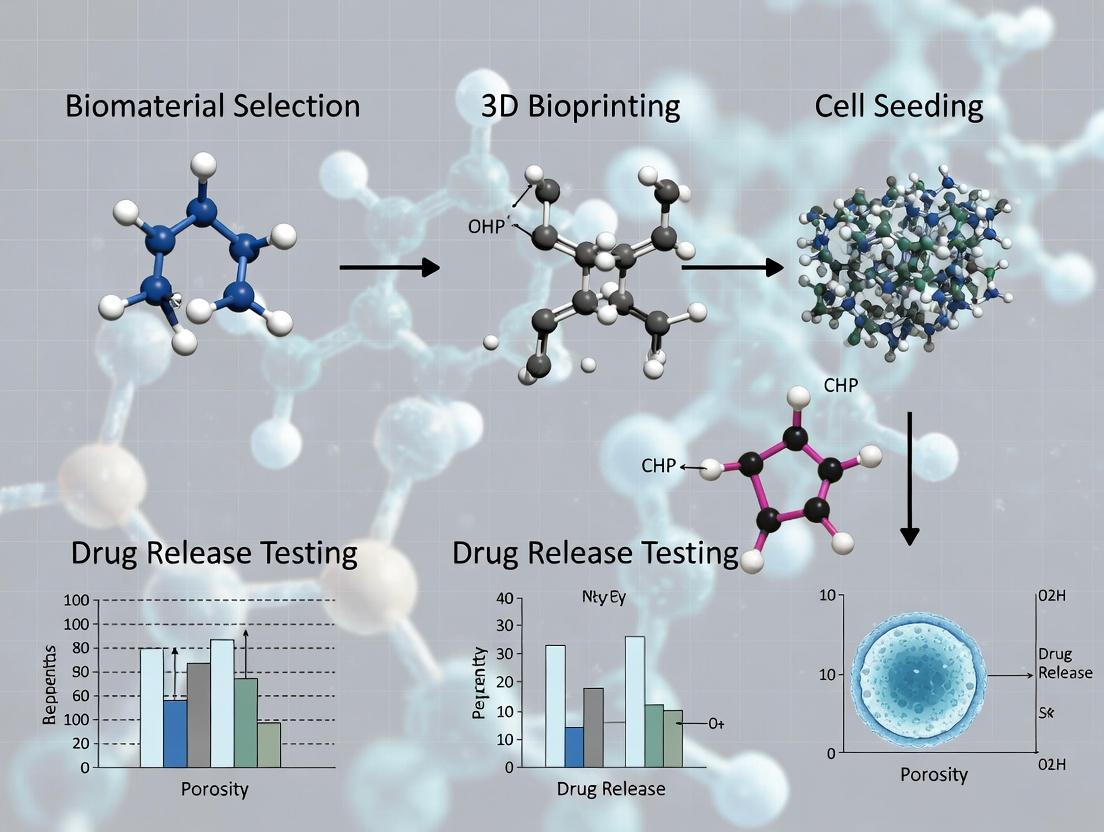
This comprehensive article explores the transformative role of 3D bioprinting in fabricating biomaterial scaffolds for controlled and targeted drug delivery.
Revolutionizing Therapeutics: The Complete Guide to 3D Bioprinted Biomaterial Scaffolds for Advanced Drug Delivery
Abstract
This comprehensive article explores the transformative role of 3D bioprinting in fabricating biomaterial scaffolds for controlled and targeted drug delivery. Designed for researchers, scientists, and drug development professionals, it covers foundational principles from biomaterial selection and bioink design to the core bioprinting technologies (extrusion, inkjet, laser-assisted). The piece details methodological approaches for loading therapeutic agents, precise fabrication strategies, and applications in tissue engineering, cancer therapy, and chronic disease management. It addresses critical challenges such as structural integrity, drug release kinetics, and biocompatibility while presenting validation methods like in vitro testing, comparative scaffold analysis, and pre-clinical evaluation. The article concludes by synthesizing current advancements and charting future directions for clinical translation and personalized medicine.
Building the Blueprint: Core Principles of 3D Bioprinted Scaffolds and Drug Delivery Fundamentals
3D bioprinted biomaterial scaffolds for drug delivery are precisely engineered, three-dimensional structures fabricated via additive manufacturing techniques. They are designed to spatially localize and temporally control the release of therapeutic agents, addressing limitations of conventional delivery systems. Functioning as temporary extracellular matrices, these scaffolds provide structural support for cell infiltration and tissue integration while eluting drugs, growth factors, or biologics in a sustained, stimuli-responsive, or sequential manner. This application note details their composition, fabrication protocols, and quantitative drug release profiles within the broader thesis context of advancing personalized and regenerative therapeutics.
A 3D bioprinted biomaterial scaffold for drug delivery is an integrative construct where the scaffold architecture, material chemistry, and biological cargo are computationally designed and layer-by-layer deposited. The primary goal is to achieve spatiotemporal control over drug pharmacokinetics at a target site, enhancing therapeutic efficacy and reducing systemic side effects. Key objectives include: (1) Mimicking native tissue mechanics, (2) Enabling high-dose local delivery, (3) Providing tunable, multi-phasic release kinetics, and (4) Supporting host tissue remodeling.
Table 1: Common Biomaterial Inks for Drug-Loaded Scaffolds
| Biomaterial Class | Specific Example(s) | Key Properties | Typical Crosslinking Method | Representative Drug Loaded |
|---|---|---|---|---|
| Natural Polymer | Alginate, Gelatin Methacryloyl (GelMA), Hyaluronic Acid | High biocompatibility, inherent bioactivity | Ionic (Ca²⁺), UV photo-crosslinking | Doxorubicin, BMP-2, VEGF |
| Synthetic Polymer | Poly(ε-caprolactone) (PCL), Polylactic-co-glycolic acid (PLGA) | Tunable mechanical strength, predictable degradation | Thermal, Solvent Evaporation | Paclitaxel, Ciprofloxacin |
| Composite/Hybrid | GelMA-PCL, Alginate-nanoHydroxyapatite | Combined mechanical & biological cues | Dual: UV + Thermal | Dexamethasone, IGF-1 |
Table 2: Comparative Drug Release Kinetics from Different Scaffold Architectures
| Scaffold Architecture | Printing Technique | Loaded Molecule (Example) | Release Profile (Duration) | % Cumulative Release at 14 Days | Key Release Mechanism |
|---|---|---|---|---|---|
| Grid/Mesh (200µm fibers) | Extrusion Bioprinting | Vancomycin (Antibiotic) | Sustained | ~85% | Diffusion & polymer erosion |
| Core-Shell (Fibers) | Coaxial Extrusion | BSA (Model Protein) | Biphasic | ~95% | Initial burst from shell, sustained from core |
| Gradient Porosity | Digital Light Processing (DLP) | Dexamethasone (Osteogenic) | Slow, Linear | ~60% | Dominantly diffusion-controlled |
| Microsphere-Incorporated | Extrusion of composite ink | Paclitaxel (Chemotherapeutic) | Sustained, Zero-order | ~70% | Degradation of PLGA microspheres |
Experimental Protocols
Protocol 3.1: Fabrication of Drug-Loaded GelMA Scaffolds via Extrusion Bioprinting
Objective: To fabricate a cell-laden, drug-eluting hydrogel scaffold using GelMA. Materials:
- GelMA (5-20% w/v, degree of methacrylation >70%)
- Photoinitiator (Lithium phenyl-2,4,6-trimethylbenzoylphosphinate, LAP)
- Therapeutic agent (e.g., recombinant growth factor)
- Bioprinter (extrusion-based, with UV light source)
- Sterile PBS.
Procedure:
- Ink Preparation: Dissolve GelMA powder in PBS at 37°C to desired concentration (e.g., 10% w/v). Add LAP photoinitiator at 0.25% w/v. Gently mix until fully dissolved.
- Drug Incorporation: Add the therapeutic agent to the GelMA-LAP solution at 4°C. Gently vortex to ensure homogeneous distribution. Protect from light if agent is light-sensitive.
- Printing Parameters: Load bioink into a sterile syringe. Use a conical nozzle (22-27G). Set printing parameters: Pressure 15-25 kPa, speed 5-10 mm/s, bed temperature 15°C.
- Layer-by-Layer Fabrication: Print desired 3D structure (e.g., 10mm x 10mm grid). Immediately after deposition of each layer, apply a brief UV light exposure (365 nm, 5-10 mW/cm² for 10-30s) for partial crosslinking.
- Final Crosslinking: After printing completion, subject the entire construct to a final UV crosslinking (365 nm, 20 mW/cm² for 60s) to ensure complete gelation.
- Post-processing: Rinse scaffold twice in sterile PBS to remove unreacted precursors. Store in culture medium or buffer at 37°C until use.
Protocol 3.2: In Vitro Drug Release Kinetics Assay
Objective: To quantify the cumulative release of a drug from a 3D bioprinted scaffold over time. Materials:
- Drug-loaded scaffold (e.g., from Protocol 3.1)
- Release medium (PBS, pH 7.4, with 0.1% w/v sodium azide)
- Multi-well plates
- UV-Vis Spectrophotometer or HPLC system
- Orbital shaker incubator (37°C).
Procedure:
- Sample Preparation: Precisely weigh each scaffold (n=5). Place each scaffold in a separate well containing a known volume of release medium (e.g., 2 mL). Ensure scaffolds are fully immersed.
- Incubation: Place plates on an orbital shaker (50 rpm) inside a 37°C incubator.
- Sampling: At predetermined time points (e.g., 1, 3, 6, 12, 24, 48, 72h, then weekly), completely withdraw the entire release medium from each well and store at 4°C for analysis. Immediately replenish with an equal volume of fresh, pre-warmed release medium.
- Drug Quantification: Analyze the concentration of the drug in each collected sample using a pre-validated method (e.g., UV absorbance at λmax or HPLC). Use standard curves for absolute quantification.
- Data Analysis: Calculate cumulative drug release as a percentage of the total loaded drug mass. Plot cumulative release (%) versus time. Fit data to mathematical models (e.g., Higuchi, Korsmeyer-Peppas) to elucidate release mechanisms.
The Scientist's Toolkit: Research Reagent Solutions
Table 3: Essential Materials for 3D Bioprinting Drug Delivery Scaffolds
| Item | Function | Example Product/Brand |
|---|---|---|
| Photocrosslinkable Hydrogel | Provides the scaffold matrix; enables gentle cell encapsulation and UV-mediated solidification. | GelMA (Advanced BioMatrix), Hyaluronic Acid Methacrylate (Glycosil) |
| Biocompatible Photoinitiator | Generates free radicals under UV light to initiate hydrogel crosslinking with low cytotoxicity. | Lithium Phenyl-2,4,6-Trimethylbenzoylphosphinate (LAP) |
| Thermoplastic Polymer | Provides robust mechanical support for load-bearing applications; printed via melt-electrospinning writing. | Medical-grade PCL (Polysciences) |
| Growth Factor/ Drug Carrier | Enhances stabilization and controls release kinetics of sensitive biologics. | Heparin-based microspheres, Gelatin nanoparticles |
| Bioactive Ceramic | Enhances osteoconductivity in bone tissue engineering scaffolds. | Nano-hydroxyapatite (nHA) powder (Sigma-Aldrich) |
| Cell-Compatible Bioink | Pre-formulated, ready-to-use hydrogels containing cells and/or drugs for standardized printing. | CELLINK Bioink, Allevi GelMA Bioink |
Visualizations
Diagram 1: Scaffold-Mediated Drug Delivery Pathway
Diagram 2: Workflow for Fabricating & Testing Scaffolds
This document provides application notes and protocols for the selection and use of natural and synthetic polymers within the context of a thesis on 3D bioprinting biomaterial scaffolds for drug delivery research.
Selecting the appropriate polymer is critical for designing a functional 3D-bioprinted drug delivery scaffold. Key selection criteria are summarized below.
Table 1: Key Selection Criteria for Biomaterial Polymers in 3D-Bioprinted Drug Delivery Scaffolds
| Criterion | Impact on Scaffold Function | Typical Target Range/Value |
|---|---|---|
| Degradation Rate | Determines drug release kinetics & scaffold lifetime. | Tunable from days (e.g., gelatin) to months (e.g., PCL). |
| Mechanical Strength | Affects structural integrity and handling. | Compressive modulus: ~0.1 kPa (soft hydrogels) to >100 MPa (PCL). |
| Gelation Method | Dictates printability and cell viability. | Physical (temp, pH), chemical (crosslinkers), UV light. |
| Bioactivity | Influences cell adhesion, proliferation, and signaling. | High (collagen, HA) to low/inert (PEG, PLA). |
| Printability | Resolution, shape fidelity, and support during printing. | Viscosity, shear-thinning behavior, crosslinking speed. |
| Drug Binding/Release | Controls loading efficiency and release profile. | Dependent on polymer hydrophobicity & ionic interactions. |
Table 2: Comparative Analysis of Natural vs. Synthetic Polymers
| Polymer Class | Examples | Advantages | Disadvantages | Typical Drug Delivery Use Case |
|---|---|---|---|---|
| Natural | Alginate, Collagen, Hyaluronic Acid (HA), Fibrin, Silk Fibroin | Inherent bioactivity, biocompatibility, often enzymatically degradable. | Batch variability, potential immunogenicity, lower mechanical strength. | Sustained release of growth factors; cell-laden scaffolds for localized delivery. |
| Synthetic | Poly(lactic-co-glycolic acid) (PLGA), Poly(ε-caprolactone) (PCL), Poly(ethylene glycol) (PEG), Pluronic F-127 | Reproducible, tunable mechanical & degradation properties, high purity. | Generally lack cell-adhesion motifs (requires modification), degradation byproducts may acidify microenvironment. | Controlled, long-term release of small molecule drugs; high-precision structural scaffolds. |
| Hybrid/Composite | GelMA, HA-PEG hybrids, PLGA-Collagen blends | Combines advantages of both; tunable bioactivity and mechanics. | Complexity in synthesis and characterization. | Engineered scaffolds with spatially controlled drug release and mechanical cues. |
Experimental Protocols
Protocol 1: Formulation and Printability Assessment of a Hybrid Hydrogel Ink for Drug Delivery
Aim: To formulate and characterize a shear-thinning, UV-crosslinkable hydrogel ink (e.g., GelMA-Alginate composite) loaded with a model drug (e.g., Rhodamine B or Dexamethasone).
Research Reagent Solutions:
| Item | Function |
|---|---|
| Gelatin Methacryloyl (GelMA) | Provides cell-adhesive motifs and enables UV-mediated crosslinking. |
| Sodium Alginate | Enhances viscosity and provides rapid ionic crosslinking for structural support during printing. |
| Photoinitiator (LAP or Irgacure 2959) | Initiates radical polymerization under UV light to crosslink GelMA. |
| Calcium Chloride (CaCl₂) Solution | Ionic crosslinker for alginate, used in post-print stabilization bath. |
| Model Drug (e.g., Dexamethasone) | Small molecule model for drug release studies. |
| Phosphate Buffered Saline (PBS) | Solvent for ink preparation, maintains physiological pH and osmolarity. |
Procedure:
- Ink Preparation: Dissolve GelMA (10% w/v) and Sodium Alginate (2% w/v) in warm PBS (37°C) under gentle stirring. Allow solution to cool to room temperature.
- Additives: Incorporate the photoinitiator (0.25% w/v) and model drug (e.g., 50 µM Dexamethasone) into the polymer solution. Mix thoroughly while avoiding bubble formation.
- Rheological Assessment: Load ink onto a rheometer with a parallel plate geometry. Perform a shear rate sweep (0.1 to 100 s⁻¹) to confirm shear-thinning behavior. Measure storage (G') and loss (G'') moduli via an amplitude sweep.
- 3D Bioprinting: a. Load ink into a sterile syringe fitted with a conical nozzle (e.g., 22G-27G). b. Print a standardized lattice scaffold (e.g., 10x10x2 mm) using an extrusion bioprinter. c. Immediately after printing, immerse the scaffold in a 100 mM CaCl₂ bath for 5 minutes for ionic crosslinking. d. Rinse with PBS and expose to UV light (365 nm, 5-10 mW/cm²) for 60-120 seconds for covalent crosslinking of GelMA.
- Printability Analysis: Calculate the printability factor (Pf) from top-view images: Pf = (4π * Area) / (Perimeter²). A Pf closer to 1 indicates a perfect line.
Protocol 2: In Vitro Drug Release Kinetics from a 3D-Bioprinted Scaffold
Aim: To quantify the cumulative release profile of a loaded drug from a bioprinted scaffold under physiological conditions.
Procedure:
- Scaffold Preparation: Print and crosslink drug-loaded scaffolds as per Protocol 1. Measure exact dimensions and weight.
- Release Study Setup: Place each scaffold (n=4-6) in a well of a 24-well plate. Add a known volume (e.g., 1 mL) of release medium (PBS, pH 7.4, with 0.1% w/v sodium azide to prevent bacterial growth) at 37°C.
- Sampling: At predetermined time points (e.g., 1h, 6h, 1d, 3d, 7d, 14d), completely remove and replace the entire release medium from each well. Store samples at 4°C for analysis.
- Drug Quantification: Analyze the concentration of the drug in each sample using an appropriate method (e.g., UV-Vis spectroscopy for Rhodamine B at 554 nm, or HPLC for Dexamethasone). Generate a standard curve for quantification.
- Data Analysis: Calculate cumulative drug release as a percentage of the total loaded drug (determined from a separately dissolved scaffold). Plot cumulative release (%) vs. time. Fit data to mathematical models (e.g., Higuchi, Korsmeyer-Peppas) to elucidate release mechanisms.
Visualizations
Title: Polymer Selection Workflow
Title: Properties Driving Drug Release
Within the broader thesis on 3D bioprinting of biomaterial scaffolds for drug delivery, the bioink serves as the foundational vehicle. It is a specialized material formulated to encapsulate therapeutic agents while supporting living cells and being precisely deposited to form complex 3D structures. This application note details the critical components, rheological properties, and printability assessments essential for developing effective drug-encapsulating bioinks.
Core Components of Drug-Loaded Bioinks
A functional bioink for drug delivery is a multi-component system. The table below summarizes the essential constituents and their roles.
Table 1: Core Components of a Drug-Encapsulating Bioink
| Component Category | Example Materials | Primary Function in Drug Delivery |
|---|---|---|
| Structural Polymer (Hydrogel) | Alginate, Gelatin Methacryloyl (GelMA), Hyaluronic Acid, Fibrin, Collagen | Provides the 3D scaffold matrix; dictates mechanical integrity, degradation rate, and cell support. |
| Crosslinking Mechanism | Ionic (Ca²⁺ for alginate), Photo-initiator (LAP for GelMA), Enzymatic (Thrombin for fibrin) | Stabilizes the printed structure; can influence drug release kinetics via mesh density. |
| Drug / Therapeutic Agent | Small molecules (Doxorubicin), Proteins (VEGF), siRNA, Exosomes | The encapsulated payload for controlled localized release. |
| Drug Carrier (Optional) | Poly(lactic-co-glycolic acid) (PLGA) nanoparticles, Liposomes, Micelles | Protects the drug; provides an additional release control barrier. |
| Rheology Modifiers | Nanocellulose, Silica nanoparticles, Clay nanosheets | Enhances shear-thinning and shape fidelity without significantly affecting biocompatibility. |
| Bioactive Cues | RGD peptides, Growth factors (embedded) | Enhances cell-bioink interaction and can synergize with drug action. |
Rheology and Printability: Quantitative Relationships
Rheological properties directly determine extrudability, shape fidelity, and cell viability. Key parameters must be quantified.
Table 2: Critical Rheological Parameters and Target Ranges for Extrusion Bioprinting
| Parameter | Measurement Method | Target Range for Printability | Influence on Drug Delivery |
|---|---|---|---|
| Viscosity (at low shear) | Rotational rheometer | 10 - 1000 Pa·s (material-dependent) | High viscosity can hinder drug diffusion; affects mixing homogeneity. |
| Shear-Thinning Index (n) | Power-law model fit to flow curve | n < 1 (typically 0.1 - 0.5) | Enables smooth extrusion; reduces shear stress on encapsulated drugs/carriers. |
| Yield Stress (τ₀) | Stress ramp or amplitude sweep | 50 - 500 Pa | Essential for shape fidelity; prevents premature drug carrier settling. |
| Storage/Loss Modulus (G'/G'') | Oscillatory frequency sweep | G' > G'' at rest (solid-like) | High G' post-crosslinking can slow drug release by reducing mesh size. |
| Recovery Time | Step-change oscillatory test | < 30 seconds | Fast recovery prevents structural collapse, maintaining designed pore architecture for drug release. |
Detailed Experimental Protocols
Protocol 1: Bioink Formulation and Drug/Carrier Incorporation
Objective: To prepare a sterile, homogeneous bioink loaded with a model drug (e.g., Doxorubicin) via direct dissolution or nanoparticle incorporation.
Materials:
- GelMA (10% w/v in PBS)
- Photo-initiator LAP (0.25% w/v)
- Doxorubicin hydrochloride (DOX) or DOX-loaded PLGA nanoparticles
- Phosphate Buffered Saline (PBS), pH 7.4
- Sterile syringes, 22G mixing nozzles, light-protected vials
Procedure:
- Dissolve lyophilized GelMA in PBS at 40°C to make a 10% (w/v) stock solution. Filter sterilize (0.22 µm).
- Add LAP to the cooled GelMA solution (< 37°C) to a final concentration of 0.25% w/v. Mix gently in a light-protected tube.
- For direct loading: Dissolve DOX in PBS and add to the GelMA-LAP mix for a final desired concentration (e.g., 50 µM). Homogenize by gentle vortexing.
- For carrier loading: Resuspend pre-formed, sterile DOX-PLGA nanoparticles in PBS. Mix thoroughly with the GelMA-LAP solution to achieve uniform dispersion.
- Degas the bioink in a vacuum desiccator for 15 minutes to remove air bubbles that affect printability.
- Store the final bioink at 4°C in the dark for up to 2 hours before printing.
Protocol 2: Rheological Characterization of Bioink
Objective: To measure viscosity, shear-thinning behavior, yield stress, and viscoelastic recovery.
Materials:
- Bioink sample (from Protocol 1)
- Rotational rheometer with parallel plate geometry (e.g., 25 mm diameter)
- Temperature control unit
- Solvent trap to prevent drying
Procedure:
- Loading: Pre-cool the Peltier plate to 10°C. Load ~200 µL of bioink onto the center of the bottom plate. Lower the upper plate to a 0.5 mm gap. Trim excess.
- Flow Ramp Test: Set temperature to 20°C (typical printing temp). Perform a shear rate sweep from 0.01 to 100 s⁻¹. Record viscosity (η) vs. shear rate. Fit data to the Power-Law model (η = K * γ^(n-1)) to extract consistency index (K) and flow index (n).
- Amplitude Sweep: At a constant frequency (1 Hz), perform an oscillatory strain sweep from 0.1% to 1000%. Identify the yield point where storage modulus (G') sharply decreases (crossover with G'').
- Recovery Test: Apply a high oscillatory strain (500%, 10 s) to liquefy the ink, then immediately switch to a low strain (1%, 100 s). Monitor G' and G'' over time to assess recovery kinetics.
- Cleanup: Carefully remove the sample and clean plates with warm water and ethanol.
Protocol 3: Printability and Shape Fidelity Assessment
Objective: To quantify the printability of a bioink via filament collapse and grid structure fidelity tests.
Materials:
- 3D bioprinter (extrusion-based)
- 3% (w/v) Calcium Chloride (for alginate) or 405 nm UV light (for GelMA)
- 24-well culture plate
- ImageJ software
Procedure:
- Filament Collapse Test: Print a single 20 mm straight filament into air over a 15 mm gap. Capture a side-view image immediately.
- Grid Structure Test: Print a 10x10 mm single-layer grid (line spacing 2 mm) into a crosslinking bath or onto a substrate.
- Crosslinking: Immediately crosslink the printed structure (e.g., ionic for alginate, 30 s UV for GelMA).
- Image Analysis:
- Filament Sagging: Measure the maximum sagging distance (D) of the filament. Calculate a stability ratio.
- Grid Fidelity: Analyze top-view images. Measure the area of printed pores vs. designed pores. Calculate a Printability Factor (Pf) = (Adesigned / Aactual), where values closer to 1 indicate higher fidelity.
- Drug Release Correlation: High-fidelity grids ensure consistent porosity, a critical factor for reproducible drug release profiles.
Visualizing Bioink Development and Drug Release Pathways
Diagram 1: Bioink Formulation and Testing Workflow
Diagram 2: Drug Release Mechanisms from Bioinks
The Scientist's Toolkit: Research Reagent Solutions
Table 3: Essential Materials and Reagents for Bioink Drug Encapsulation Research
| Item / Reagent | Example Product/Catalog | Function & Application Note |
|---|---|---|
| Gelatin Methacryloyl (GelMA) | Advanced BioMatrix, GelMA-20 | Gold-standard photocrosslinkable hydrogel. Degree of functionalization (DoF) affects mechanical properties and drug diffusion. |
| Lithium Phenyl-2,4,6-trimethylbenzoylphosphinate (LAP) | Sigma-Aldrich, 900889 | Highly efficient, cytocompatible photo-initiator for UV/VIS crosslinking of GelMA and other polymers. |
| Alginic Acid Sodium Salt | Sigma-Aldrich, A1112 | Ionic-crosslinkable polymer. Molecular weight and G/M ratio control gel stiffness and permeability. |
| PLGA Nanoparticles | PolySciTech AP series (e.g., AP041) | Pre-formed drug carriers for secondary encapsulation. Various lactide:glycolide ratios control degradation rate. |
| Nanocellulose (CMC) | Cellulose Lab, CNC-USD-100nm | Rheology modifier to enhance shear-thinning and yield stress without affecting transparency for crosslinking. |
| Rheometer | TA Instruments DHR, Anton Paar MCR | Essential for quantifying viscosity, yield stress, and viscoelastic moduli as per Protocol 2. |
| Extrusion Bioprinter | Allevi 3, BIO X, REGEMAT V1 | For assessing printability. Pressure-based systems offer more control for viscous inks than piston-based. |
| 405 nm UV Light Source | Spot-curing system (e.g., DYMAX) | For precise, rapid photocrosslinking of bioinks containing LAP or similar initiators. |
Within the broader thesis on 3D bioprinting of biomaterial scaffolds for drug delivery research, selecting the appropriate fabrication technology is paramount. The bioprinting landscape is dominated by three core modalities: extrusion-based, inkjet-based, and vat photopolymerization (SLA/DLP). Each offers distinct advantages and limitations in scaffold resolution, mechanical integrity, biomaterial compatibility, and cell viability, directly impacting their suitability for fabricating drug-eluting scaffolds. This document provides detailed application notes and protocols to guide researchers in selecting and implementing these technologies for controlled drug delivery applications.
Technology Comparison and Quantitative Data
Table 1: Comparative Analysis of Bioprinting Modalities for Scaffold Fabrication
| Parameter | Extrusion-Based | Inkjet-Based | SLA/DLP-Based |
|---|---|---|---|
| Typical Resolution (µm) | 100 - 1000 | 50 - 300 | 10 - 150 |
| Print Speed | Low-Medium | High | Medium-High |
| Viscosity Range (Pa·s) | 30 - 6x10⁷ | 0.001 - 0.1 | 0.1 - 10 (pre-polymer) |
| Cell Viability Post-Print | 40-95% (shear-sensitive) | 75-95% | 60-85% (UV/photo-initiator sensitive) |
| Mechanical Strength of Scaffold | High | Low | Medium-High |
| Porosity Control | Good (via path planning) | Limited | Excellent (via model design) |
| Key Biomaterial Examples | Alginate, GelMA, Collagen, PCL, Pluronic F-127 | Alginate, Collagen, PEGDMA | GelMA, PEGDA, Hyaluronic Acid derivatives |
| Primary Drug Delivery Suitability | Bulk release, growth factor delivery; large, stable scaffolds. | High-precision patterning of multiple drugs/cells; thin films. | Ultra-precise micro-architecture for controlled/tuned release kinetics. |
Application Notes
Extrusion-Based Bioprinting
- Best For: Constructing large, high-density cell-laden scaffolds or mechanically robust acellular scaffolds for bulk drug elution. Ideal for high-viscosity biomaterials and creating gradient structures for differential drug release.
- Drug Delivery Context: Excellent for embedding drug-loaded microspheres within the bioink matrix, enabling sustained, long-term release profiles. Shear stress during extrusion must be considered for fragile biologics.
Inkjet-Based Bioprinting
- Best For: High-throughput, precise droplet deposition for creating combinatorial drug screens or patterning multiple bioactive factors (e.g., growth factors, cytokines) onto pre-formed scaffolds.
- Drug Delivery Context: Enables fabrication of complex, multi-drug dosage forms on a microscale. Thermal or acoustic actuators may expose sensitive drugs to heat or pressure.
SLA/DLP-Based Bioprinting
- Best For: Fabricating scaffolds with exceptionally high architectural fidelity and complex internal geometries (e.g., interconnected pores, channels) to precisely modulate drug diffusion.
- Drug Delivery Context: Photo-crosslinking allows for fine-tuning of hydrogel mesh size, directly controlling drug release rates. UV exposure and photo-initiator cytotoxicity must be mitigated for sensitive cargos.
Detailed Experimental Protocols
Protocol 1: Extrusion Bioprinting of Doxorubicin-Loaded Alginate/GelMA Scaffold
Objective: To fabricate a cell-laden, drug-eluting scaffold for localized chemotherapy model.
Materials: See "The Scientist's Toolkit" below.
Procedure:
- Bioink Preparation: Dissolve 3% (w/v) alginate and 5% (w/v) GelMA in PBS. Mix with 0.25% (w/v) photo-initiator LAP. Add doxorubicin-HCl to a final concentration of 100 µM. Sterilize via 0.22 µm filter. Keep at 4°C in dark.
- Cell Preparation: Harvest desired cells (e.g., MCF-7). Centrifuge and resuspend in bioink at a density of 5x10⁶ cells/mL. Maintain on ice.
- Printer Setup: Load bioink into a sterile syringe fitted with a 22G conical nozzle. Mount onto the printhead. Set stage temperature to 15°C.
- Print Parameters: Pressure: 18-22 kPa; Speed: 8 mm/s; Layer height: 0.2 mm. Design a 10x10x2 mm grid structure (90% infill).
- Printing & Crosslinking: Print scaffold layer-by-layer. After each layer, apply a 405 nm light (30 mW/cm²) for 15 seconds for partial GelMA crosslinking.
- Post-Processing: Immerse the completed scaffold in 100 mM CaCl₂ solution for 5 mins to ionically crosslink alginate. Wash 3x in PBS.
- Assessment: Use HPLC to quantify initial drug loading. Perform drug release study in PBS at 37°C, sampling at time points.
Protocol 2: DLP Bioprinting of a Tunable PEGDA Drug Release Scaffold
Objective: To create a scaffold with defined channel architecture for studying drug diffusion kinetics.
Materials: See "The Scientist's Toolkit" below.
Procedure:
- Resin Preparation: Prepare 10% (w/v) PEGDA (Mn=700) in PBS. Add 0.5% (w/v) LAP as photo-initiator. Add model drug (e.g., FITC-dextran, 1 mg/mL) and mix thoroughly. Protect from light.
- CAD Model Preparation: Design a disc-shaped scaffold (⌀10mm x 1mm) with a defined internal lattice structure (e.g., gyroid, pore size 500µm) using CAD software.
- Printer Setup: Slice the model with 50 µm layer thickness. Pour bio-resin into the vat. Ensure the build platform is leveled.
- Print Parameters: Exposure time per layer: 3 seconds; Light intensity: 10 mW/cm².
- Printing: Initiate print. The platform will sequentially lower, with each layer polymerized by projected UV patterns.
- Post-Processing: Carefully remove scaffold. Rinse thoroughly in PBS to remove uncured resin. Sterilize under UV light for 20 mins per side.
- Assessment: Image scaffold via micro-CT to confirm architecture. Conduct drug release study in a flow-through system to analyze diffusion.
Diagrams
Title: Extrusion Bioprinting Workflow for Drug Delivery Scaffolds
Title: SLA/DLP Drug Release Control Mechanism
The Scientist's Toolkit: Key Research Reagent Solutions
Table 2: Essential Materials for Bioprinted Drug Delivery Scaffolds
| Item | Function/Relevance | Example (Supplier) |
|---|---|---|
| Gelatin Methacryloyl (GelMA) | Extrusion/SLA: Photo-crosslinkable hydrogel providing natural cell-adhesion motifs for embedded cells. | GelMA, Advanced BioMatrix |
| Lithium Phenyl-2,4,6-trimethylbenzoylphosphinate (LAP) | SLA/DLP: A cytocompatible, water-soluble photo-initiator for visible/UV light crosslinking of bioinks. | LAP Photoinitiator, Sigma-Aldrich |
| Alginate (High G-Content) | Extrusion: Ionic-crosslinkable polysaccharide for rapid structure stabilization; often blended. | Pronova UP MVG, NovaMatrix |
| Poly(ethylene glycol) diacrylate (PEGDA) | SLA/DLP: A synthetic, bioinert hydrogel precursor; mesh size tunable by MW and concentration for drug diffusion control. | PEGDA 700, Sigma-Aldrich |
| Drug-Loaded Microspheres (PLGA) | Extrusion: Can be mixed into bioinks to provide secondary, prolonged release kinetics within the scaffold. | Custom formulations (e.g., from PolySciTech) |
| Fluorescent Tracers (FITC-dextran) | All: Model drug surrogate for real-time visualization and quantification of release profiles from scaffolds. | FITC-Dextran, various MW, Thermo Fisher |
| Crosslinking Agents (CaCl₂) | Extrusion: Ionic crosslinker for alginate-based bioinks to provide immediate structural integrity post-print. | Calcium Chloride, anhydrous, MilliporeSigma |
Within the broader thesis on 3D bioprinting of biomaterial scaffolds for drug delivery research, the strategy for integrating the active pharmaceutical ingredient (API) with the biomaterial matrix is paramount. It determines key performance metrics such as drug loading efficiency, release kinetics, bioactivity preservation, and ultimately, therapeutic efficacy in vitro and in vivo. This application note details three principal integration strategies—Surface Adsorption, Direct Mixing, and Core-Shell Designs—providing comparative data, standardized protocols, and essential toolkits for researchers.
Application Notes & Comparative Analysis
Surface Adsorption
- Principle: Post-fabrication immobilization of drug molecules onto the pre-formed scaffold's surface via physical (e.g., van der Waals, electrostatic) or weak chemical interactions.
- Advantages: Simple, applicable to a wide range of drugs and scaffold materials, avoids exposure of drug to harsh fabrication conditions (e.g., UV, shear stress).
- Disadvantages: Typically low and burst-prone loading, limited control over sustained release, susceptibility to environmental washing.
Direct Mixing (Bulk Loading)
- Principle: Homogeneous dispersion or dissolution of the drug within the biomaterial ink prior to printing (e.g., biofabrication).
- Advantages: Higher, more uniform drug distribution, good integration, tunable release by matrix degradation.
- Disadvantages: Drug exposure to potentially denaturing printing conditions (pH, crosslinking), possible negative effects on ink printability/viscosity.
Core-Shell Designs
- Principle: Fabrication of a scaffold with a distinct drug-loaded core (e.g., microsphere, fiber) encapsulated by a rate-controlling polymer shell, or printing of drug-laden cores within a scaffold strut.
- Advantages: Superior control over release kinetics (zero-order possible), protects sensitive biologics (proteins, cells), enables multi-drug sequential release.
- Disadvantages: Complex fabrication requiring advanced printers (e.g., coaxial nozzles), potential for higher initial burst if shell is porous.
Quantitative Data Comparison
Table 1: Comparative Performance Metrics of Drug-Scaffold Integration Strategies
| Parameter | Surface Adsorption | Direct Mixing | Core-Shell Design |
|---|---|---|---|
| Typical Loading Efficiency | 60-80% | 85-95% | 70-90% (core dependent) |
| Initial Burst Release (24h) | High (40-70%) | Moderate to High (30-60%) | Low to Moderate (10-40%) |
| Release Duration Range | Days - 1-2 weeks | 1 week - 1 month | 1 month - several months |
| Impact on Scaffold Mechanics | Minimal | Can alter modulus by ±15-30% | Can enhance toughness (fiber reinforcement) |
| Best for Drug Types | Stable small molecules, peptides | Stable small molecules, some proteins | Proteins, growth factors, vaccines, sensitive APIs |
| Print Complexity | Low | Moderate | High |
Table 2: Common Biomaterial & Drug Pairings by Strategy
| Strategy | Common Biomaterial Scaffold | Exemplar Drug/Cargo | Targeted Application |
|---|---|---|---|
| Surface Adsorption | PLA, PCL, Collagen | BMP-2, Vancomycin | Bone regeneration, infection prevention |
| Direct Mixing | Alginate, GelMA, Hyaluronic Acid | Doxorubicin, Dexamethasone | Cancer models, anti-inflammatory |
| Core-Shell | PCL shell / GelMA core, Coaxial PLA-PEG | VEGF, NGF, Insulin | Angiogenesis, neural repair, diabetes |
Experimental Protocols
Protocol 1: Surface Adsorption onto a 3D Printed PCL Scaffold
Aim: To adsorb a model protein (Lysozyme) onto a fabricated scaffold. Materials: Sterile 3D printed PCL scaffold, Lysozyme solution (1 mg/mL in PBS), PBS, orbital shaker. Procedure:
- Fabricate PCL scaffolds via melt-extrusion 3D printing (e.g., 100 µm nozzle, 80°C).
- Sterilize scaffolds by immersion in 70% ethanol for 30 min, followed by triple rinse in sterile PBS.
- Immerse each scaffold in 1 mL of Lysozyme solution in a 24-well plate.
- Incubate on an orbital shaker (50 rpm) at 4°C for 24 hours to allow adsorption.
- Remove scaffold and gently rinse with PBS to remove loosely bound protein. Collect rinse solution.
- Quantify loading by measuring initial and residual solution concentration via Bradford assay.
Protocol 2: Direct Mixing for Alginate/GelMA Bioink Loading
Aim: To prepare a drug-loaded bioink for extrusion printing. Materials: Alginate (4% w/v), GelMA (7% w/v), photoinitiator (LAP), model drug (e.g., Fluorescein isothiocyanate–dextran, FITC-Dex), crosslinker (CaCl₂ solution). Procedure:
- Dissolve alginate and GelMA in PBS at 37°C. Sterilize via 0.22 µm filtration.
- Add LAP photoinitiator to a final concentration of 0.25% (w/v).
- Add FITC-Dex (or target drug) to the bioink and mix thoroughly by vortexing and gentle trituration. Avoid bubble formation.
- Load the drug-bioink composite into a sterile syringe for printing.
- Print scaffolds using a pneumatic or piston-driven extruder (e.g., 22G nozzle, 15-20 kPa).
- Crosslink immediately post-print by spraying with 100 mM CaCl₂ solution, followed by 60 sec of UV light exposure (365 nm, 5-10 mW/cm²).
Protocol 3: Coaxial Printing for Core-Shell Fiber Scaffolds
Aim: To fabricate a scaffold from core-shell fibers with a drug-loaded core. Materials: Coaxial nozzle assembly (inner: 25G, outer: 21G), core solution (5% GelMA + drug), shell solution (8% PCL in acetic acid), coagulation bath (ethanol). Procedure:
- Prepare core solution: Dissolve GelMA and drug in PBS with photoinitiator. Keep at 30°C to prevent gelation.
- Prepare shell solution: Dissolve PCL pellets in acetic acid with stirring at 40°C.
- Load core and shell solutions into separate syringes mounted on the bioprinter.
- Set printing parameters: Core flow rate = 80 µL/min, Shell flow rate = 200 µL/min, Print speed = 8 mm/s.
- Extrude fibers directly into an ethanol coagulation bath to solidify the PCL shell.
- Transfer the fabricated grid scaffold to a UV chamber for 60 sec to crosslink the GelMA core.
- Wash extensively in PBS to remove residual solvents.
Visualizations
Title: Surface Adsorption Workflow
Title: Strategy Determines Drug Release Pathway
The Scientist's Toolkit
Table 3: Key Research Reagent Solutions & Materials
| Item Name | Function / Role | Exemplar Vendor/Product |
|---|---|---|
| Gelatin Methacryloyl (GelMA) | Photocrosslinkable hydrogel base for direct mixing & core; provides cell adhesion sites. | Advanced BioMatrix, Sigma-Aldrich |
| Polycaprolactone (PCL) | Thermoplastic polyester for melt-printing scaffolds (adsorption) or shell material. | Sigma-Aldrich, Corbion Purac |
| Lithium Phenyl-2,4,6-trimethylbenzoylphosphinate (LAP) | Efficient, cytocompatible photoinitiator for UV crosslinking of hydrogels. | Tokyo Chemical Industry |
| Alginic Acid Sodium Salt | Ionic-crosslinkable polysaccharide for bioink formulation (direct mixing). | Sigma-Aldrich, NovaMatrix |
| Coaxial Nozzle Kit | Enables simultaneous extrusion of two materials to form core-shell fibers. | Nordson EFD, HyRel |
| Fluorescein Isothiocyanate–Dextran (FITC-Dex) | Model fluorescent drug conjugate for tracking loading and release kinetics. | Sigma-Aldrich |
| Recombinant Human VEGF-165 | Model protein growth factor for studies in angiogenesis; sensitive to denaturation. | PeproTech, R&D Systems |
From Design to Therapy: Fabrication Methods and Cutting-Edge Applications in Disease Treatment
Within the broader thesis on 3D bioprinting for drug delivery, this protocol details the complete pipeline for fabricating sterile, drug-eluting biomaterial scaffolds. The process integrates computer-aided design (CAD), bioink formulation, aseptic printing, and post-processing to create reproducible constructs for controlled release studies.
CAD Model Design & Slicing
- Objective: To create a digital blueprint for the scaffold.
- Protocol: Using software (e.g., Autodesk Fusion 360, SolidWorks, or open-source Blender), design a 3D model with defined porosity, pore size, and geometry. Critical parameters include strand diameter, pore spacing (e.g., 400 µm), and infill density (e.g., 50%). Export the model as an STL file. Import the STL into bioprinter slicing software (e.g., BioCad, Repetier-Host with custom scripts). Set layer height (typically 80-200 µm), print speed (5-15 mm/s), and extrusion pressure/temperature based on bioink rheology. Generate G-code.
- Key Data Table: Common Scaffold Design Parameters for Drug Delivery
| Parameter | Typical Range | Impact on Drug Delivery |
|---|---|---|
| Porosity | 60% - 90% | Higher porosity increases drug loading capacity and influences diffusion kinetics. |
| Pore Size | 100 - 500 µm | Affects cell infiltration (if present) and surface area for drug attachment/release. |
| Layer Height | 80 - 200 µm | Influences resolution, stron mechanical integrity, and degradation profile. |
| Infill Pattern | Rectangular, Gyroid, Hexagonal | Gyroid offers high surface area and interconnected pores for sustained release. |
Bioink Formulation & Drug Incorporation
- Objective: To prepare a sterile, drug-laden biomaterial ink.
- Protocol:
- Base Hydrogel Preparation: Dissolve the biomaterial (e.g., 3-5% w/v alginate, 5-10% w/v gelatin-methacryloyl (GelMA)) in sterile, cell culture-grade water or phosphate-buffered saline (PBS). Filter sterilize (0.22 µm pore size).
- Drug Incorporation: Two primary methods are used:
- Direct Mixing: For hydrophilic drugs (e.g., dexamethasone, vancomycin), directly dissolve the API into the sterile hydrogel solution at 4°C to minimize premature gelation. Protect from light if necessary.
- Microsphere Encapsulation (for sustained release): Incorporate pre-formed drug-loaded polymeric microspheres (e.g., PLGA) into the hydrogel matrix at a typical ratio of 1:10 (microspheres:hydrogel) to create a composite ink.
- Crosslinker Addition: For ionic crosslinking (e.g., alginate), prepare a sterile calcium chloride (e.g., 100 mM) solution. For photo-crosslinking (e.g., GelMA), add a photoinitiator (e.g., 0.5% w/v Lithium phenyl-2,4,6-trimethylbenzoylphosphinate (LAP)) under safe lighting conditions.
Aseptic 3D Bioprinting Setup
- Objective: To print the scaffold in a sterile environment.
- Protocol: Perform all steps in a Class II biosafety cabinet. Sterilize the printer stage and any non-disposable components with 70% ethanol and UV exposure for 30 minutes. Load the sterile, drug-laden bioink into a sterile cartridge, avoiding bubbles. Attach a sterile nozzle (e.g., 22G-27G). Calibrate the nozzle height. Load the G-code and initiate printing onto a sterile substrate (e.g., Petri dish). Maintain a controlled environment (temperature: 15-22°C for thermoresponsive inks).
Post-Printing Crosslinking & Sterilization
- Objective: To stabilize the scaffold structure and ensure terminal sterility.
- Protocol: Immediately after printing, apply the final crosslinking step.
- Ionic Crosslinking: Immerse the alginate-based scaffold in sterile CaCl₂ solution for 5-10 minutes.
- Photo-Crosslinking: Irradiate the GelMA scaffold with UV light (365 nm, 5-10 mW/cm²) for 30-60 seconds.
- Sterilization: For acellular drug delivery scaffolds, a final sterilization may be required. Immersion in 70% ethanol for 15 minutes, followed by triple rinsing in sterile PBS, is common. For heat-stable materials, low-dose gamma irradiation (≤15 kGy) can be used.
Quality Control & Drug Release Assay Setup
- Objective: To characterize the scaffold and initiate drug release studies.
- Protocol:
- Imaging: Use scanning electron microscopy (SEM) to confirm pore size and morphology.
- Drug Loading Efficiency: Dissolve a known mass of scaffold (n=3) in a suitable dissolution buffer (e.g., 50 mM sodium citrate for alginate). Measure drug concentration via HPLC or UV-Vis spectroscopy. Calculate efficiency: (Actual Drug Load / Theoretical Drug Load) * 100%.
- Release Study: Place individual scaffolds (n=5-6) in vials with release medium (e.g., PBS, pH 7.4, 37°C). At predetermined time points, withdraw the entire medium for analysis and replace with fresh medium to maintain sink conditions. Analyze samples via HPLC/UV-Vis.
Diagram Title: From CAD to Drug Release Workflow
Diagram Title: Drug Release Mechanisms from Scaffold
The Scientist's Toolkit: Essential Research Reagents & Materials
| Item | Function & Rationale |
|---|---|
| Gelatin-Methacryloyl (GelMA) | A photo-crosslinkable, cell-adhesive hydrogel derived from collagen; provides a biocompatible matrix for drug embedding and tunable mechanical properties. |
| Alginate (High G-Content) | An ionic-crosslinkable polysaccharide from seaweed; allows for gentle gelation with Ca²⁺ and modular drug incorporation. |
| Lithium Phenyl-2,4,6-trimethylbenzoylphosphinate (LAP) | A cytocompatible photoinitiator for UV (365-405 nm) crosslinking of GelMA and similar polymers, enabling rapid scaffold stabilization. |
| Poly(lactic-co-glycolic acid) (PLGA) Microspheres | Biodegradable polymer particles for encapsulating small molecule drugs; used within bioinks to achieve multi-phasic, sustained release kinetics. |
| Dulbecco's Phosphate Buffered Saline (DPBS), sterile | Used for bioink preparation, post-printing rinses, and as a base for drug release media to maintain physiological ionic strength and pH. |
| Sodium Citrate Buffer (50-100 mM) | A chelating agent used to dissolve ionically crosslinked (e.g., alginate) scaffolds for complete drug recovery in loading efficiency assays. |
Application Notes
Controlled drug release from 3D-bioprinted scaffolds is a cornerstone of advanced therapeutic strategies in tissue engineering and regenerative medicine. Precise tuning of scaffold properties—porosity, degradation kinetics, and stimuli-responsiveness—enables spatiotemporal control over drug bioavailability, enhancing efficacy while minimizing systemic toxicity. Within a thesis on 3D bioprinting for drug delivery, this research translates material design parameters into predictable pharmacokinetic outcomes.
Porosity & Pore Architecture: Porosity (percentage void space) and interconnectivity dictate drug loading capacity and initial burst release. A higher surface-area-to-volume ratio accelerates early diffusion. Pore size gradients can be designed to create release kinetics.
Degradation Profile: The hydrolysis or enzymatic cleavage rate of polymer chains (e.g., PLGA, gelatin) governs long-term, sustained release. Erosion mechanisms (bulk vs. surface) must be matched to the drug's stability and desired release profile.
Stimuli-Responsiveness: Incorporating moieties that respond to physiological (pH, enzymes, redox) or external (temperature, light, magnetic field) triggers allows on-demand, pulsatile release, mimicking natural biological rhythms or responding to disease states.
The integration of these three parameters within a single 3D-bioprinted construct presents a multidisciplinary challenge but offers unparalleled control for personalized medicine applications in oncology, chronic wound healing, and controlled hormone delivery.
Table 1: Influence of Print Parameters on Scaffold Porosity and Initial Burst Release
| Bioink Formulation | Nozzle Size (µm) | Print Pressure (kPa) | Layer Height (µm) | Resultant Porosity (%) | Interconnectivity | Initial Burst Release (0-24h, %) | Reference Model |
|---|---|---|---|---|---|---|---|
| GelMA (10%) + 1% Laponite | 250 | 25 | 200 | 68.2 ± 3.1 | High | 45.2 ± 5.1 | Diffusion-porosity |
| Alginate (3%) + 4% nHA | 410 | 45 | 300 | 52.7 ± 2.8 | Medium | 28.7 ± 3.8 | Higuchi |
| PLGA (25% w/v in DCM) | 150 | 80 | 100 | 71.5 ± 4.5 | High | 65.1 ± 6.3 | Biphasic |
| PEGDA (20%) + 0.1% LAP | 200 | 30 | 150 | 31.4 ± 1.9 | Low | 15.3 ± 2.2 | Zero-order |
Table 2: Degradation Kinetics of Common Bioink Polymers
| Polymer | Crosslinking Method | Degradation Mechanism | Approx. Half-life (In Vitro, PBS) | Degradation Rate Constant (k, day⁻¹) | Primary Release Model |
|---|---|---|---|---|---|
| PLGA (50:50) | N/A (thermoplastic) | Hydrolytic cleavage | 28-35 days | 0.020-0.025 | Erosion-diffusion coupled |
| Gelatin-Methacryloyl (GeIMA) | UV Photo-crosslinking | Enzymatic (Collagenase) | Tunable (2-60 days) | 0.011-0.347 (Varies with [enzyme]) | Swelling-controlled |
| Alginate (High G) | Ionic (Ca²⁺) | Ion exchange (Chelation) | 7-14 days (in PBS) | 0.050-0.100 | Ion diffusion-controlled |
| Polycaprolactone (PCL) | N/A (thermoplastic) | Hydrolytic (slow) | >1 year | ~0.002 | Diffusion-limited |
| Poly(ethylene glycol)-diacrylate (PEGDA) | UV Photo-crosslinking | Hydrolytic (ester) | 30-90 days | 0.008-0.023 | Surface erosion |
Table 3: Stimuli-Responsive Systems for On-Demand Release
| Stimulus | Responsive Moiey/Bioink | Trigger Condition | Response Time Scale | Release Increase (%) vs. Baseline | Application Context |
|---|---|---|---|---|---|
| pH (Acidic) | Chitosan/HPβCD | pH drop to 5.0 (Tumor microenvironment) | Minutes to Hours | 220-350% | Tumor-targeted chemo |
| Redox (High GSH) | Disulfide-crosslinked PEG | 10 mM glutathione (GSH) | 1-2 Hours | 180-300% | Intracellular delivery |
| Enzyme (MMP-2/9) | Peptide-crosslinked Hyaluronan | 100 ng/mL MMP-2 | 6-12 Hours | 150-250% | Invasive cell targeting |
| Temperature (Hyperthermia) | PNIPAm-coated Mesoporous Silica | >32°C (LCST) | Seconds to Minutes | 400-600% | Externally triggered release |
| Near-Infrared (NIR) Light | Gold Nanorod-doped GelMA | NIR laser (808 nm, 1 W/cm²) | Seconds | 500-800% (Pulsatile) | Spatiotemporally precise |
Experimental Protocols
Protocol 1: Fabrication of a Graded-Porosity PLGA Scaffold for Biphasic Release
Objective: To 3D-print a scaffold with a dense outer layer and a porous core to achieve an initial slow release followed by a sustained phase. Materials: PLGA (50:50, MW 50kDa), Dichloromethane (DCM), Model drug (e.g., Rhodamine B or Dexamethasone), 3D Bioprinter (extrusion-based), Nozzles (150µm and 250µm).
Procedure:
- Bioink Preparation: Prepare two PLGA solutions. a. High-density ink: Dissolve 30% w/v PLGA in DCM. Add model drug at 1% w/w of polymer. b. High-porosity ink: Dissolve 15% w/v PLGA in DCM. Add model drug at 1% w/w.
- Printing Parameters Setup: a. Load the high-density ink into a syringe fitted with a 150µm nozzle. b. Set printing pressure to 80 kPa, bed temperature to 4°C, and print a 10x10 mm square (4 layers) as the base dense layer. c. Immediately switch to the high-porosity ink in a syringe with a 250µm nozzle. d. Reduce pressure to 45 kPa and print a 8x8 mm square (20 layers) directly atop the dense layer, creating a core-shell structure.
- Post-Processing: Dry the construct under vacuum for 48h to ensure complete solvent evaporation.
- Characterization: Analyze cross-sections via SEM to confirm graded porosity.
Protocol 2: Assessing Enzymatically Triggered Release from MMP-Sensitive Hydrogels
Objective: To quantify drug release from a hydrogel scaffold in response to matrix metalloproteinase (MMP) concentration. Materials: MMP-sensitive peptide (e.g., GCGPQGIWGQGCG), 4-Arm PEG-Maleimide, Model drug (e.g., VEGF), Recombinant MMP-2 enzyme, Tris Buffer (pH 7.4, with 10 mM CaCl₂).
Procedure:
- Hydrogel Formation: a. Dissolve the MMP-sensitive peptide and drug in Tris buffer. b. Separately dissolve 4-Arm PEG-Maleimide in Tris buffer. c. Rapidly mix the two solutions at a 1:1 thiol:maleimide ratio. Piper into a cylindrical mold (8 mm diameter x 2 mm height). Gelation occurs within minutes.
- Release Study Setup: a. Place each hydrogel cylinder in 5 mL of release medium (Tris buffer +/- MMP-2 at 100 ng/mL). Use n=5 per group. b. Incubate at 37°C with gentle shaking.
- Sampling: At predetermined time points (1, 3, 6, 12, 24, 48h), withdraw 1 mL of release medium and replace with fresh pre-warmed buffer (with or without MMP-2).
- Analysis: Quantify drug concentration in samples via ELISA or fluorescence. Compare cumulative release profiles between MMP(+) and MMP(-) conditions.
Protocol 3: Tuning Degradation for Zero-Order Kinetics via Multimaterial Printing
Objective: To fabricate a core-shell fiber where the shell degradation rate controls the release of a drug from the core, approximating zero-order kinetics. Materials: Fast-degrading polymer (e.g., PLGA 75:25), Slow-degrading polymer (e.g., PCL), Coaxial printhead, Dual-extrusion bioprinter, Model drug.
Procedure:
- Bioink Preparation: a. Core ink: Dissolve PCL at 160 mg/mL in DCM. Add model drug (5% w/w). b. Shell ink: Dissolve PLGA (75:25) at 200 mg/mL in DMF.
- Coaxial Printing: a. Mount the coaxial nozzle on the printer. The core channel is connected to the PCL/drug syringe, the shell channel to the PLGA syringe. b. Optimize pressures (Core: ~60 kPa, Shell: ~75 kPa) to produce a continuous, concentric fiber. c. Print a grid scaffold (15x15x2 mm).
- Degradation-Release Monitoring: a. Immerse scaffolds in PBS (pH 7.4, 37°C) under mild agitation. b. At set intervals, remove samples (n=3) for: i. Mass Loss: Dry and weigh. ii. Drug Release: Analyze PBS supernatant via HPLC. iii. Morphology: Assess shell erosion via SEM.
Diagrams
Diagram Title: Controlled Release Scaffold Design Workflow
Diagram Title: Stimuli-Responsive Drug Release Pathways
The Scientist's Toolkit: Research Reagent Solutions
| Item Name/Kit | Supplier Examples | Function in Controlled Release Research |
|---|---|---|
| GelMA (Gelatin Methacryloyl) | Advanced BioMatrix, Cellink, Allevi | Photocrosslinkable bioink; degradation tunable via degree of functionalization; enables cell encapsulation and drug delivery. |
| PLGA (Poly(lactic-co-glycolic acid)) | Sigma-Aldrich, Lactel Absorbable Polymers, Corbion | Gold-standard biodegradable polymer; erosion rate and release kinetics controlled by LA:GA ratio and molecular weight. |
| MMP-Sensitive Peptide Crosslinker (e.g., KCGPQGIWGQCK) | Genscript, Bachem, Peptides International | Enables formation of hydrogels that degrade specifically in the presence of overexpressed MMPs (e.g., in tumors). |
| 4-Arm PEG-Thiol / PEG-Maleimide | Laysan Bio, Creative PEGWorks, JenKem | Used for forming Michael-addition hydrogels; modular platform for incorporating various responsive elements. |
| Rhodamine B Isothiocyanate-Dextran (Model Drug) | Sigma-Aldrich, TdB Labs | Fluorescent model compound for tracking release kinetics via fluorescence plate readers, confocal microscopy. |
| Recombinant Human MMP-2/MMP-9 | R&D Systems, PeproTech | Used to simulate enzyme-rich microenvironments in vitro for triggered release studies. |
| LCST Polymer (e.g., PNIPAm or derivatives) | Sigma-Aldrich, PolySciTech | Provides temperature-responsive behavior; drug release triggered by mild hyperthermia. |
| Gold Nanorods (for NIR-responsiveness) | nanoComposix, Cytodiagnostics | Converts near-infrared light to heat, triggering drug release from a thermally sensitive matrix. |
| In Vitro Drug Release Sampler (e.g., Hanson MicroCollector) | Teledyne Hanson, Distek | Automated system for precise, temperature-controlled sampling in long-term release studies. |
| Dialysis Membrane (MWCO 3.5-14 kDa) | Spectrum Labs, Repligen | Used in USP apparatus 4 (flow-through cell) or simple immersion methods for sink condition release testing. |
Within the broader thesis on 3D bioprinting of biomaterial scaffolds for drug delivery, this application note focuses on the convergence of osteoinductive and antimicrobial strategies. The core thesis posits that extrusion-based 3D bioprinting enables the spatial and temporal control of therapeutic release, which is critical for complex regenerative processes like bone healing. This protocol details the fabrication of dual-functional scaffolds that co-deliver growth factors (e.g., BMP-2) and broad-spectrum antibiotics (e.g., gentamicin or vancomycin) to promote osteogenesis while preventing infection—a major cause of orthopedic implant failure.
Table 1: Common Growth Factors and Antibiotics for Bone-Targeted Delivery
| Therapeutic Agent | Typical Loading Concentration in Bioink | Target Release Duration (Days) | Key Function in Bone Regeneration | Common Biomaterial Carrier |
|---|---|---|---|---|
| rhBMP-2 | 10-50 µg/mL | 14-28 | Osteoblast differentiation, bone formation | Collagen, Hyaluronic Acid, PLGA |
| VEGF | 5-25 µg/mL | 7-14 | Angiogenesis, vascular in-growth | Gelatin Methacrylate (GelMA) |
| Gentamicin Sulfate | 1-5 wt% (in scaffold) | 7-21 (controlled) | Prophylaxis against Gram-positive/-negative bacteria | Calcium Phosphate Cements, PCL |
| Vancomycin HCl | 2-10 wt% (in scaffold) | 14-28 | Treatment of MRSA and Gram-positive infections | Silk Fibroin, Hydroxyapatite |
| Tetracycline | 0.5-2 wt% | 10-20 | Broad-spectrum antibiotic, anti-collagenase activity | Alginate, Chitosan |
Table 2: In Vivo Efficacy Outcomes (Summary from Recent Studies)
| Study Model (Animal) | Scaffold Material | Loaded Agents | Key Metric (vs. Control) | Result (Mean ± SD) |
|---|---|---|---|---|
| Rat Calvarial Defect | 3D-printed β-TCP | BMP-2 (20µg) + Gentamicin (2%) | New Bone Volume at 8 weeks (mm³) | 12.5 ± 1.8 vs. 3.2 ± 0.9 |
| Rabbit Femur Defect | PCL/GelMA Bioink | VEGF (10µg) + Vancomycin (5%) | Bone Mineral Density (mg/cc) at 12 weeks | 485 ± 45 vs. 210 ± 38 |
| Mouse Mandibular Defect | Silk/Hydroxyapatite | BMP-2 (30µg) | Occlusion Rate (%) at 6 weeks | 92 ± 4 vs. 35 ± 7 |
| Infected Rat Tibia | 3D-printed PLGA | Gentamicin (3%) | Bacterial Reduction (Log10 CFU) at day 7 | 4.2 ± 0.3 log reduction |
| Sheep Segmental Defect | Calcium Sulfate/HA | Vancomycin (7.5%) | Infection Prevention Rate (%) | 100% vs. 40% in control |
Detailed Experimental Protocols
Protocol 3.1: Bioink Formulation for Co-Delivery
Aim: To prepare a sterile, print-ready bioink containing both a growth factor (rhBMP-2) and an antibiotic (Gentamicin Sulfate) within a GelMA/Alginate composite.
Materials:
- GelMA (Methacrylation degree ~70%)
- Sodium Alginate (high G-content)
- Photoinitiator (Lithium phenyl-2,4,6-trimethylbenzoylphosphinate, LAP)
- Recombinant Human BMP-2 (lyophilized)
- Gentamicin Sulfate powder
- Dulbecco’s Phosphate Buffered Saline (DPBS), sterile
- 0.25% (w/v) Irgacure 2959 solution (optional, for crosslinking)
Procedure:
- Preparing the Polymer Base: a. Dissolve GelMA at 10% (w/v) in DPBS at 37°C for 2 hours with gentle stirring. b. Separately, dissolve Sodium Alginate at 3% (w/v) in DPBS at room temperature. c. Mix the two solutions at a 3:1 (GelMA:Alginate) volume ratio. Homogenize gently. d. Add LAP photoinitiator to the combined solution at a final concentration of 0.25% (w/v). Sterile filter (0.22 µm).
Therapeutic Agent Incorporation: a. Antibiotic Loading: Dissolve Gentamicin Sulfate in sterile DPBS to make a 100 mg/mL stock. Add to the bioink mixture under gentle vortexing to achieve a final concentration of 2% (w/v) of the total polymer weight. b. Growth Factor Loading: Reconstitute rhBMP-2 as per manufacturer's instructions. Add to the bioink last, immediately before printing, to a final concentration of 30 µg/mL. Mix by gentle pipetting to avoid protein denaturation.
Bioink Storage: Keep the final bioink on ice, protected from light, and use within 2 hours to maintain bioactivity.
Protocol 3.2: 3D Bioprinting and Post-Processing
Aim: To fabricate a porous, load-bearing scaffold with controlled architecture.
Printer Setup: Extrusion-based 3D bioprinter (e.g., BIO X, Cellink) equipped with a temperature-controlled printhead and a 405 nm UV light source.
- Load the prepared bioink into a sterile 3mL syringe. Avoid air bubbles.
- Use a conical nozzle (22G, 410 µm inner diameter). Maintain bioink temperature at 18-20°C.
- Print Parameters:
- Pressure: 25-35 kPa
- Print Speed: 8 mm/s
- Layer Height: 250 µm
- Infill Pattern: 0/90° lattice, 50% porosity.
- Crosslinking Strategy: a. Primary (Ionic): Print directly into a sterile 100mM Calcium Chloride (CaCl₂) bath for 5 minutes for alginate gelation. b. Secondary (Photo): Transfer scaffolds to a petri dish and expose to 405 nm UV light at 5 mW/cm² for 90 seconds per side to crosslink GelMA.
- Rinse scaffolds three times in sterile DPBS to remove excess CaCl₂ and unbound agents.
Protocol 3.3: In Vitro Release Kinetics and Bioactivity Assay
Aim: To quantify the release profile of both agents and confirm bioactivity of released growth factor.
Part A: Release Study
- Immerse each scaffold (n=5) in 1.0 mL of release medium (DPBS + 0.1% BSA, pH 7.4) in a 24-well plate. Incubate at 37°C under gentle agitation (50 rpm).
- At predetermined time points (1, 3, 6, 12, 24 hours, then daily for 35 days), completely remove and replace the release medium.
- Quantification:
- Gentamicin: Use a commercial ELISA kit or perform a microbiological assay using Staphylococcus aureus.
- rhBMP-2: Quantify using a human BMP-2-specific ELISA. Plot cumulative release (%) vs. time.
Part B: Bioactivity of Released BMP-2 (ALP Assay)
- Collect release medium from day 3 (peak bioactive release).
- Apply this conditioned medium to C2C12 myoblast cells (a BMP-responsive cell line) seeded in a 96-well plate.
- After 72 hours, lyse cells and assay for Alkaline Phosphatase (ALP) activity using p-nitrophenyl phosphate (pNPP) substrate.
- Compare ALP activity to a positive control (fresh medium with 50 ng/mL BMP-2) and negative control (release medium from blank scaffold).
Visualizations
Diagram 1: Therapeutic Release & Bone Healing Cascade
Title: Dual-Drug Release Pathway to Bone Regeneration
Diagram 2: Experimental Workflow for Protocol
Title: From Bioink to In Vivo Test Workflow
The Scientist's Toolkit: Research Reagent Solutions
Table 3: Essential Materials for Scaffold Fabrication and Testing
| Item Name & Typical Vendor | Function in Protocol | Critical Specifications/Notes |
|---|---|---|
| Gelatin Methacryloyl (GelMA) (Cellink, Advanced BioMatrix) | Primary bioink polymer providing cell-adhesive RGD motifs and tunable mechanical properties. | Degree of methacrylation: 60-80%. Viscosity suitable for extrusion. |
| Recombinant Human BMP-2 (PeproTech, R&D Systems) | Gold-standard osteoinductive growth factor to drive osteogenic differentiation. | Carrier-free, lyophilized. Reconstitute in 4mM HCl with 0.1% BSA. Avoid repeated freeze-thaw. |
| Gentamicin Sulfate (Sigma-Aldrich) | Broad-spectrum aminoglycoside antibiotic for local prophylaxis against infection. | >590 µg/mg potency. Soluble in aqueous solutions. |
| Lithium Phenyl-2,4,6-Trimethylbenzoylphosphinate (LAP) (Sigma-Aldrich) | Biocompatible photoinitiator for rapid UV crosslinking of GelMA. | Use at 0.25% (w/v). Less cytotoxic than Irgacure 2959. |
| Calcium Chloride (CaCl₂) Dihydrate (Thermo Fisher) | Ionic crosslinker for alginate component, providing initial print fidelity. | Prepare sterile 100-200 mM solution in DI water. |
| Human BMP-2 ELISA Kit (Quantikine, R&D Systems) | Quantifies BMP-2 concentration in release media for kinetic profiling. | Specific for human/rat/mouse BMP-2. No cross-reactivity with other GFs. |
| Alkaline Phosphatase (ALP) Assay Kit (Colorimetric) (Abcam, Sigma) | Measures osteogenic bioactivity of released BMP-2 via early differentiation marker. | Use pNPP substrate. Normalize to total cellular protein. |
| Sterile 3D Bioprinting Nozzles (22G, conical) (Cellink, RegenHU) | Defines strand diameter and affects cell viability during extrusion. | Use sterile, disposable nozzles to prevent contamination. |
Application Notes
Localized drug delivery implants represent a paradigm shift in oncology, aiming to maximize therapeutic efficacy at the tumor site while minimizing systemic toxicity. Within 3D bioprinting research, these implants are conceptualized as patient-specific, biomaterial-based scaffolds that provide structural support for tissue regeneration while eluting precise combinations of agents. This approach directly addresses the limitations of intravenous chemotherapy and systemic immunotherapy, such as poor tumor penetration, immune-related adverse events, and suboptimal pharmacokinetics. Bioprinted scaffolds enable controlled spatiotemporal release kinetics, co-delivery of multiple drug classes (e.g., chemotherapeutics, immunomodulators, and biologics), and can be designed to recruit and modulate immune cells in situ. The integration of localized chemotherapy with immunotherapy via implants can transform immunologically "cold" tumors into "hot," T-cell-infiltrated environments, potentially overcoming resistance mechanisms.
Table 1: Key Performance Metrics of Recent Localized Delivery Implants
| Implant Type / Model | Drug Payload | Release Duration (Days) | Key Outcome (In Vivo) | Reference Year |
|---|---|---|---|---|
| PLGA-Gelatin 3D-printed wafer | Temozolomide + anti-PD1 | 28 | 80% tumor reduction; 60% long-term survival in glioma model | 2023 |
| Alginate-Hyaluronic Acid cryogel | Doxorubicin + IL-2 | 21 | 90% reduction in melanoma volume; increased CD8+ T cell infiltration by 70% | 2022 |
| Silk Fibroin microsphere scaffold | Cisplatin + GM-CSF | 35 | Complete tumor regression in 50% of breast cancer models; abscopal effect observed | 2024 |
| PCL-based electrospun membrane | Pembrolizumab (anti-PD1) | 56 | Local T cell activation equivalent to systemic dose with 10% of the total drug load | 2023 |
Protocols
Protocol 1: Bioprinting and Characterization of a Dual-Drug Eluting PLGA/Gelatin Scaffold
Objective: To fabricate a 3D-bioprinted scaffold for the sustained co-release of a chemotherapeutic (Gemcitabine) and an immune checkpoint inhibitor (anti-CTLA-4).
Materials (Research Reagent Solutions):
- Bioink: PLGA (85:15, MW 50kDa) dissolved in DMSO (30% w/v) blended with methacrylated gelatin (GelMA, 10% w/v) in PBS.
- Drugs: Gemcitabine hydrochloride and fluorescently labeled anti-CTLA-4 antibody.
- Crosslinking: Lithium phenyl-2,4,6-trimethylbenzoylphosphinate (LAP) photoinitiator (0.25% w/v) and UV light source (365 nm, 5 mW/cm²).
- Cell Culture: Murine pancreatic ductal adenocarcinoma (PDAC) cells (e.g., KPC cells).
- Analysis: HPLC, ELISA plate reader, confocal microscopy.
Methodology:
- Bioink Preparation: Load the bioink by dissolving Gemcitabine (5 mg/mL) and anti-CTLA-4 (1 mg/mL) into the PLGA/GelMA blend. Mix thoroughly at 4°C in the dark.
- 3D Bioprinting: Use a pneumatic extrusion bioprinter. Maintain stage temperature at 10°C. Print a 10x10x2 mm grid scaffold (needle: 22G, pressure: 25 kPa, speed: 8 mm/s).
- Crosslinking: Immediately post-printing, expose the construct to UV light (365 nm) for 60 seconds to crosslink GelMA.
- Release Kinetics: Immerse scaffolds (n=5) in 2 mL of PBS (pH 7.4) at 37°C under gentle agitation. At predetermined time points, collect and replace the entire release medium.
- Quantification: Analyze Gemcitabine concentration via HPLC. Quantify anti-CTLA-4 using an ELISA specific for the antibody's Fc region or via fluorescence measurement.
- In Vitro Efficacy: Seed KPC cells around the scaffold in a transwell system. Assess cell viability (ATP assay) and T-cell activation (using a co-culture model with splenocytes) over 7 days.
Protocol 2: Evaluating Anti-Tumor Immune Response to a Localized Implant In Vivo
Objective: To assess the efficacy and immune memory generation of a drug-eluting scaffold in a subcutaneous murine tumor model.
Materials (Research Reagent Solutions):
- Animals: C57BL/6 mice.
- Tumor Cells: MC38 colon carcinoma cells.
- Implant: Silk fibroin scaffold loaded with Oxaliplatin and anti-OX40 agonist (from Protocol 1 analog).
- Reagents: Flow cytometry antibodies (CD45, CD3, CD8, CD4, FoxP3, CD11b, Gr1), ELISpot kit for IFN-γ.
Methodology:
- Tumor Inoculation: Inject 5x10^5 MC38 cells subcutaneously into the right flank of mice.
- Implant Placement: At tumor volume ~100 mm³, anesthetize mice. Perform a minimal incision, insert the drug-eluting scaffold directly adjacent to the tumor bed, and suture.
- Cohorts: Include groups: (1) No treatment, (2) Empty scaffold, (3) Systemic IV drugs, (4) Localized drug scaffold.
- Monitoring: Measure tumor dimensions every 2 days. At day 21 post-implantation, euthanize half of each group.
- Immune Profiling: Harvest tumors, digest to single-cell suspension, and analyze by flow cytometry for immune cell infiltration (T cells, macrophages, MDSCs). Isolate splenocytes for ELISpot to quantify tumor-antigen-specific IFN-γ-secreting T cells.
- Memory Challenge: Re-challenge the remaining, tumor-free mice from the localized treatment group with MC38 cells in the opposite flank at day 60. Monitor for tumor rejection.
Visualizations
Title: Bioprinted Implant R&D Workflow
Title: Localized Implant Mechanism of Action
The Scientist's Toolkit
| Research Reagent / Material | Function in Localized Delivery Research |
|---|---|
| Methacrylated Gelatin (GelMA) | Photocrosslinkable bioink component providing cell-adhesive motifs and tunable mechanical properties for 3D printing. |
| Poly(lactic-co-glycolic acid) (PLGA) | Biodegradable polymer forming the matrix for sustained drug release; degradation rate controlled by LA:GA ratio. |
| Immune Checkpoint Inhibitors (e.g., anti-PD1, anti-CTLA4) | Antibody payloads to block T-cell inhibitory signals, locally reversing tumor-mediated immunosuppression. |
| Cytokines (e.g., IL-2, IL-12, GM-CSF) | Protein payloads to recruit and activate dendritic cells (APCs) and expand effector T cells at the tumor site. |
| Lithium Phenyl-2,4,6-trimethylbenzoylphosphinate (LAP) | A cytocompatible photoinitiator for rapid free radical crosslinking of methacrylated polymers under UV light. |
| Fluorescently Labeled Albumin (e.g., FITC-BSA) | A model protein used to visualize and quantify release kinetics and distribution from the scaffold in vitro. |
| Matrigel or Tumor Fragment Co-culture | Provides a 3D, tumor-mimetic microenvironment for in vitro testing of implant efficacy and immune cell migration. |
| Multiplex Cytokine Array (Luminex) | Enables simultaneous measurement of dozens of immune analytes from in vitro or ex vivo samples to profile immune response. |
Application Notes
Long-term, controlled delivery of therapeutic hormones and proteins is a cornerstone of effective chronic disease management. For conditions like Type 1 and advanced Type 2 diabetes, sustained release of insulin or glucagon-like peptide-1 (GLP-1) analogs can dramatically improve glycemic control and patient compliance. Extending this paradigm to other chronic conditions—such as growth hormone deficiencies, osteoporosis (parathyroid hormone), and hemophilia (clotting factors)—presents a significant therapeutic opportunity and challenge. Traditional delivery methods (daily injections, pumps) are burdensome and result in non-physiological pharmacokinetic profiles.
Within the thesis context of 3D bioprinting of biomaterial scaffolds for drug delivery research, this approach offers a transformative solution. 3D bioprinting enables the fabrication of patient-specific, geometrically complex scaffolds with precise spatial control over biomaterial composition, pore architecture, and bioactive cargo loading. These scaffolds can be designed for subcutaneous or intramuscular implantation, creating a localized depot for sustained release. The biomaterial matrix protects sensitive protein therapeutics from degradation and allows for tunable release kinetics—from weeks to months—governed by diffusion, scaffold degradation, and engineered stimuli-responsiveness (e.g., to glucose). This moves beyond simple encapsulation towards the creation of structured, living tissue-engineered niches that can potentially respond to physiological cues.
Key Advantages of 3D-Bioprinted Scaffolds for Protein Delivery:
- Tunable Kinetics: Release profiles can be engineered via material selection (e.g., alginate, gelatin-methacryloyl (GelMA), poly(lactic-co-glycolic acid) (PLGA)), crosslinking density, and scaffold porosity.
- Multi-Drug Delivery: Capability to print distinct compartments within a single scaffold for concurrent or sequential release of multiple agents (e.g., insulin and GLP-1).
- Enhanced Stability: The scaffold environment can stabilize proteins, reducing aggregation and denaturation.
- Precision & Personalization: Scaffold size, dose, and release rate can be tailored to individual patient needs.
Protocols
Protocol 1: Bioprinting and In Vitro Characterization of a GelMA-Based Insulin-Releasing Scaffold
Objective: To fabricate a gelatin-based 3D-bioprinted scaffold for the sustained release of insulin and characterize its release profile and bioactivity in vitro.
Materials & Reagents:
- Gelatin-Methacryloyl (GelMA): Photocrosslinkable hydrogel derivative of gelatin; provides cell-adhesive motifs and tunable mechanical properties.
- Photoinitiator (Lithium phenyl-2,4,6-trimethylbenzoylphosphinate, LAP): Enables rapid crosslinking of GelMA under visible or UV light.
- Recombinant Human Insulin: Model therapeutic protein.
- Bioprinter: Extrusion-based bioprinter (e.g., BIO X, Allevi 3) equipped with a temperature-controlled printhead.
- Phosphate-Buffered Saline (PBS), pH 7.4: For wash and release studies.
- BCA Protein Assay Kit: For quantifying total protein release.
- Mouse Embryonic Fibroblast (MEF) cell line or 3T3-L1 adipocytes: For in vitro bioactivity assay (insulin receptor signaling/glucose uptake).
Procedure:
- Bioink Preparation: Prepare a 10% (w/v) GelMA solution in PBS at 37°C. Add LAP photoinitiator to a final concentration of 0.25% (w/v). Gently mix with recombinant human insulin to a final concentration of 1.0 mg/mL. Keep solution at 37°C in the dark until printing.
- 3D Bioprinting: Load bioink into a sterile, temperature-controlled syringe. Set printing temperature to 28-30°C. Using a 22G conical nozzle, print a 15x15x1 mm lattice scaffold (e.g., 0/90° infill pattern) onto a cooled print bed (4°C). Immediately after printing, expose the scaffold to 405 nm UV light (5-10 mW/cm²) for 60 seconds to crosslink.
- In Vitro Release Study: Immerse each crosslinked scaffold in 5.0 mL of PBS (release medium) in a 6-well plate. Maintain at 37°C under gentle agitation (50 rpm). At predetermined time points (1, 3, 6, 12, 24, 48 hours, then daily for 30 days), collect 500 µL of release medium and replace with an equal volume of fresh pre-warmed PBS.
- Quantitative Analysis: Analyze collected samples using the BCA assay to determine cumulative insulin release. Plot release curve as cumulative percentage released over time.
- Bioactivity Assay (Glucose Uptake): Differentiate 3T3-L1 cells into adipocytes. Serum-starve cells for 6 hours. Treat with 100 µL of release medium sample (from day 1 and day 14) for 20 minutes. Measure glucose uptake using a fluorescent 2-NBDG glucose analog. Compare activity to fresh insulin standards and PBS control.
Protocol 2: Evaluating In Vivo Efficacy of a PLGA-Based GLP-1 Analog Scaffold in a Diabetic Mouse Model
Objective: To assess the glycemic control capability of a subcutaneously implanted, bioprinted PLGA scaffold loaded with a GLP-1 analog (e.g., Exendin-4) in streptozotocin (STZ)-induced diabetic mice.
Materials & Reagents:
- PLGA (50:50, acid-terminated): Biodegradable polyester allowing for sustained release over months.
- Exendin-4: GLP-1 receptor agonist.
- Dichloromethane (DCM): Solvent for PLGA.
- Bioprinter with a heated printhead: For melt-based printing.
- C57BL/6 mice, male, 8-10 weeks old.
- Streptozotocin (STZ): For inducing hyperglycemia.
- Blood Glucose Monitoring System.
- Animal Scales & Metabolic Cages (optional).
Procedure:
- Scaffold Fabrication: Dissolve PLGA in DCM (30% w/v). Mix in Exendin-4 powder (2% w/w of polymer). Load into a bioprinter syringe. Print rod-shaped scaffolds (2mm diameter x 5mm length) using a melt-electrowriting approach (heat at 80-100°C, 5-10 psi pressure). Evaporate residual solvent under vacuum for 48 hours.
- Diabetic Mouse Model: Induce diabetes in mice via intraperitoneal injection of STZ (50 mg/kg for 5 consecutive days). Confirm stable hyperglycemia (non-fasting blood glucose >300 mg/dL for 2 weeks) prior to implantation.
- Implantation: Anesthetize mice. Make a small dorsal subcutaneous pocket. Implant one Exendin-4-loaded scaffold (n=8) or an empty PLGA scaffold (control, n=8). Close wound with sutures.
- In Vivo Monitoring: Measure non-fasting blood glucose levels and body weight every 2-3 days for 60 days. Perform intraperitoneal glucose tolerance tests (IPGTT, 2g glucose/kg) at baseline, day 30, and day 60 post-implantation.
- Ex Vivo Analysis: At endpoint, explant scaffolds and surrounding tissue. Process for histology (H&E, Masson's Trichrome) to evaluate scaffold degradation and foreign body response. Measure residual Exendin-4 content in explanted scaffolds via ELISA.
Data Presentation
Table 1: In Vitro Cumulative Insulin Release from GelMA Scaffolds (Mean ± SD, n=4)
| Time Point | Cumulative Release (%) | Notes |
|---|---|---|
| 6 Hours | 15.2 ± 3.1 | Initial burst release phase |
| 24 Hours | 28.5 ± 4.7 | |
| 7 Days | 65.8 ± 5.2 | Sustained release phase |
| 14 Days | 82.4 ± 6.1 | |
| 30 Days | 96.0 ± 3.8 | Near-complete release |
Table 2: In Vivo Efficacy of Exendin-4-Loaded PLGA Scaffolds in Diabetic Mice
| Parameter | Control (Empty Scaffold) | Exendin-4 Scaffold | p-value |
|---|---|---|---|
| Mean Blood Glucose (Day 0-60) | 452 ± 67 mg/dL | 188 ± 42 mg/dL | <0.001 |
| HbA1c at Day 60 | 10.5 ± 1.2% | 6.8 ± 0.7% | <0.001 |
| Body Weight Change | -12.5 ± 3.1% | +5.2 ± 2.4% | <0.001 |
| AUC during IPGTT (Day 30) | 45,300 ± 4,500 | 22,100 ± 3,100 | <0.001 |
Visualizations
Title: In Vitro Characterization Workflow for Bioprinted Scaffolds
Title: Therapeutic Protein Signaling from Scaffold to Effect
The Scientist's Toolkit: Research Reagent Solutions
| Item | Function & Rationale |
|---|---|
| GelMA (Gelatin Methacryloyl) | A photocrosslinkable, bioactive hydrogel derived from collagen. Provides natural cell-adhesive RGD sequences, tunable mechanical properties, and mild gelation conditions suitable for protein encapsulation. |
| LAP Photoinitiator | A cytocompatible photoinitiator that crosslinks GelMA upon exposure to 405 nm light. Offers faster gelation and lower toxicity compared to older initiators like Irgacure 2959. |
| PLGA (50:50 Lactide:Glycolide) | A FDA-approved, biodegradable polyester. Degradation time (weeks to months) and protein release kinetics can be tuned by adjusting the lactide:glycolide ratio and molecular weight. |
| Recombinant Human Insulin | The gold-standard protein for diabetes therapy research. Used as a model drug to establish release kinetics and bioactivity assays for scaffold platforms. |
| Exendin-4 (GLP-1 Analog) | A potent, long-acting GLP-1 receptor agonist. A key therapeutic candidate for evaluating sustained delivery in metabolic disease models due to its glucose-dependent action. |
| Streptozotocin (STZ) | A chemical that selectively destroys pancreatic beta-cells, inducing a reliable model of hyperglycemia in rodents for testing diabetes therapeutics. |
| 2-NBDG (Fluorescent Glucose Analog) | A cell-impermeant fluorescent D-glucose analog used to directly measure and visualize cellular glucose uptake in real-time for in vitro bioactivity assays. |
Overcoming Hurdles: Solving Common Challenges in Scaffold Fabrication and Drug Release Performance
Within the broader thesis on 3D bioprinting of biomaterial scaffolds for drug delivery, a paramount challenge is maintaining the structural integrity and bioactivity of therapeutic compounds throughout the fabrication process. The printing process subjects drugs to mechanical shear, temperature fluctuations, UV light (in stereolithography), and chemical interactions with bioinks, all of which can lead to denaturation, degradation, and loss of pharmacological efficacy. This document outlines key strategies and protocols to mitigate these risks, ensuring the final printed scaffold delivers a therapeutically active payload.
Key Degradation Mechanisms & Protective Strategies
The following table summarizes primary degradation pathways during bioprinting and corresponding protective strategies.
Table 1: Drug Degradation Mechanisms and Corresponding Protection Strategies
| Degradation Mechanism | Printing Technology | Affected Drug Types | Protective Strategy | Key Performance Indicator |
|---|---|---|---|---|
| Thermal Denaturation | Fused Deposition Modeling (FDM) | Proteins, Peptides, some antibiotics | Use of low-melting-point carriers (e.g., PCL), Pre-blending drug at lower temp | Post-print bioactivity >85% vs. pre-print |
| Shear Stress | Extrusion-based (Pneumatic/Piston) | Liposomes, Viral vectors, Protein complexes | Optimization of nozzle diameter/geometry, Use of shear-thinning bioinks (e.g., alginate/ nanocellulose) | Vesicle integrity >90%, retained transduction efficiency |
| UV-Induced Damage | Stereolithography (SLA), Digital Light Processing (DLP) | Small molecules, Growth factors (e.g., BMP-2) | Use of cytocompatible photoinitiators (e.g., LAP), UV absorbers in bioink, Reduced exposure time/dose | Retained bioactivity ≥80% after crosslinking |
| Oxidation/Hydrolysis | All, especially post-printing incubation | Oxidation-prone drugs (e.g., certain chemotherapeutics) | Antioxidant additives (e.g., ascorbic acid), Controlled humidity/packaging, Lyophilized bioink formulation | Drug concentration stability >95% over 7 days at 37°C |
| Chemical Incompatibility | Crosslinking (Ionic/Enzymatic) | Drugs sensitive to pH or ionic strength | Stepwise printing/loading, Core-shell encapsulation, Use of benign crosslinkers (e.g., Ca2+ for alginate) | No significant precipitation or aggregation observed |
Detailed Experimental Protocols
Protocol 1: Assessing Protein Bioactivity Post-Extrusion Printing
Aim: To evaluate the retention of bioactivity for a model protein (e.g., Lysozyme or BMP-2) after incorporation into an alginate-gelatin bioink and extrusion printing.
Materials: See "The Scientist's Toolkit" below. Procedure:
- Bioink Preparation: Dissolve sodium alginate (3% w/v) and gelatin (5% w/v) in PBS at 37°C. Allow to cool to room temperature.
- Drug Incorporation: Gently mix the model protein into the bioink solution at a defined concentration (e.g., 10 µg/mL). Keep on ice.
- Control Sample: Aliquot a portion of the loaded bioink as a non-printed control.
- Printing: Load bioink into a sterile syringe fitted with a 22G conical nozzle. Print a standardized grid structure (e.g., 10x10x2 mm) using predetermined parameters (Pressure: 15-25 kPa, Speed: 5 mm/s, Bed Temp: 10°C).
- Recovery: Dissolve the printed scaffold and the control bioink aliquot in a sodium citrate solution (55 mM) to chelate calcium and liquefy the alginate.
- Bioactivity Assay: Perform a functional assay specific to the protein. For Lysozyme: Use a Micrococcus lysodeikticus turbidity assay. Measure decrease in OD450 over 5 minutes. For BMP-2: Use a SMAD phosphorylation assay with C2C12 cells.
- Calculation: Compare the activity of the printed sample to the non-printed control. Express as Percentage Bioactivity Retained.
Protocol 2: Optimizing SLA Printing for UV-Sensitive Drugs
Aim: To define printing parameters that minimize UV damage to a small molecule drug (e.g., Doxorubicin) during SLA fabrication.
Materials: Poly(ethylene glycol) diacrylate (PEGDA, 700 Da), Lithium phenyl-2,4,6-trimethylbenzoylphosphinate (LAP) photoinitiator, UV absorber (e.g., Tinuvin 326), model drug. Procedure:
- Resin Formulation: Prepare a base resin of 20% (w/v) PEGDA in PBS. Divide into three batches: Batch A: 0.3% (w/v) LAP only (control). Batch B: 0.3% LAP + 0.05% (w/v) Tinuvin 326. Batch C: 0.1% (w/v) LAP only.
- Drug Loading: Add Doxorubicin HCl (at a sub-quenching concentration, e.g., 50 µM) to each batch. Protect from ambient light.
- Printing: Print identical disc-shaped scaffolds (Ø5mm x 1mm) using a commercial SLA printer. Use a constant layer thickness (50 µm). Vary UV exposure time per layer (Batch A&B: 5s, 10s, 20s; Batch C: 20s, 40s).
- Post-processing: Wash scaffolds 3x in PBS to remove uncured resin.
- Drug Activity Assessment: a. Quantification: Dissolve scaffolds in 1M NaOH, measure Doxorubicin fluorescence (Ex/Em: 480/590 nm) against a standard curve. b. Functional Assay: Perform a cell viability assay (e.g., with MCF-7 cells) using drug-eluted media collected from the washed scaffolds.
- Analysis: Correlate UV dose (exposure time * intensity) with (a) recovered drug quantity and (b) cytotoxic efficacy, normalized to a non-printed control solution.
Visualization: Experimental Workflow & Strategy Decision Pathway
Title: Drug Protection Strategy Selection Workflow
Title: Bioactivity Validation Protocol Flowchart
The Scientist's Toolkit: Key Research Reagent Solutions
Table 2: Essential Materials for Protecting Drug Bioactivity in Bioprinting
| Reagent/Material | Supplier Examples | Function in Protocol | Critical Consideration |
|---|---|---|---|
| Alginate (High G-Content) | Sigma-Aldrich, NovaMatrix | Bioink base for gentle ionic crosslinking; protects from shear. | Viscosity and G:M ratio affect drug diffusion and release kinetics. |
| Gelatin Methacryloyl (GelMA) | Advanced BioMatrix, Elsevier | Photocrosslinkable bioink; allows low UV dose printing. | Degree of functionalization impacts mechanical properties & drug interaction. |
| Lithium Phenyl-2,4,6-trimethylbenzoylphosphinate (LAP) | TCI Chemicals, Sigma-Aldrich | Cytocompatible photoinitiator for SLA/DLP; reduces UV damage. | Concentration must balance curing efficiency and radical exposure to drug. |
| Pluronic F-127 | BASF, Sigma-Aldrich | Thermogelling sacrificial bioink; allows printing at low temp. | Can be used to create hollow channels for post-print drug loading. |
| Trehalose | Pfanstiehl, Sigma-Aldrich | Lyoprotectant; stabilizes proteins during bioink lyophilization. | Protects against dehydration stress and can be included in the bioink matrix. |
| PCL (Polycaprolactone) - Low MW | Polysciences, Sigma-Aldrich | Thermoplastic carrier for FDM; melts at low temps (~60°C). | Protects drugs from high-temperature degradation during extrusion. |
| Tinuvin 326 | BASF | UV absorber; shields drugs from harmful wavelengths during SLA. | Must be cytocompatible and not inhibit the photo-polymerization reaction. |
| HPLC-Grade Solvents & Standards | Fisher Scientific, Merck | Essential for accurate quantification of drug content post-printing. | Critical for constructing reliable standard curves for recovery calculations. |
Ensuring Structural Fidelity and Mechanical Stability Post-Printing
Within the broader thesis on 3D bioprinting of biomaterial scaffolds for drug delivery, achieving consistent structural fidelity (shape retention, feature accuracy) and mechanical stability (integrity under load) post-printing is paramount. These parameters directly influence the scaffold's performance in controlled drug release, cell-material interactions, and in vivo functionality. This document provides application notes and detailed protocols for the characterization and enhancement of these critical post-printing properties.
Key Challenges and Quantitative Analysis
Post-printing, scaffolds face challenges like swelling, collapse, and deformation, which compromise drug loading uniformity and release kinetics. Based on current literature, the following table summarizes common biomaterials and their post-printing stability profiles.
Table 1: Post-Printing Stability of Common Biomaterials for Drug Delivery Scaffolds
| Biomaterial | Typical Crosslinking Method | Average Shape Fidelity (%)* | Compressive Modulus Post-Curing (kPa)* | Key Stability Challenge |
|---|---|---|---|---|
| Alginate | Ionic (CaCl₂) | 85 - 92 | 10 - 50 | Rapid, inhomogeneous gelation leading to weak structure. |
| Gelatin Methacryloyl (GelMA) | Photo (UV/Light) | 90 - 96 | 5 - 100 | Swelling-dependent deformation; modulus tied to degree of functionalization. |
| Hyaluronic Acid Methacrylate (HAMA) | Photo (UV/Light) | 88 - 94 | 2 - 30 | High swelling ratio can distort micro-architecture. |
| Poly(ethylene glycol) Diacrylate (PEGDA) | Photo (UV/Light) | 95 - 99 | 50 - 500 | Brittleness and low cell adhesion. |
| Collagen | Thermal/pH | 70 - 85 | 0.5 - 5 | Very low mechanical strength; significant contraction. |
| Silk Fibroin | Alcohol/Salt | 91 - 98 | 100 - 5000 | Slow stabilization process requiring post-processing. |
*Data aggregated from recent studies (2022-2024). Values are range approximations dependent on concentration, formulation, and printing parameters.
Research Reagent Solutions Toolkit
Table 2: Essential Reagents for Post-Printing Stabilization & Characterization
| Item | Function in Post-Printing Stability |
|---|---|
| Lithium phenyl-2,4,6-trimethylbenzoylphosphinate (LAP) | A highly efficient, cytocompatible photoinitiator for UV/visible light crosslinking of methacrylated polymers (e.g., GelMA, HAMA), ensuring uniform and rapid stabilization. |
| Calcium Chloride (CaCl₂) Solution | Ionic crosslinker for polysaccharides like alginate. Concentration and immersion time are critical for controlling gelation depth and final modulus. |
| Genipin | Natural, cytocompatible chemical crosslinker for proteins (e.g., collagen, gelatin). Enhances mechanical stability and reduces degradation rate. |
| Sulfo-SANPAH | Photoactivatable crosslinker used under UV light to graft biomolecules or reinforce hydrogels, improving surface stability and integration. |
| Dynamic Mechanical Analyzer (DMA) | Instrument for measuring viscoelastic properties (storage/loss modulus, creep) of hydrated printed scaffolds over time. |
| Micro-Computed Tomography (μCT) Contrast Agents (e.g., Phosphotungstic acid) | Used to infiltrate scaffolds for high-resolution 3D imaging to quantify internal porosity, strand fusion, and structural defects. |
Detailed Experimental Protocols
Protocol 4.1: Quantitative Shape Fidelity Analysis via Digital Imaging
Objective: To quantify the geometric accuracy of a printed scaffold compared to its original digital model. Materials: Stereo microscope or macro lens with camera, image analysis software (ImageJ/Fiji), printed scaffold, reference digital design.
Steps:
- Image Acquisition: Place the fully crosslinked and equilibrated scaffold on a contrasting background. Capture a top-down image under consistent, diffuse lighting. Ensure scale calibration.
- Image Processing: Import image into ImageJ. Convert to 8-bit. Adjust threshold to create a binary mask of the scaffold.
- Dimensional Measurement:
- Measure the Filament Width at 10 random locations. Calculate the average and standard deviation.
- Measure the Pore Area/Diameter for 10 representative pores.
- Outline the External Contour of the entire scaffold.
- Fidelity Calculation:
- Filament Fidelity (%) = (Theoretical Filament Width / Measured Average Filament Width) x 100.
- Pore Fidelity (%) = (Theoretical Pore Area / Measured Average Pore Area) x 100.
- Overall Area Fidelity (%) = (Area of Printed Scaffold Mask / Area of Digital Design Render) x 100.
- Documentation: Report all three fidelity percentages with standard deviations.
Protocol 4.2: Time-Dependent Mechanical Stability Assessment via Cyclic Compression
Objective: To evaluate the resistance to permanent deformation and fatigue of a drug-loaded scaffold under simulated physiological loading. Materials: Hydrated scaffold sample, universal mechanical tester with a calibrated load cell, PBS bath (37°C).
Steps:
- Sample Preparation: Print and crosslink scaffolds to uniform dimensions (e.g., 10mm diameter x 5mm height). Hydrate in PBS for 24h at 37°C.
- Tester Setup: Mount a compression plate. Submerge sample in PBS bath at 37°C. Pre-load to 0.01N to ensure contact.
- Cyclic Loading Program:
- Set strain amplitude to 10% (representative of mild physiological strain).
- Set frequency to 1 Hz.
- Run for 1000 cycles.
- Record load-displacement data for every cycle or at set intervals.
- Data Analysis:
- Initial Modulus: Calculate compressive modulus from the first loading cycle.
- Energy Loss Ratio: For cycles 1, 100, 500, and 1000, calculate the hysteresis area (difference between loading and unloading curves). Express as a percentage of the loading energy.
- Permanent Set: After the 1000th cycle, allow 5-minute recovery. Measure the residual strain as a percentage of original height.
- Interpretation: A stable scaffold will show a consistent hysteresis area and minimal permanent set (<5%), indicating structural recovery crucial for sustained drug release.
Visualization of Workflows and Pathways
Diagram 1: Post-Printing Stability Optimization Workflow
Diagram 2: Crosslinking Pathways Impacting Stability
Achieving predictable, linear drug release from 3D bioprinted biomaterial scaffolds is a critical challenge in advanced drug delivery research. Within the broader thesis on 3D bioprinting for drug delivery, this application note addresses the pervasive issue of initial burst release—a rapid, uncontrolled elution of a large fraction of the encapsulated drug—which can lead to toxic side effects and a shortened therapeutic period. The subsequent non-linear release profile hinders precise pharmacokinetic modeling. This document provides updated protocols and material strategies to engineer scaffolds for near-zero-order (linear) kinetics, essential for chronic disease treatment and tissue regeneration applications.
Key Mechanisms & Strategies for Controlled Release
Recent advancements identify several tunable parameters to modulate release kinetics from bioprinted constructs:
- Scaffold Architecture & Porosity: Precisely controlled pore size, interconnectivity, and channel geometry via print path planning directly influence diffusion pathways.
- Material Composition & Functionalization: Use of composite bioinks (e.g., alginate-gelatin-nanoclay) and chemical crosslinking strategies (e.g., enzymatic, photo-initiated) to tailor mesh size and degradation rate.
- Drug-Loading Methodology: Moving away from simple post-printing adsorption to advanced techniques like pre-encapsulation of drugs in microparticles/nanoparticles or covalent tethering to the polymer matrix.
- Stimuli-Responsive Design: Incorporating materials that respond to pH, enzymes, or temperature to achieve on-demand, linear release profiles.
Summarized Quantitative Data from Recent Studies
Table 1: Impact of Bioink Modifications on Burst Release and Linearity
| Bioink Formulation | Drug Model | Burst Release (1st 24h) | Release Duration (Days) | Linearity (R² of Zero-Order Fit) | Key Mechanism | Reference (Year) |
|---|---|---|---|---|---|---|
| Pure Alginate | Dexamethasone | 45-60% | 7-10 | 0.45-0.65 | Simple diffusion | Baseline |
| Alginate + 2% Laponite nanoclay | Dexamethasone | 15-20% | 28-35 | 0.92-0.97 | Ion-exchange control | Leppiniemi et al. (2023) |
| GelMA-HA + Drug-loaded PLGA MPs | VEGF | <10% | 30+ | 0.98 | Diffusion barrier from MPs | Chen et al. (2024) |
| Collagen + Covalently tethered TGF-β1 | TGF-β1 | ~5% | 21 | 0.94 | Enzyme-sensitive linker | Sharma et al. (2023) |
Table 2: Effect of Print Parameters on Release Kinetics
| Printing Parameter | Variable Range | Observed Effect on Burst Release | Effect on Release Linearity |
|---|---|---|---|
| Infill Density | 20% - 80% | Decreases with higher density | Improves with intermediate density (50-60%) |
| Nozzle Size | 150 µm - 400 µm | Increases with larger nozzle size | Best with smaller nozzle (150-250 µm) |
| Crosslinking Degree | Low - High | Significantly decreases with high crosslinking | Improves with higher crosslinking, then plateaus |
Experimental Protocols
Protocol 1: Formulating Nanocomposite Bioink for Linear Release
Aim: To prepare and characterize a nanoclay-alginate-gelatin bioink for sustained linear release. Materials: Sterile sodium alginate (high G-content), gelatin, Laponite XLG nanoclay, model drug (e.g., FITC-dextran), crosslinking solution (100mM CaCl₂). Procedure:
- Hydrate Nanoclay: Dissolve Laponite XLG at 4% (w/v) in deionized water under vigorous stirring (800 rpm) for 2h at room temperature until clear and viscous.
- Prepare Composite Bioink: To the hydrated nanoclay, add sodium alginate to 3% (w/v) and gelatin to 5% (w/v). Stir at 40°C for 4h until fully homogeneous.
- Drug Incorporation: Add the model drug (e.g., 1 mg/ml FITC-dextran) to the bioink and mix gently. Protect from light if necessary.
- Rheology & Printability: Assess viscosity vs. shear rate. Print scaffolds (e.g., 10x10x2 mm grid) using a pneumatic extrusion bioprinter (22G nozzle, 15-20 kPa pressure).
- Crosslinking: Immerse printed scaffolds in 100mM CaCl₂ solution for 5 min. Transfer to PBS for 1h to remove excess ions.
Protocol 2: In Vitro Drug Release Kinetics Assay
Aim: To quantify and model the drug release profile from a 3D bioprinted scaffold. Materials: Drug-loaded scaffold, PBS (pH 7.4) + 0.1% w/v sodium azide, orbital shaker incubator, UV-Vis spectrophotometer/HPLC, dialysis tubes (optional). Procedure:
- Setup: Place each sterilized scaffold in a sealed vial with 5.0 ml of release medium (PBS + azide). Place vials in an orbital shaker (37°C, 60 rpm).
- Sampling: At predetermined time points (e.g., 1, 3, 6, 12, 24h, then daily), remove and retain 1.0 ml of the release medium. Replace with 1.0 ml of fresh, pre-warmed medium to maintain sink conditions.
- Analysis: Quantify drug concentration in each sample using a pre-validated method (e.g., absorbance at λ_max, HPLC). Use a standard curve for absolute quantification.
- Modeling: Plot cumulative drug release (%) vs. time. Fit data to kinetic models (Zero-order, Higuchi, Korsmeyer-Peppas) using non-linear regression software. A Korsmeyer-Peppas exponent n ~1.0 indicates near-zero-order release.
Diagrams & Visualizations
Title: Workflow for Engineering Linear Release Scaffolds
Title: Key Steps in Linear Drug Release from Scaffold
The Scientist's Toolkit: Essential Research Reagents & Materials
Table 3: Key Reagent Solutions for Controlled Release Research
| Item | Function & Rationale |
|---|---|
| Laponite XLG Nanoclay | A synthetic silicate used as a rheological modifier and nano-barrier; provides ion-exchange capacity to decouple diffusion and sustain release. |
| Methacrylated Gelatin (GelMA) | A photocrosslinkable biopolymer allowing precise control of hydrogel mesh size via UV exposure time/intensity, directly modulating diffusion. |
| Poly(lactic-co-glycolic acid) (PLGA) Microparticles | Biodegradable polyester particles used for pre-encapsulation of drugs, introducing a secondary diffusion barrier to eliminate burst release. |
| NHS-PEG-Maleimide Crosslinker | A heterobifunctional crosslinker for covalently tethering drug molecules (via amines) to the scaffold matrix (via thiols), enabling enzyme-triggered linear release. |
| CaCl₂ (100mM) / APS/TEMED | Ionic (alginate) or radical (GelMA, PEGDA) crosslinking solutions used to instantaneously stabilize printed filaments, trapping the drug. |
| FITC-Dextran (various MWs) | A model hydrophilic "drug" with fluorescent tag, used for real-time imaging and quantification of release kinetics without complex analytics. |
| SIMS Software (e.g., DDDPlus, GastroPlus) | In silico simulation software for modeling drug release kinetics from complex 3D geometries, aiding in design before printing. |
Optimizing Vascularization and Cell Infiltration in Dense Scaffold Architectures
Application Notes
In the broader thesis context of 3D bioprinting biomaterial scaffolds for drug delivery research, dense architectures present a paradox. While they offer structural integrity and high payload capacity for therapeutic agents, their small pore sizes and limited interconnectivity severely impede vascularization and cell infiltration. This creates a core-periphery effect where only the outer layers of the scaffold are functional, leading to necrotic cores, inefficient drug release, and failed integration with host tissue. The following notes and protocols address strategies to overcome this barrier, ensuring the development of clinically viable, cell-instructive drug delivery platforms.
Core Strategies for Optimization:
- Sacrificial Bioprinting (Indirect Printing): A fugitive or sacrificial biomaterial (e.g., Pluronic F-127, gelatin, carbohydrate glass) is co-printed within the dense primary scaffold structure. Subsequent dissolution of this material post-printing creates patent, interconnected microchannel networks that mimic pre-vascular architectures, guiding host blood vessel ingrowth and enhancing convective transport of cells and nutrients.
- Integration of Angiogenic Factors: Biofunctionalization of the scaffold with controlled-release angiogenic signals (e.g., VEGF, bFGF, PDGF) is critical. These factors can be immobilized to the polymer backbone or encapsulated within microspheres/nanoparticles embedded in the scaffold walls, providing sustained, localized cues to recruit endothelial cells and promote capillary formation within the dense matrix.
- Microarchitectural Design via Advanced Printing: Utilizing high-resolution printing techniques (e.g., melt electrowriting, two-photon polymerization) to create scaffolds with ordered, lattice-based geometries (e.g., gyroids, hexagonal units) can maximize pore interconnectivity even at relatively high packing densities. Computational fluid dynamics (CFD) modeling is used a priori to design architectures that optimize shear stress and flow pathways for endothelial cell migration.
- Cell-Laden and Prevascularized Constructs: Direct bioprinting of dense scaffolds containing a heterotypic mix of cells, including endothelial progenitor cells (EPCs) or human umbilical vein endothelial cells (HUVECs) alongside parenchymal cells (e.g., fibroblasts, mesenchymal stem cells). These cells can self-assemble into primitive capillary networks in vitro (prevascularization) before implantation, anastomosing more rapidly with the host vasculature.
Quantitative Data Summary
Table 1: Comparison of Scaffold Optimization Strategies on Vascularization and Infiltration Outcomes
| Strategy | Typical Pore Size Created/Modified | Average Increase in Cell Infiltration Depth (vs. Dense Control) | Time to Functional Perfusion In Vivo (Approx.) | Key Limitation |
|---|---|---|---|---|
| Sacrificial Printing (Pluronic F-127) | 100 - 500 µm | 300-400% | 7-10 days | Channel collapse if scaffold is too soft; residual material concerns. |
| Angiogenic Factor Release (VEGF) | N/A (Modifies matrix) | 150-250% | 10-14 days | Burst release kinetics; potential for aberrant vascular morphology. |
| Gyroid Lattice Design | 200 - 600 µm (interconnected) | 400-500% | 5-8 days | Requires high-resolution printing; limited material choices. |
| Prevascularized Co-culture | N/A (Cellular organization) | 200-300% | 3-5 days (anastomosis) | High complexity; variable network stability pre-implantation. |
Table 2: Common Bioinks and Their Properties Relevant to Dense Scaffold Vascularization
| Bioink Material | Crosslinking Method | Typical Post-Gelation Modulus | Printability for Dense Structures | Suitability for Channel Creation |
|---|---|---|---|---|
| Gelatin Methacryloyl (GelMA) | UV Light | 1 - 30 kPa | Good (requires cooling) | Excellent (supports sacrificial printing). |
| Alginate (with RGD) | Ionic (Ca²⁺) | 10 - 100 kPa | Good | Moderate (channels can be created via coaxial printing). |
| Poly(ethylene glycol) Diacrylate (PEGDA) | UV Light | 0.5 - 100 kPa | Excellent (low viscosity) | Good (inert, requires biofunctionalization). |
| Silk Fibroin | Sonication / Methanol | 1 - 500 MPa | Challenging | Poor (very dense, best used as composite). |
| Hyaluronic Acid Methacrylate (HAMA) | UV Light | 0.5 - 25 kPa | Good | Excellent (highly tunable). |
Experimental Protocols
Protocol 1: Fabrication of a Perfusable Channel Network via Sacrificial Bioprinting
Objective: To create a dense GelMA scaffold with an interconnected channel network using Pluronic F-127 as a sacrificial bioink.
Materials:
- Primary Bioink: 10% (w/v) GelMA (lyophilized, sourced from manufacturer), 0.25% (w/v) LAP photoinitiator in PBS.
- Sacrificial Bioink: 40% (w/v) Pluronic F-127 in cell culture medium. Store at 4°C until use, then load into a printing cartridge and keep at 15-20°C during printing to maintain viscosity.
- Bioprinter: Extrusion-based bioprinter with a multi-cartridge system and a Peltier-cooled stage (set to 4°C).
- Crosslinker: 405 nm UV light source (5-10 mW/cm²).
- Dissolution Buffer: Sterile, cold PBS (4°C).
Method:
- Design: Use CAD software to design a 3D construct (e.g., 10x10x3 mm). Design a branching channel network (line width ~400 µm) within the construct volume.
- Printing:
- Cool the print stage to 4°C.
- First, extrude the sacrificial Pluronic F-127 bioink through a 25G nozzle following the channel network design path.
- Immediately, without moving the construct, extrude the cold GelMA bioink (held at 15°C) as a bulk encapsulating structure around and over the sacrificial filaments. Use a 22G nozzle for GelMA.
- Perform a brief, partial crosslinking of the entire structure with UV light (2-3 mW/cm² for 15 seconds) to stabilize shape.
- Sacrifice & Final Crosslinking:
- Carefully transfer the printed construct to a dish containing cold PBS (4°C). Incubate at 4°C for 24 hours with gentle agitation to completely dissolve the Pluronic F-127, leaving behind open channels.
- After channel formation, subject the entire scaffold to a final UV crosslink (10 mW/cm² for 60 seconds) to achieve its final mechanical properties.
- Validation: Perfuse the channels with a solution of fluorescent microbeads (e.g., 10 µm FITC beads) using a syringe pump. Image via confocal microscopy to confirm patency and interconnectivity.
Protocol 2: Evaluating Endothelial Cell Infiltration in a Dense, Factor-Functionalized Scaffold
Objective: To quantify HUVEC migration and network formation within a dense PEGDA scaffold functionalized with VEGF.
Materials:
- Scaffold: Dense PEGDA (10 kDa, 10% w/v) lattice scaffold (pore size ~150 µm) printed via stereolithography.
- Functionalization: VEGF₁₆₅, Acrylate-PEG-NHS ester.
- Cells: HUVECs, pre-labeled with CellTracker Red CMTPX.
- Assay: Fluorescent live/dead stain, confocal microscope, ImageJ software with angiogenesis analyzer plugin.
Method:
- VEGF Immobilization:
- Synthesize VEGF-acrylate by reacting VEGF₁₆₅ with Acrylate-PEG-NHS ester (molar ratio 1:5) in HEPES buffer (pH 8.5) for 2 hours at 4°C.
- Mix the VEGF-acrylate conjugate into the pristine PEGDA resin prior to printing at a concentration of 50 ng/mL.
- Print scaffolds as per standard SLA protocol.
- Cell Seeding & Culture:
- Seed HUVECs (2x10⁵ cells/scaffold) onto the top surface of the scaffold in EGM-2 medium.
- Allow attachment for 6 hours, then gently submerge the scaffold in medium.
- Culture for 7 days, changing medium every 48 hours.
- Analysis (Day 7):
- Infiltration Depth: Acquire Z-stack confocal images of the CellTracker-labeled cells from the top surface downward. Use ImageJ to measure the maximum distance (µm) from the surface at which cells are present (n=5 stacks per scaffold).
- Network Formation: For a defined 3D volume (e.g., 500 µm deep), use the Angiogenesis Analyzer plugin to quantify total tubule length, number of junctions, and number of meshes.
- Viability: Perform a live/dead assay and calculate the percentage of live cells within the infiltrated region.
Mandatory Visualizations
Diagram Title: Strategic Solutions to Overcome Dense Scaffold Limitations
Diagram Title: Sacrificial Bioprinting Protocol Workflow
The Scientist's Toolkit: Research Reagent Solutions
Table 3: Essential Materials for Optimizing Dense Scaffolds
| Item | Function & Relevance | Example Product/Catalog |
|---|---|---|
| GelMA (High Degree of Methacrylation) | Primary photocrosslinkable bioink; allows dense printing while supporting cell adhesion and enzymatic remodeling. | "GelMA, 90% Methacrylation" (EngelLab, BL01003) |
| Pluronic F-127 | Thermoresponsive sacrificial bioink; forms stable filaments when cool, dissolves rapidly in aqueous media to create channels. | "Pluronic F-127" (Sigma, P2443) |
| PEGDA (Functionalizable) | Inert, high-resolution printable polymer; backbone for precise conjugation of peptides (RGD) and growth factors (VEGF). | "PEGDA, 10kDa" (Laysan Bio, Bio-PEGDA-10K) |
| Acrylate-PEG-NHS Ester | Heterobifunctional crosslinker; used to covalently tether proteins (e.g., VEGF) to acrylate-based polymers (PEGDA, GelMA). | "Acrylate-PEG-NHS, 5kDa" (Creative PEGWorks, PSB-AC5) |
| Recombinant Human VEGF₁₆₅ | Key angiogenic growth factor; when immobilized, guides endothelial cell migration and lumen formation within dense matrices. | "rhVEGF165" (PeproTech, 100-20) |
| LAP Photoinitiator | Efficient, cytocompatible photoinitiator for visible light crosslinking (405 nm); enables rapid gelation of dense constructs. | "Lithium Phenyl-2,4,6-trimethylbenzoylphosphinate" (Sigma, 900889) |
| Fluorescent Microspheres (10µm) | Perfusion tracers; used to validate channel patency and interconnectivity via confocal microscopy post-fabrication. | "FluoSpheres Polystyrene Microspheres" (Thermo Fisher, F13083) |
Within the thesis framework of 3D bioprinting biomaterial scaffolds for drug delivery research, transitioning from proof-of-concept prints to mass production presents significant hurdles. This document details application notes and protocols to address scalability, reproducibility, and throughput for preclinical and clinical translation.
Scaling biomaterial scaffold production introduces variability. Key parameters and their impacts are quantified below.
Table 1: Critical Scalability Challenges and Associated Variability Metrics
| Challenge Category | Specific Parameter | Bench-Scale Variability (Coefficient of Variation) | Pilot-Scale Variability (Target CV) | Primary Impact on Drug Delivery Research |
|---|---|---|---|---|
| Bioink Rheology | Dynamic Viscosity (at 10 s⁻¹) | 8-12% | <5% | Print fidelity & cell viability post-encapsulation |
| Crosslinking | Gelation Time (UV-initiated) | 15-20% | <8% | Layer fusion integrity & dose-controlled drug encapsulation |
| Cell Processing | Post-Printing Viability (Day 1) | 10-15% | <7% | Reliability of cell-based drug screening assays |
| Scaffold Morphology | Mean Pore Size (µm) | 18-25% | <10% | Reproducibility of drug release kinetics & cell infiltration |
| Drug Loading | Encapsulation Efficiency (%) | 20-30% | <12% | Batch-to-batch consistency in release studies |
Experimental Protocols for High-Throughput Assessment
Protocol 2.1: High-Throughput Rheological Screening of Bioink Formulations Objective: To rapidly characterize the printability of 24 bioink formulations in parallel for scale-up selection. Materials: See "The Scientist's Toolkit" (Section 4). Method:
- Prepare bioink formulations in a 24-well plate, maintaining temperature (4°C) for thermosensitive materials.
- Using a parallel-plate rheometer with a 24-well plate lower plate, lower the upper measuring head (8mm diameter) to a 500 µm gap.
- Execute a programmed measurement cycle per well:
- Step 1 (Viscosity): Apply a shear rate ramp from 0.1 to 100 s⁻¹ over 2 minutes.
- Step 2 (Gelation): For UV-crosslinkable inks, apply a constant low shear (0.5 s⁻¹) and initiate UV light (365 nm, 5 mW/cm²) for 60 seconds while measuring storage modulus (G').
- Step 3 (Recovery): Perform a 3-interval thixotropy test (ITT): high shear (50 s⁻¹ for 30s), low shear (0.1 s⁻½ for 120s), high shear (50 s⁻½ for 30s).
- Automatically clean the measuring head between wells using a sterile wash cycle.
- Key Analysis: Plot viscosity vs. shear rate (Step 1), identify gelation point (Step 2), and calculate structural recovery percentage (Step 3). Select formulations with shear-thinning index >0.8, gelation time <30s, and recovery >85%.
Protocol 2.2: Automated Imaging & Analysis of Printed Scaffold Arrays Objective: To quantitatively assess the morphological fidelity of 96 scaffolds printed in a single batch. Materials: High-content imaging system, 96-well print platform, staining solution (e.g., Calcein AM for scaffold outline). Method:
- Print a standard test scaffold (e.g., 10x10x2 mm grid) into each well of a 96-well plate using the high-throughput bioprinter.
- Immerse scaffolds in 200 µL of 2 µM Calcein AM solution for 30 minutes.
- Acquire z-stack images (5 µm intervals) for each well using a 5x objective on an automated microscope.
- Use integrated software to perform 3D reconstruction and analysis:
- Strut Diameter: Measure at 50 random points per scaffold.
- Pore Size Area: Apply a watershed segmentation algorithm to top-down maximum intensity projections.
- Layer Misalignment: Calculate the deviation of nodes in the grid from their theoretical positions in the XY plane.
- Export all metrics to a statistical process control (SPC) dashboard for real-time batch quality monitoring.
Visualizing Workflows and Pathways
Title: Bioink Screening for Scale-Up Workflow
Title: Scaffold Properties Drive Drug Release Mechanisms
The Scientist's Toolkit: Key Research Reagent Solutions
Table 2: Essential Materials for Scalable 3D Bioprinting of Drug Delivery Scaffolds
| Item / Reagent | Function in High-Throughput Context | Key Consideration for Scalability |
|---|---|---|
| Shear-Thinning Hydrogel (e.g., GelMA, Alginate) | Provides the primary printable matrix for cell/drug encapsulation. | Requires consistent, large-batch synthesis with strict viscosity specifications. |
| Photoinitiator (e.g., LAP, Irgacure 2959) | Enables rapid UV crosslinking for stable scaffold formation. | Must have low cytotoxicity and consistent radical generation kinetics across batches. |
| Automated Cell Dissociator | Prepares uniform, high-viability cell suspensions for bioink mixing. | Critical for standardizing the "live component" input, minimizing operator variability. |
| Multi-Cartridge Bioprinter System | Allows simultaneous printing of different bioinks/cells or high-speed array printing. | Enables DoE (Design of Experiments) printing and direct manufacturing of test arrays. |
| Programmable Syringe Pumps | Provides precise, automated volumetric dispensing of bioinks. | Ensures consistent strut diameter and drug/cell density across all scaffolds in a batch. |
| Inline Rheometer with Flow Cell | Monitors bioink viscosity in real-time just before the print nozzle. | Facilitates immediate feedback and adjustment, crucial for long-duration print jobs. |
| Degradation Tuner (e.g., PEGDA, Enzymes) | Modifies crosslink density to precisely control scaffold degradation and drug release. | Batch-to-batch consistency is paramount for reproducible release kinetics studies. |
Proving Efficacy: Validation Techniques and Comparative Analysis of Scaffold Platforms
Application Notes
This document details integrated protocols for the in vitro validation of drug-loaded 3D bioprinted scaffolds, a critical phase in a thesis focused on developing tunable biomaterial platforms for controlled drug delivery. These assays collectively assess pharmaceutical performance (release kinetics), biological safety (cytotoxicity), and therapeutic potential (efficacy) in a simulated tissue environment.
The 3D architecture of bioprinted scaffolds fundamentally alters drug diffusion profiles and cell-material interactions compared to 2D cultures, necessitating adapted validation workflows. Successful multi-parametric validation confirms scaffold functionality and provides essential data for regulatory filing and translation.
Protocol 1: Drug Release Profiling in Simulated Physiological Conditions
Objective: To quantify the rate and extent of active pharmaceutical ingredient (API) release from a 3D bioprinted scaffold over time under physiologically relevant conditions.
Research Reagent Solutions:
| Reagent/Material | Function |
|---|---|
| Phosphate-Buffered Saline (PBS), pH 7.4 | Standard aqueous release medium simulating physiological pH and ionic strength. |
| PBST (PBS + 0.1% Tween 20) | Release medium with surfactant to maintain sink conditions for hydrophobic drugs. |
| Dimethyl Sulfoxide (DMSO), HPLC Grade | Solvent for complete dissolution of scaffold and preparation of standard stock solutions. |
| Acetonitrile/Methanol, HPLC Grade | Mobile phase components for chromatographic analysis of released drug. |
| Drug Standard (High Purity) | Reference compound for constructing a calibration curve for quantitative analysis. |
Methodology:
- Scaffold Preparation: Precisely weigh (e.g., 20.0 ± 0.5 mg) and measure dimensions of sterilized, drug-loaded 3D bioprinted scaffolds (n=5).
- Release Study Setup: Immerse each scaffold in 5.0 mL of pre-warmed release medium (e.g., PBS at 37°C) in sealed vials. Place vials in an orbital shaker incubator (37°C, 50 rpm).
- Sampling: At predetermined time points (e.g., 1, 3, 6, 12, 24, 48, 72, 168 hours), withdraw 1.0 mL of release medium and replace with an equal volume of fresh, pre-warmed medium to maintain sink conditions.
- Analysis: Filter sampled medium (0.22 µm). Quantify drug concentration using a validated analytical method (e.g., High-Performance Liquid Chromatography, HPLC, with UV detection). Use a standard curve for quantification.
- Data Calculation: Calculate cumulative drug release as a percentage of the total loaded drug (determined from a separate, fully dissolved scaffold).
Table 1: Representative Cumulative Drug Release Data from a PLGA-based 3D Bioprinted Scaffold
| Time Point (Hours) | Cumulative Release (%) | Standard Deviation (±%) |
|---|---|---|
| 1 | 15.2 | 2.1 |
| 6 | 38.5 | 3.5 |
| 24 | 67.8 | 4.2 |
| 48 | 82.4 | 3.8 |
| 72 | 89.1 | 2.9 |
| 168 | 96.7 | 1.5 |
Protocol 2: Cytotoxicity Assessment via Metabolic Activity and Live/Dead Staining
Objective: To evaluate the biocompatibility and non-cytotoxicity of the drug-loaded scaffold and its degradation products.
Research Reagent Solutions:
| Reagent/Material | Function |
|---|---|
| AlamarBlue (Resazurin) or MTT Reagent | Cell-permeable indicators reduced by metabolically active cells, providing a colorimetric/fluorometric measure of viability. |
| Calcein-AM | Live-cell stain; converted by intracellular esterases to green-fluorescent calcein. |
| Propidium Iodide (PI) or Ethidium Homodimer-1 | Dead-cell stain; enters cells with compromised membranes and binds nucleic acids, emitting red fluorescence. |
| Cell Culture Medium (e.g., DMEM) | Nutrient medium for maintaining cells during co-culture with scaffold extracts or direct contact. |
| Positive Control (e.g., 1% Triton X-100) | Lysing agent used as a positive control for 100% cytotoxicity. |
Methodology (Direct Contact & Extract Testing):
A. Scaffold Extract Preparation:
- Incubate sterile scaffolds in complete cell culture medium (e.g., 100 mg/mL) at 37°C for 24-72 hours.
- Filter sterilize (0.22 µm) the resulting extract. Use immediately or store at 4°C for <24 hours.
B. Metabolic Activity Assay (e.g., AlamarBlue):
- Seed relevant cell lines (e.g., NIH/3T3 fibroblasts, hMSCs) in a 96-well plate.
- After 24 hours, replace medium with scaffold extracts or negative/positive control media.
- After 24-72 hours exposure, add 10% (v/v) AlamarBlue reagent.
- Incubate for 2-4 hours, then measure fluorescence (Ex ~560nm, Em ~590nm).
- Calculate viability relative to negative control (cells in normal medium).
C. Live/Dead Fluorescent Staining:
- Seed cells directly onto the 3D scaffold or in its presence.
- After culture period, prepare staining solution (2 µM Calcein-AM, 4 µM EthD-1 in PBS).
- Incubate scaffold-cell construct for 30-45 minutes at 37°C.
- Image using a confocal microscope (Green: Live cells; Red: Dead cells).
Table 2: Cytotoxicity Assessment of Scaffold Extracts (24h Exposure)
| Sample | Metabolic Activity (% of Control) | Viability Conclusion |
|---|---|---|
| Negative Control (Media) | 100.0 ± 5.0 | Non-cytotoxic |
| Scaffold Extract (No Drug) | 98.5 ± 6.2 | Non-cytotoxic |
| Scaffold Extract (Drug-Loaded) | 95.3 ± 7.1 | Non-cytotoxic |
| Positive Control (1% Triton X-100) | 8.4 ± 2.3 | Cytotoxic |
Protocol 3: Efficacy Assay – Anti-Proliferative Activity in Cancer Cell Line
Objective: To demonstrate the therapeutic efficacy of drug released from the scaffold against a target cell population.
Research Reagent Solutions:
| Reagent/Material | Function |
|---|---|
| Target Cancer Cell Line (e.g., MCF-7, U-87 MG) | Disease-relevant model for testing drug efficacy. |
| Crystal Violet Solution (0.5% w/v) | Stains cellular DNA/protein; used to quantify adherent cell mass post-treatment. |
| Acetic Acid (10% v/v) | Solubilizes crystal violet stain for spectrophotometric reading. |
| Transwell or similar insert | Permits diffusion of released drug from an upper chamber scaffold to cells in a lower chamber, enabling indirect co-culture. |
Methodology (Indirect Co-culture Efficacy):
- Setup: Place the drug-loaded scaffold in a Transwell insert. Seed target cancer cells in the lower compartment of a 24-well plate.
- Co-culture: Assemble the system so that medium contacts both the scaffold and the cell monolayer, allowing diffusion of released drug. Include controls: empty scaffold, free drug solution at equivalent theoretical concentration, and no treatment.
- Exposure: Co-culture for 48-72 hours.
- Analysis: Remove inserts. Wash, fix (4% PFA), and stain cells with 0.5% crystal violet for 20 minutes. Wash, dry, and solubilize stain with 10% acetic acid.
- Quantification: Measure absorbance at 590 nm. Calculate % cell proliferation/inhibition relative to untreated control.
Table 3: Efficacy of Drug-Releasing Scaffold vs. Free Drug (72h Co-culture)
| Treatment Condition | Absorbance (590 nm) | % Cell Inhibition | p-value (vs. Untreated) |
|---|---|---|---|
| Untreated Control | 0.85 ± 0.08 | 0% | -- |
| Empty Scaffold | 0.82 ± 0.07 | 3.5% | >0.05 (ns) |
| Free Drug Solution | 0.31 ± 0.05 | 63.5% | <0.001 |
| Drug-Loaded Scaffold | 0.41 ± 0.06 | 51.8% | <0.001 |
Visualizations
In Vitro Validation Workflow for 3D Printed Scaffolds
Mechanistic Pathway from Drug Release to Cell Response
Within the thesis on 3D bioprinting of biomaterial scaffolds for drug delivery research, the selection of scaffold material is paramount. This analysis provides a detailed comparison of three primary material classes—hydrogels, thermoplastics, and composite materials—focused on their application in fabricating drug-eluting scaffolds via 3D bioprinting.
Material Properties & Performance Data
Table 1: Comparative Physicochemical & Mechanical Properties
| Property | Hydrogels (e.g., GelMA, Alginate) | Thermoplastics (e.g., PCL, PLGA) | Composites (e.g., PCL-GelMA, PLLA-nHA) |
|---|---|---|---|
| Typical Elastic Modulus | 0.1 - 100 kPa | 0.1 - 3 GPa | 10 MPa - 2 GPa |
| Degradation Time | Days - Weeks | Months - Years | Tunable: Weeks - Months |
| Porosity | High (>90%) | Moderate-High (60-80%) | Tunable (50-90%) |
| Swelling Ratio | High (10-1000%) | Low (<5%) | Moderate (5-50%) |
| Printability (Extrusion) | Fair-Good (requires rheological modulators) | Excellent (requires heated nozzle) | Good (requires optimized blend) |
| Typical Drug Loading Efficiency | 60-85% (hydrophilic) | 70-95% (hydrophobic) | 75-90% (dual-phase) |
Table 2: In Vitro Drug Release Kinetics (Model Drug: Fluorescein)
| Material Formulation | Cumulative Release at 7 Days | Dominant Release Mechanism | Key Influencing Factor |
|---|---|---|---|
| Alginate (8% w/v) | 92.5% ± 3.2 | Diffusion & swelling | Ionic crosslinking density |
| PCL (Mw 45kDa) | 22.1% ± 1.8 | Degrosion-controlled diffusion | Crystallinity |
| PCL-nHA (20% nHA) | 45.7% ± 2.5 | Diffusion & degradation-mediated | Nanoparticle dispersion |
Experimental Protocols
Protocol 1: Fabrication & Characterization of Drug-Loaded GelMA Hydrogel Scaffolds
Objective: To create and characterize a cell-laden, drug-loaded hydrogel scaffold for sustained release. Materials: GelMA (10% w/v), Lithium phenyl-2,4,6-trimethylbenzoylphosphinate (LAP) photoinitiator (0.25% w/v), Model drug (e.g., Dexamethasone). Procedure:
- Solution Preparation: Dissolve GelMA and the model drug in PBS at 40°C. Add LAP and mix thoroughly. Protect from light.
- Bioprinting: Load bioink into a sterile cartridge. Using a UV-assisted extrusion bioprinter, print a 10x10x2 mm lattice scaffold (needle: 22G). Apply 405 nm UV light (5 mW/cm²) during deposition for continuous crosslinking.
- Post-processing: Cure the entire construct under UV light (10 mW/cm²) for 60 seconds.
- Swelling Test: Weigh dry scaffold (Wd). Immerse in PBS at 37°C. At time points, remove, blot, and weigh (Ws). Calculate Swelling Ratio = (Ws - Wd)/Wd.
- Drug Release Study: Immerse scaffold in 5 mL PBS at 37°C under gentle agitation. At predetermined intervals, collect 1 mL supernatant for analysis (e.g., HPLC/UV-Vis) and replace with fresh PBS.
Protocol 2: Melt Electrowriting (MEW) of PCL-Based Drug Delivery Scaffolds
Objective: To fabricate a micro-fine thermoplastic scaffold with controlled architecture for prolonged drug release. Materials: Medical-grade PCL pellets, Rhodamine B (model drug), Chloroform. Procedure:
- Drug-Polymer Mixing: Dissolve PCL pellets and Rhodamine B (0.5% w/w) in chloroform. Stir for 6 hours. Evaporate solvent to form a drug-polymer composite film.
- MEW Setup: Load composite film into a heated syringe (processing temperature: 80-90°C). Apply a high voltage (5-10 kV) between the nozzle (23G) and the collector (distance: 5 mm).
- Printing: Deposit fibers in a 0/90° lay-down pattern to create a 15x15 mm mesh scaffold. Collector speed is synchronized with jet deposition.
- Morphology Analysis: Analyze scaffold using SEM to determine fiber diameter and pore size.
- Release Kinetics: Proceed as in Protocol 1, Step 5, over an extended period (e.g., 30 days).
Protocol 3: Development of a Biphasic PCL-Gelatin Composite Scaffold
Objective: To combine the mechanical strength of thermoplastics with the bioactivity of hydrogels in a core/shell drug delivery system. Materials: PCL pellets, Gelatin Type A, Glutaraldehyde (crosslinker), Two model drugs (hydrophobic & hydrophilic). Procedure:
- Core Printing: Melt extrude PCL loaded with a hydrophobic drug (e.g., Paclitaxel) at 100°C to form a base grid scaffold.
- Shell Coating: Prepare a gelatin solution (15% w/v) containing a hydrophilic drug (e.g., Doxorubicin). Dip-coat the PCL scaffold into the gelatin solution.
- Crosslinking: Expose the coated scaffold to glutaraldehyde vapor for 24 hours to crosslink the gelatin shell.
- Mechanical Testing: Perform uniaxial compression testing per ASTM F2150. Compare modulus of pure PCL vs. composite.
- Dual-Drug Release: Conduct a release study in PBS with sampling. Analyze aliquots using techniques capable of differentiating both drugs (e.g., LC-MS/MS).
Visualization: Workflows & Relationships
Title: Material Selection Logic for Drug Scaffolds
Title: Hydrogel Drug Scaffold Experimental Workflow
The Scientist's Toolkit
Table 3: Key Research Reagent Solutions for 3D Bioprinted Drug Scaffolds
| Item / Reagent | Function in Research | Example Specification / Note |
|---|---|---|
| Gelatin Methacryloyl (GelMA) | Photocrosslinkable hydrogel base providing cell-adhesive motifs. | Degree of substitution: 60-80%. Low endotoxin grade. |
| Polycaprolactone (PCL) | Biodegradable thermoplastic for creating durable, long-term release scaffolds. | Medical grade, Mw ~45-80 kDa. For melt extrusion or MEW. |
| Lithium Phenyl-2,4,6-trimethylbenzoylphosphinate (LAP) | A cytocompatible photoinitiator for visible light crosslinking of hydrogels. | Use at 0.1-0.5% w/v with 405 nm light. |
| Nano-Hydroxyapatite (nHA) | Bioactive ceramic additive for composites; enhances osteoconductivity and modulates drug release. | Particle size <200 nm, rod-shaped. |
| Dual-Nozzle Bioprinter | Enables fabrication of composite or core-shell structures with multiple materials. | Requires independent temperature and pressure control for each nozzle. |
| Rheometer | Characterizes bioink viscoelasticity (storage/loss modulus) to optimize printability. | Equipped with temperature-controlled plate and syringe adapter. |
| Simulated Body Fluid (SBF) | Assesses bioactivity and apatite formation on scaffold surfaces, relevant for bone drug delivery. | Prepared per Kokubo protocol, pH 7.4. |
| MTT Assay Kit | Standard colorimetric method to evaluate potential cytotoxicity of drug release eluents. | Use with careful consideration of scaffold degradation interference. |
Benchmarking Bioprinting Technologies for Drug Delivery Efficiency and Resolution
Within the broader thesis on 3D bioprinting of biomaterial scaffolds for drug delivery research, a critical gap exists in the systematic, head-to-head comparison of prevailing bioprinting modalities. This application note provides a standardized framework for benchmarking extrusion, inkjet, and stereolithography (SLA) bioprinting technologies. The objective is to quantitatively evaluate their performance in fabricating drug-laden scaffolds, focusing on two paramount parameters: printing resolution (geometric fidelity) and drug delivery efficiency (bioactive retention and release kinetics).
The following parameters are measured for each bioprinted scaffold.
Table 1: Benchmarking Metrics for Bioprinting Technologies
| Metric | Definition | Measurement Method |
|---|---|---|
| Linear Strand Resolution (µm) | Width of a single deposited strand or cured line. | Microscopy (SEM/confocal), image analysis. |
| Minimum Feature Size (µm) | Smallest achievable pore or designed structure. | Microscopy, design vs. print deviation analysis. |
| Drug Encapsulation Efficiency (%) | (Mass of drug in scaffold / Total initial drug mass) x 100. | HPLC or UV-Vis spectroscopy of print waste vs. scaffold. |
| Initial Burst Release (%, 24h) | Percentage of total drug released within the first 24 hours. | Cumulative release data from in vitro release assay. |
| Printability Fidelity Score | Deviation from CAD design (0-1 scale, 1=perfect). | 3D scanning (micro-CT) and volumetric comparison. |
Table 2: Hypothesized Benchmarking Outcomes (Representative Data)
| Bioprinting Technology | Linear Strand Resolution (µm) | Min. Feature Size (µm) | Drug Encapsulation Efficiency (%) | Initial Burst Release (24h) |
|---|---|---|---|---|
| Extrusion (Thermoplastic) | 150 - 400 | 200 - 500 | 85 - 98 | 20 - 40 |
| Extrusion (Support Bath) | 50 - 150 | 100 - 250 | 70 - 90 | 15 - 30 |
| Inkjet (Piezoelectric) | 20 - 100 | 50 - 150 | 60 - 80 | 40 - 60 |
| SLA (Digital Light Processing) | 25 - 100 | 50 - 200 | >95 | 10 - 25 |
Detailed Experimental Protocols
Protocol 3.1: Standardized Scaffold Fabrication & Drug Loading
Objective: Fabricate a 10x10x2 mm porous lattice scaffold (500 µm pore size) loaded with a model drug (e.g., Rhodamine B or Dexamethasone). Materials: See Scientist's Toolkit. Procedure:
- Bioink Preparation:
- Extrusion: Dissolve 5% (w/v) sodium alginate and 4% (w/v) gelatin in PBS. Add model drug to 50 µM final concentration. Crosslink with 100mM CaCl₂ post-printing.
- Inkjet: Prepare a low-viscosity (<15 cP) bioink of 2% (w/v) alginate with drug. Use immediately to prevent settling.
- SLA: Mix 10% (w/v) gelatin methacryloyl (GelMA) with 0.5% (w/v) LAP photoinitiator and model drug. Protect from light.
- Printing:
- Load bioink into respective printhead/cartridge/vat.
- Use standardized CAD model (lattice cube) across all platforms.
- Extrusion: 22G nozzle, 10 mm/s speed, 15 kPa pressure.
- Inkjet: 70 µm nozzle, 30 Hz frequency, 40 V pulse amplitude.
- SLA: 385 nm light, 15 mW/cm² intensity, 5 s/layer exposure.
- Post-Processing: Rinse scaffolds gently in PBS to remove surface residue.
Protocol 3.2: Assessment of Printing Resolution
Objective: Quantify strand width and feature fidelity. Procedure:
- Image at least 10 random strands/pores per scaffold (n=5 scaffolds) using confocal or SEM microscopy.
- Use ImageJ/Fiji software with scale calibration to measure Linear Strand Resolution and Minimum Feature Size.
- For Printability Fidelity Score, perform micro-CT scan (10 µm resolution). Reconstruct 3D model and compute volumetric overlap (Dice coefficient) with the original CAD file.
Protocol 3.3: Assessment of Drug Delivery Efficiency
Objective: Determine encapsulation efficiency and release profile. Procedure:
- Encapsulation Efficiency:
- Homogenize each printed scaffold (n=5) in 1 mL of digestion buffer (e.g., 55mM sodium citrate for alginate).
- Centrifuge at 10,000xg for 10 min. Analyze supernatant drug concentration via HPLC/UV-Vis against a standard curve.
- Calculate: EE% = (Mass of drug in scaffold / Total drug mass in pre-print bioink) x 100.
- In Vitro Release Kinetics:
- Immerse each scaffold in 1 mL of release medium (PBS, pH 7.4, 37°C) under gentle agitation.
- At predetermined intervals (0.5, 1, 2, 4, 8, 24, 48, 72h), collect the entire medium and replace with fresh pre-warmed medium.
- Analyze collected medium for drug concentration. Plot cumulative release (%) over time and calculate Initial Burst Release (24h).
Visualized Workflows & Pathways
Bioprinting Benchmarking Workflow
Drug Release Pathways from Bioprinted Scaffolds
The Scientist's Toolkit: Research Reagent Solutions
Table 3: Essential Materials for Benchmarking Experiments
| Item | Function in Benchmarking | Example/Notes |
|---|---|---|
| Gelatin Methacryloyl (GelMA) | Photocrosslinkable polymer for SLA/DLP printing. Provides cell-adhesive motifs. | Degree of functionalization >70% for consistent curing. |
| Sodium Alginate (High G-Content) | Ionic-crosslinkable polymer for extrusion/inkjet. Enables gentle Ca²⁺ gelation. | Use for shear-thinning and shape fidelity studies. |
| Lithium Phenyl-2,4,6-\nTrimethylbenzoylphosphinate (LAP) | Highly efficient, cytocompatible photoinitiator for UV/blue light crosslinking. | Preferred over Irgacure 2959 for faster kinetics. |
| Model Hydrophilic Drug | Fluorescent tracer or bioactive for tracking encapsulation and release. | Rhodamine B (imaging) or Dexamethasone (bioactivity). |
| Carbopol-based Support Bath | Yield-stress fluid for extrusion printing of complex, low-viscosity inks. | Enables freeform printing without sagging. |
| Piezoelectric Printhead | Core component for drop-on-demand inkjet bioprinting. | Nozzle diameter critically determines resolution. |
| Digital Light Processing (DLP) Engine | UV light source for voxel-based, layer-wise SLA printing. | 385 nm wavelength, intensity uniformity is key. |
| Micro-Computed Tomography (micro-CT) | Non-destructive 3D imaging for internal structure and fidelity analysis. | Resolution <10 µm required for scaffold pores. |
Within the broader thesis investigating 3D bioprinted biomaterial scaffolds for drug delivery, pre-clinical in vivo models are indispensable. They form the critical bridge between in vitro characterization and clinical translation, providing a holistic assessment of scaffold performance in a living system. This document outlines application notes and protocols for evaluating three core pillars: Biocompatibility (host response), Pharmacokinetics (PK, drug fate), and Therapeutic Outcome (efficacy). The focus is on subcutaneous and orthotopic rodent models utilizing 3D bioprinted scaffolds.
Application Note: Biocompatibility & Host Response Assessment
Objective: To evaluate the local and systemic response to the implanted 3D bioprinted scaffold. This includes inflammation, fibrosis, integration, and degradation.
Key Quantitative Endpoints:
| Endpoint | Time Points | Assessment Method | Key Metrics |
|---|---|---|---|
| Acute Inflammation | 3, 7 days | Histology (H&E), Immunohistochemistry (IHC) | Neutrophil/Macrophage density, Implant Site Score |
| Chronic Inflammation & Fibrosis | 14, 28, 56 days | Histology (Masson's Trichrome), IHC (α-SMA) | Fibrotic capsule thickness, % collagen area, myofibroblast presence |
| Angiogenesis | 7, 14, 28 days | IHC (CD31), Micro-CT (perfused) | Microvessel density, vessel proximity to scaffold |
| Scaffold Degradation | Weekly up to 12 weeks | Explant weight, SEM, Micro-CT | % Mass loss, pore structure change |
| Systemic Toxicity | 1, 7, 28 days | Serum analysis (ELISA) | IL-1β, TNF-α, C-reactive protein levels |
Protocol 1.1: Histological Processing and Scoring of Explanted Scaffolds
- Euthanasia & Explant: At designated endpoint, euthanize animal per approved protocol. Surgically excise the scaffold with a 2-3 mm margin of surrounding tissue.
- Fixation: Immerse tissue in 10% neutral buffered formalin for 48 hours at 4°C.
- Decalcification (if bone-adjacent): Use EDTA (pH 7.4) for 14 days, with daily changes.
- Processing & Embedding: Process tissue through graded ethanol series, clear with xylene, and embed in paraffin. Section at 5 µm thickness.
- Staining: Perform H&E and Masson's Trichrome staining per standard protocols.
- Scoring: Use a semi-quantitative scoring system (e.g., 0-4) for inflammation, necrosis, and fibrosis by a blinded pathologist. Quantify capsule thickness using image analysis software (e.g., ImageJ).
Application Note: Pharmacokinetics of Scaffold-Released Therapeutics
Objective: To characterize the absorption, distribution, metabolism, and excretion (ADME) of a drug released from a 3D bioprinted scaffold compared to conventional delivery (e.g., bolus injection).
Key PK Parameters from Plasma/ Tissue Analysis:
| Parameter | Bolus Injection (Mean ± SD) | 3D Printed Scaffold (Mean ± SD) | Implied Scaffold Effect |
|---|---|---|---|
| Cmax (ng/mL) | 1250 ± 210 | 320 ± 45 | Attenuated peak concentration |
| Tmax (h) | 0.5 ± 0.1 | 24 ± 6 | Delayed time to peak |
| AUC0-t (h*ng/mL) | 4800 ± 550 | 8500 ± 920 | Increased total exposure |
| t1/2 (h) | 6.5 ± 1.2 | 22.4 ± 3.8 | Prolonged half-life |
| % Bioavailability (F) | 100 (Reference) | 177 ± 18 | Enhanced relative bioavailability |
Protocol 2.1: Serial Blood Collection and LC-MS/MS Analysis for PK
- Animal Groups & Dosing: Implant drug-loaded scaffolds (test) or administer equivalent drug dose via IV bolus (control) in rodent models (n=6/group).
- Serial Blood Sampling: Collect blood (~50 µL) via tail vein or submandibular route at pre-dose, 0.25, 0.5, 1, 2, 4, 8, 12, 24, 48, 72, 96 hours post-dose into heparinized tubes.
- Plasma Processing: Centrifuge blood at 5000xg for 5 min at 4°C. Transfer plasma to a new tube and store at -80°C.
- Sample Preparation: Thaw plasma. Precipitate proteins with 3 volumes of acetonitrile containing internal standard. Vortex, centrifuge, and transfer supernatant for analysis.
- LC-MS/MS Analysis: Use a C18 column with gradient elution (water/acetonitrile + 0.1% formic acid). Operate MS/MS in multiple reaction monitoring (MRM) mode. Quantify against a standard curve.
- Non-Compartmental Analysis (NCA): Use software (e.g., Phoenix WinNonlin) to calculate PK parameters: C~max~, T~max~, AUC, t~1/2~, mean residence time (MRT).
Application Note: Therapeutic Efficacy in Disease Models
Objective: To demonstrate the superior therapeutic outcome of drug delivery via a 3D bioprinted scaffold in a relevant disease model (e.g., bone regeneration, wound healing, tumor suppression).
Key Efficacy Outcomes in a Calvarial Bone Defect Model:
| Treatment Group | New Bone Volume (mm³) at 8 weeks | Bone Mineral Density (mg HA/ccm) | Histomorphometry (% Bone Area) |
|---|---|---|---|
| Empty Defect (Control) | 0.5 ± 0.2 | 450 ± 80 | 12 ± 4% |
| Scaffold Only | 1.8 ± 0.5 | 580 ± 95 | 25 ± 6% |
| Scaffold + Growth Factor (GF) | 5.2 ± 1.1 | 820 ± 110 | 62 ± 8% |
| GF Bolus Injection | 2.1 ± 0.6 | 600 ± 100 | 28 ± 7% |
Protocol 3.1: Establishing an Orthotopic Tumor Model for Localized Chemotherapy
- Cell Preparation: Cultivate tumor cells (e.g., 4T1-luc for breast cancer). Harvest in log phase, resuspend in PBS/Matrigel (1:1) at 1x10⁶ cells/50 µL.
- Animal Surgery: Anesthetize mouse. Make a small incision over the mammary fat pad. Inject cell suspension into the pad. Close incision.
- Tumor Monitoring: Measure tumor volume twice weekly using calipers (Volume = (Length x Width²)/2). Use bioluminescent imaging (BLI) after IP injection of D-luciferin.
- Intervention: At tumor volume ~100 mm³, randomize animals. Surgically implant 3D bioprinted scaffold loaded with chemotherapeutic adjacent to tumor or administer systemic drug.
- Endpoint Analysis: At day 21, harvest tumors, weigh, and process for histology (TUNEL for apoptosis, Ki67 for proliferation). Collect blood for liver/kidney toxicity markers.
The Scientist's Toolkit: Key Research Reagent Solutions
| Reagent / Material | Function / Purpose |
|---|---|
| Polycaprolactone (PCL) / Poly(lactic-co-glycolic acid) (PLGA) Bioink | Provides structural integrity and tunable degradation for the 3D printed scaffold. |
| Recombinant Human Bone Morphogenetic Protein-2 (rhBMP-2) | Growth factor model drug for osteogenic efficacy studies in bone defect models. |
| D-Luciferin, Potassium Salt | Substrate for firefly luciferase; enables in vivo bioluminescent imaging (BLI) of tumor cells or reporter constructs. |
| CD31 (PECAM-1) Antibody | Immunohistochemical marker for vascular endothelial cells to quantify angiogenesis. |
| Masson's Trichrome Stain Kit | Differentiates collagen (blue/green) from muscle/cytoplasm (red) for fibrosis assessment. |
| EDTA Decalcification Solution | Gently removes calcium from bone-adjacent explants without compromising tissue morphology for histology. |
| Stable Isotope-Labeled Drug Analog (e.g., ^13^C/^15^N) | Serves as an ideal internal standard for precise LC-MS/MS quantification of pharmacokinetics. |
| Alpha-Smooth Muscle Actin (α-SMA) Antibody | Marker for activated myofibroblasts, key cells in fibrotic capsule formation around implants. |
Host Response Pathway to Implanted Scaffold
Scaffold PK vs. Bolus Delivery
In Vivo Study Workflow for Thesis
The clinical translation of 3D bioprinted biomaterial scaffolds for drug delivery necessitates rigorous navigation of regulatory frameworks. This document outlines key considerations and provides practical experimental protocols to generate essential data for regulatory submissions, focusing on safety, efficacy, and quality as per current FDA (U.S. Food and Drug Administration) and EMA (European Medicines Agency) guidelines.
Key Regulatory Considerations & Data Requirements
A successful regulatory submission hinges on comprehensive data addressing specific criteria. The following table summarizes the core regulatory pillars and associated quantitative benchmarks.
Table 1: Core Regulatory Pillars and Data Requirements for 3D Bioprinted Drug Delivery Scaffolds
| Regulatory Pillar | Key Questions | Required Data Types | Common Quantitative Benchmarks (Current) |
|---|---|---|---|
| Chemistry, Manufacturing & Controls (CMC) | Is the product consistently manufactured with high quality? | - Biomaterial characterization (MW, purity, rheology)- Bioink formulation stability- Printability & fidelity metrics- Sterilization validation | - PDI < 0.7 for polymers- Batch-to-batch viscosity CV < 15%- Sterility assurance level (SAL) of 10^-6 |
| In Vitro & Preclinical Safety | Is the product safe? What are the local/systemic toxicological effects? | - Cytotoxicity (ISO 10993-5)- Sensitization, irritation, intracutaneous reactivity- Systemic toxicity (single dose, repeated dose)- Degradation products & leachables analysis | - Cell viability > 70% (vs. control)- No significant increase in cytokines (e.g., IL-1β, TNF-α) vs. negative control- Identify/degrade all leachables > 0.1% |
| Preclinical Efficacy (Proof-of-Concept) | Does the product function as intended? | - Drug release kinetics (PBS, simulated physiological fluids)- Bioactivity of released drug (cell-based assay)- Pharmacodynamic response in disease model | - Sustained release profile (e.g., <80% burst in 24h)- IC50 of released drug within 2-fold of native drug- Significant therapeutic effect (p<0.05) vs. control in animal model |
| Biological Evaluation | How does the scaffold interact with the biological system? | - In vitro hemocompatibility- In vivo implantation: histopathology, scaffold integration, foreign body response- Immune cell profiling (e.g., macrophage polarization) | - Hemolysis ratio < 5%- Quantifiable tissue in-growth vs. fibrotic capsule thickness (e.g., ratio > 2)- M2/M1 macrophage ratio > 1.5 at implant site |
Experimental Protocols for Critical Data Generation
Protocol 3.1: Standardized Drug Release Kinetics from 3D Bioprinted Scaffolds
Objective: To generate reproducible, quantitative data on drug release profiles under physiologically relevant conditions for regulatory documentation.
Materials:
- Phosphate-Buffered Saline (PBS), pH 7.4: Standard release medium.
- Simulated Body Fluid (SBF): For bioactive materials (e.g., hydroxyapatite).
- Franz Diffusion Cell Apparatus: For standardized release studies.
- HPLC-MS System: For quantification of drug and potential degradation products.
Procedure:
- Scaffold Preparation: Sterilize bioprinted scaffolds (n=6 per group) via validated method (e.g., ethanol wash, gamma irradiation). Pre-weigh each scaffold (W_initial).
- Immersion: Place each scaffold in a separate vial containing 10.0 mL of pre-warmed (37°C) release medium (PBS or SBF). Maintain sink conditions (volume ≥ 3x saturation solubility).
- Sampling: At predetermined time points (e.g., 1, 4, 8, 24, 72, 168, 336 hours), remove and archive 1.0 mL of release medium. Replace with an equal volume of fresh, pre-warmed medium.
- Analysis: Quantify drug concentration in archived samples via validated HPLC-MS method. Analyze for both the parent drug and any related substances (degradation products).
- Data Modeling: Fit cumulative release data to standard models (Zero-order, First-order, Higuchi, Korsmeyer-Peppas) to describe release mechanism.
Deliverable: A table of cumulative release (%) over time and a fitted release model with coefficients (R^2, n, k).
Protocol 3.2: In Vivo Assessment of Scaffold Integration and Foreign Body Response
Objective: To provide histomorphometric data on scaffold biocompatibility, integration, and immune response for preclinical safety dossiers.
Materials:
- Animal Model: Immunocompetent murine subcutaneous or ectopic bone model (e.g., rat or mouse).
- Fixative: 10% Neutral Buffered Formalin.
- Decalcification Solution: EDTA (for mineralized scaffolds).
- Antibodies: For immunohistochemistry (IHC) of CD68 (pan-macrophage), iNOS (M1), CD206 (M2), α-SMA (fibrosis).
Procedure:
- Implantation: Implant sterile test scaffolds and appropriate controls (e.g., sham surgery, approved material) into subjects (n=8 per group per time point).
- Explantation & Processing: Euthanize animals at endpoints (e.g., 1, 4, 12 weeks). Excise implant with surrounding tissue. Fix in formalin for 48h.
- Histology: Process tissue for paraffin embedding. Section (5 µm thickness) and stain with Hematoxylin & Eosin (H&E) and Masson's Trichrome.
- Histomorphometry:
- Tissue Ingrowth: Measure area of new tissue (stained) within scaffold pores vs. total pore area.
- Fibrotic Capsule Thickness: Measure thickness of collagen-dense capsule (Trichrome+) at 4 locations per section.
- Immunohistochemistry: Perform IHC for CD68, iNOS, and CD206. Quantify cell densities (cells/mm^2) within a 200 µm perimeter of the scaffold.
- Statistical Analysis: Use ANOVA with post-hoc test to compare test vs. control groups for all quantitative metrics.
Deliverable: Quantitative table of tissue ingrowth (%), capsule thickness (µm), and M1/M2 macrophage ratios at each time point.
Visualizations
Diagram 1: Clinical Translation Workflow for Bioprinted Scaffolds
(Diagram Title: Clinical Translation Workflow Stages)
Diagram 2: Key Regulatory Submission Modules & Data Flow
(Diagram Title: Regulatory Data Flow to CTD Modules)
The Scientist's Toolkit: Essential Reagents & Materials
Table 2: Key Research Reagent Solutions for Regulatory-Grade Experiments
| Item | Supplier Examples | Function & Regulatory Relevance |
|---|---|---|
| GMP-Grade Bioink Polymers | Sigma-Aldrich (Merck), BioBots, CELLINK | Provides traceable, low-endotoxin materials critical for CMC documentation and reducing immunogenicity risk. |
| Reference Standard Drug | USP, EP, or FDA-certified suppliers | Essential for validating analytical methods (HPLC, MS) for drug release and stability testing. |
| Validated Cell Lines | ATCC, ECACC | Provides consistent, identifiable biological systems for cytotoxicity (ISO 10993-5) and bioactivity assays. |
| ISO 10993-12 Extraction Kit | companies like Biotium or labware suppliers | Standardized kits for preparing eluates from scaffolds for systematic in vitro biological safety testing. |
| LAL Endotoxin Assay Kit | Lonza, Charles River | Quantifies bacterial endotoxin levels, a critical safety specification for implantable devices (FDA limit typically 0.5 EU/mL). |
| Precision 3D Bioprinter | Allevi, REGEMAT 3D, 3D Systems | Enables reproducible fabrication of scaffolds with documented parameters (pressure, speed, temperature) for CMC. |
| Controlled Release Media | Prepared per USP <724> or with simulated fluids (SBF) | Standardizes drug release kinetics testing, allowing for meaningful inter-study comparisons. |
| IHC-Validated Antibodies | Abcam, Cell Signaling Tech, R&D Systems | Enables quantitative assessment of immune response (e.g., macrophage polarization) in tissue sections for biological evaluation. |
Conclusion
3D bioprinting of biomaterial scaffolds represents a paradigm shift in drug delivery, moving beyond passive systems to active, spatially controlled, and patient-specific therapeutic platforms. The convergence of advanced biomaterials, precision bioprinting technologies, and innovative drug-loading strategies, as explored in the foundational and methodological sections, enables unprecedented control over drug release profiles and targeting. Successfully navigating the troubleshooting and optimization challenges is critical for functional performance, while robust validation and comparative analysis provide the necessary evidence for scientific credibility and regulatory progress. The future of this field lies in the development of smart, multi-drug scaffolds with integrated sensing capabilities, the creation of more complex multi-tissue disease models for screening, and the ultimate translation into clinically viable implants and tissues. For researchers and drug developers, mastering this interdisciplinary approach is key to unlocking the next generation of personalized, localized, and highly effective therapies.