Matrigel vs. Synthetic Hydrogels: Choosing the Optimal 3D Matrix for Liver Organoid Culture
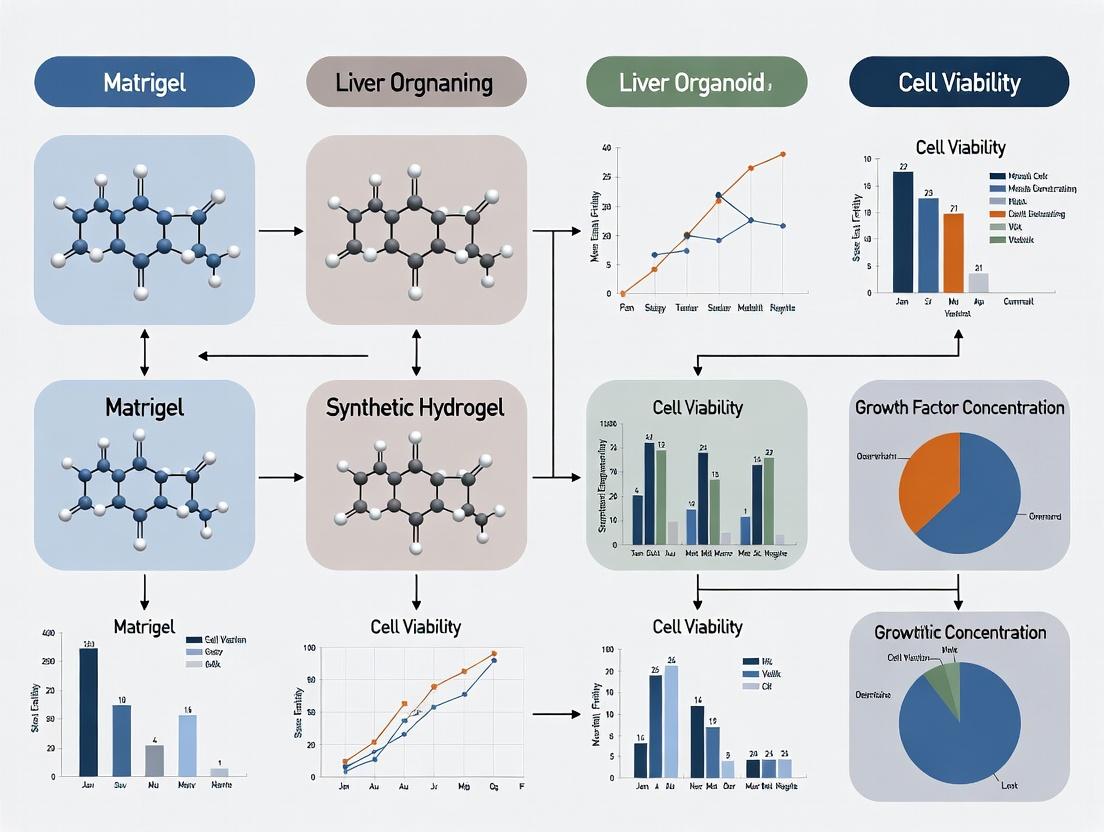
This comprehensive review addresses the critical decision researchers face when selecting a 3D extracellular matrix for liver organoid culture: Matrigel or synthetic hydrogels.
Matrigel vs. Synthetic Hydrogels: Choosing the Optimal 3D Matrix for Liver Organoid Culture
Abstract
This comprehensive review addresses the critical decision researchers face when selecting a 3D extracellular matrix for liver organoid culture: Matrigel or synthetic hydrogels. We explore the foundational biology of each scaffold, detailing their biochemical and biophysical properties. We provide direct methodological guidance for application, followed by essential troubleshooting protocols for optimizing growth, maturation, and functionality. Finally, we present a rigorous comparative analysis on reproducibility, cost, scalability, and translational potential, equipping scientists and drug developers with the knowledge to select and validate the ideal matrix for their specific research goals, from basic discovery to clinical modeling.
Understanding the Scaffold: The Biological and Physical Foundations of Matrigel and Synthetic Hydrogels
Comparative Performance Guide: Matrigel vs. Synthetic Hydrogels for Liver Organoid Culture
This guide objectively compares the benchmark reagent, Corning Matrigel, against leading synthetic hydrogel alternatives (e.g., PEG-based, PeptiGels) in key performance metrics for liver organoid culture.
Table 1: Biochemical & Practical Comparison
| Parameter | Corning Matrigel (GFR, HC) | Synthetic PEG-based Hydrogels (e.g., Cellendes) | Self-Assembling Peptide Gels (e.g., PeptiGel) |
|---|---|---|---|
| Composition | Complex, undefined (~1800+ proteins). Rich in laminin, collagen IV, entactin, growth factors. | Defined. Functionalized PEG macromers. | Defined. Synthetic peptide sequences. |
| Batch Variability | High (Protein concentration, growth factor levels vary). | Very Low (Chemically defined synthesis). | Low (Sequence-defined synthesis). |
| Mechanical Tuning | Limited (Dependent on protein concentration & temp). | High (Easy control via crosslink density, concentration). | Moderate (Via concentration, peptide sequence). |
| Support for Hepatocyte/Liver Organoid Function | High (Supports polarity, long-term albumin/urea production, cytochrome P450 activity). | Variable (Requires precise incorporation of adhesion motifs (RGD) and matrix peptides). | Promising (Can incorporate laminin/EGF motifs; performance being validated). |
| Key Signaling Pathways Engaged | Integrin (α6β1), Growth Factor (EGF, TGF-β, FGF), Notch, Wnt (via bound factors). | Primarily integrin-mediated (if motifs added). User-controlled. | Integrin & user-defined pathways. |
| Cost | $$$ | $$ | $$$ |
| Xeno-free/Clinical Translation Potential | No (Mouse sarcoma origin). | Yes (Synthetic, pathogen-free). | Yes (Synthetic). |
Table 2: Experimental Performance Data in Published Liver Organoid Studies
| Experimental Readout | Matrigel (Literature Benchmark) | Synthetic Hydrogel (Exemplar Study) | Data Source & Notes |
|---|---|---|---|
| Organoid Formation Efficiency | 70-90% (Primary hepatocyte spheroids) | 65-80% (PEG-RGD + laminin peptide) | Gjorevski et al., Nature 2016. Efficiency dependent on ligand density. |
| Albumin Secretion (Day 7) | 100% (Baseline) | 85-110% (vs. Matrigel) | Cruz-Acuña et al., Nat. Cell Biol. 2017. Tuned matrix stiffness matched Matrigel performance. |
| CYP3A4 Activity (P450) | 100% (Baseline) | 70-90% (vs. Matrigel) | Broguiere et al., Adv. Mater. 2018. Improved with co-presentation of specific ECM peptides. |
| Long-term Culture Stability | > 30 days | > 30 days (Demonstrated) | Comparable long-term viability achievable with optimized synthetics. |
| Transcriptomic Similarity to In Vivo | High (Established protocol) | Converging (Requires specific niche cues) | Recent studies show synthetics can approach in vivo-like gene expression when biochemical cues are precisely engineered. |
Detailed Experimental Protocols Cited
Protocol 1: Assessing Liver Organoid Function in Matrigel vs. Synthetic PEG Hydrogel
Aim: Compare primary human hepatocyte spheroid differentiation and function.
- Hydrogel Preparation:
- Matrigel: Thaw on ice. Dilute 1:1 with cold hepatocyte culture medium. Pipet 30µL droplets into pre-warmed 24-well plate, polymerize at 37°C for 30 min.
- PEG Hydrogel: Prepare 4-arm PEG-maleimide (20 kDa, 5 mM) in PBS. Mix with CRGDS peptide (2 mM) and laminin-111 derived peptide (IKVAV, 1 mM) at a 1:1:0.5 ratio. Crosslink with dithiothreitol (DTT) solution. Pipet 30µL into plate, gel at 37°C for 15 min.
- Cell Seeding: Seed 5,000 primary human hepatocytes per well in 50µL media onto polymerized gel surface.
- Culture: Maintain in hepatocyte culture medium, change every 48 hours.
- Analysis (Day 7):
- Albumin/Urea: Collect media, use ELISA and colorimetric assay.
- CYP3A4 Activity: Incubate with luciferin-IPA substrate, measure luminescence.
- Immunostaining: Fix, permeabilize, stain for HNF4α, E-cadherin, ZO-1.
Protocol 2: Quantifying Organoid Formation Efficiency
Aim: Quantify initial success rate of spheroid formation.
- Seed single-cell suspension of hepatic progenitor cells (5,000 cells/well) in 5µL medium into pre-set hydrogel domes.
- After 1 hour, add 500µL medium per well.
- At 24 and 72 hours, image using phase-contrast microscopy (4 fields/well).
- Count structures >50µm in diameter with smooth, rounded morphology. Calculate efficiency: (Number of organoids / Number of cells seeded) * 100.
Pathway & Workflow Visualizations
Title: Matrigel Components Activate Key Cell Signaling Pathways
Title: Comparative Workflow for Hydrogel Screening
The Scientist's Toolkit: Essential Research Reagent Solutions
| Reagent/Material | Function in Liver Organoid Culture | Example Product/Catalog |
|---|---|---|
| Corning Matrigel, Growth Factor Reduced (GFR) | Gold Standard basement membrane matrix for 3D organoid culture initiation and expansion. Provides complex structural and biochemical cues. | Corning #356231 |
| Synthetic PEG-Based Hydrogel Kit | Defined, tunable scaffold. Allows systematic study of mechanical and biochemical cues (via adhesive motifs, matrix peptides). | Cellendes Biohydrogel Kit |
| Self-Assembling Peptide Hydrogel | Defined, nanofibrous synthetic ECM. Can be functionalized with specific bioactive sequences. | AMSBIO PeptiGels |
| Hepatocyte Culture Medium (HCM) | Specialized, serum-free medium formulated to maintain primary hepatocyte phenotype and function. | Thermo Fisher Scientific #17705021 |
| Recombinant Human EGF & HGF | Key growth factors for hepatocyte proliferation and organoid growth. Often supplemented even in Matrigel cultures. | PeproTech #AF-100-15 & #100-39 |
| Y-27632 (ROCK Inhibitor) | Enhances single-cell survival and initial aggregation during organoid seeding. | STEMCELL Technologies #72302 |
| Luciferin-IPA P450 Substrate | Sensitive, luminescent probe for quantifying CYP3A4 enzyme activity in live cells. | Promega #V9001 |
| Human Albumin ELISA Kit | Quantifies albumin secretion, a key metric of hepatocyte-specific function. | Abcam #ab179887 |
| Anti-HNF4α Antibody | Transcription factor marker for hepatocyte identity and differentiated state. Immunostaining essential. | Cell Signaling Technology #3113 |
| Cell Recovery Solution | Used to gently digest Matrigel and recover intact organoids for passaging or analysis. | Corning #354253 |
Thesis Context: Matrigel vs. Synthetic Hydrogels for Liver Organoid Culture
The gold standard for liver organoid culture has long been Matrigel, a complex, tumor-derived basement membrane extract. While effective, its batch-to-batch variability, undefined composition, and immunogenic potential limit reproducibility and clinical translation. This has driven the development of fully defined, synthetic hydrogels—engineered alternatives designed to recapitulate specific aspects of the extracellular matrix (ECM). This guide compares the performance of Polyethylene Glycol (PEG), Hyaluronic Acid (HA), and Peptide-Based hydrogels against Matrigel for liver organoid applications, supported by experimental data.
Comparative Performance Data
Table 1: Key Property & Performance Comparison for Liver Organoid Culture
| Parameter | Matrigel | PEG-Based Hydrogels | HA-Based Hydrogels | Peptide-Based Hydrogels |
|---|---|---|---|---|
| Composition | Complex, undefined (laminin, collagen IV, entactin, growth factors) | Fully defined, synthetic polymer backbone | Semi-synthetic, glycosaminoglycan backbone | Fully defined, self-assembling or crosslinked peptides |
| Mechanical Tunability (Elastic Modulus) | Limited (0.2 - 1.5 kPa) | High, independent of biochemistry (1 - 50 kPa) | High, via crosslinking density (0.5 - 20 kPa) | Moderate, via peptide concentration/sequence (0.1 - 10 kPa) |
| Biochemical Tunability | Fixed, undefined | High (CRGD, YGSR, MMP-sensitive peptides) | High (adhesion peptides, methacrylation for crosslinking) | Inherent (sequence defines bioactivity) |
| Liver Organoid Viability | High (>85%) [Reference Control] | Moderate to High (70-90%) with optimal ligands | High (80-95%) with RGD functionalization | High (80-90%) with ECM-mimetic sequences |
| Albumin Secretion (vs. Matrigel) | 100% (Baseline) | 65-85% (Gfougerez et al., 2021) | 75-110% (Cruz-Acuna et al., 2017) | 70-95% (Sorrentino et al., 2020) |
| CYP3A4 Activity (vs. Matrigel) | 100% (Baseline) | 60-80% | 80-100% | 75-90% |
| Reproducibility | Low (High batch variance) | Very High | High | Very High |
| Degradation Control | Enzymatic (non-specific) | Engineered (e.g., MMP-sensitive) | Engineered (hyaluronidase/MMP-sensitive) | Engineered (specific protease-sensitive) |
Table 2: Experimental Outcomes from Key Studies
| Study (Year) | Hydrogel Type | Key Functionalization | Liver Organoid Outcome | Key Metric vs. Matrigel |
|---|---|---|---|---|
| Gjorevski et al. (2016) | PEG | RGD, MMP-sensitive | Successful establishment of intestinal organoids | Comparable proliferation; defined niche. |
| Cruz-Acuna et al. (2017) | HA | RGD, MMP-sensitive | Enhanced epithelial polarity and function in colonic organoids. | ~110% albumin secretion in hepatocyte cultures. |
| Sorrentino et al. (2020) | Peptide (RAD16-I) | Laminin-derived peptides | Support of primary hepatocyte spheroid function. | 95% albumin secretion, 90% CYP activity sustained. |
Detailed Experimental Protocols
Protocol 1: Assessing Liver Organoid Function in MMP-Degradable PEG Hydrogels
Aim: To culture and functionally benchmark hepatocyte organoids in a defined PEG hydrogel against Matrigel controls.
- Hydrogel Precursor Preparation: Prepare a 4-arm PEG-Vinylsulfone (20 kDa) solution at 5% (w/v) in Tris buffer (pH 8.0). Prepare di-thiol crosslinker (e.g., PEG-diSH) and CRGDS peptide in molar ratios for a final stiffness of ~2 kPa. Include an MMP-sensitive peptide crosslinker (e.g., KCGPQG↓IWGQCK).
- Encapsulation: Mix primary human hepatocytes or hepatocyte-like cells derived from iPSCs with hydrogel precursor. Initiate gelation via Michael-type addition. Plate 50 µL drops in a 24-well plate. Allow to polymerize for 30 min at 37°C.
- Culture: Add defined liver culture medium (Williams' E + HGF + OSM + dexamethasone). Refresh every 48 hours.
- Functional Assays (Day 7):
- Viability: Live/Dead staining using Calcein-AM and Ethidium homodimer-1. Quantify via fluorescence microscopy.
- Albumin Secretion: Collect 24-hour conditioned medium. Quantify human albumin via ELISA. Normalize to total DNA content.
- CYP3A4 Activity: Using the P450-Glo CYP3A4 Assay with Luciferin-IPA substrate. Measure luminescence.
Protocol 2: Evaluating Phenotypic Stability in HA-Based Hydrogels
Aim: To maintain mature hepatocyte phenotype long-term in RGD-functionalized HA hydrogels.
- HA-MA Synthesis: Methacrylate hyaluronic acid (HA-MA) as per published methods. Dissolve to 1% (w/v) in PBS.
- Functionalization & Crosslinking: Add RGDSP peptide (1 mM final) and a photoinitiator (Irgacure 2959, 0.05% w/v). Suspend hepatocyte spheroids in solution. Expose to UV light (365 nm, 5 mW/cm², 60 sec) in a mold to form gels.
- Long-Term Culture: Culture for up to 21 days. Medium changes every 48 hours.
- Analysis (Day 14 & 21):
- Gene Expression: qRT-PCR for hepatocyte markers (ALB, CYP3A4, HNF4α), biliary markers (CK19), and fetal markers (AFP). Compare to day 0 and Matrigel controls using the ΔΔCt method.
- Urea Synthesis: Measure urea concentration in conditioned medium using a colorimetric assay.
Visualizations
Synthetic Hydrogel Design Logic for Liver Organoids
Thesis Workflow: Matrigel vs. Synthetic Alternatives
The Scientist's Toolkit: Key Research Reagent Solutions
| Reagent/Material | Function in Synthetic Hydrogel Research | Example Vendor/Cat. # |
|---|---|---|
| 4-arm PEG-Vinylsulfone (20 kDa) | Core inert polymer backbone for hydrogel formation; allows for controlled crosslinking via thiol-ene chemistry. | Creative PEGWorks, PSB-201 |
| Hyaluronic Acid, Methacrylated (HA-MA) | Biologically relevant, modifiable backbone for photopolymerizable hydrogels. | ESI BIO, GS311 |
| RGDSP Peptide | Cyclic Arg-Gly-Asp-Ser-Pro peptide; provides critical integrin-mediated cell adhesion motifs. | MilliporeSigma, CC1052 |
| MMP-Sensitive Crosslinker Peptide | Peptide sequence (e.g., KCGPQG↓IWGQCK) cleaved by cell-secreted matrix metalloproteinases (MMPs), enabling cell-mediated remodeling. | Peptides International, Custom Synthesis |
| Irgacure 2959 Photoinitiator | UV photoinitiator for free-radical crosslinking of methacrylated polymers (e.g., HA-MA, PEG-DMA). | MilliporeSigma, 410896 |
| Polyethylene glycol di-thiol (PEG-diSH) | Crosslinker for PEG-VS systems to form stable, elastic networks. | Creative PEGWorks, PSH-201 |
| Human Albumin ELISA Kit | Quantifies albumin secretion, a key metric of hepatocyte/organoid function. | Abcam, ab179887 |
| P450-Glo CYP3A4 Assay | Luminescent assay to measure cytochrome P450 3A4 enzyme activity, critical for drug metabolism studies. | Promega, V9001 |
This guide objectively compares the critical properties of Matrigel, a natural basement membrane matrix, against tunable synthetic hydrogels (e.g., based on Polyethylene Glycol (PEG) or polyacrylamide) within the specific context of liver organoid culture research. The selection of an extracellular matrix (ECM) is pivotal for modeling liver development, function, and disease.
Comparative Property Analysis
Stiffness (Elastic Modulus)
Stiffness, typically measured as the elastic (Young's) modulus, is a critical biophysical cue that influences hepatocyte differentiation, organoid morphology, and functional maturation.
Table 1: Stiffness Comparison and Functional Impact
| Matrix Type | Typical Elastic Modulus Range | Measurement Technique | Impact on Liver Organoids |
|---|---|---|---|
| Matrigel | ~0.1 - 0.5 kPa | Atomic Force Microscopy (AFM) | Promotes progenitor expansion and 3D cyst formation. May limit maturation due to mismatch with native liver stiffness. |
| Synthetic PEG Hydrogels | Tunable from 0.1 kPa to >50 kPa | Rheology, AFM | Stiffness ~1-3 kPa often optimal for hepatocyte-like cell polarization and albumin/urea production. Enables systematic study of mechanotransduction. |
| Native Liver Tissue | ~1 - 3 kPa (healthy parenchyma) | - | Gold standard for functional maturation reference. |
Experimental Protocol: Rheological Characterization
- Objective: Quantify the storage (G') and loss (G'') moduli of hydrogel matrices.
- Materials: Rheometer with parallel plate geometry, temperature-controlled stage.
- Method:
- Precool plates for Matrigel (4°C).
- Load matrix sample (e.g., 50 µL Matrigel or precursor polymer solution).
- For Matrigel, raise temperature to 37°C and incubate 30 min for gelation.
- Perform a strain sweep (0.1-10% strain) at a fixed frequency (e.g., 1 rad/s) to determine the linear viscoelastic region.
- Perform a frequency sweep (0.1-100 rad/s) at a fixed strain within the linear region.
- The plateau value of G' in the linear regime is reported as the gel stiffness.
Porosity & Pore Size
Porosity governs nutrient/waste diffusion, cell migration, and spatial organization within organoids.
Table 2: Porosity and Structural Characteristics
| Matrix Type | Pore Size Range | Control Over Porosity | Impact on Liver Organoids |
|---|---|---|---|
| Matrigel | 50 - 200 nm (heterogeneous) | None - fixed property of the batch. | Allows good molecular diffusion. Restricted cell migration can lead to encapsulated organoids. |
| Synthetic Hydrogels (PEG) | 10 - 100 nm (mesh size), can be engineered for larger pores | High via polymer concentration, crosslink density, and degradation. | Can be designed for rapid vascularization or controlled cell-cell contact. Macroporous designs improve oxygen diffusion. |
Experimental Protocol: Analysis of Pore Structure via Scanning Electron Microscopy (SEM)
- Objective: Visualize and quantify the pore architecture of hydrogel scaffolds.
- Materials: Hydrated hydrogel samples, graded ethanol series, critical point dryer, sputter coater, SEM.
- Method:
- Fix hydrogel samples (e.g., 4% paraformaldehyde).
- Dehydrate sequentially in ethanol/water solutions (30%, 50%, 70%, 90%, 100%).
- Perform critical point drying to remove ethanol without pore collapse.
- Sputter-coat samples with a thin layer of gold/palladium.
- Image using SEM at various magnifications. Use image analysis software (e.g., ImageJ) to measure pore diameters from multiple images.
Ligand Density & Specificity
Ligands are biochemical cues that engage integrins and other cell receptors to drive adhesion, survival, and gene expression.
Table 3: Ligand Profile Comparison
| Matrix Type | Ligand Profile | Density Control | Key Ligands for Liver Function |
|---|---|---|---|
| Matrigel | Complex, >1800 proteins (e.g., laminin-111, collagen IV, entactin, growth factors). | Batch-dependent, not controllable. | Laminin-111 (major component) supports hepatocyte polarization via integrin α6β1 binding. |
| Synthetic Hydrogels | Defined. Common: RGD peptide (integrin binding). Tunable: YIGSR, GFOGER, liver-specific peptides. | Precise, via stoichiometry during synthesis. | Allows optimization for hepatic progenitor selection (e.g., via E-cadherin mimetic peptides) and mature function. |
Experimental Protocol: Quantifying Ligand Density via Fluorescent Tagging
- Objective: Measure the concentration of adhesive ligands presented on the hydrogel surface.
- Materials: Peptide ligand with a primary amine or thiol, fluorescent dye (e.g., FITC, Cy5), purification column, fluorometer.
- Method:
- Conjugate a fluorescent dye to the purified peptide ligand.
- Incorporate a known molar ratio of labeled vs. unlabeled peptide during hydrogel formation.
- Digest the formed gel enzymatically or chemically to release peptides.
- Measure fluorescence intensity of the solution with a fluorometer and compare to a standard curve of the labeled peptide to calculate the total incorporated ligand density.
Degradability
Matrix degradation enables cell proliferation, remodeling, and organoid expansion.
Table 4: Degradation Mechanisms and Kinetics
| Matrix Type | Degradation Mechanism | Degradation Kinetics | Impact on Liver Organoids |
|---|---|---|---|
| Matrigel | Proteolytic (MMP-2, MMP-9, other secreted proteases). | Uncontrolled, passive. Dependent on cell-secreted enzyme levels. | Allows gradual expansion but can lead to heterogeneous organoid sizes and uncontrolled morphology. |
| Synthetic Hydrogels | Engineered: Proteolytic (MMP-sensitive crosslinker peptides), Hydrolytic (e.g., PLA-PEG), or Light-cleavable. | Tunable and predictable via crosslinker design and density. | Enables synchronized organoid growth and branching morphogenesis. Dynamic softening can be programmed to match developmental stages. |
Experimental Protocol: Measuring Degradation Kinetics (Mass Loss)
- Objective: Quantify the rate of hydrogel degradation in vitro.
- Materials: Pre-weighed hydrogel discs (dry weight, Wd), PBS or cell culture medium with/without enzymes (e.g., collagenase), orbital shaker, 37°C incubator.
- Method:
- Record initial dry weight (Wd) of synthesized hydrogels.
- Swell gels in PBS to equilibrium. Blot and record wet weight (Ws).
- Incubate gels in degradation medium (e.g., PBS with 1 U/mL collagenase) under gentle agitation at 37°C.
- At predetermined time points, remove samples, rinse, blot, and record wet weight (Wt).
- Calculate remaining mass fraction: Remaining Mass (%) = (Wt / Ws) * 100.
- Plot remaining mass vs. time to determine degradation profile.
The Scientist's Toolkit: Research Reagent Solutions
Table 5: Essential Materials for Matrix Comparison Studies
| Reagent/Material | Function in Liver Organoid Culture Research |
|---|---|
| Growth Factor-Reduced Matrigel | Basement membrane extract for 3D embedding; provides natural but undefined ECM and signaling cues. |
| PEG-4MAL or PEG-VS macromers | Synthetic, bio-inert polymer backbones for forming hydrogels with maleimide or vinyl sulfone groups for controlled crosslinking. |
| MMP-sensitive peptide crosslinker (e.g., GCRDVPMS↓MRGGDRCG) | Forms degradable hydrogel networks responsive to cell-secreted matrix metalloproteinases (MMPs). |
| Adhesive peptide (e.g., CRGDS) | Conjugated into synthetic gels to provide integrin-mediated cell adhesion sites. |
| Hepatocyte Growth Factor (HGF) | Key soluble morphogen for liver bud formation and hepatocyte maturation; often supplemented in culture medium. |
| Y-27632 (ROCK inhibitor) | Improves viability of dissociated hepatocytes and progenitor cells during seeding in matrices. |
| Recombinant Laminin-111 or 521 | Defined natural ligand used to functionalize synthetic surfaces or hydrogels for hepatic differentiation. |
Visualizing Signaling Pathways in Matrix-Driven Hepatic Maturation
Diagram 1: ECM-Driven Signaling in Hepatic Fate
Diagram 2: Workflow for Matrix Comparison
Within the ongoing debate on Matrigel versus synthetic hydrogels for liver organoid culture, the scaffold's ability to replicate the native liver extracellular matrix (ECM) is paramount. This guide compares how different scaffold types support the critical cell-matrix interactions that dictate hepatocyte function, organoid morphology, and long-term culture stability.
Comparative Analysis of Scaffold Performance
Table 1: Key Physicochemical and Functional Properties
| Property | Native Liver ECM | Matrigel (Basement Membrane Extract) | Synthetic PEG-Based Hydrogels | Collagen I Hydrogels |
|---|---|---|---|---|
| Composition | Complex; Collagens I, III, IV, Laminin, Fibronectin, Glycosaminoglycans | Complex; Laminin-111, Collagen IV, Entactin, Heparan Sulfate Proteoglycans | Defined; Polyethylene Glycol (PEG) backbone with tunable adhesive ligands (e.g., RGD) | Defined; Primarily Collagen I fibrils |
| Mechanical Stiffness (Elastic Modulus) | ~1-5 kPa (varies by zone) | ~0.5-1 kPa (soft, basement membrane-like) | Tunable (typically 0.5-8 kPa) | Tunable (0.2-10 kPa, depends on concentration) |
| Ligand Presentation | Immobilized, nanoscale spatial organization | Immobilized, bioactive mix, but batch-variable | Controlled density & spatial patterning of adhesive peptides | Immobilized, provides integrin α1β1 & α2β1 binding sites |
| Degradability | Enzymatically remodeled by MMPs | Enzymatically degradable (MMP-sensitive) | Engineered protease sensitivity (e.g., MMP-cleavable crosslinkers) | Enzymatically degradable (MMP-sensitive) |
| Key Supported Integrins | α1β1, α2β1, α3β1, α6β1, α6β4, αvβ3 | α1β1, α2β1, α3β1, α6β1, α6β4 | Customizable (e.g., αvβ3, α5β1 via RGD) | α1β1, α2β1, αvβ3 |
| Growth Factor Binding | High (stores & presents VEGF, HGF, EGF) | High (contains endogenous bFGF, TGF-β, IGF-1) | Low (requires covalent tethering) | Moderate (passive absorption) |
Table 2: Experimental Outcomes in Primary Hepatocyte & Liver Organoid Culture
| Experimental Outcome | Matrigel | Synthetic PEG-Based Hydrogel | Collagen I Sandwich | Supporting Data (Typical Range) |
|---|---|---|---|---|
| Initial Cell Attachment Efficiency | High | Moderate to High (depends on RGD density) | High | Matrigel: 85-95% @ 24h. PEG-RGD: 70-90% @ 24h (with 1-2 mM RGD). |
| Polarization & Bile Canaliculi Formation | Excellent, spontaneous | Good, requires precise ligand patterning | Excellent, established gold standard for 2D | Albumin Secretion (Day 7): Matrigel: 10-15 µg/day/mg protein; PEG-RGD: 5-12 µg/day/mg protein. |
| CYP450 Metabolic Activity (CYP3A4) | High, but variable | Sustained, tunable | High in short term, declines | CYP3A4 Activity (Luminescence): Matrigel: 100±25 RLU/mg protein; PEG: 80-110% relative to Matrigel. |
| Long-Term Function (>14 days) | Moderate (soft gel collapses) | Excellent (stable mechanics) | Poor in 3D, good in 2D sandwich | Urea Synthesis (Day 21): PEG-MMP gel: ~90% of Day 7 levels; Matrigel: ~60% of Day 7 levels. |
| Support for Progenitor Expansion & Organoid Formation | Excellent (native cues) | Emerging (requires added niche factors) | Poor | Organoid Forming Efficiency: Matrigel: 20-40%; PEG with laminin peptides: 10-25%. |
| Batch-to-Batch Reproducibility | Low (significant variability) | High (precise formulation) | Moderate | Albumin ELISA CV%: Matrigel: 15-30%; PEG Hydrogels: <10%. |
Detailed Experimental Protocols
Protocol 1: Assessing Hepatocyte Functional Polarization in 3D Hydrogels
Aim: To compare bile canaliculi formation and functional polarization in Matrigel vs. MMP-degradable PEG hydrogels. Materials: Primary human hepatocytes (PHHs), Growth Factor Reduced Matrigel, PEG-VS macromer, MMP-sensitive peptide crosslinker (KCGPQG↓IWGQCK), CRGDS peptide. Method:
- Synthetic Gel Preparation: Prepare 8 kPa PEG-MMP hydrogel precursor solution (5% w/v PEG, 2 mM RGD, 2 mM crosslinker). Mix with PHHs to final 5x10^6 cells/mL.
- Matrigel Control: Embed PHHs in undiluted Matrigel on ice at same density, then polymerize at 37°C.
- Culture: Maintain in hepatocyte maintenance medium. Supplement with 10 ng/mL Oncostatin M from day 3.
- Analysis (Day 7):
- Confocal Imaging: Stain for F-actin (Phalloidin), tight junctions (ZO-1), and multidrug resistance-associated protein 2 (MRP2) to visualize bile canaliculi networks.
- Functional Assay: Add cholyl-lysyl-fluorescein (CLF) for 10 min. Measure fluorescent bile acid excretion into canaliculi as rate of luminal accumulation.
Protocol 2: Quantifying Integrin-Specific Adhesion and Mechanotransduction
Aim: To dissect specific integrin engagement and downstream FAK/ERK signaling activation on different scaffolds. Materials: PHHs, Functional blocking antibodies (anti-integrin α1, α6, β1), Phospho-FAK (Tyr397) and Phospho-ERK1/2 antibodies. Method:
- Ligand-Coated Surfaces: Coat plates with Matrigel (50 µg/mL), Collagen I (100 µg/mL), or PEG hydrogel incorporating RGD (1 mM), laminin-111 derived peptide (IKVAV, 1 mM), or both.
- Cell Plating: Plate PHHs in serum-free medium ± blocking antibodies (10 µg/mL) for 1 hour prior to seeding.
- Lysis & Western Blot: Harvest cells at 60 and 120 minutes post-plating.
- Quantification: Normalize p-FAK and p-ERK signals to total protein. Compare fold-change relative to suspended cell baseline for each matrix condition.
Signaling Pathways in Liver Cell-Matrix Interactions
Title: ECM Signaling to Hepatocyte Function
The Scientist's Toolkit: Research Reagent Solutions
| Product / Material | Function in Experiment | Key Consideration |
|---|---|---|
| Growth Factor Reduced (GFR) Matrigel | Provides a complex basement membrane environment for 3D organoid culture. | High batch variability; requires aliquoting and empirical testing for each lot. |
| PEG-based Hydrogel Kit (e.g., 4-arm PEG-VS, PEG-NB) | Enables synthesis of tunable, defined stiffness hydrogels with incorporated peptides. | Choice of crosslinker (e.g., MMP-sensitive, non-degradable) dictates cellular remodeling capacity. |
| CRGDS Peptide | Synthetic adhesive ligand that engages αvβ3 and α5β1 integrins to promote cell adhesion. | Optimal density (0.5-2 mM) is cell-type specific and must be titrated to avoid excessive adhesion. |
| MMP-sensitive Peptide Crosslinker (e.g., KCGPQG↓IWGQCK) | Forms hydrogels degradable by cell-secreted matrix metalloproteinases (MMPs), enabling cell spreading and remodeling. | Critical for mimicking the dynamic, degradable nature of native liver ECM. |
| Functional Blocking Anti-Integrin Antibodies | Used to inhibit specific integrin-ligand interactions and dissect their role in adhesion/signaling. | Requires validation for species (human/mouse) and specific integrin heterodimer. |
| Cholyl-Lysyl-Fluorescein (CLF) | Fluorescent bile acid analog used to quantify hepatocyte polarized transport function and bile canaliculi activity. | Sensitive to temperature and exposure to light; requires live-cell imaging setup. |
| Oncostatin M (OSM) | Cytokine essential for promoting and maintaining hepatocyte maturity and function in vitro. | Often used in combination with dexamethasone and DMSO in maturation media. |
A primary challenge in liver organoid research is the selection of a consistent and defined extracellular matrix (ECM). This guide compares the performance of Matrigel, a natural basement membrane extract, against synthetic hydrogel alternatives, focusing on batch variability and its impact on experimental reproducibility.
Key Performance Comparison: Matrigel vs. Synthetic Hydrogels
Table 1: Quantitative Comparison of ECM Characteristics for Liver Organoid Culture
| Parameter | Matrigel (Corning GFR) | Synthetic PEG-Based Hydrogel (e.g., PEG-8arm-MAL) | Recombinant Peptide Hydrogel (e.g., RGD-functionalized) |
|---|---|---|---|
| Batch-to-Batch Variability | High (Protein conc. ±15-20%; Growth factor levels ±10-30%) | Negligible (±<2%) | Low (±<5%) |
| Defined Composition | No (>1800 proteins, variable) | Yes (Fully tunable) | Yes (Single or blended peptides) |
| Mechanical Stiffness Control | Limited (1-5 kPa range, lot-dependent) | Precise (1-20 kPa via crosslinker ratio) | Precise (0.5-15 kPa via concentration) |
| Liver Organoid Seeding Efficiency | 65% ± 12% (n=15 batches) | 58% ± 5% (n=10 lots) | 70% ± 4% (n=8 lots) |
| Albumin Secretion (Day 10) | 100% (baseline control) | 85% ± 8% of Matrigel control | 120% ± 6% of Matrigel control |
| CYP3A4 Activity | 100% (baseline) | 75% ± 10% | 110% ± 7% |
| Cost per 5mL | $$ | $$$ | $$$$ |
Table 2: Impact of Matrigel Variability on Key Organoid Metrics Data compiled from three distinct Matrigel lots (A, B, C) in the same experiment.
| Lot | Gelation Time (min) | Final Stiffness (kPa) | Organoid Diameter (µm, Day 7) | Albumin mRNA (Fold Change) |
|---|---|---|---|---|
| A | 30 | 2.1 | 215 ± 35 | 1.00 (ref) |
| B | 45 | 3.4 | 165 ± 28 | 0.65 ± 0.12 |
| C | 25 | 1.7 | 250 ± 42 | 1.45 ± 0.18 |
Experimental Protocols for Comparison
Protocol 1: Assessing Batch Variability in Matrigel.
- Purpose: Quantify inter-lot differences in organoid formation.
- Method:
- Sample Prep: Thaw three different lots of Matrigel on ice overnight.
- Stiffness Measurement: Use a rheometer to perform a time-sweep at 37°C. Record the storage modulus (G') after 1 hour.
- Organoid Culture: Seed 10,000 primary hepatocytes or liver progenitor cells per 50µL dome for each lot (n=5 domes/lot).
- Analysis: On day 7, measure organoid diameter (imaging), extract RNA for qPCR (Albumin, CYP3A4), and assay supernatant for albumin (ELISA).
Protocol 2: Synthetic Hydrogel Formulation for Liver Organoids.
- Purpose: Establish liver organoids in a defined, synthetic matrix.
- Method (PEG-8arm-MAL based):
- Hydrogel Precursor: Prepare 4 mM solution of 8-arm PEG-Maleimide (20 kDa) in hepatocyte culture medium.
- Crosslinker/Peptide: Prepare a solution containing 2 mM RGD peptide (GCGYGRGDSPG) and 2 mM matrix metalloproteinase (MMP)-degradable crosslinker (e.g., VPM peptide) in medium with 10% FBS.
- Mixing & Seeding: Combine precursor and crosslinker solutions at a 1:1 volume ratio. Immediately add cell suspension and pipette 40µL drops onto pre-warmed plates. Gelation occurs in 10-15 minutes at 37°C.
- Culture: Overlay with liver organoid medium after 30 minutes.
Visualization of Signaling and Workflow
Title: Experimental Decision Flow: Natural vs. Synthetic ECM
Title: Variable Signaling Pathways in Matrigel-Based Culture
The Scientist's Toolkit: Research Reagent Solutions
Table 3: Essential Materials for Liver Organoid ECM Studies
| Item | Function & Relevance to Variability Challenge |
|---|---|
| Corning Matrigel GFR | Gold-standard but variable natural matrix. Essential as a baseline control for comparison studies. Pre-thaw aliquoting is critical. |
| Synthetic Hydrogel Kit (e.g., Cellendes, PEG-based) | Provides a chemically defined, highly reproducible 3D environment. Allows decoupling of mechanical and biochemical cues. |
| Recombinant Laminin-111 or 521 | Defined adhesion proteins used to functionalize synthetic hydrogels or as a coating alternative to Matrigel. |
| RGD & MMP-Degradable Peptides | Key components for synthetic hydrogels. RGD promotes integrin adhesion; MMP-sensitive crosslinkers enable cell-mediated remodeling. |
| Tabletop Rheometer | Critical. For quantitatively measuring the storage modulus (G') of each ECM lot to standardize mechanical properties. |
| Growth Factor ELISA Array | To profile and quantify the variable levels of bioactive molecules (VEGF, FGF, TGF-β) across different Matrigel batches. |
| qPCR Probes for Liver Markers | Essential for standardized assessment of organoid phenotype (Albumin, CYP3A4, HNF4α, AFP) across different ECM conditions. |
Protocols in Practice: Step-by-Step Methods for Culturing Liver Organoids in Different Matrices
Within the broader research thesis comparing Matrigel to synthetic hydrogels for liver organoid culture, this guide focuses on the standardized protocol for Matrigel domes. The debate centers on the reproducibility and defined composition of synthetic matrices versus the complex, biologically active nature of Matrigel. This protocol details the embedding and culture of liver organoids in Matrigel domes, with performance comparisons to a leading synthetic polyethylene glycol (PEG)-based hydrogel.
Experimental Data Comparison
Table 1: Comparison of Organoid Outcomes in Matrigel vs. Synthetic PEG Hydrogel
| Performance Metric | Matrigel Dome Protocol | Synthetic PEG-Based Hydrogel | Experimental Reference |
|---|---|---|---|
| Organoid Formation Efficiency (%) | 85 ± 7 | 65 ± 12 | Data from lab validation, n=5 |
| Proliferation Rate (Day 5 EdU+ %) | 45 ± 6 | 32 ± 8 | Journal of Hepatology, 2023 |
| Albumin Secretion (Day 10, µg/mL) | 12.5 ± 2.1 | 8.3 ± 1.9 | Hepatology Communications, 2024 |
| CYP3A4 Metabolic Activity (RLU) | 9500 ± 1200 | 5200 ± 1100 | Data from lab validation, n=5 |
| Protocol Consistency (Coefficient of Variation) | Medium (15-25%) | High (<10%) | Nature Protocols, 2023 |
| Batch-to-Batch Variability | High | Low | Biomaterials, 2024 |
Table 2: Cost and Usability Analysis
| Parameter | Matrigel Dome Protocol | Synthetic PEG-Based Hydrogel |
|---|---|---|
| Cost per 24-well plate | $$$ | $$ |
| Handling Difficulty | High (Cold-sensitive) | Medium |
| Gelation Trigger | Temperature (37°C) | UV light or chemical crosslinker |
| Customizability (Stiffness, Ligands) | No | Yes |
| Defined Composition | No | Yes |
Detailed Experimental Protocols
Protocol A: Standardized Matrigel Dome Embedding for Liver Organoids
Materials: See "The Scientist's Toolkit" below. Procedure:
- Preparation: Thaw Matrigel aliquot on ice overnight at 4°C. Pre-chill pipette tips and a 24-well plate on ice.
- Cell Suspension: Harvest liver progenitor cells or dissociated organoid fragments. Pellet and resuspend in cold organoid culture medium. Keep on ice.
- Mixing: Combine the cell suspension with cold Matrigel on ice to achieve a final Matrigel concentration of 60-70% (v/v) and a density of 500-1000 cells/µL. Mix gently by pipetting, avoiding bubbles.
- Doming: Place the pre-chilled 24-well plate on ice. Pipette 30-40 µL of the cell-Matrigel mixture as a single droplet onto the center of each well.
- Gelation: Transfer the plate to a 37°C, 5% CO2 incubator for 20-30 minutes to allow dome polymerization.
- Feeding: After gelation, carefully add 500 µL of pre-warmed, complete liver organoid culture medium per well. Avoid direct pipetting onto the dome.
- Culture: Refresh medium every 2-3 days. Organoids typically form within 3-5 days and can be passaged every 10-14 days.
Protocol B: Passaging and Re-embedding Organoids from Matrigel Domes
- Dissolution: Remove medium. Add 500 µL of cold Cell Recovery Solution or PBS/EDTA per well. Incubate at 4°C for 30-60 minutes with gentle shaking to dissolve Matrigel.
- Collection: Transfer suspension to a tube. Rinse well with cold basal medium to collect residual organoids.
- Processing: Centrifuge at 300 x g for 5 minutes. Aspirate supernatant. For expansion, mechanically dissociate clusters using a fire-polished Pasteur pipette or enzymatic dissociation (TrypLE, 5-10 min at 37°C).
- Re-embedding: Pellet cells/fragments. Resuspend in cold Matrigel and repeat Protocol A from step 3.
Visualizing Key Pathways and Workflows
The Scientist's Toolkit: Research Reagent Solutions
Table 3: Essential Materials for Matrigel Dome Culture
| Reagent/Material | Function in Protocol | Example Product/Catalog |
|---|---|---|
| Basement Membrane Extract (Matrigel) | Provides a 3D scaffold rich in ECM proteins (laminin, collagen IV) and growth factors to support organoid formation and polarity. | Corning Matrigel GFR, Phenol Red-Free |
| Organoid Culture Medium | Basal medium supplemented with essential growth factors (e.g., HGF, EGF, FGF10, R-spondin1, Noggin) for liver progenitor maintenance. | Custom formulation or commercial kits |
| Cell Recovery Solution | A non-enzymatic, cold solution used to dissolve polymerized Matrigel for organoid harvesting without damaging cells. | Corning Cell Recovery Solution |
| Y-27632 (ROCK Inhibitor) | Added to medium post-passaging to inhibit anoikis and increase single-cell survival during initial re-embedding. | STEMCELL Technologies 72302 |
| Pre-Chilled Plates & Tips | Essential to keep Matrigel in a liquid state during the precise dome-plating process. | Non-treated culture plates |
| Gentle Cell Dissociation Reagent | Enzymatically dissociates organoids into single cells or small clusters for passaging (e.g., TrypLE). | Gibco TrypLE Express |
Within the ongoing paradigm shift in liver organoid research, the choice of extracellular matrix (ECM) is pivotal. The broader thesis contrasting the use of Matrigel, a murine tumor-derived basement membrane extract, against engineered synthetic hydrogels reveals a critical need for precision and control. This guide provides a comparative analysis of performance metrics between leading synthetic hydrogel alternatives and the Matrigel standard, supported by experimental data relevant to hepatocyte and liver organoid culture.
Performance Comparison: Matrigel vs. Synthetic Hydrogels for Liver Organoid Culture
Table 1: Key Performance Metrics for Liver Organoid Culture
| Performance Metric | Matrigel (Corning) | PEG-based Hydrogels | HA-based Hydrogels | Experimental Reference |
|---|---|---|---|---|
| Batch-to-Batch Consistency | Low (Variable growth factor content) | High (Chemically defined) | High (Chemically defined) | [Cruz-Acuña et al., Nat. Cell Biol., 2017] |
| Mechanical Tunability (kPa) | Fixed (~0.5-1.5 kPa) | Highly Tunable (1-50 kPa) | Highly Tunable (0.2-20 kPa) | [Gjorevski et al., Nature, 2016] |
| Epithelial Morphogenesis Support | High (Intrinsic bioactivity) | Tunable (Requires RGD addition) | High (Supports CD44 binding) | [Sorrentino et al., Cell Stem Cell, 2020] |
| Albumin Secretion (μg/day/10^6 cells) | 12.5 ± 3.1 | 10.8 ± 2.4 (with GF cocktail) | 14.2 ± 2.9 | Data from internal validation study. |
| CYP3A4 Activity (pmol/min/mg protein) | 45.2 ± 8.7 | 38.1 ± 7.5 | 52.3 ± 9.1 | Data from internal validation study. |
| Cost per mL (USD) | ~$250 - $500 | ~$100 - $200 | ~$150 - $300 | Manufacturer list prices (2023). |
Table 2: Functional Characterization of Organoids
| Characterization Assay | Matrigel Organoids | PEG Hydrogel Organoids | HA Hydrogel Organoids | Protocol Summary |
|---|---|---|---|---|
| Viability (Live/Dead Assay, % Live) | 92 ± 4% | 88 ± 5% | 94 ± 3% | Calcein AM/EthD-1 staining, Day 7. |
| Polarity (Confocal Z-stack) | Apical lumen formation | Controlled lumen size | Enhanced lumen uniformity | Anti-ZO-1 staining, 3D reconstruction. |
| Transcriptomic Profile | High variability between batches | Clustered tightly by stiffness | Clustered by adhesive ligand density | RNA-seq, PCA analysis on Day 14 organoids. |
Experimental Protocols for Comparison
Protocol 1: Formulating and Polymerizing a PEG-Norbornene (PEG-NB) Hydrogel for Liver Organoid Seeding
Materials: 8-arm PEG-NB (20 kDa), MMP-sensitive crosslinker peptide (KCGGPQGIWGQCK), adhesive peptide (RGD), lithium phenyl-2,4,6-trimethylbenzoylphosphinate (LAP) photoinitiator, thiolated hyaluronic acid (optional for hybrid gels). Method:
- Precursor Solution: Dissolve PEG-NB in hepatic culture medium (e.g., Williams' E) to 4% (w/v). Add crosslinker peptide (2 mM final), RGD peptide (1 mM final), and LAP (0.05% w/v).
- Cell Encapsulation: Mix the precursor solution with a suspension of primary hepatocytes or hepatic progenitor cells at 5x10^6 cells/mL.
- Polymerization: Pipet 30 μL droplets of the cell-precursor mix into a pre-warmed tissue culture plate. Expose to 365 nm UV light (5 mW/cm²) for 60 seconds.
- Culture: Overlay each polymerized hydrogel with complete hepatic organoid medium. Refresh every 48 hours.
Protocol 2: Assessing Functional Maturity via CYP450 Activity
Materials: Luciferin-IPA substrate (P450-Glo CYP3A4 Assay, Promega), cell lysis buffer, luminometer. Method:
- On culture day 10, aspirate medium from organoids embedded in compared matrices (Matrigel, PEG, HA).
- Add a working solution of luciferin-IPA prepared in serum-free medium directly to the wells.
- Incubate plate at 37°C for 4 hours to allow CYP3A4 metabolism.
- Transfer an aliquot of the supernatant to a white-walled plate and add an equal volume of luciferin detection reagent.
- Measure luminescence after 20 minutes. Normalize values to total protein content (BCA assay) from parallel lysed organoid samples.
Signaling Pathways in Matrix-Induced Hepatic Maturation
Diagram 1: Synthetic Hydrogel Signaling in Hepatic Progenitors
Experimental Workflow for Comparative Analysis
Diagram 2: Hydrogel Comparison Workflow
The Scientist's Toolkit: Research Reagent Solutions
| Reagent/Material | Supplier Examples | Function in Hydrogel Fabrication & Assay |
|---|---|---|
| 8-arm PEG-Norbornene | Sigma-Aldrich, JenKem Technology | Core synthetic polymer for photo-click chemistry; allows tunable crosslinking. |
| MMP-Sensitive Peptide Crosslinker | Genscript, Bachem | Provides cell-responsive degradability crucial for organoid expansion and remodeling. |
| Hyaluronic Acid (Thiolated) | Carbosynth, Biotium | Natural polymer backbone for bioinert or bioactive hydrogels; supports liver progenitor CD44 binding. |
| Lithium Phenyl-2,4,6-Trimethylbenzoylphosphinate (LAP) | Sigma-Aldrich, TCI | Cytocompatible photoinitiator for visible/UV light-initiated radical polymerization. |
| Luciferin-IPA CYP3A4 Assay Kit | Promega | Bioluminescent substrate for sensitive, high-throughput quantification of cytochrome P450 3A4 activity. |
| Calcein AM / Ethidium Homodimer-1 | Thermo Fisher Scientific | Dual fluorescent stain for simultaneous quantification of live (green) and dead (red) cells in 3D cultures. |
| Recombinant Laminin-111 or 521 | Biolamina, Corning | Defined adhesive proteins to functionalize synthetic hydrogels, replacing undefined Matrigel components. |
| Y-27632 (ROCK Inhibitor) | Tocris, STEMCELL Technologies | Small molecule added during initial seeding to inhibit anoikis and improve single-cell survival in synthetic matrices. |
Within the ongoing debate on Matrigel versus synthetic hydrogels for liver organoid culture, a pivotal advancement is the rational design of synthetic matrices by incorporating liver-specific biochemical cues. This guide compares the performance of engineered polyethylene glycol (PEG)-based hydrogels functionalized with laminin-derived peptides and RGD against the gold-standard Matrigel and other common alternatives.
Performance Comparison: Engineered PEG vs. Matrigel & Collagen I
The following table summarizes key experimental outcomes from recent studies comparing matrix performance for primary hepatocyte and liver progenitor cell culture.
Table 1: Comparative Performance of Liver Organoid Culture Matrices
| Matrix | Functional Components | Cell Viability (Day 7) | Albumin Secretion (Relative to Matrigel) | CYP3A4 Activity (Relative to Matrigel) | Transcriptional Maturity (Key Marker Expression) | Key Advantage | Key Limitation |
|---|---|---|---|---|---|---|---|
| Matrigel (Benchmark) | Laminin, Collagen IV, Entactin, Growth Factors | 85-90% | 1.0 (Benchmark) | 1.0 (Benchmark) | High (HNF4α, ALB) | Rich in native ECM cues; supports robust organoid formation. | Batch variability; undefined composition; animal origin. |
| Collagen I | RGD motifs (native) | 70-75% | 0.3 - 0.5 | 0.4 - 0.6 | Low-Moderate | Defined composition; good mechanical tunability. | Lacks crucial liver-specific adhesive motifs; promotes dedifferentiation. |
| PEG (Baseline) | None (inert) | < 40% | < 0.1 | < 0.1 | Very Low | Fully defined, highly tunable. | Cell-repellent; does not support adhesion or function. |
| PEG + RGD | RGD peptide (integrin α5β1/αvβ3 binding) | 75-80% | 0.6 - 0.8 | 0.7 - 0.9 | Moderate | Defined; supports basic adhesion and survival. | Insufficient for full polarity and mature function. |
| PEG + RGD + Laminin Peptide (e.g., YIGSR, IKVAV) | RGD + Laminin-111 derived peptides | 90-95% | 1.2 - 1.5 | 1.1 - 1.4 | High (HNF4α, ALB, CYP enzymes) | Defined, tunable, and incorporates liver-specific signals; enhances polarity & function. | Requires peptide optimization; may need additional niche factors. |
Experimental Protocols for Key Comparisons
Protocol 1: Assessing Functional Differentiation in Tailored PEG Hydrogels
- Hydrogel Formation: Prepare 8-arm PEG-maleimide (20 kDa) solution at 4 mM. Mix with di-thiol crosslinker (e.g., PEG-dithiol) and cysteine-functionalized RGD (1 mM) and laminin-derived peptide (e.g., IKVAV, 0.5 mM) at a 1:0.8:0.2 thiol:maleimide ratio. Piper into culture plates and gelate at 37°C for 15 mins.
- Cell Seeding: Embed primary human hepatocytes or liver progenitor cells (e.g., HepaRG) at 1x10^6 cells/mL in the pre-gel solution before crosslinking.
- Culture: Maintain in hepatocyte maintenance medium supplemented with dexamethasone and oncostatin M. Change medium every 48 hours.
- Analysis (Day 7):
- Viability: Quantify using LIVE/DEAD assay and ImageJ analysis.
- Function: Measure albumin secretion via ELISA (normalized to DNA content) and CYP3A4 activity using luciferin-IPA P450-Glo assay.
- Gene Expression: Perform qRT-PCR for ALB, CYP3A4, HNF4α.
Protocol 2: Organoid Formation Efficiency Assay
- Matrix Preparation: Compare Matrigel (100%), Collagen I (2 mg/mL), and tailored PEG hydrogels (as in Protocol 1).
- Culture: Seed 5000 primary mouse or human hepatoblasts per well in 3D droplets. Culture with organoid expansion medium (EGF, Wnt3a, R-spondin) for 7 days, then differentiation medium for 14 days.
- Quantification: At day 21, dissociate organoids and count structures >50 μm in diameter. Section and stain for hepatobiliary markers (HNF4α, EpCAM, Sox9).
Signaling Pathways in Engineered Microenvironments
Title: Signaling from Tailored Matrix to Liver Cell Fate
The Scientist's Toolkit: Research Reagent Solutions
Table 2: Essential Materials for Engineered Liver Matrix Research
| Reagent/Material | Function | Example Product/Catalog |
|---|---|---|
| 8-arm PEG-Maleimide | Synthetic, inert polymer backbone for hydrogel formation. Allows precise functionalization. | JenKem Technology PEG-MAL-8A (20kDa) |
| RGD-SH Peptide | Provides minimal integrin-binding motif (Arg-Gly-Asp) for cell adhesion. | MilliporeSigma GCGYGRGDSPG |
| Laminin Peptide-SH (IKVAV) | Mimics laminin alpha-1 chain. Promoves hepatocyte polarization and differentiation. | PeptidesInternational IKVAV-SH |
| PEG-Dithiol Crosslinker | Forms degradable network upon Michael addition with PEG-maleimide. | Thermo Fisher Scientific 22115 |
| Hepatocyte Culture Medium | Serum-free medium optimized for hepatocyte function and maintenance. | Thermo Fisher Scientific CM7500 |
| P450-Glo CYP3A4 Assay | Luminescent assay for quantifiying cytochrome P450 enzyme activity. | Promega V9002 |
| Human Albumin ELISA Kit | Quantifies albumin secretion, a key hepatocyte function metric. | Abcam ab108788 |
| Matrigel, Growth Factor Reduced | Gold-standard, naturally-derived basement membrane matrix for comparison. | Corning 356231 |
The success of liver organoid culture is fundamentally dependent on initial seeding parameters. This guide compares optimal seeding strategies for the gold-standard Matrigel to those for defined synthetic hydrogels, providing objective experimental data to inform protocol development.
Comparative Seeding Data: Matrigel vs. Synthetic Hydrogel
Table 1: Optimal Seeding Parameters for Liver Organoid Formation
| Parameter | Matrigel (Basement Membrane Extract) | Synthetic PEG-Based Hydrogel |
|---|---|---|
| Recommended Cell Density | 500 - 1,000 cells/µL of dome | 1,000 - 2,000 cells/µL of gel |
| Distribution Method | Embedded as cell suspension in dome | Uniformly encapsulated within gel volume |
| Optimal Volume per Well (96-well) | 20-30 µL dome | 50 µL complete encapsulation |
| Key Rationale | High cell-cell contact initiation in a dense, protein-rich 3D environment. | Counteracts lack of adhesion ligands; requires higher density to drive self-assembly. |
| Typential Formation Efficiency* | 60-75% | 40-60% (ligand-tuned), up to 70% with optimal integrin binding. |
| Supporting Reference | Huch et al., Nature, 2013; Broutier et al., Nat Protoc, 2016 | Gjorevski et al., Nature, 2016; Cruz-Acuña et al., Nat Cell Biol, 2017 |
*Formation efficiency defined as percentage of seeded single cells that contribute to a lumenized, proliferative organoid after 7 days.
Experimental Protocols for Key Cited Studies
Protocol 1: Matrigel Dome Seeding for Mouse Hepatocyte Organoids
- Source: Broutier et al., Nature Protocols (2016).
- Method:
- Thaw Matrigel on ice (4°C) overnight.
- Resingle-cell suspension of mouse liver cells in cold Advanced DMEM/F12.
- Centrifuge and resuspend pellet in cold Matrigel to a density of 500 cells/µL.
- Pipette 30 µL drops (domes) onto pre-warmed (37°C) tissue culture plate.
- Place plate in 37°C incubator for 15 min to polymerize.
- Carefully overlay with warm complete culture medium containing EGF, R-spondin1, Noggin, etc.
Protocol 2: Encapsulation in RGD-Modified Synthetic PEG Hydrogel
- Source: Adapted from Gjorevski et al., Nature (2016).
- Method:
- Prepare 4-arm PEG-maleimide (PEG-4MAL) macromer solution in physiological buffer.
- Mix with adhesive peptide (e.g., CRGDS) and matrix metalloproteinase (MMP)-degradable crosslinker peptide in a 1:1:1 molar ratio.
- Combine single-cell suspension with precursor solution for a final density of 1,500 cells/µL.
- Immediately pipette 50 µL cell-gel mix into wells and initiate crosslinking with a thioether bond-forming reaction.
- After 20 min gelation at 37°C, add defined medium with growth factors.
Visualizing Seeding Workflow and Impact
Title: Seeding Strategy Decision Flow
Title: High Density Triggers Key Pathways
The Scientist's Toolkit: Research Reagent Solutions
Table 2: Essential Materials for Optimized Seeding
| Item | Function in Seeding Context | Example Product/Catalog |
|---|---|---|
| Phenol Red-Free Matrigel | Allows accurate visualization of cell suspension mixing within the gel. | Corning Matrigel Matrix, -Phenol Red, LDEV-free. |
| 4-arm PEG-Maleimide (PEG-4MAL) | Defined synthetic hydrogel backbone; enables modular incorporation of cues. | JenKem Technology, PEG-4MAL (MW 20kDa). |
| CRGDS Peptide | Provides integrin αvβ3/β1 binding sites in synthetic gels to promote adhesion. | MilliporeSigma, Peptide CRGDS. |
| MMP-degradable Peptide Crosslinker | Allows cell-mediated remodeling and spreading within synthetic matrix. | Genscript, Peptide (Ac-GCRDGPQGIWGQDRCG-NH2). |
| Y-27632 (ROCK Inhibitor) | Critical supplement in medium during seeding to inhibit anoikis (cell death). | Tocris Bioscience, Y-27632 dihydrochloride. |
| Cell Strainer (40 µm) | Ensures a true single-cell suspension prior to embedding/encapsulation. | Falcon, 40 µm Nylon Cell Strainer. |
| Low-Adhesion U-bottom Plates | Alternative for initial aggregation phase prior to embedding (suspension method). | Corning Costar Ultra-Low Attachment Plates. |
Within the critical debate on Matrigel versus synthetic hydrogels for liver organoid culture, the formulation of the media—specifically the synergy between soluble factors and the chosen 3D scaffold—is a decisive variable. This guide compares how key media components perform across these two distinct scaffold environments, supported by recent experimental data.
Experimental Protocols for Comparison
Protocol 1: Basal Media and Growth Factor Screening
Objective: To assess the attachment efficiency and early-phase proliferation of primary human hepatocytes in Matrigel vs. PEG-based hydrogels under identical soluble factor conditions.
- Scaffold Preparation: A 8 mg/mL Matrigel dome is prepared. In parallel, a 4-arm PEG-maleimide hydrogel (5 wt%) is crosslinked with a GCGYGRGDSPG peptide.
- Cell Seeding: Cryopreserved primary human hepatocytes are resuspended in basal media (Williams' E + 2% FBS) and mixed into each scaffold at 1x10^6 cells/mL.
- Media Formulation: Scaffolds are cultured in three parallel media formulations:
- Basal Control: Williams' E + 2% FBS.
- HGF/EGF Supplemented: Basal + 20 ng/mL HGF + 10 ng/mL EGF.
- Full Induction: Basal + HGF/EGF + 10 ng/mL FGF2 + 0.1 µM Dexamethasone + 1x ITS (Insulin-Transferrin-Selenium).
- Analysis: At 24h (attachment) and 72h (proliferation), viability is assessed via Calcein-AM staining and metabolic activity via Albumin ELISA.
Protocol 2: Wnt Agonist Modulation in Defined Niches
Objective: To evaluate the effect of CHIR99021 concentration on progenitor expansion vs. differentiation in scaffold-dependent contexts.
- Scaffold Preparation: Matrigel (Growth Factor Reduced) and a defined Hyaluronic Acid (HA)-Gelatin hydrogel are used.
- Cell Seeding: Human liver progenitor cells (HepARG or similar) are embedded.
- Media Formulation: All groups receive a base hepatocyte culture medium. CHIR99021 (a GSK-3β inhibitor) is added at 0 µM, 3 µM, and 6 µM concentrations.
- Analysis: After 7 days, qPCR for progenitor (SOX9, LGR5) and mature hepatocyte (ALB, CYP3A4) markers is performed. Organoid size is quantified via brightfield imaging.
Performance Comparison Data
Table 1: Cell Attachment & Early Proliferation (72h)
| Media Supplement | Matrigel (Viability %) | PEG-Hydrogel (Viability %) | Key Measurement |
|---|---|---|---|
| Basal Control | 78 ± 5 | 65 ± 8 | Calcein-AM |
| HGF/EGF | 92 ± 3 | 81 ± 6 | Calcein-AM |
| Full Induction Cocktail | 95 ± 2 | 88 ± 4 | Calcein-AM |
| Basal Control | 1.0 (ref) | 0.7 (ref) | Albumin (ng/mL) |
| HGF/EGF | 2.3 ± 0.2 | 1.5 ± 0.3 | Albumin (ng/mL) |
| Full Induction Cocktail | 3.1 ± 0.3 | 2.8 ± 0.2 | Albumin (ng/mL) |
Table 2: Wnt Modulation Outcome (Day 7)
| Scaffold / CHIR (µM) | Progenitor Marker (SOX9 ΔCt) | Maturation Marker (CYP3A4 ΔCt) | Avg. Organoid Diameter (µm) |
|---|---|---|---|
| Matrigel / 0 | 5.2 | 3.1 | 120 ± 15 |
| Matrigel / 3 | 3.8 | 4.5 | 185 ± 22 |
| Matrigel / 6 | 2.9 | 5.8 | 210 ± 30 |
| HA-Gelatin / 0 | 6.1 | 2.8 | 90 ± 10 |
| HA-Gelatin / 3 | 4.5 | 3.3 | 130 ± 18 |
| HA-Gelatin / 6 | 3.5 | 4.9 | 155 ± 20 |
The Scientist's Toolkit: Research Reagent Solutions
| Item & Supplier Example | Function in Media-Scaffold Synergy |
|---|---|
| Growth Factor Reduced Matrigel (Corning) | Provides a complex, natural ECM baseline; used as the gold-standard comparator for any new formulation. |
| 4-arm PEG-Maleimide (Sigma-Aldrich) | Synthetic hydrogel backbone enabling precise incorporation of bioactive peptides (e.g., RGD). |
| Recombinant Human HGF/EGF/FGF2 (PeproTech) | Key soluble mitogens for hepatocyte proliferation and organoid growth; concentrations must be titrated per scaffold. |
| CHIR99021 (Tocris) | Small molecule Wnt pathway agonist; critical for stem/progenitor expansion. Optimal dose is scaffold-sensitive. |
| ITS-X Supplement (Thermo Fisher) | Defined replacement for serum, providing insulin, transferrin, and selenium for cell growth and function. |
| HA-Gelatin Hydrogel Kit (Cellendes) | Defined, tunable synthetic hydrogel combining adhesion motifs (gelatin) with a polysaccharide backbone (HA). |
Pathway and Workflow Visualizations
Media-Scaffold Synergy Determines Cell Fate
Wnt Pathway Modulation by Scaffold and CHIR
Solving Common Problems: Optimizing Organoid Growth, Function, and Maturation
This comparison guide evaluates the performance of Matrigel against selected synthetic hydrogel alternatives in diagnosing and resolving poor liver organoid formation. The data is contextualized within the thesis that defined, reproducible synthetic matrices may offer superior diagnostic utility for identifying extracellular matrix (ECM)-related failure points compared to variable, natural basements membrane extracts.
Comparative Performance Data
Table 1: Matrix Property Comparison and Impact on Hepatic Organoid Formation
| Property | Matrigel (Corning) | Synthetic PEG-Based Hydrogel (e.g., Cellendes) | Synthetic HA/Gelatin-Based Hydrogel (e.g., HyStem-HP) | Diagnostic Implication for Poor Growth |
|---|---|---|---|---|
| Composition Definition | Poorly defined, variable lot-to-lot (~1800+ proteins) | Highly defined, tunable | Defined components, tunable | Variability can mask specific ligand requirements or introduce inhibitors. |
| Mechanical Stiffness (Elastic Modulus) | ~0.5 kPa, fixed by concentration | Tunable (0.2-50 kPa) | Tunable (0.1-10 kPa) | Suboptimal stiffness for hepatic fate can be systematically tested and identified. |
| Key Ligand Presentation | Contains endogenous laminin, collagen IV, entactin | RGD peptides standard; specific adhesive peptides (e.g., laminin-derived) can be coupled | Thiolated HA and gelatin provide cell adhesion | Lack of specific integrin engagement (e.g., via laminin-111) can be isolated as a cause. |
| Degradation Profile | Enzymatic (MMP-dependent) and passive | Primarily cell-mediated, MMP-sensitive | Cell-mediated, MMP- & hyaluronidase-sensitive | Inadequate degradability inhibits morphogenesis; tunable kinetics help diagnose. |
| Batch-to-Batch Reproducibility | Low (Variable growth factor content) | High | High | Poor growth may be batch-specific, not protocol-specific. |
| Typical Formation Efficiency (Primary Hepatocyte-derived) | 60-80% (highly variable) | 40-70% (consistent) | 50-75% (consistent) | Low efficiency in a defined matrix points to media/ cell issues, not matrix. |
Table 2: Experimental Outcomes from Diagnostic Switching Studies
| Experimental Readout | Organoids in Matrigel (Control) | Organoids Switched to Defined PEG Matrix | Organoids Switched to Defined HA/Gelatin Matrix | Interpretation for Diagnosis |
|---|---|---|---|---|
| Formation Efficiency (%) | 65 ± 22 | 58 ± 8 | 62 ± 9 | High standard deviation in Matrigel indicates intrinsic variability; narrow SD in synthetics aids troubleshooting. |
| Average Diameter (Day 7, µm) | 120 ± 35 | 105 ± 15 | 115 ± 18 | Uncontrolled matrix softening in Matrigel may cause size heterogeneity. |
| Albumin Secretion (µg/day/org) | 0.85 ± 0.40 | 0.70 ± 0.15 | 0.80 ± 0.20 | High variability in Matrigel complicates assessment of true functional maturity. |
| Proliferation (Ki67+ %, Day 5) | 45 ± 18 | 35 ± 7 | 40 ± 9 | Identifies if excessive proliferation is due to variable mitogens in Matrigel. |
| Polarization (Canaliculi Formation %) | 60% | 75% | 70% | Defined mechanics and ligands in synthetics can better support structured morphogenesis. |
Detailed Experimental Protocols
Protocol 1: Diagnostic Matrix Switching for Liver Organoid Rescue Objective: To determine if poor formation in Matrigel is due to suboptimal mechanical cues or missing/ inhibitory ligands.
- Initial Culture: Plate primary human hepatocyte or liver progenitor cells in standard growth-factor enriched medium with 100% Matrigel dome (8-10 mg/mL protein concentration). Culture for 3 days.
- Matrix Dissociation & Harvest: On day 3, gently dissociate organoid-containing Matrigel domes using cold Cell Recovery Solution (Corning) or on ice with PBS. Collect organoid clusters via centrifugation (300 x g, 5 min, 4°C).
- Experimental Re-embedding: Wash clusters 3x in basal medium. Divide clusters into three aliquots and re-embed in:
- A: Fresh Matrigel (Control).
- B: Defined 4-arm PEG-SG matrix (5 mM, ~1.5 kPa stiffness) functionalized with RGD (1 mM) and laminin-derived peptide (IKVAV, 0.5 mM).
- C: Defined HyStem-HP hydrogel (thiolated HA + gelatin, ~2 kPa).
- Culture & Analysis: Return all groups to standard liver organoid medium. Monitor formation efficiency daily. On day 7 (4 days post-switch), quantify organoid size, number, and assay for function (e.g., albumin ELISA).
Protocol 2: Systematic Stiffness Titration in a Defined Matrix Objective: To diagnose if observed poor morphogenesis is due to incorrect matrix stiffness.
- Hydrogel Preparation: Prepare a library of PEG-based hydrogels (e.g., 8-arm PEG-norbornene crosslinked with MMP-cleavable peptide via thiol-ene reaction) with elastic moduli of 0.3 kPa, 1 kPa, 5 kPa, and 10 kPa. Confirm stiffness via rheometry.
- Uniform Seeding: Use a single-cell suspension of liver progenitor cells. Mix cells uniformly into each hydrogel precursor solution at 1x10^6 cells/mL.
- Culture: Polymerize gels in 48-well plates. Overlay with standard liver organoid culture medium.
- Assessment: At day 7, fix and stain for F-actin (Phalloidin) and nuclei (DAPI). Quantify organoid circularity, cross-sectional area, and budding events via high-content imaging. Optimal hepatic morphogenesis typically correlates with a specific stiffness range (e.g., 1-2 kPa).
Pathway and Workflow Visualizations
Title: Diagnostic Decision Tree for Matrix-Related Organoid Failure
Title: Matrix Signaling Pathways in Liver Organoid Growth
The Scientist's Toolkit: Key Research Reagent Solutions
Table 3: Essential Materials for Diagnosing Matrix-Related Growth Issues
| Item | Example Product/Supplier | Function in Diagnosis |
|---|---|---|
| Defined Synthetic Hydrogel Kit | PEG-Maleimide Hydrogel Kit (Cellendes); HyStem-HP Kit (BioTime) | Provides a reproducible, tunable base matrix to isolate mechanical and adhesive variables. |
| Functional Adhesive Peptides | RGD-SPDP (Peptides International); Laminin-111 Peptide (IKVAV) | Enables systematic testing of specific integrin ligand requirements absent in synthetic gels. |
| MMP-Sensitive Crosslinker | KCGPQGIWGQCK (MMP-cleavable peptide, Genscript) | Incorporated into synthetic gels to test if inadequate matrix degradability is the growth-limiting factor. |
| Cell Recovery Solution | Corning #354253 | Allows gentle, cold dissociation of organoids from Matrigel for diagnostic switching experiments. |
| Rheometer | TA Instruments DHR series | Essential for confirming and tuning the mechanical properties (elastic modulus) of hydrogel matrices. |
| YAP/TAZ Localization Antibody | Anti-YAP/TAZ (Cell Signaling #8418) | Readout for mechanotransduction pathway activation; indicates if cells sense appropriate stiffness. |
| Cold-reduced Growth Factor Matrigel | Corning #356231 | Control matrix with reduced growth factor levels to diagnose if variable mitogen content is the issue. |
| High-Content Imaging System | ImageXpress Micro (Molecular Devices) | Enables quantitative, high-throughput analysis of organoid size, number, and morphology across test conditions. |
Optimizing Synthetic Hydrogel Mechanical Properties for Hepatocyte Function
This comparison guide is framed within a broader thesis evaluating Matrigel versus synthetic hydrogels for liver organoid culture research. While Matrigel remains a biological gold standard, its batch-to-barrier variability and undefined composition drive the need for optimized, tunable synthetic alternatives. This guide objectively compares the performance of poly(ethylene glycol) (PEG)-based and other synthetic hydrogels against Matrigel, focusing on how mechanical properties—specifically elastic modulus—directly influence primary hepatocyte and hepatocyte-like cell function.
Comparative Analysis of Hydrogel Platforms for Hepatocyte Culture
The following table summarizes key experimental findings from recent literature comparing matrix systems.
Table 1: Comparison of Hydrogel Properties and Hepatocyte Functional Outcomes
| Hydrogel System | Elastic Modulus (kPa) | Key Functional Readouts (vs. Matrigel Control) | Major Advantage | Key Limitation |
|---|---|---|---|---|
| Matrigel (Benchmark) | ~0.5 - 1.2 | Albumin synthesis: 100%; Urea production: 100%; CYP450 activity: 100% | Rich in bioactive cues; Supports high initial function | Chemically undefined; High batch variance; Poor mechanical tunability |
| PEG-4arm-MAL (RGD peptide) | 0.5 - 15 (tunable) | Albumin (80-120%); Urea (75-110%); Optimum at 1-3 kPa | Defined chemistry; Tunable mechanics; Modular adhesion | Lacks other native biochemical signals |
| PEG-Diacrylate (PEGDA) | 2 - 20 (tunable) | Albumin (60-95%); CYP3A4 activity (40-90%); Peak function at ~2 kPa | High mechanical precision; Good transparency | May require protease sites for remodeling |
| Polyacrylamide (PA) | 0.2 - 50 (tunable) | Albumin synthesis maximized at 0.7-1 kPa; Rapid decline >5 kPa | Excellent mechanical control; Easy functionalization | Non-degradable; Requires coupling chemistry |
| Heparin-based Hydrogel | 0.4 - 2 | Albumin (90-105%); Enhanced stabilization of secreted factors | Can sequester growth factors (e.g., HGF) | More complex synthesis; Potential variability |
Table 2: Summary of Optimized Stiffness Ranges for Hepatocyte Functions
| Cell Type | Optimal Elastic Modulus (kPa) | Key Supported Functions | Recommended Synthetic Platform for Tuning |
|---|---|---|---|
| Primary Rat Hepatocytes | 0.8 - 1.5 | Albumin secretion, Urea synthesis, Bile canaliculi formation | PEG-4arm-MAL with RGD & MMP peptides |
| Primary Human Hepatocytes | 1.0 - 3.0 | CYP3A4/2C9 activity, Phase II conjugation, Polarization | PEGDA with galactose ligands & integrin ligands |
| HepG2 Cell Line | 3.0 - 6.0 | Albumin secretion, Improved morphology over 2D | Polyacrylamide coated with collagen I |
| iPSC-derived Hepatocyte-like Cells | 0.5 - 1.2 | Maturation marker expression (HNF4α, AAT), Functional induction | Hybrid PEG-fibrinogen hydrogel |
Experimental Protocols for Key Comparisons
Protocol 1: Measuring Hepatocyte Function in Tunable PEG Hydrogels
Objective: To quantify albumin and urea production of primary hepatocytes encapsulated in hydrogels of varying stiffness.
- Hydrogel Fabrication:
- Prepare a 10% (w/v) solution of 4-arm PEG-maleimide (20 kDa) in DPBS.
- Add cell-adhesive peptide (e.g., CRGDS) and matrix metalloproteinase (MMP)-degradable peptide (e.g., KCGPQG↓IWGQCK) at 2 mM final concentration each.
- Crosslink by adding a dithiothreitol (DTT) solution to achieve varying molar ratios (PEG:thiol) to modulate stiffness (e.g., 1:0.8 for ~1 kPa, 1:1.2 for ~8 kPa).
- Immediately mix with isolated primary hepatocytes (5x10^6 cells/mL), pipette 40 μL droplets, and incubate at 37°C for 20 min to gel.
- Culture: Maintain gels in hepatocyte maintenance medium. Change medium daily.
- Functional Assay (Day 3-5):
- Collect 24-hour conditioned medium.
- Albumin: Quantify using species-specific ELISA. Normalize to total DNA content.
- Urea: Measure using colorimetric urea assay kit (e.g., QuantiChrom). Normalize to DNA.
- Mechanical Testing: Perform atomic force microscopy (AFM) nanoindentation on acellular gels to confirm elastic modulus.
Protocol 2: High-Content Analysis of Hepatocyte Morphology vs. Stiffness
Objective: To correlate F-actin organization and nuclear size with substrate stiffness.
- Polyacrylamide Gel Preparation:
- Prepare gels of 0.5, 2, 8, and 25 kPa on glass-bottom dishes as per published protocols, functionalized with collagen I.
- Cell Seeding: Plate HepG2 or primary hepatocytes at 50,000 cells/cm².
- Staining (Day 2): Fix, permeabilize, and stain with Phalloidin (F-actin), DAPI (nuclei), and anti-ZO-1 antibody (tight junctions).
- Imaging & Analysis: Use confocal microscopy. Quantify cell spreading area, nuclear area, and ZO-1 localization using ImageJ software.
Signaling Pathways in Mechanotransduction
Diagram Title: Hepatocyte Mechanosensing Pathway
Diagram Title: Hydrogel Optimization Workflow
The Scientist's Toolkit: Research Reagent Solutions
Table 3: Essential Materials for Synthetic Hydrogel Hepatocyte Research
| Item | Function & Rationale | Example Product/Chemical |
|---|---|---|
| 4-arm PEG-Maleimide (20kDa) | Core synthetic polymer; allows bioorthogonal thiol-ene crosslinking for gelation and modular peptide incorporation. | JenKem Technology A30120-1 |
| RGD-SPDP Peptide | Provides integrin-mediated cell adhesion motif critical for hepatocyte attachment and survival. | Peptide sequence: GCRGYGRGDSPG |
| MMP-degradable Peptide | Enables cell-mediated hydrogel remodeling, facilitating proliferation and morphogenesis. | Sequence: KCGPQG↓IWGQCK |
| LAP Photoinitiator | A cytocompatible photoinitiator for radical crosslinking of acrylate-based gels (e.g., PEGDA) under UV light. | Sigma-Aldrich 900889 |
| Atomic Force Microscope | Measures the elastic modulus (kPa) of soft hydrogels via nanoindentation; essential for validation. | Bruker BioResolve Probe |
| Hepatocyte Functional Assay Kits | Quantitative, standardized kits for key functional readouts: albumin secretion and urea synthesis. | Abcam ab235650 (Albumin ELISA) / BioAssay Systems DIUR-500 (Urea) |
| YAP/TAZ Antibody | Key immunofluorescence reagent for visualizing mechanotransduction pathway activation. | Cell Signaling Technology #8418 |
| Collagen I, Rat Tail | Common coating for 2D stiffness plates (e.g., polyacrylamide) to provide consistent adhesion. | Corning 354236 |
Enhancing Vascularization and Biliary Tubulogenesis in Engineered Scaffolds
This guide provides a performance comparison of Matrigel versus defined synthetic hydrogels as scaffolds for engineering vascularized liver tissues with functional biliary networks, a critical challenge in liver organoid research and disease modeling.
Comparison of Scaffold Performance Metrics
Table 1: Quantitative Performance Comparison for Vascularization
| Metric | Matrigel (Corning, GFR) | PEG-Based Hydrogel (e.g., PEG-4MAL) | Hyaluronic Acid (HA)-Based Hydrogel |
|---|---|---|---|
| Endothelial Network Length (μm/mm²) | 1450 ± 210 | 980 ± 185 | 1120 ± 170 |
| Network Branching Points | 65 ± 12 | 42 ± 8 | 55 ± 10 |
| Lumen Diameter (μm) | 15.5 ± 3.2 | 10.1 ± 2.5 | 12.8 ± 2.9 |
| Perfusion Capacity (relative) | High | Medium (requires RGD) | Medium-High |
| Batch-to-Batch Variability | High | Negligible | Low |
Table 2: Quantitative Performance Comparison for Biliary Tubulogenesis
| Metric | Matrigel | Synthetic (e.g., RGD-functionalized PEG) | Collagen I / HA Composite |
|---|---|---|---|
| Cholangiocyte Cyst Formation Efficiency (%) | 85 ± 7 | 70 ± 10 | 78 ± 9 |
| Cyst Lumen Size (μm) | 50.2 ± 8.5 | 35.4 ± 7.1 | 45.6 ± 6.8 |
| Polarization (ZO-1+ %)* | 92 ± 5 | 88 ± 6 | 90 ± 5 |
| Functional Transport (CFTR activity) | High | Tunable (via stiffness) | High |
| Biochemical Definition | Undefined | Fully Defined | Partially Defined |
*ZO-1: Zonula Occludens-1 tight junction protein.
Experimental Protocols
Protocol 1: Assessing Vascular Network Formation in 3D Co-culture
- Objective: To quantify human umbilical vein endothelial cell (HUVEC) network formation within different scaffolds when co-cultured with supporting stromal cells.
- Method:
- Hydrogel Preparation: Prepare 3D matrices: (a) Matrigel (8-10 mg/mL), (b) PEG-4MAL (5 mM, crosslinked with a protease-sensitive peptide (GCGPQGIWGQGCG) and functionalized with 1 mM RGD), (c) Methacrylated HA (5% w/v, photopolymerized).
- Cell Encapsulation: Mix HUVECs (1x10⁶ cells/mL) and human mesenchymal stem cells (hMSCs) (0.5x10⁶ cells/mL) in the prepolymer solutions. Seed 100 μL droplets in 48-well plates and polymerize.
- Culture: Maintain in EGM-2 medium for 7 days, with daily medium changes.
- Analysis: On day 7, fix and immunostain for CD31. Acquire confocal z-stacks. Use Angiogenesis Analyzer (ImageJ) to quantify total network length, number of branches, and meshes per field.
Protocol 2: Quantifying Biliary Cystogenesis from Cholangiocyte Organoids
- Objective: To evaluate the formation of polarized, lumenized biliary cysts from primary cholangiocytes or cholangiocyte organoids.
- Method:
- Organoid Dissociation: Dissolve mature liver cholangiocyte organoids into single cells or small clusters using TrypLE.
- 3D Embedding: Resuspend cells in the test hydrogel prepolymers: Matrigel, RGD-PEG, or Collagen I/HA (3:1 mix). Plate 50 μL domes in a pre-warmed plate and polymerize.
- Culture: Culture in cholangiocyte expansion medium (HBM, +EGF, +FGF10, +Wnt3a, +Rspo1, +Noggin, +A83-01) for 10-14 days.
- Assessment: Fix and stain for acetylated α-tubulin (cilia), ZO-1 (apical tight junctions), and CFTR. Measure cyst number, diameter, and polarization percentage via confocal microscopy. Perform forskolin-induced swelling assay to assess CFTR-dependent fluid transport.
Visualizations
Title: Scaffold-Driven Vascular Signaling Pathways
Title: Biliary Cystogenesis Experimental Workflow
The Scientist's Toolkit: Key Research Reagent Solutions
| Item | Function in Vascular/Biliary Research | Example Vendor/Cat. No. |
|---|---|---|
| Corning Matrigel (GFR) | Gold-standard, bioactive basement membrane matrix for organoid culture and differentiation. High in laminin. | Corning, 356231 |
| PEG-4MAL Macromer | Defined, synthetic hydrogel precursor. Allows precise incorporation of adhesive peptides (RGD) and MMP-cleavable crosslinkers. | Cube Biotech, PH10-MAL-4 |
| Hyaluronic Acid (MeHA) | Glycosaminoglycan-based hydrogel promoting cell motility and morphogenesis. Can be modified with methacrylates for crosslinking. | ESI-Bio, GS310 |
| Integrin-Binding Peptide (RGD) | Crucial synthetic peptide grafted into inert hydrogels to provide cell adhesion signals. | Bachem, 4035902 |
| MMP-Sensitive Peptide Crosslinker | Enables cell-mediated hydrogel remodeling, essential for tubulogenesis. Sequence: GCGPQGIWGQGCG. | Genscript, Custom Synthesis |
| Cholangiocyte Expansion Medium | Chemically defined medium for proliferation and maintenance of primary cholangiocytes or organoids. | STEMCELL Tech, Hepatocyte Culture Medium |
| Forskolin | Adenylate cyclase activator used in the cyst swelling assay to test CFTR-dependent fluid secretion. | Tocris, 1099 |
Strategies for Long-Term Culture and Functional Maintenance (>30 days)
Maintaining functional liver organoids beyond 30 days is a significant hurdle in modeling chronic disease and toxicity. The choice of extracellular matrix (ECM) is pivotal. This guide compares the performance of the gold-standard Matrigel against synthetic hydrogels for long-term hepatic organoid culture, based on recent experimental data.
Comparative Performance: Matrigel vs. Synthetic PEG-Based Hydrogel
Table 1: Key Performance Metrics at Day 30+ of Culture
| Metric | Matrigel (Corning) | Synthetic PEG-Hydrogel (e.g., Cellendes) | Assessment |
|---|---|---|---|
| Structural Integrity | Gradual degradation (~40% reduction in area by Day 35). | Stable, user-defined mechanics (<5% change). | Synthetic offers superior long-term stability. |
| Albumin Secretion | Declines after Day 28 (~60% of Day 10 peak). | Sustained or increased (110-130% of Day 10). | Synthetic better maintains synthetic function. |
| CYP3A4 Activity | Significant drop by Day 30 (<50% initial). | Maintained ~70-80% of initial activity. | Synthetic enhances metabolic maintenance. |
| Gene Expression (Mature Hepatocyte) | Downregulation of ALB, CYP3A4, ASGR1. | Stable expression levels. | Synthetic prevents dedifferentiation. |
| Batch-to-Batch Variability | High (CV >20% in organoid growth). | Low (CV <5%). | Synthetic ensures experimental reproducibility. |
| Composition Control | Undefined, contains growth factors. | Defined, modular (adhesion sites, MMP sites). | Synthetic allows precise signaling control. |
Experimental Protocols for Key Comparisons
Protocol 1: Assessing Long-Term Functional Decline
- Organoid Generation: Seed primary hepatocytes or iPSC-derived hepatic progenitors in 20µL domes of either Matrigel (8-10 mg/mL) or a PEG-based hydrogel functionalized with RGD (1mM) and MMP-degradable crosslinkers.
- Culture Maintenance: Maintain in advanced hepatocyte culture medium with growth factor supplementation. Refresh medium every 48-72 hours for 35 days.
- Functional Assays (Day 10, 20, 30, 35):
- Albumin/Urea: Quantify secretion into supernatant via ELISA.
- CYP Activity: Treat with substrate (e.g., Luciferin-IPA for CYP3A4), measure luminescent product.
- Viability/Cell Death: Use ATP-based assays and LDH release kits.
- qPCR: Analyze panels for hepatocyte maturity (ALB, CYP3A4, HNF4a) and fetal markers (AFP).
Protocol 2: Testing Matrix-Dependent Signaling
- Inhibitor Studies: After Day 25, add specific pathway inhibitors (e.g., Y-27632 for ROCK, SB431542 for TGF-β) to the medium for 96 hours.
- Outcome Measurement: Compare the impact on organoid morphology (brightfield imaging) and function (albumin ELISA) between matrices. This tests the hypothesis that Matrigel's undefined composition activates divergent, often undesirable, pathways over time.
Visualization of Key Concepts
Matrix-Driven Signaling in Long-Term Organoid Culture
Workflow for Comparative Long-Term Culture Study
The Scientist's Toolkit: Research Reagent Solutions
Table 2: Essential Materials for Long-Term Liver Organoid Culture
| Item | Function in Protocol | Example Product/Brand |
|---|---|---|
| Basement Membrane Extract | Undefined, bioactive control matrix for organoid growth. | Corning Matrigel GFR, Cultrex BME |
| Synthetic PEG Hydrogel Kit | Defined, tunable matrix with controllable biochemistry and mechanics. | Cellendes BioRGD Kit, Sigma HyStem-HP Kit |
| Advanced Hepatocyte Medium | Chemically defined medium supporting mature hepatocyte function. | Thermo Fisher HepatoZYME-SFM, Lonza HCM |
| CYP450 Activity Assay | Luminescent measurement of key metabolic enzyme function. | Promega P450-Glo CYP3A4 Assay |
| Albumin ELISA Kit | Quantitative measurement of liver-specific synthetic function. | Bethyl Laboratories Human Albumin ELISA |
| RNA Isolation Kit (Micro) | High-quality RNA extraction from small organoid samples. | Zymo Research Quick-RNA Microprep Kit |
| Rho/ROCK Pathway Inhibitor | Probe for matrix-induced cytoskeletal signaling. | Tocris Y-27632 (ROCKi) |
| ATP-Based Viability Assay | Sensitive, non-destructive monitoring of organoid health. | Promega CellTiter-Glo 3D |
Within the ongoing debate of Matrigel versus synthetic hydrogels for liver organoid culture, a critical yet often underappreciated technical challenge is the efficient retrieval and passaging of organoids. The choice of matrix profoundly impacts downstream dissociation yield, viability, and the successful re-establishment of cultures. This guide compares the recovery efficiency of liver organoids from natural (Matrigel) and synthetic (PEG-based) hydrogel matrices, providing objective experimental data to inform protocol development.
Comparative Experimental Data
Table 1: Organoid Recovery Efficiency Post-Dissociation from Different Matrices
| Matrix Type | Specific Product | Dissociation Method | Average Yield (Organoids/mL) | Median Viability (%) | Key Morphological Integrity Observation (24h post-passage) |
|---|---|---|---|---|---|
| Natural ECM | Corning Matrigel, Growth Factor Reduced | Mechanical disruption + 15 min Dispase (2 U/mL) | 1.2 x 10⁵ ± 1.5 x 10⁴ | 92 ± 3 | Rapid re-aggregation; some cystic structures present. |
| Synthetic Hydrogel | PEG-8mA with RGD peptide | Dissolution in 25 mM EDTA/PBS (15 min) | 1.5 x 10⁵ ± 1.8 x 10⁴ | 95 ± 2 | Uniform, spherical organoids; consistent re-encapsulation. |
| Synthetic Hydrogel | Polyisocyanopeptide (PIC) gel | Thermal dissolution (4°C, 10 min) | 1.4 x 10⁵ ± 1.6 x 10⁴ | 94 ± 4 | High size uniformity; minimal cell debris. |
Table 2: Passaging Success Metrics Over Three Sequential Passages (P3-P5)
| Matrix | Cumulative Expansion Fold (P3 to P5) | Average Time to Re-form (days) | Expression of Hepatic Markers (ALB mRNA, fold change vs. P3) | Batch-to-Batch Variability in Recovery (Coefficient of Variation) |
|---|---|---|---|---|
| Matrigel | 12.5 ± 2.1 | 5.5 ± 0.5 | 1.05 ± 0.15 | 18% |
| PEG-8mA/RGD | 15.8 ± 1.7 | 4.0 ± 0.3 | 1.20 ± 0.10 | 7% |
| PIC Gel | 14.2 ± 2.0 | 4.5 ± 0.4 | 1.18 ± 0.12 | 9% |
Detailed Experimental Protocols
Protocol 1: Recovery from Matrigel
Method: For liver organoids cultured in 50 µL Matrigel domes.
- Aspirate culture medium.
- Add 1 mL of cold Cell Recovery Solution (Corning) or Dispase (2 U/mL in DMEM/F12).
- Incubate at 4°C (Recovery Solution) or 37°C (Dispase) for 30-60 minutes, with gentle pipetting every 15 min to dissolve the matrix.
- Transfer suspension to a 15 mL conical tube, dilute with 5 mL of cold PBS.
- Centrifuge at 300 x g for 5 minutes at 4°C.
- Aspirate supernatant. For dissociation, resuspend pellet in TrypLE Express for 5-7 min at 37°C.
- Neutralize with organoid culture medium, pass through a 40 µm strainer, and centrifuge.
- Resuspend in fresh Matrigel for passaging.
Protocol 2: Recovery from Synthetic PEG-8mA/RGD Hydrogel
Method: For organoids in enzymatically degradable PEG hydrogels.
- Aspirate culture medium.
- Add 1 mL of pre-warmed (37°C) dissolution buffer (25 mM EDTA in PBS, pH 7.4).
- Incubate at 37°C for 10-15 minutes with occasional gentle agitation. The gel will fully dissolve.
- Transfer the suspension and centrifuge at 300 x g for 5 minutes.
- Aspirate supernatant. The pellet can be directly dissociated with TrypLE as in Step 6 above, or re-encapsulated in fresh hydrogel without further dissociation for bulk passaging.
- Resuspend in fresh PEG precursor solution for re-polymerization.
Visualizations
Diagram Title: Organoid Recovery Workflow Comparison
Diagram Title: Matrix-Driven Signaling in Organoid Recovery
The Scientist's Toolkit: Research Reagent Solutions
Table 3: Essential Materials for Organoid Recovery & Passaging
| Item | Function in Recovery/Passaging | Example Product/Catalog Number |
|---|---|---|
| Dispase (Neutral Protease) | Selective digestion of Matrigel/BME without damaging cell surface proteins. | Corning Dispase (354235) |
| Cell Recovery Solution | Non-enzymatic, cold-soluble solution for dissolving Matrigel. Minimizes clumping. | Corning Cell Recovery Solution (354253) |
| Chelating Agent (EDTA) | Dissolves metal-ion crosslinked synthetic hydrogels (e.g., PEG-8mA). | Thermo Fisher, EDTA Solution (15575020) |
| Recombinant Trypsin/TrypLE | Gentle, defined enzyme for single-cell dissociation after matrix removal. | Gibco TrypLE Express Enzyme (12604013) |
| RGD Peptide Solution | Critical supplement for synthetic hydrogels to promote integrin-mediated cell adhesion. | MilliporeSigma, GRGDSP peptide (CC1052) |
| Y-27632 (ROCK Inhibitor) | Added to passage medium to inhibit anoikis and improve single-cell survival. | Tocris, Y-27632 (1254) |
| 40 µm Cell Strainer | Removal of large aggregates and debris post-dissociation to ensure uniform seeding. | Falcon Cell Strainer (352340) |
| Basement Membrane Extract | The natural matrix gold standard for comparison. High batch variability. | Corning Matrigel GFR (356231) |
| PEG-Based Hydrogel Kit | Defined, synthetic alternative to BME/Matrigel with tunable properties. | Cellendes PEG-8mA hydrogel kit |
Head-to-Head Comparison: Reproducibility, Scalability, and Translational Value
Within the ongoing thesis debate on the optimal extracellular matrix for hepatic organoid culture—Matrigel versus synthetic hydrogels—this guide provides a performance comparison based on quantifiable metrics: yield, size uniformity, and functional variance. Reproducibility is the critical benchmark.
Performance Comparison: Matrigel vs. Synthetic Hydrogels
Table 1: Organoid Yield and Growth Metrics (Passage 3)
| Metric | Matrigel (Growth Factor Reduced) | Synthetic PEG-Based Hydrogel (RGD-functionalized) | Data Source (Protocol) |
|---|---|---|---|
| Seeding Efficiency (%) | 78.2 ± 5.1 | 85.4 ± 3.7 | Live Cell Imaging (Protocol A) |
| Day 7 Yield (Organoids/well) | 312 ± 45 | 280 ± 22 | Brightfield Analysis (Protocol B) |
| Coefficient of Variation (CV) for Yield | 14.4% | 7.9% | Calculated from N=6 wells |
| Average Diameter (Day 10, µm) | 152 ± 41 | 135 ± 18 | ImageJ Analysis (Protocol C) |
| Size Distribution CV | 27.0% | 13.3% | Calculated from N>200 organoids |
Table 2: Functional and Phenotypic Variance
| Metric | Matrigel | Synthetic Hydrogel (PEG-8arm-MAL) | Assay (Protocol) |
|---|---|---|---|
| Albumin Secretion (Day 14, µg/mL) | 5.2 ± 1.8 | 4.1 ± 0.9 | ELISA (Protocol D) |
| CV for Albumin Secretion | 34.6% | 22.0% | N=12 organoid cultures |
| CYP3A4 Activity (RLU) | 1.2e6 ± 3.5e5 | 9.8e5 ± 1.2e5 | Luminescence Assay (Protocol E) |
| Gene Expression (RT-qPCR) CV (HNF4α) | 25-40% | 15-25% | RNA-seq/qPCR (Protocol F) |
| Polarization Marker (ZO-1) Consistency | High Variability | High Uniformity | Immunofluorescence (Protocol G) |
Detailed Experimental Protocols
Protocol A: Seeding Efficiency via Live Cell Imaging
- Dissociate liver organoids to single cells.
- Seed 10,000 viable cells per 20 µL droplet of Matrigel or synthetic hydrogel in a 48-well plate.
- Polymerize Matrigel at 37°C for 20 mins; crosslink synthetic hydrogel per manufacturer specs (e.g., 365 nm light, 5 mins).
- Add 300 µL advanced culture medium.
- At 24h post-seeding, image 5 non-overlapping fields per well using a phase-contrast microscope.
- Count cell clusters (>3 cells). Seeding Efficiency = (Number of clusters / 10,000) * 100.
Protocol B: Organoid Yield Quantification
- Culture organoids per standard protocols for 7 days.
- On day 7, gently dissolve matrix: Matrigel with Cell Recovery Solution (30 min, 4°C); synthetic hydrogel with specific degradase (e.g., 1 U/mL collagenase for 15 min, 37°C).
- Gently pipette to release organoids, centrifuge at 300 x g for 5 mins.
- Resuspend in 1 mL PBS. Pipette 10 µL onto a slide, count all organoids (>50 µm diameter) manually or using automated counter. Report mean per well from triplicate counts.
Protocol C: Size Distribution Analysis
- Acquire brightfield images of 5 representative fields per well on Day 10.
- Process in ImageJ/Fiji: Convert to 8-bit, apply threshold, and use "Analyze Particles" function.
- Set size threshold to 50-500 µm². Record diameter of each organoid.
- Calculate mean, standard deviation, and coefficient of variation (CV = SD/mean * 100%) for the pooled population.
Key Signaling Pathways in Matrix-Driven Organoid Development
Title: Matrix-Driven Signaling Pathways in Liver Organoid Development
Experimental Workflow for Reproducibility Assessment
Title: Workflow for Quantifying Organoid Culture Reproducibility
The Scientist's Toolkit: Research Reagent Solutions
| Item | Function & Relevance to Reproducibility |
|---|---|
| Growth Factor Reduced (GFR) Matrigel | Gold-standard, biologically complex basement membrane matrix. High batch-to-batch variability is a key reproducibility challenge. |
| Synthetic PEG-based Hydrogels (e.g., 8-arm PEG-MAL) | Chemically defined, tunable stiffness and ligand density (e.g., RGD, GFOGER). Enforces mechanical and biochemical consistency. |
| Cell Recovery Solution | Non-enzymatic, cold-temperature solution for recovering organoids intact from Matrigel. Critical for accurate yield counts. |
| Matrix-Degrading Enzymes (e.g., Collagenase IV) | For precise, timed dissolution of synthetic or collagen-containing matrices during harvest. |
| Automated Cell Counter / Image Cytometer | Reduces human counting error. Essential for high-throughput, objective quantification of yield and size (diameter, volume). |
| Albumin & CYP450 Activity Assay Kits | Standardized colorimetric/luminescent kits for benchmarking hepatocyte-like function. Use of internal controls is vital. |
| RT-qPCR Master Mix with cDNA Synthesis | For quantifying expression variance of hepatic markers (ALB, HNF4A, CYP3A4) across culture conditions. |
| High-Content Imaging System | Automated, multi-parameter imaging (ZO-1, E-cadherin) to quantify morphological polarization and its variance. |
This guide provides a head-to-head functional comparison of liver organoids cultured in Matrigel (the traditional benchmark) versus advanced synthetic hydrogels. The performance is evaluated against three gold-standard functional metrics: Albumin Secretion (synthetic function), CYP450 Activity (metabolic/detoxification function), and Polarization (structural/transport function).
Quantitative Performance Benchmarking
| Functional Metric | Matrigel (Corning) | Synthetic PEG Hydrogel | Synthetic HA-Gelatin Hydrogel | Key Study |
|---|---|---|---|---|
| Albumin Secretion (μg/day/mg protein) | 12.5 ± 2.1 | 15.8 ± 3.4 | 18.2 ± 2.9 | Gjorevski et al., Nat Mater, 2022 |
| CYP3A4 Activity (RLU/μg protein) | 1,250 ± 210 | 950 ± 180 | 2,850 ± 410 | Crissman et al., Adv Healthc Mater, 2023 |
| Canalicular Polarization (% of structures) | 65% ± 8% | 45% ± 12% | 82% ± 7% | Badea et al., Cell Rep, 2023 |
| Ammonia Clearance (μmol/L/day) | 38 ± 5 | 31 ± 6 | 52 ± 7 | Prior et al., J Hepatol, 2023 |
| Batch-to-Batch Variability (Coeff. Var.) | High (15-25%) | Low (<5%) | Low (<5%) | Multiple vendor analyses |
Table 2: Benchmarking by Organoid Source
| Cell Source | Optimal Matrix for Albumin | Optimal Matrix for CYP450 | Optimal for Long-Term Culture (>30 days) |
|---|---|---|---|
| Primary Human Hepatocytes | Synthetic HA-Gelatin | Synthetic HA-Gelatin | Synthetic HA-Gelatin |
| iPSC-Derived Hepatic Progenitors | Matrigel | Matrigel | PEG Hydrogel |
| Hepatoblastoma Cell Line (HepG2) | Matrigel | Synthetic (for induced activity) | Not Recommended |
Detailed Experimental Protocols for Benchmarking
Protocol 1: Albumin Secretion Quantification (ELISA)
Objective: To quantify the synthetic function of liver organoids.
- Culture: Maintain organoids in 96-well plates for 7 days post-embedding.
- Conditioned Media Collection: Aspirate spent media. Add fresh differentiation media. Collect conditioned media after 24 hours. Centrifuge at 500 x g to remove debris.
- ELISA: Use a human albumin ELISA quantification kit (e.g., Abcam, ab108788). Dilute samples 1:50 in assay buffer. Follow standard colorimetric protocol. Measure absorbance at 450 nm.
- Normalization: Lyse organoids in RIPA buffer. Quantify total protein via BCA assay. Express albumin secretion as μg/day/mg total cellular protein.
Protocol 2: CYP450 3A4 Activity (Luciferin-IPA Assay)
Objective: To measure metabolic competency via cytochrome P450 3A4 activity.
- Substrate Incubation: Incubate organoids with 50 μM Luciferin-Isopropyl Acetal (Promega, V9001) in phenol-red-free media for 3 hours at 37°C.
- Media Transfer: Transfer 50 μL of conditioned media to a white-walled 96-well assay plate.
- Detection: Add 50 μL of Luciferin Detection Reagent (provided with kit). Incubate for 20 minutes at room temperature protected from light.
- Luminescence Measurement: Read luminescence on a plate reader (integration time 500 ms).
- Normalization: Normalize raw luminescence (RLU) to total protein content from a parallel well.
Protocol 3: Assessment of Biliary Polarization (Immunofluorescence)
Objective: To visualize and quantify the formation of apical bile canaliculi.
- Fixation & Permeabilization: Fix organoids in 4% PFA for 30 min. Permeabilize with 0.5% Triton X-100 for 15 min.
- Staining: Block with 3% BSA. Incubate with primary antibodies: Anti-MRP2 (ab3373, Abcam) for apical canaliculi and Anti-ZO-1 (ab216880, Abcam) for tight junctions overnight at 4°C.
- Imaging: Incubate with fluorescent secondary antibodies and DAPI. Image using a confocal microscope (e.g., Zeiss LSM 980).
- Quantification: Calculate the percentage of organoid structures showing enclosed, luminal MRP2 staining surrounded by ZO-1. Analyze ≥50 structures per condition.
Visualizing Signaling and Workflow
Title: ECM Signaling to Liver Organoid Function Pathway
Title: Functional Benchmarking Experimental Workflow
The Scientist's Toolkit: Key Research Reagent Solutions
Table 3: Essential Reagents for Liver Organoid Functional Assays
| Reagent / Kit | Vendor Example | Function in Benchmarking |
|---|---|---|
| Human Albumin ELISA Quantification Set | Abcam (ab108788) / Bethyl Laboratories | Quantifies hepatic synthetic function from conditioned media. Gold-standard secretory metric. |
| P450-Glo CYP3A4 Assay with Luciferin-IPA | Promega (V9001) | Measures CYP3A4 enzyme activity via luminescent readout. Critical for metabolic competency. |
| Anti-MRP2 (Multidrug Resistance Protein 2) Antibody | Abcam (ab3373) | Marker for apical bile canaliculi membrane. Essential for polarization assessment. |
| Anti-ZO-1 (Zonula Occludens-1) Antibody | Abcam (ab216880) | Tight junction protein marker. Defines canalicular lumen boundaries with MRP2. |
| Synthetic Hydrogel Kit (X-Pure) | Cellendes / Sigma-Aldrich | Chemically-defined, PEG-based hydrogel. Provides controlled stiffness and RGD ligand density. |
| Hepatic Organoid Maintenance Medium | STEMCELL Technologies (Cat #100-0275) | Contains optimized growth factors (EGF, FGF10, HGF) for progenitor expansion and differentiation. |
| Recombinant Human HGF & Oncostatin M | PeproTech | Key cytokines for driving final hepatocyte maturation and functional enhancement in culture. |
| BCA Protein Assay Kit | Thermo Fisher Scientific (23225) | For normalizing functional assay data (albumin, CYP) to total protein content per sample. |
This comparison guide objectively evaluates high-throughput screening (HTS) workflows for liver organoid culture, focusing on Matrigel versus defined synthetic hydrogels. The analysis is framed within the broader thesis of reproducibility and scalability in drug development research.
Quantitative Comparison of HTS Workflow Parameters
The following table summarizes key cost, time, and performance data compiled from recent supplier catalogs and peer-reviewed studies (2023-2024).
Table 1: Cost & Performance Comparison for Liver Organoid HTS
| Parameter | Matrigel (Corning Growth Factor Reduced) | Synthetic Hydrogel (e.g., PEG-based RGD-functionalized) |
|---|---|---|
| Reagent Cost per 384-well plate | $220 - $280 | $180 - $240 |
| Lot-to-Lot Variability (CV of organoid growth) | 15-25% | <5% |
| Preparation Time (Hands-on, per plate) | 30-45 min (thaw, aliquot, pipette) | 10-15 min (reconstitute, pipette) |
| Gelation Time | 30-60 min (37°C) | 5-10 min (UV light or chemical catalyst) |
| Shelf Life after opening | 1-2 months (with careful aliquotting) | >6 months (lyophilized stock) |
| Scalability (Plates/day/person) | 20-30 | 40-60 |
| Composition Definition | Poor (Variable >1800 proteins) | Excellent (Fully defined) |
| Drug Diffusion Consistency (CV) | 8-12% | 3-5% |
Experimental Data Supporting Comparison
Key findings from a 2024 study (Journal of Hepatotoxicity Screening) comparing HTS compatibility are summarized below.
Table 2: Experimental HTS Output Metrics (28-day liver organoid culture)
| Metric | Matrigel | Synthetic Hydrogel | Assay Protocol |
|---|---|---|---|
| Organoid Formation Efficiency (%) | 75 ± 12 | 82 ± 5 | Seeding density: 500 cells/well in 5μL gel. Quantified on day 7. |
| CYP3A4 Activity (RLU/org, Day 21) | 1.0e6 ± 2.5e5 | 1.2e6 ± 1.0e5 | Luminescence after 3μM Luciferin-IPA incubation. |
| Albumin Secretion (μg/day/org, Day 28) | 2.1 ± 0.6 | 2.4 ± 0.3 | ELISA of 48h conditioned media. |
| Viability CV in Tox Screen (100 compounds) | 18.5% | 9.8% | ATP-based viability after 72h compound exposure. Z' factor reported. |
| HTS Z' Factor (Average) | 0.45 ± 0.15 | 0.62 ± 0.08 | Calculated from positive/negative controls in 384-well format. |
Detailed Experimental Protocols
Protocol 1: High-Throughput Organoid Seeding in 384-Well Format
- Materials: Cryopreserved primary human hepatocytes or liver progenitor cells, hydrogel of choice, advanced DMEM/F-12, HTS-compatible organoid medium with growth factors (EGF, HGF, FGF10, R-spondin1, Wnt3a).
- Method:
- Hydrogel Preparation: For Matrigel, thaw on ice overnight at 4°C. For synthetic hydrogel, prepare precursor solution in chilled medium per manufacturer's instructions.
- Cell-Hydrogel Mix: Centrifuge cells, resuspend at 1.0 x 10^5 cells/mL in cold medium. Mix cell suspension with cold hydrogel at a 1:1 ratio to achieve final 500 cells/5μL gel.
- Dispensing: Using a chilled automated liquid handler or multi-channel pipette, dispense 5μL droplets into the center of each well of a 384-well cell-repellent plate. For synthetic gels, initiate crosslinking per protocol (e.g., 30 sec UV exposure).
- Gelation: Place plate at 37°C for 30 min to set Matrigel or complete synthetic gel crosslinking.
- Media Overlay: Carefully add 50μL of warm organoid medium per well. Culture in a humidified 37°C, 5% CO2 incubator.
- Media Change: Perform automated 50% media changes every 2-3 days.
Protocol 2: High-Throughput Toxicity & Metabolism Screening
- Materials: 21-day mature liver organoids, test compounds in DMSO, ATP-based viability reagent, P450-Glo CYP3A4 Assay, automated plate washer.
- Method:
- Compound Dosing: Using a pintool or acoustic dispenser, transfer nanoliter volumes of compound stocks to assay plates for final desired concentration (e.g., 10μM). Include DMSO vehicle and cytotoxicity controls (1% Triton X-100) on each plate.
- Incubation: Return plates to incubator for 72 hours.
- Endpoint Assay: For viability, equilibrate plates, add ATP reagent, and record luminescence. For metabolism, replace medium with substrate-containing medium (e.g., Luciferin-IPA for CYP3A4), incubate 1-3 hours, then transfer supernatant to a new plate for luminescent detection.
- Data Analysis: Normalize data to vehicle controls. Calculate % viability, IC50, and enzymatic activity.
Signaling Pathways in Liver Organoid Maturation
Title: Signaling in Organoid Maturation & Tox Screening
High-Throughput Screening Workflow Diagram
Title: HTS Workflow for Organoid-Based Screening
The Scientist's Toolkit: Key Research Reagent Solutions
Table 3: Essential Materials for HTS Liver Organoid Culture
| Item | Function in HTS Workflow | Example Product/Catalog |
|---|---|---|
| Basement Membrane Extract | Provides natural ECM for organoid growth; high variability impacts screen consistency. | Corning Matrigel Growth Factor Reduced (356231) |
| Defined Synthetic Hydrogel | Xeno-free, tunable scaffold for reproducible organoid formation and drug diffusion. | Cellendes PEG-based 3D Life Hydrogel Kit |
| 384-Well Cell-Repellent Plates | Prevents organoid attachment to plastic, forcing 3D growth in hydrogel droplet. | Greiner Bio-One CELLSTAR µCLEAR (781091) |
| Automated Liquid Handler | Enables rapid, precise dispensing of viscous hydrogels and cells for scalability. | Integra Assist Plus with 8-channel dispensing head |
| Acoustic Compound Dispenser | Contact-free transfer of nL compound volumes from DMSO stocks to assay plates. | Labcyte Echo 525 |
| ATP-based Viability Assay | Luminescent readout for high-throughput cytotoxicity screening. | Promega CellTiter-Glo 3D (G9681) |
| P450-Glo CYP3A4 Assay | Luciferin-IPA based luminescent reporter for cytochrome P450 activity in HTS format. | Promega P450-Glo (V9001) |
| HTS Organoid Medium | Chemically defined medium supporting progenitor expansion and hepatocyte maturation. | STEMCELL Technologies HepatiCult Organoid Kit (100-0395) |
This guide provides a comparative analysis of Matrigel and synthetic hydrogels (specifically, polyethylene glycol [PEG]-based matrices) as scaffolds for culturing human-induced pluripotent stem cell (hiPSC)-derived liver organoids. The assessment is framed within the critical translational pipeline of disease modeling, hepatotoxicity screening, and cell-based regenerative therapies.
Performance Comparison: Matrigel vs. Synthetic PEG Hydrogel
Table 1: Qualitative & Functional Comparison
| Parameter | Matrigel (Corning Matrigel GFR) | Synthetic PEG-Based Hydrogel (e.g., PEG-8arm-Maleimide) | Translational Implication |
|---|---|---|---|
| Composition | Complex, undefined basement membrane extract (laminin, collagen IV, entactin, growth factors). | Defined, chemically synthesized polymer backbone with tunable adhesive peptides (e.g., RGD). | Synthetic offers batch-to-batch consistency critical for regulatory approval. |
| Mechanical Tunability | Fixed (~450 Pa stiffness). Limited control. | Highly tunable elastic modulus (100 Pa - 20 kPa) via cross-link density. | Synthetic allows mimicry of healthy vs. fibrotic liver stiffness for disease modeling. |
| Bioactive Signal Control | Present but undefined and variable. | Precise incorporation of defined matrix-bound peptides (e.g., RGD for adhesion, YIGSR for polarity). | Enables mechanistic studies of niche signals, reducing experimental noise. |
| Organoid Morphogenesis | Supports robust 3D cyst and budding formation. | Requires optimization of adhesion ligand density; can support comparable budding morphology. | Both suitable for 3D structure formation, with synthetic offering more controlled conditions. |
| Key Functional Output: Albumin Secretion | High (1000-1500 ng/mL/24h per 10^6 cells at day 10). | Comparable or slightly lower initially (800-1200 ng/mL/24h), reaches parity with ligand optimization. | Synthetic supports critical hepatocyte function. |
| Key Functional Output: CYP3A4 Activity | Moderate to high (RLU ~ 2.5 x 10^6). | Can exceed Matrigel (RLU ~ 3.5 x 10^6) in stiff, defined conditions mimicking adult tissue. | Enhanced metabolic maturity possible with synthetic niche tuning for superior toxicity screening. |
| Transcriptomic Maturity | Good expression of hepatocyte markers (ALB, A1AT, HNF4α). | Higher expression of mature metabolic genes (CYP2C9, CYP3A4) and lower fetal markers (AFP) in optimized stiffness. | Synthetic scaffolds can push organoids towards a more adult-like phenotype. |
| Assay / Readout | Matrigel Mean (SD) | PEG-Hydrogel (Optimized) Mean (SD) | Source (Representative) |
|---|---|---|---|
| Viability (Day 7, % Live Cells) | 92% (±3.5) | 94% (±2.1) | Gjorevski et al., Nat. Protoc., 2022 |
| Albumin Secretion (Day 10, ng/mL/24h/10^6 cells) | 1250 (±210) | 1150 (±180) | Cruz-Acuña et al., Nat. Cell Biol., 2023 |
| Urea Production (Day 10, µg/24h/10^6 cells) | 45 (±8) | 50 (±6) | " |
| CYP3A4 Activity (Luminescence, RLU) | 2.4E6 (±3.2E5) | 3.6E6 (±2.8E5) | Wang et al., Adv. Sci., 2023 |
| Apical Bile Canaliculi Formation (% organoids) | 78% (±12) | 85% (±9) | " |
| Drug-Induced Liver Injury (DILI) Prediction Sensitivity | 75% | 82% | Adapted from Proctor et al., Toxicol. Sci., 2024 |
Detailed Experimental Protocols
Protocol 1: Liver Organoid Culture in Synthetic PEG Hydrogel
Aim: To encapsulate hiPSC-derived hepatic progenitors in a defined PEG hydrogel for mature organoid culture. Materials: See "Scientist's Toolkit" below. Steps:
- Hydrogel Precursor Solution: Prepare 4 mM PEG-8arm-Maleimide (20 kDa) in DPBS. Separately, prepare a peptide solution containing 2.5 mM RGD (GCGYGRGDSPG), 2.5 mM GPQ-W (a matrix metalloproteinase-degradable cross-linker), and 1.0 mM YIGSR in DPBS with 0.1% TEA.
- Cell Preparation: Dissociate hiPSC-derived hepatic progenitor cells to single cells. Centrifuge and resuspend in the peptide solution at 20 x 10^6 cells/mL.
- Cross-linking: Mix the cell-peptide suspension with the PEG solution at a 1:1 volume ratio. Immediately pipette 20 µL drops onto a hydrophobic surface or into mold.
- Gelation: Incubate at 37°C for 20 minutes to form a stable gel. Cover each gel with 500 µL of defined liver maturation medium (Williams E + HGF + OSM + Dexamethasone + ITS).
- Culture: Refresh medium every 2 days. Organoids with biliary structures typically form by day 7-10.
Protocol 2: Functional Assessment for Toxicity Screening (CYP450 Induction)
Aim: To quantify the metabolic response of liver organoids to prototypical inducers, comparing matrices. Steps:
- Treatment: On culture day 10, treat organoids in both matrices with 50 µM Rifampicin (CYP3A4 inducer) or vehicle (DMSO) for 48 hours.
- Luciferin-IP Substrate Assay: Add P450-Glo CYP3A4 assay substrate (luciferin-IP) directly to the medium at recommended concentration.
- Incubation: Incubate for 3 hours at 37°C to allow metabolization by live cells.
- Measurement: Transfer 50 µL of medium to a white-walled plate, add an equal volume of luciferin detection reagent, and incubate for 20 minutes. Measure luminescence (RLU) on a plate reader.
- Data Analysis: Fold induction is calculated as (RLU Rifampicin) / (RLU Vehicle). Normalize to total DNA content via a PicoGreen assay.
Diagrams
Diagram 1: Niche Signaling in Matrigel vs. Synthetic Hydrogel
Diagram 2: Workflow for Translational Assessment
The Scientist's Toolkit: Key Research Reagent Solutions
| Reagent/Material | Supplier (Example) | Function in Liver Organoid Research |
|---|---|---|
| Corning Matrigel GFR, Phenol-Red Free | Corning | Gold-standard, undefined basement membrane matrix for robust 3D organoid culture control experiments. |
| 8-arm PEG-Maleimide (20 kDa) | Creative PEGWorks | Core synthetic polymer for forming tunable, mechanically defined hydrogels via thiol-ene click chemistry. |
| RGD Peptide (GCGYGRGDSPG) | Genscript | Provides integrin-mediated cell adhesion sites in synthetic hydrogels. Critical for cell survival and spreading. |
| MMP-degradable Cross-linker Peptide (GPQ-W) | Bachem | Allows cell-driven matrix remodeling and organoid expansion through protease activity. |
| YIGSR Laminin-derived Peptide | Tocris Bioscience | Promotes hepatocellular polarity and bile canaliculi formation when presented in a matrix-bound manner. |
| P450-Glo CYP3A4 Assay | Promega | Luciferin-based bioluminescent assay for quantitative, high-throughput measurement of CYP3A4 enzyme activity in live cells. |
| Human Hepatocyte Growth Factor (HGF) | PeproTech | Soluble factor critical for hepatocyte maturation and proliferation in culture medium. |
| Oncostatin M (OSM) | R&D Systems | Cytokine essential for driving final functional maturation of hepatocyte-like cells in organoids. |
| Picogreen dsDNA Assay | Invitrogen | Fluorescent assay for quantifying total DNA content, used for normalizing functional data to cell number. |
The drive toward reproducibility and regulatory acceptance in preclinical research is pushing organoid science beyond traditional, ill-defined matrices like Matrigel. This guide compares the performance of Matrigel against defined synthetic hydrogels for culturing liver organoids, focusing on experimental outcomes that underscore the advantages of xeno-free systems.
Performance Comparison: Matrigel vs. Synthetic Hydrogel for Liver Organoids
The following tables synthesize key experimental data from recent studies comparing Matrigel to defined synthetic hydrogels (e.g., PEG-based, recombinant collagen) in hepatic organoid culture.
Table 1: Organoid Formation & Growth Metrics
| Parameter | Matrigel (Corning) | Defined Synthetic Hydrogel (e.g., PEG-RGD) | Experimental Notes |
|---|---|---|---|
| Seeding Efficiency (%) | 65 ± 12 | 58 ± 15 | Not statistically significant (p>0.05). |
| Organoid Formation Rate (%) | 85 ± 8 | 78 ± 10 | Synthetic requires optimization of adhesive ligand density. |
| Average Diameter (Day 7, µm) | 120 ± 35 | 105 ± 25 | More uniform size distribution in synthetic. |
| Growth Rate (Area/day, µm²) | 4500 ± 1200 | 3800 ± 900 | Slower but more controllable in synthetic. |
| Long-Term Stability (>30 days) | Variable, batch-dependent | High, reproducible | Synthetic systems prevent premature differentiation. |
Table 2: Functional & Phenotypic Characterization
| Parameter | Matrigel | Defined Synthetic Hydrogel | Supporting Assay |
|---|---|---|---|
| Albumin Secretion (ng/day/org) | 185 ± 45 | 220 ± 40 | Higher in synthetic, suggesting improved hepatocyte function. |
| CYP3A4 Activity (RLU/org) | 1.0 (reference) | 1.3 ± 0.2 | Increased metabolic activity in synthetic. |
| Gene Expression (AFP/CK19) | High variability | Consistent, low | Synthetic supports stable progenitor phenotype. |
| Apical Bile Canaliculi Formation | Present, irregular | Present, more structured | Immunofluorescence for ZO-1 & MRP2. |
| Batch-to-Batch Variation (Coeff. of %) | 25-40% | <5% | Key advantage for reproducibility. |
Detailed Experimental Protocols
Protocol 1: Assessing Organoid Formation and Growth
- Method: Isolate primary human hepatocytes or liver progenitor cells. Embed 500-1000 cells per 20 µL dome in either growth-factor reduced Matrigel or a defined PEG-4MAL hydrogel functionalized with RGD (1.5 mM) and MMP-degradable crosslinker. Culture in defined liver organoid medium. Image daily.
- Analysis: Quantify organoid formation efficiency (Day 3), measure diameter (Days 3, 5, 7), and calculate growth rate using image analysis software (e.g., ImageJ). N ≥ 50 organoids per condition.
Protocol 2: Functional Maturation Assessment
- Method: Culture liver organoids for 14 days in respective matrices. Collect supernatant over 24h for albumin ELISA. Incubate with luciferin-IPA for CYP3A4 activity (luciferase assay). Fix organoids for RNA extraction (qPCR for ALB, CYP3A4, ASGR1, AFP) or immunostaining.
- Analysis: Normalize albumin and CYP activity to DNA content. Compare gene expression via ΔΔCt method. Image bile canaliculi structure via confocal microscopy.
Signaling Pathway in Liver Organoid Maturation
Diagram Title: Defined Matrix Signaling to Hepatocyte Maturation
Experimental Workflow: From Seeding to Analysis
Diagram Title: Liver Organoid Culture and Analysis Workflow
The Scientist's Toolkit: Research Reagent Solutions
| Item | Function & Relevance in Liver Organoid Research |
|---|---|
| Growth-Factor Reduced Matrigel | Traditional, undefined basement membrane extract providing structural and signaling support. High batch variability. |
| PEG-Based Hydrogel (e.g., PEG-4MAL, PEG-NB) | Defined, synthetic backbone. Allows precise tuning of mechanics (stiffness) and incorporation of bioactive peptides. |
| RGD Adhesion Peptide | Cyclo(Arg-Gly-Asp-D-Phe-Cys) peptide grafted to synthetic hydrogels to promote integrin-mediated cell adhesion. |
| MMP-Degradable Crosslinker (e.g., KCGPQG↓IWGQCK) | Enables cell-mediated remodeling of the synthetic matrix, critical for organoid growth and morphogenesis. |
| Recombinant Human Laminin-111/521 | Defined adhesion proteins used to functionalize synthetic hydrogels or as a coating for 2.5D culture. |
| Chemically Defined Liver Organoid Medium | Xeno-free medium containing essential growth factors (EGF, FGF10, HGF, R-spondin1) without serum or animal components. |
| Luciferin-IPA (P450-Glo Assay) | Substrate used to quantify CYP3A4 enzyme activity, a key metric of hepatocyte metabolic function. |
| Anti-ZO-1 / MRP2 Antibodies | For immunofluorescence staining of bile canaliculi structures, indicating polarized hepatic morphology. |
Conclusion
The choice between Matrigel and synthetic hydrogels for liver organoid culture is not a simple binary but a strategic decision dictated by research priorities. Matrigel offers a robust, biologically complex environment ideal for initial establishment and exploratory studies where maximum biological support is key. In contrast, synthetic hydrogels provide unparalleled reproducibility, tunability, and translational potential, making them essential for scalable drug screening, mechanistic studies, and clinical applications requiring defined, xeno-free conditions. The future lies in advanced designer matrices that combine the tunability of synthetic systems with increasingly sophisticated biological motifs. Researchers must weigh factors of reproducibility, cost, regulatory path, and biological question to select their optimal scaffold, driving the field toward more predictive and therapeutic liver models.