Mastering ISO 10993-6 Scoring: A Comprehensive Guide to Biocompatibility Test Interpretation
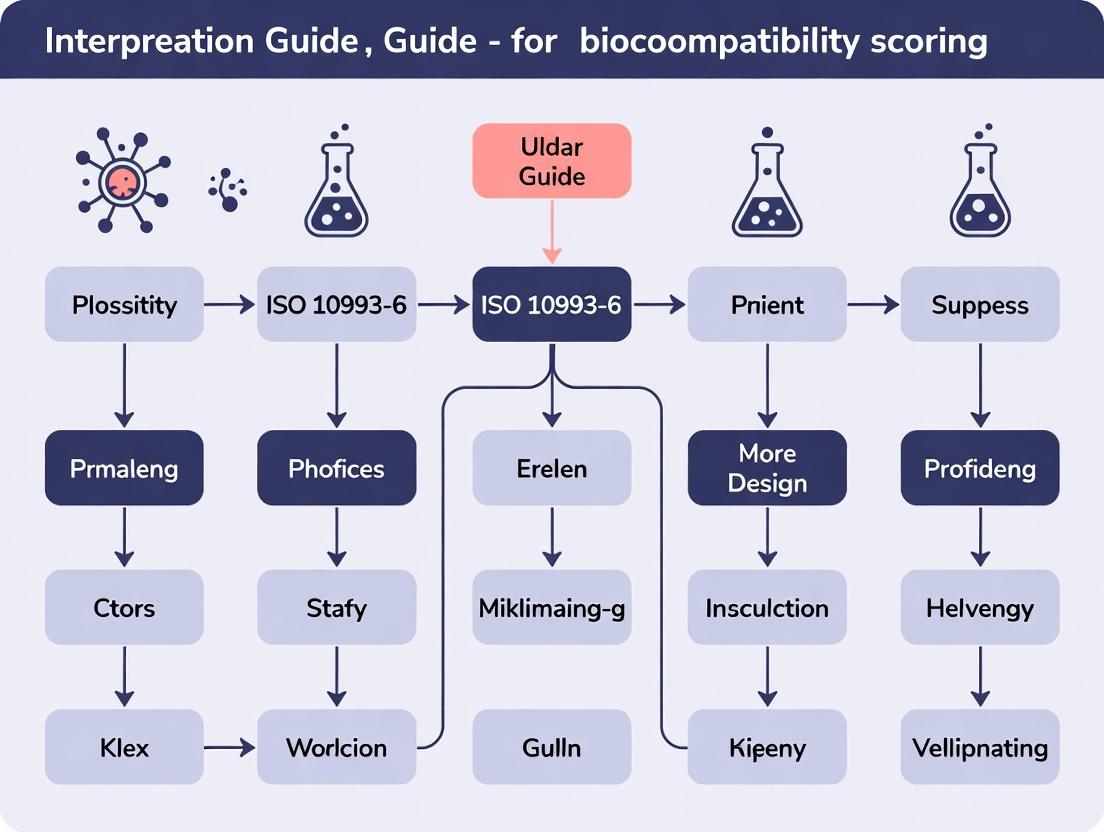
This comprehensive guide demystifies the interpretation of biocompatibility scoring as defined by ISO 10993-6:2023, specifically focusing on tests for local effects after implantation.
Mastering ISO 10993-6 Scoring: A Comprehensive Guide to Biocompatibility Test Interpretation
Abstract
This comprehensive guide demystifies the interpretation of biocompatibility scoring as defined by ISO 10993-6:2023, specifically focusing on tests for local effects after implantation. Designed for researchers, scientists, and medical device development professionals, it bridges the gap between raw histopathological data and meaningful biological risk assessment. The article provides foundational knowledge on scoring scales, a methodological walkthrough of application and calculation, troubleshooting strategies for common pitfalls, and comparative analysis with real-world validation. This guide serves as an essential resource for ensuring regulatory compliance and advancing the development of safer medical devices.
ISO 10993-6 Scoring Decoded: Understanding the Core Scales and Biological Significance
ISO 10993-6:2023, titled "Biological evaluation of medical devices — Part 6: Tests for local effects after implantation," is a critical standard within the biocompatibility assessment framework. It provides methodologies for evaluating the local pathological effects of implantable medical devices on living tissue. The standard is designed to assess the biocompatibility of devices that contact tissues other than skin, including muscle, bone, and subcutaneous tissue, over defined periods.
Within the context of a thesis on ISO 10993-6 scoring interpretation, this document serves as a technical guide to the fundamental principles, quantitative data, and experimental protocols underpinning implantation studies. The purpose of these studies is to simulate clinical use and quantify the local tissue reaction—both irritation and long-term healing response—to a material or device, generating a score that can be compared to a control to determine biocompatibility.
Key Updates in the 2023 Edition
The 2023 revision of ISO 10993-6 introduces clarifications and refinements to enhance reproducibility and interpretation of results.
Table 1: Key Updates in ISO 10993-6:2023
| Aspect | 2016 Edition | 2023 Edition |
|---|---|---|
| Test Duration | Recommended durations (e.g., 1, 4, 12, 26, 52+ weeks). | Enhanced guidance on duration selection based on device resorption/degradation profile. |
| Control Materials | Requires use of well-characterized control materials (e.g., USP PE). | Strengthened emphasis on control relevance and characterization; acknowledges clinically established devices as controls. |
| Histopathological Evaluation | Defines scoring system for non-cylindrical and resorbable devices. | Provides more detailed guidance on evaluating advanced materials (e.g., hydrogels, bioresorbables) and complex device geometries. |
| Data Presentation | Requires mean scores and statistical analysis. | Emphasizes comprehensive reporting, including individual animal data, variability, and justification for sample size. |
Purpose and Rationale of Implantation Studies
Implantation studies serve as a bridge between in vitro assays and clinical trials. Their core purposes are:
- To Assess Local Tissue Tolerance: Determine the severity and reversibility of inflammation, fibrosis, and other tissue changes at the implant-tissue interface.
- To Evaluate the Complete Healing Response: Characterize the sequence of events from acute inflammation to chronic response and final tissue integration or encapsulation.
- To Generate a Comparative Biocompatibility Score: Provide a quantitative histopathological score (per ISO 10993-6:2023, Annex A) for the test article relative to a control, forming the basis for a safety conclusion.
- To Inform Risk Assessment: Data on local effects are integrated with other biocompatibility endpoints (systemic toxicity, genotoxicity) to form an overall biological safety evaluation.
Experimental Protocols: Key Methodologies
Subcutaneous and Muscle Implantation (Annex B & C)
Objective: To evaluate local tissue effects of non-biodegradable solid materials in soft tissue.
Detailed Protocol:
- Sample Preparation: Test and control materials are sterilized using a validated method (e.g., ethylene oxide, gamma irradiation, autoclave) that does not alter material properties. Samples are typically cylindrical (1-2 mm diameter x 4-7 mm length) with smooth edges.
- Animal Model & Surgery: Healthy rodents (typically rats or rabbits) are used. Under aseptic technique and general anesthesia, a small incision is made. A subcutaneous pocket or intramuscular tunnel is created using a blunt dissector or trocar.
- Implantation: The sample is inserted into the pocket/tunnel. Each animal receives multiple implants (test and control), spaced appropriately to avoid cross-reaction. The wound is closed with sutures or clips.
- Post-Op & Duration: Animals are monitored for clinical signs. Implant sites are harvested at predetermined endpoints (e.g., 1, 4, 12, 26 weeks).
- Histopathology: Explanted tissue blocks are fixed, processed, sectioned, and stained (e.g., H&E). A qualified pathologist performs a blinded evaluation using the scoring system in Annex A.
Table 2: Typical Scoring System for Non-Resorbable Materials (Annex A)
| Tissue Response Parameter | Score 0 | Score 1 | Score 2 | Score 3 | Score 4 |
|---|---|---|---|---|---|
| Polymorphonuclear Cells | None | Minimal, <25 cells | Mild, 26-50 cells | Moderate, 51-125 cells | Marked, >125 cells |
| Lymphocytes | None | Minimal, <25 cells | Mild, 26-50 cells | Moderate, 51-125 cells | Marked, >125 cells |
| Plasma Cells | None | Minimal, <25 cells | Mild, 26-50 cells | Moderate, 51-125 cells | Marked, >125 cells |
| Macrophages | None | Minimal, <25 cells | Mild, 26-50 cells | Moderate, 51-125 cells | Marked, >125 cells |
| Giant Cells | None | Minimal, <5 cells | Mild, 6-10 cells | Moderate, 11-20 cells | Marked, >20 cells |
| Necrosis | None | Minimal | Mild | Moderate | Marked |
| Fibrosis/Capsule Thickness | None | Minimal (<0.03 mm) | Mild (0.03-0.1 mm) | Moderate (0.11-0.3 mm) | Marked (>0.3 mm) |
Bone Implantation (Annex D)
Objective: To evaluate local effects and osseointegration of materials intended for bone contact.
Detailed Protocol:
- Sample Preparation: Cylindrical or dowel-shaped samples with defined dimensions are prepared and sterilized.
- Surgery: In rabbits or larger animals, a defect is surgically created in the cortical bone (e.g., femoral condyle, tibia) using a drill bit slightly smaller than the implant diameter to ensure a press-fit.
- Implantation & Closure: The implant is press-fitted into the defect. The surgical site is closed in layers.
- Histomorphometry: After euthanasia and retrieval, undecalcified bone blocks are processed, sectioned, and stained (e.g., Toluidine Blue, von Kossa). Quantitative analysis measures bone-implant contact (%BIC) and new bone area within threads or pores.
Signaling Pathways in the Foreign Body Response
The tissue reaction to an implant follows a defined cascade. This pathway is critical for interpreting histopathological scores.
Diagram Title: Foreign Body Response Signaling Pathway
Experimental Workflow for ISO 10993-6 Implantation Study
Diagram Title: ISO 10993-6 Implantation Study Workflow
The Scientist's Toolkit: Key Research Reagent Solutions
Table 3: Essential Materials for Implantation Studies
| Item / Reagent | Function / Purpose | Key Considerations |
|---|---|---|
| USP Polyethylene (PE) Rods | Negative control material. Provides a benchmark for minimal tissue reactivity. | Must be USP Class VI certified. Dimensions should match test article. |
| Polyvinyl Chloride (PVC) with Tin Stabilizer | Positive control material (optional for certain protocols). Induces a predictable, measurable inflammatory response. | Used to validate study sensitivity. Requires careful handling. |
| 10% Neutral Buffered Formalin | Primary fixative for harvested tissue-implant blocks. Preserves tissue morphology for histology. | Volume should be ≥10x tissue volume. Adequate fixation time is critical. |
| Paraffin or Methacrylate Resin | Embedding medium for tissue processing. Paraffin for soft tissue; Methacrylate for hard/undecalcified bone. | Methacrylate preserves bone-implant interface without decalcification. |
| Hematoxylin & Eosin (H&E) Stain | Routine histological stain. Provides overview of cellular infiltration, necrosis, and fibrous capsule. | Standard for initial evaluation. |
| Toluidine Blue or von Kossa Stain | Special stains for bone studies. Highlights osteoid, mineralized bone, and bone-cell interfaces. | Essential for histomorphometry (%BIC, new bone area). |
| Image Analysis Software | For quantitative histomorphometry (capsule thickness, bone contact, cell counts). | Enables objective, reproducible measurements from histology slides. |
| Validated Sterilization Equipment | To sterilize test and control samples without altering properties (e.g., EO gas, gamma irradiator). | Method must be validated for the specific material. Residuals must be assessed. |
Implantation studies, as mandated by ISO 10993-6: "Biological evaluation of medical devices — Part 6: Tests for local effects after implantation," require a systematic, semi-quantitative histological evaluation of tissue responses. The standard provides scoring tables to categorize and grade the presence and extent of specific biological responses. This guide deconstructs these critical scoring parameters—Polymorphonuclear Cells (PMNs), Lymphocytes, Plasma Cells, Macrophages, Giant Cells, Necrosis, and Fibrosis—providing a technical foundation for consistent interpretation within biocompatibility research.
Deconstructing the Cellular Responses: Quantitative Benchmarks & Significance
The inflammatory and immune responses are temporally orchestrated. Accurate scoring requires understanding the cell type, its typical timeframe, and its biological implication.
Table 1: Inflammatory & Immune Cell Scoring Parameters
| Cell Type / Feature | Typical Onset (Post-Implantation) | Peak Response | Biological Significance | Typical ISO 10993-6 Score Range (0-4) |
|---|---|---|---|---|
| Polymorphonuclear Cells (PMNs) | Minutes to Hours | 1-3 Days | Acute inflammation, neutrophil response to injury or infection. High scores indicate acute irritation or contamination. | 0: None1: Minimal, <5%2: Mild, 5-10%3: Moderate, 10-20%4: Marked, >20% |
| Lymphocytes | Days | 1-4 Weeks | Chronic inflammation, adaptive immune response (T-cells). Indicates immunogenic potential. | 0: None1: Minimal, sparse2: Mild, occasional aggregates3: Moderate, numerous aggregates4: Marked, confluent sheets |
| Plasma Cells | 1-2 Weeks | 2-8 Weeks | Terminal B-cell differentiation; indicates active humoral (antibody-mediated) immune response. | 0: None1: Rare2: Few3: Many4: Abundant |
| Macrophages | Hours to Days | Days to Weeks | Phagocytosis, antigen presentation, release of cytokines/chemokines. Key to foreign body reaction. | 0: None1: Minimal, <10 cells2: Mild, 10-30 cells3: Moderate, 30-100 cells4: Marked, >100 cells |
| Giant Cells | 1-2 Weeks | Weeks to Months | Fusion of macrophages; indicates attempt to phagocytose large or non-degradable material. | 0: None1: Minimal, <2 cells2: Mild, 2-5 cells3: Moderate, 5-10 cells4: Marked, >10 cells |
| Necrosis | Variable | Variable | Cell death due to toxicity, ischemia, or severe irritation. A critical toxicity indicator. | 0: None1: Minimal, focal2: Mild, limited zone3: Moderate, extensive zone4: Marked, massive zone |
| Fibrosis (Capsule) | Days | Weeks to Months | Fibroblast proliferation and collagen deposition; encapsulates the device. | 0: None1: Thin, <25 µm2: Mild, 25-50 µm3: Moderate, 50-100 µm4: Marked/Extensive, >100 µm |
Detailed Methodologies for Histopathological Evaluation
Protocol 1: Tissue Harvest, Processing, and Staining for ISO 10993-6 Scoring
- Explantation & Fixation: At designated endpoints (e.g., 1, 4, 12, 26, 52 weeks), surgically retrieve the implant with a 0.5-1.0 cm margin of surrounding tissue. Immerse immediately in 10% neutral buffered formalin (NBF) for a minimum of 48-72 hours (volume ≥ 10x tissue volume).
- Tissue Processing: Dehydrate through a graded series of ethanol (70%, 95%, 100%), clear in xylene or a substitute, and infiltrate with paraffin wax using an automated tissue processor.
- Sectioning: Embed tissue to cross-section the implant-tissue interface. Section at 4-5 µm thickness using a microtome and float onto positively charged glass slides. Dry slides at 60°C for 1 hour.
- Routine Staining (H&E):
- Deparaffinize in xylene (2 changes, 5 min each).
- Rehydrate through graded ethanol to water (100%, 95%, 70%).
- Stain in Harris's Hematoxylin for 5-8 minutes.
- Rinse in running tap water until sections "blue" (5 min).
- Differentiate in 1% acid alcohol (1% HCl in 70% ethanol) for a few seconds.
- Rinse.
- Counterstain in Eosin Y solution for 1-3 minutes.
- Dehydrate rapidly through ethanol, clear in xylene, and mount with a synthetic resin.
- Special Stains (As Required):
- Masson's Trichrome: For collagen/fibrosis visualization (stains collagen blue/green).
- CD68/CD163 IHC: For specific identification of macrophages (requires antigen retrieval and immunohistochemistry protocols).
Protocol 2: Semi-Quantitative Histopathological Scoring Workflow
- Blinded Evaluation: Slides are coded and evaluated by a certified pathologist unaware of the treatment groups.
- Microscopy: Examine the tissue-implant interface at standard magnifications (e.g., 40x for overview, 100x, 200x, 400x for cell identification).
- Scoring: For each parameter, assign a score based on the density, distribution, and extent, referencing the criteria in Table 1.
- For Cells: Scan the entire interface. Estimate cell density as cells per high-power field (HPF, 400x) or as a percentage of the reactive zone.
- For Fibrosis: Measure capsule thickness using a calibrated ocular micrometer at multiple points; calculate an average.
- Data Recording: Record scores for each parameter per animal/sample. Calculate mean scores and standard deviations per experimental group.
Title: Temporal Progression of Tissue Response to Implants
The Scientist's Toolkit: Essential Research Reagents & Materials
Table 2: Key Reagents for Histopathological Evaluation of Biocompatibility
| Item | Function | Example / Specification |
|---|---|---|
| 10% Neutral Buffered Formalin (NBF) | Fixative that cross-links proteins, preserving tissue morphology for scoring. | Must be pH 7.0-7.4. Pre-filled containers for consistent tissue:fixative ratio. |
| Paraffin Wax (Histology Grade) | Embedding medium for microtomy, providing structural support for thin sectioning. | High-quality, low-melting-point (56-58°C) wax for optimal ribboning. |
| Hematoxylin & Eosin (H&E) Stain Kit | Routine stain for general morphology: Hematoxylin stains nuclei blue; Eosin stains cytoplasm pink. | Commercial kits ensure staining consistency across batches and studies. |
| Masson's Trichrome Stain Kit | Special stain to differentiate collagen (blue/green) from muscle/cytoplasm (red), critical for fibrosis scoring. | Essential for quantifying capsule thickness and collagen density. |
| Anti-CD68 / CD163 Antibodies | Primary antibodies for immunohistochemistry (IHC) to specifically identify and quantify macrophage populations. | Validate for species reactivity (e.g., mouse, rat, rabbit). Include appropriate positive control tissues. |
| Automated Slide Scanner & Image Analysis Software | For high-throughput, digital pathology. Enables quantitative morphometry (cell counting, capsule measurement). | Systems with 20x/40x objectives and analysis modules for area and cell detection. |
| Calibrated Ocular Micrometer | Physical reference scale for microscopes to directly measure capsule thickness in micrometers (µm). | Must be calibrated for each objective lens (e.g., 4x, 10x, 40x). |
Title: Histopathological Scoring Workflow for ISO 10993-6
Interpretation and Integration into a Biocompatibility Assessment
Scoring is not an endpoint but a tool for classification. ISO 10993-6 defines the overall biological response based on combined scores for inflammation, fibrosis, and other parameters at each time point. The evolution of scores over time is critical: decreasing inflammation with stable fibrosis suggests adaptation, while persistent or increasing inflammation and necrosis indicate a chronic irritant or toxic response. This deconstructed understanding of each parameter allows researchers to move beyond a simple numeric score to a mechanistic interpretation of the device-tissue interaction, forming the core of a robust biocompatibility interpretation guide.
Within the research context of developing a comprehensive ISO 10993-6 biocompatibility scoring interpretation guide, understanding the quantifiable biological underpinnings of each histological grade is paramount. This whitepaper delineates the cellular and molecular events that define the spectrum of tissue response to implanted medical devices, translating subjective scores into objective biological data.
Biological Significance of Scoring Tiers
The ISO 10993-6 scoring system for intracutaneous reactivity, implantation, and other tests categorizes the host response. Each tier corresponds to a distinct phase and severity of the biological reaction.
Table 1: Biological Correlates of Implantation Response Scores (Aligned with ISO 10993-6)
| Score / Grade | Descriptive Category | Cellular Infiltrate | Key Cytokines/Chemokines | Tissue Remodeling State | Fibrous Capsule Maturity |
|---|---|---|---|---|---|
| 0-1 | Minimal/Non-Irritant | Rare, scattered mononuclear cells (e.g., macrophages). No neutrophils. | Baseline levels of TGF-β, IL-10. | Homeostasis, minimal angiogenesis. | None or minimal, discontinuous layer. |
| 2 | Mild/Slight Irritant | Increased macrophages, occasional lymphocytes. Few neutrophils (acute phase). | Moderate ↑ in IL-1β, TNF-α, MCP-1. | Early granulation; fibroblast proliferation begins. | Thin, immature capsule (≤3 cell layers). |
| 3 | Moderate Irritant | Dense, focal aggregates of macrophages, lymphocytes, plasma cells. Neutrophils may persist. | Significant ↑ in IL-1β, TNF-α, IL-6, MCP-1. | Active granulation; neovascularization; fibroblast activity high. | Moderately thick, vascularized capsule. |
| 4 | Severe Irritant/Non-Acceptable | Dense, diffuse mixed infiltrate with polymorphonuclear cells (neutrophils, eosinophils), necrosis, abscess, or granuloma formation. | Very high ↑ in IL-1β, TNF-α, IL-6, IL-8, IFN-γ. | Tissue destruction, necrosis, and/or chronic inflammation. | Thick, dense capsule with ongoing inflammation. |
Experimental Protocols for Mechanistic Validation
To move beyond histology, specific assays are required to define the molecular meaning of each score.
Protocol 1: Multiplex Immunoassay for Inflammatory Profiling
- Objective: Quantify cytokine/chemokine levels in peri-implant tissue homogenate.
- Methodology:
- Tissue Harvest: Explant test and control materials with surrounding tissue at defined endpoints (e.g., 3, 7, 28 days).
- Homogenization: Lyse tissue in RIPA buffer with protease inhibitors using a mechanical homogenizer.
- Assay: Use a multiplex Luminex or MSD panel for species-specific targets (e.g., IL-1β, TNF-α, IL-6, IL-10, MCP-1, VEGF).
- Analysis: Normalize cytokine concentration to total protein content (BCA assay). Statistically compare test vs. control at each timepoint.
Protocol 2: Immunohistochemical (IHC) Characterization of Infiltrate
- Objective: Identify and quantify specific cell types in the inflammatory zone.
- Methodology:
- Sectioning: Formalin-fix, paraffin-embed tissue blocks containing the implant interface. Section at 5µm.
- Antigen Retrieval: Perform heat-induced epitope retrieval in citrate buffer.
- Staining: Apply primary antibodies for cell markers (CD68 for macrophages, CD3 for T-lymphocytes, Ly-6G for neutrophils, α-SMA for myofibroblasts).
- Quantification: Use digital pathology software to count positive cells within a standard distance (e.g., 500 µm) from the implant interface.
Visualization of Key Biological Pathways
Title: Immune Pathway From Implant to Outcome
Title: Histology Score vs. Temporal Biological Phase
The Scientist's Toolkit: Essential Research Reagents
Table 2: Key Reagents for Mechanistic Biocompatibility Research
| Reagent / Material | Function in Experimentation | Example Application |
|---|---|---|
| Species-Specific Cytokine Multiplex Panel | Simultaneous quantitation of 20+ soluble inflammatory mediators from small tissue samples. | Profiling cytokine milieu to distinguish between Scores 2 (pro-resolving) and 3 (pro-inflammatory). |
| Phospho-Specific Antibodies (p-NF-κB, p-STAT3) | Detection of activated intracellular signaling pathways via IHC or Western blot. | Identifying active pro-inflammatory signaling in peri-implant cells. |
| Fluorochrome-Labeled Anti-CD Antibodies (Flow Cytometry) | High-throughput immunophenotyping of single-cell suspensions from digested implant tissue. | Quantifying ratios of M1 (CD80+/CD86+) vs. M2 (CD206+/CD163+) macrophages. |
| Masson's Trichrome Stain | Differentiates collagen (blue/green) from muscle/cytoplasm (red) in tissue sections. | Standardized measurement of fibrous capsule thickness and collagen density. |
| ISO 10993-6 Compliant Reference Materials | Positive (e.g., PE with 0.25% zinc diethyldithiocarbamate) and negative (e.g., HDPE) controls. | Validating the sensitivity and specificity of the in vivo test system. |
| Digital Pathology Slide Scanner & Analysis Software | Enables whole-slide imaging, annotation, and quantitative analysis of cell counts, distances, and staining intensity. | Objective, reproducible quantification of inflammatory cell infiltration and capsule dimensions per ISO 10993-6. |
This technical guide details the critical terminology underpinning the histopathological evaluation of tissue reactions to medical implants, as defined by ISO 10993-6:2016 (and its 2023 amendment), "Biological evaluation of medical devices — Part 6: Tests for local effects after implantation." The accurate interpretation of reactivity grading, implant site morphology, and the control tissue interface is central to a robust biocompatibility scoring system, forming the cornerstone of a comprehensive thesis on scoring interpretation guides. This document provides researchers and drug development professionals with the methodologies and reference data required for standardized, reproducible assessment.
Core Terminology: Definitions and Context
Reactivity Grading: A semi-quantitative, ordinal scoring system applied to specific histopathological parameters (e.g., necrosis, polymorphonuclear leukocyte infiltration, lymphocyte infiltration, plasma cell presence, macrophage density, fibrosis, neovascularization, fatty infiltrate). Each parameter is assigned a numerical grade (typically 0-4 or 0-5) based on the severity and extent of the tissue response, as observed microscopically. The collective grades form the basis for determining the overall biocompatibility of the implant material.
Implant Site: The three-dimensional zone of tissue immediately surrounding and in direct contact with the implanted material. This includes the fibrous capsule, the interfacial cell layer (if present), and any adjacent tissue displaying a response attributable to the implant. Assessment focuses on the morphology, cellularity, and organization of this zone over defined time points.
Control Tissue Interface: The tissue region adjacent to a well-characterized, biocompatible control material (e.g., USP polyethylene negative control, high-density polyethylene) implanted in an anatomically comparable site in the same animal model. This interface serves as the biological benchmark against which the tissue response to the test material is compared. Differences in reactivity grading between test and control sites are more significant than absolute scores.
Experimental Protocols for Histopathological Evaluation
Standard Implantation Protocol (Subcutaneous/Muscle)
- Animal Model & Grouping: Use healthy, skeletally mature rodents (e.g., rats, rabbits). Minimum n=3 per time point per material (test, negative control, positive control optional). Randomize assignment.
- Implantation: Under aseptic technique and general anesthesia, create bilateral subcutaneous pouches or intramuscular pockets via surgical incision. Implant sterile samples (specific dimensions per ISO 10993-6: e.g., 1 mm x 10 mm diameter disc for subcutaneous, 1-3 mm diameter x 10 mm rod for muscle). Ensure one test and one control implant per animal.
- Time Points: Explanation at 1, 4, 12, and 26 weeks (or other justified intervals) post-implantation.
- Tissue Harvest: Euthanize animal, explant the device with a generous margin of surrounding tissue (~10 mm).
- Fixation & Processing: Immediately fix in 10% neutral buffered formalin for 48 hours. Process through graded alcohols, clear, and embed in paraffin.
- Sectioning & Staining: Section at 4-6 µm thickness through the central plane of the implant site. Perform standard Hematoxylin and Eosin (H&E) staining. Special stains (e.g., Masson's Trichrome for collagen, CD68 immunohistochemistry for macrophages) may be employed for specific parameters.
Histopathological Scoring Protocol
- Blinded Evaluation: Coded slides are evaluated by a qualified pathologist blinded to the identity of the samples.
- Microscopic Examination: Using a light microscope, assess the implant site and control tissue interface at standardized magnifications (e.g., 40x, 100x, 200x).
- Grading Scale Application: Apply the grading scale from ISO 10993-6, Annex D (or an internally validated, equivalent scale) to each pre-defined parameter.
Table 1: Example Reactivity Grading Scale for Subcutaneous Tissue (Adapted from ISO 10993-6)
| Score | Polymorphonuclear Cells (per HPF*) | Lymphocytes (per HPF*) | Necrosis | Fibrosis Capsule Thickness (µm) | Neovascularization |
|---|---|---|---|---|---|
| 0 | None | None | None | Minimal (≤10 µm) | None |
| 1 | Minimal, sporadic (<5) | Minimal, sporadic (<5) | Minimal | Slight (11-50 µm) | Minimal, few vessels |
| 2 | Mild (5-10) | Mild (5-10) | Mild | Moderate (51-100 µm) | Mild |
| 3 | Moderate (11-20) | Moderate (11-20) | Moderate | Marked (101-200 µm) | Moderate |
| 4 | Severe (>20) | Severe (>20) | Severe | Extensive (>200 µm) | Marked |
*HPF: High Power Field (e.g., 400x magnification, field diameter 0.5 mm)
- Overall Assessment: Calculate individual and mean scores. The Irritation Score is derived by subtracting the average control score from the average test score for each parameter at each time point. A final classification (e.g., non-irritant, slight irritant, moderate irritant, severe irritant) is made based on the magnitude of these differences and the persistence of the response.
The Interface Response: Signaling Pathways & Cellular Crosstalk
The tissue response at the implant interface is a dynamic, orchestrated biological process. The following diagram illustrates the key signaling pathways driving the foreign body reaction (FBR), which directly determines reactivity grades.
Diagram 1: Core Pathways in the Foreign Body Reaction at the Implant Interface (Max Width: 760px)
Experimental Workflow for ISO 10993-6 Biocompatibility Scoring
Diagram 2: ISO 10993-6 Implant Study Histopathology Workflow (Max Width: 760px)
The Scientist's Toolkit: Key Research Reagent Solutions
Table 2: Essential Materials for Implant Biocompatibility Studies
| Item | Function & Rationale |
|---|---|
| USP Polyethylene RS (Negative Control) | A standardized, non-reactive material mandated by ISO 10993-6. Provides the baseline control tissue interface for comparison, ensuring study validity. |
| Polyvinyl Chloride with Tin Stabilizer (Positive Control) | A standardized irritant material. Used to validate the sensitivity of the animal model and scoring system by eliciting a predictable, graded inflammatory response. |
| 10% Neutral Buffered Formalin | The gold-standard fixative for implant sites. Preserves tissue morphology and cellular detail without causing significant hardening or artifact, critical for accurate grading. |
| Decalcification Solution (e.g., EDTA) | Essential for processing bone implant sites. Gently removes mineral content without damaging tissue antigens or morphology, allowing for proper sectioning. |
| CD68 / F4/80 Antibodies (IHC) | Immunohistochemistry reagents for specific identification and quantification of macrophages and foreign body giant cells (FBGCs), key effectors in the FBR. |
| Masson's Trichrome Stain Kit | Differentiates collagen (stains blue) from muscle and cytoplasm (red). Crucial for objectively assessing the extent and maturity of fibrous encapsulation. |
| Automated Slide Scanner & Image Analysis Software | Enables whole-slide digital imaging and quantitative morphometry (e.g., capsule thickness, cell counting), reducing observer bias and improving reproducibility of grading. |
| Standardized Histopathology Scoring Template | A pre-formatted datasheet listing all ISO parameters and grade definitions. Ensures consistent, complete, and auditable data collection across all samples and evaluators. |
Data Interpretation & Critical Considerations
Table 3: Comparative Reactivity Scores: Example Data from a Hypothetical Polymer Study
| Material | Time Point | Avg. Inflamm. Score (Test) | Avg. Inflamm. Score (Control) | Irritation Score (Δ) | Fibrosis Thickness (µm, Test) | Interpretation |
|---|---|---|---|---|---|---|
| Polymer A | 1 week | 2.8 | 1.2 | +1.6 | 45 | Mild acute irritation. |
| Polymer A | 12 weeks | 1.5 | 1.0 | +0.5 | 85 | Response resolving; minimal chronic irritation. |
| Polymer B | 1 week | 3.5 | 1.1 | +2.4 | 30 | Moderate acute irritation. |
| Polymer B | 12 weeks | 3.8 | 1.0 | +2.8 | 210 | Persistent inflammation & marked encapsulation; material is a chronic irritant. |
| USP PE (Control) | All points | - | 0.8 - 1.3 | 0 (by definition) | 8-15 | Non-irritant benchmark. |
Key Interpretation Principles:
- Time-Course is Critical: A high irritation score at 1 week that resolves by 12 weeks indicates a normal, healing-related response. A persistent or increasing score indicates chronic irritation.
- Control Comparison is Absolute: The control tissue interface score is the experiment-specific baseline. Absolute test scores are meaningless without this subtraction.
- Morphology Over Magnitude: The cell types present (e.g., neutrophils vs. lymphocytes vs. macrophages) and tissue organization are as important as the number of cells. A thin, organized fibrous capsule is desirable; a thick, disorganized, highly cellular one is not.
- Statistical vs. Biological Significance: Use appropriate statistical tests on grades (non-parametric), but always interpret results in the context of biological relevance and the intended duration of implant service.
This whitepaper examines the critical role of scoring within the systematic biological risk evaluation process mandated by ISO 10993-1:2018, "Biological evaluation of medical devices — Part 1: Evaluation and testing within a risk management process." It positions scoring not as a standalone exercise, but as the quantifiable backbone that translates raw biocompatibility data into a standardized risk characterization, enabling informed decision-making for researchers and product development professionals.
ISO 10993-1 frames biocompatibility evaluation as an integral component of a formal risk management system (per ISO 14971). The standard transitions from a checklist of prescribed tests to a risk-based approach, where the nature and extent of testing are determined by the device's characteristics and body contact. Scoring is the essential methodological tool that operationalizes this principle. It provides a systematic, semi-quantitative means to:
- Translate Observations into Data: Convert histological, clinical, or physicochemical observations into numerical or categorical values.
- Enable Comparison: Allow consistent comparison of test results against controls and established criteria.
- Facilitate Integration: Aggregate scores from multiple endpoints (e.g., inflammation, necrosis, neovascularization) into an overall assessment of a specific biological effect.
- Support Risk Estimation: Provide the input for judging the severity of a biological hazard, which is then combined with probability estimates to determine risk.
The overall biological risk evaluation follows a logical sequence where scoring is applied at key stages. The workflow below illustrates this process.
Diagram Title: ISO 10993-1 Biological Risk Evaluation Workflow
Key Scoring Systems and Quantitative Data Integration
Scoring is most formally defined in vertical standards of the ISO 10993 series. The following table summarizes the core scoring frameworks and their application.
| Standard | Title | Primary Scoring Focus | Typical Output / Scale |
|---|---|---|---|
| ISO 10993-6 | Biological evaluation of medical devices — Part 6: Tests for local effects after implantation | Histopathological evaluation of implant sites. Scores for inflammation, fibrosis, necrosis, etc., aggregated into a total score. | Irritation Grading Scale (0-4). Implant Reaction Scale: Total score compared to controls. |
| ISO 10993-10 | Biological evaluation of medical devices — Part 10: Tests for skin sensitization | Magnification of challenge-induced skin reactions (e.g., Magnusson & Kligman, GPMT). | Sensitization Grading Scale (0-3). Outcome classification (e.g., non, weak, moderate, strong sensitizer). |
| ISO 10993-23 | Biological evaluation of medical devices — Part 23: Tests for irritation | Clinical observation of skin, mucosal, or intracutaneous reaction sites. | Irritation Index (e.g., PII, Primary Irritation Index). Categorical classification (non-irritant, irritant). |
| ISO 10993-3 | Biological evaluation of medical devices — Part 3: Tests for genotoxicity, carcinogenicity and reproductive toxicity | Quantitative analysis of in vitro (e.g., micronucleus count) and in vivo assay results. | Statistical significance (p-values), fold-increase over control, dose-response. |
Detailed Protocol: ISO 10993-6 Implantation Test Histopathological Scoring
Objective: To evaluate the local pathological effects of an implant material compared to a negative control material.
Methodology:
- Implantation: Test and control materials are implanted into appropriate tissue sites (e.g., subcutaneous, muscle, bone) in laboratory animals for specified endpoints (e.g., 1, 4, 12, 26, 52 weeks).
- Histological Preparation: After retrieval, the implant site with surrounding tissue is fixed, processed, sectioned, and stained (e.g., H&E).
- Microscopic Evaluation: A pathologist examines slides in a blinded manner. For each relevant parameter, a numerical grade is assigned based on the defined criteria.
- Scoring Application (Key Step): The following scoring table, as derived from ISO 10993-6:2016 Annex E, is applied:
| Biological Phenomenon | Grade 0 | Grade 1 | Grade 2 | Grade 3 | Grade 4 |
|---|---|---|---|---|---|
| Polymorphonuclear Cells (Neutrophils) | None | Rare, 1-5 per high-power field (HPF) | 6-10 per HPF | Heavy infiltrate | Packed with cells |
| Lymphocytes | None | Rare, 1-5 per HPF | 6-10 per HPF | Heavy infiltrate | Packed with cells |
| Plasma Cells | None | Rare, 1-5 per HPF | 6-10 per HPF | Heavy infiltrate | Packed with cells |
| Macrophages | None | Rare, 1-5 per HPF | 6-10 per HPF | Heavy infiltrate | Packed with cells |
| Giant Cells | None | Rare, 1-2 per HPF | 3-5 per HPF | Heavy infiltrate | Packed with cells |
| Necrosis | None | Minimal | Mild | Moderate | Severe |
| Fibrosis/Capsule Thickness | None | Minimal, thin (1-2 cells) | Mild, 3-5 cells | Moderate, 6-10 cells | Marked, >10 cells |
- Calculation: For each implant site, the sum of the scores for all parameters is calculated for both the test and control samples.
- Interpretation: The biological response is evaluated by comparing the mean total score of the test material to that of the control. The difference determines the categorization of the response (e.g., non-irritant, slight irritant, moderate irritant, severe irritant).
From Score to Risk: The Integration Pathway
A single score is not a final risk conclusion. It feeds into a broader analytical pathway. The diagram below maps how a histopathology score is integrated with other data to form an overall risk evaluation.
Diagram Title: Integrating Scores into Overall Risk Evaluation
The Scientist's Toolkit: Essential Reagents & Materials for Key Evaluations
| Item Name | Function/Application | Example in ISO 10993 Context |
|---|---|---|
| Negative Control Material | Provides a baseline biological response for comparison. Must be a well-characterized material with a known, minimal reaction. | High-density polyethylene (HDPE) rods in implantation tests (ISO 10993-6). Saline or cottonseed oil in extraction studies. |
| Positive Control Material / Substance | Validates the responsiveness of the test system. Must elicit a predictable, measurable adverse reaction. | Polyvinyl chloride (PVC) with organotin stabilizer for cytotoxicity. 2,4-Dinitrochlorobenzene (DNCB) for sensitization (ISO 10993-10). |
| Reference Materials | Standardized materials used to calibrate or qualify test methods and scoring consistency. | USP polyethylene reference standard for biological reactivity tests. |
| Histology Stains (H&E) | Hematoxylin and Eosin stain is the fundamental technique for visualizing tissue morphology, cell types, and pathological changes critical for scoring. | Essential for preparing slides for histopathological scoring per ISO 10993-6. |
| Cell Lines (e.g., L929, NIH/3T3) | Well-characterized mammalian fibroblast lines used for in vitro cytotoxicity testing (ISO 10993-5). | Exposed to device extracts; cell damage is scored via metrics like viability reduction, morphological changes. |
| Extraction Vehicles | Solvents used to prepare test extracts of medical devices, simulating different physiological conditions. | Culture medium with serum (for cytotoxicity), saline, and vegetable oil (for intracutaneous reactivity). |
| Patch Test Systems | Standardized applicators for holding test materials in contact with skin during sensitization or irritation studies. | Used in ISO 10993-10 (sensitization) and -23 (irritation) tests to ensure consistent contact and dose. |
Scoring is the critical, standardized language that bridges experimental observation and risk management within the ISO 10993-1 framework. It transforms subjective biological observations into objective, comparable data, enabling a defendable and science-based judgment on the safety of a medical device. Effective use of scoring systems, as detailed in standards like ISO 10993-6 and -10, requires rigorous protocol adherence, expert interpretation, and—most importantly—the integration of scored results with all other available evidence to form a holistic biological risk evaluation. This integrated approach ensures that the final safety conclusion is not merely a function of a test score, but a comprehensive risk-based decision.
From Slides to Scores: A Step-by-Step Guide to Applying ISO 10993-6 Criteria
Within the framework of ISO 10993-6 biocompatibility scoring interpretation guide research, a standardized and meticulous histopathological workflow is paramount. Accurate assessment of local effects after implantation—critical for determining a material's biocompatibility—hinges on the integrity of tissue samples from harvest through to analysis. This whitepaper provides an in-depth technical guide to the core procedures, focusing on generating high-quality histological sections suitable for quantitative and semi-quantitative scoring as per ISO 10993-6.
Tissue Harvesting and Gross Examination
The initial step determines the quality of all subsequent data. Implant sites, along with surrounding tissue and appropriate control tissues, must be harvested systematically.
Experimental Protocol:
- Euthanasia & Dissection: Follow approved IACUC protocols. Expose the implant site via careful dissection, minimizing mechanical damage to the tissue-implant interface.
- Explant: Remove the tissue block containing the implant and a perimeter of at least 5 mm of unaffected tissue. For soft tissues, use a sharp scalpel or biopsy punch. For bone, use a saw with constant saline cooling to prevent thermal artifact.
- Fixation Initiation: Immediately immerse the explant in a volume of 10% Neutral Buffered Formalin (NBF) at least 10 times the tissue volume to initiate fixation. For larger specimens, perfusion fixation via vascular system is superior.
- Gross Description & Trimming: Document dimensions, appearance, and any observable reactions. Using a sharp blade, trim the tissue block to a maximum thickness of 4-5 mm to ensure adequate fixative penetration. Crucially, orient the block so sections will be cut perpendicular to the implant-tissue interface.
Tissue Processing and Embedding
Processing removes water and lipids from the fixed tissue and impregnates it with a supportive medium, enabling thin-section microtomy.
Experimental Protocol:
- Dehydration: Pass tissues through a graded series of ethanol (e.g., 70%, 80%, 95%, 100% x2) using an automated processor or manual schedule. Each step lasts 60-90 minutes.
- Clearing: Replace ethanol with a xylene or xylene-substitute clearing agent (2 changes, 60 min each) to create a miscible bridge between alcohol and paraffin.
- Infiltration & Embedding: Impregnate tissue with molten paraffin wax (58-62°C) under vacuum (2-3 changes, 45-60 min each). Embed in fresh paraffin in a mold, carefully orienting the tissue-implant interface parallel to the cutting plane. Cool rapidly on a chilled plate.
Table 1: Representative Manual Tissue Processing Schedule
| Step | Reagent | Duration (Minutes) | Purpose |
|---|---|---|---|
| 1 | 10% NBF | 90 (or overnight) | Primary Fixation |
| 2 | 70% Ethanol | 60 | Dehydration |
| 3 | 80% Ethanol | 60 | Dehydration |
| 4 | 95% Ethanol | 60 | Dehydration |
| 5 | 100% Ethanol | 60 | Dehydration |
| 6 | 100% Ethanol | 60 | Complete Dehydration |
| 7 | Xylene | 60 | Clearing |
| 8 | Xylene | 60 | Complete Clearing |
| 9 | Paraffin Wax | 90 | Infiltration |
| 10 | Paraffin Wax | 90 | Final Infiltration |
Sectioning, Mounting, and Routine Staining
This phase produces the slides for microscopic evaluation and initial scoring.
Experimental Protocol:
- Microtomy: Trim the paraffin block to expose tissue. Cut 4-6 μm thick sections using a microtome. For implant sites, a carbide-edged blade is often necessary. Float sections on a 40-45°C water bath to remove wrinkles.
- Mounting: Pick up sections onto positively charged glass slides. Dry slides upright at 37°C overnight or 60°C for 1 hour.
- Hematoxylin and Eosin (H&E) Staining:
- Deparaffinization: Xylene (2 changes, 5 min each).
- Rehydration: 100% Ethanol (2 changes), 95%, 80%, 70% (2 min each). Rinse in dH₂O.
- Nuclear Staining: Mayer's Hematoxylin (5-8 minutes). Rinse in dH₂O.
- Differentiation: 1% Acid Alcohol (quick dips). Rinse.
- Bluing: Scott's Tap Water or alkaline buffer (1 min). Rinse.
- Cytoplasmic Staining: Eosin Y (1-3 minutes).
- Dehydration: 95% Ethanol, 100% Ethanol (2 changes, 30 sec each).
- Clearing & Mounting: Xylene (2 changes, 2 min each). Apply coverslip with permanent mounting medium.
Table 2: Key Histomorphometric Parameters for ISO 10993-6 Scoring
| Parameter | Typical Measurement Method | Relevance to Biocompatibility Score |
|---|---|---|
| Inflammation | Cell count/area (polymorphonuclear cells, lymphocytes, plasma cells, macrophages, giant cells) | Directly contributes to inflammation score. |
| Fibrosis/Capsule Thickness | Micrometer measurement at multiple points | Key for neovascularization and fibrosis scores. |
| Necrosis | Area measurement (mm²) or semi-quantitative scale | Critical for local tissue damage assessment. |
| Neovascularization | Vessel count/area within reactive zone | Indicator of tissue repair activity. |
Special Stains and Advanced Techniques
Specific stains elucidate features critical for interpreting tissue response.
Experimental Protocol for Movat Pentachrome Stain (for connective tissue differentiation):
- Deparaffinize and hydrate to dH₂O.
- Alcian Blue solution (5 min).
- Rinse in dH₂O, then in 1% glacial acetic acid (2 min).
- Working Alkaline Alcohol solution (15 min).
- Rinse in dH₂O.
- Working Weigert’s Iron Hematoxylin (5 min).
- Rinse in dH₂O.
- Working Safranin O-Fast Green Mixture (3 min).
- Rinse in dH₂O.
- 5% Acetic Acid (quick rinse).
- Working Crocein Scarlet-Acid Fuchsin (1 min).
- 1% Acetic Acid (quick rinse).
- 5% Phosphotungstic Acid (10 min).
- 1% Acetic Acid (quick rinse).
- Dehydrate, clear, and mount.
Diagram 1: Histopathological Workflow for Implant Sites
Diagram 2: Key Scoring Parameters in Tissue Response
The Scientist's Toolkit: Research Reagent Solutions
| Item | Function in Histopathology for Implant Sites |
|---|---|
| 10% Neutral Buffered Formalin (NBF) | Gold-standard fixative. Preserves tissue morphology and antigenicity by cross-linking proteins. |
| Ethanol Series (70%, 95%, 100%) | Dehydrates fixed tissue, removing water progressively to prepare for clearing agent. |
| Xylene or Xylene Substitute | Clearing agent. Removes alcohol and makes tissue miscible with paraffin wax. |
| Paraffin Wax (High-Grade, 58-62°C) | Infiltration and embedding medium. Provides structural support for microtomy. |
| Poly-L-Lysine or Positively Charged Slides | Prevents tissue section detachment during rigorous staining procedures. |
| Mayer's Hematoxylin | Nuclear stain. Binds to basophilic structures (DNA/RNA). |
| Eosin Y | Cytoplasmic stain. Binds to acidophilic structures (proteins). |
| Movat Pentachrome Stain Kit | Differentiates collagen (yellow), elastin (black), proteoglycans (blue), muscle/cytoplasm (red). |
| CD31 (PECAM-1) Antibody | Immunohistochemical marker for endothelial cells; quantifies neovascularization. |
| TRAP (Tartrate-Resistant Acid Phosphatase) Stain | Histochemical marker for osteoclasts; crucial for evaluating bone resorption/implant integration. |
1. Introduction: Context within ISO 10993-6 Biocompatibility Scoring The interpretation of biological responses as mandated by ISO 10993-6:2016 (and its 2021 amendment) for medical device biocompatibility relies heavily on consistent, systematic histopathological evaluation. This protocol provides a standardized framework for the microscopic assessment of implant sites and control tissues, which is critical for generating reliable and reproducible scores for inflammation, fibrosis, necrosis, and other tissue reactions. Accurate scoring directly informs the determination of the overall biological safety of a device, making systematic evaluation the cornerstone of compliant biocompatibility research.
2. Core Principles of Systematic Evaluation A systematic approach minimizes observer bias and variability. The protocol mandates:
- Full-Section Survey: Initial low-power (e.g., 2x, 4x objective) scan to identify the implant interface, tissue integration, and major reaction zones.
- Zonal Analysis: Division of the peri-implant area into defined zones (e.g., Interface, Proximal, Distal) for standardized scoring.
- Sequential High-Power Field (HPF) Assessment: Use of a systematic pattern (e.g., meander scan) to evaluate consecutive, non-overlapping fields within each zone at high magnification (e.g., 20x or 40x objective).
- Semi-Quantitative Scoring: Application of defined scales (e.g., 0-4) for each parameter, as per ISO 10993-6 guidelines.
3. Detailed Experimental Protocol for Implant Site Evaluation Materials: Histologically processed tissue sections (typically H&E stain), light microscope with calibrated ocular micrometer, standardized scoring sheet or digital pathology software. Methodology:
- Tissue Orientation: Identify the implant site/tract and surrounding anatomical structures.
- Zonal Delineation:
- Zone 1 (Interface): Tissue immediately adjacent to the implant material or void.
- Zone 2 (Proximal): Tissue extending from the interface to ~0.5-1 mm outward.
- Zone 3 (Distal): Tissue from the outer edge of Zone 2 to the unaffected native tissue (~1-2 mm total from interface).
- Systematic Microscopy: For each zone, using a 20x objective (0.74 mm² HPF), initiate a meander scan starting at a defined landmark. Evaluate consecutive, adjacent fields without overlap until the entire zone is covered.
- Parameter Scoring per HPF: Within each field, score the following parameters using the scale in Table 1.
- Overall Zone Score: Calculate the mean or predominant score for each parameter across all HPFs within a zone.
- Overall Implant Site Score: For compliance with ISO 10993-6, the most severe reaction observed across all zones is typically reported for each parameter.
Table 1: ISO 10993-6 Derived Semi-Quantitative Scoring Scale for Tissue Reactions
| Score | Polymorphonuclear Cells (Neutrophils) | Lymphocytes | Plasma Cells | Macrophages | Giant Cells | Necrosis | Fibrosis/Capsule Thickness |
|---|---|---|---|---|---|---|---|
| 0 | None | None | None | None | None | None | None |
| 1 | Minimal, sparse | Minimal | Rare | Few | Rare | Minimal | Thin, immature fibrosis |
| 2 | Mild, focal | Mild | Few, focal | Moderate | Few | Mild | Moderate, organized layer |
| 3 | Moderate, band-like | Moderate | Notable | Numerous | Numerous | Moderate | Thick, dense capsule |
| 4 | Severe, diffuse | Severe | Sheets | Profuse | Profuse | Severe | Very thick, dense capsule |
4. Workflow Diagram: Systematic Evaluation Process
5. Key Inflammatory Signaling Pathways in Biocompatibility The tissue response scored histologically is driven by molecular signaling. A core pathway is the NLRP3 Inflammasome activation leading to IL-1β release.
6. The Scientist's Toolkit: Essential Research Reagent Solutions Table 2: Key Reagents for Histological Evaluation in Biocompatibility Studies
| Reagent/Material | Primary Function in Protocol |
|---|---|
| 10% Neutral Buffered Formalin | Standard fixative for tissue preservation prior to processing and embedding. |
| Hematoxylin & Eosin (H&E) Stain | Routine stain for general morphology, cellular detail, and inflammatory infiltrate assessment. |
| Histological Graded Ethanol Series | Critical for tissue dehydration and preparation for paraffin embedding. |
| Paraffin Embedding Medium | Provides structural support for microtomy and sectioning. |
| Poly-L-Lysine or Charged Slides | Ensures optimal tissue section adhesion during staining procedures. |
| Phosphate Buffered Saline (PBS) | Used as a diluent and wash buffer during immunohistochemistry (IHC) protocols. |
| Citrate or EDTA-based Antigen Retrieval Buffer | Unmasks epitopes hidden by formalin fixation, enabling specific IHC staining. |
| Primary Antibodies (e.g., CD68, CD3, MPO) | IHC markers for specific cell types (macrophages, T-cells, neutrophils) to characterize infiltrates. |
| Polymer-based IHC Detection System | Provides high-sensitivity visualization of bound primary antibodies. |
| Aqueous Mounting Medium with DAPI | Preserves stained slides and allows nuclear counterstaining for fluorescence. |
Calculating Individual and Mean Scores for Test and Control Materials.
1. Introduction Within the framework of ISO 10993-6 ("Biological evaluation of medical devices – Part 6: Tests for local effects after implantation"), quantitative histopathology is a cornerstone for assessing biocompatibility. This technical guide details the procedural standards for calculating individual and mean scores for test and control materials, a critical step in generating the comparative data required for safety interpretation. This process forms the methodological foundation for a broader thesis on scoring interpretation, aiming to enhance reproducibility and decision-making in device development.
2. Key Terminology and Scoring Scale ISO 10993-6 defines specific parameters for evaluation based on the implant site and duration. The following table summarizes the core reaction parameters and the standardized scoring scale.
Table 1: Histopathological Parameters and Scoring Scale per ISO 10993-6 Guidance
| Parameter | Score 0 | Score 1 | Score 2 | Score 3 | Score 4 |
|---|---|---|---|---|---|
| Polymorphonuclear Cells (PMNs) | None | Rare, 1-5 per HPF* | 5-10 per HPF | Heavy infiltrate | Packed HPF |
| Lymphocytes | None | Rare, 1-5 per HPF | 5-10 per HPF | Heavy infiltrate | Packed HPF |
| Plasma Cells | None | Rare, 1-5 per HPF | 5-10 per HPF | Heavy infiltrate | Packed HPF |
| Macrophages | None | Rare, 1-5 per HPF | 5-10 per HPF | Heavy infiltrate | Packed HPF |
| Giant Cells | None | Rare, 1-2 per HPF | 3-5 per HPF | >5 per HPF | Sheets of cells |
| Necrosis | None | Minimal | Mild | Moderate | Severe |
| Fibrosis | None | Thin, 1-4 cells thick | Moderately thick, 5-10 cells | Thick, >10 cells | Extensive |
| Fatty Infiltrate | None | Minimal | Mild | Moderate | Severe |
| Neovascularization | None | Minimal (<10% of field) | Mild (10-30%) | Moderate (30-60%) | Extensive (>60%) |
HPF: High-Power Field (typically 400x magnification).
3. Experimental Protocol for Data Generation 3.1. Sample Preparation & Histology:
- Implantation: Test and control materials are implanted into the appropriate site (e.g., subcutaneous, muscle) in a sufficient number of animals (n≥3) per time point (e.g., 1, 4, 12, 26 weeks).
- Explantation & Fixation: Retrieve implant sites en bloc and fix in 10% neutral buffered formalin for 24-48 hours.
- Processing & Embedding: Dehydrate tissue through a graded ethanol series, clear in xylene, and infiltrate/embed in paraffin wax.
- Sectioning & Staining: Section tissue to 4-6 µm thickness, mount on slides, and stain with Hematoxylin and Eosin (H&E). Special stains (e.g., Masson's Trichrome for collagen) may be used adjunctively.
3.2. Microscopic Evaluation & Individual Scoring:
- Blinded Review: A certified pathologist evaluates slides in a blinded manner regarding test/control identity.
- Field Selection: For each implant site, analyze the 3-5 most reactive contiguous high-power fields (HPFs) adjacent to the tissue-material interface.
- Parameter Scoring: For each reaction parameter listed in Table 1, assign an integer score from 0 to 4 based on the defined criteria. This yields an Individual Score for each parameter per implant site.
- Calculation of Individual Total Score: Sum the scores for all parameters for a single implant site. This is the Individual Total Score for that specific observation.
Table 2: Example of Individual Scoring for One Test Implant Site
| Parameter | Assigned Score | Observation Notes |
|---|---|---|
| Polymorphonuclear Cells | 1 | 3 PMNs per HPF on average |
| Lymphocytes | 2 | 7 lymphocytes per HPF |
| Plasma Cells | 0 | None observed |
| Macrophages | 3 | Heavy, confluent infiltrate |
| Giant Cells | 2 | 4 giant cells per HPF |
| Necrosis | 1 | Minimal focal necrosis |
| Fibrosis | 3 | Thick, cellular capsule >12 cells |
| Fatty Infiltrate | 0 | None |
| Neovascularization | 2 | ~20% of field involved |
| Individual Total Score | 14 | (Sum of all parameter scores) |
4. Calculation of Mean Scores Once Individual Total Scores are obtained for all implants within a group (e.g., Test Material at 4 weeks, Control at 4 weeks), calculate the Mean Score.
Formula:
Mean Score (Group) = (Σ Individual Total Scores within the Group) / (Number of Valid Observations in the Group)
Table 3: Example Calculation of Mean Scores for a Study
| Group | Animal ID | Individual Total Score | Mean Score (Group) |
|---|---|---|---|
| Test Material | T-1 | 14 | 15.0 |
| (4-week, n=4) | T-2 | 16 | |
| T-3 | 15 | ||
| T-4 | 15 | ||
| Control Material | C-1 | 8 | 8.3 |
| (4-week, n=3)* | C-2 | 9 | |
| C-3 | 8 |
*One control sample was damaged during processing and excluded.
5. Comparative Analysis and Interpretation The final assessment in ISO 10993-6 relies on comparing the Mean Score of the test material to that of the control. The difference determines the biological response categorization (e.g., non-irritant, mild, moderate, severe). This comparison is the focal point of the interpretive guide thesis.
Histopathology Scoring Workflow for ISO 10993-6
Core Comparison for Biocompatibility Assessment
6. The Scientist's Toolkit: Key Research Reagent Solutions
Table 4: Essential Materials for Histopathological Scoring Studies
| Item | Function / Purpose |
|---|---|
| Positive Control Material (e.g., USP PE) | Provides a benchmark for a recognized inflammatory response, validating the sensitivity of the test system. |
| Negative Control Material (e.g., HDPE, PTFE) | Established biocompatible material for baseline comparison to differentiate test article effects from surgical trauma. |
| 10% Neutral Buffered Formalin | Gold-standard fixative for tissue preservation, preventing autolysis and maintaining cellular morphology for scoring. |
| Hematoxylin & Eosin (H&E) Stain Kit | Provides standard nuclear (blue/purple) and cytoplasmic (pink) contrast for evaluating cellular infiltrates and tissue structure. |
| Masson's Trichrome Stain Kit | Differentiates collagen (blue/green) from muscle/cytoplasm (red), critical for accurate fibrosis scoring. |
| Reference Slides (Graded Examples) | Internal or commercial sets of pre-scored tissue sections essential for pathologist training and intra-/inter-laboratory calibration. |
| Calibrated Microscope Graticule | Ensures consistent definition of a High-Power Field (HPF) diameter across all evaluations, a critical metrological factor. |
| Digital Pathology & Image Analysis Software | Enables semi-quantitative analysis, annotation, and archiving, improving consistency and auditability of scoring data. |
1. Introduction This document, framed within a broader research thesis on ISO 10993-6 biocompatibility scoring interpretation, provides a technical guide on interpreting mean score differences in biocompatibility evaluations. ISO 10993-6:2016, "Biological evaluation of medical devices – Part 6: Tests for local effects after implantation," relies heavily on semi-quantitative histopathological evaluation. The core challenge for researchers, scientists, and drug development professionals is determining when the observed difference in mean scores between test (implanted device/material) and control (sham surgery or negative control material) groups transitions from a non-significant biological variation to a clinically and toxicologically significant adverse reaction.
2. Quantitative Data from ISO 10993-6 and Related Research ISO 10993-6 provides general guidance but leaves precise statistical and biological interpretation to the expert pathologist and toxicologist. The table below synthesizes key quantitative thresholds and concepts from the standard and contemporary research.
Table 1: Key Quantitative Thresholds for Biocompatibility Scoring Interpretation
| Parameter | Typical Range/Threshold | Interpretation & Context |
|---|---|---|
| Implantation Duration (ISO 10993-6) | Short-term: ≤ 7 days; Subchronic: > 7 days to ≤ 84 days; Long-term: > 84 days. | Duration dictates expected healing response and relevant biological endpoints. |
| Tissue Reaction Scales (Neoplastic, Infective excluded) | 0.0 to 4.0 for Polymorphonuclear Cells, Lymphocytes, Plasma Cells, Macrophages, Giant Cells, Necrosis, Fibrosis, Fatty Infiltrate, Neovascularization. | 0 = None; 1 = Minimal; 2 = Mild; 3 = Moderate; 4 = Severe. |
| Critical Difference in Mean Scores (General Guideline) | ≥ 1.0 point (on the 0-4 scale) for a single parameter. | A difference of 1.0 or more is often considered biologically significant and warrants careful toxicological assessment. |
| Statistical Significance (p-value) | p < 0.05 (common threshold). | Indicates the difference is unlikely due to random chance alone. Must be paired with biological significance. |
| Composite Score (Total) | Sum of individual parameter scores. | Used for overall comparison. A persistent, statistically significant elevation in the total score indicates a concerning reaction. |
| Temporal Pattern | Peak reaction intensity and resolution timeline vs. controls. | A test material reaction that peaks higher or resolves slower than controls is indicative of an adverse effect. |
3. Detailed Experimental Protocol: Histopathological Evaluation per ISO 10993-6
- Animal Model & Implantation: Utilize an appropriate animal model (e.g., rat, rabbit, mouse). Prepare implant sites (e.g., subcutaneous, muscle, bone) per standard surgical procedures. Implant test material and control materials (e.g., USP polyethylene negative control, sham-operated site) in a randomized, blinded fashion.
- Explanation and Tissue Harvest: At predetermined endpoints (e.g., 1, 4, 12, 26, 52 weeks), euthanize animals and carefully excise the implant site with a sufficient margin of surrounding tissue.
- Tissue Processing: Fix tissues in 10% neutral buffered formalin for a minimum of 48-72 hours. Process through graded alcohols, clear in xylene, and embed in paraffin. Section at approximately 5 µm thickness.
- Staining: Stain sections with Hematoxylin and Eosin (H&E). Special stains (e.g., Masson's Trichrome for fibrosis, CD68 immunohistochemistry for macrophages) may be employed for specific evaluations.
- Blinded Histopathological Scoring: A qualified pathologist, blinded to the treatment groups, evaluates each section. Each relevant parameter (see Table 1) is assigned a score from 0 to 4 based on the severity and extent of the tissue response.
- Data Analysis: Calculate mean scores and standard deviations for each parameter and time point for both test and control groups. Perform appropriate statistical tests (e.g., ANOVA with post-hoc tests, non-parametric equivalents like Kruskal-Wallis) to compare groups. The interpretation hinges on both statistical significance (p < 0.05) and the magnitude of the mean score difference.
4. Decision Pathway for Interpreting Mean Score Differences
5. The Scientist's Toolkit: Key Research Reagent Solutions
Table 2: Essential Materials for ISO 10993-6 Implantation Studies
| Item / Reagent | Function & Rationale |
|---|---|
| USP Polyethylene Negative Control Rods | A standardized, biologically inert reference material mandated by ISO 10993-6 for comparison against the test device/material. |
| 10% Neutral Buffered Formalin | The standard fixative for histology; preserves tissue architecture and cellular morphology for accurate scoring. |
| Paraffin Embedding Medium | Supports tissue during microtomy, allowing for the production of thin, consistent sections for staining. |
| Hematoxylin & Eosin (H&E) Stain Kit | The fundamental staining protocol for general histopathology. Hematoxylin stains nuclei blue, eosin stains cytoplasm and connective tissue pink. |
| Masson's Trichrome Stain Kit | Special stain used to highlight collagen deposition (fibrosis), a critical parameter in long-term implantation studies. |
| CD68 (or IBA1) Primary Antibody | Antibody for immunohistochemistry to specifically identify and quantify macrophages/giant cells in the tissue response. |
| Programmed Animal Models (e.g., Sprague-Dawley Rats) | Standardized, healthy animals with consistent genetic backgrounds to reduce biological variability in the host response. |
| Histopathology Scoring Template/Software | A standardized datasheet or digital tool to record semi-quantitative scores (0-4) for all relevant parameters, ensuring consistent data collection. |
6. Biological Response Signaling Pathways The tissue response to an implant involves a coordinated cascade of immune and repair signaling. The simplified pathway below illustrates key interactions.
This document presents a detailed case study on the histological evaluation and scoring of a subcutaneous polymeric implant, framed within a broader research thesis on developing an interpretation guide for ISO 10993-6:2016 biocompatibility scoring. The ISO 10993-6 standard provides a methodology for the biological evaluation of medical devices through localized implantation tests, requiring precise histological analysis and scoring of tissue reactions.
Experimental Protocol: Subcutaneous Implantation in Rodents
Materials and Implant Preparation
- Test Article: A biodegradable polyester (e.g., Poly(L-lactide-co-ε-caprolactone)). Cylinders, 1.0 mm in diameter x 3.0 mm in length.
- Control Article: High-density polyethylene (HDPE) rods (USP Negative Control).
- Animals: Sprague-Dawley rats (n=5 per group per time point).
- Anesthesia: Isoflurane/O2 mixture.
- Surgical Site Preparation: Dorsal region, shaved and disinfected with alternating povidone-iodine and 70% isopropanol.
- Procedure: Four paravertebral subcutaneous pockets per animal were created via small incisions. One test and one control implant were randomly placed in pockets on each side.
- Study Time Points: 1, 4, 12, and 26 weeks.
- Terminal Procedure: Euthanasia by CO₂ asphyxiation followed by cervical dislocation. Implant sites with surrounding tissue were excised en bloc.
Histological Processing and Staining
- Fixation: Tissue blocks were fixed in 10% Neutral Buffered Formalin for 48 hours.
- Processing: Automated tissue processor (dehydration, clearing, infiltration).
- Embedding: Paraffin embedding, ensuring cross-sections through the implant center.
- Sectioning: 5 µm thick sections mounted on slides.
- Staining:
- Hematoxylin and Eosin (H&E): General morphology.
- Masson's Trichrome: Collagen deposition (fibrosis).
Histological Evaluation and Scoring per ISO 10993-6
Scoring was performed by a blinded, qualified pathologist. The tissue response parameters and their corresponding scoring scales are defined below.
Scoring Tables
Table 1: Polymorphonuclear Neutrophil (PMN) Infiltration
| Score | Criterion (Cells/HPF, 400x) |
|---|---|
| 0 | None, or rare scattered cells |
| 1 | Mild (5-15 cells) |
| 2 | Moderate (16-30 cells) |
| 3 | Marked (>30 cells, may form microabscesses) |
| 4 | Severe (coalescing abscesses) |
Table 2: Lymphocyte Infiltration
| Score | Criterion (Cells/HPF, 400x) |
|---|---|
| 0 | None, or rare scattered cells |
| 1 | Mild (5-15 cells, 1-2 layers) |
| 2 | Moderate (16-30 cells, 3-5 layers) |
| 3 | Marked (>30 cells, >5 layers) |
| 4 | Severe (dense cuffing, follicular organization) |
Table 3: Plasma Cell Infiltration
| Score | Criterion (Cells/HPF, 400x) |
|---|---|
| 0 | None |
| 1 | Mild (1-5 cells) |
| 2 | Moderate (6-10 cells) |
| 3 | Marked (11-20 cells) |
| 4 | Severe (>20 cells) |
Table 4: Macrophage Infiltration & Giant Cells
| Score | Criterion (Cells/HPF, 400x) |
|---|---|
| 0 | None, or rare scattered macrophages |
| 1 | Mild (5-15 macrophages, 0-2 giant cells) |
| 2 | Moderate (16-30 macrophages, 3-5 giant cells) |
| 3 | Marked (>30 macrophages, 6-10 giant cells) |
| 4 | Severe (sheets of macrophages, >10 giant cells) |
Table 5: Necrosis
| Score | Criterion |
|---|---|
| 0 | None |
| 1 | Minimal (single cell necrosis) |
| 2 | Mild (small clusters of necrotic cells) |
| 3 | Moderate (confluent areas of necrosis) |
| 4 | Severe (extensive necrosis) |
Table 6: Fibrosis/Fibrous Capsule
| Score | Criterion (Capsule Thickness) |
|---|---|
| 0 | No capsule |
| 1 | Thin (1-3 cells/fibers thick) |
| 2 | Moderate (4-8 cells/fibers thick) |
| 3 | Marked (9-15 cells/fibers thick) |
| 4 | Severe (>15 cells/fibers thick) |
For each implant site, the scores for all six parameters are summed. The Irritation Score for the test material is then calculated by subtracting the average control (HDPE) score from the average test material score at each time point.
Irritation Score = (Mean Total Score_Test) - (Mean Total Score_Control)
Interpretation (ISO 10993-6):
- Irritation Score ≤ 1.0: Minimal/Non-irritant
- Irritation Score 1.1 - 3.0: Slight Irritant
- Irritation Score 3.1 - 8.0: Moderate Irritant
- Irritation Score > 8.0: Severe Irritant
Case Study Data: 12-Week Time Point
Table 7: Representative Scoring Data for a Biodegradable Polymer (12 Weeks)
| Parameter | Test Material (Avg. Score, n=5) | HDPE Control (Avg. Score, n=5) |
|---|---|---|
| Polymorphonuclear Cells | 0.2 | 0.0 |
| Lymphocytes | 1.4 | 0.6 |
| Plasma Cells | 0.2 | 0.0 |
| Macrophages/Giant Cells | 2.8 | 1.0 |
| Necrosis | 0.0 | 0.0 |
| Fibrosis | 2.2 | 1.8 |
| Total Score | 6.8 | 3.4 |
Calculation: Irritation Score = 6.8 - 3.4 = 3.4
Interpretation: At 12 weeks, the biodegradable polymer elicits a tissue response categorized as a "Moderate Irritant" per ISO 10993-6. This is expected due to the active degradation phase of the polymer, leading to a peak in macrophage and giant cell activity.
Key Signaling Pathways in the Foreign Body Response
Foreign Body Response to Polymer Implant
Experimental Workflow for ISO 10993-6 Evaluation
Implant Biocompatibility Evaluation Workflow
The Scientist's Toolkit: Key Research Reagent Solutions
Table 8: Essential Materials for Implantation Biocompatibility Studies
| Item | Function & Relevance |
|---|---|
| USP Negative Control Plastic (HDPE/Rod) | A standardized, non-irritating control material mandated by ISO 10993-6 for calculating the relative irritation score of the test material. |
| Neutral Buffered Formalin (10%) | Gold-standard fixative for preserving tissue morphology prior to histopathological processing and scoring. |
| Paraffin Embedding Medium | Provides structural support for thin sectioning of the implant-tissue interface on a microtome. |
| Hematoxylin & Eosin (H&E) Stain Kit | The primary stain for general histological assessment, allowing visualization of inflammatory cells and tissue structure for scoring. |
| Masson's Trichrome Stain Kit | Special stain to differentiate collagen (blue/green) from muscle/cytoplasm (red), critical for evaluating fibrosis and capsule thickness. |
| ISO 10993-6:2016 Standard Document | Definitive reference for the scoring parameters, scale, calculation methodology, and interpretation of results. |
| Digital Slide Scanner & Image Analysis Software | Enables high-resolution slide digitization, blinded review, and potential for quantitative analysis of cellular infiltration and capsule thickness. |
Navigating Challenges: Common Pitfalls and Expert Strategies in Biocompatibility Scoring
Within the critical research on developing an ISO 10993-6 biocompatibility scoring interpretation guide, a primary challenge is the standardization of histopathological evaluation. This whitepaper details three pervasive errors that threaten data integrity and regulatory submission: over-interpretation, under-scoring, and observer bias. These errors directly impact the reliability of implantation studies used to assess local tissue reactions, as mandated by the ISO 10993-6 standard for medical devices.
Defining the Core Scoring Errors
Over-interpretation: Assigning a higher severity grade than is morphologically justified, often due to conflating normal physiological responses (e.g., minimal, organized fibrosis) with adverse reactions. This can lead to the false condemnation of a safe device.
Under-scoring: Assigning a lower severity grade than is morphologically present, potentially missing a significant adverse tissue reaction. This risk is heightened with novel material interactions where expected response benchmarks are lacking.
Observer Bias: A systematic error introduced when the evaluator's knowledge of the test group (control vs. high-dose implant) influences scoring. Expectation bias can skew results towards preconceived outcomes.
Quantitative Impact Analysis
Recent meta-analyses and inter-laboratory comparison studies quantify the prevalence and impact of these errors.
Table 1: Frequency and Impact of Common Scoring Errors in Inter-laboratory Trials
| Error Type | Average Incidence in Uncontrolled Studies | Typical Deviation from Reference Score | Most Affected ISO 10993-6 Parameters |
|---|---|---|---|
| Over-interpretation | 18-25% | +1.5 to +2.0 on severity scale | Fibrosis, Inflammation (Chronic) |
| Under-scoring | 12-20% | -1.0 to -1.5 on severity scale | Necrosis, Polymorphonuclear Infiltrate |
| Observer Bias | Leads to 30% reduction in inter-scorer concordance (Kappa <0.4) | Variable directional shift | All parameters, especially subtler ones |
Table 2: Effect of Blinding Protocols on Scoring Accuracy
| Study Condition | Concordance (Fleiss' Kappa) | Mean Score Variance | False Positive Rate |
|---|---|---|---|
| Unblinded Evaluation | 0.38 (Fair) | High (2.1 units²) | 22% |
| Single-Blind (Group) | 0.52 (Moderate) | Moderate (1.4 units²) | 15% |
| Double-Blind (Full) | 0.72 (Substantial) | Low (0.7 units²) | 6% |
Detailed Experimental Protocols for Mitigation
Protocol 4.1: Blinded Slide Randomization & Evaluation
- Sample Preparation: After histoprocessing and staining (H&E, special stains as needed), all slides from all groups (control, low-dose, high-dose) are de-identified.
- Randomization: A third-party technician, not involved in scoring, labels each slide with a unique, random alphanumeric code using a computerized random number generator.
- Distribution: The randomized slide set, with a master key held separately, is provided to the pathologist.
- Evaluation: The pathologist scores all slides using the standardized ISO 10993-6 scoring scheme (Table 3) without knowledge of group affiliation.
- Unblinding & Analysis: Only after all scores are recorded is the master key used to decode group assignments for statistical analysis.
Protocol 4.2: Calibration with Digital Reference Atlases
- Reference Curation: Establish an internal digital library of high-resolution micrographs representing canonical examples for each score (0-4) for every parameter (inflammation, fibrosis, necrosis, etc.).
- Pre-Study Calibration: All evaluating pathologists must complete a calibration session, scoring 50-100 pre-scored training slides. Scores are compared against the gold-standard consensus.
- Acceptance Criteria: A pathologist must achieve >85% agreement (within ±1 grade) on severity scores before evaluating study slides.
- Adjudication for Discrepancies: During the study, any slide with a score discrepancy beyond a pre-set threshold (e.g., difference of >2 points between two scorers) is reviewed jointly against the reference atlas to reach consensus.
Visualizing Workflows and Relationships
Workflow for Blinded Histopathology Scoring
Impact Pathway of Observer Bias on Scoring
The Scientist's Toolkit: Research Reagent Solutions
Table 3: Essential Toolkit for Standardized ISO 10993-6 Scoring Studies
| Item / Reagent | Function & Rationale |
|---|---|
| Digital Slide Scanner | Creates high-resolution whole-slide images (WSI) for remote, calibrated viewing and archival reference. Enables digital annotation. |
| Validated Reference Atlases | Commercial or internally validated digital libraries of scored tissue reactions. Critical for calibrating scorers and adjudicating discrepancies. |
| Blinding Kits (Coded Slide Labels) | Physical or digital systems to apply irreversible random codes to slides and blocks to maintain blinding integrity. |
| Statistical Concordance Software | Software (e.g., calculating Fleiss' Kappa, ICC) to quantitatively measure inter- and intra-observer agreement during calibration and studies. |
| Standardized Scoring Sheets (Digital) | Electronic Case Report Form (eCRF) templates that enforce the ISO 10993-6 table structure, preventing data entry errors and omissions. |
| Special Stains (e.g., Masson's Trichrome, Picrosirius Red) | Provide objective, colorimetric differentiation of collagen (fibrosis) from other tissue components, reducing subjectivity in fibrosis scoring. |
Mitigating over-interpretation, under-scoring, and observer bias is not merely a recommendation but a necessity for robust ISO 10993-6 research. The proposed methodologies—rigorous blinding, scorer calibration with digital atlases, and the use of objective tools—must form the core of any definitive biocompatibility scoring interpretation guide. This ensures that the final implantation study report reflects true biological responses, thereby strengthening the regulatory evaluation of medical device safety.
Within the critical framework of interpreting ISO 10993-6 biocompatibility evaluations, managing heterogeneous tissue responses presents a significant analytical challenge. Non-uniform reactions—characterized by localized, often heightened, inflammation, necrosis, or fibrosis—and edge effects—disproportionate responses at material peripheries—can confound standardized scoring, leading to variability in biological safety assessments. This guide provides a technical roadmap for identifying, quantifying, and contextualizing these variable responses to ensure accurate, reproducible interpretation of implant biocompatibility data.
Pathophysiological Basis of Non-uniform Reactions
Variable tissue reactions arise from complex, interdependent biological and physical factors.
Key Contributing Factors:
- Mechanical Mismatch: Disparity in elastic modulus between implant and host tissue creates interfacial stress, activating mechanotransduction pathways.
- Chemical Gradient Effects: Inhomogeneous degradation or leaching creates localized concentration gradients of ions, monomers, or catalysts.
- Microenvironmental Heterogeneity: Variations in local vascularity, immune cell density, and extracellular matrix composition.
- Surgical Implantation Effects: Friction, pressure necrosis, and perturbation of the implantation site.
Pathways Leading to Non-uniform Tissue Reactions
Experimental Methodologies for Quantification
Accurate assessment requires moving beyond average histopathological scores to spatial mapping.
Protocol 1: Spatial Histomorphometric Analysis
- Objective: To quantitatively map cellular and capsular responses relative to distance from the implant edge.
- Methodology:
- Sectioning: Serial sectioning of explanted site with implant in situ. Orient for cross-section through central axis and periphery.
- Staining: Standard H&E for general morphology. Special stains: Masson's Trichrome (collagen), CD68/Iba1 (macrophages), α-SMA (myofibroblasts).
- Digital Imaging: Whole-slide scanning at 20x magnification.
- Zonal Grid Overlay: Using image analysis software (e.g., QuPath, ImageJ), superimpose a concentric grid dividing tissue into zones (e.g., 0-100µm, 100-500µm, >500µm from interface).
- Quantification per Zone: For each zone, algorithmically count:
- Inflammatory cell density (cells/mm²).
- Capsule thickness (µm).
- Fibroblast/giant cell counts.
- Vascular density.
- Data Output: Table of mean ± SD for each parameter per spatial zone for test and control materials.
Protocol 2: Micro-CT Correlative Analysis for 3D Edge Effects
- Objective: To correlate 2D histological findings with 3D implant placement and tissue integration.
- Methodology:
- Fixation & Staining: Post-explantation, fix tissue block. Stain with radiopaque contrast (e.g., phosphotungstic acid) to enhance soft tissue contrast.
- Scanning: Image block using high-resolution micro-CT (voxel size <10µm).
- 3D Reconstruction: Reconstruct implant geometry and surrounding tissue density map.
- Registration: Digitally register 3D micro-CT data with subsequent histological section planes.
- Analysis: Quantify 3D tissue reaction volume and its spatial relationship to implant edges, pores, or other geometric features.
Data Interpretation and ISO 10993-6 Scoring Integration
The core challenge is translating spatially variable data into the semi-quantitative scoring system of ISO 10993-6.
Scoring Framework Adjustment:
- Report Zonal Scores: Instead of a single "tissue reaction" score, report separate scores for the interface zone (0-100µm) and the distant zone (>100µm).
- Flag Discrepancies: Note significant differences (>2 score points) between zones as "localized reaction."
- Contextualize with Controls: Compare zonal scores to those from known control materials (e.g., USP PE negative control) implanted in the same model.
Table 1: Example of Zonal Scoring Integration for a Subcutaneous Implant (28-Day Time Point)
| Tissue Parameter (ISO 10993-6) | Implant Interface Zone (0-100µm) Score | Distant Zone (>100µm) Score | Traditional 'Overall' Score | Interpretation Note |
|---|---|---|---|---|
| Polymorphonuclear Cells | 3 (Numerous) | 1 (Scant) | 2 | Edge Effect Present. Severe localized response. |
| Lymphocytes | 2 (Moderate) | 2 (Moderate) | 2 | Uniform response. |
| Plasma Cells | 0 (None) | 0 (None) | 0 | Normal. |
| Macrophages | 3 (Numerous) | 1 (Scant) | 2 | Edge Effect Present. |
| Giant Cells | 3 (Numerous) | 0 (None) | 2 | Severe Localization. |
| Necrosis | 2 (Moderate) | 0 (None) | 1 | Localized Toxicity. |
| Fibrosis/Capsule Thickness | 4 (>0.3mm) | 1 (Thin) | 3 | Focal Capsule. |
Workflow for Integrating Spatial Data into ISO Scoring
The Scientist's Toolkit: Research Reagent Solutions
Table 2: Essential Materials for Investigating Variable Tissue Responses
| Item Name | Function/Benefit | Example/Catalog |
|---|---|---|
| Phosphotungstic Acid (PTA) | Radio-contrast agent for micro-CT; stains soft tissue for superior 3D visualization of tissue integration and voids. | Sigma-Aldrich, 79690 |
| Multi-plex Immunofluorescence Antibody Panels | Simultaneous detection of multiple cell types (macrophages M1/M2, fibroblasts, endothelial) on a single section to study spatial relationships. | Akoya Biosciences, Phenocycler-Fusion |
| Stereology Software Suite | Unbiased, systematic quantification of cell numbers and tissue volumes in 3D space from 2D sections, critical for accurate density measures. | MBF Bioscience, Stereo Investigator |
| Degradable Reference Materials (Controls) | Implants with known, predictable degradation rates (e.g., PLGA of specific LA:GA ratio) to benchmark gradient-induced responses. | Corbion, PURASORB |
| Digital Slide Analysis with AI | Machine-learning algorithms trained to identify and quantify specific cell phenotypes and tissue structures across entire slides, automating zonal analysis. | Indica Labs, HALO AI |
| Finite Element Analysis (FEA) Software | Model mechanical stress/strain at implant-tissue interface to predict areas of high risk for adverse reactions prior to in vivo study. | Dassault Systèmes, Abaqus |
Effectively managing non-uniform tissue reactions and edge effects is not merely an exercise in advanced histopathology but a fundamental requirement for precise ISO 10993-6 interpretation. By adopting spatial analytical techniques, employing appropriate controls and reagents, and reporting zonal data, researchers can transform confounding variability into insightful data. This approach enhances the predictive value of biocompatibility testing, ultimately guiding the development of safer, more effective medical devices and implants.
Document Context: This whitepaper is a component of a comprehensive research thesis aimed at developing an interpretation guide for ISO 10993-6 biocompatibility scoring. It provides a technical analysis of critical study design variables that directly influence histological evaluation outcomes for implantable medical devices.
The biological evaluation of medical devices per ISO 10993-6 relies on the histological assessment of tissue response to implanted materials. The final score, whether for inflammation, fibrosis, or other parameters, is not an absolute biological truth but a result influenced by experimental design. This guide dissects how three pivotal variables—implant duration, anatomical site, and animal model—systematically alter scoring outcomes, providing essential context for interpreting biocompatibility data within regulatory submissions.
The Influence of Implant Duration on Histological Scoring
The healing response is a dynamic process. Scores for acute inflammation, neovascularization, and fibrosis change dramatically over time.
Quantitative Data on Temporal Response Patterns
Table 1: Typical Histological Score Ranges Over Time in a Subcutaneous Rodent Model
| Time Point (Weeks) | Inflammation Score (0-4) | Fibrosis/Capsule Thickness (μm) | Neovascularization Score (0-3) | Predominant Cell Types |
|---|---|---|---|---|
| 1 | 3 - 4 | 50 - 150 | 2 - 3 | Neutrophils, Macrophages |
| 2 | 2 - 3 | 150 - 300 | 2 - 3 | Macrophages, Lymphocytes |
| 4 | 1 - 2 | 200 - 400 | 1 - 2 | Fibroblasts, Lymphocytes |
| 12 | 0 - 1 | 100 - 300 (mature) | 0 - 1 | Fibrocytes, Collagen |
Experimental Protocol: Time-Course Study
Objective: To characterize the temporal tissue response to a test material. Methodology:
- Implantation: Sterile test and control materials are implanted subcutaneously in rodents (e.g., Sprague-Dawley rats).
- Grouping: Animals are divided into cohorts for terminal time points (e.g., 2, 4, 12, 26, and 52 weeks).
- Explanation & Processing: At each time point, the implant site is explanted en bloc, fixed in 10% neutral buffered formalin, and processed for histology (paraffin embedding, sectioning at 4-5 μm).
- Staining & Scoring: Sections are stained with Hematoxylin & Eosin (H&E) for general morphology and specialized stains (e.g., Masson's Trichrome for collagen). A blinded pathologist scores per ISO 10993-6 Annex E.
- Analysis: Scores are plotted versus time to generate response curves for each parameter.
Diagram Title: Experimental Workflow for Implant Duration Studies
The Impact of Anatomical Implantation Site
Tissue response varies by site due to differences in vascularity, mechanical stress, and local cell populations.
Comparative Scoring Across Sites
Table 2: Comparison of Tissue Response by Common Implantation Site in a Rabbit Model
| Implantation Site | Typical Inflammation Score (4 weeks) | Fibrous Capsule Thickness | Key Site-Specific Considerations | Relevance to Device Type |
|---|---|---|---|---|
| Subcutaneous | Moderate (1-2) | 100-300 μm | Low vascularity, minimal stress | General biocompatibility screening |
| Intramuscular | Lower (0-1) | Thin, <150 μm | High vascularity, dynamic stress | Devices for muscle contact |
| Paravertebral Muscle | Slightly Higher (1-2) | 150-250 μm | Consistent tissue plane | Orthopedic/spinal devices |
| Bone (Cortical Defect) | Low (0-1) but persistent | N/A (Bone apposition measured) | Osteoclast/osteoblast activity | Orthopedic/dental implants |
| Intraperitoneal | Highly Variable (1-3) | Often thin, may have adhesions | Presence of fluid, mobile organs | Absorbable devices, sensors |
Experimental Protocol: Site-Specific Implantation
Objective: To evaluate the effect of implantation site on the local biological response. Methodology:
- Site Selection: Choose sites relevant to the device's intended use (e.g., muscle for orthopedic, subcutaneous for screening).
- Surgical Preparation: Aseptic technique is critical. Site-specific surgical approaches are used (e.g., dorsal subcutaneous pocket vs. femoral muscle pouch).
- Control Placement: For valid comparison, identical test and control materials are implanted in contralateral or anatomically matched sites in the same animal.
- Harvest & Analysis: At a predetermined endpoint, all sites are harvested, processed identically, and scored. Statistical comparison is made between sites.
The Role of Animal Model Selection
The choice of species and model (healthy vs. diseased) fundamentally shapes the host response.
Model Comparison and Scoring Implications
Table 3: Influence of Animal Model on Tissue Response Outcomes
| Animal Model | Typical Use Case | Inflammatory Response Profile | Fibrosis Response | Advantages & Limitations |
|---|---|---|---|---|
| Rat (Sprague-Dawley) | General screening, cost-effective | Robust, reproducible acute phase | Pronounced capsule formation | High throughput; physiology differs from humans |
| Rabbit (New Zealand White) | Soft & hard tissue studies | Moderate, similar granulocyte response | Consistent, well-defined capsule | Larger implant size; immune system more reactive |
| Guinea Pig | Sensitization testing | Hyper-sensitive dermal response | Variable | Prone to delayed hypersensitivity; limited use |
| Sheep (e.g., Merino) | Orthopedic, large defect models | Muted chronic inflammation | Strong, organized collagen repair | Relevant size/mechanics; expensive, housing needs |
| Minipig (e.g., Göttingen) | Dermal, cardiovascular devices | Skin healing closely models human | Similar dermal fibrosis pattern | Excellent skin model; costly, requires expertise |
| Murine Knockout Models | Investigating specific pathways (e.g., IL-4R KO) | Pathway-dependent attenuation/exacerbation | Altered based on cytokine profile | Mechanistic insight; may not reflect human integrated response |
Experimental Protocol: Model Comparison Study
Objective: To compare the tissue response to an implant across different animal species/models. Methodology:
- Model Definition: Select two or more relevant models (e.g., rat for screening, sheep for pre-clinical).
- Study Design Harmonization: Implant identical test articles using a similar surgical principle (e.g., pocket creation). Adjust implant size proportionally to anatomical site.
- Endpoint Alignment: Choose comparable endpoints (e.g., 4 weeks for rodent, 12 weeks for sheep may represent similar healing stages).
- Standardized Histopathology: Use identical scoring criteria (ISO 10993-6) across all models. The same pathologist should score all slides to minimize bias.
- Comparative Analysis: Report scores by model, highlighting significant differences and contextualizing them biologically (e.g., faster metabolism in rodents).
Diagram Title: Factors in Animal Model Selection Impacting Scores
The Scientist's Toolkit: Essential Research Reagent Solutions
Table 4: Key Reagents and Materials for Implantation Biocompatibility Studies
| Item Name/Category | Function & Purpose | Technical Considerations |
|---|---|---|
| Test & Control Materials | The articles being evaluated. Positive (e.g., PE with additives) & negative (e.g., USP PE) controls are mandated by ISO 10993-6. | Must be sterile, with edges smoothed. Size and shape must be consistent. |
| Fixative (10% NBF) | Preserves tissue morphology immediately post-explantation to prevent autolysis. | Volume should be 10:1 fixative-to-tissue. Immersion time standardized (24-72h). |
| Decalcification Solution (e.g., EDTA) | Chelates calcium ions from bone tissue to allow sectioning for bone implant studies. | Slow process (weeks). Avoids acid-based solutions that damage morphology for histology. |
| Histology Processing Reagents | Ethanol series (dehydration), Xylene (clearing), Paraffin wax (embedding). | Automated processors ensure consistent infiltration for high-quality sections. |
| Histological Stains (H&E, Masson's Trichrome) | H&E for general morphology and nuclei. Trichrome for collagen/fibrosis distinction. | Staining protocols must be validated and consistent across all study batches. |
| Immunohistochemistry (IHC) Kits | Detect specific cell types (CD68 for macrophages) or cytokines (TNF-α) in situ. | Requires antigen retrieval optimization. Species-specific secondary antibodies. |
| Digital Slide Scanning System | Creates whole-slide images for archival, remote pathology review, and digital analysis. | Enables quantitative morphometry (capsule thickness, cell counts). |
| ISO 10993-6 Annex E Scoring Sheets | Standardized forms for recording inflammation, fibrosis, necrosis, etc. | Essential for ensuring consistent, auditable scoring by the pathologist. |
Distinguishing Test Article Effect from Surgical Trauma or Background Pathology
Interpreting biocompatibility per ISO 10993-6 requires precise discrimination between the local tissue effects of a medical device or material (Test Article) and confounding variables: i) the acute and chronic sequelae of surgical implantation trauma, and ii) pre-existing or procedural background pathology. This guide provides technical methodologies to isolate the specific biological response attributable to the test article itself, a critical determinant in the biological evaluation of medical devices.
Core Challenge: Histopathological Overlap
The inflammatory and repair processes initiated by surgical trauma (incision, dissection, implantation) can mimic or mask reactions to the test article. Similarly, models using diseased animals (e.g., osteoporotic, diabetic) introduce background pathology that must be quantified.
Experimental Design & Control Strategies
Essential Control Groups
A robust study design must include the following control groups, as mandated by ISO 10993-6 and refined for discrimination:
| Control Group | Purpose | Key Comparison |
|---|---|---|
| Sham Control | Animals undergo identical surgical procedure, including tissue dissection and exposure, but the test article is not implanted. | Distinguishes effects of surgical trauma from test article effects. |
| Negative Control | Animals are implanted with a well-characterized, biocompatible material with known minimal reactivity (e.g., USP PE, high-density polyethylene). | Establishes the baseline biological response to an inert implant. |
| Positive Control | Animals are implanted with a material known to elicit a pronounced reaction (e.g., USP PVC containing organotin). | Validates the sensitivity of the test system. |
| Native Tissue / Naïve | Non-operated animals, or contralateral tissue from operated animals. | Establishes baseline for background pathology. |
Temporal Study Design
Histopathological scoring must be conducted at multiple time points to differentiate transient surgical responses from persistent test article effects.
| Time Point | Typical Surgical Trauma Signature | Persistent Test Article Effect Indicator |
|---|---|---|
| 3-7 Days | Acute inflammation: Neutrophils, fibrin, edema. High variability. | Excessive or prolonged neutrophilia, necrosis beyond incision site. |
| 2-4 Weeks | Transition to chronic inflammation (lymphocytes, macrophages), granulation tissue, early fibrosis. | Intensifying chronic inflammation, presence of multinucleated giant cells, degeneration. |
| 12-26 Weeks | Mature fibrous capsule, minimal residual inflammation. | Sustained chronic inflammation, capsule thickening, lysis, or necrosis. |
Detailed Histopathological Scoring Protocol (Modified ISO 10993-6)
Tissue Processing & Staining Protocol
- Fixation: Implant site with surrounding tissue is fixed in 10% Neutral Buffered Formalin for 48-72 hours.
- Processing: Standard dehydration through graded ethanol series, cleared in xylene, infiltrated with paraffin.
- Sectioning: Sections cut at 4-5 µm. For polymer/soft materials, sections are taken perpendicular to the implant-tissue interface. For hard materials, decalcification precedes sectioning.
- Staining: Hematoxylin & Eosin (H&E) for general morphology. Special Stains as required: Masson's Trichrome (collagen/fibrosis), Perls' Prussian Blue (iron/hemosiderin from hemorrhage), CD68/CD163 IHC (macrophages), MPO IHC (neutrophils).
Quantitative Scoring Table
The following scoring system must be applied separately to the implant site and to a comparable region in the sham control. Statistical comparison (e.g., Mann-Whitney U test) between groups is critical.
| Parameter | Score 0 | Score 1 | Score 2 | Score 3 | Score 4 |
|---|---|---|---|---|---|
| Polymorphonuclear Cells (PMNs) | None | Rare, 1-5 per 400x FOV | Mild, 5-10 per 400x FOV | Moderate, 10-20 per 400x FOV | Severe, >20 per 400x FOV or abscess |
| Lymphocytes | None | Minimal, scattered cells | Mild, occasional aggregates | Moderate, prominent aggregates | Severe, dense, band-like infiltrate |
| Plasma Cells | None | Minimal, <5 per 400x FOV | Mild, 5-10 per 400x FOV | Moderate, 10-20 per 400x FOV | Severe, >20 per 400x FOV |
| Macrophages | None | Minimal, 1-5 per 400x FOV | Mild, 5-10 per 400x FOV | Moderate, 10-20 per 400x FOV | Severe, >20 per 400x FOV |
| Giant Cells | None | Minimal, 1-2 per FOV | Mild, 3-5 per FOV | Moderate, 5-10 per FOV | Severe, >10 per FOV |
| Necrosis | None | Minimal, single cells | Mild, small foci | Moderate, confluent foci | Severe, extensive necrosis |
| Fibrosis/Capsule Thickness | None | Thin, 1-3 cell layers | Mild, 4-10 cell layers | Moderate, 11-30 cell layers | Severe, >30 cell layers or extensive |
| Neovascularization | None | Minimal, 1-3 vessels | Mild, 4-7 vessels | Moderate, 8-12 vessels | Severe, >12 vessels |
| Fatty Infiltrate | None | Minimal, 1-2 foci | Mild, 3-5 foci | Moderate, 5-10 foci | Severe, >10 foci |
| Hemorrhage/Hemosiderin | None | Minimal, few foci | Mild, multifocal | Moderate, locally extensive | Severe, diffuse |
Key Discrimination Metrics
- Inflammation Zone Mapping: Quantify inflammatory cell density as a function of distance from the implant/tissue interface. A test article effect shows a steeper gradient versus sham.
- Capsule Maturity Index: Ratio of fibroblast density to collagen density (assessed via Trichrome). A less mature capsule at later time points indicates ongoing irritation.
- Giant Cell Index: Number of nuclei per giant cell and their functional phenotype (foreign body vs. Langhans).
Advanced Molecular & Imaging Techniques for Discrimination
Gene Expression Profiling (qRT-PCR Protocol)
Objective: Quantify expression of specific cytokines to differentiate sterile surgical inflammation from test article-specific responses.
- Tissue Harvest: Isolate a 2-mm rim of tissue surrounding the implant site and an identical region from the sham control. Flash-freeze in liquid N₂.
- RNA Extraction: Use a silica-membrane column kit with on-column DNase digestion.
- cDNA Synthesis: Use a high-capacity reverse transcription kit with random hexamers.
- qPCR: Run in triplicate using TaqMan probes for target genes. Normalize to housekeeping genes (GAPDH, HPRT1).
- Discriminatory Panel:
- Surgical Trauma Markers: IL-6, IL-1β (peak early, decline by 2 weeks).
- Test Article Persistence Markers: TNF-α, IFN-γ, IL-17 (sustained elevation).
- Fibrosis/Tissue Remodeling: TGF-β1, COL1A1, MMP9, TIMP1.
Immunohistochemistry (IHC) Quantification Protocol
Objective: Spatially resolve and quantify specific cell populations.
- Deparaffinization & Antigen Retrieval: Heat-induced epitope retrieval in citrate buffer (pH 6.0).
- Blocking: 3% H₂O₂ to quench endogenous peroxidase, then protein block (serum).
- Primary Antibody Incubation: Overnight at 4°C. Key antibodies: CD68 (pan-macrophage), CD163 (M2 macrophage), MPO (neutrophils), CD3 (T-cells).
- Detection: HRP-conjugated secondary antibody, DAB chromogen.
- Quantification: Use digital pathology software to calculate positive cell density within defined zones (0-100 µm, 100-500 µm from interface).
The Scientist's Toolkit: Research Reagent Solutions
| Item | Function | Example / Rationale |
|---|---|---|
| USP Polyethylene (PE) Rods | Negative Control Implant. Provides the benchmark for minimal reactivity per ISO 10993-6. | Must be from a certified source (e.g., USP catalog #). |
| USP Plasticized Polyvinyl Chloride (PVC) | Positive Control Implant. Contains organotin stabilizer to elicit a predictable, graded chronic inflammatory response. | Essential for validating study sensitivity. |
| Histology Grade Formalin (10% NBF) | Tissue Fixation. Preserves tissue morphology and antigenicity for accurate scoring. | Requires precise buffering to prevent artifact. |
| Automated Tissue Processor | Consistent Processing. Ensures uniform dehydration and infiltration of dense implant-adjacent tissue. | Critical for high-quality sectioning. |
| Decalcification Solution (e.g., EDTA) | Bone Tissue Processing. Gentle chelating agent for mineralized tissue around orthopedic implants, preserves antigenicity. | Superior to strong acids for IHC. |
| Multiplex IHC/IF Antibody Panels | Phenotyping Immune Infiltrate. Simultaneously labels multiple cell types (macrophages, T-cells) in one section. | Reveals cellular spatial relationships. |
| Digital Slide Scanner & Analysis Software | Objective Quantification. Enables precise, reproducible measurement of capsule thickness, cell counts, and staining intensity. | Eliminates scorer bias; allows zone analysis. |
| RT-qPCR Assays (TaqMan) | Molecular Pathway Analysis. Quantifies expression of cytokine genes to differentiate response phases. | More sensitive than protein detection for early signals. |
| Luminex/xMAP Cytokine Assay | Multiplex Protein Quantification. Measures panels of inflammatory cytokines in tissue homogenates. | Correlates gene expression with protein levels. |
| Micro-CT Scanner | 3D Implant-Tissue Interface. Visualizes tissue integration, capsule structure, and any bone loss/formation in 3D. | Non-destructive prior to histology. |
Data Integration & Decision Logic Workflow
Diagram Title: Decision Logic for Attributing Tissue Effects
Signaling Pathways in Surgical vs. Implant-Driven Inflammation
Diagram Title: Comparative Inflammation Pathways
Accurate discrimination under ISO 10993-6 is not a single endpoint but a dynamic analysis requiring stringent controls, temporal mapping, and integrative molecular pathology. By systematically applying the protocols and decision frameworks outlined, researchers can assign biological responses to their correct etiology, ensuring the validity of biocompatibility assessments.
The interpretation of tissue responses as mandated by ISO 10993-6, "Biological evaluation of medical devices – Part 6: Tests for local effects after implantation," is a cornerstone of biocompatibility assessment. The standard provides scoring systems for inflammation, fibrosis, necrosis, and other tissue reactions. However, inter- and intra-laboratory variability in histological scoring remains a significant challenge, potentially impacting the reproducibility of safety conclusions. This whitepaper details a rigorous framework integrating structured training, systematic calibration, and validated reference slides to ensure consistent, reliable, and defensible scoring within a research program developing an ISO 10993-6 interpretation guide.
Foundational Training Program for Histopathologists
A standardized training curriculum is essential before any scoring activity.
Core Training Modules:
- ISO 10993-6 Primer: Deep dive into the standard's annexes, focusing on precise definitions of each scoring parameter (e.g., polymorphonuclear vs. mononuclear cells, capsule thickness measurement points).
- Microscopy Calibration: Training on consistent use of light microscopy, including Köhler illumination, standardized measurement graticules, and digital image capture settings.
- Scenario-Based Scoring Workshops: Interactive sessions using pre-scored "gold standard" slides to discuss borderline cases and common pitfalls.
Table 1: Key Metrics for Training Module Effectiveness
| Training Module | Assessment Method | Target Proficiency Threshold | Data from Pilot Study (n=12) |
|---|---|---|---|
| ISO 10993-6 Definitions | Written Exam (50 questions) | ≥90% Correct | 88% ± 5% (Pre); 96% ± 3% (Post) |
| Image Recognition | Timed Slide Identification (20 images) | 100% Accuracy | 95% ± 4% (Pre); 100% ± 0% (Post) |
| Initial Scoring Concordance | Intraclass Correlation Coefficient (ICC) vs. Lead Pathologist | ICC ≥ 0.85 | 0.72 ± 0.10 (Pre); 0.91 ± 0.04 (Post) |
Calibration Protocol: Achieving and Maintaining Scoring Alignment
Calibration is a continuous process, not a one-time event.
Detailed Weekly Calibration Protocol:
- Materials: A set of 5-10 calibration slides, representing a spectrum of responses (minimal to severe) and tissue types (muscle, subcutaneous, bone).
- Procedure: a. Each scorer independently evaluates assigned slides using a standardized scoring sheet. b. Scores are collected anonymously via a digital platform. c. The lead pathologist facilitates a consensus meeting, displaying each slide digitally and reviewing each parameter. d. Discrepancies exceeding one grade point (e.g., a score of 2 vs. 4) are discussed using a multi-head microscope to align on specific histological features. e. Updated consensus scores are documented as the calibrated benchmark.
- Frequency: Weekly for the first month of a study, bi-weekly thereafter, and after any prolonged scoring break.
Table 2: Calibration Performance Tracking Over a 6-Month Study
| Calibration Session (Month) | Number of Scorers | Average ICC for Inflammation Score | Average ICC for Fibrosis Score | Critical Discrepancy Rate* (%) |
|---|---|---|---|---|
| Initial (0) | 5 | 0.91 | 0.89 | 8.2 |
| 1 | 5 | 0.94 | 0.92 | 4.5 |
| 2 | 5 | 0.95 | 0.93 | 3.1 |
| 4 | 5 | 0.96 | 0.95 | 2.4 |
| 6 | 5 | 0.97 | 0.96 | 1.8 |
*Critical Discrepancy = Difference of >2 grade points on any parameter.
Development, Validation, and Deployment of Reference Slides
Reference slides are the physical anchors for the scoring system.
Experimental Protocol for Reference Slide Creation:
- Selection of Tissues: Implant test articles (positive control: PE-UHMW; negative control: medical-grade silicone; test materials) in a rodent intramuscular model for 1, 4, 12, and 26 weeks.
- Histological Processing: Tissue explants are fixed in 10% NBF, processed, embedded in paraffin, sectioned at 5 µm, and stained with H&E and Masson's Trichrome using a fully automated, validated stainer to minimize artifact variation.
- Consensus Scoring: A panel of three expert pathologists scores all candidate slides independently. Slides where all three agree on every parameter score within one grade are candidates.
- Digital Archiving: High-resolution whole-slide images (WSI) are captured at 40x magnification using a standardized scanner setting.
- Metadata Assignment: Each validated reference slide is assigned a unique ID and documented metadata: implant material, duration, consensus scores for all ISO 10993-6 parameters, and key morphological descriptors.
Integrated Workflow for Consistent Scoring
The integration of training, calibration, and reference materials follows a logical pathway to ensure data integrity.
Diagram 1: Integrated Workflow for Scoring Consistency
Critical Signaling Pathways in the Foreign Body Response
Understanding the biology is key to consistent identification. The core pathway driving the histological scores is the Foreign Body Response (FBR).
Diagram 2: Key Signaling in the Foreign Body Response
The Scientist's Toolkit: Essential Research Reagent Solutions
Table 3: Key Reagents and Materials for ISO 10993-6 Histology Research
| Item | Function/Application | Critical Specification Notes |
|---|---|---|
| Positive Control Material (PE-UHMW) | Induces a predictable, mild-to-moderate FBR. Serves as a benchmark for scoring calibration. | ISO 10993-6 Annex E recommended. Must be from a certified, consistent source lot. |
| Negative Control Material (Medical-Grade Silicone) | Induces a minimal reaction. Establishes the baseline for "normal" tissue response. | High purity, low leachables. Validated for biocompatibility. |
| 10% Neutral Buffered Formalin (NBF) | Tissue fixation to preserve morphology. | pH 7.0-7.4. Standardized volume:tissue ratio (10:1) and fixation time (24-48h). |
| Automated Tissue Processor | Consistent dehydration, clearing, and paraffin infiltration. | Validated cycle times and reagent changes to prevent under/over-processing. |
| Standardized H&E Stain Kit | Provides nuclear and cytoplasmic contrast for cellular scoring. | Use of a commercial, automated stainer with lot-controlled dyes ensures slide-to-slide uniformity. |
| Masson's Trichrome Stain Kit | Differentiates collagen (blue/green) for fibrosis scoring. | Critical for quantifying capsule thickness and density per ISO 10993-6. |
| Calibrated Microscope Graticule | For direct measurement of capsule thickness and lesion dimensions. | Must be calibrated for each microscope objective (e.g., 10x, 20x). Traceable to NIST standard. |
| Whole-Slide Image Scanner | Digitizes reference and study slides for archiving, remote calibration, and audit trails. | Minimum 40x resolution. Consistent lighting and focus settings across all scans. |
| Digital Scoring & Data Capture Platform | Enables blinded scoring, electronic data capture, and instant ICC calculation. | 21 CFR Part 11 compliant software if used in GLP studies. |
Beyond the Score: Validating Results and Comparative Analysis for Regulatory Success
Correlating Histopathological Scores with Gross Observations and Clinical Signs
This whitepaper details a systematic approach for correlating histopathological scoring—a core requirement of ISO 10993-6:2016, "Biological evaluation of medical devices—Part 6: Tests for local effects after implantation"—with gross observations and clinical signs. Within the broader thesis of creating an enhanced interpretation guide for biocompatibility scoring, this correlation is critical. It moves beyond isolated histological assessment to a holistic, multi-parametric evaluation of tissue response, ensuring that microscopic findings are biologically relevant and grounded in macroscopic and clinical reality. This triad of data strengthens the justification for a device's safety and provides a more robust framework for risk assessment.
Foundational Principles and Definitions
- Histopathological Score: A semi-quantitative evaluation of tissue sections under a microscope, assessing specific parameters (e.g., inflammation, fibrosis, necrosis) defined in ISO 10993-6 Annex E. Scores typically range from 0 (none) to 4 (severe/extensive).
- Gross Observation: Macroscopic assessment of the implant site and surrounding tissue during necropsy. Includes characteristics such as discoloration, swelling, tissue integrity, capsule formation, and vascularization.
- Clinical Signs: In-life observations in animal studies, including body weight, temperature, local reactivity (e.g., redness, swelling), lameness, and general health status.
The core hypothesis is that a significant, persistent adverse tissue response at the microscopic level should be reflected in observable changes at the gross and clinical levels, and vice-versa. Discrepancies require careful investigation.
Quantitative Data Synthesis: Correlation Metrics
Table 1: Correlation Strength Between Histopathological Parameters and Gross/Clinical Findings Data synthesized from recent preclinical implantation studies (2020-2024).
| Histopathological Parameter (ISO 10993-6) | Correlated Gross Observation | Correlated Clinical Sign | Typical Correlation Coefficient (r/p-value range)* | Key Interpretation Insight |
|---|---|---|---|---|
| Polymorphonuclear Cell Infiltrate (Acute Inflammation) | Peri-implant edema, erythema, exudate | Local warmth, swelling, pain on palpation | r: 0.75 - 0.90 (p<0.01) | Strong, direct correlation. Indicates an active acute response. |
| Lymphocyte/Plasma Cell Infiltrate (Chronic Inflammation) | Tissue thickening, firm capsule | Persistent swelling, palpable mass | r: 0.65 - 0.80 (p<0.01) | Good correlation. Chronic signs are less overt than acute. |
| Necrosis | Discoloration (pale/dark), tissue friability, pus | Possible systemic signs (lethargy, fever) if severe/septic | r: 0.70 - 0.85 (p<0.01) | Strong correlation, but extent is critical. Focal microscopic necrosis may not be grossly visible. |
| Fibrosis/Capsule Thickness | Visible, palpable fibrous capsule; tissue contraction | Loss of range of motion (for orthopedic/soft tissue devices) | r: 0.80 - 0.95 (p<0.001) | Very strong correlation. Capsule thickness is directly measurable both histologically and grossly. |
| Neovascularization | Increased vascularity at implant site | Minimal direct clinical sign | r: 0.60 - 0.75 (p<0.05) | Moderate correlation. Requires careful gross observation; may indicate attempted integration or chronic irritation. |
| Fatty Infiltrate | Yellowish tissue appearance, loss of muscle mass | Usually asymptomatic | r: 0.50 - 0.70 (p<0.05) | Weaker correlation. Often a secondary, adaptive change. |
*Correlation coefficients (r) are derived from Spearman or Pearson analysis as appropriate; p-values indicate statistical significance.
Table 2: Example Scoring Matrix for Integrated Assessment A proposed framework for harmonizing scores across observation types.
| Overall Reaction Severity | Histopathological Score Range (Cumulative/Mean) | Expected Gross Observation Profile | Expected Clinical Sign Profile |
|---|---|---|---|
| Minimal/Negligible | 0 - 2.9 | No to minimal discoloration; thin, translucent capsule. | No observable signs; normal healing. |
| Mild | 3.0 - 8.9 | Mild discoloration/edema; moderate capsule formation. | Mild, transient swelling or tenderness. |
| Moderate | 9.0 - 15.9 | Notable swelling, erythema; firm, opaque capsule. | Observable lameness, repeated attention to site. |
| Severe | 16.0+ | Extensive swelling, exudate, tissue damage; thick, contracted capsule. | Severe lameness, systemic signs, possible wound dehiscence. |
Experimental Protocols for Correlation Studies
Protocol 1: Longitudinal Multi-Modal Assessment in a Rodent Subcutaneous Implantation Model
Objective: To correlate time-dependent histopathological scores with in-life clinical observations and terminal gross findings.
Methodology:
- Animal Model: Rats or mice (n=10/group/time point) implanted subcutaneously with test and control materials.
- Clinical Monitoring (Days 1, 3, 7, 14, 28, etc.):
- Measure body weight and temperature.
- Assign a local reactivity score (0-4) for erythema, edema, and pain on palpation using a standardized scale.
- Photodocument the implant site.
- Necropsy and Gross Evaluation (Terminal Time Points):
- Perform a systematic necropsy. Excise the implant with surrounding tissue en bloc.
- Grossly score (0-4) for: capsule thickness, vascularity, color, edema, and adhesion to surrounding tissues. Record mass and dimensions.
- Photodocument the specimen from multiple angles with a scale.
- Histopathological Processing:
- Fix specimens in 10% Neutral Buffered Formalin.
- Process, embed in paraffin, and section at ~5 µm.
- Stain with Hematoxylin and Eosin (H&E) and special stains (e.g., Masson's Trichrome for collagen/fibrosis).
- A board-certified veterinary pathologist, blinded to groups, scores each sample per ISO 10993-6 Annex E guidelines.
- Statistical Correlation Analysis:
- Use non-parametric Spearman's rank correlation to assess relationships between histopathological scores, gross scores, and clinical scores across all time points.
- Perform multivariate analysis to identify the strongest predictors of overall reactivity.
Protocol 2: Ex Vivo Macroscopic-Microscopic Mapping of Explants
Objective: To spatially map gross observations to specific histological features on the same specimen.
Methodology:
- Sample Preparation: After gross evaluation and photography, mark the explant with indelible ink for orientation (e.g., superior edge).
- Macroscopic Mapping: Create a detailed diagram noting regions of specific interest (e.g., "Region A: thick white capsule," "Region B: hemorrhagic area").
- Sectioning Strategy: Serially section the explanted tissue block. Ensure histological sections are taken from the pre-identified regions.
- Correlative Analysis: Directly compare the histopathology slide from "Region A" with its gross photograph and description. This validates that a grossly observed feature (e.g., a thick capsule) corresponds to the histopathological score for fibrosis.
Visualizing Workflows and Relationships
Diagram 1: Integrated Correlation Study Workflow (86 chars)
Diagram 2: Tissue Response & Observable Correlation Pathway (97 chars)
The Scientist's Toolkit: Research Reagent Solutions
Table 3: Essential Materials for Correlation Studies
| Item | Function in Correlation Studies | Example/Notes |
|---|---|---|
| Standardized Local Reactivity Score Sheet | Ensures consistent, objective recording of clinical signs (edema, erythema) across observers and time points. | Adapted from ASTM F2902. Includes photographic reference standards. |
| Calibrated Digital Calipers | Provides quantitative gross measurements of tissue swelling or capsule thickness at necropsy. | Essential for converting gross observations into numerical data for correlation. |
| High-Resolution Gross Imaging System | Documents implant site and explant morphology for retrospective analysis and mapping. | Should include scale, color card, and ring flash for consistency. |
| 10% Neutral Buffered Formalin | Gold-standard fixative for preserving tissue morphology for histopathology. | Volume must be adequate (10:1 fixative:tissue). |
| Histopathology Scoring Template (ISO 10993-6 Annex E) | Standardizes microscopic evaluation across all samples and pathologists. | Can be digitized in slide scoring software for direct data export. |
| Whole-Slide Imaging (WSI) Scanner | Digitizes histology slides, enabling remote pathology review, image analysis, and archival. | Facilitates re-evaluation and linking specific slide regions to gross photos. |
| Statistical Software (e.g., R, GraphPad Prism) | Performs Spearman/Pearson correlation, multivariate regression, and generates graphical outputs. | Necessary for rigorous quantitative analysis of the triad of data. |
Integrating ISO 10993-6 Data with Other Biocompatibility Endpoints (e.g., Cytotoxicity, Sensitization)
Within the broader research on developing an ISO 10993-6 biocompatibility scoring interpretation guide, a critical challenge is the holistic integration of data from the implantation study (ISO 10993-6) with other fundamental biocompatibility endpoints. This in-depth technical guide outlines methodologies and frameworks for synthesizing data from cytotoxicity (ISO 10993-5), sensitization (ISO 10993-10), and other endpoints with chronic implantation responses to build a comprehensive biological safety profile for medical devices.
Quantitative Data Synthesis: Comparative Endpoint Tables
Table 1: Key Quantitative Endpoints from ISO 10993-6 Implantation Compared to Other Tests
| Endpoint / Parameter | ISO 10993-6 (Implantation) | ISO 10993-5 (Cytotoxicity) | ISO 10993-10 (Sensitization) | Integrated Significance |
|---|---|---|---|---|
| Primary Readout | Histopathological score (0-4) for inflammation, fibrosis, necrosis, etc. | Cell viability (%) or reactivity grade (0-4). | Incidence of positive reactions (e.g., Magnusson & Kligman grades). | Correlates acute cell death with chronic tissue damage. Links immune cell presence to sensitization potential. |
| Time Point | Chronic (e.g., 4, 12, 26, 52+ weeks). | Acute (24-72 hours). | Induction (e.g., 1-3 weeks) & Challenge (48-72h). | Provides temporal progression from acute to chronic response. |
| Cell/Tissue Type | In vivo tissue response (fibrous capsule, immune cells). | In vitro cell lines (e.g., L929 fibroblasts). | In vivo model (e.g., Guinea pig, murine LLNA). | Bridges in vitro prediction with in vivo confirmation. |
| Key Metric for Integration | Mean lesion scores per category; Neovascularization score. | IC50 (concentration inhibiting 50% viability). | Stimulation Index (LLNA) or % responders. | Enables dose/response and severity cross-analysis. |
| Immune Response Focus | Mononuclear cell infiltration, giant cells (chronic inflammation). | Not typically assessed. | Lymphocyte proliferation (Type IV hypersensitivity). | Integrates cellular immune response across endpoints. |
Table 2: Correlation Matrix of Responses Across Endpoints (Hypothetical Data Pattern)
| Implantation Score (Fibrosis) | Associated Cytotoxicity (Viability %) | Associated Sensitization (Stimulation Index) | Interpreted Risk Profile |
|---|---|---|---|
| High (≥3.0) | Low (<50%) | Low (<3) | High direct tissue damage; likely localized effect. |
| Moderate (1.5-2.5) | Moderate (50-70%) | High (≥8) | Combined irritant and sensitizer; complex risk. |
| Low (≤1.0) | High (>90%) | Low (<3) | Minimal concern; excellent biocompatibility. |
Experimental Protocols for Key Integrated Assessments
Protocol: Integrated Analysis of Leachables
Objective: To determine if cytotoxic or sensitizing leachables identified in vitro correlate with in vivo implantation responses.
- Step 1 (Extraction): Prepare device extracts per ISO 10993-12 using polar (e.g., saline) and non-polar (e.g., sesame oil) solvents, simulating clinical exposure.
- Step 2 (Cytotoxicity Screening): Apply extracts to L929 cells per ISO 10993-5 using the MTT assay. Incubate for 24-48 hours. Measure absorbance to calculate % viability relative to controls.
- Step 3 (Sensitization Potential): For cytotoxic extracts, analyze via in chemico Direct Peptide Reactivity Assay (DPRA) or in vitro ARE-Nrf2 Luciferase Test (KeratinoSens) per OECD guidelines to predict sensitization potential.
- Step 4 (Correlative Implantation): Implant the device/material subcutaneously or intramuscularly in rodents per ISO 10993-6. Use the same extract solvents as negative controls injected at a distant site.
- Step 5 (Histopathological Correlation): After explant, score tissue reactions. Correlate high inflammation/necrosis scores with positive cytotoxicity and sensitization assays from the same material batch.
Protocol: Sequential Testing to Refine Implantation Study Design
Objective: Use early endpoint data to justify the duration and focus of chronic implantation studies.
- Step 1: Conduct full suite of in vitro tests (cytotoxicity, hemolysis, pyrogenicity).
- Step 2: If in vitro results indicate potential for irritation or immunogenicity, conduct a preliminary short-term (e.g., 1-4 week) implantation study with enhanced immune cell profiling (e.g., immunohistochemistry for CD3+ T-cells, F4/80+ macrophages).
- Step 3: Analyze short-term results. If a pronounced, unresolved inflammatory response or lymphocyte presence is noted, design the chronic (e.g., 26-week) implantation study to include specific evaluations for persistent inflammation, pseudo-lymphoma formation, or fibrosis progression.
- Step 4: Compare the kinetic profile of the response to the known timeline of sensitization reactions, aiding in mechanistic interpretation.
Visualization of Integrated Workflows and Pathways
Diagram 1: Integrated Biocompatibility Assessment Workflow
Title: Integrated Biocompatibility Testing Decision Pathway
Diagram 2: Pathway Linking Endpoints to Tissue Response
Title: Mechanistic Links from Leachables to Implantation Response
The Scientist's Toolkit: Key Research Reagent Solutions
Table 3: Essential Materials for Integrated Biocompatibility Studies
| Item/Category | Example Product/Solution | Function in Integrated Studies |
|---|---|---|
| Mammalian Cell Line | L929 Mouse Fibroblasts (ATCC CCL-1) | Standardized cell line for cytotoxicity testing (ISO 10993-5). |
| Viability Assay Kit | MTT or XTT Cell Viability Assay Kits | Quantifies metabolic activity as a measure of cytotoxicity from device extracts. |
| Extraction Media | Serum-Free MEM, Dimethyl Sulfoxide (DMSO), Sesame Oil | Polar and non-polar vehicles for preparing device extracts per ISO 10993-12. |
| In Vitro Sensitization Assay | KeratinoSens Cell Line or DPRA Kit | Predicts skin sensitization potential without animal models, linking to immune response. |
| Histology Stains | Hematoxylin & Eosin (H&E), Masson's Trichrome Stain | H&E evaluates general inflammation/cell infiltration. Trichrome stains collagen for fibrosis scoring in implantation studies. |
| Immunohistochemistry Antibodies | Anti-CD68 (macrophages), Anti-CD3 (T-lymphocytes), Anti-α-SMA (myofibroblasts) | Characterizes immune cell subtypes and fibrotic activity in explanted tissue sections. |
| Animal Model | Rat (e.g., Sprague Dawley) or Mouse (e.g., CBA/J for LLNA) | Rodent models for in vivo sensitization (LLNA) and subcutaneous/intramuscular implantation studies. |
| Digital Pathology Software | Image Analysis Platforms (e.g., HALO, QuPath) | Enables semi-automated, quantitative analysis of histopathological scores from implantation sites. |
This whitepaper serves as a technical guide within a broader thesis research framework aimed at developing a standardized interpretation guide for ISO 10993-6 biocompatibility scores. ISO 10993-6:2016, "Biological evaluation of medical devices – Part 6: Tests for local effects after implantation," provides the principal methodology for evaluating the local tissue response to an implantable material. A critical yet often subjective component of compliance is the comparative analysis, where the test material's response is benchmarked against that of a clinically established predicate device or standard reference materials. This document details the experimental and analytical protocols for performing a rigorous, quantitative comparative analysis to objectively benchmark a device score.
Core Experimental Protocols for Implantation Studies
The foundational data for comparative analysis is generated following the ISO 10993-6 protocol. Below is a detailed methodology.
2.1 Implantation Model and Sample Preparation
- Animal Model: Typically, healthy adult rodents (rats, mice, or rabbits) or larger species (e.g., rabbits, sheep, pigs) are used based on device size and intended use duration.
- Test & Control Materials:
- Test Device: Sterilized samples of the final device or representative material.
- Negative Control: Biocompatible materials known to elicit minimal reaction (e.g., high-density polyethylene, USP Polyethylene RS, medical-grade titanium).
- Positive Control (Optional): Materials known to provoke an adverse reaction (e.g., PVC containing organotin).
- Predicate Device: Samples of the commercially available, clinically accepted device.
- Implantation: Materials are implanted into subcutaneous, intramuscular, or bone sites, depending on the device's intended use. Each animal receives multiple implants to allow for multiple time points.
2.2 Histopathological Processing and Evaluation
- Harvest and Processing: At predetermined endpoints (e.g., 1, 4, 12, 26, 52 weeks), implant sites are excised, fixed in neutral buffered formalin, and processed for histology (paraffin or resin embedding).
- Staining: Sections are stained with Hematoxylin and Eosin (H&E) for general morphology and special stains (e.g., Masson's Trichrome for collagen, immunohistochemistry for specific cell types) as needed.
- Microscopic Evaluation: A blinded, qualified pathologist scores the tissue reaction using the standardized ISO 10993-6 scoring system for the following parameters:
- Polymorphonuclear Neutrophils (PMNs)
- Lymphocytes
- Plasma Cells
- Macrophages
- Giant Cells
- Necrosis
- Fibrosis/Fibrous Capsule Thickness
- Neovascularization
- Fatty Infiltrate
- Overall Tissue Architecture
Each parameter is scored on a scale from 0 (none/ minimal) to 4 (severe/extensive), with precise descriptors for each grade.
Quantitative Data Analysis and Benchmarking
The core of comparative analysis lies in the statistical comparison of these histopathological scores. Data should be aggregated into summary tables.
Table 1: Summary of Mean Histopathology Scores at 4 Weeks (Example)
| Parameter | Test Device (Mean ± SD) | Predicate Device (Mean ± SD) | Negative Control (Mean ± SD) | Statistical Significance (Test vs. Predicate) |
|---|---|---|---|---|
| Polymorphonuclear Neutrophils | 0.8 ± 0.4 | 1.0 ± 0.6 | 0.5 ± 0.3 | p = 0.32 (NS) |
| Lymphocytes | 1.5 ± 0.5 | 1.6 ± 0.5 | 0.8 ± 0.4 | p = 0.65 (NS) |
| Macrophages | 2.2 ± 0.6 | 1.8 ± 0.5 | 1.2 ± 0.4 | p = 0.08 (NS) |
| Giant Cells | 1.9 ± 0.7 | 1.5 ± 0.6 | 0.7 ± 0.4 | p = 0.04* |
| Fibrosis Capsule Thickness (µm) | 120 ± 25 | 105 ± 30 | 85 ± 20 | p = 0.18 (NS) |
| Total Score (Sum) | 7.2 | 6.4 | 3.9 | p = 0.03* |
*NS: Not Significant; * indicates statistical significance (p < 0.05). SD: Standard Deviation.
Table 2: Benchmarking Decision Matrix
| Comparison Metric | Acceptance Criterion for Equivalence | Outcome Interpretation |
|---|---|---|
| Individual Parameter Scores | No statistically significant worsening (p < 0.05) in any parameter vs. predicate. | A significant increase in any key parameter (e.g., necrosis, lymphocytes) flags a concern. |
| Total Implantation Score | Test device total score is not statistically greater than predicate total score. | Overall biocompatibility is not inferior to the predicate. |
| Comparison to Negative Control | Both test and predicate scores are within an acceptable, predefined range above the negative control. | Confirms that both materials are biologically acceptable. |
| Temporal Trend Analysis | Inflammatory scores decrease and fibrosis stabilizes/integrates over time for both materials. | Indicates normal healing and integration, not chronic irritation. |
3.1 Statistical Methodology
- Tests Used: Non-parametric tests (e.g., Mann-Whitney U test, Kruskal-Wallis with Dunn's post-hoc) are typically used for ordinal histopathology score data.
- Analysis: Perform pairwise comparisons between Test vs. Predicate and Test vs. Negative Control for each parameter and total score at each time point.
- Equivalence Testing: In some cases, pre-defined equivalence margins (delta) can be set for the total score to demonstrate comparability.
Visualization of Analysis Workflow and Biological Response
Title: Biocompatibility Benchmarking Workflow
Title: Key Cellular Pathways in Implant Response
The Scientist's Toolkit: Essential Research Reagent Solutions
Table 3: Key Reagents and Materials for ISO 10993-6 Histopathological Analysis
| Item/Category | Example Product/Specification | Function in Benchmarking Analysis |
|---|---|---|
| Reference Control Materials | USP Polyethylene RS; Medical Grade Titanium (Grade 2/4/5); Negative Control Plastic (PE, PP) | Serves as benchmark negative controls. Critical for calibrating the scoring system and ensuring lab-to-lab consistency. |
| Predicate Device Samples | Commercially available, FDA-cleared/CE-marked device of same type and intended use. | The primary comparator for establishing equivalence. Must be sourced and processed identically to the test device. |
| Histology Stains | Hematoxylin & Eosin (H&E) Kit; Masson's Trichrome Stain Kit; Immunohistochemistry Antibodies | H&E for general scoring. Special stains (Trichrome for collagen) and IHC (e.g., CD68 for macrophages) provide objective, quantitative data (e.g., capsule thickness, cell density). |
| Digital Pathology System | Whole Slide Scanner & Image Analysis Software (e.g., HALO, QuPath, Visiopharm) | Enables quantitative morphometry (capsule thickness, cell counting), archival of digital slides for blinded re-review, and superior data presentation. |
| Statistical Software | GraphPad Prism; R Statistics; SAS JMP | Essential for performing non-parametric statistical tests on ordinal score data and generating graphical representations for comparative analysis. |
A rigorous comparative analysis, as detailed in this guide, transforms the ISO 10993-6 biocompatibility assessment from a pass/fail checklist into a powerful, data-driven tool for device development and regulatory justification. By systematically benchmarking against predicate and standard materials using quantitative scores, standardized protocols, and clear visualizations, researchers can provide objective evidence of safety and equivalence, directly supporting the thesis that robust interpretation guides are essential for consistent and meaningful biological evaluation.
The interpretation of biocompatibility data, particularly scoring results from ISO 10993-6 (Tests for local effects after implantation), is a cornerstone of medical device and combination product safety evaluation. This guide addresses the critical step of presenting and justifying these scores within regulatory submissions to the U.S. Food and Drug Administration (FDA) and under the European Union Medical Device Regulation (EU MDR). The clarity of this presentation is not merely administrative; it is a scientific and regulatory necessity that directly impacts the reviewability and approvability of a submission. This document is framed as part of a broader thesis research endeavor to create a definitive, standardized guide for interpreting and justifying ISO 10993-6 scoring data.
Regulatory Framework and Expectations
FDA Expectations (CDRH)
The FDA's Center for Devices and Radiological Health (CDRH) expects a transparent, logical, and data-driven justification for all biocompatibility endpoints. For implantation studies, this centers on the histopathological evaluation. The agency emphasizes that the biological risk assessment must be summarized, and the data must be presented to allow reviewers to independently assess the severity and clinical relevance of the tissue response.
EU MDR / ISO 10993-1 Expectations
Under the EU MDR, conformity with the General Safety and Performance Requirements (GSPRs) requires a thorough biological evaluation following a defined process per ISO 10993-1. The presentation of scored data must align with the state-of-the-art and be justifiable within the risk management file. The evaluation report must be clear, comprehensive, and traceable.
Core Principles for Presenting Scored Data
- Transparency: Raw data, scoring criteria, and justification for any deviation from standard scales must be provided.
- Consistency: Scoring terminology (e.g., "minimal," "mild," "moderate," "severe") must be used consistently and aligned with the chosen standard (e.g., ISO 10993-6 Annex E).
- Traceability: Each score must be traceable to specific observations and microscopic images.
- Contextualization: Scores must be compared to controls and, critically, to the clinical benchmark of the device's intended use and predicate/comparator devices.
- Justification: A narrative must explain why the observed scores are acceptable for the device's safety profile.
Structured Data Presentation: Tables for Comparison
Following ISO 10993-6 Annex E. This table provides the high-level overview required by reviewers.
| Implant Group | Time Point | Necrosis | Polymorphonuclear Cells | Lymphocytes | Plasma Cells | Macrophages | Giant Cells | Fibrosis | Fatty Infiltrate | Neovascularization | Total Score |
|---|---|---|---|---|---|---|---|---|---|---|---|
| Test Device | 1 week | 1.0 | 2.3 | 1.2 | 0.0 | 2.5 | 1.8 | 0.5 | 0.0 | 1.2 | 10.5 |
| Test Device | 4 weeks | 0.3 | 0.8 | 1.5 | 0.2 | 2.0 | 2.0 | 1.8 | 0.0 | 0.8 | 9.4 |
| Test Device | 12 weeks | 0.0 | 0.2 | 0.8 | 0.0 | 1.5 | 1.5 | 2.5 | 0.0 | 0.5 | 7.0 |
| Sham Control | 1 week | 0.5 | 1.8 | 1.0 | 0.0 | 1.8 | 0.5 | 0.2 | 0.0 | 1.5 | 7.3 |
| Negative Control | 12 weeks | 0.0 | 0.0 | 0.3 | 0.0 | 0.5 | 0.3 | 1.0 | 0.0 | 0.3 | 2.4 |
| Acceptance Criterion | - | ≤ 2.0 | ≤ 3.0 | ≤ 3.0 | ≤ 3.0 | ≤ 3.0 | ≤ 3.0 | ≤ 4.0 | ≤ 4.0 | ≤ 3.0 | ≤ 15.0* |
Note: Total score acceptance criteria are illustrative; justification often relies on individual parameter trends and comparison to controls.
Table 2: Individual Animal Data Table (Example for 12-Week Time Point)
This level of detail is often requested to verify statistical analysis and outlier assessment.
| Animal ID | Group | Necrosis | PMNs | Lymphocytes | Macrophages | Giant Cells | Fibrosis | Total |
|---|---|---|---|---|---|---|---|---|
| 101 | Test Device | 0 | 0 | 1 | 2 | 2 | 3 | 8 |
| 102 | Test Device | 0 | 0 | 1 | 1 | 1 | 2 | 5 |
| 103 | Test Device | 0 | 1 | 1 | 1 | 2 | 3 | 8 |
| ... | ... | ... | ... | ... | ... | ... | ... | ... |
| 201 | Negative Ctrl | 0 | 0 | 0 | 1 | 0 | 1 | 2 |
Experimental Protocol: Histopathological Scoring per ISO 10993-6
Title: Detailed Methodology for Implantation Study Histopathological Evaluation
Objective: To qualitatively and quantitatively assess the local tissue effects of an implanted test material compared to controls over defined time periods.
Materials: See "Scientist's Toolkit" below.
Procedure:
- Implantation: Sterile test, control, and sham articles are implanted into appropriate sites (e.g., subcutaneous, muscle, bone) in accordance with the approved animal use protocol and ISO 10993-6.
- Explanation & Necropsy: At predetermined endpoints (e.g., 1, 4, 12 weeks), animals are euthanized. The implant site, with surrounding tissue, is excised en bloc.
- Tissue Processing:
- Fixation: Tissue blocks are immersed in 10% Neutral Buffered Formalin for a minimum of 48-72 hours.
- Processing: Tissues are dehydrated through a graded series of alcohols, cleared in xylene, and infiltrated with paraffin wax using an automated tissue processor.
- Embedding: Tissues are oriented in molds and embedded in paraffin blocks.
- Sectioning: Blocks are sectioned at 4-5 µm thickness using a microtome. Sections are floated on a water bath and mounted on glass slides.
- Staining: Slides are stained with Hematoxylin and Eosin (H&E) using standard protocols. Special stains (e.g., Masson's Trichrome for collagen) may be applied as needed.
- Blinded Microscopic Evaluation:
- A board-certified veterinary pathologist, blinded to the group identity of each slide, performs the evaluation.
- Each tissue section is assessed for the presence and severity of specific morphological parameters listed in ISO 10993-6 Annex E (or a study-specific scoring system, which must be justified).
- Scoring:
- Each parameter (e.g., inflammation, fibrosis) is scored on an ordinal scale (typically 0-4 or 0-5).
- 0 = No observable effect
- 1 = Minimal presence
- 2 = Mild presence
- 3 = Moderate presence
- 4 = Marked/Severe presence
- The scoring system must be explicitly defined in the report, including descriptive anchors for each level.
- Data Analysis:
- Individual animal scores are recorded.
- Mean scores and standard deviations are calculated for each parameter per group per time point.
- Statistical analysis (e.g., non-parametric tests like Kruskal-Wallis with Dunn's post-hoc) is performed to compare test articles to controls at each time point.
Visualizing the Data Justification Workflow
Diagram Title: Justification Workflow for Implantation Scores
The Scientist's Toolkit: Key Research Reagent Solutions
| Item | Function & Relevance to ISO 10993-6 Scoring |
|---|---|
| 10% Neutral Buffered Formalin | The gold-standard fixative. Preserves tissue morphology by cross-linking proteins, preventing autolysis and putrefaction, which is critical for accurate histological scoring. |
| Hematoxylin and Eosin (H&E) Stain | The primary stain for histopathology. Hematoxylin stains nuclei blue-purple; eosin stains cytoplasm and extracellular matrix pink. Allows evaluation of cellular infiltration and tissue structure. |
| Masson's Trichrome Stain | A special stain used to differentiate collagen fibers (stained blue/green) from muscle (red) and cytoplasm (red). Essential for quantifying the fibrosis/fibrous capsule parameter. |
| Automated Tissue Processor | Standardizes the dehydration, clearing, and infiltration steps, ensuring consistent tissue quality for sectioning and reducing artifact introduction. |
| Microtome | Precision instrument for cutting thin, consistent paraffin-embedded tissue sections (4-5 µm) for mounting on slides. |
| Brightfield Microscope | Used by the pathologist for the blinded evaluation and scoring of all stained tissue sections. High-quality optics are mandatory. |
| Digital Slide Scanner | (State-of-the-Art) Creates whole-slide images (WSI), enabling digital pathology, remote review, archival, and potentially quantitative image analysis. |
| Statistical Analysis Software | (e.g., SAS, R, GraphPad Prism) Used to perform non-parametric statistical tests on ordinal scoring data to determine significant differences between test and control groups. |
The evaluation of tissue reactions to medical devices, as mandated by ISO 10993-6, has historically relied on semi-quantitative histopathological scoring by pathologists. This manual approach introduces inter- and intra-observer variability, compromising the objectivity and reproducibility essential for regulatory submission and safety assessment. The emerging trend of Quantitative Digital Pathology (QDP) addresses this critical gap. By applying computational image analysis to whole-slide images (WSIs), QDP enables the precise, reproducible, and high-throughput quantification of histological features relevant to biocompatibility scoring. This technical guide details the methodologies, protocols, and tools required to implement objective QDP workflows within the context of ISO 10993-6 interpretation, transforming subjective histopathological evaluation into data-driven, objective analysis.
Core Methodologies for Quantitative Digital Pathology in Biocompatibility
Whole-Slide Imaging (WSI) Acquisition and Preprocessing
Experimental Protocol:
- Tissue Sectioning & Staining: Paraffin-embedded tissue samples from implantation sites (e.g., subcutaneous, muscle) are sectioned at 4-5 µm thickness. Standard staining (H&E) is performed for general morphology. Special stains (e.g., Masson's Trichrome for collagen, IHC for CD68+ macrophages, CD3+ lymphocytes) are applied as needed.
- Slide Digitization: Use a high-resolution whole-slide scanner (e.g., 20x/0.80NA or 40x objective). Scan resolution should be ≥ 0.25 µm/pixel. Save images in a pyramidal file format (e.g., .svs, .ndpi, .qptiff) for efficient storage and retrieval.
- Image Preprocessing:
- Color Normalization: Apply a stain normalization algorithm (e.g., Reinhard, Macenko, or Structure-Preserving Color Normalization (SPCN)) to minimize inter-slide staining variation.
- Tissue Detection: Use an automated algorithm to detect the tissue region of interest (ROI), excluding glass background.
- Quality Control: Automated checks for focus, staining intensity, and artifacts (folds, tears) are performed; flagged slides are reviewed manually.
Development of Quantitative Image Analysis Pipelines
Key Experimental Protocol (IHC Quantification for Inflammation):
- Objective: To quantify the density and distribution of specific immune cell populations (e.g., macrophages, neutrophils, lymphocytes) within the implant periphery and fibrous capsule.
- Workflow:
- ROI Annotation: Manually or semi-automatically delineate the implant-tissue interface, fibrous capsule, and a defined surrounding tissue area (e.g., 500 µm from the capsule).
- Cell Segmentation & Classification:
- Deep Learning-Based: Train a convolutional neural network (CNN), such as a U-Net or Mask R-CNN, on annotated IHC images to detect and classify individual positive cells.
- Threshold-Based (for DAB-stained IHC): a. Color Deconvolution: Separate the Hematoxylin and DAB (3,3'-Diaminobenzidine) channels. b. Nuclear Segmentation: Apply adaptive thresholding or watershed algorithms on the Hematoxylin channel to identify all nuclei. c. Positive Cell Identification: Apply an optical density threshold on the DAB channel within segmented nuclei. A cell is classified as positive if its DAB intensity exceeds a statistically defined threshold (e.g., mean + 3 SD of an internal negative control area).
- Quantitative Feature Extraction: For each ROI, extract metrics including:
- Cell density (positive cells/mm²)
- Total positive cell count
- Spatial distribution metrics (distance from implant interface, clustering index)
Data Analysis and Correlation with Traditional Scores
Statistical Protocol:
- Aggregation: Summarize extracted QDP features (mean, median, density) per sample and treatment group.
- Correlation Analysis: Perform Spearman's rank correlation between QDP metrics (e.g., CD68+ cell density) and traditional semi-quantitative scores (e.g., inflammation score 0-4) to validate the quantitative assay.
- Comparative Statistics: Apply appropriate statistical tests (ANOVA, Kruskal-Wallis) to detect significant differences between device groups using QDP data. Calculate effect sizes and confidence intervals.
- Regression Modeling: Use multiple linear regression to model the relationship between device material properties and QDP-derived tissue response metrics.
Data Presentation
Table 1: Comparison of Traditional vs. Quantitative Digital Pathology Scoring for ISO 10993-6 Parameters
| Tissue Response Parameter (ISO 10993-6) | Traditional Semi-Quantitative Score | Quantitative Digital Pathology Metric | Typical Unit | Advantage of QDP Metric |
|---|---|---|---|---|
| Polymorphonuclear Cells (Acute Inflammation) | 0-4 (None, Minimal, Mild, Moderate, Severe) | Neutrophil (e.g., MPO+ cell) density within 200 µm of interface | cells/mm² | Objectivity, detection of subtle differences |
| Lymphocytes (Chronic Inflammation) | 0-4 | CD3+ lymphocyte density in fibrous capsule & surrounding tissue | cells/mm² | Distinguishes between diffuse and clustered infiltration |
| Macrophages | 0-4 | CD68+ or CD163+ macrophage density; macrophage size/ morphology metrics | cells/mm²; µm² | Quantifies foreign body giant cells separately |
| Fibrosis / Capsule Formation | Thickness: 0-4; Density: 0-4 | Capsule thickness (mean, max); Collagen area fraction (via Trichrome); Collagen fiber alignment | µm; %; alignment index | Precise thickness measurement; quantifies collagen maturity/organization |
| Necrosis | 0-4 | Area of necrotic tissue as percentage of total ROI area | % area | Unambiguous area quantification, less prone to over-/under-scoring |
| Neovascularization | 0-4 (Presence/Absence) | Number of vessel lumens (CD31+ area) per unit capsule area | #/mm²; % area | Provides continuous data on vascular density |
Table 2: Summary of Performance Metrics from a Validation Study Comparing QDP to Manual Scoring
| Metric | Manual Scoring (3 Pathologists) | QDP Algorithm | Notes |
|---|---|---|---|
| Inter-rater Variability (ICC for Inflammation Score) | 0.65 (Moderate) | Not Applicable (Fully Automated) | ICC: Intraclass Correlation Coefficient |
| Repeatability (Coefficient of Variation) | 15-25% | 2-5% | QDP re-analysis of the same WSI 10 times. |
| Time per Sample (Slides) | 8-12 minutes | ~2 minutes (after batch setup) | QDP time includes automated analysis & result export. |
| Correlation (r) with Consensus Manual Score | N/A | 0.89 (p<0.001) for macrophage density vs. inflammation score | Spearman correlation from a study of 50 implant samples. |
| Sensitivity to Detect a 20% Difference | Low (required large N) | High (statistically significant with smaller N) | Demonstrated in a power analysis simulation. |
Visualizations
Title: QDP Workflow for Objective Biocompatibility Scoring
Title: Algorithm for Quantifying IHC-Positive Cells
The Scientist's Toolkit: Research Reagent & Solution Essentials
Table 3: Essential Reagents and Tools for QDP in Biocompatibility Studies
| Item | Function / Role in QDP Workflow | Example/Note |
|---|---|---|
| Whole-Slide Scanner | High-resolution digitization of glass slides into whole-slide images (WSIs). | Leica Aperio, Hamamatsu NanoZoomer, 3DHistech Pannoramic. |
| Digital Pathology Image Management System | Securely stores, manages, and allows viewing/annotating of WSIs. | Proprietary (Philips IntelliSite, Leica eSlide Manager) or Open-source (OMERO). |
| Image Analysis Software | Platform for developing and running quantitative analysis algorithms on WSIs. | Indica Labs HALO, Visiopharm, QuPath (open-source), Definiens. |
| Stain Normalization Tools | Algorithmic correction for staining variation between batches/runs. | OpenCV libraries, SCIKit-Image; commercial software plugins. |
| Primary Antibodies (IHC) | Target-specific biomarkers for quantifying cellular responses. | Anti-CD68 (macrophages), Anti-CD3 (T-cells), Anti-MPO (neutrophils), Anti-CD31 (endothelium). |
| Special Stains | Highlight specific tissue structures and components. | Masson's Trichrome (collagen), Picrosirius Red (collagen birefringence). |
| Tissue Sectioning & Staining Platform | Ensure consistent, high-quality slides for optimal digitization. | Automated stainers (e.g., Leica Autostainer) reduce batch effects. |
| Statistical Analysis Software | Analyze extracted QDP data, perform correlation, and comparative statistics. | R, Python (Pandas, SciPy), GraphPad Prism, SAS JMP. |
Conclusion
Proficient interpretation of ISO 10993-6 biocompatibility scoring is not merely a regulatory checkbox but a critical component of understanding a device's in vivo performance. By mastering the foundational scales, applying them methodologically, troubleshooting common issues, and validating scores through comparative analysis, researchers can transform histopathological data into robust evidence of safety. This systematic approach directly supports successful regulatory submissions and, more importantly, the development of innovative and well-tolerated medical devices. Future directions point towards greater standardization through digital pathology and AI-assisted scoring, which promise to enhance objectivity and reproducibility. Ultimately, a deep comprehension of these scores empowers scientists to make informed design choices, predict long-term implant performance, and accelerate the translation of biomedical research into clinical solutions that prioritize patient well-being.