ISO 10993-5 Cytotoxicity Testing: A Comprehensive Guide to Methods, Protocols, and Best Practices for Biomaterials
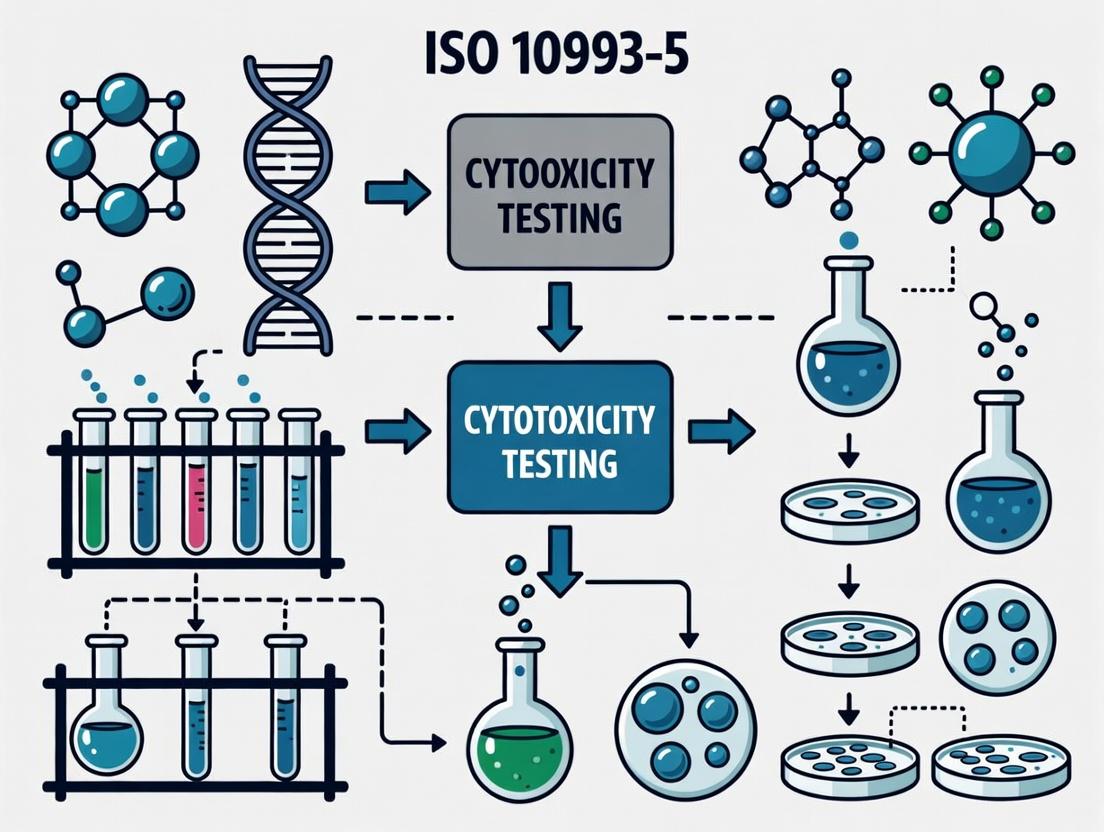
This article provides a detailed, up-to-date guide to cytotoxicity testing as defined in ISO 10993-5 for biomaterials researchers and development professionals.
ISO 10993-5 Cytotoxicity Testing: A Comprehensive Guide to Methods, Protocols, and Best Practices for Biomaterials
Abstract
This article provides a detailed, up-to-date guide to cytotoxicity testing as defined in ISO 10993-5 for biomaterials researchers and development professionals. It covers the fundamental principles and regulatory significance of cytotoxicity assessment, explores the key in vitro methods (MTT/XTT, agar overlay, MEM elution), and offers practical protocols for their execution. The content delves into common experimental challenges, data interpretation pitfalls, and strategies for method optimization. Finally, it examines validation requirements, compares the sensitivity and applicability of different assays, and discusses their role in a comprehensive biological evaluation plan. This resource aims to equip scientists with the knowledge to generate robust, reliable, and regulatory-compliant cytotoxicity data.
Understanding Cytotoxicity: The Cornerstone of ISO 10993-5 Biomaterial Safety Assessment
Within the framework of ISO 10993-5 for biomaterials evaluation, cytotoxicity testing stands as the primary and mandatory screening tool. It provides a rapid, sensitive, and cost-effective assessment of the basal biocompatibility of a material or medical device by measuring its potential to cause cell death or inhibit cell function. As the first line of defense, these tests are designed to identify overt toxicity before progressing to more complex and costly in vivo studies, thereby adhering to the principles of reduction, refinement, and replacement (3Rs) in animal testing.
Quantitative Comparison of Key Cytotoxicity Assays
The following table summarizes the core quantitative assays, their measurement principles, and key performance metrics as per ISO 10993-5 guidelines and contemporary practice.
Table 1: Core In Vitro Cytotoxicity Assays for Biomaterials Evaluation
| Assay Name | Measurement Principle | Key Quantitative Output | Typical Sensitivity (Cell Number/Well) | Recommended Positive Control (ISO 10993-5) |
|---|---|---|---|---|
| MTT/XTT/WST-1 | Reduction of tetrazolium salts by mitochondrial dehydrogenases in viable cells. | Absorbance (e.g., 570 nm for MTT). | 500 - 50,000 | Phenol (0.1-1.0% v/v) or Latex extract |
| Neutral Red Uptake (NRU) | Uptake and retention of the supravital dye Neutral Red in lysosomes of viable cells. | Absorbance (540 nm). | 1,000 - 100,000 | Phenol (0.1-1.0% v/v) |
| Colony Formation Assay (CFA) | Ability of a single cell to proliferate and form a colony after material exposure. | Colony Count (≥50 cells/colony). | Low (clonogenic cells) | Irradiation or known cytotoxic chemical |
| Direct Contact / Agar Diffusion | Qualitative assessment of cell lysis or morphological alterations under material. | Zone of cytotoxicity (mm), cell layer degradation score (0-4). | N/A (Visual scoring) | Latex, Polyvinyl chloride (PVC) with organotin |
| Lactate Dehydrogenase (LDH) Release | Measurement of cytoplasmic LDH enzyme released upon cell membrane damage. | Absorbance (490 nm) or Fluorescence. | 5,000 - 100,000 | 1-2% Triton X-100 (for maximum LDH release) |
| Resazurin Reduction (AlamarBlue) | Reduction of resazurin to fluorescent/resorufin by cellular metabolism. | Fluorescence (Ex560/Em590) or Absorbance. | 200 - 50,000 | Phenol (0.1-1.0% v/v) |
Detailed Experimental Protocols
Protocol 1: Elution (Extract) Testing using MTT Assay
Objective: To evaluate the cytotoxic potential of leachable substances from a biomaterial.
Materials: Test material, cell culture (e.g., L929 fibroblasts), culture medium (e.g., MEM + 10% FBS), MTT reagent, DMSO, incubator, microplate reader.
Methodology:
- Extract Preparation: Sterilize the test material. Prepare an extract using culture medium (or polar/non-polar solvents as required) at a surface area-to-volume ratio of 3-6 cm²/mL (or mass/volume ratio of 0.1-0.2 g/mL). Incubate at 37°C for 24±2 h.
- Cell Seeding: Seed cells in a 96-well plate at a density of 1 x 10⁴ cells/well and culture for 24 h to form a near-confluent monolayer.
- Exposure: Replace the medium in test wells with 100 µL of the material extract. Include negative (medium only) and positive (e.g., 0.5% phenol in medium) control wells. Incubate for 24±2 h.
- MTT Incubation: Carefully remove the extract/medium. Add 100 µL of fresh medium containing 0.5 mg/mL MTT. Incubate for 2-4 h.
- Solubilization: Remove the MTT-medium. Add 100 µL of DMSO to each well to solubilize the formed formazan crystals. Agitate gently.
- Quantification: Measure the absorbance at 570 nm (reference 650 nm) using a microplate reader.
- Analysis: Calculate cell viability (%) relative to the negative control. Per ISO 10993-5, a reduction in viability to < 70% of the control is considered a cytotoxic effect.
Protocol 2: Direct Contact Assay
Objective: To assess cytotoxicity from direct interaction between material and cells.
Materials: Sterile test material (≤ 10 mm diameter), confluent monolayer of cells (e.g., L929), culture medium.
Methodology:
- Prepare a confluent monolayer of cells in a culture dish or plate.
- Gently place the sterile test material directly onto the center of the cell monolayer. Ensure it sits flat.
- Incubate the culture at 37°C, 5% CO₂ for 24±2 h.
- After incubation, carefully remove the material.
- Stain the cell layer (e.g., with Live/Dead stain, Neutral Red, or Giemsa).
- Evaluation: Microscopically examine the area under and surrounding the material. Score cytotoxicity based on zone index (distance of effect) and lysis index (percentage of dead cells under the material). Grade from 0 (no cytotoxicity) to 4 (severe cytotoxicity).
The Scientist's Toolkit: Key Research Reagent Solutions
Table 2: Essential Materials for ISO 10993-5 Cytotoxicity Testing
| Item | Function in Cytotoxicity Testing |
|---|---|
| L929 Mouse Fibroblast Cell Line | Recommended cell line by ISO 10993-5 for many tests due to its stability, reproducibility, and historical data. |
| Dulbecco's Modified Eagle Medium (DMEM) / MEM with 10% FBS | Standard culture medium to maintain cell health and for preparing material extracts. |
| MTT (Thiazolyl Blue Tetrazolium Bromide) | Tetrazolium salt used in a colorimetric assay to measure mitochondrial activity as a marker of cell viability. |
| Triton X-100 Detergent | Used as a positive control for LDH release assays to induce complete cell lysis and define maximum LDH release. |
| Phenol Solution (0.5-1.0%) | Standard positive control for extract and indirect contact tests, providing a predictable cytotoxic response. |
| Neutral Red Dye | Supravital dye absorbed and retained by lysosomes of viable cells; loss of uptake indicates lysosomal/membrane damage. |
| AlamarBlue (Resazurin) | Cell-permeable, non-toxic redox indicator used for real-time, kinetic monitoring of cell viability and proliferation. |
| Cytotoxicity-Grade DMSO | High-purity solvent for solubilizing water-insoluble formazan crystals in MTT assays without interfering with absorbance. |
| Polyurethane Film with Tin Stabilizer (Reference Material) | ISO 10993-5 recommended positive control sample for direct contact and agar diffusion tests. |
Visualizing Cytotoxicity Mechanisms and Workflows
Mechanisms of Biomaterial-Induced Cytotoxicity
Cytotoxicity Testing Decision Workflow
Application Notes
ISO 10993-5, "Biological evaluation of medical devices — Part 5: Tests for in vitro cytotoxicity," is a foundational standard within the ISO 10993 series ("Biological evaluation of medical devices"). Its primary role is to provide a sensitive, rapid, and reproducible screening method to assess the basic biocompatibility of a material or extract by evaluating cell death, inhibition of cell growth, and other cytotoxic effects.
Role within the ISO 10993 Series
The ISO 10993 series follows a risk management framework, guiding the evaluation of a device based on the nature and duration of body contact. ISO 10993-5 is typically one of the first tests performed in the biological evaluation plan (as per ISO 10993-1:2018). It serves as a critical early warning system. A failure in cytotoxicity testing often indicates a significant biological risk, potentially obviating the need for more complex and expensive in vivo tests until the material formulation is addressed.
Role within Regulatory Frameworks
FDA (U.S. Food and Drug Administration): The FDA recognizes ISO 10993-5 via its "Recognized Consensus Standards" database. The FDA's guidance "Use of International Standard ISO 10993-1, 'Biological evaluation of medical devices — Part 1: Evaluation and testing within a risk management process'" (2016) explicitly references Part 5. While the FDA is harmonized with the standard's principles, it emphasizes a risk-based approach, where the test conditions (extraction media, duration, temperature) must be justified based on the device's clinical use. The FDA may request additional data or clarification beyond a standard pass/fail result.
EU MDR (Medical Device Regulation 2017/745): The MDR mandates a biological evaluation in accordance with the state of the art, which is embodied by the ISO 10993 series. Notified Bodies expect compliance with ISO 10993-5 for most devices involving material contact. The MDR's emphasis on a thorough risk-benefit analysis and clinical evaluation means that cytotoxicity data is a key input into the device's overall safety assessment. The test must be performed by a competent laboratory, often requiring Good Laboratory Practice (GLP) compliance for certain device classifications.
Table 1: Common Cytotoxicity Test Methods per ISO 10993-5
| Method | Principle | Endpoint Measurement | Typical Threshold for Non-Cytotoxicity |
|---|---|---|---|
| Elution / Extract Test | Exposing cells to device extracts. | Cell viability (e.g., via MTT, XTT, WST-8). | ≥ 70% viability relative to control. |
| Direct Contact Test | Placing device/material directly on cell monolayer. | Zone of cell lysis and malformation. | No cell lysis beyond material border; grade ≤ 2. |
| Indirect Contact (Agar Diffusion) | Placing material on agar layer over cells. | Zone of cell lysis and malformation under agar. | No cell lysis beyond material border; grade ≤ 2. |
Table 2: Grading System for Cytotoxicity (Qualitative Microscopic Evaluation)
| Grade | Reactivity | Conditions |
|---|---|---|
| 0 | None | No detectable cytotoxicity. |
| 1 | Slight | ≤ 20% of cells affected. |
| 2 | Mild | 20% to 40% of cells affected. |
| 3 | Moderate | 40% to 60% of cells affected. |
| 4 | Severe | ≥ 60% of cells affected. |
Table 3: Regulatory Expectations for Testing Conditions
| Factor | ISO 10993-5 Guidance | Typical Regulatory Justification |
|---|---|---|
| Extraction Ratio | 0.1 g/mL to 0.2 g/mL (or surface area-based). | Worst-case scenario based on device dimensions. |
| Extraction Medium | Polar (e.g., saline) and non-polar (e.g., DMSO). | Simulate interaction with body fluids and lipids. |
| Extraction Time/Temp | 24h @ 37°C; 72h @ 50°C; 24h @ 121°C. | Simulating clinical exposure duration & accelerated aging. |
| Cell Line | Mammalian fibroblasts (e.g., L-929, NIH/3T3). | Well-characterized, sensitive, and reproducible. |
Experimental Protocols
Protocol 1: Elution (Extract) Test Using MTT Assay for Quantitative Cytotoxicity
Objective: To determine the cytotoxic potential of medical device extracts by assessing metabolic activity of cultured L-929 mouse fibroblast cells.
Materials: See "The Scientist's Toolkit" below.
Procedure:
- Sample Preparation & Extraction:
- Prepare the test material aseptically. For solids, cut into pieces to achieve a surface area-to-volume ratio of 3 cm²/mL. For polymers, use 0.1 g/mL.
- Place the material in a sterile container. Add the appropriate extraction medium (e.g., serum-free MEM). Use a negative control (HDPE) and a positive control (e.g., latex or 5% DMSO).
- Extract for 24 ± 2 hours at 37 ± 1°C under agitation.
- After extraction, decant the extract into a sterile tube. Use immediately or store at 2-8°C for ≤24h.
Cell Culture and Seeding:
- Maintain L-929 cells in culture medium. Harvest cells in log-phase growth.
- Seed cells into a 96-well microtiter plate at a density of 1 x 10⁴ cells/well in 100 µL of complete growth medium.
- Incubate the plate at 37°C, 5% CO₂ for 24 ± 2 hours to form a near-confluent monolayer.
Exposure to Extracts:
- Aspirate the growth medium from the seeded plate.
- Add 100 µL of each test extract, negative control extract, positive control, and fresh culture medium (blank) to respective wells (n=6 replicates per group).
- Incubate the plate for 24 ± 2 hours at 37°C, 5% CO₂.
MTT Assay and Measurement:
- Prepare the MTT solution (1 mg/mL in serum-free medium).
- After exposure, aspirate the extracts from the wells.
- Add 100 µL of MTT solution to each well. Incubate for 2 hours at 37°C.
- Carefully aspirate the MTT solution.
- Add 100 µL of isopropanol (or DMSO) to each well to solubilize the formed formazan crystals.
- Agitate the plate gently on an orbital shaker for 15 minutes.
- Measure the absorbance of each well at 570 nm (reference wavelength 650 nm) using a microplate reader.
Data Analysis:
- Calculate the mean absorbance for each test group (A_test).
- Calculate the relative cell viability (%) = (Atest / Anegative control) x 100.
- A material is considered non-cytotoxic if the relative cell viability is ≥ 70%.
Protocol 2: Direct Contact Test for Qualitative Cytotoxicity
Objective: To assess the cytotoxic potential of a medical device material placed in direct contact with a cell monolayer.
Procedure:
- Prepare L-929 cells as in Protocol 1, seeding them into the central area of a 35 mm culture dish to create a confluent monolayer.
- Aseptically prepare the test material, negative control (HDPE disc), and positive control (latex disc) to have flat surfaces (~1 cm²).
- Carefully place one piece of material directly onto the center of the cell monolayer. Gently press down to ensure intimate contact.
- Add just enough fresh culture medium to the dish to cover the monolayer but not float the material.
- Incubate the dish for 24 ± 2 hours at 37°C, 5% CO₂.
- After incubation, carefully remove the material and examine the cell monolayer under an inverted microscope.
- Grade the cytotoxicity according to Table 2, observing for zones of cell lysis, malformation (rounded cells), and general cellular degeneration around the test material.
Diagrams
Title: Cytotoxicity Testing Workflow in Biological Evaluation
Title: Key Cytotoxicity Mechanisms and Detection
The Scientist's Toolkit
Table 4: Essential Reagents and Materials for ISO 10993-5 Cytotoxicity Testing
| Item | Function & Specification |
|---|---|
| L-929 Mouse Fibroblast Cell Line | Standardized, sensitive mammalian cell model for reproducible cytotoxicity screening. |
| Minimum Essential Medium (MEM) with Earle's salts | Cell culture medium providing essential nutrients for fibroblast growth and maintenance during testing. |
| Fetal Bovine Serum (FBS) | Supplements culture medium with growth factors, hormones, and proteins necessary for cell attachment and proliferation. |
| MTT (3-(4,5-Dimethylthiazol-2-yl)-2,5-Diphenyltetrazolium Bromide) | Yellow tetrazolium salt reduced to purple formazan by metabolically active cells; core reagent for quantitative viability assays. |
| Dimethyl Sulfoxide (DMSO) | Used as a polar extraction solvent and/or to solubilize formazan crystals in the MTT assay. |
| Sterile Sodium Chloride (0.9%) | Polar extraction medium simulating the ionic composition of body fluids. |
| High-Density Polyethylene (HDPE) | Standard negative control material, known to be non-cytotoxic, for baseline comparison. |
| Latex or Tin-stabilized PVC | Standard positive control material, known to induce cytotoxicity, for assay validation. |
| 96-Well Tissue Culture Plate | Platform for cell seeding, extract exposure, and spectrophotometric measurement in high-throughput format. |
| CO₂ Incubator | Maintains optimal physiological conditions (37°C, 5% CO₂, 95% humidity) for cell culture during testing. |
| Microplate Reader | Instrument for measuring absorbance in the MTT assay, providing quantitative viability data. |
Key Terminology in ISO 10993-5 Cytotoxicity Testing
Cytotoxicity: The quality of being toxic to cells. In the context of ISO 10993-5, it refers to the adverse effects (e.g., cell death, inhibition of cell growth, or colony formation) caused by a test article on cultured mammalian cells.
Test Article Classification: A systematic categorization based on the physical nature and intended use of the medical device/material, which dictates the appropriate test method.
- Extract: A liquid preparation of the test article obtained using a suitable extraction vehicle (e.g., culture medium, saline) under defined conditions (time, temperature, surface area to volume ratio).
- Direct Contact: A method where the test article is placed in intimate contact with the cell monolayer or agar layer without an intervening barrier.
- Indirect Method: A method where the test article is separated from the cells by a barrier (e.g., agar overlay, filter membrane), allowing only diffusible chemicals to interact with the cells.
Biological Reactivity Grades: Numerical scores (e.g., 0-4) assigned based on the zone index (lysis) and reactivity index (malformation) of cells, classifying the cytotoxic potential from non-cytotoxic to severely cytotoxic.
Application Notes: Comparative Analysis of Methods
The selection of a test method (Extract, Direct Contact, Indirect) is critical and depends on the test article's physical form, potential leachables, and intended clinical use. The table below summarizes key quantitative parameters and applications.
Table 1: Comparative Summary of ISO 10993-5 Test Methods
| Parameter | Extract Method (Elution) | Direct Contact Method | Indirect Method (Agar Overlay) |
|---|---|---|---|
| Primary Use | Testing leachable chemicals from devices/materials. | Testing effects of solid, non-absorbent materials. | Testing effects of materials where direct contact is impractical (e.g., absorbent materials). |
| Sample Preparation | Extraction at 37°C for 24h or 50°C/72h, 121°C/1h. Ratio: 0.1-0.2g/mL or 1.25-6 cm²/mL. | Sample sterilized and placed directly on cells. | Sample placed on a solidified agar layer over cells. |
| Incubation Time | Typically 24-72 hours with extract. | Typically 24 hours (direct). | Typically 24 hours (contact), then 24-48h incubation post-removal. |
| Cell Types | L-929 mouse fibroblast, other mammalian lines (e.g., BALB/3T3). | L-929 mouse fibroblast. | L-929 mouse fibroblast. |
| Endpoint Analysis | Microscopic evaluation of cell lysis & malformation (Grade 0-4). MTT/XTT assays for viability. | Microscopic evaluation of cytotoxicity zone under/around sample. | Microscopic evaluation of decolorized zone in vital stain (e.g., Neutral Red). |
| Key Advantage | Standardized, allows dose-response, simulates leachable exposure. | Simple, models direct tissue contact. | Protects monolayer from physical damage, tests diffusibles only. |
| Limitation | May not represent effects of insoluble or particulate materials. | Physical damage can cause false positives; not for absorbent materials. | Less sensitive to non-diffusible toxins; two-step process. |
Detailed Experimental Protocols
Protocol 3.1: Extract (Elution) Test for Cytotoxicity
Objective: To assess the cytotoxic potential of leachable substances from a biomaterial.
Materials: Test article, extraction vehicles (e.g., serum-free MEM, saline), L-929 cells, culture plates, incubator (37°C, 5% CO₂), inverted microscope, MTT reagent, DMSO, plate reader.
Method:
- Extraction: Prepare the test article extract per ISO 10993-12 guidelines. Use a surface area-to-volume ratio of 3 cm²/mL or 0.1 g/mL in culture medium. Incubate at 37°C for 24±2 hours.
- Cell Seeding: Seed L-929 cells in a 96-well plate at a density of 1 x 10⁴ cells/well in complete medium. Incubate for 24 hours to form a near-confluent monolayer.
- Exposure: Aspirate medium from wells. Add 100 µL of neat extract and serial dilutions (e.g., 1:2, 1:4 in medium) to triplicate wells. Include negative (medium only) and positive (e.g., 0.5% Phenol solution) controls.
- Incubation: Incubate plate for 24-48 hours.
- Viability Assay (MTT): a. Add 10 µL of MTT solution (5 mg/mL in PBS) to each well. b. Incubate for 2-4 hours. c. Carefully aspirate medium/MTT. d. Add 100 µL of DMSO to solubilize formazan crystals. e. Shake plate gently for 10 minutes. f. Measure absorbance at 570 nm with a reference filter at 650 nm.
- Calculation & Grading: Calculate relative cell viability (%) vs. negative control. Grade reactivity: >90% = Grade 0 (non-cytotoxic); 60-90% = Grade 1; 30-59% = Grade 2; 10-29% = Grade 3; 0-9% = Grade 4 (severely cytotoxic).
Protocol 3.2: Direct Contact Test for Cytotoxicity
Objective: To assess the cytotoxic effect of a solid test article in direct contact with cells.
Materials: Sterile test article (≤100 mm² surface area), L-929 cells, culture dishes (e.g., 35 mm), culture medium, incubator, inverted microscope, vital stain (e.g., Neutral Red).
Method:
- Cell Preparation: Seed L-929 cells in a culture dish to form a sub-confluent monolayer (e.g., 1 x 10⁵ cells/dish). Incubate for 24 hours.
- Sample Placement: Gently place the sterile test article directly onto the center of the cell monolayer. Ensure good contact. For positive control, use a latex disk. Negative control dish has no sample.
- Incubation: Incubate dishes for 24±2 hours.
- Microscopic Evaluation: Remove the test article carefully. Rinse monolayer gently with PBS. Observe under an inverted microscope (40-100x magnification).
- Staining (Optional): Stain cells with a vital dye (e.g., Neutral Red) to visualize live cells.
- Grading: Score the zone of cytotoxicity (cell lysis, malformation, decolorization) around and under the sample according to ISO 10993-5 scoring system (Grade 0-4).
Protocol 3.3: Indirect Agar Overlay Test
Objective: To assess cytotoxicity via diffusion of leachables through a semi-solid agar layer.
Materials: Test article, L-929 cells, culture dishes, culture medium with 2x essential amino acids/vitamins, agarose, vital stain (Neutral Red), incubator.
Method:
- Cell Layer: Seed L-929 cells to form a confluent monolayer in a 60 mm dish. Incubate for 24-48 hours.
- Agar Layer Preparation: Prepare a 1:1 mixture of 2x concentrated culture medium and molten agarose (2% in deionized water, cooled to ~48°C). Final agar concentration = 1%.
- Overlay: Gently overlay the cell monolayer with 2-3 mL of the agar-medium mixture. Allow to solidify at room temperature.
- Sample Application: Place the sterile test article(s) directly onto the surface of the solidified agar. Include controls.
- Incubation: Incubate dishes for 24±2 hours.
- Staining & Evaluation: Add a vital stain (e.g., Neutral Red) solution on top of the agar. Incubate for 1 hour. Examine for zones of decolorization (cytotoxicity) around the test article.
- Grading: Measure the zone index (width of decolorized zone) and the reactivity index (cell morphology within the zone). Assign a final grade (0-4).
Diagrams (Graphviz DOT)
The Scientist's Toolkit: Research Reagent Solutions
Table 2: Essential Materials for ISO 10993-5 Cytotoxicity Testing
| Item | Function/Brief Explanation |
|---|---|
| L-929 Mouse Fibroblast Cell Line | Standardized, validated cell line specified in ISO 10993-5 for reproducible cytotoxicity screening. |
| Dulbecco's Modified Eagle Medium (DMEM) / MEM | Complete cell culture medium providing nutrients, vitamins, and buffers to maintain cells during test. |
| Fetal Bovine Serum (FBS) | Serum supplement providing growth factors and hormones; often reduced or omitted during extract exposure. |
| MTT (3-(4,5-Dimethylthiazol-2-yl)-2,5-diphenyltetrazolium bromide) | Yellow tetrazole reduced to purple formazan by mitochondrial dehydrogenases in viable cells; colorimetric viability readout. |
| XTT / WST-8 Assay Kits | Water-soluble, more sensitive alternatives to MTT, producing a soluble formazan dye, eliminating solubilization step. |
| Neutral Red Dye | Vital dye accumulated in lysosomes of living cells; used in agar overlay and direct staining to visualize cytotoxicity zones. |
| Agarose, Low Gelling Temperature | Used to create the semi-solid, nutrient-containing overlay that separates test article from cells in the indirect method. |
| Dimethyl Sulfoxide (DMSO) | Organic solvent used to solubilize water-insoluble MTT formazan crystals prior to absorbance reading. |
| Positive Control Materials (e.g., Latex, Tin-stabilized PVC, Phenol Solution) | Provide a known cytotoxic response to validate test system sensitivity and performance in each experiment. |
| Cell Culture-Treated Multiwell Plates (96-well, 24-well) | Provide sterile, biologically inert surfaces for cell attachment and growth during testing, compatible with plate readers. |
Within the framework of ISO 10993-5, assessing the cytotoxic potential of biomaterials is a critical first step in biocompatibility evaluation. Cytotoxicity can be induced through multiple scientific mechanisms, including ionic leaching, oxidative stress, physical interference, and immunological activation. This document details the primary cytotoxic pathways and provides standardized protocols for their investigation.
Key Mechanisms of Biomaterial-Induced Cytotoxicity
Biomaterials can elicit cytotoxic effects through direct and indirect pathways, ultimately leading to cell death via apoptosis or necrosis.
Ionic and Particulate Leachables
The release of ions (e.g., Ni²⁺, Co²⁺, Al³⁺) or degradation particles (e.g., polyethylene wear debris) from implants can disrupt cellular homeostasis.
Quantitative Data on Common Leachable Ions: Table 1: Cytotoxic Thresholds for Common Metal Ions (in vitro).
| Ion | Cell Type | Critical Concentration (µM) | Primary Effect | Test Method |
|---|---|---|---|---|
| Nickel (Ni²⁺) | Human fibroblasts | 10 - 50 | ROS generation, DNA damage | MTT, LDH |
| Cobalt (Co²⁺) | Osteoblasts | 20 - 100 | Mitochondrial dysfunction | ATP assay |
| Aluminum (Al³⁺) | Neuronal cells | 100 - 200 | Cytoskeleton disruption | Live/Dead assay |
| Vanadium (V⁵⁺) | Lung epithelial cells | 5 - 25 | Apoptosis induction | Caspase-3/7 assay |
Oxidative Stress and Mitochondrial Dysfunction
Many biomaterials, particularly cobalt-chromium alloys or certain polymers, can catalyze the production of Reactive Oxygen Species (ROS), overwhelming cellular antioxidant defenses.
Quantitative Data on Oxidative Stress Markers: Table 2: Key Biomarkers for Oxidative Stress Assessment.
| Biomarker | Baseline Level | Significant Increase Indicative of Stress | Detection Assay |
|---|---|---|---|
| Intracellular ROS | 100-500 RFU* | >200% of control | DCFH-DA assay |
| Lipid Peroxidation (MDA) | 0.5-2.0 µM | >3.0 µM | TBARS assay |
| Glutathione (GSH) Depletion | 20-40 nmol/mg protein | <50% of control | GSH-Glo Assay |
| 8-OHdG (DNA damage) | <5 ng/mL | >10 ng/mL | ELISA |
*RFU: Relative Fluorescence Units.
Direct Physical Interaction and Membrane Disruption
Surface topography, hydrophobicity, and charge can directly compromise plasma membrane integrity.
Experimental Protocols
Protocol 1: ISO 10993-5 Direct Contact & Extract Elution Test
Objective: To evaluate cytotoxicity via direct contact and leachable substances. Materials: Test biomaterial, cell culture (L929 fibroblasts per ISO), culture medium, incubator. Procedure:
- Prepare sterilized biomaterial samples (e.g., 1 cm x 1 cm x 0.5 cm discs).
- Seed cells in a 24-well plate at 1 x 10⁵ cells/well and incubate for 24h to form a sub-confluent monolayer.
- Direct Contact: Gently place the test sample directly onto the cell monolayer. Extract Method: Incubate material in culture medium (0.2 g/mL) at 37°C for 24h. Filter (0.22 µm) and apply extract to fresh cell monolayer.
- Incubate plates (37°C, 5% CO₂) for 24±2 hours.
- Assess viability using the MTT assay (detailed below). Score reactivity per ISO 10993-5: 0 (none), 1 (slight), 2 (mild), 3 (moderate), 4 (severe).
Protocol 2: MTT Assay for Metabolic Activity
Objective: Quantify mitochondrial dehydrogenase activity as a marker of cell viability. Reagents: MTT reagent (5 mg/mL in PBS), Dimethyl sulfoxide (DMSO), cell culture medium. Procedure:
- After exposure, carefully aspirate medium from wells.
- Add fresh medium containing 10% (v/v) MTT stock solution. Incubate for 2-4 hours at 37°C.
- Carefully aspirate the MTT-medium. Add 100-200 µL of DMSO to each well to solubilize formazan crystals.
- Shake plate gently for 15 minutes. Measure absorbance at 570 nm with a reference at 650 nm.
- Calculate viability: (Mean Absorbance of Test Sample / Mean Absorbance of Negative Control) x 100%.
Protocol 3: High-Content Analysis for Apoptosis/Necrosis
Objective: Distinguish between modes of cell death using multiplexed fluorescent probes. Reagents: Hoechst 33342 (nuclear stain), Annexin V-FITC (apoptosis marker), Propidium Iodide (PI, necrosis marker), binding buffer. Procedure:
- After biomaterial exposure, collect supernatant and trypsinize adherent cells. Pool all cells for a given condition.
- Wash cells twice with cold PBS. Resuspend 1 x 10⁵ cells in 100 µL of Annexin V binding buffer.
- Add 5 µL of Annexin V-FITC and 1 µL of Hoechst 33342 (100 µg/mL). Incubate for 15 min at RT in the dark.
- Add 400 µL of binding buffer and 5 µL of PI (50 µg/mL) immediately before analysis on a high-content imager or flow cytometer.
- Gating: Hoechst⁺ (all cells), then classify as: Annexin V⁻/PI⁻ (viable), Annexin V⁺/PI⁻ (early apoptotic), Annexin V⁺/PI⁺ (late apoptotic/necrotic).
Visualization of Cytotoxic Pathways
Title: Primary Biomaterial Cytotoxicity Pathways
Title: ISO 10993-5 Cytotoxicity Testing Workflow
The Scientist's Toolkit: Key Research Reagent Solutions
Table 3: Essential Reagents for Cytotoxicity Investigation.
| Reagent/Kit | Supplier Examples | Primary Function in Cytotoxicity Testing |
|---|---|---|
| MTT Cell Viability Assay Kit | Thermo Fisher, Abcam, Sigma-Aldrich | Quantifies metabolic activity via mitochondrial reductase. |
| Lactate Dehydrogenase (LDH) Kit | Promega, Roche, Cayman Chemical | Measures membrane integrity by detecting cytosolic enzyme release. |
| ROS Detection Kit (DCFH-DA) | Merck, Cell Signaling Technology, Abcam | Detects intracellular reactive oxygen species (ROS). |
| Annexin V-FITC/PI Apoptosis Kit | BioLegend, BD Biosciences, Invitrogen | Distinguishes between apoptotic and necrotic cell populations. |
| Caspase-3/7 Glo Assay | Promega | Measures effector caspase activity as an apoptosis marker. |
| Glutathione (GSH) Assay Kit | Sigma-Aldrich, Cayman Chemical | Quantifies total or reduced glutathione to assess antioxidant capacity. |
| AlamarBlue/Resazurin | Thermo Fisher, Bio-Rad | Indicator of overall cellular metabolic reduction. |
| Live/Dead Viability/Cytotoxicity Kit | Invitrogen | Uses calcein-AM (live, green) and ethidium homodimer-1 (dead, red) for direct staining. |
| Human Cytokine Multiplex Panel | R&D Systems, Bio-Rad, Luminex | Profiles inflammatory cytokine release in response to biomaterials. |
| ICP-MS Standard Solutions | Agilent, PerkinElmer | For quantitative analysis of metal ion leachates from biomaterials. |
When is Cytotoxicity Testing Required? Material Types and Phases of Development
Within the framework of a thesis on ISO 10993-5 cytotoxicity testing methods for biomaterials research, understanding the regulatory triggers and application windows for cytotoxicity testing is paramount. This testing is a fundamental biological evaluation required to screen for the potential of a material or device to cause cell damage or death. It is a first-line, sensitive assay that can indicate the need for further, more specific biocompatibility testing.
When is Cytotoxicity Testing Required?
Cytotoxicity testing is required at multiple stages of the development and lifecycle of a medical device, drug delivery system, or biomaterial. The requirements are driven by regulatory guidelines such as ISO 10993-1, "Biological evaluation of medical devices - Part 1: Evaluation and testing within a risk management process."
Table 1: Phases of Development Requiring Cytotoxicity Testing
| Development Phase | Testing Requirement Rationale | Typical ISO 10993-5 Test Method |
|---|---|---|
| Material Selection | Screening of candidate polymers, metals, ceramics, or novel composites to select the least toxic option. | Extract Test (Direct Contact optional) |
| Prototype Formulation | Assessing the impact of manufacturing processes (e.g., sterilization, molding) on material biocompatibility. | Extract Test & Direct Contact |
| Design Finalization | Final validation of the finished device/material prior to pre-clinical studies. | All three methods (Extract, Direct Contact, Indirect Contact) as justified. |
| Change in Supplier/Material | Re-evaluation required if any component, vendor, or material specification changes. | Extract Test (at minimum) |
| Change in Manufacturing | Re-evaluation required if sterilization method, process chemicals, or packaging changes. | Extract Test (at minimum) |
| Post-Market Surveillance | May be required to investigate complaints or if a safety issue is identified. | As dictated by the investigation. |
Material Types Subject to Testing
Any material that has direct or indirect patient contact requires evaluation. The duration and nature of contact (surface, external communicating, implant) dictate the full battery of tests, but cytotoxicity is universal.
Table 2: Common Material Types and Cytotoxicity Considerations
| Material Class | Examples | Key Cytotoxicity Considerations |
|---|---|---|
| Polymers | Polyurethane, PLGA, Silicone, PVC, PMMA. | Residual monomers, plasticizers, stabilizers, mold release agents, degradation products. |
| Metals & Alloys | Stainless steel, Titanium, Nitinol, Cobalt-Chrome. | Ions leaching due to corrosion, surface finish contaminants, processing aids. |
| Ceramics & Glasses | Hydroxyapatite, Bioactive glass, Alumina, Zirconia. | Particulate shedding, ion release (e.g., silica, aluminum). |
| Natural/Biological | Collagen, Chitosan, Alginate, Silk, Cellulose. | Source contaminants (e.g., endotoxins), crosslinking agents (e.g., glutaraldehyde), processing chemicals. |
| Composites | Polymer-ceramic, Carbon fiber reinforced. | Combines considerations from each component; interface chemistry is critical. |
| Drug-Device Combos | Drug-eluting stents, antibiotic bone cement. | Cytotoxicity of the drug itself must be differentiated from the device's effect; controlled release profile is key. |
Detailed Experimental Protocols (Based on ISO 10993-5)
Protocol 1: Elution (Extract) Test Method
This is the most frequent method, using extracts of the material to treat cell cultures.
Materials:
- Test material (sterilized)
- Negative Control (e.g., HDPE, latex rubber)
- Positive Control (e.g., organotin-stabilized PVC)
- Cell line (e.g., L-929 mouse fibroblast, ISO-specified)
- Complete culture medium (with serum)
- Extraction medium (serum-free medium, saline, or DMSO)
- CO2 incubator, biological safety cabinet, sterile supplies.
Procedure:
- Sample Preparation: Prepare material with a surface area-to-extractant volume ratio of 3-6 cm²/mL (or 0.1-0.2 g/mL for irregular shapes). Use aseptic technique.
- Extraction: Immerse sample in extraction medium. Incubate at 37°C for 24±2 hours (or other justified conditions, e.g., 50°C for 72h, 121°C for 1h).
- Cell Seeding: Seed L-929 cells in a 96-well plate at a density to yield near-confluent monolayers after 24 hours. Incubate at 37°C, 5% CO2.
- Exposure: After 24h, replace the culture medium in each well with 100 µL of the test extract, negative control extract, positive control extract, or fresh medium (as a blank). Use at least 3 replicates per sample.
- Incubation: Incubate the plate for another 24±2 hours.
- Viability Assessment: Perform the MTT assay: a. Add 10 µL of MTT reagent (5 mg/mL) to each well. b. Incubate for 2-4 hours at 37°C. c. Carefully remove the medium/MTT. d. Add 100 µL of solubilization solution (e.g., DMSO, Isopropanol). e. Shake gently to dissolve formazan crystals.
- Measurement: Read the absorbance at 570 nm (reference ~650 nm) using a plate reader.
- Analysis: Calculate cell viability (%) relative to the negative control. Per ISO 10993-5, viability < 70% indicates a cytotoxic potential.
Protocol 2: Direct Contact Test Method
Suitable for low-density materials like polymers.
Procedure:
- Prepare near-confluent monolayers of L-929 cells in a 6-well plate or dish.
- Remove medium and gently place a sterile test sample (e.g., a disc, minimum 1x1 cm) directly onto the cell layer. Include negative and positive controls.
- Carefully add a small amount of medium to prevent drying, but do not submerge the sample.
- Incubate for 24±2 hours at 37°C, 5% CO2.
- Remove the sample. Stain the cell layer with a vital dye (e.g., Neutral Red) or perform the MTT assay in situ.
- Assess the zone of cytotoxicity (cell lysis, deformity, staining loss) under the sample and in the surrounding area. Grade the response (0-4) as per the standard.
Visualization of Key Concepts
Title: Cytotoxicity Testing Triggers in Device Lifecycle
Title: ISO 10993-5 Cytotoxicity Test Methods & Outcomes
The Scientist's Toolkit: Key Reagent Solutions
Table 3: Essential Materials for ISO 10993-5 Cytotoxicity Testing
| Reagent/Material | Function & Role in Experiment | Key Considerations |
|---|---|---|
| L-929 Mouse Fibroblast Cell Line | The recommended cell line per ISO 10993-5 for reproducible, standardized assays. | Use low-passage stocks, maintain consistent culture conditions to ensure response reliability. |
| Dulbecco's Modified Eagle Medium (DMEM) with serum. | Standard culture medium for maintaining and growing L-929 cells prior to and during testing. | Serum concentration (e.g., 10% FBS) must be consistent; it can affect extract reactivity. |
| Serum-Free Medium or Saline | Primary extraction vehicles to leach out soluble chemicals from test materials without serum interference. | Choice depends on material properties; polar & non-polar extractants may be needed. |
| MTT Reagent (3-(4,5-dimethylthiazol-2-yl)-2,5-diphenyltetrazolium bromide) | Yellow tetrazolium salt reduced to purple formazan by mitochondrial dehydrogenase in viable cells. Quantifies metabolic activity. | Requires a solubilization step. Light-sensitive. Must be filter-sterilized. |
| Neutral Red Dye | Vital dye taken up and retained in lysosomes of living, healthy cells. Used for direct contact and agar diffusion assays. | Requires careful washing steps; cytotoxicity is indicated by loss of dye uptake/retention. |
| Agar, Noble | Used in the indirect Agar Diffusion Overlay method to create a barrier for semi-solid diffusion of leachables. | Must be prepared sterile and at the correct concentration to allow diffusion without harming cells. |
| Positive Control Material (e.g., Organotin-PVC) | Provides a consistent, strong cytotoxic response to validate the sensitivity of the test system. | Must be handled with care; prepares a known cytotoxic extract. |
| Negative Control Material (e.g., HDPE) | Biologically inert material that establishes the baseline (100%) cell viability. | Must be confirmed to be non-cytotoxic in prior tests. |
Executing ISO 10993-5: Step-by-Step Protocols for Major Cytotoxicity Test Methods
Within the framework of ISO 10993-5 ("Biological evaluation of medical devices — Part 5: Tests for in vitro cytotoxicity"), selecting the appropriate test method is critical for accurate safety assessment of biomaterials and medical devices. The standard describes three primary quantitative in vitro methods: the Elution (Extract) Test, the Direct Contact Test, and the Agar Diffusion (Overlay) Test. The choice depends on the material's physical properties, potential extractables, and the nature of the final product. This application note provides a comparative matrix and detailed protocols to guide researchers in method selection and execution.
Method Selection Matrix & Quantitative Comparison
Table 1: Method Selection Decision Matrix
| Criteria | Elution (Extract) Test | Direct Contact Test | Agar Overlay Test |
|---|---|---|---|
| Primary Application | Soluble leachables/extractables; devices that cannot contact cells directly. | Surface toxicity of dense materials (polymers, metals, ceramics). | Detection of diffuse cytotoxic substances from non-absorbent materials. |
| Material Suitability | All materials (especially elastomers, plastics, liquids). | Solid, non-porous, non-leaching materials. | Solids, gels, viscous materials; unsuitable for highly volatile substances. |
| ISO 10993-5 Clause | Clause 8.3 (Extract Preparation) & 8.5 | Clause 8.6 | Clause 8.7 |
| Cell Types (Common) | L-929 mouse fibroblasts, Balb/c 3T3, human-derived cells (e.g., SAOS-2). | L-929 fibroblasts, Balb/c 3T3. | L-929 fibroblasts. |
| Endpoint Detection | Metabolic activity (MTT/XTT), cell viability (Neutral Red uptake), microscopic evaluation. | Microscopic observation of cytopathic effect (lysis, vacuolization). | Staining (Neutral Red) to visualize zone of lysed/unstained cells. |
| Key Advantage | Allows dose-response; mimics systemic exposure; quantitative. | Simulates intimate contact (e.g., implant surface). | Suitable for materials with high density/opacity. |
| Key Limitation | May miss effects of insoluble components. | Unsuitable for highly cytotoxic or leaching materials (can cause false positives). | Semi-quantitative; limited to detecting diffusible toxins only. |
Table 2: Typical Quantitative Data from Comparative Studies
| Parameter | Elution Test | Direct Contact Test | Agar Overlay Test |
|---|---|---|---|
| Incubation Time with Cells | 24-72 hours | 24-48 hours | 24-48 hours (agar set + incubation) |
| Typical Extraction Medium | Serum-supplemented MEM, saline, or oil | Not Applicable (direct placement) | Not Applicable (direct placement on agar) |
| Extraction Conditions | 37°C for 24h or 72h; 50°C or 121°C for accelerated study | N/A | N/A |
| Sample Surface Area to Extractant Volume Ratio | 3-6 cm²/mL (per ISO) | Sample covers ~10% of cell monolayer | Sample covers ~10% of agar surface |
| Cytotoxicity Scoring | IC₅₀ value or % viability relative to control (e.g., >70% = non-cytotoxic). | Graded index (0-4) based on zone of affected cells. | Graded index (0-5) based on decolorized zone size. |
| Assay Sensitivity | High (detects weak leachables). | Moderate to High for surface effects. | Low to Moderate (depends on diffusion). |
Detailed Experimental Protocols
Protocol 1: Elution (Extract) Test for Polymeric Biomaterials
Objective: To evaluate cytotoxicity of soluble leachables from a polymer film. Reagents & Cells: L-929 fibroblasts (ATCC CCL-1), Eagle's Minimum Essential Medium (EMEM) with 10% FBS, MTT reagent, extraction vehicles (e.g., saline, sesame oil), test polymer film (sterilized by gamma irradiation).
Methodology:
- Extract Preparation:
- Aseptically cut test material to achieve a surface area ratio of 6 cm²/mL of extraction medium (e.g., serum-free EMEM).
- Incubate at 37±1°C for 24±2 hours. Prepare a blank extract (medium alone) as a negative control and a known cytotoxic material extract (e.g., latex) as a positive control.
- Cell Seeding & Exposure:
- Seed L-929 cells in 96-well plates at 1 x 10⁴ cells/well in complete EMEM. Incubate at 37°C, 5% CO₂ until near-confluent (~24 hours).
- Remove culture medium and replace with 100 µL of the prepared extracts (test, negative, positive). Use at least three replicates per extract.
- Incubate cells with extracts for 24 hours.
- Viability Assessment (MTT Assay):
- After incubation, carefully add 10 µL of MTT solution (5 mg/mL in PBS) to each well.
- Incubate for 2-4 hours at 37°C until purple formazan crystals form.
- Remove medium/MTT and add 100 µL of acidified isopropanol (0.04N HCl) to dissolve crystals.
- Shake plate gently and measure absorbance at 570 nm (reference 650 nm) using a plate reader.
- Data Analysis:
- Calculate relative cell viability (%) = (Mean Absorbance of Test Extract / Mean Absorbance of Negative Control) x 100.
- A reduction in viability by >30% (i.e., <70% viability) is generally considered a potential cytotoxic effect per ISO 10993-5.
Protocol 2: Direct Contact Test for a Metallic Implant Surface
Objective: To assess surface cytotoxicity of a titanium alloy disk. Reagents & Cells: Balb/c 3T3 cells (ATCC CCL-163), DMEM with 10% FBS, Neutral Red stain, test alloy disk (sterile, polished).
Methodology:
- Cell Preparation:
- Seed 3T3 cells in a 6-well plate at 2.5 x 10⁵ cells/well in complete DMEM. Incubate until a confluent, sub-monolayer forms.
- Sample Application:
- Aseptically place one test alloy disk gently in the center of a test well, ensuring firm and even contact with the cell layer. Do not place samples in negative control wells.
- Incubate the plate at 37°C, 5% CO₂ for 24 hours.
- Microscopic Evaluation:
- After incubation, carefully remove the sample and culture medium.
- Rinse cells with PBS and fix with 10% formalin if needed.
- Observe under an inverted phase-contrast microscope. Score cytotoxicity by examining the zone of cells around and under the sample contact area.
- Scoring & Staining (Optional):
- Apply a viability stain (e.g., Neutral Red) to better visualize live cells. Score using the grading system:
- Grade 0: No cell lysis or malformation.
- Grade 1: <20% of cells affected.
- Grade 2: 20-40% of cells affected.
- Grade 3: 40-60% of cells affected.
- Grade 4: >60% cell destruction.
- Apply a viability stain (e.g., Neutral Red) to better visualize live cells. Score using the grading system:
Protocol 3: Agar Overlay Test for a Silicone Gel
Objective: To evaluate diffusible cytotoxicity from a viscous medical-grade silicone gel. Reagents & Cells: L-929 cells, EMEM with 10% FBS, 2x concentrated EMEM, Noble Agar or Agarose, Neutral Red vital stain.
Methodology:
- Cell Layer Preparation:
- Seed L-929 cells in a 60 mm dish to achieve a confluent monolayer. Incubate for 24-48 hours.
- Agar Layer Preparation:
- Prepare a 2x concentration of EMEM (without serum). Separately, prepare a 3% solution of agar in water and autoclave.
- Mix equal volumes of the 2x medium and molten 3% agar (cooled to ~45°C) to create a 1x medium with 1.5% agar. Add Neutral Red stain to a final concentration of 0.01%.
- Remove medium from the cell monolayer and gently overlay with the prepared agar-medium mixture (~2-3 mm thick). Allow to solidify at room temperature.
- Sample Application & Incubation:
- Aseptically place the test silicone gel samples (solidified or as a thick bead) onto the surface of the hardened agar. Include positive (e.g., PVC with DEHP) and negative control (e.g., HDPE).
- Incubate the dishes at 37°C, 5% CO₂ for 24 hours.
- Evaluation:
- Examine under a microscope. Cytotoxic substances diffuse through the agar and cause lysis of the underlying stained cells, resulting in a clear, decolorized zone.
- Measure the width of the decolorized zone and score cytotoxicity using a defined index (e.g., 0=no zone, 1=zone < sample, 2=zone ≤ 0.5 cm beyond sample, etc.).
Visualizations
Title: Cytotoxicity Test Method Selection Flowchart
Title: Elution Test Experimental Workflow
The Scientist's Toolkit
Table 3: Essential Research Reagent Solutions for ISO 10993-5 Cytotoxicity Testing
| Reagent/Material | Function & Rationale |
|---|---|
| L-929 Mouse Fibroblasts (ATCC CCL-1) | Standardized cell line recommended by ISO 10993-5 for high reproducibility in cytotoxicity screening. |
| Eagle's MEM with 10% Fetal Bovine Serum (FBS) | Standard culture medium providing nutrients and growth factors for fibroblast maintenance during testing. |
| MTT (3-(4,5-Dimethylthiazol-2-yl)-2,5-diphenyltetrazolium bromide) | Tetrazolium salt used in the Elution Test to measure metabolic activity via mitochondrial reduction to purple formazan. |
| Neutral Red (3-Amino-7-dimethylamino-2-methylphenazine hydrochloride) | Vital dye absorbed by lysosomes of live cells; used for viability staining in Direct Contact and Agar Overlay tests. |
| Noble Agar or High-Grade Agarose | Gelling agent used in the Agar Overlay test to create a nutrient-containing barrier between the sample and cells. |
| Positive Control Materials (e.g., Latex, Organotin-stabilized PVC) | Provide a known cytotoxic response to validate test system sensitivity for each experimental run. |
| Negative Control Materials (e.g., High-Density Polyethylene, USP RS) | Non-cytotoxic reference to establish baseline cell viability (typically >70% required). |
| Extraction Vehicles (PBS, Saline, Sesame Oil) | Simulate different physiological fluids to extract leachables under standard conditions (37°C, 50°C, 121°C). |
Within the framework of ISO 10993-5: "Biological evaluation of medical devices — Part 5: Tests for in vitro cytotoxicity," colorimetric tetrazolium salt assays like MTT and XTT are established, indirect methods for assessing cell viability. These assays provide a quantitative measure of metabolic activity, which serves as a primary indicator of cytotoxic potential when evaluating leachables from biomaterials or direct contact scenarios. This document details the protocol, underlying biochemical principles, and data analysis specific to their application in biomaterials research.
Principle of Metabolic Activity Measurement
Tetrazolium salts are pale yellow, water-soluble compounds that serve as artificial electron acceptors. In viable cells, NAD(P)H-dependent oxidoreductase enzymes, largely located in the mitochondrial respiratory chain (and to a lesser extent in other cellular compartments), reduce these salts. This reduction yields intensely colored, water-insoluble (MTT formazan) or water-soluble (XTT formazan) products. The amount of formazan generated is directly proportional to the number of metabolically active cells in the culture.
The key distinction between MTT and XTT lies in the solubility of the formazan product and the reaction requirements:
MTT (3-(4,5-Dimethylthiazol-2-yl)-2,5-Diphenyltetrazolium Bromide): Reduced to a purple, water-insoluble formazan precipitate. Requires a solubilization step (e.g., with DMSO or isopropanol) before absorbance measurement.
XTT (2,3-Bis-(2-Methoxy-4-Nitro-5-Sulfophenyl)-2H-Tetrazolium-5-Carboxanilide): Reduced to an orange, water-soluble formazan. Requires the presence of an electron-coupling reagent (like Phenazine Methosulfate, PMS) for efficient cellular reduction but does not require a subsequent solubilization step.
Diagram Title: Biochemical Reduction Principle of MTT/XTT Assays
Detailed Protocols
Standard MTT Assay Protocol for Biomaterial Testing
This protocol is adapted for testing biomaterial extracts or direct contact per ISO 10993-5 guidelines.
Key Materials (The Scientist's Toolkit):
| Reagent/Material | Function in Assay |
|---|---|
| MTT Stock Solution (e.g., 5 mg/mL in PBS) | The yellow tetrazolium substrate. Must be sterile-filtered. |
| Cell Culture Medium (without phenol red) | Used to prepare extracts and for assay steps. Phenol red can interfere with absorbance. |
| Solubilization Solution (e.g., DMSO, Isopropanol +/- SDS) | Dissolves the insoluble MTT formazan crystals into a homogeneous colored solution. |
| Reference Control Materials (e.g., High-Density Polyethylene, Latex) | Negative and positive controls as mandated by ISO 10993-5 for assay validation. |
| 96-Well Microplate Reader | Measures absorbance, typically at 570 nm with a 630-650 nm reference. |
Procedure:
- Cell Seeding & Incubation: Seed relevant mammalian cells (e.g., L929 fibroblasts) at a density ensuring sub-confluence in a 96-well plate. Incubate for 24 hours.
- Sample Application: Prepare test extracts of the biomaterial per ISO 10993-5 (e.g., 24-hour extraction in culture medium at 37°C). Replace culture medium in test wells with 100 µL of extract, negative control (fresh medium), or positive control (e.g., latex extract or medium with 1% phenol).
- Exposure: Incubate cells with extracts for the prescribed period (typically 24 hours).
- MTT Application: Carefully remove the extract/media. Add 100 µL of fresh medium containing 10% v/v of the MTT stock solution (final MTT ~0.5 mg/mL).
- Reduction Incubation: Incubate plate for 2-4 hours at 37°C. A purple precipitate should form.
- Solubilization: Carefully remove the MTT-containing medium. Add 100 µL of solubilization solution (e.g., DMSO) to each well. Shake gently on an orbital shaker for 15 minutes to fully dissolve the formazan crystals.
- Absorbance Measurement: Immediately measure the absorbance at 570 nm (formazan peak) with a reference wavelength of 630-650 nm to correct for nonspecific light scattering.
Standard XTT Assay Protocol
The XTT assay is advantageous for high-throughput screening as it omits the solubilization step.
Procedure:
- Steps 1-3: Identical to the MTT protocol above.
- XTT/PMS Solution Prep: Thaw and warm XTT stock solution (e.g., 1 mg/mL in PBS). Immediately before use, add PMS (e.g., 0.02 mM final concentration) to the XTT solution. Note: The PMS/XTT mixture is light-sensitive and unstable; prepare fresh and use within 1 hour.
- XTT Application & Incubation: Remove test media and add 100 µL of the fresh XTT/PMS mixture per well. Incubate for 1-4 hours at 37°C. The development of an orange color indicates metabolic activity.
- Absorbance Measurement: Gently mix the plate and measure absorbance directly, typically at 450 nm with a reference of 630-650 nm.
Calculation of Viability (%)
Cell viability relative to the negative control is calculated as follows:
Viability (%) = (Mean Absorbance of Test Sample - Mean Absorbance of Blank) / (Mean Absorbance of Negative Control - Mean Absorbance of Blank) × 100
Where:
- Test Sample: Cells treated with biomaterial extract.
- Negative Control: Cells treated with medium only or non-cytotoxic extract (e.g., from HDPE).
- Blank: Extract/media + MTT/XTT reagent incubated without cells (accounts for any background color from the sample or reagent).
According to ISO 10993-5, a reduction in cell viability to less than 70% of the negative control is generally considered to indicate a cytotoxic effect.
Diagram Title: Data Analysis and ISO 10993-5 Pass/Fail Criteria
Table 1: Key Characteristics of MTT vs. XTT Assays
| Parameter | MTT Assay | XTT Assay |
|---|---|---|
| Tetrazolium Salt | MTT | XTT + Electron Coupler (e.g., PMS) |
| Formazan Solubility | Water-insoluble (requires solubilization) | Water-soluble (homogeneous) |
| Typical Incubation Time | 2 - 4 hours | 1 - 4 hours |
| Absorbance Wavelength | 570 nm (ref. ~650 nm) | 450 nm (ref. ~650 nm) |
| Key Advantage | Established, sensitive, low background | No solubilization, suitable for kinetic studies |
| Key Disadvantage | Multiple steps, cytotoxic solubilizer | PMS can be cytotoxic, reagent less stable |
Table 2: Example Data Set from a Hypothetical Biomaterial Extract Test
| Sample Group | Mean Abs. (570 nm) | Blank-Corrected Abs. | Viability (%) | ISO 10993-5 Outcome |
|---|---|---|---|---|
| Culture Medium Blank | 0.05 | 0.00 | N/A | N/A |
| Negative Control (HDPE) | 0.85 | 0.80 | 100% | Pass |
| Test Biomaterial A | 0.78 | 0.73 | 91% | Pass |
| Test Biomaterial B | 0.52 | 0.47 | 59% | Fail |
| Positive Control (Latex) | 0.21 | 0.16 | 20% | Fail |
Note: These protocols and calculations provide a core methodology. Optimization of cell number, MTT/XTT concentration, and incubation time is essential for each specific cell line and experimental system to ensure accurate assessment of cytotoxicity per ISO 10993-5 requirements.
The Agar Overlay Method is a well-established qualitative to semi-quantitative cytotoxicity test prescribed under ISO 10993-5, "Biological evaluation of medical devices — Part 5: Tests for in vitro cytotoxicity." This technique is specifically designed to assess the potential cytotoxic effects of diffusible leachables from biomaterials, such as polymers, metals, and composites, without direct contact between the test material and the cell monolayer. It is particularly valuable in biomaterials research and drug-device combination product development for screening materials that may release soluble, potentially toxic substances. The method's principle relies on the diffusion of leachable chemicals through a layer of agar to affect underlying indicator cells, visualized by a vital stain.
Detailed Application Notes
The Agar Overlay method is ideal for initial biocompatibility screening. Key advantages include:
- Targeted Detection: Specifically identifies cytotoxic effects caused by diffusible substances.
- Physical Separation: The agar layer prevents mechanical damage to cells from solid or irregularly shaped materials.
- Spatial Resolution: The zone of decolorization (cell lysis) or inhibition around the test sample provides a visual and measurable indicator of cytotoxicity.
- Simplicity and Cost-Effectiveness: Requires standard cell culture and staining equipment.
Limitations include its semi-quantitative nature and lower sensitivity compared to some direct contact or extract dilution methods. It is less suitable for testing volatile leachables or materials that require metabolic activation for cytotoxicity.
Experimental Protocols
Protocol 1: Standard Agar Overlay Assay for Solid Biomaterials
Objective: To assess the cytotoxicity of diffusible leachables from a solid test sample.
Materials Preparation:
- Cells: L-929 mouse fibroblast cells (recommended by ISO 10993-5) or other relevant mammalian cell line (e.g., MC3T3 for bone implants).
- Culture Medium: Minimum Essential Medium (MEM) with 5-10% fetal bovine serum (FBS) and antibiotics.
- Agar Layer: Prepare a 2x concentration of culture medium. Separately, prepare a 3% solution of high-grade agar in deionized water and sterilize by autoclaving. Before use, melt the agar and hold at 48°C in a water bath. Mix equal volumes of the warm 2x medium and molten 3% agar to yield a final 1.5% agar overlay in 1x medium.
- Staining Solution: Neutral Red (NR) prepared as a 0.1% stock in deionized water, sterile-filtered. Dilute in culture medium to a final working concentration of 0.01% (50 µg/mL).
- Test Samples: Sterilize material samples (typical size: 1-2 cm² surface area or 0.5-1 g) according to the material's specifications (e.g., gamma irradiation, ethylene oxide, autoclaving).
Procedure:
- Cell Seeding: Seed L-929 cells into 60 mm culture dishes or 6-well plates at a density of 1.0 x 10⁵ cells/mL (2-3 mL per well) to achieve a confluent, but not overgrown, monolayer after 24 hours of incubation (37°C, 5% CO₂).
- Agar Overlay: After 24 hours, aspirate the culture medium from the monolayer. Carefully overlay the cell layer with 3 mL of the prepared warm (≈45°C) agar-medium mixture. Allow the agar to solidify at room temperature for 10-15 minutes.
- Sample Application: Gently place the sterile test sample and appropriate controls directly onto the solidified agar surface. Include a negative control (e.g., high-density polyethylene film) and a positive control (e.g., organotin-stabilized PVC or latex).
- Incubation: Incubate the plates for 24 ± 2 hours at 37°C in a humidified 5% CO₂ atmosphere.
- Vital Staining: After incubation, carefully remove the test samples. Flood the agar surface with 3 mL of Neutral Red working solution and incubate for 20-30 minutes at 37°C.
- Evaluation: Aspirate the stain and examine the monolayer under a microscope. Living cells incorporate and retain the Neutral Red dye in lysosomes, appearing red. Cytotoxic leachables cause cell lysis or inhibition, leading to clear, unstained zones around the test material.
Scoring (Grading System):
| Grade | Reactivity | Description of Zone (Under Sample) | Cytotoxicity |
|---|---|---|---|
| 0 | None | No detectable zone of decolorization. All cells stained. | Non-cytotoxic |
| 1 | Slight | Zone limited to area under sample. Some rounded or loosely attached cells. | Mildly cytotoxic |
| 2 | Mild | Zone extends ≤ 0.5 cm beyond sample. High proportion of rounded cells. | Moderately cytotoxic |
| 3 | Moderate | Zone extends 0.5 to ≤ 1.0 cm beyond sample. Nearly complete cell lysis. | Markedly cytotoxic |
| 4 | Severe | Zone extends > 1.0 cm beyond sample. Complete cell lysis and detachment. | Severely cytotoxic |
Protocol 2: Modified Overlay for Material Extracts
Objective: To test cytotoxicity of pre-prepared material extracts (e.g., for materials that cannot be placed directly on agar).
Procedure Modification:
- Prepare extracts per ISO 10993-12, using serum-free medium or saline as the extraction vehicle at a standard surface area-to-volume ratio (e.g., 3 cm²/mL or 0.1 g/mL) for 24-72 hours at 37°C.
- Follow Protocol 1 through step 2 (agar overlay).
- Instead of placing a solid sample, saturate a sterile filter paper disc (≈1 cm diameter) with 100 µL of the test extract. Place the disc on the agar surface. Include vehicle-only and positive control (e.g., 1% Phenol) extract discs.
- Proceed with incubation and staining as in Protocol 1 (steps 4-6). Measure the zone of decolorization.
Key Research Reagent Solutions & Materials
| Item | Function in Agar Overlay Assay |
|---|---|
| L-929 Fibroblast Cells | Standardized, contact-inhibited cell line recommended by ISO 10993-5 for reproducible cytotoxicity screening. |
| High-Grade Agar | Forms a semi-solid, inert diffusion matrix that allows passage of leachables while protecting cells from physical damage. |
| Neutral Red Dye | A vital, supravital dye taken up and retained by the lysosomes of living, metabolically active cells. Loss of dye indicates compromised cell viability. |
| Minimum Essential Medium (MEM) with FBS | Provides essential nutrients and growth factors to maintain cell health during the assay. Serum can bind some leachables, influencing results. |
| Positive Control Material (e.g., Organotin-PVC) | Provides a known cytotoxic response to validate the sensitivity and performance of the test system for each experiment. |
| Negative Control Material (e.g., Polyethylene Film) | Establishes the baseline, non-cytotoxic response, confirming that the test conditions themselves are not harmful to cells. |
| Sterile Filter Paper Discs | Used in the extract overlay variant to apply liquid extracts uniformly to the agar surface. |
Visualizations
Agar Overlay Method Workflow
Cytotoxicity Scoring Decision Logic
Application Notes and Protocols
1. Introduction Within the framework of ISO 10993-5 biological evaluation of medical devices, the MEM Elution (Extract Dilution) method is a pivotal in vitro cytotoxicity assay. This protocol details the preparation of test material extracts under varying conditions—a critical precursor to exposure on sensitive mammalian cell lines like L-929 mouse fibroblasts. The elution method's sensitivity allows for the detection of diffusible, potentially cytotoxic leachables, making extract preparation parameters (e.g., extraction medium, ratio, time, and temperature) fundamental variables that must be systematically controlled and documented to ensure test relevance and reproducibility in biomaterials and drug-device combination product research.
2. Key Experimental Parameters for Extract Preparation The conditions of extraction can significantly influence the chemical profile of the eluate and subsequent biological responses. ISO 10993-12 provides the primary guidance for sample preparation. Key variables are summarized below.
Table 1: Standardized and Variable Conditions for MEM Elution Extract Preparation
| Parameter | Standard/Optional Conditions | Rationale & Impact |
|---|---|---|
| Extraction Medium | Serum-supplemented MEM (e.g., with 5% FBS), Serum-free MEM, Saline, Other culture media. | Serum can modulate cytotoxicity by binding leachables; serum-free conditions may be more aggressive. The chosen medium must support cell viability for the test duration. |
| Extraction Ratio | 0.1 g or 0.2 mL of material per 1 mL medium (or 3 cm²/mL). | Standardized surface area/volume or weight/volume ratio ensures consistent extraction kinetics and comparability. |
| Extraction Temperature | 37°C ± 1°C, 50°C, 70°C, 121°C (Autoclave). | Elevated temperatures accelerate extraction kinetics and can simulate long-term or exaggerated leaching. 37°C is considered to simulate physiological conditions. |
| Extraction Time | 24 hours ± 2 hours (37°C), 72 hours, 1 hour (e.g., at 50°C or 70°C), 1 hour (121°C). | Duration interacts with temperature to define the extraction severity. Shorter times at higher temperatures are common for exaggerated extracts. |
| Agitation | Static, Orbital shaking, Intermittent mixing. | Agitation can enhance extraction efficiency by improving solvent contact and diffusion, but may not be physiologically representative. |
3. Detailed Protocol: Preparation of Extracts at Varying Conditions
A. Materials & Reagents The Scientist's Toolkit: Key Research Reagent Solutions
| Item | Function in Protocol |
|---|---|
| Minimum Essential Medium (MEM) Eagle, with Earle's salts | The base extraction vehicle and culture medium, providing essential nutrients, ions, and a physiological pH buffer system. |
| Fetal Bovine Serum (FBS), heat-inactivated | Often added at 5-10% (v/v) to the MEM. Provides growth factors, hormones, and proteins that can stabilize cells and potentially bind toxic leachables. |
| Penicillin-Streptomycin Solution (e.g., 10,000 U/mL) | Antibiotic supplement added to extraction medium (typically 1% v/v) to prevent microbial contamination during extraction. |
| Sterile Sodium Chloride Solution (0.9%) | An optional, serum-free extraction vehicle specified in ISO 10993-12 for polar extracts. |
| Sterile Cell Culture-Grade Water | For preparation of media and as a specified extraction vehicle for non-polar extracts per ISO 10993-12. |
| Test Material | Medical device, biomaterial, or component, sterilized and prepared as per intended use (e.g., cut to specified surface area). |
| Negative Control (e.g., USP Polyethylene RS) | A non-cytotoxic material processed identically to the test sample to confirm non-reactivity of the test system. |
| Positive Control (e.g., Tin-stabilized PVC or Latex) | A material with known cytotoxic potential to validate the sensitivity of the assay system. |
| Sterile Extraction Vessels (e.g., tubes, vials) | Chemically inert, sealable containers for incubating material with medium. |
| Sterile Forceps & Scissors | For aseptic handling and preparation of test material pieces. |
| Water Bath (37°C, 50°C, 70°C) & Autoclave | For precise temperature-controlled extraction and for exaggerated extraction at 121°C. |
| Laminar Flow Hood | For maintaining aseptic conditions during all preparation steps. |
B. Method: Sequential Extract Preparation
- Preparation of Complete Extraction Medium: Supplement MEM with FBS (e.g., 5% v/v) and penicillin-streptomycin (1% v/v). Filter sterilize (0.22 µm). Pre-warm to 37°C if required.
- Test Material Preparation: Aseptically cut, weigh, or measure the test material, negative control, and positive control to achieve the required extraction ratio (e.g., 0.2 g/mL or 3 cm²/mL). Place each into a labeled, sterile extraction vessel.
- Extraction Procedure: a. For 24h at 37°C Extract: Add the appropriate volume of pre-warmed complete MEM to each vessel to achieve the specified ratio. Seal tightly. Incubate in a humidified incubator or water bath at 37°C ± 1°C for 24 hours ± 2 hours. b. For Exaggerated Temperature Extracts (e.g., 50°C or 70°C): Add pre-warmed medium. Incubate in a precisely controlled water bath at the target temperature (e.g., 50°C or 70°C) for the specified duration (e.g., 72h for 50°C, 24h for 70°C, or 1h for both as per some protocols). c. For 121°C Extract: Add room-temperature medium. Seal vessel securely. Place in an autoclave and process at 121°C for 1 hour. Allow to cool to room temperature before handling.
- Post-Extraction Handling: Gently swirl or invert each vessel to mix the extract. Aseptically decant or pipette the extract into a sterile container. The extract may be used immediately for cell exposure or stored at 2-8°C for up to 24 hours if necessary. Do not filter extracts, as this may remove particulate leachables relevant to cytotoxicity.
- Dilution Series Preparation: For the elution method, prepare a serial dilution of the neat extract (e.g., 1:2, 1:4, 1:8) in fresh complete culture medium. This allows for a semi-quantitative assessment of cytotoxic response.
C. Subsequent Cytotoxicity Assessment (Brief Overview)
- Seed L-929 or other relevant cells in a 96-well microplate and incubate to form near-confluent monolayers.
- Aspirate culture medium from the wells and replace with the neat and diluted extracts, negative and positive control extracts, and fresh medium (as a viability control).
- Incubate cells with extracts for 48-72 hours at 37°C in a 5% CO₂ atmosphere.
- Assess cytotoxicity via a quantitative endpoint such as MTT/XTT assay (measurement of mitochondrial activity) or Neutral Red Uptake (measurement of lysosomal integrity). Calculate relative viability (%) compared to negative controls.
4. Visualized Workflows and Relationships
Within the comprehensive framework of ISO 10993-5 (Biological evaluation of medical devices – Tests for in vitro cytotoxicity), the Direct Contact method is a critical, non-specific assessment of a material's potential to cause cell damage. This application note details the protocol adaptation for materials with "limited extractability"—those which cannot yield sufficient or representative eluates via standard extraction mediums (e.g., polar, non-polar) per ISO 10993-12. For a thesis exploring the comparative efficacy and applicability of ISO 10993-5 methodologies, this protocol addresses a key practical challenge in biomaterials research, offering a viable pathway for the initial screening of novel, insoluble, or highly porous scaffolds, ceramics, and certain polymers.
Core Principle & Rationale
The Direct Contact test places the test material directly onto a confluent monolayer of mammalian cells. Cytotoxic components leaching from the material diffuse into the culture medium and affect cells in the immediate vicinity. For materials with limited extractability, this method is often more sensitive than elution tests, as it facilitates a dynamic, localized interaction that may not be captured in a bulk extraction. The resulting zone of cell lysis, growth inhibition, or malformation is qualitatively and quantitatively assessed.
Table 1: Comparison of Cytotoxicity Test Methods for Challenging Materials
| Test Method | Key Principle | Applicability to Materials with Limited Extractability | Primary Output |
|---|---|---|---|
| Direct Contact | Material placed directly on cell monolayer. | High. Direct interfacial interaction bypasses need for bulk extraction. | Zone of cytotoxicity; quantitative viability (e.g., MTT). |
| Agar Diffusion | Material placed on an agar overlay protecting cells. | Moderate. Good for materials that may physically damage cells. | Zone of cytotoxicity under agar. |
| Elution (Extract) Test | Cells exposed to liquid extract of the material. | Low. Relies on sufficient soluble leachables being recovered. | Overall reduction in cell viability. |
| MEM Elution | Similar to Elution Test but using Minimum Essential Medium. | Low. Same dependency on soluble extractables. | Quantitative viability across extract dilutions. |
Detailed Experimental Protocol
Materials & Reagents (The Scientist's Toolkit)
Table 2: Essential Research Reagent Solutions & Materials
| Item | Function/Description | Example (Supplier Specific) |
|---|---|---|
| L929 Fibroblasts | Standardized mouse connective tissue cell line per ISO 10993-5. | ATCC CCL-1 |
| Dulbecco’s Modified Eagle Medium (DMEM) | Complete cell culture medium with supplements. | With 10% Fetal Bovine Serum (FBS), 1% L-glutamine, 1% Penicillin/Streptomycin. |
| Phosphate Buffered Saline (PBS) | For rinsing cells without disruption. | Sterile, without Ca²⁺/Mg²⁺. |
| Trypsin-EDTA Solution | Enzymatic detachment of adherent cells for subculturing. | 0.25% Trypsin, 0.02% EDTA. |
| MTT Reagent | (3-[4,5-dimethylthiazol-2-yl]-2,5 diphenyl tetrazolium bromide); metabolic activity indicator. | 5 mg/mL stock solution in PBS. |
| Acidified Isopropanol | Solubilizes formazan crystals for spectrophotometry. | 0.04N HCl in isopropanol. |
| Sterile Forceps & Scalpel | For aseptic preparation of test material samples. | - |
| Positive Control | Material with known cytotoxic effect. | Latex rubber or Polyurethane film containing Zinc Diethyldithiocarbamate. |
| Negative Control | Material with no cytotoxic effect. | High-density Polyethylene (HDPE) film. |
| Multi-well Culture Plate | Vessel for cell seeding and test. | 6-well or 24-well plate, tissue culture treated. |
Pre-Test Sample Preparation
- Sterilization: Sterilize test and control materials by an appropriate method that does not alter material properties (e.g., ethylene oxide gas with adequate degassing, gamma irradiation, autoclave if compatible). Avoid ethanol immersion if components are soluble in alcohol.
- Size & Shape: Prepare sterile samples to fit within the well of the culture plate without touching the walls. A typical size is a 1 cm x 1 cm x (material thickness) square or a disc fitting the well bottom. For powders or gels, a known weight (e.g., 100 mg) is placed in a sterile, inert carrier ring.
- Equilibration: Pre-wet samples with a small volume of serum-free medium for 1 hour at 37°C to remove trapped air and facilitate contact.
Cell Culture & Seeding
- Maintain L929 cells in DMEM complete medium at 37°C, 5% CO₂.
- Harvest cells at sub-confluence using trypsin-EDTA.
- Seed cells into multi-well plates at a density to achieve a confluent, but not overgrown, monolayer (≈1 x 10⁵ cells/cm²) 24 hours prior to testing.
- Incubate for 24 ± 2 hours to allow cell attachment and stabilization.
Test Procedure (Direct Contact)
Day 0: Application
- Visually confirm cell confluence under microscope.
- Carefully aspirate the medium from the cell monolayer.
- Gently place the pre-wetted test material, negative control, and positive control samples directly onto the center of the cell monolayer in separate, designated wells. Ensure even contact using sterile forceps. For fragile monolayers, a thin layer of medium may be left.
- Add a fresh, pre-warmed aliquot of complete medium (enough to nourish cells but not float the sample; e.g., 1 mL for a 6-well plate).
- Incubate the plate at 37°C, 5% CO₂ for 24 ± 2 hours.
Day 1: Assessment
- Remove the plate from the incubator.
- Microscopic Evaluation: Using an inverted phase-contrast microscope, qualitatively assess cells around and under (if visible) the sample. Note zones of cell lysis, detachment, rounding, or granulation. Grade reactivity per ISO 10993-5 (Table 3).
- Carefully remove the test samples from the wells using sterile forceps.
- Gently rinse the cell monolayer twice with PBS to remove non-adherent dead cells.
- Proceed with quantitative evaluation (e.g., MTT assay).
Quantitative Assessment via MTT Assay
- Prepare MTT solution in serum-free medium at 1 mg/mL final concentration.
- Add MTT solution to each well (e.g., 1 mL per well of a 6-well plate).
- Incubate at 37°C, 5% CO₂ for 2 ± 0.5 hours.
- Carefully aspirate the MTT solution.
- Add acidified isopropanol to each well to solubilize the formed purple formazan crystals (e.g., 1 mL per 6-well). Agitate gently on an orbital shaker for 15 minutes.
- Transfer 200 µL aliquots of the solution from each well to a 96-well plate in triplicate.
- Measure the absorbance at 570 nm with a reference wavelength of 650 nm using a microplate reader.
- Calculate the percentage of cell viability relative to the negative control:
Cell Viability (%) = (Mean Absorbance of Test Sample / Mean Absorbance of Negative Control) x 100
Table 3: Cytotoxicity Grading (Based on ISO 10993-5)
| Grade | Reactivity | Conditions |
|---|---|---|
| 0 | Non-cytotoxic | No cell lysis, reduction in cell density, or malformation. |
| 1 | Slightly cytotoxic | ≤ 20% of cells are affected. |
| 2 | Mildly cytotoxic | 20% to 40% of cells are affected. |
| 3 | Moderately cytotoxic | 40% to 60% of cells are affected. |
| 4 | Severely cytotoxic | ≥ 60% of cells are affected. |
Data Interpretation & Reporting
A material is generally considered non-cytotoxic if the cell viability is ≥ 70% of the negative control and the reactivity grade is ≤ 2. Results from the direct contact test should be reported alongside a detailed description of the material, sample preparation method, test conditions, and both qualitative (microscopic observations with images) and quantitative data.
Diagram Title: Direct Contact Test Workflow for Challenging Materials
Diagram Title: Cytotoxicity Mechanisms from Direct Material Contact
Application Notes: The Role of Controls in ISO 10993-5 Cytotoxicity Testing
Within the framework of a thesis on ISO 10993-5 cytotoxicity testing, the implementation of appropriate controls is not merely a procedural step but the cornerstone of data validity and interpretation. The standard’s guidelines for the elution test (indirect contact) and direct contact tests mandate the use of specific controls to benchmark biological responses. These controls ensure that the test system is responsive, the extraction vehicle is non-toxic, and any observed effects are attributable to the test material itself. The selection of Negative Control (HDPE), Positive Controls (Latex, ZnCl₂), and Blank Controls is critical for standardizing assays across biomaterials research, enabling reliable comparison of results between studies and laboratories, and fulfilling regulatory submission requirements.
1. Negative Control (High-Density Polyethylene, HDPE) HDPE is the internationally recognized negative control material per ISO 10993-12. It serves as the baseline for cell viability, establishing the expected performance of a non-cytotoxic material within the test system. Any significant deviation in cell response between the test material and the HDPE control indicates potential cytotoxicity.
2. Positive Controls (Latex and Zinc Chloride) Positive controls verify the sensitivity and responsiveness of the cell culture system.
- Latex: A material-based positive control, often in the form of a latex rubber. It induces a cytotoxic response, confirming that the test system can correctly identify a known toxic material.
- Zinc Chloride (ZnCl₂): A chemical-based positive control, typically used in elution tests at a standardized concentration (e.g., 1.0 - 1.6 mM). It provides a quantifiable benchmark for severe cytotoxicity (often >70% inhibition).
3. Blank Controls These controls assess the contribution of the extraction vehicle or test environment.
- Extraction Vehicle Blank: Culture medium subjected to the same extraction process (temperature, duration) without a material. It confirms the extraction process itself does not introduce toxicity.
- Cell Culture Blank (Untreated Cells): Cells cultured in standard medium without any test or control articles. This represents 100% viability.
Quantitative Data Summary
Table 1: Expected Cytotoxicity Ranges for ISO 10993-5 Controls in a Typical MTT/XTT Assay
| Control Material | Type | Purpose | Typical Cell Viability Range (%) | Acceptable Outcome (per ISO 10993-5) |
|---|---|---|---|---|
| Cell Culture Blank | Blank | 100% Viability Baseline | 100 (Reference) | N/A |
| Extraction Medium Blank | Blank | Vehicle/Process Control | ≥ 95 | No significant toxicity from process |
| HDPE (Negative) | Negative | Non-cytotoxic Reference | ≥ 90 | Confirms system suitability |
| ZnCl₂ (1.2 mM) | Positive | Chemical Cytotoxin Benchmark | ≤ 30 | Confirms assay sensitivity |
| Latex | Positive | Material Cytotoxin Benchmark | ≤ 30 | Confirms system responsiveness |
Experimental Protocols
Protocol 1: Preparation of Control Eluates for Indirect Testing (Extraction Method) Objective: To prepare test extracts of Negative (HDPE) and Positive (Latex) controls for use in cell-based elution assays.
- Material Preparation: Sterilize HDPE and latex samples (e.g., 0.5 cm² surface area/mL extraction medium) by autoclaving or UV irradiation.
- Extraction: Immerse each material in serum-supplemented cell culture medium (e.g., DMEM + 10% FBS).
- Incubation: Incubate at 37°C for 24 ± 2 hours in a humidified atmosphere.
- Collection: Aseptically collect the supernatant (the eluate). Centrifuge if necessary to remove particulates.
- ZnCl₂ Solution: Prepare a fresh solution of ZnCl₂ in complete culture medium to a final concentration of 1.2 mM. Sterilize by filtration (0.2 µm).
- Storage: Use eluates/solutions immediately. Do not freeze.
Protocol 2: Cytotoxicity Assessment via MTT Assay with Full Control Set Objective: To quantitatively assess the cytotoxicity of a test biomaterial eluate against the full panel of controls.
- Cell Seeding: Seed L-929 mouse fibroblast cells (or other recommended line) in a 96-well plate at a density of 1 x 10⁴ cells/well. Culture for 24 hours to form a sub-confluent monolayer.
- Application of Eluates: Remove the growth medium. Apply in triplicate:
- Test Groups: Eluates from the biomaterial(s) under investigation.
- Negative Control: HDPE eluate.
- Positive Controls: Latex eluate and ZnCl₂ (1.2 mM) solution.
- Blank Controls: Fresh extraction medium (vehicle blank) and untreated culture medium (cell control).
- Incubation: Incubate cells with the test/control substances for 24 hours at 37°C, 5% CO₂.
- MTT Assay: a. Remove all media. b. Add MTT reagent (0.5 mg/mL in serum-free medium) to each well. c. Incubate for 2-4 hours at 37°C. d. Carefully remove the MTT solution. e. Add an acidified isopropanol or DMSO solubilization solution to dissolve the formazan crystals. f. Shake the plate gently for 15 minutes.
- Measurement & Calculation: Measure the absorbance at 570 nm (reference: 650 nm) using a microplate reader. Calculate the percentage of cell viability relative to the cell culture blank control.
The Scientist's Toolkit: Key Research Reagent Solutions
Table 2: Essential Materials for ISO 10993-5 Cytotoxicity Testing with Controls
| Item | Function in the Context of Controls |
|---|---|
| High-Density Polyethylene (HDPE) | Certified negative control material; provides the baseline for acceptable biocompatibility. |
| Latex Rubber (Standardized) | Material-based positive control; validates the test system's ability to detect particulate/leachable toxicity. |
| Zinc Chloride (ZnCl₂) Crystals | Chemical positive control; provides a consistent, strong cytotoxic challenge to benchmark assay sensitivity. |
| L-929 Mouse Fibroblast Cell Line | A standard cell line specified in ISO 10993-5 for reproducible cytotoxicity screening. |
| MTT/XTT/Cell Counting Kit-8 | Metabolic dye assays for quantifying cell viability and cytotoxicity in a 96-well format. |
| Sterile Cell Culture Medium (e.g., DMEM) | Extraction vehicle and cell maintenance medium; must be non-cytotoxic itself (validated by blank control). |
Visualizations
Control Hierarchy for Result Validation
Workflow for Cytotoxicity Assay with Controls
Troubleshooting ISO 10993-5 Tests: Solving Common Problems and Enhancing Data Reliability
Introduction Within the framework of ISO 10993-5 cytotoxicity testing for biomaterials, the biological response is directly assessed against material extracts. Consequently, the extract preparation is not a mere preliminary step but the foundational determinant of test validity. This document outlines critical protocols and application notes to navigate common pitfalls in solvent choice, extraction ratio, and sterility, ensuring extracts accurately represent the potential leachables of a material under simulated physiological conditions.
Application Notes: Solvent Choice
The choice of extraction vehicle is critical as it influences the solubility of leachable substances. The goal is to use a polar and a non-polar solvent to achieve a comprehensive extraction, as per ISO 10993-12.
Key Considerations:
- Cell Culture Medium (with serum): The preferred polar solvent. Serum proteins can bind leachables, modulating cytotoxic effects. It is appropriate for simulating clinical use where the material contacts tissues or fluids.
- Saline or Serum-Free Medium: A polar option for situations where protein interaction must be minimized or for materials contacting non-proteinaceous fluids.
- Dimethyl Sulfoxide (DMSO): A potent, non-polar solvent used for "exhaustive extraction" to identify all potential leachables. Critical Pitfall: DMSO extracts must be diluted to a non-cytotoxic concentration (typically ≤0.5% v/v in final test medium) before application to cells to avoid false positives from the solvent itself.
- Other Solvents (Cottonseed oil, PEG): Used for simulating contact with lipophilic tissues.
Table 1: Common Extraction Solvents and Applications
| Solvent | Polarity | Primary Application in ISO 10993 | Key Consideration/Pitfall |
|---|---|---|---|
| Cell Culture Medium (+ serum) | Polar | Simulation of physiological contact with blood or tissue fluid. | Standard choice. Serum can mask cytotoxicity. |
| Saline (0.9% NaCl) | Polar | Simulation of contact with saline solutions (e.g., implants, irrigation). | May underestimate cytotoxicity of lipophilic leachables. |
| Dimethyl Sulfoxide (DMSO) | Non-polar | Exhaustive extraction to identify all potential leachables. | Must be diluted to ≤0.5% v/v in culture medium for testing to avoid solvent toxicity. |
| Vegetable Oil (e.g., Cottonseed) | Non-polar | Simulation of contact with fatty tissues or lipid-containing fluids. | Emulsification may be required for compatibility with test systems. |
Application Notes & Protocol: Extraction Ratio and Conditions
The surface area (or weight) of material to volume of extraction vehicle ratio and the extraction conditions (time, temperature) must simulate clinical use while providing a standardized, sensitive assay.
Standard Protocol: Extraction Procedure
- Material Preparation: Sterilize test material (if applicable) and cut into pieces or use in final form. Ensure edges are smooth to avoid mechanical cell damage from particulates in the extract.
- Extraction Ratio: Follow ISO 10993-12 guidelines. Common ratios are:
- For Solids: 6 cm²/mL for thickness ≤0.5 mm; 3 cm²/mL for thickness >0.5 mm.
- For Irregular Solids: 0.2 g/mL or 0.1 g/mL.
- Extraction Conditions:
- 37°C for 24 ± 2 hours: Simulates physiological, short-term exposure.
- 50°C for 72 ± 2 hours: Accelerated extraction to exaggerate potential leachables (not for resorbable materials).
- 70°C for 24 ± 2 hours: Accelerated extraction for polymer durability studies.
- Agitation: Use an incubator shaker at ~60-80 rpm to ensure consistent contact.
- Post-Extraction: Cool the extract, vortex vigorously, and centrifuge (e.g., 1000 x g for 10 min) to clarify. Use supernatant immediately or store at -80°C for short-term.
Table 2: Standard Extraction Conditions per ISO 10993-12
| Condition | Temperature | Time | Simulation Purpose | Pitfall |
|---|---|---|---|---|
| Standard | 37 ± 1°C | 24 ± 2 h | Normal physiological exposure. | May miss slowly leaching cytotoxic agents. |
| Accelerated | 50 ± 2°C | 72 ± 2 h | Exaggerated, but not degrading, extraction. | Can degrade heat-sensitive materials, causing false positives. |
| Enhanced | 70 ± 2°C | 24 ± 2 h | Harsh condition for chemical characterization. | Not suitable for resorbable or low-melting point materials. |
Protocol: Ensuring Sterility
Non-sterile extracts can cause microbial contamination, leading to invalid cytotoxicity results (e.g., false positives from bacterial toxins).
Protocol: Aseptic Extract Preparation
- Material Sterilization: Sterilize the biomaterial sample using a validated method compatible with its composition (e.g., autoclave, gamma irradiation, ethylene oxide with adequate degassing, sterile filtration of soluble components).
- Sterile Workspace: Perform all subsequent steps in a Class II biological safety cabinet.
- Sterile Reagents: Use sterile, endotoxin-tested extraction vehicles (e.g., sterile-filtered culture medium).
- Aseptic Transfer: Use sterile instruments and containers. Extract in a sterile, sealed container (e.g., centrifuge tube).
- Sterility Check (Critical Control): Incubate an aliquot of the final extract in a nutrient broth (e.g., Tryptic Soy Broth) at 30-35°C for at least 3 days. The test is invalid if turbidity (microbial growth) is observed.
Visualization: Experimental Workflow & Pathway
Title: Extract Preparation Workflow for Cytotoxicity Testing
Title: Cytotoxicity Mechanisms from Extract Leachables
The Scientist's Toolkit: Research Reagent Solutions
| Item | Function in Extract Preparation & Cytotoxicity Testing |
|---|---|
| Serum-Supplemented Cell Culture Medium | Primary polar extraction vehicle; provides nutrients and proteins that simulate in vivo conditions and bind leachables. |
| High-Purity DMSO | Non-polar solvent for exhaustive extraction. Must be sterile, low endotoxin, and used at minimal final concentration. |
| Sterile Saline (0.9% NaCl) | Polar, protein-free extraction vehicle for specific simulation cases. |
| Sterile, Pyrogen-Free Tubes/Containers | For extraction and storage; prevents introduction of endotoxins or contaminants. |
| Cell Viability Assay Kit (e.g., MTT, XTT) | Quantitative colorimetric assay for measuring mitochondrial activity as per ISO 10993-5. |
| LDH Release Assay Kit | Quantitative assay for measuring membrane damage (necrosis) as per ISO 10993-5. |
| Tryptic Soy Broth | Liquid medium for mandatory sterility check of the final extract. |
| Positive Control Materials (e.g., Tin-stabilized PVC, Zinc diethyldithiocarbamate) | Provide predictable cytotoxic responses to validate the test system sensitivity. |
| Negative Control Materials (e.g., High-density Polyethylene) | Provide a baseline for non-cytotoxic responses. |
Application Notes
The selection of an appropriate mammalian cell line is a critical determinant in the reliability and relevance of in vitro cytotoxicity testing per ISO 10993-5. This standard, which evaluates the in vitro cytotoxicity of medical devices and biomaterials, often employs fibroblast cell lines due to their role in wound healing and foreign body response. The L929 mouse fibroblast has been a historical benchmark, but other cell types offer specific advantages.
1. L929 Mouse Fibroblast: The Standard Model
- Origin: C3H/An mouse connective tissue.
- Key Attributes: Robust growth, well-characterized, high sensitivity to cytotoxic agents, and extensive historical data for regulatory comparison. Its use is recommended in several standardized protocols.
- Limitations: Murine origin may not always predict human-specific responses. It lacks the metabolic complexity of primary human cells and may not model cell-type-specific interactions with biomaterials.
2. Alternative Mammalian Fibroblasts
- NIH/3T3 (Mouse Embryo Fibroblast): Often used in co-culture studies and focus formation assays. Exhibits contact inhibition and is sensitive to transformation.
- Human Dermal Fibroblasts (HDFs) – Primary: Provide human-relevant, donor-specific responses. Ideal for evaluating materials for dermal applications. Batch-to-batch variability and finite lifespan are drawbacks.
- BJ (Human Foreskin Fibroblast – hTERT immortalized): Combines human origin with extended proliferative capacity, reducing donor variability while maintaining a near-diploid karyotype.
3. Other Relevant Cell Types for Biomaterial Testing Expanding beyond fibroblasts is crucial for evaluating materials for specific applications.
- Osteoblasts (e.g., MG-63, Saos-2): Essential for bone-contact material testing, assessing osteointegration and specific cytokine release.
- Chondrocytes: Critical for cartilage repair biomaterials.
- Endothelial Cells (e.g., HUVEC): Vital for evaluating the hemocompatibility and vascularization potential of implants.
- Epithelial Cells (e.g., HaCaT keratinocytes): Key for testing devices with mucosal or skin contact.
Table 1: Quantitative Comparison of Common Cell Lines in Cytotoxicity Testing
| Cell Line | Species/Tissue Origin | Doubling Time (Hours) | Key Application in ISO 10993-5 | Primary Advantage | Primary Limitation |
|---|---|---|---|---|---|
| L929 | Mouse/Connective Tissue | ~18-24 | Elution, Direct Contact | Standardized, sensitive, robust | Non-human, limited specificity |
| NIH/3T3 | Mouse/Embryo | ~20-30 | Direct Contact, Agar Diffusion | Good for co-cultures | Murine origin, contact-inhibited |
| Primary HDF | Human/Dermis | ~24-48+ | Elution, Indirect Contact | Human-relevant, donor-specific | Finite lifespan, donor variability |
| BJ hTERT | Human/Foreskin | ~24-36 | Elution, Extract Testing | Human, immortalized, low variability | Transformed phenotype |
| MG-63 | Human/Osteosarcoma | ~25-30 | Testing Bone Implants | Osteoblastic properties, robust | Cancer-derived, aneuploid |
| HaCaT | Human/Keratinocyte | ~22-26 | Testing Mucosal/Skin Contact | Spontaneously immortalized, epithelial | Altered differentiation |
Experimental Protocols
Protocol 1: Standardized Direct Contact Cytotoxicity Test (ISO 10993-5) using L929 Objective: To assess cytotoxicity of a solid biomaterial sample. Materials: Sterile test material (flat piece, ≤ 1 cm²), L929 cells in log growth, complete DMEM medium, 12-well plate, sterile forceps. Procedure:
- Seed L929 cells in a 12-well plate at 1 x 10⁵ cells/well in 1 mL medium. Incubate (37°C, 5% CO₂) for 24h to form a near-confluent monolayer.
- Aseptically prepare test material. Gently rinse monolayer with PBS.
- Using sterile forceps, carefully place the test material directly onto the cell monolayer. For a negative control, place a certified non-cytotoxic material (e.g., USP polyethylene). For a positive control, use a latex material.
- Add just enough medium (e.g., 0.5 mL) to prevent drying, ensuring the material remains in contact with cells.
- Incubate for 24 ± 2 hours.
- Remove material, stain cells with a vital dye (e.g., Neutral Red), and assess cytotoxicity. Calculate relative viability (%) versus negative control. A reduction >30% is considered a positive cytotoxic result.
Protocol 2: Elution/Extract Cytotoxicity Test for Multiple Cell Types Objective: To test leachable chemicals from a biomaterial on sensitive and application-specific cell lines. Materials: Test material, extraction vehicle (e.g., serum-free medium with 5% FBS), incubator/shaker, 0.22 µm filter, 96-well plates, L929 and relevant cell line (e.g., MG-63 for bone materials), MTT reagent. Procedure:
- Extract Preparation: Sterilize material. Extract at a surface area-to-volume ratio of 3-6 cm²/mL (or 0.1-0.2 g/mL) in vehicle at 37°C for 24h or 50°C for 72h, per ISO. Filter sterilize.
- Cell Seeding: Seed L929 and the second relevant cell line in separate 96-well plates at 5-10 x 10³ cells/well. Incubate for 24h.
- Exposure: Remove culture medium. Add 100 µL of the extract (neat) or serial dilutions (e.g., 1:2, 1:4 in medium) to test wells. Include vehicle-only (negative control) and a known cytotoxic agent (e.g., 1% Phenol, positive control).
- Incubation: Incubate plates for 24-48 hours.
- Viability Assay (MTT): Add 10 µL of MTT solution (5 mg/mL) per well. Incubate 2-4 hours.
- Analysis: Solubilize formazan crystals with 100 µL DMSO. Measure absorbance at 570 nm with a reference at 650 nm. Calculate viability relative to the negative control.
Visualizations
Title: Decision Flow for Cytotoxicity Test Cell Line Selection
Title: Key Cytotoxicity Signaling Pathways from Biomaterials
The Scientist's Toolkit: Research Reagent Solutions
| Item | Function in Cytotoxicity Testing |
|---|---|
| L929 Cell Line (ATCC CCL-1) | The gold-standard murine fibroblast for baseline cytotoxicity screening per ISO 10993-5. |
| BJ-5ta hTERT Cell Line (ATCC CRL-4001) | Immortalized human fibroblast line providing a consistent, human-relevant alternative to primary cells. |
| ISO 10993-12 Certified Extraction Vehicles | Polyethylene film (negative control) and latex (positive control) for standardized extract preparation. |
| Serum-Free, Phenol Red-Free Medium | Used for extraction and testing to avoid serum component interference and autofluorescence in assays. |
| Multi-Format Viability/Cytotoxicity Assay Kits | Combined MTT/LDH or live/dead staining kits for parallel assessment of metabolic activity and membrane integrity. |
| Cytokine ELISA Array Kits (Human/Mouse) | For profiling inflammatory response (IL-6, IL-1β, TNF-α) beyond basic viability, adding mechanistic insight. |
| Pre-Sterilized, TC-Treated Multi-Well Plates | Essential for consistent cell attachment and growth, especially for direct contact tests. |
| Class II Biological Safety Cabinet | Provides the sterile environment required for aseptic handling of materials and cell cultures. |
Within ISO 10993-5 biocompatibility testing, the MTT/XTT tetrazolium dye reduction assays are standard for assessing biomaterial cytotoxicity. These assays rely on the assumption that signal intensity correlates solely with viable mitochondrial activity. However, the intrinsic properties of test materials can directly interfere with the assay chemistry, leading to falsely elevated (increased absorbance without cell activity) or depressed (decreased absorbance despite cell viability) signals, compromising data validity. This document details these interference mechanisms and provides protocols for their identification and mitigation.
Mechanisms of Interference
Mechanisms Falsely Elevating Signal (False Positive for Viability)
- Direct Chemical Reduction: Some materials (e.g., certain metals like cobalt, iron nanoparticles; antioxidants like ascorbate; reducing agents) can directly reduce MTT/XTT to formazan without cellular involvement.
- Adsorption and Enhanced Uptake: Nanoscale or porous materials can adsorb formazan crystals, preventing their dissolution and leading to underestimation, or conversely, can enhance dye uptake into cells, overstating viability.
- Optical Interference: Colored materials or those that become colored in the assay medium (e.g., leaching pigments) contribute directly to absorbance at the measurement wavelength (~570 nm for MTT, ~450-500 nm for XTT).
Mechanisms Falsely Depressing Signal (False Negative for Viability)
- Direct Chemical Oxidation: Materials with strong oxidative potential can re-oxidize formazan back to tetrazolium, reversing the signal.
- Adsorption/Sequestration: Materials can adsorb the tetrazolium salt or the formed formazan, removing it from the solution available for measurement.
- Enzyme Inhibition: Leachable components (e.g., heavy metals, monomers) can inhibit mitochondrial dehydrogenase enzymes, stopping the assay reaction irrespective of cell health.
- Optical Interference: Highly opaque or light-scattering materials (e.g., some polymers, ceramics) can increase the background absorbance or scatter light, leading to apparent signal reduction.
Quantitative Data on Common Interferents
Table 1: Documented Material Effects on MTT/XTT Assay Signals
| Material Class | Example Material | Observed Effect | Proposed Mechanism | Key Reference |
|---|---|---|---|---|
| Metals / Ions | Co²⁺, Fe²⁺/³⁺ ions | Strong False Increase | Direct chemical reduction of MTT. | Wang et al., 2019 |
| Titanium particles | Signal Depression | Adsorption of formazan; light scattering. | Albrecht et al., 2021 | |
| Polymers | PLGA with residual catalyst (Sn) | Signal Depression | Inhibition of mitochondrial enzymes. | Fuchs et al., 2020 |
| Alginate hydrogels | Variable (Increase/Decrease) | Interaction with electron coupling reagent. | Schmidt & Müller, 2022 | |
| Nanomaterials | Carbon nanotubes (CNTs) | Significant Depression | Adsorption of MTT/formazan; optical quenching. | Costa et al., 2018 |
| Cerium oxide nanoparticles | False Increase (low conc.) | ROS-scavenging mimicking reduced stress. | Aillon et al., 2023 | |
| Antioxidants | Ascorbic Acid, Glutathione | Strong False Increase | Non-enzymatic reduction of tetrazolium. | Common artifact |
| Colorants / Dyes | Methylene Blue, Alizarin | False Increase/Depression | Optical interference at measurement wavelength. | ISO/TR 10993-22:2023 |
Experimental Protocols for Detecting Interference
Protocol 4.1: Cell-Free Control for Direct Reduction/Oxidation
Purpose: To determine if the test material chemically interacts with the MTT/XTT reagent in the absence of cells. Materials: Test material extract or material itself (sterile), complete cell culture medium (without phenol red), MTT or XTT reagent, appropriate solvent (e.g., DMSO for MTT-formazan), 96-well plate, microplate reader. Procedure:
- Prepare material extracts per ISO 10993-12 or place material directly in wells (for direct contact tests).
- In a 96-well plate, add 100 µL of culture medium to relevant wells.
- Add test material/extract or negative/positive control materials. Include a medium-only blank.
- Add 10-20 µL of MTT/XTT stock solution per well. Incubate under standard cell culture conditions (37°C, 5% CO₂) for the duration typically used in the cytotoxicity assay (e.g., 2-4 hours).
- (For MTT only) Add 100 µL of solubilization solvent (e.g., DMSO). Mix thoroughly.
- Measure absorbance at the appropriate wavelength. A significant signal in material-containing wells compared to the blank indicates direct chemical interference.
Protocol 4.2: Pre-Incubation & Removal Assay
Purpose: To distinguish between signal depression caused by adsorption/sequestration versus true cytotoxicity. Materials: Cells in log phase, test material, MTT/XTT reagent, standard cultureware. Procedure:
- Seed cells in a multi-well plate and culture until ~70% confluent.
- Test Group A (Standard Assay): Add material/extract and MTT/XTT simultaneously, incubate, and measure.
- Test Group B (Pre-Incubation/Removal): Incubate cells with material/extract for the standard assay duration. Before adding MTT/XTT, carefully remove the material-containing medium, rinse wells with fresh medium, then add fresh medium + MTT/XTT and proceed.
- Compare viability signals from Group A and Group B. If Group B shows significantly higher viability than Group A, it suggests the material was adsorbing the dye/product in Group A. Similar low signals in both groups suggest true cytotoxic inhibition.
Protocol 4.3: Use of a Reference Cytotoxicity Assay
Purpose: To validate MTT/XTT results using an orthogonal method with a different detection principle. Materials: Cells, test material, reagents for reference assay (e.g., Lactate Dehydrogenase (LDH) release assay for membrane integrity, Resazurin reduction assay for metabolic activity via a different pathway, or ATP-based luminescence assay). Procedure:
- Conduct the MTT/XTT assay as per standard protocol.
- In parallel, using cells from the same passage and seeding, perform the reference assay (e.g., LDH release) according to its manufacturer's instructions.
- Correlation Analysis: Plot the measured viability/cytotoxicity from the MTT/XTT assay against the result from the reference assay. A strong, linear correlation across a range of material concentrations suggests minimal interference. Major discrepancies indicate likely interference in one of the assays (commonly MTT/XTT).
Visualizations
Title: MTT/XTT Interference Pathways & Outcomes
Title: Cell-Free Control Assay Workflow
The Scientist's Toolkit: Key Research Reagents & Materials
Table 2: Essential Reagents for Investigating MTT/XTT Interference
| Item | Function & Relevance to Interference Studies |
|---|---|
| Phenol Red-Free Culture Medium | Eliminates background absorbance from phenol red dye, crucial for accurate optical measurements, especially with colored materials. |
| Cell-Free Assay Buffer (e.g., PBS) | Provides a defined, serum-free chemical environment for conducting cell-free reduction/oxidation control experiments. |
| Reference Cytotoxicity Assay Kits | Kits for orthogonal assays (e.g., LDH release, ATP luminescence, Resazurin reduction) are essential for validating MTT/XTT results. |
| High-Purity DMSO or Other Solubilizers | For dissolving MTT-formazan crystals. Must be high-purity to avoid contaminants that may interact with materials. |
| Optically Clear, Flat-Bottom 96-Well Plates | Standardized plates minimize well-to-well variability in light path and are essential for reliable absorbance readings. |
| Positive Control Interferents | Chemical stocks (e.g., Ascorbic Acid for reduction, Hydrogen Peroxide for oxidation) to validate interference detection protocols. |
| Material Extraction Vessels (e.g., USP Type I Glass) | Inert containers for preparing material extracts per ISO 10993-12, preventing leachables from the container itself. |
| Centrifugal Filters (e.g., 10 kDa MWCO) | Useful for separating nanoparticles or large aggregates from the assay medium post-incubation to assess adsorption. |
Within the framework of ISO 10993-5: "Biological evaluation of medical devices — Part 5: Tests for in vitro cytotoxicity," a fundamental challenge persists: the precise definition of a "non-cytotoxic" response and the consistent interpretation of borderline results. This protocol, integral to biomaterials and drug development, classifies cytotoxicity based on a reduction in cell viability. However, the transition from cytotoxic to non-cytotoxic is not a binary switch but a continuum, complicated by material-specific interactions and assay variability. This Application Note provides detailed protocols and data interpretation guidelines to standardize this critical determination, ensuring robust and reproducible safety assessments.
Defining Cytotoxicity: Quantitative Thresholds & Variability
ISO 10993-5 establishes a baseline: a reduction in cell viability by greater than 30% is considered a cytotoxic effect. A "non-cytotoxic" response is thus typically defined as viability ≥70% compared to the control. However, this threshold is a guideline, not an absolute boundary. Borderline results (e.g., 65%-75% viability) require careful contextual analysis. The following table summarizes key quantitative benchmarks and influencing factors.
Table 1: Cytotoxicity Classification & Influencing Factors
| Viability (% of Control) | ISO 10993-5 Classification | Interpretation Note | Common Influencing Factors |
|---|---|---|---|
| ≥ 80% | Non-cytotoxic | Strong negative response. | Low assay noise, high control health. |
| 70% - 79% | Non-cytotoxic (Borderline) | Acceptable, but requires scrutiny. | Mild test article interference, plate edge effects, slight seeding variability. |
| 65% - 69% | Cytotoxic (Borderline) | Positive potential. Investigate. | Solvent/osmolarity effects, initial material leaching, early adaptive stress. |
| ≤ 64% | Cytotoxic | Clear positive response. | Direct toxic leachables, severe pH shift, significant oxidative stress. |
Table 2: Assay-Specific Variability Impact on Borderline Zone
| Assay Type | Typical CV Range | Recommended Action for 65-75% Viability |
|---|---|---|
| MTT/XTT (Metabolic) | 5-15% | Confirm with neutral red uptake; check for formazan crystal interference. |
| Neutral Red Uptake (Lysosomal) | 7-18% | Confirm with LDH release; check for dye binding to test material. |
| LDH Release (Membrane Integrity) | 10-20% | Confirm with a metabolic assay; rule out serum-induced background. |
| Direct Contact (Microscopy) | Qualitative | Employ quantitative image analysis (e.g., nuclei count) to objectify. |
Core Protocol: Elution Test for Borderline Result Investigation
This detailed protocol is designed to systematically investigate a sample yielding a borderline cytotoxicity result (e.g., ~70% viability in an initial screening).
Protocol: Tiered Elution Test with Multiple Endpoints
Objective: To confirm or refute a borderline cytotoxic response using a refined elution method paired with complementary viability assays.
Part A: Sample Preparation & Eluent Generation
- Material Sterilization: Sterilize the test biomaterial sample (e.g., 1 cm² surface area or 0.1 g) per its validated method (e.g., ethylene oxide, gamma irradiation, autoclave if suitable).
- Extraction Vehicle: Use high-quality cell culture medium (e.g., RPMI 1640 with 10% FBS, without phenol red for assay compatibility) or 0.9% saline as specified in ISO 10993-12.
- Extraction Conditions:
- Ratio: 3 cm²/mL or 0.2 g/mL (surface area/volume or weight/volume).
- Temperature/Time: (37±1)°C for 24±2 hours.
- Agitation: Use a gentle orbital shaker (80 rpm).
- Control Eluents: Prepare vehicle-only eluent (Negative Control) and 1% v/v Dimethyl Sulfoxide (DMSO) in medium (Borderline Positive Control).
- Filtration: Aseptically filter the test eluent through a 0.22 µm low-protein-binding PES filter to remove particulates. Store at 2-8°C if not used immediately, for a maximum of 24 hours.
Part B: Cell Culture & Exposure
- Cell Line: L-929 mouse fibroblast cells (recommended by ISO) or a more relevant human cell line (e.g., hMSCs for orthopedics).
- Seeding: Seed cells in a 96-well plate at an optimized density (e.g., 1 x 10⁴ cells/well in 100 µL complete medium) to achieve 70-80% confluence at assay time. Incubate at 37°C, 5% CO₂ for 24 hours.
- Exposure: Remove medium and replace with 100 µL of: a) Test Eluent, b) Negative Control Eluent, c) Borderline Positive Control (1% DMSO), d) Culture Medium Only (background control). Include at least 6 replicates per condition.
- Incubation: Incubate cells with eluents for 24±2 hours under standard conditions.
Part C: Multi-Endpoint Viability Assessment (Run in Parallel Plates)
- Plate 1: Metabolic Activity (MTT Assay)
- Add 10 µL of MTT reagent (5 mg/mL in PBS) to each well.
- Incubate for 2-4 hours at 37°C.
- Carefully aspirate the medium/MTT mixture.
- Add 100 µL of acidified isopropanol (0.04 N HCl) to dissolve formazan crystals.
- Shake plate gently for 15 minutes.
- Measure absorbance at 570 nm with a reference at 650 nm.
- Plate 2: Membrane Integrity (LDH Release Assay)
- Follow kit manufacturer's instructions (e.g., CyQUANT LDH).
- Typically, transfer 50 µL of supernatant from each well to a new plate.
- Add 50 µL of reaction mixture, incubate for 30 minutes protected from light.
- Add 50 µL of stop solution.
- Measure absorbance at 490 nm and 680 nm (reference).
- Plate 3: Morphological Assessment (Live/Dead Staining)
- Prepare staining solution: 2 µM Calcein AM and 4 µM Ethidium Homodimer-1 in PBS.
- Aspirate eluent, wash wells gently with warm PBS.
- Add 100 µL staining solution, incubate for 30 minutes at 37°C.
- Image immediately using fluorescence microscopy (Calcein: Ex/Em ~494/517 nm; EthD-1: Ex/Em ~528/617 nm).
Part D: Data Analysis & Decision Matrix
- Calculate viability for MTT and LDH (reverse signal) as:
(Mean Abs Sample - Mean Abs Background) / (Mean Abs Neg Control - Mean Abs Background) * 100. - For LDH release, calculate cytotoxicity directly.
- Apply the decision logic in Diagram 1.
Diagram 1: Decision Workflow for Borderline Cytotoxicity Results
Pathway Analysis: Interpreting Mechanistic Data from Borderline Responses
Borderline cytotoxicity often indicates sub-lethal cellular stress. Probing key pathways helps differentiate adaptive responses from early toxicity. The diagram below maps common pathways activated in such scenarios.
Diagram 2: Cellular Pathways in Borderline Cytotoxicity
The Scientist's Toolkit: Essential Reagents & Materials
Table 3: Key Research Reagent Solutions for Cytotoxicity Investigation
| Reagent/Material | Function & Role in Interpretation | Example Product/Catalog Consideration |
|---|---|---|
| L-929 Fibroblast Cells | Gold-standard cell line per ISO 10993-5; provides a consistent baseline for biocompatibility screening. | ATCC CCL-1; ensure low passage number for reproducibility. |
| Phenol Red-Free Medium | Extraction vehicle and assay medium; eliminates dye interference with colorimetric/fluorescent readouts. | Gibco RPMI 1640, without phenol red. |
| MTT/XTT/CCK-8 Kits | Measures metabolic activity via mitochondrial dehydrogenase enzymes. CCK-8 is more water-soluble. | Sigma-Aldrich MTT (M2128), Dojindo CCK-8. |
| LDH Release Assay Kit | Quantifies lactate dehydrogenase released upon plasma membrane damage, indicating necrosis. | Promega CytoTox 96 Non-Radioactive. |
| Calcein AM / EthD-1 Live/Dead Stain | Provides direct morphological assessment: Calcein (live, green), EthD-1 (dead, red). | Thermo Fisher Scientific L3224. |
| Caspase-3/7 Activity Assay | Probes apoptotic pathway activation, crucial for mechanistic follow-up of borderline results. | Promega Caspase-Glo 3/7. |
| ROS Detection Probe (e.g., DCFH-DA) | Detects intracellular reactive oxygen species, a common mediator of sub-lethal stress. | Abcam ab113851. |
| Low-Protein-Binding Filters (0.22 µm) | For sterilizing eluents without adsorbing potentially critical leachable proteins/compounds. | Millex-GV PVDF or PES filters. |
| Matrigel or Collagen Coating | For culturing sensitive or primary cells that better model in vivo responses to materials. | Corning Matrigel Basement Membrane Matrix. |
Application Notes
Within the framework of ISO 10993-5 for evaluating the in vitro cytotoxicity of medical devices and biomaterials, assay sensitivity is paramount for predicting biological responses. This protocol focuses on optimizing three critical, interdependent parameters: incubation times, seeding cell density, and extract dilution schemes. Proper optimization ensures the detection of subtle cytotoxic effects, reduces false negatives, and enhances the reproducibility of results, which is critical for material selection and regulatory submissions in drug and device development.
Detailed Protocols
Protocol 1: Optimization of Cell Seeding Density and Incubation Time for Direct Contact & Indirect Extract Testing
Objective: To determine the optimal combination of initial cell density and incubation period that yields robust, sub-confluent monolayers with high metabolic activity for accurate cytotoxicity assessment.
Key Reagents & Materials: See "The Scientist's Toolkit" below.
Methodology:
- Cell Preparation: Culture L-929 fibroblasts or relevant mammalian cell line (e.g., MC3T3 for bone implants) in complete growth medium. Harvest cells in the exponential growth phase.
- Density Gradient Preparation: Prepare cell suspensions at densities of 5,000, 10,000, 20,000, and 40,000 cells/cm² in complete medium.
- Seeding: Seed cells into 96-well tissue culture plates (200 µL/well). Include medium-only blanks for background subtraction.
- Incubation Time-Course: For each seeding density, set up separate plates. Incubate cells for 24, 48, and 72 hours at 37°C, 5% CO₂, and >90% humidity.
- Viability Assessment: At each time point, assay one plate using the MTT or XTT assay per ISO 10993-5 guidelines.
- Add MTT reagent (0.5 mg/mL final concentration).
- Incubate for 2-4 hours.
- Carefully aspirate medium and add DMSO to solubilize formazan crystals.
- Measure absorbance at 570 nm with a reference at 650 nm.
- Data Analysis: Calculate cell viability (%) relative to the optimal density/time control. The optimal condition is the lowest density and shortest time yielding a high, stable absorbance signal (typically OD570 > 0.8 for the negative control) without confluence-induced contact inhibition.
Table 1: Example Optimization Matrix for L-929 Fibroblasts (MTT OD570)
| Seeding Density (cells/cm²) | Incubation: 24h | Incubation: 48h | Incubation: 72h |
|---|---|---|---|
| 5,000 | 0.35 ± 0.05 | 0.75 ± 0.08 | 1.10 ± 0.12 |
| 10,000 | 0.65 ± 0.07 | 1.25 ± 0.10 | 1.45 ± 0.15 |
| 20,000 | 1.05 ± 0.09 | 1.50 ± 0.12 | 1.55 ± 0.13* |
| 40,000 | 1.20 ± 0.11 | 1.60 ± 0.14* | 1.30 ± 0.16* |
*Indicates potential confluence; may reduce assay sensitivity to cytotoxic stimuli.
Protocol 2: Systematic Dilution Scheme for Extracts
Objective: To establish a non-cytotoxic dilution range for material extracts, enabling the identification of a threshold for cytotoxic response.
Key Reagents & Materials: See "The Scientist's Toolkit" below.
Methodology:
- Extract Preparation: Prepare the test material and negative/positive controls (e.g., HDPE, latex) per ISO 10993-12. Use both serum-free medium and serum-supplemented medium as extraction vehicles. Incubate at 37°C for 24±2 hours.
- Dilution Series: Prepare a serial, two-fold dilution of each extract in fresh complete culture medium. A typical scheme: 100% (undiluted), 50%, 25%, 12.5%, 6.25%, and 0% (medium-only control).
- Cell Exposure: Seed cells at the optimal density determined in Protocol 1 into 96-well plates. After 24 hours of adherence, replace the medium with 200 µL of each dilution (n=6 per dilution).
- Incubation & Assay: Incubate for the optimal period (e.g., 24-48h) from Protocol 1. Perform the MTT/XTT assay as described.
- Data Analysis: Plot cell viability (%) against extract concentration. Calculate the IC₅₀ or the highest non-cytotoxic dilution (viability > 70% of control, per ISO 10993-5).
Table 2: Example Cytotoxicity Profile of a Polymer Extract
| Extract Dilution (%) | Viability (%) | Cytotoxicity Grade (ISO 10993-5) |
|---|---|---|
| 100 | 45 ± 6 | 3 (Moderate) |
| 50 | 65 ± 5 | 2 (Mild) |
| 25 | 85 ± 4 | 1 (Slight) |
| 12.5 | 96 ± 3 | 0 (None) |
| 6.25 | 98 ± 2 | 0 (None) |
| 0 (Control) | 100 ± 3 | 0 (None) |
Visualizations
Title: Cytotoxicity Test Optimization Workflow
Title: Parameter Impact on Assay Sensitivity
The Scientist's Toolkit: Key Research Reagent Solutions
| Item | Function in Cytotoxicity Testing (ISO 10993-5) |
|---|---|
| L-929 Fibroblast Cell Line | Standardized murine fibroblast line recommended by ISO 10993-5 for reproducible cytotoxicity screening of biomaterials. |
| Dulbecco's Modified Eagle Medium (DMEM) | A common basal medium formulation for cell culture, used as the base for both cell growth and as an extraction vehicle. |
| Fetal Bovine Serum (FBS) | Serum supplement providing growth factors, hormones, and proteins that support cell attachment, proliferation, and survival during extract exposure. |
| MTT/XTT Reagents | Tetrazolium salts reduced by mitochondrial dehydrogenases in viable cells to colored formazan products, enabling quantifiable colorimetric viability assays. |
| Dimethyl Sulfoxide (DMSO) | A solvent used to dissolve the water-insoluble formazan crystals produced in the MTT assay for subsequent absorbance measurement. |
| Positive Control (e.g., Latex, ZnCl₂) | A material or substance with known cytotoxic properties, used to validate the responsiveness of the test system. |
| Negative Control (e.g., HDPE, Ceramic) | A material with no known cytotoxic effects, establishing the baseline for 100% cell viability. |
| Tissue Culture-Treated Polystyrene Plates | Surface-treated plasticware that promotes cell attachment and spreading, essential for consistent monolayer formation in direct and indirect tests. |
| Serum-Free Medium | Extraction vehicle used to prevent interaction of serum components with test material leachables, assessing a "worst-case" scenario. |
Within the critical framework of ISO 10993-5 biocompatibility assessment, cytotoxicity testing is a fundamental first step for evaluating medical devices and biomaterials. However, high inter-laboratory variability in results, particularly in quantitative assays like MTT/XTT, jeopardizes regulatory acceptance and scientific confidence. This Application Note details evidence-based strategies to enhance reproducibility, focusing on standardized protocols, robust material characterization, and stringent cell culture practices.
Quantitative Analysis of Variability Factors
Recent investigations into ISO 10993-5 method implementation have quantified key sources of variability.
Table 1: Major Sources of Variability in In Vitro Cytotoxicity Testing
| Variability Source | Impact Metric | Typical Coefficient of Variation (CV) | Mitigation Strategy |
|---|---|---|---|
| Cell Passage Number & Health | Viability readout shift | 15-25% (High Passage vs. Low) | Use low passage cells (P3-P8); regular mycoplasma testing. |
| Serum Batch Variability | Growth rate & baseline metabolism | 10-20% | Pre-test and qualify serum lots; use same lot per study. |
| Extract Preparation (Agitation/Temp) | Leachable concentration | >30% in extreme cases | Strict adherence to ISO 10993-12: temperature, surface area/volume, time. |
| MTT Formazan Solubilization | Absorbance signal intensity | 12-18% | Use consistent volume, time, and solvent; protect from light. |
| Reference Material Response | Inter-lab comparability | Often > 50% difference | Implement internal positive (e.g., latex, ZnCl₂) & negative controls. |
Table 2: Impact of Controlled Incubation on Extract Cytotoxicity Results
| Condition Parameter | Standard Protocol (Typical Range) | Optimized & Controlled Protocol | Observed Reduction in Intra-Assay CV |
|---|---|---|---|
| Incubation Humidity | 80-95% (unmonitored) | ≥95% (monitored, water-saturated) | CV reduced from ~18% to ~7% |
| CO₂ Concentration | 4.5-5.5% | 5.0% ± 0.1% (calibrated sensor) | CV reduced from ~15% to ~6% |
| Extract Temperature | 37°C ± 2°C | 37.0°C ± 0.5°C | CV reduced from ~22% to ~9% |
Detailed Experimental Protocols
Protocol 1: Standardized Preparation of Biomaterial Extracts (ISO 10993-5 & -12 Compliant)
Objective: To reproducibly prepare liquid extracts of test materials for cytotoxicity evaluation. Materials:
- Test material (sterilized, if applicable)
- Extraction vehicle (e.g., complete cell culture medium, saline)
- Sterile extraction vessels (e.g., glass vials with inert closures)
- Controlled temperature incubator/shaker
- Sterile forceps, scissors
- Centrifuge and sterile filters (0.22 µm)
Procedure:
- Surface Area/Volume Ratio: Precisely calculate the total surface area of the test material. For irregular shapes, use the method defined in ISO 10993-12. Use an extraction ratio of 3 cm²/mL or 0.1 g/mL, as appropriate.
- Aseptic Transfer: Using sterile instruments, transfer the material to the extraction vessel.
- Addition of Vehicle: Add the pre-warmed (37°C) extraction vehicle to achieve the correct ratio.
- Extraction: Incubate the sealed vessel at 37°C ± 1°C for 24 ± 0.5 hours under gentle, controlled agitation (e.g., 60 RPM).
- Clarification: After incubation, gently mix the extract. Centrifuge if particulate is present (e.g., 400g for 10 min). Filter sterilize using a 0.22 µm pore size filter.
- Immediate Use: Use the extract immediately for cell treatment. Do not freeze and reuse extracts for cytotoxicity testing.
Protocol 2: Optimized MTT Assay for L929 Fibroblasts
Objective: To perform a quantitative colorimetric cytotoxicity assay with minimized variability. Materials:
- L929 cells (ATCC CCL-1), passage 3-8
- Complete growth medium (RPMI 1640 + 10% qualified FBS + 1% Pen/Strep)
- MTT reagent (Thiazolyl Blue Tetrazolium Bromide), 5 mg/mL in PBS
- Acidified isopropanol (0.1N HCl in anhydrous isopropanol) or DMSO
- 96-well tissue culture-treated plates
- Multi-channel pipette
- Microplate reader with 570 nm and 690 nm (reference) filters
Procedure:
- Cell Seeding: Harvest exponentially growing L929 cells. Seed cells in 96-well plates at 1 x 10⁴ cells/well in 100 µL complete medium. Include cell-free medium control wells for background. Incubate for 24 ± 2 h (37°C, 5% CO₂, ≥95% humidity) to form a ~80% confluent monolayer.
- Treatment: Prepare serial dilutions of the test extract in fresh, pre-warmed medium. Aspirate medium from the cell monolayer. Add 100 µL of each dilution, positive control (e.g., 0.5% v/v Triton X-100), and negative control (complete medium) to designated wells (n=6 minimum). Incubate for 24 ± 0.5 h.
- MTT Incubation: Add 10 µL of MTT stock solution (5 mg/mL) directly to each well. Return plate to incubator for 2.5 ± 0.25 h.
- Formazan Solubilization: Carefully aspirate all medium from wells. Add 100 µL of acidified isopropanol to each well. Seal plate and agitate gently on an orbital shaker for 15 min, protected from light.
- Absorbance Measurement: Read absorbance at 570 nm, with a reference wavelength of 690 nm to correct for particulates. Subtract the mean absorbance of cell-free control wells.
- Data Analysis: Calculate relative cell viability (%) as: (Mean Absorbance of Test Group / Mean Absorbance of Negative Control Group) x 100.
The Scientist's Toolkit: Research Reagent Solutions
| Item | Function & Rationale for Reproducibility |
|---|---|
| Qualified Fetal Bovine Serum (FBS) Lot | Provides consistent growth factors and nutrients. A single, pre-tested lot eliminates batch-to-batch variability in cell growth and assay baseline. |
| Low-Passage, Mycoplasma-Free Cell Bank | Ensures genetic and phenotypic stability. Working cell banks (passages 3-8) prevent senescence-related metabolic shifts that affect assay sensitivity. |
| Certified Reference Materials (e.g., USP PE, ZnCl₂) | Provides benchmark for cytotoxicity. Allows for inter-assay and inter-laboratory performance qualification and normalization. |
| Calibrated pH/CO₂/O₂ Incubator Sensors | Maintains strict physiological culture conditions. Prevents viability shifts due to medium acidification or hypoxia. |
| Standardized MTT/XTT Kit | Reduces reagent preparation variability. Commercial kits provide optimized, QC-tested formulations for consistent dye conversion kinetics. |
| Automated Cell Counter with Viability Staining | Ensures accurate and reproducible seeding density. Eliminates error from manual hemocytometer counts, a major pre-analytical variable. |
| Multi-Channel Electronic Pipette | Enforces consistent liquid handling during medium changes, reagent addition, and assay steps, reducing technical error. |
Visualizations
Title: Cytotoxicity Testing Workflow
Title: Variability Factors and Mitigation Strategy
Beyond Pass/Fail: Validating, Comparing, and Correlating Cytotoxicity Data
Within the broader thesis on ISO 10993-5 cytotoxicity testing methods for biomaterials research, the validation of bioanalytical methods is paramount. This application note details the integrated validation parameters—specifically precision, accuracy, and robustness—as mandated by ISO 10993-5 for biocompatibility assessment and ICH Q2(R2) for analytical procedure validation. The protocols ensure that in vitro cytotoxicity assays, such as the MTT assay for metabolic activity, yield reliable, reproducible, and defensible data for regulatory submissions and research credibility.
ISO 10993-5, "Tests for in vitro cytotoxicity," provides the framework for evaluating the biological safety of medical devices and biomaterials. While it specifies test methods, it does not prescribe detailed validation protocols. For this, the ICH Q2(R2) guideline, "Validation of Analytical Procedures," is adopted to establish a systematic approach. This integration is critical for researchers and drug development professionals to demonstrate that their cytotoxicity testing methods are scientifically sound, ensuring patient safety and product efficacy.
Core Validation Parameters: Definitions & Acceptance Criteria
Table 1: Validation Parameters, Definitions, and Acceptance Criteria for a Quantitative Cytotoxicity Assay (e.g., MTT Assay)
| Parameter | Definition (in Cytotoxicity Context) | Typical Acceptance Criteria (ICH-aligned) | ISO 10993-5 Consideration |
|---|---|---|---|
| Accuracy | Closeness of agreement between test results (e.g., % cell viability) and an accepted reference value (e.g., using a reference cytotoxicant like sodium lauryl sulfate). | Mean recovery of 90-110% over the validation range. | Must reflect the true biological response to the test material extract or direct contact. |
| Precision | Closeness of agreement between a series of measurements from multiple sampling. | Must account for variability in cell seeding, material extraction, and assay execution. | |
| - Repeatability | Precision under identical conditions (same analyst, equipment, short interval). | RSD ≤ 15% for intermediate concentrations; ≤ 20% at LLOQ. | Intra-assay variability in replicate wells/plates. |
| - Intermediate Precision | Precision within-lab variations (different days, analysts, equipment). | RSD ≤ 20% for relevant concentrations. | Inter-assay variability critical for long-term biomaterial studies. |
| Robustness | Capacity to remain unaffected by small, deliberate variations in method parameters. | No significant (p>0.05) change in viability outcome. | Essential for transferability between labs and for testing diverse, non-standard material forms. |
Detailed Experimental Protocols
Protocol 1: Assessing Accuracy for a Quantitative Cytotoxicity Assay
Objective: To determine the accuracy of an MTT assay in measuring the reduction in cell viability caused by a known cytotoxic agent.
Materials:
- L929 or recommended mammalian fibroblast cells.
- Complete cell culture medium.
- MTT reagent (3-(4,5-dimethylthiazol-2-yl)-2,5-diphenyltetrazolium bromide).
- Solubilization solution (e.g., DMSO, SDS solution).
- Reference cytotoxicant: Sodium Lauryl Sulfate (SLS) stock solution.
- Microplate reader.
Method:
- Cell Preparation: Seed cells in a 96-well plate at a density ensuring 70-80% confluence after 24 hours. Include cell-free wells for background subtraction.
- Reference Standard Preparation: Prepare a dilution series of SLS in culture medium to span 0-100% cytotoxicity (e.g., 0, 10, 25, 50, 75, 100 µg/mL). Each concentration is an "accepted reference value."
- Exposure: After 24 hours, replace medium with SLS dilutions (n=6 replicates per concentration). Include a negative control (medium only) and a positive control (high concentration of SLS for 100% cytotoxicity).
- MTT Assay: After 24h exposure, add MTT solution. Incubate 2-4 hours. Carefully remove medium and add solubilization solution. Shake until formazan crystals are dissolved.
- Measurement: Read absorbance at 570 nm with a reference at 650 nm.
- Calculation:
- Calculate % Cell Viability for each SLS concentration:
[(Abs Sample - Abs Positive Control) / (Abs Negative Control - Abs Positive Control)] * 100. - Calculate % Recovery:
(Measured % Viability at concentration X / Expected % Viability at concentration X) * 100. - Plot measured vs. expected viability. Accuracy is validated if mean recovery across the range is 90-110%.
- Calculate % Cell Viability for each SLS concentration:
Protocol 2: Assessing Intermediate Precision and Robustness
Objective: To evaluate the method's performance under intra-laboratory variations and its resilience to parameter changes.
Part A: Intermediate Precision (Different Day, Analyst)
- Perform the complete MTT assay as in Protocol 1 using the same SLS dilution series and cell line.
- Repeat the entire experiment on three separate days (with at least 24h between repeats), using different analysts for at least one run.
- For each SLS concentration, calculate the % Cell Viability across all runs (n=18 data points per concentration if n=6 per run).
- Calculate the Relative Standard Deviation (RSD%) for the viability results at each concentration. The method demonstrates acceptable intermediate precision if RSD ≤ 20% for all relevant concentrations.
Part B: Robustness (Deliberate Parameter Variation)
- Design: Identify critical method parameters. Example: MTT incubation time (± 30 minutes), cell seeding density (± 15%), serum concentration in medium (± 5%).
- Experiment: Using a single mid-range cytotoxic concentration of SLS (e.g., expected 50% viability), run the assay in which one parameter is varied at a time while others are held constant.
- Analysis: Compare the mean % viability from the "varied" condition (n=6) to the "standard" condition using a t-test (p=0.05). The parameter variation is considered non-influential if no statistically significant difference is found.
Table 2: Example Robustness Test Design for MTT Assay
| Variable Parameter | Standard Condition | Test Condition 1 | Test Condition 2 | Acceptable Outcome |
|---|---|---|---|---|
| MTT Incubation Time | 3.0 hours | 2.5 hours | 3.5 hours | p > 0.05 vs. standard |
| Final Serum Concentration | 10% FBS | 9.5% FBS | 10.5% FBS | p > 0.05 vs. standard |
| Cell Seeding Density | 1.0 x 10^4 cells/well | 0.85 x 10^4 cells/well | 1.15 x 10^4 cells/well | p > 0.05 vs. standard |
The Scientist's Toolkit: Key Research Reagent Solutions
Table 3: Essential Materials for Validated Cytotoxicity Testing
| Item | Function & Relevance to Validation |
|---|---|
| Reference Cytotoxicant (e.g., SLS, Phenol) | Provides an "accepted reference value" for establishing Accuracy. A known response curve is essential for system suitability checks. |
| Characterized Cell Bank (e.g., L929, NH/3T3) | Ensures Precision and Robustness. Using a well-characterized, low-passage cell source minimizes biological variability. |
| Viability Assay Kit (MTT, XTT, Resazurin) | Standardized reagent kits improve Precision by reducing preparation variability. Critical for Robustness testing of incubation time. |
| Optical Grade Solubilization Reagent (DMSO, Isopropanol) | Ensures complete, reproducible dissolution of formazan crystals for Accuracy in absorbance readings. |
| Validated Reference Material Extract | A biomaterial with known, consistent cytotoxic response (e.g., a medical-grade polymer with documented leachables) for longitudinal precision studies. |
Visualizations
Validation Workflow for Cytotoxicity Assays
MTT Assay Principle & Workflow
Application Notes
Within the framework of ISO 10993-5 biocompatibility assessment, selecting the most appropriate cytotoxicity test method is critical for accurate biomaterial safety evaluation. This analysis compares the three primary qualitative/semi-quantitative in vitro methods: Elution (Extract), Direct Contact, and Agar Overlay. The choice of method significantly impacts sensitivity, applicability, and results interpretation, influencing decisions in biomaterials research and medical device development.
The Elution (Extract) Test is versatile, allowing for the testing of leachable substances from biomaterials using various extraction media (e.g., saline, culture medium with serum) and conditions. It is particularly suitable for high-density materials and for assessing dose-response relationships. The Direct Contact Method offers high sensitivity as the test material is placed directly onto the cell monolayer, allowing for continuous interaction between cells and any released substances or surface properties. It is ideal for low-density materials like polymers and films but can cause mechanical damage. The Agar Overlay Method provides a diffusion barrier (agar layer) that protects cells from mechanical injury while allowing the diffusion of leachables. It is excellent for opaque materials and where direct physical contact must be avoided, though it may be less sensitive to volatile or large molecules.
A key determinant is sensitivity ranking. Consolidated data from recent studies and standard validations indicate a consistent order: Direct Contact > Agar Overlay ≥ Elution. The Direct Contact method typically shows the highest sensitivity due to the uninterrupted interface, followed by Agar Overlay, with the Elution method often being the least sensitive but most controlled.
Table 1: Comparative Analysis of ISO 10993-5 Cytotoxicity Methods
| Feature | Elution (Extract) Test | Direct Contact Method | Agar Overlay Method |
|---|---|---|---|
| Principle | Test material extracts are applied to cells. | Material is placed directly on cell monolayer. | Material is placed on an agar layer over cells. |
| Sensitivity | Moderate (Dependent on extraction efficiency) | High (Continuous, direct interaction) | Moderate-High (Diffusion-dependent) |
| Sample Suitability | All materials, especially soluble/leachable-rich. | Non-cytocidal, low-density materials (films, polymers). | Opaque, non-absorbent materials; prevents mechanical damage. |
| Key Advantage | Dose-response possible; tests specific extracts. | Maximal exposure; highly sensitive. | Protects cells; good for有色 or bulky samples. |
| Key Limitation | May miss effects of direct surface interaction. | Risk of mechanical damage; not for absorbent materials. | Agar may impede diffusion of large molecules. |
| Typical Cell Lines | L-929 mouse fibroblasts, BALB/3T3, human dermal fibroblasts. | L-929 mouse fibroblasts, BALB/3T3. | L-929 mouse fibroblasts. |
| Readout | Microscopic evaluation of cell lysis, growth inhibition. | Zone of malformed, degenerated, or lysed cells under/around sample. | Zone of decolorized (dead) cells stained with Neutral Red. |
Table 2: Representative Sensitivity Data (Relative Reactivity Grade)*
| Test Material / Condition | Elution Test Grade | Direct Contact Grade | Agar Overlay Grade |
|---|---|---|---|
| Negative Control (HDPE) | 0 (Non-cytotoxic) | 0 (Non-cytotoxic) | 0 (Non-cytotoxic) |
| Latex (Cytotoxic Reference) | 2-3 (Mild-Moderate) | 4 (Severe) | 3-4 (Moderate-Severe) |
| PVC with Plasticizer | 1-2 (Slight-Mild) | 3-4 (Moderate-Severe) | 2-3 (Mild-Moderate) |
| Polyurethane Film | 0-1 (Non-Slight) | 1-2 (Slight-Mild) | 0-1 (Non-Slight) |
| Grades: 0 (≥90% viability), 1 (80-90%), 2 (60-80%), 3 (40-60%), 4 (<40% viability or extensive lysis). |
Detailed Experimental Protocols
Protocol 1: Elution (Extract) Test Objective: To assess cytotoxicity of soluble leachables from a biomaterial.
- Sample Preparation: Prepare sterilized test material (e.g., 0.1-0.2 g/mL or 60-120 cm²/mL). Use a relevant extraction medium (e.g., MEM with 5% FBS, saline). Extract at 37°C for 24±2 hours.
- Cell Culture: Seed L-929 fibroblasts in a 96-well plate at a density of 1 x 10⁴ cells/well. Incubate at 37°C, 5% CO₂ until near-confluent monolayers form (~24 hours).
- Exposure: Remove culture medium from wells. Add 100 µL of the test extract, control extracts (negative, positive), and fresh culture medium (blank) to respective wells. Use at least 3 replicates per sample.
- Incubation: Incubate cells with extracts for 24±2 hours under standard conditions.
- Viability Assessment: Perform the MTT assay. Add 10 µL of MTT reagent (5 mg/mL) per well. Incubate for 2-4 hours. Carefully remove medium, add 100 µL of DMSO to solubilize formazan crystals. Shake gently.
- Analysis: Measure absorbance at 570 nm (reference 650 nm) using a plate reader. Calculate relative viability: (Mean Absorbance of Test Extract / Mean Absorbance of Negative Control) x 100%. Grade cytotoxicity per Table 2.
Protocol 2: Direct Contact Method Objective: To evaluate cytotoxicity from direct, continuous material-cell contact.
- Sample & Cell Prep: Sterilize solid test material (e.g., 1 x 1 cm² pieces, ~0.5-1 mm thick). Seed L-929 fibroblasts in a 6-well plate at ~2.5 x 10⁵ cells/well. Grow to a confluent, but not overgrown, monolayer.
- Application: Carefully place one test sample, negative control (HDPE), and positive control (latex) gently in the center of designated wells, ensuring full contact with cells. Do not move after placement.
- Incubation: Add just enough culture medium to barely cover the cell monolayer (~2 mL), keeping samples moist but not floating. Incubate for 24±2 hours.
- Staining & Evaluation: Remove medium and samples. Rinse gently with PBS. Stain cells with 2 mL of 0.01% Neutral Red in medium for 30 minutes. Remove stain, rinse with PBS, fix with 1% formaldehyde.
- Analysis: Examine microscopically. Cytotoxicity is indicated by a zone of decolorized (dead) cells around/under the sample. Measure zone width and assess percent cell lysis/detachment to assign a reactivity grade.
Protocol 3: Agar Overlay Method Objective: To assess cytotoxicity via diffusion through an agar layer, preventing mechanical damage.
- Cell & Agar Prep: Seed L-929 cells in a 6-well plate at ~2.5 x 10⁵ cells/well and grow to confluence. Prior to assay, prepare a mixture of 2x concentrated culture medium and molten agar (in PBS) to yield a final 1% agar concentration. Maintain at 45-48°C in a water bath.
- Agar Overlay: Remove culture medium from confluent cells. Carefully overlay each monolayer with 2 mL of the warm agar-medium mixture. Allow to solidify at room temperature for 10-15 minutes.
- Sample Application: Place solid test materials and controls directly onto the solidified agar surface.
- Incubation & Staining: Incubate the plate for 24±2 hours. Prepare a Neutral Red overlay: mix 1 part 0.1% Neutral Red stock with 9 parts warm (45°C) 1% agar in PBS. After incubation, carefully overlay the existing agar with 2 mL of the Neutral Red-agar mixture. Let solidify and incubate for a further 1-2 hours.
- Analysis: Examine for zones of decolorization (viable cells take up stain, dead cells do not). Measure the width of any clear zone and the total area of malformed cells to determine the reactivity grade.
Visualizations
Method Selection Logic for Cytotoxicity Testing
Elution vs Direct Contact Experimental Workflows
The Scientist's Toolkit: Key Research Reagents & Materials
Table 3: Essential Materials for ISO 10993-5 Cytotoxicity Testing
| Item | Function & Rationale |
|---|---|
| L-929 Mouse Fibroblasts | Standardized cell line per ISO 10993-5; robust, reproducible response to cytotoxic stimuli. |
| Dulbecco's Modified Eagle Medium (DMEM) / MEM with 5% Fetal Bovine Serum (FBS) | Standard nutrient medium for cell maintenance and as extraction vehicle. Serum provides growth factors and can bind toxic leachables, simulating physiological conditions. |
| Neutral Red Dye | Vital dye taken up by viable lysosomes. Used in Direct Contact and Agar Overlay to visualize zones of cytotoxicity (dead cells remain unstained). |
| MTT Reagent (3-(4,5-Dimethylthiazol-2-yl)-2,5-diphenyltetrazolium bromide) | Yellow tetrazolium salt reduced to purple formazan by mitochondrial dehydrogenases in viable cells. Core reagent for quantitative Elution test viability assays. |
| Dimethyl Sulfoxide (DMSO) | Organic solvent used to dissolve the insoluble purple formazan crystals post-MTT incubation for spectrophotometric reading. |
| High-Density Polyethylene (HDPE) & Latex | Standardized negative and positive control materials, respectively, required for assay validation and comparison. |
| Agar, Bacteriological Grade | Forms a semi-solid, inert diffusion layer in the Agar Overlay method, protecting cells from mechanical injury while allowing molecular diffusion. |
| Phosphate Buffered Saline (PBS), pH 7.4 | Isotonic buffer for rinsing cells, preparing agar, and as a potential extraction medium for specific polar leachables. |
| Cell Culture Multi-well Plates (6-well, 96-well) | 6-well plates for Direct Contact/Agar Overlay; 96-well plates for high-throughput Elution/MTT assays. |
Correlating In Vitro Cytotoxicity with Other ISO 10993 Tests (e.g., Sensitization, Irritation)
Application Notes
The ISO 10993 series, "Biological evaluation of medical devices," employs a battery of tests to assess biocompatibility. A core thesis in biomaterials research posits that data from the fundamental ISO 10993-5 cytotoxicity test can provide predictive value and mechanistic insight for more complex biological endpoints like sensitization (ISO 10993-10) and irritation (ISO 10993-23). This correlation is rooted in shared cellular pathways activated by leachable chemicals and particulates.
Strong in vitro cytotoxicity (e.g., low cell viability, altered morphology) often signals a high likelihood of irritation potential, as both endpoints involve direct chemical assault leading to local inflammation, cell death, and tissue damage. Cytotoxicity assays (MTT, XTT, Neutral Red Uptake) measure metabolic compromise, a precursor to the inflammatory cytokine release (e.g., IL-1α, IL-6, IL-8) quantified in advanced irritation models like reconstructed human epidermis (RhE).
The correlation with sensitization is more mechanistic. Sensitizers (haptens) must first penetrate the skin and exert cytotoxicity or oxidative stress to induce the "danger signals" (e.g., release of inflammatory cytokines, reactive oxygen species) necessary for dendritic cell activation. Therefore, a material's cytotoxic profile can inform its potential to initiate the first key events (KE1 and KE2) of the Adverse Outcome Pathway (AOP) for skin sensitization. Materials showing high cytotoxicity at sub-lethal concentrations in keratinocyte assays (e.g., HaCaT) may warrant closer scrutiny in specific sensitization assays like the in vitro Direct Peptide Reactivity Assay (DPRA) or KeratinoSens.
Quantitative Correlation Data Summary
Table 1: Correlation between Cytotoxicity (IC50) and In Vitro Irritation Test Outcomes
| Material / Extract | Cytotoxicity IC50 (μg/mL) | RhE Irritation Test (ET50, min) | Predicted GHS Category | Correlation Outcome |
|---|---|---|---|---|
| Sodium Lauryl Sulfate (Reference) | 12.5 ± 2.1 | 25 ± 4 | Category 2 | Strong Positive |
| Polyethylene (Low Leachables) | >10,000 | >360 | No Category | Strong Negative |
| Latex Extract A | 85.0 ± 10.5 | 65 ± 8 | Category 2 | Positive |
| PVC with Plasticizer Z | 320.0 ± 45.0 | 280 ± 30 | No Category / Mild | Moderate |
Table 2: Cytotoxicity Data Informing Sensitization Potential Assessment
| Test Material | Keratinocyte Viability (% of Control) at 1 mM | DPRA Reactivity (% Peptide Depletion) | KeratinoSens EC1.5 (μM) | Cytotoxicity-Informed Prediction |
|---|---|---|---|---|
| 2,4-Dinitrochlorobenzene (Ref.) | 15% | 98.5% (Cys) | 2.1 | Sensitizer (Confirmed) |
| Nickel Sulfate | 70% | 5.0% (Cys) | >1000 | Cytotoxicity may indicate non-specific danger signal. |
| Glycerol | 99% | 0.5% (Cys) | >1000 | Non-Sensitizer |
| Acrylate Monomer X | 40% | 45.0% (Cys) | 55.0 | High cytotoxicity supports sensitizer potential. |
Experimental Protocols
Protocol 1: Integrated Cytotoxicity-to-Irritation Workflow Using Reconstructed Human Epidermis (RhE)
- Sample Preparation: Prepare test material extracts per ISO 10993-12 using polar and non-polar solvents. Include negative (HDPE) and positive (0.1% SLS) controls.
- Initial Cytotoxicity Screening: a. Seed L929 fibroblasts in 96-well plates. b. Expose to serial dilutions of extracts for 24 hours. c. Perform MTT assay: Add MTT reagent (0.5 mg/mL), incubate 2-4 hours, solubilize with isopropanol, measure absorbance at 570 nm. d. Calculate cell viability (%) and determine IC50 values.
- RhE Irritation Test (Based on OECD TG 492): a. Pre-equilibrate validated RhE models (e.g., EpiDerm, SkinEthic) in maintenance medium for 1 hour. b. Apply 25 μL of neat extract or solid material directly to the RhE surface (≥3 replicates per test). c. Incubate for 35 minutes at 37°C, 5% CO₂. d. Wash the tissues thoroughly with PBS. e. Transfer to fresh medium and incubate for 42 hours post-exposure. f. Measure tissue viability via MTT assay: Incubate with 1 mg/mL MTT for 3 hours, extract with acidified isopropanol, measure absorbance at 570 nm. g. Calculate viability relative to negative controls. An ET50 (exposure time to reduce viability to 50%) ≤35 minutes classifies as an irritant.
- Correlation Analysis: Plot IC50 from step 2 against RhE viability from step 3f to establish predictive thresholds for your material class.
Protocol 2: Cytotoxicity-Informed Sensitization Potential Assessment
- Hazard Identification via Keratinocyte Cytotoxicity & IL-18 Release: a. Culture HaCaT keratinocytes to 80% confluence in 96-well plates. b. Treat with sub-cytotoxic concentrations (e.g., IC10-IC30, determined from a preliminary MTT assay) of test material for 24 hours. c. Collect supernatant. Measure cytotoxicity via a high-throughput assay (e.g., CellTiter-Glo) and quantify released IL-18 via ELISA. d. A significant increase in IL-18 release concurrent with low-level cytotoxicity indicates activation of the keratinocyte "danger signal" pathway.
- Direct Peptide Reactivity Assay (DPRA) – OECD TG 442C): a. Prepare test material solution in acetonitrile/water (1:1 v/v). b. Incubate the test material with a cysteine-containing peptide and a lysine-containing peptide solution separately at 25°C for 24 hours. c. Analyze by HPLC-UV to quantify remaining peptide. d. Calculate percent peptide depletion. A cysteine depletion ≥6.38% or lysine depletion ≥2.62% indicates sensitizer reactivity.
- Data Integration: Combine results. High cytotoxicity/low IL-18 may indicate pure irritant. High cytotoxicity/high IL-18 plus positive DPRA strongly indicates a sensitizer.
Visualizations
Cytotoxicity Drives In Vitro Irritation Pathway
Decision Workflow: Cytotoxicity Informs Test Selection
The Scientist's Toolkit: Research Reagent Solutions
Table 3: Essential Materials for Correlation Studies
| Item / Reagent | Function in Correlation Studies |
|---|---|
| L929 Fibroblast Cell Line | Standardized model for ISO 10993-5 elution & direct contact cytotoxicity tests. |
| HaCaT Keratinocyte Cell Line | Relevant model for skin-specific cytotoxicity and sensitization initiation (danger signal). |
| Reconstructed Human Epidermis (RhE) | 3D tissue model for validated in vitro irritation testing (OECD TG 492, ISO 10993-23). |
| MTT / XTT / CellTiter-Glo Assay Kits | Quantitative measures of cell viability and metabolic activity to determine IC50. |
| DPRA Kit (HPLC-based) | Measures direct peptide reactivity, a key molecular initiation event for sensitization. |
| KeratinoSens Reporter Cell Line | Genetically modified HaCaT cells to detect Nrf2/ARE pathway activation, indicative of sensitizer response. |
| ELISA Kits for IL-1α, IL-18, IL-8 | Quantify inflammatory cytokine release linking cytotoxicity to irritation/sensitization pathways. |
| MatTek Corporation EpiDerm | A commercially available, validated RhE model for high-throughput irritation testing. |
ISO 10993-5 provides a foundational, resource-efficient screen for acute cytotoxicity of medical device materials and extracts. However, this assay is limited to measuring cell death, metabolic inhibition, or impaired proliferation over short exposure periods (typically 24-72 hours). It cannot predict delayed, sublethal, or DNA-level adverse effects. This Application Note details the critical gap between cytotoxicity screening and the assessment of genotoxicity (DNA damage) and carcinogenicity (tumor-inducing potential), which require distinct, validated test batteries. We provide updated protocols and data analysis frameworks to complement ISO 10993-5 for comprehensive biocompatibility assessment.
Cytotoxicity testing, as standardized in ISO 10993-5, is a first-line, essential test in the biological evaluation of medical devices. It identifies materials or extracts that cause direct cell lysis, apoptosis, or significant metabolic dysfunction. While a positive cytotoxicity result is a clear indicator of unacceptable biocompatibility, a negative result does not guarantee safety. The fundamental limitation is the assay's endpoint: it measures overt cellular demise or acute functional loss, not mutagenic potential. A material may be non-cytotoxic yet still interfere with DNA replication, repair, or cell cycle checkpoints, leading to mutations that may initiate cancer years later.
Quantitative Comparison: Cytotoxicity vs. Genotoxicity/Carcinogenicity Endpoints
Table 1: Core Differences Between Cytotoxicity and Genotoxicity/Carcinogenicity Assessments
| Parameter | ISO 10993-5 Cytotoxicity | Genotoxicity Testing (e.g., ISO 10993-3) | Carcinogenicity Testing (e.g., ICH S1B) |
|---|---|---|---|
| Primary Endpoint | Cell viability, metabolic activity, membrane integrity | DNA damage, gene mutations, chromosomal aberrations | Tumor formation, pre-neoplastic lesions |
| Typical Exposure Duration | 24 - 72 hours | 3 - 48 hours (in vitro); up to 28 days (in vivo) | 6 - 24 months (rodent bioassay) |
| Key Readouts | MTT/XTT absorbance, LDH release, colony formation | Micronucleus count, Ames test revertant colonies, Comet assay tail moment | Tumor incidence, latency, multiplicity |
| Biological Scale | Cellular & metabolic | Subcellular (DNA/chromosomal) | Organism & tissue |
| Predictive Goal | Acute tissue irritation, cell death | Potential for heritable mutations, cancer initiation | Direct evidence of cancer risk |
| Regulatory Requirement | Required for almost all devices | Required for devices with internal/long-term contact | Required only for certain permanent implants or based on genotoxicity/chemistry data |
Table 2: Example Data: Cytotoxic vs. Genotoxic Disconnect for a Hypothetical Polymer Leachable
| Leachable Concentration (µg/mL) | Cytotoxicity (MTT, % Viability) | In Vitro Micronucleus Assay (% Binucleated Cells with Micronuclei) |
|---|---|---|
| 0 (Control) | 100% ± 5 | 1.2% ± 0.3 |
| 10 | 95% ± 7 | 12.5% ± 2.1* |
| 50 | 88% ± 6 | 28.7% ± 3.5* |
| 100 | 25% ± 8* | Not Tested (cytotoxic confounder) |
*Statistically significant (p < 0.05) vs. control. Data illustrates a material showing significant genotoxicity at non-cytotoxic concentrations.
Experimental Protocols for Complementary Testing
Protocol 1: In Vitro Mammalian Cell Micronucleus Test (OECD 487)
This assay detects clastogenic (chromosome-breaking) and aneugenic (whole chromosome loss) effects.
1. Materials and Reagents:
- Cell Line: L5178Y TK+/− mouse lymphoma cells or human-derived TK6 cells.
- Test Article: Solid material extracts (per ISO 10993-12) or direct contact setup.
- Cytochalasin-B: To arrest cytokinesis, creating binucleated cells for scoring.
- Culture Medium: Appropriate complete medium (RPMI-1640 for lymphocytes).
- Staining Solutions: DAPI or Acridine Orange for DNA staining.
- Positive Controls: Mitomycin C (clastogen) or Vinblastine (aneugen).
2. Procedure:
- Day 1: Seed cells at appropriate density (~1x10⁵ cells/mL) in 6-well plates. Add test article/extracts at various concentrations (include a non-cytotoxic highest dose, e.g., 55-60% viability). Include vehicle control and positive controls. Incubate for 3 hours (without S9 metabolic activation) or 24 hours (with S9).
- Day 1 (Post-treatment): After exposure, wash cells and resuspend in fresh medium containing 3 µg/mL Cytochalasin-B.
- Day 2 or 3: Harvest cells ~1.5-2 normal cell cycle periods after Cytochalasin-B addition (e.g., 20-24h for lymphocytes). Centrifuge, subject to mild hypotonic treatment (75mM KCl), and fix in Carnoy's fixative (3:1 methanol:acetic acid).
- Slide Preparation & Staining: Drop fixed cells onto clean slides, air dry, and stain with DNA-specific fluorochrome (e.g., 1µg/mL DAPI).
- Scoring: Using fluorescence microscopy, score at least 1,000 binucleated cells per concentration for the presence of micronuclei (small, round, DNA-positive bodies in the cytoplasm).
3. Data Analysis: Calculate the frequency of micronucleated binucleated cells (MNBNC). A concentration-related, statistically significant increase indicates a positive genotoxic response.
Protocol 2: Ames Test (OECD 471) for Bacterial Reverse Mutation
Detects point mutations in bacterial strains.
1. Materials:
- Bacterial Strains: Salmonella typhimurium TA98, TA100, TA1535, TA1537; E. coli WP2 uvrA.
- Test Article: Sterile extracts or soluble compounds.
- Vogel-Bonner Medium & Top Agar.
- S9 Mix: Rat liver homogenate fraction for metabolic activation.
- Positive Controls: Sodium azide (TA100, TA1535), 2-Nitrofluorene (TA98), 9-Aminoacridine (TA1537).
2. Procedure (Plate Incorporation Method):
- Prepare molten top agar (45°C), containing trace histidine/biotin.
- For each test condition, mix in a sterile tube: 100µL bacterial culture, 100µL test article (or control), and 500µL S9 mix (for +S9 condition) or phosphate buffer (for -S9 condition).
- Immediately pour mixture onto minimal glucose agar plates. Swirl to distribute top agar evenly.
- After agar solidifies, incubate plates inverted at 37°C for 48-72 hours.
- Count the number of revertant colonies per plate.
3. Data Analysis: A positive response is a dose-related, reproducible, and ≥2-fold increase in revertant colonies over the vehicle control background.
The Scientist's Toolkit: Research Reagent Solutions
Table 3: Essential Materials for Genotoxicity Assessment
| Item | Function | Example/Supplier Note |
|---|---|---|
| TK6 Human Lymphoblastoid Cells | Preferred mammalian cell line for in vitro micronucleus & gene mutation tests due to stable p53 status. | Available from ATCC (CRL-8015). |
| Rat Liver S9 Fraction | Provides exogenous metabolic activation (CYP450 enzymes) to detect pro-mutagens. | Prepared from Aroclor-1254 or phenobarbital/β-naphthoflavone-induced rats. Commercially available (e.g., MolTox, Thermo Fisher). |
| Cytochalasin-B | Inhibits actin polymerization, preventing cytokinesis to create identifiable binucleated cells. | Sigma-Aldrich C6762. Prepare stock in DMSO, store at -20°C. |
| Ames Tester Strains Kit | Validated, frozen permanent stocks of key S. typhimurium and E. coli strains. | Often purchased as kits (e.g., Xenometrix Ames MPF Kit, MolTox Ames Reversion Assay Kit). |
| Low Melting Point Agarose | For the Comet assay (single-cell gel electrophoresis) to detect DNA strand breaks. | Used in the electrophoresis and embedding steps. |
| Specific Enzyme Restriction Kits | For the in vitro cell transformation assay (CTA), a bridge assay between genotoxicity and carcinogenicity. | Used to assess anchorage-independent growth in soft agar. |
Visualizing the Testing Strategy and Biological Pathways
Diagram Title: Cytotoxicity Testing Gap & Required Supplementary Tests
Diagram Title: From DNA Damage to Cancer: The Unseen Pathway
Within the framework of a broader thesis on ISO 10993-5 compliance for biomaterials, cytotoxicity testing serves as the foundational biological evaluation. However, these results cannot be interpreted in isolation. This application note details the systematic methodology for integrating in vitro cytotoxicity data into a holistic biological safety assessment and risk management process, as mandated by the ISO 10993 series (Biological evaluation of medical devices). The process aligns with the ISO 14971 (Application of risk management to medical devices) paradigm.
The Integration Framework: From Test Data to Risk Assessment
Cytotoxicity results (e.g., cell viability, morphological score) are initial hazard identifiers. Their integration follows a logical workflow to inform the overall evaluation.
Diagram Title: Cytotoxicity Data Integration and Risk Assessment Workflow
Key Quantitative Data Tables for Integration
Table 1: Example Cytotoxicity Test Results (MTT Assay) for Material Extracts
| Material / Sample | % Cell Viability (Mean ± SD) | ISO 10993-5 Classification (Based on Viability) | Morphological Grade (0-4) |
|---|---|---|---|
| Negative Control (HDPE) | 100 ± 5 | Non-cytotoxic | 0 |
| Positive Control (Latex) | 15 ± 8 | Cytotoxic | 4 |
| Test Polymer A (Undiluted) | 95 ± 7 | Non-cytotoxic | 0 |
| Test Polymer A (3x Concentrate) | 78 ± 6 | Mild Cytotoxicity | 1 |
| Test Coating B (Undiluted) | 52 ± 10 | Cytotoxic | 3 |
Table 2: Risk Estimation Matrix Incorporating Cytotoxicity Results
| Biological Endpoint (Test) | Result | Severity (S) | Probability (P) | Initial Risk Index (S x P) | Need for Further Action? |
|---|---|---|---|---|---|
| Cytotoxicity (Eluate) | 78% Viability (Mild) | Minor (2) | Frequent (4) | 8 | Yes - Investigate |
| Sensitization (in chemico) | Negative | Negligible (1) | Improbable (1) | 1 | No |
| Intracutaneous Reactivity | Mild Erythema (Score 1.5) | Minor (2) | Occasional (3) | 6 | Yes - Monitor |
| Systemic Toxicity (Acute) | Data Pending | Unknown | Unknown | - | Yes - Required |
Detailed Experimental Protocols
Protocol 4.1: Quantitative MTT Assay for Cytotoxicity (ISO 10993-5 Compliant)
Objective: To determine the metabolic inhibition of mammalian cells after exposure to medical device extracts.
Materials: See "Scientist's Toolkit" below. Procedure:
- Cell Culture: Seed L-929 mouse fibroblast cells in a 96-well plate at a density of 1 x 10⁴ cells/well in complete medium. Incubate (37°C, 5% CO₂) for 24 hrs to form a near-confluent monolayer.
- Sample Preparation: Prepare extraction medium per ISO 10993-12. Extract test material, negative control (HDPE), and positive control (e.g., zinc diethyldithiocarbamate-treated latex) at (37±1)°C for 24±2 hrs.
- Exposure: Aspirate culture medium from the cell plate. Add 100 µL of undiluted test extract, control extracts, or fresh medium (blank) to respective wells (n=6 per sample). Incubate for 24±2 hrs.
- MTT Development: Aspirate extracts. Add 50 µL of MTT solution (1 mg/mL in serum-free medium) to each well. Incubate for 2-4 hrs.
- Solubilization: Carefully aspirate MTT solution. Add 150 µL of DMSO to each well to dissolve the formazan crystals.
- Measurement: Shake the plate gently for 10 minutes. Measure the absorbance of each well at 570 nm (reference wavelength 650 nm) using a microplate reader.
- Calculation: Calculate relative cell viability (%) = [(Mean Absₛₐₘₚₗₑ - Mean Absₛₗₐₙₖ) / (Mean Absₙₑᵍₐₜᵢᵥₑ - Mean Absₛₗₐₙₖ)] × 100.
- Interpretation: Viability ≥ 70% is generally considered non-cytotoxic. Results below 70% indicate a potential cytotoxic effect requiring further investigation.
Protocol 4.2: Direct Contact Cytotoxicity Test for Qualitative Assessment
Objective: To assess localized cytotoxic effects of solid material samples. Procedure:
- Prepare a confluent monolayer of L-929 cells in a 6-well plate.
- Aspirate medium and carefully place a sterile test material sample (flat, ≤ 1 cm²) directly onto the center of the cell monolayer. Positive and negative control materials are placed similarly.
- Add a minimal amount of medium to prevent drying, ensuring the material stays in place.
- Incubate (37°C, 5% CO₂) for 24±2 hrs.
- Carefully remove the test material. Observe cells under a phase-contrast microscope.
- Score cytotoxicity based on the zone of affected cells around/under the sample using the 0-4 grading scale (0: no reactivity, 4: severe reactivity).
Signaling Pathways in Cytotoxicity
Cytotoxic responses can be triggered via multiple pathways. Integrating these mechanistic insights aids in understanding risk severity.
Diagram Title: Common Cytotoxicity Signaling Pathways
The Scientist's Toolkit: Key Research Reagent Solutions
| Item | Function in Cytotoxicity Evaluation |
|---|---|
| L-929 Mouse Fibroblast Cell Line | Standardized cell line recommended by ISO 10993-5 for reproducible cytotoxicity testing. |
| MTT (3-(4,5-Dimethylthiazol-2-yl)-2,5-diphenyltetrazolium bromide) | Yellow tetrazolium salt reduced to purple formazan by metabolically active cells; used to quantify viability. |
| Dimethyl Sulfoxide (DMSO) | Solvent used to dissolve the insoluble formazan crystals post-MTT incubation for spectrophotometric reading. |
| High-Density Polyethylene (HDPE) | Standard negative control material, expected to produce no cytotoxic response. |
| Latex with Zinc Diethyldithiocarbamate | Standard positive control material, expected to elicit a cytotoxic response. |
| Cell Culture Medium with Serum | Extraction vehicle and cell maintenance medium, providing essential nutrients. |
| Trypan Blue Solution | Vital dye used in direct counting methods to distinguish live (unstained) from dead (blue) cells. |
| Neutral Red Uptake Dye | Alternative viability assay dye; taken up by lysosomes of viable cells. |
| Pre-coated 96-well Microplates | For consistent cell adhesion in quantitative assays like MTT. |
| Lactate Dehydrogenase (LDH) Assay Kit | Measures LDH enzyme released upon cell membrane damage (necrosis). |
Within the regulatory and research framework for biomaterials (ISO 10993-5), traditional cytotoxicity assays (e.g., MTT, LDH release) provide essential, population-averaged data on cell viability. However, they lack granularity on sublethal effects, mechanistic insights, and heterogeneity of cellular responses. High-Content Screening (HCS), or high-content imaging and analysis, emerges as a powerful complementary tool. It enables multiparametric, single-cell resolution assessment of cellular health, morphology, and specific biochemical changes induced by biomaterial extracts or direct contact. This approach aligns with the modern shift towards more predictive and mechanistic toxicology, offering deeper biological context to simple "pass/fail" cytotoxicity metrics.
The core value of HCS in biomaterials testing lies in its ability to simultaneously quantify:
- Multiple Cytotoxicity Endpoints: Nuclei count (viability), membrane integrity, lysosomal mass/pH, mitochondrial health, apoptosis (caspase activation).
- Early Stress Indicators: Oxidative stress (ROS), DNA damage response (γH2AX), cell cycle arrest.
- Morphological Profiling: Cell area, spreading, texture, and cytoskeletal integrity—critical for materials designed for tissue integration.
Table 1: Comparison of Traditional vs. HCS-Based Cytotoxicity Assessment
| Feature | ISO 10993-5 Traditional Assays (e.g., MTT) | High-Content Screening (Complementary) |
|---|---|---|
| Primary Readout | Population-averaged metabolic activity or membrane damage. | Multiparametric, single-cell data on morphology, function, and signaling. |
| Data Richness | Single endpoint, low content. | Dozens of quantitative features per cell (high content). |
| Mechanistic Insight | Limited. Indicates if cells are affected. | High. Suggests how cells are affected (e.g., oxidative stress, apoptosis). |
| Throughput | Moderate to high (96-well). | High (96/384-well), but requires longer analysis time. |
| Key Advantage | Simple, standardized, regulatory acceptance. | Unbiased, detailed, identifies subpopulations and subtoxic effects. |
| Typical Cost | Lower reagent cost. | Higher initial instrumentation, moderate per-sample cost. |
Detailed Protocols
Protocol 1: HCS Multiparametric Cytotoxicity Assay for Biomaterial Extracts
Objective: To evaluate the cytotoxicity of biomaterial extracts on mammalian fibroblasts (e.g., L929 or human dermal fibroblasts) using a multiplexed HCS assay, going beyond viability to assess mechanism.
Research Reagent Solutions & Essential Materials:
| Item | Function/Explanation |
|---|---|
| High-Content Imager | Automated microscope with environmental control for kinetic assays (e.g., ImageXpress, Operetta, CellInsight). |
| Multiwell Plates | 96- or 384-well black-walled, clear-bottom, tissue culture-treated microplates. |
| Live-Cell Fluorescent Dyes | Hoechst 33342: Labels all nuclei (viability/count). CellMask Green/Red: Cytoplasmic stain (morphology). TMRM: Mitochondrial membrane potential (health). H2DCFDA: Reactive Oxygen Species (ROS). LysoTracker Deep Red: Lysosomal mass & pH. |
| Fixable Viability Dye (e.g., Zombie NIR) | Distinguishes live/dead cells prior to fixation for endpoint assays. |
| Automated Analysis Software | (e.g., CellProfiler, Harmony, IN Carta) for image segmentation and feature extraction. |
| Positive Control | 1% Triton X-100 (lytic death) or 100 µM Camptothecin (apoptosis inducer). |
Methodology:
- Sample Preparation: Prepare biomaterial extracts per ISO 10993-12. Seed L929 cells at 5,000 cells/well in 100 µL complete medium and culture for 24 hours.
- Treatment: Replace medium with 100 µL of neat extract, serial dilutions, or negative/positive controls. Incubate for 24 hours.
- Staining (Live-Cell Endpoint): Prepare a dye cocktail in live-cell imaging buffer containing: Hoechst 33342 (5 µg/mL), TMRM (200 nM), H2DCFDA (10 µM), and CellMask Green (1 µg/mL). Replace treatment medium with dye cocktail. Incubate for 30-45 minutes at 37°C.
- Image Acquisition: Image plates using a 20x objective. Acquire 4-9 fields per well to capture ~1000 cells. Use appropriate filter sets: DAPI (Hoechst), FITC (H2DCFDA/CellMask), TRITC (TMRM).
- Image Analysis:
- Segmentation: Identify primary objects (nuclei) using the Hoechst channel. Identify secondary objects (cytoplasm/cells) using the CellMask channel.
- Feature Extraction: For each cell, measure: Nuclei count & intensity, Cytoplasmic area & texture, TMRM mean intensity (mitochondrial health), H2DCFDA mean intensity (ROS).
- Gating & Statistics: Apply intensity thresholds to identify stressed populations. Normalize data to negative control (100% viability, 0% stress). Report dose-response curves for each parameter.
Protocol 2: Kinetic HCS for Real-Time Apoptosis & Morphology
Objective: To kinetically monitor early apoptotic events and morphological changes in cells exposed to a biomaterial surface in real-time.
Methodology:
- Cell Seeding & Staining: Seed cells expressing a fluorescent nuclear marker (e.g., H2B-GFP) or stain nuclei with a live DNA dye (SiR-DNA). Allow adherence.
- Treatment & Imaging: Apply biomaterial test article or extract directly to cells. Place plate in HCS imager with controlled CO₂ and temperature.
- Kinetic Acquisition: Acquire images every 30-60 minutes for 24-48 hours at 20x magnification.
- Analysis:
- Track Cells: Use software to track individual cells over time.
- Extract Kinetic Features: Measure nuclear intensity (condensation/fragmentation), cell roundness, motility, and cell-cell contact loss.
- Identify Onset: Determine the time point at which morphological apoptosis precedes loss of membrane integrity.
Visualizations
Diagram Title: HCS as a Complementary Tool in Biomaterials Cytotoxicity Testing
Diagram Title: Workflow for a Multiplexed HCS Cytotoxicity Assay
Diagram Title: Example Stress Pathways Detectable by HCS
Conclusion
ISO 10993-5 cytotoxicity testing remains a critical, non-animal first step in the biological safety assessment of medical devices and biomaterials. A successful program requires more than just following a protocol; it demands a deep understanding of the foundational principles, meticulous execution of methodological details, proactive troubleshooting, and contextual interpretation within a broader validation framework. This integrated approach ensures that the generated data is both scientifically robust and regulatory-defensible. Looking forward, the field is moving towards more predictive and mechanistic in vitro models. The continued evolution of ISO 10993-5, alongside the integration of advanced techniques like high-content analysis and omics, will further strengthen the role of cytotoxicity testing in developing safer and more effective biomedical products, ultimately accelerating their translation to clinical use.