How Calcium Chloride Unlocks Chitosan's Superpowers in Medicine
In the innovative world of biomedical science, a simple salt is revolutionizing the capabilities of one of nature's most versatile materials.
Have you ever wondered how a drug taken for a stomach ailment survives the harsh, acidic environment of the stomach to deliver its healing effects in the intestines? The answer may lie in a fascinating scientific interplay between a natural polymer and a simple salt. Chitosan, a sugar derived from the shells of crustaceans, is at the heart of this process. On its own, chitosan possesses remarkable talents for biomedical applications, from healing wounds to delivering drugs. However, when mixed with calcium chloride in an acidic solution, its abilities are transformed and amplified, creating powerful, smart systems that are paving the way for the future of medicine.
The Main Actors: Chitosan and Calcium Chloride
To appreciate this powerful combination, we first need to understand the key players.
Chitosan: The Versatile Biopolymer
Chitosan is not your average material. As the second most abundant natural polymer on Earth after cellulose, it's a cationic polysaccharide—a long chain of sugar molecules with a positive charge 7 .
Origin Story
Chitosan is produced by deacetylating chitin, which is found in the shells of shrimp, crabs, and other crustaceans 3 6 .
Solubility Quirk
A defining characteristic of chitosan is its pH-dependent solubility. It is insoluble in water and neutral or alkaline conditions but readily dissolves in acidic aqueous solutions 3 7 9 .
Calcium Chloride: The Powerful Cross-Linker
Calcium chloride (CaCl₂) is an inorganic salt that serves as a source of calcium ions (Ca²⁺). In the world of biopolymers, these divalent calcium ions are cross-linking agents. They act as molecular bridges, binding together polymer chains to form a more robust, stable three-dimensional network 1 4 .
Chemical Structure
CaCl₂ → Ca²⁺ + 2Cl⁻
Calcium chloride dissociates in waterKey Role
- Forms ionic bridges between polymer chains
- Creates stable gel networks
- Enhances mechanical strength
- Improves resistance to acidic environments
The Chemical Tango in an Acidic Mixture
When chitosan and calcium chloride meet in an acidic water mixture, a fascinating molecular dance unfolds. The acidic environment (often created with a mild acid like acetic acid) serves a critical purpose: it dissolves the chitosan and maintains its positive charge.
The calcium ions (Ca²⁺) from calcium chloride facilitate the formation of a polyelectrolyte complex 4 7 .
Ion Interaction
Positive calcium ions interact with negatively charged groups from other molecules
Network Formation
Forms a primary network based on the "egg-box model"
Complex Stabilization
Creates a dense, stable, interpenetrating polymer network
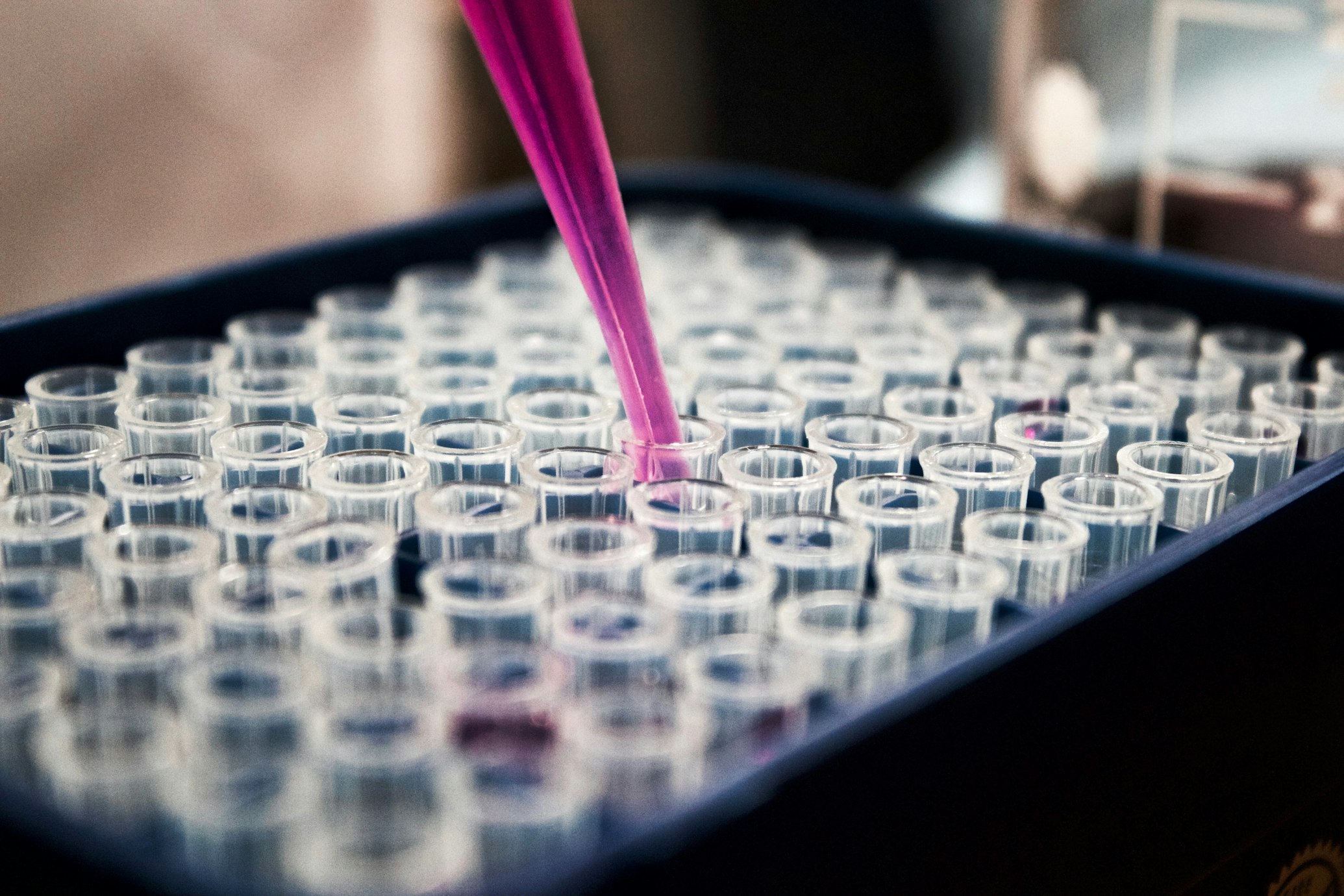
Visualization of molecular interactions in polyelectrolyte complexes
A Deep Dive into a Key Experiment: Crafting pH-Sensitive Hydrogel Beads
To see this process in action, let's examine a pivotal experiment where researchers developed pH-sensitive chitosan/sodium alginate/calcium chloride hydrogel beads for the oral delivery of rice bran bioactive peptides (RBAP) 1 .
Methodology: Step-by-Step
- Preparation of Solutions: Chitosan was dissolved in an acidic aqueous solution. Separately, sodium alginate was dissolved in water.
- Mixing and Incorporation: The chitosan and sodium alginate solutions were mixed together. The rice bran bioactive peptides (RBAP) were added to this polymer blend.
- The Cross-Linking Bath: The final mixture was then drawn into a syringe and added dropwise into a calcium chloride solution.
- Bead Formation: As soon as the droplets hit the calcium chloride bath, ionic cross-linking occurred instantaneously.
- Optimization: The scientists systematically tested different parameters to find the perfect recipe 1 .
Optimal Formulation Parameters
| Factor Optimized | Optimal Condition | Effect |
|---|---|---|
| SA Concentration | 2% | Robust structural backbone |
| CaCl₂ Concentration | 1.5% | Sufficient ionic cross-linking |
| CS Concentration | 0.5% | Enhanced pH-responsive performance |
| Solution pH | 5 | Maximized encapsulation efficiency |
Experimental Results
68.89%
Maximum Encapsulation Rate
pH-Responsive
Minimal release in acid, rapid at pH 7.4
Protected RBAP
Maintained antioxidant capacity
The Scientist's Toolkit: Essential Research Reagents
To work with chitosan and calcium chloride, scientists rely on a specific set of tools and materials.
| Reagent / Material | Function in the Formulation | Typical Usage & Notes |
|---|---|---|
| Chitosan | The primary cationic biopolymer; provides mucoadhesion, biocompatibility, and forms the matrix. | Degree of deacetylation and molecular weight must be specified for reproducible results 5 6 . |
| Calcium Chloride (CaCl₂) | Cross-linking agent; ions form ionic bridges with anionic polymers, stabilizing the gel network 1 . | Concentration is critical; too little leads to weak gels, too much can make the structure brittle. |
| Sodium Alginate | A common anionic polymer used with chitosan; strongly cross-links with Ca²⁺ ions to form the initial gel framework 1 . | Often used as a partner polymer to create a strong polyelectrolyte complex with chitosan. |
| Acetic Acid | Solvent for chitosan; creates the acidic environment needed to protonate chitosan's amino groups and dissolve it 7 . | Typically used as a 1-3% (v/v) aqueous solution. |
| Tripolyphosphate (TPP) | An alternative ionic cross-linker for chitosan; forms nanoparticles via ionic gelation 8 . | Used when a direct cross-linker for chitosan is needed, often for nano-formulations. |
Beyond Drug Delivery: Other Biomedical Applications
The utility of the chitosan-calcium chloride combination extends far beyond oral drug delivery, enabling advances in multiple areas of biomedicine.
Wound Healing & Tissue Engineering
Chitosan's hemostatic (blood-clotting) and antibacterial properties are enhanced when formed into stable films and scaffolds using cross-linkers like calcium chloride. These structures can serve as matrices to support cell growth for skin, bone, and cartilage regeneration 6 8 .
Antimicrobial Applications
The inherent antibacterial activity of chitosan, which is influenced by its molecular weight and the ambient pH, can be harnessed in durable films and coatings for wound dressings and food packaging, helping to prevent infections and spoilage 6 .
3D Bioprinting
The predictable gelation provided by calcium cross-linking is ideal for 3D printing of biomedical structures. The blend can be extruded layer-by-layer into a calcium chloride bath, where it instantly solidifies, creating complex, patient-specific scaffolds .
Future Directions
As research continues to refine these formulations, the humble combination of a shellfish-derived polymer and a simple salt promises to play an increasingly vital role in building a healthier future. Ongoing studies are exploring targeted cancer therapies, advanced wound care products, and innovative tissue engineering solutions based on this powerful synergy.
Conclusion: A Simple Key to Complex Solutions
The interaction between chitosan and calcium chloride in an acidic mixture is a perfect example of how simple scientific principles can yield sophisticated medical solutions. Calcium chloride acts as a molecular architect, transforming the inherent, positive qualities of chitosan into stable, smart, and responsive systems capable of protecting and delivering delicate therapeutics with precision.