From Powder to Patient: A Comprehensive Guide to 3D Printed Metallic Biomaterials Processing
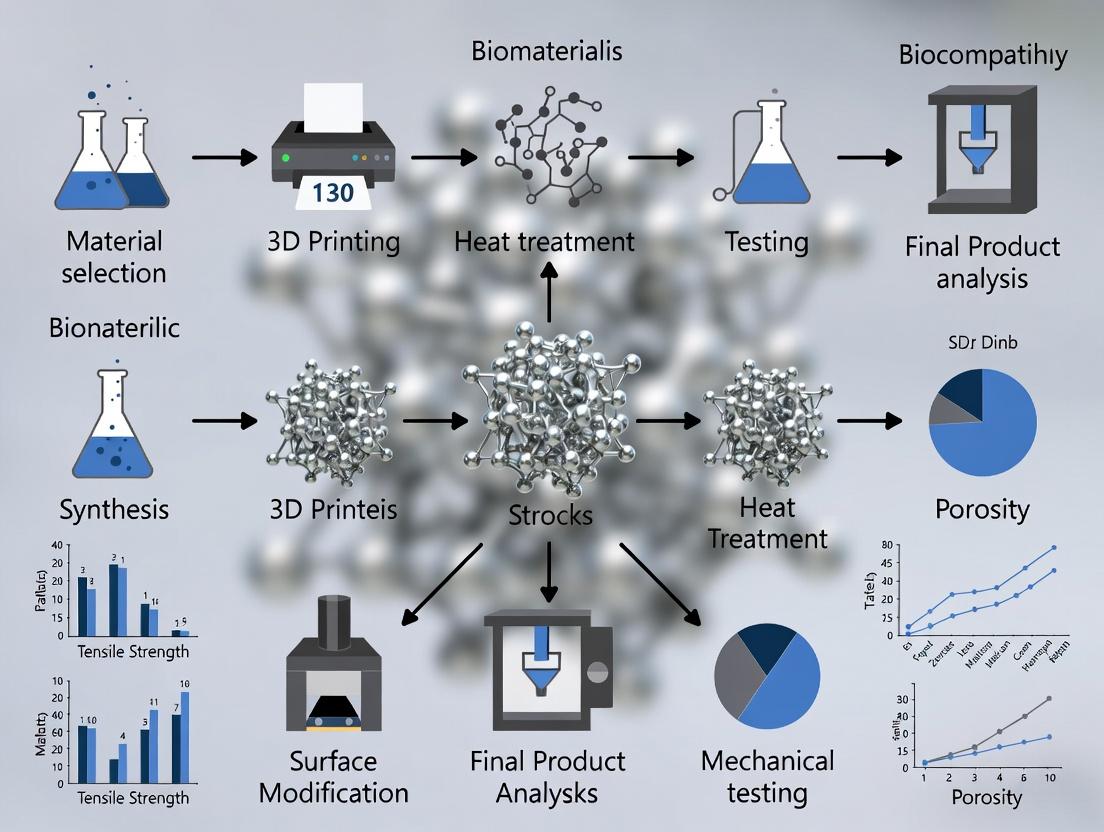
This article provides a detailed, state-of-the-art review of processing techniques for 3D printed metallic biomaterials, tailored for researchers, scientists, and drug development professionals.
From Powder to Patient: A Comprehensive Guide to 3D Printed Metallic Biomaterials Processing
Abstract
This article provides a detailed, state-of-the-art review of processing techniques for 3D printed metallic biomaterials, tailored for researchers, scientists, and drug development professionals. It begins by establishing the fundamental principles and unique material requirements for biomedical applications. The core sections then explore the dominant and emerging additive manufacturing methodologies, including binder jetting, powder bed fusion, and directed energy deposition, linking them to specific clinical and research applications. We address common challenges, defect formation, and strategies for process optimization to ensure reliability. Finally, the article compares these techniques through the lenses of mechanical performance, biocompatibility validation, and regulatory pathways, concluding with a synthesis of key insights and future directions for clinical translation.
The Building Blocks: Core Principles and Material Choices for 3D Printed Medical Metals
Metallic biomaterials are engineered materials designed for direct contact with living tissue, primarily in implantable medical devices. Within the broader context of thesis research on 3D-printed metallic biomaterials processing, these materials must satisfy a stringent, interrelated set of requirements: biocompatibility, mechanical compatibility, corrosion resistance, osseointegration, and manufacturability. This application note details the essential properties, standardized testing protocols, and advanced material solutions that are foundational for developing next-generation implants via additive manufacturing.
Essential Property Specifications
The performance of metallic biomaterials in vivo is governed by a core set of material properties. These must be holistically optimized, particularly when novel processing techniques like 3D printing are employed.
Table 1: Essential Properties of Metallic Biomaterials for Load-Bearing Implants
| Property | Metric / Target Value | Significance for Implant Function | Common Test Standard |
|---|---|---|---|
| Biocompatibility | >70% cell viability (in vitro), No systemic toxicity (in vivo) | Ensures no adverse local or systemic immune response; foundational for safety. | ISO 10993 series, ASTM F748 |
| Mechanical Compatibility | Elastic Modulus: 10-30 GPa (ideal for bone), Yield Strength: >500 MPa, Fatigue Strength: >300 MPa (10⁷ cycles) | Prevents stress shielding; withstands cyclic physiological loads without failure. | ASTM E8/E8M (Tensile), ASTM E466 (Fatigue) |
| Corrosion Resistance | Corrosion Rate: <0.01 mm/year, Breakdown Potential (Eb): >800 mV (in simulated body fluid) | Minimizes ion release, prevents implant degradation and tissue inflammation. | ASTM G59 (Polarization), ASTM F2129 (Pitting) |
| Osseointegration | Bone-Implant Contact (BIC): >50% (histomorphometry), Surface Roughness (Sa): 1-5 μm | Promotes direct structural and functional connection between bone and implant surface. | ISO 25178 (Surface texture), Histological analysis |
| Wear Resistance | Wear Rate: <0.1 mm³/million cycles (for articulating surfaces) | Minimizes debris generation that can cause osteolysis and implant loosening. | ASTM G133 (Pin-on-Disc), ISO 14242-1 (Hip simulators) |
Standardized Testing Protocols
Protocol: Electrochemical Corrosion Testing in Simulated Body Fluid (SBF)
Objective: To evaluate the in vitro corrosion resistance and ion release potential of a metallic biomaterial. Reagents/Materials: Prepared SBF (see Table 2), potentiostat with three-electrode cell (Working: sample, Reference: Saturated Calomel Electrode (SCE), Counter: Platinum mesh), pH meter. Procedure:
- Sample Preparation: Prepare a 10x10x3 mm sample. Embed in epoxy resin, exposing a 1 cm² surface. Grind sequentially to 2000-grit SiC paper, clean ultrasonically in ethanol, and air-dry.
- Immersion: Immerse the electrochemical cell containing the sample and electrodes in 500 mL of SBF at 37±1°C. Allow 1 hour for open circuit potential (OCP) stabilization.
- Potentiodynamic Polarization: Scan potential from -0.25 V vs. OCP to +1.2 V vs. SCE at a scan rate of 1 mV/s. Record current density.
- Data Analysis: Use Tafel extrapolation to determine corrosion current density (icorr) and corrosion potential (Ecorr). Identify the breakdown potential (Eb) for passivating materials like Ti alloys. Reporting: Report icorr (A/cm²), Ecorr and Eb (V vs. SCE), and the calculated corrosion rate (mm/year).
Protocol: In Vitro Cytotoxicity Assessment (MTT Assay)
Objective: To determine the cytotoxic potential of metal ion eluates or direct material contact on mammalian cells. Reagents/Materials: L929 fibroblast cells, Dulbecco’s Modified Eagle Medium (DMEM) with 10% FBS, test sample (extract or direct disc), MTT reagent (3-(4,5-dimethylthiazol-2-yl)-2,5-diphenyltetrazolium bromide), DMSO, 96-well plate, CO₂ incubator, plate reader. Procedure:
- Extract Preparation (if applicable): Sterilize sample. Incubate in serum-free medium at a 3 cm²/mL surface area-to-volume ratio at 37°C for 72 hours. Filter sterilize the eluate.
- Cell Seeding: Seed L929 cells in a 96-well plate at 1x10⁴ cells/well in 100 μL complete medium. Incubate for 24 hours (37°C, 5% CO₂).
- Exposure: Replace medium with 100 μL of test eluate or place sterile sample discs directly onto cells. Include a negative control (medium only) and a positive control (e.g., 1% phenol). Incubate for 24-48 hours.
- MTT Assay: Add 10 μL of MTT solution (5 mg/mL in PBS) to each well. Incubate for 4 hours.
- Formazan Solubilization: Carefully remove medium, add 100 μL DMSO to each well, and shake gently for 10 minutes.
- Absorbance Measurement: Measure absorbance at 570 nm (reference 630 nm) using a microplate reader.
- Calculation: Calculate cell viability % = (Abssample - Absblank) / (Absnegative control - Absblank) x 100%. Interpretation: A material is considered non-cytotoxic if cell viability exceeds 70% relative to the negative control (ISO 10993-5).
Research Reagent Solutions & Essential Materials
Table 2: Key Reagents and Materials for Biomaterial Evaluation
| Item | Function / Application | Example Product/Specification |
|---|---|---|
| Simulated Body Fluid (SBF) | In vitro bioactivity and corrosion testing medium; mimics ionic composition of human blood plasma. | Kokubo's formulation (Na⁺, K⁺, Mg²⁺, Ca²⁺, Cl⁻, HCO³⁻, HPO₄²⁻, SO₄²⁻), pH 7.4. |
| Osteoblast-like Cell Line (e.g., MG-63, MC3T3-E1) | In vitro assessment of osteocompatibility, cell adhesion, proliferation, and differentiation. | ATCC CRL-1427 (MG-63), used in assays for alkaline phosphatase (ALP) activity, gene expression. |
| Alizarin Red S | Histochemical stain for calcium deposits; quantifies in vitro mineralization during osteogenic differentiation. | 2% aqueous solution (pH 4.1-4.3), used to stain fixed cell cultures. |
| Potentiostat/Galvanostat | Instrument for conducting electrochemical corrosion tests (e.g., polarization, impedance). | Biologic SP-150, Gamry Interface 1010E. Essential for ASTM G59, F2129. |
| Gas Atomized Metal Powder | Feedstock for 3D printing (SLM, EBM) of implants. Requires high sphericity and controlled size distribution. | Ti-6Al-4V ELI Grade 23, 15-45 μm particle size. ASTM F3001, F2924 standards. |
| Ringer's Solution | Electrolyte solution for initial corrosion and immersion testing; simpler than SBF. | Contains NaCl, KCl, CaCl₂ in deionized water. |
Logical Framework and Workflows
Title: Biomaterial Development and Testing Workflow
Title: Key Factors Influencing Osseointegration Pathway
Why 3D Printing? Advantages Over Traditional Manufacturing for Biomedical Parts
Within the research framework of 3D printed metallic biomaterials processing techniques, the shift from traditional manufacturing to additive manufacturing is pivotal. This transition is driven by the need for patient-specific implants, complex internal architectures for osseointegration, and rapid prototyping of biomedical devices. Traditional methods like subtractive machining or investment casting face significant limitations in achieving such geometric complexity and customization efficiently.
The following tables summarize key comparative advantages based on current research and industrial data.
Table 1: General Process Comparison for Metallic Biomaterials (e.g., Ti-6Al-4V, Co-Cr Alloys)
| Parameter | Traditional Manufacturing (e.g., CNC, Casting) | 3D Printing (L-PBF/SLM, EBM) | Advantage Significance |
|---|---|---|---|
| Lead Time (Prototype) | 2-6 weeks | 24-72 hours | >80% reduction |
| Material Waste | 40-70% | 1-10% | Up to 98% reduction |
| Geometric Complexity | Limited (tool access, undercuts) | Virtually unlimited (free-form, lattices) | Enables porous structures |
| Part Consolidation | Multiple assembled parts | Single, integrated components | Improves reliability, reduces assembly |
| Customization Cost | Very High (new tooling) | Relatively Low (digital file) | Enables patient-specific economics |
Table 2: Performance Metrics of Biomedical Implants
| Metric | Traditional Implant | 3D Printed Implant | Clinical/Research Impact |
|---|---|---|---|
| Bone-In-Growth (Porosity) | ~50% max, often non-porous | 70-90% controllable porosity | Enhanced osseointegration, reduced loosening |
| Implant Stiffness (vs. bone) | Often higher (stress shielding) | Can be matched via lattice design | Reduces stress shielding, promotes bone health |
| Surface Roughness (Ra, µm) | 0.5-5 (polished) | 10-40 (as-built) | Can improve cell adhesion and differentiation |
Application Notes & Experimental Protocols
Protocol: Fabrication and Analysis of a 3D Printed Porous Titanium Lattice for Bone Ingrowth Study
Objective: To manufacture a Ti-6Al-4V lattice structure with defined porosity via Laser Powder Bed Fusion (L-PBF) and assess its suitability for bone integration.
Materials & Equipment:
- Metal Powder: Gas-atomized Ti-6Al-4V ELI (Extra Low Interstitial), particle size 15-45 µm.
- 3D Printer: Commercial L-PBF system (e.g., EOS M 290, SLM Solutions 280).
- Build Atmosphere: Argon, O₂ < 0.1%.
- Post-Processing: Furnace for stress relief (650°C, 2-3h, Argon).
- Characterization: SEM, Micro-CT scanner, Universal Testing Machine.
Procedure:
- Design: Using CAD (e.g., SolidWorks) and lattice generation software (e.g., nTopology), design a 10x10x10 mm cube with a gyroid unit cell, targeting 70% porosity and pore size of 600 µm.
- File Preparation: Convert CAD to STL, slice using machine software (e.g., Magics) with parameters: layer thickness 30 µm, laser power 200 W, scan speed 1000 mm/s, hatch spacing 100 µm. Generate support structures.
- Printing: a. Load Ti-6Al-4V powder into the system, ensuring dryness. b. Evacuate and backfill build chamber with argon to specified purity. c. Initiate build on a standard substrate plate. Monitor process stability.
- Post-Processing: a. Remove the build plate and separate the lattice sample via wire EDM. b. Perform stress relief heat treatment. c. Sandblast to remove adhered powder particles.
- Characterization: a. Micro-CT: Scan the lattice to measure actual porosity, pore size distribution, and interconnectivity. Reconstruct and analyze using ImageJ/CTAn. b. Mechanical Testing: Perform uniaxial compression test (ASTM E9) to determine elastic modulus and yield strength. c. Surface Analysis: Use SEM to characterize surface morphology and powder fusion quality.
Protocol: In-Vitro Biocompatibility Assessment of As-Built 3D Printed Surface
Objective: To evaluate cell adhesion and proliferation on the rough, as-printed surface of a Co-Cr alloy compared to a polished traditional counterpart.
Materials & Equipment:
- Samples: 3D printed (L-PBF) Co-Cr disc (Ra ~20 µm), traditionally cast & polished Co-Cr disc (Ra ~0.5 µm).
- Cell Line: Human Osteoblast-like cells (MG-63).
- Reagents: Dulbecco's Modified Eagle Medium (DMEM), Fetal Bovine Serum (FBS), Penicillin/Streptomycin, Phosphate Buffered Saline (PBS), AlamarBlue assay reagent, Glutaraldehyde (4%), Ethanol series.
- Equipment: Sterile biosafety cabinet, CO₂ incubator, fluorescence/absorbance plate reader, SEM for cell imaging.
Procedure:
- Sample Preparation: Sterilize all samples via autoclaving (121°C, 20 min). Place each sample in a well of a 24-well plate.
- Cell Seeding: Trypsinize, count, and suspend MG-63 cells. Seed cells onto sample surfaces at a density of 1x10⁴ cells/well in complete DMEM (10% FBS, 1% P/S). Incubate at 37°C, 5% CO₂.
- Proliferation Assay (Day 1, 3, 7): a. At each time point, aspirate medium and add fresh medium containing 10% AlamarBlue reagent. b. Incubate for 3 hours. c. Transfer 100 µL of the reactant from each well to a 96-well plate. Measure fluorescence (Ex 560 nm / Em 590 nm) or absorbance (570 nm, 600 nm reference).
- Cell Morphology (Day 3): a. Rinse samples with PBS gently. b. Fix cells with 4% glutaraldehyde for 1 hour at 4°C. c. Dehydrate through an ethanol series (50%, 70%, 90%, 100%). d. Critical point dry, sputter-coat with gold, and image via SEM.
Visualization: Research Workflow and Signaling Pathway
Title: Workflow for 3D Printed Metallic Biomedical Implant R&D
Title: Cell Response Pathway to 3D Printed Surface Topography
The Scientist's Toolkit: Key Research Reagent Solutions
Table 3: Essential Materials for 3D Printing Biomedical Metal Research
| Item | Function/Application | Key Consideration |
|---|---|---|
| Gas-Atomized Ti-6Al-4V ELI Powder | Feedstock for L-PBF/EBM. ELI grade ensures low interstitial elements for superior biocompatibility and ductility. | Particle size distribution (15-53 µm typical), sphericity, flowability. |
| Argon (High Purity, >99.999%) | Inert atmosphere gas for printing chamber to prevent oxidation of reactive metals like Ti. | Oxygen sensor monitoring essential; moisture contamination must be avoided. |
| AlamarBlue Cell Viability Reagent | Fluorescent/resazurin-based assay for non-destructive, quantitative measurement of cell proliferation on sample surfaces. | Allows longitudinal study on same sample; correlates metabolic activity to cell number. |
| Critical Point Dryer | Prepares biological cell-seeded samples for SEM by removing water without collapsing delicate cell structures. | Preferred over air-drying for accurate preservation of cell morphology on 3D surfaces. |
| ImageJ with BoneJ Plugin | Open-source software for quantitative analysis of micro-CT data (porosity, thickness, connectivity density). | Essential for quantifying complex lattice architectures against design intent. |
Within the research thesis on 3D printed metallic biomaterials, titanium alloys represent the gold standard due to their exceptional biocompatibility, high specific strength, and corrosion resistance. Their processing via additive manufacturing (AM) enables patient-specific implants with complex geometries and controlled porosity for osseointegration.
Primary Applications in Biomedical Engineering:
- Orthopedic Implants: Load-bearing components (hip stems, knee replacements, spinal cages).
- Dental Implants & Abutments: Root-analog and custom prosthetic foundations.
- Cranio-Maxillofacial Reconstruction: Patient-specific plates and mesh.
- Research Platforms: Custom 3D-printed substrates for in vitro cell studies and drug delivery system testing.
Key Alloy Comparison & Rationale:
- Ti-6Al-4V (Grade 5): The most widely used alloy. Offers an excellent balance of strength and ductility.
- Ti-6Al-7Nb: Developed as a vanadium-free alternative. Nb provides similar stabilization to V but with improved biocompatibility and long-term ion release profile.
- Commercially Pure Ti (Cp-Ti, Grades 1-4): Distinguish by oxygen content. Superior corrosion resistance and biocompatibility but lower strength than alloys. Ideal for non-load-bearing applications or as a coating.
Table 1: Mechanical Properties of Titanium Biomaterials (Wrought vs. 3D-Printed)
| Material | Condition | Yield Strength (MPa) | Ultimate Tensile Strength (MPa) | Elongation at Break (%) | Elastic Modulus (GPa) | Vickers Hardness (HV) |
|---|---|---|---|---|---|---|
| Ti-6Al-4V | Wrought (Annealed) | 830-900 | 900-1000 | 10-15 | 110-114 | 300-350 |
| SLM/L-PBF As-built | 910-1100 | 1000-1250 | 5-12 | 105-120 | 350-420 | |
| SLM/L-PBF + HIP | 850-950 | 950-1050 | 12-18 | 105-115 | 320-360 | |
| Ti-6Al-7Nb | Wrought (Forged) | 800-900 | 900-1000 | 8-15 | 105-110 | 290-340 |
| EBM As-built | 780-880 | 880-980 | 10-20 | 100-110 | 300-350 | |
| Cp-Ti (Grade 2) | Wrought (Annealed) | 275-350 | 345-410 | 20-30 | 102-105 | 120-200 |
| L-PBF As-built | 400-550 | 500-650 | 10-25 | 100-105 | 180-250 |
Table 2: Biological & Chemical Performance Metrics
| Material | Ion Release Rate (ng/cm²/day)* | Corrosion Potential (Ecorr) in SBF (V vs. SCE) | Pitting Potential (Epit) (V vs. SCE) | In Vitro Cell Viability (Osteoblasts, % vs. Control) | Surface Energy (mN/m) |
|---|---|---|---|---|---|
| Ti-6Al-4V | Al: 0.8-1.5, V: 0.2-0.5 | -0.25 to -0.15 | > +1.2 | 95-105% | 40-50 |
| Ti-6Al-7Nb | Al: 0.5-1.2, Nb: <0.1 | -0.20 to -0.10 | > +1.5 | 98-110% | 45-55 |
| Cp-Ti (Grade 2) | Ti: <0.1 | -0.15 to -0.05 | > +1.8 | 100-115% | 50-65 |
*Approximate values from static immersion tests over 30 days. SBF = Simulated Body Fluid.
Experimental Protocols
Protocol 1: Standardized In Vitro Biocompatibility Assessment for 3D-Printed Ti Specimens Objective: To evaluate the cytocompatibility of as-built and surface-modified AM titanium samples using osteoblast precursor cells (e.g., MC3T3-E1). Materials: Sterile 3D-printed Ti discs (Ø10mm x 2mm), α-MEM growth medium, fetal bovine serum (FBS), penicillin/streptomycin, MC3T3-E1 cell line, Cell Counting Kit-8 (CCK-8), live/dead staining kit (calcein-AM/ethidium homodimer-1), sterile 24-well plate. Procedure:
- Sample Preparation: Sterilize all Ti discs via autoclaving (121°C, 20 min). Place one disc per well in a 24-well plate. Pre-condition samples in 1 mL complete medium (α-MEM + 10% FBS + 1% P/S) for 24h at 37°C, 5% CO₂.
- Cell Seeding: Trypsinize, count, and prepare a cell suspension of 5 x 10⁴ cells/mL. Aspirate pre-conditioning medium and seed 1 mL of cell suspension directly onto each disc and control well (plastic). Incubate for 1, 3, and 7 days.
- CCK-8 Assay (Proliferation): At each time point, transfer discs to a new plate. Add 500 µL of medium with 10% CCK-8 reagent to each well. Incubate for 2h. Measure absorbance at 450nm using a plate reader.
- Live/Dead Staining (Viability/Morphology): Prepare staining solution per kit instructions. Aspirate medium from samples, add 500 µL staining solution, incubate 30 min in dark. Image using fluorescence microscopy (Calcein-AM: Ex/Em ~495/~515 nm for live cells; EthD-1: Ex/Em ~495/~635 nm for dead cells).
- Data Analysis: Normalize OD450 values to day 1 control. Perform statistical analysis (one-way ANOVA with post-hoc test, n≥5).
Protocol 2: Post-Processing & Surface Modification for Enhanced Osseointegration Objective: To apply and characterize an acid-etching treatment on AM Ti-6Al-4V to increase surface roughness and bioactivity. Materials: As-built L-PBF Ti-6Al-4V samples, Sandpaper (SiC, up to P2000), Hydrofluoric Acid (HF, 1% v/v), Nitric Acid (HNO₃, 5% v/v), Deionized Water, Ultrasonic bath, Nitrogen gas stream. Procedure:
- Surface Grinding: Sequentially grind samples with SiC paper from P400 to P2000 under water cooling to achieve a uniform baseline.
- Acid Etching: Prepare etching solution: 1% HF / 5% HNO₃ in deionized water (CAUTION: Use appropriate PPE and fume hood for HF). Immerse samples for 2 minutes at room temperature.
- Rinsing & Drying: Immediately transfer samples to a beaker of deionized water for initial rinse. Then, rinse ultrasonically in fresh deionized water for 10 minutes. Dry with a stream of nitrogen.
- Characterization: Analyze surface topography via Scanning Electron Microscopy (SEM) and confocal microscopy to determine Sa/Sz values. Perform X-ray Photoelectron Spectroscopy (XPS) to confirm surface chemistry (enhanced TiO₂ layer).
Diagrams
Diagram 1: Ti Implant Bioactivity Signaling Pathway
Diagram 2: AM Ti Biomaterial Research Workflow
The Scientist's Toolkit
Table 3: Essential Research Reagents & Materials
| Item | Function/Application | Example/Note |
|---|---|---|
| Gas-atomized Ti-6Al-4V powder | Feedstock for L-PBF/EBM. Spherical morphology (< 45 µm) ensures consistent flowability and dense parts. | AP&C, TLS Technik. Oxygen content < 0.13%. |
| Simulated Body Fluid (SBF) | In vitro bioactivity and corrosion testing. Ion concentration similar to human blood plasma. | Prepared per Kokubo recipe. Use for apatite formation assays. |
| Alpha-MEM with Nucleosides | Cell culture medium for osteoblasts and mesenchymal stem cells. Contains essential components for bone cell growth. | Supplement with 10% FBS, 50 µg/mL ascorbic acid, 10 mM β-glycerophosphate for differentiation. |
| Alizarin Red S | Histochemical stain for detecting calcium deposits, indicating in vitro osteogenic differentiation. | Quantitative analysis possible via cetylpyridinium chloride extraction and absorbance measurement. |
| Hydrofluoric Acid (HF) Dilution | Critical for etching titanium surfaces to create micro-roughness. CAUTION: Highly corrosive and toxic. | Always use dilute solutions (<2%) with extreme PPE in a dedicated fume hood. |
| CCK-8 Assay Kit | Colorimetric assay for cell proliferation/viability. More stable and less toxic than MTT. | Incubation time (2-4h) must be optimized for cells on Ti substrates. |
| Live/Dead Viability/Cytotoxicity Kit | Dual fluorescent staining for simultaneous visualization of live (green) and dead (red) cells. | Calcein-AM (live) and Ethidium Homodimer-1 (dead). Confocal imaging recommended. |
| Fetal Bovine Serum (FBS) | Universal supplement for cell culture media. Provides growth factors, hormones, and attachment factors. | Heat-inactivated (56°C, 30 min) to complement inactivation. Batch testing for optimal growth is advised. |
Application Notes
Cobalt-chrome (CoCr) alloys are a cornerstone of metallic biomaterials, particularly valued for their exceptional wear resistance, high strength, corrosion resistance, and biocompatibility. Within the research on 3D printed metallic biomaterials processing techniques, these alloys present a unique model system for studying the interplay between advanced additive manufacturing (AM) parameters, resultant microstructures, and functional performance in demanding biomedical applications.
Primary Applications in Biomedical Research:
- Orthopedic Implants: Permanent load-bearing implants such as femoral knee components, hip stems, and acetabular cups.
- Dental Restorations: Crowns, bridges, and frameworks fabricated via dental CAD/CAM and AM.
- Cardiovascular Devices: Stents and heart valve rings requiring high radial strength and fatigue life.
- Research Prototypes: Custom-designed high-strength fixtures and surgical guides.
Key AM Processing Techniques Studied: The predominant technique for CoCr alloys is Laser Powder Bed Fusion (L-PBF), also known as Selective Laser Melting (SLM). Electron Beam Melting (EBM) is also employed. Research focuses on how process parameters (e.g., laser power, scan speed, hatch spacing) influence critical outcomes like porosity, residual stress, and grain morphology.
Critical Performance Metrics for Research Evaluation:
- Mechanical Properties: Yield strength, ultimate tensile strength, elongation, hardness, and fatigue endurance limit.
- Tribological Performance: Wear rate and coefficient of friction under simulated physiological conditions.
- Metallurgical Characteristics: Phase composition (FCC vs. HCP), grain size, presence of carbides (e.g., M₂₃C₆), and texture.
- Surface & Biocompatibility: Surface roughness, oxide layer composition, and in vitro cytocompatibility.
Table 1: Representative Mechanical Property Data for L-PBF CoCr Alloys (e.g., ASTM F75/ISO 5832-4)
| Property | Cast & Annealed CoCr (Reference) | L-PBF As-Built | L-PBF + Heat Treated | Test Standard |
|---|---|---|---|---|
| Yield Strength (0.2% offset) | 450 - 550 MPa | 650 - 850 MPa | 700 - 950 MPa | ASTM E8/E8M |
| Ultimate Tensile Strength | 655 - 890 MPa | 900 - 1250 MPa | 1000 - 1350 MPa | ASTM E8/E8M |
| Elongation at Break | 8 - 12 % | 5 - 15 % | 10 - 25 % | ASTM E8/E8M |
| Vickers Hardness (HV) | 250 - 350 HV | 350 - 450 HV | 300 - 400 HV | ASTM E92 |
| Density (Relative) | ~99.5% | ~99.8 - 99.99% | ~99.9% | Archimedes' Principle |
Table 2: Common Post-Processing Heat Treatment Protocols
| Protocol Name | Temperature Range | Time | Atmosphere | Primary Objective |
|---|---|---|---|---|
| Stress Relief | 650°C - 800°C | 1 - 2 hours | Argon / Vacuum | Reduce residual stresses from L-PBF. |
| Hot Isostatic Pressing (HIP) | 1100°C - 1250°C | 2 - 4 hours @ 100-150 MPa | Argon | Eliminate internal porosity, homogenize. |
| Solution Annealing | 1150°C - 1250°C | 0.5 - 2 hours | Argon / Vacuum | Dissolve carbides, create homogeneous FCC structure. |
| Aging Treatment | 700°C - 900°C | 4 - 24 hours | Argon | Precipitate fine carbides for strengthening. |
Experimental Protocols
Protocol 1: Standardized L-PBF Fabrication of CoCr Test Specimens
Objective: To fabricate CoCr alloy samples with reproducible microstructure for downstream characterization. Materials: Gas-atomized CoCrMo alloy powder (e.g., ≤ 45 µm), L-PBF machine (e.g., EOS M 290, SLM Solutions), build plate (stainless steel or CoCr), argon gas.
Procedure:
- Powder Preparation: Dry powder in a vacuum oven at 80°C for ≥4 hours. Sieve powder to ensure particle size distribution within machine specifications.
- Machine Setup: Install and level the build plate. Load the powder reservoir. Purge the build chamber with argon until oxygen level < 0.1%.
- Parameter Set Application: Load a parameter set (e.g., standard "core" parameters from machine OEM). Key parameters: Laser Power (P) = 170-220 W, Scan Speed (v) = 600-900 mm/s, Hatch Spacing (h) = 80-120 µm, Layer Thickness (t) = 20-40 µm.
- Build File Preparation: Design specimens (e.g., tensile bars per ASTM E8, cylinders for wear tests) in CAD. Nest on build plate using software (e.g., Materialise Magics). Generate support structures for overhangs. Slice into layers and generate scan path.
- Fabrication: Initiate build. Monitor process continuously via machine software. Maintain constant chamber temperature and argon flow.
- Post-Build: Allow chamber to cool below 60°C. Depowder parts using a bead blaster or brush in a controlled environment. Remove build plate and separate specimens via wire EDM.
- Post-Processing: Remove support structures via machining or grinding. Optionally, apply heat treatments per Table 2.
Protocol 2: In-Vitro Wear Testing (Pin-on-Disk Simulator)
Objective: To evaluate the wear resistance of L-PBF CoCr against UHMWPE (Ultra-High-Molecular-Weight Polyethylene) under simulated joint conditions. Materials: L-PBF CoCr disk (Ø ≥ 60 mm, Ra < 0.05 µm), UHMWPE pin (Ø 6-10 mm), wear tester, bovine calf serum (25-50 g/L protein), EDTA, sodium azide.
Procedure:
- Sample Preparation: Sterilize CoCr disks (gamma irradiation or autoclave). Clean UHMWPE pins ultrasonically in ethanol.
- Lubricant Preparation: Dilute bovine calf serum to 25 g/L protein concentration in deionized water. Add 0.2% w/v sodium azide (bacteriostatic) and 20 mM EDTA (chelating agent). Filter sterilize (0.2 µm pore).
- Test Setup: Mount CoCr disk on rotating stage. Mount UHMWPE pin in holder with a load applicator (typically 70-200 N to simulate physiological contact pressure). Align pin perpendicular to disk.
- Pre-Test Measurement: Weigh UHMWPE pin to the nearest 0.1 mg. Measure disk surface roughness (Ra).
- Testing: Submerge contact area in lubricant bath (maintained at 37±2°C). Apply load. Initiate rotation (typical speed: 1 Hz, simulating gait cycle). Run test for 500,000 cycles or equivalent sliding distance (e.g., ~40 km).
- Post-Test Analysis: Ultrasonically clean UHMWPE pin in detergent, rinse, dry, and reweigh. Calculate mass loss. Analyze wear scars on disk and pin using SEM/EDS to determine wear mechanisms (adhesive, abrasive). Measure wear volume on pin via profilometry.
Protocol 3: Microstructural Analysis via SEM/EBSD
Objective: To characterize the grain structure, texture, and phase distribution of as-built and heat-treated L-PBF CoCr. Materials: Metallographically prepared CoCr sample (mounted, ground, polished, electrolytically etched), Scanning Electron Microscope (SEM) with EBSD detector.
Procedure:
- Sample Preparation: Mount sample in conductive resin. Grind sequentially with SiC paper up to P1200 grit. Polish with diamond suspension (9 µm, 3 µm, 1 µm). Final polish with colloidal silica (0.04 µm). Electrolytically etch in 10% Oxalic Acid or 5% HCl in H₂O at 3-5V for 3-10 seconds.
- SEM Setup: Insert sample into SEM chamber. Pump to high vacuum. Set accelerating voltage to 15-20 kV. Tilt sample to ~70° for EBSD analysis.
- EBSD Data Acquisition: Calibrate EBSD detector using a standard (e.g., silicon). Define scan area (e.g., 500x500 µm). Set step size appropriate for grain size (e.g., 0.5 - 2 µm). Acquire diffraction patterns.
- Data Processing: Index patterns using appropriate crystallographic database (FCC/HCP for CoCr). Process data to generate:
- Inverse Pole Figure (IPF) Maps: Show grain orientation.
- Grain Size Distribution Histogram.
- Pole Figures: Show texture (e.g., <001> fiber texture common in L-PBF).
- Phase Map: Distinguish between FCC (austenite) and HCP (epsilon martensite) phases.
Visualizations
L-PBF Process Workflow for CoCr Alloys (100 chars)
Microstructure Evolution from L-PBF to Post-Processing (100 chars)
The Scientist's Toolkit: Research Reagent Solutions
Table 3: Essential Materials & Reagents for CoCr AM Research
| Item | Function / Application | Key Notes for Research |
|---|---|---|
| Gas-Atomized CoCrMo Powder | Raw material for L-PBF/EBM. | Spherical morphology critical for flowability. Composition must meet ASTM F75. Monitor powder reuse (max 5-10 cycles) for O₂ uptake. |
| Argon (High Purity, 99.999%) | Inert shielding gas for L-PBF chamber. | Prevents oxidation of molten pool. Low oxygen content (<100 ppm) is essential. |
| Bovine Calf Serum | Lubricant for in-vitro wear testing. | Simulates synovial fluid. Standardize protein concentration (e.g., 25 g/L). |
| EDTA & Sodium Azide | Additives to wear test lubricant. | EDTA chelates metal ions; Sodium Azide prevents microbial growth in serum during long tests. |
| Electrolytic Etchants (Oxalic Acid, HCl) | For microstructural revelation of CoCr. | Selectively attacks grain boundaries and phases for optical/SEM analysis. Requires controlled voltage/time. |
| Colloidal Silica Polishing Suspension | Final polishing step for EBSD. | Produces deformation-free, mirror-like surface necessary for high-quality diffraction patterns. |
| UHMWPE Pins/Rods | Counterface material in wear tests. | Standardized material (e.g., GUR 1020) to simulate clinical articulation against CoCr implants. |
| Calibration Standards (Silicon, Alumina) | For SEM/EBSD and mechanical tester calibration. | Ensures accuracy and reproducibility of quantitative microstructural and property data. |
Application Notes
Biodegradable metals (BMs) and bio-inert tantalum represent transformative material classes for implantable medical devices, particularly when processed via additive manufacturing (AM). Their integration within 3D printed metallic biomaterials research enables patient-specific implants with tailored degradation profiles and osteogenic properties.
Biodegradable Metals (Mg, Fe, Zn Alloys): These materials are engineered to corrode in the physiological environment after providing temporary mechanical support and osteoconduction. Magnesium alloys degrade fastest, promoting bone formation but potentially too rapid for some applications. Iron alloys degrade slowly, offering extended support but potentially causing late inflammatory responses. Zinc alloys exhibit an intermediate degradation rate with favorable biocompatibility. AM allows for porous lattice structures that modulate degradation and bone ingrowth.
Tantalum: While not biodegradable, tantalum is renowned for its exceptional corrosion resistance, biocompatibility, and osteoconductivity, particularly its "bone-like" ability to support osseointegration. AM of tantalum, primarily via Electron Beam Melting (EBM), enables the fabrication of highly porous trabecular structures mimicking cancellous bone.
Table 1: Comparative Properties of Emerging Metallic Biomaterials for AM
| Material/Alloy System | Key AM Process | Yield Strength (MPa) | Elastic Modulus (GPa) | Degradation Rate (in vivo) | Primary Application Focus |
|---|---|---|---|---|---|
| Mg (WE43) | LPBF | 180-250 | 41-45 | High (months) | Craniofacial, orthopedic screws |
| Fe (Fe-35Mn) | LPBF | 400-550 | 110-130 | Very Low (years) | Stents, load-bearing porous scaffolds |
| Zn (Zn-3Mg) | LPBF | 150-220 | 90-100 | Medium (1-2 years) | Cardiovascular stents, bone fixation |
| Tantalum | EBM | 500-700 | 50-60 (porous) | Negligible | Acetabular cups, spinal fusion cages |
Table 2: In Vitro Cytocompatibility & Osteogenic Response (Typical Findings)
| Material | Cell Line/Model | Key Outcome Measure | Result (vs. Control Ti6Al4V) | Test Standard |
|---|---|---|---|---|
| Porous Mg | hMSCs | ALP Activity (Day 14) | +35-50% increase | ISO 10993-5 |
| Porous Fe | MC3T3-E1 | Collagen Secretion | Comparable | ISO 10993-5 |
| Porous Zn | Osteoblasts | OCN gene expression | +20% increase | ISO 10993-5 |
| Porous Ta | hMSCs | Bone Nodule Formation | +70-100% increase | ISO 10993-12 |
Experimental Protocols
Protocol 2.1: LPBF Processing & Heat Treatment of Mg Alloy (WE43) Scaffolds
Objective: To fabricate porous Mg scaffolds with controlled grain structure for bone regeneration.
- Powder Preparation: Use gas-atomized WE43 (Mg-4Y-3RE-Zr) powder (15-53 µm). Dry in vacuum oven at 80°C for 4 hours.
- LPBF Parameters: Operate under high-purity argon (<100 ppm O2). Key parameters: Laser power 80-120 W, scan speed 800-1200 mm/s, layer thickness 30 µm, hatch spacing 80 µm. Use a stripe scanning pattern with 90° rotation between layers.
- Stress Relief: Immediately after build, perform heat treatment at 350°C for 2 hours under argon atmosphere, followed by furnace cooling.
- Post-processing: Remove from build plate via wire EDM. Ultrasonically clean in ethanol.
Protocol 2.2: In Vitro Degradation Testing of Zn Alloy (Zn-3Mg) in Simulated Body Fluid (SBF)
Objective: To quantitatively assess mass loss and ion release kinetics.
- Sample Preparation: Fabricate disc samples (Ø10mm x 2mm) via LPBF. Polish to P2000 grit, ultrasonically clean, and dry.
- Immersion Test: Immerse samples in SBF (pH 7.4, 37°C) at a surface-area-to-volume ratio of 1 cm²/10 mL, following ASTM G31-72. Use triplicates per time point.
- Monitoring: Change SBF every 48h to maintain ion concentration. At intervals (1, 3, 7, 14, 28 days):
- Remove sample, gently rinse with DI water, and dry.
- Measure mass change using analytical balance (±0.01 mg).
- Analyze SBF via ICP-OES for Zn²⁺, Mg²⁺ ion concentration.
- Data Analysis: Calculate degradation rate from mass loss and fit to kinetic models (e.g., linear, parabolic).
Protocol 2.3: Evaluation of Osteogenic Differentiation on 3D-Printed Tantalum Scaffolds
Objective: To assess the osteoinductive potential of AM porous tantalum.
- Scaffold Sterilization: Autoclave EBM-fabricated porous Ta scaffolds (porosity ~80%, pore size 600 µm).
- Cell Seeding: Seed human Mesenchymal Stem Cells (hMSCs, P3-5) at 5x10⁴ cells/scaffold in basal medium. Use dynamic seeding on a rotator for 4 hours.
- Osteogenic Culture: After 24h, switch to osteogenic medium (α-MEM, 10% FBS, 10mM β-glycerophosphate, 50µg/mL ascorbic acid, 100nM dexamethasone). Culture for 21 days, changing medium every 3 days.
- Endpoint Analysis:
- ALP Activity (Day 7,14): Lyse cells in 0.1% Triton X-100, measure using pNPP substrate. Normalize to total protein (BCA assay).
- Gene Expression (Day 14): Extract RNA, synthesize cDNA, perform qPCR for RUNX2, OPN, OCN.
- Matrix Mineralization (Day 21): Fix with 4% PFA, stain with 2% Alizarin Red S (pH 4.2), quantify by elution with 10% CPC and spectrophotometry.
Visualizations
Osteogenic Pathway for BMs & Ta
AM Biomaterial Research Workflow
The Scientist's Toolkit
Table 3: Essential Research Reagents & Materials
| Item | Function/Application | Example/Note |
|---|---|---|
| Gas-atomized Metal Powder (Mg, Fe, Zn, Ta) | Feedstock for AM processes. Purity (>99.95%), spherical morphology, and controlled size distribution (15-106 µm) are critical. | TLS Technik, Praxair Surface Technologies |
| High-Purity Argon/ Vacuum System | Inert build atmosphere for LPBF/EBM to prevent oxidation, especially for reactive Mg. | Oxygen levels <100 ppm required. |
| Simulated Body Fluid (SBF) | In vitro degradation and bioactivity testing, approximating ion concentration of human blood plasma. | Prepare per Kokubo recipe or use commercial equivalent (e.g., MilliporeSigma). |
| AlamarBlue/CCK-8 Assay Kit | Quantitative measurement of cell viability and proliferation on 3D scaffolds. | Prefer resazurin-based (AlamarBlue) for less interference with metal ions. |
| p-Nitrophenyl Phosphate (pNPP) | Substrate for colorimetric quantification of Alkaline Phosphatase (ALP) activity, an early osteogenic marker. | Use in conjunction with cell lysis buffer (e.g., containing Triton X-100). |
| TRIzol/RNA Isolation Kit | RNA extraction from cells cultured on 3D metal scaffolds for subsequent qPCR analysis of osteogenic genes. | Mechanical homogenization of scaffold-cell complex is often necessary. |
| Alizarin Red S Staining Solution | Histochemical dye for detection and semi-quantification of calcium-rich deposits (mineralization). | Elution with cetylpyridinium chloride (CPC) enables spectrophotometric quantification. |
| Inductively Coupled Plasma Optical Emission Spectrometry (ICP-OES) | Quantitative elemental analysis for measuring metal ion release (degradation) and calcium/phosphate deposition. | Requires acid digestion of samples or analysis of immersion media. |
Application Notes
Within the thesis on 3D printed metallic biomaterials for biomedical implants (e.g., orthopedic, dental), the powder feedstock is the foundational determinant of final part quality. Its properties dictate the success of additive manufacturing (AM) processes like Laser Powder Bed Fusion (L-PBF) and Electron Beam Melting (EBM). Key application-driven requirements include:
- Biocompatibility: Feedstock must be of high-purity, medical-grade alloy (e.g., ASTM F136 Ti-6Al-4V ELI, Co-Cr alloys, 316L stainless steel) with minimal inclusions and trace elements to prevent adverse biological responses.
- Processability: Powder characteristics directly influence flowability, packing density, and melt pool stability during AM, impacting defect formation (porosity, lack-of-fusion).
- Final Part Performance: Powder morphology, chemistry, and microstructure define the as-printed material's mechanical properties (fatigue strength, ductility), corrosion resistance, and surface finish—critical for implant longevity and functionality.
- Reproducibility: Consistent powder production and characterization are mandatory for regulatory approval (e.g., FDA, CE) and clinical translation.
Protocols
Protocol 1: Comprehensive Powder Feedstock Characterization
Objective: To quantitatively assess the critical properties of metallic biomaterial powder relevant to L-PBF/EBM processing.
Materials & Equipment:
- Metallic powder sample (e.g., gas-atomized Ti-6Al-4V ELI).
- Scanning Electron Microscope (SEM).
- Laser Diffraction Particle Size Analyzer (e.g., Mastersizer).
- Gas Pycnometer.
- Hall Flowmeter (ASTM B213).
- Carney Funnel (ASTM B964).
- Inductively Coupled Plasma Optical Emission Spectrometry/Mass Spectrometry (ICP-OES/MS).
- Inert Gas Fusion Analyzer (for O, N, H).
Procedure:
- Morphology & Microstructure (SEM):
- Disperse powder on conductive adhesive tape. Sputter-coat if non-conductive.
- Acquire secondary electron images at multiple magnifications (e.g., 100x, 500x, 2000x).
- Qualitatively assess particle sphericity, surface texture, and presence of satellites or agglomerates.
Particle Size Distribution (PSD):
- Employ dry powder dispersion or wet dispersion in a suitable non-reactive fluid (e.g., isopropanol).
- Perform laser diffraction analysis in triplicate.
- Record D10, D50 (median diameter), D90, and Span [(D90-D10)/D50].
Apparent & Tap Density:
- Apparent Density: Use Hall Flowmeter. Fill funnel, allow powder to flow freely into a 25 cm³ cup. Weigh and calculate mass/volume (g/cm³).
- Tap Density: Use Carney Funnel or automated tap densitometer (ASTM B527). Subject powder-filled cup to a defined number of taps (e.g., 1000). Record final volume and calculate density.
Chemical Composition:
- Bulk Chemistry: Digest ~0.1g powder in acid (e.g., aqua regia for Ti alloys). Analyze solution via ICP-OES/MS for major, minor, and trace elements.
- Interstitial Gases: Analyze ~0.5-1g powder using Inert Gas Fusion for oxygen, nitrogen, and hydrogen content.
Protocol 2: Assessment of Powder Reusability in L-PBF
Objective: To evaluate property degradation of powder feedstock after multiple AM build cycles.
Materials & Equipment:
- Virgin medical-grade 316L stainless steel powder.
- L-PBF machine.
- Sieve shaker with 20µm mesh.
- All characterization equipment from Protocol 1.
Procedure:
- Characterize virgin powder per Protocol 1. Record baseline data.
- Use powder for a standard L-PBF build (e.g., implant prototype). Use standard parameters (e.g., 200 W laser power, 800 mm/s scan speed, 30 µm layer thickness).
- After build completion, carefully recover unfused powder from the build chamber and overflow containers.
- Sieve recovered powder through a 20µm mesh to remove any large agglomerates or debris.
- Blend sieved powder with virgin powder at a defined refresh ratio (e.g., 50:50) for the next build cycle. Note: For critical implants, 100% reused powder is often avoided.
- Repeat steps 2-5 for up to 10 cycles, sampling powder for full characterization after cycles 0 (virgin), 3, 6, and 10.
- Analyze trends in PSD (fines increase), flowability, chemical composition (O, N pick-up), and print resultant part density/mechanical properties.
Data Tables
Table 1: Critical Powder Properties for Common Metallic Biomaterials
| Property | Ti-6Al-4V ELI (L-PBF) | Co-28Cr-6Mo (L-PBF) | 316L (L-PBF) | Test Method |
|---|---|---|---|---|
| Particle Size (D50, µm) | 25 - 45 | 20 - 40 | 20 - 40 | ISO 13320 |
| PSD Span | < 1.8 | < 1.8 | < 1.8 | (D90-D10)/D50 |
| Apparent Density (g/cm³) | > 2.2 | > 4.0 | > 3.9 | ASTM B212 |
| Tap Density (g/cm³) | > 2.6 | > 4.8 | > 4.5 | ASTM B527 |
| Hall Flow Rate (s/50g) | < 45 | < 40 | < 40 | ASTM B213 |
| Oxygen Content (max wt.%) | 0.13 | 0.10 | 0.10 | ASTM E1409 |
Table 2: Impact of Powder Reuse Cycles on Ti-6Al-4V ELI Feedstock (Representative Data)
| Reuse Cycle | D50 (µm) | % Fines (<15 µm) | Hall Flow (s/50g) | Oxygen (wt.%) | As-Printed Density (% Theor.) |
|---|---|---|---|---|---|
| 0 (Virgin) | 35.2 | 3.1 | 38 | 0.08 | 99.97 |
| 3 | 34.8 | 5.7 | 41 | 0.11 | 99.95 |
| 6 | 33.9 | 9.4 | 48 | 0.15 | 99.88 |
| 10 | 31.5 | 15.2 | 65 | 0.22 | 99.70 |
Visualization
Title: Powder Feedstock Role in Biomaterial Processing
Title: Powder Characterization Quality Control Workflow
The Scientist's Toolkit: Research Reagent Solutions
| Item | Function in Biomaterial Powder Research |
|---|---|
| High-Purity Argon Gas | Inert atmosphere for powder production (atomization), handling, storage, and during AM processing (L-PBF) to prevent oxidation. |
| Isopropanol (ACS Grade) | Fluid for wet dispersion in particle size analysis and for cleaning powder handling equipment to prevent cross-contamination. |
| Nitric & Hydrofluoric Acid | Digestive acids for preparing metallic powder samples for elemental analysis via ICP-OES/MS. Use with extreme caution. |
| Standard Reference Materials (SRMs) | Certified powder samples (e.g., from NIST) for calibration and validation of particle size analyzers and chemical composition methods. |
| Ultrasonic Powder Dispersion Bath | Ensures de-agglomeration of powder particles in suspension prior to PSD or SEM analysis for accurate results. |
| Inert Atmosphere Glovebox | Provides a controlled, low-oxygen (<10 ppm) environment for safe powder handling, blending, and sampling to maintain purity. |
The Toolbox: Key 3D Printing Techniques and Their Biomedical Applications
Within the broader research on 3D printed metallic biomaterials processing techniques, Powder Bed Fusion (PBF) stands as the principal method for creating dense, load-bearing, and patient-specific metallic implants. LPBF (also commercially known as Selective Laser Melting, SLM) and Electron Beam Melting (EBM) are the two dominant energy sources. This document details their operational principles, critical processing parameters, experimental protocols, and applications in biomedical research, serving as a foundational reference for developing novel biomaterial alloys and surface treatments.
Comparative Process Fundamentals & Quantitative Data
Both LPBF and EBM operate on a layer-wise principle: a recoater spreads a thin layer of metal powder over a build platform, and an energy source selectively melts the powder according to a digital 3D model. The key distinctions lie in the energy source, build environment, and resulting thermal dynamics.
Table 1: Fundamental Comparison of LPBF and EBM for Metallic Biomaterials
| Parameter | Laser Powder Bed Fusion (LPBF/SLM) | Electron Beam Melting (EBM) |
|---|---|---|
| Energy Source | Ytterbium fiber laser (typically 1070 nm wavelength) | High-energy electron beam |
| Build Atmosphere | Inert gas (Argon or Nitrogen), ~1 atm | High vacuum (~10-3 to 10-5 mbar) |
| Build Chamber Temp. | Ambient to ~200°C (for pre-heat) | Elevated, 600-1100°C (for Ti-6Al-4V) |
| Typical Scan Speed | 500 - 2000 mm/s | 1000 - 10,000 mm/s |
| Beam Focus / Spot Size | 50 - 150 µm | 100 - 500 µm |
| Key Thermal Characteristic | High thermal gradient, rapid solidification | Lower gradient, slower cooling due to pre-heat |
| Primary Biomedical Alloys | Ti-6Al-4V (ELI), Co-Cr-Mo, 316L Stainless Steel, pure Ti | Ti-6Al-4V, pure Ti, Tantalum, TiAl alloys |
| Surface Roughness (Ra) | 5 - 25 µm (as-built) | 20 - 40 µm (as-built) |
| Residual Stress | High, often requires stress relief | Low to moderate, due to pre-heat |
| Typical Minimum Feature Size | 80 - 150 µm | 200 - 500 µm |
Table 2: Representative Processing Parameters for Ti-6Al-4V ELI
| Alloy | Process | Laser/E-beam Power (W) | Scan Speed (mm/s) | Hatch Spacing (µm) | Layer Thickness (µm) |
|---|---|---|---|---|---|
| Ti-6Al-4V ELI | LPBF | 175 - 300 | 800 - 1400 | 80 - 120 | 30 - 50 |
| Ti-6Al-4V ELI | EBM | 600 - 900 | 3000 - 6000 | 100 - 200 | 50 - 70 |
Experimental Protocols for Biomaterial Characterization
Protocol 3.1: Standard Build Preparation & Parameter Optimization (Doehlert Design) Objective: To systematically determine the optimal energy density window for a new metallic biomaterial powder (e.g., a beta-Ti alloy).
- Powder Characterization: Prior to building, characterize powder morphology (SEM), particle size distribution (Laser Diffraction), and chemical composition (EDX).
- Parameter Matrix: Employ a DoE (e.g., Doehlert design) varying Laser Power (P), Scan Speed (v), and Hatch Spacing (h). Calculate Volumetric Energy Density (VED) for each run: VED = P / (v * h * layer thickness) [J/mm³].
- Cube Fabrication: Print 10x10x10 mm³ cubes for each parameter set on a substrate plate.
- Density Analysis: Determine relative density via Archimedes' principle (ASTM B962) or by image analysis of polished cross-sections.
- Microstructure: Section, mount, polish, and etch cubes. Analyze melt pool morphology, porosity, and grain structure using optical microscopy and SEM.
- Optimal Window: Identify parameter sets achieving >99.5% relative density with minimal keyhole or lack-of-fusion pores.
Protocol 3.2: In-Vitro Biocompatibility Assessment of As-Built Surfaces Objective: To evaluate the cytocompatibility of LPBF/EBM fabricated surfaces without post-processing.
- Sample Preparation: Print 10mm diameter discs. Clean ultrasonically in acetone, ethanol, and deionized water. Sterilize by autoclaving (121°C, 15 psi, 20 min).
- Cell Seeding: Seed osteoblast-like cells (e.g., MG-63 or hMSCs) at a density of 10,000 cells/cm² onto sample surfaces in 24-well plates. Use tissue culture plastic (TCP) as a control.
- Viability/Proliferation (MTS Assay): At culture days 1, 3, and 7, incubate with MTS reagent for 3 hours. Measure absorbance at 490nm to quantify metabolically active cells.
- Morphology (Actin Staining): At day 3, fix cells (4% PFA), permeabilize (0.1% Triton X-100), and stain actin filaments with phalloidin-FITC. Image using fluorescence microscopy to assess cell spreading and cytoskeletal organization.
- Statistical Analysis: Perform one-way ANOVA with post-hoc Tukey test (n≥5, p<0.05) to compare results against TCP and between LPBF/EBM surfaces.
Protocol 3.3: Post-Processing for Enhanced Osseointegration (Acid Etching) Objective: To modify the surface topography of a Ti-6Al-4V PBF implant to enhance bone on-growth.
- Initial Cleaning: Ultrasonicate printed implant in isopropanol for 15 minutes.
- Acid Etch Bath: Prepare a fresh etching solution of 18% HCl / 48% H₂SO₄ (volumetric ratio) in deionized water. CAUTION: Handle strong acids with appropriate PPE under a fume hood.
- Etching: Immerse the implant in the acid bath at 60°C (±5°C) for 20-30 minutes under constant gentle agitation.
- Neutralization & Rinsing: Transfer the implant to a saturated sodium bicarbonate solution to neutralize residual acid. Rinse thoroughly with copious amounts of deionized water.
- Drying: Dry the implant in a clean, dry air stream or a warm oven (<80°C).
- Validation: Characterize the resulting micro-rough surface using SEM and measure Sa/Sz parameters via confocal microscopy.
Signaling Pathways in Osteoblast Response to PBF Surfaces
The surface topography and chemistry of PBF-produced implants directly influence intracellular signaling pathways governing osteoblast adhesion, proliferation, and differentiation.
Diagram 1: Osteoblast Signaling on PBF Surfaces
Experimental Workflow for Biomaterial Development
A logical workflow for developing a novel PBF-processed metallic biomaterial from concept to in-vitro validation.
Diagram 2: PBF Biomaterial Development Workflow
The Scientist's Toolkit: Key Research Reagent Solutions
Table 3: Essential Materials for PBF Biomaterials Research
| Item / Reagent | Function / Purpose | Typical Specification/Note |
|---|---|---|
| Gas-Atomized Metal Powder | The raw material for PBF. | Ti-6Al-4V ELI (Grade 23), 15-45 µm or 45-106 µm size distribution. Must be characterized for flowability. |
| Argon (Ar) Gas | Inert atmosphere for LPBF builds. | High purity (≥99.998%) to prevent oxidation of reactive alloys like Ti. |
| MTS Assay Kit | Colorimetric quantification of cell viability and proliferation on sample surfaces. | Used for in-vitro biocompatibility testing (Protocol 3.2). |
| Phalloidin-FITC | Fluorescent stain for F-actin to visualize cell cytoskeleton and spreading morphology. | Critical for assessing cell-material interaction quality. |
| Hydrochloric Acid (HCl) & Sulfuric Acid (H₂SO₄) | For acid-etching surface treatment to create micro-roughness for bone interlocking. | Used in a specific volumetric ratio (e.g., 18% HCl / 48% H₂SO₄). Requires extreme caution. |
| Alpha-MEM Cell Culture Medium | Growth medium for osteoblast precursor cells (e.g., MC3T3-E1 or hMSCs). | Supplemented with 10% FBS, 1% Penicillin-Streptomycin, and osteogenic factors (Ascorbic acid, β-glycerophosphate) for differentiation studies. |
| Ethanol & Acetone | For ultrasonic cleaning of printed parts to remove powder residues and oils. | Laboratory grade, used in sequence for effective degreasing. |
| Mounting Resin (e.g., Epoxy) | For metallographic sample preparation for microstructural analysis. | Must be vacuum-impregnated to fill surface porosity of as-built samples. |
| Kroll's Reagent | Metallographic etchant for titanium alloys to reveal grain boundaries and microstructure. | Composition: 2-3% HF, 5-6% HNO₃ in water. Highly toxic and corrosive. |
Application Notes
This document details application notes and protocols for Binder Jetting (BJ) of metallic biomaterials, a critical powder bed fusion additive manufacturing (AM) technique. Within the broader thesis on 3D printed metallic biomaterials processing, BJ offers distinct advantages for producing porous, complex structures ideal for implants, such as controlled porosity for osseointegration. Unlike direct energy deposition methods, BJ uses a liquid binding agent to selectively join powder particles, which are later consolidated via sintering or infiltration.
Process Mechanics: The BJ process for metals involves the iterative deposition of a thin layer (typically 50-100 µm) of metal powder. A print head (typically piezoelectric or thermal inkjet) deposits binder droplets (~10-80 pL) onto the powder bed according to the CAD model. The binder penetrates the powder via capillary action, forming "green" parts with handling strength. Key mechanical parameters include powder characteristics (particle size, shape, distribution), binder properties (viscosity, surface tension), and print settings (layer thickness, print head velocity, saturation level).
Post-Processing: The "green" part is inherently porous and weak, requiring thermal post-processing.
- Debinding: Organic binder components are removed thermally or catalytically, leaving a fragile "brown" part.
- Sintering: The brown part is heated (typically 70-85% of the material's melting point) to densify via solid-state diffusion, resulting in shrinkage (~15-25%) and enhanced mechanical properties. Final porosity can be controlled.
- Infiltration: An alternative to full sintering, where a lower-melting-point metal (e.g., bronze) is drawn via capillary action into the porous sintered skeleton, significantly reducing residual porosity and improving strength and ductility.
Biomaterial Context: For titanium (Ti-6Al-4V) and cobalt-chrome (Co-Cr) alloys, BJ enables the fabrication of patient-specific implants with engineered surface roughness and internal pore networks. The ability to create interconnected micro-porosity (~100-500 µm) is crucial for bone ingrowth and vascularization.
Protocols
Protocol 1: Standard Binder Jetting of Ti-6Al-4V for Porous Structure Fabrication
Objective: To fabricate a porous Ti-6Al-4V green part via BJ for subsequent sintering.
Materials & Equipment:
- BJ printer (e.g., ExOne, Digital Metal)
- Gas-atomized Ti-6Al-4V powder, D50: 45 µm
- Proprietary polymeric binder (e.g., ExOne's PM-B-SR)
- Build box and powder feed system
- Powder handling station (glovebox under inert atmosphere - Ar/N2)
Methodology:
- Powder Preparation: Load powder into the feed system. Ensure the build chamber is purged with argon to minimize oxygen (<1000 ppm).
- Printer Setup: Set layer thickness to 50 µm. Calibrate the print head for uniform droplet ejection. Load the 3D model (STL file) and set print parameters: binder saturation level to 85%, print head speed to 300 mm/s.
- Printing: Initiate the build. The recoater spreads a uniform powder layer. The print head deposits binder. The build plate lowers by one layer thickness. Repeat until part completion.
- Green Part Recovery: After printing, allow the part to cure in the powder bed for 2 hours. Carefully excavate the green part using soft brushes and vacuum. Perform manual powder removal.
- Green Part Curing: Place the green part in a furnace. Heat to 180°C for 2 hours in air to fully cure the binder.
Protocol 2: Thermal Post-Processing: Debinding and Sintering
Objective: To convert the Ti-6Al-4V green part into a consolidated, porous metallic structure.
Materials & Equipment:
- Debinding furnace (with air/nitrogen capability)
- High-vacuum high-temperature sintering furnace (<10^-5 mBar, up to 1400°C)
- Alumina setter plates and powder bed (alumina powder)
Methodology:
- Thermal Debinding: Place the cured green part on an alumina setter plate. Heat in a nitrogen atmosphere at 2°C/min to 450°C, hold for 120 min to remove the polymeric binder. Cool to room temperature.
- Sintering Preparation: Place the brown part in the vacuum furnace, embedding it in a titanium powder bed to support the structure and mitigate carbon pickup.
- High-Temperature Sintering: Evacuate the furnace to <5x10^-5 mBar. Heat at 5°C/min to 1300°C (≈88% of Tm). Hold for 180 minutes. Cool at 3°C/min to below 300°C, then furnace cool.
Protocol 3: Bronze Infiltration of 316L Stainless Steel Sintered Skeleton
Objective: To create a near-full-density 316L stainless steel part via bronze infiltration.
Materials & Equipment:
- Sintered 316L BJ part (20-30% porosity)
- Bronze (Cu-Sn) filler wire or preforms
- High-temperature furnace with hydrogen/nitrogen atmosphere capability
- Graphite crucible and setter
Methodology:
- Pre-Sintering: Sinter the 316L brown part at 1150°C for 90 min in a 95%N2/5%H2 atmosphere to create an open-pore skeleton with ~25% porosity and sufficient strength.
- Infiltration Setup: Place the sintered skeleton on a graphite setter inside a crucible. Position bronze pieces (approx. 40% of the skeleton's void volume) on top of the part.
- Infiltration Cycle: Heat the furnace under hydrogen atmosphere (to reduce oxides and promote wetting) at 10°C/min to 1200°C (above the bronze melting point of ~900°C). Hold for 30-60 minutes to allow complete capillary infiltration.
- Cooling: Cool the furnace at 5°C/min to room temperature. The result is a composite part with a steel skeleton and bronze-filled pores.
Data Presentation
Table 1: Comparative Quantitative Data for Post-Processed BJ Metallic Biomaterials
| Material System | Process | Sintering/Infiltration Temp (°C) | Final Density (% Theoretical) | Typical Shrinkage (Linear, %) | Ultimate Tensile Strength (MPa) | Key Application Note |
|---|---|---|---|---|---|---|
| Ti-6Al-4V | Sintering | 1250 - 1320 | 95 - 99+ | 15 - 20 | 800 - 950 | High vacuum essential to avoid interstitial pickup (O, N). |
| 316L Stainless Steel | Sintering | 1100 - 1250 | 92 - 98 | 15 - 18 | 400 - 500 | Higher porosity achievable for tailored stiffness. |
| 316L SS | Bronze Infiltration | 1120 - 1200 | ~100 | 15 - 18 (from green) | 500 - 600 | Near-net-shape, excellent density, but creates a bimetallic part. |
| Co-Cr-Mo (F75) | Sintering | 1280 - 1350 | 96 - 99 | 18 - 22 | 700 - 850 | Requires hot isostatic pressing (HIP) for critical medical grades. |
Table 2: The Scientist's Toolkit: Essential Research Reagent Solutions for BJ of Metals
| Item | Function in BJ Research |
|---|---|
| Gas-Atomized Metal Powder (Ti-6Al-4V, 316L, Co-Cr) | Primary feedstock. Spherical morphology ensures good powder flowability and packing density for reliable layer deposition. |
| Polymeric Binder (e.g., Acrylic-based) | Acts as temporary adhesive, binding powder particles in the green state. Must pyrolyze cleanly during debinding. |
| Thermogravimetric Analysis (TGA) Furnace | Critical for characterizing binder burnout kinetics and determining optimal debinding temperature profiles. |
| High-Vacuum Sintering Furnace (<10^-5 mBar) | Essential for sintering reactive alloys (Ti, Co-Cr) to prevent oxidation and control final interstitial element content. |
| Inert Atmosphere Glovebox (Ar/N2) | For safe handling of pyrophoric or oxygen-sensitive metal powders (e.g., titanium) during powder loading and green part recovery. |
| Mercury Porosimeter / Micro-CT Scanner | To quantitatively analyze the pore size distribution, interconnectivity, and total porosity of green, brown, and sintered parts. |
Visualizations
Title: Binder Jetting and Post-Processing Workflow
Title: Post-Processing Path Decision Logic
Application Notes
Directed Energy Deposition (DED) is an additive manufacturing (AM) process highly relevant for biomedical engineering, particularly for the fabrication and repair of large-scale, load-bearing metallic implants (e.g., orthopedic prostheses, cranial plates) and custom surgical instruments. Within metallic biomaterials research, DED offers unique advantages over powder-bed fusion (PBF) techniques, primarily the ability to fabricate large-volume parts with high deposition rates and to functionally repair expensive, high-value metallic components, extending their service life.
Key Biomedical Applications:
- Repair of High-Value Implants: Refurbishment of worn or damaged sections of titanium (Ti-6Al-4V) or cobalt-chrome (CoCr) alloy orthopedic implants (e.g., femoral stems, acetabular cups).
- Fabrication of Large, Graded, or Multi-Material Structures: Production of patient-specific, macro-porous bone implants with tailored stiffness gradients to mitigate stress shielding. Exploration of multi-material interfaces (e.g., Ti to Stainless Steel) for composite devices.
- Cladding with Bio-Functional Coatings: Deposition of bioactive or antimicrobial coatings (e.g., hydroxyapatite, silver-doped titanium) onto implant surfaces to enhance osseointegration or prevent infection.
Comparative Process Characteristics: The choice between powder and wire feedstock is critical and depends on the application requirements. Key quantitative comparisons are summarized below.
Table 1: Quantitative Comparison of Powder-Based vs. Wire-Based DED for Biomaterials Processing
| Parameter | Powder-Based DED | Wire-Based DED | Implication for Biomaterials |
|---|---|---|---|
| Typical Deposition Rate | 0.5 – 2.5 kg/hr | 1 – 5 kg/hr | Wire is faster for large-volume part building. |
| Buy-to-Fly Ratio | ~2:1 to 3:1 | ~1.1:1 to 1.5:1 | Wire is more material-efficient, reducing cost for expensive medical alloys. |
| Surface Roughness (Ra) | 100 – 300 µm | 200 – 500 µm | Powder typically offers better surface finish, requiring less post-machining. |
| Feature Resolution | ~500 µm | ~1000 µm | Powder is better for finer features and thin walls. |
| Material Utilization | ~95% (closed-loop), <50% (open) | >95% | Wire is highly efficient. Open-loop powder systems have significant waste. |
| Common Bio-Alloys | Ti-6Al-4V, CoCr, 316L SS, Ti-Ta | Ti-6Al-4V, 316L SS, Pure Ti | Wider range of experimental alloys (e.g., β-Ti) available in powder form. |
| Primary Energy Source | Laser (L-DED) or Electron Beam (EBAM) | Arc (WAAM) or Laser (L-WDED) | Arc-based (WAAM) is lower cost; Laser/EBAM offers better control for fine repair. |
| Inert Atmosphere Required | Yes (for reactive Ti/Ta) | Yes (for Ti) | Critical for preventing oxidation and contamination of biocompatible metals. |
Experimental Protocols
Protocol 1: Repair of a Ti-6Al-4V Orthopedic Implant Using Laser Powder-DED
Objective: To repair a simulated wear defect on a Ti-6Al-4V femoral knee component, achieving a dense, metallurgically sound deposition with minimal heat-affected zone (HAZ).
Materials & Pre-Processing:
- Substrate: Worn Ti-6Al-4V implant (or representative coupon). Clean via ultrasonic bath in acetone and ethanol, then grit-blast with alumina to improve powder adhesion.
- Feedstock: Gas-atomized Ti-6Al-4V ELI (Extra Low Interstitial) powder, spherical, 45-150 µm diameter. Dry in a vacuum oven at 120°C for >4 hours to remove moisture.
- System: Laser DED system (e.g., Optomec LENS) enclosed in an argon-purged chamber (<100 ppm O₂).
Methodology:
- Defect Preparation: Machine a standardized groove (e.g., 5mm x 5mm x 2mm) into the substrate to simulate volumetric wear. Clean again post-machining.
- Process Parameter Development: Conduct a single-track parameter study on a separate Ti-6Al-4V plate to optimize for full densification and good adhesion.
- Variables: Laser power (300-500W), scan speed (5-15 mm/s), powder feed rate (2-5 g/min), carrier gas flow rate.
- Criteria: Minimal porosity, contact angle ~45°, no cracking.
- Repair Deposition: a. Mount substrate on heated platform (200°C to reduce residual stress). b. Load optimized parameters into DED CNC program. c. Purge chamber to <100 ppm O₂. d. Execute a multi-layer, multi-track deposition to fill the defect, employing a 67° inter-layer rotation scan strategy to homogenize grain structure. e. Allow part to cool under inert atmosphere to <100°C before removal.
- Post-Processing: Remove the component. Section, mount, polish, and etch (Kroll's reagent) the repair zone for metallographic analysis. Perform microhardness mapping (Vickers, 500g load) across the deposit, interface, and HAZ.
Analysis:
- Optical/SEM microscopy for defect (porosity, lack-of-fusion) analysis.
- EDS for compositional analysis across the interface.
- Microhardness profile to assess HAZ extent and property uniformity.
- ASTM F2884-21 for mechanical testing of additive manufactured Ti-6Al-4V components.
Protocol 2: Fabrication of a Graded Porous Structure via Wire-Arc DED (WAAM)
Objective: To fabricate a Ti-6Al-4V block with functionally graded porosity mimicking cancellous bone, using Wire-Arc Additive Manufacturing (WAAM).
Materials & Pre-Processing:
- Substrate: Ti-6Al-4V baseplate.
- Feedstock: Ti-6Al-4V wire, 1.0-1.2 mm diameter, straightened and cleaned.
- System: WAAM system comprising a GTAW (TIG) or PAW power source, wire feeder, and CNC motion system, housed within an argon-filled glovebox.
Methodology:
- Path Planning: Design a rectangular block (e.g., 50x50x20 mm). Program toolpaths to create porosity by varying the hatch distance/spacing between adjacent beads. A smaller hatch creates dense walls; a larger hatch creates interconnected channels.
- Parameter Optimization: Optimize arc current, travel speed, and wire feed speed for stable bead geometry on a test plate.
- Graded Deposition: a. Start with a dense foundation layer (hatch = 70% of bead width). b. Over subsequent layers, linearly increase the hatch distance to a maximum (e.g., 130% of bead width) to create a transition from dense to highly porous structure. c. Maintain consistent interpass temperature (<150°C) using forced argon cooling.
- In-Process Monitoring: Use an infrared pyrometer to monitor melt pool temperature. Visually inspect bead consistency.
Post-Processing & Analysis:
- CT Scanning: Perform micro-computed tomography (μ-CT) to quantify pore size distribution, interconnectivity, and total porosity percentage across the gradient.
- Mechanical Testing: Machine compression test coupons from dense and porous regions. Conduct uniaxial compression tests (ASTM E9) to determine effective elastic modulus and yield strength, correlating with porosity.
The Scientist's Toolkit: Research Reagent Solutions
Table 2: Essential Materials for DED Biomaterials Research
| Item | Function & Relevance |
|---|---|
| Ti-6Al-4V ELI Powder (Gas-Atomized, 45-106µm) | Primary feedstock for powder-DED. ELI grade ensures low O, N, H for superior ductility and fatigue resistance in implants. |
| CP Ti or Ti-6Al-4V Wire (1.0 mm dia.) | Feedstock for WAAM. High deposition rate for building large, porous scaffold prototypes. |
| Argon (High Purity, 99.999%) | Inert shielding gas to prevent oxidation of reactive biomaterial alloys (Ti, Ta) during deposition. |
| Substrate Plates (Ti-6Al-4V, 316L SS) | Base material for deposition studies. Must be compositionally similar to feedstock to ensure good metallurgical bonding. |
| Kroll's Reagent (2% HF, 6% HNO₃ in H₂O) | Standard etchant for revealing the microstructure (alpha/beta phases) of titanium alloys for optical/SEM analysis. |
| Alumina Abrasive Grit (White, 220 mesh) | For grit-blasting substrates prior to DED to enhance surface energy and improve first-layer adhesion. |
| Vacuum Oven | For dehydrating metal powders (120°C) to prevent gas porosity from moisture vaporization in the melt pool. |
| Ultrasonic Cleaning Bath | For degreasing substrates and fabricated parts using sequential acetone and ethanol baths. |
Visualizations
DED Experimental Workflow
DED Process Selection Logic
Material Extrusion (Fused Filament Fabrication) of Metal-Polymer Feedstocks (MEX)
Within the thesis on advanced 3D printed metallic biomaterials, MEX of metal-polymer feedstocks (Metal FFF) is a pivotal, accessible technique for producing complex, near-net-shape metal parts. It is a two-step process: (1) printing a "green" part from a filament containing metal powder in a polymer binder matrix, and (2) subsequently removing the binder (debinding) and sintering the metal particles into a dense, final metallic component. This application note details protocols for processing common biomaterial alloys like titanium (Ti-6Al-4V) and 316L stainless steel for applications in orthopedic implants and surgical tools.
Research Reagent Solutions & Essential Materials
Table 1: Key Materials for Metal-Polymer Feedstock MEX
| Item | Function & Specification |
|---|---|
| Metal Powder | Primary structural material. For biomaterials: gas-atomized Ti-6Al-4V ELI (D50: 10-45 µm) or 316L Stainless Steel (D50: 5-25 µm). High sphericity is critical for powder packing and sintered density. |
| Polymer Binder System | Multi-component matrix enabling extrusion. Typically a blend of: Primary Binder (e.g., PLA, POM) for shape retention; Secondary Binder (e.g., PEG, PW) for debinding channels; Surfactant/Dispersant for powder loading. |
| Plasticizer (e.g., DBP, DOA) | Reduces melt viscosity of the feedstock, enabling higher powder loading and smoother extrusion. |
| Solvent for Debinding | For chemical (solvent) debinding step. Common: Heptane, Hexane, or Water (for water-soluble binders like PEG). |
| Sintering Atmosphere | Inert or reducing gas to prevent oxidation. For Ti alloys: High-purity Argon or vacuum. For 316L: Ar/H2 mix (95/5) or vacuum. |
Core Experimental Protocols
Protocol 3.1: Feedstock Formulation & Filament Production
Objective: Produce a homogeneous, extrudable filament with high metal powder loading (>55 vol%). Materials: Metal powder, polymer pellets, plasticizer, twin-screw compounder, single-screw filament extruder. Procedure:
- Dry Mixing: Weigh metal powder and solid polymer components according to formulation (e.g., 60 vol% Ti-6Al-4V, 35% binder, 5% plasticizer). Pre-mix in a tumbler mixer for 30 min.
- Melt Compounding: Feed pre-mix into a co-rotating twin-screw compounder. Temperature profile: 150-200°C (depending on polymer). Screw speed: 50-100 rpm. Collect extruded strands.
- Pelletizing: Cut compounded strands into pellets (~3 mm length).
- Filament Extrusion: Feed pellets into a single-screw filament extruder with a 1.75 mm or 2.85 mm die. Use a puller and spooler to achieve consistent diameter (±0.05 mm tolerance). Cool in a water bath.
Protocol 3.2: Green Part Printing (MEX)
Objective: 3D print a structurally sound green part. Materials: Metal-polymer filament, modified FFF 3D printer (hardened steel nozzle), build plate. Printer Modifications: Use a hardened steel nozzle (e.g., ≥0.6 mm diameter) to resist abrasive wear. Print Parameters (Example for Ti-6Al-4V feedstock):
- Nozzle Temperature: 190-220°C (optimized via rheology).
- Build Plate Temperature: 60-80°C (for adhesion).
- Print Speed: 15-30 mm/s.
- Layer Height: 0.1-0.2 mm (50-80% of nozzle diameter).
- Infill: 100% (solid).
- Flow Rate Multiplier: Calibrate to achieve dense, void-free deposition.
Protocol 3.3: Debinding & Sintering
Objective: Remove polymer binder and densify the metal part to >96% theoretical density. Materials: Green part, solvent bath, tube furnace, sintering substrates (e.g., yttria-coated alumina). Procedure:
- Solvent Debinding: Immerse green part in heptane at 50°C for 6-8 hours to remove soluble binder components. Rinse and dry.
- Thermal Debinding & Sintering: Place part on substrate in furnace.
- Thermal Cycle for 316L: Ramp at 1°C/min to 450°C, hold 2h (remove residual binder). Ramp at 5°C/min to 1380°C, hold 2h in Ar/H2 atmosphere. Cool at 5°C/min to room temp.
- Thermal Cycle for Ti-6Al-4V: Ramp at 1°C/min to 500°C, hold 2h. Ramp at 5°C/min to 1250-1350°C, hold 4h in high-purity Argon. Cool with furnace.
Data Presentation
Table 2: Typical Sintering Results for Common Biomaterial Alloys
| Material | Powder Loading (vol%) | Sintering Temp (°C) | Time (h) | Atmosphere | Final Density (% Theo.) | Shrinkage (Linear, %) |
|---|---|---|---|---|---|---|
| 316L Stainless Steel | 58 | 1380 | 2 | Ar/H2 (95/5) | 97.5 | 15-18 |
| Ti-6Al-4V | 60 | 1300 | 4 | High-Purity Ar | 96.8 | 13-16 |
| 17-4PH Stainless Steel | 55 | 1360 | 2 | Vacuum | 98.1 | 16-20 |
Visualized Workflows & Pathways
Title: Metal-Polymer Feedstock Production Workflow
Title: Debinding and Sintering Pathway for Metal MEX
This Application Note is framed within a broader thesis investigating advanced processing techniques for 3D printed metallic biomaterials. Specifically, it details the design, fabrication, and evaluation of porous lattice structures intended for orthopedic and dental implants. The core objective is to engineer architectures that promote biological fixation through bone ingrowth and osseointegration, thereby improving implant longevity and patient outcomes.
Key Design Parameters and Quantitative Data
The efficacy of a lattice for bone ingrowth is governed by a precise combination of geometric and material properties. The following table summarizes the critical parameters and their empirically validated optimal ranges.
Table 1: Critical Lattice Design Parameters for Bone Ingrowth
| Parameter | Optimal Range | Rationale & Biological Impact |
|---|---|---|
| Porosity | 60% - 80% | Balances structural stiffness with space for vascularization and bone tissue infiltration. Porosity <50% can impede ingrowth; >90% may compromise mechanical integrity. |
| Pore Size | 300 - 800 µm | Pores ≥300 µm enable osteoconduction and vascularization. Maximum ingrowth reported in the 500-800 µm range for Titanium alloys. |
| Strut/Beam Diameter | 200 - 500 µm | Dictates local stiffness and stress distribution. Must be sufficient for load-bearing but not so large as to reduce porosity below optimal levels. |
| Unit Cell Type | Gyroid, Diamond, Truncated Cube | Selected for high interconnectivity, favorable shear strength, and biomimetic mechanical properties. Gyroid structures often show superior cell adhesion. |
| Surface Roughness (Ra) | 10 - 50 µm | Enhanced roughness (via chemical etching or surface modification) improves protein adsorption and osteoblast attachment and differentiation. |
| Elastic Modulus | 3 - 20 GPa | Aims to match the modulus of cortical bone (10-20 GPa) to reduce stress shielding and subsequent bone resorption. |
Table 2: Comparative Performance of Common Lattice Materials
| Material | Processing Method | Typical Yield Strength (MPa) | Typical Elastic Modulus (GPa) | Key Advantages | Considerations |
|---|---|---|---|---|---|
| Ti-6Al-4V (ELI) | LPBF, EBM | 800 - 1100 | 110-115 (solid); 2-15 (lattice) | Excellent biocompatibility, high strength-to-weight ratio. | Vanadium toxicity concerns; stiffness mismatch with bone. |
| Commercially Pure Ti (CP-Ti) | LPBF | 400 - 550 | 100-105 (solid); 1-10 (lattice) | Superior biocompatibility to Ti-6Al-4V. | Lower strength than Ti-6Al-4V. |
| Tantalum (Ta) | LPBF (challenging) | 500 - 700 | ~3 (porous) | Exceptional osteoconductivity, corrosion resistance. | High density, cost, and challenging processability. |
| 316L Stainless Steel | LPBF | 500 - 700 | 180-200 (solid); 5-20 (lattice) | Cost-effective, decent corrosion resistance. | Lower biocompatibility, potential Ni ion release. |
Experimental Protocols
Protocol 3.1: Design and Simulation of Lattice Structures
Objective: To computationally design and mechanically simulate a lattice unit cell for implant cores. Materials: CAD software (e.g., nTopology, Materialise 3-matic), Finite Element Analysis (FEA) software (e.g., ANSYS, Abaqus). Procedure:
- Unit Cell Selection: In CAD software, select a triply periodic minimal surface (TPMS) unit cell (e.g., Gyroid, Diamond) or a strut-based cell (e.g., cubic, octet).
- Parameterization: Define cell size (typically 2-5 mm), pore size target, and strut thickness. Use software functions to generate a porous volume.
- Boolean Operation: Subtract or intersect the lattice volume with the solid implant geometry to create a porous region (e.g., at the bone-interfacing surface or within the core).
- Mesh Generation: Export the model and generate a high-quality volumetric mesh for FEA.
- Mechanical Simulation: Apply material properties (e.g., Ti-6Al-4V LPBF), assign boundary conditions (fixed at one end), and apply a uniaxial compressive load.
- Analysis: Extract effective elastic modulus, yield strength, and von Mises stress distribution. Iterate design to match target mechanical properties.
Protocol 3.2: Additive Manufacturing (LPBF) and Post-Processing
Objective: To fabricate lattice test coupons via Laser Powder Bed Fusion (LPBF). Materials: Gas-atomized Ti-6Al-4V ELI powder (particle size 15-45 µm), LPBF system (e.g., EOS M 290, SLM Solutions), argon gas, supports removal tools, ultrasonic bath. Procedure:
- Build Preparation: Orient lattice samples on the build plate to minimize need for supports inside the lattice. Generate standard support structures for overhangs.
- Parameter Set: Use optimized parameters: Laser power 200-300 W, scan speed 800-1400 mm/s, hatch spacing 80-120 µm, layer thickness 30-60 µm. Utilize contour scanning to improve strut surface quality.
- Build Execution: Conduct build in an argon atmosphere with O₂ level <0.1%. Monitor build process.
- Post-Processing: a) Stress Relief: Heat treat at 650-800°C for 2-4 hours in argon. b) Support Removal: Remove via wire EDM and mechanical means. c) Surface Cleaning: Ultrasonicate in isopropanol, then ethanol, for 15 minutes each. d) Surface Modification: Optional Acid Etching (e.g., in 1:1 HF:HNO₃ for 30-60s) or anodization to increase surface roughness.
Protocol 3.3:In VitroOsteogenic Cell Response Assessment
Objective: To evaluate the osteoconductivity and osteoinductive potential of the lattice. Materials: Lattice samples (sterilized by autoclaving at 121°C), human Mesenchymal Stem Cells (hMSCs), osteogenic differentiation medium (DMEM, FBS, dexamethasone, ascorbic acid, β-glycerophosphate), alamarBlue assay, materials for DNA quantification (e.g., PicoGreen), materials for ALP activity (e.g., pNPP substrate), materials for mineralization (Alizarin Red S). Procedure:
- Cell Seeding: Seed hMSCs at a density of 50,000 cells/cm² onto sterilized lattice samples in 24-well plates. Allow adhesion for 2-4 hours before adding medium.
- Culture Conditions: Maintain one group in basal growth medium (control) and another in osteogenic differentiation medium. Change medium every 3 days.
- Proliferation (Day 3, 7): Incubate with alamarBlue reagent (10% v/v) for 4 hours. Measure fluorescence (Ex560/Em590). Correlate to a DNA standard curve (PicoGreen assay) for cell number.
- Early Differentiation (Day 7, 14): Assess Alkaline Phosphatase (ALP) activity. Lyse cells, incubate with pNPP substrate, measure absorbance at 405 nm. Normalize to total protein content (BCA assay).
- Late Differentiation/Mineralization (Day 21, 28): Fix cells, stain with 2% Alizarin Red S (pH 4.2) for 20 min. Wash. For quantification, dissolve bound dye with 10% cetylpyridinium chloride, measure absorbance at 562 nm.
- Imaging: Perform SEM imaging of fixed, dehydrated samples to visualize cell morphology and extracellular matrix deposition within the lattice.
Diagrams
Lattice-Mediated Osseointegration Pathway
Experimental Workflow for Lattice Evaluation
The Scientist's Toolkit: Research Reagent Solutions
Table 3: Essential Materials and Reagents for Lattice Bio-evaluation
| Item | Function & Application | Example/Supplier |
|---|---|---|
| Ti-6Al-4V ELI Powder | Raw material for LPBF fabrication of lattices. ELI (Extra Low Interstitial) grade ensures high purity and biocompatibility. | AP&C, Carpenter Additive |
| Osteogenic Supplement Kit | Provides dexamethasone, ascorbic acid, and β-glycerophosphate for consistent differentiation of hMSCs into osteoblasts. | Gibco Osteogenesis Supplement Kit |
| alamarBlue Cell Viability Reagent | Resazurin-based assay for non-destructive, quantitative measurement of cell proliferation on 3D lattice structures over time. | Thermo Fisher Scientific, DAL1025 |
| Quant-iT PicoGreen dsDNA Assay | Ultra-sensitive fluorescent assay for quantifying cell numbers within porous scaffolds by measuring double-stranded DNA content. | Thermo Fisher Scientific, P11496 |
| SensoLyte pNPP ALP Assay Kit | Colorimetric assay for precise quantification of Alkaline Phosphatase activity, a key early osteogenic differentiation marker. | AnaSpec, AS-72146 |
| Alizarin Red S Solution | Histochemical stain for detecting and quantifying calcium deposits (mineralization) in cell cultures, indicating late osteogenic differentiation. | MilliporeSigma, TMS-008-C |
| Micro-CT Scanner | Non-destructive 3D imaging for precise quantification of lattice architectural parameters (porosity, pore size, strut thickness) and bone ingrowth in vitro/vivo. | Bruker SkyScan 1272, Scanco Medical μCT 50 |
| 3D Bioreactor System | Provides dynamic cell culture conditions (perfusion) for lattice samples, enhancing nutrient/waste exchange and mimicking in vivo fluid flow shear stresses. | PBS Biotech, QUINCY bioreactor |
Application Notes
The development of 3D-printed metallic implants represents a paradigm shift in patient-specific care. Processing techniques such as Laser Powder Bed Fusion (LPBF) and Electron Beam Melting (EBM) enable the fabrication of complex geometries with controlled porosity, directly translating digital models into functional implants. The success of these implants hinges on the interplay between material properties, architectural design, and biological response. Key performance metrics include osseointegration rates, fatigue resistance under cyclic loading, and long-term biocompatibility. The following case studies and data tables highlight critical outcomes from recent research in this domain.
Table 1: Comparative Mechanical Properties of 3D-Printed Metallic Biomaterials
| Material | Process | Yield Strength (MPa) | Ultimate Tensile Strength (MPa) | Elastic Modulus (GPa) | Porosity (%) | Reference Year |
|---|---|---|---|---|---|---|
| Ti-6Al-4V ELI | LPBF | 950 ± 20 | 1020 ± 15 | 110 ± 5 | < 0.5 | 2023 |
| Ti-6Al-4V | EBM | 880 ± 30 | 950 ± 25 | 105 ± 8 | 2 - 4 | 2024 |
| Co-Cr-Mo (ASTM F75) | LPBF | 650 ± 25 | 900 ± 30 | 230 ± 10 | < 1 | 2023 |
| Porous Tantalum | LPBF | 35 - 60* | 50 - 80* | 1.5 - 3.5* | 75 - 80 | 2024 |
| 316L Stainless Steel | LPBF | 500 ± 15 | 650 ± 20 | 180 ± 7 | < 0.3 | 2023 |
*Compressive properties for porous structures.
Table 2: In Vivo Osseointegration Performance (12-week animal study)
| Implant Type (Material) | Surface Treatment | Bone-Implant Contact (BIC %) | Push-out Strength (MPa) | Study Model |
|---|---|---|---|---|
| Solid Ti-6Al-4V (LPBF) | Machined | 45 ± 8 | 8.2 ± 1.5 | Rabbit femur |
| Porous Ti-6Al-4V (LPBF) | Acid-etched | 72 ± 6 | 18.5 ± 2.1 | Rabbit femur |
| Porous Ti-6Al-4V (LPBF) | HA-coated | 85 ± 4 | 22.3 ± 1.8 | Rabbit femur |
| Co-Cr lattice (EBM) | As-built | 58 ± 7 | 12.4 ± 1.7 | Sheep mandible |
Experimental Protocols
Protocol 1: Fabrication and Post-Processing of a LPBF Ti-6Al-4V Lattice Femoral Stem Prototype
Objective: To manufacture a porous orthopedic implant with optimized mechanical and biological properties. Materials: Gas-atomized Ti-6Al-4V ELI powder (20-63 μm), LPBF system (e.g., EOS M 290), hydrofluoric-nitric acid solution, ultrasonic cleaner. Methodology:
- Design: Create a 3D CAD model of the femoral stem. Apply a gyroid lattice structure (pore size: 600 μm, porosity: 70%) to the proximal region using computational design software (e.g., nTopology).
- File Preparation: Slice the model into layers (30 μm thickness) and generate machine-specific build code.
- LPBF Process:
- Preheat build platform to 150°C.
- Set chamber atmosphere to argon (O₂ < 0.1%).
- Key parameters: Laser power = 280 W, Scan speed = 1200 mm/s, Hatch distance = 100 μm.
- Initiate build. Monitor for process stability.
- Post-Processing:
- Stress Relief: Heat treat at 650°C for 3 hours in argon, furnace cool.
- Support Removal: Remove via wire EDM.
- Surface Etching: Immerse in HF/HNO₃ solution (1:3 ratio) for 90 seconds to remove adhered powder and smooth struts.
- Cleaning: Sonicate in isopropanol, then deionized water for 15 minutes each.
- Sterilization: Gamma irradiate at 25 kGy.
Protocol 2: In Vitro Osteogenic Response Assessment of a 3D-Printed Dental Implant
Objective: To evaluate the bioactivity and ability to promote osteoblast differentiation. Materials: MC3T3-E1 pre-osteoblast cell line, α-MEM growth medium, osteogenic supplements (β-glycerophosphate, ascorbic acid, dexamethasone), alizarin red S stain, qPCR reagents. Methodology:
- Sample Preparation: Sterilize LPBF-fabricated Ti-6Al-4V disc samples (10mm dia., 2mm height, sandblasted & acid-etched surface) by autoclaving.
- Cell Seeding: Seed MC3T3-E1 cells at 20,000 cells/cm² onto sample surfaces in 24-well plates.
- Osteogenic Induction: After 24h, replace standard medium with osteogenic induction medium. Refresh every 48 hours.
- Analysis:
- Gene Expression (Day 7, 14): Extract RNA, synthesize cDNA. Perform qPCR for Runx2, Osteocalcin (OCN), and Alp. Normalize to Gapdh. Use ΔΔCt method.
- Mineralization (Day 21): Fix cells, stain with 2% Alizarin Red S (pH 4.2) for 20 min. Quantify by eluting stain with 10% cetylpyridinium chloride and measuring absorbance at 562 nm.
- Statistical Analysis: Perform one-way ANOVA with Tukey's post-hoc test (n=5, p<0.05).
Protocol 3: Micro-CT Analysis of Bone Ingrowth into a Craniomaxillofacial Porous Plate
Objective: To quantify bone regeneration within a patient-specific porous titanium cranial implant in a defect model. Materials: Sheep calvarial defect model, Porous Ti-6Al-4V implant (LPBF), 10% neutral buffered formalin, micro-CT scanner (e.g., SkyScan 1272). Methodology:
- Implantation: Create a critical-sized defect (15mm diameter) in the sheep calvarium. Press-fit the sterilized implant.
- Explant Retrieval: Euthanize at 12 weeks post-op. Retrieve the implant-bone block and fix in formalin for 48h.
- Micro-CT Scanning:
- Set scanning parameters: Voltage = 80 kV, Current = 125 μA, Pixel size = 15 μm, Rotation step = 0.4°.
- Acquire 2D projection images over 180° rotation.
- Reconstruct cross-sectional slices using filtered back-projection (NRecon software).
- Image Analysis (CTAn software):
- Define a Volume of Interest (VOI) encompassing the porous region.
- Apply global thresholding to segment bone (gray value 80-255) from implant (gray value >255) and background.
- Calculate morphometric parameters: Bone Volume/Tissue Volume (BV/TV %), Trabecular Thickness (Tb.Th), and Pore Interconnectivity.
Visualizations
Title: Metallic Biomaterial Additive Manufacturing Workflow
Title: Key Signaling in Implant-Mediated Osteogenesis
Title: Patient-Specific Implant Production Pipeline
The Scientist's Toolkit: Research Reagent & Material Solutions
Table 3: Essential Materials for 3D-Printed Metallic Biomaterials Research
| Item | Function/Description | Example Product/Catalog |
|---|---|---|
| Gas-Atomized Ti-6Al-4V ELI Powder | Raw material for LPBF/EBM. High purity and spherical morphology are critical for flowability and dense parts. | AP&C, 15-45μm, ASTM F3001 |
| Hydrofluoric-Nitric Acid Etchant | For surface decontamination and micro-roughness creation on Ti alloys to enhance bioactivity. | Sigma-Aldrich, HF 48%, HNO₃ 69% |
| Osteogenic Differentiation Kit | Provides standardized supplements (Dex, AA, BGP) for consistent in vitro osteogenesis assays. | ThermoFisher Scientific, A10072-01 |
| Alizarin Red S Solution | Histochemical stain for detecting and quantifying calcium deposits in cell culture mineralization assays. | ScienCell, 0223 |
| RNA Isolation Kit for Biomaterials | Optimized for lysing cells grown on metal surfaces and purifying high-quality RNA for gene expression analysis. | Qiagen, 74104 |
| Micro-CT Calibration Phantom | For calibrating bone mineral density measurements and ensuring quantitative accuracy in 3D bone analysis. | Bruker, SAMPLE PHANTOM HT |
| Simulated Body Fluid (SBF) | For in vitro assessment of apatite-forming ability (bioactivity) of a modified implant surface. | TOYOBIO, SBF-1 |
| Fatigue Testing System (in PBS, 37°C) | For evaluating implant durability under physiologically relevant cyclic loading conditions. | Bose ElectroForce, 5500 |
Overcoming Challenges: Defect Mitigation and Process Optimization Strategies
Within the research for a thesis on 3D printed metallic biomaterials processing techniques, understanding and mitigating common additive manufacturing (AM) defects is paramount. Porosity, residual stress, cracking, and surface roughness directly influence the mechanical integrity, corrosion behavior, and biological performance of implants such as orthopedic and dental devices. This application note provides detailed protocols and analytical frameworks for defect characterization and control, targeting researchers and scientists developing next-generation biomedical alloys.
Table 1: Common Defects in Metal AM for Biomaterials: Characteristics and Impacts
| Defect Type | Typical Size/Range | Primary Cause | Key Impact on Metallic Biomaterials | Common Measurement Technique |
|---|---|---|---|---|
| Porosity | 10-200 µm | Lack-of-fusion, keyholing, gas entrapment | Reduces fatigue strength; can increase corrosion rate; may hinder osseointegration. | Micro-CT, Optical/SEM microscopy |
| Residual Stress | 50-500 MPa (tensile) | Rapid thermal gradients, solidification shrinkage | Distortion, part failure; may accelerate stress corrosion cracking in physiological media. | X-ray Diffraction (XRD), Contour Method |
| Cracking | µm to mm scale | Solidification cracking (hot tearing), ductility-dip cracking | Catastrophic failure; creates pathways for corrosive body fluids. | Dye penetrant testing, SEM-EDS |
| Surface Roughness | Ra: 10-30 µm (as-built) | Stair-step effect, particle adhesion, melt pool instability | Increases bacterial adhesion; negatively affects cell adhesion; raises stress concentration. | Optical profilometry, AFM |
Table 2: Mitigation Strategies & Process Parameter Influence
| Process Parameter | Effect on Porosity | Effect on Residual Stress | Effect on Cracking | Effect on Surface Roughness |
|---|---|---|---|---|
| Laser/E-beam Power | High power can cause keyholing; Low power can cause lack-of-fusion. | Higher power increases thermal gradient & stress. | Optimal power reduces solidification cracking. | High power can over-melt, reducing roughness. |
| Scan Speed | Too high causes lack-of-fusion; too low causes keyholing. | Lower speed increases heat input & stress. | Critical for avoiding ductility-dip cracking range. | Lower speed can improve surface finish. |
| Layer Thickness | Thicker layers risk lack-of-fusion porosity. | Thinner layers can reduce stress via finer thermal cycles. | Thinner layers reduce thermal strain, mitigating cracks. | Primary driver: Thinner layers drastically reduce roughness. |
| Scan Strategy (Rotation) | Minimal direct effect. | Major influence: 67° or 90° rotation reduces stress. | Helps distribute thermal strain, reducing cracking. | Minor improvement. |
| Preheating (Baseplate) | Reduces gas porosity. | Most effective: Reduces thermal gradient, minimizing stress. | Critical: Reduces solidification cracking risk. | Minor improvement. |
Experimental Protocols
Protocol 3.1: Systematic Porosity Analysis via Micro-CT
Objective: To quantify volumetric porosity, pore size distribution, and sphericity in a Ti-6Al-4V AM sample intended for bone implants. Materials: Metal AM sample (e.g., L-PBF Ti-6Al-4V cube, 10mm³), micro-CT scanner (e.g., SkyScan 1272), analysis software (CTAn, ImageJ). Procedure:
- Mounting: Secure sample on the rotary stage using low-density foam to avoid artifacts.
- Scanning: Set voltage to 100 kV, current to 100 µA, pixel resolution to 5 µm. Use a 0.5 mm Al filter to reduce beam hardening. Perform a 180° rotation with a 0.2° rotation step.
- Reconstruction: Use NRecon software with standardized beam hardening (30%), ring artifact correction (5), and appropriate misalignment compensation to generate cross-sectional slices.
- Analysis (CTAn):
- Thresholding: Apply a global threshold to binarize images, separating material from pores. Validate threshold using histogram.
- Region of Interest (ROI): Select a consistent, defect-free cylindrical volume (e.g., 8mm diameter) from the center for analysis.
- 3D Analysis: Execute analysis to calculate: Total Porosity (%), Pore Connectivity (%), Pore Size Distribution (binning), and Pore Sphericity (0-1 scale).
- Reporting: Report mean porosity ± standard deviation from 3 samples. Correlate pore location with build direction.
Protocol 3.2: Residual Stress Measurement via X-Ray Diffraction (XRD)
Objective: To measure surface residual stress in a Co-Cr alloy AM dental bridge.
Materials: Electropolished AM Co-Cr sample, X-ray diffractometer with stress attachment, sin²ψ analysis software.
Procedure:
- Sample Preparation: Gently electropolish the measurement area to remove ~50 µm of surface material, eliminating machining stresses.
- Equipment Setup: Use Cr-Kα radiation (λ = 2.2897 Å). Select the austenite (311) diffraction peak (~128° 2θ). Set collimator diameter to 1 mm.
- Data Acquisition: Use the
sin²ψmethod. Tilt the sample (ψ angles: 0°, 15°, 25°, 35°, 45°). At each ψ, perform a θ-2θ scan across the chosen peak. Record the peak position (2θ) for each ψ. - Calculation:
- For each ψ, calculate the lattice strain:
ε = (d_ψ - d_0) / d_0 = -cot θ_0 * (2θ_ψ - 2θ_0) / 2, whered_0is the stress-free lattice spacing. - Plot
εvs.sin²ψ. The slope of the linear fit is(1+ν)/E * σ_φ, where ν is Poisson's ratio (0.31 for Co-Cr), E is Young's modulus (210 GPa). - Calculate the residual stress
σ_φin the measured direction φ.
- For each ψ, calculate the lattice strain:
- Mapping: Repeat at multiple (x,y) locations to create a 2D stress map. Correlate high-stress regions with scan track boundaries.
Protocol 3.3: Hot Cracking Susceptibility Test via Single Melt Track Experiment
Objective: To evaluate solidification cracking propensity of a new beta-Ti biomaterial alloy. Materials: Pre-alloyed powder, polished substrate of same alloy, L-PBF system (or laser welding setup), high-speed camera, SEM. Procedure:
- Experiment Design: Set up a simplified L-PBF process on a single substrate. Fix laser power (P). Systematically vary scan speed (v) from very high to very low to change solidification conditions.
- In-situ Monitoring: Use a high-speed camera aligned co-axially to observe melt pool dynamics and potential crack initiation in real-time.
- Sample Production: Create a matrix of single-track lines (e.g., 10 mm long) for each P-v combination.
- Post-mortem Analysis:
- Optical Microscopy: Examine tracks for centerline cracking.
- SEM-EDS: Perform fractography on cracked tracks. Analyze crack surfaces for elemental segregation (e.g., Mo, Nb) indicating hot tearing.
- Cracking Criteria: Define a Cracking Susceptibility Index (CSI) as (Number of cracked tracks / Total tracks) at given solidification rate. Plot CSI vs.
P/v(energy density) to identify "cracking windows".
Visualization Diagrams
Diagram 1: Root Cause Analysis of Key AM Defects
Diagram 2: Residual Stress Measurement Workflow
The Scientist's Toolkit: Research Reagent Solutions
Table 3: Essential Materials & Reagents for Defect Analysis
| Item Name | Function/Application in Biomaterials AM Research | Example Product/Specification |
|---|---|---|
| Gas-Atomized Spherical Powder | Raw material for L-PBF/EBM. High sphericity ensures smooth powder flow and dense parts. | Ti-6Al-4V ELI Grade 23, 15-45 µm, O₂ < 0.13% |
| Conductive Mounting Resin | For preparing metallographic samples without inducing thermal stress during curing. | Epofix cold-setting resin with carbon filler |
| Colloidal Silica Suspension | Final polishing abrasive for scratch-free surfaces for SEM/EBSD analysis of microcracks. | 0.04 µm OP-S Non-Dry Silica Suspension |
| Kroll's Reagent | Metallographic etchant for titanium alloys to reveal grain boundaries and melt pool boundaries. | 2% HF, 6% HNO₃, 92% H₂O (by vol) |
| Dye Penetrant Kit | For non-destructive detection of surface-connected cracks in fabricated implants. | Fluorescent or visible dye, developer spray |
| Simulated Body Fluid (SBF) | To assess corrosion behavior and bioactivity in defect-prone areas (e.g., porous regions). | Kokubo recipe, ion conc. equal to human plasma |
| Stress-Relief Annealing Furnace | For post-processing heat treatment to reduce residual stresses without altering microstructure. | Vacuum furnace, capability to 1000°C, Argon backfill |
Application Notes
In the research of 3D printed metallic biomaterials, predominantly via Laser Powder Bed Fusion (LPBF), the optimization of core processing parameters is critical for achieving implants with the requisite mechanical integrity, biocompatibility, and complex porous architectures. This document synthesizes current research to guide the systematic optimization of laser power (P), scan speed (v), hatch distance (h), and layer thickness (t) for biomedical alloys such as Ti-6Al-4V, Co-Cr alloys, and emerging biodegradable metals (e.g., Mg, Zn, Fe-based).
The fundamental relationship between these parameters is captured by the volumetric energy density (VED), expressed as: VED = P / (v * h * t) [J/mm³] While VED provides a useful initial guideline, it is an oversimplification. Individual parameters independently influence melt pool dynamics, cooling rates, and defect formation. Optimization therefore requires a Design of Experiments (DoE) approach to decouple these effects.
Key Quantitative Data Summary
Table 1: Typical Parameter Ranges for Common Metallic Biomaterials in LPBF
| Material | Laser Power (W) | Scan Speed (mm/s) | Hatch Distance (µm) | Layer Thickness (µm) | Target VED (J/mm³) | Primary Outcome |
|---|---|---|---|---|---|---|
| Ti-6Al-4V ELI (Grade 23) | 150 - 350 | 800 - 1400 | 80 - 120 | 20 - 50 | 50 - 120 | High density (>99.9%), optimized α'/β microstructure. |
| Co-28Cr-6Mo | 180 - 300 | 700 - 1100 | 70 - 110 | 20 - 40 | 70 - 150 | Minimize micro-cracking, achieve fine carbide distribution. |
| 316L Stainless Steel | 150 - 250 | 600 - 1000 | 80 - 110 | 30 - 50 | 60 - 100 | High ductility, corrosion resistance for non-permanent devices. |
| Pure Mg / Mg Alloys | 60 - 120 | 200 - 600 | 50 - 90 | 20 - 30 | 80 - 200 | Control evaporation, minimize porosity, tailor degradation rate. |
Table 2: Defect Regimes Based on Parameter Deviation
| Parameter Shift | Effect on VED | Typical Defect Formation | Impact on Biomaterial Performance |
|---|---|---|---|
| High P, Low v | High | Keyholing porosity, excess evaporation, dross formation. | Stress concentrators, reduced fatigue life, potential ion release. |
| Low P, High v | Low | Lack-of-fusion porosity, poor inter-layer bonding. | Catastrophic loss of mechanical strength, pathogen harborage sites. |
| Excessive h | Low | Poor overlap, unmapped tracks, surface roughness. | Alters cell adhesion, promotes crack initiation. |
| Excessive t | Low | Incomplete melting of prior layer, stair-step effect. | Anisotropic mechanical properties, compromised dimensional accuracy. |
Experimental Protocols
Protocol 1: Single-Track and Single-Layer Analysis for Melt Pool Characterization Objective: To determine the stable processing window by analyzing melt pool geometry and continuity. Materials: See The Scientist's Toolkit. Procedure:
- Parameter Matrix Setup: Using a DoE software (e.g., JMP, Minitab), generate a 2D matrix varying P (e.g., 100-300W) and v (e.g., 500-1500 mm/s) while keeping h and t constant at a mid-range value.
- Single Track Fabrication: On a bare build plate, execute the laser scan parameters for each P-v combination to produce isolated, 10mm long tracks.
- Metallographic Preparation: Cut samples transverse to scan direction. Mount, grind, polish, and etch (e.g., with Kroll's reagent for Ti alloys).
- Analysis: Using optical/scanning electron microscopy (SEM), measure melt pool width and depth. Classify tracks as continuous, balling, or discontinuous.
- Output: Define the "process map" window where continuous, stable tracks form.
Protocol 2: DoE for Density and Mechanical Property Optimization Objective: To achieve >99.5% density and target yield strength/ductility for a specific biomaterial. Materials: See The Scientist's Toolkit. Procedure:
- Full Factorial Design: Establish a 4-factor, 3-level DoE (e.g., P, v, h, t). A Central Composite Design is often preferred for response surface modeling.
- Cube Specimen Fabrication: Build 10x10x10 mm³ cubes for each parameter set.
- Density Measurement: Weigh cubes in air and water (Archimedes' principle). Calculate relative density.
- Microstructural Analysis: Prepare cross-sections. Quantify porosity size/distribution using image analysis software.
- Mechanical Testing: Machine tensile bars per ASTM E8/E8M standard from built blocks. Test for yield strength (YS), ultimate tensile strength (UTS), and elongation.
- Statistical Modeling: Use analysis of variance (ANOVA) to identify significant parameters and generate response surface models to predict optimal settings.
Protocol 3: In-situ Biocompatibility Correlation Protocol Objective: To correlate parameter-induced surface topography/microstructure with initial cell response. Procedure:
- Surface Specimen Fabrication: Build discs (Ø12mm x 2mm) with optimized (high density) and sub-optimal (low density) parameter sets.
- Surface Characterization: Measure surface roughness (Sa, Sz) via profilometry. Characterize surface chemistry via X-ray photoelectron spectroscopy (XPS) and oxide layer morphology via SEM.
- Sterilization: Autoclave or sterilize by gamma irradiation.
- In-vitro Cell Culture: Seed osteoblast-like cells (e.g., MG-63 or hMSCs) at a standard density. Culture for 1, 3, and 7 days.
- Assays: Perform AlamarBlue/MTT for viability (Day 1,3,7), fluorescent actin/DAPI staining for adhesion/morphology (Day 1), and quantify osteogenic markers (e.g., ALP activity at Day 7,14).
- Correlation: Statistically link cell responses to surface metrics (roughness, porosity) derived from the build parameters.
Visualizations
Title: Parameter-Property Relationships in LPBF
Title: Systematic Parameter Optimization Workflow
The Scientist's Toolkit: Essential Research Reagent Solutions
| Item / Reagent | Function in Research |
|---|---|
| Gas-Atomized Spherical Powder (Ti-6Al-4V ELI, CoCrMo, 316L) | High-quality, flowable feedstock material with controlled particle size distribution (e.g., 15-45 µm) for consistent layer spreading and melting. |
| Inert Gas Supply (Argon, Nitrogen) | Maintains oxygen level < 100 ppm in build chamber to prevent oxidation and embrittlement of reactive biomaterial alloys. |
| Metallographic Mounting Resin (e.g., Epoxy) | Encapsulates porous or delicate LPBF samples for cross-sectional polishing and analysis. |
| Polishing Suspensions (e.g., Alumina, Colloidal Silica) | For final surface preparation of metallographic samples to achieve scratch-free, mirror finish for microscopy. |
| Metal-Specific Etchants (Kroll's for Ti, Marble's for Co-Cr, Aqua Regia for SS) | Chemically reveals grain boundaries and microstructural features for light/optical microscopy analysis. |
| Calibrated Density Kit (Analytical Balance, Density Weighing Kit) | For precise Archimedes density measurement, a key metric for part quality. |
| Cell Culture Reagents (Osteogenic Media, AlamarBlue, ALP Assay Kit) | For standardized in-vitro biocompatibility testing to correlate process parameters with biological response. |
| Response Surface Methodology Software (JMP, Minitab, Design-Expert) | For designing efficient experiment matrices and modeling complex parameter-property relationships. |
Within the research thesis on advanced processing techniques for 3D printed metallic biomaterials, thermal management is a pivotal factor determining final part integrity. Additive Manufacturing (AM), particularly Laser Powder Bed Fusion (L-PBF) and Electron Beam Melting (EBM) of titanium alloys (e.g., Ti-6Al-4V, NiTi), cobalt-chrome, and stainless steels, induces rapid thermal cycles. This results in heterogeneous microstructures and significant residual stresses, compromising mechanical performance, dimensional accuracy, and long-term biocompatibility. This application note details the role of in-situ (process-integrated) and post-build (auxiliary) heat treatments in mitigating these issues, providing protocols and data for researchers and development professionals.
Table 1: Comparative Microstructural and Mechanical Properties of As-Built vs. Heat-Treated Ti-6Al-4V (L-PBF)
| Condition | UTS (MPa) | Yield Strength (MPa) | Elongation at Break (%) | Residual Stress (MPa) | Predominant Microstructure | Alpha Lath Size (µm) |
|---|---|---|---|---|---|---|
| As-Built | 1240 ± 30 | 1100 ± 25 | 7 ± 2 | 350 - 500 | Acicular α' Martensite | 0.1 - 0.5 |
| In-Situ (500°C Plate) | 1180 ± 40 | 1050 ± 30 | 9 ± 1 | 150 - 250 | Fine α + β | 0.5 - 1.0 |
| Post-Build: Stress Relief (650°C/2h, FC) | 1150 ± 20 | 1000 ± 20 | 10 ± 2 | < 100 | Partially decomposed α' | 0.8 - 1.5 |
| Post-Build: Hot Isostatic Pressing (HIP) (920°C/100MPa/2h) | 950 ± 20 | 850 ± 15 | 15 ± 3 | ~0 | Lamellar α + β | 3 - 5 |
| Post-Build: Annealed (850°C/2h, FC) | 900 ± 25 | 830 ± 20 | 12 ± 2 | ~0 | Equiaxed α + β | 2 - 4 |
Table 2: Influence of Thermal Strategies on Key Biomaterial Performance Indicators
| Material & Condition | Fatigue Limit (10^7 cycles, MPa) | Corrosion Current Density (µA/cm²) | Vickers Hardness (HV) | Cytocompatibility (Cell Viability %) |
|---|---|---|---|---|
| CoCrMo As-Built | 350 ± 25 | 0.15 ± 0.03 | 450 ± 20 | 85 ± 5 |
| CoCrMo HIP (1150°C) | 550 ± 30 | 0.08 ± 0.02 | 380 ± 15 | 95 ± 3 |
| NiTi As-Built | 300 ± 20 | N/A | 280 ± 25 | 78 ± 7 |
| NiTi Aged (450°C/1h) | 450 ± 30 | N/A | 320 ± 20 | 92 ± 4 |
Experimental Protocols
Protocol 3.1: In-Situ Thermal Management via Heated Build Plate
Objective: To reduce thermal gradients and residual stress during the L-PBF process. Materials: L-PBF system capable of build plate heating (e.g., modified EOS M290, SLM Solutions machine), pre-alloyed Ti-6Al-4V ELI powder (20-63 µm), argon gas (99.999% purity). Procedure:
- System Preparation: Preheat the build plate to the target temperature (typically 400-500°C for Ti-6Al-4V). Allow temperature to stabilize for 60 minutes.
- Atmosphere Control: Purge the build chamber with argon to achieve oxygen content < 500 ppm.
- Parameter Setup: Use standard parameters (e.g., laser power 170-200 W, scan speed 800-1200 mm/s, hatch spacing 0.10 mm, layer thickness 30 µm). Implement island or stripe scanning strategy.
- Build Process: Monitor and log build plate temperature continuously. Maintain throughout the build.
- Cooling: After build completion, allow the part to cool under inert atmosphere to < 80°C within the chamber before removal. Analysis: Conduct residual stress measurement via hole-drilling method and microstructure analysis via SEM on cross-sections.
Protocol 3.2: Post-Build Stress Relief Annealing for L-PBF Titanium Alloys
Objective: To relieve residual stresses without significantly altering the as-built microstructure. Materials: Vacuum or argon backfilled tube furnace, Ti-6Al-4V L-PBF specimen, thermocouples. Procedure:
- Loading: Place specimens in the cold furnace, ensuring no contact with each other.
- Atmosphere Evacuation/Purging: Evacuate furnace to 10^-2 mbar, then backfill with argon. Repeat 3x.
- Heating Cycle: Ramp temperature at 5-10°C/min to 650 ± 10°C. Soak for 120 minutes.
- Cooling: Furnace cool (FC) under continuous argon flow to below 300°C, then air cool to room temperature.
- Removal: Remove samples once at room temperature. Analysis: Perform X-ray Diffraction (XRD) for phase identification and residual stress analysis. Test Vickers hardness.
Protocol 3.3: Hot Isostatic Pressing (HIP) for Defect Elimination
Objective: To close internal pores and homogenize microstructure. Materials: HIP system, L-PBF Ti-6Al-4V parts, canister (if required for encapsulation). Procedure:
- Encapsulation (if needed): For highly porous or reactive materials, seal parts in a glass or metal canister under vacuum.
- Loading: Load parts into HIP chamber.
- HIP Cycle: Simultaneously ramp pressure (using argon gas) and temperature. Standard cycle for Ti-6Al-4V: Heat to 920 ± 10°C at 5-15°C/min while pressurizing to 100 ± 5 MPa. Hold for 120 minutes.
- Depressurization & Cooling: Cool under pressure to below 400°C, then depressurize and cool to room temperature. Analysis: Conduct micro-CT scanning for porosity assessment before and after HIP. Perform tensile testing and fatigue testing.
Visualizations
Title: Stress Genesis and Thermal Mitigation Pathways in Metal AM
Title: Thermal Treatment Decision Workflow for AM Biomaterials
The Scientist's Toolkit: Research Reagent Solutions
Table 3: Essential Materials and Equipment for Thermal Management Studies
| Item | Function & Specification | Example Product/Supplier |
|---|---|---|
| Pre-alloyed Metal Powder | Feedstock for AM. Spherical morphology, controlled size distribution (15-45 µm or 45-105 µm). | Ti-6Al-4V ELI Grade 23, AP&C (GE Additive) |
| High-Purity Inert Gas | Prevents oxidation during AM and heat treatment. Oxygen getters may be integrated. | Argon, 99.999%, Linde or Air Products |
| Build Plate Heater System | For in-situ thermal management. Integrated or aftermarket system with PID control up to 500°C. | Machine-specific (EOS, SLM Solutions) |
| Vacuum/Inert Atmosphere Furnace | For post-build annealing. Capable of <10^-2 mbar vacuum or positive inert pressure. | Carbolite GVA or Thermo Scientific |
| Hot Isostatic Press (HIP) | For simultaneous high-pressure/high-temperature treatment to eliminate voids. | Quintus Technologies HIP System |
| Residual Stress Analyzer | Quantifies internal stresses non-destructively. | X-ray Diffraction System, Proto XRD |
| Biocompatibility Test Kit | Assesses cell viability and adhesion post-treatment per ISO 10993-5. | MTT Assay Kit, Thermo Fisher Scientific |
| Metallographic Mounting Resin | For sample preparation for microstructural analysis. | Epoxy Mounting Resin, Struers |
| Electrolyte for Polishing | For final polishing of metallic samples for SEM/EBSD. | Struers Electrolyte A3 for Ti alloys |
Application Notes
Surface finishing of metallic implants (e.g., Ti-6Al-4V, Co-Cr alloys, 316L stainless steel) is a critical post-processing step in the 3D printing (Additive Manufacturing) pipeline for biomaterials. It directly influences biocompatibility, osseointegration, corrosion resistance, and long-term implant performance by modifying surface topography, roughness, and chemical composition. Within a broader thesis on 3D printed metallic biomaterials processing, these techniques bridge the gap between as-printed anisotropic, often rough surfaces and the stringent requirements for clinical application.
Key Objectives:
- Mechanical Polishing: To reduce average surface roughness (Sa, Ra) through physical abrasion, removing layer lines and porosity-related defects from laser powder bed fusion (L-PBF) or directed energy deposition (DED) processes.
- Electrochemical Polishing (ECP): To achieve a smooth, mirror-like finish by anodic dissolution, eliminating surface defects while enhancing corrosion resistance and reducing ionic release. It is particularly effective for complex geometries inherent to 3D printing.
- Chemical Polishing (CP): To uniformly smooth surfaces via chemical etching in aggressive acid mixtures, effective for bulk material removal and de-burring, though requiring careful control of waste.
Table 1: Comparative Analysis of Polishing Techniques for 3D-Printed Ti-6Al-4V Implants
| Parameter | Mechanical Polishing | Electrochemical Polishing (ECP) | Chemical Polishing (CP) |
|---|---|---|---|
| Typical Ra Reduction | 10-15 µm → < 0.05 µm | 10-15 µm → 0.1 - 0.5 µm | 10-15 µm → 0.5 - 2.0 µm |
| Material Removal Rate | High (µm/min scale) | Low to Moderate (µm/min scale) | High (µm/min scale) |
| Geometric Flexibility | Low (line-of-sight) | High (conforms to complex shape) | High (conforms to complex shape) |
| Subsurface Damage Risk | High (ploughing, work hardening) | Negligible | Low (selective etching possible) |
| Corrosion Resistance Post-Processing | May decrease | Significantly increases | Variable; may decrease if not passivated |
| Key Advantage | Excellent final roughness, cost-effective | Excellent for complex 3D prints, enhances corrosion resistance | Rapid, no electrical setup required |
| Key Disadvantage | Geometry limitation, introduces contaminants | Requires electrolyte management, parameter optimization | Hazardous chemicals, isotropic removal |
Table 2: Common Protocols & Parameters for 3D Printed Metallic Biomaterials
| Technique | Material | Common Parameters/Reagents | Target Outcome |
|---|---|---|---|
| Vibratory Tumbling (Mechanical) | Co-Cr alloy | Ceramic media, 50-100 Hz, 2-8 hrs | De-burring, edge rounding, Sa reduction >80% |
| Electrochemical Polishing | Ti-6Al-4V (L-PBF) | Electrolyte: Methanol + perchloric acid (e.g., 9:1 v/v), Temp: <30°C, Voltage: 20-40 V DC, Time: 2-5 min | Mirror finish, Ra < 0.2 µm, oxide layer formation |
| Chemical Polishing | 316L SS (L-PBF) | Acid Mixture: HF + HNO₃ + H₂O (e.g., 1:3:10 v/v), Temp: 40-60°C, Time: 30-180 s | Isotropic smoothing, removal of adhered powder |
Experimental Protocols
Protocol 1: Electrochemical Polishing of 3D-Printed Titanium Alloy (Ti-6Al-4V) Cylindrical Implants
Aim: To achieve a smooth, defect-free surface with enhanced corrosion resistance. Materials: As-printed Ti-6Al-4V specimen, DC power supply, platinum cathode, electrolyte (e.g., 700 mL methanol + 300 mL ethylene glycol + 58.5 g NaCl + 41.5 g AlCl₃·6H₂O), temperature-controlled bath, fume hood, standard metallography supplies for pre-cleaning.
Methodology:
- Pre-treatment: Clean specimen ultrasonically in acetone, then isopropanol for 10 min each. Dry with nitrogen.
- Setup: In a fume hood, fill polishing cell with electrolyte and cool to -10°C to 10°C. Secure specimen as anode and platinum mesh as cathode, ensuring a distance of 15-30 mm.
- Polishing: Apply a constant voltage of 30-50 V for 2-5 minutes. Observe gas evolution at the anode.
- Termination & Cleaning: Disconnect power. Immediately rinse specimen copiously with deionized water, then methanol.
- Post-treatment: Perform passivation in 20-40% HNO₃ at room temperature for 30 min. Rinse with DI water and dry.
- Characterization: Assess surface roughness via White Light Interferometry (WLI) or Atomic Force Microscopy (AFM). Evaluate morphology via SEM.
Protocol 2: Chemical Polishing of 3D-Printed 316L Stainless Steel Lattice Structures
Aim: To uniformly smooth complex internal and external surfaces without applied current. Materials: As-printed 316L specimen, acid-resistant PPE (face shield, gloves, apron), fume hood, Teflon beaker, chemical reagents (HF, HNO₃, H₂O), ice bath, neutralizing solution (sodium bicarbonate).
Methodology:
- Solution Preparation: Under a fume hood, carefully add 100 mL DI water to a Teflon beaker. Add 30 mL HNO₃ (70%). Slowly add 10 mL HF (48%) while stirring. Place beaker in an ice bath to maintain temperature below 40°C.
- Pre-treatment: Ultrasonically clean specimen in ethanol and dry.
- Polishing: Immerse the specimen completely in the acid mixture for 60-120 seconds. Agitate gently.
- Quenching & Neutralization: Quickly transfer the specimen to a large volume of cold DI water to quench the reaction. Then, immerse in a sodium bicarbonate solution to neutralize residual acid.
- Final Cleaning: Rinse thoroughly with flowing DI water for 5 minutes. Dry with compressed air or nitrogen.
- Characterization: Analyze weight loss to calculate removal rate. Inspect under optical microscope for uniformity.
Diagrams
Title: Surface Finishing Decision Workflow for 3D Printed Implants
Title: Electrochemical Polishing (ECP) Setup & Reactions
The Scientist's Toolkit
Table 3: Essential Research Reagent Solutions for Implant Surface Finishing
| Item | Function/Application | Example in Protocol |
|---|---|---|
| Methanol-Perchloric Acid Electrolyte | Common ECP electrolyte for titanium alloys; enables controlled anodic dissolution and leveling. | ECP of Ti-6Al-4V (Protocol 1). |
| Hydrofluoric-Nitric Acid (HF-HNO₃) Mixture | Strong oxidizing agent for chemical polishing/pickling of stainless steels and titanium; removes oxides and surface material. | CP of 316L SS (Protocol 2). |
| Ethylene Glycol-Based Electrolyte | Low-temperature, low-water content electrolyte for Ti and Co-Cr alloys; reduces pitting risk. | Alternative for Ti-6Al-4V ECP. |
| Ceramic/Alumina Tumbling Media | For mechanical finishing via vibratory or centrifugal processes; removes supports and reduces roughness. | De-burring of Co-Cr components. |
| Nitric Acid (HNO₃) Passivation Solution | Post-polishing treatment to reform a uniform, protective oxide layer, enhancing corrosion resistance. | Final step in Ti alloy polishing. |
| Non-Ionic Detergent & Ultrasonic Cleaner | Essential for pre- and post-cleaning to remove organic contaminants, oils, and polishing residues. | Standard pre-treatment step. |
Achieving Targeted Microstructure and Mechanical Properties Through Process Control.
This document serves as detailed application notes and protocols for research within a thesis focused on 3D printed metallic biomaterials processing techniques. The central challenge in additive manufacturing (AM) of medical implants (e.g., from Ti-6Al-4V, Co-Cr alloys, or biodegradable metals like magnesium alloys) is the inherent variability in microstructure and mechanical properties. This variability stems from complex, rapid thermal cycles. This protocol outlines a systematic, data-driven framework for controlling laser powder bed fusion (LPBF) parameters to achieve predictable, site-specific microstructures (e.g., grain size, phase composition, porosity) and resultant mechanical properties (e.g., yield strength, elastic modulus, fatigue life) tailored for specific biomedical applications.
Research Reagent Solutions & Essential Materials
Table 1: Key Materials and Research Reagents for LPBF Process Control Studies
| Item | Function in Research |
|---|---|
| Gas-atomized spherical powder (e.g., Ti-6Al-4V ELI, ASTM F136) | Feedstock material. High sphericity and flowability are critical for consistent powder layer deposition and final part density. |
| Argon or Nitrogen Gas (High Purity, >99.99%) | Inert processing atmosphere to prevent oxidation and contamination of reactive metallic powders during printing. |
| Ethanol (≥99.8%) or Isopropyl Alcohol | For ultrasonic cleaning of printed specimens to remove adhered powder particles prior to analysis. |
| Kroll’s Reagent (2-3% HF, 5-10% HNO₃ in H₂O) | Standard etchant for revealing the microstructure (alpha/beta phases) of titanium alloys for optical/SEM microscopy. |
| Mounting Resin (Thermoset or Thermoplastic) | For encapsulating irregularly shaped AM samples to facilitate polishing for metallographic preparation. |
| Silicon Carbide (SiC) Grinding Papers (Grit 180-4000) | For sequential abrasive grinding of metallographic samples to achieve a flat, scratch-free surface. |
| Colloidal Silica Suspension (e.g., 0.04 µm OP-S) | Final polishing abrasive for producing a mirror-like, deformation-free surface for high-resolution microstructural analysis. |
Core Experimental Protocol: LPBF Parameter Optimization for Ti-6Al-4V
Objective: To establish a process-structure-property relationship by systematically varying LPBF parameters and characterizing the outcomes.
Materials & Equipment:
- LPBF System (e.g., EOS M 290, SLM Solutions 280 HL, or similar)
- Ti-6Al-4V ELI powder (20-63 µm particle size distribution)
- Design software (CAD) and build processor
- Metallography preparation station
- Optical Microscope (OM), Scanning Electron Microscope (SEM)
- X-ray Diffractometer (XRD)
- Microhardness tester and Universal Tensile Testing Machine
Procedure:
Step 1: Design of Experiments (DoE)
- Identify key LPBF parameters: Laser Power (P, W), Scan Speed (v, mm/s), Hatch Spacing (h, µm), and Layer Thickness (t, µm).
- Define a parameter matrix (e.g., using a Central Composite Design) around a baseline parameter set.
- Design cubic specimens (10x10x10 mm³) for microstructural analysis and standardized tensile bars (per ASTM E8) for mechanical testing.
Step 2: Sample Fabrication & Preparation
- Build the designed specimens in a single job to ensure consistent atmospheric conditions.
- Remove specimens from the build plate via wire EDM.
- Ultrasonically clean all specimens in ethanol for 15 minutes.
- For metallography, section specimens using a precision saw, mount, and grind/polish using the sequence: SiC papers (320, 600, 1200, 2500 grit) followed by final polishing with colloidal silica suspension. Etch with Kroll's reagent for 10-15 seconds.
Step 3: Characterization & Data Collection
- Density/Porosity: Analyze polished, unetched cross-sections using OM image analysis to calculate percentage porosity.
- Microstructure: Examine etched samples via OM/SEM. Measure prior beta grain size and alpha lath width using image analysis software (e.g., ImageJ).
- Phase Analysis: Perform XRD on polished surfaces to identify phases present (e.g., α, β, α' martensite).
- Mechanical Testing:
- Perform Vickers microhardness tests (500 gf load) on polished cross-sections.
- Conduct tensile tests at a strain rate of 10⁻³ s⁻¹.
Step 4: Data Analysis & Model Development
- Compile all quantitative data into a master table (see Table 2).
- Calculate volumetric energy density (VED) as a preliminary consolidated parameter: VED = P / (v * h * t) [J/mm³].
- Use statistical software to perform regression analysis, correlating input parameters (P, v, h) with output responses (density, hardness, yield strength).
- Establish processing windows for target outcomes (e.g., >99.5% density, hardness range of 350-400 HV, yield strength > 900 MPa).
Data Presentation
Table 2: Exemplar Data from LPBF Ti-6Al-4V DoE Study
| Specimen ID | P (W) | v (mm/s) | h (µm) | VED (J/mm³) | Density (%) | α' Lath Width (nm) | Hardness (HV) | YS (MPa) | UTS (MPa) |
|---|---|---|---|---|---|---|---|---|---|
| Ref | 200 | 1200 | 110 | 50.5 | 99.2 ± 0.3 | 350 ± 40 | 365 ± 8 | 970 ± 15 | 1045 ± 10 |
| HP-LS | 250 | 800 | 110 | 94.7 | 99.8 ± 0.1 | 1050 ± 150 | 325 ± 6 | 880 ± 20 | 965 ± 15 |
| LP-HS | 150 | 1600 | 110 | 28.4 | 97.5 ± 0.5 | 200 ± 30 | 405 ± 10 | 1105 ± 25 | 1150 ± 20 |
| Opt-A | 210 | 1100 | 100 | 63.6 | 99.9 ± 0.05 | 500 ± 70 | 350 ± 5 | 920 ± 15 | 1020 ± 10 |
Note: Data is illustrative. Layer thickness (t) is constant at 30 µm. YS: Yield Strength, UTS: Ultimate Tensile Strength.
Visualization: Process-Structure-Property Workflow
Title: LPBF Process Chain for Metallic Biomaterials
Title: Iterative Research Workflow for LPBF Optimization
Application Notes
Within the research domain of 3D printed metallic biomaterials (e.g., Ti-6Al-4V, Co-Cr alloys, biodegradable Mg/Fe/Zn alloys) for orthopedic and cardiovascular implants, build failures during Laser Powder Bed Fusion (L-PBF) represent a critical cost and timeline barrier. Predictive modeling software is now essential to de-risk the fabrication process, linking digital process parameters to physical defect formation and enabling virtual Design of Experiments (DOE).
Table 1: Common L-PBF Build Failures & Predictive Simulation Targets
| Failure Mode | Typical Causes | Simulatable Parameters | Quantitative Metrics for Prediction |
|---|---|---|---|
| Porosity (Keyhole) | Excessive energy density, high laser power | Laser power, scan speed, hatch spacing | Melt pool depth/width ratio > 2.0, vapor depression depth |
| Porosity (Lack-of-Fusion) | Insufficient energy density, large layer height | Laser power, scan speed, layer height, spot size | Melt pool depth < layer height, normalized enthalpy < 0.5 |
| Residual Stress & Distortion | High thermal gradients, constraint stress | Scan strategy, pre-heat temperature, support design | Compressive/Tensile stress magnitude (MPa), distortion vector field (mm) |
| Delamination & Cracking | Residual stress, poor inter-layer bonding | Material ductility, solidification cracking susceptibility | Stress intensity factor (K), strain rate during cooling |
| Surface Roughness | Improper melting, balling effect, stair-stepping | Scan speed, contour parameters, recoater dynamics | Ra/Rz values (µm), pore surface proximity |
Experimental Protocol 1: Integrated Simulation-Driven Parameter Optimization
Objective: To establish a validated, defect-free processing window for a novel biodegradable Zn-Ag alloy using a coupled thermo-fluid-dynamic and structural mechanics simulation workflow.
Materials & Equipment:
- Metal L-PBF System (e.g., EOS M 290, SLM Solutions 280)
- Gas-atomized Zn-3Ag (wt%) powder (D10: 25µm, D50: 45µm, D90: 70µm)
- High-fidelity Simulation Software (e.g., ANSYS Additive, Simulia Abaqus AM, FLOW-3D AM)
- Micro-CT Scanner (e.g., Bruker SkyScan 1272)
- Optical/Scanning Electron Microscope (SEM) with EDS
Procedure:
- Digital Twin Setup: Create a precise 3D model of the build chamber and substrate plate in the simulation environment. Import material property files for Zn-3Ag (temperature-dependent density, viscosity, thermal conductivity, specific heat).
- Thermo-Fluid Simulation: For a 10mm cube geometry, define a multi-parameter DOE in the software (e.g., Laser Power: 80-140W, Scan Speed: 400-1200 mm/s, Layer Thickness: 30µm). Execute transient melt pool simulations for each parameter set.
- Defect Prediction Analysis: Extract quantitative data from each simulation run: melt pool dimensions (depth, width), cooling rates (K/s), and vapor depression stability. Flag parameter sets predicted to cause keyhole (depth/width > 2.2) or lack-of-fusion (depth < layer thickness).
- Structural Mechanics Simulation: Apply the thermal history from step 3 as a load to a sequential coupled thermo-mechanical simulation. Predict residual stress distribution (von Mises stress) and final part distortion.
- Virtual Down-Selection: Select 3-5 parameter sets predicted to be stable and defect-free. Export scan paths and build files.
- Physical Validation Build: Manufacture the 10mm cubes using the down-selected parameters on the L-PBF system under argon atmosphere (O2 < 100 ppm).
- Post-Process & Characterization: Perform micro-CT scanning on all cubes to quantify volumetric porosity percentage, pore size distribution, and pore sphericity. Section samples for metallographic preparation (etch with 2% Nital). Analyze microstructure via SEM for fusion quality.
- Model Calibration: Compare predicted vs. measured porosity and distortion. Correlate predicted melt pool metrics with observed defects. Iteratively adjust simulation input parameters (e.g., absorption coefficient) to minimize error to <15%.
Table 2: Research Reagent & Essential Materials Toolkit
| Item | Function in Research |
|---|---|
| High-Purity Spherical Metal Powder | Base feedstock material. Must match chemical composition and size distribution (D50) defined in the simulation's material model. |
| Argon Gas Supply (High Purity) | Inert atmosphere to prevent oxidation and nitridation during the L-PBF process, matching simulation assumptions. |
| Substrate Plate (e.g., SS 316L, matching alloy) | Provides a rigid, conductive base for the build. Material choice influences thermal conductivity and interfacial stresses in the model. |
| Reference Archival Materials (e.g., NIST test artifacts) | Standardized test geometries used to validate the predictive accuracy of simulation software for distortion and support performance. |
| Metallographic Etchants (e.g., Kroll's for Ti, Nital for Fe/Zn) | Reveals grain boundaries, melt pool boundaries, and defects for post-build qualitative and quantitative analysis against predictions. |
| Digital Material Property Database | Contains temperature-dependent thermo-physical and mechanical properties critical for accurate multi-physics simulation. |
| Calibration Test Coupons (e.g., single-track, thin-wall) | Simple physical builds used to calibrate the simulation's fundamental parameters (laser absorption, thermal boundary conditions). |
Experimental Protocol 2: Lattice Structure Failure Prediction via Finite Element Analysis (FEA)
Objective: To simulate and prevent strut failure in a functionally graded Ti-6Al-4V vertebral implant lattice during the L-PBF build.
Procedure:
- Lattice Design & Meshing: Design a gyroid lattice with unit cell size gradient from 0.8mm to 2.0mm. Export the STL file. Generate a high-resolution tetrahedral mesh in FEA pre-processing software.
- Apply Simulated Thermal Loads: Import the thermal history (temperature field per layer) from a preliminary thermo-fluid simulation of the full lattice build. Map this thermal history onto the structural mesh as a time-varying thermal load.
- Define Constraints & Material Model: Apply a fixed constraint to the base plate contact surfaces. Use an elastic-plastic material model for Ti-6Al-4V, incorporating temperature-dependent yield strength.
- Execute Structural Simulation: Run a transient nonlinear structural analysis to simulate the additive build layer-by-layer.
- Identify Failure Risk Zones: Analyze results for regions where the computed equivalent plastic strain exceeds the material's ductility limit or where residual stress exceeds ultimate tensile strength. These are predicted failure points (crack initiation).
- Design Mitigation: Modify the lattice design (e.g., thicken critical struts, adjust grading function) or process parameters (e.g., adjust scan strategy for overhang areas) in the digital model based on simulation feedback.
- Iterate: Re-run the coupled simulation on the modified design until all predicted failure risks are eliminated before initiating physical build.
Diagram 1: Predictive Modeling Workflow for L-PBF Biomaterials
Diagram 2: Multi-Physics Interactions in L-PBF Simulation
Bench to Bedside: Validating Performance and Comparing AM Techniques
The development of load-bearing metallic biomaterials for orthopedic and dental implants via additive manufacturing (AM) necessitates rigorous benchmarking against natural bone to ensure mechanical compatibility and long-term performance. A core thesis in advanced biomaterials processing is that optimizing AM parameters (e.g., laser power, scan speed, hatch spacing) can tailor the microstructure—and thus the bulk mechanical properties—of alloys like Titanium (Ti-6Al-4V), Tantalum (Ta), and biocompatible stainless steels to mimic cortical and cancellous bone. This application note details standardized protocols for evaluating key properties: tensile/compressive strength, fatigue resistance, and elastic modulus, with the goal of achieving biomechanical congruence to prevent stress shielding and implant failure.
Quantitative Benchmark Data: Human Bone vs. Common 3D-Printed Metallic Biomaterials
The following tables consolidate target properties from natural bone and typical ranges achieved by AM metallic biomaterials, based on current literature and standard test data.
Table 1: Mechanical Properties of Human Bone for Benchmarking
| Bone Type / Condition | Elastic Modulus (GPa) | Ultimate Tensile Strength (MPa) | Compressive Strength (MPa) | Fatigue Strength (10⁷ cycles, MPa) |
|---|---|---|---|---|
| Cortical Bone (Longitudinal) | 15 - 25 | 80 - 150 | 130 - 220 | 50 - 70 |
| Cancellous Bone | 0.1 - 3.0 | 1 - 20 | 2 - 20 | Not Commonly Measured |
| Target for Implants | < 30 (Ideally 10-20) | > 100 | > 150 | > 50 |
Table 2: Typical Mechanical Properties of Select 3D-Printed Metallic Biomaterials (Post-Processing)
| Material & AM Process | Elastic Modulus (GPa) | Ultimate Tensile Strength (MPa) | Fatigue Strength (R=-1, 10⁷ cycles, MPa) | Key Microstructural Feature |
|---|---|---|---|---|
| Ti-6Al-4V (LPBF, as-built) | 110 - 125 | 1150 - 1300 | 250 - 350 | Fine acicular α' martensite |
| Ti-6Al-4V (LPBF, annealed) | 110 - 115 | 900 - 1050 | 300 - 500 | α + β lamellar structure |
| Porous Ti-6Al-4V Lattice (LPBF) | 1 - 15 (tunable) | 20 - 500 (varies with porosity) | 20 - 150 | Cell geometry & density |
| Tantalum (LPBF) | ~60 | 500 - 700 | Data Limited | Columnar grains, body-centered cubic |
| 316L Stainless Steel (LPBF) | 180 - 200 | 600 - 750 | 200 - 300 | Cellular sub-grain structure |
Experimental Protocols for Mechanical Benchmarking
Protocol 3.1: Quasi-Static Tensile & Compression Testing for Strength and Modulus
Objective: Determine Yield Strength (YS), Ultimate Tensile/Compressive Strength (UTS/UCS), and Elastic Modulus (E) of solid and porous AM specimens.
Materials & Specimens:
- Test Specimens: ASTM E8/E8M standard "dog-bone" tensile coupons (for solid) or ASTM E9 cylindrical specimens (for compression of porous lattices). Minimum n=5 per condition.
- Fabrication: Fabricate via Laser Powder Bed Fusion (LPBF) or Electron Beam Melting (EBM) using optimized parameters. Include stress-relief heat treatment if required.
- Surface Finish: Machine gauge sections to remove surface roughness, or characterize as-built surfaces if under study.
Procedure:
- Dimensional Measurement: Precisely measure cross-sectional area of gauge length using a micrometer.
- Mounting: Securely mount specimen in universal testing machine (e.g., Instron, Zwick) with self-aligning grips/cups.
- Extensometry: Attach a calibrated extensometer or use non-contact digital image correlation (DIC) to measure strain.
- Testing: Apply uniaxial tension/compression at a constant strain rate of 0.005 mm/mm/min until failure.
- Data Analysis:
- Generate stress-strain curve from load-displacement data.
- Elastic Modulus (E): Calculate as the slope of the linear elastic region (typically 0.05%-0.25% strain).
- Strength: Record 0.2% offset yield strength and ultimate strength.
- Statistical Reporting: Report mean ± standard deviation for all calculated properties.
Protocol 3.2: Fully Reversed Axial Fatigue Testing (R = -1)
Objective: Establish the stress-life (S-N) curve to evaluate high-cycle fatigue performance.
Materials & Specimens:
- Specimens: Smooth, hourglass-shaped fatigue specimens (ASTM E466) for solid materials. For porous structures, use cylindrical lattice cores.
- Surface Condition: Polish to a mirror finish to minimize notch effects from surface defects, unless studying as-built surface influence.
Procedure:
- System Calibration: Calibrate the load cell and alignment of the servo-hydraulic testing frame.
- Test Setup: Mount specimen and attach a dynamic extensometer if required for strain-controlled tests.
- Testing Parameters:
- Stress Ratio (R): -1 (fully reversed tension-compression).
- Frequency: 10-30 Hz (sinusoidal waveform). Ensure frequency does not cause hysteretic heating.
- Environment: Ambient air at room temperature, or in simulated body fluid (37°C) for physiological relevance.
- Run-out Definition: Set failure criterion (complete fracture or 20% load drop) and run-out cycle count to 10⁷ cycles.
- Testing Regimen: Test a minimum of 12-15 specimens at various stress amplitudes (spanning from high stress to run-out). Use staircase method for efficient determination of fatigue limit.
- Data Analysis:
- Plot applied stress amplitude (S) against cycles to failure (N) on a semi-log scale.
- Fit data with a power-law function (Basquin’s equation).
- Report fatigue strength at 10⁷ cycles (approximate fatigue limit).
Protocol 3.3: Elastic Modulus Matching via Lattice Structure Design
Objective: Design, fabricate, and validate porous lattice structures with a modulus tunable to that of bone.
Procedure:
- Unit Cell Design: Use CAD or generative design software to create repeating unit cells (e.g., diamond, gyroid, octet-truss). Define strut diameter and cell size.
- Analytical Modeling: Use Gibson-Ashby scaling laws to predict the relative modulus (E/Es) and strength as a function of relative density (ρ/ρs), where 's' denotes the solid material property.
- Finite Element Analysis (FEA): Perform a linear static simulation on a lattice volume to predict the effective modulus. Apply a uniaxial displacement boundary condition and calculate reaction force.
- LPBF Fabrication: Manufacture lattice cubes (e.g., 10x10x10 mm) using parameters optimized for thin struts (e.g., reduced laser power and scan speed to minimize dross).
- Experimental Validation:
- Micro-CT: Scan fabricated lattices to quantify actual strut dimensions, porosity, and detect defects.
- Compression Testing: Follow Protocol 3.1 on lattice cubes using platens with low friction. Calculate effective modulus from the initial linear slope of the stress-strain curve.
- Iteration: Correlate FEA and experimental results, refine design and process parameters to hit target modulus (e.g., 2-5 GPa for cancellous, 10-20 GPa for cortical bone substitutes).
The Scientist's Toolkit: Essential Research Reagent Solutions
Table 3: Key Materials and Reagents for Mechanical Benchmarking Studies
| Item | Function & Rationale |
|---|---|
| Gas-atomized Ti-6Al-4V ELI (Grade 23) Powder | Feedstock for LPBF/EBM. ELI (Extra Low Interstitial) grade enhances ductility and fatigue crack resistance, critical for implants. |
| Simulated Body Fluid (SBF) | Ionic solution mimicking human blood plasma. Used for in vitro fatigue or corrosion testing under physiologically relevant conditions. |
| Epoxy Mounting Resin | For metallographic preparation of AM cross-sections. Allows for precise polishing to analyze microstructure-property relationships. |
| Keller's Reagent | Metallographic etchant for Ti-6Al-4V. Reveals prior β grain boundaries and α/α' phase morphology, linking process to properties. |
| Fluorescent Penetrant Dye | For non-destructive crack detection on fatigue specimens post-testing. Helps identify crack initiation sites. |
| Calibration Standards (ASTM) | Certified reference materials for load cell, extensometer, and machine stiffness calibration, ensuring data integrity. |
Visualization of Workflows and Relationships
Diagram 1: Biomechanical Property Optimization Workflow
Diagram 2: Core Experimental Protocol Pipeline
Application Notes
Within the context of a broader thesis on 3D printed metallic biomaterials (e.g., Ti-6Al-4V, 316L stainless steel, Co-Cr alloys) processing techniques, in vitro biocompatibility testing serves as the critical, first-tier screening platform. These tests evaluate the biological safety of novel materials and surface modifications resulting from additive manufacturing parameters. The triad of cytotoxicity, hemocompatibility, and corrosion resistance provides predictive data on cellular response, blood interaction, and material longevity, respectively, guiding iterative improvements in printing and post-processing.
1. Cytotoxicity Testing: This assay is paramount for assessing the basal biocompatibility of 3D printed metallic samples, which may release ions (e.g., Al, V, Ni, Co) or particulate debris due to process-induced porosity or residual stress. It directly screens for leachable toxic substances.
2. Hemocompatibility Testing: For biomaterials intended for cardiovascular devices (stents, valves) or orthopaedic implants with significant blood contact, this evaluation is mandatory. The unique surface topography of 3D printed parts can significantly influence platelet adhesion and activation.
3. Corrosion Resistance Testing: The electrochemical stability of 3D printed metals is crucial, as corrosion products can induce local inflammation and systemic toxicity. Processing techniques (e.g., laser power, build orientation, thermal history) directly affect microstructure and, consequently, corrosion behavior.
Table 1: Key Quantitative Metrics for In Vitro Biocompatibility of 3D Printed Metallic Biomaterials
| Test Category | Key Metrics & Standards (e.g., ISO 10993-5, -4, -15) | Typical Target/Threshold for Acceptance | Influencing Factor from 3D Processing |
|---|---|---|---|
| Cytotoxicity | Cell Viability (% vs. control, MTT/XTT assay) | > 70% viability (non-cytotoxic) | Powder composition, unmelted particles, surface roughness, residual stress. |
| Cell Morphology (microscopy score) | Grade 0-1 (non-reactive) | Support structure removal, post-processing (e.g., electropolishing). | |
| Hemocompatibility | Hemolysis Ratio (%) | < 5% (non-hemolytic) | Surface porosity, wettability, and as-built surface texture. |
| Platelet Adhesion Count | Lower is better; comparative to control | Surface chemistry altered by printing atmosphere (Ar vs. N₂). | |
| Platelet Activation (PF-4, β-TG release) | Lower than positive control | ||
| Corrosion Resistance | Open Circuit Potential (OCP) | More noble (positive) values preferred. | Microstructural homogeneity, grain size, presence of defects. |
| Polarization Resistance (Rₚ) | Higher values indicate better resistance. | Residual tensile stress (can accelerate corrosion). | |
| Breakdown Potential (E_b) | Higher values indicate greater pitting resistance. | Chemical segregation, lack-of-fusion pores. | |
| Corrosion Rate (mpy or mm/year) | As low as reasonably achievable (ALARA). | Post-processing heat treatments, surface finishing. |
Experimental Protocols
Protocol 1: Indirect Cytotoxicity Test (MTT Assay) per ISO 10993-5
Objective: To evaluate the cytotoxic potential of leachables from a 3D printed metallic sample using L929 fibroblast cells.
Materials:
- 3D printed metallic specimen (sterilized by autoclave or UV)
- L929 fibroblast cell line
- Complete cell culture medium (e.g., DMEM + 10% FBS)
- Extraction vehicle (serum-free medium)
- 24-well cell culture plate
- MTT reagent (3-(4,5-dimethylthiazol-2-yl)-2,5-diphenyltetrazolium bromide)
- Solubilization solution (e.g., DMSO)
- Microplate reader
Procedure:
- Sample Extraction: Prepare an extraction medium by immersing the test sample in extraction vehicle at a surface area to volume ratio of 3 cm²/mL (or 0.1 g/mL for non-film specimens). Incubate at 37°C for 24±2 hours.
- Cell Seeding: Seed L929 cells in a 24-well plate at a density of 1 x 10⁴ cells/well in complete medium. Incubate at 37°C, 5% CO₂ for 24 hours to allow cell attachment.
- Exposure: Aspirate the medium from the cell monolayers. Add 1 mL of the sample extract, negative control (fresh extraction medium), and positive control (e.g., 1% phenol in medium) to designated wells, in triplicate. Incubate for another 24±2 hours.
- MTT Incubation: Add 100 µL of MTT solution (5 mg/mL in PBS) to each well. Incubate for 2-4 hours.
- Formazan Solubilization: Carefully aspirate the medium/MTT mixture. Add 500 µL of DMSO to each well to dissolve the formed formazan crystals.
- Absorbance Measurement: Transfer 100 µL from each well to a 96-well plate. Measure the absorbance at 570 nm (reference ~690 nm) using a microplate reader.
- Calculation: Calculate cell viability as: % Viability = (Mean Absorbance of Test Sample / Mean Absorbance of Negative Control) x 100.
Protocol 2: In Vitro Hemolysis Test (Static) per ISO 10993-4
Objective: To determine the hemolytic potential of a 3D printed metallic material in contact with fresh whole blood.
Materials:
- 3D printed metallic specimen (sterilized)
- Fresh human whole blood anticoagulated with sodium citrate
- Normal Saline (0.9% NaCl)
- Distilled Water (positive control)
- Normal Saline (negative control)
- Centrifuge tubes
- Centrifuge
- Spectrophotometer
Procedure:
- Sample Preparation: Rinse each test sample three times with normal saline. Place each sample in a clean centrifuge tube.
- Blood Dilution: Dilute fresh whole blood with normal saline at a ratio of 4:5 (v/v).
- Incubation: Add 10 mL of diluted blood to each tube containing the test sample, positive control (10 mL water), and negative control (10 mL saline). Incubate all tubes at 37°C for 60±5 minutes with gentle inversion every 10 minutes.
- Centrifugation: Centrifuge all tubes at 800 x g for 10 minutes.
- Absorbance Measurement: Carefully pipette the supernatant from each tube. Measure its absorbance at 545 nm.
- Calculation: Calculate the Hemolysis Ratio (HR): HR (%) = [(Dt - Dnc) / (Dpc - Dnc)] x 100, where Dt, Dnc, and Dpc are the absorbances of the test sample, negative control, and positive control supernatants, respectively.
Protocol 3: Electrochemical Corrosion Test (Potentiodynamic Polarization) per ASTM F2129
Objective: To evaluate the corrosion resistance and pitting susceptibility of a 3D printed metallic biomaterial in simulated physiological fluid.
Materials:
- 3D printed metallic specimen (working electrode), mounted to expose 1 cm²
- Electrochemical cell (e.g., flat cell)
- Potentiostat/Galvanostat
- Standard Calomel Electrode (SCE) or Ag/AgCl reference electrode
- Platinum or graphite counter electrode
- Deaerated Phosphate Buffered Saline (PBS, pH 7.4) or simulated body fluid (SBF) at 37±1°C
Procedure:
- Setup: Assemble the electrochemical cell with the test specimen as the working electrode. Fill with deaerated PBS. Maintain temperature at 37°C.
- Open Circuit Potential (OCP): Immerse the sample and monitor the OCP for 1 hour or until it stabilizes (change < 1 mV/min).
- Polarization: Initiate potentiodynamic polarization starting at -0.25 V vs. OCP, scanning in the anodic direction at a rate of 1 mV/s until the current density reaches 1 mA/cm² or the potential exceeds +1.2 V vs. SCE.
- Analysis: Plot the potential (E) vs. log current density (i). Determine the corrosion potential (Ecorr), corrosion current density (icorr) using Tafel extrapolation, and breakdown potential (E_b) if pitting occurs.
Diagrams
Title: Cytotoxicity Assay Mechanism Pathway
Title: Static Hemolysis Test Experimental Workflow
Title: Relationship Between 3D Printing, Corrosion, and Biocompatibility
The Scientist's Toolkit: Research Reagent Solutions
Table 2: Essential Materials for Featured Biocompatibility Tests
| Item & Common Vendor Examples | Function in Context of 3D Printed Metals Testing |
|---|---|
| MTT/XTT Cell Viability Kits (Thermo Fisher, Sigma-Aldrich, Abcam) | Provide optimized, ready-to-use reagents for quantifying metabolic activity of cells exposed to material extracts; critical for standardized cytotoxicity screening. |
| Simulated Body Fluid (SBF) (Biomedical grade, various suppliers) | Electrolyte solution mimicking human blood plasma; used for immersion studies and electrochemical testing to predict in vivo corrosion behavior. |
| Human Platelet-Rich Plasma (PRP) or Whole Blood (Biological suppliers or IRB-approved collection) | Essential for direct hemocompatibility tests (platelet adhesion, activation) on the unique topographies of as-printed metal surfaces. |
| Potentiostat with Corrosion Software (Gamry, BioLogic, PAR) | Enables precise electrochemical measurements (OCP, PDP, EIS) to evaluate the corrosion resistance of novel alloy compositions or surface finishes from 3D printing. |
| Standard Reference Electrodes (e.g., Saturated Calomel - SCE, Ag/AgCl) (BASi, Thermo Fisher) | Provides a stable, known reference potential for all electrochemical measurements, ensuring data accuracy and comparability across studies. |
| Cell Lines for Cytotoxicity (L929, MC3T3, MG-63) (ATCC, ECACC) | Standardized, relevant cell models (fibroblasts, osteoblasts) for assessing the biological response to metal ion release. |
Within the broader thesis on 3D printed metallic biomaterials processing techniques, assessing in vivo performance is the critical translational step. This document synthesizes key findings from recent animal studies, focusing on quantitative osseointegration outcomes for implants fabricated via techniques like Selective Laser Melting (SLM) and Electron Beam Melting (EBM). The data and protocols herein are essential for researchers correlating material processing parameters (e.g., porosity, surface topography) with biological performance.
Application Notes: Key Findings from Recent Studies
The following table consolidates key quantitative metrics from pivotal recent animal studies (2019-2023) evaluating 3D-printed titanium (Ti-6Al-4V) and tantalum implants.
Table 1: Summary of Key In Vivo Osseointegration Metrics from Animal Studies
| Implant Material/Type | Animal Model (Site) | Study Duration | Bone-Implant Contact (BIC) % | Push-out Strength (MPa) | Bone Ingrowth/Area % | Key Processing Technique | Reference (Year) |
|---|---|---|---|---|---|---|---|
| Ti-6Al-4V, porous (300-500µm) | Rabbit Femur Condyle | 12 weeks | 45.2 ± 5.1 | 12.3 ± 2.1 | 32.5 ± 4.3 | SLM with designed lattice | Zhang et al. (2021) |
| Ti-6Al-4V, nano-HA coated | Sheep Tibia | 26 weeks | 68.7 ± 7.3 | 18.9 ± 3.4 | 51.8 ± 6.2 | SLM + Electrochemical Deposition | Müller et al. (2022) |
| Tantalum, trabecular metal | Canine Femur | 8 weeks | 72.4 ± 6.8 | 22.5 ± 4.0 | 65.3 ± 5.7 | EBM of Ta powder | Chen & Li (2020) |
| Ti-6Al-4V, acid-etched | Rat Femur | 4 weeks | 38.5 ± 4.2 | N/A | 28.4 ± 3.9 | SLM + H₂SO₄/H₂O₂ etching | Park et al. (2019) |
| Ti-6Al-4V, low modulus beta-type | Mini-pig Mandible | 16 weeks | 59.3 ± 6.0 | 15.8 ± 2.5 | 47.2 ± 5.0 | SLM of Ti-Nb alloy | Ivanova et al. (2023) |
Interpretation of Findings
- Surface Modification Superiority: Coatings (e.g., nano-hydroxyapatite) and chemical etching consistently enhance BIC and mechanical fixation versus as-printed surfaces.
- Material Dependence: Porous tantalum exhibits accelerated and superior bone ingrowth compared to Ti-6Al-4V, attributed to its higher surface energy and biocompatibility.
- Porosity Optimization: A pore size range of 300-600µm, with >50% porosity, appears optimal for vascularization and osteoconduction.
- Processing Matters: Post-processing (heat treatment, surface modification) of 3D-printed constructs is as critical as the printing parameters themselves for in vivo success.
Experimental Protocols
Protocol:In VivoImplantation and Osseointegration Assessment in a Rabbit Femoral Condyle Model
Aim: To evaluate the osseointegration potential of a novel 3D-printed porous titanium alloy implant.
I. Materials & Pre-Surgical Preparation
- Test & Control Implants: Sterilize (autoclave or gamma irradiation) cylindrical implants (e.g., Ø3.5mm x 5mm).
- Animals: 24 skeletally mature New Zealand White rabbits.
- Anesthesia: Ketamine (35 mg/kg) and xylazine (5 mg/kg) IM.
- Analgesia: Buprenorphine (0.05 mg/kg) pre-op and for 48h post-op.
- Surgical Suite: Standard sterile instruments, low-speed dental drill with cooling saline.
II. Surgical Procedure
- Anesthetize and shave the knee region. Apply antiseptic scrubs.
- Make a medial parapatellar incision, displace the patella laterally to expose the femoral condyle.
- Under continuous saline irrigation, drill a pilot hole and sequentially enlarge to the final diameter using a surgical drill.
- Press-fit the sterilized implant into the defect site. Ensure the implant is flush with the cortical bone surface.
- Irrigate the site with saline, close the joint capsule and skin in layers with absorbable sutures.
- Allow recovery with monitoring. Administer antibiotics (e.g., enrofloxacin) for 3 days post-op.
III. Post-Mortem Analysis (Termination at 4, 8, 12 weeks; n=8/time point)
- Euthanasia: Sodium pentobarbital overdose (150 mg/kg IV).
- Harvesting: Excise the distal femur, remove soft tissue, and fix in 10% neutral buffered formalin for 48h.
- Micro-Computed Tomography (µCT) Analysis:
- Scan: Scan samples at 10µm isotropic resolution.
- Analyze: Use image analysis software (e.g., CTAn).
- Metrics: Calculate Bone Volume/Tissue Volume (BV/TV) within the implant pores, trabecular number/thickness, and degree of bone ingrowth from the host bone.
- Histomorphometry:
- Processing: Dehydrate samples in graded ethanol, embed in methylmethacrylate resin.
- Sectioning: Cut undecalcified sections (~50-100µm) using a diamond saw or grind to ~30µm.
- Staining: Stain with Toluidine Blue, Methylene Blue/Acid Fuchsin, or perform Goldner's Trichrome.
- Analysis: Using light microscopy, measure Bone-Implant Contact (BIC%) and Bone Area within Threads/Pores (BA%).
- Biomechanical Push-out Test:
- Preparation: Trim the bone block to expose both implant ends, ensuring parallel surfaces.
- Testing: Mount the sample on a supporting jig with a central clearance. Use a universal testing machine to apply a uniaxial, displacement-controlled load (0.5 mm/min) via a cylindrical plunger slightly smaller than the implant diameter.
- Output: Record the maximum load (N) and calculate the apparent shear strength (MPa) by dividing the maximum load by the total bone-implant interface area.
Protocol: Histological Processing of Undecalcified Metallic Implant Samples
Aim: To prepare high-quality histological sections of bone with integrated metal implant for microscopic evaluation.
Workflow Diagram:
Title: Histology Workflow for Undecalcified Metal Implants
The Scientist's Toolkit: Key Research Reagent Solutions
Table 2: Essential Materials for In Vivo Osseointegration Studies
| Item / Reagent | Function / Purpose | Example Vendor/Product |
|---|---|---|
| 3D-Printed Metallic Implants | Test article; fabricated with controlled porosity/surface. | Custom fabrication via SLM/EBM (EOS, Arcam). |
| Poly(methyl methacrylate) (PMMA) Embedding Kit | For rigid embedding of bone-metal composites for sectioning. | Technovit 7200 VLC (Kulzer) or Osteo-Bed (Polysciences). |
| Diamond-Coated Band Saw / Wafering System | For cutting undecalcified, resin-embedded samples. | Exakt 300/310 CP Band System (Exakt Technologies). |
| Micro-CT Scanner & Software | For 3D, non-destructive quantification of bone ingrowth and architecture. | Skyscan 1272 (Bruker), µCT-40 (Scanco); CTAn software. |
| Toluidine Blue O Stain | Basic dye for staining mineralized bone (blue-purple) on ground sections. | Sigma-Aldrich 198161. |
| Goldner's Trichrome Kit | Differentiates mineralized bone (green), osteoid (red), and cells. | Modified Goldner's Trichrome Kit (Polysciences). |
| Universal Mechanical Testing System | For biomechanical push-out/pull-out testing of implant fixation. | Instron 5944, Zwick/Roell Z2.5. |
| Vascular Perfusion Marker (e.g., BaSO₄) | For labeling blood vessels within ingrown bone in µCT. | MICROFIL MV-122 (Flow Tech). |
Biological Mechanisms & Signaling Pathways
Key osseointegration involves a cascade of cellular events triggered by implant topography and chemistry.
Diagram: Core Signaling Pathways in Osteogenesis at Implant Surface
Title: Osteogenic Signaling at Biomaterial Surface
This application note, framed within a thesis on 3D printed metallic biomaterials, provides a comparative analysis of three dominant powder bed fusion and binder-based additive manufacturing (AM) techniques: Laser Powder Bed Fusion (LPBF), Electron Beam Melting (EBM), and Binder Jetting (BJ). For researchers in biomaterials and drug development, the selection of an AM process involves critical trade-offs between cost, resolution (affecting feature detail), and available material range, directly impacting the feasibility of producing prototypes, porous scaffolds, and final implants.
Table 1: Quantitative Comparison of LPBF, EBM, and Binder Jetting for Metallic Biomaterials
| Parameter | Laser Powder Bed Fusion (LPBF) | Electron Beam Melting (EBM) | Binder Jetting (BJ) |
|---|---|---|---|
| Typical Build Cost (Relative) | High | Medium-High | Low-Medium |
| Machine Capital Cost | Very High ($500k - $2M+) | Very High ($1M+) | Medium-High ($300k - $800k) |
| Per-Part Cost Driver | Laser time, gas, material | Beam time, vacuum, material | Binder, powder, post-processing (sintering/infiltration) |
| Best Achievable Resolution (Layer Thickness) | 20 - 50 µm | 50 - 100 µm | 50 - 100 µm (printing), shrinks post-sinter |
| Minimum Feature Size | ~100 - 200 µm | ~200 - 500 µm | ~200 - 500 µm (post-sinter) |
| Surface Roughness (Ra, as-built) | 10 - 25 µm | 25 - 45 µm | 15-30 µm (post-sinter, before polishing) |
| Primary Material Range | Ti-6Al-4V, 316L, CoCr, AlSi10Mg, pure Ti, Ni-based superalloys | Ti-6Al-4V, pure Ti, CoCr, Tantalum | 316L, Ti-6Al-4V, CoCr, Tungsten, Custom alloys (via infiltration) |
| Build Atmosphere | Inert Gas (Ar, N₂) | High Vacuum (10^-4 mbar) | Ambient Air |
| Build Rate | Medium | High (faster than LPBF) | Very High (fast printing, slow sintering) |
| Residual Stress & Need for Heat Treatment | High (Often requires stress relief) | Low (Pre-heated bed reduces stress) | Medium (Developed during sintering) |
| Key Biomaterial Limitation | High reflectivity/alloys (Cu, Au) challenging | Conductive materials only; no polymers | Requires sinterable or infiltratable powder. |
Table 2: Suitability for Biomaterial Applications
| Application | Recommended Process | Rationale |
|---|---|---|
| High-Density, High-Strength Structural Implants (e.g., load-bearing hip stems) | LPBF or EBM | Superior mechanical properties, full density. EBM for larger parts with lower residual stress. |
| Porous Scaffolds for Bone Ingrowth | EBM or LPBF | Excellent control over pore architecture and mechanical integrity. EBM often preferred for larger scaffold structures. |
| Low-to-Medium Volume, Complex Geometries (e.g., patient-specific cranial plates) | LPBF | Superior resolution and surface finish for complex, small features. |
| High-Volume, Cost-Sensitive Components (e.g., non-load-bearing surgical guides, porous coatings) | Binder Jetting | Lower cost per part at scale, ability to produce complex geometries without supports. |
| Multi-Material or Composite Metallic Structures | Binder Jetting (via multi-powder or infiltration) | Unique capability to create graded structures or infiltrate with a secondary material. |
Detailed Experimental Protocols
Protocol 1: Assessing Biomechanical Compatibility via In-Vitro Cytocompatibility Testing (Applicable to all three processes) Aim: To evaluate the biocompatibility of as-built and post-processed surfaces from LPBF, EBM, and BJ specimens. Materials: See "The Scientist's Toolkit" (Section 5). Methodology:
- Specimen Preparation: Fabricate 10mm diameter, 2mm thick disks using Ti-6Al-4V powder via LPBF, EBM, and BJ (sintered). Include a machined Ti-6Al-4V control.
- Surface Standardization: Sterilize all specimens via autoclaving (121°C, 15 psi, 20 min). For BJ samples, ensure complete removal of any residual binder/sintering aids.
- Cell Seeding: Place specimens in 24-well plates. Seed with human osteoblast-like cells (MG-63) at a density of 1 x 10^4 cells/cm² in Dulbecco's Modified Eagle Medium (DMEM) supplemented with 10% FBS and 1% penicillin/streptomycin.
- Incubation: Culture at 37°C in a 5% CO₂ humidified incubator for 1, 3, and 7 days.
- Analysis:
- Cell Viability (Day 1,3,7): Use AlamarBlue assay. Add 10% AlamarBlue reagent to culture medium, incubate for 3 hours, measure fluorescence (Ex560/Em590).
- Cell Morphology (Day 3): Fix cells with 4% paraformaldehyde, permeabilize with 0.1% Triton X-100, stain Actin cytoskeleton with Phalloidin-FITC and nuclei with DAPI. Image via confocal microscopy.
- Statistical Analysis: Perform one-way ANOVA with Tukey's post-hoc test (p < 0.05 considered significant). N=6 per group per time point.
Protocol 2: Protocol for Determining As-Built Density and Porosity (ASTM F3301-18a) Aim: To quantitatively compare the density and defect structure of parts produced by the three methods. Materials: Polishing equipment, optical microscope, scanning electron microscope (SEM), image analysis software (e.g., ImageJ). Methodology:
- Sample Fabrication: Produce 10mm cubes using standardized parameters for each process (LPBF, EBM, BJ-sintered).
- Archimedes' Density: Weigh sample dry (Wdry), then suspended in deionized water (Wsus). Calculate density: ρ = (Wdry / (Wdry - Wsus)) * ρwater. Compare to theoretical density of bulk alloy.
- Metallographic Preparation: Section cubes, mount in epoxy, grind with SiC paper up to 2000 grit, and polish to a 1µm diamond finish.
- Microstructural Imaging: Etch with Kroll's reagent (for Ti alloys) and image polished cross-sections using optical microscopy and SEM.
- Porosity Analysis: Threshold and binarize optical/SEM images. Use image analysis software to calculate the percentage area of porosity and characterize pore size distribution.
Diagrams: Process Decision Workflow & Cytocompatibility Assay
Title: Biomaterial AM Process Selection Workflow
Title: Cytocompatibility Testing Experimental Workflow
The Scientist's Toolkit: Key Research Reagent Solutions
Table 3: Essential Materials for Biomaterial AM Characterization
| Item | Function/Benefit | Example Supplier/Catalog |
|---|---|---|
| Gas-Atomized Ti-6Al-4V ELI Powder | High-purity, spherical powder for consistent flow and melting in LPBF/EBM/BJ. ELI grade minimizes interstitials for implant safety. | AP&C (GE), Carpenter Additive |
| Phosphate-Based Binder (for BJ) | Binds metallic powder particles during printing; burns out cleanly during sintering with minimal residue. | ExOne (Digital Metal), 3D Systems |
| AlamarBlue Cell Viability Reagent | Resazurin-based assay for non-destructive, quantitative measurement of cell proliferation on test surfaces over time. | Thermo Fisher Scientific (DAL1025) |
| Phalloidin-FITC / DAPI Staining Kit | Fluorescent stains for visualizing cell actin cytoskeleton (green) and nuclei (blue) to assess adhesion and morphology. | Sigma-Aldrich (P5282, D9542) |
| Kroll's Reagent (2% HF, 6% HNO₃ in H₂O) | Standard etchant for revealing the microstructure (alpha/beta phases) of titanium alloys for metallographic analysis. | Prepare in-lab with caution. |
| Argon Gas (High Purity, >99.999%) | Inert atmosphere for LPBF builds to prevent oxidation of reactive metal powders like Ti and Al. | Linde, Airgas |
| ImageJ / Fiji Software | Open-source image analysis tool for quantifying porosity, pore size, and cell coverage from micrographs. | National Institutes of Health (NIH) |
Within a research thesis on 3D printed metallic biomaterials (e.g., Ti-6Al-4V, Co-Cr alloys) processing techniques, regulatory considerations are critical for translating lab innovations into clinical devices. This document provides application notes and protocols for navigating the ISO/ASTM additive manufacturing standards and U.S. Food and Drug Administration (FDA) regulatory pathways, specifically tailored for researchers developing such devices.
Key ISO/ASTM Standards: Application Notes
These standards provide the technical foundation for quality assurance in AM processes for medical devices.
Table 1: Core ISO/ASTM Standards for Metallic Biomaterial AM
| Standard Number | Title | Key Scope & Relevance to Metallic Biomaterials Research |
|---|---|---|
| ISO/ASTM 52900 | Additive manufacturing — General principles — Fundamentals and vocabulary | Establishes unified terminology. Critical for consistent reporting of research parameters (e.g., powder bed fusion, directed energy deposition). |
| ISO/ASTM 52901 | Additive manufacturing — General principles — Requirements for purchased AM parts | Provides guidelines for procuring AM materials/services, relevant for sourcing metal powders. |
| ISO/ASTM 52904 | Additive manufacturing — Process characteristics and performance — Practice for metal powder bed fusion process to meet critical applications | Directly addresses PBF for metals. Guides parameter optimization (laser power, scan speed, layer thickness) for defect minimization. |
| ISO/ASTM 52907 | Additive manufacturing — Feedstock materials — Methods to characterize metal powders | Details characterization of powder properties: particle size distribution (PSD), flowability, chemical composition. Essential for batch-to-batch consistency. |
| ISO 13314 | Mechanical testing of metals — Ductility testing — Compression test for porous and cellular metals | Guides mechanical evaluation of porous lattice structures common in orthopedic implants for bone ingrowth. |
| ASTM F2924 | Standard Specification for Additively Manufactured Titanium-6Aluminum-4Vanadium with Powder Bed Fusion | Material-specific specification for Ti-6Al-4V ELI, defining chemical, mechanical, and microstructural requirements for implants. |
| ASTM F3001 | Standard Specification for Additively Manufactured Titanium-6Aluminum-4Vanadium ELI (Extra Low Interstitial) with Powder Bed Fusion | Specifies higher-purity Ti-6Al-4V for surgical implants, with stricter interstitial element limits. |
| ASTM F3301 | Standard for Additive Manufacturing – Post Processing Methods – Standard Specification for Thermal Post-Processing Metal Parts Made via Powder Bed Fusion | Covers stress relief, hot isostatic pressing (HIP), and heat treatments for enhanced mechanical properties. |
FDA Regulatory Pathways: Application Notes
The FDA regulates 3D-printed medical devices based on risk, not manufacturing technology. Most metallic biomaterial implants (e.g., spinal cages, acetabular cups) are Class II or III devices.
Table 2: Comparison of Primary FDA Regulatory Pathways
| Pathway | Device Class | Key Requirements | Typical Timeline | Suitability for Metallic AM Implants |
|---|---|---|---|---|
| 510(k) Premarket Notification | Class I, II (some) | Demonstration of Substantial Equivalence (SE) to a legally marketed predicate device. | 90-150 days (FDA review clock) | Suitable for AM implants with identical design and material to a predicate, where only the manufacturing process (AM) differs. |
| De Novo Request | Class I, II (novel, low-to-moderate risk) | For novel devices without a predicate. Requires demonstration of safety and effectiveness. | 120 days (FDA review clock) | Applicable for novel AM implant designs (e.g., patient-specific porous lattices) that are low-to-moderate risk. |
| Premarket Approval (PMA) | Class III (high risk) | Most stringent. Requires scientific evidence (typically clinical trials) proving safety and effectiveness. | 180 days (FDA review clock) | Required for life-supporting/sustaining or novel high-risk AM implants (e.g., certain cranial implants). |
Recent Guidance: The FDA's "Technical Considerations for Additive Manufactured Medical Devices" (Updated April 2022) is the central guidance document. It outlines a Total Product Lifecycle (TPLC) approach, emphasizing:
- Design & Manufacturing: Software workflow, material controls, build validation.
- Device Testing: Consideration of build orientation, porosity, residual stress, and surface roughness in mechanical/functional testing.
- Quality Assurance: Need for process validation and lot-to-lot consistency.
Experimental Protocols for Regulatory Readiness
Protocol 4.1: Powder Feedstock Characterization per ISO/ASTM 52907
Objective: To fully characterize metal powder feedstock for a PBF process, ensuring compliance with material specifications. Materials: Gas-atomized Ti-6Al-4V ELI powder (1-3 kg lot). Equipment: SEM, Laser Diffraction Particle Size Analyzer, Hall Flowmeter, Inert Gas Fusion Analyzer (for O, N, H), Atomic Absorption Spectrometry. Procedure:
- Sampling: Obtain representative sample using a spinning riffler.
- Particle Size Distribution (PSD): Analyze using laser diffraction in wet dispersion mode. Report D10, D50, D90, and span [(D90-D10)/D50].
- Morphology: Image via SEM. Qualify sphericity and assess satellite particles.
- Flowability: Measure using Hall Flowmeter (50g sample). Report time for powder to flow through a standard funnel. Perform angle of repose measurement.
- Chemical Composition: Perform bulk chemistry via ICP-MS to verify alloying elements. Use inert gas fusion for interstitial elements (O, N, H). Compare results to ASTM F3001 limits.
- Report: Compile data into a Certificate of Analysis (CoA).
Protocol 4.2: Static Mechanical Testing of As-Built and Post-Processed Specimens
Objective: To generate mechanical property data for a Design Dossier or 510(k) submission, assessing the impact of HIP and heat treatment. Materials: Tensile and fatigue specimens built in Ti-6Al-4V per ASTM E8/E466 geometry, in X, Y, and Z build orientations. Equipment: Universal Testing Machine (UTM), Electrothermal Mechanical Testing (ETMT) system or rotating beam fatigue tester, HIP unit, vacuum furnace. Procedure:
- Build: Fabricate ≥5 specimens per orientation (X, Y, Z) per condition (As-built, HIP, HIP + Heat Treat).
- Post-Process:
- HIP: Process at 920°C, 100 MPa for 2 hours in argon.
- Heat Treatment: Solution treat and age per ASTM F3001 Appendix.
- Tensile Testing: Perform per ASTM E8 at room temperature. Report yield strength (YS), ultimate tensile strength (UTS), elongation %, and reduction of area.
- Fatigue Testing (Optional but recommended): Perform fully reversed bending or axial fatigue testing per ASTM E466 to generate S-N curves. A minimum of 12-15 specimens per condition/orientation is recommended for statistical significance.
- Analysis: Perform ANOVA to determine significant effects of orientation and post-processing.
Protocol 4.3: Validation of a Patient-Specific Implant Design & Build Workflow
Objective: To establish a validated workflow for a patient-specific craniomaxillofacial (CMF) plate, relevant for a De Novo or PMA submission. Materials: Patient DICOM data, Segmentation/Design Software (e.g., 3D Slicer, Mimics), CAD Software, Pre-validated AM machine for metals. Procedure:
- Design Phase Verification:
- Segment anatomy from CT scans. Generate implant CAD model.
- Perform Finite Element Analysis (FEA) to verify implant meets mechanical load requirements.
- Document all design steps and approvals.
- Build File Preparation:
- Nest implant in build volume. Generate support structures.
- Slice file and create machine build file (e.g., .cli, .mgx).
- Conduct a "virtual build" simulation to predict thermal stresses.
- Build Execution & Monitoring:
- Use a validated, calibrated AM machine.
- Record all machine sensor data (laser power, bed temperature, oxygen level) during the build.
- Post-Processing & Inspection:
- Remove supports, perform chemical etching.
- Conduct 100% geometric inspection via 3D laser scanning. Compare to original CAD model with a pre-defined tolerance (e.g., 150 µm).
- Final Release Testing: Perform sterility testing (per ISO 11737) and biocompatibility assessment (per ISO 10993 series, leveraging justification for unchanged material).
Visualizations
Title: Regulatory Integration in Biomaterials Thesis Workflow
Title: AM Medical Device TPLC Manufacturing Workflow
The Scientist's Toolkit: Research Reagent & Material Solutions
Table 3: Essential Materials for Regulatory-Focused Metallic AM Research
| Item/Category | Example Product/Specification | Function in Research & Regulatory Context |
|---|---|---|
| Metal Powder Feedstock | Ti-6Al-4V ELI, Grade 23, per ASTM F3001. | The primary biomaterial. Using standardized, medically qualified powder is critical for reproducible research and future submissions. |
| Reference Defect Artefacts | Additive Manufacturing Benchmark Test Artefacts (e.g., NIST AM Bench). | Used to validate AM machine capability and detect systematic defects (porosity, residual stress). Provides comparative data. |
| Mechanical Test Coupons | ASTM E8/E466 Standard Tensile & Fatigue Specimens (CAD files). | Required for generating comparative mechanical property data for regulatory files. Building in multiple orientations is key. |
| Chemical Analysis Standards | Certified Reference Materials (CRMs) for O, N, H in Titanium alloys. | Essential for calibrating equipment to accurately measure interstitial elements, ensuring powder and final part meet F3001 limits. |
| 3D Scanning & Metrology Software | Geomagic Control X, GOM Inspect. | For dimensional inspection and surface analysis of built parts versus CAD model. Critical for process validation (Protocol 4.3). |
| Process Monitoring Software | EOSTATE Exposure OT, Siemens AM Monitor. | Captures in-situ sensor data (melt pool, temperature) for build documentation and quality assurance, supporting process validation. |
| Biocompatibility Test Suite | ISO 10993-5 (Cytotoxicity), -10 (Irritation), -12 (Sample Prep). | Standardized tests required for any device contacting the body. Can be initiated early with representative samples. |
This application note, framed within a broader thesis on metallic biomaterials processing techniques, provides a comparative analysis of two distinct additive manufacturing (AM) technologies for critical medical implants. The study focuses on a patient-specific cranial implant manufactured via Laser Powder Bed Fusion (LPBF) and a standard spinal fusion cage produced via Electron Beam Melting (EBM). Both are Ti-6Al-4V constructs but differ fundamentally in design philosophy, process parameters, post-processing, and regulatory pathway. This document details the application-specific protocols, material data, and research methodologies pertinent to advancing the field of 3D-printed metallic biomaterials.
Quantitative Data Comparison
Table 1: Process & Material Characteristics
| Parameter | Cranial Implant (LPBF) | Spinal Cage (EBM) |
|---|---|---|
| Primary Technology | Laser Powder Bed Fusion | Electron Beam Melting |
| Typical Material | Ti-6Al-4V ELI (Grade 23) | Ti-6Al-4V (Grade 5) |
| Build Atmosphere | High-Purity Argon (<1000 ppm O2) | High Vacuum (~1 x 10^-3 mbar) |
| Energy Source | Fiber Laser (1070 nm) | Electron Beam (60 kV) |
| Typical Beam Power | 100 - 400 W | 900 - 3000 W |
| Build Plate Temperature | 80 - 200 °C | 600 - 700 °C |
| Typical Layer Thickness | 30 - 60 µm | 50 - 100 µm |
| Surface Roughness (As-built) | Ra 10 - 25 µm | Ra 25 - 45 µm |
| Residual Stress | High (Requires stress-relief) | Low (Due to hot build) |
| Microstructure (As-built) | Fine acicular α' martensite | Coarse α + β lamellar |
| Key Design Feature | Patient-specific, complex topology | Porous lattice for bone ingrowth |
| Property | Cranial Implant (LPBF) | Spinal Cage (EBM) | Test Standard |
|---|---|---|---|
| Ultimate Tensile Strength | 1150 - 1300 MPa | 900 - 1050 MPa | ASTM F2924 |
| Yield Strength (0.2%) | 1000 - 1100 MPa | 800 - 950 MPa | ASTM F2924 |
| Elongation at Break | 10 - 15% | 14 - 18% | ASTM F2924 |
| Vickers Hardness (HV) | 350 - 420 | 300 - 360 | ASTM E384 |
| Elastic Modulus (Solid) | 110 - 115 GPa | 110 - 115 GPa | ASTM E111 |
| Elastic Modulus (Porous) | N/A (Primarily solid) | 2 - 4 GPa (Designed match to bone) | ISO 13314 |
| Average Pore Size | N/A | 600 - 800 µm | SEM Image Analysis |
| Porosity (Designed) | < 0.5% (Dense) | 65 - 80% (Lattice) | CAD Model Comparison |
| Cytocompatibility (Cell Viability) | > 90% (MG-63 cells) | > 90% (MG-63 cells) | ISO 10993-5 |
Experimental Protocols
Protocol: Pre-Processing & Design for LPBF Cranial Implant
Aim: To generate a patient-specific, biomechanically validated implant file from medical imaging data. Workflow:
- Acquisition: Obtain high-resolution (≤1 mm slice thickness) patient CT data in DICOM format.
- Segmentation: Import DICOM series into medical segmentation software (e.g., 3D Slicer, Mimics). Apply Hounsfield unit thresholding to isolate cranial bone. Manually edit to correct defects.
- 3D Reconstruction & Mirroring: Generate a 3D model of the defect site. Use the contralateral healthy anatomy to create a mirrored, intact skull model. Boolean subtraction yields the implant "negative."
- Implant Design: Offset the implant surface inward by 0.5 mm to ensure a passive fit. Add fixation flanges with suture/plate holes. Perform finite element analysis (FEA) simulating intracranial pressure (max 20 kPa) to validate mechanical safety.
- Support & Build Preparation: Orient the implant to minimize support contact on critical inner surfaces. Generate lightweight, lattice-like support structures. Slice the final .STL file with machine-specific parameters (Layer: 30 µm, Laser Power: 200 W, Scan Speed: 1200 mm/s, Hatch Spacing: 100 µm). Transfer to LPBF machine.
Diagram Title: LPBF Cranial Implant Design Workflow
Protocol: Post-Processing & Validation for EBM Spinal Cage
Aim: To clean, heat-treat, and characterize a standard EBM-fabricated porous spinal cage. Workflow:
- Powder Removal: Following the build, manually remove the cage from the powder bed. Use compressed air and blasting with recycled powder (≤ 50 µm Ti-6Al-4V) in a dedicated cabinet to remove loosely sintered powder from lattice pores.
- Support Removal: Remove build supports using wire EDM or precision cutting tools.
- Hot Isostatic Pressing (HIP): Perform HIP at 920 ± 10 °C under 100 MPa argon pressure for 120 minutes, followed by furnace cooling. This eliminates internal porosity and creates a lamellar α+β microstructure.
- Surface Finishing (Optional): For reduced surface roughness, perform chemical etching (e.g., with HF/HNO3 solution) or abrasive flow machining.
- Sterilization: Clean ultrasonically in ethanol and deionized water. Package and sterilize via gamma irradiation (25-40 kGy).
- Metallurgical Validation: Section a sample cage. Mount, polish, and etch (Kroll's reagent) for optical microscopy. Measure pore size, strut thickness, and porosity via image analysis software.
Diagram Title: EBM Spinal Cage Post-Processing Protocol
The Scientist's Toolkit: Research Reagent Solutions
Table 3: Essential Materials & Reagents for Characterization
| Item | Function / Application | Example / Specification |
|---|---|---|
| Ti-6Al-4V ELI Powder | Raw material for LPBF cranial implants. ELI grade ensures low interstitial elements for biocompatibility. | Particle size: 15-45 µm. Spherical morphology. O < 0.13%. |
| Ti-6Al-4V Grade 5 Powder | Raw material for EBM spinal cages. Standard grade for orthopedic implants. | Particle size: 45-100 µm. Good flowability. |
| Kroll's Reagent | Metallographic etchant for revealing Ti-6Al-4V microstructure (α and β phases). | 2% HF, 6% HNO3 in H2O. Use with fume hood. |
| MG-63 Osteosarcoma Cell Line | Model human osteoblast-like cells for in vitro cytocompatibility testing (ISO 10993-5). | Used for direct contact or extract assays. |
| AlamarBlue or MTS Assay | Colorimetric/fluorometric cell viability and proliferation assays. | Quantifies metabolic activity of cells on implant extracts. |
| Simulated Body Fluid (SBF) | Inorganic solution mimicking human blood plasma for bioactivity and apatite-forming ability tests. | Prepared per Kokubo protocol, pH 7.4, 36.5°C. |
| ImageJ / Fiji with BoneJ Plugin | Open-source software for quantitative analysis of porosity, pore size, and strut thickness from micro-CT or SEM images. | Essential for porous lattice characterization. |
Conclusion
The processing of 3D printed metallic biomaterials has evolved from a rapid prototyping tool into a sophisticated manufacturing paradigm capable of producing patient-specific, functionally graded implants. Success hinges on a holistic understanding that integrates material science, precise process methodology, diligent optimization to mitigate defects, and rigorous biological and mechanical validation. While LPBF currently dominates for high-resolution, complex implants, techniques like EBM and binder jetting offer compelling advantages for specific use cases. The future lies in advancing multi-material printing, refining biodegradable metal processes, and leveraging AI for intelligent process parameter selection. For clinical translation to accelerate, continued collaboration between materials scientists, process engineers, biologists, and clinicians is essential to standardize these techniques and navigate the regulatory framework, ultimately fulfilling the promise of truly personalized, high-performance metallic medical devices.