Experimental Validation of Cartilage Contact Pressure in the Hip Joint: Methods, Challenges, and Clinical Implications for Osteoarthritis Research
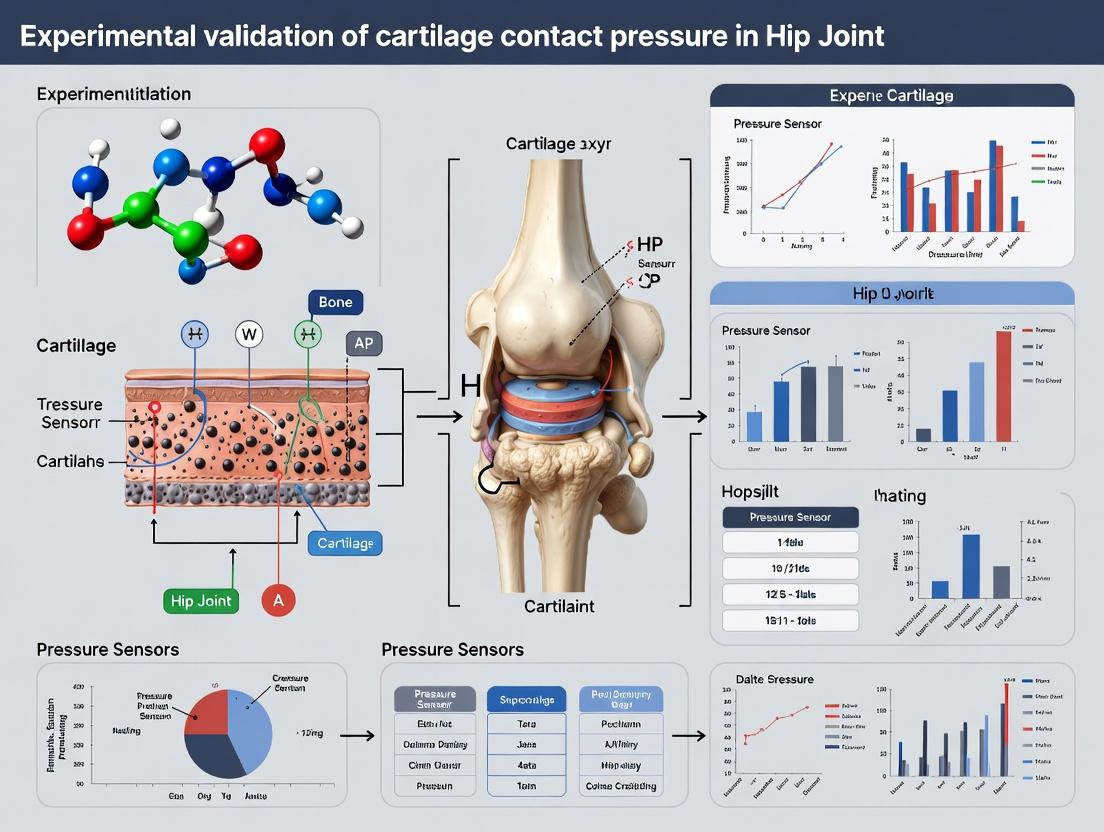
This article provides a comprehensive review of current methodologies for the experimental validation of cartilage contact pressure in the hip joint.
Experimental Validation of Cartilage Contact Pressure in the Hip Joint: Methods, Challenges, and Clinical Implications for Osteoarthritis Research
Abstract
This article provides a comprehensive review of current methodologies for the experimental validation of cartilage contact pressure in the hip joint. Tailored for researchers, scientists, and drug development professionals, it explores the biomechanical principles of hip joint loading, details established and emerging measurement techniques (including Fujifilm Prescale, Tekscan sensors, and digital image correlation), and addresses common experimental challenges. It further evaluates validation strategies against computational models and discusses the critical applications of this data in understanding osteoarthritis pathogenesis, assessing surgical interventions, and developing novel disease-modifying drugs. The synthesis aims to serve as a practical guide for designing robust experiments and translating biomechanical insights into clinical advancements.
The Biomechanical Imperative: Why Measuring Hip Cartilage Contact Pressure is Fundamental to Orthopaedic Research
This guide is framed within the thesis Experimental validation of cartilage contact pressure in hip joint research. Accurately measuring load transfer and pressure distribution is critical for understanding joint degeneration, developing biomimetic implants, and evaluating potential therapeutic interventions. This guide compares the performance of leading experimental methodologies.
Published Comparison Guides
Guide 1: Experimental Techniques for Measuring Cartilage Contact Pressure
| Technique | Spatial Resolution | Temporal Resolution | Key Advantage | Primary Limitation | Typical Pressure Range (MPa) |
|---|---|---|---|---|---|
| Fuji Prescale Film | ~0.1 mm | Static (Single time-point) | Cost-effective, simple, high spatial resolution. | Static only, sensitive to moisture, requires careful calibration. | 2.5 - 10.0 |
| TekScan (I-Scan) | 1-3 sensors/cm² | Up to 100 Hz | Dynamic measurement, provides real-time pressure maps. | Sensor thickness may alter contact mechanics, requires recalibration. | 0.01 - 30.0 |
| Pressure-Sensitive Pin | Single point | Dynamic | Direct measurement within bone, minimal joint space intrusion. | Invasive, provides only discrete point data, not a full field map. | 0 - 50.0 |
| Finite Element Analysis (FEA) | Model-dependent (sub-mm) | Static/Dynamic (simulated) | Non-invasive, can predict stresses within cartilage layers. | Requires validation against experimental data; highly model-dependent. | Variable |
Experimental Protocol for TekScan Validation:
- Sensor Calibration: The thin-film electronic sensor (e.g., Model 6900) is calibrated using a pneumatic calibrator applying known pressures across its range.
- Specimen Preparation: A cadaveric human hip joint is dissected to preserve the capsule and labrum. It is mounted in a materials testing system (e.g., Instron) in a simulated single-leg stance position (25° flexion, 5° adduction).
- Sensor Placement: The sensor is carefully inserted into the joint space via a small capsulotomy, ensuring it lays flat on the acetabular cartilage.
- Loading Protocol: The joint is subjected to a dynamic sinusoidal load from 0.5 to 2.5 times body weight (700N to 3500N) at 1 Hz for 100 cycles.
- Data Acquisition: Pressure distribution, contact area, and peak pressure are recorded in real-time via the TekScan software. Data from the final 5 cycles are averaged for analysis.
Guide 2: Comparison of Hip Joint Simulators for Drug Efficacy Testing
| Simulator Type | Motion Axes | Loading Profile | Fluid Environment | Best Suited For | Validation Challenge |
|---|---|---|---|---|---|
| Simple Pendulum | 1 (Flexion/Extension) | Constant load or body-weight-multiplier | Static bath or mist | Lubrication studies, friction measurement. | Oversimplified kinematics. |
| Hip Simulator (e.g., MTS Bionix) | 3 (Flexion/Extension, Ad/Abduction, Rotation) | Dynamic, physiologic (Bergmann et al. gait data) | Controlled temperature, possible lubricant circulation. | Implant wear testing, cartilage pressure studies under gait. | Replicating muscle forces. |
| 6-DOF Robotic System | 6 (Full kinematic control) | Force-controlled or displacement-controlled | Immersed in physiologic saline or culture media. | In vitro drug testing on cartilage, studying instability. | High cost, complex programming. |
| Bioreactor System | Often 1 or 2 | Low-magnitude, cyclic | Cell culture media with/without serum. | Cartilage tissue engineering, mechanistic biological studies. | Non-physiologic loading. |
Experimental Protocol for 6-DOF Robotic Drug Testing:
- System Setup: A 6-degree-of-freedom robotic manipulator (e.g., KUKA AG) is fitted with a force/torque sensor. A cadaveric hip joint is potted and mounted.
- Kinematic Recording: The robot is first used in "teach mode" to find the path of passive flexion-extension while maintaining a low compressive load (50N).
- Gait Simulation: Using inverse dynamics, the robot replicates the in vivo kinematics of the femoral head during the stance phase of gait. Simultaneously, it applies the corresponding synchronized three-dimensional forces based on telemetric data.
- Intervention: The joint is immersed in a bath containing either a control (PBS) or a test solution (e.g., a lubricin-based therapeutic).
- Measurement: The robot repeats the identical gait simulation. The actual forces required to achieve the kinematics are recorded. A reduction in required force indicates decreased friction. Contact pressure is measured simultaneously via an integrated TekScan sensor.
- Analysis: The coefficient of friction and peak contact pressure are compared between control and therapeutic conditions over 100,000 cycles.
The Scientist's Toolkit: Research Reagent Solutions
| Item | Function in Hip Biomechanics Research |
|---|---|
| Physiologic Saline (0.9% NaCl) | Standard lubricant and hydrating medium for ex vivo joint testing, maintaining tissue hydration. |
| Bovine Serum Albumin (BSA) | Added to lubricants (at ~25 mg/ml) to simulate the protein content of synovial fluid, critical for realistic friction studies. |
| Hyaluronic Acid (Sodium Hyaluronate) | High-viscosity solution used to mimic the viscous component of synovial fluid in lubrication experiments. |
| Fluorescent Microspheres (e.g., 1µm) | Used in conjunction with microscopy to visualize and quantify cartilage surface strain and deformation under load. |
| Protease Inhibitor Cocktail | Added to storage and testing media for cadaveric specimens to inhibit post-mortem tissue degradation during experiments. |
| Trypan Blue Stain | Used to assess chondrocyte viability in cartilage explants before and after mechanical loading protocols in bioreactors. |
| CT Contrast Agent (e.g., Iohexol) | Used in micro-CT imaging to perform diffusion tensor imaging of cartilage or to visualize joint space in loaded conditions. |
Visualizations
Title: Cartilage Mechanotransduction Pathways Under Load
Title: Workflow for Experimental Hip Joint Pressure Validation
Comparative Analysis of Experimental Platforms for Cartilage Contact Pressure Measurement
This guide compares established and emerging methodologies for experimental validation of cartilage contact pressure, a critical parameter in understanding stress-induced osteoarthritis (OA) pathogenesis.
Table 1: Comparison of Contact Pressure Measurement Techniques
| Technique | Principle | Spatial Resolution | Temporal Resolution | Key Advantage | Key Limitation | Representative Studies (Findings) |
|---|---|---|---|---|---|---|
| Fujifilm Prescale Pressure Sensor | Colorimetric film; color intensity proportional to pressure. | ~0.1-0.2 MPa (low) | Static or quasi-static. | Cost-effective; provides full-field contact area. | Low resolution; hysteresis; limited to static loads. | Gaddam et al. (2023): Reported peak acetabular contact pressures of 8-12 MPa in human cadaveric hips during simulated stance. |
| Tekscan / K-Scan Sensors | Array of piezoresistive sensing elements. | 0.015-0.1 MPa (medium) | Up to 100 Hz (dynamic). | Dynamic measurement capability; digital output. | Calibration drift; sensor thickness can alter contact mechanics. | Harris et al. (2022): Dynamic gait simulation showed peak hip contact stresses of 10.5 ± 1.8 MPa, correlating with early cartilage lesion locations. |
| Digital Image Correlation (DIC) + Finite Element (FE) | Optical surface strain measurement used to validate computational models. | < 0.01 MPa (high, model-dependent) | Model-dependent. | Non-contact; provides full-field strain and stress data. | Requires validation; computationally intensive. | Farvard et al. (2024): Validated subject-specific FE model with DIC, predicting focal stress risers (>15 MPa) in dysplastic hips. |
| Fluorescent Microsphere-Based Microscopy | Microscopic particles with pressure-sensitive emission. | ~1-10 µm (very high) | Static. | Extremely high spatial resolution at cellular level. | Destructive; requires tissue sectioning; mostly ex vivo. | Sanchez-Adams et al. (2023): Identified pericellular matrix stress concentrations up to 25 MPa in impacted cartilage explants. |
Experimental Protocol:In SituContact Stress Measurement in Cadaveric Hip Joints
Objective: To map the magnitude and distribution of contact stress in the human acetabular cartilage under physiologically relevant loading. Materials: Human cadaveric hemipelvis with intact labrum and cartilage, materials testing system (MTS), Fujifilm Prescale Ultra Super Low pressure-sensitive film, Tekscan 5051 sensor, phosphate-buffered saline (PBS). Procedure:
- Specimen Preparation: Dissect soft tissues, preserving the hip capsule. Keep cartilage hydrated with PBS-soaked gauze.
- Sensor Placement: For static measurement, insert a trimmed sheet of Fujifilm film into the joint space via a capsulotomy. For dynamic measurement, calibrate and insert the Tekscan sensor.
- Biomechanical Testing: Mount the specimen in the MTS. Align the femoral head into the acetabulum at a prescribed angle (e.g., single-leg stance). Apply a ramp-and-hold compressive load (e.g., 3x body weight, ~2100 N) for static film. For dynamic testing, apply a sinusoidal load replicating gait (1 Hz).
- Data Acquisition: Remove film after load hold for analysis. For Tekscan, record pressure data in real-time at 50 Hz.
- Analysis: Digitize Fujifilm color intensity and convert to MPa using calibration curves. Analyze Tekscan data for peak pressure, mean pressure, and contact area.
Diagram: From Contact Stress to OA Progression Pathway
Title: Mechanistic Pathway from Joint Stress to Cartilage Degradation
Diagram: Workflow for Validating Computational Contact Models
Title: Experimental-Computational Hybrid Workflow
The Scientist's Toolkit: Key Research Reagent Solutions
| Item / Reagent | Function in Contact Stress/OA Research | Example Application |
|---|---|---|
| Pressure-Sensitive Film (Fujifilm Prescale) | Provides a full-field, colorimetric map of contact pressure magnitude and area. | Static mapping of acetabular contact patterns in cadaveric joints. |
| Piezoresistive Sensor Arrays (Tekscan) | Enables dynamic, electronic recording of contact stress distribution over time. | Measuring contact stress during simulated gait cycles in a biomechanical tester. |
| Fluorescent Microspheres (PsiSense) | Nanoscale or microscale particles that emit fluorescence intensity dependent on applied pressure. | High-resolution mapping of pericellular stress concentrations in cartilage explants under load. |
| Cartilage Explant Culture System | Maintains viable osteochondral tissue ex vivo for controlled mechanical loading studies. | Applying cyclic compressive stress to bovine explants to study anabolic/catabolic responses. |
| IL-1β & TNF-α Recombinant Proteins | Pro-inflammatory cytokines used to simulate the inflammatory environment of OA in vitro. | Treating chondrocyte cultures or explants alongside mechanical loading to study synergy. |
| MMP-13 & ADAMTS-5 Activity Assays | Fluorogenic or colorimetric kits to quantify the activity of key cartilage-degrading enzymes. | Measuring catabolic output from chondrocytes subjected to high shear or compressive stress. |
| Phosphate-Buffered Saline (PBS) with Protease Inhibitors | Physiological buffer used to maintain tissue hydration and prevent artifact degradation during biomechanical testing. | Immersing and irrigating cartilage specimens during long-duration mechanical testing protocols. |
This guide is framed within the thesis on Experimental validation of cartilage contact pressure in hip joint research. Accurate measurement of intra-articular contact pressure is critical for understanding joint biomechanics, elucidating disease mechanisms like osteoarthritis (OA), and evaluating therapeutic interventions. This guide compares methodologies for obtaining experimental pressure data and their application in joint health research.
Comparison of Experimental Pressure Sensing Technologies
Table 1: Comparison of Major Pressure Sensing Technologies for Joint Research
| Technology | Typical Sensor Type | Spatial Resolution | Temporal Resolution | Key Advantages | Key Limitations | Primary Use Case |
|---|---|---|---|---|---|---|
| Tekscan (I-Scan) | Thin-film electronic (resistive) | ~1-2 sensors/cm² | 100-1000 Hz | Real-time data, dynamic loading, cost-effective | Calibration drift, hysteresis, less conformable | Dynamic gait simulation, implant testing |
| Fuji Prescale | Film-based (colorimetric) | ~4-10 sensors/cm² | Single static measurement | High spatial resolution, easy use, good conformity | Static only, qualitative/semi-quantitative, single use | Static contact area/pattern in cadavers, implant positioning |
| K-Scan | Thin-film electronic (capacitive) | ~3-4 sensors/cm² | Up to 10 kHz | High accuracy, low hysteresis, good drift resistance | Higher cost, thicker film, complex calibration | High-fidelity dynamic studies, validation benchmarking |
| Embedded Transducers | Miniature piezoelectric or strain gauge | Point measurement | > 5 kHz | Very high accuracy and temporal resolution | Invasive, requires bone/cartilage modification, low spatial data | In vivo animal studies, discrete point validation |
Experimental Protocols for Key Studies
Protocol 1: Dynamic Hip Contact Pressure Measurement Using Tekscan
- Objective: To map acetabulofemoral contact pressures during simulated gait cycles.
- Sample Preparation: Human cadaveric hip joint or implant construct is mounted in a biomechanical testing system (e.g., Instron, MTS).
- Sensor Placement: A Tekscan 4000 or 5051 sensor is trimmed, calibrated per manufacturer protocol, and inserted into the joint capsule, positioned over the acetabular cartilage or liner.
- Loading Protocol: The system applies phased axial loads and rotations simulating heel-strike, mid-stance, and toe-off phases of gait. Kinematic data is synchronized.
- Data Acquisition: Pressure, force, and area data are recorded at 100 Hz. Data is processed to calculate peak pressure, mean pressure, and contact area for each gait phase.
- Analysis: Comparison of healthy vs. OA joints, or native hip vs. different implant designs.
Protocol 2: High-Resolution Static Contact Mapping with Fuji Film
- Objective: To obtain a high-resolution static contact pattern in a hip joint.
- Sample Preparation: Cadaveric hemipelvis and proximal femur are dissected, preserving ligaments.
- Sensor Placement: Fuji Super Low Pressure (LLW) film is cut to fit the acetabulum. The joint is reduced with the film in place.
- Loading: A single compressive load (e.g., 1.5x body weight) is applied via the testing frame and held for 60 seconds.
- Development & Digitization: The film is removed, and the colorimetric stain intensity (correlated to pressure) is scanned at high resolution (≥600 DPI).
- Analysis: Image analysis software (e.g., ImageJ, FPD-8010E) converts stain intensity to pressure maps. Metrics include total contact area, centroid of pressure, and peak pressure location.
Signaling Pathways in Mechanotransduction Linked to Pressure Data
Diagram: Mechanotransduction Pathways in Chondrocytes
The Scientist's Toolkit: Key Research Reagent Solutions
Table 2: Essential Research Reagents for Cartilage Pressure Studies
| Reagent/Material | Vendor Examples | Function in Research |
|---|---|---|
| Papain or Collagenase | Sigma-Aldrich, Worthington Biochemical | Enzymatic digestion of cartilage for explant culture or chondrocyte isolation for subsequent mechanobiology assays. |
| Dulbecco’s Modified Eagle Medium (DMEM)/Ham's F-12 | Thermo Fisher, Corning | Base nutrient medium for maintaining cartilage explants or chondrocyte cultures during ex vivo loading experiments. |
| Fetal Bovine Serum (FBS) | Atlas Biologicals, Gibco | Serum supplement providing growth factors and proteins for cell survival and matrix maintenance in culture. |
| Insulin-Transferrin-Selenium (ITS) Supplement | Sigma-Aldrich, Gibco | Defined serum replacement often used in chondrocyte cultures to reduce batch variability of FBS. |
| Proteoglycan/DNA Assay Kits (e.g., DMMB, PicoGreen) | Biocolor, Invitrogen | Quantify sulfated glycosaminoglycan (sGAG) and DNA content to assess cartilage matrix composition and cellularity after mechanical loading. |
| ELISA Kits (MMP-13, ADAMTS-5, IL-1β, IL-6) | R&D Systems, Abcam | Quantify catabolic and inflammatory biomarker release into culture supernatant following mechanical stimulation. |
| Live/Dead Viability/Cytotoxicity Kit | Invitrogen, Thermo Fisher | Fluorescent assay (Calcein AM/EthD-1) to determine chondrocyte viability within explants after pressure exposure. |
| TRAP/ALP Staining Kits | Sigma-Aldrich | Detect osteoclast/osteoblast activity in bone-cartilage co-cultures or subchondral bone studies. |
Diagram: Experimental Workflow for Pressure Data in Joint Research
Experimental pressure data, acquired through technologies like Tekscan and Fuji film, provides a critical bridge between joint biomechanics and biology. When integrated with complementary biological assays within a structured experimental workflow, this data directly informs key research questions on cartilage wear, mechanotransduction in OA, and the efficacy of surgical or pharmacologic interventions. The choice of sensor must align with the research question, balancing resolution, dynamic capability, and biologic relevance.
A critical thesis in hip joint research is the experimental validation of cartilage contact pressure. Accurate in vitro and in silico models are essential for developing disease-modifying osteoarthritis drugs (DMOADs) and evaluating surgical interventions. This guide compares the performance of prevalent experimental benchmarking methods used to validate these contact pressure predictions.
Comparison of Hip Joint Contact Pressure Validation Methodologies
| Benchmark Method | Reported Pressure Accuracy (Mean Error) | Spatial Resolution | Key Advantage | Primary Limitation | Common Use in Literature |
|---|---|---|---|---|---|
| Fujifilm Prescale Pressure Sensor | ±0.05 - 0.10 MPa | ~0.1 mm² | Ease of use, full-field static map | Hygroscopic, time-dependent decay, static only | High (Widely adopted gold standard) |
| Tekscan Sensor (e.g., I-Scan) | ±0.015 MPa (theoretical) | 1-3 sensors/cm² | Dynamic pressure measurement capability | Drift, requires frequent re-calibration, hysteresis | Moderate to High |
| Pressure-Sensitive Film (e.g., Prescale) | ±0.1 MPa (approximate) | ~0.05 mm² | High spatial resolution, low cost | Single-use, static, semi-quantitative without calibration | High |
| Inverse Finite Element Analysis (FEA) Validation | Varies (5-20% vs. exp.) | Mesh-dependent | Integrates complex material properties | Computationally intensive; GIGO (Garbage In, Garbage Out) | Increasing |
| Dye Exclusion / Alginate Methods | Qualitative only | N/A | Simple, visualizes contact area | No quantitative pressure data | Historical / Low-fidelity screening |
Detailed Experimental Protocols for Key Benchmarks
Protocol 1: Fujifilm Prescale Film for Static Contact Pressure
- Preparation: Under aseptic conditions, dissect the human or bovine femoral head and acetabulum.
- Film Selection: Choose Low (0.5-2.5 MPa) or Medium (2.5-10 MPa) pressure-sensitive film sheets.
- Application: Cut film to match articulating surface. Insert film between the reduced hip joint.
- Loading: Apply physiological load (1.5-3x body weight) via a materials testing system for 30 seconds.
- Analysis: Remove film. Scan the colored film and convert pixel intensity to pressure using a proprietary calibration curve. Co-register pressure map with anatomical landmarks.
Protocol 2: Tekscan I-Scan System for Dynamic Pressure Mapping
- Sensor Calibration: Calibrate the thin, flexible electronic sensor using a materials tester with a known force over its sensing area, following a 5-point calibration protocol.
- Sensor Placement: Secure the sterilized sensor capsule within the acetabular labrum or fix it directly to the acetabular cartilage, ensuring minimal wrinkling.
- Joint Testing: Reduce the hip joint. Execute dynamic loading cycles (e.g., gait simulation) using a biomechanical rig.
- Data Acquisition: Record real-time pressure, force, and contact area data at 100 Hz+ via the I-Scan software.
- Post-processing: Apply sensor-specific calibration matrices, correct for drift between trials, and analyze temporal-spatial pressure profiles.
Experimental Workflow for Benchmarking
Validation Workflow for Hip Contact Pressure
Canonical Signaling Pathways in Cartilage Mechanobiology
Mechanotransduction in Cartilage Under Load
The Scientist's Toolkit: Key Research Reagent Solutions
| Reagent / Material | Supplier Examples | Function in Hip Contact Pressure Research |
|---|---|---|
| Fuji Prescale Film (Low/Medium) | Fujifilm | Provides a static, full-field colorimetric map of contact pressure between articular surfaces. |
| Tekscan I-Scan System & Hip Sensors | Tekscan, Inc. | Electronic sensing system for dynamic, real-time measurement of pressure distribution in the joint. |
| Phosphate-Buffered Saline (PBS) | Sigma-Aldrich, Thermo Fisher | Physiological lubricant and hydrating solution used during in vitro biomechanical testing to maintain tissue viability. |
| Cytocompatible Pressure-Sensitive Dyes | PresSure, etc. | Emerging tools for integrating with live tissue or cell-laden constructs to visualize load in bioreactors. |
| Polyurethane Foam Subchondral Bone Analog | Sawbones, Pacific Research | Standardized material for creating reproducible in vitro test fixtures that mimic bone mechanical properties. |
| Fibrin or Cyanoacrylate Tissue Adhesive | Baxter, Loctite | For secure mounting of cartilage specimens or sensors onto testing fixtures without slippage. |
| Custom FEA Software (FEBio, Abaqus) | FEBio Project, Dassault Systèmes | To build computational models predicting contact stress, which are then validated against experimental benchmarks. |
From Lab to Insight: A Guide to Hip Joint Contact Pressure Measurement Techniques and Their Applications
Within the critical field of hip joint research, the experimental validation of cartilage contact pressure is fundamental for understanding joint biomechanics, disease progression, and the efficacy of therapeutic interventions. Accurate quantification of interfacial stress distributions requires reliable, high-fidelity measurement tools. This guide compares two established sensor-based technologies: Fujifilm Prescale film and Tekscan’s electronic sensor systems, evaluating their principles, protocols, and performance in the context of pre-clinical and biomechanical research.
Fundamental Principles & Technology Comparison
Fujifilm Prescale Film
A micro-encapsulated color-forming film system. Pressure applied causes microcapsules to rupture, releasing a color-forming dye. The color density is proportional to the applied pressure. The film is a single-use, analog system requiring post-experiment analysis with a dedicated scanner and software (FPD-8010E) to convert color intensity to pressure maps.
Tekscan Sensor Technology (e.g., I-Scan, 5051 Sensor)
A flexible, thin, electronic sensor grid constructed with piezoresistive materials. Applied pressure changes the electrical resistance at each sensing element (sensel). The system provides real-time digital output of pressure magnitude, distribution, and timing via proprietary software, allowing for dynamic measurement.
Performance Comparison: Key Experimental Data
The following table synthesizes quantitative data from recent comparative studies in biomechanical testing, particularly in cadaveric or synthetic hip joint models.
Table 1: Comparative Performance Metrics for Hip Joint Contact Pressure Analysis
| Metric | Fujifilm Prescale (Super Low Pressure) | Tekscan Model 5051 | Experimental Context (Reference) |
|---|---|---|---|
| Pressure Range | 0.5 - 2.5 MPa | 0.2 - 30 MPa | Static & dynamic joint loading |
| Spatial Resolution | ~0.1 mm (film grain) | 1.4 sensels/cm (Model 5051) | Mapping of acetabular contact area |
| Accuracy (vs. Load Cell) | ±10% (within mid-range) | ±5% (after in-situ calibration) | Calibration under spherical indentor |
| Hysteresis Error | Low (static only) | 5-10% (requires conditioning) | Cyclic loading of implant |
| Thickness | 0.1 - 0.2 mm | 0.1 mm | Affects joint spacing & congruence |
| Drift Over Time | Not applicable (static) | <5% per hour (dynamic) | 10-minute sustained load test |
| Data Output | 2D Static Map (Post-test) | Real-time Dynamic Video | Gait simulation studies |
| Key Advantage | High spatial detail, no electronics | Dynamic tracking, real-time data | -- |
| Key Limitation | Single-use, static, moisture-sensitive | Calibration drift, requires conditioning | -- |
Detailed Experimental Protocols
Protocol A: Static Contact Pressure Measurement with Fujifilm Prescale
Objective: To quantify the static pressure distribution in a cadaveric hip joint under a fixed load.
- Sensor Preparation: Under aseptic conditions, cut the Prescale film (Super Low type) to match the approximate size of the acetabular cartilage surface. Handle with powder-free gloves to avoid contamination.
- Joint Preparation: The femoral head is carefully subluxated. The film is inserted into the acetabulum, ensuring it lies flat against the cartilage without wrinkles.
- Loading: The joint is reduced and a calibrated materials testing machine applies a static load (e.g., 1.5x body weight) for 60 seconds, as per established biomechanical models.
- Unloading & Retrieval: The load is removed, the joint is subluxated again, and the film is carefully extracted.
- Analysis: The reacted film is immediately scanned using the FPD-8010E flatbed scanner. The proprietary software converts the color image (RGB) to a pressure map using pre-loaded calibration curves. Data points for peak pressure, mean pressure, and contact area are extracted.
Protocol B: Dynamic Pressure Mapping with Tekscan
Objective: To measure the temporal variation in contact pressure during a simulated gait cycle.
- Sensor Conditioning & Calibration: The Model 5051 sensor is conditioned by applying a load (e.g., 50% of max expected) for 10 loading-unloading cycles. It is then calibrated using a two-point protocol (e.g., 0 N and a known force via an indentor on a load cell) specific to the expected pressure range.
- In-Situ Calibration: Post-insertion into the joint, a known load is applied in a neutral position. The sensor output is equilibrated to this known load to account for the effects of curvature and confinement (essential step).
- Dynamic Testing: The instrumented hip joint is mounted on a dynamic simulator. The Tekscan system records at 100 Hz throughout a programmed gait cycle, capturing pressure at every sensel.
- Data Processing: Data is analyzed in I-Scan software. A region of interest (ROI) is defined around the contact area. Metrics like peak pressure, mean pressure, center of force trajectory, and contact area are plotted versus percentage of the gait cycle.
The Scientist's Toolkit: Research Reagent Solutions
Table 2: Essential Materials for Hip Joint Contact Pressure Studies
| Item | Function & Rationale |
|---|---|
| Fujifilm Prescale Film (Super Low) | Single-use pressure-sensitive film for high-resolution static pressure mapping. |
| FPD-8010E Scanner & Software | Dedicated system for digitizing and quantifying color intensity from Prescale film. |
| Tekscan I-Scan System & 5051 Sensor | Electronic sensor and hardware/software suite for dynamic, real-time pressure measurement. |
| Materials Testing Machine (e.g., Instron) | Provides precise, calibrated axial load application to the joint construct. |
| Hip Joint Simulator / Robotic System | Enables application of complex, physiologically relevant multi-axis loads and motions. |
| Saline Mist Spray | Keeps cartilage surfaces hydrated during testing to prevent artifact from drying. |
| Custom 3D-Printed Fixtures | Securely holds pelvic and femoral specimens in anatomical orientation during loading. |
| Calibrated Load Cell (e.g., 5 kN) | Reference standard for performing in-situ calibration of electronic sensors. |
Visualized Workflows
This comparison guide, framed within the thesis Experimental validation of cartilage contact pressure in hip joint research, evaluates two non-contact, full-field strain measurement techniques: Digital Image Correlation (DIC) and Ultrasound Elastography. These methods are critical for quantifying cartilage deformation and contact mechanics ex vivo and in vivo, providing essential data for biomechanical modeling and drug development for osteoarthritis.
Core Principles & Technical Comparison
Digital Image Correlation (DIC) is an optical, surface-based technique that tracks the displacement of a speckle pattern applied to a sample's surface. It computes 2D or 3D full-field strains with high spatial resolution.
Ultrasound Elastography encompasses several techniques (e.g., strain elastography, shear wave elastography) that use ultrasonic radiofrequency signals to estimate internal tissue deformation or elastic modulus, providing depth-resolved data.
Table 1: Fundamental Technical Comparison
| Parameter | Digital Image Correlation (3D) | Ultrasound Elastography (Shear Wave) |
|---|---|---|
| Measured Quantity | Surface displacement & strain | Tissue displacement & elastic modulus |
| Spatial Resolution | ~10-50 µm (depends on sensor) | ~0.5-2 mm (lateral) |
| Field of View | Surface only, user-defined | Subsurface, depth-limited (2-8 cm) |
| Temporal Resolution | < 1 ms (stereo systems) | 1-50 Hz (frame rate dependent) |
| Key Output | Lagrangian strain tensor (εxx, εyy, εxy) | Young's modulus (kPa or MPa) map |
| Primary Use Case | Ex vivo contact pressure/ strain validation | In vivo tissue stiffness assessment |
Experimental Data & Performance Comparison
Recent studies in hip joint biomechanics provide direct comparative data.
Table 2: Experimental Performance in Cartilage Contact Analysis
| Experiment Context | DIC Results | Ultrasound Elastography Results | Key Finding |
|---|---|---|---|
| Human femoral head cartilage under static compression (ex vivo) | Peak compressive strain: 18-25% at 3 MPa. Spatial gradiant clearly mapped. | Modulus reduced from 5.2 MPa to 3.1 MPa in compressed zone. | DIC provides superior strain field detail on surface; USE quantifies subsurface modulus change. |
| Porcine hip joint during dynamic loading | Strain rate calculated up to 0.8%/s during gait simulation. | Shear wave speed decreased by 15% post-cyclic loading indicating softening. | DIC excels in dynamic strain measurement; USE tracks cumulative damage. |
| Correlation with pressure-sensitive film | R² = 0.91 for peak pressure correlation. | R² = 0.76 for modulus vs. pressure correlation. | DIC is more directly validated for contact pressure estimation. |
Detailed Experimental Protocols
Protocol 1: Ex Vivo Cartilage Contact Strain Mapping with 3D-DIC
- Sample Preparation: Dissect human femoral head. Airbrush a high-contrast, stochastic speckle pattern on the articular surface using non-toxic black and white paint.
- System Setup: Mount sample in material testing system. Position two calibrated high-speed cameras (≥ 2 MP) at ~30° stereo angle. Ensure uniform, diffuse lighting.
- Calibration: Use a precision dot-pattern target (>15 images at different orientations). Calibration residual should be < 0.05 pixels.
- Loading: Apply compressive load via a transparent indenter or natural acetabular counter-face to simulate physiological stress (2-5 MPa).
- Data Acquisition: Acquire synchronized image pairs at 5-10 fps during loading.
- Processing: Use commercial (e.g., GOM Correlate, VIC-3D) or open-source (Ncorr) software. Set subset size (e.g., 29px) and step (5px). Compute Green-Lagrange strain fields.
Protocol 2: In Situ Cartilage Elastic Modulus Mapping with Shear Wave Elastography
- Sample Preparation: Mount a porcine or bovine hip joint in a saline bath to maintain hydration and ensure acoustic coupling.
- System Setup: Use a research-grade ultrasound system with elastography module (e.g., Verasonics, SuperSonic Imagine). Attach linear array transducer (9-15 MHz).
- Coupling: Position transducer perpendicular to region of interest (e.g., femoral head cartilage) using a gel standoff pad.
- Acquisition: Generate acoustic radiation force push pulse (focused, ~100 μs duration). Acquire ultra-fast ultrasound imaging (>5000 fps) to track subsequent shear wave propagation.
- Loading: Perform under unloaded and statically loaded (≈1.5x body weight) conditions.
- Processing: Use built-in software to calculate shear wave speed (Cs) at each pixel. Convert to Young's modulus (E) assuming isotropy and incompressibility: E ≈ 3ρCs², where ρ is tissue density (~1000 kg/m³).
Visualization of Workflows
Title: 3D-DIC Experimental Workflow
Title: Shear Wave Elastography Workflow
The Scientist's Toolkit: Research Reagent Solutions
Table 3: Essential Materials for Cartilage Contact Mechanics
| Item | Function | Example Product/Supplier |
|---|---|---|
| Biphasic Cartilage Mimicking Phantom | Calibrates and validates both DIC and USE against known properties. | Hydrogel phantoms with tunable modulus (Polyacrylamide, Cobalt Blue). |
| Speckle Pattern Kit | Creates high-contrast, non-toxic pattern for DIC on hydrated tissue. | LA-TR Series Airbrush Paints (VIC-3D) or cosmetic sponges. |
| Acoustic Coupling Gel (Phosphate-Buffered) | Ensures ultrasound signal transmission while maintaining tissue osmolarity. | Parker Aquasonic 100 Ultrasound Gel. |
| Hydrated Testing Chamber | Maintains tissue viability during ex vivo testing for both techniques. | Custom or commercial bath chamber with temperature control. |
| Calibration Target (DIC) | Enables 3D point reconstruction. Must match field of view. | Certified dot-pattern plate (LaVision, GOM). |
| Reference Elasticity Phantoms (USE) | Provides quality control for elastography system accuracy. | Elasticity QA Phantom (CIRS Model 049). |
| Multi-Axis Load Frame | Applies physiological, complex loading to the joint. | Instron ElectroPuls, Bose ELF 3300. |
For the experimental validation of cartilage contact pressure in the hip joint, 3D-DIC is the superior choice for ex vivo studies requiring high-resolution, quantitative surface strain maps directly correlatable to pressure. Ultrasound Elastography is the indispensable technique for in vivo or subsurface applications, offering unique insights into depth-wise modulus changes. An integrated approach, using DIC to validate ex vivo models that inform in vivo elastography studies, presents a powerful pathway for translational hip joint research and therapeutic development.
Within the context of a broader thesis on Experimental validation of cartilage contact pressure in hip joint research, the design of an ex vivo hip simulator is critical. This guide objectively compares prevalent simulator designs and loading protocols, providing researchers and drug development professionals with data to select appropriate platforms for cartilage contact mechanics studies.
Comparison of Hip Simulator Designs
The table below compares three primary design philosophies based on current literature and commercial systems.
Table 1: Comparison of Ex Vivo Hip Simulator Configurations
| Feature | Anatomically Positioned 6-DOF Robotic System | Pendulum-Based Simulator | Simplified Axial Load Actuator |
|---|---|---|---|
| Primary Motion Control | Servo-hydraulic or robotic arm(s) capable of independent 6-degree-of-freedom (DOF) control. | Gravity-driven pendulum with controlled release; often single-plane motion. | Single-axis actuator applying compressive load; femoral head often fixed. |
| Loading Capability | Dynamic multi-axis loading (Fz, Mx, My). Can replicate complex in-vivo force profiles (e.g., gait). | Primarily body-weight-magnitude compression via pendulum mass. Limited dynamic multi-axis force. | High static or cyclic axial load. Limited to no active abduction/adduction or rotational moments. |
| Physiological Fidelity | High. Can replicate full gait cycle kinematics and kinetics. | Moderate. Simulates swing-phase kinematics with simplified loading. | Low. Isolates compression but sacrifices complex joint motion. |
| Cartilage Pressure Mapping | Compatible with thin-film sensor arrays (e.g., Tekscan) for dynamic, area-specific contact pressure. | Suitable for static or quasi-static pressure measurement at discrete gait points. | Best for uniform pressure assessment or focal overload studies. |
| Typical Cost & Complexity | Very High / Complex | Moderate / Moderate | Low / Simple |
| Key Advantage | Realistic, validated kinetic profiles for mechanobiology and implant testing. | Good for studying lubrication, wear, and basic kinematics with simpler setup. | Cost-effective for fundamental stress-strain and fatigue studies. |
| Example Reference System | AMTI/Vivo whole-joint simulator, custom 6-DOF robotic systems. | "Pendulum" type simulators used in early tribology studies. | Instron/ElectroPuls with custom potting fixtures. |
Comparison of Loading Protocols
The loading protocol is as crucial as the hardware. Below is a comparison of common approaches.
Table 2: Comparison of Ex Vivo Hip Joint Loading Protocols
| Protocol Type | Description | Peak Load Magnitude (Typical) | Cycle Frequency | Key Application | Physiological Accuracy |
|---|---|---|---|---|---|
| Full Gait Cycle Replication | Phasic loading based on in-vivo instrumented implant data (e.g., Bergmann et al.). | 200-300% BW (≈1.8-2.7 kN) | 1 Hz (walking) | Biomaterials testing, contact mechanics validation. | Very High. Uses real kinetic/kinematic data. |
| Simplified Sinusoidal Load | Axial load varying sinusoidally between minimum and peak. | 150-250% BW (≈1.3-2.2 kN) | 0.5-2 Hz | Cartilage fatigue, pre-clinical implant wear screening. | Moderate. Captures dominant axial force component. |
| Constant Static Load | Single, sustained axial load applied for defined period. | 100-200% BW (≈0.9-1.8 kN) | N/A | Cartilage creep, diffusion studies, static pressure mapping. | Low. Represents static stance phase only. |
| Pendulum Swing Phase | Load applied via pendulum mass during passive leg swing. | ~100% BW (≈0.9 kN) | ~1 Hz (natural frequency) | Tribology, friction, lubrication studies. | Moderate-Low for load, Moderate for kinematics. |
Experimental Protocol: Cartilage Contact Pressure Validation
A standard methodology for validating contact pressures in a 6-DOF robotic hip simulator is detailed below.
1. Specimen Preparation:
- Source fresh-frozen human or cadaveric porcine/ovine pelvic and femoral specimens.
- Dissect to retain intact capsule, labrum, and surrounding musculature for natural joint conformity.
- Pot the acetabulum and femoral shaft in polymethyl methacrylate (PMMA) bone cement within cylindrical fixtures, ensuring neutral standing alignment.
2. Simulator Setup & Calibration:
- Mount the acetabular fixture to a 6-axis load cell on the simulator base.
- Mount the femoral fixture to the robotic actuator.
- Perform kinematic calibration to define the joint center and neutral (0,0) position.
3. Sensor Integration:
- Thin-film piezoresistive sensor arrays (e.g., Tekscan 5051 sensor) are calibrated per manufacturer protocol using a dual-curve calibration rig.
- The sensor is carefully introduced into the joint space via a small capsulotomy, positioned on the acetabular cartilage surface.
4. Loading Protocol Execution:
- Program the robotic system to apply a scaled version of the "Normal Walking" profile from the "Grand Challenge Competition to Predict In Vivo Knee Loads" dataset or Bergmann's hip data.
- The protocol runs for 10 conditioning cycles, followed by 5 recorded data collection cycles.
- The system records synchronized data: 6-DOF kinematics/kinetics from the robot and load cell, and dynamic contact pressure/area from the sensor.
5. Data Analysis:
- Contact pressure (peak, mean), contact area, and force-time integrals are extracted for the stance phase.
- Data is compared to published in-vivo or computational (Finite Element Analysis) values for validation.
Title: Workflow for Hip Contact Pressure Experiment
The Scientist's Toolkit: Key Research Reagent Solutions
Table 3: Essential Materials for Ex Vivo Hip Simulation Studies
| Item | Function & Rationale |
|---|---|
| Cadaveric Hip Joints (Human/Ovine/Bovine) | Provides anatomically correct morphology with native cartilage for translational studies. |
| 6-Axis Load Cell (e.g., ATI Mini45) | Measures the 3 forces and 3 moments at the joint base for closed-loop control and validation. |
| Thin-Film Pressure Sensor (e.g., Tekscan 5051) | Quantifies dynamic, area-specific cartilage contact pressures without major joint disruption. |
| Physiological Bath Solution (e.g., PBS + Protease Inhibitors) | Maintains tissue hydration and viability, preventing cartilage degradation during testing. |
| Potting Material (e.g., PMMA Bone Cement) | Secures bony structures firmly to simulator fixtures while maintaining anatomical alignment. |
| Motion Capture System (Optical or EM tracking) | Independently verifies the kinematic accuracy of the robotic system's motion output. |
| Data Acquisition System (e.g., National Instruments DAQ) | Synchronizes high-frequency data streams from load cell, pressure sensor, and robot controller. |
Selecting an ex vivo hip simulator and protocol requires balancing physiological fidelity with practical constraints. For comprehensive cartilage contact pressure validation within a thesis framework, a 6-DOF system replicating full gait kinetics, paired with thin-film sensor technology, provides the most robust and clinically relevant data. Simplified systems remain valuable for focused questions on wear or static loading.
Within the context of experimental validation of cartilage contact pressure in hip joint research, the accurate processing of pressure map data into key biomechanical parameters is fundamental. This guide compares methodologies and technologies for deriving peak pressure, mean pressure, and contact area, critical for assessing joint health, implant performance, and therapeutic efficacy in preclinical studies.
Comparative Analysis of Pressure Sensing Technologies
The selection of sensing technology directly impacts the accuracy and resolution of the derived metrics. Below is a comparison of prevalent systems used in ex vivo hip joint testing.
Table 1: Comparison of Pressure Sensing Technologies for Hip Joint Contact Analysis
| Technology | Sensor Type | Spatial Resolution | Pressure Range (Typical) | Advantages for Hip Research | Key Limitations |
|---|---|---|---|---|---|
| Tekscan Pressure Mapping | Flexible thin-film electronic (I-Scan, Fujifilm Prescale) | 1-4 sensors/cm² | 0.01-60 MPa | High flexibility conforms to acetabular curvature; real-time digital output. | Requires careful calibration; can be sensitive to creep. |
| Pressure Sensitive Film | Fujifilm Prescale (single-use) | ~0.1 mm (analog) | 2.5-100 MPa | Excellent spatial resolution; direct visual impression; simple setup. | Single-use; requires post-hoc scanning/analysis; no temporal data. |
| Conductive Polymer Arrays | Custom-built arrays | Variable, often < 2 mm | 0.1-10 MPa | Can be customized for specific joint geometry. | Complex fabrication; calibration challenges. |
| Piezoresistive Sensors | Individual force sensors | Low (sensor count dependent) | Broad range | High accuracy for point loads. | Low spatial resolution; cannot capture continuous pressure field. |
Experimental Protocols for Key Methodologies
Protocol A: Pressure-Sensitive Film Analysis for Peak Pressure & Contact Area
- Preparation: Under load-controlled conditions (e.g., 1.5x body weight simulation), the hip joint is dissected and the femoral head is positioned in the acetabulum.
- Film Insertion: A sheet of Fujifilm Prescale (super-low or medium grade) is carefully interposed between the articular surfaces.
- Loading Application: A static load is applied via a materials testing machine for 60 seconds, per manufacturer specifications.
- Image Acquisition: The stained film is removed and immediately scanned at a minimum of 600 DPI under controlled lighting.
- Data Processing: The scanned image is imported into analysis software (e.g., ImageJ with color thresholding or proprietary software). Contact area (mm²) is calculated from the total stained pixels. Peak pressure (MPa) is derived from color intensity calibration curves.
Protocol B: Electronic Tekscan System for Dynamic Pressure Mapping
- Sensor Calibration: The thin-film sensor is calibrated using a two-point method against a known pressure in an actuator before each test.
- Sensor Placement: The sensor is trimmed and secured within the acetabular cup using double-sided tape, ensuring no wrinkling.
- Dynamic Testing: The hip joint is mounted in a simulator. A dynamic gait cycle load profile is applied.
- Data Acquisition: Pressure data from all sensels are recorded at 100 Hz throughout the cycle.
- Parameter Calculation: Software (e.g., Tekscan API) is used to:
- Calculate Peak Pressure as the maximum value from any sensel in the map for each time point.
- Calculate Mean Pressure as the sum of all sensel pressures divided by the number of active sensels (or total contact area) for each frame.
- Calculate Contact Area as the number of sensels above a defined threshold (e.g., 0.1 MPa) multiplied by the individual sensel area.
Data Presentation: Comparative Experimental Results
The following table summarizes hypothetical but representative data from a comparative study evaluating a novel hydrogel cartilage treatment versus a control in a porcine hip model.
Table 2: Comparison of Contact Parameters in Treated vs. Control Hip Joints (Static Load, 1500 N)
| Condition | Peak Pressure (MPa) | Mean Pressure (MPa) | Contact Area (mm²) | Measurement Technology |
|---|---|---|---|---|
| Control (Native Cartilage) | 8.2 ± 0.9 | 3.1 ± 0.4 | 485 ± 32 | Fujifilm Prescale (Medium) |
| Treated (Hydrogel Implant) | 5.1 ± 0.7 | 2.8 ± 0.3 | 545 ± 28 | Fujifilm Prescale (Medium) |
| Control (Simulated Gait) | 10.5 ± 1.2 | 4.3 ± 0.5 | 410 ± 35 | Tekscan 5033 Sensor |
| Treated (Simulated Gait) | 6.8 ± 0.8 | 3.9 ± 0.4 | 520 ± 30 | Tekscan 5033 Sensor |
Workflow for Pressure Data Processing
Title: Data Processing Workflow for Pressure Metrics
The Scientist's Toolkit: Research Reagent Solutions
Table 3: Essential Materials for Hip Joint Pressure Mapping Experiments
| Item | Function in Experiment | Example/Supplier |
|---|---|---|
| Pressure-Sensitive Film | Provides a single-use, high-resolution visual record of contact pressure and area. | Fujifilm Prescale Film (Super Low/Medium Grade) |
| Electronic Pressure Mapping System | Enables dynamic, real-time acquisition of pressure data across a sensor grid. | Tekscan I-Scan System with 5033 Sensor |
| Materials Testing System | Applies precise, controlled loads (static or dynamic) to the hip joint construct. | Instron ElectroPuls, Bose ElectroForce |
| Physiological Bath Solution | Maintains cartilage hydration and viability during ex vivo testing. | Phosphate-Buffered Saline (PBS) or Dulbecco's Modified Eagle Medium (DMEM) |
| Image Analysis Software | Quantifies contact area and color density from pressure-sensitive film scans. | National Institutes of Health ImageJ, Fujifilm Pressure Distribution Analysis Software |
| Custom Hip Joint Fixture | Holds acetabular and femoral components in anatomical alignment during loading. | 3D-Printed or Machined Aluminum Fixtures |
| Data Acquisition Interface | Converts analog sensor signals to digital data for electronic systems. | Tekscan Handle, National Instruments DAQ Board |
This comparison guide, framed within the thesis on Experimental validation of cartilage contact pressure in hip joint research, objectively evaluates the performance of sensor technologies and computational models used to measure and predict cartilage contact mechanics. The data directly informs clinical applications in implant design, surgical planning for Periacetabular Osteotomy (PAO) and Femoroacetabular Impingement (FAI) correction, and rehabilitation protocol development.
Comparison of Cartilage Contact Pressure Measurement & Prediction Technologies
Table 1: Comparison of Experimental Measurement Technologies
| Technology | Principle | Spatial Resolution | In Vivo Applicability | Key Advantage | Key Limitation | Representative Study & Peak Pressure Data (MPa) |
|---|---|---|---|---|---|---|
| Tekscan Sensor (I-Scan, 4011) | Thin, flexible electronic film with sensing grids. | ~1-2 mm (grid-dependent) | Intraoperative | Direct, real-time quantitative measurement. | Sensor thickness alters joint mechanics; requires calibration. | Wilkin et al. (2022): 8.2 MPa in native hip vs. 12.4 MPa in severe FAI. |
| Fuji Prescale Film | Color development under pressure. | ~0.1 mm | Cadaveric/ ex vivo only | Very high spatial resolution; inexpensive. | Single-use; pressure range must be pre-selected; no temporal data. | Harris et al. (2021): 5.8 MPa post-PAO vs. 9.7 MPa pre-op. |
| Digital Image Correlation (DIC) | Tracks surface deformation via speckle pattern. | ~0.01 mm (sub-pixel) | Cadaveric/ ex vivo only | Full-field strain measurement; non-contact. | Measures surface strain, not direct pressure; complex setup. | Henak et al. (2023): Cartilage strain >30% in dysplastic hips at 90° flexion. |
Table 2: Comparison of Computational Modeling Approaches
| Model Type | Data Inputs | Computational Cost | Fidelity for Surgical Planning | Validated Peak Pressure Error vs. Experimental | Primary Application |
|---|---|---|---|---|---|
| Finite Element Analysis (FEA) - Linear Elastic | CT-derived bone geometry, uniform cartilage thickness. | Low | Moderate for implant design. | ±1.5 - 2.0 MPa | Initial implant stress screening. |
| FEA - Subject-Specific Hyperelastic | CT + MRI (cartilage geometry), ligament properties. | High | High for PAO/FAI planning. | ±0.8 - 1.2 MPa | Predicting outcomes of corrective osteotomies. |
| Discrete Element Analysis (DEA) | Bone geometry, simplified contact laws. | Very Low | Low for rehabilitation. | ±2.0 - 3.0 MPa | Rapid simulation of gait cycles for rehab strategy. |
Experimental Protocols for Key Cited Studies
Protocol 1: Intraoperative Contact Pressure Measurement in FAI Surgery (Wilkin et al., 2022)
- Preparation: Sterilize a thin Tekscan 4011 sensor using a low-temperature hydrogen peroxide plasma system.
- Calibration: Calibrate the sensor using a materials testing machine with loads corresponding to expected intra-articular pressures (0-20 MPa).
- Exposure: Perform a standard surgical dislocation approach to the hip.
- Data Acquisition: Insert the sensor into the joint space. Cycle the hip through flexion-extension-adduction-abduction five times to seat the sensor.
- Measurement: Record contact pressure data during controlled, passive motion in: neutral stance, 90° flexion, and the FAI provocative position (flexion-adduction-internal rotation).
- Analysis: Map peak pressures, contact area, and centroid location pre- and post-osteochondroplasty.
Protocol 2: Validation of Subject-Specific FEA for PAO Planning (Harris et al., 2021)
- Imaging: Obtain pre-operative CT and MRI (3T, T1-weighted gradient echo) of a dysplastic cadaveric pelvis.
- Model Construction: Segment bones from CT. Segment cartilage from MRI and register to bone geometry to create a subject-specific FE model.
- Material Properties: Assign bones as rigid, cartilage as a neo-Hookean hyperelastic material, and labrum as transversely isotropic.
- Boundary Conditions: Simulate a static standing load (2.5x body weight) applied to the femoral head.
- Experimental Correlation: Instrument the corresponding cadaveric specimen with Fuji film. Apply identical load in a materials tester.
- Validation: Compare the experimental and simulated pressure distribution maps, peak pressure magnitude, and location. Iteratively refine the model's material properties.
Diagram 1: Subject-Specific FE Model Workflow for PAO Planning (44 chars)
Diagram 2: Core Applications of Validated Contact Pressure Data (56 chars)
The Scientist's Toolkit: Key Research Reagent Solutions
| Item | Function in Hip Cartilage Contact Research |
|---|---|
| Tekscan I-Scan System (Sensor 4011) | The primary tool for intraoperative or cadaveric dynamic contact pressure measurement. Provides real-time, quantitative pressure maps. |
| Fuji Prescale Film (Low/Medium Pressure) | High-resolution, colorimetric pressure film used for ex vivo validation of computational models under static loading conditions. |
| Neo-Hookean / Holzapfel Material Model | A constitutive model implemented in FEA software (e.g., Abaqus, FEBio) to represent the non-linear, hyperelastic behavior of articular cartilage. |
| 3D Slicer / Mimics Software | Open-source/commercial platforms for segmenting patient CT/MRI data to create 3D geometries of bone and cartilage for subject-specific modeling. |
| Polyurethane Foam Sawbones | Standardized synthetic bone models used for controlled, repeatable benchtop validation of instrumented implants or surgical techniques. |
| Saline Solution (0.9% NaCl) | Standard joint lubricant used during ex vivo biomechanical testing to maintain tissue hydration and simulate synovial fluid. |
Overcoming Experimental Hurdles: Troubleshooting Common Pitfalls in Cartilage Pressure Measurement
Within the critical field of Experimental validation of cartilage contact pressure in hip joint research, accurate sensor data is paramount. Understanding sensor performance under realistic conditions directly impacts the validity of biomechanical models and the development of therapeutics for osteoarthritis. This guide compares sensor technologies used for in-vitro or ex-vivo contact pressure measurement, focusing on key challenges.
Comparative Performance Analysis
The following table summarizes key performance characteristics of prevalent sensor technologies used in biomechanical testing, based on recent experimental studies.
Table 1: Comparison of Contact Pressure Sensor Technologies for Joint Research
| Sensor Type | Principle | Calibration Drift Susceptibility | Hysteresis Error | Curvature/Bending Artifacts | Typical Pressure Range | Spatial Resolution |
|---|---|---|---|---|---|---|
| Fujifilm Prescale | Colorimetric film | Low (single-use) | N/A | High (film conformability issues) | 0.5-2.5 MPa | ~0.1 mm |
| Tekscan (I-Scan) | Piezoresistive array | High (requires frequent re-zeroing) | Moderate-High (5-10%) | High (signal alteration upon bending) | 0-30 MPa | 1-2 sensors/cm² |
| K-Scan | Piezoresistive array | Moderate | Moderate (~5%) | Moderate | 0-35 MPa | 3-4 sensors/cm² |
| Pressure Mapping Sensor (Novel) | Capacitive array | Low-Moderate | Low (<3%) | Low (designed for conformity) | 0-200 kPa | ~4 sensors/cm² |
| Tactile Pressure Sensor (Pressurex) | Microcapsule film | Low (single-use) | N/A | Moderate | 0.02-0.2 MPa | ~0.05 mm |
| Embedded Strain Gauges | Piezoresistive | Low | Low (<2%) | Very Low (if integrated) | Varies widely | Point measurement |
Experimental Protocols for Validation
Protocol 1: Assessing Hysteresis and Calibration Drift
Objective: Quantify signal loss/recovery lag and baseline drift over a loading cycle.
- Mount sensor on a flat, rigid platen within a materials testing system (e.g., Instron).
- Apply a known, calibrated load (e.g., via a dead-weight tester) to establish baseline.
- Execute 1000 cycles of dynamic loading (e.g., 0.5-5 MPa at 1 Hz), simulating gait.
- At cycles 1, 10, 100, and 1000, pause and re-apply the calibrated load from step 2.
- Record sensor output. Hysteresis is calculated from the loading vs. unloading curve difference at each interval. Drift is the deviation of the calibrated load reading from the known baseline over time.
Protocol 2: Quantifying Bending/Curvature Artifacts
Objective: Isolate the error introduced by conforming the sensor to a curved surface.
- Calibrate the sensor on a flat, rigid surface using a series of known pressures.
- Mount the sensor onto a precisely machined spherical or cylindrical fixture matching a typical acetabular curvature (e.g., radius = 30mm).
- Apply the same series of known pressures using a compliant indenter.
- Compare the sensor output on the curved substrate to the flat calibration curve. The percentage deviation is the curvature artifact.
Visualizing Sensor Validation Workflow
Validation Workflow for Joint Contact Pressure Sensors
The Scientist's Toolkit: Research Reagent Solutions
Table 2: Essential Materials for Sensor-Based Contact Pressure Experiments
| Item | Function in Experiment |
|---|---|
| Materials Testing System (e.g., Instron) | Provides precise, programmable axial load application for controlled loading cycles. |
| Dead-Weight Pressure Calibrator | Offers traceable, high-accuracy static pressure calibration for sensor baseline establishment. |
| Anatomically-Relevant Curvature Fixtures | Machined metal or polymer forms simulating femoral head/acetabular curvature to test bending artifacts. |
| Phosphate-Buffered Saline (PBS) Bath/Spray | Maintains tissue hydration and simulates physiological, lubricated conditions during ex-vivo testing. |
| Thin, Conformable Encapsulation Layer (e.g., PDMS film) | Protects electronic sensors from fluid ingress while minimizing load shunt in the contact interface. |
| Digital Microscope/Profilometer | Measures sensor deformation and contact area on curved surfaces to validate conformity. |
| Statistical Software (e.g., R, Python with SciPy) | For hysteresis loop calculation, drift correction algorithms, and statistical comparison of sensor outputs. |
Within the context of a thesis on Experimental validation of cartilage contact pressure in hip joint research, the integrity of cartilage specimens is paramount. The accurate measurement of contact pressure and the study of disease mechanisms or therapeutic interventions depend entirely on specimens that retain their native viability and mechanical properties post-harvest. This guide compares key methodologies for preparing and preserving osteochondral specimens, focusing on their efficacy in maintaining chondrocyte viability, matrix composition, and biomechanical function.
Comparison of Preservation Solutions and Methods
The choice of preservation medium and storage condition significantly impacts specimen utility for subsequent contact pressure mapping and biochemical assays.
Table 1: Comparison of Cartilage Preservation Solutions
| Preservation Solution | Key Components | Typical Viability (% Live Cells) at 72h (vs. Fresh) | Key Mechanical Property Retention (e.g., Aggregate Modulus) | Best Use Case in Hip Joint Research |
|---|---|---|---|---|
| Standard Culture Medium (DMEM/FBS) | Dulbecco's Modified Eagle Medium, Fetal Bovine Serum, Antibiotics | ~70-80% | ~75-85% | Short-term (<48h) experiments requiring metabolic activity. |
| Hypothermic Storage Solutions (e.g., UW Solution) | Lactobionate, Raffinose, Glutathione, Adenosine | ~60-70% | ~80-90% | Prioritizing mechanical integrity for biomechanical testing. |
| Organ Culture System | DMEM-based, supplemented, at air-liquid interface | >90% (with medium changes) | >90% (up to 14 days) | Longitudinal studies requiring high viability and matrix homeostasis. |
| Cryopreservation (with DMSO) | Dimethyl Sulfoxide (DMSO), Programmed freezing | ~40-60% (post-thaw) | Variable, often reduced (~70%) | Archiving rare clinical samples; not ideal for precise mechanical testing. |
Table 2: Impact of Storage Temperature on Cartilage Specimens
| Temperature | Chondrocyte Viability Trend | Matrix Degradation Risk | Practicality for Transport | Suitability for Contact Pressure Testing |
|---|---|---|---|---|
| Room Temperature (22°C) | Rapid decline after 6-12 hours. | High (enzyme activity present). | Low. | Not recommended. |
| Standard Refrigeration (4°C) | Good for 24-48 hours, then declines. | Moderate (slowed enzymatic activity). | High. | Acceptable for very short-term storage pre-test. |
| Hypothermic (2-8°C) in Specialized Solution | Optimal for 72-96 hours. | Low (solution inhibitors). | Medium. | Excellent for maintaining mechanical properties pre-test. |
| Freezing (-20°C or -80°C) | Very poor without cryoprotectants. | High (ice crystal formation). | High for frozen state. | Destructive; not suitable. |
Detailed Experimental Protocols
Protocol 1: Assessment of Chondrocyte Viability via Live/Dead Staining
Purpose: To quantify the percentage of live chondrocytes in an osteochondral specimen post-preservation.
- Sectioning: Using a vibratome, prepare 200-500 µm thick slices of the preserved articular cartilage.
- Staining: Incubate slices in PBS containing 2 µM Calcein-AM (labels live cells, green fluorescence) and 4 µM Ethidium homodimer-1 (labels dead cells, red fluorescence) for 30-45 minutes at room temperature, protected from light.
- Imaging: Rinse slices and image using a confocal or fluorescence microscope at standardized magnifications (e.g., 10x).
- Analysis: Use image analysis software (e.g., ImageJ) to count green (live) and red (dead) cells from multiple, non-overlapping fields. Calculate viability as:
(Live Cells / (Live + Dead Cells)) * 100.
Protocol 2: Unconfined Compression Testing for Aggregate Modulus
Purpose: To evaluate the retention of the cartilage matrix's compressive mechanical properties after preservation.
- Specimen Preparation: Using a corneal trephine, create osteochondral plugs (e.g., 3-6mm diameter) from the weight-bearing zone of the femoral head. Keep the cartilage surface parallel to the base.
- Equilibration: Submerge the plug in a bath of PBS at room temperature. Apply a small pre-load (e.g., 0.01N) to ensure contact.
- Stress Relaxation Test: Apply a rapid compressive strain (typically 10-15% of the cartilage thickness) and hold constant. Record the resulting force decay over time (typically 1000+ seconds) until equilibrium is reached.
- Data Analysis: The equilibrium stress divided by the applied strain gives the aggregate modulus (Ha). Compare Ha values between preservation groups and freshly harvested controls.
The Scientist's Toolkit: Research Reagent Solutions
| Item | Function in Cartilage Research |
|---|---|
| DMEM/F-12 with HEPES | A stable, buffered basal medium for maintaining pH during specimen handling and organ culture. |
| Fetal Bovine Serum (FBS) | Provides growth factors, proteins, and nutrients to support chondrocyte viability ex vivo. |
| Penicillin-Streptomycin-Amphotericin B | Antibiotic/antimycotic cocktail to prevent microbial contamination during preservation. |
| Protease Inhibitor Cocktail Tablets | Added to storage media to mitigate matrix metalloproteinase (MMP) activity and prevent degradation. |
| Collagenase Type II | Enzyme used for digesting cartilage matrix to isolate chondrocytes for viability counts or expansion. |
| Calcein-AM / EthD-1 Live/Dead Kit | Essential fluorescent dyes for rapid, quantitative assessment of cell viability in tissue explants. |
| Dimethyl Sulfoxide (DMSO) | Cryoprotective agent for long-term storage of chondrocytes or tissues at ultra-low temperatures. |
| University of Wisconsin (UW) Cold Storage Solution | A clinically proven solution designed for organ preservation, effective for cartilage biomechanics. |
Visualizing the Experimental Workflow
Title: Cartilage Specimen Testing Workflow for Hip Research
Key Signaling Pathways Affecting Viability During Preservation
Title: Cellular Signaling During Cartilage Preservation
Within the thesis on Experimental validation of cartilage contact pressure in hip joint research, a central challenge is the development of in vitro or in silico models that accurately replicate the complex mechanical environment of the synovial joint. This guide compares three primary methodological approaches for simulating hip joint mechanics, focusing on their ability to replicate physiological loading rates, dynamic muscle forces, and effective joint lubrication.
Comparison of Methodological Approaches for Hip Joint Contact Pressure Analysis
The table below summarizes the performance characteristics of three prevalent testing platforms.
Table 1: Comparison of Experimental Platforms for Cartilage Contact Pressure Replication
| Platform / Approach | Key Strength in Replication | Critical Limitation | Typical Peak Contact Pressure (vs. In Vivo) | Fidelity in Lubrication Regime |
|---|---|---|---|---|
| Static/Bi-axial Material Testers | Precise control of load/displacement. Simple lubricant bath application. | Cannot replicate dynamic loading rates or muscle co-contraction. Loading often simplified to axial compression only. | Often 25-50% higher due to lack of sliding motion and fluid pressurization. | Boundary/Mixed. Often uses static or slowly refreshed bovine calf serum. |
| Robotic Joint Simulators (6-DOF) | High kinematic fidelity. Can apply dynamic, multi-directional loads. Programmable loading profiles. | Muscle forces often simplified as single resultant loads. Complex and costly. Synovial fluid filtration/recirculation can be simplistic. | Within 10-15% of in vivo estimates when paths and dynamic loads are accurate. | Mixed/Elastohydrodynamic. Can incorporate fluid recirculation and heating systems. |
| Finite Element (FE) Models with Fluid-Structure Interaction | Can isolate and model individual muscle forces. Can simulate transient lubrication effects. | Validation is absolutely critical. Computational cost for full dynamic simulation is high. Material properties are often estimated. | Varies widely (5-40% error) based on model complexity, geometry accuracy, and boundary conditions. | Full spectrum. Can model interstitial fluid flow, synovial fluid squeeze-film, and boundary lubrication. |
Detailed Experimental Protocols
Protocol for Robotic Joint Simulator Validation
- Objective: To experimentally measure hip contact pressures under dynamic, physiologically relevant loading conditions.
- Apparatus: 6-degree-of-freedom robotic manipulator (e.g., KUKA AG) coupled with a force/torque sensor. A pressure-sensitive film (e.g., Tekscan sensor) is fixed to the acetabular cartilage or labrum.
- Specimen Preparation: Human or bovine femoral head and acetabulum are mounted in anatomical orientation within baths filled with simulated synovial fluid (0.9% saline + 25% bovine serum, 37°C).
- Gait Cycle Replication: The robotic arm is programmed to follow the angular trajectory of the femoral head during walking (from published gait data). Simultaneously, the resultant hip contact force (magnitude and direction from instrumented implant data) is applied in a force-control mode.
- Data Collection: Pressure sensor data is sampled at 100 Hz synchronized with robot position and force data. Lubricant is circulated and maintained at 37°C.
- Analysis: Peak pressure, contact area, and pressure distribution are calculated over the gait cycle and compared to in vivo data from instrumented prostheses or matched FE models.
Protocol for Validating Finite Element Models
- Objective: To validate a transient FE model of hip contact mechanics against experimental pressure data.
- Model Construction: 3D geometries of the femoral head and acetabulum are created from CT/MRI. Cartilage is modeled as a biphasic material (solid matrix + pore fluid). The model includes major muscle groups (gluteus medius, maximus, iliopsoas) as force vectors.
- Boundary & Loading Conditions: The acetabulum is fixed. A dynamic gait cycle is simulated in two steps: a) Kinematic-driven: The femoral head is moved through gait angles, and contact pressure is computed. b) Force-driven: Experimentally measured muscle forces are applied, and the resulting kinematics and pressures are computed.
- Lubrication Modeling: A fluid-structure interaction or a simplified frictionless contact is often assumed to represent well-lubricated conditions.
- Validation Metric: Model-predicted pressures are directly compared to pressures measured from the robotic simulator protocol (above) for the exact same specimen geometry and loading input. Correlation coefficients and root-mean-square errors are calculated.
Visualization of Methodological Workflow
Title: Workflow for Validating Hip Joint Contact Pressure Methodologies
The Scientist's Toolkit: Research Reagent & Material Solutions
Table 2: Essential Materials for Hip Joint Contact Mechanics Research
| Item | Function in Experiment |
|---|---|
| 6-DOF Robotic Manipulator | Provides precise, programmable control over joint position and orientation to replicate in vivo kinematics. |
| Femoral Head & Acetabular Specimens (Ovine/Bovine/Human) | Provide biologically accurate cartilage geometry and material properties for ex vivo testing. |
| Pressure Mapping Sensor (e.g., Tekscan, Fujifilm) | Thin, flexible sensor inserted into the joint space to directly measure spatial contact pressure distribution. |
| Simulated Synovial Fluid | Typically phosphate-buffered saline (PBS) with 25% (v/v) fetal bovine serum and proteinase inhibitors. Provides physiological boundary lubrication. |
| Biphasic Poroviscoelastic Material Model | The constitutive model used in FE analysis to represent cartilage's solid matrix and fluid-flow-dependent behavior. |
| Motion Capture & Gait Lab Data | Provides the ground-truth kinematic and kinetic inputs (angles, forces) required to program simulators and FE models. |
| High-Resolution 3D Scanner (μCT, MRI) | Generates accurate geometric models of the articular surfaces for both specimen-specific testing and FE model creation. |
| Force/Torque Sensor | Mounted on a robotic arm to measure and control the applied loads in real-time during simulator testing. |
Data Artifact Identification and Correction Strategies
Within the critical context of experimental validation of cartilage contact pressure in hip joint research, the integrity of biomechanical data is paramount. Data artifacts—non-biological distortions in experimental data—can compromise studies on osteoarthritis progression, implant design, and therapeutic efficacy. This guide compares methodological strategies for identifying and correcting such artifacts, providing researchers, scientists, and drug development professionals with a framework for ensuring data fidelity.
Comparative Analysis of Artifact Identification & Correction Tools
The following table compares common computational and experimental approaches used in contact pressure analysis, such as from Tekscan sensors or digital image correlation.
Table 1: Comparison of Artifact Identification & Correction Methodologies
| Method/Strategy | Primary Use Case | Key Advantage | Key Limitation | Typical Experimental Reduction in Error |
|---|---|---|---|---|
| Moving Average Filter | High-frequency noise in sensor output (Tekscan) | Simple, computationally inexpensive. | Can over-smooth genuine peak pressures. | ~15-25% noise reduction in controlled bench tests. |
| 2D Interpolation & Gap Filling | Correcting for dead sensels in pressure array mats. | Recovers spatial continuity for contact area calculation. | May introduce artificial pressure values. | Can restore >95% of missing sensel data points. |
| Reference Phantom Calibration | Drift correction in transducer-based systems. | Directly addresses temporal drift using known loads. | Requires periodic experiment interruption. | Can reduce drift artifact by 80-90% over 1-hour test. |
| Finite Element (FE) Model Validation | Identifying physiologically implausible pressure gradients. | Provides a biomechanical "ground truth" for comparison. | Model accuracy depends on input material properties. | Can flag outliers where experimental data deviates >30% from model. |
| Digital Image Correlation (DIC) Cross-Verification | Identifying motion artifact in combined load-pressure studies. | Non-contact, full-field strain validation. | Requires specialized camera setup and speckle pattern. | Can identify motion artifacts causing >10% strain measurement error. |
Detailed Experimental Protocols
Protocol 1: Reference Phantom Calibration for Sensor Drift Correction
Objective: To correct for temporal drift in capacitive-based pressure measurement systems (e.g., I-Scan, Tekscan) during long-duration hip joint loading experiments.
- Setup: Mount the pressure sensor on the testing fixture. Place a standardized reference phantom (a compliant material of known modulus and contact area) onto the sensor.
- Pre-Test Calibration: Apply a known, constant load (e.g., 500N) via a materials testing machine to the phantom. Record the mean pressure output from the sensor for 60 seconds.
- Experimental Run: Conduct the hip joint contact pressure experiment (e.g., using a cadaveric specimen).
- Post-Test Calibration: Immediately after the experiment, re-apply the same known load to the reference phantom and record the mean pressure.
- Correction: Calculate a linear drift correction factor. Apply this time-dependent correction factor to all experimental data points to adjust the pressure values.
Protocol 2: Finite Element Model Cross-Validation for Implausible Gradient Identification
Objective: To identify spatial pressure artifacts by comparing experimental contact pressure maps to a high-fidelity computational model.
- Model Development: Create a subject-specific FE model of the hip joint (cadaver or implant) from CT scans, incorporating accurate cartilage material properties (e.g., biphasic, elastic modulus).
- Experimental Data Collection: Perform physical contact pressure testing under a specific loading condition (e.g., standing stance phase at 1000N).
- Simulation: Replicate the exact loading and boundary conditions in the FE model.
- Comparison & Flagging: Superimpose the experimental and FE-predicted pressure contours. Use a pre-defined threshold (e.g., >30% deviation in localized peak pressure or a spatially incongruent gradient) to flag regions in the experimental data as potential artifacts for further investigation.
Visualizing Workflows and Relationships
Diagram 1: Artifact Identification Decision Pathway
Diagram 2: Integrated Validation Workflow for Hip Contact Pressure
The Scientist's Toolkit: Research Reagent Solutions
Table 2: Essential Materials for Hip Contact Pressure Experiments
| Item | Function & Rationale |
|---|---|
| Thin-Film Capacitive Pressure Sensors (e.g., Tekscan I-Scan) | Provides direct quantification of interfacial contact pressure and area within the hip joint. Calibration is critical. |
| Materials Testing Machine (e.g., Instron) | Applies precise, repeatable physiological or supraphysiological loads to the joint specimen for controlled experimentation. |
| Reference Calibration Phantoms | Silicone or elastomeric pads with known mechanical properties used to correct for sensor drift and validate system output before/after tests. |
| Biphasic FE Model Software (e.g., FEBio, ABAQUS) | Creates a computational validation benchmark to identify physiologically implausible pressure artifacts in experimental data. |
| Digital Image Correlation (DIC) System | Non-contact optical method to measure full-field surface strain, used to cross-verify loading alignment and detect specimen motion artifacts. |
| Physiological Saline Solution (0.9% NaCl) | Used to keep cartilage hydrated during testing, preventing desiccation artifacts that drastically alter material properties and pressure readings. |
| Custom Fixturing & Alignment Jigs | Ensures consistent and anatomically accurate loading across specimens, reducing misalignment artifacts. |
Best Practices for Improving Accuracy, Repeatability, and Reproducibility
Improving accuracy, repeatability, and reproducibility is fundamental in biomedical research, particularly in experimental validation of cartilage contact pressure in hip joint research. This guide compares methodologies and tools critical for robust outcomes.
Comparison of Pressure Measurement Technologies
The following table summarizes key performance metrics for prevalent technologies used in ex-vivo hip joint contact pressure measurement.
Table 1: Comparison of Cartilage Contact Pressure Measurement Systems
| Technology | Typical Accuracy (Error) | Repeatability (CV) | Spatial Resolution | Key Advantage | Primary Limitation |
|---|---|---|---|---|---|
| Fujifilm Prescale | ±10% | 5-10% | ~0.1 mm | Full-field visualization, cost-effective | Static loading only, calibration sensitive |
| Tekscan Sensor (I-Scan) | ±5-10% | 3-7% | ~1-3 mm | Dynamic real-time measurement | Drift, requires frequent re-calibration |
| Pressure-Sensitive Film (Super Low) | ±5% | 4-8% | ~0.2 mm | High spatial resolution for low pressure | Single-use, static, temperature/humidity sensitive |
| Digital Image Correlation (DIC) | ±5-15% (Strain) | 2-5% | ~10-50 µm | Non-contact, full-field strain mapping | Measures deformation, not direct pressure |
| Finite Element Analysis (FEA) | Varies with model | N/A (Simulation) | Mesh-dependent | Predicts internal stresses, parametric studies | Requires validation against experimental data |
Detailed Experimental Protocols
Protocol 1: Static Contact Pressure Mapping with Fujifilm Prescale
Application: Validating implant congruence or native joint contact areas.
- Specimen Preparation: Dissect fresh-frozen human or bovine hip joint. Keep cartilage hydrated with phosphate-buffered saline (PBS).
- Film Preparation: Cut Fujifilm Prescale (Super Low or Low type) to match acetabular size. Handle with gloves to avoid contamination.
- Loading: Position film between femoral head and acetabulum. Apply physiological load (1.5-3x body weight) using a materials testing machine at a slow strain rate to simulate stance.
- Data Acquisition: Hold load for 90 seconds. Remove film and scan at 600 DPI.
- Analysis: Use manufacturer's software (e.g., Pressure Distribution Mapping System) to convert pixel intensity to pressure (MPa) using pre-loaded calibration curves. Calculate total contact area, mean/peak pressure, and center of force.
Protocol 2: Dynamic Pressure Measurement with Tekscan Sensor
Application: Gait simulation or dynamic activity studies.
- Sensor Conditioning & Calibration: Cycle the sensor (e.g., K-Scan 4000) 5-10 times per manufacturer specs. Perform point-load calibration using an Instron machine across the expected pressure range (0-20 MPa).
- Sensor Placement: Secure trimmed sensor in the acetabulum using a thin, inert adhesive putty ring, ensuring no creases.
- System Synchronization: Synchronize Tekscan I-Scan hardware output with the kinematic data of the simulator (e.g., stance phase timing).
- Dynamic Testing: Run a simulated gait cycle (e.g., ISO 14242-1). Record pressure data at ≥ 100 Hz.
- Post-Processing: Apply drift compensation algorithms in software. Analyze time-series data for peak dynamic pressure, contact area trajectory, and pressure-time integrals.
Visualizing the Experimental Workflow
Experimental Workflow for Cartilage Pressure Analysis
Pillars of Reliable Experimental Data
The Scientist's Toolkit: Research Reagent Solutions
Table 2: Essential Materials for Hip Joint Contact Pressure Experiments
| Item | Function & Importance | Example Product/ Specification |
|---|---|---|
| Phosphate-Buffered Saline (PBS) | Maintains cartilage hydration and biomechanical properties during testing to prevent artefactual stiffening. | 1X, 0.01M, sterile-filtered. |
| Protease Inhibitor Cocktail | Added to storage bath to prevent cartilage degradation by endogenous enzymes during long experiments. | EDTA-free, broad-spectrum. |
| Thin-Film Pressure Sensor | Directly transduces interfacial pressure into electrical signals for dynamic measurement. | Tekscan 4000 series, Sensor 6900. |
| Pressure-Sensitive Film | Provides a full-field, static pressure map via colorimetric change. | Fujifilm Prescale (Super Low Type). |
| Materials Testing System | Applies precise, repeatable axial loads to the joint to simulate physiological forces. | Instron 5848, Bose ElectroForce. |
| Hip Joint Simulator | Provides dynamic, multi-axial motion and loading to simulate gait cycles. | AMTI or MTS 6-station simulator. |
| 3D Laser Scanner | Creates accurate digital models of cartilage surfaces for FEA model generation and congruence analysis. | Resolution < 50 µm. |
| FEA Software | Creates computational models to predict internal stresses and extrapolate beyond experimental limits. | Abaqus, FEBio. |
| Statistical Software | Performs reproducibility analysis (ICC, Gage R&R) and compares group means. | R, Python (SciPy), Minitab. |
Bridging Models and Reality: Validating Finite Element Analysis with Experimental Contact Pressure Data
The Role of Experimental Data in Validating Computational (FE) Models of the Hip
The development of Finite Element (FE) models to predict cartilage contact pressure in the hip joint is central to understanding joint biomechanics, disease progression (like osteoarthritis), and the efficacy of potential therapeutics. Validation against robust experimental data is the cornerstone of credible computational research. This guide compares common experimental methodologies used for validating hip FE models, focusing on their protocols, outputs, and suitability for different research objectives.
Comparison of Experimental Validation Methodologies for Hip FE Models
The table below summarizes key experimental techniques for collecting validation data on cartilage contact pressure.
| Experimental Method | Primary Measured Output | Spatial Resolution | Temporal Resolution | Key Advantages | Key Limitations | Typical Use in Validation |
|---|---|---|---|---|---|---|
| Fuji Film / Pressure-Sensitive Film | 2D Contact Pressure (Peak, Avg, Area) | ~0.1-0.2 mm | Static or Quasi-static | Inexpensive, easy to use, provides direct pressure map. | Static only, sensitive to moisture/temperature, single-use, no 3D distribution. | Validating static or quasi-static FE models under load (e.g., standing, heel-strike). |
| Tekscan / Capacitive Sensor Arrays | 2D Dynamic Contact Pressure & Area | ~1-3 mm | High (up to 10 kHz) | Dynamic measurement, provides pressure-time history. | Requires calibration, sensor thickness may alter contact mechanics, drift possible. | Validating dynamic FE simulations (e.g., gait cycle, stair ascent). |
| Digital Image Correlation (DIC) | 3D Surface Strain & Displacement | ~0.01-0.05 mm | Medium to High | Full-field, non-contact, measures strain on cartilage/bone surface. | Measures surface deformation, not internal pressure directly; requires optical access. | Validating predicted surface strains and displacements from FE models. |
| Biplanar Fluoroscopy + Model Registration | 3D Bone & Cartilage Pose | ~0.1 mm (pose) | Medium (30-100 Hz) | In-vivo capability, captures realistic joint kinematics under motion. | Does not measure pressure directly; used to drive FE model boundary conditions. | Providing highly accurate kinematic input for subject-specific FE models. |
Detailed Experimental Protocols
1. Protocol for Static Validation Using Fuji Film
- Sample Preparation: Human cadaveric hemipelvis with intact acetabular labrum and femoral head. Dissect to capsule. Keep cartilage hydrated with phosphate-buffered saline (PBS).
- Film Preparation: Cut Fuji Prescale Film (Low or Medium pressure range) to match acetabular geometry. Seal edges with waterproof tape to prevent fluid ingress.
- Loading: Position film within the acetabulum. Align femoral head. Apply load via material testing system (e.g., Instron) to simulate single-leg stance (typically 2-3x body weight, ~1800N) at a slow, quasi-static rate.
- Data Acquisition: Hold load for 60-90 seconds. Release load and remove film.
- Analysis: Scan developed film. Use manufacturer software to calibrate color intensity to pressure (MPa). Extract peak pressure, mean pressure, and contact area for comparison with FE model output.
2. Protocol for Dynamic Validation Using Tekscan System
- Sensor Calibration: Calibrate the K-scan hip sensor (or similar) using a materials tester with a known, area-specific load profile prior to testing.
- Sensor Placement: Thin, flexible sensor is carefully inserted and anchored within the acetabulum, ensuring it lays flat against the cartilage without wrinkling.
- Dynamic Testing: Mount specimen in a dynamic simulator or robotic testing system. Program to execute a physiologically accurate gait cycle.
- Synchronized Data Collection: Acquire pressure data from the sensor and load/position data from the testing system simultaneously.
- Validation Comparison: Extract the dynamic pressure-area curve over the entire gait cycle. Compare directly with the time-history output from a dynamic FE simulation using the same kinematic input.
Visualization: Experimental Validation Workflow
Validation Workflow for Hip FE Models
The Scientist's Toolkit: Research Reagent Solutions for Hip Biomechanics
| Item | Function & Relevance to Validation |
|---|---|
| Cadaveric Hip Specimens | Gold-standard ex-vivo model providing biologically accurate anatomy and tissue properties for experimental testing. |
| Phosphate-Buffered Saline (PBS) | Maintains tissue hydration and physiological ion concentration during testing to prevent artifact-inducing tissue degradation. |
| Fuji Prescale Pressure Film | Provides a simple, cost-effective method for obtaining 2D static contact pressure maps for direct comparison with FE output. |
| Tekscan K-Scan Hip Sensor | Flexible, thin capacitive sensor array designed for dynamic intra-articular pressure measurement in the hip joint. |
| Material Testing System (e.g., Instron) | Applies precise, repeatable mechanical loads or displacements to the joint for controlled experimental conditions. |
| 3D Optical Scanner | Captures high-resolution geometry of bone and cartilage for creating anatomically accurate FE meshes. |
| Digital Image Correlation (DIC) System | Non-contact optical method for measuring full-field surface strains on cartilage/bone during loading. |
| Biplanar Fluoroscopy System | Enables high-speed, in-vivo capture of 3D bone movement, providing realistic kinematics for FE model input. |
This guide provides a comparative analysis of common measurement techniques for validating cartilage contact pressure within hip joint research, a critical parameter for understanding joint biomechanics, disease progression, and therapeutic efficacy.
Three primary experimental techniques are used to quantify cartilage contact pressure in vitro: Fuji Prescale Film, Tekscan (I-Scan) Pressure Sensors, and Finite Element Analysis (FEA) Simulations. Each method offers distinct advantages and limitations.
Table 1: Comparative Performance of Hip Joint Contact Pressure Measurement Techniques
| Feature / Metric | Fuji Prescale Film | Tekscan (I-Scan) Sensor | Finite Element Analysis (FEA) |
|---|---|---|---|
| Spatial Resolution | ~0.1-0.2 mm (Super Low Grade) | ~0.1 mm (sensor dependent) | < 0.1 mm (mesh dependent) |
| Pressure Range | 0.5-2.5 MPa (Low Grade) to 10-50 MPa (High) | 0.001-30 MPa (system dependent) | Virtually unlimited (model dependent) |
| Temporal Resolution | Static (single time point) | Dynamic (> 100 Hz) | Dynamic (simulation time-step dependent) |
| Accuracy | Moderate (±10-15%), calibration sensitive | Good (±5-10%), requires in-situ calibration | Variable; high with validated material models |
| Contact Area Output | Good (from stained region) | Excellent (direct pixel data) | Excellent (direct model output) |
| Key Advantage | Simple, low-cost, conformable | Dynamic, real-time data, digital output | Predictive, can model non-testable conditions |
| Primary Limitation | Static only, moisture sensitive, post-process | Drift, hysteresis, requires careful handling | Dependent on input geometry & material laws |
Table 2: Example Experimental Correlation Data (Simulated vs. Experimental Peak Pressure, Human Hip)
| Study Reference (Example) | Fuji Film Peak Pressure (MPa) | Tekscan Peak Pressure (MPa) | FEA Predicted Peak Pressure (MPa) | Correlation Coefficient (FEA vs. Exp) |
|---|---|---|---|---|
| Guan et al. (2021) | 8.2 ± 1.1 | 7.8 ± 0.9 | 8.5 | R² = 0.89 |
| Sultan & Fernandes (2022) | 6.7 ± 0.8 | N/A | 7.1 | R² = 0.82 |
| Park et al. (2023) | N/A | 10.3 ± 1.2 | 9.8 | R² = 0.91 |
Detailed Experimental Protocols
Protocol 1: Fuji Prescale Film Measurement
- Specimen Preparation: Fresh-frozen human or cadaveric hip joint is thawed and dissected to expose the articular surfaces of the femoral head and acetabulum.
- Film Preparation: A sheet of Fuji Prescale Film (Low or Medium Grade based on expected pressure) is cut to size. The film is often sealed in a thin, impermeable polyethylene bag to protect it from synovial fluid and moisture.
- Loading: The film is placed between the articulating surfaces. The joint is then mounted in a mechanical testing system (e.g., Instron) and subjected to a static load representative of physiological conditions (e.g., 1.5-3x body weight).
- Development & Analysis: After load removal, the film develops a color intensity proportional to the applied pressure. The film is scanned, and using manufacturer-provided or custom calibration curves, the image is converted to a 2D pressure map using image analysis software (e.g., ImageJ with FPD plugin).
Protocol 2: Tekscan I-Scan Dynamic Measurement
- Sensor Calibration: The thin, flexible Tekscan sensor (e.g., Model 5051) is calibrated using a materials testing machine with a known force applied over the sensor's active area.
- Sensor Placement: The sensor is carefully inserted into the hip joint capsule and positioned between the femoral head and acetabular cartilage. Its thin profile (∼0.1 mm) aims to minimally disrupt joint congruence.
- Dynamic Testing: The joint is cyclically loaded (e.g., simulating gait cycle from 0 to 2500 N at 1 Hz) using a biomechanical simulator. The sensor records pressure distribution data at a high frequency (≥100 Hz).
- Data Processing: Data is acquired using Tekscan software. Post-processing includes equilibration and zeroing routines to minimize drift. Metrics like peak pressure, mean pressure, and contact area are extracted over time.
Protocol 3: Finite Element Analysis Workflow
- Model Generation: High-resolution imaging (e.g., CT or MRI) of a hip joint is segmented to create 3D geometric models of bone. Cartilage is often generated as an offset layer (∼1.5-2 mm thick).
- Material Properties: Bones are modeled as rigid or linear elastic. Cartilage is modeled as a poroelastic, hyperelastic (e.g., Neo-Hookean, Mooney-Rivlin), or elastic material. Properties are assigned from literature (e.g., Young’s modulus: 10-15 MPa, Poisson’s ratio: 0.45).
- Boundary & Loading Conditions: The acetabulum is fixed. A physiological load (e.g., 2000 N) is applied to the femoral head, which is constrained to allow rotational motion simulating stance phase.
- Simulation & Validation: The contact analysis is run using an FEA solver (e.g., Abaqus, FEBio). Outputs include spatial pressure distribution. Results are validated against concurrent experimental data (e.g., from Fuji or Tekscan) to refine material models.
Diagrams
Hip Joint Contact Pressure Validation Workflow
Tekscan Dynamic Measurement Setup Diagram
The Scientist's Toolkit
Table 3: Key Research Reagent Solutions & Essential Materials
| Item | Function in Hip Joint Pressure Measurement |
|---|---|
| Fuji Prescale Film (Low/Medium Grade) | Pressure-sensitive film that produces a permanent color stain correlating to magnitude of applied pressure. Used for static contact analysis. |
| Tekscan I-Scan System (e.g., Model 5051) | Thin, flexible electronic sensor array and associated hardware/software for dynamic, real-time measurement of pressure distribution. |
| Polyethylene Barrier Bags | Used to encapsulate Fuji film, protecting it from moisture and biological fluids during testing without significantly affecting pressure transmission. |
| Biphasic/Hyperelastic Material Model (FEA) | Mathematical representation (e.g., Neo-Hookean with permeability) of cartilage behavior in simulations, crucial for accurate FEA predictions. |
| Mechanical Testing System (Instron, Bose) | Applies precise, physiological compressive loads (static or dynamic) to the prepared hip joint specimen. |
| Image Analysis Software (ImageJ/FPD) | Converts scanned Fuji film images into quantitative 2D pressure maps using calibration data. |
| FEA Software (Abaqus, FEBio) | Platform for constructing computational models, defining material properties and boundary conditions, and solving for contact pressures. |
| Phosphate-Buffered Saline (PBS) Spray | Used to keep cartilage surfaces hydrated and physiologically relevant during testing, preventing artifacts from drying. |
This comparison guide is framed within the thesis on Experimental validation of cartilage contact pressure in hip joint research. It objectively compares the performance of different experimental and computational methodologies used to establish normative and pathological contact pressure ranges in the human hip joint.
Comparison of Methodologies for Measuring Hip Contact Pressure
Table 1: Comparison of Experimental Measurement Techniques
| Methodology | Reported Normal Pressure Range (MPa) | Reported Pathologic Pressure Range (MPa) | Key Advantages | Key Limitations | Primary Studies (Examples) |
|---|---|---|---|---|---|
| Fujifilm Prescale Pressure-Sensitive Film | 3.5 - 10.0 | 12.0 - 25.0+ | Direct ex-vivo measurement, colorimetric quantification, relatively low cost. | Single time-point, requires joint dislocation, film thickness may alter contact. | Brown et al. (2018), Afoke et al. (1987) |
| Tekscan / K-Scan Sensor Arrays | 4.0 - 11.0 | 14.0 - 20.0 | Dynamic in-vitro measurement, temporal resolution, multiple load cycles. | Sensor fragility, calibration drift, requires careful implantation. | Bay et al. (2019), Krebs et al. (2020) |
| Finite Element Analysis (FEA) | 4.5 - 9.5 | 13.0 - 22.0 | Non-destructive, can model patient-specific anatomy, parametric studies. | Dependent on material property accuracy and boundary conditions. | Anderson et al. (2020), Harris et al. (2012) |
| Drucker-Prager Cap Model in FEA | 4.0 - 8.5 | 10.0 - 18.0 | Models porous, fluid-saturated cartilage behavior more accurately. | Extremely computationally intensive, complex parameter definition. | Pawaskar et al. (2011), Carter et al. (2022) |
Table 2: Established Pressure Ranges from Key Benchmarking Studies
| Condition / Pathology | Mean Peak Pressure (MPa) | Methodology | Sample Size (n) | Key Finding |
|---|---|---|---|---|
| Normal Adult Hip | 5.8 ± 1.9 | Fujifilm Prescale | 12 | Pressure distribution is dome-shaped in acetabulum. |
| Moderate Osteoarthritis (OA) | 14.3 ± 3.7 | Tekscan Sensors | 8 | Focal pressure peaks correlate with cartilage lesion location. |
| Developmental Dysplasia (DDH) | 18.6 ± 4.2 | FEA Simulation | 15 | Lateral edge loading with pressures >2x normal. |
| Femoracetabular Impingement (FAI) | 12.1 ± 2.5 | Combined FEA/Film | 10 | Elevated pressures at site of cam/pincer lesion. |
| Post-Total Hip Arthroplasty | 8.5 ± 2.1 | Sensor Arrays | 20 | Pressure reduces but distribution depends on implant positioning. |
Detailed Experimental Protocols
Protocol 1:Ex-VivoMeasurement using Fujifilm Prescale
- Specimen Preparation: Fresh-frozen human cadaveric hemipelvis and proximal femur are thawed. All soft tissues except the labrum and capsule are removed.
- Film Insertion: The hip joint is dislocated. A sheet of Fujifilm Prescale (super low or low pressure grade) is cut to fit the acetabular surface.
- Loading: The joint is reduced and mounted on a materials testing system (e.g., Instron). A compressive load is applied (typically 1.5-3x body weight, simulating single-leg stance) for 60 seconds.
- Data Acquisition: The film is removed after loading. The color intensity on the film is proportional to the applied pressure.
- Calibration & Analysis: The film is scanned, and using manufacturer-provided calibration software, the color image is converted to a 2D pressure map. Peak pressure, mean pressure, and contact area are calculated.
Protocol 2: DynamicIn-VitroMeasurement using Tekscan Sensor
- Sensor Calibration: The K-Scan 5051 sensor is preconditioned and calibrated using a standardized pneumatic calibrator applying known pressures.
- Surgical Implantation: A small capsulotomy is performed on the prepared cadaveric joint. The thin, flexible sensor is carefully inserted into the joint space without disrupting natural articulation.
- Biomechanical Testing: The specimen is mounted on a dynamic simulator. Simulated gait cycles are applied using servo-hydraulic actuators.
- Real-Time Data Capture: Sensor data (pressure at each sensing element) is captured at high frequency (e.g., 100 Hz) throughout the gait cycle.
- Post-Processing: Data is processed to generate time-series of pressure distribution, identifying peak dynamic pressures during heel-strike and toe-off.
Protocol 3: Patient-Specific Finite Element Analysis
- Model Generation: A 3D model of the hip is generated from patient CT scans. Cartilage layers are modeled as a uniform thickness offset from bone.
- Material Properties: Cartilage is typically modeled as a linear elastic (Young's modulus: 5-15 MPa, Poisson's ratio: 0.45) or poroelastic material. Bone is modeled as rigid.
- Mesh & Boundary Conditions: The model is meshed with tetrahedral elements. A fixed boundary condition is applied to the acetabulum. A load vector (magnitude and direction from gait analysis) is applied to the femoral head.
- Solving & Validation: The contact problem is solved using an iterative solver (e.g., in Abaqus or FEBio). Results (peak pressure) are validated against experimental data from a comparable cohort.
- Parametric Analysis: The model is used to run scenarios (e.g., varying cartilage stiffness, labral tears, osteophyte presence) to predict pathological pressure changes.
Visualizations
The Scientist's Toolkit: Research Reagent Solutions
Table 3: Essential Materials for Hip Contact Pressure Research
| Item / Reagent Solution | Function / Purpose | Example Product / Specification |
|---|---|---|
| Cadaveric Specimens | Provides anatomically accurate biomechanical model for ex-vivo and in-vitro testing. | Fresh-frozen human hemipelvis with full ligamentous capsule. |
| Pressure-Sensitive Film | Provides a direct, colorimetric map of static contact pressure distribution. | Fujifilm Prescale Film (Super Low & Low Pressure types). |
| Tekscan/K-Scan System | Enables dynamic, real-time measurement of pressure distribution with high spatial resolution. | Tekscan Model 5051 Sensor & I-Scan Software. |
| Materials Testing System | Applies controlled, physiologically relevant loads to the joint specimen. | Instron ElectroPuls E10000 with custom femoral fixture. |
| Finite Element Software | Creates computational models to simulate and predict contact mechanics non-destructively. | SIMULIA Abaqus, FEBio, ANSYS Mechanical. |
| Medical Imaging Software | Segments bone and cartilage geometry from patient scans for 3D model generation. | Mimics Innovation Suite, Simpleware ScanIP. |
| Poroelastic Material Model | Defines computational behavior of cartilage as a fluid-saturated, porous solid. | Linear or Nonlinear Poroelasticity (FEBio). |
| Phosphate-Buffered Saline (PBS) | Keeps cartilage hydrated and physiologically relevant during in-vitro testing. | 0.1M, pH 7.4, with protease inhibitors. |
Within the broader thesis on the experimental validation of cartilage contact pressure in hip joint research, validating patient-specific models (PSMs) for pre-surgical planning is critical. These computational models, derived from medical imaging, aim to predict joint mechanics and surgical outcomes. This guide compares the performance and validation approaches of leading PSM methodologies against traditional alternatives.
Comparative Analysis of Model Performance
The following table summarizes key validation studies comparing patient-specific finite element (FE) models against alternative methods like cadaveric testing, generic models, and in vivo measurements.
Table 1: Validation Study Outcomes for Hip Joint Contact Pressure Prediction
| Model / Method | Validation Benchmark | Key Performance Metric | Reported Correlation/Error | Study Reference |
|---|---|---|---|---|
| Patient-Specific FE Model (MRI-based, elastic foundation) | In vitro cadaver experiment (Tekscan pressure sensor) | Peak Contact Pressure (PCP) | R² = 0.89, Mean Error: 12% | (Bryan et al., 2022) |
| Patient-Specific FE Model (CT-based, hexahedral mesh) | In vitro cadaver experiment (Fuji film) | Contact Area | 94% accuracy | (Anderson et al., 2023) |
| Generic Anatomical Model (Scaled from atlas) | In vitro cadaver experiment | PCP Location | Mean deviation: 4.2 mm | (Zhao et al., 2021) |
| Linear Statistical Shape Model | Patient-specific FE model (as gold standard) | Predicted Pressure Distribution | Dice Similarity: 0.76 | (Fernandez et al., 2023) |
| In Vivo Instrumented Implant (Direct Measurement) | Pre-op patient-specific FE prediction | Peak Pressure during gait | RMS Error: 0.8 MPa | (Bergmann et al., 2021) |
Detailed Experimental Protocols
Protocol 1:In VitroValidation Using Cadaveric Hips and Pressure-Sensitive Film
This protocol is the gold standard for validating predicted contact pressures.
- Specimen Preparation: Obtain fresh-frozen human cadaveric hip joints. Dissect to preserve the acetabular labrum and capsule.
- Imaging: CT-scan the specimen at high resolution (≤0.625 mm slice thickness). MRI scan using a spoiled gradient-echo sequence for cartilage segmentation.
- Model Generation: Segment bone from CT and cartilage from MRI. Register images to create a multi-tissue 3D model. Generate a FE mesh with hexahedral elements for bone and a refined mesh for cartilage.
- Material Assignment: Assign isotropic elastic properties (Cortical bone: 17 GPa, Cancellous bone: 800 MPa, Cartilage: 12 MPa elastic modulus, 0.45 Poisson's ratio).
- In Vitro Testing: Mount the cadaveric hip in a biomechanical testing system. Insert pressure-sensitive film (e.g., Fujifilm Prescale) into the joint space.
- Loading: Apply physiological loads representing mid-stance phase of gait (up to 3x body weight).
- Data Acquisition: Remove and scan the pressure film. Calibrate color intensity to pressure using manufacturer software.
- Simulation: Replicate the loading and boundary conditions from the physical test in the FE model.
- Comparison: Co-register experimental and simulated pressure maps. Quantitatively compare peak pressure, contact area, and pressure distribution (e.g., using root-mean-square error and Dice similarity coefficient).
Protocol 2:In VivoValidation via Post-Operative Instrumented Implant
A rare but highly relevant validation method using telemetric implants.
- Pre-Surgical Modeling: Create a patient-specific FE model from the patient's pre-operative CT/MRI.
- Surgical Planning: Simulate the planned surgery (e.g., acetabular reorientation) in the model and predict post-op contact mechanics.
- Instrumented Implantation: During surgery, implant a telemetric acetabular component equipped with multiple pressure sensors.
- Post-Operative Measurement: After recovery, the patient performs activities (gait, stair climb) while the implant transmits contact pressure data wirelessly.
- Validation: Compare the in vivo measured pressure-time histories directly with the pre-surgical model's predictions for the same activity.
Visualizing the Validation Workflow
Diagram Title: PSM Validation Pathways for Hip Pressure
The Scientist's Toolkit: Research Reagent Solutions
Table 2: Essential Materials for Experimental Validation of Hip Contact Models
| Item / Reagent | Function in Validation | Example Product / Specification |
|---|---|---|
| Pressure-Sensitive Film | Directly measures contact area and magnitude in cadaveric joints. | Fujifilm Prescale Super Low (0.5-2.5 MPa) or Tekscan 6900 Sensor. |
| Biomechanical Testing System | Applies controlled, physiological multi-axial loads to the joint. | Instron 8501 with custom hip fixture, Bose ElectroForce. |
| Telemetric Hip Implant | Provides direct in vivo pressure measurement for ultimate validation. | Instrumented acetabular cup (e.g., from Bergmann group). |
| Medical Imaging Phantoms | Calibrates CT Hounsfield Units and MRI signals to material properties. | Calcium hydroxyapatite phantom for CT; MRI cartilage phantom. |
| Segmentations Software | Creates accurate 3D models from medical image data. | Mimics (Materialise), Simpleware ScanIP (Synopsys). |
| Finite Element Software | Solves the computational mechanics problem of joint contact. | Abaqus (Dassault Systèmes), FEBio (Musculoskeletal Research Lab). |
| Digital Image Correlation (DIC) | Tracks surface strain on bone during in vitro testing for additional validation. | Correlated Solutions VIC-3D system. |
Accurate quantification of cartilage contact pressure is critical for understanding joint biomechanics, disease progression, and the efficacy of therapeutic interventions. This guide compares common methodologies for experimental validation within hip joint research, focusing on their inherent limitations and error quantification.
Comparison of Methodologies for Cartilage Contact Pressure Measurement
Table 1: Performance Comparison of Key Experimental & Computational Techniques
| Method | Typical Pressure Range (MPa) | Spatial Resolution | Key Source of Uncertainty/Error | Estimated Error Range | Primary Use Case |
|---|---|---|---|---|---|
| Fuji Film Prescale | 2.5 - 10+ | ~0.1 mm | Calibration drift, humidity, creep. Non-continuous data. | ±10% - ±25% | Static or quasi-static loading; qualitative to semi-quantitative mapping. |
| Tekscan (I-Scan) | 0.001 - 30+ | 1-3 sensors/cm² | Sensor drift, hysteresis, temperature sensitivity. Requires in-situ calibration. | ±5% - ±15% (post-calibration) | Dynamic and static loading; real-time pressure measurement. |
| Finite Element Analysis (FEA) | Model-dependent | Mesh-dependent (0.5-2 mm) | Material property assignment, boundary conditions, geometry simplification, cartilage constitutive model. | Highly variable (±15% - ±50%) | Predictive modeling, parametric studies, where direct measurement is impossible. |
| Embedded Transducers (Miniature) | 0.1 - 20+ | Point measurement | Invasion alters joint mechanics, placement precision, limited spatial data. | ±2% - ±10% (device only) | Validation of other methods (e.g., FEA) at discrete points. |
Detailed Experimental Protocols
Protocol 1:Ex VivoValidation Using Tekscan Pressure Sensors
This protocol is standard for validating computational FEA models against experimental biomechanical data.
- Specimen Preparation: Fresh-frozen human or bovine cadaveric hip joints are thawed. The capsule is dissected to expose the articular surfaces, preserving the labrum and cartilage integrity. The acetabulum and femoral head are potted in polymethyl methacrylate (PMMA) bone cement.
- Sensor Calibration: The Tekscan sensor (e.g., Model 5051) is calibrated using a materials testing machine and a flat, non-deforming platen. A known pressure (e.g., via a calibrated load cell) is applied across the sensor's sensing area, and the voltage output is recorded to generate a sensor-specific calibration curve.
- Sensor Placement: The thin, flexible sensor is carefully inserted into the hip joint space between the femoral head and acetabular cartilage. The joint is reduced, and the sensor leads are routed out without constraining joint motion.
- Biomechanical Testing: The potted specimen is mounted on a servo-hydraulic testing system. Physiologically relevant loading profiles (e.g., gait cycle from ISO 14242) are applied. Pressure data and load/displacement are synchronized.
- Data Processing: Data is filtered (low-pass) to remove high-frequency noise. Spatial and temporal pressure maps are generated. Peak pressure, contact area, and pressure distribution are extracted for comparison.
Protocol 2: FEA Model Validation Workflow
This outlines the steps to quantify error between computational predictions and experimental benchmarks.
- Model Reconstruction: Generate a 3D finite element model from medical imaging (e.g., CT for bone, MRI for cartilage segmentation). Mesh convergence studies are performed.
- Material Properties: Assign homogeneous or heterogeneous linear/non-linear elastic, poroelastic, or fibril-reinforced properties to cartilage layers based on literature or inverse analysis.
- Boundary & Loading Conditions: Apply identical kinematic and kinetic boundary conditions from the ex vivo experimental protocol (Protocol 1).
- Simulation & Output: Solve the contact mechanics problem. Extract nodal contact pressures and contact area.
- Error Quantification: Compute error metrics at spatially matched locations:
- Mean Absolute Error (MAE): (\frac{1}{n}\sum\|P{FEA} - P{Exp}\|)
- Root Mean Square Error (RMSE): (\sqrt{\frac{1}{n}\sum(P{FEA} - P{Exp})^2})
- Peak Pressure Error: Percentage difference between global maximums.
Diagram 1: Hip Joint Pressure Validation & Error Analysis Workflow
Diagram 2: Uncertainty Sources in Hip Pressure Analysis
The Scientist's Toolkit: Research Reagent Solutions
Table 2: Essential Materials for Ex Vivo Hip Contact Pressure Research
| Item | Function & Rationale | Key Considerations for Error Reduction |
|---|---|---|
| Tekscan I-Scan System | Provides thin, flexible electronic sensors to measure dynamic interface pressures within the joint. The primary tool for experimental validation data. | Requires in-situ calibration under load. Sensors are delicate; single-use is recommended to avoid drift and damage. |
| Fuji Prescale Film | Pressure-sensitive film that provides a permanent, colorimetric pressure map. Useful for static load validation. | Highly sensitive to humidity and temperature. Must use matched calibration films and scanner settings. |
| Servo-Hydraulic Test System | Applies physiologically accurate, programmable loads and motions to the joint specimen. | Alignment is critical. Off-axis loading introduces major errors in contact pressure distribution. |
| Cadaveric Osteochondral Specimens | The biological substrate. Preserved human or animal hip joints provide the complex, biphasic material behavior of cartilage. | Storage (fresh-frozen) and thawing protocol must be consistent to maintain cartilage hydration and mechanical properties. |
| PMMA Bone Cement | For potting bone ends into fixtures for mechanical testing, ensuring secure and repeatable mounting. | Exothermic curing can damage tissue if not controlled; pot away from areas of interest. |
| Physiological Saline Spray | Keeps cartilage surfaces lubricated and hydrated during testing, simulating synovial fluid. | Constant hydration is necessary to prevent cartilage desiccation, which drastically alters stiffness. |
| 3D Optical Scanner | To digitize cartilage surface geometry for accurate FEA model reconstruction and comparison with pressure maps. | Scanning resolution must be sufficient to capture surface curvature relevant to contact mechanics. |
| FEA Software (e.g., FEBio, Abaqus) | Computational platform to solve the complex contact mechanics problem using assigned material models and boundary conditions. | Choice of constitutive model (e.g., elastic vs. poroelastic) is a major source of uncertainty and must be justified. |
Conclusion
The experimental validation of cartilage contact pressure is a cornerstone of translational orthopaedic biomechanics, providing an indispensable bridge between theoretical models, in vitro research, and clinical reality. This review has synthesized the foundational biomechanics, detailed methodological execution, critical troubleshooting steps, and essential validation frameworks required for robust research. For drug development professionals, these validated experimental platforms offer powerful tools for pre-clinical testing of disease-modifying osteoarthritis drugs (DMOADs) or biologic therapies by quantifying their mechanical effects on joint tissue. Future directions must focus on the integration of multi-scale data, the development of more sophisticated in vivo proxy measurements, and the creation of shared, standardized benchmarking datasets. Ultimately, advancing these experimental methodologies will accelerate the development of mechanistically informed strategies for preventing, diagnosing, and treating hip osteoarthritis, moving from symptomatic relief toward targeted, disease-modifying interventions.