Electroconductive Biomaterials for Neural Tissue Engineering: Bridging the Gap to Neural Repair
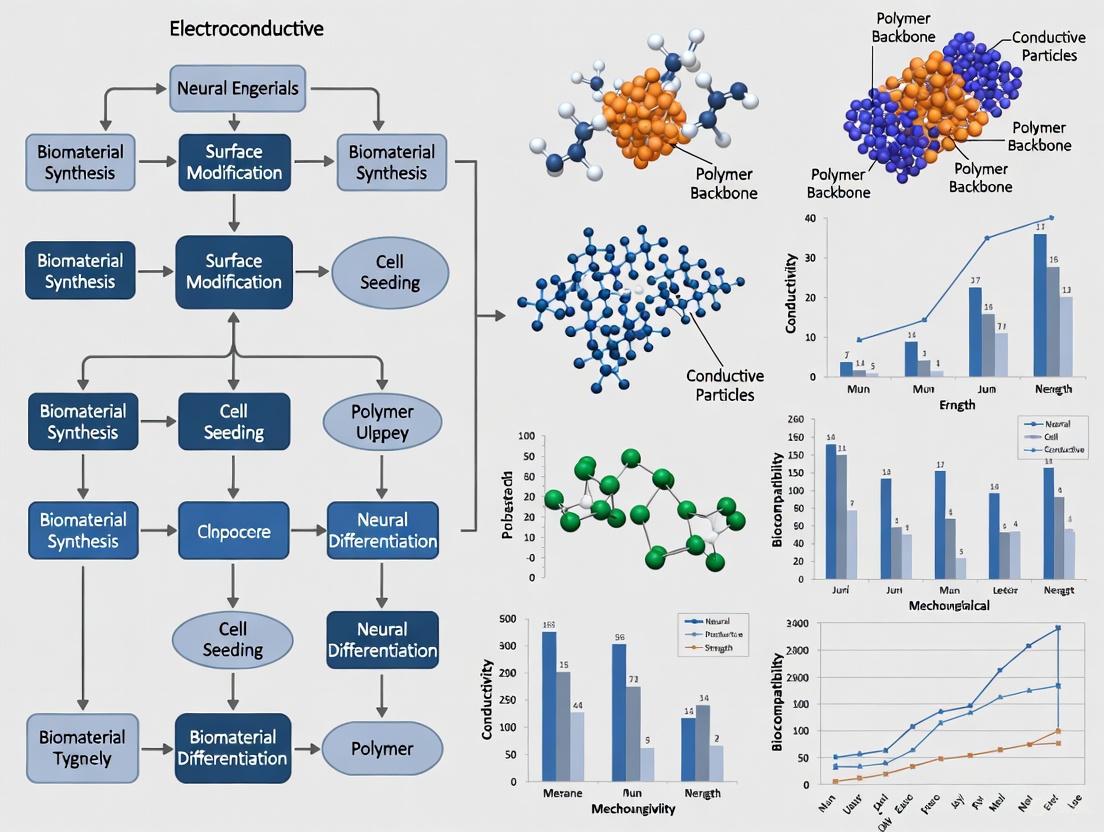
This article provides a comprehensive overview of the latest advancements in electroconductive biomaterials for neural tissue engineering, tailored for researchers, scientists, and drug development professionals.
Electroconductive Biomaterials for Neural Tissue Engineering: Bridging the Gap to Neural Repair
Abstract
This article provides a comprehensive overview of the latest advancements in electroconductive biomaterials for neural tissue engineering, tailored for researchers, scientists, and drug development professionals. It explores the foundational principles that make electrical conductivity critical for neural repair, details the methodologies for developing and applying conductive scaffolds and hydrogels, addresses key challenges in biocompatibility and long-term stability, and evaluates the performance of these materials against traditional options. By synthesizing current research and future trends, this review serves as a strategic resource for guiding the development of next-generation therapies for neurological injuries and diseases.
The Rationale for Conductivity: Why Nerves Need Electroactive Scaffolds
The Native Electrophysiological Environment of Neural Tissues
The native electrophysiological environment of neural tissues is a complex, dynamic system where electrochemical signaling underpins all brain function, including sensory processing, motor control, and cognitive operations. This environment maintains precise ionic gradients, supports action potential propagation, and facilitates synaptic transmission through specialized structures and signaling mechanisms. Preserving the spatial and functional integrity of this native environment is crucial for accurate neuroscientific investigation and therapeutic development [1]. Traditional in vitro models often strip away this critical complexity, whereas native tissue preparations preserve the architectural and functional context of neural circuits, providing a more accurate representation of in vivo conditions [1]. Within this native landscape, electrophysiological activity occurs across multiple scales—from single-ion channel currents to synchronized network oscillations—creating a rich electrophysiological signature that reflects both health and disease states. Understanding this native environment is particularly pivotal for the field of neural tissue engineering, where emerging electroconductive biomaterials aim to replicate these properties to promote neural repair and regeneration [2] [3].
Fundamental Components of the Native Electrophysiological Environment
The native electrophysiological landscape is structured by both cellular elements and extracellular components that collectively enable efficient neural communication. The following table summarizes these core components:
Table 1: Core Components of the Native Electrophysiological Environment
| Component | Description | Primary Electrophysiological Function |
|---|---|---|
| Neurons | Electrically excitable cells with specialized processes. | Generate and propagate action potentials; mediate synaptic transmission. |
| Glial Cells | Non-neuronal cells (astrocytes, oligodendrocytes, microglia). | Maintain ionic balance; form myelin sheaths; modulate immune response. |
| Extracellular Matrix (ECM) | Complex network of proteins and glycoproteins. | Provides structural and biochemical support; influences synaptic plasticity. |
| Ionic Gradients | Differential concentrations of Na⁺, K⁺, Ca²⁺, Cl⁻ maintained across cell membranes. | Establish resting membrane potential; provide driving force for electrical signaling. |
At the cellular level, neurons form intricate networks with synaptic connectivity and specific structural layouts that enable the dynamic interactions fundamental to neural processing [1]. The preservation of natural protein expression and cellular relationships in native tissue minimizes artifacts that can lead to misleading results in reduced preparation systems [1]. The extracellular space further contributes to the electrophysiological environment through its composition and architecture, which influence signal propagation and provide neurotrophic support.
Techniques for probing native neural electrophysiology
Investigating the electrophysiological language of living neural systems requires technologies capable of capturing electrical activity within preserved tissue architectures. The following experimental platforms are essential for this purpose:
Table 2: Key Electrophysiological Platforms for Native Tissue Investigation
| Technique | Primary Application | Key Measurements | Considerations for Native Tissue |
|---|---|---|---|
| Manual Patch Clamp | Precise recordings from individual neurons within intact tissue. | Single-ion channel currents, postsynaptic potentials, action potentials. | Preserves intrinsic neuronal properties and synaptic inputs; technically challenging. |
| Field Recordings | Assessment of population-level activity and synaptic plasticity. | Local field potentials (LFPs), population spikes, long-term potentiation (LTP), long-term depression (LTD). | Reflects integrated synaptic activity from a neuronal population; excellent for circuit-level studies. |
| Multi-Electrode Arrays (MEAs) | Spatiotemporal mapping of activity across tissue regions. | Network firing patterns, burst activity, oscillatory synchrony. | Enables long-term monitoring of network dynamics in healthy and disease models [1]. |
| Wire Myograph | Measurement of contractility in smooth muscle tissue (e.g., vascular). | Force of contraction, relaxation parameters. | Valuable for studying autonomic innervation and neurovascular coupling. |
These platforms enable researchers to study the physiological integrity of neural systems by capturing the complexity of intact circuits, which is crucial for generating translatable data for therapeutic development [1]. The choice of technique depends on the specific research question, whether focused on molecular mechanisms (patch clamp), synaptic integration (field recordings), or network dynamics (MEAs).
Experimental Protocol: Multi-Electrode Array (MEA) Recordings in Acute Brain Slices
This protocol details the methodology for obtaining electrophysiological recordings from native neural tissue using acute brain slice preparations combined with MEA technology, capturing network-level dynamics while preserving cytoarchitecture.
Materials and Reagents
- Animal Model: Wild-type or transgenic adult mice (8-16 weeks old)
- Carbogen: 95% O₂ / 5% CO₂ gas mixture
- Cutting Solution: Ice-cold, carbogen-saturated solution containing (in mM): 110 Choline Chloride, 2.5 KCl, 1.25 NaH₂PO₄, 25 NaHCO₃, 0.5 CaCl₂, 7 MgCl₂, 10 Glucose, 1.3 Na-Ascorbate, 0.6 Na-Pyruvate (osmolarity ~305 mOsm/kg)
- Artificial Cerebrospinal Fluid (aCSF): Carbogen-saturated solution containing (in mM): 125 NaCl, 2.5 KCl, 1.25 NaH₂PO₄, 25 NaHCO₃, 2 CaCl₂, 1 MgCl₂, 10 Glucose (osmolarity ~300 mOsm/kg)
- Vibratome: For tissue sectioning (e.g., Leica VT1200S)
- Multi-Electrode Array System: Commercial MEA setup with 60 electrodes (e.g., Multi Channel Systems MCS GmbH or Med64 System)
- Recording/Perfusion Chamber: Maintained at 32°C with continuous aCSF perfusion
Procedure
Animal Sacrifice and Brain Extraction: Deeply anesthetize the animal with isoflurane according to approved institutional protocols. Decapitate rapidly and extract the whole brain, immersing it immediately in ice-cold, carbogen-saturated cutting solution for ~1 minute.
Brain Slice Preparation: Mount the brain on a vibratome stage using cyanoacrylate adhesive. Prepare 300-400 μm thick coronal or horizontal sections in ice-cold cutting solution. Transfer slices to a holding chamber containing oxygenated aCSF at 32°C for 30 minutes, then maintain at room temperature for at least 60 minutes for recovery.
MEA Recording Setup: Place one recovered brain slice on the MEA recording chamber, ensuring good contact between the tissue and electrodes. Secure the slice with a nylon harp or similar anchor. Perfuse continuously with oxygenated aCSF (2-3 mL/min) at 32°C.
Data Acquisition: Allow the slice to equilibrate for 20 minutes in the recording chamber. Acquire spontaneous activity for 10-20 minutes. For evoked responses, apply biphasic current pulses (50-200 μA, 0.1 ms pulse width) through selected electrodes. Record signals with a sampling rate of 20-50 kHz, using appropriate band-pass filtering (e.g., 1-3000 Hz for local field potentials; 300-3000 Hz for single-unit activity).
Data Analysis: Process recorded signals offline using custom scripts or commercial software:
- For local field potentials: Apply a low-pass filter (<300 Hz) and analyze power spectra across frequency bands (delta, theta, alpha, beta, gamma).
- For single-unit activity: Apply a high-pass filter (>300 Hz) and detect spikes using threshold-based algorithms.
- For network bursts: Identify synchronous firing across multiple electrodes using cross-correlation analysis.
Diagram 1: MEA Experimental Workflow for Native Tissue Electrophysiology.
Electroconductive Biomaterials: Engineering the Native Environment
Electroconductive biomaterials represent a revolutionary approach in neural tissue engineering by creating scaffolds that mimic the electrical properties of native neural tissue. These materials are designed to bridge the functional gap at neural injury sites, providing both structural support and appropriate electrochemical signaling capabilities to promote regeneration [3].
Table 3: Classes of Electroconductive Biomaterials for Neural Applications
| Material Class | Examples | Conductivity Range (S/cm) | Key Advantages | Neural Applications |
|---|---|---|---|---|
| Conductive Polymers | Polypyrrole (PPy), Poly(3,4-ethylenedioxythiophene) (PEDOT), Polyaniline (PANI) | 10⁻³ to 10³ [4] | Biocompatibility, ease of processing, tunable conductivity | Neural electrodes, nerve guidance conduits, cortical implants [5] |
| Carbon-Based Nanomaterials | Carbon Nanotubes (CNTs), Graphene, Graphene Oxide (GO) | 10² to 10⁵ | High conductivity, excellent mechanical properties, nanoscale topography | Spinal cord injury scaffolds, peripheral nerve regeneration [3] |
| Conductive Nanocomposite Hydrogels (CNHs) | GelMA-PPy, Hyaluronic acid-Graphene, PEDOT:PSS-PEG | 10⁻⁴ to 10⁻¹ [3] | Tissue-like hydration, biocompatibility, drug delivery capability | Neural differentiation platforms, 3D neural tissue models, injectable therapies [3] |
The integration of conductive nanocomposite hydrogels (CNHs) is particularly promising as they combine the electrical properties of conductive nanomaterials with the hydration and biocompatibility of hydrogels, creating a microenvironment that closely resembles native neural tissue [3]. These advanced materials support critical regenerative processes including neuronal differentiation, axon guidance, and synaptic reconnection by providing a conductive substrate that enables the propagation of bioelectrical signals essential for coordinating neuronal activity [2] [3].
Diagram 2: Bio-inspired Electronics Design Strategies for Neural Interfaces.
The Scientist's Toolkit: Essential Research Reagents and Materials
This section details critical reagents and materials employed in studying native neural electrophysiology and developing electroconductive biomaterials, providing researchers with a practical resource for experimental design.
Table 4: Essential Research Reagents and Materials for Neural Electrophysiology
| Category | Specific Reagents/Materials | Function/Application | Key Considerations |
|---|---|---|---|
| Electrophysiology Solutions | Artificial Cerebrospinal Fluid (aCSF), Sucrose-based cutting solution, Ionic channel blockers (TTX, 4-AP, TEA) | Maintain physiological ionic environment; isolate specific current types | Osmolarity (~300 mOsm/kg), pH (7.3-7.4), continuous carbogenation required |
| Conductive Polymers | PEDOT:PSS, Polypyrrole (PPy), Polyaniline (PANI) | Neural electrode coatings; nerve guidance conduits; conductive scaffolds | Conductivity tunable via doping; biocompatibility varies with composition [4] |
| Carbon-Based Nanomaterials | Carbon Nanotubes (CNTs), Graphene Oxide (GO), Graphene | Neural scaffold reinforcement; conductive composite filler; neural recording electrodes | High aspect ratio; requires dispersion for biocompatibility; potential toxicity at high concentrations [3] |
| Hydrogel Precursors | Gelatin Methacryloyl (GelMA), Hyaluronic Acid, Polyethylene Glycol (PEG) | 3D neural cell culture; injectable delivery systems; scaffold base material | Tunable mechanical properties; photopolymerizable options available [3] |
| Cell Culture Supplements | Neurobasal medium, B-27 supplement, N2 supplement, BDNF, GDNF, NGF | Support neuronal survival and growth; induce neural differentiation | Serum-free conditions often preferred for primary neuronal cultures |
The native electrophysiological environment of neural tissues represents a complex, multi-scale system that is fundamental to neural function and integrity. Faithfully recording from this environment requires specialized techniques that preserve tissue architecture, while repairing it demands innovative materials that replicate its essential electrochemical properties. Electroconductive biomaterials—particularly conductive polymers, carbon-based nanomaterials, and nanocomposite hydrogels—are emerging as powerful tools that bridge the gap between biological and synthetic systems [2] [3]. These materials do not merely provide passive structural support; they actively participate in the electrophysiological dialogue of the nervous system, promoting neural regeneration through guided axon growth, enhanced neural differentiation, and functional synaptic reconnection [2]. As the field advances, the integration of these materials with biohybrid and "all-living" interfaces promises a future where neural implants can achieve seamless structural and functional integration with host tissues, opening new avenues for treating neurological disorders and injuries [5].
Electroconductive biomaterials represent a paradigm shift in neural tissue engineering by providing a biomimetic platform that recapitulates the electrophysiological microenvironment of native nervous tissue. These advanced materials, including conductive polymers, carbon-based nanomaterials, and functional composites, directly influence cellular behavior through mechanisms such as facilitated electrical signal propagation, enhanced cell-to-cell communication, and targeted electrical stimulation. This technical review examines the fundamental principles through which conductive interfaces modulate neural cell responses, detailing the specific cellular pathways activated by electroactive substrates and providing standardized methodologies for evaluating these interactions. By integrating recent advances in material science with core neurobiological principles, this analysis offers a comprehensive framework for developing next-generation neural interfaces and regenerative therapies with enhanced functional outcomes.
The nervous system fundamentally operates through bioelectrical signaling, with native neural tissues exhibiting characteristic electrical conductivity ranging from 0.08 to 1.3 S/m [6]. This inherent electrophysiology creates a dynamic microenvironment where endogenous electric fields play crucial roles in development, maintenance, and repair processes. Following injury, the nervous system demonstrates limited regenerative capacity, often resulting in permanent functional deficits with profound clinical consequences [7]. Traditional therapeutic approaches, including autologous nerve grafts, face significant challenges such as donor site morbidity, limited availability, and suboptimal functional recovery [8].
Electroconductive biomaterials offer a promising strategy to bridge this therapeutic gap by engineering scaffolds that mimic both the structural and electrophysiological properties of native extracellular matrix (ECM). These materials create an interactive biointerface that supports cellular adhesion and proliferation while simultaneously facilitating the transmission of electrical cues that direct cellular behavior [9] [10]. The strategic incorporation of conductive components—including intrinsically conductive polymers, carbon-based nanomaterials, and composite systems—enables researchers to design neural tissue engineering scaffolds that both structurally support regeneration and actively modulate the cellular responses through controlled electrical signaling [11] [6].
Fundamental Mechanisms of Cellular Modulation
Recreation of the Native Electrophysiological Microenvironment
Conductive biomaterials function primarily by replicating the natural electrophysiological environment that neural cells experience in vivo. These materials create a microcurrent environment within neural conduits that promotes neuronal growth and axonal extension [8]. When conductive scaffolds are implemented as nerve guidance conduits (NGCs), they establish electrical continuity that enables the propagation of both endogenous bioelectrical signals and applied electrical stimulation (ES) across the lesion site. This sustained electrophysiological support is particularly crucial during the critical period of axonal regeneration and target reinnervation [8].
The conductive interface facilitates electrotaxis and galvanotaxis—directed cell migration along electrical gradients—which guides axonal growth cones and promotes oriented neural extension [8]. This electrically guided outgrowth significantly enhances the precision of regeneration compared to passive biomaterials. Furthermore, conductive substrates enhance intercellular coupling by facilitating the formation of functional synapses and gap junctions between neighboring cells, ultimately supporting the development of synchronized neural networks essential for complex nervous system function [9].
Electrical Stimulation-Mediated Cellular Responses
The application of controlled electrical stimulation through conductive substrates activates multiple intracellular signaling cascades that direct cellular behavior. Research demonstrates that ES parameters—including specific waveforms, frequencies, amplitudes, and durations—can be optimized to promote distinct neural responses:
- Neurite outgrowth and extension: Applied electrical fields enhance the secretory activity of Schwann cells, increasing the production of neurotrophic factors such as nerve growth factor (NGF) and glial cell line-derived neurotrophic factor (GDNF) that support neuronal survival and axonal extension [8].
- Stem cell differentiation: ES through conductive substrates promotes the differentiation of neural stem cells and progenitor cells toward neuronal lineages while suppressing astrocytic differentiation, potentially through the activation of voltage-gated calcium channels and subsequent calcium-mediated signaling pathways [9].
- Synaptic maturation: Electrical stimulation enhances the expression of synaptic markers and promotes the formation of functional connections between neurons, critical for restoring neural circuitry after injury [10].
Table 1: Cellular Responses to Electrical Stimulation via Conductive Biomaterials
| Cellular Process | Key Changes | Primary Signaling Pathways |
|---|---|---|
| Neurite Outgrowth | Increased length and branching of axons and dendrites | Calcium signaling, MAPK/ERK pathway |
| Stem Cell Differentiation | Upregulation of neuronal markers (βIII-tubulin, MAP2) | Voltage-gated calcium channels, CREB activation |
| Schwann Cell Activation | Proliferation, neurotrophic factor secretion (NGF, BDNF, GDNF) | PI3K/Akt, JAK/STAT pathways |
| Axonal Guidance | Directed growth cone movement, enhanced regeneration speed | Electrotaxis, cytoskeletal reorganization |
Material-Cell Interface Interactions
At the nanoscale level, conductive biomaterials influence cellular behavior through direct interactions at the material-cell interface. The surface properties of conductive scaffolds—including topography, charge distribution, and energy—directly affect protein adsorption and subsequent cell adhesion [10]. Once cells attach, the conductive interface affects transmembrane potential and regulates the activity of voltage-gated ion channels, thereby influencing intracellular signaling and gene expression patterns [9].
Conductive materials also modulate cytoskeletal dynamics through electromechanical coupling mechanisms. The application of electrical stimuli through these substrates induces rearrangements in actin networks and microtubule organization, directly affecting cell morphology, migration, and process extension [10]. Additionally, conductive interfaces can reduce the formation of inhibitory glial scars by modulating astrocyte behavior, creating a more permissive environment for regeneration [7].
Major Classes of Electroconductive Biomaterials
Conductive Polymers
Intrinsically conductive polymers (CPs) represent the most extensively studied category of electroactive biomaterials for neural applications. These π-conjugated polymers contain delocalized electrons that enable efficient charge transport while maintaining the mechanical flexibility and processability of conventional polymers [9].
- Polypyrrole (PPy): Exhibits high electrical conductivity, ease of synthesis, and excellent biocompatibility. PPy requires doping with anions (Cl⁻, Br⁻, NO₃⁻) to achieve optimal charge transport capabilities, and the choice of dopant significantly influences cellular responses [9]. PPy-based scaffolds have demonstrated enhanced neurite outgrowth and Schwann cell migration under electrical stimulation [8].
- Polyaniline (PANi): Offers tunable conductivity through doping and dedoping processes. While demonstrating promising neural applications, PANi faces challenges related to processability and potential cytotoxicity at higher concentrations [10].
- Poly(3,4-ethylenedioxythiophene) (PEDOT): Provides superior electrical stability compared to other conductive polymers and can be functionalized with various biological motifs to enhance cellular interactions. PEDOT-based materials show particular promise for neural electrode applications [10].
Carbon-Based Nanomaterials
Carbon-based nanomaterials offer exceptional electrical properties combined with nanoscale dimensions that closely mimic the structural features of natural ECM:
- Carbon Nanotubes (CNTs): Exhibit exceptional electrical conductivity and mechanical strength at nanoscale dimensions. CNTs can be incorporated into composite scaffolds to create conductive networks that support neural growth and differentiation [10].
- Graphene and Graphene Oxide: Provide high surface area with excellent charge transport capabilities. Graphene oxide's functional groups facilitate further modification with bioactive molecules, enhancing its compatibility with neural tissues [12].
- Reduced Graphene Oxide (rGO): Balances electrical conductivity with processability, making it suitable for creating conductive coatings on various scaffold architectures [10].
Composite and Hybrid Materials
Composite approaches combine conductive elements with structural biomaterials to create systems with optimized properties for neural tissue engineering:
- Conductive polymer-bioceramic composites: Integrate the electrical properties of conductive polymers with the bioactivity of ceramics to create multi-functional interfaces [10].
- Conductive hydrogel systems: Combine the hydrating properties of hydrogels with electrical conductivity, creating swollen networks that closely mimic the native neural microenvironment [8].
- Conductive nanofibrous scaffolds: Utilize electrospinning techniques to create aligned fibrous structures with incorporated conductive elements that provide both topographical and electrical guidance cues [12].
Table 2: Electrical Conductivity of Native Tissues and Biomaterials
| Material/Tissue | Conductivity Range (S/m) | Key Applications |
|---|---|---|
| Native Neural Tissue | 0.08 - 1.3 [6] | Baseline for biomaterial design |
| Peripheral Nerves | 0.08 - 1.3 [6] | Nerve guidance conduits |
| Polypyrrole (PPy) | 10⁻¹ - 10⁴ [9] | Neural interfaces, conductive coatings |
| PEDOT | 10 - 10⁴ [10] | Electrode coatings, neural probes |
| Carbon Nanotubes | 10² - 10⁵ [10] | Composite reinforcement, conductive networks |
| Graphene | 10³ - 10⁵ [10] | Neural scaffolds, biosensors |
Experimental Methodologies and Assessment
Standardized Experimental Protocols
Protocol 1: In Vitro Assessment of Neural Cell Behavior on Conductive Substrates
Materials Required:
- Conductive substrate (PPy, PANi, PEDOT, or composite films)
- Primary neural cells (e.g., dorsal root ganglion neurons, PC12 cells) or neural stem/progenitor cells
- Appropriate culture medium with serum and growth factors
- Electrical stimulation system with custom-built or commercial electrodes
- Immunocytochemistry reagents for neural markers
Procedure:
- Substrate Preparation: Fabricate conductive substrates of consistent thickness (typically 50-200 μm) and sterilize using ethanol immersion or UV irradiation.
- Cell Seeding: Plate cells at optimized density (e.g., 10,000-50,000 cells/cm²) onto conductive substrates and allow attachment for 24 hours.
- Electrical Stimulation: Apply defined electrical parameters (typically 1-100 mV/mm, 1-100 Hz, 30-60 minutes daily) using customized stimulation chambers.
- Fixation and Staining: At predetermined timepoints, fix cells and immunostain for neural markers (βIII-tubulin, MAP2, NF-200 for neurons; GFAP for astrocytes).
- Image Acquisition and Analysis: Capture fluorescent images and quantify neurite length, branching complexity, and orientation using specialized software (e.g., ImageJ with NeuronJ plugin).
Controls: Include non-conductive substrates (e.g., pure PLGA, collagen) and non-stimulated conductive substrates as experimental controls.
Protocol 2: Electrically Conductive NGCs for Peripheral Nerve Repair
Materials Required:
- Conductive nerve guidance conduits (NGCs)
- Animal model (rat or mouse sciatic nerve injury model)
- Surgical instruments for microsurgery
- Electrophysiology setup for functional assessment
- Histological processing equipment
Procedure:
- Conduit Fabrication: Manufacture porous conductive NGCs with appropriate internal architecture (aligned fibers, microgrooves, or luminal fillers).
- Surgical Implantation: Create a critical-size defect (typically 10-15 mm in rat sciatic nerve) and bridge with conductive NGC using microsurgical techniques.
- Functional Assessment: Periodically evaluate functional recovery using walking track analysis, electrophysiological recordings (compound muscle action potential), and sensory tests.
- Tissue Harvest and Analysis: At study endpoint, process explained nerves for histomorphometric analysis (axon density, myelination thickness) and immunohistochemistry.
Key Parameters: Include autograft and non-conduit groups as positive and negative controls, respectively.
Analytical Techniques for Characterizing Cellular Responses
The following dot code illustrates the multi-technique approach required to comprehensively evaluate cell-material interactions:
Intracellular Signaling Pathways Activated by Electroconductive Materials
Electroconductive biomaterials influence cellular behavior through the specific activation of intracellular signaling cascades that regulate growth, differentiation, and function. The following dot code illustrates the key pathways involved:
The primary signaling mechanisms include:
Calcium-mediated signaling: Electrical stimulation through conductive substrates activates voltage-gated calcium channels, leading to increased intracellular calcium levels that trigger downstream effectors including calmodulin-dependent kinases and CREB phosphorylation, ultimately influencing gene expression related to neural growth and differentiation [9].
MAPK/ERK pathway: Conductive material-mediated electrical stimulation promotes the phosphorylation of extracellular signal-regulated kinases (ERK1/2), which translocate to the nucleus and regulate the expression of genes involved in cell proliferation, differentiation, and survival [10].
PI3K/Akt pathway: The electrical cues transmitted through conductive scaffolds activate phosphoinositide 3-kinase (PI3K) and its downstream target Akt, promoting neuronal survival and growth while inhibiting apoptosis [8].
These activated signaling cascades converge to regulate transcriptional programs that enhance the expression of neurotrophic factors (BDNF, NGF, GDNF), cytoskeletal components, and synaptic proteins, collectively promoting neural regeneration and functional recovery [8] [10].
The Scientist's Toolkit: Essential Research Reagents and Materials
Table 3: Essential Research Reagents for Neural-Electroconductive Material Studies
| Category | Specific Reagents/Materials | Function/Application |
|---|---|---|
| Conductive Polymers | Polypyrrole (PPy), Poly(3,4-ethylenedioxythiophene) (PEDOT), Polyaniline (PANi) | Primary conductive substrates for neural interfaces; typically used as films, coatings, or composite components |
| Dopants | Sodium dodecyl benzene sulfonate (SDBS), Chloride (Cl⁻), Polystyrene sulfonate (PSS) | Enhance electrical conductivity and environmental stability of conductive polymers; influence cellular responses |
| Carbon Nanomaterials | Carbon nanotubes (CNTs), Graphene oxide (GO), Reduced graphene oxide (rGO) | Create conductive networks within scaffolds; provide nanoscale topography for enhanced neural interactions |
| Structural Biomaterials | Polycaprolactone (PCL), Poly(lactic-co-glycolic acid) (PLGA), Collagen, Chitosan | Provide structural framework for conductive elements; ensure mechanical stability and biocompatibility |
| Neural Cell Markers | βIII-tubulin, Microtubule-associated protein 2 (MAP2), Neurofilament (NF-200) | Identify neuronal cells and processes in vitro and in vivo |
| Glial Cell Markers | Glial fibrillary acidic protein (GFAP), S100β, Ionized calcium-binding adapter molecule 1 (Iba1) | Identify astrocytes and microglia; assess glial reactions to conductive materials |
| Neurotrophic Factors | Nerve growth factor (NGF), Brain-derived neurotrophic factor (BDNF), Glial cell line-derived neurotrophic factor (GDNF) | Enhance neuronal survival and neurite outgrowth; often used in combination with electrical stimulation |
| Signaling Pathway Reagents | Calcium indicators (Fluo-4, Fura-2), Pathway inhibitors (U0126 for MEK, LY294002 for PI3K) | Investigate molecular mechanisms underlying cellular responses to conductive materials |
Electroconductive biomaterials represent a transformative approach in neural tissue engineering by actively modulating cellular behavior through the recreation of native electrophysiological microenvironments. The core principles underlying their function—including facilitated electrical signal propagation, enhanced cell-to-cell communication, and activation of specific intracellular signaling pathways—provide a robust foundation for designing advanced neural interfaces. As research in this field advances, key challenges remain in optimizing the long-term stability and degradation profiles of conductive materials, precisely controlling the spatial and temporal presentation of electrical cues, and translating promising in vitro results to clinically effective therapies.
Future developments will likely focus on creating smart conductive systems with responsive properties that adapt to changing physiological conditions, integrating multi-modal stimulation approaches that combine electrical cues with biochemical and topological signals, and implementing patient-specific designs enabled by advanced fabrication technologies such as 3D bioprinting. By continuing to elucidate the fundamental principles governing cell-electroconductive material interactions, researchers can develop increasingly sophisticated neural regeneration strategies that ultimately restore function after nervous system injury or degeneration.
Electroconductive biomaterials represent a transformative class of materials at the interface of biology and electronics, offering unprecedented capabilities for interfacing with electrically active tissues. The discovery of intrinsically conductive polymers, recognized by the 2000 Nobel Prize in Chemistry, fundamentally reshaped the landscape of electronic materials and catalyzed their biomedical potential [13]. Within neural tissue engineering, these materials play a crucial role in replicating the native electrophysiological environment, facilitating electrical signal propagation, and guiding cellular behavior to support nerve regeneration [8] [6].
The nervous system's limited self-regenerative capacity in mammals presents a significant clinical challenge, with lasting functional deficits common after injury or disease [7]. Current gold standard treatments for peripheral nerve injury, such as autologous nerve grafts, face limitations including donor site morbidity, limited availability, and incomplete functional recovery [8] [14]. Similarly, central nervous system repair remains largely ineffective clinically [14]. Conductive biomaterials offer a promising alternative by providing scaffolds that not only offer structural support but also actively participate in electrical communication with neural tissues [8] [13].
This technical guide provides a comprehensive overview of the major classes of electroconductive biomaterials—polymers, carbon-based nanomaterials, and metallic systems—with emphasis on their properties, mechanisms, and applications in neural tissue engineering. By integrating quantitative performance data, experimental protocols, and visualization of key concepts, this review aims to equip researchers and drug development professionals with the necessary knowledge to advance this rapidly evolving field.
Material Classes and Properties
Electroconductive biomaterials are broadly categorized based on their composition and conduction mechanisms, each offering distinct advantages for neural interface applications.
Conductive Polymers
Conductive polymers (CPs) represent a class of organic materials capable of transporting electrical charges through their conjugated π-electron backbone systems. The electrical conductivity mechanism of these polymers is rooted in their classification into intrinsically and extrinsically conductive systems [13].
Polypyrrole (PPy) stands as the most extensively studied conductive polymer for biomedical applications, maintaining reasonable conductivity (1–75 S/m) under physiological conditions with demonstrated biocompatibility both in vitro and in vivo [14]. Its synthesis typically involves electrochemical polymerization or chemical oxidation in the presence of dopant molecules, which significantly influence material properties including flexibility and surface characteristics [14].
Poly(3,4-ethylenedioxythiophene) (PEDOT) offers enhanced environmental stability compared to other conductive polymers and is often combined with polystyrenesulfonate (PSS) to improve processability. PEDOT demonstrates excellent charge injection capabilities, making it suitable for neural interface applications [13].
Polyaniline (PANI) exhibits tunable conductivity through doping and protonation, though its clinical translation has been limited by processing challenges and potential cytotoxicity concerns [13].
Table 1: Properties of Major Conductive Polymers for Neural Applications
| Polymer | Conductivity Range (S/m) | Key Advantages | Limitations | Neural Applications |
|---|---|---|---|---|
| Polypyrrole (PPy) | 1–75 | High biocompatibility, ease of synthesis | Moderate mechanical strength, slow degradation | Nerve guidance conduits, neural electrodes |
| PEDOT | 10–1000 | Excellent stability, high conductivity | Rigid backbone, processing challenges | Deep brain stimulation, biosensors |
| Polyaniline (PANI) | 1–1000 | Tunable conductivity, redox activity | Potential cytotoxicity, limited processability | Neural scaffolds, drug delivery systems |
Carbon-Based Nanomaterials
Carbon-based nanomaterials offer exceptional electrical, mechanical, and biological properties that make them attractive for neural tissue engineering applications. Their high surface area-to-volume ratio and capacity for functionalization enable enhanced cellular interactions [15] [16].
Graphene and its derivatives, particularly graphene oxide (GO) and reduced graphene oxide (rGO), demonstrate remarkable electrical conductivity (up to 10⁸ S/m for pristine graphene), mechanical strength, and flexibility. Graphene-based materials support neural cell adhesion, proliferation, and differentiation while providing appropriate electroactive microenvironments [15] [17].
Carbon Nanotubes (CNTs), both single-walled (SWCNTs) and multi-walled (MWCNTs), exhibit exceptional charge transport capabilities and mechanical reinforcement properties. When incorporated into polymeric matrices, CNTs create conductive networks that promote neurite outgrowth and guide axonal regeneration [16] [17].
Carbon Nanofibers (CNFs) provide a fibrous, high-surface-area architecture that mimics natural extracellular matrix topography, supporting neural cell attachment and alignment while delivering electrical stimulation [15].
Table 2: Carbon-Based Nanomaterials for Neural Tissue Engineering
| Material | Conductivity Range (S/m) | Key Advantages | Limitations | Neural Applications |
|---|---|---|---|---|
| Graphene | 10⁶–10⁸ | Exceptional conductivity, mechanical strength, flexibility | Potential aggregation, complex functionalization | Neural scaffolds, bioelectronic interfaces |
| Carbon Nanotubes | 10³–10⁶ | High aspect ratio, excellent charge transport | Potential toxicity concerns, dispersion challenges | Neural composites, conductive coatings |
| Carbon Nanofibers | 10–10⁴ | Fibrous architecture, high surface area | Variable conductivity, structural defects | Electrospun scaffolds, nerve guides |
Metallic and Other Nanomaterials
Traditional metallic conductors including platinum, gold, and titanium remain indispensable in long-term implantable neurodevices due to their electrochemical stability and proven track record in clinical applications [13]. More recently, MXenes—two-dimensional transition metal carbides, nitrides, and carbonitrides—have emerged as promising conductive materials with high metallic conductivity, hydrophilic surfaces, and tunable properties suitable for neural interfaces [13].
Ceramic-based conductors such as diamond-like carbon (DLC) coatings offer exceptional biocompatibility, wear resistance, and electrical properties that can be tuned through doping processes, making them valuable for neural probe applications [13].
Conductivity Mechanisms and Electrical Properties
The electrical conduction mechanisms vary significantly across material classes, influencing their performance in biological environments.
Conduction Mechanisms
Intrinsically conductive polymers transport charge through conjugated π-bond systems where charge carriers (polarons, bipolarons) move along polymer chains and hop between chains. Doping processes introduce charge carriers into the polymer backbone, dramatically increasing conductivity by several orders of magnitude [13].
Carbon-based materials conduct electricity through sp² hybridized carbon networks that allow electron delocalization. In graphene, charge transport occurs through massless Dirac fermions, enabling exceptional electron mobility. Carbon nanotubes exhibit ballistic transport properties, while the conductivity of graphene oxide can be tuned through reduction processes [15] [17].
Metallic conductors operate through free electron models where external electric fields accelerate conduction electrons that subsequently scatter off lattice imperfections, with conductivity governed by the Drude model [13].
Electrical Properties of Native Tissues
Understanding the electrical conductivity of native neural tissues is essential for designing appropriate conductive biomaterials. Neural tissues exhibit conductivity values ranging from 0.08 to 1.3 S/m, varying by specific region and physiological state [6]. Matching these electrical properties is crucial for minimizing interface impedance and promoting effective integration.
Diagram 1: Signaling Pathways in Electrical Stimulation
Experimental Protocols and Methodologies
Scaffold Fabrication and Characterization
Electrospinning Conductive Nanofibers:
- Prepare polymer solution (e.g., PCL 10-15% w/v in chloroform:methanol 3:1)
- Add conductive component (e.g., 1-5% w/w graphene oxide, 0.5-3% w/w CNTs)
- Utilize electrospinning apparatus with controlled parameters (flow rate 0.5-2 mL/h, voltage 15-25 kV, collection distance 10-20 cm)
- Characterize fiber morphology via SEM, conductivity via four-point probe, and mechanical properties via tensile testing
Conductive Hydrogel Preparation:
- Synthesize or procure base polymer (e.g., collagen, silk fibroin, alginate)
- Incorporate conductive polymers (PPy, PEDOT) via in situ polymerization or carbon nanomaterials via dispersion
- Crosslink using physical (ionic, thermal) or chemical (genipin, glutaraldehyde) methods
- Evaluate swelling ratio, degradation profile, and impedance spectroscopy
3D Printing Conductive Scaffolds:
- Formulate conductive bioinks with appropriate rheological properties
- Optimize printing parameters (pressure, speed, temperature) for structural fidelity
- Implement multi-material approaches for graded conductivity
- Validate architectural integrity via micro-CT and mechanical testing
In Vitro Neural Cell Culture and Electrical Stimulation
PC12 Cell Culture on Conductive Substrates:
- Maintain PC12 cells in RPMI-1640 medium with 10% horse serum, 5% FBS
- Plate cells on conductive scaffolds at 10,000-50,000 cells/cm²
- Differentiate with NGF (50-100 ng/mL) for 5-7 days
- Apply electrical stimulation using customized setups (typically 100-500 mV/mm, 1-20 Hz, 1 hour daily)
- Assess neurite outgrowth via immunostaining (β-tubulin III), quantify length and branching
Human Neural Progenitor Cell (hNPC) Conditioning:
- Culture hNPCs in neural expansion media with EGF and FGF-2
- Seed on PPy scaffolds at 50,000-100,000 cells/cm²
- Apply electrical stimulation protocol (+1 V to -1 V square wave at 1 kHz for 1 hour)
- Analyze gene expression changes (VEGF-A, BDNF, MMP-9) via qPCR
- Implant conditioned cells for in vivo assessment
Diagram 2: Experimental Workflow for Conductive Biomaterial Evaluation
In Vivo Nerve Regeneration Models
Rat Sciatic Nerve Defect Model:
- Create 10-15 mm nerve gap in Sprague-Dawley rats (200-250 g)
- Implant nerve guidance conduit (NGC) with conductive component
- Assess functional recovery weekly via gait analysis, electrophysiology
- Harvest at 4-12 weeks for histology (toluidine blue, immunostaining)
- Quantify myelinated axon density, diameter, G-ratio
Electrical Stimulation Parameters for Nerve Regeneration:
- Intraoperative: 1-3 hours immediately post-implantation, 20 Hz, 100-500 μA
- Chronic: Intermittent stimulation (1 hour/day), various waveforms
- Monitor evoked potentials, muscle reinnervation
The Scientist's Toolkit: Research Reagent Solutions
Table 3: Essential Materials for Conductive Neural Scaffold Research
| Category | Specific Materials | Function/Application | Key Considerations |
|---|---|---|---|
| Base Polymers | Poly(ε-caprolactone) (PCL), Poly(lactic-co-glycolic acid) (PLGA), Collagen, Chitosan, Silk fibroin | Structural matrix providing mechanical support, biodegradability | Adjust degradation rate to match tissue regeneration (weeks to months) |
| Conductive Fillers | Polypyrrole (PPy), PEDOT:PSS, Graphene oxide, Carbon nanotubes (SWCNT/MWCNT) | Impart electrical conductivity, enhance mechanical properties | Optimize dispersion and concentration (typically 0.5-5% w/w) for percolation threshold |
| Dopants/Counterions | Chondroitin sulfate, Hyaluronic acid, Polystyrene sulfonate | Enhance processability, stability, and bioactivity | Select based on desired material properties and biological effects |
| Crosslinkers | Genipin, Glutaraldehyde, UV initiators (Irgacure 2959) | Stabilize scaffold structure, control mechanical properties | Balance crosslinking density with cell infiltration and nutrient diffusion |
| Bioactive Factors | Nerve Growth Factor (NGF), BDNF, GDNF, VEGF | Enhance neuronal survival, axonal guidance, angiogenesis | Incorporate via encapsulation, surface immobilization, or gene delivery |
| Cell Types | PC12 cells, Schwann cells, Human neural progenitor cells (hNPCs) | In vitro assessment of biocompatibility and functionality | Primary cells vs. cell lines; species-specific responses |
Applications in Neural Tissue Engineering
Peripheral Nerve Regeneration
Conductive nerve guidance conduits (NGCs) represent a promising alternative to autologous nerve grafts for bridging peripheral nerve gaps. These constructs create a protective microenvironment while delivering electrical cues that promote axonal regeneration. Multimodal strategies have been developed to match different injury types, with short-distance defects benefiting from high-conductivity coatings and long-distance defects relying on wireless piezoelectric stimulation [8].
Advanced designs incorporate conductive coatings (carbon nanotubes, PPy), composite matrices (graphene/PCL), and in situ electro-responsive hydrogels (graphene oxide/silk fibroin) that transmit endogenous electrical signals in real-time while delivering neurotrophic factors for chemical-electrical synergistic regulation [8].
Bioelectronic Interfaces
Neural interfaces integrating flexible electrodes and intelligent catheters enable closed-loop regulation through intraoperative electrophysiological monitoring and adaptive electrical stimulation. Conductive biomaterials serve as critical components in these systems, providing compliant interfaces that minimize foreign body response while maintaining stable electrical performance [8] [13].
Smart Scaffolds with Responsive Capabilities
Fourth-generation conductive scaffolds incorporate stimuli-responsive capabilities, adapting their properties to dynamic physiological changes. Piezoelectric materials (PVDF, ZnO) convert mechanical energy from ultrasound or muscle contraction into local electric fields that drive directional migration of Schwann cells, creating self-powered stimulation systems [8].
Future Perspectives and Challenges
Despite significant advances, the clinical translation of conductive biomaterials faces several challenges that require continued research effort. Cytotoxicity concerns, particularly with certain carbon nanomaterials and metallic nanoparticles, necessitate comprehensive biocompatibility assessment and surface modification strategies [13] [17]. Controlling degradation kinetics to match tissue regeneration rates remains challenging for many conductive polymers [13].
Scalability and manufacturing reproducibility present hurdles for clinical translation, though emerging technologies like 3D printing and microfabrication offer promising solutions [13]. The development of unified design frameworks that correlate material structure, charge transport behavior, and biomedical functionality would significantly advance the field [13].
Future directions include the development of bioresorbable conductors that safely degrade after fulfilling their function, dynamic bioelectronic interfaces with adaptive responsiveness, and personalized conductive scaffolds tailored to individual patient anatomy and pathophysiology. The integration of AI-assisted material design and sustainable manufacturing techniques will further support the transition from laboratory innovation to clinical deployment [13].
As the field advances, conductive biomaterials are poised to revolutionize neural tissue engineering, enabling restoration of function for patients suffering from neurological disorders and injuries through enhanced bioelectronic integration and regeneration.
The development of electroconductive biomaterials for neural tissue engineering represents a paradigm shift in regenerative medicine. A core tenet of this approach is that engineered scaffolds should replicate the native electrophysiological environment of neural tissues to effectively direct cellular behavior and support nerve regeneration [10] [8]. While the significance of electrical cues is widely acknowledged, a precise understanding of the electrical conductivity properties of target tissues is often overlooked, leading to suboptimal material design. This technical guide establishes the foundational conductivity ranges for neural tissues and related excitable tissues, providing a critical framework for researchers developing next-generation neural interfaces, nerve guidance conduits, and electroactive scaffolds. The objective is to bridge the gap between fundamental tissue electrophysiology and applied biomaterials science, enabling the rational design of constructs that communicate effectively with the nervous system through biomimetic electrical properties.
Electrical Conductivity of Native Tissues
Electrical conductivity, measured in Siemens per meter (S/m), quantifies a material's ability to conduct electric current. For tissues, this property is intrinsically linked to their ionic composition and extracellular matrix architecture. Establishing baseline conductivity values for native tissues is crucial for designing biomaterials that seamlessly integrate with the host's electrophysiological environment.
Conductivity Ranges for Key Tissues
The following table summarizes the characteristic electrical conductivity values for various native tissues, as reported in recent literature. These values serve as targets for biomaterial design.
Table 1: Electrical Conductivity Ranges of Native Human Tissues
| Tissue Type | Electrical Conductivity (S/m) | Key Notes |
|---|---|---|
| Neural Tissue | 0.08 - 1.3 [6] | Broad range encompasses different neural components and measurement conditions. |
| Cerebrospinal Fluid (CSF) | ≈ 1.5 - 2.0 [18] | Highly conductive due to high ion content. |
| Skeletal Muscle | 0.04 - 0.5 [6] | Highly anisotropic; conductivity is greater parallel to muscle fibers [19]. |
| Cardiac Tissue | 0.005 - 0.16 [6] | Critical for designing patches for myocardial repair. |
| Bone Tissue | 0.02 - 0.06 [6] | Naturally conductive, a target for bone tissue engineering scaffolds [4]. |
| Fat (Subcutaneous) | ~0.02 - 0.04 [6] [19] | Relatively insulating property; values remain constant across a wide frequency range [19]. |
Critical Considerations for Neural Tissue Conductivity
For neural engineering, the target conductivity is not a single value but a carefully considered range. A pivotal 2024 study demonstrated that neural-tissue-like low conductivity (0.02–0.1 S/m) prompted neural stem/progenitor cells (NSPCs) to exhibit a greater propensity toward neuronal lineage specification compared to supraphysiological conductivity (3.2 S/m) [20]. This finding underscores that excessively high conductivity can be detrimental, instigating apoptotic processes due to calcium overload, whereas physiological conductivity promotes balanced intracellular calcium dynamics and beneficial epigenetic changes [20]. Furthermore, it is essential to recognize that conductivity is a frequency-dependent property, especially for anisotropic tissues like skeletal muscle, whose anisotropy decreases with increasing frequency [19].
Experimental Protocols for Conductivity Analysis
To ensure the accurate characterization of both native tissues and engineered biomaterials, rigorous and standardized experimental protocols are essential. The following sections detail two foundational methodologies.
Protocol 1: In Vivo Conductivity Estimation via Bounded Electrical Impedance Tomography (bEIT)
This non-invasive method is used to estimate tissue conductivities in living subjects, providing critical in vivo data that can differ significantly from ex vivo measurements [18] [19].
1. Participant Preparation & Instrumentation:
- Subjects: Recruit healthy volunteers with informed consent and ethical approval.
- Electrode Placement: Affix eight standard electrocardiography electrodes in a tetrapolar configuration on the limb of interest (e.g., forearm). The electrodes should be placed between bony landmarks, such as the wrist and elbow [19].
- 3D Surface Scanning: Use a handheld 3D surface scanner (e.g., Artec Leo) to record the precise spatial locations of all electrodes on the skin surface [19].
2. Data Acquisition:
- Impedance Measurements: Using a impedance analyzer (e.g., MFIA Impedance Analyzer), perform a frequency sweep (e.g., from 30 Hz to 1 MHz). Apply a 1 V excitation voltage and measure the resulting impedance for all unique electrode configurations (e.g., 140 measurements with 8 electrodes) [19].
- Medical Imaging: Acquire T1 and T2-weighted magnetic resonance (MR) images of the instrumented limb using a 3T MRI scanner. Place MRI-visible skin markers to later co-register the MR images with the 3D surface scan [19].
3. Model Construction & Computational Analysis:
- Subject-Specific Model Creation: Segment the MR images to identify different tissue boundaries (e.g., muscle, fat, bone). Integrate the segmented anatomy with the precise electrode locations from the 3D scan to create a subject-specific finite element model (FEM) of the limb [19].
- Forward Problem Solving: Use the FEM to numerically solve the electrostatic forward problem, predicting the surface impedance measurements for a given set of internal tissue conductivities [19].
- Inverse Problem Solving: Employ a probabilistic inverse problem-solving method (e.g., Bayesian estimation) to find the tissue conductivity values that minimize the difference between the computationally predicted impedance and the actual measured impedance. This provides conductivity estimates with robust uncertainty bounds [19].
Protocol 2: Isolating Conductivity Cues for Neural Stem Cell Fate Studies
This cell culture-based protocol is designed to specifically investigate the effect of substrate conductivity on neural cell behavior, independent of other material properties [20].
1. Substrate Fabrication with Decoupled Properties:
- Material Synthesis: Prepare conductive substrates by combining multi-wall carbon nanotubes (CNTs) and graphene oxide nanoribbons (GONRs).
- Controlled Oxidation: Subject the carbon-based films to a controlled oxidation process (e.g., using KMnO₄ and H₂SO₄) for varying durations (e.g., 24 to 48 hours). This systematically tunes the electrical conductivity from supraphysiological (e.g., 3.2 S/m) to neural-tissue-like (e.g., 0.02 S/m) without significantly altering the material's composition or nanoscale roughness [20].
- Surface Functionalization: Pre-coat all substrates with a consistent layer of poly-D-lysine and laminin to ensure a uniform density of cell-binding ligands across all experimental groups, thereby isolating the variable of conductivity [20].
2. Cell Seeding and Culture:
- Cell Type: Utilize neural stem/progenitor cells (NSPCs) or a neuronal cell line such as PC12 cells.
- Seeding: Seed cells at a standardized density onto the fabricated substrates.
- Culture Conditions: Maintain cells under standard conditions (e.g., 37°C, 5% CO₂) with an appropriate differentiation medium, if applicable, for a defined period (e.g., 7-10 days) [20].
3. Endpoint Analysis:
- Immunocytochemistry: Fix and stain cells for cell-type-specific markers: βIII-tubulin (Tuj1) for neurons, glial fibrillary acidic protein (GFAP) for astrocytes, and O4 for oligodendrocytes [20].
- Quantitative Image Analysis: Use fluorescence microscopy and image analysis software to quantify the percentage of cells expressing each marker, thereby determining lineage specification.
- Mechanistic Investigation:
- Calcium Imaging: Use fluorescent calcium indicators (e.g., Fluo-4 AM) to monitor intracellular calcium dynamics in live cells.
- Epigenetic Analysis: Perform immunostaining for histone modifications like H3 acetylation (H3ac) to assess chromatin openness and its role in gene activation related to neuronal differentiation [20].
Signaling Pathways in Electrically-Mediated Neural Regeneration
The beneficial effects of electroconductive biomaterials are mediated through specific cellular signaling pathways, which are initiated by the material's ability to transmit or influence bioelectrical signals. The following diagram illustrates the primary signaling cascade triggered by conductive substrates that promote neuronal differentiation.
Pathway Description: Neural-tissue-like conductive substrates promote a balanced intracellular ion flux, particularly of calcium, which acts as a critical second messenger [20]. This balanced signal leads to epigenetic modifications, such as the acetylation of histone H3 (H3ac), which opens the chromatin structure. This open chromatin state facilitates the activation of neurogenic transcription factors and the subsequent expression of genes that drive neuronal lineage specification [20]. In contrast, supraphysiological conductivity can trigger calcium overload, which bypasses this differentiation pathway and instead initiates apoptotic signaling, ultimately impairing neurogenesis [20].
The Scientist's Toolkit: Essential Research Reagents
To implement the experimental protocols and investigate conductive biomaterials for neural engineering, researchers require a specific set of reagents and materials. The following table catalogues key items and their functions.
Table 2: Essential Research Reagents for Neural Conductivity Studies
| Category | Item | Primary Function in Research |
|---|---|---|
| Conductive Materials | Carbon Nanotubes (CNTs) / Graphene Oxide Nanoribbons (GONRs) | Form tunable, carbon-based conductive substrates for 2D and 3D cell culture studies [20]. |
| Polypyrrole (PPy), Poly(3,4-ethylenedioxythiophene) (PEDOT) | Conductive polymers used to fabricate electroactive scaffolds, hydrogels, and coatings [10] [8]. | |
| Cell Culture | Neural Stem/Progenitor Cells (NSPCs) | Primary model for studying neuronal differentiation and lineage specification in response to conductive cues [20]. |
| PC12 Cell Line | A widely used neuronal cell line for initial adhesion and neurite outgrowth studies [20]. | |
| Cell Staining & Analysis | Anti-βIII-Tubulin (Tuj1) Antibody | Immunostaining marker for identifying newly differentiated neurons [20]. |
| Anti-GFAP Antibody | Immunostaining marker for identifying astrocytes [20]. | |
| Anti-O4 Antibody | Immunostaining marker for identifying oligodendrocytes [20]. | |
| Fluo-4 AM Calcium Indicator | Cell-permeable dye for live-cell imaging of intracellular calcium dynamics [20]. | |
| Anti-H3ac Antibody | Antibody to detect histone H3 acetylation, an indicator of open, active chromatin [20]. | |
| Instrumentation | Impedance Analyzer | Measures the electrical impedance/conductivity of materials and tissues across a frequency spectrum [19]. |
| Atomic Force Microscope (AFM) | Characterizes the nanoscale topography and roughness of conductive substrates to ensure property decoupling [20]. |
The rational design of electroconductive biomaterials for neural engineering is critically dependent on a deep and nuanced understanding of native tissue electrical properties. Target conductivity should not be viewed as a "higher is better" metric but as a biomimetic range that optimally stimulates desired cellular responses, primarily between 0.02 and 0.1 S/m for neural applications [20]. Future progress in the field hinges on the continued refinement of in vivo measurement techniques [18] [19], the development of more sophisticated 3D culture models that better mimic the neural microenvironment [10] [20], and a deeper mechanistic investigation into how biophysical electrical cues are transduced into intracellular biochemical and epigenetic signals. By adhering to the target ranges, experimental protocols, and conceptual frameworks outlined in this guide, researchers can systematically develop advanced conductive biomaterials that significantly improve outcomes in neural regeneration and repair.
From Material Design to Functional Constructs: Fabrication and Application Strategies
The field of neural tissue engineering is increasingly leveraging electroconductive biomaterials to develop advanced strategies for nerve regeneration and repair. These materials are designed to interface with the nervous system by mimicking the electrophysiological microenvironment of native neural tissues, thereby facilitating cellular responses and guiding tissue regeneration. Electrical activity is fundamental to nervous system development and function, regulating crucial processes such as signal transmission and neuronal network activity [21]. Electroconductive biomaterials provide a platform to manipulate cell behavior through exogenous electrical stimulation (ES) in addition to presenting inherent biophysical and biochemical cues [14]. This in-depth technical guide examines five principal classes of electroconductive materials—conducting polymers, carbon nanotubes, graphene, MXenes, and gold nanowires—within the context of neural tissue engineering research. The guide summarizes their fundamental properties, synthesis methodologies, applications in neural interfaces, and detailed experimental protocols for researchers and drug development professionals working in this rapidly advancing field.
Material Classes: Properties, Synthesis, and Applications
Conducting Polymers
Core Polymers and Properties: The most extensively studied conducting polymers for biomedical applications include polypyrrole (PPy), polyaniline (PANI), and poly(3,4-ethylenedioxythiophene) (PEDOT). These polymers feature a backbone of alternating single and double bonds with overlapping π-bonds that enable electron delocalization and charge transport. Introducing dopants (e.g., polystyrene sulfonate, chondroitin sulphate, hyaluronic acid) disrupts the polymer backbone, creating charge carriers that significantly enhance electrical conductivity [14]. PPy maintains reasonable conductivity (1–75 S/m) under physiological conditions and demonstrates excellent biocompatibility both in vitro and in vivo [14]. PANi and its derivatives, such as aniline oligomers, offer well-defined structures, good electroactivity, and potential for renal clearance [22].
Synthesis and Fabrication: Conducting polymers can be synthesized via chemical polymerization or electrochemical deposition. For neural applications, they are often processed into various architectures:
- Pure Films: Electrochemically synthesized on electrode surfaces (e.g., PPy membranes on indium-tin oxide glass) [22].
- Composite Films: Blended with natural (e.g., chitosan, silk fibroin) or synthetic (e.g., PLA, PCL, PU) polymers to improve mechanical brittleness and processability [22]. These are created using methods like emulsion polymerization, dip-coating, or in situ polymerization.
- Interpenetrating Networks: Formed by coating a polymer scaffold (e.g., PCL) with a conductive polymer layer, creating an interpenetrating network with resistivities suitable for target tissues (e.g., 1.0 ± 0.4 kΩ cm for cardiac tissue) [22].
Table 1: Key Properties and Applications of Conducting Polymers in Neural Engineering
| Polymer | Typical Conductivity | Key Advantages | Common Forms for Neural Applications | Notable Findings |
|---|---|---|---|---|
| Polypyrrole (PPy) | 1–75 S/m [14] | High biocompatibility, dissolvable in various solvents [14] | Films, composites, nerve conduits | >90% enhancement in neurite outgrowth with ES on PC12 cells; myelinated fibers in rat sciatic nerve after 4 weeks [14] |
| Polyaniline (PANI) | Varies with doping | Well-defined oligomers (e.g., tetramer) with renal clearance potential [22] | Sulfonated copolymers, composite blends | Increased mineralization of MC3T3-E1 cells and BMSCs under ES [22] |
| PEDOT | High conductivity | Excellent electrical stability, often used with PSS dopant | Coatings, composite films | Improved charge injection capacity in neural electrodes |
Carbon Nanotubes (CNTs)
Structure and Properties: Carbon nanotubes are hollow cylinders of graphite sheets, classified as single-walled (SWCNTs) or multi-walled (MWCNTs). They possess exceptional electrical conductivity, high mechanical strength, and a large surface-to-volume ratio [23] [24]. Their nano-scale dimensions and shape closely mimic small neuronal processes, enabling intimate interactions with cell membranes [24]. A key advantage for neural interfaces is their ability to significantly reduce electrode impedance and increase charge injection capacity, which improves the signal-to-noise ratio for recordings and the efficacy of stimulation [23] [24].
Biocompatibility and Cellular Interactions: CNT-based substrates are biocompatible and support neuronal adhesion, survival, and growth [25] [24]. Hippocampal neurons grown on purified SWCNT substrates show intimate contacts between the cell membrane and nanotubes, which provides a physical substrate for electrical coupling [25]. Studies report that CNTs can increase single-cell excitability and spontaneous synaptic activity in neuronal networks, suggesting a capacity to influence neuronal integrative properties [24].
Fabrication of Neural Interfaces: A common method for creating CNT-modified microelectrode arrays (MEAs) involves drop-casting a CNT suspension onto a pre-patterned gold electrode [23]. This approach can lower the electrode impedance at 1 kHz by approximately 50% (e.g., from 17 kΩ to 8 kΩ), enhancing performance for long-term neural interfaces [23].
Graphene and Graphene Oxide
Forms and Properties: Graphene is a single layer of sp²-hybridized carbon atoms arranged in a two-dimensional honeycomb lattice, exhibiting record electrical and thermal conductivity, exceptional mechanical strength, and high flexibility [26]. For biomedical applications, graphene oxide (GO) and electroactive reduced GO (rGO) are often used. GO contains oxygen functional groups, making it hydrophilic and easier to process, while rGO has restored conductivity through the reduction process [27].
Neural Tissue Engineering Applications: Graphene-based materials (GBMs) are promising for neural interfaces due to their carbon-based chemistry and favorable properties [26]. They can be integrated into composite scaffolds, such as electrospun silk/rGO micro/nano-fibrous scaffolds. These non-woven mats can achieve conductivities up to 3 × 10⁻⁴ S cm⁻¹ after hydration and have been shown to support NG108-15 neuronal cell adhesion, viability, and neurite outgrowth (extensions up to ~250 µm) without external electrical stimulation [27]. Research indicates that graphene can promote controlled elongation of neuronal processes, thereby facilitating neuronal regeneration [26].
MXenes
Composition and Synthesis: MXenes are a class of two-dimensional transition metal carbides, nitrides, and carbonitrides with the general formula Mₙ₊₁XₙTₓ, where M is a transition metal, X is carbon or nitrogen, and Tₓ represents surface functional groups (e.g., fluorine, hydroxyl, oxygen) [21]. They are typically synthesized from MAX phase precursors (e.g., Ti₃AlC₂) via a top-down etching process using hydrofluoric acid or other fluoride-containing etchants to remove the "A" layer (e.g., Al), followed by delamination into single or few-layer nanosheets [21].
Properties and Neural Applications: MXenes are hydrophilic, electrically conductive, mechanically strong, and their surfaces can be easily modified [21] [28]. They have been explored as substrates for nerve cell regeneration and reconstruction. For instance, Ti₃C₂Tₓ MXenes have shown excellent biocompatibility with neural stem cells (NSCs), promoting their proliferation and leading to higher neuronal differentiation efficiency [21]. Furthermore, 3D Ti₃C₂Tₓ MXene-Matrigel hydrogel systems have been shown to promote the formation of mature synapses and enhance intercellular signal transmission in spiral ganglion neurons [21]. Their potential also extends to spinal cord injury repair, with GelMA-MXene hydrogels demonstrating effectiveness in repairing completely transected spinal cords in vivo [21].
Gold Nanowires
While the provided search results focus more on other material classes, gold nanowires are another relevant material in neural engineering. They are typically valued for their high electrical conductivity, chemical stability, and excellent biocompatibility. Gold is a standard material for microfabricated electrodes [23], and its nanostructured form (nanowires) can be integrated into composites or used to create conductive networks within insulating hydrogel matrices to provide electrical connectivity while maintaining a soft, tissue-like mechanical modulus.
Table 2: Comparative Analysis of Electroconductive Biomaterial Classes
| Material Class | Electrical Conductivity | Key Mechanical Properties | Processing Advantages | Limitations & Challenges |
|---|---|---|---|---|
| Conducting Polymers | Moderate (e.g., 1-75 S/m for PPy) [14] | Brittle in pure form; tunable in composites [22] | Easy synthesis & modification, can be made biodegradable [22] [14] | Non-biodegradable (inherent), poor processability, mechanical brittleness [22] |
| Carbon Nanotubes | Very High | Very high strength, flexible [23] [24] | High surface area, can be functionalized [23] [24] | Uncertain long-term in vivo toxicity, potential aggregation [22] |
| Graphene/GO/rGO | Very High (Graphene, rGO) | High strength, flexible [26] | Large surface area, facile functionalization, tunable chemistry [27] [26] | Potential toxicity concerns, complex reduction process for rGO [27] |
| MXenes | High (Metallic conductivity) | Excellent mechanical properties [21] [28] | Hydrophilic, easily modified surface, good biocompatibility [21] [28] | Oxidative instability in physiological environments [21] [28] |
| Gold Nanowires | High (Metallic conductivity) | Ductile, can form percolating networks | Biocompatible, chemically stable, can be synthesized with high aspect ratio | Non-degradable, potentially high cost, may require complex synthesis |
Experimental Protocols and Methodologies
Fabrication of a Conductive PPy/PDLLA Composite Nerve Conduit
Objective: To create a flexible and conductive nerve guidance conduit from a composite of polypyrrole (PPy) and poly(D,L-lactic acid) (PDLLA) [22].
Materials:
- Polymer: Poly(D,L-lactic acid) (PDLLA)
- Monomer: Pyrrole
- Oxidant: Ferric Chloride (FeCl₃)
- Dopant: Polystyrene sulfonic acid (optional)
- Solvent: Dichloromethane or other suitable solvent for PDLLA
- Fabrication Substrate: Glass rod or mandrel of desired diameter
Procedure:
- Form PDLLA Film or Conduit: Dissolve PDLLA in an appropriate solvent to create a polymer solution. Cast the solution into a film or dip-coat a rotating glass mandrel to form a tubular conduit. Allow the solvent to evaporate completely.
- Prepare Polymerization Mixture: Prepare an aqueous mixture containing pyrrole monomer (0.1-0.5 M). A dopant like polystyrene sulfonic acid may be added at this stage.
- Incorporate Oxidant: Immerse the PDLLA scaffold (film or conduit) into the polymerization mixture. Then, add ferric chloride (FeCl₃) as an oxidant to initiate polymerization. The typical molar ratio of oxidant to monomer is around 2.3:1.
- Polymerization: Allow the reaction to proceed for a predetermined time (e.g., several hours) at low temperature (0-4°C) to control the reaction rate and ensure a uniform coating of PPy on the PDLLA surface.
- Post-processing: After polymerization, rinse the resulting PPy/PDLLA composite thoroughly with deionized water and ethanol to remove any unreacted monomers or oxidant. Dry the composite under vacuum at room temperature.
Characterization: The resulting composite can be characterized by scanning electron microscopy (SEM) to observe surface morphology and PPy distribution. Electrical conductivity can be measured using a four-point probe method [22].
Preparation of CNT-Modified Microelectrode Arrays (MEAs)
Objective: To reduce the impedance of gold microelectrode arrays (Au-MEAs) by surface modification with multi-walled carbon nanotubes (MWCNTs) for enhanced neural interfacing [23].
Materials:
- Substrate: Glass slides
- Conductive Layer: Gold (Au) source for sputtering
- Nanomaterial: Multi-walled carbon nanotubes (MWCNTs) with hydroxyl functional groups
- Solvent: Deionized (DI) water
Procedure:
- Substrate Preparation and Gold Deposition: Clean glass substrates thoroughly. Use a sputtering system to deposit a 100 nm thin layer of gold onto the modified glass substrate.
- CNT Suspension Preparation: Obtain MWCNTs with hydroxyl functional groups. Prepare a highly dispersed suspension by sonicating 1 mg/mL of MWCNTs in deionized water for 30 minutes.
- Surface Roughening (Optional but recommended): Perform a surface modification process on the Au electrode to create a roughened surface, which improves CNT adhesion.
- Drop-Casting CNTs: Place a parafilm mask with a defined window (e.g., 1 x 1 cm²) over the electrode surface to control the modification area. Drop-cast the well-dispersed CNT suspension onto the exposed electrode sites.
- Drying and Fixation: Allow the solvent to evaporate slowly at room temperature or on a hotplate at 100°C. The CNTs become embedded and fixed onto the roughened Au surface.
- Patterning (if needed): A laser can be used for final patterning of the electrode structure.
Characterization: Electrochemical impedance spectroscopy (EIS) is used to measure the electrode impedance before and after modification. A successful modification should show a significant decrease in impedance (e.g., ~50% reduction at 1 kHz) [23].
Fabrication of Electroactive rGO/Silk Fibrous Scaffolds
Objective: To create electroactive micro/nano-fibrous scaffolds from silk and reduced graphene oxide (rGO) for neuronal cell culture [27].
Materials:
- Polymer: Silk fibroin solution
- Conductive Filler: Graphene oxide (GO)
- Reducing Agent: (e.g., Ascorbic acid for in-situ reduction)
- Electrospinning Setup: Syringe pump, high-voltage power supply, collector drum
Procedure:
- Solution Preparation: Blend silk fibroin solution with GO loadings typically ranging from 1 to 10 wt%. Ensure homogeneous dispersion by vigorous stirring or sonication.
- Electrospinning: Load the silk/GO solution into a syringe. Use an electrospinning apparatus to fabricate non-woven fibrous mats. Typical parameters include a controlled flow rate (e.g., 0.5-2 mL/h), high voltage (e.g., 10-25 kV), and a fixed distance between the needle tip and the collector (e.g., 10-20 cm).
- In-Situ Post-Reduction: Subject the electrospun silk/GO scaffolds to a reducing agent (e.g., ascorbic acid vapor or solution) to convert GO to electroactive reduced graphene oxide (rGO) within the silk matrix.
- Washing and Drying: Rinse the reduced scaffolds thoroughly with water to remove residual reducing agent and dry.
Characterization: Confirm the reduction of GO to rGO via Raman spectroscopy or X-ray photoelectron spectroscopy (XPS). Measure the electrical conductivity of the dry and hydrated scaffolds using a four-point probe or impedance analyzer. The conductivity of hydrated scaffolds can reach up to 3 × 10⁻⁴ S cm⁻¹ [27].
Signaling Pathways in Electrical Stimulation-Mediated Neural Regeneration
Electrical stimulation (ES) activates intrinsic cellular mechanisms that promote nerve regeneration by mimicking natural electrical cues and calcium influx waves [29]. The application of ES to neurons leads to direct effects on cellular ion dynamics and the activation of several key intracellular signaling pathways.
Diagram 1: Signaling pathways activated by electrical stimulation in neural regeneration.
The pathways illustrated above are central to the cellular response to ES. Key experimental evidence includes:
- VEGF-A Upregulation: Electrical stimulation of human neural progenitor cells (hNPCs) on PPy scaffolds significantly upregulated Vascular Endothelial Growth Factor A (VEGF-A) and associated factors like matrix metallopeptidase 9 (MMP-9). Blocking VEGF-A with bevacizumab abolished this effect, confirming the direct role of ES [14].
- Calcium-Dependent Pathways: ES facilitates Na⁺ influx and K⁺ efflux while elevating intracellular Ca²⁺ levels through plasma membrane channels. This elevated calcium activates a cascade including mitogen-activated protein kinase (MAPK), extracellular signal-regulated kinase (ERK), and phosphatidylinositol-3 kinase (PI3K) pathways, which control specific mRNAs and promote neurite growth [29].
- Synergistic Effects: The activation of these pathways, particularly through increased intracellular calcium and VEGF signaling, leads to downstream outcomes crucial for nerve repair: enhanced neurite outgrowth, axonal elongation, and improved cell survival [29] [14].
The Scientist's Toolkit: Key Research Reagents and Materials
Table 3: Essential Reagents for Electroconductive Biomaterial Research in Neural Engineering
| Item/Category | Specific Examples | Primary Function in Research |
|---|---|---|
| Conductive Polymers | Pyrrole, Aniline, EDOT monomers; Polystyrene sulfonate, Chondroitin sulphate dopants | Form the primary conductive matrix of scaffolds; doping enhances conductivity and biocompatibility. |
| Natural Polymers | Silk fibroin, Chitosan, Collagen, Gelatin [22] [27] | Provide structural support and biocompatibility in composite scaffolds; mimic the natural extracellular matrix. |
| Synthetic Polymers | Poly(D,L-lactic acid) - PDLLA, Polycaprolactone - PCL, Poly(lactic-co-glycolic acid) - PLGA [22] | Improve mechanical properties (e.g., reduce brittleness) and processability of conductive composites. |
| Carbon Nanomaterials | Single/Multi-Walled Carbon Nanotubes (SWCNTs/MWCNTs), Graphene Oxide (GO) [23] [27] | Act as conductive fillers to create composite scaffolds; used as coatings to improve electrode performance. |
| 2D Inorganic Materials | Ti₃C₂Tₓ MXene nanosheets [21] | Serve as highly conductive, hydrophilic substrates for 2D and 3D neural cell culture systems. |
| Oxidants & Catalysts | Ferric Chloride (FeCl₃), Ammonium Persulfate (APS) | Initiate and drive the chemical polymerization of conductive polymers like PPy and PANi. |
| Cell Culture Lines | PC12 cells, NG108-15 cells, Neural Stem Cells (NSCs), Primary cortical/hippocampal neurons [22] [21] [27] | Standard in vitro models for assessing cytotoxicity, neurite outgrowth, and differentiation in response to materials and ES. |
| Characterization Tools | Electrochemical Impedance Spectrometer, Four-Point Probe, Scanning Electron Microscope (SEM) | Measure electrical properties of materials and characterize their surface morphology and structure. |
The integration of electroconductive materials into neural tissue engineering scaffolds represents a paradigm shift in regenerative medicine strategies for nerve repair. This whitepaper details advanced fabrication techniques for creating 3D-printed conductive micro-meshes and biohybrid hydrogels, which synergistically combine to direct and enhance electrical stimulation for neural regeneration. We present comprehensive methodologies for fabricating MXene-based micro-meshes via melt-electrowriting and their integration into hyaluronic acid-based hydrogels, quantitative performance data across key parameters, essential research reagents, and the underlying signaling pathways activated by these platforms. The structured guidance provided by these constructs significantly enhances axonal extension and neuronal differentiation, offering a promising framework for developing next-generation neural interfaces.
Neural tissue engineering faces the significant challenge of recreating the complex electroactive environment of the native nervous system. Traditional biomaterials often overlook the critical role of electrical signaling in neural development, regeneration, and function. Electroconductive biomaterials have emerged as a solution to this limitation, providing scaffolds that can deliver therapeutic electrical stimulation (ES) to promote neuronal survival, guide axonal growth, and facilitate functional recovery [10] [8]. Among the most promising strategies is the structured integration of highly conductive nanomaterials into supportive, biomimetic hydrogels. This approach, particularly through advanced 3D-printing techniques, allows for unprecedented spatial control over the conductive network within the scaffold, enabling more precise and effective interaction with neural tissues [30] [31]. This technical guide focuses on the fabrication and application of two core components: 3D-printed conductive micro-meshes and the biohybrid hydrogels that house them, detailing their construction, properties, and mechanistic role in enhancing neural repair.
Core Fabrication Techniques and Material Properties
Fabrication of 3D-Printed Conductive Micro-Meshes
The creation of highly organized, conductive micro-architectures is achieved through a multi-step process centered on high-resolution melt-electrowriting (MEW).
- Synthesis of MXene Nanosheets: The process begins with the synthesis of two-dimensional Ti₃C₂Tₓ MXene nanosheets from a MAX-phase precursor (Ti₃AlC₂). This is typically achieved via selective etching of the aluminum layers using solutions containing fluoride ions, followed by delamination into single-layer or few-layer nanosheets. These nanosheets are characterized by their high electrical conductivity and excellent biocompatibility with various neural cell types, including neurons, astrocytes, and microglia [30] [32].
- Melt-Electrowriting of Micro-Meshes: A biocompatible polymer, most commonly polycaprolactone (PCL), is used as the scaffold backbone. PCL is heated to a molten state and extruded through a fine nozzle under a controlled electric field. This process allows for the deposition of microfibers in a highly precise, layer-by-layer manner to create three-dimensional micro-meshes. The fiber spacing can be precisely tuned—typically categorized as low-, medium-, or high-density—which directly influences the final scaffold's architectural, mechanical, and conductive properties [30] [31].
- Functionalization with MXenes: The 3D-printed PCL micro-meshes are subsequently functionalized with the synthesized MXene nanosheets. This functionalization creates a continuous conductive network across the polymer fibers. The resulting electroconductivity of the functionalized micro-meshes is highly tunable, with reported conductivity values ranging from 0.081 ± 0.053 S/m for low-density meshes to 18.87 ± 2.94 S/m for high-density configurations [30] [32].
Formulation of Biohybrid Hydrogel Matrices
The conductive micro-mesh is embedded within a soft, supportive hydrogel designed to mimic the neural extracellular matrix (ECM).
- Base Hydrogel Composition: The hydrogel is typically composed of hyaluronic acid (HA), a major component of the native neural ECM. To enhance its bioactivity, the HA is often modified with cell-adhesive peptides (e.g., RGD) and blended with other natural ECM proteins such as collagen-IV and fibronectin. This composite matrix provides essential neurotrophic and immunomodulatory support [30] [31].
- Crosslinking and Composite Formation: The hydrogel precursors are crosslinked around the MXene-functionalized micro-mesh to form the final composite scaffold. This can be achieved via physical crosslinking, chemical crosslinking (e.g., using crosslinkers like EDC/NHS), or photo-crosslinking if the HA is modified with methacrylate groups (MeHA). The resulting composite provides a soft, hydrated microenvironment (matching the mechanical properties of neural tissue) for cell growth, while the embedded micro-mesh provides structural integrity and electrical conductivity [33] [31].
Table 1: Key Quantitative Data for MXene-based Conductive Micro-Meshes
| Parameter | Low-Density Mesh | Medium-Density Mesh | High-Density Mesh |
|---|---|---|---|
| Fiber Spacing | Largest spacing | Intermediate spacing | Smallest spacing |
| Electrical Conductivity | 0.081 ± 0.053 S/m | Data not specified | 18.87 ± 2.94 S/m |
| Neurite Outgrowth | Lower enhancement | Intermediate enhancement | Significantly increased |
| Neuronal Differentiation | Lower enhancement | Intermediate enhancement | Significantly increased |
Table 2: Properties of the Biohybrid Hydrogel Matrix
| Component | Function | Key Characteristics |
|---|---|---|
| Hyaluronic Acid (HA) | Primary ECM-mimetic component | Provides hydration, neurotrophic support, and immunomodulation. |
| Collagen-IV & Fibronectin | ECM proteins | Enhance cell adhesion, migration, and provide bioactive signaling. |
| PCL Micro-Mesh | Structural and conductive scaffold | Provides mechanical stability and tunable electroconductivity. |
| Overall Scaffold Stiffness | Mimics native neural tissue | Soft, gel-like structure supportive of axonal growth. |
Experimental Protocols for Key Analyses
In Vitro Biocompatibility and Neural Regeneration Assay
This protocol evaluates the cytocompatibility of the composite scaffold and its efficacy in supporting neural regeneration under electrical stimulation.
- Scaffold Preparation: Sterilize the MXene-ECM composite scaffolds (with varying micro-mesh densities) and MXene-free control scaffolds via UV irradiation or ethanol immersion.
- Cell Seeding and Neurosphere Culture: Seed primary neurons or use multicellular models such as murine olfactory bulb-derived neurospheres (clusters containing neurons and neural stem cells) onto the surface of the scaffolds.
- Application of Electrical Stimulation (ES): Place the cell-seeded scaffolds in a custom bioreactor. Apply a defined electrical stimulation regimen. Typical parameters for neural repair include a low-amplitude DC or pulsed DC field (e.g., 100 mV/mm), applied for a set duration daily [31] [34].
- Outcome Analysis (After 7 Days):
- Immunocytochemistry: Fix the constructs and stain for neuronal markers (e.g., β-III-tubulin for neurons, MAP2 for dendrites), glial markers (GFAP for astrocytes), and axonal markers (Neurofilament).
- Imaging and Quantification: Use confocal microscopy to image the cultures. Quantify axon length, neurite outgrowth complexity, and the degree of neuronal differentiation.
- Statistical Analysis: Compare the results between stimulated MXene scaffolds, non-stimulated MXene scaffolds, and control scaffolds (with and without stimulation) to isolate the effect of the conductive material and the electrical stimulation [30] [31].
Electrochemical Characterization of Conductive Coatings
For constructs incorporating conductive polymer hydrogels like PEDOT, this protocol characterizes their electrical performance.
- Construct Fabrication: A multi-layered electrode is prepared by electrodepositing a PEDOT/pTS pre-layer on a platinum electrode, followed by the formation of a poly(vinyl alcohol) (PVA) hydrogel functionalized with sulphate moieties as dopants [33].
- Electrochemical Impedance Spectroscopy (EIS): Immerse the coated electrode and a counter electrode in an electrolyte solution (e.g., PBS). Apply a sinusoidal voltage with a small amplitude (e.g., 10 mV) over a frequency range (e.g., 1 Hz to 100 kHz). Measure the impedance response.
- Cyclic Voltammetry (CV): Cycle the potential of the working electrode (e.g., between -0.6 V and 0.8 V vs. a reference electrode) at a specific scan rate (e.g., 50 mV/s). Record the current response.
- Data Modeling: Fit the EIS data to an equivalent circuit model to extract quantitative parameters such as charge storage capacity (CSC) and electrochemical impedance, which are critical for predicting the material's performance during electrical stimulation of cells [33].
Signaling Pathways and Mechanistic Insights
The beneficial effects of electroconductive scaffolds are mediated through the activation of specific intracellular signaling cascades. Electrical stimulation, transmitted efficiently via the conductive network, influences neural cell behavior through several key mechanisms.
Diagram 1: Signaling in Electrically Stimulated Neural Regeneration. Electrical stimulation transmitted through the conductive scaffold activates voltage-gated ion channels, leading to calcium influx and subsequent activation of key pro-survival and growth pathways such as PI3K/AKT and MEK/ERK, which drive neuronal differentiation and neurite outgrowth, respectively [34].
The primary mechanisms include:
- Ion Channel Activation: The electrical fields generated cause the opening of voltage-gated ion channels, particularly calcium channels. The resulting influx of Ca²⁺ acts as a critical second messenger, triggering downstream signaling events that influence gene expression and cytoskeletal reorganization [8] [34].
- Activation of Pro-Growth Pathways: The rise in intracellular Ca²⁺ and other secondary messengers activates key signaling pathways, including:
- The PI3K/AKT pathway, which promotes cell survival and inhibits apoptosis.
- The MEK/ERK pathway, which is strongly associated with cell proliferation, differentiation, and neurite outgrowth [34].
- Galvanotaxis/Cell Migration: Endogenous electric fields guide the directional migration of cells, a process known as galvanotaxis. The conductive scaffolds can modulate these fields, directing the growth of axons and the migration of supportive cells like Schwann cells toward the injury site [8] [34].
The Scientist's Toolkit: Essential Research Reagents
Table 3: Key Reagent Solutions for Conductive Scaffold Research
| Reagent/Material | Function in Research | Specific Example |
|---|---|---|
| Ti₃C₂Tₓ MXene Nanosheets | Provides high electrical conductivity and biocompatibility. | Synthesized from Ti₃AlC₂ MAX-phase powder via fluoride-based etching [30]. |
| Polycaprolactone (PCL) | Thermoplastic polymer for melt-electrowriting the micro-mesh scaffold. | Used to print high-density, low-density, and medium-density micro-meshes [30] [8]. |
| Hyaluronic Acid (HA) | Base material for the biomimetic, neurosupportive hydrogel matrix. | Modified with peptides or methacrylate groups to form a crosslinkable, soft hydrogel [30] [31]. |
| Conductive Polymers (PEDOT, PPy) | Forms conductive coatings or hydrogels for electrical interfacing. | PEDOT electropolymerized with pTS or PSS dopants in PVA hydrogels [33]. |
| ECM Proteins (Collagen, Fibronectin) | Enhances cell adhesion and provides bioactive cues within the hydrogel. | Blended with HA to create a composite extracellular matrix [31]. |
The strategic combination of 3D-printed conductive micro-meshes and biohybrid hydrogels represents a significant leap forward in neural tissue engineering. These fabrication techniques enable the creation of scaffolds that replicate both the structural and electrophysiological properties of the native neural environment. By providing a physical guide and a means for targeted, effective electrical stimulation, these platforms direct cellular behavior—enhancing neurite outgrowth, promoting neuronal differentiation, and guiding repair processes—in a manner that was previously unattainable. As research progresses, the optimization of stimulation parameters, material compositions, and scaffold architectures will further solidify the role of these advanced electroconductive biomaterials in translating neural regeneration therapies from the laboratory to the clinic.
The field of neural tissue engineering is increasingly leveraging electroconductive biomaterials to create advanced therapeutic platforms that interact dynamically with the nervous system. These materials bridge the critical gap between biological tissue and engineering solutions by mimicking the native electrochemical microenvironment of neural tissues, which exhibits a conductivity of approximately 10³ S/cm [35]. The three application paradigms of conductive nerve conduits, injectable hydrogels, and cortical implant coatings represent complementary approaches targeting different neurological repair challenges through shared fundamental mechanisms: providing electroactive substrates for enhanced cell signaling, guiding axonal growth through topographical and electrical cues, and enabling precise neural interfacing with minimal foreign body response.
Electroconductive biomaterials have evolved significantly from first-generation inert implants to bioactive, multifunctional systems that actively participate in the regeneration process. This evolution has been driven by converging advances in materials science, nanotechnology, and our understanding of neural repair mechanisms. Current research focuses on developing materials that not only conduct electrical signals but also provide appropriate mechanical support, biodegradability, and bio-instructive cues to foster tissue regeneration [3] [8]. The integration of these materials into clinical applications holds promise for addressing conditions ranging from peripheral nerve injuries to central nervous system disorders and requires sophisticated material designs tailored to specific anatomical and physiological contexts.
Conductive Nerve Conduits for Peripheral Nerve Repair
Design Principles and Material Composition
Conductive nerve conduits (NGCs) serve as guidance channels to bridge gaps in injured peripheral nerves, providing a protected microenvironment that facilitates axonal regeneration across the injury site. The fundamental design principle involves creating a biomimetic scaffold that replicates the natural electrophysiological environment of nerves, thereby promoting neuronal growth and migration through electrical stimulation [8]. Ideal nerve conduits must balance multiple requirements: appropriate surface chemistry for cell adhesion, tunable degradation rates to match the regeneration timeline, sufficient mechanical strength to maintain conduit patency without causing compression, and optimized porosity for nutrient diffusion and vascular infiltration.
Material selection for conductive NGCs includes both synthetic and natural polymers integrated with conductive components. Common structural materials include polycaprolactone (PCL), prized for its biodegradability, low melting point, and ease of molding, especially when combined with 3D printing technology [8]. Other frequently used polymers include poly(lactic-co-glycolic acid) (PLGA), chitosan, gelatin, and collagen, which provide biocompatibility but require composite strategies to overcome their inherent electrical insulation properties [35]. The conductive elements integrated into these polymers include carbon-based nanomaterials (graphene, carbon nanotubes), conductive polymers (polypyrrole, PEDOT), and metallic nanoparticles, which collectively create the electroactive microenvironment essential for nerve regeneration.
Mechanisms of Action and Therapeutic Efficacy
Conductive nerve conduits enhance peripheral nerve repair through multiple synergistic mechanisms. They primarily function by creating a microcurrent environment within the conduit that mimics the natural electrophysiological properties of native nerve tissue, thereby promoting nerve cell progression and axonal extension [8]. Electrical stimulation (ES) provided by these conductive scaffolds has been demonstrated to improve early regeneration phases, including axonal sprouting and neuronal survival, as evidenced in rodent injury models [8]. The applied electrical fields guide axonal growth through electrotaxis and galvanotaxis mechanisms, where cells directionally migrate in response to electrical signals, thereby accelerating the reconnection between severed nerve ends.
Beyond electrical guidance, conductive NGCs facilitate the recruitment and activation of Schwann cells—the principal glial cells in the peripheral nervous system. Schwann cells proliferate to form "Bands of Bungner" within the conduit, creating an environment rich in extracellular matrix proteins, cytokines, chemokines, and neurotrophic factors essential for optimal axonal regeneration [8]. Furthermore, advanced conduit designs incorporate piezoelectric materials that convert mechanical energy from ultrasound or muscle contraction into local electrical fields, creating self-powered stimulation systems that drive directional migration of Schwann cells without requiring external power sources [8].
Table 1: Conductive Materials for Nerve Guidance Conduits
| Material Category | Specific Examples | Conductivity Range (S/cm) | Key Advantages | Primary Applications |
|---|---|---|---|---|
| Carbon-based | CNTs, Graphene derivatives | 2.8×10³–5.84×10⁴ [36] | High conductivity, mechanical strength, nanoscale topography | Neural differentiation, axonal guidance [3] |
| Conductive Polymers | PEDOT:PSS, Polypyrrole (PPy) | 2–231 (PEDOT:PSS) [36] | Biocompatibility, ease of processing, electrochemical stability | Peripheral nerve regeneration, neural recording [8] [5] |
| Metallic Nanomaterials | Gold nanoparticles, Iron oxides | Varies by composition | Tunable properties, surface functionalization | Neural interfaces, composite enhancement [3] |
| Hybrid Systems | Polymer-nanomaterial composites | Tailorable | Synergistic properties, multifunctionality | Complex nerve defects, bioelectronic interfaces [3] [8] |
Experimental Protocol: Fabrication and Evaluation of Conductive NGCs
Materials Synthesis Protocol: The fabrication of conductive nerve guidance conduits typically begins with the preparation of a polymer solution. For PCL-based conduits, dissolve PCL pellets in chloroform or tetrahydrofuran at 10-15% w/v concentration with continuous stirring at 40°C until complete dissolution. For the conductive component, prepare a dispersion of multi-walled carbon nanotubes (MWCNTs) or graphene oxide in the same solvent via probe sonication (500 W, 20 kHz) for 30-60 minutes to achieve homogeneous dispersion. Combine the polymer and conductive solutions at varying weight ratios (typically 1-10% conductive filler relative to polymer weight) and mix thoroughly using magnetic stirring followed by additional brief sonication (5-10 minutes) to ensure uniform distribution without damaging the polymer chains [8].
Conduit Fabrication Method: For tubular conduit formation, employ a dip-coating technique using mandrels of specific diameters (typically 1-5 mm). Clean and pre-treat stainless steel mandrels with a release agent, then immerse them vertically into the polymer-conductive composite solution. Withdraw at a controlled rate (1-5 mm/s) to achieve uniform wall thickness. Allow solvent evaporation in a fume hood for 1-2 hours, then transfer to a vacuum desiccator for complete drying (24 hours, 25°C). Repeat the dip-coating process 3-5 times to achieve the desired wall thickness (150-300 μm). Carefully remove the conduits from the mandrels and trim to appropriate lengths (10-20 mm) for experimental use [8].
In Vitro Characterization Protocol:
- Electrical Characterization: Measure conductivity using a four-point probe method or electrochemical impedance spectroscopy across a frequency range of 1 Hz to 1 MHz.
- Mechanical Testing: Perform tensile testing according to ASTM D638 standards to determine ultimate tensile strength, Young's modulus, and elongation at break.
- Degradation Profiling: Incubate conduits in phosphate-buffered saline (PBS, pH 7.4) at 37°C for up to 12 weeks, with periodic mass measurements and pH monitoring.
- Cell Compatibility: Seed Schwann cells (e.g., RT4-D6P2T cell line) or neural stem cells on conduit samples at a density of 10,000 cells/cm² and assess viability (Live/Dead assay), proliferation (MTS assay), and neural differentiation (immunocytochemistry for βIII-tubulin, GFAP) over 7-14 days.
- Neurite Extension Analysis: Culture dorsal root ganglia explants on conduits and measure neurite outgrowth length and directionality after 48-72 hours [8].
In Vivo Evaluation in Sciatic Nerve Model:
- Surgical Procedure: Anesthetize adult rats (250-300 g) and create a 10-15 mm gap in the sciatic nerve.
- Implantation: Bridge the nerve gap with the conductive conduit, securing ends with 9-0 nylon epineurial sutures.
- Functional Assessment: Monitor functional recovery weekly using walking track analysis (sciatic functional index), electrophysiology (compound muscle action potential), and sensory tests.
- Histological Analysis: At endpoint (12-16 weeks), harvest implants and process for histology (toluidine blue, immunohistochemistry for neurofilament, S100, and myelin basic protein) to assess axonal regeneration, myelination, and Schwann cell migration [3] [8].
Injectable Conductive Hydrogels for Minimally Invasive Applications
Composition and Functional Properties
Injectable conductive hydrogels represent an advanced class of biomaterials that combine the electroactive properties of conductive nanomaterials with the hydrophilic, tissue-mimicking properties of hydrogels, creating systems suitable for minimally invasive delivery into neural tissues. These materials typically consist of a hydrogel base—often natural polymers like hyaluronic acid, chitosan, or gelatin, or synthetic polymers like polyethylene glycol—integrated with conductive elements such as carbon-based nanomaterials (graphene derivatives, carbon nanotubes), conductive polymers (PEDOT, PPy), or metallic nanoparticles (gold, iron oxide) [3]. The growing emphasis on multifunctional materials is evidenced by the prevalence of carbon-based nanomaterials (36.8%), metals (24.0%), and conductive polymers (16.0%) in recent conductive hydrogel designs [3].
A key advantage of injectable conductive hydrogels is their ability to conform perfectly to irregular lesion geometries, particularly valuable in the central nervous system where surgical access is challenging. These materials can be delivered through small craniotomies or via catheter systems, minimizing tissue disruption while providing an electroactive scaffold that supports neural regeneration. Following injection, hydrogels crosslink in situ through mechanisms such as temperature sensitivity, ionic crosslinking, photoinitiation, or enzymatic reactions, forming a stable conductive network within the neural tissue [3]. The nanocomponent distribution within the hydrogel matrix introduces nanoscale topographical features that replicate the structural complexity of neural extracellular matrices, providing both physical and electrical cues that synergistically enhance cellular responses critical for neural tissue engineering applications [3].
Mechanisms in Neural Regeneration and Disease-Specific Applications
Injectable conductive hydrogels facilitate neural repair through multiple mechanism-of-action pathways. They primarily function by mimicking the electrochemical microenvironment of native neural tissue, providing a conductive substrate that supports the propagation of bioelectrical signals essential for coordinating neuronal activity, including action potentials and synaptic transmission [3]. The conductivity of these hydrogels enables therapeutic electrical stimulation, which enhances neuronal differentiation, axon growth, and the release of neurotrophic factors, thereby accelerating regeneration in both central and peripheral nervous system injuries [3]. Furthermore, the hydrogel matrix can be engineered to deliver cells, drugs, or growth factors in a spatially and temporally controlled manner, creating a comprehensive regenerative microenvironment.
Different neurological conditions require tailored hydrogel designs to address specific pathophysiological challenges. For spinal cord injury models, conductive hydrogels leverage antioxidant-conductive hybrids and immunomodulatory systems to mitigate oxidative stress and neuroinflammation [3]. In stroke applications, hydrogels focus on neurovascular niche reconstruction, while Parkinson's disease models benefit from hydrogels that support dopaminergic neuron survival and function. Beyond these core applications, advanced hydrogel designs address specialized contexts including neurovascular niche reconstruction for diabetic wound healing, coordinated neurogenic and osteogenic differentiation in bone and muscle repair, and auditory neurogenesis in cochlear applications [3]. This versatility demonstrates how conductive hydrogels can be engineered to meet the specific biological requirements of diverse neurological conditions.
Table 2: Conductive Nanocomposite Hydrogels for Neural Applications
| Application Context | Primary Materials | Key Outcomes | Experimental Models |
|---|---|---|---|
| Spinal Cord Injury | Antioxidant-conductive hybrids, Immunomodulatory systems | Mitigation of oxidative stress, reduced neuroinflammation | Rodent spinal cord injury models (n=42) [3] |
| Peripheral Nerve Repair | Piezoelectric systems, Biomimetic scaffolds | Guided axonal regeneration, wireless stimulation | Sciatic nerve regeneration models (n=20) [3] |
| Stroke & Neurovascular | Carbon-based nanomaterials, Hyaluronic acid matrices | Neurovascular niche reconstruction, angiogenesis | Rodent stroke models [3] |
| Parkinson's Disease | Dopamine-functionalized hydrogels | Support of dopaminergic neuron survival | In vitro models, rodent PD models [3] |
| Cochlear Applications | Soft conductive composites, Neurotrophic factor delivery | Auditory neurogenesis, reduced inflammation | In vitro spiral ganglion models [3] |
Experimental Protocol: Formulation and Testing of Injectable Conductive Hydrogels
Hydrogel Preparation Protocol: Base hydrogel solution: Dissolve 2-4% w/v methacrylated gelatin (GelMA) or hyaluronic acid (HAMA) in DPBS containing 0.5% w/v photoinitiator (lithium phenyl-2,4,6-trimethylbenzoylphosphinate). For conductive component: Prepare a separate dispersion of 0.5-2 mg/mL graphene oxide (GO) or 0.1-0.5% w/v PEDOT:PSS in the same solvent via probe sonication (400 W, 20 kHz, 15-30 minutes). Combine the base hydrogel and conductive solutions at varying ratios and mix thoroughly using vortex mixing followed by gentle stirring for 30 minutes. Protect photosensitive solutions from light and use within 4 hours of preparation [3].
Rheological and Conductivity Characterization:
- Gelation Kinetics: Using a rheometer with parallel plate geometry, monitor storage (G') and loss (G") moduli at 1 Hz frequency and 1% strain during UV exposure (365 nm, 5-10 mW/cm²) for 60-180 seconds.
- Injectable Assessment: Conduct viscosity measurements under shear rates from 0.1 to 100 s⁻¹ to confirm shear-thinning behavior.
- Electrical Properties: Measure electrochemical impedance across frequency range 0.1 Hz to 1 MHz using electrochemical workstation. Calculate conductivity from impedance data.
- Swelling and Degradation: Incubate pre-weighed hydrogels in PBS at 37°C, measuring mass change at predetermined intervals. For degradation, monitor mass loss and solution pH over 4-8 weeks [3].
In Vitro Biological Evaluation:
- Neural Cell Culture: Seed primary neural stem cells (NSCs) or PC12 cells at density of 10,000-50,000 cells/cm³ within hydrogels or on surface.
- Neural Differentiation: Maintain cells in neural differentiation media (DMEM/F12 with N2 supplement, BDNF, GDNF) for 7-21 days.
- Viability and Proliferation: Assess using Live/Dead staining and PrestoBlue assay at days 1, 3, and 7.
- Immunocytochemistry: Fix cells at specific timepoints and stain for neural markers: βIII-tubulin (neurons), GFAP (astrocytes), O4 (oligodendrocytes), and synapsin-1 (synapses).
- Neurite Analysis: Quantify neurite length, branching, and orientation using image analysis software (e.g., ImageJ with NeuronJ plugin).
- Calcium Imaging: Perform Fluo-4 AM calcium imaging to assess neural network functionality and signal propagation [3].
Electrical Stimulation Protocol: Apply electrical stimulation using custom chambers with carbon or platinum electrodes. For neural differentiation, use biphasic pulses (100 mV/mm, 1 ms pulse width, 100 Hz) for 1 hour daily. For neurite outgrowth, apply DC fields of 50-100 mV/mm for 4-8 hours daily. Include non-stimulated controls and monitor temperature to maintain 37°C throughout stimulation [3].
Cortical Implant Coatings for Neural Interfaces
Coating Strategies for Enhanced Biocompatibility and Performance
Cortical implant coatings represent a critical technological approach for improving the interface between rigid neural electrodes and soft brain tissue, addressing the fundamental challenge of mechanical mismatch that leads to foreign body responses and signal degradation over time. These coatings typically consist of conductive polymers, hydrogels, or biologically-active layers applied to electrode surfaces to enhance their integration with neural tissue. The primary objectives include reducing impedance at the electrode-tissue interface, improving charge injection capacity for stimulation, mitigating inflammatory responses, and ultimately enabling stable long-term neural recordings and stimulation [5] [37].
Among the most extensively used coating materials is PEDOT:PSS (poly(3,4-ethylene-dioxythiophene) polystyrene sulfonate), a conductive polymer valued for its flexibility, electrochemical stability, and ability to significantly reduce electrode impedance [5]. Advanced coating strategies also incorporate bioactive molecules such as laminin, collagen, or neurotrophic factors to promote neuronal attachment and migration toward electrode surfaces. Furthermore, hydrogel-based coatings like gelatin, hyaluronic acid, or polyethylene glycol create a hydrated buffer zone that minimizes mechanical stress between rigid implants and soft brain tissue (elastic modulus ≈10–150 kPa) [36] [5]. Emerging "biohybrid" and "all-living" approaches represent the cutting edge, incorporating layers of living cells at the brain-device interface to emulate native tissues and actively promote tissue regeneration while transducing bioelectronic signals [5].
Mechanisms of Tissue Integration and Signal Improvement
Cortical implant coatings enhance neural interface performance through multiple concurrent mechanisms. They primarily function by reducing the mechanical mismatch between rigid implants (typically silicon or metals with moduli of ~180 GPa and ~102 GPa respectively) and soft brain tissue (~1-30 kPa), thereby minimizing sustained stress at the tissue-device interface that triggers foreign body responses [5] [37]. This reduction in mechanical mismatch decreases micro-motion induced damage, chronic inflammation, and the formation of glial scars that typically lead to electrode encapsulation, increased impedance, and degraded signal fidelity over time [36].
At the electrochemical level, conductive coatings dramatically increase the effective surface area of electrodes, reducing impedance and enhancing charge transfer capacity. PEDOT:PSS coatings, for instance, can decrease impedance by an order of magnitude compared to uncoated electrodes, significantly improving signal-to-noise ratio for neural recordings [5]. Bioactive coatings further enhance integration by promoting the recruitment and attachment of neurons while suppressing glial scar formation, effectively creating a more favorable cellular environment around the implant. The combined effect of these mechanisms is extended functional lifetime of neural interfaces, with some coated electrodes maintaining stable recordings for months longer than their uncoated counterparts, a critical advancement for chronic implantation scenarios [38] [5].
Table 3: Cortical Implant Coating Materials and Properties
| Coating Material | Coating Method | Electrical Properties | Impact on Foreign Body Response | Primary Applications |
|---|---|---|---|---|
| PEDOT:PSS | Electropolymerization, Drop casting | Low impedance, High charge injection capacity | Moderate reduction, Improved neuronal attachment | Deep brain stimulation, Cortical recording [5] |
| Gelatin/Hyaluronic Acid Hydrogels | Dip coating, Cross-linking | Minimal intrinsic conductivity, Can serve as drug reservoir | Significant reduction via mechanical buffering | Insulating layers, Drug-eluting coatings [5] |
| Laminin/Collagen | Physical adsorption, Covalent binding | No direct electrical benefit | Enhanced neuronal integration, Reduced glial scarring | Bioactive coatings [5] |
| Carbon Nanotube Composites | Solution processing, Electrodeposition | High conductivity, Nanoscale topography | Moderate reduction, Altered protein adsorption | High-density microelectrodes [36] |
| Biohybrid (Cell-Laden) | In situ polymerization, Pre-seeding | Variable | Significant reduction via biological integration | Next-generation regenerative interfaces [5] |
Experimental Protocol: Coating Application and Evaluation
Electrode Coating Protocol (PEDOT:PSS):
- Substrate Preparation: Clean conventional neural electrodes (e.g., gold, platinum, or iridium oxide surfaces) with oxygen plasma treatment (100 W, 30 s) to ensure uniform wettability.
- Solution Preparation: Prepare PEDOT:PSS solution (1-3% solids in water) with the addition of 5-10% v/v ethylene glycol as conductivity enhancer and 1% v/v (3-glycidyloxypropyl)trimethoxysilane (GOPS) as crosslinker. Filter through 0.45 μm syringe filter.
- Coating Application: For electropolymerization, use a three-electrode system with the neural electrode as working electrode, platinum counter electrode, and Ag/AgCl reference electrode. Apply constant potential of 1.0 V for 10-30 seconds in the PEDOT:PSS solution. Alternatively, use drop-casting or spin-coating for non-conductive substrates.
- Post-treatment: Rinse coated electrodes with deionized water and anneal at 100°C for 10-15 minutes to improve adhesion and stability [5].
Electrochemical Characterization:
- Impedance Spectroscopy: Measure electrochemical impedance in PBS (0.1 Hz to 1 MHz) at open circuit potential with 10 mV amplitude.
- Charge Storage Capacity: Determine via cyclic voltammetry in PBS at scan rates of 50 mV/s between -0.6 V and 0.8 V vs. Ag/AgCl.
- Charge Injection Limit: Evaluate using voltage transient measurements during biphasic current pulsing at increasing current densities until reaching the water window limit.
- Accelerated Aging: Perform continuous pulsing in PBS at 37°C (e.g., 10⁹ pulses at therapeutic parameters) to assess coating stability [5].
In Vitro Biological Testing:
- Cell Culture: Co-culture of primary neurons and glial cells on coated electrodes (50,000 cells/cm² density).
- Viability and Proliferation: Assess using calcein-AM/ethidium homodimer staining at 1, 3, and 7 days.
- Immunocytochemistry: Stain for neuronal (MAP2, βIII-tubulin), astrocytic (GFAP), and microglial (Iba1) markers after 7 days.
- Inflammatory Response: Quantify pro-inflammatory cytokine release (IL-1β, TNF-α) via ELISA after 72 hours.
- Neurite Extension: Measure neurite length and orientation relative to electrode sites [5].
In Vivo Evaluation:
- Surgical Implantation: Sterilize coated electrodes and implant into target brain region (e.g., motor cortex) of rodent model using standard stereotaxic techniques.
- Chronic Recording: Monitor neural signal quality (signal-to-noise ratio, single-unit yield) over 4-12 weeks.
- Stimulation Efficacy: Assess evoked responses during electrical stimulation at varying parameters.
- Histological Analysis: At endpoint, perfuse animals and process brain tissue for immunohistochemistry (neuronal nuclei, astrocytes, microglia, macrophages) to quantify neuronal density and glial scarring around implants [5] [37].
The Scientist's Toolkit: Essential Research Reagents and Materials
Table 4: Essential Research Reagents for Electroconductive Neural Biomaterials
| Reagent/Material | Supplier Examples | Key Functions | Application Notes |
|---|---|---|---|
| PEDOT:PSS | Heraeus Clevios, Sigma-Aldrich | Conductive polymer for coatings, composites | Enhanced with ethylene glycol for higher conductivity; use GOPS for crosslinking [5] [35] |
| Multi-walled Carbon Nanotubes | Sigma-Aldrich, NanoLab, Cheap Tubes | Conductive nanofiller for composites, scaffolds | Require functionalization (e.g., carboxylation) for improved dispersion [3] [8] |
| Graphene Oxide | Graphenea, Sigma-Aldrich | Conductive 2D nanomaterial for hydrogels, coatings | Can be reduced to rGO for enhanced conductivity; concentration-dependent cytotoxicity [3] [36] |
| GelMA (Methacrylated Gelatin) | Advanced BioMatrix, Sigma-Aldrich | Photocrosslinkable hydrogel base | Degree of methacrylation affects mechanical properties and degradation [3] |
| Polycaprolactone (PCL) | Sigma-Aldrich, Corbion | Biodegradable polymer for nerve conduits | Low melting point (60°C) suitable for 3D printing; blends well with conductive fillers [8] |
| LAP Photoinitiator | Sigma-Aldrich, TCI | Lithium phenyl-2,4,6-trimethylbenzoylphosphinate for UV crosslinking | Superior biocompatibility and solubility compared to traditional photoinitiators [3] |
| Nerve Growth Factor (NGF) | PeproTech, Sigma-Aldrich | Neurotrophic factor for neural differentiation | Maintain activity in conductive hydrogels; controlled release enhances neurite outgrowth [8] |
| Laminin | Corning, Sigma-Aldrich | Extracellular matrix protein for bioactive coatings | Promotes neuronal attachment to electrode surfaces; reduces glial scarring [5] |
Signaling Pathways and Experimental Workflows
Diagram 1: Neural Regeneration Signaling Pathways. This diagram illustrates the key molecular pathways through which conductive biomaterials promote neural repair, including calcium signaling, CREB activation, and neurotrophic factor release.
Diagram 2: Experimental Workflow for Conductive Biomaterials. This diagram outlines the standard research pipeline for developing and evaluating conductive biomaterials for neural applications, from material selection through in vivo validation.
The field of neural tissue engineering is increasingly focused on developing scaffolds that replicate the complex electrochemical microenvironment of native nervous tissue. A critical challenge is creating constructs that provide not only structural support but also the necessary cues to direct cell proliferation, differentiation, and functional network formation. Electrical activity is a fundamental property of excitable tissues, and research confirms the presence of endogenous electrical fields in the tissue microenvironment during processes such as wound healing and neural repair [10]. Although electrical activity is most prominently observed in neurons, electricity plays a fundamental role in maintaining homeostasis in all living cells by regulating ion fluxes and transmembrane potentials [10].
Electroconductive biomaterials represent a paradigm shift from traditional tissue engineering approaches. While conventional polymers like poly(lactic-co-glycolic acid) (PLGA) have been the gold standard, they often fail to mimic the natural electrical properties of tissue [6]. The primary motivation for using conductive nanomaterials has been to develop biomimetic scaffolds that recapitulate the electrical properties of the natural extracellular matrix (ECM), an aspect often overlooked in many tissue engineering materials [6] [39]. These advanced materials can transmit electrical signals to surrounding cells, directing their behavior and resulting in improved growth and differentiation even in the absence of exogenous electrical stimulation [10].
The convergence of electrical stimulation and biomaterial science creates synergistic effects that significantly enhance neural regeneration outcomes. Conductive scaffolds can be leveraged to deliver controlled electrical stimulation (ES) to encapsulated cells, influencing their development and increasing the proliferation and differentiation of neural progenitors [33]. Furthermore, electrical stimuli have been shown to promote neurite extension in terms of both elongation and orientation [33]. This integrated approach provides a level of control over cell behavior that is otherwise unattainable, making it particularly promising for repairing complex neural circuits in the central and peripheral nervous systems.
Electroconductive Biomaterials: Properties and Mechanisms
Classes of Conductive Materials
Three major categories of biomaterials have been investigated for creating electroconductive neural scaffolds, each with distinct properties and mechanisms of action.
Conductive Polymers (CPs) represent a prominent class of organic materials that combine electrical conductivity with biomaterial functionality. Key examples include polypyrrole (PPy), polyaniline (PANI), and poly(3,4-ethylenedioxythiophene) (PEDOT) [10]. These polymers are valued for their biocompatibility, ease of synthesis, and reversible oxidation states [10]. For instance, PEDOT has been successfully integrated into hydrogels through various methods, including electropolymerization inside a poly(vinyl alcohol) (PVA) hydrogel matrix by covalently functionalizing PVA chains with sulfate moieties to act as dopants [33]. Similarly, photocrosslinkable conductive hydrogels containing PEDOT:PSS have been shown to support the differentiation of encapsulated dorsal root ganglion cells [33]. Despite their promise, conductive polymers can face limitations such as brittleness, which complicates the fabrication of three-dimensional scaffolds [10].
Carbon-Based Nanomaterials offer exceptional electrical and mechanical properties. This category includes carbon nanotubes (CNTs), graphene, and reduced graphene oxide [10] [33]. These materials provide high surface area-to-volume ratios and excellent charge transfer capabilities. Studies have demonstrated that electrospun silk fibroin scaffolds coated with reduced graphene promote neurite outgrowth of PC-12 cells under electrical stimulation [10]. Carbon-based materials can be incorporated into composite scaffolds to enhance conductivity while improving mechanical robustness. Their nanoscale dimensions closely mimic the features of natural ECM, facilitating favorable cell-material interactions.
Metallic Nanoparticles and Nanostructures, particularly gold and platinum, provide high electrical conductivity and ease of fabrication into various nanostructures [10] [33]. Gold nanostructures have been utilized in conductive scaffolds for neural tissue engineering [33]. Metallic components can be blended with polymeric matrices or applied as coatings to enhance charge injection capacity and electrochemical stability. A notable application is the use of platinum electrodes coated with conductive hydrogel layers to improve electrical conductivity and create more biocompatible interfaces for neural stimulation [33].
Table 1: Electrical Conductivity Ranges of Native Tissues and Conductive Biomaterials
| Tissue/Biomaterial Category | Electrical Conductivity Range (S/m) | Key Characteristics |
|---|---|---|
| Native Neural Tissue [6] | 0.08 - 1.3 | Varies by specific region and neural cell type |
| Conductive Polymers [10] | 10-6 - 104 | Tunable conductivity, biodegradable options |
| Carbon Nanotubes [10] | 104 - 107 | High aspect ratio, exceptional mechanical strength |
| Metallic Nanoparticles [10] | 106 - 108 | Highest conductivity, potential cytotoxicity concerns |
Molecular Mechanisms of Electrical Stimulation in Neural Regeneration
Electrical stimulation exerts its pro-regenerative effects through multiple molecular pathways that enhance neural survival, growth, and guidance. Understanding these mechanisms is crucial for optimizing stimulation parameters and scaffold design.
A key mechanism involves the activation of voltage-gated calcium channels (VGCCs) during electrical stimulation. The subsequent influx of calcium ions acts as a potent second messenger, triggering downstream signaling cascades such as the mitogen-activated protein kinase (MAPK/ERK) and phosphatidylinositol 3-kinase (PI3K/Akt) pathways [40]. These pathways are known to govern critical processes including neuronal survival, axonal elongation, and synaptic formation. The activation of these pro-regenerative gene networks occurs not only in neurons but also in non-neuronal support cells such as Schwann cells [40].
Electrical stimulation also influences neural stem cell (NSC) differentiation. Studies have demonstrated that electrically stimulated NSCs cultured on hemin-doped serum albumin-based scaffolds exhibit higher differentiation rates and increased neurite branching [33]. Furthermore, the spontaneous electrical activity inherent to neurons plays a crucial role in the development of functional cortical networks [33]. By providing conductive pathways, biomaterial scaffolds can enhance this intrinsic electrical communication and strengthen newly formed synapses.
Another significant mechanism involves the effect of electrical stimulation on Schwann cells, the principal glial cells of the peripheral nervous system. Following nerve injury, Schwann cells undergo transcriptional reprogramming, downregulating genes associated with myelin production while upregulating repair-associated genes [40]. Electrical stimulation appears to accelerate this phenotypic switch, enhancing the secretion of neurotrophic factors such as brain-derived neurotrophic factor (BDNF) and nerve growth factor (NGF), which promote axonal elongation and survival [40]. Additionally, stimulated Schwann cells increase secretion of monocyte chemoattractant protein-1 (MCP-1), recruiting macrophages to the injury site to clear debris and further amplify the regenerative microenvironment [40].
Diagram 1: Signaling pathways in electrical stimulation-enhanced neural regeneration. Electrical stimulation activates voltage-gated calcium channels, triggering intracellular signaling cascades that promote neuronal survival, axonal growth, and Schwann cell-mediated repair mechanisms.
Design and Fabrication of Electroconductive Scaffolds
Scaffold Architecture and Manufacturing Techniques
The architectural design of electroconductive scaffolds significantly influences their functionality in neural tissue engineering. Key considerations include porosity, pore interconnectivity, mechanical properties, and electrical conductivity. An ideal scaffold should replicate the fibrillar structure of the native ECM, providing essential guidance for cell organization, survival, and function [6].
Hydrogel-based systems have emerged as particularly promising platforms for neural applications. Their highly hydrated nature and tunable physical properties closely mimic the natural neural microenvironment [33]. Synthetic polymers like poly(vinyl alcohol) (PVA) and poly(ethylene glycol) (PEG) offer precise control over mechanical properties, while natural biopolymers such as collagen and gelatin provide intrinsic bioinstructive cues including cell attachment sites and matrix metalloproteinase (MMP)-degradable motifs [33]. The brain's soft and viscoelastic nature necessitates materials matching these mechanical properties to leverage mechanoregulatory pathways involved in neural phenotype [33].
Multi-layered constructs represent an advanced approach to creating functional neural interfaces. A recent study demonstrated a system composed of a platinum electrode coated with a conductive PVA/PEDOT hydrogel layer, topped with a biosynthetic PVA-gelatin hydrogel for cell encapsulation [33]. This layered design separates functions: the underlying conductive layer ensures efficient charge transfer, while the biosynthetic layer provides a supportive 3D environment for neural cells. Such systems enable the delivery of uniform electrical fields across the scaffold while maintaining cells in a biomimetic 3D environment [33].
Fabrication techniques for conductive scaffolds include electrospinning to create aligned fibrous structures that guide axonal growth [10] [33], 3D printing to create complex architectures with precise spatial control of conductive elements [6], and electropolymerization to deposit conductive polymers onto substrate materials [33]. Surface topography can be engineered with anisotropic grooves, aligned fibers, or channels to promote oriented cell contact guidance and assist axonal growth [33]. Studies have shown that neural stem cell differentiation can be promoted without negatively impacting cell alignment by modifying the fiber diameter of scaffolds [33].
Experimental Protocol: Multi-Layered Electrode Construct for 3D Neural Cell Culture
The following detailed methodology outlines the fabrication and characterization of a multi-layered electroconductive scaffold system, adapted from recent research [33]:
Step 1: Platinum Electrode Preparation
- Laser-cut platinum disks (8 mm diameter) from 100 μm thick Pt sheets (99.99% purity).
- Insulate the electrode surface with medical-grade silicone (e.g., NuSil MED4-4220) to restrict conductive hydrogel deposition to the active electrode site only.
Step 2: Conductive Hydrogel (CH) Coating
- Prepare a PEDOT/sodium p-toluenesulfonate (pTS) pre-layer via galvanostatic electrodeposition using a current density of 1 mA cm⁻² for 1 minute.
- Utilize a precursor solution containing 0.1 M EDOT monomer and 0.05 M pTS dissolved in deionized water and acetonitrile (1:1 volumetric ratio).
- Functionalize PVA (Mw 13,000-23,000) with methacrylate (MA) and taurine (Tau) to create a crosslinkable polymer system.
- Form the PVA hydrogel on the pre-coated Pt disk and electropolymerize PEDOT within the hydrogel matrix using the functionalized PVA chains as dopants.
Step 3: Biosynthetic Hydrogel (BH) Formation
- Prepare a PVA-gelatin (GEL) biosynthetic hydrogel solution tailored to support neural development.
- Encapsulate neural cells (e.g., astrocytes, Schwann cells) within this hydrogel layer at appropriate densities (e.g., 1-5 million cells/mL).
- Layer the cell-laden biosynthetic hydrogel onto the CH-coated electrode to create the complete 3D culture system.
Step 4: Electrochemical Characterization
- Perform electrochemical impedance spectroscopy (EIS) to characterize the electrical properties of the layered construct.
- Use an equivalent circuit model to analyze the impedance data and calculate hydrogel conductivity.
- Employ cyclic voltammetry to assess charge storage capacity and charge injection limits.
Step 5: Computational Modeling
- Develop a finite element model to simulate electric potential distribution within the multi-layered construct during stimulation.
- Validate the model against experimental measurements to ensure accuracy.
- Use the model to optimize stimulation parameters for specific experimental requirements.
Step 6: Cell Culture and Stimulation
- Maintain constructs in standard neural culture conditions (37°C, 5% CO₂).
- Apply electrical stimulation using regulated voltage or current sources, with the underlying Pt layer as the stimulating electrode and a remote counter electrode.
- Monitor cell viability, proliferation, and differentiation using appropriate assays (e.g., Live/Dead staining, immunocytochemistry, PCR).
Diagram 2: Fabrication workflow for multi-layered electrode constructs. The process involves electrode preparation, sequential deposition of conductive and biosynthetic hydrogel layers, electrochemical characterization, computational modeling, and biological validation.
The Scientist's Toolkit: Essential Research Reagents and Materials
Table 2: Key Research Reagent Solutions for Electroconductive Neural Scaffolds
| Category/Reagent | Function/Application | Research Context |
|---|---|---|
| EDOT Monomer [33] | Precursor for PEDOT synthesis; forms conductive polymer backbone | Electropolymerization to create conductive hydrogels |
| Functionalized PVA [33] | Hydrogel matrix component; provides mechanical structure and dopant sites | Creates crosslinkable hydrogel network for PEDOT incorporation |
| Sodium p-Toluenesulfonate (pTS) [33] | Dopant for conductive polymers; enhances electrical conductivity | Used in initial PEDOT pre-layer formation on electrode surfaces |
| PVA-Gelatin Biosynthetic Hydrogel [33] | 3D cell encapsulation matrix; supports neural cell growth and function | Provides biomimetic environment for neural cell culture |
| Medical Grade Silicone [33] | Electrode insulation; confines conductive coating to active areas | Creates defined electrode sites for focused stimulation |
| Platinum Electrodes [33] | Provides underlying electrical connectivity; serves as stimulation platform | Foundation for multi-layered constructs; enables precise stimulation |
| Carbon Nanotubes (CNTs) [33] | Nanoscale conductive filler; enhances scaffold conductivity and mechanical strength | Incorporated into composite scaffolds to improve neural interfaces |
| Gold Nanostructures [33] | Conductive nanomaterial; improves charge transfer capabilities | Used as conductive elements in neural scaffold fabrication |
Quantitative Analysis and Characterization Data
Rigorous characterization of electroconductive scaffolds is essential for correlating material properties with biological responses. The following parameters are routinely evaluated in developmental studies.
Table 3: Key Characterization Parameters for Electroconductive Neural Scaffolds
| Parameter Category | Specific Measurements | Standard Techniques | Target Ranges for Neural Applications |
|---|---|---|---|
| Electrical Properties | Bulk conductivity, Charge injection capacity, Electrochemical impedance | Impedance spectroscopy, Cyclic voltammetry, 4-point probe | 0.08 - 1.3 S/m (matching native neural tissue) [6] |
| Mechanical Properties | Compressive/tensile modulus, Viscoelasticity, Degradation rate | Dynamic mechanical analysis, Rheometry, Weight loss studies | Brain-matching stiffness (0.1-1 kPa); highly viscoelastic [33] |
| Physical Properties | Porosity, Pore size distribution, Swelling ratio, Surface topography | SEM, Micro-CT, Swelling studies, AFM | Porosity >90%; pore sizes 10-200 μm [6] |
| Biological Performance | Cell viability, Neurite extension, Differentiation markers, Gene expression | Live/Dead assay, Immunocytochemistry, PCR, RNA-seq | Enhanced neurite extension, Upregulation of neural markers |
Electrical conductivity remains a paramount consideration, with ideal scaffolds matching the conductivity of native neural tissue (0.08-1.3 S/m) [6]. However, proper characterization extends beyond bulk conductivity measurements to include charge injection capacity (CIC) and electrochemical impedance, which directly impact the efficiency of electrical stimulation delivery [33]. Accelerated aging tests equivalent to four months in culture have demonstrated the chronic stability of advanced conductive hydrogel systems, indicating their suitability for long-term neural interface applications [33].
Mechanical properties significantly influence neural cell behavior, with studies showing that material stiffness and viscoelasticity directly impact neural differentiation and proliferation [33]. As the brain is one of the softest and most viscoelastic tissues, scaffolds matching these properties better leverage mechanoregulatory pathways involved in neural phenotype [33]. Furthermore, scaffold architecture and topography play crucial roles in directing cellular responses. Anisotropic features such as grooves, aligned fibers, or channels have been shown to promote oriented cell contact guidance and assist axonal growth [33].
Biological performance validation encompasses quantitative assessment of cell viability, proliferation, and differentiation. Encapsulated astrocytes and Schwann cells in biosynthetic hydrogel layers of multi-layered constructs show excellent growth and proliferation when supported by appropriate electrical stimulation protocols [33]. Electrical stimuli have been demonstrated to influence neural stem cell development, increasing both proliferation and differentiation rates, as well as promoting neurite extension in terms of elongation and orientation [33].
The integration of electrical stimulation with biomaterial scaffolds represents a transformative approach in neural tissue engineering. Electroconductive biomaterials provide a bridge between external stimulation devices and the native neural environment, enabling precise control over the cellular microenvironment. The continued development of multi-functional scaffolds that combine electrical conductivity with appropriate biological, mechanical, and topographical cues will further enhance their regenerative potential.
Future research directions include the design of smart scaffolds capable of on-demand stimulation in response to physiological cues, the development of more sophisticated 3D culture models that better recapitulate the complexity of neural tissues, and the clinical translation of these technologies for treating specific neurological disorders and injuries. As the field advances, the combination of electrical stimulation with biomaterial scaffolds promises to unlock new regenerative strategies for restoring function after neural damage.
Overcoming Hurdles: Addressing Biocompatibility, Stability, and Manufacturing Challenges
The development of advanced neuroprosthetics and neural interfaces represents a frontier in medical science, offering potential treatments for numerous neurological pathologies, including chronic pain, epilepsy, paralysis, Parkinson's disease, and sensory disabilities [41]. A significant impediment to the long-term functionality and clinical translation of these devices is the foreign body reaction (FBR), a complex immune-mediated response to implanted materials [42]. This non-specific reaction of the host immune system to a foreign material ultimately leads to the formation of an insulating fibrotic capsule around intraneural interfaces, which increases electrical impedance over time and diminishes chronic interface biocompatibility and functionality [42]. The FBR is particularly problematic for intraneural electrodes, which require intimate contact with neural fibers for selective information transmission in bidirectional neural interfaces for prosthetic control [42].
Within the central nervous system (CNS), biomaterial-evoked FBRs mimic specialized multicellular CNS wound responses that serve to isolate damaged neural tissue and restore barrier functions [43]. The severity and nature of these responses are significantly influenced by definable biomaterial properties, including surface chemistry, charge, and stiffness [43]. Understanding and mitigating the FBR is thus paramount for the development of next-generation neural interfaces, particularly within the context of electroconductive biomaterials for neural tissue engineering, where the FBR can compromise both the biological integration and electrical functionality of the implant [42] [10].
Molecular and Cellular Mechanisms of the Foreign Body Reaction
The foreign body reaction is a sequential cascade of molecular events that involves adhesive blood and plasma proteins, tissue and infiltrated inflammatory cells, and inflammatory cytokines [42]. Understanding this process is essential for developing effective mitigation strategies.
The FBR Cascade
The FBR process can be delineated into several key phases:
- Protein Adsorption: Immediately upon implantation, blood and plasma proteins (e.g., fibrinogen, fibronectin, albumin, and antibodies) adsorb to the biomaterial surface [42]. The composition of this protein layer is influenced by the surface chemistry, shape, and charge of the implant, and dictates subsequent cellular responses [42].
- Cellular Recruitment and Activation: The adsorbed protein layer, particularly fibrinogen hydrolyzed to fibrin, creates a matrix that attracts circulating leukocytes and local macrophages [42]. Key cytokines, including Transforming Growth Factor β (TGF-β), CCL2, CCL3, and CCL5, drive the recruitment of monocytes and macrophages to the implantation site [42].
- Chronic Inflammation and FBGC Formation: Recruited monocytes differentiate into macrophages, which can fuse together to form multinucleated foreign body giant cells (FBGCs) under the stimulation of activated T cells [42]. These FBGCs perpetuate a state of chronic inflammation by releasing additional inflammatory cytokines and attempting to degrade the implant through the release of proteases and acids [42].
- Fibrosis and Encapsulation: A pivotal transition occurs when macrophages produce TGF-β, which stimulates the growth and differentiation of quiescent fibroblasts into myofibroblasts [42]. These myofibroblasts are responsible for the excessive production and secretion of extracellular matrix (ECM) components, primarily collagen I and collagen III, leading to the formation of a dense, avascular fibrotic capsule that walls off the implant from the surrounding tissue [42].
In the CNS, this response manifests as a structured compartmentalization where a non-neural core of stromal and inflammatory cells is segregated from adjacent viable neural tissue by a border of reactive astrocytes, effectively isolating the foreign material [43].
Table 1: Key Cellular Effectors in the Foreign Body Reaction
| Cellular Player | Role in FBR Cascade | Key Signaling Molecules |
|---|---|---|
| Macrophages | Phagocytosis; antigen presentation; cytokine production; fusion to form FBGCs | TGF-β, CCL2, CCL3, CCL5 |
| Foreign Body Giant Cells (FBGCs) | Mediate chronic inflammation; attempt material degradation via proteases and acids | Reactive oxygen species, acids, inflammatory cytokines |
| Fibroblasts/Myofibroblasts | Production and deposition of extracellular matrix (ECM) leading to fibrous encapsulation | Collagen I, Collagen III, fibronectin |
| Reactive Astrocytes (CNS) | Form glial border to segregate implant from neural tissue | GFAP, inflammatory mediators |
Visualizing the FBR Cascade
The following diagram illustrates the key molecular and cellular stages of the Foreign Body Reaction.
Figure 1: The Sequential Progression of the Foreign Body Reaction (FBR). The process begins with protein adsorption and progresses through inflammatory cellular recruitment, leading to chronic inflammation and culminating in fibrous encapsulation.
Material-Based Strategies for FBR Mitigation
The intrinsic properties of the implant material itself are a primary determinant of the FBR. Research has focused on optimizing chemical composition, mechanical properties, and electrical conductivity to improve biocompatibility.
Polymer Biocompatibility and Toxicity
A comparative study of ten polymer materials for neural interfaces evaluated their toxicity based on cell adhesion, growth, and cytotoxicity on neural (PC-12) and fibroblast (NRK-49F) cultures, alongside brain tissue responses in rats [41]. The findings offer critical insights for material selection.
Table 2: Comparative Biocompatibility Profile of Polymers for Neural Interfaces [41]
| Polymer | Abbreviation | In Vitro Cytotoxicity | Cell Adhesion | In Vivo FBR (4 weeks post-implant) | Suitability for Long-term Use |
|---|---|---|---|---|---|
| Polyimide | PI | Low | High | Minimal tissue response | Excellent |
| Polylactide | PLA | Low | Moderate | Lower pathological response | Promising |
| Polydimethylsiloxane | PDMS | Low | Moderate | Lower pathological response | Promising |
| Thermoplastic Polyurethane | TPU | Low | Moderate | Lower pathological response | Promising |
| Polyethylene Glycol Diacrylate | PEGDA | High | Low | Strong FBR, fibrosis, multinucleated cells | Unsuitable |
| Nylon 618 | NY | Moderate | Moderate | Lower pathological response | Potentially Usable |
| Polycaprolactone | PCL | Moderate | Moderate | Lower pathological response | Potentially Usable |
| Polyethylene Terephthalate | PET | Moderate | Moderate | Lower pathological response | Potentially Usable |
| Polypropylene | PP | Moderate | Moderate | Lower pathological response | Potentially Usable |
| Polyethylene Terephthalate Glycol | PET-G | Moderate | Moderate | Lower pathological response | Potentially Usable |
The study concluded that polyimide (PI) demonstrated the highest compatibility, while PEGDA exhibited significant cytotoxic effects and provoked a strong FBR, including fibrosis and multinucleated cell formation, rendering it unsuitable for long-term neural interfaces [41].
The Role of Surface Charge and Chemistry
Surface chemistry is a critical factor governing the FBR. Studies using injectable hydrogels with defined physicochemical properties in the mouse CNS have shown that cationic interfaces trigger severe FBRs, characterized by robust stromal cell infiltration, peripherally derived inflammation, and neural damage [43]. In contrast, non-ionic and anionic formulations elicited minimal adverse responses, which contributed to superior performance in applications such as molecular delivery [43]. The cationic surfaces likely promote excessive protein adsorption (e.g., fibrinogen) that activates inflammatory pathways, whereas non-ionic and anionic surfaces exhibit more favorable protein interactions that passivate the interface [42] [43].
Mechanical Mismatch and Softness
The significant mechanical mismatch between traditional neural electrode materials (e.g., metals, silicon with Young's modulus of 100-200 GPa) and soft brain tissue (~1 kPa) is a major contributor to FBR by exacerbating inflammation and causing micromotion-induced damage [41] [42]. Strategies to address this include using softer polymeric and hydrogel-based electrodes with significantly lower rigidity [41]. Furthermore, biomaterials designed with mechanical stiffness matching that of CNS tissue (ca. 100–400 Pa) have been shown to integrate more seamlessly, minimizing disruption and the ensuing FBR [43].
Electroconductive Biomaterials
Electroconductive biomaterials are particularly valuable for neural tissue engineering as they can recapitulate the electrical properties of the natural extracellular matrix [6]. These materials facilitate the propagation of electrical stimuli, which are crucial for guiding cell behaviors such as migration, proliferation, and differentiation [34].
- Conductive Polymers: Materials like polypyrrole (PPy), polyaniline (PANI), and poly(3,4-ethylenedioxythiophene) (PEDOT) are valued for their electrical conductivity and biocompatibility [10]. They can be processed into scaffolds or coatings to provide electrical cues.
- Carbon-Based Nanomaterials: Carbon nanotubes (CNT), graphene oxide (GO), and reduced graphene oxide (rGO) are incorporated into composites to enhance electrical conductivity [10] [34].
- Metallic and Ceramic Nanostructures: Metallic nanoparticles (e.g., silver) and ceramic nanostructures are also explored for creating conductive interfaces [10].
The primary strategy for employing these materials involves incorporating conductive fillers into a biocompatible polymeric matrix or applying them as a coating on an insulating substrate [10]. This approach enhances charge transfer and can improve the recording and stimulation capabilities of neural interfaces while mitigating FBR through improved biocompatibility and reduced mechanical mismatch.
Experimental Protocols for Evaluating FBR
To systematically develop and validate new biomaterials, standardized and detailed experimental protocols for assessing FBR are essential.
In Vitro Biocompatibility and Cytotoxicity Assay
Objective: To assess the cytotoxicity of a biomaterial and its support for neural cell adhesion and growth.
Materials:
- Test Biomaterial: Fabricated as a scaffold or film.
- Cell Lines: Neural cell line (e.g., PC-12 rat pheochromocytoma) and fibroblast line (e.g., NRK-49F).
- Culture Media: Appropriate media for each cell type, supplemented with serum.
- Assay Kits: MTT/XTT assay kit for cell viability/cytotoxicity.
- Imaging Equipment: Phase-contrast microscope, scanning electron microscope (SEM).
Methodology:
- Material Sterilization: Sterilize material samples via UV exposure or ethanol immersion followed by PBS rinsing.
- Cell Seeding: Seed cells directly onto the material surfaces at a standardized density (e.g., 10,000 cells/cm²) in multi-well plates. Include tissue culture plastic as a positive control.
- Cell Viability Assay: After a predetermined period (e.g., 24, 48, 72 hours), incubate cells with MTT/XTT reagent according to manufacturer protocol. Measure absorbance to quantify metabolic activity relative to controls.
- Cell Morphology Imaging:
- SEM: Fix cell-material constructs with glutaraldehyde, dehydrate through an ethanol series, critical point dry, sputter-coat with gold, and image via SEM to examine cell adhesion and morphology [41].
- Phase-Contrast Microscopy: Image live cells to monitor growth and spreading.
Analysis: Quantify cell adhesion density and viability. Cytotoxic materials will show significantly reduced viability and poor cell adhesion compared to controls [41].
In Vivo Assessment of Brain Tissue Response
Objective: To evaluate the FBR and tissue integration of a material following implantation in the rodent brain.
Materials:
- Animal Model: Adult rats or mice.
- Test Implant: Sterile biomaterial scaffolds or phantoms.
- Surgical Equipment: Stereotaxic apparatus, surgical tools, burr drill.
- Histology Reagents: Paraformaldehyde (PFA), cryoprotectant (sucrose), OCT compound, antibodies for immunohistochemistry (e.g., GFAP, Iba1, CD13, NeuN).
Methodology:
- Implantation Surgery: Anesthetize the animal and secure it in a stereotaxic frame. Perform a craniotomy and implant the test material into the target brain region (e.g., caudate putamen) using a sterilized procedure [41].
- Post-Op and Perfusion: Allow animals to recover and survive for the study duration (e.g., 4 weeks). Transcardially perfuse with 4% PFA to fix the brain tissue.
- Tissue Processing: Extract brains, post-fix in PFA, cryoprotect in sucrose, embed in OCT, and section on a cryostat.
- Histological Analysis:
- Immunohistochemistry (IHC): Stain tissue sections with antibodies to identify key cell types:
- GFAP: for reactive astrocytes forming the glial scar.
- Iba1/CD68: for activated microglia/macrophages.
- CD13: for non-neural stromal and inflammatory cells [43].
- NeuN: for neuronal survival and density near the implant interface.
- Histology Stains: Use Masson's Trichrome or Picrosirius Red to visualize collagen deposition and fibrosis.
- Immunohistochemistry (IHC): Stain tissue sections with antibodies to identify key cell types:
Analysis: Qualitatively and quantitatively assess the thickness of the glial scar, the density of inflammatory cells, the extent of fibrotic capsule formation, and neuronal loss around the implant site [41] [43].
The Scientist's Toolkit: Key Research Reagents and Materials
This table catalogues essential materials and reagents used in the featured FBR research, providing a practical resource for experimental design.
Table 3: Research Reagent Solutions for FBR Studies
| Reagent/Material | Function/Application | Example Use in Context |
|---|---|---|
| PC-12 Cell Line | Rat adrenal pheochromocytoma; model for neuronal differentiation and cytotoxicity studies. | In vitro assessment of neural cell adhesion, growth, and cytotoxicity on polymer scaffolds [41]. |
| NRK-49F Cell Line | Normal rat kidney fibroblast; model for studying fibroblast behavior and fibrotic responses. | Co-evaluation in vitro to assess fibroblast proliferation and potential fibrotic triggers [41]. |
| Polyimide (PI) | A high-performance polymer with excellent biocompatibility. | Used as a positive control or benchmark material in comparative polymer studies for neural interfaces [41]. |
| Polydimethylsiloxane (PDMS) | A soft, biocompatible silicone elastomer. | Substrate for flexible electrodes and implants; studied for its lower pathological FBR [41]. |
| Polyethylene Glycol Diacrylate (PEGDA) | A hydrogel polymer often used for 3D cell encapsulation. | Serves as an example of a material that can provoke a strong FBR, useful for mechanistic studies [41]. |
| Anti-GFAP Antibody | Primary antibody for identifying reactive astrocytes via IHC. | Critical for visualizing the astroglial scar formation around CNS implants in tissue sections [43]. |
| Anti-CD13 Antibody | Primary antibody for identifying non-neural stromal and inflammatory cells via IHC. | Used to quantify the infiltration of non-neural cells and the extent of the FBR core in CNS implants [43]. |
| Anti-Iba1 Antibody | Primary antibody for identifying microglia and macrophages via IHC. | Essential for visualizing and quantifying the innate immune response to an implanted biomaterial [43]. |
| Diblock Copolypeptide Hydrogels (DCH) | Synthetic, tunable hydrogels with definable physicochemical interfaces. | Platform for systematically studying the effect of surface charge (e.g., cationic DCHK vs. non-ionic DCHMO) on CNS FBR [43]. |
Integrated Strategy and Future Perspectives
Mitigating the foreign body reaction requires an integrated, multi-faceted approach that simultaneously addresses material, biological, and functional design criteria. The interplay of these strategies can be visualized as a cohesive design loop.
Figure 2: The Integrated Strategy Loop for Mitigating FBR. This cyclical design process emphasizes the interconnected nature of material selection, interface engineering, mechanical optimization, and functionalization.
Future perspectives in the field point toward increasingly sophisticated and biomimetic solutions. Key areas of development include:
- Bioactive Coatings: The use of hydrogels and surface modifications with immobilized biomolecules (e.g., anti-inflammatory cytokines, integrin-binding peptides) to actively modulate the host immune response [42] [10].
- Smart and Responsive Materials: Development of biomaterials that can release therapeutic agents (e.g., TGF-β inhibitors) in response to local inflammatory cues, or that exhibit self-healing properties to maintain integrity and function [34].
- Advanced Fabrication: Leveraging 3D printing and nanofabrication techniques to create complex, multi-material scaffolds with optimized architectures and regional properties that guide desired cellular responses [41] [10].
- In situ Conducting Materials: Continued innovation in conductive polymers and composites that can provide electrical stimulation without requiring external wires, leveraging intrinsic tissue microenvironments for improved integration and function [34].
In conclusion, mitigating the foreign body reaction is a central challenge for the advancement of neural interfaces and electroconductive biomaterials. A deep understanding of its biological mechanisms, combined with a rational, multi-parameter design strategy for implants, paves the way for the development of chronically stable and high-performance bioelectronic therapies that can fully realize the promise of neural engineering.
The development of electroconductive biomaterials represents a frontier in neural tissue engineering, offering the potential to bridge the functional gap between static implants and dynamic, electrically active neural tissues. These materials facilitate critical processes such as neuronal migration, axonal extension, and synaptic formation by mimicking the native electrophysiological environment [8]. However, their translation from laboratory innovation to clinical application is hampered by a fundamental "stability conundrum"—the challenge of maintaining both mechanical integrity and electroactive functionality throughout the prolonged and complex in vivo regeneration process. This whitepaper examines the multifaceted mechanisms of degradation and failure that electroconductive biomaterials encounter within the neural environment and synthesizes current strategic approaches to ensuring their long-term performance. The resolution of this conundrum is paramount for achieving consistent, predictable, and effective neural regeneration outcomes.
The In Vivo Environment and Stability Challenges
The central nervous system (CNS) and peripheral nervous system (PNS) present a uniquely challenging microenvironment for implanted biomaterials. Neural tissue is mechanically soft, with a low Young's modulus (approximately 1–10 kPa), and is highly metabolically active, characterized by dynamic inflammatory and immune responses [44]. The failure of biomaterials in vivo often stems from a cascade of interrelated events initiated by the implantation procedure itself and perpetuated by the body's foreign body response.
The Inflammatory Cascade and Foreign Body Response
The initial mechanical trauma of implantation damages blood vessels and neural tissue, triggering an acute inflammatory response. This involves the release of inflammatory factors and the recruitment of immune cells to phagocytose cellular debris [44]. Over time, this acute response can evolve into a chronic inflammatory state. The persistent mechanical mismatch between the implant and the surrounding soft neural tissue leads to continuous micro-movements and friction, causing ongoing tissue damage [44]. This sustained injury activates microglia and astrocytes, leading to the release of pro-inflammatory cytokines and reactive oxygen species. Astrocytes proliferate and deposit extracellular matrix (ECM) components, ultimately forming a dense, insulating glial scar around the implant [44]. This scar tissue acts as a physical barrier, significantly increasing the distance between neurons and the electrode sites of the neural interface. The consequence is a rapid attenuation of signal quality and a sharp rise in impedance, which can render the electroactive component of the biomaterial non-functional long before the regeneration process is complete [44].
Modes of Material Degradation and Failure
- Mechanical Mismatch: Rigid or stiff materials (e.g., traditional silicon or metal electrodes) with a high Young's modulus cause significant strain on the surrounding soft tissue. This mechanical incompatibility is a primary driver of the chronic inflammatory response and glial scar formation [44] [45].
- Electrochemical Instability: Under the corrosive conditions of the physiological environment, conductive materials can suffer from oxidation, delamination, or hydrolysis. The application of electrical stimulation can accelerate these processes through undesirable faradaic reactions, such as water electrolysis, which generates oxygen and hydrogen gas and leads to pH shifts that are toxic to cells [10].
- Material Biodegradation: While desirable for temporary interfaces, the degradation of conductive polymers or biodegradable metallic/composite scaffolds must be meticulously controlled. Premature or uneven degradation can lead to a sudden loss of electrical conductivity and mechanical support, jeopardizing the entire regeneration process [45].
Strategic Approaches to Enhance Long-Term Stability
Overcoming the stability conundrum requires a multi-pronged strategy that addresses the biological, material, and electrochemical interfaces simultaneously. The following sections detail the key tactical approaches being developed.
Material Selection and Geometric Design
The foundational step toward stability is the selection of materials with intrinsic properties that minimize the immune response and match the neural environment.
Table 1: Material Classes for Stable Neural Interfaces
| Material Class | Representative Examples | Key Advantages for Stability | Associated Challenges |
|---|---|---|---|
| Flexible Conductive Polymers | PEDOT:PSS, Polypyrrole (PPy) | Low Young's modulus, reduces mechanical mismatch; compliant with tissue; can be functionalized [10] [45]. | Can be brittle; may have limited long-term electrochemical stability [10]. |
| Nanocomposites | Carbon Nanotubes (CNTs), Graphene, Gold Nanowires | High conductivity at low loadings; high surface area for charge injection; can reinforce polymer mechanics [10] [45]. | Potential concerns regarding nanomaterial aggregation and long-term biocompatibility. |
| Soft & Biodegradable Polymers | Poly(L-lactic acid)-poly(trimethylene carbonate) (PLLA-PTMC), Chitosan, Silk Fibroin | Can be designed to degrade after regeneration is complete; soft mechanics [45]. | Degradation products must be non-toxic; conductivity loss must be timed with tissue maturation. |
| Stimuli-Responsive "Smart" Materials | Body temperature-triggered softening polymers, Self-healing hydrogels | Adapt mechanical properties in situ post-implantation; can repair minor damage [45] [46]. | Complexity of synthesis and characterization. |
A critical design parameter is the geometric form factor of the implant. The bending stiffness, which dictates the ease with which a structure deforms, is governed by the material's Young's modulus (E) and its cross-sectional moment of inertia (I). For a rod with a circular cross-section, Bending Stiffness = E * (πr⁴)/4; for a ribbon with a rectangular cross-section, Bending Stiffness = E * (bh³)/12 [44]. This relationship highlights that reducing the thickness (h or r) of an implant has a dramatic, power-law effect on reducing its effective stiffness. Consequently, research has shifted toward ultra-flexible, filamentary, and mesh electrodes with subcellular dimensions to minimize implantation damage and chronic irritation [44].
Surface Engineering and Functionalization
Surface properties dictate the initial protein adsorption and subsequent cellular response, making surface engineering a powerful tool for improving biocompatibility.
- Bioactive Coatings: Surfaces can be modified with biomolecules to promote specific cellular interactions. For example, coatings with laminin or galectin-1 can enhance neuronal attachment and guide axonal growth [45]. Polydopamine coatings are widely used to improve surface adhesion and can serve as a versatile platform for further bio-functionalization [45].
- Anti-Fouling Coatings: Coatings with hydrophilic polymers like polyethylene glycol (PEG) or zwitterionic polymers can create a hydration layer that resists non-specific protein adsorption, thereby mitigating the initiation of the foreign body response [10] [47].
- Drug-Eluting Systems: A proactive strategy involves integrating anti-inflammatory agents (e.g., dexamethasone) into the biomaterial matrix via controlled-release systems. This allows for the local suppression of the inflammatory response in the critical days and weeks following implantation, preventing the formation of an inhibitory glial scar [47].
Advanced Implantation and Fabrication Strategies
The method of implantation is inextricably linked to the design of the device. Flexible electrodes often require temporary stiffeners, such as dissolvable sugars or rigid shuttles made of tungsten wire or SU-8, to enable precise insertion into deep brain structures without buckling [44]. The choice between unified implantation (deploying multiple electrodes as a single unit) and distributed implantation (inserting individual micro-filaments sequentially) involves a trade-off between surgical practicality and the minimization of acute injury [44]. Furthermore, advanced fabrication techniques like 3D printing and laser direct writing enable the creation of complex, patient-specific scaffold architectures and miniaturized electrode arrays that optimize the interface with neural tissue [45] [47].
Experimental Protocols for Assessing Stability
Rigorous and standardized testing protocols are essential for evaluating the long-term stability of electroconductive biomaterials. The following methodologies are critical for preclinical validation.
In Vitro Aging and Accelerated Testing
Objective: To rapidly screen material stability and predict long-term performance under controlled, accelerated conditions. Protocol:
- Solution Preparation: Prepare standard phosphate-buffered saline (PBS) at pH 7.4, or more aggressive media like hydrogen peroxide (H₂O₂) solution, to simulate oxidative stress.
- Incubation: Immerse the biomaterial samples in the solution and maintain them at 37°C in an incubator. Test intervals typically range from 1 day to 12 weeks.
- Mechanical Monitoring: Periodically remove samples and characterize mechanical properties via tensile tests to track changes in Young's modulus, ultimate tensile strength, and elongation at break.
- Electrochemical Monitoring: Using electrochemical impedance spectroscopy (EIS) and cyclic voltammetry (CV), track changes in impedance, charge storage capacity (CSC), and charge injection limit (CIL) over time.
- Surface Analysis: Use techniques like scanning electron microscopy (SEM) and atomic force microscopy (AFM) to examine surface morphology for cracks, delamination, or corrosion.
In Vivo Functional Longevity Assessment
Objective: To evaluate the performance and stability of the neural interface in a biologically relevant environment. Protocol:
- Animal Model Implantation: Implant the neural interface device (e.g., flexible electrode array or conductive nerve conduit) into an appropriate animal model (e.g., rodent or non-human primate).
- Chronic Electrophysiological Recording: Over a period of several months to a year, regularly record neural signals (e.g., spike signals and local field potentials) from the implant.
- Signal Quality Metrics: Quantify signal-to-noise ratio (SNR) and single-unit yield over time. A steady decline indicates encapsulation and interface failure [44].
- Impedance Tracking: Measure the electrode-electrolyte impedance at 1 kHz at regular intervals. A persistent rise is a key indicator of glial scar formation.
- Terminal Histological Analysis: Upon termination of the experiment, perfuse and section the brain or nerve tissue. Immunohistochemical staining for neuronal nuclei (NeuN), astrocytes (GFAP), and microglia (Iba1) provides a quantitative assessment of neuronal survival and glial scarring around the implant site [44].
The Scientist's Toolkit: Essential Research Reagents and Materials
Table 2: Key Reagents for Developing Stable Electroconductive Biomaterials
| Reagent/Material | Function/Application | Key Considerations |
|---|---|---|
| PEDOT:PSS | A stable, conductive polymer dispersion for coating or composite fabrication. | Often requires secondary doping (e.g., with DMSO) to enhance conductivity; biocompatibility is well-established [10] [45]. |
| Polypyrrole (PPy) | Conductive polymer for electrodeposition on scaffolds to create conductive coatings. | Provides excellent electroactivity but can be brittle; polymerization conditions affect properties [8] [10]. |
| Carbon Nanotubes (CNTs) | Nanoscale conductive filler to create composite scaffolds and enhance conductivity and mechanics. | Functionalization (e.g., carboxylation) is often needed to improve dispersion and biocompatibility [10] [45]. |
| Graphene Oxide (GO) | 2D nanomaterial for creating conductive, reinforced hydrogels and scaffolds. | Can be reduced to rGO for higher conductivity; lateral size and layer number impact properties [10] [45]. |
| Polycaprolactone (PCL) | A biodegradable, synthetic polymer used as a scaffold matrix; compatible with 3D printing. | Provides good mechanical support; slow degradation rate; often blended with conductive fillers [8] [48]. |
| Silk Fibroin | A natural, biocompatible, and mechanically robust polymer for flexible substrates and conduits. | Excellent flexibility and biocompatibility; degradation rate is tunable [45] [47]. |
| Laminin | An ECM protein used for bioactive coating to promote neuronal adhesion and neurite outgrowth. | Critical for creating a permissive microenvironment for neural growth; sourcing and stability are key [47]. |
| Dexamethasone | A corticosteroid drug for integration into drug-eluting systems to control inflammation. | Dose and release kinetics must be optimized to suppress fibrosis without impairing native healing [47]. |
Signaling Pathways and the Stability Logic Model
The body's response to an implanted conductive biomaterial is a complex, orchestrated biological process. The following diagram synthesizes the core challenges and strategic solutions into a single logical framework.
Diagram 1: The Stability Conundrum Logic Model. The diagram illustrates how core challenges (red) lead to device failure and how strategic interventions (green) target specific points in this failure pathway to ensure long-term in vivo stability.
The path to solving the stability conundrum in electroconductive biomaterials for neural engineering does not lie in a single silver bullet, but in a holistic, interdisciplinary integration of material science, biology, and engineering. The future of the field is directed toward the development of intelligent, multifunctional interfaces that are not merely passive implants but active participants in the regenerative process. This includes materials that can adapt their properties in real-time to the changing tissue environment, provide on-demand therapeutic release, and seamlessly bio-integrate without triggering a detrimental immune response. By systematically addressing the challenges of mechanical, biological, and electrochemical stability through the coordinated strategies outlined in this whitepaper, researchers can pave the way for the next generation of neural interfaces that offer safe, durable, and effective solutions for restoring function after neural injury.
The development of electroconductive biomaterials for neural tissue engineering is governed by a critical triad of properties: high electrical conductivity to transmit bioelectrical signals, appropriate biodegradation to match the rate of tissue regeneration, and sufficient structural support to guide neural growth. The native peripheral nerve tissue exhibits electrical conductivity in the range of 0.08-1.3 S/m [6], creating an electrophysiological microenvironment that conductive biomaterials must replicate. Simultaneously, the slow rate of peripheral nerve regeneration—approximately 1 mm per day [8]—establishes the temporal framework within which biodegradation must occur. The central optimization challenge lies in balancing these often-competing properties, where enhancing one characteristic may inadvertently compromise another. For instance, increasing conductive filler content typically boosts conductivity but can adversely affect mechanical properties, degradation kinetics, and biocompatibility. This technical guide examines current material strategies, quantitative relationships, and experimental methodologies to achieve this essential balance for advanced neural applications.
Material Classes and Property Trade-offs
Conductive Material Systems
Electroconductive biomaterials are broadly categorized into conductive polymers, carbon-based nanomaterials, and inorganic conductive compounds, each with distinct advantages and limitations for neural interfacing.
Conductive polymers, notably polypyrrole (PPy) and polyaniline (PANI), offer tunable conductivity through doping regimens and biocompatibility. PPy demonstrates conductivity from 0.001 to 30 S/cm depending on doping conditions [4], effectively surpassing native nerve conductivity. However, challenges include inherent brittleness, difficult processability, and limited biodegradability without chemical modification [13]. Recent approaches graft PPy onto biodegradable backbones like gelatin methacryloyl (GelMA) to create hydrogels with enhanced biocompatibility and electroactivity [34].
Carbon-based nanomaterials, including graphene derivatives and carbon nanotubes (CNTs), provide exceptional electrical properties and high surface area. Carboxylated graphene (GrF) enhances hydrophilicity and polymer matrix compatibility compared to pristine graphene [49]. Single-wall carbon nanotubes can achieve conductivity up to 10⁶ S/m [13], significantly exceeding biological tissue requirements. Their high aspect ratio facilitates percolation networks at low loading percentages, minimizing impact on mechanical properties. However, potential cytotoxicity and persistence in biological systems remain concerns [50].
Emerging inorganic compounds such as metallic-phase molybdenum disulfide (1T-MoS₂) nanosheets present promising alternatives with metallic conductivity, hydrophilic surfaces, and controlled oxidative biodegradation to soluble molybdate ions [50]. These materials enable the creation of conductive, bioresorbable hydrogels that eliminate long-term biocompatibility concerns associated with non-degradable implants.
Quantitative Property Comparisons
Table 1: Electrical and Physical Properties of Conductive Biomaterials
| Material Class | Specific Materials | Conductivity Range | Degradation Timeline | Key Advantages | Major Limitations |
|---|---|---|---|---|---|
| Conductive Polymers | Polypyrrole (PPy) | 0.001-30 S/cm [4] | Non-degradable without modification [13] | Tunable conductivity, biocompatible | Brittle, limited processability |
| Polyaniline (PANI) | 10⁻¹⁰-30 S/cm [13] | Non-degradable without modification | Chemical stability, redox properties | Rigid, acidic doping requirements | |
| Carbon Nanomaterials | Carbon Nanotubes (CNTs) | Up to 10⁶ S/m [13] | Non-degradable [50] | High aspect ratio, mechanical strength | Potential cytotoxicity, persistence |
| Carboxylated Graphene (GrF) | Varies with loading % | Non-degradable | Improved dispersion, biocompatibility [49] | Complex functionalization | |
| Emerging Materials | 1T-MoS₂ Nanosheets | Metallic conductivity [50] | Days to months (tunable) [50] | Biodegradable, hydrophilic | Oxidation sensitivity |
| Conductive Hydrogels | 0.01-0.1 S/m (tissue-matching) [50] | Weeks to months [49] | Tissue-like mechanics, injectability | Lower absolute conductivity |
Table 2: Native Tissue Properties for Biomaterial Design Targeting
| Tissue Type | Electrical Conductivity (S/m) | Key Functional Requirements |
|---|---|---|
| Peripheral Nerve | 0.08-1.3 [6] | Guidance channels for axonal growth, electrical signal transmission |
| Cardiac Tissue | 0.005-0.16 [6] | Synchronous contraction, electrical signal propagation |
| Bone | 0.02-0.06 [6] | Osteoconduction, mechanical support, electrical cues |
Experimental Protocols for Property Optimization
Synthesis of Double-Layer Conductive Bio-Hydrogels
The fabrication of double-layer hydrogels represents an advanced approach to independently optimize surface conductivity and bulk mechanical properties [49].
Base Hydrogel Matrix Formation:
- Prepare a tragacanth gum (TG) solution by dissolving 0.3 g of milled TG (120 mesh) in 20 mL deionized water with vigorous stirring for 30 minutes
- Separately dissolve 0.7 g polyvinyl alcohol (PVA) in 40 mL deionized water at 80-90°C
- Slowly add the PVA solution dropwise to the TG solution while maintaining temperature
- Disperse carboxylated graphene (GrF, 3% wt relative to polymers) in 20 mL deionized water using ultrasonic probe (10 min)
- Incorporate GrF dispersion into TG-PVA mixture
- Add crosslinkers: glutaraldehyde (40% wt relative to polymers) and glycerol (25% wt relative to polymers)
- Maintain solution at 90-95°C for 2 hours to complete crosslinking
- Transfer gel to Petri dish and dry at 40°C to form nanocomposite film
Conductive Surface Layer Deposition:
- Immerse fabricated TPG hydrogel film (2×4 cm) in 20 mL of 1M hydrochloric acid for 4 hours
- Slowly add 0.25 mL pyrrole monomer dropwise to solution with gentle stirring
- After 2 hours, prepare ammonium persulfate (APS) initiator solution in 10 mL deionized water
- Add APS solution dropwise to reaction mixture, observing color change sequence (light yellow → green → light brown → dark brown)
- Seal container and refrigerate at -2°C for 3 days to complete polymerization
- Remove deposited film, wash thoroughly with deionized water and ethanol to remove oligomers, oxidants, and unreacted monomers
- Dry at room temperature to obtain final TPG@PPy double-layer bio-hydrogel
This protocol achieves a 400% increase in conductivity in the physiologically important mid-band region (10³-10⁴ Hz) compared to non-conductive controls while maintaining biodegradability (49% mass loss over 60 days in soil) [49].
Conductive Fibrin/MoS₂ Nanocomposite Hydrogels
For applications requiring complete bioresorption, MoS₂-based composites offer programmable degradation pathways [50].
MoS₂ Nanosheet Preparation:
- Conduct chemical exfoliation using lithium intercalation method to obtain majority 1T-phase MoS₂
- Confirm monolayer formation with lateral dimensions of 200-500 nm via TEM
- Verify phase composition (approximately 60% 1T, 40% 2H) using XPS analysis
- Concentrate nanosheet suspensions via freeze-drying to prevent restacking
Composite Hydrogel Fabrication:
- Incorporate exfoliated MoS₂ nanosheets into fibrinogen solution prior to gelation
- Initiate fibrin polymerization by adding thrombin solution (typically 1-5 U/mL final concentration)
- For enhanced stability, include Factor XIIIa or genipin crosslinking agents
- Mold into cylindrical monoliths for standardized characterization
Degradation Pathway Control:
- Matrix Metalloprotease (MMP) degradation targets fibrin component without attacking nanosheets
- MoS₂ nanosheets degrade separately via H₂O₂ oxidation to soluble molybdate
- Use genipin crosslinking to stabilize fibrin network and control overall resorption timeline
- Tailor degradation kinetics by varying crosslinking density and MoS₂ loading percentage
This system demonstrates complex multipath biodegradation with non-cytotoxic degradation products confirmed by MTT assay on primary cardiac fibroblasts [50].
Characterization Methods and Performance Metrics
Electrical Properties Assessment
Electrochemical Impedance Spectroscopy (EIS):
- Measurement Frequency Range: 10⁻¹ to 10⁶ Hz
- Key Parameters: Impedance modulus, phase angle, equivalent circuit modeling
- Physiological Relevance: Focus on mid-band region (10³-10⁴ Hz) for bioelectrical activity
- Sample Preparation: Cylindrical gel monoliths with controlled geometry (e.g., 5mm diameter × 2mm thickness)
- Electrode Configuration: Parallel-plate geometry with non-polarizing electrodes
Direct Current (DC) Conductivity:
- Four-point probe method for bulk materials
- Two-point method for thin films and coatings
- Environment: Physiological buffer solution (e.g., PBS, 37°C) to simulate in vivo conditions
Degradation Profiling
In Vitro Degradation Kinetics:
- Mass Loss Studies: Track weight change in physiological buffers (PBS, pH 7.4, 37°C) over 4-12 weeks
- Enzymatic Degradation: Incubate in MMP-containing solutions (e.g., collagenase) at physiological concentrations
- Oxidative Environments: Expose to H₂O₂/PBS solutions (50-200 µM) to simulate inflammatory conditions
- Sampling Intervals: Measure mass loss, mechanical properties, and conductivity weekly
Degradation Product Analysis:
- High-Performance Liquid Chromatography (HPLC): Identify soluble degradation products
- Inductively Coupled Plasma Mass Spectrometry (ICP-MS): Quantify ionic release from inorganic components
- Cytotoxicity Testing: MTT assay on extract media per ISO 10993-5 standards
Mechanical and Structural Characterization
Mechanical Properties:
- Uniaxial Compression/Tensile Testing: Determine modulus, strength, and elongation at break
- Rheological Analysis: Measure storage (G') and loss (G") moduli, yield stress
- Cyclical Loading: Assess fatigue resistance for dynamic implantation sites
Structural Analysis:
- Scanning Electron Microscopy (SEM): Evaluate porosity, fiber architecture, and filler distribution
- Fourier-Transform Infrared Spectroscopy (FTIR): Confirm chemical composition and crosslinking
- Swelling Ratio: Measure equilibrium swelling in PBS to assess crosslink density
The Scientist's Toolkit: Essential Research Reagents
Table 3: Key Research Reagents for Conductive Biomaterial Development
| Reagent/Category | Function | Example Applications | Key Considerations |
|---|---|---|---|
| Conductive Polymers | Provide intrinsic conductivity through conjugated backbone | Nerve guidance conduits, cardiac patches [8] [51] | Require doping for optimal conductivity; limited biodegradability |
| Polypyrrole (PPy) | High conductivity, biocompatibility | Surface coatings, composite matrices [49] | Oxidative polymerization; dopant selection critical |
| Polyaniline (PANI) | pH-dependent conductivity, stability | Sensors, tissue scaffolds [13] | Emeraldine base form requires protonic acid doping |
| Carbon Nanomaterials | High aspect ratio conductive fillers | Percolation networks in composites [6] | Dispersion challenges; potential cytotoxicity at high loadings |
| Carboxylated Graphene (GrF) | Enhanced hydrophilicity, composite compatibility | Double-layer hydrogels [49] | Improved biocompatibility vs. pristine graphene |
| Carbon Nanotubes (CNTs) | Extreme conductivity, mechanical reinforcement | Neural interfaces, bone scaffolds [4] | Functionalization required for biological compatibility |
| Crosslinkers | Control mechanical properties, degradation rate | Hydrogel stabilization [49] [50] | Crosslink density dictates swelling and degradation |
| Genipin | Natural crosslinker, low cytotoxicity | Fibrin network stabilization [50] | Slower reaction vs. glutaraldehyde; blue pigment formation |
| Glutaraldehyde | Rapid, strong crosslinking | PVA-based systems [49] | Potential cytotoxicity concerns with residual reagent |
| Enzymatic Initiators | Biologically relevant gelation systems | Fibrin hydrogel formation [50] | Mimic natural clotting cascade; excellent biocompatibility |
| Thrombin | Converts fibrinogen to fibrin | Natural matrix hydrogels [50] | Concentration controls gelation rate and fiber density |
Signaling Pathways and Biological Mechanisms
Electrical stimulation through conductive biomaterials influences neural regeneration through multiple mechanotransduction pathways. The diagrams below map these critical signaling relationships and experimental workflows.
Electrical Stimulation Signaling in Neural Regeneration: This pathway map illustrates how electrical stimulation (ES) through conductive biomaterials activates voltage-gated calcium channels and electrotaxis mechanisms, subsequently triggering PI3K/AKT and MEK/ERK signaling pathways that ultimately promote neurite outgrowth, Schwann cell activity, and myelination—critical processes in nerve regeneration [8] [34].
Conductive Biomaterial Optimization Workflow: This experimental workflow outlines the systematic approach to developing advanced conductive biomaterials, beginning with material selection, progressing through fabrication and comprehensive characterization, and culminating in iterative optimization based on performance feedback [49] [50] [13].
Optimizing the triad of conductivity, degradation, and structural support in electroconductive biomaterials requires sophisticated material design strategies that transcend simple composite approaches. Double-layer architectures, multi-path degradation systems, and hybrid material platforms represent the current state-of-the-art in addressing the fundamental property trade-offs. The emerging paradigm focuses on dynamic functionality where materials not only provide initial electrical and mechanical support but also adapt their properties during the regeneration process. Future developments will likely incorporate stimuli-responsive elements, spatially graded properties, and advanced manufacturing techniques like 3D printing to create truly biomimetic neural interfaces. As the field progresses, standardized characterization methodologies and systematic structure-function relationship studies will be essential to accelerate the translation of these sophisticated material systems into clinical neural regeneration applications.
The development of advanced neural interfaces represents a critical frontier in neuroengineering and regenerative medicine. Traditional neural interfaces, typically composed of rigid materials such as metals and silicon, face significant challenges due to their fundamental mismatch with soft, dynamic neural tissues. This mechanical disparity often triggers a foreign body response, leading to glial scar formation, signal degradation, and eventual device failure [5]. In recent years, the field has increasingly turned to nature-derived materials as a promising solution to bridge this gap. These biomaterials offer unparalleled biocompatibility, biodegradability, and the ability to mimic the native extracellular matrix (ECM), providing a supportive microenvironment for neural cells and tissues [7]. When integrated with electroconductive components, these nature-inspired interfaces can facilitate crucial bioelectrical signaling, guiding neural regeneration and enabling seamless integration with host tissue for long-term functional stability [6] [52].
The convergence of biomimetic principles with conductive nanotechnology has created unprecedented opportunities for next-generation neural interfaces. These systems not only provide physical scaffolding but also actively participate in biological processes, supporting cell adhesion, proliferation, differentiation, and electrical signal propagation [53]. This technical guide examines current nature-derived coating strategies, their integration with electroconductive elements, and their application within the broader context of electroconductive biomaterials for neural tissue engineering research.
Natural Polymers as Foundation Materials
Key Natural Polymers and Their Properties
Natural polymers offer distinct advantages for neural interface applications due to their inherent bioactivity, biocompatibility, and resemblance to native ECM components. These materials minimize inflammatory responses and provide a familiar landscape for cellular interaction and integration [7].
Table 1: Key Natural Polymers in Neural Interface Design
| Polymer | Source | Key Properties | Neural Applications | Limitations |
|---|---|---|---|---|
| Collagen | Vertebrate tissues (Type I most common) | Excellent biocompatibility, cell adhesion, biodegradability [7] | Nerve conduits, internal filler for neural conduits, hydrogels [7] | Weak mechanical strength, complex structure, thermal sensitivity [7] |
| Chitosan | Crustacean exoskeletons | Biocompatibility, biodegradability, antimicrobial properties [7] | Scaffolds, drug delivery systems, nerve guidance channels | Requires chemical modification for enhanced cell interaction, mechanical weakness [7] |
| Silk Fibroin | Silkworms/insects | High mechanical strength, tunable degradation, biocompatibility [7] | Electroconductive hydrogel composites, neural scaffolds [52] | Potential immunogenicity, processing complexity |
| Alginate | Marine algae | Gentle gelling conditions, biocompatibility, hydrogel formation | Encapsulation matrices, drug delivery systems, soft tissue scaffolds [7] | Lack of cell adhesion motifs without modification, limited mechanical strength |
Collagen-based nerve guides currently represent the most clinically advanced application of natural polymers in neural interface technology. Notably, commercially available collagen conduits like NeuraGen have demonstrated effectiveness in peripheral nerve reconstruction in approximately 43% of patients, while Neuromaix has shown promise in bridging longer nerve gaps in clinical trials [7]. The success of collagen stems from its ability to create a biomimetic environment that supports axonal guidance and cellular infiltration. Furthermore, advanced fabrication techniques such as magnetic alignment of type I collagen gel have demonstrated significant improvement in nerve regeneration across small gaps in murine models and enhanced neurite elongation and Schwann cell invasion in vitro [7].
Emerging Natural Materials and Hybrid Approaches
Researchers are increasingly exploring alternative natural materials and composite systems to address the limitations of single-component polymer systems. Fish collagen, for instance, has emerged as a promising alternative to bovine collagen, offering excellent biocompatibility, low antigenicity, and high biodegradability [7]. Scaffolds derived from fish collagen demonstrate considerable cell viability comparable to traditional mammalian sources, though application in neural interfaces remains an emerging area [7].
Hybrid approaches that combine multiple natural polymers or integrate them with synthetic components have gained significant traction. These systems aim to balance the bioactivity of natural materials with enhanced mechanical properties and structural stability. For example, collagen-poly(glycolic acid) (PGA) composite tubes have demonstrated promise as nerve conduits for peripheral nerve regeneration in feline models, while collagen scaffolds crosslinked with laminin—a key ECM protein in the nervous system—have guided axonal growth and enhanced functional recovery in rat models [7]. These composite strategies allow researchers to tailor the mechanical strength, degradation kinetics, and bioactivity of the neural interface to specific application requirements.
Electroconductive Nanomaterial Integration
Conductivity Requirements and Nanomaterial Selection
The integration of electroconductive components into nature-derived materials is essential for creating neural interfaces that can effectively transmit bioelectrical signals and support electrophysiological cellular processes. Different neural tissues exhibit varying levels of native electrical conductivity, which should inform material selection and design.
Table 2: Electrical Conductivity of Native Tissues and Corresponding Material Strategies
| Tissue Type | Electrical Conductivity Range (S/m) | Electroconductive Material Options | Key Considerations |
|---|---|---|---|
| Nerve Tissue | 0.08 - 1.3 [6] | Carbon nanotubes, graphene, PEDOT:PSS, MXenes | Must support action potential propagation and synaptic transmission |
| Cardiac Tissue | 0.005 - 0.16 [6] | Carbon nanotubes, gold nanowires, polypyrrole | Requires anisotropic conductivity for coordinated contraction |
| Skeletal Muscle | 0.04 - 0.5 [6] | Carbon-based materials, conductive polymers | Should accommodate directional electrical propagation |
| Bone Tissue | 0.02 - 0.06 [6] | Carbon nanomaterials, bioceramics | Lower conductivity requirements but important for electrophysiological cues |
Carbon nanotubes (CNTs), particularly single-walled nanotubes (SWNTs), have emerged as particularly promising candidates due to their exceptional properties, including low electrical resistance (resistivity = 1 μΩ·cm), high mechanical strength (Young's modulus = 0.6–1.25 TPa), large surface area, and excellent charge injection capacity [53]. These characteristics make SWNTs ideal for creating nanocomposite scaffolds that support neuronal adhesion, growth, and electrical signaling [53].
Fabrication Techniques and Material Characterization
The successful integration of electroconductive nanomaterials with natural polymers requires sophisticated fabrication approaches that preserve the biocompatibility of the natural component while establishing percolating conductive networks. Electrospinning has emerged as one of the most widely utilized techniques for creating nanofibrous, ECM-mimetic scaffolds.
A representative protocol for fabricating electroconductive natural polymer-based scaffolds involves the preparation of a composite solution containing both the natural polymer and conductive nanomaterial [53]. For instance, in creating PCL/PLLA/SWNT scaffolds—which can be adapted for natural polymers—SWNT powder is first dispersed in appropriate solvents using ultrasound sonication to achieve a monodispersed solution. This is then added to the polymer solution and mixed thoroughly via stirring [53]. The electrospinning process parameters, including voltage, flow rate, and collector distance, are optimized to produce uniform nanofibers with integrated SWNTs. This process results in scaffolds that combine the biocompatibility of natural polymers with the electroconductivity of SWNTs, creating an ideal platform for neural interface applications.
Characterization of these composite materials typically includes scanning electron microscopy (SEM) to analyze fiber morphology and porosity, electrical impedance spectroscopy to measure conductivity, mechanical testing to determine elastic modulus and tensile strength, and in vitro biocompatibility assays using neural cell lines or primary neurons [53]. These analyses ensure the scaffold meets the necessary structural, electrical, and biological requirements for neural interface applications.
Experimental Protocols for Evaluation
In Vitro Assessment of Neural Differentiation
Evaluating the efficacy of nature-derived electroconductive interfaces in supporting neural cell behavior requires standardized in vitro protocols. A critical application involves assessing the ability of these materials to support neural differentiation of stem cells, either with or without external electrical stimulation.
Protocol: Evaluating ES-Mediated Neural Differentiation on Electroconductive Scaffolds
Scaffold Preparation: Fabricate electroconductive nanofibrous scaffolds (e.g., natural polymer/SWNT composite) via electrospinning and sterilize using ethylene oxide or UV irradiation [53].
Cell Seeding: Seed PC12 cells or bone marrow-derived mesenchymal stem cells (BMSCs) onto scaffolds at appropriate densities (typically 10,000-50,000 cells/cm²) in standard culture medium [53].
Electrical Stimulation Setup: Place scaffolds in a custom electrical stimulation chamber with electrodes connected to a DC power supply. Apply electric fields at optimized parameters (e.g., 200 mV/cm for 20 minutes daily) [53].
Control Groups: Include identical scaffolds without electrical stimulation and tissue culture plastic controls with and without stimulation.
Analysis:
- Gene Expression: After 7-14 days, extract RNA and perform RT-qPCR for neural markers (Nestin, Microtubule-associated protein 2, β-tubulin III) [53].
- Immunocytochemistry: Fix cells and stain for neural proteins to visualize neurite outgrowth and morphological changes.
- Functional Assessment: Measure calcium transients or electrophysiological activity using patch clamping or microelectrode arrays.
This protocol has demonstrated that electrical stimulation applied through electroconductive scaffolds significantly upregulates neural marker expression even in the absence of exogenous chemical inducers, highlighting the potential of these platforms for neural regeneration [53].
In Vivo Evaluation for Nerve Regeneration
Translating nature-derived neural interfaces from in vitro models to in vivo applications requires careful experimental design to assess functional recovery and integration.
Protocol: Assessing Peripheral Nerve Regeneration in Rodent Models
Nerve Injury Model: Create a critical-sized gap (e.g., 10-15 mm) in the sciatic nerve of rats or mice under anesthesia and aseptic conditions [7].
Implant Placement: Bridge the gap using:
- Experimental group: Nature-derived electroconductive nerve conduit
- Control groups: Autograft (clinical gold standard), non-conductive conduit, empty conduit [7]
Postoperative Monitoring:
- Functional Assessment: Weekly gait analysis (sciatic functional index), sensory tests (pinprick, hot plate) [7].
- Electrophysiology: Monthly electromyography (EMG) to measure compound muscle action potential [7].
- Histological Analysis: After 12-16 weeks, harvest implants and process for:
- Immunohistochemistry (neurofilament, S100, myelin basic protein)
- Morphometric analysis (axon count, diameter, myelination thickness)
- Assessment of inflammatory response (CD68, GFAP) [7]
This comprehensive evaluation protocol has been used to demonstrate that collagen polymer conduits can successfully promote regeneration across nerve gaps, with some configurations achieving results comparable to autografts in preclinical models [7].
Visualization of Key Concepts and Workflows
Bio-Inspired Neural Interface Design Concept
Bio-Inspired Neural Interface Design
Experimental Workflow for Conductive Biomaterial Evaluation
Conductive Biomaterial Evaluation Workflow
The Scientist's Toolkit: Essential Research Reagents and Materials
Table 3: Essential Research Reagents for Neural Interface Development
| Category | Specific Reagents/Materials | Function/Application | Key Considerations |
|---|---|---|---|
| Natural Polymers | Collagen Type I, Chitosan, Silk Fibroin, Alginate, Hyaluronic Acid | Base scaffold material providing biocompatibility and bioactivity | Source (marine vs. mammalian), purity, degree of deacetylation (chitosan), molecular weight |
| Conductive Nanomaterials | Single-walled Carbon Nanotubes (SWNTs), Multi-walled Carbon Nanotubes (MWNTs), Graphene, MXenes, PEDOT:PSS | Provide electrical conductivity and enhance mechanical properties | Dispersion stability, functionalization, purity, aspect ratio (CNTs), layer number (graphene) |
| Crosslinkers | Genipin, Glutaraldehyde, EDC/NHS, Transglutaminase | Improve mechanical stability and control degradation kinetics | Cytotoxicity, reaction efficiency, byproducts, crosslinking density |
| Cell Types | PC12 Cell Line, Primary Neurons, Schwann Cells, Neural Stem Cells, Mesenchymal Stem Cells | In vitro biocompatibility and functionality assessment | Species specificity, passage number, differentiation potential, culture requirements |
| Characterization Reagents | Alamar Blue, MTT, Calcein-AM/EthD-1, Antibodies (β-tubulin III, NF200, MAP2, GFAP) | Assess cell viability, proliferation, and neural differentiation | Storage conditions, concentration optimization, specificity, compatibility with scaffold materials |
| Electrical Stimulation Equipment | DC Power Supply, Custom Electrodes, CellCelector, C-Pace EP | Apply controlled electrical fields for differentiation studies | Field strength optimization, waveform parameters, compatibility with culture systems |
Advanced coating strategies utilizing nature-derived materials represent a paradigm shift in neural interface technology. By harnessing the biocompatibility of natural polymers like collagen, chitosan, and silk, and integrating them with electroconductive nanomaterials such as carbon nanotubes, researchers can create interfaces that seamlessly integrate with neural tissues while supporting essential electrophysiological functions. These bio-inspired approaches directly address the critical limitations of traditional rigid neural interfaces by mitigating foreign body response, providing appropriate mechanical matching, and delivering necessary biofunctional cues.
The future of nature-derived neural interfaces lies in the development of increasingly sophisticated multimaterial systems that dynamically respond to their environment. Next-generation interfaces will likely incorporate multiple natural polymers in structured configurations, integrate various conductive nanomaterials to create graded conductivity profiles, and include bioactive factor delivery systems for spatiotemporal control of cellular behavior [54] [52]. Furthermore, the emergence of "biohybrid" and "all-living" interfaces that incorporate living cellular components directly into the device architecture points toward a future where neural interfaces become truly integrated with the host nervous system, blurring the distinction between biological and engineered systems [5].
As these technologies advance toward clinical translation, key considerations will include scaling up production while maintaining material consistency, establishing comprehensive safety profiles for long-term implantation, and developing standardized performance metrics specific to bio-inspired neural interfaces. With continued interdisciplinary collaboration between materials science, neurobiology, and clinical medicine, nature-derived neural interfaces hold tremendous promise for revolutionizing the treatment of neurological disorders, nerve injuries, and advancing our fundamental understanding of neural function.
Bench-to-Bedside Translation: Evaluating Efficacy and Clinical Potential
The development of electroconductive biomaterials for neural tissue engineering requires robust in vitro validation to confirm that these advanced scaffolds can successfully support and guide neural development and function. This process hinges on quantitatively assessing three critical biological milestones: the initial outgrowth of neurites, the successful differentiation of stem cells into neuronal lineages, and the establishment of functional synaptic activity. This technical guide details the current, standardized metrics and methodologies for this essential in vitro characterization, providing a framework for researchers and drug development professionals to rigorously evaluate their neural tissue engineering constructs.
Metrics and Methods for Neurite Outgrowth Analysis
Quantifying neurite outgrowth is a fundamental step in assessing the neuro-compatibility of a material and the efficacy of neurotrophic factors. While manual tracing was once the standard, automated, high-throughput image analysis methods now offer greater objectivity, speed, and statistical power [55].
Key Analytical Techniques
The following table summarizes the core methodologies for quantifying neurite outgrowth.
Table 1: Core Methodologies for Quantifying Neurite Outgrowth
| Method | Core Principle | Key Metrics | Advantages | Limitations |
|---|---|---|---|---|
| Sholl Analysis [55] | Counts neurite intersections with concentric circles radiating from the cell body or explant center. | Intersections per radius, Sum of intersections, Neurite Length Index. | High-throughput, excellent precision, effectively distinguishes treatment effects. | Requires binary or skeletonized images; analysis parameters (e.g., circle spacing) must be optimized. |
| Gray Value Analysis [55] | Measures fluorescence intensity (brightness) in ring-shaped areas extending outward from an explant. | Mean brightness per distance, Threshold distance, Inner explant brightness. | Automatable; inner explant brightness can parallel neuronal survival. | Can be influenced by background fluorescence and staining consistency. |
| Automated Neurite Tracing (e.g., GAIN) [56] | Software algorithms automatically trace individual neurites from cell body to tip in 2D immunofluorescent images. | Individual neurite length, number of primary neurites, branch points, cell body area. | Resolves individual neurites within clusters; provides detailed heterogeneity data. | Performance can depend on image quality and cell density; may require parameter optimization. |
Detailed Experimental Protocol: Sholl Analysis
The protocol below, adapted from spiral ganglion explant studies, can be applied to neural cultures on electroconductive biomaterials [55].
Cell Culture and Staining:
- Culture neuronal cells or stem cell-derived neural progenitors on the electroconductive substrate.
- Fix and immunostain for neuronal markers (e.g., β-III-Tubulin/Tuj1) to visualize neurons and neurites, and DAPI to identify nuclei.
Image Acquisition:
- Acquire high-contrast, high-resolution fluorescence images at a consistent magnification and exposure time across all samples.
Image Pre-processing (in ImageJ Fiji):
- Convert the image to 8-bit.
- Set a threshold to create a binary image that highlights neurite structures above the background.
- Apply noise reduction filters to eliminate small, non-neurite artifacts.
Sholl Analysis Execution (using Sholl Analysis plugin in ImageJ Fiji):
- Define the center of the analysis, typically the center of the cell body or explant.
- Set the parameters for the concentric circles: starting radius, ending radius (e.g., 400 µm), and radius step size (e.g., 10 pixels).
- Run the analysis. The plugin will count the number of neurites intersecting each circle.
Data Analysis:
- Export the primary data: intersections per radius.
- For robust statistical comparison between treatment groups, analyze the full dataset of intersections across all radii using repeated measures (rm) ANOVA [55]. This method avoids oversimplifying the data into a single value and can reveal subtle spatial differences in outgrowth.
The workflow for this analysis is summarized in the following diagram:
Validating Stem Cell Differentiation
For electroconductive biomaterials designed to direct stem cell fate, confirming successful and pure differentiation into neuronal lineages is crucial. The validation process involves assessing both the state and the functional potency of pluripotency exit [57].
Hierarchy of Differentiation Assessment Methods
A comprehensive assessment moves from confirming the loss of pluripotency to demonstrating the ability to form complex, mature tissues.
Key Metrics and Assays for Differentiation
The following table outlines the primary techniques used for characterization.
Table 2: Key Assays for Validating Stem Cell Differentiation into Neural Lineages
| Assessment Type | Technique | What is Measured | Interpretation & Importance |
|---|---|---|---|
| Pluripotency Exit (State) | Immunocytochemistry / Flow Cytometry [57] | Loss of protein expression of core pluripotency transcription factors (e.g., Oct4, Sox2, Nanog) and surface markers (e.g., SSEA-4, TRA-1-60). | Confirms cells are no longer in a pluripotent state. Essential for safety and protocol efficiency. |
| Neural Lineage Commitment (State) | Immunocytochemistry [56] | Gain of protein expression of early neuronal cytoskeletal markers, such as β-III-Tubulin (Tuj1) and Microtubule-Associated Protein 2 (MAP2). | Confirms successful commitment to a neuronal lineage. Neurite extension positive for these markers is a key morphological indicator [56]. |
| Transcriptomic/ Epigenetic Analysis [57] | RNA sequencing (RNA-seq) to profile global gene expression or analysis of DNA methylation patterns. | Unbiased confirmation of a neuronal gene expression signature; can reveal lineage biases. | |
| Developmental Potency (Function) | Teratoma Assay [57] | Formation of complex, differentiated tissues from all three embryonic germ layers (ectoderm, mesoderm, endoderm) after injection into immunodeficient mice. | Considered the historical "gold standard" for proving pluripotency. It is labor-intensive, requires animals, and provides primarily qualitative data. |
| Modern 3D Cell Culture [57] | Generation of self-organizing neural tissues or organoids using directed chemical cues and 3D culture techniques. | A powerful in vitro alternative that can produce morphologically identifiable neural tissues, demonstrating high functional potency. |
Measuring Functional Synaptic Activity
The ultimate test of a functional neural network on an electroconductive biomaterial is the presence of active, communicating synapses. Advanced techniques now allow for high-throughput, functional mapping of these connections.
High-Throughput Synaptic Connectivity Mapping
A cutting-edge method combines holographic optogenetics, electrophysiology, and computational reconstruction for in vivo-like assessment [58].
- Principle: Presynaptic neurons expressing a light-sensitive opsin (e.g., ST-ChroME) are precisely stimulated using two-photon holographic patterns. Postsynaptic responses are recorded via whole-cell patch-clamp, and compressive sensing algorithms deconvolve connections when multiple neurons are stimulated simultaneously [58].
- Workflow and Key Metrics: The experimental and analytical pipeline is illustrated below:
Profiling the Synaptic Proteome
Proximity labeling (PL) technologies provide a molecular-level snapshot of synapse formation and composition, offering a powerful complement to functional data.
- Principle: A target synaptic protein (bait) is fused to an enzyme (e.g., TurboID, APEX). Upon adding a substrate (e.g., biotin), the enzyme labels nearby proteins within a 10-20 nm radius. These biotinylated proteins are then isolated and identified via mass spectrometry [59].
- Application: This allows for unbiased profiling of the synaptic proteome specific to neurons grown on a test biomaterial, revealing how the material influences the molecular composition of synapses in physiological and potentially pathological states [59].
The Scientist's Toolkit: Essential Research Reagents
The following table lists key reagents and tools essential for implementing the validation metrics described in this guide.
Table 3: Essential Research Reagents for In Vitro Neural Validation
| Category | Reagent / Tool | Specific Example / Property | Function in Validation |
|---|---|---|---|
| Cell Culture | Pluripotent Stem Cells | iPSCs, hESCs | Starting cell source for differentiation studies on electroconductive biomaterials [57]. |
| Coating Proteins | Laminin, Poly-ornithine | Promotes cell adhesion and neurite outgrowth on synthetic scaffolds [55]. | |
| Staining & Labeling | Primary Antibodies | Anti-β-III-Tubulin (Tuj1), Anti-MAP2 [55] [56] | Identifies neurons and neurites for morphological analysis. |
| Primary Antibodies | Anti-Oct4, Anti-Sox2, Anti-Nanog [57] | Confirms loss of pluripotency in stem cell differentiation assays. | |
| Nuclear Stain | DAPI [55] | Identifies all cell nuclei for counting and segmentation. | |
| Functional Assays | Optogenetic Tools | Soma-targeted opsins (e.g., ST-ChroME) [58] | Enables precise, millisecond-scale activation of presynaptic neurons for connectivity mapping. |
| Proximity Labeling Enzymes | TurboID, APEX [59] | Genetically encoded tags for biotinylating and identifying proteins in specific synaptic compartments. | |
| Software & Analysis | Image Analysis | ImageJ Fiji with plugins (Sholl Analysis, NeuronJ) [55] [56] | Open-source platform for quantifying neurite outgrowth and morphology. |
| Statistical Analysis | SPSS, R | Software for performing advanced statistics like repeated measures (rm) ANOVA [55]. |
The rigorous in vitro validation of electroconductive biomaterials for neural applications is a multi-faceted process. By systematically employing the metrics and methodologies outlined in this guide—from automated neurite quantification and stringent differentiation checks to high-resolution functional and molecular synaptic analysis—researchers can robustly characterize their platforms. This comprehensive approach is critical for advancing the field of neural tissue engineering towards more effective and clinically translatable therapies.
The development of advanced therapeutic strategies for nerve injury, particularly within the field of electroconductive biomaterials for neural tissue engineering, relies heavily on robust and translational pre-clinical animal models. The fundamental challenge in neuroregenerative research lies not only in promoting axonal growth but also in achieving meaningful functional recovery, where regenerated nerves successfully re-establish connections with target organs and restore motor, sensory, and autonomic functions. While the peripheral nervous system (PNS) possesses an intrinsic capacity for regeneration, this process is slow and often incomplete, with severe injuries frequently resulting in permanent disability [60] [8]. The central nervous system (CNS), by contrast, has very limited regenerative capacity. The evaluation of novel interventions, especially electroconductive nerve guidance conduits (NGCs) designed to mimic the body's natural electrophysiological environment, requires animal models that accurately simulate human nerve injuries and provide quantifiable, functional outcomes [8]. This guide provides an in-depth technical overview of the predominant pre-clinical animal models and the critical functional assays used to assess recovery within the context of developing electroconductive biomaterials for neural repair.
Animal Model Selection for Nerve Injury Research
Selecting an appropriate animal model is paramount to the successful translation of experimental findings. The choice depends on the research question, the specific nerve being studied, the type of injury, and the functional outcomes of interest.
Table 1: Common Animal Models and Nerves in Pre-clinical PNI Research
| Animal Model | Nerve Utilized | Advantages | Limitations | Primary Application |
|---|---|---|---|---|
| Rodent (Rat/Mouse) | Sciatic Nerve | Large size, surgical accessibility, mixed sensorimotor function, well-characterized, cost-effective [61]. | Significant hindlimb paralysis, self-mutilation (autotomy), limited translatability to human upper extremity function [61]. | High-throughput screening of biomaterials, initial proof-of-concept studies for NGCs [61] [62]. |
| Rodent (Rat) | Median Nerve | Models upper extremity injury, enables fine motor control tests (e.g., grasping), reduced self-injurious behavior compared to sciatic injury [61] [63]. | Smaller nerve size, more complex surgical dissection. | Assessing skilled forelimb function, evaluating therapies for upper limb nerve repair [63]. |
| Rodent | Common Peroneal Nerve | Commonly injured in humans, suitable for studying Wallerian degeneration [61]. | Poorer regenerative capacity compared to tibial nerve, leading to inferior recovery outcomes [61]. | Investigating molecular mechanisms of axonal degeneration. |
| Large Mammals (e.g., Pig, Non-human Primate) | Ulnar, Median, Tibial Nerves | Greater physiological and anatomical similarity to humans, nerve size allows for testing clinical-grade NGCs [61]. | High cost, complex husbandry, ethical considerations, limited availability of species-specific reagents. | Translational studies, final pre-clinical testing of therapeutic efficacy and surgical techniques [61]. |
Injury Models and Standardization
The creation of a consistent and reproducible nerve injury is critical. Common models include crush injury (using forceps to induce axonotmesis), transection (complete neurotmesis), and the creation of a critical-sized gap to test the bridging capacity of NGCs. A lack of standardized protocols for these injuries, including variables like gap size, crush duration, and force, has been a major hurdle in the field, hindering the reproducibility and comparability of results across different laboratories [61]. Recent reviews emphasize the need for such standardization to enhance the translational value of pre-clinical data.
Functional Assessment of Recovery
Functional assays are the cornerstone for evaluating the success of any regenerative therapy, providing critical data beyond mere histological evidence of axonal growth.
Table 2: Key Functional Assays for Assessing Nerve Recovery in Rodent Models
| Functional Assay | Nerve Applicability | Parameter Measured | Technical Description & Interpretation |
|---|---|---|---|
| Grasping Test | Median Nerve | Gross forelimb strength and motor recovery [61] [63]. | Animal is made to grasp a wire grid or bar connected to a force transducer. The force exerted is measured. Increased force indicates successful motor reinnervation of forelimb muscles [63]. |
| Toe Spread Reflex (TSR) | Sciatic Nerve | Motor function and reinnervation of hindpaw intrinsic muscles [62]. | The animal is suspended, and the natural abduction of the toes upon being lowered to a surface is observed. Scored on a scale (e.g., 1-3), where a higher score indicates better recovery [62]. |
| Extensor Postural Thrust (EPT) | Sciatic Nerve | Hindlimb motor strength and proprioception [62]. | The animal is held and allowed to extend its hindlimb against a digital balance. The force (in grams) exerted is recorded. Increased force signifies improved motor recovery. |
| CatWalk Gait Analysis | Sciatic, Tibial Nerves | Automated, quantitative gait analysis [63] [62]. | The animal walks across a glass plate while a camera records its footprints. Software analyzes parameters like Print Area, Stance Phase, Swing Speed, and Stand Index. Recovery is marked by a normalization of these parameters toward pre-injury values [63]. |
| Von Frey Test | Median, Sciatic Nerves | Sensory recovery and neuropathic pain (mechanical allodynia) [63]. | Calibrated nylon filaments are applied to the plantar paw. The threshold for paw withdrawal is recorded. A decreased threshold indicates painful hypersensitivity, while a return to normal thresholds suggests sensory reinnervation and resolution of pain [63]. |
| Compound Muscle Action Potential (CMAP) | Sciatic, Tibial Nerves | Electrophysiological assessment of neuromuscular transmission [64] [61]. | The nerve is stimulated proximally, and the resulting electrical response is recorded from the innervated muscle. Increased CMAP amplitude and reduced latency indicate successful reinnervation and muscle fiber recruitment. |
The Scientist's Toolkit: Essential Research Reagents and Materials
Table 3: Key Research Reagents and Materials for Functional Testing in Nerve Injury Models
| Item / Reagent | Function / Application | Specific Examples / Notes |
|---|---|---|
| Hemostatic Forceps / Aneurysm Clip | To induce a standardized crush injury. | Micro-mosquito forceps [62]; Yasargil aneurysm clip (provides ~70 g/mm² force) [62]. |
| Von Frey Filaments | To assess mechanical sensitivity and allodynia. | Calibrated nylon filaments of varying stiffness; used to determine paw withdrawal threshold [63]. |
| Grasping Test Apparatus | To measure forelimb grip strength. | A wire grid or T-bar connected to a force transducer [61] [63]. |
| CatWalk XT System | For automated, quantitative gait analysis. | Comprises a glass walkway, a high-speed camera, and specialized software for footprint analysis [63] [62]. |
| Electrophysiology Setup | To record CMAPs and assess nerve conduction. | Includes a stimulator, recording electrodes, and an amplifier/software system [64] [61]. |
| Electroconductive Biomaterials | Core material for nerve guidance conduits (NGCs). | Polycaprolactone (PCL) composites, Polypyrrole (PPy), carbon nanotubes, and graphene-based materials used to fabricate NGCs that deliver electrical stimulation [8]. |
Integrating Electroconductive Biomaterials and Assessing Their Mechanisms
Electroconductive biomaterials represent a paradigm shift in neural tissue engineering. These materials, which include conductive polymers (e.g., polypyrrole), carbon-based nanomaterials (e.g., graphene), and composite hydrogels, are designed to create NGCs that can deliver therapeutic electrical stimulation (ES) and mimic the native electrophysiological environment of nerves [8] [6]. The mechanisms through which they promote regeneration are multifaceted:
- Electrophysiological Simulation: Conductive NGCs create a microcurrent environment that promotes neuronal growth and axonal extension via electrotaxis and galvanotaxis—the guided migration of cells along an electric field [8].
- Enhanced Signaling: They facilitate the transmission of endogenous bioelectrical signals, which are crucial for coordinating Schwann cell activity and axonal pathfinding.
- Synergy with External Cues: The confluence of physical (electrical) and biochemical (trophic factors) cues within a conductive scaffold has been shown to improve axonal guidance, Schwann cell maturation, and vascularization more effectively than either cue alone [60].
The efficacy of these advanced biomaterials must be evaluated in the pre-clinical models described above, using the outlined functional assays to determine if the enhanced electrical properties translate to faster and more complete functional recovery.
Experimental Workflow for Pre-clinical Evaluation
A typical pre-clinical study evaluating an electroconductive NGC for peripheral nerve injury involves a multi-stage workflow, integrating the injury model, intervention, and functional assessment over a prolonged period to capture the slow process of nerve regeneration.
The rigorous assessment of functional recovery in pre-clinical animal models is non-negotiable for the advancement of electroconductive biomaterials in neural tissue engineering. While the sciatic nerve model in rodents remains a workhorse for initial screening, the field is moving towards more clinically relevant models, including upper extremity nerves and large animal studies, to improve translational predictability. The combination of sensitive motor, sensory, and electrophysiological assays, applied over a sufficient time course, provides a comprehensive picture of regenerative success. As new therapeutic candidates like NVG-291, which promotes axonal regeneration and functional recovery in rodent PNI models, and sophisticated conductive scaffolds move towards clinical application, the standardized and meticulous use of these pre-clinical models and functional assessments will be critical to validating their efficacy and ultimately transforming the treatment landscape for devastating nerve injuries [64].
The field of neural tissue engineering relentlessly pursues advanced strategies to repair the central nervous system (CNS) and peripheral nervous system (PNS), which possess limited inherent capacity for self-regeneration following injury or disease [7]. A pivotal aspect of this pursuit involves the development of biomaterial scaffolds that not only provide structural support but also actively orchestrate biological processes to guide neural repair. Within this context, a significant paradigm shift is occurring, moving from traditional, passively supportive biomaterials toward a new generation of electroactive smart biomaterials [13] [9]. These electroconductive materials are designed to mimic the native electrophysiological environment of nervous tissue, thereby facilitating crucial bioelectrical communication [8].
The performance comparison between these two classes of materials hinges on their respective abilities to influence key cellular behaviors—such as neuronal adhesion, proliferation, migration, and differentiation—and ultimately to support functional axonal regeneration and target reinnervation [7] [8]. This in-depth technical guide provides a structured, evidence-based comparison of electroconductive and traditional non-conductive biomaterials, framing the analysis within the critical requirements of neural tissue engineering. It consolidates quantitative data, detailed experimental protocols, and mechanistic insights to serve as a resource for researchers and drug development professionals working at the forefront of neural repair.
Material Classes and Fundamental Properties
The fundamental distinction between these material classes lies in their electrical properties, which directly influence their interactions with electro-sensitive neural cells.
Traditional Non-Conductive Biomaterials
Traditional biomaterials, which can be either natural or synthetic in origin, have been the cornerstone of neural tissue engineering scaffolds. Their primary function is to provide a biocompatible, three-dimensional structure that physically supports cell growth and tissue organization [7].
- Natural Polymers: These include materials like collagen, chitosan, alginate, and silk. Their principal advantage is their high biocompatibility and bioactivity; they often contain innate cell adhesion motifs and undergo natural biodegradation [7]. For instance, collagen conduits are the only biopolymer class currently approved for clinical trials related to peripheral nerve repair, demonstrating efficacy comparable to the autograft gold standard in some cases [7]. However, they often suffer from weak mechanical properties and batch-to-batch variability.
- Synthetic Polymers: Common examples are Poly(lactic-co-glycolic acid) (PLGA), Polycaprolactone (PCL), and Poly(ethylene glycol) (PEG). These polymers offer superior control over mechanical properties, structural stability, and degradation kinetics [7] [9]. The primary drawback of traditional synthetic polymers is their insulating nature, which prevents them from supporting the bioelectrical signaling inherent to neural tissue [6].
Electroconductive Biomaterials
Electroconductive biomaterials are "synthetic metals" that merge the processability and mechanical properties of polymers with the electronic properties of metals and semiconductors [13] [9]. They are engineered to possess electrical conductivity that mirrors or enhances the natural conductive properties of native neural tissues, which range from 0.08 to 1.3 S/m [6].
- Inherently Conductive Polymers (CPs): This category includes Polypyrrole (PPy), Polyaniline (PANI), and Poly(3,4-ethylenedioxythiophene) (PEDOT). Their conductivity arises from a π-conjugated polymer backbone, which allows charge carriers to move freely when the polymer is doped with appropriate ions [13] [9]. PPy, for instance, is widely studied due to its high conductivity, ease of synthesis, and demonstrated support for cellular activities like neurite outgrowth [8] [9].
- Carbon-Based Nanomaterials: This class includes graphene, graphene oxide (GO), and carbon nanotubes (CNTs). These materials offer exceptional charge transport and mechanical strength and can be incorporated into composite scaffolds to enhance conductivity and provide nanoscale topographical cues [13] [3].
- Conductive Nanocomposite Hydrogels (CNHs): These represent a cutting-edge platform that integrates conductive nanomaterials (e.g., carbon-based, metallic nanoparticles, conductive polymers) into a hydrogel matrix. This combination yields a soft, hydrating environment with enhanced electroactivity, making it particularly suitable for mimicking the neural ECM [3].
Table 1: Fundamental Properties of Major Biomaterial Classes for Neural Tissue Engineering
| Material Class | Specific Examples | Key Advantages | Inherent Limitations |
|---|---|---|---|
| Natural Polymers | Collagen, Chitosan, Alginate [7] | Excellent biocompatibility & bioactivity; natural biodegradation [7] | Weak mechanical properties; batch-to-batch variation [7] |
| Synthetic Polymers | PLGA, PCL, PEG [7] [9] | Tunable mechanical properties & degradation kinetics [7] | Electrically insulating; lacks bioactivity [6] |
| Conductive Polymers (CPs) | PPy, PANI, PEDOT [13] [9] | High, tunable conductivity; support electroactive cell functions [9] | Can be brittle; limited processability; long-term stability in vivo [13] |
| Carbon-Based Materials | Graphene, CNTs [13] [3] | Exceptional electrical & mechanical properties; nanoscale topography [3] | Potential cytotoxicity concerns (e.g., ROS); dispersion challenges [13] |
| Conductive Hydrogels | GelMA-PPy, Graphene Oxide/Silk Fibroin [3] [65] | Mimics soft neural ECM; combines hydration with electroactivity [3] | Complex fabrication; potential lower mechanical strength [3] |
Quantitative Performance Comparison
The theoretical advantages of electroconductive materials are substantiated by quantitative data from in vitro and in vivo studies, demonstrating their superior performance in key metrics relevant to neural regeneration.
In Vitro Performance Metrics
In vitro studies provide controlled environments to dissect the specific effects of material conductivity on cellular behavior. Electroconductive scaffolds consistently outperform their non-conductive counterparts across several critical cellular functions.
Table 2: In Vitro Performance Comparison of Biomaterials in Neural Models
| Performance Metric | Electroconductive Biomaterials | Traditional Non-Conductive Biomaterials |
|---|---|---|
| Neurite Outgrowth/ Length | ↑↑ Up to 40-50% enhancement reported on PPy/graphene composites vs. controls [8] [9] | Baseline outgrowth; highly dependent on surface biochemistry [7] |
| Schwann Cell Migration & Proliferation | ↑↑ Significant enhancement; guided by electrotaxic cues on conductive tracks [8] | Moderate support; relies on adsorbed proteins/growth factors [7] |
| Neural Stem Cell Differentiation | ↑↑ Promotes preferential differentiation into neuronal lineages over glial cells under ES [3] | Requires addition of specific chemical inductors in media [7] |
| Axonal Guidance | ↑↑ Excellent; direct current (DC) fields (1-10 V/cm) guide axonal cone turning [8] [9] | Limited; primarily physical guidance from scaffold microgrooves [7] |
| Cell-Scaffold Electrophysiological Coupling | ↑↑ Supports synchronous action potential propagation in engineered neural tissues [3] [65] | None; electrical signals are impeded at the material interface [6] |
In Vivo Functional Recovery
The ultimate test for any neural biomaterial is its ability to promote functional recovery in animal models of nerve injury. Electroconductive conduits show significant promise, particularly in bridging critical-sized nerve gaps.
Table 3: In Vivo Efficacy in Preclinical Peripheral Nerve Injury Models
| Recovery Parameter | Electroconductive Biomaterials | Traditional Non-Conductive Biomaterials |
|---|---|---|
| Axonal Regeneration Rate | ↑ Faster axonal sprouting and maturation observed with applied ES [8] | Standard rate of ~1 mm/day, matching natural regeneration [8] |
| Myelination Thickness | ↑ Improved re-myelination by Schwann cells, thicker myelin sheaths [8] [3] | Variable; often thinner myelin compared to autografts [7] |
| Functional Muscle Re-innervation | ↑↑ Superior recovery of motor function (e.g., sciatic functional index) in rodent models [8] [3] | Partial recovery; often inferior to autografts, especially over long gaps [7] |
| Reduction of Neuropathic Pain | ↓↓ Emerging evidence suggests ES can modulate pain signaling post-injury [8] | Limited direct effect; primarily a physical barrier to neuroma formation [7] |
| Clinical Translation Status | Pre-clinical research and early development phase [8] [66] | Multiple collagen/PCL-based conduits are FDA-approved for clinical use (e.g., NeuraGen) [7] |
Detailed Experimental Protocols
To ensure reproducibility and provide a clear "Scientist's Toolkit," this section outlines detailed methodologies for key experiments evaluating electroconductive biomaterials.
Protocol 1: Fabrication and Characterization of a Conductive Nerve Guidance Conduit (NGC)
This protocol details the creation of a multi-functional conductive NGC, a common strategy in peripheral nerve repair [8] [65].
1. Materials Fabrication:
- Base Scaffold: A polymer like PCL is often chosen for its biodegradability and ease of processing. It can be dissolved in a suitable solvent (e.g., chloroform) to prepare a printing ink or for electrospinning [8] [4].
- Conductive Filler: Polypyrrole (PPy) nanoparticles or graphene oxide (GO) nanosheets are synthesized or procured. PPy can be polymerized in situ via chemical oxidation of pyrrole monomer. GO is typically produced via modified Hummers' method [8] [65].
- Fabrication Technique:
- 3D Printing/Bioprinting: The PCL-based ink, loaded with a homogenized dispersion of conductive filler (e.g., 1-5% w/w), is extruded through a fine nozzle to construct a tubular conduit with defined micro-architecture (e.g., porous walls, internal guidance channels) [65].
- Electrospinning: The polymer/conductive filler solution is electrospun onto a rotating mandrel to create a fibrous, tubular scaffold that mimics the native extracellular matrix [7].
- Post-Processing: The conduit may be crosslinked (if containing hydrogels) or coated with bioactive molecules like laminin to enhance cell adhesion [7] [8].
2. Material Characterization:
- Electrical Conductivity: Measured using a four-point probe method or electrochemical impedance spectroscopy (EIS). Target conductivity should be within the range of native nerve tissue (0.08 - 1.3 S/m) [6] [13].
- Mechanical Testing: Tensile strength and Young's modulus are determined via uniaxial tensile testing to ensure the conduit can withstand surgical handling and in vivo forces [7].
- Morphology: Scanning Electron Microscopy (SEM) is used to verify fiber diameter, pore size, and the homogeneous distribution of conductive fillers [8].
The following workflow summarizes the key stages of this fabrication and testing protocol:
Protocol 2: In Vitro Assessment of Neurite Outgrowth Under Electrical Stimulation (ES)
This protocol evaluates the functional biological response of neural cells to conductive substrates with and without applied ES [8] [9].
1. Cell Seeding and Culture:
- Cell Types: Rat PC12 cells (a common model for neurite outgrowth), primary dorsal root ganglion (DRG) neurons, or human neural stem cells (hNSCs) are used.
- Seeding: Cells are seeded onto the pre-sterilized conductive scaffolds and control non-conductive scaffolds (e.g., pure PCL) at a defined density (e.g., 50,000 cells/cm²). They are maintained in standard culture medium, often supplemented with a low concentration of Nerve Growth Factor (NGF, e.g., 50 ng/mL) to prime the cells for differentiation [7] [8].
2. Electrical Stimulation Setup:
- Apparatus: A custom or commercial ES system is used. It typically consists of a function generator and a current amplifier.
- Stimulation Chamber: The cell-seeded scaffold is placed in a custom ES chamber with two electrodes (e.g., platinum wires) positioned to create a uniform electric field across the scaffold.
- Stimulation Parameters: A commonly applied protocol uses a DC field of 10-100 mV/mm for 60 minutes per day over several days. Alternatively, biphasic pulses may be used to minimize electrode degradation and pH changes [8] [9]. Control groups (conductive and non-conductive scaffolds) are placed in identical chambers without applied ES.
3. Outcome Analysis:
- Immunocytochemistry (ICC): After a set period (e.g., 3-5 days), cells are fixed and stained for neuronal markers (e.g., β-III-tubulin) and a nuclear stain (DAPI).
- Quantitative Imaging: Confocal or fluorescence microscopy images are analyzed using software like ImageJ. Key metrics include:
- Neurite Length: The longest neurite per neuron is measured.
- Percentage of Neurite-Bearing Cells: The ratio of cells with neurites to the total cell count.
- Neurite Orientation: The angle of neurite growth relative to the electric field vector is quantified to assess guided (electrotaxic) growth [8].
Mechanisms and Signaling Pathways
The superior performance of electroconductive biomaterials is underpinned by their ability to interact with neural cells through specific biophysical and biochemical mechanisms.
Key Signaling Pathways Activated by Electrical Stimulation
Applied ES and the conductive material itself modulate intracellular signaling cascades that are crucial for neural development and repair [8] [9].
- Calcium Signaling: ES induces membrane depolarization, leading to the opening of voltage-gated calcium channels (VGCCs). The resultant influx of Ca²⁺ acts as a potent second messenger, activating downstream pathways like Ca²⁺/calmodulin-dependent protein kinase (CaMKII) and cAMP response element-binding protein (CREB), which promote the expression of pro-survival and pro-regenerative genes [9] [4].
- Phosphoinositide 3-Kinase (PI3K)/Akt Pathway: This is a key survival and growth pathway. ES has been shown to enhance phosphorylation of Akt, which inhibits apoptotic signals and supports neuronal survival and axonal elongation [8].
- Neurite Outgrowth and Cytoskeletal Reorganization: ES influences the Rho GTPase family (e.g., Rac, Cdc42, RhoA), which are master regulators of the actin cytoskeleton. Activation of Rac and Cdc42 promotes the formation of lamellipodia and filopodia in the growth cone, facilitating forward progression. Concurrently, ES can inhibit the RhoA/ROCK pathway, which is known to induce growth cone collapse, thereby creating a permissive environment for regeneration [8].
- Growth Factor Signaling Synergy: Conductive materials can synergize with neurotrophic factors. For instance, ES can enhance the expression and signaling of Trk receptors for NGF and BDNF, further amplifying pro-regenerative signals [7] [8].
The diagram below illustrates the interplay of these pathways in a neuron on a conductive substrate under ES:
The Scientist's Toolkit: Research Reagent Solutions
Successful research in this field relies on a suite of essential materials and reagents. The following table details key components for developing and testing electroconductive neural scaffolds.
Table 4: Essential Research Reagents and Materials for Electroconductive Neural Scaffold Development
| Reagent/Material | Function/Description | Example Application in Protocols |
|---|---|---|
| Polycaprolactone (PCL) | Biodegradable synthetic polymer; provides structural integrity and ease of processing for conduits [8]. | Base material for 3D printing or electrospinning nerve guidance conduits (NGCs) [8]. |
| Polypyrrole (PPy) Monomer | Precursor for an inherently conductive polymer; polymerized to form the conductive component [13] [9]. | In-situ polymerization within a scaffold or synthesis of PPy nanoparticles for composite fabrication [8]. |
| Graphene Oxide (GO) | Carbon nanomaterial; provides high surface area, conductivity, and can be functionalized with biomolecules [13] [3]. | Dispersed in polymer solutions to create conductive composite inks for printing or electrospinning [3]. |
| Nerve Growth Factor (NGF) | Critical neurotrophic factor; promotes neuronal survival, differentiation, and neurite outgrowth [7] [8]. | Added to cell culture medium (e.g., 50 ng/mL) to support neurons and PC12 cells in vitro [7]. |
| Laminin | Extracellular matrix protein; enhances cell adhesion and migration on material surfaces [7]. | Coated onto the surface of fabricated scaffolds to improve biointegration before cell seeding [7]. |
| β-III-Tubulin Antibody | Primary antibody for immunocytochemistry; specifically labels neurons and their neurites [8]. | Used to visualize and quantify neurite outgrowth in cells cultured on test scaffolds [8]. |
| Ferric Chloride (FeCl₃) | Oxidizing agent (dopant); used in the chemical polymerization of pyrrole [9] [4]. | Standard dopant for synthesizing conductive PPy in scaffold fabrication protocols [4]. |
The performance comparison unequivocally demonstrates that electroconductive biomaterials offer a significant functional advantage over traditional non-conductive options by actively engaging with the native electrophysiology of neural tissues. Their ability to deliver electrical cues, support electrical signal propagation, and guide cell behavior through mechanisms like electrotaxis positions them as a cornerstone for next-generation neural repair strategies [8] [3] [66].
However, the clinical translation of these advanced materials faces hurdles, including ensuring long-term stability and biocompatibility, standardizing fabrication processes, and optimizing electrical stimulation parameters [13] [65]. Future research must focus on developing bioresorbable conductive polymers to avoid long-term foreign body responses, creating wireless and self-powered stimulation systems (e.g., using piezoelectric materials), and employing sophisticated 3D bioprinting to create complex, patient-specific architectures that integrate multiple cell types and signaling factors [66] [65]. By systematically addressing these challenges, the immense potential of electroconductive biomaterials to revolutionize the treatment of neural injuries and diseases can be fully realized.
The development of advanced electroconductive biomaterials is pivotal for progressing neural tissue engineering. This in-depth technical guide provides a comparative analysis of natural and synthetic conductive material platforms, evaluating their properties, applications, and performance within the context of neural repair. By systematically examining electrical, mechanical, and biological characteristics, and detailing standardized experimental protocols, this review serves as an essential resource for researchers and scientists developing next-generation neural interfaces and regenerative therapies.
Effective neural tissue engineering requires biomaterials that not only provide structural support but also actively facilitate electrical communication within the biological environment. The inherent bioelectrical properties of neural tissues necessitate the use of conductive scaffolds that can mimic the native electrophysiological environment, support cell signaling, and promote nerve regeneration under electrical stimulation (ES) [8] [10]. Material platforms for these applications are broadly categorized into natural and synthetic conductive systems, each possessing distinct advantages and limitations. Natural conductive materials often offer superior biocompatibility and biodegradability, while synthetic systems typically provide enhanced electrical conductivity and mechanical tunability [67] [68]. This review performs a critical comparative analysis of these material platforms, providing a technical foundation for their selection and application in neural tissue engineering research.
Comparative Analysis of Material Properties
The selection of conductive biomaterials for neural applications requires careful consideration of multiple physicochemical and biological properties. The tables below provide a quantitative and qualitative comparison of the primary natural and synthetic conductive material platforms.
Table 1: Electrical and Physical Properties of Conductive Biomaterials
| Material Category | Specific Material | Conductivity Range (S/m) | Key Advantages | Key Limitations |
|---|---|---|---|---|
| Synthetic Polymers | Polypyrrole (PPy) | 1 - 10^4 [10] | High conductivity, easily synthesized | Brittleness, limited processability |
| Poly(3,4-ethylenedioxythiophene) (PEDOT) | 10 - 10^3 [10] | High conductivity & stability | Difficult to process | |
| Polyvinyl Alcohol (PVOH) | Insulating [67] | Film-forming ability, biocompatibility | Requires composite for conductivity | |
| Natural Polymers | Chitosan-Selenium | ~10^-4 [10] | Biocompatibility, biodegradability | Low conductivity |
| Carboxymethylcellulose (CMC) | Insulating [67] | Cost-effective, eco-friendly | Requires composite for conductivity | |
| Silk Fibroin (with Graphene) | N/A [10] | Excellent biocompatibility, mechanical properties | Coating required for conductivity | |
| Carbon-Based | Carbon Nanotubes (CNTs) | 10^3 - 10^4 [68] | High conductivity, high aspect ratio | Potential cytotoxicity, aggregation |
| Graphene/Graphene Oxide | 10^2 - 10^4 [68] [69] | High conductivity, large surface area | Potential inflammatory response | |
| Natural Graphite (Scaly) | ~2.5×10^5 (Sheet Res. 4 Ω/sq) [69] | High crystallinity, exceptional conductivity | Impurities (e.g., silica, sulfur) [70] | |
| Synthetic Graphite | High (99.9% purity) [70] | High purity, consistency, customizability | High cost, energy-intensive production [70] | |
| Metallic & Ceramic | Gold Nanoparticles (AuNPs) | ~10^8 [68] | High conductivity, biocompatibility | Non-degradable, cost |
| Geopolymer Binder | N/A [67] | Inorganic, stable | Requires conductive fillers |
Table 2: Biological and Functional Performance in Neural Tissue Engineering
| Material Platform | Biocompatibility | Degradability | Key Demonstrated Functions in Neural Repair |
|---|---|---|---|
| PPy-based Scaffolds | Moderate to High [10] | Non-degradable [10] | Creates a microcurrent environment; boosts nerve cell progress and axonal extension [8]. |
| Carbon-Based Nanomaterials | Variable (can be improved with coatings) [68] [10] | Non-degradable [68] | Promotes neurite outgrowth and elongation under ES; used in conductive coatings on silk fibroin [10]. |
| Chitosan-based Systems | High [67] [10] | Biodegradable [67] | Serves as a biocompatible conductive film; potential for drug delivery [10]. |
| Natural Graphite Composites | Moderate (impurities can be an issue) [70] | Non-degradable | High conductivity for enhanced charge transfer; requires purification for biocompatibility [70] [69]. |
| Synthetic Graphite Composites | High (high purity) [70] | Non-degradable | Superior consistency and electrochemical stability for long-term implants [70]. |
Experimental Protocols for Evaluation
Standardized methodologies are crucial for the rigorous evaluation and comparison of conductive biomaterials. The following section details key experimental protocols.
Protocol: In Vitro Assessment of Neurite Outgrowth on Conductive Substrates
Objective: To quantify the growth and differentiation of neural cells on conductive material surfaces, evaluating the effect of material properties and electrical stimulation.
Materials & Reagents:
- Conductive Substrates: Fabricated films or coatings of the material under test (e.g., PPy, PEDOT, graphene-composite).
- Cell Line: PC-12 cell line (a common model for neuronal studies) or primary Schwann cells (SCs) [10].
- Culture Medium: RPMI 1640 medium for PC-12 cells, supplemented with horse serum, fetal bovine serum (FBS), and antibiotics.
- Differentiation Inducer:* Nerve Growth Factor (NGF) at a standard concentration of 50-100 ng/mL.
- Staining Reagents:* Phalloidin (for F-actin cytoskeleton), anti-β-tubulin III antibody (for neuronal markers), and DAPI (for nuclei).
- Electrical Stimulation Setup:* Custom or commercial cell culture stimulation system with compatible electrodes (e.g., carbon or platinum).
Methodology:
- Substrate Preparation and Sterilization: Cut conductive substrates to fit culture plates. Sterilize via UV exposure for 30 minutes per side or ethanol immersion followed by PBS rinsing.
- Cell Seeding: Seed PC-12 cells at a density of 10,000 - 20,000 cells/cm² onto the substrates. Allow cell attachment for 24 hours in growth medium.
- Cell Differentiation: Replace growth medium with a low-serum differentiation medium containing NGF. Refresh the medium every 2-3 days.
- Electrical Stimulation (ES): After 24 hours of differentiation, place culture plates into the ES system. Apply a defined electrical stimulus (e.g., a 100 mV/cm DC or AC field at 10 Hz, 1 hour per day) [8]. Include control groups without ES.
- Fixation and Staining: On culture days 3, 5, and 7, rinse cells with PBS and fix with 4% paraformaldehyde. Permeabilize cells with 0.1% Triton X-100, and stain for F-actin, β-tubulin III, and nuclei.
- Imaging and Analysis: Image cells using fluorescence or confocal microscopy. Quantify neurite outgrowth using image analysis software (e.g., ImageJ) by measuring:
- Neurite Length: The longest neurite per cell.
- Number of Neurites per Cell: The total neurite count per cell body.
- Percentage of Differentiated Cells: The proportion of cells with neurites longer than the cell body diameter.
Protocol: Electrochemical Impedance Spectroscopy (EIS) for Conductive Coatings
Objective: To characterize the electrical conductivity and charge transfer resistance of conductive biomaterial coatings in a physiologically relevant environment.
Materials & Reagents:
- Working Electrode:* Conductive coating deposited on an inert substrate (e.g., ITO glass, titanium).
- Electrolyte:* Phosphate Buffered Saline (PBS, 1X) or simulated body fluid (SBF) at pH 7.4.
- Equipment:* Potentiostat/Galvanostat with EIS capability, standard three-electrode cell (coated substrate as working electrode, platinum counter electrode, Ag/AgCl reference electrode).
Methodology:
- Cell Setup: Assemble the electrochemical cell with the conductive coating as the working electrode. Immerse all electrodes in the electrolyte solution.
- Open Circuit Potential (OCP) Measurement: Monitor the OCP until it stabilizes (typically ~30 minutes) to ensure a steady-state system.
- EIS Measurement: Apply a sinusoidal potential wave with a small amplitude (e.g., 10 mV) over a frequency range from 100 kHz to 0.1 Hz. Record the impedance (Z) and phase angle (θ) at each frequency.
- Data Fitting and Analysis: Fit the obtained Nyquist plots to an appropriate equivalent circuit model (e.g., a Randles circuit) using the potentiostat's software. Extract key parameters:
- Charge Transfer Resistance (Rct): Indicates the resistance to charge flow at the electrode-electrolyte interface; a lower Rct signifies better electroactivity [69].
- Solution Resistance (Rs).
- Constant Phase Element (CPE): Accounts for the double-layer capacitance.
The workflow for the comprehensive evaluation of conductive biomaterials, integrating the protocols above, is summarized in the diagram below.
Signaling Pathways in Electrically Guided Neural Repair
Conductive biomaterials facilitate nerve regeneration by interacting with key cellular signaling pathways, primarily through the application of ES. The diagram below illustrates the core signaling mechanisms by which conductive scaffolds promote neural repair.
The application of ES via conductive scaffolds initiates a cascade of cellular events. A key early process is Wallerian degeneration, where macrophages and Schwann cells (SCs) clear debris from the injured site [8]. Subsequently, ES promotes SC activation, leading to their proliferation and the secretion of essential neurotrophic factors like Nerve Growth Factor (NGF) and Glial Cell-derived Neurotrophic Factor (GDNF). These SCs align to form "Bands of Bungner," which provide a critical physical and biochemical guidance pathway for regenerating axons [8]. Concurrently, ES directly influences neurons, guiding the directionality of axonal growth cones (electrotaxis) and enhancing the rate of axonal elongation towards the target. Ultimately, the successful remyelination of regenerated axons by SCs is crucial for restoring rapid electrical signal conduction (nerve impulse) and achieving full functional recovery [8].
The Scientist's Toolkit: Key Research Reagents and Materials
Table 3: Essential Reagents and Materials for Research
| Item | Function in Research | Example Application / Note |
|---|---|---|
| PC-12 Cell Line | A common neuronal differentiation model derived from rat pheochromocytoma. | Used for in vitro screening of materials' ability to support neurite outgrowth upon NGF addition [68]. |
| Primary Schwann Cells (SCs) | Primary glial cells from the Peripheral Nervous System (PNS). | Critical for studying direct glial-cell interaction with materials and secretion of neurotrophic factors [8]. |
| Nerve Growth Factor (NGF) | A key neurotrophic protein that induces neuronal differentiation and survival. | Added to cell culture medium to trigger and maintain the neuronal phenotype in PC-12 cells and primary neurons [8]. |
| Polypyrrole (PPy) Monomer | A conductive polymer precursor. | Polymerized to form conductive films, scaffolds, or coatings for neural interfaces [10]. |
| Carbon Nanotubes (CNTs) | Nano-sized carbon structures with high conductivity and aspect ratio. | Incorporated as conductive fillers in composite hydrogels or as coatings to enhance scaffold electroactivity [68] [10]. |
| Chitosan | A natural, biodegradable polysaccharide derived from chitin. | Used as a biocompatible matrix for creating conductive composites, often with other materials like PPy or graphene [67] [10]. |
| Simulated Body Fluid (SBF) | A buffer solution with ion concentrations similar to human blood plasma. | Used for in vitro bioactivity tests and for conducting EIS in a physiologically relevant environment [10]. |
| Anti-Connexin-43 Antibody | A marker for gap junctions, critical for cell-cell electrical coupling. | Used in immunofluorescence to assess the formation of functional electrical synapses between cardiomyocytes or neurons [68]. |
| Anti-β-Tubulin III Antibody | A specific marker for neuronal cells and their processes (neurites). | Used to stain and quantify neuronal differentiation and neurite extension on material surfaces [68]. |
The strategic selection between natural and synthetic conductive systems is fundamental to advancing neural tissue engineering. Synthetic materials, such as conductive polymers and synthetic graphite, offer superior and tunable electrical properties, making them ideal for applications requiring high conductivity and stability. In contrast, natural materials provide an inherently biocompatible and biodegradable platform, though they often require compositing to achieve sufficient conductivity. The future lies in developing advanced composite and hybrid materials that leverage the strengths of both platforms. Furthermore, the integration of these materials with novel fabrication techniques like 3D printing will enable the creation of complex, patient-specific conductive scaffolds. As the field matures, a deep understanding of the structure-property-function relationships detailed in this guide will empower researchers to design the next generation of smart biomaterials that seamlessly integrate with the nervous system, ultimately restoring function after injury or disease.
Conclusion
Electroconductive biomaterials represent a paradigm shift in neural tissue engineering, moving beyond passive support to active participation in the regeneration process. The key takeaway is that successful neural constructs must recapitulate the native tissue's electrical, mechanical, and biological properties. Future progress hinges on developing multifunctional, smart materials that integrate biodegradability, on-demand drug delivery, and enhanced electroactivity. The convergence of advanced manufacturing, like 3D-printing, with novel materials such as MXenes, is paving the way for patient-specific implants. For clinical translation, the field must prioritize comprehensive long-term in vivo studies and standardized performance metrics to fully validate the safety and efficacy of these promising technologies, ultimately unlocking new frontiers in treating neurodegenerative diseases and neural injuries.
References
- 1. Electrophysiology in Native Tissue: Capturing the True ... [https://www.evotec.com/sciencepool/electrophysiology-in-native-tissue-capturing-the-true-language-of-living-systems]
- 2. Cutting-edge technologies in neural regeneration - PMC [https://pmc.ncbi.nlm.nih.gov/articles/PMC12413387/]
- 3. Conductive Nanocomposite Hydrogels for Neural Tissue ... [https://pmc.ncbi.nlm.nih.gov/articles/PMC12520499/]
- 4. Integrating Conductive Biomaterials with Electrical ... [https://link.springer.com/article/10.1007/s40883-025-00519-5]
- 5. Bio-inspired electronics: Soft, biohybrid, and “living” neural ... [https://www.nature.com/articles/s41467-025-57016-0]
- 6. Nanobiomaterials for Electroconductive and... Tissue Engineering [https://pmc.ncbi.nlm.nih.gov/articles/PMC8370325/]
- 7. Current and novel polymeric biomaterials for neural tissue engineering [https://jbiomedsci.biomedcentral.com/articles/10.1186/s12929-018-0491-8]
- 8. Advanced development of conductive biomaterials for ... [https://pubs.rsc.org/en/content/articlehtml/2025/ra/d5ra01107h]
- 9. Electrically Conductive Materials: Opportunities and ... [https://www.mdpi.com/2218-273x/9/9/448]
- 10. Electrically conductive coatings in tissue engineering [https://www.sciencedirect.com/science/article/abs/pii/S1742706124004501]
- 11. Toward strategies to advance the conductive properties of ... [https://pmc.ncbi.nlm.nih.gov/articles/PMC12597012/]
- 12. Recent progresses in neural tissue engineering using ... [https://pmc.ncbi.nlm.nih.gov/articles/PMC10944707/]
- 13. Electrically Conductive Materials: Opportunities and ... [https://www.sciencedirect.com/science/article/abs/pii/S2352492825023347]
- 14. Conductive polymer scaffolds to improve neural recovery - PMC [https://pmc.ncbi.nlm.nih.gov/articles/PMC5784341/]
- 15. Electrically conductive carbon‐based (bio)‐nanomaterials for ... [https://pmc.ncbi.nlm.nih.gov/articles/PMC9842069/]
- 16. Tissue engineering and biosensing applications of carbon- ... [https://www.sciencedirect.com/science/article/pii/S2667099225000027]
- 17. Carbon nanomaterials-based electrically conductive ... [https://impact.ornl.gov/en/publications/carbon-nanomaterials-based-electrically-conductive-scaffolds-for-/]
- 18. Changes of in vivo electrical conductivity in the brain and ... [https://www.nature.com/articles/s41598-024-67014-9]
- 19. Estimating Human Fat and Muscle Conductivity From 100 ... [https://pmc.ncbi.nlm.nih.gov/articles/PMC11742663/]
- 20. Neural Tissue‐Like, not Supraphysiological, Electrical ... [https://pmc.ncbi.nlm.nih.gov/articles/PMC11425260/]
- 21. Recent advances in the application of MXenes for neural ... [https://pmc.ncbi.nlm.nih.gov/articles/PMC10503607/]
- 22. Conducting Polymers for Tissue Engineering - PMC [https://pmc.ncbi.nlm.nih.gov/articles/PMC6211800/]
- 23. Carbon Nanotube Modified Microelectrode Array for Neural ... [https://www.frontiersin.org/journals/bioengineering-and-biotechnology/articles/10.3389/fbioe.2020.582713/full]
- 24. Interfacing neurons with carbon nanotubes [https://www.sciencedirect.com/science/article/abs/pii/B9780444538154000030]
- 25. Interfacing Neurons with Carbon Nanotubes: Electrical Signal ... [https://pmc.ncbi.nlm.nih.gov/articles/PMC6672220/]
- 26. Graphene-based nanomaterials for peripheral nerve ... [https://www.frontiersin.org/journals/bioengineering-and-biotechnology/articles/10.3389/fbioe.2023.1306184/full]
- 27. Graphene oxide and electroactive reduced ... [https://www.sciencedirect.com/science/article/abs/pii/S0928493120335505]
- 28. Biomedical MXene-polymer nanocomposites: advancing ... [https://www.sciencedirect.com/science/article/pii/S2666893925002014]
- 29. Review on electrical stimulation combined with electroactive ... [https://pmc.ncbi.nlm.nih.gov/articles/PMC12232428/]
- 30. 3D-Printing of Electroconductive MXene-Based Micro ... [https://pubmed.ncbi.nlm.nih.gov/40660883/]
- 31. 3D-printed implant promotes spinal cord injury repair [https://www.regmednet.com/3d-printed-implant-promotes-spinal-cord-injury-repair/]
- 32. 3D-printing of electroconductive MXene-based micro-meshes ... [https://repository.rcsi.com/articles/journal_contribution/3D-printing_of_electroconductive_MXene-based_micro-meshes_in_a_biomimetic_hyaluronic_acid-based_scaffold_directs_and_enhances_electrical_stimulation_for_neural_repair_applications/29581073]
- 33. Multi-layered electrode constructs for neural tissue engineering [https://pubs.rsc.org/en/content/articlehtml/2025/tb/d4tb02651a]
- 34. Biomaterials-enabled electrical stimulation for tissue ... [https://link.springer.com/article/10.1007/s44258-024-00020-8]
- 35. Functionalized conductive polymer composites for tissue ... [https://www.frontiersin.org/journals/bioengineering-and-biotechnology/articles/10.3389/fbioe.2025.1533944/full]
- 36. Emerging fiber-based neural interfaces with conductive ... [https://pubs.rsc.org/en/content/articlehtml/2025/mh/d4mh01854k]
- 37. Revolutionizing brain‒computer interfaces - PubMed Central [https://pmc.ncbi.nlm.nih.gov/articles/PMC12243264/]
- 38. Advances in bioelectronics for neural interfacing [https://link.springer.com/article/10.1557/s43579-025-00822-w]
- 39. Electroconductive Nanobiomaterials for Tissue ... [https://pubmed.ncbi.nlm.nih.gov/34471843/]
- 40. Unlocking nerve regeneration: electrical stimulation and ... [https://pmc.ncbi.nlm.nih.gov/articles/PMC12122537/]
- 41. Foreign Body Reaction to Neural Implants: A Comparative ... [https://www.mdpi.com/2079-6374/15/9/599]
- 42. Biomedical and Tissue Engineering Strategies to Control ... [https://pmc.ncbi.nlm.nih.gov/articles/PMC8185207/]
- 43. Foreign body responses in mouse central nervous system ... [https://www.nature.com/articles/s41467-020-19906-3]
- 44. Long-term stability strategies of deep brain flexible neural ... [https://www.nature.com/articles/s41528-025-00410-x]
- 45. Multidimensional advances in neural interface technology for ... [https://pmc.ncbi.nlm.nih.gov/articles/PMC12296523/]
- 46. Revolutionizing neural regeneration with smart responsive ... [https://www.sciencedirect.com/science/article/pii/S2452199X25002312]
- 47. Biomaterials and Tissue Engineering in Neurosurgery [https://www.mdpi.com/2673-6284/14/3/65]
- 48. Exploration of biomaterial and stem cell-based strategies for ... [https://pmc.ncbi.nlm.nih.gov/articles/PMC12574274/]
- 49. Development of ecofriendly, biodegradable electrically ... [https://link.springer.com/article/10.1007/s42114-025-01226-z]
- 50. Fibrin/MoS 2 -nanosheet conductive hydrogels with ... [https://pubs.rsc.org/en/content/articlehtml/2025/na/d5na00377f]
- 51. Review Advanced conductive biomaterials for cardiac tissue [https://www.sciencedirect.com/science/article/abs/pii/S1385894725111388]
- 52. Next-generation electroactive biomaterials-integrated ... [https://www.sciencedirect.com/science/article/abs/pii/S0167779925003087]
- 53. Electroconductive Nanofibrous Scaffolds Enable Neuronal ... [https://pmc.ncbi.nlm.nih.gov/articles/PMC10740536/]
- 54. Nature-inspired surface modification strategies for ... [https://www.sciencedirect.com/science/article/pii/S2590006425001735]
- 55. Technical report: Efficient and accurate assessment of neurite ... [https://pmc.ncbi.nlm.nih.gov/articles/PMC12136451/]
- 56. GAIN: A graphical method to automatically analyze ... [https://www.sciencedirect.com/science/article/abs/pii/S0165027017300729]
- 57. Evaluating Strategies to Assess the Differentiation Potential of ... [https://pmc.ncbi.nlm.nih.gov/articles/PMC11762643/]
- 58. High-throughput synaptic connectivity mapping using in ... [https://www.nature.com/articles/s41593-025-02024-y]
- 59. Proximity labeling uncovers the synaptic proteome under ... [https://www.frontiersin.org/journals/cellular-neuroscience/articles/10.3389/fncel.2025.1638627/full]
- 60. peripheral nerve regeneration - advances and new directions [https://pmc.ncbi.nlm.nih.gov/articles/PMC12488694/]
- 61. Advancements in Peripheral Nerve Injury Research Using ... [https://www.mdpi.com/2813-0545/4/2/8]
- 62. Resistance exercise promotes functional recovery from ... [https://www.frontiersin.org/journals/physiology/articles/10.3389/fphys.2025.1653032/full]
- 63. The course of mechanical allodynia differs between ... [https://pubmed.ncbi.nlm.nih.gov/41048355/]
- 64. NervGen Pharma's NVG-291-R Demonstrates Significant ... [https://nervgen.com/nervgen-pharmas-nvg-291-r-demonstrates-significant-functional-recovery-in-department-of-defense-sponsored-preclinical-models-of-traumatic-hearing-loss-and-peripheral-nerve-injury/]
- 65. Synthesis and assembly strategy of electroactive ... [https://www.sciencedirect.com/science/article/abs/pii/S245192942500186X]
- 66. Towards the translation of electroconductive organic materials for... [https://pubmed.ncbi.nlm.nih.gov/34339871/]
- 67. Comparative review of natural and synthetic binders for microbial ... [https://bioresources.cnr.ncsu.edu/resources/comparative-review-of-natural-and-synthetic-binders-for-microbial-fuel-cell-electrodes/]
- 68. Effects of electrically conductive nano-biomaterials on ... [https://pmc.ncbi.nlm.nih.gov/articles/PMC11041526/]
- 69. Comparison of highly conductive natural and synthetic ... [https://www.sciencedirect.com/science/article/pii/S0008622321000300]
- 70. Natural vs. Synthetic Graphite: A Comparison for Battery ... [https://www.linkedin.com/pulse/natural-vs-synthetic-graphite-comparison-battery-amanda-van-dyke-uwsie]