Building New Hearts: How Tissue Engineering is Revolutionizing Cardiac Repair
Exploring the cutting-edge science of growing functional heart tissue to repair damage from heart attacks and cardiovascular disease
Introduction: The Failing Human Heart
Every year, cardiovascular diseases claim approximately 17.9 million lives worldwide, making them the leading cause of death globally 7 . When a heart attack strikes, blood flow to part of the heart is blocked, causing the death of precious cardiomyocytes—the fundamental contracting cells that keep our hearts beating. Unlike some tissues in the human body, adult heart muscle has very limited capacity to regenerate, often leaving behind scar tissue that impairs heart function and can eventually lead to heart failure 1 3 .
For decades, treatment options have been limited to medications that manage symptoms, devices that assist heart function, or the last resort—heart transplantation. While transplantation can be life-saving, it comes with significant challenges: a severe shortage of donor organs, the need for lifelong immunosuppressant drugs, and the risk of rejection 1 3 . But what if we could instead help the heart heal itself? What if we could create living, beating heart tissue in the laboratory and use it to repair damaged hearts?
This is the promise of cardiac tissue engineering—an innovative field that combines stem cells, advanced biomaterials, and bioengineering techniques to create functional heart tissue. In this article, we'll explore how scientists are working to turn this vision into reality, focusing on groundbreaking approaches that represent the cutting edge of heart regeneration research.
Global Impact
Annual deaths from cardiovascular diseases worldwide
Heart Transplants
Limited by donor shortage and rejection risks, making alternative solutions critical.
Regeneration Potential
Adult human hearts replace only 0.45% of cardiomyocytes annually by age 75.
Tissue Engineering
Combining cells, scaffolds, and signals to create functional heart tissue.
The Heart's Dilemma: Why Cardiac Tissue Doesn't Heal Itself
The human heart's limited regenerative capacity poses a fascinating biological puzzle. While some animals like zebrafish can remarkably regenerate their hearts after injury, this ability in humans is largely lost after birth. Cardiomyocyte turnover rates—the rate at which heart muscle cells are replaced—decline from about 1% per year at age 25 to a mere 0.45% by age 75 3 .
This means that when a heart attack destroys cardiomyocytes—approximately one billion cells in a significant myocardial infarction—the heart cannot replace them sufficiently 3 . Instead, stiff, non-contractile scar tissue forms, forcing the remaining heart muscle to work harder and eventually leading to the cycle of heart failure.
This understanding has fueled the search for alternative strategies to replace lost heart muscle, moving beyond simply managing symptoms to truly restoring function.
Cardiomyocyte Turnover Decline With Age
Regenerative Capacity Across Species
Zebrafish
High regenerative capacity - can regenerate up to 20% of ventricular tissue
Neonatal Mice
Limited regenerative window - can regenerate heart tissue for about 7 days after birth
Adult Humans
Very limited regeneration - only about 0.45% annual cardiomyocyte turnover by age 75
Building Heart Tissue From Scratch: The Three Key Ingredients
Creating functional heart tissue in the laboratory requires careful orchestration of three essential components, often called the "tissue engineering triad":
1. Cellular Building Blocks
Sources of cells capable of forming heart tissue, including stem cells and differentiated cardiomyocytes.
- Embryonic Stem Cells (ESCs)
- Induced Pluripotent Stem Cells (iPSCs)
- Mesenchymal Stem Cells (MSCs)
2. Scaffold Matrix
Three-dimensional framework that mimics the natural environment of the heart.
- Natural Biomaterials
- Synthetic Biomaterials
- Decellularized Heart Matrix
3. Bioreactor Environment
Specialized systems that provide mechanical and electrical conditioning.
- Electrical Stimulation
- Mechanical Stretching
- Perfusion Systems
Types of Scaffolds Used in Cardiac Tissue Engineering
| Scaffold Type | Examples | Advantages | Disadvantages |
|---|---|---|---|
| Natural Biomaterials | Collagen, Fibrin, Decellularized heart matrix | Biocompatible, mimic natural environment, contain beneficial signals | Variable properties, potential immunogenicity |
| Synthetic Biomaterials | Polyethylene glycol, other polymers | Precise control over properties, reproducible | May lack natural biological signals |
A Closer Look at a Groundbreaking Experiment: Engineering Heart Tissues with Native Microenvironments
One of the most advanced approaches in cardiac tissue engineering comes from a recent 2024 study published in Nature Communications that created human cardiac tissues incorporating perfusable heart-specific microenvironments 6 . This research addresses a critical limitation in the field: most engineered heart tissues remain immature and lack the complex cellular composition of real heart tissue.
Methodology: Step-by-Step Tissue Creation
Matrix Preparation
Created a heart extracellular matrix (HEM) hydrogel by decellularizing porcine heart tissues—removing all cellular material while preserving the complex mixture of structural and signaling proteins 6 .
Cell Sourcing and Combination
Combined three essential cell types derived from human induced pluripotent stem cells: cardiomyocytes for contraction, cardiac fibroblasts for structural support, and human umbilical vein endothelial cells to form blood vessels 6 .
Hydrogel Formation and Perfusion
The cell mixture was embedded in the HEM hydrogel and placed in a custom-designed microfluidic chamber chip allowing continuous nutrient delivery through dynamic flow 6 .
Maturation and Testing
Tissues were cultured for several weeks, during which they self-organized into functional cardiac tissue that began spontaneous, coordinated contractions.
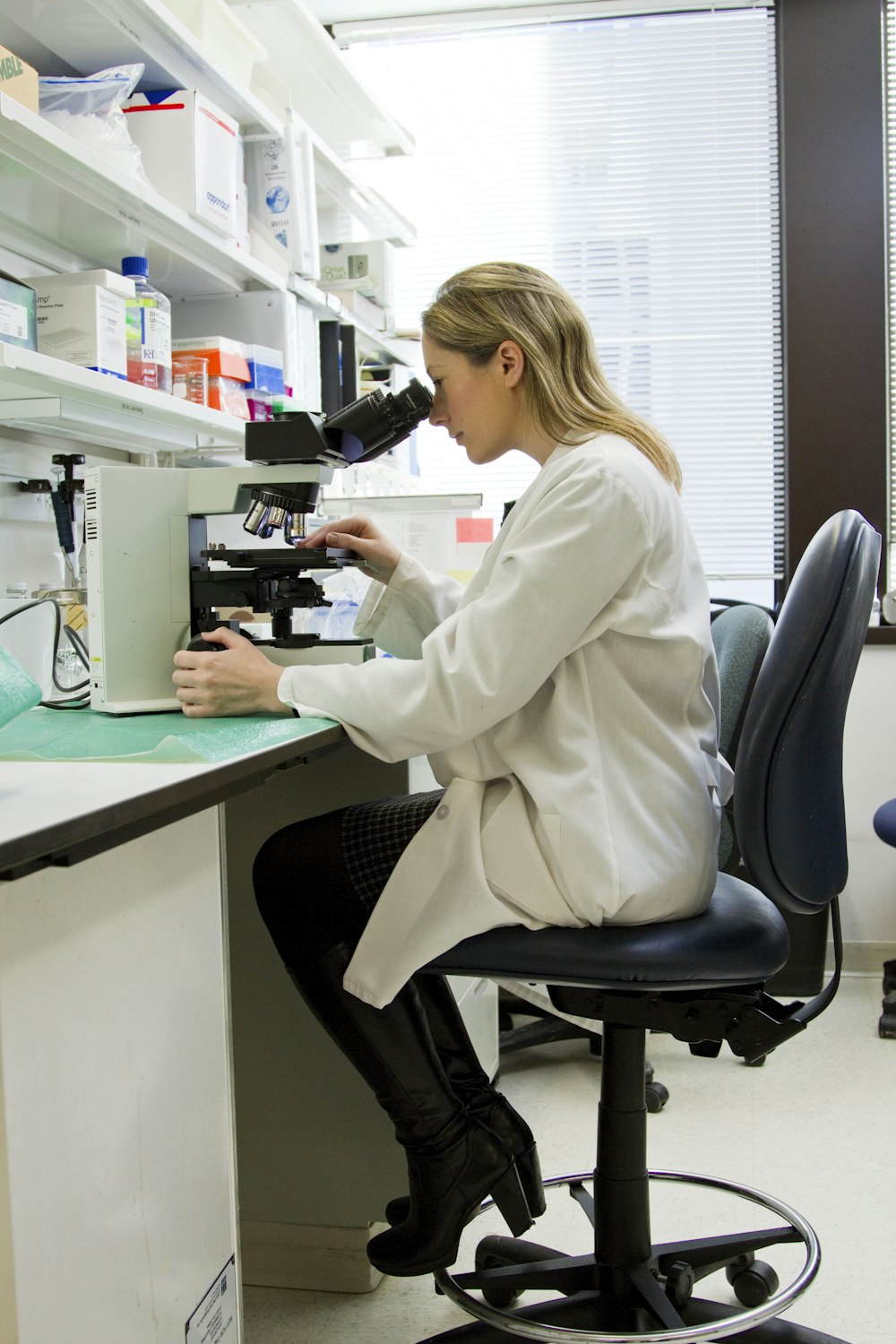
Advanced laboratory techniques enable the creation of functional heart tissue with native-like properties.
Key Findings from the Heart Extracellular Matrix (HEM) Study
| Parameter | Finding | Significance |
|---|---|---|
| Cellular Organization | Improved alignment and maturation of cardiomyocytes | More closely resembles native heart tissue structure |
| Function | Enhanced contractile force and electrical properties | Tissue can generate meaningful mechanical force |
| Vascularization | Formation of endothelial networks | Critical for nutrient delivery in thicker tissues |
| Applications Tested | Successful drug testing, disease modeling, and therapeutic application in animal MI model | Demonstrates versatility for multiple biomedical uses |
Essential Research Reagents for Cardiac Tissue Engineering
| Reagent/Material | Function | Example Use in Research |
|---|---|---|
| Heart Extracellular Matrix (HEM) | Provides natural heart-specific biochemical and structural environment | Used as 3D hydrogel scaffold to enhance tissue maturation 6 |
| Fibrinogen/Thrombin | Forms fibrin hydrogel when combined; serves as biodegradable scaffold | Base material for Engineered Heart Tissue (EHT) platforms 2 |
| Human Induced Pluripotent Stem Cells (hiPSCs) | Patient-specific source of cardiomyocytes and other heart cells | Differentiated into cardiovascular lineages for tissue construction 6 |
| Collagen Type I | Major structural component of natural extracellular matrix | Mixed with cells to form 3D engineered heart tissue 1 |
| Matrigel | Tumor-derived basement membrane extract containing growth factors | Enhances cell survival and differentiation in mixed hydrogels 1 |
| Microfluidic Chamber Chips | Enable perfusion culture with continuous nutrient delivery | Supports survival of thick, macroscale cardiac tissues 6 |
The Future of Heart Repair: Challenges and Promising Directions
Overcoming Hurdles
Maturation
Current engineered tissues, while functional, still don't fully replicate adult human heart muscle in terms of structural organization and functional capacity 2 .
Integration
Ensuring that implanted tissue electrically and mechanically couples properly with the host heart is crucial to prevent dangerous arrhythmias 3 .
Vascularization
Larger tissue constructs require built-in blood vessel networks to deliver oxygen and nutrients, preventing central tissue death after implantation 6 .
Scalability and Cost
Producing clinical-grade tissues at scale remains logistically and economically challenging 8 .
Promising New Directions
Cell-free Approaches
Instead of implanting cells, some researchers are using extracellular vesicles—nanoscale particles naturally released by cells that carry therapeutic cargoes. These have shown promise in reducing inflammation and promoting repair in animal models of heart attack 3 .
In Vivo Reprogramming
Scientists are investigating how to directly reprogram scar-forming cells in the heart (fibroblasts) into cardiomyocytes using specific transcription factors, potentially eliminating the need for cell transplantation altogether 3 .
3D Bioprinting
Advanced printing technologies allow precise positioning of different cell types and materials to create more complex tissue architectures .
Timeline of Cardiac Tissue Engineering Development
1990s
Early experiments with cell-seeded collagen matrices
2000s
Development of first engineered heart tissue constructs
2010s
iPSC technology enables patient-specific tissue engineering
2020s+
Complex multi-cellular tissues with vascular networks
A Beating Future
Cardiac tissue engineering represents a paradigm shift in how we approach heart disease—moving from managing decline to promoting regeneration. While there are still scientific hurdles to overcome, the progress has been remarkable. From early experiments with simple cell-seeded scaffolds to today's sophisticated, multi-cellular tissues grown in heart-specific microenvironments, the field has advanced at an accelerating pace.
The ongoing research holds promise not just for developing new therapies but also for creating better models for understanding heart disease and testing drug safety. As one researcher noted, the vision is to develop regenerative-based therapies that can effectively cure cardiovascular disorders, potentially restoring damaged heart tissue, improving cardiac function, and ultimately enhancing patients' quality of life 7 .
The day when doctors can repair damaged hearts with laboratory-grown living tissues is coming closer to reality, offering hope to millions affected by heart disease worldwide. The future of cardiac care may not just be in pill bottles or transplant waiting lists, but in Petri dishes and bioreactors—where scientists are literally building new hearts, one cell at a time.