Bone's Blueprint
How Nanoscale Design Unlocks the Future of Bone Regeneration
The Scaffold Revolution
Every year, millions worldwide face the devastating impact of bone defects caused by trauma, disease, or congenital conditions. While bone possesses remarkable self-healing abilities, defects larger than 5 cm overwhelm this capacity—a challenge surgeons call the "critical-sized defect dilemma" 7 .
For decades, the gold standard treatment involved harvesting bone from another site in the patient's body, a painful solution with limited supply. Enter mineralized collagen scaffolds: synthetic structures designed to mimic bone's natural architecture. Recent breakthroughs reveal that their nanoscale organization—specifically, how mineral crystals integrate with collagen fibers—holds the key to unlocking unprecedented bone regeneration 1 4 .
Critical-Sized Defect
Defects larger than 5cm cannot heal naturally, requiring advanced interventions like mineralized collagen scaffolds.
Decoding Bone's Hierarchical Design
Nature's Engineering Mastery
Bone isn't just a static scaffold; it's a dynamic nanocomposite. At its fundamental level (~100 nm scale), plate-like hydroxyapatite crystals nest inside collagen fibrils in a staggered array—a design that combines flexibility with extraordinary strength 4 . This intrafibrillar mineralization allows bone to resist cracks and absorb impact. When scientists replicate this specific arrangement in synthetic scaffolds, cells respond as if they're in natural bone: attaching, proliferating, and building new tissue 1 5 .

Mineralization Patterns & Their Biological Impact
| Mineralization Type | Mineral Location | Young's Modulus | Cell Response | Bone-Like Hierarchy |
|---|---|---|---|---|
| Intrafibrillar | Inside collagen fibrils | Significantly higher 1 | ↑ Proliferation & ALP activity 1 | Yes |
| Extrafibrillar | On collagen surface | Lower | Limited osteogenic induction | No |
Beyond Minerals: The Pore Factor
While mineralization dominates nanoscale interactions, pore architecture orchestrates cell migration and nutrient flow. Research shows:
Anisotropic Pores
Elongated channels mimicking trabecular bone boost mineral production by 40% 3 .
Glycosaminoglycans
Act as "traffic directors," sequestering osteogenic factors like BMP-2 3 .
Scaffold Design Elements & Functional Roles
Featured Experiment: Cracking the Mineralization Code
The Question
How do mineralization time and solution concentration impact scaffold nanostructure—and ultimately, bone regeneration? Researchers tackled this using a biomimetic approach called Polymer-Induced Liquid Precursor (PILP) 5 .
Step-by-Step Methodology
-
Scaffold FabricationType I collagen gels (rat-derived) immersed in mineralization solutions.Variables
- Solution concentration: 1× vs. 2× calcium/phosphate ions
- Mineralization time: 24h vs. 72h
-
Nanostructure AnalysisScanning electron microscopy (SEM) visualized mineral distribution. Atomic force microscopy (AFM) mapped surface roughness and stiffness.
-
Biological ValidationImplanted scaffolds in 5mm rat femur defects. New bone volume measured via micro-CT at 10 weeks.
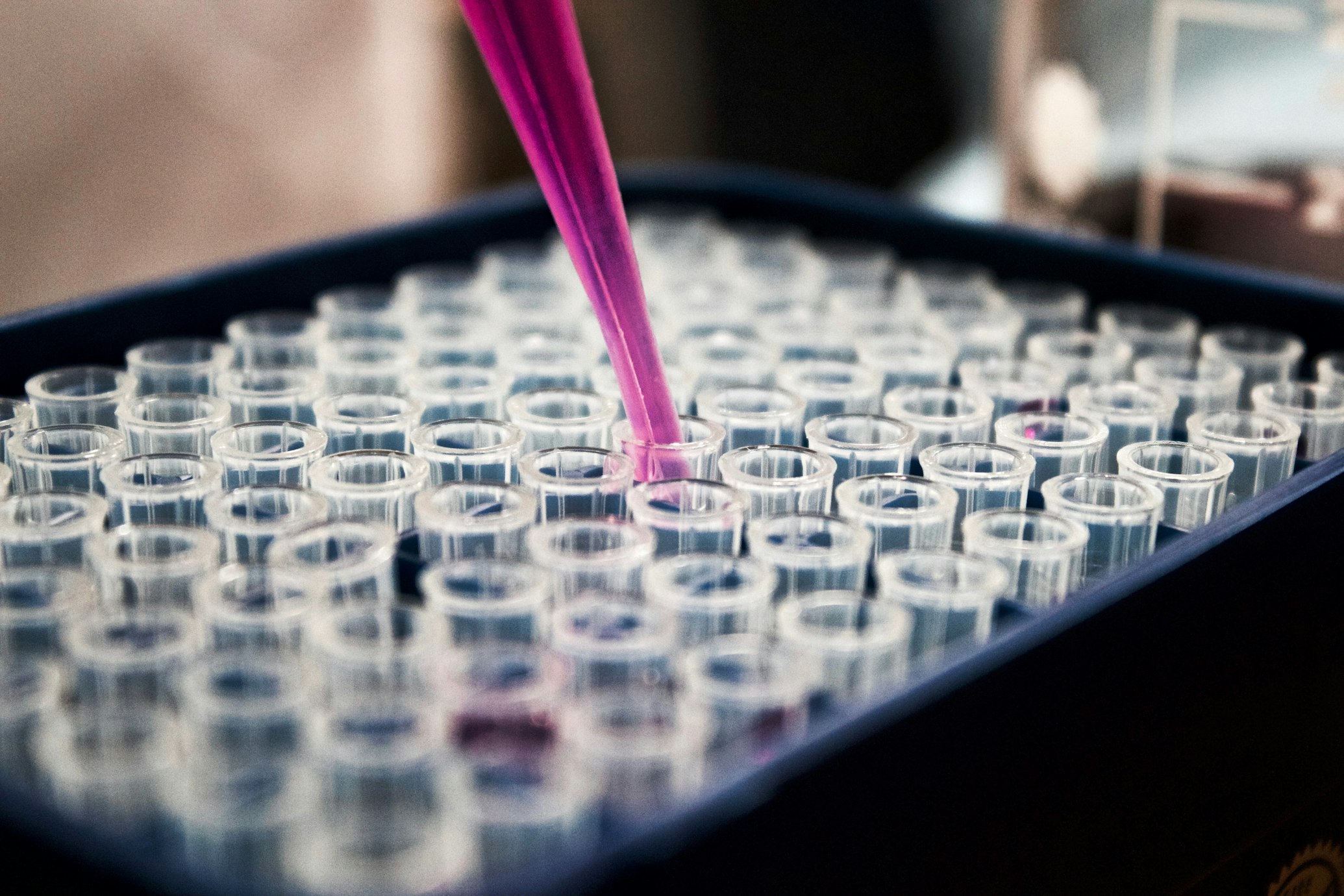
PILP Process Visualization
The Polymer-Induced Liquid Precursor method enables controlled mineralization at the nanoscale.
Results That Redefined Design Rules
- 1× solution + 72h: Produced uniform intrafibrillar mineralization with smooth surfaces → highest bone volume (2.5× vs. controls).
- 2× solution: Triggered rapid extrafibrillar crystallization, creating rough, uneven surfaces → inhibited cell penetration 5 .
Mineralization Parameters vs. Regenerative Outcomes
| Condition | Mineral Distribution | Surface Roughness | New Bone Volume (vs. Control) |
|---|---|---|---|
| 1× solution, 24h | Partial intrafibrillar | Moderate | 1.8× |
| 1× solution, 72h | Uniform intrafibrillar | Low | 2.5× |
| 2× solution, 24h | Predominantly extrafibrillar | High | 1.2× |
Why This Experiment Matters: It proved that slow mineralization at physiological ion concentrations is essential for recreating bone's nanostructure—overturning assumptions that "more minerals, faster" equals better healing 5 .
The Scientist's Toolkit: Key Reagents in Bone Scaffold Design
How Nanostructure "Talks" to Cells: The Wnt Connection
Scaffolds aren't just passive placeholders—they actively instruct cells. Transcriptional analysis of cells on intrafibrillar mineralized collagen (IMC) revealed:
- Wnt pathway activation: Genes for Wnt5a and β-catenin upregulated 3.2-fold vs. controls .
- Early immune recruitment: Macrophages on IMC produced VEGF, accelerating vascular invasion 6 .
- Mechanical signaling: Stiffness-matched scaffolds activate YAP/TAZ mechanotransduction, steering stem cells toward osteoblasts 4 .
The Takeaway: IMC scaffolds don't just "fill space"—they recreate the biological conversation of native bone matrix.
Challenges & Future Horizons
Future Directions
- Enzyme-incorporated scaffolds (e.g., alkaline phosphatase) for self-adjusting mineralization in vivo 6 .
- 3D printing techniques for precise pore architecture control.
- Smart materials responsive to mechanical loading.
Conclusion: The Nano-Edge in Regenerative Medicine
As we unravel bone's nanoscale "blueprint," mineralized collagen scaffolds evolve from structural stand-ins to bioactive instructors. By honoring nature's design—intrafibrillar crystals, optimized pores, and biochemical cues—we're not just repairing bone. We're awakening its innate capacity to regenerate. With every nanometer engineered, we step closer to scaffolds that don't mimic life ... but help create it.
"In the architecture of bone, the nanoscale isn't just detail—it's the foundation of function."