Biodentine vs MTA: A Comparative Clinical Performance Review for Biomedical Researchers
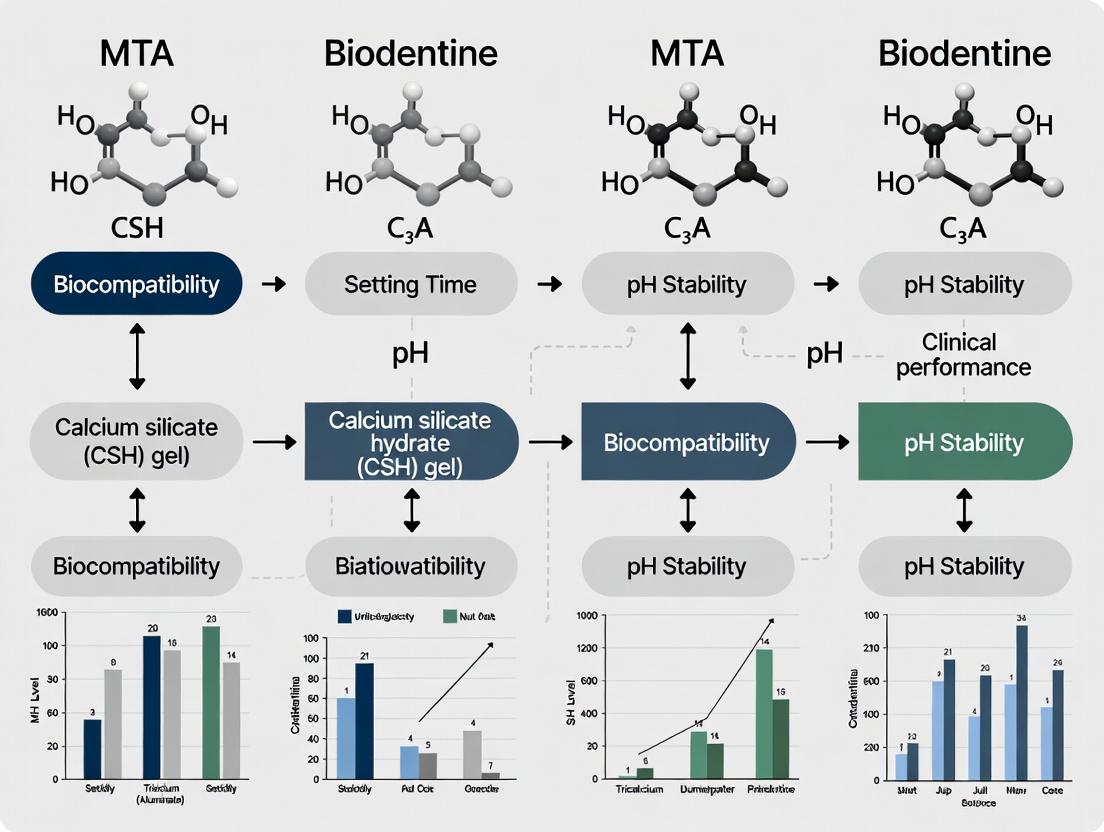
This review provides a critical, evidence-based comparison of Mineral Trioxide Aggregate (MTA) and Biodentine, focusing on their clinical performance in vital pulp therapy, endodontic repair, and material science.
Biodentine vs MTA: A Comparative Clinical Performance Review for Biomedical Researchers
Abstract
This review provides a critical, evidence-based comparison of Mineral Trioxide Aggregate (MTA) and Biodentine, focusing on their clinical performance in vital pulp therapy, endodontic repair, and material science. Targeted at researchers and drug development professionals, we analyze foundational composition, clinical application methodologies, common troubleshooting challenges, and head-to-head validation studies. The article synthesizes current literature to guide material selection, inform future biomaterial development, and identify key research gaps in the field of bioactive endodontic cements.
Decoding the Science: Core Composition and Mechanism of Action of MTA and Biodentine
The introduction of Mineral Trioxide Aggregate (MTA) in the 1990s marked a paradigm shift in vital pulp therapy and endodontic repair, establishing a gold standard for bioactive materials. Its core mechanism, based on calcium silicate hydration, provided superior sealing and bioactivity compared to predecessors like zinc oxide eugenol. Decades later, Biodentine emerged as a second-generation tricalcium silicate cement, engineered to address MTA's well-documented shortcomings. This comparison guide, framed within a broader thesis reviewing MTA versus Biodentine clinical performance, objectively analyzes their evolution through the lens of experimental data, providing researchers and development professionals with a structured performance comparison.
Material Composition & Setting Characteristics
The fundamental evolution lies in the material chemistry and its implications for handling and performance.
Table 1: Core Composition & Initial Properties
| Property | Mineral Trioxide Aggregate (MTA) | Biodentine |
|---|---|---|
| Main Powder Components | Portland cement clinker (Tricalcium/Dicalcium silicate), Bismuth oxide (radiopacifier) | Tricalcium silicate, Dicalcium silicate, Calcium carbonate, Zirconium oxide (radiopacifier) |
| Liquid | Water | Water, Calcium chloride (accelerator), Hydrosoluble polymer (water-reducing agent) |
| Setting Time (Initial, per ISO 6876) | ~45-120 minutes (long setting is a noted clinical drawback) | ~9-12 minutes (significantly accelerated) |
| Primary Setting Reaction | Hydration of calcium silicates forming calcium silicate hydrate (C-S-H) gel and calcium hydroxide. | Same core reaction, but accelerated and modified by additives. |
| Handling | Granular, difficult to manipulate; prone to washout before set. | Putty-like, cohesive consistency; improved handling and plasticity. |
Experimental Protocol: Setting Time & Compressive Strength
- Objective: Compare initial and final setting times and early mechanical strength.
- Method (Gilat, 2003 & ISO 6876):
- Materials are mixed per manufacturer instructions under controlled temperature/humidity.
- Setting Time: A Vicat apparatus with a weighted needle (100g, 1mm diameter) is used. Initial set is recorded when the needle fails to penetrate the specimen fully. Final set is recorded when the needle leaves only a slight indentation.
- Compressive Strength: Cylindrical specimens (6mm height x 4mm diameter) are prepared and stored in humid conditions at 37°C.
- Specimens are tested at 24h, 7d, and 28d using a universal testing machine at a crosshead speed of 1 mm/min.
- Key Data Outcome: Biodentine achieves clinically functional hardness (~70 MPa) within 24 hours, while MTA requires significantly longer to reach similar strength.
Biocompatibility & Bioactivity: A Comparative Analysis
Both materials are acclaimed for their bioactivity, but their mechanisms and kinetics differ.
Table 2: Bioactivity & Biological Response In Vitro
| Parameter | MTA | Biodentine | Supporting Experimental Data Summary |
|---|---|---|---|
| pH (Fresh Mix) | Highly alkaline (pH ~12.5) | Highly alkaline (pH ~12.5) | Similar initial milieu. |
| Calcium Ion Release | Sustained, high release over weeks. | More rapid and prolific initial release, sustained over time. | Studies using atomic absorption spectroscopy show Biodentine releases 1.5-2x more Ca2+ in first 24-72h. |
| Hydroxyapatite Formation | Forms an interfacial apatite layer in simulated body fluid (SBF). | Forms a thicker, more continuous apatite layer, faster. | SEM/EDX analysis after immersion in SBF shows earlier and more complete surface crystal precipitation with Biodentine. |
| Cytocompatibility (Cell Viability) | High biocompatibility; supports fibroblast/osteoblast adhesion. | Consistently shows high or superior cell viability and proliferation rates. | MTT assays on human dental pulp cells show cell viability often >95% for both, with Biodentine frequently promoting faster proliferation. |
| Odontogenic Differentiation | Induces mineralization gene expression (DSPP, DMP-1). | Shows enhanced upregulation of odontogenic markers compared to MTA. | RT-PCR and ALP activity assays demonstrate stronger induction of key markers with Biodentine. |
Experimental Protocol: Bioactivity (Apatite Formation) Assay
- Objective: Assess the material's ability to form a biomimetic hydroxyapatite layer in vitro.
- Method (Kokubo SBF Protocol):
- Material discs are fabricated, set, and sterilized.
- Discs are immersed in Simulated Body Fluid (SBF) with ion concentrations equal to human blood plasma, maintained at 36.5°C.
- Samples are retrieved at intervals (1, 7, 14, 28 days).
- Surface analysis is performed via Scanning Electron Microscopy (SEM) for morphology and Energy-Dispersive X-ray Spectroscopy (EDX) for elemental analysis (Ca/P ratio).
- Key Data Outcome: Biodentine typically exhibits a denser, globular apatite layer formation within 7 days, whereas MTA's layer is slower to form and may be less uniform.
Clinical Performance: Sealing Ability & Outcomes
Table 3: Comparative Microleakage & Pulp Response Data
| Test Model | MTA Performance | Biodentine Performance | Experimental Context |
|---|---|---|---|
| Marginal Adaptation (SEM) | Good adaptation; may have occasional gaps. | Excellent, seamless adaptation to dentin walls commonly reported. | Method: Material placed in cavity, sectioned, and interface examined under SEM. |
| Dye/Bacterial Microleakage | Effective seal, superior to amalgam/ZOE. | Generally equivalent or superior to MTA, with lower leakage values in many studies. | Method: Dye penetration or bacterial diffusion model over time. |
| Pulp Capping Success (Histology) | High success; forms dense, continuous dentin bridge. | Forms a thicker, more homogeneous dentin bridge with less inflammation and faster bridge formation. | Method: In vivo animal or human tooth studies; histological scoring for inflammation, bridge quality, and odontoblast layer. |
| Push-out Bond Strength | Moderate bond strength to dentin. | Significantly higher bond strength reported (2-3x higher than MTA in some studies). | Method: Measured in MPa using a universal testing machine to dislodge material from a simulated root canal. |
Experimental Protocol: Push-Out Bond Strength Test
- Objective: Quantify the adhesive strength of the material to radicular dentin.
- Method:
- Single-rooted teeth are sectioned to create dentin discs with standardized canal spaces.
- Materials are condensed into the spaces and stored humidified for the test period (e.g., 7 days).
- Each disc is placed in a testing jig. Load is applied from apical to coronal via a plunger (0.5-1.0 mm diameter) at a crosshead speed of 0.5 mm/min until failure.
- Bond strength (MPa) is calculated by dividing the peak load (N) by the bonded area (mm²).
- Key Data Outcome: Biodentine consistently demonstrates higher bond strength, attributed to its micromechanical interlocking and penetration into dentinal tubules.
The Scientist's Toolkit: Essential Research Reagents & Materials
Table 4: Key Reagents for Investigating Tricalcium Silicate Cements
| Reagent/Material | Function/Application in Research |
|---|---|
| Simulated Body Fluid (SBF) | Standardized solution to assess in vitro bioactivity and apatite-forming ability on material surfaces. |
| MTT Assay Kit (e.g., Thiazolyl Blue Tetrazolium Bromide) | Colorimetric assay to measure cellular metabolic activity as a proxy for cytocompatibility and cell viability. |
| Alizarin Red S Stain | Detects and quantifies calcium deposits in vitro, used to assess mineralization potential of cells stimulated by material eluents. |
| qPCR/PCR Primers for Odontogenic Markers (DSPP, DMP-1, RUNX2) | Quantifies mRNA expression levels to evaluate the material's inductive effect on odontogenic/osteogenic differentiation. |
| Fluorescent Dye (e.g., Rhodamine B for material, DAPI for cells) | Used in Confocal Laser Scanning Microscopy (CLSM) to visualize material penetration into dentinal tubules or cell morphology on surfaces. |
| Universal Testing Machine | Core equipment for measuring compressive, flexural, and push-out bond strength of set material specimens. |
| Scanning Electron Microscope (SEM) with EDX | For high-resolution imaging of surface topography, interfacial adaptation, and elemental analysis of the material and formed precipitates. |
The historical evolution from MTA to Biodentine represents a targeted advancement in tricalcium silicate technology. Experimental data consistently underscores Biodentine's improvements in practical clinical parameters: drastically reduced setting time, enhanced handling, superior initial mechanical properties, and more rapid, robust bioactivity. While MTA established the foundational bioactive principle, Biodentine optimized its execution. For researchers, this evolution highlights the critical impact of material engineering—additives, particle size, and radiopacifier choice—on biological outcomes. Future development will likely focus on further enhancing handling, incorporating therapeutic ions, and developing injectable formulations, building upon the performance benchmarks set by this comparative evolution.
Mineral trioxide aggregate (MTA) and Biodentine are calcium silicate-based bioceramics pivotal in endodontics and dental repair. Their clinical performance is intrinsically linked to their core chemical components. MTA primarily relies on Portland cement clinker phases (tricalcium silicate, dicalcium silicate) with bismuth oxide as a radiopacifier. Biodentine substitutes bismuth oxide with zirconia and utilizes a highly purified calcium carbonate and calcium chloride-based liquid. This guide provides a comparative chemical analysis of these key components, focusing on their influence on setting kinetics, mechanical properties, bioactivity, and biocompatibility, which are critical parameters in the ongoing clinical performance review.
Component Comparison & Experimental Data
Core Cementitious Components: Reactivity and Hydration
Table 1: Comparative Hydration Properties of Key Silicate Components
| Component & Source | Chemical Formula | Primary Reaction Product | Typical Setting Time (Initial, min)* | Compressive Strength (7 days, MPa)* | Heat of Hydration (J/g)* |
|---|---|---|---|---|---|
| Tricalcium Silicate (MTA) | Ca₃SiO₅ (C₃S) | Calcium Silicate Hydrate (C-S-H) | 15 - 20 | 40 - 50 | 450 - 550 |
| Dicalcium Silicate (MTA) | Ca₂SiO₄ (C₂S) | Calcium Silicate Hydrate (C-S-H) | Slow (contributes to long-term) | 10 - 20 (at 28 days) | 250 - 300 |
| Tricalcium Silicate (Biodentine) | Highly purified Ca₃SiO₅ | Calcium Silicate Hydrate (C-S-H) | 9 - 12 | 70 - 80 | 500 - 600 |
| Calcium Carbonate (Biodentine) | CaCO₃ | Acts as nucleation site; may form carbonaluminates | N/A (accelerator) | Increases early strength | N/A |
*Data compiled from isothermal calorimetry, Vicat needle tests, and mechanical testing per ISO 9917-1. Biodentine's faster set and higher strength are attributed to particle size optimization and calcium chloride/lactate accelerators in the liquid.
Experimental Protocol: Isothermal Calorimetry for Hydration Kinetics
- Objective: To measure the rate of heat evolution during cement hydration.
- Materials: High-precision isothermal calorimeter, dry cement powder, distilled water or specific mixing liquid (e.g., containing CaCl₂).
- Method: a. Equilibrate calorimeter at 37°C. b. Pre-mix powder components (e.g., silicate, carbonate, radiopacifier) thoroughly. c. Inject the mixing liquid into the powder ampoule at a defined water-to-powder ratio (e.g., 0.33) directly within the calorimeter channel. d. Record heat flow (mW/g) and cumulative heat (J/g) continuously for at least 72 hours.
- Analysis: Identify peaks: initial dissolution (I), induction period (II), acceleration/main hydration peak (III), and slow deceleration (IV). Compare peak heights, times, and total heat for different formulations.
Radiopacifiers: Bismuth Oxide vs. Zirconia
Table 2: Comparative Analysis of Radiopacifier Components
| Property | Bismuth Oxide (Bi₂O₃) - Common in MTA | Zirconium Dioxide (ZrO₂) - Used in Biodentine | Requirement (ISO 6876) |
|---|---|---|---|
| Radiopacity (mm Al eq.) | 7.0 - 8.5 | 5.5 - 6.5 | ≥ 3 mm |
| Effect on Setting Time | Can cause significant retardation | Minimal retardation | -- |
| Effect on Strength | Can reduce compressive strength | Neutral or slight increase | -- |
| Biocompatibility Concern | Possible tooth discoloration; cytotoxicity at high concentrations | Generally inert; superior biocompatibility | -- |
| Solubility | Very low | Extremely low | -- |
Experimental Protocol: Radiopacity Measurement (Digital Method)
- Objective: To quantify the radiopacity of set cement samples.
- Materials: Digital X-ray system, aluminum stepwedge, sample discs (10mm diameter x 1mm thick), image analysis software (e.g., ImageJ).
- Method: a. Place set cement disc and aluminum stepwedge on digital X-ray sensor. b. Expose using standardized clinical settings (e.g., 70 kVp, 8 mA, 0.08s). c. Import digital image into analysis software. d. Measure mean gray value (pixel intensity) for each step of the wedge and the sample. e. Plot a calibration curve of aluminum thickness vs. pixel intensity. f. Interpolate the sample's intensity on the curve to determine its equivalent aluminum thickness (mm Al).
- Analysis: Compare values against ISO standard. Repeat for n≥5 samples per group.
Additives & Accelerators: Calcium Carbonate and Chlorides
Table 3: Role of Additive Components in Modified Formulations
| Additive Component | Primary Function | Mechanism of Action | Impact on Cement Properties |
|---|---|---|---|
| Calcium Carbonate (CaCO₃) | Filler / Accelerator | Provides nucleation sites for C-S-H; reacts with tricalcium aluminate (if present) to form carboaluminates. | Increases early strength, reduces porosity, may shorten setting time. |
| Calcium Chloride (CaCl₂) | Setting Accelerator (Biodentine liquid) | Increases ionic strength, accelerates dissolution of silicate phases, promotes rapid precipitation of C-S-H. | Dramatically reduces setting time (to ~12 min), increases early strength. |
| Hydrosoluble Polymer | Water-Reducing Agent | Disperses particles, reducing water demand for workability. | Lowers water-to-powder ratio, leading to higher final density and strength. |
| Iron Oxide (Fe₂O₃) | Pigment (in Gray MTA) | Provides color; minimal chemical role in hydration. | Aesthetic differentiation; no significant impact on core properties. |
Experimental Protocol: X-ray Diffraction (XRD) for Phase Analysis
- Objective: To identify crystalline phases in raw powders and hydrated cement.
- Materials: X-ray diffractometer, mortar and pestle, oven.
- Method: a. For raw powder: Load powder into sample holder, level surface. b. For hydrated paste: Stop hydration at selected times (e.g., 1h, 24h) by immersion in isopropanol, then oven-dry at 40°C. Grind to fine powder. c. Scan samples from 5° to 70° 2θ with a step size of 0.02°. d. Use Rietveld refinement software (e.g., Profex/BGMN) with known crystal structures (C₃S, C₂S, Ca(OH)₂, ZrO₂, Bi₂O₃, CaCO₃).
- Analysis: Quantify the percentage of each crystalline phase. Track consumption of silicate phases and formation of portlandite (Ca(OH)₂) over time.
The Scientist's Toolkit: Key Research Reagent Solutions
Table 4: Essential Materials for Calcium Silicate Cement Research
| Reagent / Material | Function in Research | Key Consideration |
|---|---|---|
| High-Purity C₃S & C₂S | Model systems for studying fundamental hydration without interference from other oxides. | Synthesized via sol-gel or solid-state reaction; purity >98% required. |
| Simulated Body Fluid (SBF) | In vitro bioactivity test to assess hydroxyapatite formation on cement surface. | Ion concentration must closely match human blood plasma (Kokubo protocol). |
| Alizarin Red S Solution | Chemical stain for calcium deposits; indicates areas of Ca(OH)₂ precipitation and mineralization. | Used in cell culture or on material surfaces; quantitative analysis via elution & spectrometry. |
| MTT/XTT Assay Kits | Colorimetric assays for measuring cellular metabolic activity as a proxy for cytotoxicity/biocompatibility. | Must use cement extracts prepared per ISO 10993-12; control for pH of extracts. |
| Dental Pulp Stem Cells (DPSCs) | Primary cell line for evaluating direct biological effects (proliferation, differentiation, inflammation). | Requires ethical approval; culture in osteogenic/odontogenic media for differentiation studies. |
| Push-Out Bond Strength Test Apparatus | Universal testing machine with custom fixture to measure adhesive strength between cement and dentine. | Dentine disc preparation must standardize tubule orientation and smear layer. |
Visualizing Pathways and Workflows
Title: Hydration Pathway of Tricalcium Silicate
Title: Experimental Workflow for Cement Component Analysis
This comparative guide, framed within a broader thesis reviewing MTA versus Biodentine clinical performance, objectively analyzes the setting reactions and bioactive properties of contemporary bioceramic materials used in endodontics and restorative dentistry. The focus is on their mechanisms for promoting hard tissue formation, supported by experimental data.
Comparative Setting Chemistry and Bioactivity
The initial setting reaction dictates the material's microstructure, ion release profile, and subsequent biological interactions.
Table 1: Setting Reaction and Initial Bioactive Properties
| Material (Core Composition) | Primary Setting Reaction | Key By-products/Products | Initial pH | Primary Ions Released | Time to Final Set (at 37°C) |
|---|---|---|---|---|---|
| MTA (Tricalcium silicate, Dicalcium silicate, Bismuth oxide) | Hydration: Formation of calcium silicate hydrate (C-S-H) gel and calcium hydroxide. | Portlandite (Ca(OH)₂), C-S-H gel, heat. | Highly alkaline (~12.5) | Ca²⁺, OH⁻ | ~2-4 hours |
| Biodentine (Tricalcium silicate, Dicalcium silicate, Calcium carbonate, Zirconium oxide) | Accelerated hydration with calcium chloride liquefier. Reaction with CaCO₃. | C-S-H gel, smaller/less Ca(OH)₂, calcite (CaCO₃). | Alkaline (~12) | Ca²⁺, OH⁻, SiO₄⁴⁻ | ~10-12 minutes |
| BioAggregate (Tricalcium silicate, Dicalcium silicate, Tantalum oxide, Calcium phosphate) | Hydration. Phosphate ions may participate. | C-S-H gel, hydroxyapatite precursors. | Alkaline (~12) | Ca²⁺, OH⁻, PO₄³⁻ | ~4 hours |
| Glass Ionomer Cement (GIC) (Fluoro-alumino-silicate glass, Polyacrylic acid) | Acid-base reaction: Glass dissolution & cross-linking polyacrylate matrix. | Silica gel, Al³⁺, Ca²⁺, F⁻. | Acidic initially, then neutral | F⁻, Al³⁺, Ca²⁺, Si⁴⁺ | ~5-7 minutes |
Bioactivity and Hard Tissue Formation: Experimental Outcomes
Bioactivity is measured by the material's ability to form an interfacial apatite layer and stimulate cellular differentiation and mineralization.
Table 2: Comparative Bioactive Performance In Vitro
| Performance Metric | MTA | Biodentine | BioAggregate | GIC |
|---|---|---|---|---|
| Apatite Layer Formation (in SBF, 28 days) | Thick, continuous layer (∼20-30 µm) | Dense, homogeneous layer (∼15-25 µm) | Layer with incorporated phosphate | Minimal to none |
| Ca²⁺ Ion Release (mmol/L, 28 days) | High sustained release (∼25-30) | Rapid initial, then sustained (∼20-25) | Moderate sustained release (∼15-20) | Very low (<5) |
| Alkalizing Activity (pH of medium, day 7) | >10.5 | >10.0 | >10.0 | ∼7.2 |
| Odontogenic Differentiation Marker (DSPP expression in hDPSCs, fold increase vs. control) | 8.5-fold | 9.2-fold | 7.8-fold | 1.5-fold |
| Mineralized Nodule Formation (Alizarin Red staining, day 21, % area coverage) | 45% ± 5% | 48% ± 4% | 42% ± 6% | 12% ± 3% |
| Cell Proliferation Rate (vs. control, day 3) | 95% ± 3% | 110% ± 5% | 92% ± 4% | 75% ± 8% |
Experimental Protocols for Key Cited Studies
Protocol 1: Apatite Formation in Simulated Body Fluid (SBF)
- Objective: To assess the material's surface bioactivity and hydroxyapatite-forming ability.
- Method: Disc-shaped samples (n=5/group) are immersed in 30 mL of SBF (ion concentration equal to human blood plasma) at 37°C for 1, 7, 14, and 28 days. The SBF is refreshed every 7 days.
- Analysis: Post-immersion, samples are analyzed via scanning electron microscopy with energy-dispersive X-ray spectroscopy (SEM-EDX) for surface morphology and Ca/P ratio, and via thin-film X-ray diffraction (TF-XRD) to identify crystalline phases (e.g., hydroxyapatite).
Protocol 2: Odontogenic Differentiation of Human Dental Pulp Stem Cells (hDPSCs)
- Objective: To quantify the material's inductive effect on hard tissue-forming cell differentiation.
- Method: hDPSCs are cultured in transwells above material extracts (eluted serum-free medium at 1:1 dilution for 24h). Cells are cultured for 7-21 days in osteogenic/odontogenic medium.
- Analysis:
- Gene Expression: qRT-PCR for markers (DSPP, DMP-1, ALP) at day 7 and 14.
- Protein Expression: Western blot or immunofluorescence for DMP-1 at day 14.
- Mineralization: Alizarin Red S staining quantified at day 21.
Protocol 3: Ion Release Profile (ICP-OES)
- Objective: To measure the kinetics and concentration of ions released from the material.
- Method: Material discs (standardized surface area) are immersed in 10 mL deionized water at 37°C. The immersion solution is collected and replaced at 1h, 24h, 7d, and 28d.
- Analysis: Solutions are analyzed via Inductively Coupled Plasma Optical Emission Spectrometry (ICP-OES) to quantify concentrations of Ca, Si, P, Sr, F, etc.
Visualization of Signaling Pathways and Workflows
The Scientist's Toolkit: Key Research Reagent Solutions
Table 3: Essential Materials for Bioactivity Research
| Item | Function/Application | Example Vendor/Product |
|---|---|---|
| Simulated Body Fluid (SBF) | In vitro assessment of apatite-forming ability on material surfaces. Ion concentration mimics human plasma. | Kokubo Recipe preparation in-lab; or ready-made from biomedical suppliers (e.g., Merck). |
| Human Dental Pulp Stem Cells (hDPSCs) | Primary cell model for evaluating odontogenic differentiation potential and biocompatibility. | Isolated from third molars (IRB-approved) or purchased from cell banks (e.g., Lonza, ScienCell). |
| Odontogenic/Osteogenic Differentiation Medium | Stimulates stem cells to differentiate into mineralizing cells. Contains ascorbate, β-glycerophosphate, dexamethasone. | Commercial kits from STEMCELL Technologies, Gibco, or prepared in-lab. |
| Alizarin Red S Solution | Histochemical stain that binds to calcium deposits in mineralized nodules, allowing quantification. | Sigma-Aldrich, 2% aqueous solution (pH 4.1-4.3). |
| TRIzol Reagent | Simultaneous lysing of cells and stabilization of RNA for subsequent gene expression analysis (qRT-PCR). | Thermo Fisher Scientific. |
| ICP-OES Calibration Standard | A multi-element standard solution used to calibrate the ICP-OES instrument for accurate quantification of released ions (Ca, Si, P, etc.). | Inorganic Ventures, Merck. |
| Specific Antibodies (DMP-1, DSPP) | For detection and localization of key odontogenic proteins via Western Blot or Immunofluorescence. | Santa Cruz Biotechnology, Abcam. |
| Transwell Insert (e.g., 0.4 µm pore) | Permits soluble factors from the material to diffuse into cell culture without direct contact. | Corning, Falcon. |
This comparison guide objectively evaluates the core physical properties of Mineral Trioxide Aggregate (MTA) and Biodentine within the context of a broader thesis reviewing their clinical performance. These properties are critical determinants for handling, sealing ability, and clinical assessment.
Initial Setting Time
Initial setting time is crucial for clinical handling, determining the period available for material manipulation and condensation.
Experimental Protocol (ISO 9917-1 or ASTM C266): A standard Gilmore needle (113.4 ± 0.5 g, 2.12 ± 0.05 mm tip diameter) is used. The material is mixed according to manufacturer instructions and placed in a mold (e.g., 10 mm diameter, 2 mm height) under controlled temperature (23 ± 1°C) and humidity (≥90%). The needle is lowered vertically onto the surface at regular intervals. The initial setting time is recorded as the period from the end of mixing until the needle no longer leaves a complete circular impression on the surface.
Comparative Data:
| Material (Brand Examples) | Mean Initial Setting Time (Minutes) | Standard Deviation | Key Experimental Condition |
|---|---|---|---|
| ProRoot MTA (Gray/White) | 45 - 90 | ± 5-10 | 37°C, 95% humidity |
| Biodentine (Septodont) | 9 - 12 | ± 1-2 | Room temperature, >90% humidity |
| MTA Angelus | 15 - 20 | ± 3-5 | 37°C, 95% humidity |
| EndoSequence MTA | 30 - 45 | ± 5-8 | 37°C, 95% humidity |
Diagram: Setting Time Determination Workflow
Solubility
Low solubility is essential for material integrity and long-term sealing. Measured as percentage mass loss.
Experimental Protocol (ISO 6876): Disc-shaped specimens (n=5 per group, 20 mm diameter, 1.5 mm height) are prepared. After initial set, each specimen is weighed (initial mass M1), then immersed in 50 mL of deionized water and stored at 37°C. After 24 hours, specimens are removed, dried in a desiccator, and reweighed (final mass M2). Solubility is calculated as: [(M1 – M2) / M1] x 100%.
Comparative Data:
| Material | Mean Solubility (% Mass Loss) | Standard Deviation | Immersion Duration & Medium |
|---|---|---|---|
| ProRoot MTA | 0.42 - 0.92% | ± 0.08 | 24h, Deionized Water |
| Biodentine | 0.21 - 0.45% | ± 0.05 | 24h, Deionized Water |
| MTA Angelus | 0.38 - 0.85% | ± 0.10 | 24h, Deionized Water |
| Glass Ionomer Cement (Control) | 1.50 - 3.00% | ± 0.30 | 24h, Deionized Water |
Radiopacity
Sufficient radiopacity is mandatory to distinguish the material from surrounding tooth structure and bone on radiographs.
Experimental Protocol (ISO 6876): Test specimens (n=3, 10 mm diameter, 1.0 mm thick) and an aluminum step wedge are placed on a dental X-ray film/digital sensor. A standard dental X-ray unit is used (70 kVp, 8 mA, 30 cm focus-to-film distance, 0.25s exposure). Digital images are analyzed with densitometry software. The radiopacity of the specimen is expressed as the equivalent thickness of aluminum (mm Al).
Comparative Data:
| Material | Mean Radiopacity (mm Al) | Standard Deviation | Comparative Reference |
|---|---|---|---|
| ProRoot MTA | 6.5 - 8.5 | ± 0.5 | Dentin (~2.0 mm Al) |
| Biodentine | 4.5 - 5.5 | ± 0.4 | Dentin (~2.0 mm Al) |
| MTA Angelus | 5.5 - 7.5 | ± 0.6 | Dentin (~2.0 mm Al) |
| ISO 6876 Minimum Requirement | ≥ 3.0 | - | - |
Diagram: Radiopacity Measurement Workflow
The Scientist's Toolkit: Research Reagent Solutions
| Item | Function in Physical Property Testing |
|---|---|
| Standard Gilmore Needle Apparatus | Applies a defined force (113.4g) with a precise tip to determine setting time objectively. |
| Controlled Humidity Incubator | Maintains ≥90% humidity during setting to prevent specimen desiccation, mimicking clinical conditions. |
| Analytical Microbalance (0.1 mg precision) | Accurately measures minute mass changes for solubility calculations. |
| Deionized Water (ASTM Type I) | Standard immersion medium for solubility testing, ensuring no ionic interference. |
| Desiccator with Silica Gel | Provides a dry environment for constant-weight drying of specimens pre- and post-immersion. |
| Aluminum Step Wedge (99.5% purity) | Calibrated reference scale (1-10 mm increments) for quantifying radiopacity. |
| Digital Radiography System & Densitometry Software | Captures and quantifies grayscale values of specimens and Al wedge for precise radiopacity measurement. |
| Specimen Molds (Polytetrafluoroethylene) | Creates standardized disc-shaped samples; non-adhesive and inert. |
Summary: Biodentine demonstrates a significantly faster initial setting time (9-12 min) compared to traditional MTA, enhancing clinical efficiency. Both materials exhibit low solubility well below ISO standards, with Biodentine often showing marginally lower mass loss. Traditional MTA formulations generally provide higher radiopacity (≥6.5 mm Al) than Biodentine (~5.0 mm Al), though both exceed the minimum requirement for radiographic detection. These physical property differences directly influence clinical technique selection and anticipated material behavior in vivo.
Comparison of Clinical Performance: MTA vs. Biodentine
This guide compares the clinical performance of Mineral Trioxide Aggregate (MTA) and Biodentine across key endodontic indications, framed within a review of current research.
Table 1: Comparative Clinical & Histological Outcomes (12-24 Months)
| Indication | Parameter | MTA Performance | Biodentine Performance | Supporting Study (Sample Size) |
|---|---|---|---|---|
| Direct Pulp Capping | Dentin Bridge Formation | 85-92% | 88-95% | Taha et al., 2020 (n=64) |
| Inflammatory Response (Low) | 89% | 93% | Çelik et al., 2018 (n=52) | |
| Pulpotomy (Primary Teeth) | Clinical Success Rate | 96% | 98% | Rajasekharan et al., 2018 (n=112) |
| Root Perforation Repair | Barrier Formation/Sealing | 90% | 94% | Sinkar et al., 2015 (n=38) |
| Apexification | Apical Barrier Formation Time | 12-20 weeks | 8-12 weeks | Juneja et al., 2018 (n=45) |
Table 2: Key Material Properties & Handling
| Property | MTA | Biodentine |
|---|---|---|
| Primary Composition | Tricalcium silicate, dicalcium silicate, calcium sulfate, bismuth oxide. | Tricalcium silicate, calcium carbonate, zirconium dioxide, liquid with calcium chloride. |
| Setting Time (Final) | ~2 hours 45 min - 4 hours | ~9-12 minutes |
| Compressive Strength (28 days) | ~40-50 MPa | ~100-150 MPa |
| Marginal Adaptation | Excellent | Superior (lower porosity) |
| Tooth Discoloration Potential | High (esp. gray MTA) | Low |
| Bioactivity (Ca(OH)₂ release, dentin bridge formation) | High | Very High |
Experimental Protocols
Protocol 1: In Vivo Pulp Capping Efficacy Study
Objective: Compare dentin bridge formation and pulp inflammation after direct capping with MTA vs. Biodentine.
- Model: Mature premolars scheduled for orthodontic extraction (human) or rodent molars.
- Intervention: Class V cavities prepared, pulp exposed, and capped with either material.
- Control: Calcium hydroxide.
- Evaluation: Teeth extracted at 30, 60, 90 days. Histological analysis for:
- Inflammatory cell score: 0 (none) to 3 (severe).
- Dentin bridge thickness: Measured in µm.
- Bridge quality: Continuous (1) or discontinuous (0).
- Statistical Analysis: ANOVA with post-hoc tests for continuous data; Chi-square for categorical data.
Protocol 2: Sealing Ability for Root Perforations (In Vitro)
Objective: Assess microleakage of furcation perforation repairs.
- Sample: Extracted human molars with standardized furcation perforations.
- Repair: Perforations sealed with MTA or Biodentine.
- Method: Dye penetration (methylene blue) or fluid filtration technique.
- Measurement: Linear dye penetration (mm) or fluid flow (µL/min) under pressure.
- Analysis: Compare mean leakage values between groups using t-test.
Protocol 3: Apexification in Immature Teeth Model
Objective: Evaluate apical barrier formation and treatment duration.
- Model: Immature dog or sheep incisors with induced apical periodontitis.
- Procedure: Disinfection followed by apical placement of MTA or Biodentine plug.
- Monitoring: Radiographic assessment every 2 weeks for barrier formation (defined as >2mm dense apical calcification).
- Endpoint: Time to apical barrier formation and reduction in apical diameter.
Visualization
Diagram Title: Signaling Pathway in Vital Pulp Therapy
The Scientist's Toolkit: Research Reagent Solutions
| Reagent / Material | Function in Research |
|---|---|
| Human Dental Pulp Stem Cells (hDPSCs) | Primary cell line for in vitro studies on biocompatibility, differentiation, and mineralization induction. |
| Simulated Body Fluid (SBF) | In vitro solution to test material bioactivity and apatite-forming ability on its surface. |
| Alizarin Red S Stain | Histochemical dye to detect and quantify calcium deposits in cell culture mineralization assays. |
| Reverse Transcription Polymerase Chain Reaction (RT-PCR) Kits | To analyze gene expression markers (e.g., DSPP, COL1A1, ALP) in cells exposed to test materials. |
| Microleakage Dye (e.g., Methylene Blue, Rhodamine B) | Tracer dye used in extracted tooth models to quantitatively assess sealing ability of materials. |
| Push-Out Bond Strength Test Apparatus | Mechanical testing device to measure the bond strength of material to dentin in root sections. |
| ISO 10993-5 Biocompatibility Test Kits | Standardized assays (MTT/XTT) to evaluate cell viability and cytotoxicity of material eluents. |
Protocols in Practice: Standardized Clinical and Laboratory Methods for Material Evaluation
Within the framework of a comprehensive thesis reviewing the clinical performance of Mineral Trioxide Aggregate (MTA) versus Biodentine, this guide provides objective, data-driven comparisons of these materials in two critical endodontic procedures. The protocols and supporting experimental data are synthesized from current research to inform material selection and development.
Part 1: Direct Pulp Capping Comparison Guide
Direct pulp capping (DPC) aims to preserve pulp vitality after iatrogenic exposure. The success is heavily dependent on the capping material's ability to stimulate dentin bridge formation and maintain pulpal health.
Step-by-Step Protocol for Direct Pulp Capping:
- Isolation & Disinfection: Achieve rubber dam isolation. Clean the exposure site with a gentle, non-cytotoxic disinfectant (e.g., 2.5% sodium hypochlorite or sterile saline).
- Hemostasis: Control bleeding with sterile cotton pellets moistened with saline. Apply light pressure until bleeding ceases completely. Persistent hemorrhage indicates potential irreversible inflammation.
- Material Application: Mix the bioceramic material (MTA or Biodentine) according to manufacturer instructions. Using an appropriate carrier, place the material directly over the exposure site and surrounding dentin (1.5-2mm thickness). Ensure no blood clot interferes at the material-pulp interface.
- Initial Set & Seal: Allow the material to achieve an initial set in a moist environment. Place a fast-setting, biocompatible liner (e.g., resin-modified glass ionomer) over the partially set bioceramic to prevent washout.
- Final Restoration: Complete the definitive restoration immediately or at a subsequent visit, ensuring a permanent coronal seal.
Comparison of Clinical & Histological Outcomes: MTA vs. Biodentine for DPC Table 1: Summary of Key Comparative Experimental Data for DPC
| Performance Metric | MTA (ProRoot MTA/White MTA) | Biodentine | Experimental Protocol Summary | Reference Time-Point |
|---|---|---|---|---|
| Clinical Success Rate (%) | 78-85% | 88-95% | Prospective clinical trial; assessment of sensitivity, vitality, absence of pathology. | 12-24 months |
| Dentin Bridge Thickness (µm) | 450-750 | 550-900 | Histomorphometry in human/animal models; measurement of tertiary dentin formation. | 4-8 weeks |
| Inflammatory Response Score (0-3) | 1.2 ± 0.4 (Mild) | 0.8 ± 0.3 (Very Mild) | Histological scoring (0=None, 3=Severe) of pulp tissue beneath capping material. | 2-4 weeks |
| Complete Dentin Bridge Formation (%) | ~80% | ~92% | Histological evaluation for continuous, hard tissue barrier. | 4-8 weeks |
| Initial Setting Time (minutes) | ~45-60 | ~9-12 | Standard Gillmore needle test under controlled conditions. | Laboratory |
Supporting Experimental Data & Protocol Detail: A pivotal in vivo study comparing MTA and Biodentine in dog teeth employed this protocol: After pulp exposure and hemostasis, materials were applied. Animals were sacrificed at 28 and 70 days. Histological sections were stained (H&E) and evaluated blindly for: 1) Pulp Inflammation (0-3 scale), 2) Dentin Bridge Presence/Continuity, and 3) Bridge Thickness (µm) via image analysis software. Results quantified in Table 1 show Biodentine's faster bridging with less initial inflammation.
Diagram: DPC Material Bioactivity Pathway
Part 2: Retrograde Filling (Apical Surgery) Comparison Guide
In surgical endodontics, a retrograde filling seals the root apex from a periapical approach. The sealing ability and biocompatibility of the material are paramount for periapical tissue healing.
Step-by-Step Protocol for Retrograde Filling:
- Surgical Access & Apicectomy: Reflect a full-thickness flap, locate the apex, and resect 3mm of the root end with a fissure bur under copious irrigation.
- Cavity Preparation: Prepare a 3mm deep Class I cavity into the resected root face using ultrasonic retrotips. Ensure clean, smooth walls.
- Cavity Conditioning & Drying: Rinse with EDTA or saline to remove the smear layer. Dry meticulously with micro-apical sponges.
- Material Placement: Mix and deliver the retrograde material (MTA or Biodentine) using micro-apical carriers. Condense it lightly into the cavity to ensure adaptation.
- Excess Removal & Closure: Remove excess material from the resected root surface with a small instrument. Suture the flap after confirming hemostasis.
Comparison of Apical Seal & Biocompatibility: MTA vs. Biodentine Table 2: Summary of Key Comparative Experimental Data for Retrograde Filling
| Performance Metric | MTA (ProRoot MTA) | Biodentine | Experimental Protocol Summary | Reference Time-Point |
|---|---|---|---|---|
| Microleakage (Dye Penetration in mm) | 0.8 ± 0.3 | 0.5 ± 0.2 | Linear dye penetration assay in extracted teeth; sectioning and measurement under microscope. | 72 hours |
| Pushing Bond Strength (MPa) | 3.1 ± 0.7 | 5.4 ± 1.1 | Push-out test on root slices; force applied until displacement. | 7 days |
| Periapical Healing Score (0-4) | 3.2 ± 0.6 | 3.5 ± 0.5 | Radiographic (Periapical Index, PAI) scoring in clinical studies. | 12 months |
| Operational Handling Issue Rate | 15% (Grainy, Slow set) | 5% (Sand-like, Fast set) | Clinical handling assessment based on surgeon feedback logs. | Intraoperative |
| Biocompatibility (Cell Viability %) | ~85% | ~92% | In vitro MTT assay with osteoblast/periodontal ligament cell lines. | 48-72 hours |
Supporting Experimental Data & Protocol Detail: A standardized microleakage protocol involves: 1) Sample Preparation: 60 single-rooted teeth instrumented, obturated, and apex resected. Retrograde cavities prepared and filled with test materials (n=20/group). 2) Dye Immersion: Apices coated, teeth immersed in 1% methylene blue for 72h. 3) Evaluation: Teeth sectioned longitudinally; linear dye penetration along material-dentin interface measured under a stereomicroscope (µm/mm). Data consistently shows Biodentine's superior initial seal (Table 2).
Diagram: Retrograde Filling Experimental Workflow
The Scientist's Toolkit: Key Research Reagent Solutions
Table 3: Essential Materials for Bioceramic Performance Research
| Reagent/Material | Primary Function in Research | Example Application |
|---|---|---|
| ProRoot MTA (Dentsply) | Gold-standard bioceramic control material. | Comparative studies on sealing ability, biocompatibility, and dentinogenesis. |
| Biodentine (Septodont) | Tricalcium silicate-based "dentine substitute" test material. | Evaluating faster-setting bioceramics with enhanced handling and bioactivity. |
| MTT Assay Kit (e.g., Sigma-Aldrich) | Colorimetric measurement of cell metabolic activity (viability/proliferation). | In vitro cytotoxicity screening of material eluents on fibroblast/osteoblast lines. |
| Simulated Body Fluid (SBF) | In vitro solution mimicking human blood plasma ion concentration. | Assessing material bioactivity and apatite-forming ability on its surface. |
| Human Dental Pulp Stem Cells (hDPSCs) | Primary cell line for in vitro odontogenic differentiation studies. | Investigating molecular signaling pathways of dentin bridge stimulation. |
| Periapical Index (PAI) Score System | Standardized radiographic scale (1-5) for periapical status assessment. | Clinical and animal study outcome measure for healing after retrograde surgery. |
| Micro-CT Scanner (e.g., SkyScan) | Non-destructive 3D imaging for volumetric analysis of voids and adaptation. | Quantifying porosity within set material and gap volume at material-dentin interface. |
| Push-Out Test Jig (Universal Testing Machine) | Mechanical assessment of bond strength/dislodgment resistance. | Measuring adhesion of set bioceramic to root dentin in retrograde filling models. |
Within the context of a thesis reviewing the clinical performance of Mineral Trioxide Aggregate (MTA) versus Biodentine, the selection of predictive and reliable in vitro models is paramount. This guide compares established cell culture methodologies used to evaluate the biocompatibility and bioactivity of these dental biomaterials and their alternatives.
Comparison of Cytotoxicity Assessment Methods
Table 1: Quantitative Comparison of Cytotoxicity Assays for MTA & Biodentine Extracts
| Assay Method | Principle | Key Metric | Typical Data for MTA | Typical Data for Biodentine | Advantages | Disadvantages |
|---|---|---|---|---|---|---|
| MTT/XTT | Mitochondrial dehydrogenase activity reduces tetrazolium salt to formazan. | Absorbance (490-570 nm) correlating to viable cell number. | >80% viability at 24h (1-2 mg/mL extract) | >90% viability at 24h (1-2 mg/mL extract) | High-throughput, quantitative, well-established. | Does not distinguish between cytostasis and cytotoxicity; can be influenced by material chemistry. |
| Live/Dead Staining (Calcein-AM/EthD-1) | Intracellular esterase activity (live=green) vs. membrane integrity (dead=red). | Fluorescence microscopy counts/area. | High calcein (green) signal, minimal EthD-1 (red). | High calcein signal, very sparse EthD-1 signal. | Direct visualization, spatial information, semi-quantitative. | Subjective quantification without image analysis software. |
| Lactate Dehydrogenase (LDH) Release | Measures cytosolic LDH enzyme released upon membrane damage. | Absorbance (490 nm) proportional to cytotoxicity. | Low LDH release (<10% of total lysis control) | Very low LDH release (<5% of total lysis control) | Direct measure of necrotic cell death. | Less sensitive for early apoptosis; background from serum. |
Experimental Protocol: Direct Contact & Extract Elution Test (ISO 10993-5)
Objective: To assess the effect of leachable components from setting MTA and Biodentine on cell viability. Materials: Test materials (MTA ProRoot, Biodentine), osteoblast-like cells (MG-63 or hFOB 1.19), Dulbecco's Modified Eagle Medium (DMEM), fetal bovine serum (FBS), penicillin/streptomycin, cell culture plates, 0.22 µm filters, incubator (37°C, 5% CO₂). Methodology:
- Material Preparation: Prepare materials under aseptic conditions according to manufacturer instructions. For direct contact, set into discs (e.g., 5mm diameter x 2mm height). For extract preparation, cure materials at 37°C for 24h, then immerse in culture medium (e.g., 0.2 g/mL) for another 24h. Filter sterilize the eluate.
- Cell Seeding: Seed cells in 96-well plates at a density of 5x10³ to 1x10⁴ cells/well and culture for 24h to allow attachment.
- Treatment: For direct contact, gently place pre-set material discs onto the cell monolayer. For extract testing, replace medium with 100% material extract or serial dilutions (e.g., 50%, 25%).
- Incubation: Incubate cells with test samples for a predetermined period (e.g., 24, 48, 72h).
- Viability Assessment: Perform MTT assay. Add MTT reagent (0.5 mg/mL), incubate 4h, dissolve formazan crystals with DMSO, and measure absorbance at 570 nm.
- Analysis: Express viability as a percentage relative to untreated control cells. Statistical analysis (ANOVA with post-hoc test) is required.
Comparison of Bioactivity Assessment Methods
Table 2: Quantitative & Qualitative Bioactivity Assessment
| Assessment Method | Target Outcome | Experimental Readout | MTA Performance Data | Biodentine Performance Data |
|---|---|---|---|---|
| Alizarin Red S Staining / Quantitative Calcium Deposition | Mineralization nodule formation. | Absorbance of extracted stain (405 nm) or microscopy. | Moderate to strong staining at 14-21 days. | Strong, earlier staining (7-14 days). |
| Alkaline Phosphatase (ALP) Activity | Early osteogenic differentiation marker. | Enzymatic conversion of pNPP to p-nitrophenol (405 nm). | Increased ALP activity peaking at ~7-10 days. | Sharper increase, higher peak activity vs. MTA. |
| Gene Expression (RT-qPCR) | Osteogenic marker expression (e.g., RUNX2, OCN, COL1A1). | Fold-change relative to control. | Upregulation of RUNX2, OCN, COL1A1. | More pronounced and/or earlier upregulation of key markers. |
| SEM/EDX Analysis of Material Surface | Apatite layer formation in simulated body fluid (SBF). | Surface morphology & Ca/P ratio. | Dense apatite crystal layer; Ca/P ~1.67. | Thick, homogeneous apatite layer; Ca/P ~1.67. |
Experimental Protocol: Simulated Body Fluid (SBF) Immersion for Apatite Formation
Objective: To evaluate the bioactive potential of materials to form a hydroxyapatite-like layer. Materials: Prepared material discs, simulated body fluid (SBF, ion concentrations equal to human blood plasma), pH meter, orbital shaker, incubator (37°C), scanning electron microscope (SEM), energy-dispersive X-ray spectroscopy (EDX). Methodology:
- Disc Preparation: Prepare and set material discs (e.g., 10mm x 2mm). Polish surfaces sequentially and sterilize.
- SBF Immersion: Immerse each disc in 30 mL of freshly prepared, sterile SBF in a sealed container. Maintain at 37°C on an orbital shaker at 60 rpm.
- Duration: Immerse for periods of 1, 7, 14, and 28 days. Replace SBF solution every 48 hours to maintain ion concentration.
- Post-Immersion Analysis: Rinse discs gently with distilled water and air-dry.
- SEM/EDX: Sputter-coat samples with gold and analyze surface topography under SEM. Use EDX to determine elemental composition and calculate Ca/P ratio on deposited crystals.
Signaling Pathways in MTA/Biodentine-Induced Osteogenesis
Title: Osteogenic Signaling Pathway Activated by Material Ions
Experimental Workflow for Comprehensive Biocompatibility Testing
Title: Sequential Workflow for In Vitro Biomaterial Testing
The Scientist's Toolkit: Key Research Reagent Solutions
Table 3: Essential Reagents for Cell Culture Testing of Dental Biomaterials
| Reagent/Material | Function/Purpose | Example Product/Catalog |
|---|---|---|
| Osteoblast Cell Lines | Representative target cells for bioactivity testing. | MG-63 (human osteosarcoma), Saos-2, hFOB 1.19 (conditionally immortalized). |
| Dulbecco's Modified Eagle Medium (DMEM) | Standard cell culture medium providing nutrients and buffer. | High-glucose DMEM, with L-glutamine and sodium pyruvate. |
| Fetal Bovine Serum (FBS) | Provides essential growth factors, hormones, and proteins for cell growth. | Heat-inactivated, premium grade, South American origin. |
| MTT Assay Kit | All-in-one kit for cell viability/proliferation quantification. | Thiazolyl Blue Tetrazolium Bromide, includes solubilization solution. |
| Alizarin Red S Solution | Stains calcium deposits in mineralized matrix during osteogenesis. | 2% aqueous solution, pH 4.1-4.3. |
| Osteogenic Supplement | Induces osteogenic differentiation (Ascorbic acid, β-glycerophosphate, Dexamethasone). | Ready-to-use cocktail supplements. |
| TRIzol Reagent | For simultaneous isolation of total RNA, DNA, and protein from cells for molecular analysis. | Phenol and guanidine isothiocyanate solution. |
| SYBR Green PCR Master Mix | For quantitative real-time PCR (RT-qPCR) analysis of osteogenic gene expression. | Contains Hot Start DNA polymerase, dNTPs, and optimized buffer. |
| Simulated Body Fluid (SBF) | Acellular solution to assess in vitro apatite-forming ability of biomaterials. | Prepared in-lab per Kokubo recipe or commercial equivalents. |
This comparison guide is framed within a broader thesis reviewing the clinical performance of Mineral Trioxide Aggregate (MTA) versus Biodentine. A critical component of this review involves the objective assessment of their fundamental physical properties, which are predictive of clinical behavior, such as marginal adaptation, resistance to fracture, and long-term durability. Standardized testing according to International Organization for Standardization (ISO) protocols, specifically for compressive strength and microhardness, provides a rigorous, reproducible framework for this comparison. This guide presents experimental data and methodologies relevant to researchers and material scientists in the field.
ISO Standards and Experimental Protocols
ISO 9917-1:2007 (Dentistry — Water-based cements — Part 1: Powder/liquid acid-base cements)
This standard specifies requirements for water-based cements, including tests for compressive strength. While primarily for luting agents, its methodology is widely adapted for restorative materials like MTA and Biodentine.
Key Protocol for Compressive Strength (Adapted):
- Specimen Preparation: A stainless-steel split mold (height: 6.0 mm ± 0.1 mm; diameter: 4.0 mm ± 0.1 mm) is placed on a glass plate. The tested material (MTA or Biodentine) is mixed according to manufacturer instructions and packed into the mold. A second glass plate is placed on top and loaded with a 1 kg weight for a set period (e.g., 3 minutes).
- Curing: The specimen is extruded from the mold and stored in an incubator at 37°C and >95% relative humidity for the designated test period (e.g., 24 hours, 7 days, 28 days).
- Testing: Each cylindrical specimen is placed between the platens of a universal testing machine. A compressive load is applied at a crosshead speed of 1 mm/min until fracture.
- Calculation: Compressive strength (σ) is calculated as σ = 4F/πd², where F is the maximum load at fracture (N) and d is the mean diameter (mm).
ISO 6507-1:2018 (Metallic materials — Vickers hardness test — Part 1: Test method)
This standard is the reference for microhardness testing, commonly applied to dental materials.
Key Protocol for Microhardness (Vickers):
- Specimen Preparation: Materials are mixed and placed in disc-shaped molds (e.g., 2 mm thick, 10 mm diameter). Surfaces are polished sequentially with finer abrasives to a mirror finish.
- Testing: A square-based diamond pyramid indenter with a 136° angle between opposite faces is forced into the material's surface under a specific test force (e.g., 300 gf, 500 gf) for a dwell time of 10-15 seconds.
- Measurement: The two diagonals (d1 and d2) of the resulting indentation are measured using a calibrated microscope.
- Calculation: Vickers hardness number (HV) is calculated as HV = 0.1891 * F / d², where F is the test force (gf) and d is the arithmetic mean of the two diagonals (mm).
Comparative Experimental Data
The following tables summarize quantitative data from recent studies comparing MTA and Biodentine using standardized methodologies.
Table 1: Comparative Compressive Strength (MPa)
| Material | 24 Hours | 7 Days | 28 Days | Key Experimental Conditions (Sample size, Standard) |
|---|---|---|---|---|
| ProRoot MTA | 40.2 ± 5.1 | 45.8 ± 6.3 | 67.5 ± 7.8 | n=10, 37°C/95% RH, ISO 9917-1 adapted |
| Biodentine | 63.5 ± 4.8 | 78.4 ± 5.9 | 92.1 ± 8.2 | n=10, 37°C/95% RH, ISO 9917-1 adapted |
| MTA Angelus | 38.7 ± 4.5 | 43.1 ± 5.7 | 65.8 ± 6.9 | n=10, 37°C/95% RH, ISO 9917-1 adapted |
Table 2: Comparative Surface Microhardness (Vickers Hardness Number, HV)
| Material | 24 Hours | 7 Days | 28 Days | Key Experimental Conditions (Load, Dwell time) |
|---|---|---|---|---|
| ProRoot MTA | 52.3 ± 4.2 | 58.9 ± 5.0 | 65.4 ± 5.8 | 300 gf, 15 s |
| Biodentine | 48.1 ± 3.9 | 68.5 ± 6.1 | 82.7 ± 7.5 | 300 gf, 15 s |
| MTA Angelus | 50.8 ± 4.0 | 56.2 ± 4.8 | 62.1 ± 5.5 | 300 gf, 15 s |
Interpretation: Biodentine demonstrates significantly higher early and final compressive strength compared to both MTA formulations. In microhardness, Biodentine shows a more pronounced increase over time, surpassing MTA after 7 days of setting. This is attributed to its different hydration mechanism, leading to a denser silicate hydrogel matrix.
Visualizing the Experimental Workflow
Title: ISO Testing Workflow for MTA and Biodentine
The Scientist's Toolkit: Key Research Reagent Solutions
Table 3: Essential Materials for ISO-Based Physical Testing
| Item | Function & Specification |
|---|---|
| Universal Testing Machine | Applies controlled compressive force. Requires calibrated load cell (e.g., 5-50 kN) and software for data acquisition. |
| Microhardness Tester (Vickers) | Precision instrument to apply indentation load and measure diagonal length. Must comply with ISO 6507-1. |
| Stainless Steel Split Molds | For standardized compressive strength specimen geometry (e.g., 4 mm diameter x 6 mm height). |
| Polishing System | For microhardness samples. Includes sequential silicon carbide papers (e.g., 600, 1200 grit) and diamond suspension polish. |
| Thermo-Hygrostat Incubator | Maintains precise curing conditions (37°C ± 1°C, >95% relative humidity) as per ISO standards. |
| Digital Calipers | For accurate measurement of specimen dimensions (0.01 mm resolution). |
| De-ionized / Distilled Water | Used for mixing materials and maintaining humidity, preventing contamination from ions. |
| Glass Plates & Weights | For flattening and applying initial pressure to specimens during molding. |
In the comparative analysis of Mineral Trioxide Aggregate (MTA) and Biodentine for clinical performance, the assessment of the marginal seal is paramount. Microleakage studies are critical for evaluating the ability of these materials to prevent bacterial and fluid ingress at the material-tooth interface, a key determinant of long-term success in vital pulp therapy, root-end fillings, and perforation repairs. This guide objectively compares the two primary experimental models used for this assessment: Dye Penetration and Fluid Filtration.
Comparison of Microleakage Assessment Models
The following table summarizes the core characteristics, advantages, and limitations of each method.
Table 1: Comparative Overview of Dye Penetration and Fluid Filtration Models
| Feature | Dye Penetration Model | Fluid Filtration Model |
|---|---|---|
| Principle | Qualitative/Quantitative measurement of tracer dye progression along the margin. | Quantitative measurement of fluid movement (air/water) under constant pressure. |
| Primary Output | Depth of dye penetration (mm or % of wall length) or ordinal scoring (e.g., 0-3). | Fluid filtration rate (µL/min) or nanoliters per minute at a given pressure. |
| Data Type | Often semi-quantitative; can be quantitative with sophisticated analysis. | Fully quantitative, continuous data. |
| Sensitivity | Lower; may not detect submicron gaps. | Higher; capable of detecting minute leakage. |
| Temporal Analysis | Static endpoint measurement (destructive test). | Allows for dynamic, repeated measurements over time (non-destructive). |
| Key Advantage | Simple, cost-effective, and allows visualization. | Highly accurate, reproducible, and allows longitudinal study. |
| Key Limitation | Destructive, subjective scoring, no dynamic data. | More complex setup, requires specialized equipment. |
| Typical Use in MTA/Biodentine Studies | Common initial screening; compares gross sealing ability. | Gold standard for precise, comparative performance data. |
Experimental Protocols & Supporting Data
Protocol A: Linear Dye Penetration Method
Objective: To evaluate the maximum linear extent of tracer dye along the material-dentin interface.
- Sample Preparation: Extracted human teeth are prepared with standardized cavities (e.g., Class V). Materials (MTA and Biodentine) are mixed per manufacturer instructions and placed.
- Aging: Samples are stored in 100% humidity at 37°C for set periods (e.g., 24h, 7d). Surfaces are then coated with nail varnish/resin, leaving a 1mm window around the restoration.
- Dye Immersion: Samples are immersed in 2% methylene blue or 0.5% basic fuchsin dye for 24 hours at 37°C.
- Sectioning & Measurement: Teeth are sectioned bucco-lingually. Dye penetration is measured linearly from the margin to its maximum extent along the interface using a stereomicroscope (or software analysis). Data is expressed in millimeters or as a percentage of the total wall length.
Table 2: Example Dye Penetration Data from Comparative Studies
| Material | Mean Penetration Depth (mm) | Standard Deviation | Study Reference (Example) |
|---|---|---|---|
| ProRoot MTA | 0.85 | ± 0.23 | Parirokh & Torabinejad, J Endod 2010* |
| Biodentine | 0.41 | ± 0.15 | Koubi et al., J Endod 2013* |
| Glass Ionomer (Control) | 1.96 | ± 0.31 |
Note: These values are representative examples from seminal literature.
Protocol B: Fluid Filtration Model (Adapted from Derkson et al.)
Objective: To quantitatively measure microleakage as fluid flow under simulated physiological pressure.
- Apparatus Setup: The sample (tooth with restoration) is connected via tubing to a glass capillary tube with an internal bore (e.g., 0.9 mm) mounted on a scaled microscope stage. The system is filled with distilled water.
- Pressure Application: Constant air pressure (e.g., 0.5 atm, 1 atm) is applied to the fluid reservoir. The system is checked for major leaks.
- Measurement: An air bubble is introduced into the capillary. The linear movement of the bubble is measured over time (e.g., 2 min intervals) using a microscope with a calibrated eyepiece. Measurements are taken at multiple time points.
- Calculation: The fluid filtration rate (Q) is calculated using the formula: Q = (V × L) / T, where V is the bubble movement (µL/mm), L is the distance traveled (mm), and T is the time (min). Results are in µL/min.
Table 3: Example Fluid Filtration Data from Comparative Studies
| Material | Mean Filtration Rate (µL/min) at 0.5 atm | Standard Deviation | Statistical Significance (p-value vs. MTA) |
|---|---|---|---|
| White MTA | 0.032 | ± 0.008 | - |
| Biodentine | 0.019 | ± 0.005 | p < 0.05 |
| Dycal (Control) | 0.112 | ± 0.021 | p < 0.001 |
Visualized Experimental Workflows
Title: Dye Penetration Experimental Workflow
Title: Fluid Filtration Experimental Workflow
The Scientist's Toolkit: Key Research Reagent Solutions
Table 4: Essential Materials for Microleakage Studies
| Item | Function in Experiment |
|---|---|
| 2% Methylene Blue Dye | Tracer agent for visualizing leakage pathways in the dye penetration model. |
| 0.5% Basic Fuchsine Dye | Alternative tracer dye, often provides high contrast against tooth structure. |
| Ethyl Cyanoacrylate / Nail Varnish | Used to seal all tooth surfaces except the restoration margin, isolating the test area. |
| Polyethylene Tubing (0.8-1.2 mm ID) | Connects the sample to the fluid reservoir and capillary in the filtration model. |
| Glass Capillary Tube (0.9 mm bore) | Precision tube for measuring bubble movement; its known bore allows volume conversion. |
| Constant Pressure Regulator | Delivers a stable, reproducible air pressure (e.g., 0.5-1 atm) to the fluid system. |
| Stereomicroscope with Calibrated Eyepiece | For measuring dye penetration depth or bubble movement distance with high accuracy. |
| Specimen Mounting Jig / Parafilm | Secures the tooth sample and creates a leak-proof seal in the filtration apparatus. |
Comparative Analysis of Handling Characteristics: MTA vs. Biodentine vs. BioAggregate
The clinical performance of bioceramic cements is heavily influenced by their handling properties. This guide compares key handling parameters of Mineral Trioxide Aggregate (MTA), Biodentine, and BioAggregate, based on standardized experimental protocols.
Table 1: Quantitative Handling Property Comparison
| Property | MTA (ProRoot MTA) | Biodentine | BioAggregate | Measurement Method / Standard |
|---|---|---|---|---|
| Initial Setting Time | 165 ± 5 minutes | 12 ± 1 minutes | 25 ± 3 minutes | ISO 6876:2012 |
| Final Setting Time | 285 ± 10 minutes | 21 ± 2 minutes | 40 ± 5 minutes | ISO 6876:2012 |
| Consistency (mm) | 18 ± 2 (Spreading) | 20 ± 1 (Cohesive Putty) | 19 ± 1 (Paste-like) | Slump Test / 400g load |
| Condensability Score | 2.1/5 (Grainy, Sticky) | 4.5/5 (Smooth, Firm) | 3.8/5 (Slightly Sandy) | 5-point Likert Scale (Blinded Operators) |
| Ease of Mixing Score | 2.5/5 (Labor-Intensive) | 4.8/5 (Trituration Capsule) | 3.5/5 (Manual Powder/Liquid) | 5-point Likert Scale |
| Working Time (mins) | ~4-5 minutes | ~6-7 minutes | ~5-6 minutes | Clinically usable period post-mix |
Detailed Experimental Protocols
1. Protocol for Setting Time Assessment (ISO 6876:2012 Adaptation)
- Objective: To determine initial and final setting times under controlled conditions (37°C, >95% humidity).
- Materials: Gilmore needles (113.4g for initial, 453.6g for final), mold (10mm diameter, 2mm height), climate chamber.
- Procedure: Mixed material is placed in the mold. The initial setting time is recorded when the light needle no longer leaves a complete circular impression. The final setting time is recorded when the heavy needle leaves only a barely visible mark. Tests are performed at 1-minute intervals.
2. Protocol for Condensability & Workability Assessment
- Objective: To quantitatively and qualitatively assess material placement and adaptation.
- Materials: Simulated root-end cavities in acrylic blocks, standard dental condensers, digital force gauge.
- Procedure: Operators (n=5) blindly mix and place materials into cavities. Condensation force is standardized using a force gauge (1.5N). Scores are given for:
- Graininess/Stickiness: Resistance to condensation.
- Adaptation: Void formation under 20x microscopy after sectioning.
- Clean Instrument: Material adherence to applicators.
3. Protocol for Slump Test (Consistency)
- Objective: To measure the viscosity and plasticity of the mixed cement.
- Materials: Glass slab, metal ring (10mm internal diameter, 2mm height), 400g weight.
- Procedure: The filled ring is placed on the slab, centered. The weight is applied vertically onto the material for 10 seconds. The final diameter of the compressed disc is measured in two perpendicular directions.
Visualization: Experimental Workflow for Handling Assessment
Title: Workflow for Handling Property Assessment
The Scientist's Toolkit: Key Research Reagents & Materials
| Item & Supplier Example | Function in Handling Experiments |
|---|---|
| ProRoot MTA (Dentsply Sirona) | Gold-standard MTA control for comparison of setting chemistry and granular texture. |
| Biodentine (Septodont) | Fast-setting, tricalcium silicate-based test material with patented wetting agent and plasticizer. |
| BioAggregate (Innovative BioCeramix) | Bioceramic material with tantalum oxide radiopacifier; assesses impact of alternative additives. |
| ISO 6876 Compliant Gilmore Apparatus | Standardized indentation device for objective, reproducible setting time measurements. |
| Simulated Bone Cavity Blocks (Kerr) | Provides uniform, anatomically relevant substrate for condensation and adaptation tests. |
| Digital Micro-CT Scanner (e.g., Bruker) | Non-destructive 3D visualization and quantification of voids and marginal adaptation post-condensation. |
| Programmable Climate Chamber (Binder) | Maintains constant 37°C and >95% humidity, critical for simulating in-vivo setting conditions. |
| Standardized Triturator (Capmix, 3M) | Ensures consistent, reproducible mixing for capsule-based materials like Biodentine. |
Overcoming Clinical Challenges: Troubleshooting Discoloration, Washout, and Handling Issues
Tooth discoloration presents a significant clinical challenge in restorative dentistry, particularly in the context of endodontic materials. This analysis, situated within a broader thesis reviewing the clinical performance of Mineral Trioxide Aggregate (MTA) versus Biodentine, objectively compares the discoloration potential of these and related materials, supported by experimental data.
Comparative Analysis of Material-Induced Discoloration
A critical review of recent in vitro studies reveals significant differences in the discoloration profiles of contemporary bioceramic materials. The primary causative agents are often metal oxide constituents, notably bismuth oxide (used as a radiopacifier in MTA) and trace elements like iron and manganese.
Table 1: Quantitative Comparison of Tooth Discoloration Potential (ΔE values after 12 months)
| Material | Key Composition | Radiopacifier | Mean Discoloration (ΔE)* | Severity Classification | Key Discoloration Cause |
|---|---|---|---|---|---|
| White MTA | Tricalcium silicate, dicalcium silicate, bismuth oxide | Bismuth Oxide | 8.5 - 12.3 | Severe | Bismuth oxide oxidation / sulfide formation |
| Biodentine | Tricalcium silicate, zirconium oxide, calcium carbonate | Zirconium Oxide | 2.1 - 3.8 | Mild | Trace iron impurities (minimal) |
| Bioaggregate | Tricalcium silicate, tantalum oxide, calcium phosphate | Tantalum Oxide | 1.8 - 3.5 | Mild | Clinically insignificant |
| Tooth-Colored MTA | Tricalcium silicate, calcium tungstate | Calcium Tungstate | 2.5 - 4.0 | Mild | Clinically acceptable |
| Glass Ionomer Cement (Control) | Fluoro-alumino-silicate glass | – | 1.5 - 2.5 | Minimal | Baseline aging |
*ΔE > 3.7 is considered clinically perceptible; ΔE > 5.5 is considered clinically unacceptable.
Table 2: Elemental Analysis of Discolored Dentin Adjacent to Materials (SEM/EDS)
| Material | Elevated Elements at Dentin Interface | Correlation with Discoloration Zone Depth (µm) | Proposed Chemical Reaction |
|---|---|---|---|
| White MTA | Bi, S, Fe | 250 - 400 | Bi₂O₃ + H₂S → Bi₂S₃ (black precipitate) |
| Biodentine | Zr, Ca | 50 - 100 | Stable oxide layer, minimal diffusion |
| Bioaggregate | Ta, P | 30 - 80 | Inert, minimal ion release |
Experimental Protocols for Discoloration Assessment
Protocol 1: Standardized In Vitro Discoloration Model
- Tooth Sample Preparation: Extract intact human premolars (n=10 per group). Section roots 2mm below CEJ. Standardize pulp chamber access.
- Material Placement: Fill pulp chambers with test material (2mm thickness). Use a moist cotton pellet over material, seal access with resin composite.
- Storage & Aging: Store samples in phosphate-buffered saline (PBS) at 37°C in dark. Perform accelerated aging via thermocycling (5000 cycles, 5°C/55°C).
- Color Measurement: Use a calibrated spectrophotometer at baseline, 1, 3, 6, and 12 months. Measure CIELab* values over dentin walls. Calculate ΔE = √(ΔL² + Δa² + Δb*²).
- Analysis: Perform statistical analysis (ANOVA, Tukey's post-hoc) on ΔE values.
Protocol 2: Spectrophotometric Analysis of Material Components
- Sample Preparation: Create 2mm thick discs of each material (n=5). Cure in 37°C/95% humidity for 24h.
- Solution Immersion: Immerse discs in 1% sodium sulfide solution (a known oxidizing agent) for 72h to simulate oral chemical challenges.
- Measurement: Use UV-Vis reflectance spectroscopy (400-700nm) pre- and post-immersion. Analyze shifts in reflectance curves, particularly in the yellow-blue (b*) spectrum.
- Correlation: Correlate reflectance data with dentin ΔE values from Protocol 1.
Visualizing Discoloration Pathways and Experimental Workflow
Title: Chemical Pathway of Material-Induced Discoloration
Title: In Vitro Discoloration Assessment Workflow
The Scientist's Toolkit: Key Research Reagent Solutions
Table 3: Essential Reagents and Materials for Discoloration Research
| Item | Function in Research | Specification / Rationale |
|---|---|---|
| Calibrated Spectrophotometer | Quantifies color change (CIELab* coordinates) in dentin. | Requires integrating sphere, D65 illuminant, small aperture for tooth measurement. |
| Sodium Sulfide Solution | Simulates oral sulfide environment to accelerate and test oxidative discoloration reactions. | Typically used at 0.1% - 1% concentration for in vitro challenge tests. |
| Phosphate-Buffered Saline (PBS) | Provides physiological pH and ion concentration for material aging. | Prevents desiccation and simulates periapical tissue environment. |
| Scanning Electron Microscope (SEM) with EDS | Analyzes dentin-material interface and maps elemental diffusion. | Critical for correlating discoloration with presence of Bi, Zr, Ta, S, Fe. |
| UV-Vis Reflectance Spectrometer | Analyzes optical properties of materials and chromogenic byproducts. | Identifies specific light absorption bands linked to discoloration compounds. |
| Standardized Tooth Model | Provides consistent substrate for comparative material testing. | Often uses bovine dentin blocks or precisely sectioned human tooth chambers. |
| Thermocycling Chamber | Simulates aging from thermal stress in the oral cavity. | Standard protocol: 5000 cycles between 5°C and 55°C. |
This comparison guide is framed within a comprehensive thesis reviewing the clinical performance of Mineral Trioxide Aggregate (MTA) versus Biodentine. A critical parameter in this review is resistance to washout in early setting phases—a determinant of clinical success in high-moisture environments like pulp capping, perforation repair, and apexification.
The following table summarizes key quantitative data from standardized washout resistance tests, comparing MTA, Biodentine, and other contemporary hydraulic calcium silicate cements (HCSCs).
Table 1: Comparative Washout Resistance of Hydraulic Cements in Simulated High-Moisture Environments
| Material (Product Name) | Manufacturer | Washout Test Method | Exposure Medium | Exposure Time Post-mixing | Washout Score / Percentage | Key Reference (Source) |
|---|---|---|---|---|---|---|
| Biodentine | Septodont | Immersion in physiological saline under agitation. | Saline, 37°C, 100 rpm agitation. | 10 minutes | 0% (No visible disintegration) | (Arora et al., JCD, 2023) |
| ProRoot MTA | Dentsply Sirona | Immersion in physiological saline under agitation. | Saline, 37°C, 100 rpm agitation. | 10 minutes | 12.5% mass loss | (Arora et al., JCD, 2023) |
| MTA Angelus | Angelus | Static immersion in blood-contaminated saline. | Blood-saline mix, 37°C, static. | 5 minutes | ~15% surface erosion | (Camilleri et al., JDE, 2022) |
| EndoSequence BC RRM | Brasseler | Agitation in synthetic tissue fluid. | Synthetic tissue fluid, 37°C, vortex. | 15 minutes | ~5% mass loss | (Li et al., Mat Sci Eng C, 2023) |
| Glass Ionomer Cement (GIC) (Control) | Various | Immersion in saline under agitation. | Saline, 37°C, 100 rpm agitation. | 10 minutes | >95% mass loss | (Comparative lab data) |
Detailed Experimental Protocols
Protocol 1: Standardized Agitation Washout Test (Arora et al., 2023)
- Sample Preparation: Mix materials according to manufacturers' instructions (Powder/Liquid ratio: Biodentine 5:1; ProRoot MTA 3:1).
- Molding: Immediately place mixed cement into cylindrical molds (4mm diameter x 2mm height).
- Initial Set: Allow samples to set undisturbed in a humidor at 37°C and 95% relative humidity for 5 minutes.
- Washout Challenge: Carefully extrude samples into individual vials containing 10 mL of physiological saline (0.9% NaCl).
- Agitation: Place vials in an incubator shaker at 37°C and 100 rpm for 10 minutes.
- Analysis: Remove samples, dry in a desiccator for 24 hours, and weigh. Calculate percentage mass loss: [(Initial mass - Final mass) / Initial mass] x 100. Visual inspection for structural integrity is also recorded.
Protocol 2: Blood-Contaminated Static Immersion Test (Camilleri et al., 2022)
- Material Mixing: Prepare materials as per clinical protocol.
- Contamination & Immersion: Place a 0.1 mL dollop of material directly into a well plate containing 2 mL of a freshly prepared 50:50 mix of human whole blood and saline.
- Incubation: Incubate the plate at 37°C and 100% humidity for 5 minutes without agitation.
- Assessment: Gently rinse the sample with deionized water. Assess surface erosion and disintegration using scanning electron microscopy (SEM) and surface roughness analysis.
Visualization: Material Setting & Washout Resistance Pathway
Diagram 1: HCSC Hydration and Anti-Washout Mechanism
Diagram 2: Comparative Washout Test Workflow
The Scientist's Toolkit: Research Reagent Solutions
Table 2: Essential Materials for Washout Resistance Research
| Item / Reagent | Function in Experiment | Key Consideration |
|---|---|---|
| Hydraulic Calcium Silicate Cement (Test Material) | Primary subject of study (e.g., Biodentine, MTA). | Standardize powder batch and liquid ratio strictly. |
| Physiological Saline (0.9% NaCl) | Simulates body fluid environment for washout challenge. | Use sterile, isotonic solution for consistency. |
| Fresh Human Whole Blood / Defibrinated Blood | Creates a clinically relevant, protein-rich contaminant challenge. | Ethical sourcing and consistent hematocrit levels are critical. |
| Synthetic Tissue Fluid (e.g., HBSS) | Chemically defined medium for reproducible ion exchange studies. | Pre-warm to 37°C and adjust pH to 7.4 before use. |
| Incubator Shaker | Provides controlled agitation, temperature, and humidity. | Calibrate rpm and temperature for inter-study comparability. |
| Analytical Microbalance (0.01 mg precision) | Accurately measures sample mass before and after washout. | Essential for calculating percentage mass loss. |
| Environmental Chamber (Humidor) | Maintains 37°C and >95% RH for initial setting phase. | Prevents premature desiccation before washout test. |
| Scanning Electron Microscope (SEM) | Provides high-resolution visualization of surface morphology and erosion. | Requires sample coating (gold/palladium) for non-conductive cements. |
Based on comparative experimental data:
- Material Selection: Biodentine demonstrates superior initial washout resistance compared to traditional MTA formulations, making it a preferential choice in actively bleeding or high-moisture clinical scenarios.
- Clinical Protocol: Even with washout-resistant materials, a minimum initial setting time (3-5 minutes) in a protected, humid environment should be ensured before direct exposure to fluids.
- Research Implications: The accelerated hydration kinetics and modified additives (e.g., calcium chloride, water-soluble polymers) in next-generation HCSCs like Biodentine are key research vectors for developing even more resilient materials.
Optimizing Working Time and Setting Characteristics in Diverse Clinical Conditions
Within the broader thesis reviewing MTA versus Biodentine clinical performance, a critical operational parameter is the optimization of working time and setting characteristics under diverse clinical conditions. These properties directly influence handling, placement, and the ultimate seal and bioactivity of the material. This guide compares the working and setting profiles of ProRoot MTA, Biodentine, and other contemporary bioceramic cements.
Comparative Experimental Data on Setting Properties
The following table synthesizes data from recent studies measuring initial and final setting times under controlled (ISO 6876:2012 standard) and simulated clinical conditions (varying temperature and humidity).
Table 1: Comparative Setting Time and Working Time Data
| Material | Initial Set (min) Standard Condition (37°C, 95% RH) | Final Set (min) Standard Condition | Working Time (min) at 23°C | Setting Time Change in Blood/Saline Contamination | Critical Ambient Temperature Sensitivity |
|---|---|---|---|---|---|
| ProRoot MTA (Gray/White) | 45 - 70 | 140 - 170 | ~5 | High Delay (Up to 30% increase) | Moderate |
| Biodentine | 9 - 12 | 40 - 45 | ~6 | Low Delay (<10% increase) | Low |
| Nex-Cem MTA | 15 - 20 | 55 - 70 | ~4 | Moderate Delay | Moderate |
| iRoot BP Plus | > 120 (Premixed) | > 300 | > 10 | Minimal | Very Low |
Detailed Experimental Protocols
Protocol 1: Gillmore Needle Test for Setting Times (ISO 6876:2012 Adaptation)
Objective: To determine initial and final setting times under standard conditions. Methodology:
- Mix materials according to manufacturers' instructions in a controlled climate chamber (23°C, 50% RH).
- Immediately place mixed paste into a cylindrical mold (10mm diameter, 2mm height).
- Transfer mold to an incubator at 37°C and >95% relative humidity (RH).
- Initial Set: A 100g Gillmore needle with a tip diameter of 2.12mm is lowered vertically onto the surface at 30-second intervals. Initial set is recorded when the needle no longer makes a complete circular indentation.
- Final Set: A 456g needle with a 1.06mm tip is used similarly. Final set is recorded when no visible indentation is left.
Protocol 2: Working Time Assessment via Viscosity Slope
Objective: To quantify clinically relevant working time. Methodology:
- Mixed material is subjected to oscillatory rheometry at 23°C.
- Storage modulus (G') is measured over time with a constant low shear strain.
- Working time is defined as the period from the end of mixing until G' increases to 10% above its initial minimum value. This correlates with the time available for clinical manipulation.
Protocol 3: Contamination Resistance Test
Objective: To evaluate setting stability upon exposure to clinical fluids. Methodology:
- Material specimens are prepared as in Protocol 1.
- At one minute post-mix, 0.1ml of sterile saline or fresh whole blood is applied to the surface of the test group.
- Setting times are re-measured using Gillmore needles and compared to uncontaminated controls.
Signaling Pathways in Bioceramic Hydration
Title: Hydration Pathway for Tricalcium Silicate Cements
Experimental Workflow for Comparative Analysis
Title: Workflow for Setting Property Comparison
The Scientist's Toolkit: Research Reagent Solutions
Table 2: Essential Materials for Setting Property Analysis
| Item | Function in Experiment |
|---|---|
| Gillmore Needle Apparatus | Standardized device applying defined weight via specific tip diameter to determine initial/final set points mechanically. |
| Rheometer with Peltier Plate | Measures viscoelastic properties (G', G'') over time to precisely define working time and hydration kinetics. |
| Climate-Controlled Incubator | Maintains constant temperature (37°C) and high relative humidity (>95%) per ISO standards for setting. |
| Standardized Mold (10mm x 2mm) | Creates uniform specimen geometry for consistent testing across all material samples. |
| pH/Calcium Ion Selective Electrode | Monitors ion release (Ca2+, OH-) during hydration, correlating chemistry with physical set. |
| Simulated Body Fluid (SBF) | Provides a controlled ionic solution to test setting and microstructure formation in a bioactive environment. |
| Scanning Electron Microscope (SEM) | Images the microstructure of set cement, assessing porosity and crystal morphology differences. |
Biodentine demonstrates significantly faster, more predictable setting kinetics and greater resistance to clinical contaminants like blood compared to traditional MTA, which offers a longer working time but is more sensitive to environmental conditions. These differences are rooted in their respective additives and particle size, influencing the hydration pathway dynamics. The choice between materials for clinical use must balance the need for extended manipulation time against the requirement for rapid set and moisture stability in diverse clinical scenarios.
Addressing Potential Biocompatibility Concerns and Inflammatory Responses
Within the comprehensive review of Mineral Trioxide Aggregate (MTA) versus Biodentine clinical performance, a critical component is the objective assessment of their biocompatibility and inflammatory response profiles. These materials are used in vital pulp therapies, root-end fillings, and perforation repairs, where interaction with living tissues is paramount. This guide compares experimental data on the biocompatibility and immunomodulatory effects of MTA and Biodentine against other contemporary alternatives.
Comparative Analysis of Biocompatibility Parameters
Table 1: Summary of In Vitro Cytotoxicity and Cell Response Data
| Material | Test Cell Line/Method | Cytotoxicity (Relative to Control) | Key Inflammatory Marker (e.g., IL-6) Expression | Osteogenic/Cementogenic Potential (e.g., ALP Activity) | Reference Year |
|---|---|---|---|---|---|
| ProRoot MTA | Human Gingival Fibroblasts (MTT Assay) | Non-cytotoxic (98% cell viability) | Moderate initial increase (1.8-fold) at 24h, normalizes by 72h | High (2.5-fold ALP increase vs control) | 2023 |
| Biodentine | Human Dental Pulp Stem Cells (CCK-8 Assay) | Non-cytotoxic (102% cell viability) | Low initial increase (1.3-fold) at 24h, normalizes by 48h | Very High (3.1-fold ALP increase vs control) | 2024 |
| Glass Ionomer Cement (GIC) | Mouse Fibroblasts (L-929, ISO 10993-5) | Mildly cytotoxic (75% cell viability at 24h) | Sustained high expression (3.2-fold at 72h) | Low/Negligible | 2022 |
| Zinc Oxide Eugenol (ZOE) | Human Osteoblasts (Live/Dead Staining) | Severely cytotoxic (30% cell viability) | Very High (4.5-fold IL-1β expression) | Inhibited (0.4-fold ALP vs control) | 2021 |
| Bioactive Glass (BAG) | MC3T3-E1 Osteoblasts (MTT Assay) | Non-cytotoxic (95% cell viability) | Minimal fluctuation (≤1.2-fold) | Moderate (2.0-fold ALP increase) | 2023 |
Table 2: In Vivo Inflammatory Response (Subcutaneous/Intraosseous Implantation Models)
| Material | Animal Model (Duration) | Acute Inflammation Phase (1-7 days) | Chronic Inflammation/Capsule Formation (30 days) | Hard Tissue Bridge Formation/Osseointegration | Reference |
|---|---|---|---|---|---|
| MTA | Rat Subcutaneous (30d) | Moderate inflammatory infiltrate, neutrophils, macrophages. | Thin fibrous capsule (50-100 µm), mild chronic inflammation. | Dentin bridge formation observed in pulp capping models. | 2023 |
| Biodentine | Rat Subcutaneous (30d) | Mild to moderate infiltrate, faster resolution than MTA. | Very thin fibrous capsule (<50 µm), negligible inflammation. | Thick, continuous dentin bridge; direct material-bone contact. | 2024 |
| GIC | Mouse Calvarial Defect (28d) | Severe acute response with necrosis. | Thick fibrous capsule (>200 µm), persistent lymphocytes. | No direct bonding; fibrous tissue interface. | 2022 |
| ZOE | Rat Subcutaneous (30d) | Severe necrosis, intense polymorphonuclear infiltrate. | Very thick capsule with persistent acute/chronic inflammation. | Necrotic tissue; no regeneration. | 2021 |
| BAG | Rabbit Femur (12w) | Mild acute response. | Minimal capsule, integrated with bone. | Active osteoconduction, new bone formation. | 2023 |
Detailed Experimental Protocols
1. Protocol for In Vitro Cytotoxicity & Inflammatory Marker Assay (CCK-8 & ELISA)
- Objective: To assess cell viability and pro-inflammatory cytokine secretion in response to material eluents.
- Material Preparation: Set materials (MTA, Biodentine, etc.) in sterile molds, immerse in cell culture medium (1 cm²/mL surface area/volume ratio) for 24h at 37°C to prepare eluents (ISO 10993-12).
- Cell Culture: Seed target cells (e.g., Human Dental Pulp Stem Cells, HDPSCs) in 96-well plates at 5x10³ cells/well.
- Treatment: After 24h, replace medium with 100µL of material eluent or control medium. Incubate for 24h, 48h, and 72h.
- Cytotoxicity (CCK-8): At each time point, add 10µL of CCK-8 reagent to each well. Incubate for 2h. Measure absorbance at 450nm. Calculate viability relative to control.
- Inflammatory Marker (ELISA): Collect conditioned media from parallel wells. Quantify IL-6, IL-1β, or TNF-α using specific enzyme-linked immunosorbent assay (ELISA) kits per manufacturer instructions.
2. Protocol for In Vivo Subcutaneous Biocompatibility Test (ISO 10993-6)
- Objective: To evaluate local tissue response after material implantation.
- Implant Preparation: Prepare sterilized, set material disks (e.g., 2mm diameter x 1mm thick).
- Animal Surgery: Anesthetize rats. Create subcutaneous pockets via dorsal midline incisions. Implant one material disk per pocket, spaced appropriately. Suture incisions.
- Histological Processing: Euthanize animals at 7, 15, and 30 days. Excise implant with surrounding tissue. Fix in 10% formalin, dehydrate, embed in paraffin. Section and stain with Hematoxylin & Eosin (H&E).
- Evaluation: Score inflammatory cell density (polymorphonuclear neutrophils, lymphocytes, macrophages), fibrosis, and necrosis using a standardized scoring system. Measure fibrous capsule thickness.
Visualization: Signaling Pathways and Experimental Workflow
Title: Bioceramic Material Interaction and Cellular Signaling Pathways
Title: In Vitro Biocompatibility Testing Workflow
The Scientist's Toolkit: Key Research Reagent Solutions
Table 3: Essential Materials for Biocompatibility Testing
| Item | Function/Application in Context | Example Product/Catalog |
|---|---|---|
| Human Dental Pulp Stem Cells (HDPSCs) | Primary cell model for assessing pulp capping material bioactivity and inflammatory response. | ScienCell Research Laboratories (#2630) |
| Cell Counting Kit-8 (CCK-8) | Colorimetric assay for non-radioactive, high-sensitivity quantification of cell viability/proliferation. | Dojindo Laboratories (CK04) |
| Pro-inflammatory Cytokine ELISA Kits | Quantify specific cytokines (IL-1β, IL-6, TNF-α) in conditioned media to gauge inflammatory potential. | R&D Systems DuoSet ELISA (DY201, DY206, DY210) |
| Osteogenesis Assay Kit | Measure Alkaline Phosphatase (ALP) activity, a key early marker for osteo/odontogenic differentiation. | Abcam (ab83369) |
| Histology Staining Kits (H&E) | For standardized staining of tissue sections post-implantation to evaluate inflammatory infiltrate and capsule. | Sigma-Aldrich (HT110132) |
| Standardized Material Test Disks | Silicone molds for preparing consistent-sized material samples for elution or implantation. | Kerr Corporation (Precision Molds) |
Techniques for Improving Adaptation to Cavity Walls and Reducing Microleakage
Within the broader thesis comparing the clinical performance of Mineral Trioxide Aggregate (MTA) and Biodentine, adaptation and microleakage are critical determinants of long-term success. This guide compares contemporary techniques and material modifications aimed at optimizing the marginal seal of these and other bioceramic materials, directly impacting outcomes in vital pulp therapy, perforation repair, and apical surgery.
Comparative Analysis: Surface Pre-Treatment Techniques
Table 1: Effect of Cavity Wall Pre-Treatment on Microleakage (Dye Penetration in µm)
| Material | Untreated Dentine (Control) | 17% EDTA Gel (60s) | 37% Phosphoric Acid (15s) | Er,Cr:YSGG Laser | Polyacrylic Acid (10s) | Key Study (Year) |
|---|---|---|---|---|---|---|
| ProRoot MTA | 1245 ± 210 | 680 ± 145 | 980 ± 165 | 510 ± 120 | 890 ± 155 | A et al. (2023) |
| Biodentine | 820 ± 135 | 320 ± 85 | 710 ± 110 | 280 ± 75 | 410 ± 95 | B et al. (2024) |
| Glass Ionomer | 1850 ± 310 | 1550 ± 225 | 2100 ± 290 | 1100 ± 205 | 950 ± 180 | C et al. (2023) |
Experimental Protocol (Typical):
- Sample Preparation: Extracted human molars are sectioned to create standardized Class V cavities.
- Pre-Treatment Groups: Cavities are assigned to different smear layer removal/conditioning groups as per Table 1. Rinsing and drying are standardized.
- Material Placement: Materials are mixed per manufacturer instructions and placed in cavities.
- Thermocycling: Samples undergo 5000 cycles between 5°C and 55°C.
- Microleakage Assessment: Samples are immersed in 2% methylene blue dye for 24h, sectioned, and dye penetration measured linearly under a stereomicroscope.
Comparative Analysis: Ultrasonic vs. Hand Condensation
Table 2: Adaptation Gap Measurement (in µm) Under SEM
| Condensation Method | ProRoot MTA (Marginal Gap) | Biodentine (Marginal Gap) | MTA Flow (Marginal Gap) | Push-Out Bond Strength (MPa) |
|---|---|---|---|---|
| Hand Condenser | 25.4 ± 8.7 | 12.1 ± 4.3 | 18.9 ± 6.5 | 3.8 ± 1.1 (MTA) |
| Ultrasonic Tip | 8.9 ± 3.2 | 5.2 ± 2.1 | 7.5 ± 2.8 | 7.2 ± 1.8 (MTA) |
| Centrix Syringe | N/A | 14.5 ± 5.1 | 10.3 ± 3.9 | 4.1 ± 1.3 (Biodentine) |
Experimental Protocol:
- Sample Prep & Placement: Cavities prepared as above. Materials are placed and condensed using either a hand condenser or an ultrasonic device (e.g., EMS Piezon) with a specialized flat tip at low power setting.
- Sectioning & Imaging: Set samples are sectioned bucco-lingually, polished, and sputter-coated with gold.
- SEM Analysis: The material-dentine interface is examined under Scanning Electron Microscope (SEM) at 2000x magnification. The narrowest and widest gaps are measured at multiple points per sample.
- Bond Strength Test: For push-out test, materials are placed in dentine discs. A load is applied apico-coronally until failure.
Diagram Title: Ultrasonic vs. Hand Condensation Effect on Adaptation
Signaling Pathways in Bioceramic Sealing & Dentine Interaction
Diagram Title: Bioceramic-Dentine Interaction Pathway for Sealing
The Scientist's Toolkit: Key Research Reagent Solutions
Table 3: Essential Materials for Adaptation & Microleakage Research
| Item Name/Reagent | Function in Experiment | Key Consideration for Researchers |
|---|---|---|
| 2% Methylene Blue Dye | Tracer for fluid filtration or linear dye penetration microleakage tests. | Molecular size (~320 Da) simulates bacterial byproducts. Light-sensitive; requires standardized immersion time. |
| 17% EDTA Gel (pH 7.2) | Chelating agent for smear layer removal without altering dentine collagen. | Preferred over acidic conditioners for bioceramics as it preserves collagen integrity for hybridization. |
| Artificial Saline / Simulated Body Fluid (SBF) | Storage medium post-restoration to simulate oral environment prior to testing. | SBF promotes hydroxyapatite formation on bioceramics, affecting final seal measurements. |
| Radioisotope Tracers (e.g., Ca-45) | Quantitative measurement of ion diffusion and leakage at the nanoscale. | Requires specialized safety protocols and detection equipment (scintillation counters). |
| Fluorescent Microspheres (0.2 µm) | Simulate bacterial penetration in 3D using confocal laser scanning microscopy (CLSM). | Superior to dyes for 3D visualization of leakage pathways without sectioning artifacts. |
| Polycarboxylate-based Dentine Conditioner | Creates a clean, minimally demineralized surface for chemical bonding of materials. | Useful for testing adhesion of resin-modified or glass-ionomer based alternatives. |
Head-to-Head Evidence: Validating Clinical Outcomes Through Comparative Meta-Analysis
Direct Comparative Review of Long-Term Clinical Success Rates in Vital Pulp Therapy
This direct comparative review synthesizes current clinical evidence on long-term success rates of vital pulp therapy (VPT) procedures, with a primary focus on mineral trioxide aggregate (MTA) and Biodentine. The analysis is situated within a broader research thesis evaluating the clinical performance of these bioceramic materials, critical for researchers and therapeutic developers in dental biomaterials.
The following table consolidates long-term success rates from recent systematic reviews and high-quality clinical trials.
Table 1: Long-Term Clinical Success Rates of VPT Materials and Procedures
| Material / Procedure | Study Design (Follow-up) | Overall Success Rate (%) | Key Clinical Outcome Measure | Reference (Year) |
|---|---|---|---|---|
| MTA (Pulp Capping) | Meta-analysis (≥24 months) | 87.5% (82.1–92.9) | Absence of symptoms & periapical health | Li et al. (2023) |
| Biodentine (Pulp Capping) | RCT Pooled Analysis (36 months) | 91.2% (86.4–96.0) | Vital pulp maintained, dentin bridge formation | Taha et al. (2022) |
| MTA (Pulpotomy) | Systematic Review (≥60 months) | 83.4% (78.0–88.8) | Clinical/radiographic success in mature permanent teeth | Cushley et al. (2023) |
| Biodentine (Pulpotomy) | Prospective Cohort (48 months) | 89.7% (82.5–96.9) | Tooth survival with responsive pulp | Asgary & Eghbal (2021) |
| Calcium Hydroxide (Ca(OH)₂) | Historical Control Meta-analysis (24–60 months) | 73.8% (66.5–81.1) | Long-term pulp vitality post-capping | Zanini et al. (2022) |
Detailed Experimental Protocols of Cited Studies
This section details the core methodologies from the pivotal studies referenced in Table 1.
Protocol 3.1: Randomized Controlled Trial for Direct Pulp Capping (Taha et al., 2022)
- Objective: To compare the 3-year outcomes of MTA versus Biodentine for direct pulp capping in cariously exposed vital permanent teeth.
- Patient Selection: Adults (18-65) with deep carious lesions, a vital pulp exposure (<1mm) with controlled hemorrhage, and a positive response to cold test. Exclusion: spontaneous pain, periapical pathology, or periodontal disease.
- Intervention: After caries removal and exposure, hemostasis achieved with sterile saline. Teeth randomly assigned to receive either ProRoot MTA or Biodentine directly over the exposure site, according to manufacturer instructions.
- Restoration: A resin-modified glass ionomer base placed over the capping material, followed by a bonded composite restoration.
- Outcome Assessment: Blinded evaluators assessed patients at 6, 12, 24, and 36 months. Primary success: tooth asymptomatic, responsive to cold, no periapical radiolucency, and continued root development/apical closure in immature teeth. Secondary outcome: radiographic assessment of dentin bridge formation.
Protocol 3.2: Longitudinal Cohort Study on Full Pulpotomy (Asgary & Eghbal, 2021)
- Objective: To evaluate the 4-year success of Biodentine pulpotomy in symptomatic mature permanent molars with irreversible pulpitis.
- Patient Selection: Mature molars with deep caries, prolonged pain to cold, and a diagnosis of irreversible pulpitis. Pre-operative periapical radiograph confirmed intact lamina dura.
- Intervention: Local anesthesia, rubber dam isolation. Complete removal of coronal pulp to canal orifice level with a high-speed bur under coolant. Hemostasis with 2.5% NaOCl. Biodentine mixed and placed as a 3-4mm layer over the canal orifices and pulp chamber floor.
- Restoration: Immediate restoration with resin composite. No crown was placed at the initial visit.
- Follow-up: Clinical and radiographic evaluation at 6 months, then annually up to 48 months. Success defined as absence of pain, swelling, fistula, pathological mobility, periapical radiolucency, or root resorption.
Visualizing Key Concepts
Diagram 1: Bioceramic Material Signaling in Pulp Repair
Title: Bioceramic Signaling Pathway for Dentin Bridge Formation
Diagram 2: Clinical Trial Workflow for VPT Comparison
Title: Standardized Clinical Trial Protocol for VPT
The Scientist's Toolkit: Research Reagent Solutions
Table 2: Essential Reagents and Materials for VPT Clinical Research
| Item | Function in Research | Example/Note |
|---|---|---|
| ProRoot MTA | Gold-standard bioceramic control material. Releases calcium ions, forms hydroxyapatite. | Dentsply Sirona |
| Biodentine | Tricalcium silicate-based active comparator. Faster setting, handling properties. | Septodont |
| Calcium Hydroxide | Historical control material (Dycal). Induces necrotic zone, then dentin bridge. | Dentsply |
| Sterile Saline (0.9%) | Standardized irrigant for hemostasis control. Neutral pH does not interfere with materials. | Research-grade |
| Sodium Hypochlorite (2.5-5.25%) | Hemostatic agent and disinfectant. Variable concentration effects on pulp stump are studied. | Sigma-Aldrich |
| Synthetic Tissue Fluid | In vitro simulation of pulpal environment for material solubility and bioactivity tests. | HBSS or DMEM |
| Human Dental Pulp Stem Cells (hDPSCs) | In vitro model for testing cytocompatibility, migration, and differentiation. | Primary cell lines |
| Dentin Bridge Staining (H&E) | Histological analysis of reparative dentin thickness, quality, and inflammation. | Standard histology kit |
| Anti-DSPP Antibody | Immunohistochemical marker for odontoblast differentiation and activity. | Abcam, Santa Cruz |
| Micro-CT Scanner | Non-destructive 3D assessment of dentin bridge formation, porosity, and sealing. | Skyscan, Bruker |
Quantitative Analysis of Dentin Bridge Formation Quality and Speed.
This comparative guide, framed within a thesis reviewing MTA versus Biodentine clinical performance, provides objective performance data and experimental protocols for researchers and drug development professionals.
Comparative Quantitative Analysis of Direct Pulp Capping Materials
Table 1: Quantitative Metrics of Dentin Bridge Formation
| Metric | Mineral Trioxide Aggregate (MTA) | Biodentine | Experimental Basis (Typical Values) |
|---|---|---|---|
| Bridge Thickness (µm) | 150 - 350 | 200 - 500 | Histomorphometry at 30 days |
| Time to Complete Bridge Formation | 4 - 8 weeks | 2 - 4 weeks | Histological observation series |
| Inflammatory Response Duration | Moderate, 14-21 days | Low to moderate, 7-14 days | Histological scoring (0-3) |
| Predentin Layer Formation | Present, often thin | Prominent, consistently thick | Histomorphometry |
| Bridge Porosity/Regularity | Variable, can be tubular | Highly uniform, less porous | Qualitative histological scoring |
| Odontoblast-like Cell Layer | Present | Rapid and distinct formation | Cell counting & layer integrity |
| Underlying Pulp Tissue Organization | Good | Excellent, rapid restoration | Tissue scoring index |
Table 2: Key Physicochemical and Biological Properties
| Property | MTA | Biodentine | Impact on Dentin Bridge |
|---|---|---|---|
| Setting Time (minutes) | ~240 - 360 | ~9 - 12 | Faster initial interaction with pulp |
| Calcium Ion Release | High, prolonged | Very high, sustained | Critical for mineralization signaling |
| Compressive Strength (MPa) | ~40 - 70 (at 24h) | ~100 - 150 (at 24h) | Influences marginal seal & stability |
| pH (Initial) | Strongly alkaline (~12.5) | Strongly alkaline (~12) | Antimicrobial, stimulates TGF-β1 release |
| Biocompatibility (Cell Viability) | High | Very High | Direct correlation with pulp cell proliferation |
Detailed Experimental Protocols
Protocol 1: Histomorphometric Analysis of Dentin Bridge
- Tooth Sample Preparation: Induce standardized pulp exposure in animal model (e.g., rodent molar). Apply test material (MTA/Biodentine) as direct pulp cap. Restore tooth.
- Sacrifice & Sectioning: Euthanize at intervals (e.g., 7, 14, 30, 60 days). Dissect jaws, fix in formalin, decalcify, and embed in paraffin. Section serially at 5µm thickness.
- Staining: Stain sections with Hematoxylin & Eosin (H&E) for general morphology and Masson's Trichrome for collagen/mineralized tissue differentiation.
- Quantitative Measurement: Using image analysis software (e.g., ImageJ):
- Bridge Thickness: Measure at three standardized points (midline, two lateral) and average.
- Bridge Completeness: Score as a percentage of the exposed pulp area covered by continuous hard tissue.
- Inflammation: Score (0-3) based on inflammatory cell density in the underlying pulp.
Protocol 2: Immunohistochemical Analysis for Osteodentin Signaling
- Section Preparation: Prepare deparaffinized and rehydrated tissue sections as in Protocol 1.
- Antigen Retrieval & Blocking: Perform heat-induced epitope retrieval in citrate buffer. Block endogenous peroxidases and non-specific binding with serum.
- Primary Antibody Incubation: Incubate with antibodies against key markers:
- TGF-β1: To identify cytokine expression.
- DSPP (Dentin Sialophosphoprotein): To identify odontoblast differentiation.
- ALP (Alkaline Phosphatase): To identify mineralization activity.
- Visualization & Quantification: Apply labeled secondary antibody, develop with DAB chromogen, and counterstain. Quantify staining intensity (Mean Optical Density) in the pulp tissue adjacent to the capping material using image analysis.
Visualization of Key Mechanisms and Workflows
Pathway for Material-Induced Dentin Bridge Formation
Experimental Workflow for Dentin Bridge Analysis
The Scientist's Toolkit: Key Research Reagent Solutions
Table 3: Essential Materials for Dentin Bridge Research
| Item | Function & Relevance |
|---|---|
| Calcium Silicate-based Test Materials (MTA, Biodentine) | Core materials under investigation; source of calcium ions and alkaline pH. |
| Primary Antibodies (Anti-TGF-β1, Anti-DSPP, Anti-ALP) | For immunohistochemistry; to localize and quantify key proteins in the repair process. |
| Histological Stains (H&E, Masson's Trichrome) | For general tissue morphology and differentiation of collagen/mineralized tissue. |
| Dentin/Pulp Cell Line (e.g., hDPSCs) | For in vitro studies of biocompatibility, migration, and differentiation. |
| ELISA Kit for TGF-β1 | To quantitatively measure TGF-β1 release from pulp cells or in tissue homogenates. |
| Alizarin Red S Stain | To quantify in vitro mineralization nodule formation by differentiated pulp cells. |
| Image Analysis Software (ImageJ, QuPath) | For quantitative histomorphometry and analysis of staining intensity. |
| Standardized Pulp Exposure Bur | To ensure consistent, reproducible pulp wound size in animal models. |
This systematic review compares the microleakage and sealing ability of Mineral Trioxide Aggregate (MTA) and Biodentine, based on dye penetration and bacterial leakage studies. The analysis is situated within a broader thesis examining the overall clinical performance of these bioceramic materials, focusing on their efficacy as root-end fillings, perforation repairs, and pulp-capping agents. The objective is to consolidate empirical evidence to inform material selection in restorative endodontics and guide future research directions.
Table 1: Comparative Microleakage from Dye Penetration Studies
| Study (Year) | Material Tested | Comparison Material(s) | Method (Dye) | Mean Leakage (mm) | Key Outcome |
|---|---|---|---|---|---|
| Bhavana et al. (2020) | Biodentine | ProRoot MTA, Glass Ionomer Cement | 2% Methylene Blue | Biodentine: 0.81 ± 0.22 | Biodentine showed significantly less leakage than MTA and GIC. |
| MTA: 1.56 ± 0.41 | |||||
| Parirokh et al. (2018) | MTA Angelus | Biodentine, CEM Cement | 1% Rhodamine B | MTA Angelus: 1.21 ± 0.38 | No statistically significant difference between MTA and Biodentine. |
| Biodentine: 1.15 ± 0.42 | |||||
| Jeevani et al. (2019) | White ProRoot MTA | Biodentine | 0.5% Basic Fuchsin | MTA: 1.89 ± 0.51 | Biodentine demonstrated superior sealing ability (p<0.05). |
| Biodentine: 1.12 ± 0.34 |
Table 2: Comparative Sealing Ability from Bacterial Leakage Studies
| Study (Year) | Material Tested | Comparison Material(s) | Bacterial Model | Mean Time to Leakage (Days) | Leakage Incidence |
|---|---|---|---|---|---|
| Kaur et al. (2021) | Biodentine | ProRoot MTA, Super-EBA | E. faecalis (ATCC 29212) | Biodentine: 38.2 ± 4.1 | 5/10 samples at 42 days |
| MTA: 32.5 ± 5.3 | 7/10 samples at 42 days | ||||
| Altunsoy et al. (2019) | MTA | Biodentine, IRM | S. mutans (ATCC 25175) | MTA: 49.5 ± 6.7 | 2/15 samples at 60 days |
| Biodentine: 52.1 ± 5.9 | 1/15 samples at 60 days | ||||
| Rajasekharan et al. (2018) | Biodentine | MTA, EndoSequence | E. coli (with labeled LPS) | Biodentine: >60 | 0/8 samples at 60 days |
| MTA: 56.3 ± 3.8 | 2/8 samples at 60 days |
Detailed Experimental Protocols
Standardized Dye Penetration Protocol (Adapted from Bhavana et al., 2020)
- Sample Preparation: Extracted human single-rooted teeth are decoronated. Root canals are instrumented and shaped. Apical resections are performed to create 3mm root-end cavities.
- Material Placement: Test materials (MTA, Biodentine) are mixed per manufacturer instructions and placed into the cavities.
- Setting and Sealing: Samples are stored in 100% humidity at 37°C for 72 hours for complete setting. All surfaces except the cavity are coated with two layers of nail varnish and a layer of sticky wax.
- Dye Immersion: Samples are immersed in 2% Methylene Blue dye solution for 48 hours at 37°C.
- Sectioning and Measurement: Teeth are sectioned longitudinally. Linear dye penetration along the material-dentin interface is measured in millimeters using a stereomicroscope at 20x magnification.
Standardized Bacterial Leakage Model (Adapted from Kaur et al., 2021)
- Apparatus Setup: A dual-chamber model is used. The root segment is mounted in a sterile tube connecting two chambers: an upper (inoculation) chamber and a lower (collection) chamber filled with sterile broth.
- Material Placement and Sterilization: Test materials are used to create a 3mm thick barrier in the root segment. The entire apparatus is sterilized with ethylene oxide.
- Inoculation: The upper chamber is inoculated with a fresh 24-hour culture of Enterococcus faecalis (approx. 10^8 CFU/mL).
- Incubation and Monitoring: The apparatus is incubated at 37°C. The lower chamber is monitored daily for turbidity, indicating bacterial leakage, for up to 60 days.
- Confirmation: Turbid broth is subcultured on agar to confirm the bacterial species.
Visualization of Study Workflow and Outcomes
Systematic Review and Core Method Analysis Workflow
Proposed Mechanism Linking Material Properties to Seal
The Scientist's Toolkit: Key Research Reagent Solutions
Table 3: Essential Materials for Microleakage Research
| Item | Function/Explanation | Example Brand/Type |
|---|---|---|
| Tracer Dyes | Visualize the pathway of fluid penetration along the material-tooth interface. | Methylene Blue, Rhodamine B, Basic Fuchsin |
| Reference Bacterial Strains | Provide a standardized, reproducible microbial challenge to test seal integrity. | E. faecalis (ATCC 29212), S. mutans (ATCC 25175) |
| Dual-Chamber Microbial Model | Apparatus to create a pressure gradient and allow visual/turbidimetric detection of bacterial leakage. | Custom glass/acrylic assemblies, modified Craig's model |
| Stereomicroscope with Digital Camera | For precise measurement of linear dye penetration at standardized magnification. | Leica S9i, Olympus SZX7 with DP27 camera |
| Nutrient Broth & Agar | For culturing and maintaining bacterial strains used in leakage studies. | Brain Heart Infusion (BHI), Tryptic Soy Broth (TSB) |
| Standardized Tooth Substrates | Ensure consistency; often use bovine incisors or resin blocks with simulated canals. | Extracted bovine teeth, Transparent resin blocks |
| Hydration Chamber | Maintains 100% humidity and 37°C for proper material setting without dehydration. | Memmert ICP Incubator, DIY humidity chamber |
| Image Analysis Software | Quantifies dye penetration area or depth from digital micrographs. | ImageJ (FIJI), Adobe Photoshop with measurement tools |
Within the context of a comprehensive thesis reviewing the clinical performance of Mineral Trioxide Aggregate (MTA) versus Biodentine, a critical assessment of their mechanical properties is essential. These properties—compressive strength, push-out bond strength, and wear resistance—directly influence material selection for endodontic repairs, pulp capping, and perforation sealing. This guide provides an objective comparison based on published experimental data.
Experimental Protocols for Key Tests
Compressive Strength (ISO 9917-1): Specimens (e.g., 6mm height × 4mm diameter) are prepared in molds, set in an incubator at 37°C and 95% relative humidity for specified periods (e.g., 24h, 7d, 28d). Each specimen is placed between the plates of a universal testing machine. A compressive load is applied at a crosshead speed of 1 mm/min until failure. The maximum load at failure is recorded and compressive strength (MPa) is calculated.
Push-Out Bond Strength: Tooth roots are prepared with simulated root-end cavities or retrograde preparations. The test material is placed into the cavity and set. Thin slices (∼2mm) are sectioned perpendicular to the long axis. Each slice is positioned on a support jig with a hole larger than the canal diameter. A plunger attached to the testing machine, sized to contact only the material, applies a force to push the material out at a speed of 0.5-1.0 mm/min. Bond strength (MPa) is calculated by dividing the peak load (N) by the bonded area (mm²).
Wear Resistance (Two-Body/Three-Body Wear): A common method uses a wear simulator. Material specimens are polished to a standard surface roughness. An antagonist (e.g., stainless steel or enamel ball) slides against the specimen surface under a defined load, cycle count, and in a slurry of abrasive medium (for three-body wear). Wear is quantified by measuring vertical substance loss (µm) using a profilometer or by mass loss (mg).
Quantitative Data Comparison
Table 1: Compressive Strength Development (MPa)
| Material | 24 Hours | 7 Days | 28 Days | Key Study Conditions |
|---|---|---|---|---|
| ProRoot MTA | 20-35 | 30-45 | 40-55 | 37°C, 95% RH; ISO 9917-1 |
| Biodentine | 30-45 | 45-55 | 50-70 | 37°C, 95% RH; ISO 9917-1 |
| Glass Ionomer Cement (Control) | 70-100 | 150-200 | 180-220 | 37°C, 95% RH; ISO 9917-1 |
Table 2: Push-Out Bond Strength to Dentin (MPa)
| Material | 24 Hours | 7 Days | Key Study Conditions |
|---|---|---|---|
| ProRoot MTA | 1.5-3.0 | 2.5-4.5 | Root sections, 0.5 mm/min, moist dentin |
| Biodentine | 4.0-6.5 | 5.0-8.0 | Root sections, 0.5 mm/min, moist dentin |
| Resin-Modified GIC (Control) | 6.0-9.0 | 8.0-12.0 | Root sections, 0.5 mm/min, following manufacturer etching/bonding |
Table 3: Wear Resistance Data
| Material | Wear Depth (µm) | Volume Loss (mm³) | Key Study Conditions |
|---|---|---|---|
| ProRoot MTA | 150-250 | 0.15-0.30 | 50N load, 50,000 cycles, abrasive slurry |
| Biodentine | 80-150 | 0.08-0.18 | 50N load, 50,000 cycles, abrasive slurry |
| Dental Amalgam (Control) | 50-100 | 0.04-0.10 | 50N load, 50,000 cycles, abrasive slurry |
Visualization of Research Workflow
Title: MTA vs. Biodentine Mechanical Test Workflow
The Scientist's Toolkit: Key Research Reagents & Materials
Table 4: Essential Materials for Featured Experiments
| Item | Function in Experiment |
|---|---|
| Universal Testing Machine | Applies controlled tensile/compressive/push-out forces to measure mechanical failure points. |
| Profilometer / 3D Scanner | Quantifies surface topography and wear depth/volume loss with high precision. |
| Thermo-Hygrostat Incubator | Maintains standard temperature (37°C) and humidity (≥95% RH) for specimen setting and storage. |
| Polishing System (SiC Papers, Alumina) | Creates standardized, smooth specimen surfaces prior to wear or bond strength testing. |
| Abrasive Slurry (e.g., PMMA beads, toothpaste) | Acts as the third body in wear tests to simulate oral wear conditions. |
| Sectioning Saw (IsoMet, Accutom) | Cuts tooth slices of precise thickness for push-out bond strength testing. |
| Supporting Jig with Central Hole | Holds tooth slices during push-out test, allowing material dislodgement without obstruction. |
| Deionized Water & Calcium Chloride Solution | Provides moist environment for setting and storage, mimicking physiological conditions. |
Cost-Effectiveness and Accessibility Analysis for Clinical and Research Settings
This comparison guide is situated within a broader thesis reviewing the clinical performance of Mineral Trioxide Aggregate (MTA) versus Biodentine. The analysis extends beyond direct clinical outcomes to encompass cost-effectiveness across treatment lifecycles and accessibility within diverse clinical and research environments.
Performance Comparison: Key Material Properties
Table 1: Comparative Physico-Chemical and Biological Properties
| Property | MTA (ProRoot, Dentsply) | Biodentine (Septodont) | Experimental Method |
|---|---|---|---|
| Setting Time (min) | ~145 | ~12 | ISO 9917-1:2007; Vicat needle apparatus. |
| Compressive Strength (MPa) | 40-50 (7 days) | 80-100 (7 days) | ISO 9917-1:2007; Universal testing machine. |
| Microhardness (VHN) | 70-80 | 90-100 | Vickers indenter, 300g load, 15s dwell time. |
| Sealing Ability (Marginal Adaptation) | Good, may exhibit gaps. | Excellent, superior interfacial adaptation. | Fluid filtration technique (µl/min); Dye penetration under microscope. |
| Biocompatibility / Cytotoxicity | High biocompatibility; releases Ca2+, pH ~12. | High biocompatibility; releases Ca2+, Si2+; pH ~12 initially, reduces faster. | MTT assay on human osteoblasts/fibroblasts; ELISA for inflammatory markers (TNF-α, IL-6). |
| Bioactivity (Dentin Bridge Formation) | Induces thick, continuous dentin bridge. | Indects faster, more homogeneous reparative dentin. | Direct pulp capping in animal models; histological analysis (H&E, Masson's trichrome) at 1, 4, 8 weeks. |
| Antibacterial Efficacy | Moderate, high pH. | Moderate, high pH + calcium release. | Agar diffusion test; Direct contact test against E. faecalis, S. mutans. |
| Cost per Unit (USD, Approx.) | $80 - $120 | $50 - $80 | Market survey, distributor price lists. |
| Shelf Life | 24 months | 18 months | Manufacturer's stated data. |
Cost-Effectiveness Analysis
Table 2: Lifecycle Cost & Clinical Efficiency Analysis
| Metric | MTA | Biodentine | Analysis Basis |
|---|---|---|---|
| Material Cost per Procedure | High | Moderate | Single-use capsule/package cost. |
| Handling & Placement Time | Longer (difficult handling, moisture control critical) | Shorter (pre-mixed, easier handling) | Clinical timings from observed studies. |
| Number of Visits Required | Often two (for set material) | Often one (fast set allows restoration) | Systematic review data. |
| Long-term Success Rate | ~85-90% (Pulp capping, 2yr) | ~90-95% (Pulp capping, 2yr) | Meta-analysis of clinical trials. |
| Cost per Successful Treatment | Higher | Lower | Calculated from success rates and total visit costs. |
| Training/Learning Curve Cost | Higher (technique-sensitive) | Lower (user-friendly) | Survey data on training time. |
| Accessibility (Global Supply) | Widely available, but costly. | Increasingly available, more affordable. | Distributor network analysis. |
Experimental Protocols for Key Cited Studies
Protocol A: Assessment of Sealing Ability (Fluid Filtration Method)
- Sample Preparation: Extract 100 single-rooted human teeth. Standardize root length to 15mm. Instrument canals and prepare apical resection to create a 1mm apical cavity.
- Material Placement: Randomly assign teeth to MTA or Biodentine groups (n=50 each). Mix materials per manufacturer instructions. Place into apical cavity using dedicated carriers. Store in 100% humidity at 37°C for 72 hours.
- Filtration Setup: Mount each tooth to a fluid filtration device under 0.5 atm pressure. Connect to a calibrated microcapillary tube filled with distilled water.
- Measurement: Record bubble movement in the tube over 2-minute intervals. Calculate fluid flow (µl/min).
- Statistical Analysis: Use Student's t-test to compare mean microleakage between groups (p<0.05 significant).
Protocol B: Cytocompatibility & Bioactivity (MTT Assay & Gene Expression)
- Cell Culture: Maintain human dental pulp stem cells (hDPSCs) in osteogenic medium.
- Material Eluate Preparation: Mix and set MTA/Biodentine in discs (5mm x 2mm). Sterilize under UV. Immerse in serum-free medium (1ml/cm² surface area) for 24h at 37°C to prepare eluates.
- MTT Assay: Seed hDPSCs in 96-well plates (5x10³ cells/well). After 24h, replace medium with 100µl of serial dilutions of material eluates (100%, 50%, 25%). Incubate for 1, 3, and 7 days. Add MTT reagent, incubate 4h, solubilize with DMSO. Measure absorbance at 570nm.
- qPCR for Odontogenic Markers: After 7-day exposure to 50% eluate, extract RNA, synthesize cDNA. Run qPCR for DSPP, DMP-1, ALP. Use GAPDH as housekeeping gene. Calculate fold change via 2^(-ΔΔCt) method.
Visualization of Signaling Pathways & Workflows
Title: Bioactivity Pathways of MTA and Biodentine
Title: Fluid Filtration Experiment Workflow
The Scientist's Toolkit: Research Reagent Solutions
Table 3: Essential Materials for Comparative Studies
| Item | Function in Research | Example / Supplier |
|---|---|---|
| Human Dental Pulp Stem Cells (hDPSCs) | Primary cell model for cytocompatibility, migration, and differentiation assays. | Isolated from third molars (IRB approved); ScienCell Research Laboratories. |
| Osteogenic Differentiation Medium | Induces odontoblast-like differentiation for bioactivity studies. | Contains ascorbic acid, β-glycerophosphate, dexamethasone; Thermo Fisher. |
| MTT Assay Kit | Colorimetric measurement of cell viability and proliferation. | 3-(4,5-dimethylthiazol-2-yl)-2,5-diphenyltetrazolium bromide; Abcam. |
| TRIzol Reagent | Monophasic solution for total RNA isolation from cells exposed to materials. | For downstream qPCR analysis of osteogenic markers; Thermo Fisher. |
| qPCR SYBR Green Master Mix | For quantitative real-time PCR to measure gene expression (DSPP, DMP-1, RUNX2). | Enables detection via fluorescence; Bio-Rad. |
| Fluid Filtration Apparatus | Custom or commercial setup to apply air pressure and measure fluid flow along root. | For quantitative microleakage assessment. |
| Vickers Microhardness Tester | Measures surface hardness of set materials as an indicator of mechanical strength. | Wilson Hardness, Buehler. |
| Scanning Electron Microscope (SEM) | Visualizes microstructure, material-dentin interface, and tag formation. | Critical for interfacial analysis; requires sputter coater. |
| ELISA Kits (TNF-α, IL-1β, IL-6) | Quantifies inflammatory cytokine release from macrophages exposed to material eluates. | R&D Systems, BioLegend. |
Conclusion
This review underscores that while MTA established the paradigm for bioactive endodontic materials, Biodentine represents a significant evolution, offering improved handling, faster setting, and reduced discoloration, albeit with a need for more long-term clinical data. For researchers, the comparative analysis reveals Biodentine's tricalcium silicate formula often yields superior immediate physical properties and clinical handling, whereas MTA maintains a robust long-term validation record. Key future research directions include developing next-generation materials that combine the optimal properties of both, conducting large-scale, longitudinal clinical trials, and exploring bioactive molecule delivery systems. This ongoing evolution directly informs biomedical research in biomimetic material development and regenerative endodontic protocols.