Angiogenesis in Tissue Engineering
Breathing Life into Constructed Tissue Substitutes
Introduction: The Challenge of Building Living Tissues
Imagine a city without roads—no way to deliver food, remove waste, or allow residents to travel. This is precisely the challenge facing tissue engineers today as they attempt to create living human tissues in the laboratory. While scientists have made remarkable progress in growing cells in three-dimensional structures, these constructed tissues often face a critical limitation: they lack the intricate network of blood vessels needed to keep them alive. Without this vital transportation system, cells in the center of engineered tissues suffocate and starve, unable to receive the oxygen and nutrients essential for survival 8 .
The field of tissue engineering has held tremendous promise since the first groundbreaking experiments decades ago, perhaps most famously symbolized by the 1990s "Vacanti mouse" that bore what appeared to be a human-shaped cartilage structure on its back 9 .
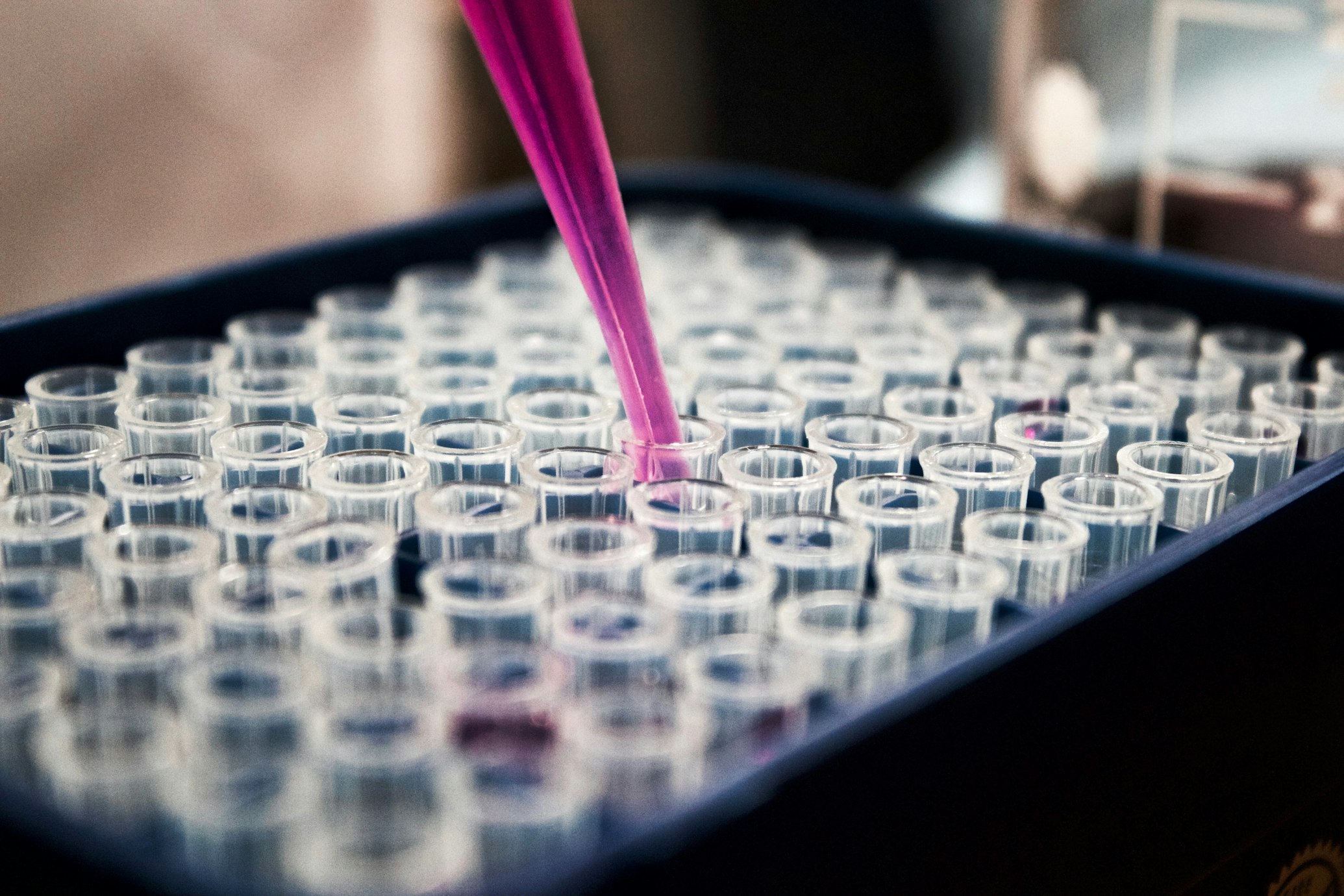
Tissue engineering research in a laboratory setting
Yet despite these early advances, the clinical application of engineered tissues remains limited. The most significant barrier? Establishing a functional vascular system that can integrate with the host's circulation upon implantation 1 3 .
This article explores how scientists are tackling this fundamental challenge by decoding and mimicking nature's intricate methods for building blood vessels—a process called angiogenesis. From bioprinting intricate channels to designing smart biomaterials that release growth factors on command, researchers are developing increasingly sophisticated strategies to ensure that the tissues they build receive the life-sustaining circulation they need to survive and thrive in the human body.
The Crucial Challenge: Why Blood Vessels Matter
In our bodies, no cell is more than 200 micrometers away from a blood vessel—roughly the width of two human hairs. This extensive network delivers essential nutrients and oxygen while removing waste products, ensuring every cell can function properly. When tissue engineers create constructs in the lab, they must replicate this efficient delivery system, or the cells inside will perish 8 .
The problem becomes particularly acute for larger tissue constructs. Without pre-formed blood vessels, the engineering process relies on the slow invasion of vessels from the surrounding host tissue after implantation. This process can take weeks—precious time during which the cells in the center of the implant cannot survive. The consequence is often the formation of a necrotic core, where cells in the interior die from lack of oxygen and nutrients, causing the entire graft to fail 6 .
Necrotic core formation in non-vascularized tissues
200μm Maximum Distance
No cell in the human body is more than 200μm from a blood vessel
This vascularization challenge represents one of the final frontiers in making tissue-engineered grafts a widespread clinical reality. As Dr. Cristina Barrias from Porto University explains, "Vascularization is fundamental in tissue engineering, as it enables the delivery of oxygen and nutrients and the removal of waste products, all critical for maintaining cell viability and function" 9 . Without solving this problem, the dream of creating complex, thick tissues—from heart muscle to liver tissue—will remain out of reach.
Nature's Blueprint: How Blood Vessels Form
To recreate vascular networks in the lab, scientists first needed to understand how they form naturally. Our bodies create blood vessels through two primary processes: vasculogenesis and angiogenesis.
Vasculogenesis
Occurs during early embryonic development when specialized cells called angioblasts aggregate to form the first primitive vascular plexus—a rudimentary network of vessels 8 . Think of this as laying down the initial blueprint of the circulatory system before blood even begins to flow.
The Angiogenesis Process
Activation
Endothelial cells are stimulated by growth factors like VEGF (Vascular Endothelial Growth Factor) 5 .
Sprouting
Specialized "tip cells" lead the way, extending finger-like projections toward the chemical signal 8 .
Maturation
Pericytes and smooth muscle cells are recruited to stabilize the new vessels 1 .
Remodeling
The vascular network is refined into a hierarchical structure of arteries, veins, and capillaries 8 .
When this process goes awry—as in tumor growth—vessels become disorganized and leaky. The goal of tissue engineers is to recreate the precise conditions of healthy angiogenesis to generate robust, functional vascular networks 1 3 .
Engineering Life into Tissues: Key Strategies
At the heart of most tissue engineering approaches are scaffolds—three-dimensional structures that provide support for cells to attach, grow, and organize. These scaffolds are typically made from biodegradable materials that eventually dissolve as the cells create their own natural environment 5 .
Appropriate Porosity
Scaffolds require interconnected pores large enough for cell migration and vessel ingrowth
Biocompatibility
Materials must support cell attachment without causing harmful immune responses
Tunable Degradation
Scaffolds should dissolve at an appropriate rate during vascular network formation 1
Natural polymers like collagen and fibrin are often used because they contain natural binding sites for cells and can be degraded by cellular enzymes. Additionally, researchers are developing "smart" scaffolds that can release growth factors in response to specific cellular activities 1 3 .
Simply adding growth factors to scaffolds often leads to poorly organized, immature blood vessels similar to those found in tumors. The problem is that natural angiogenesis follows a precisely timed sequence of multiple signals 1 3 .
To address this, researchers have developed sophisticated delivery systems:
- Degradation-Dependent Release: Growth factors are incorporated into materials that degrade at specific rates, releasing their cargo over time 1 3 .
- Layer-by-Layer Assembly: Different factors are embedded in separate layers of the scaffold, creating a timed release sequence as each layer degrades 1 3 .
- Enzyme-Responsive Release: Growth factors are attached to the scaffold with molecular linkers that are cleaved by specific enzymes produced by cells during angiogenesis 1 .
These advanced systems represent a significant improvement over earlier methods, which often suffered from "burst release"—a rapid dumping of high concentrations of growth factors that could lead to abnormal vessel formation 1 3 .
Perhaps the most direct approach to creating vascular networks is to build them deliberately using advanced fabrication technologies. 3D bioprinting allows researchers to deposit both cells and support materials in precise, pre-designed patterns 9 .
Extrusion-Based
Pushes bioink through a nozzle to create continuous strands
Inkjet Printing
Uses droplets of bioink, similar to office paper printing
Laser-Assisted
Employs lasers to transfer bioink from a donor surface
Volumetric
Newer technique that builds 3D structures directly within a bioink container 9
Microfluidic technology takes a different approach, creating tiny channels within chips that can be lined with endothelial cells. These "vessels-on-a-chip" can be used to study fundamental biological processes or connected to form more complex networks 9 . When combined with precise flow control systems, they allow researchers to replicate the mechanical forces that blood vessels experience in the body, which proves essential for proper vessel maturation and function 9 .
Harnessing Mechanical Forces
Blood vessels in the body are constantly subjected to mechanical stresses—from the pulsatile flow of blood to the stretching and compression from surrounding tissues. Researchers have discovered that these physical forces are not just passive occurrences but active regulators of vascular development and stability 9 .
Dr. Cristina Salgado's research at the University of Porto has demonstrated that applying moderate flow rates (around 15 µL/min) combined with controlled compression (10% strain) significantly enhances the alignment and stability of engineered blood vessels compared to static conditions 9 . This mechanical conditioning encourages endothelial cells to form more organized, robust structures that better mimic natural vasculature.
A Landmark Experiment: Mechanical Stimulation and Vascular Stability
Methodology
To understand how mechanical forces influence blood vessel formation, Dr. Salgado's team conducted a systematic investigation using Human Umbilical Vein Endothelial Cells (HUVECs) embedded in fibrin hydrogels within microfluidic devices 9 .
The experimental approach included these key steps:
- Fabrication of 3D Constructs: Endothelial cells were suspended in fibrin hydrogel, a natural material that supports vascular network formation, and injected into custom-designed microfluidic chips.
- Application of Mechanical Stimuli: The constructs were subjected to different conditions including static control, flow only, and combined stimulation.
- Monitoring and Analysis: The developing vascular networks were observed over time using microscopy, and quantitative measurements were taken of vessel density, alignment, and stability.

Microfluidic device used in vascular tissue engineering experiments
Results and Analysis
The findings revealed a clear relationship between mechanical stimulation and vascular quality:
| Condition | Vessel Density | Vessel Alignment | Network Stability |
|---|---|---|---|
| Static Control | Low | Random orientation | Poor (frequent regression) |
| Flow Only (5 µL/min) | Moderate | Slight alignment | Moderate |
| Flow Only (15 µL/min) | High | Good alignment | Good |
| Flow Only (30 µL/min) | Moderate | Disorganized | Poor |
| Combined (15 µL/min + 10% strain) | Highest | Excellent alignment | Excellent |
| Parameter | Static Control | Flow Only (15 µL/min) | Combined Stimulation |
|---|---|---|---|
| Branch Points per mm² | 45 ± 8 | 128 ± 12 | 210 ± 15 |
| Average Vessel Length (μm) | 85 ± 15 | 210 ± 25 | 315 ± 30 |
| Vessel Diameter (μm) | 25 ± 5 | 35 ± 4 | 42 ± 3 |
| Network Persistence (days) | 3-5 | 10-12 | 14+ |
Gene Expression Changes
Scientific Importance
This experiment demonstrated that physical forces are not merely passive factors but active regulators of vascular development. The precise control of both flow and compression created conditions that closely mimicked the mechanical environment of developing blood vessels in the body, resulting in more robust and functional engineered vasculature.
The implications extend beyond basic biology—they provide a practical roadmap for tissue engineers seeking to create more stable vascular networks in the lab. By incorporating mechanical conditioning into their protocols, researchers can potentially accelerate the development of implants ready for clinical use.
The Scientist's Toolkit: Essential Research Reagents and Materials
Tissue engineers working on vascularization rely on a specialized collection of biological and material tools. Here are some of the most critical components:
| Tool | Function | Examples/Details |
|---|---|---|
| Endothelial Cells | Form the inner lining of blood vessels | HUVECs, HAECs, iPSC-derived ECs 8 9 |
| Support Cells | Stabilize and mature blood vessels | Pericytes, Vascular Smooth Muscle Cells, Mesenchymal Stem Cells 8 9 |
| Growth Factors | Signal blood vessel formation and maturation | VEGF, FGF, Angiopoietins 1 5 |
| Hydrogels | 3D environment for vascular network self-assembly | Fibrin, Collagen, GelMA 9 |
| Proteolytic Enzymes | Remodel the extracellular matrix for vessel sprouting | MMP-2, MMP-9 5 |
| Biocompatible Scaffolds | Structural support for tissue development | Porous ceramic scaffolds (for bone), biodegradable polymers |
| Microfluidic Systems | Create perfusable channels and apply controlled flow | PDMS chips, precision flow controllers 9 |
Fabrication Tools
Advanced bioprinting and microfluidic systems enable precise construction of vascular networks 9 .
The Future of Engineered Tissues: Where Are We Headed?
As research progresses, several emerging trends are shaping the future of vascularized tissue engineering:
Multidisciplinary Convergence
The field is increasingly benefiting from the integration of multiple disciplines—biology, materials science, engineering, and computer science are all contributing to advanced solutions. For instance, the development of bio-xolography, a novel volumetric printing technique, now enables rapid, high-resolution fabrication of complex living constructs that was impossible just a few years ago 9 .
Stem Cell Advancement
The use of induced pluripotent stem cells (iPSCs) continues to expand, allowing researchers to create patient-specific endothelial and support cells without recurring invasive procedures 7 8 . When combined with gene editing tools like CRISPR, this approach offers the potential to develop customized vascular networks tailored to individual patients.
Clinical Translation
The ultimate goal remains bringing laboratory advances to patients in need. Research presented at recent conferences like TERMIS EU 2025 highlights a growing emphasis on accelerating clinical translation through increased dialogue between academics and clinicians 9 . The focus is shifting from proving feasibility to ensuring practicality, reliability, and scalability.
Biophysical Stimulation
Beyond biochemical signals, researchers are increasingly recognizing the importance of biophysical cues—electrical, magnetic, ultrasonic, and thermal—that can be applied non-invasively to promote vascularization 6 . Unlike drugs or growth factors that can diffuse away, these stimuli can be precisely localized to the target area, potentially offering greater control with fewer side effects.
Conclusion: The Path to Living Tissues
The quest to create fully functional, vascularized tissues in the laboratory represents one of the most exciting frontiers in modern medicine. While challenges remain, the progress has been remarkable—from early experiments with simple endothelial cell seeding to today's sophisticated approaches that combine advanced biomaterials, stem cell technology, and precise mechanical conditioning.
As research continues to decode the complex language of angiogenesis and develop new tools to mimic nature's methods, we move closer to a future where engineered tissues can truly come to life, offering hope for patients awaiting tissue replacement or organ transplantation. The city of cells that once lacked roads is gradually gaining the sophisticated transportation network it needs to thrive, bringing us closer to the dream of creating living tissue substitutes that can fully integrate with the human body.
The words of Professor Alain Chédotal resonate deeply in this field: sometimes, to move forward, we must first look backward and deepen our understanding of fundamental human development 9 . By continuing to learn from nature's blueprint while innovating with human ingenuity, the field of tissue engineering moves steadily toward its ultimate goal: breathing life into constructed tissues.