The Body's Blueprint: Building Better Scaffolds with Amino Acid "Glue"
Innovative tissue engineering with biocompatible amino acid crosslinked chitosan/collagen scaffolds
Article Navigation
Introduction
Imagine a world where damaged organs or tissues could be repaired not with transplants from donors, but with structures grown fresh in a lab, perfectly tailored to your body. This is the ambitious promise of tissue engineering.
At its heart lies a critical component: the scaffold. Think of it as a temporary architectural blueprint – a 3D framework that guides cells where to grow, what shape to form, and provides essential support while they build new, living tissue.
The Challenge
Creating the perfect scaffold requires balancing strength, porosity, biodegradability, and cell compatibility. Traditional chemical crosslinkers often compromise biocompatibility.
The Solution
Using amino acids – the fundamental units of proteins – as molecular bridges to crosslink chitosan and collagen, creating safer and more effective scaffolds.
Why Chitosan + Collagen? And Why Amino Acid Bridges?
The Dream Team
Chitosan offers antibacterial properties and good mechanical strength. Collagen provides the ideal biological signals that cells recognize and love to attach to. Combining them creates a composite that leverages the best of both worlds.
The Crosslinking Conundrum
Simply mixing chitosan and collagen isn't enough; they need to be chemically linked (crosslinked) to form a stable, cohesive 3D network. Traditional chemical crosslinkers work but often compromise biocompatibility.
A Natural Solution
Amino acids are non-toxic, naturally present in the body, and possess reactive groups (-COOH and -NH₂) perfect for forming bonds with both chitosan (rich in -NH₂) and collagen (rich in -COOH). Acting as "bridges," they create a safer, more harmonious network within the scaffold.
Materials & Methods
Crafting the Scaffold: The Amino Acid Crosslinking Method
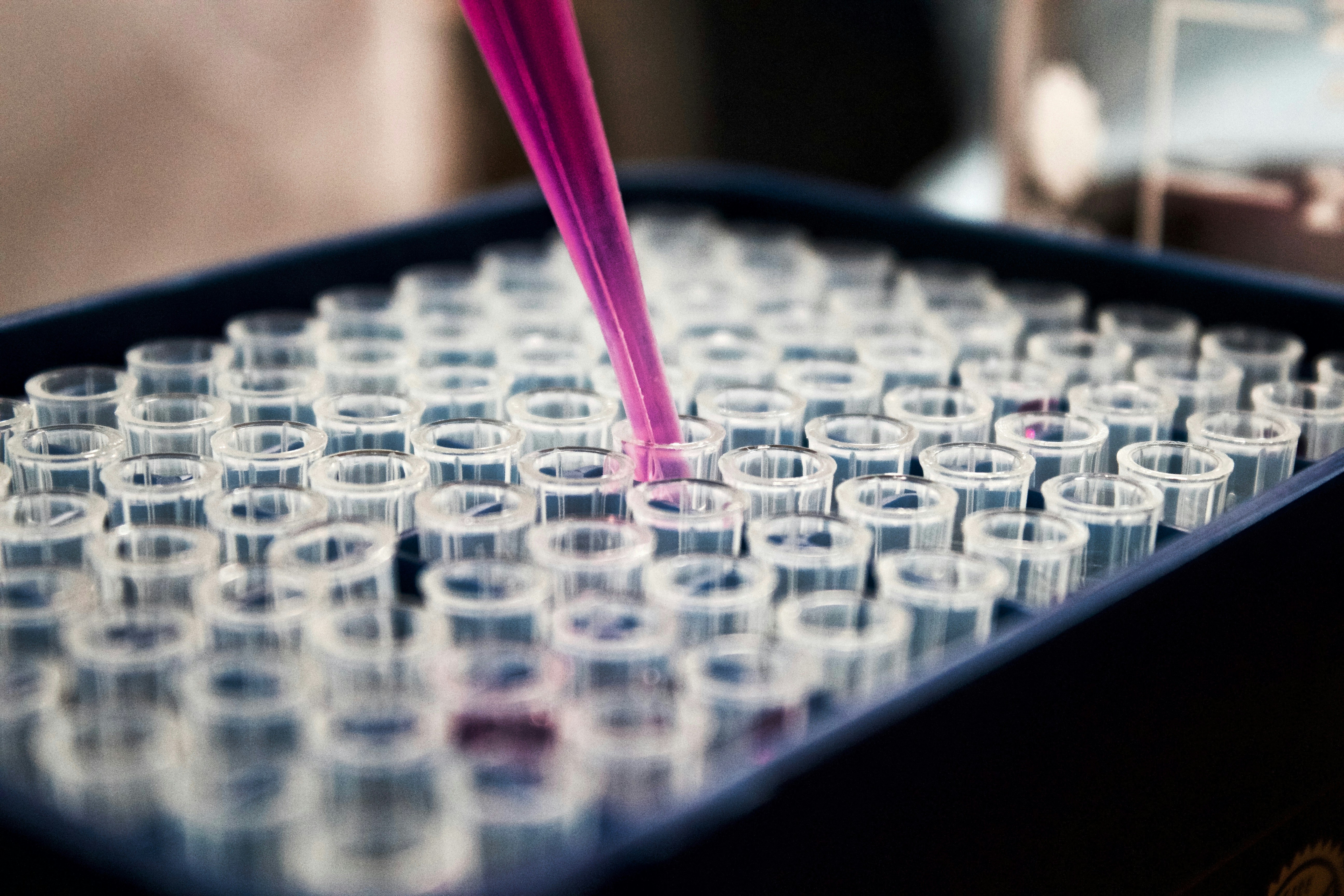
Researchers developed a sophisticated yet elegant process to create these scaffolds:
- Dissolution of chitosan and collagen in separate solutions
- Blending the solutions under controlled conditions
- Introducing the amino acid crosslinking bridge
- Molding & Freezing the mixture
- Freeze-Drying (Lyophilization)
- Final bonding with Dehydrothermal Treatment (DHT)
The Scientist's Toolkit
| Reagent/Solution | Primary Function |
|---|---|
| Chitosan | Biopolymer providing mechanical strength, antibacterial properties, and amino groups for crosslinking. |
| Collagen (Type I) | Major structural protein in ECM; provides critical biological cues for cell attachment and function. |
| Amino Acid (e.g., Asp, Glu) | Acts as a biocompatible crosslinking bridge, bonding chitosan and collagen via its carboxyl and amino groups. |
| Acetic Acid Solution | Solvent for dissolving chitosan. |
| MTT Reagent | Yellow tetrazolium salt metabolized by living cells into purple formazan crystals, used to quantify viability. |
Cell Compatibility Evaluation
Creating the scaffold is only half the battle. Does it truly support life? Can cells thrive on it? This is where rigorous in vitro (lab-based) biocompatibility testing comes in, typically using versatile cell lines like fibroblasts (connective tissue builders) or mesenchymal stem cells (capable of becoming bone, cartilage, fat).
The Crucial Experiment: Cell Viability and Proliferation Assay
Objective:
To determine if cells survive (viability) and multiply (proliferation) when seeded onto the chitosan/collagen scaffolds crosslinked with amino acids, compared to uncrosslinked scaffolds and scaffolds crosslinked with a traditional chemical (like EDC).
Methodology Step-by-Step:
- Scaffold Preparation: Prepare three types of scaffolds:
- Group A: Chitosan/Collagen (No Crosslinking)
- Group B: Chitosan/Collagen crosslinked with a traditional agent (e.g., EDC)
- Group C: Chitosan/Collagen crosslinked with the target Amino Acid (e.g., Aspartic Acid)
- Sterilization: All scaffolds are carefully sterilized to prevent bacterial contamination.
- Cell Seeding: A known number of cells are suspended in nutrient-rich cell culture medium and pipetted onto each scaffold.
- Feeding: More culture medium is added to nourish the cells.
- Incubation: The cells are left to grow on the scaffolds for specific time points.
- Viability/Proliferation Measurement (MTT Assay):
- MTT solution is added and converted by living cells into purple formazan
- Formazan is dissolved and measured spectrophotometrically
- Higher color intensity = more living, metabolically active cells
Results & Analysis
Key Scaffold Properties
| Property | Uncrosslinked | EDC-Crosslinked | Asp-Crosslinked |
|---|---|---|---|
| Porosity (%) | ~95% | ~90% | ~92% |
| Pore Size (μm) | 100-200 | 80-150 | 90-180 |
| Young's Modulus (kPa) | 10 ± 2 | 35 ± 5 | 25 ± 4 |
| Degradation Rate | >80% | ~30% | ~50% |
Amino acid crosslinking improves mechanical strength and slows degradation while maintaining high porosity and pore size suitable for cells.
Cell Viability Results (MTT Assay)
The amino acid-crosslinked scaffolds (Group C) consistently support excellent cell viability and robust proliferation over 7 days, significantly outperforming traditionally crosslinked scaffolds.
Findings
High Initial Viability
Comparable to or exceeding the uncrosslinked group at Day 1, indicating the crosslinking process and amino acid residues aren't immediately toxic.
Sustained Proliferation
A significant increase in metabolic activity over time (Days 1 → 3 → 7), showing cells are not just surviving but actively multiplying.
Outperforms Traditional
Showing significantly higher viability than traditionally crosslinked scaffolds at later time points, demonstrating superior biocompatibility.
Microscopy Observations

Microscopy (like fluorescence imaging of stained live/dead cells) confirms these results, showing dense, healthy cell layers covering the amino acid-crosslinked scaffolds, while fewer cells or more dead cells (often stained red) might be visible on the traditionally crosslinked ones.
Scientific Importance: This experiment is fundamental. It directly demonstrates if the scaffold provides a hospitable environment for cells – the very essence of biocompatibility. High viability and proliferation are non-negotiable first steps for any scaffold intended for tissue regeneration.
Conclusion
The results are compelling: chitosan/collagen scaffolds crosslinked with amino acids like aspartic acid aren't just feasible; they offer a significant leap forward in tissue engineering.
Key Advantages
- Enhanced mechanical stability
- Controlled degradation profile
- Exceptional biocompatibility
- Cells not just tolerate but thrive on these scaffolds
- Uses nature's own building blocks
Future Directions
- Optimizing for specific tissues (bone, cartilage, skin)
- Scaling up production
- Advanced animal studies
- Human clinical trials
- Exploring other amino acid combinations
This research exemplifies a powerful trend in tissue engineering: moving away from harsh synthetic chemistry towards bio-inspired, biocompatible solutions. By harnessing the gentle bonding power of amino acids, scientists are crafting smarter, safer blueprints, bringing the dream of regenerating our bodies from within one step closer to reality. The future of healing might just be built on microscopic bridges made of life's essential molecules.