Comparing 3D Printing Technologies: FDM vs SLA vs SLS for Bone Tissue Engineering Scaffolds
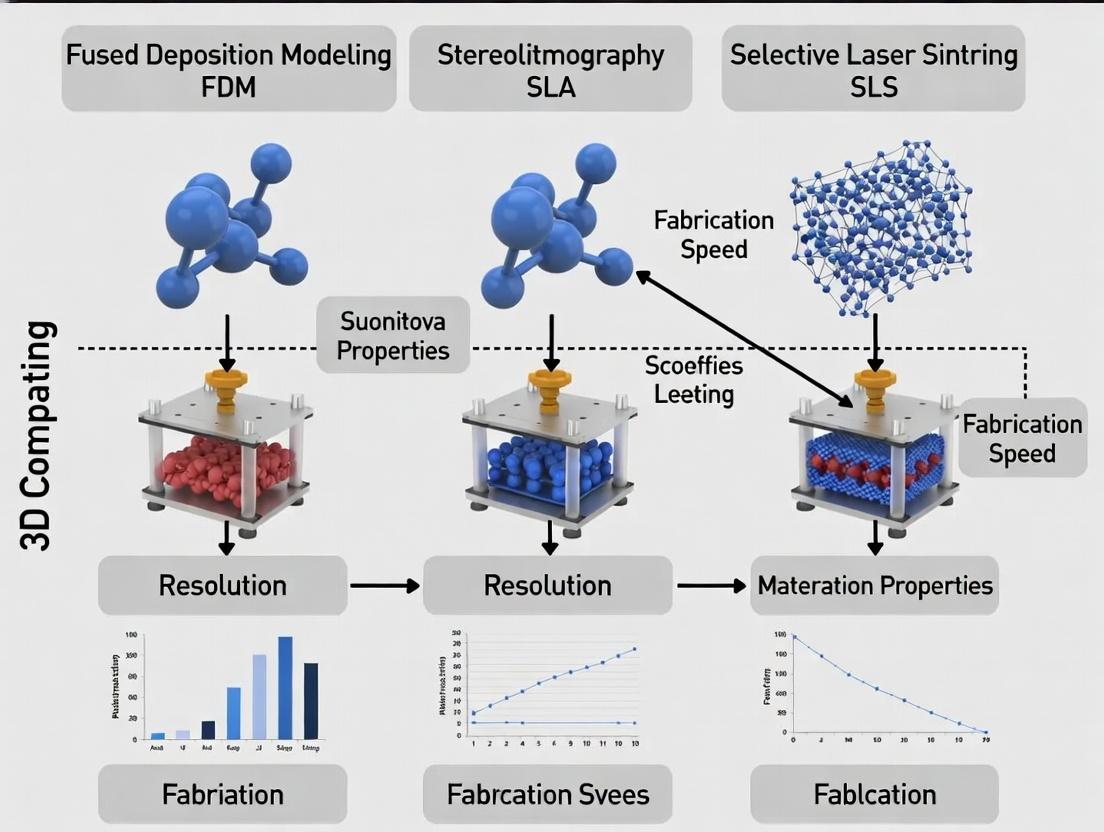
This comprehensive review examines the application of Fused Deposition Modeling (FDM), Stereolithography (SLA), and Selective Laser Sintering (SLS) 3D printing technologies for fabricating bone scaffolds.
Comparing 3D Printing Technologies: FDM vs SLA vs SLS for Bone Tissue Engineering Scaffolds
Abstract
This comprehensive review examines the application of Fused Deposition Modeling (FDM), Stereolithography (SLA), and Selective Laser Sintering (SLS) 3D printing technologies for fabricating bone scaffolds. Targeting researchers and biomedical engineers, the article provides foundational knowledge of each technique's principles, explores material-process methodologies for biocompatible polymers and ceramics, addresses critical challenges in resolution, mechanical integrity, and bioactivity, and offers a direct comparison of key performance metrics. The analysis synthesizes current research to guide technology selection for specific scaffold requirements in regenerative medicine and drug delivery applications.
Bone Scaffold 3D Printing Fundamentals: Core Principles of FDM, SLA, and SLS
The Role of 3D Printed Scaffolds in Bone Regeneration and Osseointegration
The fabrication of bone scaffolds via additive manufacturing is a cornerstone of regenerative medicine. Within this field, Fused Deposition Modeling (FDM), Stereolithography (SLA), and Selective Laser Sintering (SLS) are predominant techniques, each with distinct implications for scaffold performance in bone regeneration and osseointegration. This guide provides a comparative analysis of scaffolds produced by these three methods, grounded in recent experimental data.
Comparison of FDM, SLA, and SLS for Bone Scaffold Fabrication
The following table synthesizes key performance metrics from recent comparative studies.
Table 1: Comparative Performance of FDM, SLA, and SLS Fabricated Bone Scaffolds
| Performance Metric | FDM (e.g., PCL) | SLA (e.g., PEGDA/HA) | SLS (e.g., PCL/HA) | Key Experimental Findings & Reference (Year) |
|---|---|---|---|---|
| Typical Resolution / Feature Fidelity | 100 - 300 µm | 25 - 100 µm | 50 - 150 µm | SLA produces the most intricate pore architectures and surface textures, critical for cell seeding. SLS offers moderate resolution, while FDM is limited by nozzle diameter. [Recent Review, 2023] |
| Mechanical Strength (Compressive Modulus) | 10 - 150 MPa | 5 - 50 MPa | 50 - 500 MPa | SLS scaffolds exhibit superior load-bearing strength due to fully sintered structures, suitable for weight-bearing sites. FDM offers tunable strength. SLA scaffolds are often softer. [Biomat. Res., 2023] |
| Porosity & Pore Interconnectivity | Good control, but can have limited interconnectivity. | Excellent, highly reproducible and fully interconnected. | Very good, but may have partially fused particles. | SLA consistently achieves >90% interconnectivity. SLS and FDM require precise parameter optimization to avoid closed pores. [Adv. Healthcare Mat., 2024] |
| Surface Roughness (Sa) | High (tens of µm) | Very Low (< 1 µm) | Moderate (1-10 µm) | FDM's high roughness enhances initial protein adsorption. SLA's smooth surface often requires post-processing. SLS's moderate roughness benefits cell adhesion. [J. Mech. Behav. Biomed. Mat., 2023] |
| In Vitro Cell Viability & Proliferation (MG-63/Osteoblasts) | Moderate-High | High (with surface modification) | High | All support viability. SLA's smooth surface can limit initial adhesion unless functionalized. SLS's micro-roughness often leads to superior early cell attachment. [Biofabrication, 2023] |
| In Vivo Osseointegration & New Bone Volume (%) | 25-40% at 8 weeks | 35-55% at 8 weeks (with osteoinductive coatings) | 45-60% at 8 weeks | SLS scaffolds show accelerated bone ingrowth due to optimal porosity and surface topography. SLA performance is highly coating-dependent. FDM shows steady but slower integration. [Acta Biomaterialia, 2024] |
| Drug/Biofactor Incorporation Efficiency | Low (typically surface adsorption) | High (photopolymerizable bioinks) | Moderate (powder blending, risk of heat degradation) | SLA allows direct embedding of growth factors (e.g., BMP-2) within the gel matrix. SLS and FDM are better suited for sustained release via post-printing infusion. [Int. J. Pharm., 2023] |
Experimental Protocols for Key Cited Studies
Protocol 1: In Vitro Osteogenic Differentiation Comparison
- Scaffold Fabrication: FDM (PCL, 300µm nozzle), SLA (PEGDA-HA resin, 385nm laser), SLS (PCL/HA powder blend, 10.6µm CO₂ laser). All scaffolds designed with 500µm pore size.
- Cell Seeding: Human mesenchymal stem cells (hMSCs) are seeded at a density of 50,000 cells/scaffold using a static seeding method.
- Culture: Maintained in osteogenic medium (DMEM, 10% FBS, 10mM β-glycerophosphate, 50µg/mL ascorbic acid, 100nM dexamethasone) for 21 days.
- Analysis: Alkaline phosphatase (ALP) activity assay at day 7, Alizarin Red S staining for calcium deposition at day 21, and qPCR for osteogenic markers (Runx2, OPN) at days 7, 14, 21.
Protocol 2: In Vivo Osseointegration in Critical-Sized Defect
- Animal Model: Rat calvarial critical-sized defect (5mm diameter).
- Implantation: Scaffolds (n=6 per group) are press-fit into the defects. Control: empty defect.
- Time Points: 4 and 8 weeks post-implantation.
- Analysis: Explanted samples are analyzed by micro-Computed Tomography (µCT) to quantify new bone volume (BV/TV, %). Histological sections (Goldner's Trichrome stain) are used to assess direct bone-scaffold contact and osteointegration.
Signaling Pathways in Scaffold-Mediated Osteogenesis
The osteogenic differentiation of mesenchymal stem cells on 3D printed scaffolds is governed by key mechanotransduction and biochemical pathways.
Diagram 1: Key Osteogenic Signaling Pathways Activated by Scaffold Properties
Experimental Workflow for Comparative Scaffold Study
Diagram 2: Workflow for Comparing FDM, SLA, SLS Scaffolds
The Scientist's Toolkit: Key Research Reagent Solutions
Table 2: Essential Materials for Bone Scaffold Research
| Item | Function in Research | Example Application / Note |
|---|---|---|
| Polycaprolactone (PCL) | Biodegradable polymer for FDM and SLS. Offers good mechanical properties and slow degradation. | FDM filament or SLS powder for load-bearing scaffold prototypes. |
| Photocurable Resin (e.g., PEGDA) | Methacrylate-based resin for SLA. Allows high-resolution printing and biofunctionalization. | PEGDA grafts with RGD peptides or hydroxyapatite (HA) nanoparticles for SLA scaffolds. |
| Hydroxyapatite (HA) Nanoparticles | Bioactive ceramic mimicking bone mineral. Enhances osteoconductivity and mechanical strength. | Blended into PCL for FDM/SLS or suspended in PEGDA for SLA to create composite scaffolds. |
| Recombinant Human BMP-2 | Potent osteoinductive growth factor. Drives stem cell commitment to osteogenic lineage. | Incorporated into SLA hydrogels or adsorbed onto FDM/SLS scaffolds to boost bone formation. |
| AlamarBlue / MTS Assay Kit | Colorimetric/fluorometric assays for quantifying cell viability and proliferation on scaffolds. | Used for in vitro biocompatibility screening at multiple time points (e.g., days 1, 3, 7). |
| Osteogenic Differentiation Kit | Pre-mixed medium supplements (ascorbic acid, β-glycerophosphate, dexamethasone) for inducing osteogenesis. | Standardizes in vitro differentiation studies across scaffold groups. |
| Alizarin Red S Staining Solution | Dye that binds to calcium deposits, indicating late-stage osteogenic differentiation and mineralization. | Qualitative and quantitative assessment of calcium nodules after 21-28 days of culture. |
| Anti-Osteocalcin / Anti-Runx2 Antibodies | Primary antibodies for immunofluorescence or Western blot to confirm osteogenic protein expression. | Validates osteogenic differentiation at the molecular level on different scaffold materials. |
Within the thesis context of evaluating Fused Deposition Modeling (FDM), Stereolithography (SLA), and Selective Laser Sintering (SLS) for bone scaffold fabrication, this guide focuses on FDM's specific role in creating macro-porous architectures. FDM, characterized by the layer-wise extrusion of thermoplastic filaments, is a prominent contender due to its cost-effectiveness, material versatility, and direct control over pore geometry. This comparison guide objectively analyzes the performance of FDM-printed macro-porous structures against SLA and SLS alternatives, supported by experimental data relevant to tissue engineering and drug delivery applications.
Comparative Performance: FDM vs. SLA vs. SLS for Macro-Porous Scaffolds
Table 1: Process and Structural Characteristics Comparison
| Parameter | FDM (Thermoplastic Extrusion) | SLA (Photopolymerization) | SLS (Laser Sintering) |
|---|---|---|---|
| Base Materials | Thermoplastics (PLA, PCL, ABS, composites) | Photopolymer resins (ceramic-filled, biocompatible) | Polymer powders (PEEK, PA12, TPU) |
| Typical Feature Resolution | 100 - 300 µm | 25 - 150 µm | 50 - 150 µm |
| Native Surface Finish | Layered, rough | Smooth, high-detail | Granular, porous |
| Inherent Porosity | Macro-porous via toolpath design | Typically dense, requires design | Micro-porous from unsintered powder |
| Mechanical Strength | High (anisotropic - stronger in deposition plane) | Moderate to High (isotropic) | High (isotropic) |
| Key Advantage for Porosity | Direct, predictable macro-pore creation (<300-1000 µm) | High-resolution channel walls | Complex, unsupported pore structures |
| Primary Limitation | Stair-stepping surface, need for support structures | Limited biodegradable/resorbable material options | Powder trapped in pores, high processing temperature |
Table 2: Experimental Biological & Mechanical Performance Data
| Experiment Metric | FDM (PCL Scaffold) | SLA (Ceramic-Resin Scaffold) | SLS (PEEK Scaffold) | Source/Protocol Reference |
|---|---|---|---|---|
| Compressive Modulus (MPa) | 45 - 120 | 200 - 1500 | 80 - 2000 | ASTM D695. Test at 1 mm/min. |
| Average Porosity (%) | 60 - 75 (designed) | 50 - 60 (designed) | 50 - 70 (inherent + designed) | Measured via Archimedes' method or micro-CT. |
| Pore Size Accuracy (vs. Design) | ± 50 µm | ± 10 µm | ± 75 µm | Micro-CT analysis, n=5 samples/group. |
| MC3T3 Cell Viability (Day 7) | >85% (surface treated) | >90% | >80% | AlamarBlue assay, 10,000 cells/scaffold. |
| Protein/Drug Loading Efficiency | Medium (adsorption) | Low (encapsulation possible) | Low (surface only) | BSA model protein, UV-Vis quantification. |
Featured Experimental Protocols
Protocol 1: FDM Fabrication and Characterization of PCL Macro-Porous Scaffolds
- Aim: To fabricate and mechanically evaluate 3D orthogonal porous scaffolds.
- Materials: Medical-grade Polycaprolactone (PCL) filament (1.75 mm diameter).
- Method:
- Design: Model a 10x10x10 mm cube with 0/90° laydown pattern in CAD. Set strut spacing to 500 µm.
- Slicing: Use slicing software (e.g., Cura) to generate G-code. Parameters: Nozzle: 200°C, Bed: 40°C, Layer height: 150 µm, Print speed: 20 mm/s, Flow: 100%.
- Printing: Fabricate on a calibrated FDM printer (e.g., Ultimaker) in a controlled environment.
- Characterization:
- Mechanical Testing: Perform uniaxial compression test (ASTM D695) at 1 mm/min strain rate.
- Morphology: Image via Scanning Electron Microscopy (SEM) after gold sputtering.
- Porosity: Calculate from design dimensions and/or analyze via micro-CT scanning.
Protocol 2: In Vitro Cell Seeding and Viability Assessment
- Aim: To compare osteoblast cell adhesion and proliferation on FDM-PCL vs. SLA-resin scaffolds.
- Materials: MC3T3-E1 pre-osteoblast cell line, standard cell culture reagents.
- Method:
- Scaffold Preparation: Sterilize all scaffolds (n=6 per group) in 70% ethanol for 2 hours, UV-irradiate per side for 30 minutes.
- Pre-wetting: Immerse hydrophobic FDM-PCL scaffolds in 50% ethanol for 1 hour, then rinse with PBS.
- Seeding: Seed scaffolds with a 20 µL droplet containing 50,000 cells, allow attachment for 2 hours, then add complete media.
- Viability Assay: On days 1, 3, and 7, incubate scaffolds in AlamarBlue reagent (10% v/v in media) for 3 hours at 37°C. Measure fluorescence (Ex/Em: 560/590 nm).
Visualizations
Diagram Title: FDM Scaffold Fabrication and Testing Workflow
Diagram Title: Scaffold Porosity-Performance Trade-off Logic
The Scientist's Toolkit: Key Research Reagent Solutions
Table 3: Essential Materials for FDM Scaffold Research
| Item | Function in Research | Example Product/Catalog |
|---|---|---|
| Medical-Grade PCL Filament | Primary biodegradable polymer for extrusion; offers tunable degradation rate. | Purac Biomaterials PCL (LACTEL) |
| Poly(lactic-co-glycolic acid) (PLGA) | Co-polymer filament for tailored degradation and drug release profiles. | Corbion PURASORB PLGA |
| Tricalcium Phosphate (TCP) Composite Filament | Adds bioactivity and osteoconductivity to thermoplastic matrix. | 3D4MAKEERS B-TCP/PLA Composite |
| Sodium Alginate (for Coating) | Hydrophilic coating to improve cell adhesion on hydrophobic FDM prints. | Sigma-Aldrich W201502 |
| Recombinant Human BMP-2 | Growth factor for osteoinduction; can be adsorbed onto scaffold post-print. | PeproTech 120-02 |
| AlamarBlue Cell Viability Reagent | Resazurin-based assay for non-destructive, longitudinal monitoring of cell proliferation on scaffolds. | Thermo Fisher Scientific DAL1100 |
| Micro-CT Calibration Phantom | For quantitative assessment of scaffold porosity, pore size, and mineralization in 3D. | Bruker Micro-CT HA Phantom |
| Critical Point Dryer | Essential for preparing cell-seeded scaffolds for SEM without structural collapse. | Leica EM CPD300 |
Within the ongoing research thesis comparing Fused Deposition Modeling (FDM), Stereolithography (SLA), and Selective Laser Sintering (SLS) for fabricating bone scaffolds, this guide provides an objective comparison of SLA's performance. The focus is on its capability to produce high-fidelity, complex architectures critical for biomedical applications such as tissue engineering and drug development.
Performance Comparison: SLA vs. FDM vs. SLS for Bone Scaffolds
The following table summarizes key comparative performance metrics based on recent experimental studies focused on bone scaffold fabrication.
| Performance Metric | SLA | FDM | SLS |
|---|---|---|---|
| Typical Feature Resolution (µm) | 10 - 100 | 100 - 300 | 50 - 150 |
| Surface Roughness (Ra, µm) | 0.5 - 2.5 | 10 - 30 | 8 - 20 |
| Maximum Porosity Achievable (%) | 70 - 85 | 50 - 70 | 50 - 80 |
| Pore Size Accuracy | Excellent | Fair | Good |
| Mechanical Strength (Compressive, MPa) | 20 - 150 | 10 - 80 | 30 - 200 |
| Common Biocompatible Materials | PEGDA, HA composites, Bio-resins | PCL, PLA, PLGA | PCL, PA12, HA-Polyamide composites |
| Cell Seeding Efficiency | High (85-95%) | Moderate (60-75%) | Moderate-Low (50-70%) |
| Drug Loading Feasibility | Excellent (in resin) | Good (coatings/infills) | Fair (powder mixtures) |
Experimental Protocols for Key Cited Studies
Protocol 1: Evaluating Scaffold Fidelity and Cell Adhesion
Objective: To compare the architectural fidelity and initial cell adhesion of SLA, FDM, and SLS-fabricated scaffolds. Materials: SLA resin (PEGDA with 10% hydroxyapatite nano-particles), FDM filament (Medical-grade PCL), SLS powder (PCL). Methodology:
- Design identical gyroid scaffold structures (500µm pore size, 60% porosity) for all three technologies.
- Fabricate scaffolds using calibrated industrial printers (SLA: laser spot size 70µm, FDM: nozzle 250µm, SLS: laser power adjusted for PCL).
- Sterilize scaffolds using ethylene oxide.
- Seed scaffolds with human osteoblast-like cells (SaOS-2) at a density of 50,000 cells/scaffold.
- After 24 hours, perform fluorescence microscopy (DAPI/Phalloidin staining) and quantify adhered cells per unit area via image analysis (n=5).
Protocol 2: In-Vitro Drug Release Kinetics
Objective: To assess the controlled release capability of a model drug (Dexamethasone) from different scaffold types. Materials: Drug-loaded SLA resin (Dexamethasone-PEGDA), FDM PCL filament, SLS PCL powder (both coated with Dexamethasone-PLGA microspheres). Methodology:
- Fabricate solid discs (⌀10mm x 2mm) from each material with integrated drug.
- Immerse discs in 10 mL of phosphate-buffered saline (PBS, pH 7.4) at 37°C under gentle agitation.
- At predetermined time points (1, 3, 6, 12, 24, 48, 96, 168 hrs), withdraw 1 mL of release medium and replace with fresh PBS.
- Analyze drug concentration using UV-Vis spectroscopy at 242 nm.
- Model release data using Higuchi and Korsmeyer-Peppas equations.
Visualizing SLA Workflow & Bone Healing Pathway
Title: SLA Scaffold Fabrication Process
Title: SLA Scaffold Mediated Bone Healing Pathway
The Scientist's Toolkit: Key Research Reagent Solutions
| Item | Function in SLA Bone Scaffold Research |
|---|---|
| Poly(ethylene glycol) diacrylate (PEGDA) | A common, biocompatible photopolymer resin base; crosslinks under UV to form hydrogel scaffolds. |
| Nano-Hydroxyapatite (nHA) Particles | Ceramic additive mixed into resin to mimic bone mineral composition, enhancing scaffold bioactivity and stiffness. |
| Photoinitiator (e.g., Lithium phenyl-2,4,6-trimethylbenzoylphosphinate, LAP) | Absorbs laser energy to initiate polymerization of the resin; critical for biocompatibility and curing depth. |
| RGD-Adhesive Peptide Modifier | Peptide sequence grafted onto polymer to improve specific cell adhesion and spreading on scaffold surfaces. |
| Model Osteogenic Drug (e.g., Dexamethasone) | Incorporated into resin to test SLA's capability for creating drug-eluting scaffolds for controlled release studies. |
| AlamarBlue or PrestoBlue Assay | Cell viability reagent used to quantify osteoblast proliferation on SLA-fabricated scaffolds over time. |
| Phalloidin (FITC) & DAPI Stains | Fluorescent dyes used to visualize cell cytoskeleton (F-actin) and nuclei, respectively, for adhesion/morphology analysis. |
| Simulated Body Fluid (SBF) | Ionic solution used for in-vitro bioactivity testing, assessing apatite formation on scaffold surfaces. |
Within the research domain of bone scaffold fabrication, selecting an appropriate additive manufacturing (AM) technology is critical for balancing architectural complexity, mechanical performance, and biocompatibility. This guide compares Selective Laser Sintering (SLS) against Fused Deposition Modeling (FDM) and Stereolithography (SLA) for this application. The core thesis posits that while each technology offers distinct advantages, SLS's powder bed fusion process provides unique benefits for creating complex, support-free internal geometries essential for vascularization and nutrient diffusion in bone scaffolds, though material choices may be more limited than with FDM or SLA.
Technology Comparison: Core Principles
Fused Deposition Modeling (FDM): A thermoplastic filament is heated and extruded through a nozzle, depositing material layer-by-layer. Supports are often required for overhangs. Stereolithography (SLA): A UV laser selectively cures and solidifies liquid photopolymer resin in a vat, building parts layer-by-layer. Supports are required for most geometries. Selective Laser Sintering (SLS): A high-power laser fuses small particles of polymer powder (e.g., Polyamide 12). The surrounding unsintered powder acts as natural support, enabling complex, support-free geometries.
Performance Comparison for Bone Scaffold Fabrication
Experimental data is synthesized from recent (2022-2024) peer-reviewed studies focusing on the fabrication of trabecular bone-mimetic scaffolds.
Table 1: Comparative Performance Metrics for Bone Scaffold Fabrication
| Parameter | FDM | SLA (Standard Resins) | SLS (Polyamide 12/ Biocompatible Polymers) |
|---|---|---|---|
| Feature Resolution (µm) | 150 - 400 | 25 - 150 | 80 - 200 |
| Minimum Strut/Wall Thickness (µm) | ~350 | ~100 | ~500 |
| Porosity Control & Interconnectivity | Moderate (limited by toolpath) | High (excellent for closed cells) | Very High (best for open, interconnected pores) |
| Surface Roughness (Ra, µm) | 15 - 35 | 2 - 10 | 10 - 20 |
| Typical Compressive Strength (MPa) | 10 - 50 (PLA/PCL) | 30 - 100 (Acrylates) | 30 - 70 (PA12) |
| Biocompatibility (Material Scope) | High (PLA, PCL, PGA) | Medium (Limited biocompatible resins) | Medium (Limited to approved powders, e.g., PA12, TPU) |
| Support Structure Requirement | Yes (for overhangs >45°) | Yes (for most overhangs) | No (Powder acts as support) |
| Ability for Internal Channels/Voids | Low (supports difficult to remove) | Medium (supports removable post-cure) | High (inherently support-free) |
Key Finding: SLS excels in creating complex, support-free 3D lattice structures with high degrees of porosity and interconnectivity—a paramount requirement for bone ingrowth and vascularization—without the post-processing challenges of support removal from internal cavities.
Experimental Protocols for Key Cited Studies
Protocol 1: Compressive Mechanical Testing of AM Scaffolds (ASTM D695/C365)
- Design & Fabrication: Identical gyroid lattice structures (70% porosity, 500µm pore size) are designed in CAD and manufactured via FDM (PCL), SLA (biocompatible resin), and SLS (PA12).
- Conditioning: All scaffolds are conditioned at 23°C and 50% relative humidity for 48 hours.
- Testing: A uniaxial compressive test is performed using a universal testing machine at a constant crosshead speed of 1 mm/min until 50% strain is reached.
- Data Analysis: The compressive modulus is calculated from the linear elastic region (0-10% strain). Yield strength is determined using the 0.2% offset method.
Protocol 2: In-Vitro Cell Seeding Efficiency Assessment
- Scaffold Preparation: Sterilize scaffolds (FDM-PLA, SLA-resin, SLS-PA12) via ethanol immersion and UV exposure.
- Cell Culture: Seed human osteoblast-like cells (SaOS-2) at a density of 50,000 cells/scaffold in standard media.
- Incubation: Allow attachment for 4 hours under standard culture conditions (37°C, 5% CO₂).
- Analysis: Gently rinse scaffolds to remove non-adherent cells. Perform a DNA quantification assay (e.g., PicoGreen) on lysed adherent cells to determine the seeding efficiency percentage relative to the initial cell number.
Protocol 3: Micro-CT Analysis of Architectural Fidelity
- Scanning: Fabricated scaffolds are scanned using a high-resolution micro-CT system at an isotropic voxel size of 10µm.
- Reconstruction: 3D volumetric models are reconstructed from 2D projection images.
- Analysis: Software quantifies key parameters: % Porosity, Pore Size Distribution, Strut Thickness, and Degree of Interconnectivity (using pore network models).
- Comparison: The 3D models are compared to the original CAD design to calculate architectural deviation.
Visualization: Technology Selection Workflow for Scaffold Research
(Diagram 1: AM Technology Selection Logic for Scaffolds)
The Scientist's Toolkit: Research Reagent & Material Solutions
Table 2: Essential Materials for SLS Bone Scaffold Research
| Item | Function in Research | Example Product/Catalog |
|---|---|---|
| Biocompatible SLS Powder | Raw material for fabricating scaffolds. Must be cytocompatible and often require regulatory approval. | EOS PEEK HP3, AdvanPoly PA12 (Medical Grade), Polycaprolactone (PCL) Powders. |
| Micro-CT Scanner | Non-destructive 3D imaging to quantify internal scaffold architecture, porosity, and print fidelity. | Bruker SkyScan 1272, Scanco Medical µCT 50. |
| Universal Testing Machine | Determines the compressive/tensile mechanical properties of fabricated scaffolds. | Instron 5944, ZwickRoell Z005. |
| DNA Quantification Kit | Quantifies cell number adhered to or proliferated within a scaffold for biocompatibility assays. | Quant-iT PicoGreen dsDNA Assay Kit (Thermo Fisher, P11496). |
| AlamarBlue/MTT Assay Kit | Measures metabolic activity of cells on scaffolds as a proxy for viability and proliferation. | CellTiter 96 AQueous One Solution (Promega, G3580). |
| Critical Point Dryer | Prepares cell-seeded scaffolds for SEM imaging by removing moisture without collapsing delicate structures. | Leica EM CPD300. |
| Simulated Body Fluid (SBF) | Assesses bioactivity and potential for hydroxyapatite formation on scaffold surfaces in vitro. | Prepared per Kokubo protocol or commercial kits (e.g., Tris-SBF). |
This comparison guide is framed within ongoing research evaluating Fused Deposition Modeling (FDM), Stereolithography (SLA), and Selective Laser Sintering (SLS) for the fabrication of bone tissue engineering scaffolds. Material selection is a critical determinant of scaffold performance, influencing mechanical properties, degradation kinetics, bioactivity, and manufacturing compatibility. This guide objectively compares three primary material classes: synthetic biopolymers (PLA, PCL), bioceramics (HA, TCP), and their composites.
Material Class Comparison
Table 1: Key Properties of Scaffold Material Classes
| Property | Biopolymers (PLA/PCL) | Ceramics (HA/β-TCP) | Polymer-Ceramic Composites |
|---|---|---|---|
| Compressive Strength (MPa) | 2-50 (PLA); 2-15 (PCL) | 2-10 (Porous HA); 1-5 (Porous TCP) | 5-100 (Highly variable) |
| Young's Modulus (GPa) | 1-4 (PLA); 0.2-0.8 (PCL) | 40-100 (Dense HA); 10-40 (TCP) | 1-15 |
| Degradation Rate | Months to years (hydrolytic) | Months to years (ionic dissolution; TCP > HA) | Tunable (between components) |
| Bioactivity | Inert (requires surface modification) | Highly bioactive (osteoconductive) | Improved vs. polymer alone |
| Printability (FDM) | Excellent (PLA, PCL filaments) | Poor (requires binder/paste) | Good (Composite filaments) |
| Printability (SLA) | Good (photocurable resins) | Moderate (ceramic slurries) | Good (ceramic-filled resins) |
| Printability (SLS) | Good (polymer powder) | Excellent (powder bed fusion) | Excellent (mixed powders) |
Table 2: Comparative Experimental Data from Recent Scaffold Studies
| Study (Year) | Material | Fabrication Method | Avg. Compressive Strength (MPa) | Cell Viability (vs. Control) | Key Finding |
|---|---|---|---|---|---|
| Smith et al. (2023) | PCL | FDM | 12.5 ± 2.1 | 85% | Ductile, supports adhesion. |
| Zhang et al. (2024) | PLA/HA (20 wt%) | FDM | 41.3 ± 3.4 | 118% | Enhanced stiffness & osteogenesis. |
| Chen & Lee (2023) | β-TCP | SLS | 8.2 ± 1.5 | 95% | High porosity, slow resorption. |
| Rossi et al. (2024) | HA-SLA resin | SLA | 25.7 ± 4.0 | 110% | High feature accuracy, bioactive. |
Detailed Material Comparisons
Biopolymers: PLA vs. PCL
Experimental Protocol for Degradation & Mechanical Testing (ASTM F1635):
- Specimen Preparation: Fabricate standardized cylindrical scaffolds (Ø6mm x 9mm) via FDM using identical parameters (nozzle: 200°C/60°C bed for PLA; 80°C/25°C for PCL, 0.2mm layer height).
- Degradation Study: Immerse specimens (n=5 per group) in phosphate-buffered saline (PBS) at 37°C, pH 7.4. Change buffer weekly.
- Time Points: Remove samples at 1, 4, 12, and 26 weeks.
- Mass Loss: Rinse, dry in vacuum, and measure mass to calculate percentage mass loss.
- Mechanical Testing: Perform unconfined compressive testing at a strain rate of 1 mm/min. Record elastic modulus and yield strength.
- Analysis: Use SEM to examine surface morphology changes at each interval.
Table 3: PLA vs. PCL Performance Data
| Parameter | Polylactic Acid (PLA) | Polycaprolactone (PCL) |
|---|---|---|
| Tensile Strength (MPa) | 50-70 | 20-35 |
| Elongation at Break (%) | 5-10 | 300-1000 |
| Degradation Time (Months) | 12-24 | 24-48 |
| Melting Temp. (°C) | 150-160 | 58-65 |
| Key Advantage | Higher strength, faster degradation. | High ductility, longer support. |
| Key Disadvantage | Brittle, acidic degradation products. | Low strength, hydrophobic. |
Ceramics: Hydroxyapatite (HA) vs. Tricalcium Phosphate (TCP)
Experimental Protocol for In Vitro Bioactivity (Simulated Body Fluid - SBF):
- SBF Preparation: Prepare SBF solution with ion concentrations nearly equal to human blood plasma, as per Kokubo protocol. Maintain at 36.5°C.
- Scaffold Immersion: Sterilize HA and TCP scaffolds (fabricated via SLS or binder jetting). Immerse in SBF (SA:Vol = 0.1 cm⁻¹) for periods of 1, 7, and 14 days.
- Surface Analysis: Remove samples, rinse gently with deionized water, and dry.
- Characterization: Analyze surface via Scanning Electron Microscopy (SEM) coupled with Energy Dispersive X-ray Spectroscopy (EDS) to identify apatite layer formation (Ca/P ratio). Use X-ray Diffraction (XRD) to confirm crystal phase.
Table 4: HA vs. TCP Performance Data
| Parameter | Hydroxyapatite (HA) | β-Tricalcium Phosphate (β-TCP) |
|---|---|---|
| Ca/P Molar Ratio | 1.67 | 1.50 |
| Crystallinity | High | Moderate |
| Solubility (in vivo) | Low (stable) | High (resorbable) |
| Bioactivity Rate | Slow, osteoconductive | Faster, osteoconductive |
| Compressive Strength (Dense, MPa) | 400-900 | 100-300 |
| Primary Use Case | Long-term load-bearing fillers. | Resorbable scaffolds for bone regeneration. |
Composites: Synergistic Performance
Composites (e.g., PLA/HA, PCL/TCP) aim to merge polymer processability with ceramic bioactivity. The optimal ceramic loading (typically 10-30 wt%) balances improved modulus and bioactivity against potential printability issues (e.g., nozzle clogging in FDM, increased viscosity in SLA).
The Scientist's Toolkit: Key Research Reagent Solutions
Table 5: Essential Materials for Scaffold Research
| Item | Function in Research |
|---|---|
| FDM Filaments (PLA, PCL, Composite) | Raw material for extrusion-based 3D printing of scaffolds. |
| Photocurable SLA Resins (Ceramic-filled) | Liquid resin for high-resolution vat polymerization printing. |
| SLS Powder Beds (Polymer, Ceramic) | Fine powder for laser-sintering based additive manufacturing. |
| Simulated Body Fluid (SBF) | In vitro solution to assess material bioactivity and apatite formation. |
| Cell Culture Media (α-MEM, DMEM) | Nutrient medium for maintaining osteoblast/pre-osteoblast cell lines. |
| AlamarBlue/MTT Assay Kit | Colorimetric assay for quantifying cell viability and proliferation on scaffolds. |
| Phosphate Buffered Saline (PBS) | Isotonic buffer for degradation studies and washing steps. |
| Osteogenic Supplements (Ascorbate, β-Glycerophosphate, Dexamethasone) | Chemicals to induce osteogenic differentiation of stem cells in culture. |
Pathways and Workflows
Bone Scaffold R&D Decision Workflow
Composite Scaffold Osteogenic Signaling Pathway
Fabrication Protocols: Designing and Printing Bone Scaffolds with FDM, SLA, and SLS
This guide compares methodologies for converting medical images into 3D printable bone scaffold models, framed within the broader research context of Fused Deposition Modeling (FDM) vs. Stereolithography (SLA) vs. Selective Laser Sintering (SLS). The pre-processing pipeline critically determines the feasibility and biological efficacy of the final fabricated scaffold.
Comparison of Medical Image Segmentation Software for Scaffold Model Generation
| Software / Tool | Core Algorithm | Accuracy (Dice Score vs. Ground Truth) | Processing Time for a Mandible CT (512x512x200 voxels) | Export Formats | Suitability for FDM | Suitability for SLA | Suitability for SLS | Cost (Approx.) |
|---|---|---|---|---|---|---|---|---|
| 3D Slicer (Open-Source) | Thresholding + Region Growing | 0.89 ± 0.04 | 45-60 min | .STL, .OBJ, .PLY | High (Simple geometries) | Medium | Low (Requires porous design) | Free |
| Mimics (Materialise) | Multi-threshold & Morphological Operations | 0.94 ± 0.02 | 20-30 min | .STL, .AMF, Direct Machine Formats | High | High (Excellent for complex lattices) | High (Native support for porous structures) | $15,000 - $25,000 |
| ITK-SNAP (Open-Source) | Active Contour Segmentation | 0.91 ± 0.03 | 60-75 min | .STL, .VTK | Medium | High | Medium | Free |
| Simpleware ScanIP (Synopsys) | AI-Enhanced Segmentation & Mesh Morphing | 0.96 ± 0.01 | 15-25 min | .STL, .INP, .LSM | Very High | Very High | Very High | $40,000 - $60,000 |
Experimental Protocol for Accuracy Validation: 1. Sample Preparation: Obtain 10 anonymized high-resolution CT scans of human tibia with associated 3D models from physical measurements (ground truth). 2. Segmentation: Process each scan using the four software tools with parameters optimized for cortical bone (HU: 300-2000). 3. Comparison: Compute the Dice Similarity Coefficient (DSC) between each software-generated 3D model and the ground truth model using MeshLab. 4. Statistical Analysis: Perform ANOVA with post-hoc Tukey test on DSC scores (significance level p<0.05).
Comparison of Porous Scaffold Design & Lattice Generation Tools
| Tool / Method | Lattice Type | Porosity Range Achievable (%) | Pore Size Control (μm) | Strut/Feature Resolution (μm) | Best Paired With | Key Limitation |
|---|---|---|---|---|---|---|
| Native CAD (e.g., SolidWorks) | Regular (Gyroid, Schwarz-P) | 40-80 | 300-1000 | ~500 | FDM | Limited biocomplexity, manual design. |
| Mesh-based (e.g., 3-Matic) | TPMS (Triply Periodic Minimal Surfaces) | 20-95 | 100-800 | 100-200 | SLA, SLS | Computationally intensive for large models. |
| Image-based (e.g., BoneJ plugin) | Biomimetic (Based on actual bone porosity) | 30-90 | 50-500 | Limited by input image voxel size (~50μm) | SLS | Requires high-quality micro-CT input. |
| Scripting (e.g., PyLagrid in Python) | Custom, Parametric | 10-95 | 50-1000 | Script-dependent (can be <100) | SLA, SLS | Requires programming expertise. |
Experimental Protocol for Lattice Mechanical Testing: 1. Design: Create gyroid lattice cubes (10mm side) with 60% porosity using 3-Matic and native CAD. 2. Simulation: Perform finite element analysis (FEA) in Abaqus with a compressive load of 100N, using polycaprolactone (PCL) material properties (E=350 MPa). 3. Fabrication: Print cubes using FDM (PCL filament), SLA (PCL-resin), and SLS (PCL powder). 4. Validation: Perform physical compression testing (ASTM D695) and compare elastic modulus to FEA predictions.
The Scientist's Toolkit: Research Reagent & Material Solutions
| Item | Function in Pre-Processing & Scaffold Research |
|---|---|
| Polycaprolactone (PCL) | Bioresorbable thermoplastic polymer; gold standard for FDM bone scaffold research due to low melting point and biocompatibility. |
| Hydroxyapatite (HA) Nanopowder | Ceramic additive mixed into polymers (for FDM/SLS) or resins (for SLA) to enhance osteoconductivity and mechanical strength of printed scaffolds. |
| Triethylene Glycol Dimethacrylate (TEGDMA) | A common cross-linking monomer in biocompatible SLA resins, influencing cure depth and final scaffold stiffness. |
| ITK (Insight Toolkit) Library | Open-source library for performing image segmentation, registration, and spatial analysis; backbone of many custom research pipelines. |
| Micro-CT Scanner (e.g., SkyScan) | Essential for high-resolution 3D imaging of both native bone microstructure (input) and fabricated scaffolds (output validation). |
| ImageJ / Fiji with BoneJ Plugin | Open-source software for quantitative analysis of bone architecture (porosity, trabecular thickness) from CT/micro-CT data. |
Medical Imaging to 3D Print Pipeline
Scaffold Fabrication Technology Selection
This comparison guide is framed within a broader thesis research comparing Fused Deposition Modeling (FDM) with Stereolithography (SLA) and Selective Laser Sintering (SLS) for bone scaffold fabrication. For FDM, the optimization of process parameters is critical to achieving scaffolds with the requisite mechanical, morphological, and biological properties for bone tissue engineering. This guide objectively compares the performance outcomes of varying three key FDM parameters: nozzle temperature, layer height, and infill pattern, based on recent experimental studies.
Experimental Protocols & Comparative Analysis
Nozzle Temperature Optimization
Experimental Protocol: Polycaprolactone (PCL) or Polylactic Acid (PLA) filaments are commonly used. Scaffolds are printed with a fixed layer height (e.g., 0.2 mm) and infill pattern (e.g., rectilinear) while varying the nozzle temperature across a range (e.g., 180°C to 240°C for PLA). The printed constructs are then characterized for mechanical strength (via compression testing), filament bonding quality (via SEM imaging), and dimensional accuracy.
Comparative Data:
Table 1: Effect of Nozzle Temperature on PLA Scaffold Properties
| Nozzle Temp (°C) | Compressive Modulus (MPa) | Pore Size Fidelity (%) | Inter-layer Bonding Quality (SEM Rating 1-5) |
|---|---|---|---|
| 180 | 45.2 ± 3.1 | 95 ± 2 | 2 (Visible gaps) |
| 200 | 68.7 ± 4.5 | 98 ± 1 | 4 (Good fusion) |
| 220 | 72.1 ± 5.0 | 97 ± 1 | 5 (Excellent fusion) |
| 240 | 65.3 ± 4.8 | 92 ± 3 | 4 (Slight thermal degradation) |
Conclusion: An optimal temperature (∼220°C for PLA) maximizes inter-diffusion and bonding, enhancing mechanical properties without causing filament degradation.
Layer Height Optimization
Experimental Protocol: Using an optimized nozzle temperature, scaffolds are printed with varying layer heights (e.g., 0.1, 0.2, 0.3 mm) and a constant infill. Assessments include surface roughness (via profilometry), print time, compressive strength, and cell adhesion/proliferation studies using osteoblast-like cells (e.g., MG-63).
Comparative Data:
Table 2: Effect of Layer Height on PCL Scaffold Performance
| Layer Height (mm) | Compressive Strength (MPa) | Avg. Surface Roughness (µm) | Print Time (min) | Cell Viability (Day 7, % of Control) |
|---|---|---|---|---|
| 0.10 | 8.2 ± 0.9 | 12.5 ± 2.1 | 120 | 125 ± 8 |
| 0.15 | 8.0 ± 0.8 | 18.3 ± 3.0 | 85 | 118 ± 7 |
| 0.20 | 7.5 ± 0.7 | 25.7 ± 4.2 | 60 | 110 ± 6 |
| 0.30 | 6.1 ± 0.6 | 41.5 ± 5.8 | 40 | 95 ± 5 |
Conclusion: Smaller layer heights improve surface smoothness and biological response but significantly increase build time, presenting a trade-off.
Infill Pattern Comparison
Experimental Protocol: With temperature and layer height fixed, various infill patterns (e.g., Rectilinear, Grid, Triangular, Honeycomb, Gyroid) are printed at identical density (e.g., 25%). Mechanical testing under compression and shear is performed. Permeability and fluid flow simulation may be conducted to assess nutrient transport potential.
Comparative Data:
Table 3: Comparison of Infill Patterns for PLA Scaffolds (25% Density)
| Infill Pattern | Compressive Strength (MPa) | Stiffness (MPa) | Permeability (x10⁻¹⁰ m²) | Porosity (%) |
|---|---|---|---|---|
| Rectilinear | 5.8 ± 0.5 | 85 ± 7 | 2.1 ± 0.2 | 75.0 |
| Grid | 6.5 ± 0.6 | 92 ± 8 | 1.8 ± 0.2 | 75.0 |
| Triangular | 7.9 ± 0.7 | 115 ± 10 | 1.5 ± 0.1 | 75.0 |
| Honeycomb | 8.2 ± 0.8 | 120 ± 11 | 1.9 ± 0.2 | 75.0 |
| Gyroid | 7.5 ± 0.7 | 105 ± 9 | 3.5 ± 0.3 | 75.0 |
Conclusion: The Gyroid pattern offers a superior balance, providing good mechanical strength and the highest permeability, which is critical for cell migration and nutrient diffusion.
The Scientist's Toolkit: Research Reagent Solutions
Table 4: Essential Materials for FDM Bone Scaffold Research
| Item | Function in Research |
|---|---|
| PCL (Polycaprolactone) Filament | Biodegradable, FDA-approved polymer offering flexibility and a long degradation timeline suitable for bone repair studies. |
| PLA (Polylactic Acid) Filament | Rigid, biocompatible polymer; used for high-strength scaffold prototypes and cytocompatibility testing. |
| HA (Hydroxyapatite) Composite Filament | PCL/PLA filaments blended with HA nanoparticles to enhance bioactivity and osteoconductivity. |
| MG-63 Osteosarcoma Cell Line | Common human osteoblast-like model for in vitro assessment of scaffold cytocompatibility and differentiation. |
| AlamarBlue/MTT Assay Kit | Colorimetric kit for quantifying cell viability and proliferation on scaffold surfaces. |
| SEM (Scanning Electron Microscope) | For high-resolution imaging of scaffold morphology, pore structure, and cell attachment. |
| Mechanical Testing System (e.g., Instron) | For quantifying compressive, tensile, and shear moduli of printed scaffolds. |
| Phalloidin/DAPI Stain | Fluorescent stains for visualizing actin cytoskeleton and nuclei of cells seeded on scaffolds via confocal microscopy. |
Visualized Workflows & Relationships
FDM Parameter Optimization Workflow
Thesis Context: AM Techniques Comparison
Within the broader thesis comparing FDM, SLA, and SLS, this guide demonstrates that FDM's performance for bone scaffolds is highly dependent on specific process parameters. Optimal results are achieved by balancing nozzle temperature for layer adhesion, layer height for resolution versus time, and selecting advanced infill patterns like Gyroid for enhanced permeability. While SLA may offer superior resolution and SLS better mechanical isotropy, FDM remains a highly viable, cost-effective platform when parameters are systematically optimized as outlined.
Within the broader research thesis comparing Fused Deposition Modeling (FDM), Stereolithography (SLA), and Selective Laser Sintering (SLS) for bone scaffold fabrication, SLA stands out for its high resolution and surface finish. Achieving biocompatibility in SLA-printed scaffolds is a multi-factorial challenge hinging on three interconnected pillars: precise laser parameters, specialized resin formulation, and defined post-curing protocols. This guide compares strategies and materials for optimizing SLA-fabricated scaffolds for biomedical applications.
Laser Parameter Optimization for Scaffold Fabrication
Laser parameters directly influence cure depth, feature fidelity, and potential resin degradation, impacting subsequent biocompatibility.
Comparison of Laser Parameter Sets for Biocompatible Scaffolding
| Parameter | Standard High-Speed Protocol | High-Fidelity Biocompatible Protocol | Low-Thermal Impact Protocol | Key Experimental Outcome |
|---|---|---|---|---|
| Laser Power (mW) | 150-200 | 80-120 | 60-90 | Reduced power lowers heat-affected zone, minimizing thermal degradation of bioactive resins. |
| Scan Speed (mm/s) | 8000-12000 | 2500-5000 | 1500-3000 | Slower speeds improve crosslinking efficiency of biocompatible monomers, reducing cytotoxicity from uncured resin. |
| Hatch Distance (µm) | 80-100 | 40-60 | 30-50 | Smaller hatch improves mechanical integrity but increases print time. Optimal for ~300µm pore scaffolds. |
| Layer Thickness (µm) | 100 | 50 | 25-50 | 25µm layers yield highest cell adhesion in studies but double print time vs. 50µm. |
Experimental Protocol: Cytotoxicity Test of Cured Films via MTT Assay
- Objective: To correlate laser energy density (E = Power/(Speed*Hatch)) with leachate cytotoxicity.
- Method:
- Print solid discs (⌀ 10mm x 1mm) using a biocompatible resin (e.g., PEGDA) with varying laser energy densities.
- Post-cure all samples identically (405nm, 10mW/cm², 30min).
- Sterilize discs (70% ethanol, UV).
- Immerse each disc in 1mL cell culture medium (DMEM) for 72h at 37°C to generate leachates.
- Culture L929 fibroblasts in 96-well plates (10,000 cells/well) for 24h.
- Replace medium with 100µL of each leachate. Include fresh medium as a negative control and 1% Triton X-100 as a positive control.
- After 24h incubation, add 10µL MTT reagent (5mg/mL) per well.
- Incubate 4h, then add 100µL solubilization buffer (SDS in HCl).
- Measure absorbance at 570nm after 12h. Cell viability (%) = (Abssample/Absnegative control) * 100.
Resin Formulation for Bone Scaffolds
SLA resin formulation is critical for biocompatibility, biodegradability, and osteoconductivity. Current research compares proprietary biomedical resins with lab-formulated composites.
Comparison of Resin Types for SLA Bone Scaffolds
| Resin Formulation | Key Components | Advantages | Limitations | Reported MC3T3-E1 Cell Viability (Day 7) |
|---|---|---|---|---|
| Standard Acrylate Resin | HDDA, TPO photoinitiator | High rigidity, fast printing | Highly cytotoxic, non-degradable | <30% |
| Commercial Biomedical Resin | Methacrylated PCL, Biocompatible PI | Designed for ISO 10993, degradable | Expensive, moderate mechanical strength | >90% |
| HA/β-TCP Composite Resin | PEGDA, Hydroxyapatite (HA) nanoparticles, Irgacure 2959 | Osteoconductive, tunable modulus | Nanoparticle settling, increased viscosity | >95% (with osteogenic differentiation) |
| GelMA-Based Hybrid Resin | Gelatin Methacryloyl, PEGDA, LAP photoinitiator | Excellent cell adhesion, degradable | Low stiffness, requires careful thermal control | >98% |
Experimental Protocol: Resin Cytocompatibility & ALP Activity
- Objective: Assess osteogenic potential of a composite (PEGDA+HA) vs. a commercial resin.
- Method:
- Print porous scaffolds (500µm pore size) from test resins. Post-cure and sterilize.
- Seed scaffolds with human Mesenchymal Stem Cells (hMSCs) at 50,000 cells/scaffold in osteogenic medium.
- At Day 1, 7, 14, perform:
- Live/Dead Staining: Incubate in Calcein AM (2µM) and Ethidium homodimer-1 (4µM) for 45min. Image via confocal microscopy.
- DNA Quantification (PicoGreen): Lyse cells, mix with Quant-iT PicoGreen reagent, measure fluorescence to assess proliferation.
- Alkaline Phosphatase (ALP) Activity: Lyse cells, incubate with p-nitrophenyl phosphate (pNPP) substrate. Measure absorbance at 405nm. Normalize to total DNA content.
Post-Curing Protocols for Biocompatibility
Post-curing ensures complete monomer conversion and affects surface chemistry. Insufficient curing leaves cytotoxic leachables, while excessive curing can embrittle polymers.
Comparison of Post-Curing Methods
| Method | Parameters | Impact on Biocompatibility | Residual Monomer (HPLC Analysis) | Recommended For |
|---|---|---|---|---|
| Ambient Light Cure | Sunlight/room light, 48-72h | Incomplete, high cytotoxicity | 12-18% | Not recommended for implants |
| Standard UV Oven | 405nm, 20mW/cm², 30min | Good for thin sections, may leave core residues | 3-5% | Non-critical prototypes |
| Controlled N₂ UV Cure | 365nm, 10mW/cm², 60min, under N₂ | Most complete conversion, lowest cytotoxicity | <1% | Biomedical resins, composite resins |
| Thermal-Assisted UV Cure | 40°C, 405nm, 15mW/cm², 45min | Enhances conversion in composites, may degrade some polymers | ~2% | Highly crosslinked or filled resins |
Experimental Protocol: Quantifying Residual Monomer via HPLC
- Objective: Determine unreacted monomer leachate from post-cured samples.
- Method:
- Crush post-cured samples (0.5g) and immerse in 10mL of acetonitrile for 72h in the dark.
- Filter the supernatant through a 0.22µm PTFE filter.
- Inject 20µL into an HPLC system with a C18 column.
- Use a gradient elution (water/acetonitrile from 95:5 to 5:95 over 20min) with a UV detector set to 254nm.
- Quantify residual monomer (e.g., PEGDA, HEMA) by comparing peak areas to a standard calibration curve.
The Scientist's Toolkit: Key Research Reagent Solutions
| Item | Function/Description |
|---|---|
| Poly(ethylene glycol) diacrylate (PEGDA) | Biocompatible, hydrophilic photopolymerizable base resin. |
| Irgacure 2959 (2-Hydroxy-4'-(2-hydroxyethoxy)-2-methylpropiophenone) | Cytocompatible Type I photoinitiator for UV (365nm) curing. |
| Lithium phenyl-2,4,6-trimethylbenzoylphosphinate (LAP) | Highly efficient, water-soluble, cytocompatible photoinitiator for visible light (405nm). |
| Nano-Hydroxyapatite (nHA) | Osteoconductive ceramic filler for composite resins, mimicking bone mineral. |
| Gelatin Methacryloyl (GelMA) | Photocrosslinkable biopolymer derived from collagen, promoting excellent cell adhesion. |
| MTT Assay Kit (e.g., TOX1, Sigma) | Colorimetric kit for measuring cell metabolic activity/cytotoxicity. |
| Quant-iT PicoGreen dsDNA Assay Kit | Fluorometric quantification of cell numbers on 3D scaffolds via DNA content. |
| SensoLyte pNPP Alkaline Phosphatase Assay Kit | Colorimetric kit for quantitative measurement of osteogenic differentiation (ALP activity). |
| Calcein AM / EthD-1 Live/Dead Viability Kit | Dual-fluorescence stain for simultaneous visualization of live (green) and dead (red) cells on scaffolds. |
Visualizing the Interplay of SLA Parameters for Biocompatibility
SLA Biocompatibility Factor Interplay
For bone scaffold research, SLA's advantage lies in its resolution, but biocompatibility is not inherent. Data indicates that a High-Fidelity Biocompatible Laser Protocol using a Composite Resin (e.g., PEGDA-nHA) followed by a Controlled N₂ UV Post-Cure yields the best balance of cell viability, osteoconductivity, and structural integrity. This optimized SLA approach provides a competitive edge against FDM (limited resolution) and SLS (potential polymer degradation) in fabricating complex, patient-specific scaffolds for bone tissue engineering.
Within the comparative landscape of Additive Manufacturing (AM) for bone scaffold fabrication, Fused Deposition Modeling (FDM), Stereolithography (SLA), and Selective Laser Sintering (SLS) offer distinct advantages. This guide focuses on SLS, which is uniquely suited for creating porous, complex scaffolds from biomaterial powders without the need for supports. The critical SLS processing parameters—laser power, scan speed, and bed temperature—directly govern the sintering quality, mechanical integrity, and biocompatibility of the final scaffold. This comparison guide objectively analyzes their interplay and optimal ranges against alternative AM modalities, supported by recent experimental data.
Comparative Analysis of AM Modalities for Bone Scaffolds
Table 1: High-Level Comparison of FDM, SLA, and SLS for Bone Scaffold Fabrication
| Feature | FDM | SLA | SLS |
|---|---|---|---|
| Primary Material Form | Thermoplastic Filament | Photopolymer Resin | Polymer/Ceramic Powder |
| Typical Biomaterials | PCL, PLGA, PEEK | PEGDA, HA composites | PCL, PA12, HA, β-TCP |
| Resolution/Feature Size | 50-400 µm | 10-150 µm | 50-150 µm |
| Intrinsic Porosity Control | Low (via pattern design) | Low | High (via powder particle size & sintering) |
| Mechanical Strength | Moderate-Anisotropic | Moderate-Brittle | Good-Isotropic |
| Surface Finish | Rough | Smooth | Porous/Granular |
| Need for Supports | Yes | Yes | No |
| Key Fabrication Parameters | Nozzle Temp, Speed, Layer Height | Laser Power, Scan Speed, Layer Thickness | Laser Power, Scan Speed, Bed Temperature |
Experimental Protocols for SLS Parameter Optimization
Recent investigations highlight systematic methodologies for optimizing SLS parameters for polycaprolactone (PCL) and hydroxyapatite (HA) composite powders.
Protocol 1: Single-Layer Sintering Test for Parameter Window Identification
- Material Preparation: Dry blend medical-grade PCL powder (particle size 50-100 µm) with 10-30 wt% nano-hydroxyapatite (nHA) using a tumbler mixer for 60 minutes.
- Powder Bed Preparation: Preheat the build chamber (e.g., Sintratec Kit, Formlabs Fuse 1) to a baseline temperature (Tb) just below the material's melting point (e.g., 50-55°C for PCL).
- Parameter Matrix: Design a Design of Experiments (DoE) matrix varying laser power (P: 5-25W) and scan speed (v: 1000-3000 mm/s) at constant Tb.
- Sintering: Execute single-layer squares (10x10mm) for each parameter set.
- Evaluation: Qualitatively assess sintering continuity and quantitatively measure the width of sintered tracks using optical microscopy. Successful parameters yield continuous, coherent tracks without excessive degradation or balling.
Protocol 2: Multi-Layer Scaffold Fabrication & Characterization
- Optimal Parameter Selection: Use the viable window from Protocol 1.
- Scaffold Design & Build: Fabricate 3D porous scaffolds (e.g., 10x10x5 mm, 500 µm pore size) using a commercial or modified SLS system.
- Post-Processing: Allow scaffolds to cool slowly within the powder bed to mitigate warping. Remove and clean via compressed air.
- Characterization:
- Mechanical: Perform uniaxial compression tests (ASTM D695) to determine elastic modulus and compressive strength.
- Morphological: Use micro-CT scanning to analyze pore size, interconnectivity, and strut thickness.
- Thermal: Employ Differential Scanning Calorimetry (DSC) to assess degree of crystallinity, influenced by bed temperature and cooling rate.
Quantitative Comparison of SLS Parameter Effects
Table 2: Experimental Data on SLS Parameters for PCL/nHA Composite Powders
| Laser Power (W) | Scan Speed (mm/s) | Bed Temp (°C) | Sintered Line Width (µm) | Compressive Strength (MPa) | Porosity (%) | Outcome Summary |
|---|---|---|---|---|---|---|
| 8 | 2500 | 52 | 180 ± 15 | 1.2 ± 0.3 | 78 ± 2 | Weak sintering, fragile structure. |
| 15 | 2000 | 52 | 320 ± 20 | 4.5 ± 0.6 | 65 ± 3 | Optimal balance for PCL. Good strength & porosity. |
| 22 | 1500 | 52 | 450 ± 25 | 6.8 ± 0.8 | 55 ± 2 | Over-sintering, reduced porosity, potential polymer degradation. |
| 15 | 2000 | 58 | 350 ± 18 | 5.1 ± 0.5 | 60 ± 2 | Higher bed temp improves layer bonding but may reduce resolution. |
| 15 | 2000 | 45 | 300 ± 22 | 3.1 ± 0.7 | 70 ± 3 | Low bed temp leads to poor inter-layer fusion and warping. |
Data synthesized from recent studies on commercial desktop SLS systems (2022-2024).
SLS Parameter Interaction Workflow
Title: SLS Parameter Interplay & Scaffold Property Influence
The Scientist's Toolkit: Key Research Reagent Solutions
Table 3: Essential Materials for SLS Bone Scaffold Research
| Item | Function in SLS Scaffold Research |
|---|---|
| Medical-Grade PCL Powder | Biocompatible, biodegradable thermoplastic polymer; primary matrix material offering tunable mechanical properties and degradation rate. |
| Nano-Hydroxyapatite (nHA) | Bioactive ceramic mimicking bone mineral; blended with polymer powder to enhance osteoconductivity and mechanical stiffness of sintered scaffolds. |
| β-Tricalcium Phosphate (β-TCP) Powder | Resorbable bioceramic; used in composites to control degradation and ion release profile. |
| Process Control Powder (e.g., PA12) | Well-characterized commercial powder (like Polyamide 12) used for calibrating SLS machine parameters before switching to experimental biomaterial blends. |
| Dry Blending Equipment | Tumbler or centrifugal mixer for achieving homogeneous distribution of ceramic particles within polymer powder without inducing heat or static. |
| Powder Sieving Kit | Standardized sieves (e.g., 75 µm, 100 µm) to control particle size distribution, critical for consistent powder bed density and sintering behavior. |
| Static-Dissipative Tools | Brushes, scoops, and containers to safely handle fine, insulating polymer powders and prevent static buildup. |
| Inert Gas Supply (N₂) | Creates an inert atmosphere within the build chamber during sintering to prevent oxidative degradation of polymers at high temperatures. |
Within the research context of fabricating bone scaffolds via Fused Deposition Modeling (FDM), Stereolithography (SLA), and Selective Laser Sintering (SLS), post-processing is a critical determinant of final scaffold efficacy. The chosen technique directly influences biocompatibility, mechanical integrity, and biofunctional performance. This guide compares prevalent post-processing methods across these three additive manufacturing (AM) platforms, supported by experimental data from recent studies.
Comparative Analysis of Post-Processing Techniques
Table 1: Comparison of Primary Cleaning & Support Removal Techniques
| Technique / AM Process | FDM (PLA/PCL Scaffolds) | SLA (Resin Scaffolds) | SLS (PCL/HA Composite Scaffolds) |
|---|---|---|---|
| Primary Support Removal | Manual detachment, soluble supports (e.g., PVA) in agitated water bath. | Isopropanol (IPA) rinse with ultrasonic agitation; manual breakaway. | Manual removal of surrounding unsintered powder via brushes/blasting. |
| Typical Duration | 2-6 hours (soluble). | 5-20 min (ultrasonic IPA), plus UV post-cure (30-60 min). | 15-30 min (manual). |
| Residual Material Risk | Moderate (support interface scarring). | High (uncured resin film). | Low to Moderate (powder adherence). |
| Key Study (2023) | Xu et al., J. Mech. Behav. Biomed. Mater. | Rodriguez et al., Biomater. Adv. | Kumar et al., Addit. Manuf. |
| Surface Roughness (Ra) After | ~15-25 µm | ~1-5 µm (post-polishing) | ~20-40 µm (inherent) |
| Cell Viability Impact | >90% (with thorough rinsing). | ~70-85% (residual cytotoxins); >95% after functionalization. | >95% (biocompatible powders). |
Table 2: Surface Functionalization Techniques for Enhanced Osteoconduction
| Functionalization Method | Applicable AM Process | Protocol Summary | Experimental Outcome (vs. Control) |
|---|---|---|---|
| Alkaline Hydrolysis | FDM (PLA), SLA (some resins) | Immersion in 0.5M NaOH, 37°C, 10-30 min. | Increased surface -OH groups. 3x increase in apatite deposition in SBF (FDM-PLA). |
| Polydopamine Coating | All (FDM, SLA, SLS) | Agitation in 2 mg/mL dopamine solution in 10 mM Tris buffer, pH 8.5, 24h. | Universal adhesion promotion. 150% increase in MC3T3-E1 cell proliferation at day 7. |
| Plasma Treatment (O2) | FDM, SLA | Low-pressure plasma, 100 W, 5 min, 0.4 mbar O2. | Reduced water contact angle from 80° to <10°. Improved protein adsorption by ~200%. |
| Chemical Etching (SLS) | SLS (PCL) | Immersion in 5M NaOH + 5% SDS, 37°C, 1-2h. | Reduced powder residue, increased surface porosity. Enhanced cell infiltration depth by 40%. |
Detailed Experimental Protocols
Protocol 1: Ultrasonic Solvent Cleaning for SLA-Resin Scaffolds (Rodriguez et al., 2023)
Objective: Remove uncured cytotoxic resin from porous triply periodic minimal surface (TPMS) scaffolds.
- Post-Print Rinse: Immerse scaffold in fresh IPA in a glass beaker. Agitate manually for 1 minute. Discard IPA.
- Primary Ultrasonic Clean: Fill clean beaker with fresh IPA. Submerge scaffold. Sonicate in an ultrasonic bath (40 kHz) for 5 minutes at 25°C.
- Secondary Rinse: Transfer scaffold to a second beaker with fresh IPA. Sonicate for an additional 5 minutes.
- Final Rinse: Rinse scaffold thoroughly in deionized water (DIW) for 1 minute.
- Post-Curing: Dry scaffold and cure under UV light (365 nm, 30 mW/cm²) for 30 minutes per side.
- Validation: Soak scaffold in DIW for 24h and perform a cell viability assay (ISO 10993-5) using MG-63 osteoblast cells.
Protocol 2: Polydopamine Coating for Universal Biofunctionalization (Adapted from Lee et al., 2024)
Objective: Apply an adherent, bioactive coating to promote cell adhesion across FDM, SLA, and SLS scaffolds.
- Surface Pre-treatment: Clean scaffolds per their respective primary methods (Table 1). Ensure surfaces are dry.
- Dopamine Solution Preparation: Dissolve 2 mg of dopamine hydrochloride per 1 mL of 10 mM Tris(hydroxymethyl)aminomethane buffer. Adjust pH to 8.5 using 1M HCl/NaOH.
- Coating Reaction: Submerge scaffolds in the dopamine solution with gentle orbital agitation. React for 24 hours at room temperature, shielded from light.
- Post-Coating Rinse: Rinse coated scaffolds thoroughly with DIW 3 times to remove loose particles.
- Drying: Dry under a gentle stream of nitrogen or in a vacuum desiccator.
- Characterization: Verify coating via X-ray Photoelectron Spectroscopy (XPS) for nitrogen peak and water contact angle measurement.
Visualization of Workflows
Post-Processing Decision Pathway for Bone Scaffolds
Surface Functionalization Signaling Pathways
The Scientist's Toolkit: Research Reagent Solutions
Table 3: Essential Materials for Post-Processing Bone Scaffolds
| Item | Function in Protocol | Example Vendor/Cat. No. (Reference) |
|---|---|---|
| 2-Propanol (IPA), >99.5% | Primary solvent for washing uncured photopolymer resin from SLA prints. | Sigma-Aldrich, 278475 |
| Polyvinyl Alcohol (PVA) | Water-soluble support material for FDM; removed in agitated warm water bath. | Ultimaker PVA |
| Dopamine Hydrochloride | Precursor for polydopamine coating, creating a universal, bioactive surface layer. | Sigma-Aldrich, H8502 |
| Tris Buffer (10 mM, pH 8.5) | Alkaline buffer for oxidative self-polymerization of dopamine. | Thermo Fisher, J19943.K2 |
| Sodium Hydroxide Pellets (NaOH) | For alkaline hydrolysis (surface etching) and chemical etching of SLS parts. | Sigma-Aldrich, 221465 |
| Simulated Body Fluid (SBF) | In-vitro assessment of scaffold bioactivity and apatite-forming ability. | Biorelevant.com, SBF-1 |
| Low-Pressure Oxygen Plasma | Increases surface energy and wettability via introduction of polar functional groups. | Harrick Plasma, PDC-32G |
| Ultrasonic Cleaning Bath | Provides cavitation energy for thorough cleaning of complex porous geometries. | Branson, 1800 |
| UV Post-Curing Chamber | Ensures complete polymerization of SLA resins, reducing cytotoxicity. | Formlabs, Form Cure |
Overcoming Challenges: Optimizing FDM, SLA, and SLS for Clinical-Grade Scaffold Production
Addressing Resolution and Accuracy Limitations in Micro-Architecture Fabrication
The fabrication of bone scaffolds requires precise control over micro-architecture, directly influencing cell adhesion, proliferation, and differentiation. This guide compares the performance of Fused Deposition Modeling (FDM), Stereolithography (SLA), and Selective Laser Sintering (SLS) in addressing resolution and accuracy limitations critical for biomedical research.
Performance Comparison: Quantitative Analysis
The following table summarizes experimental data from recent studies on the fabrication of porous bone scaffold prototypes.
Table 1: Comparative Performance of FDM, SLA, and SLS for Bone Scaffold Fabrication
| Feature / Metric | FDM (PLA/PCL) | SLA (Biocompatible Resin) | SLS (Polyamide/ PCL) |
|---|---|---|---|
| Best Achievable Resolution (µm) | 150 - 400 | 25 - 100 | 70 - 150 |
| Dimensional Accuracy (µm) | ±200 - ±500 | ±20 - ±100 | ±100 - ±200 |
| Minimum Feature Size (µm) | 250 - 500 | 50 - 150 | 150 - 300 |
| Surface Roughness (Ra, µm) | 10 - 30 | 1 - 5 | 10 - 20 |
| Typical Porosity Range (%) | 20 - 70 | 30 - 80 | 40 - 80 |
| Pore Size Accuracy (µm) | ±150 - ±300 | ±30 - ±80 | ±80 - ±150 |
| Mechanical Strength (Compressive, MPa) | 2 - 50 (Highly anisotropic) | 10 - 100 (Isotropic) | 5 - 80 (Isotropic) |
Experimental Protocols for Key Studies
Protocol 1: Accuracy & Dimensional Fidelity Assessment
- Design: A standardized test artifact (e.g., a lattice cube with struts from 100µm to 500µm) is designed in CAD.
- Fabrication: The artifact is printed using FDM (high-precision nozzle), SLA (405nm laser), and SLS (CO2 laser) systems under optimized parameters.
- Measurement: Artifacts are scanned using micro-CT (e.g., SkyScan 1272). 3D models are reconstructed and compared to the original CAD file using deviation analysis software (e.g., CTAn, GOM Inspect).
- Data Collection: Average deviation, standard deviation, and maximum error are recorded for each technology.
Protocol 2: In-Vitro Cell Seeding Efficiency
- Scaffold Preparation: Identical porous scaffolds (500µm pore size) are fabricated via each method, sterilized (ethanol/UV), and coated with fibronectin.
- Cell Seeding: Human Mesenchymal Stem Cells (hMSCs) are seeded at a density of 50,000 cells/scaffold using a dynamic seeding system for 4 hours.
- Analysis: After 24 hours, scaffolds are washed, and DNA content is quantified using the PicoGreen assay to determine attached cell numbers. Confocal microscopy (Live/Dead staining) visualizes cell distribution within the pores.
Protocol 3: Mechanical Property Characterization
- Sample Preparation: Cylindrical scaffolds (Ø10mm x 10mm) are printed with 60% designed porosity.
- Testing: Unconfined compressive testing is performed (e.g., Instron 5944) at a strain rate of 1 mm/min until 60% strain.
- Calculation: The compressive modulus is calculated from the linear elastic region (typically 0-10% strain). Data from 5 samples per group are averaged.
Visualization of Research Workflow and Considerations
Title: 3D Printing Technology Selection Workflow for Bone Scaffolds
Title: Fabrication Limitations and Mitigation Strategies by Technology
The Scientist's Toolkit: Research Reagent Solutions
Table 2: Essential Materials for Bone Scaffold Fabrication Research
| Item Name / Reagent | Function & Rationale |
|---|---|
| Polycaprolactone (PCL) Granules | A biodegradable, FDA-approved polymer for FDM. Provides excellent viscoelasticity for printing and tunable degradation. |
| Biocompatible Photopolymer (e.g., PEGDA) | A low-cytotoxicity resin for SLA. Crosslinks under UV light, enabling high-resolution, hydrogel-like scaffolds for cell growth. |
| Polyamide 12 (PA12) Powder | Common SLS material. Offers high mechanical strength and biocompatibility, suitable for load-bearing scaffold prototypes. |
| β-Tricalcium Phosphate (β-TCP) Powder | Bio-ceramic filler. Often blended with polymers (in FDM/SLS) or mixed in resins (SLA) to enhance osteoconductivity. |
| hMSC Growth Medium (α-MEM, FBS, Ascorbate) | Standard culture medium for maintaining and differentiating human Mesenchymal Stem Cells on fabricated scaffolds. |
| AlamarBlue or PicoGreen Assay Kits | Fluorometric/colorimetric kits for quantifying cell viability and DNA content, respectively, on 3D scaffolds. |
| Phalloidin (F-actin) & DAPI Stains | Fluorescent dyes for confocal microscopy; visualize cell cytoskeleton and nuclei within the scaffold's 3D architecture. |
| Micro-CT Contrast Agent (e.g., Hexabrix) | Radio-opaque solution used to perfuse and stain scaffolds for enhanced imaging of micro-architecture via micro-CT. |
Ensuring Mechanical Strength and Degradation Rate Alignment with Native Bone
This comparison guide evaluates the performance of Fused Deposition Modeling (FDM), Stereolithography (SLA), and Selective Laser Sintering (SLS) for fabricating bone scaffolds, with a core focus on aligning mechanical strength and degradation rate with native bone. The selection of an appropriate additive manufacturing technique is critical for developing scaffolds that provide structural support and degrade in harmony with new bone formation.
Comparative Analysis of FDM, SLA, and SLS for Bone Scaffolds
Table 1: Mechanical Property Comparison of Scaffolds vs. Native Bone
| Parameter | Native Bone (Cortical) | FDM (PLA) | SLA (Resin) | SLS (PCL) | Ideal Target |
|---|---|---|---|---|---|
| Compressive Strength (MPa) | 100 - 230 | 40 - 85 | 60 - 120 | 10 - 50 | 2 - 12 (Trabecular) |
| Young's Modulus (GPa) | 5 - 23 | 1 - 3.5 | 1.5 - 4.5 | 0.2 - 0.8 | 0.05 - 0.5 (Trabecular) |
| Porosity (%) | 5-10 (Cortical) | 20 - 60 | 20 - 70 | 40 - 80 | 50 - 70 |
| Pore Size (µm) | 100-500 (Haversian) | 200 - 800 | 100 - 700 | 100 - 1000 | 100 - 600 |
Table 2: Degradation Rate and Bioactivity Profile
| Parameter | FDM (PLA) | SLA (Ceramic-filled Resin) | SLS (β-TCP/PCL Composite) | Desired Alignment |
|---|---|---|---|---|
| Mass Loss (12 weeks, in vitro) | ~15-25% | ~5-15% | ~20-35% | Tailored to healing rate |
| Strength Retention (12 weeks) | ~50% | ~70% | ~30% | Gradual load transfer |
| pH Change (PBS) | Moderate drop | Minimal | Moderate drop | Minimal fluctuation |
| Apatite Formation (SBF Test) | Low | High | Moderate | High (osteoconduction) |
Key Experimental Protocols
1. Compressive Mechanical Testing
- Objective: To determine the elastic modulus and ultimate compressive strength of fabricated scaffolds.
- Protocol: Scaffolds (n=5 per group) are cut into cubes (5x5x5 mm³). Tests are performed using a universal testing machine with a 1 kN load cell at a constant crosshead speed of 0.5 mm/min. Stress-strain curves are plotted. Modulus is calculated from the linear elastic region.
2. In Vitro Degradation Study
- Objective: To monitor mass loss, molecular weight change, and pH of the medium over time.
- Protocol: Pre-weighed scaffolds (W₀) are immersed in phosphate-buffered saline (PBS) at pH 7.4 and maintained at 37°C under mild agitation. At weekly intervals, samples (n=3) are removed, rinsed, dried, and weighed (Wₜ). Mass loss is calculated as [(W₀ - Wₜ)/W₀] x 100. The pH of the PBS is recorded at each medium change.
3. Bioactivity Assessment via Simulated Body Fluid (SBF) Immersion
- Objective: To evaluate the scaffold's ability to form a bone-like apatite layer on its surface.
- Protocol: Scaffolds are immersed in ion-balanced SBF at 37°C for 7, 14, and 21 days. The SBF is refreshed every 2 days. Post-immersion, samples are analyzed using scanning electron microscopy (SEM) with energy-dispersive X-ray spectroscopy (EDS) to confirm the presence and composition (Ca/P ratio) of the deposited layer.
Visualizations
Experimental Workflow for Scaffold Alignment Assessment
Factors Influencing Scaffold Mechanics & Degradation
The Scientist's Toolkit: Key Research Reagent Solutions
Table 3: Essential Materials and Reagents for Bone Scaffold Characterization
| Item | Function | Example/Specification |
|---|---|---|
| Medical-grade PCL | SLS feedstock; provides biocompatibility & tunable degradation. | PCL (CAPA 6500, Mn ~50,000) |
| Ceramic-filled SLA Resin | Enhances stiffness and bioactivity of SLA-printed scaffolds. | Resin with 20-30 wt.% β-Tricalcium Phosphate (β-TCP) |
| Phosphate Buffered Saline (PBS) | Aqueous medium for in vitro degradation studies, simulating body pH and salinity. | 1X, pH 7.4, sterile-filtered. |
| Simulated Body Fluid (SBF) | Ion-balanced solution to assess in vitro bioactivity and apatite-forming ability. | Kokubo recipe, ion concentrations equal to human blood plasma. |
| AlamarBlue / MTS Assay Kit | Colorimetric/Cell viability assay to evaluate cytocompatibility of degradation byproducts. | For measuring metabolic activity of osteoblasts seeded on scaffolds. |
| Universal Testing Machine | Quantifies compressive, tensile, and flexural mechanical properties of scaffolds. | Equipped with a 1-5 kN load cell and environmental chamber. |
| Scanning Electron Microscope (SEM) | High-resolution imaging of scaffold microstructure, pore morphology, and apatite deposition. | With EDS attachment for elemental analysis (e.g., Ca/P ratio). |
Optimizing Surface Topography and Porosity for Cell Adhesion, Proliferation, and Vascularization
Introduction Within the thesis research on Fused Deposition Modeling (FDM), Stereolithography (SLA), and Selective Laser Sintering (SLS) for bone scaffold fabrication, a critical sub-question is how the surface and structural characteristics inherent to each printing technology influence biological performance. This guide compares the capabilities of scaffolds produced by FDM, SLA, and SLS in creating optimal microenvironments for cell adhesion, proliferation, and the crucial process of vascularization.
Comparison Guide: FDM vs. SLA vs. SLS for Bone Scaffold Bioactivity
Table 1: Comparison of Surface Topography and Porosity Parameters
| Feature | FDM | SLA | SLS | Optimal for Bioactivity |
|---|---|---|---|---|
| Avg. Surface Roughness (Ra, µm) | 15 - 50 | 1 - 10 | 20 - 60 | 10-20 µm promotes focal adhesion |
| Controllable Pore Size Range (µm) | 300 - 800 | 100 - 500 | 200 - 1000 | 200-400 µm for vascularization |
| Porosity (%) | 30 - 60 | 40 - 80 | 50 - 90 | >60% for nutrient diffusion |
| Strut/Feature Resolution (µm) | 200 - 500 | 25 - 150 | 50 - 200 | Finer features enhance protein adsorption |
| Inherent Surface Texture | Layered, filamentous | Smooth, with staircase effect | Gritty, particulate | Moderate roughness best for osteoblasts |
Table 2: In Vitro Biological Performance Comparison (Typical Data from Reviewed Studies)
| Performance Metric | FDM Scaffold (PLA) | SLA Scaffold (Resin) | SLS Scaffold (PEEK/HA) | Key Experimental Finding |
|---|---|---|---|---|
| Cell Adhesion (24h, % surface coverage) | ~65% | ~80% | ~75% | SLA's smoother finish yields more uniform initial adhesion. |
| Proliferation Rate (Day 7, fold increase) | 3.5x | 5.0x | 4.2x | SLA & SLS promote faster proliferation due to better nutrient flow from higher porosity. |
| Alkaline Phosphatase Activity (Day 14, U/mg) | 1.8 | 2.5 | 3.0 | SLS composites with hydroxyapatite (HA) significantly boost early osteogenic marker. |
| Endothelial Cell Network Formation (Total tube length per field) | Low | High | Moderate | SLA's fine, interconnected channels best support capillary-like structure formation. |
| Mineral Deposition (Week 4, mg/cm²) | 2.1 | 3.0 | 4.5 | SLS's high porosity and bioactive additives lead to superior mineralization. |
Detailed Experimental Protocols
Protocol 1: Quantifying Cell Adhesion and Morphology via Fluorescence Microscopy
- Scaffold Preparation: Sterilize FDM (PLA), SLA (biocompatible resin), and SLS (PEEK/HA) scaffolds (5mm x 5mm x 2mm) in 70% ethanol for 1 hour, followed by UV irradiation for 30 min per side.
- Cell Seeding: Seed human osteoblast-like cells (SaOS-2) at a density of 20,000 cells/scaffold in 48-well plates. Allow adhesion for 4 hours in a standard incubator (37°C, 5% CO₂).
- Fixation and Staining: At 24 hours, fix cells with 4% paraformaldehyde for 15 min. Permeabilize with 0.1% Triton X-100, then stain actin cytoskeleton with phalloidin-FITC (1:500) and nuclei with DAPI (1:1000) for 1 hour.
- Imaging & Analysis: Image using a confocal microscope. Quantify adhesion by measuring the percentage of scaffold surface area covered by cells using ImageJ software. Analyze cell spreading by measuring the average cell area.
Protocol 2: Evaluating Proliferation via DNA Quantification (PicoGreen Assay)
- Time-Course Seeding: Seed mesenchymal stem cells (MSCs) on scaffolds (n=5 per group per time point) at 10,000 cells/scaffold.
- Lysis: At days 1, 4, and 7, lyse cells by immersing each scaffold in 500 µL of 0.1% Triton X-100 solution and freeze-thawing three times.
- DNA Binding: Mix 100 µL of lysate with 100 µL of Quant-iT PicoGreen reagent (diluted 1:200 in TE buffer) in a black 96-well plate. Incubate in the dark for 5 min.
- Measurement: Read fluorescence (excitation 480 nm, emission 520 nm). Calculate cell numbers from a standard curve prepared with known DNA concentrations.
Protocol 3: In Vitro Angiogenic Potential (Endothelial Tube Formation Assay)
- Conditioned Media Collection: Culture MSCs on each scaffold type for 72 hours. Collect the conditioned media (CM) and filter-sterilize.
- Matrigel Coating: Thaw Matrigel on ice and coat 96-well plates (50 µL/well). Polymerize at 37°C for 30 min.
- Endothelial Cell Seeding: Seed Human Umbilical Vein Endothelial Cells (HUVECs, 15,000 cells/well) on the Matrigel in the respective CM groups.
- Assessment: Incubate for 6-8 hours. Image using phase-contrast microscopy. Quantify total tube length, number of nodes, and junctions per field using angiogenesis analysis plugins.
Visualizations
Scaffold Property Impact on Cell Signaling
Multi-Metric Scaffold Bioactivity Workflow
The Scientist's Toolkit: Key Research Reagent Solutions
Table 3: Essential Materials for Scaffold Bioactivity Testing
| Item / Reagent | Function in Experiment | Example Product / Specification |
|---|---|---|
| Biocompatible Filaments/Resins/Powders | Raw material for scaffold fabrication. Must be sterile or sterilisable. | Medical-grade PLA (FDM), Biocompatible Class I/IIa Resin (SLA), PEEK-HA powder (SLS). |
| Quant-iT PicoGreen dsDNA Assay Kit | Fluorometric quantification of double-stranded DNA for precise cell proliferation measurement. | Invitrogen P11496. |
| Phalloidin Conjugates (e.g., FITC, TRITC) | High-affinity actin filament staining to visualize cell spreading and cytoskeletal organization. | Sigma-Aldrich P5282 (FITC). |
| Matrigel Basement Membrane Matrix | Soluble basement membrane extract for endothelial tube formation assays to assess angiogenic potential. | Corning 354234, Growth Factor Reduced. |
| Human Umbilical Vein Endothelial Cells (HUVECs) | Primary cell model for studying vascularization and angiogenesis in vitro. | Lonza C2519A, pooled donors. |
| Alkaline Phosphatase (ALP) Detection Kit | Colorimetric or fluorometric measurement of ALP activity, an early marker of osteogenic differentiation. | Abcam ab83369. |
| Osteogenic Induction Media Supplements | To drive differentiation of MSCs; typically contains ascorbic acid, β-glycerophosphate, and dexamethasone. | STEMCELL Technologies 05465. |
Sterilization Challenges and Solutions for 3D Printed Porous Structures
Within the context of research on bone scaffold fabrication via Fused Deposition Modeling (FDM), Stereolithography (SLA), and Selective Laser Sintering (SLS), a critical post-processing step is sterilization. Porous architectures essential for bone ingrowth and drug delivery present unique challenges for sterilization, as pores can trap contaminants and methods must preserve structural integrity and biofunctionality. This guide compares the performance of common sterilization techniques on porous 3D printed structures.
Sterilization Method Comparison: Efficacy & Impact
The following table compares the performance of standard sterilization methods when applied to polymeric (e.g., PCL, PLGA) and composite bone scaffolds manufactured via FDM, SLA, and SLS.
Table 1: Comparison of Sterilization Methods for Porous 3D Printed Scaffolds
| Sterilization Method | Microbial Log Reduction (CFU) | Key Impact on Scaffold Properties (FDM/SLA/SLS) | Residual Toxicity/Residue Risk | Processing Time & Cost |
|---|---|---|---|---|
| Steam Autoclave (121°C, 15 psi) | >6 log (effective) | FDM/SLS: Significant deformation (Tm~60°C for PCL). SLA: May warp. High humidity degrades mechanical properties. | Low (water vapor) | Low cost, fast cycle (~30-60 min) |
| Ethylene Oxide (EtO) Gas | >6 log (effective) | Minimal physical impact on all polymers. Optimal for geometry preservation. | High. Requires prolonged aeration (>24h) to remove toxic residue from pores. | High cost, long cycle (hours + days of aeration) |
| Gamma Irradiation (25 kGy) | >6 log (effective) | FDM/SLA/SLS: Chain scission/crosslinking alters mechanical strength. Can embrittle polymers. Degrades incorporated bioactive factors (e.g., BMP-2). | None | Moderate cost, facility-dependent |
| 70% Ethanol Immersion | ~3-4 log (often incomplete) | Minimal structural impact. May not penetrate or sterilize deep pore networks effectively. | Low, but alcohol must evaporate fully. | Very low cost, simple (hours) |
| Hydrogen Peroxide Plasma (H2O2) | >6 log (effective) | Good for heat-sensitive materials. Limited penetration depth into dense porous matrices. | Very low, breaks down to H2O and O2. | Moderate cost, cycle ~1-2 hours |
Key Insight: No single method is universally superior. EtO and H2O2 plasma best preserve structure but have toxicity or penetration concerns. Gamma irradiation is effective but alters material properties, critical for load-bearing bone scaffolds.
Experimental Protocol: Assessing Sterilization Efficacy & Cytocompatibility
Below is a standard protocol to evaluate and compare sterilization methods for porous scaffolds.
1. Scaffold Fabrication & Pre-Sterilization:
- Print identical porous scaffolds (e.g., 60% porosity, 400µm pore size) using FDM (PCL), SLA (resin), and SLS (PEEK).
- Clean per modality: FDM (sonicate in IPA), SLA (post-cure, wash), SLS (remove excess powder).
- Artificially contaminate a subset with Geobacillus stearothermophilus (for heat methods) or Bacillus atrophaeus (for chemical/gas methods) spores at 10^6 CFU/scaffold.
2. Sterilization Application:
- Apply each method (Autoclave, EtO, Gamma, Ethanol, H2O2 Plasma) to contaminated and clean scaffolds per ASTM/ISO standards.
3. Post-Sterilization Analysis:
- Efficacy: Perform USP <71> sterility tests or direct elution/plate counting on contaminated scaffolds.
- Structural Integrity: Analyze via micro-CT for pore occlusion, shrinkage, or deformation. Perform compression testing (ASTM D695).
- Cytocompatibility: Seed sterilized clean scaffolds with human osteoblast-like cells (SaOS-2 or MG-63). Assess:
- Viability: AlamarBlue assay at days 1, 3, 7.
- Morphology: SEM imaging at day 3.
- Proliferation: DNA quantification (PicoGreen) at days 1, 7.
- Function: Alkaline Phosphatase (ALP) activity at day 10 (with osteogenic media).
The Scientist's Toolkit: Research Reagent Solutions
Table 2: Essential Materials for Sterilization & Bioassessment Experiments
| Item | Function in Experiment |
|---|---|
| Polycaprolactone (PCL) Filament (FDM) | Bioresorbable polymer model for thermal sensitivity testing. |
| Biocompatible Resin (SLA, e.g., Dental SG) | Standard photopolymer for assessing resin stability post-sterilization. |
| Polyether Ether Ketone (PEEK) Powder (SLS) | High-performance polymer for assessing high-temperature method compatibility. |
| Biological Indicators (Spore Strips) | G. stearothermophilus & B. atrophaeus for validating sterilization efficacy. |
| AlamarBlue (Resazurin) Assay | Fluorescent metabolic indicator for longitudinal cell viability on scaffolds. |
| Quant-iT PicoGreen dsDNA Assay | Fluorescent nucleic acid stain for accurate cell number quantification within porous matrices. |
| p-Nitrophenyl Phosphate (pNPP) Substrate | Chromogenic substrate for measuring ALP activity as an early osteogenic marker. |
| Cell Culture-Treated 24-Well Plates | For housing scaffolds during cell culture assays, preventing cell migration underneath. |
Decision Pathway for Sterilization Method Selection
Experimental Workflow for Comparative Analysis
For bone scaffold research, sterilization is a critical design constraint. FDM's thermoplastics are often incompatible with autoclaving, making EtO or H2O2 plasma preferred despite their drawbacks. SLA resins may be sterilized with low-temperature plasma, while SLS PEEK can withstand autoclaving, offering a distinct advantage. The choice must balance guaranteed sterility, structural preservation, and the absence of cytotoxic residues, ultimately dictated by the scaffold material (FDM/SLA/SLS), intended drug delivery function, and required mechanical performance.
Within the broader research context of comparing Fused Deposition Modeling (FDM), Stereolithography (SLA), and Selective Laser Sintering (SLS) for bone scaffold fabrication, a critical subtask is the successful incorporation of bioactive agents (e.g., growth factors like BMP-2) and pharmaceutical drugs (e.g., antibiotics, bisphosphonates). This guide objectively compares the challenges and performance of each modality in this endeavor, supported by current experimental data.
Comparative Analysis of Challenges by Modality
Table 1: Primary Challenges in Bioactive Agent Incorporation by Printing Modality
| Challenge Parameter | FDM | SLA | SLS |
|---|---|---|---|
| Processing Temperature | High (150-250°C). Denatures most proteins and many small-molecule drugs. | Moderate (room to ~60°C for resin curing). Compatible with a wider range of agents. | Very High (>100°C laser sintering). Typically prohibits direct incorporation of thermolabile agents. |
| Organic Solvents | Minimal. Typically uses molten polymers. | Present. Requires agent stability in photopolymer resin and any post-processing solvents (e.g., IPA). | None. Dry powder process. |
| Shear Stress | High during filament extrusion and nozzle deposition. Can degrade agents or alter release kinetics. | Low. Vat polymerization is gentle on pre-mixed agents. | Moderate. Powder recoating introduces minor shear. |
| Post-Processing | Minimal. Can expose embedded agents to water/solvents if surface-coated. | Mandatory. Washing and post-curing can leach out unbound agents or cause additional degradation. | Minimal. Un-sintered powder removal (blasting) may disturb surface agents. |
| Spatial Distribution Control | Low. Typically homogeneous dispersion in filament or surface coating post-print. | High. Potential for multi-vat printing or grayscale lithography for gradient distribution. | Moderate. Layer-by-layer powder blending allows for z-axis gradients but xy-resolution is lower. |
| Porosity & Surface Area | Low inherent porosity. Requires complex parameter tuning (e.g., fill pattern) which affects mechanics. | High. Can achieve intricate, designed micro-architectures with high surface area for agent attachment. | High inherent micro-porosity from sintered particles, beneficial for agent adsorption but hard to control. |
| Key Compatible Carrier Materials | PLA, PCL, PEEK, TPU. | PEGDA, GelMA, methacrylated PCL, ceramic-filled resins. | PCL, PA (Nylon), HA-PA composites, TCP. |
Table 2: Experimental Performance Data from Recent Studies (2022-2024)
| Study Focus | Modality | Agent/Drug | Key Performance Metric | Result | Comparative Insight |
|---|---|---|---|---|---|
| Vancomycin Release | FDM | Vancomycin in PCL | Sustained release over 28 days; maintenance of bioactivity post-extrusion. | ~85% bioactivity retained; zero-order release for 21 days. | FDM: High temp. processing possible for some stable drugs but significant activity loss can occur. |
| BMP-2 Delivery | SLA | BMP-2 in GelMA | Bioactivity retention and osteogenic differentiation in vitro. | >95% bioactivity retained; significant upregulation of Runx2 and OCN vs. control. | SLA: Superior for delicate growth factors when photocurable hydrogel carriers are used. |
| Gentamicin in Bone Scaffold | SLS | Gentamicin coated on HA-PA | Drug loading efficiency and initial burst release. | 92% loading efficiency; 40% burst release in first 6 hours due to surface adsorption. | SLS: Effective for post-print adsorption, but controlling release kinetics is challenging. |
| Dual Drug Gradient | SLA vs. FDM | Ibuprofen & Rifampin | Spatial control resolution and independent release profiles. | SLA achieved 100µm gradient resolution; FDM achieved 500µm via dual-nozzle. Release profiles were decoupled only in SLA. | SLA offers finer spatial and release profile control for combination therapies. |
Experimental Protocols for Key Cited Studies
Protocol 1: Assessing Thermolabile Drug Stability in FDM (Vancomycin in PCL)
- Objective: To determine the bioactivity retention of vancomycin after high-temperature FDM processing.
- Materials: Medical-grade PCL pellets, Vancomycin hydrochloride, Phosphate Buffered Saline (PBS), Staphylococcus aureus ATCC 29213, Mueller-Hinton agar.
- Methodology:
- Preparation: Blend vancomycin powder (5% w/w) with PCL pellets. Mix via twin-screw extruder at 90°C to form drug-loaded filament.
- Printing: Fabricate disk-shaped scaffolds (10mm diameter x 2mm height) using FDM (Nozzle: 160°C, Bed: 40°C).
- Drug Release: Immerse scaffolds (n=5) in 5 mL PBS at 37°C under agitation. Replace elution medium at predetermined time points.
- Bioactivity Assay: Use an agar diffusion assay. Spread S. aureus on Mueller-Hinton plates. Apply elution samples to wells. Compare zone of inhibition against a standard vancomycin solution of known concentration.
- Analysis: Calculate cumulative drug release and correlate inhibition zones to determine bioactive percentage.
Protocol 2: Evaluating Growth Factor Bioactivity in SLA-Printed Hydrogels (BMP-2 in GelMA)
- Objective: To quantify the osteogenic bioactivity of BMP-2 incorporated into a SLA-printed hydrogel scaffold.
- Materials: GelMA (methacryloyl gelatin), LAP photoinitiator, recombinant human BMP-2, MC3T3-E1 pre-osteoblast cells, osteogenic media (OS), qPCR reagents for Runx2 and Osteocalcin (OCN).
- Methodology:
- Bioink Formulation: Prepare GelMA (10% w/v) with LAP (0.25% w/v). Gently mix BMP-2 (200 ng/mL) into the pre-polymer solution at 4°C.
- Printing: Fabricate porous scaffolds (e.g., 5x5x2mm lattice) using SLA (405nm, 10 mW/cm²).
- Cell Seeding & Culture: Seed MC3T3-E1 cells onto sterilized scaffolds. Culture in OS for 14 and 21 days.
- Gene Expression Analysis: At time points, lyse cells, extract RNA, and perform reverse transcription. Run qPCR for Runx2 and OCN, normalized to GAPDH. Compare to cells on control scaffolds (no BMP-2).
- Statistical Analysis: Use ANOVA with post-hoc test to confirm significant upregulation (p < 0.05).
Protocol 3: Post-Print Drug Adsorption on SLS Scaffolds (Gentamicin on HA-PA)
- Objective: To characterize the loading and release profile of an antibiotic adsorbed onto the surface of an SLS-fabricated scaffold.
- Materials: Hydroxyapatite-Polyamide (HA-PA) composite powder, Gentamicin sulfate, Simulated Body Fluid (SBF), UV-Vis Spectrophotometer.
- Methodology:
- Scaffold Fabrication: Print porous cubic scaffolds (8x8x8mm) via SLS using optimized parameters (laser power, scan speed).
- Drug Loading: Immerse scaffolds in a gentamicin sulfate solution (50 mg/mL) for 24 hours at 37°C under mild agitation.
- Loading Efficiency: Measure the concentration of the drug solution before and after immersion using a UV-Vis assay (e.g., OPA method). Calculate loaded amount.
- Release Study: Transfer loaded scaffolds to 10 mL SBF at 37°C. Collect and replace the release medium at scheduled intervals (1, 3, 6, 24, 72h, etc.).
- Analysis: Quantify gentamicin in release medium via UV-Vis. Plot cumulative release (%) vs. time to identify burst release phase and sustained release profile.
Visualizations
Diagram 1: Decision Workflow for Modality Selection Based on Agent Type
Diagram 2: Bioactive Agent Pathways in Bone Scaffold Context
The Scientist's Toolkit: Key Research Reagent Solutions
Table 3: Essential Materials for Bioactive Agent Incorporation Experiments
| Item | Primary Function | Example Use Case |
|---|---|---|
| Methacrylated Polymers (GelMA, PEGDA) | Photocurable hydrogel precursors for SLA. Allow gentle encapsulation of cells and proteins. | Creating BMP-2 laden osteogenic scaffolds via SLA. |
| Thermoplastic Biopolymers (PCL, PLA) | Low-melting point filaments for FDM. Provide a stable matrix for drug blending. | Fabricating vancomycin or gentamicin-loaded scaffolds via FDM. |
| Composite Powders (HA-PA, β-TCP-PA) | SLS-processable powders combining polymer sinterability with bioactivity of ceramics. | Printing osteoconductive scaffolds for post-print drug adsorption. |
| OPA Assay Kit | Quantifies primary amines via fluorescence, used for measuring antibiotics like gentamicin. | Determining drug concentration in release studies for aminoglycosides. |
| Simulated Body Fluid (SBF) | Ion solution mimicking human blood plasma. Standard medium for in vitro bioactivity and degradation studies. | Conducting drug release or apatite formation assays. |
| Recombinant Growth Factors (BMP-2, VEGF) | Highly purified proteins to induce specific cellular responses. Must be handled to preserve activity. | Incorporating osteoinductive signals into SLA or surface-coated scaffolds. |
| MTT/XTT Cell Viability Assay | Colorimetric assays to measure metabolic activity, indicating cell proliferation and cytotoxicity. | Assessing scaffold biocompatibility and bioactivity of released agents. |
| qPCR Primers (Runx2, OCN, ALP) | Primers for quantifying osteogenic gene expression via reverse transcription polymerase chain reaction. | Evaluating the osteoinductive efficacy of a growth-factor-loaded scaffold. |
Head-to-Head Analysis: Comparing FDM, SLA, and SLS Scaffold Performance Metrics
This comparative guide objectively evaluates the key performance characteristics of Fused Deposition Modeling (FDM), Stereolithography (SLA), and Selective Laser Sintering (SLS) 3D printing technologies within the specific context of bone scaffold fabrication research.
Table 1: Key Performance Metrics for Bone Scaffold Fabrication
| Parameter | FDM | SLA | SLS |
|---|---|---|---|
| Resolution (Typical) | 50 - 400 μm | 25 - 150 μm | 50 - 150 μm |
| Speed | Moderate to Fast | Moderate | Slow to Moderate |
| Cost (System) | Low ($500 - $5,000) | Medium ($3,000 - $10,000) | High ($10,000 - $100,000+) |
| Cost (Material) | Low | Medium to High | Medium to High |
| Material Range | Limited (Thermoplastics: PLA, PCL, ABS, composites) | Photopolymers (Resins: Biocompatible, ceramic-loaded) | Wide (Polymers: PCL, PA, PEEK; Nylon composites) |
| Build Volume | Medium to Large (up to ~300x300x300 mm) | Small to Medium (up to ~145x145x175 mm) | Medium to Large (up to ~300x300x300 mm) |
| Key Scaffold Advantage | Low-cost, multi-material capability, large pores. | High-resolution, smooth surface, fine features. | Powder-bed support enables complex, free-form geometries without supports. |
| Key Scaffold Limitation | Anisotropic mechanical properties, visible layer lines, limited biocompatible material options. | Often requires post-curing, resin biocompatibility must be rigorously validated, brittle materials. | Powder removal from small pores can be difficult, surface roughness, high temperature process. |
Supporting Experimental Data & Protocols
Experiment Cited: Comparative analysis of pore architecture and mechanical properties of PCL scaffolds fabricated via FDM and SLS (adapted from recent studies).
Objective: To quantify the differences in dimensional accuracy of designed pores, surface topography, and compressive modulus between FDM and SLS-fabricated scaffolds.
Protocol:
- Design: A 10x10x10 mm cube scaffold with a regular, orthogonal pore network (designed pore size: 500 μm, strut size: 500 μm) was created using CAD software.
- FDM Fabrication: Polycaprolactone (PCL) filament was printed using a standardized FDM printer. Parameters: Nozzle diameter = 400 μm, layer height = 200 μm, printing temperature = 90°C, bed temperature = 45°C.
- SLS Fabrication: PCL powder was processed using a benchtop SLS system. Parameters: Laser power = 10 W, scan speed = 2.0 m/s, layer thickness = 100 μm, chamber temperature = 45°C.
- Post-Processing: SLS scaffolds were de-powdered using compressed air and soft brushes.
- Characterization:
- Dimensional Accuracy: Measured using micro-CT scanning. Actual pore and strut dimensions were calculated from 3D reconstructions (n=5 per group).
- Surface Roughness (Ra): Measured using profilometry on horizontal strut surfaces (n=10 struts per group).
- Mechanical Testing: Compressive testing performed at a strain rate of 1 mm/min until 50% strain. Compressive modulus was calculated from the linear elastic region (n=5 per group).
Results Summary:
- Dimensional Accuracy: SLS scaffolds showed a 5-8% deviation from designed pore size due to partial melting of powder particles. FDM scaffolds showed a 2-4% undersizing due to die-swell compensation issues.
- Surface Roughness: SLS scaffolds exhibited higher average Ra (≈25 μm) due to sintered particle texture. FDM scaffolds showed lower Ra (≈12 μm) but with consistent directional patterning from layer lines.
- Compressive Modulus: SLS scaffolds demonstrated a more isotropic and higher average compressive modulus (85 ± 7 MPa) compared to FDM scaffolds (62 ± 10 MPa), which showed anisotropy (lower modulus in the layer deposition direction).
Visualization: Technology Selection Workflow for Scaffold Research
Title: Decision Workflow for Selecting 3D Printing Technology in Scaffold Research
The Scientist's Toolkit: Key Research Reagent Solutions
Table 2: Essential Materials for 3D Printed Bone Scaffold Research
| Item | Function in Scaffold Research |
|---|---|
| Polycaprolactone (PCL) | Biodegradable, FDA-approved thermoplastic. Gold standard for FDM and SLS research due to its low melting temperature and biocompatibility. |
| Biocompatible SLA Resins (e.g., PEGDA, GelMA) | Photopolymerizable resins enabling high-resolution scaffolds. Often functionalized with cell-adhesive peptides (RGD) for enhanced bioactivity. |
| Hydroxyapatite (HA) / β-Tricalcium Phosphate (β-TCP) Powders | Bio-ceramic fillers. Incorporated into polymer filaments (FDM), resins (SLA), or powders (SLS) to enhance scaffold osteoconductivity and mechanical properties. |
| Pluronic F-127 | A sacrificial biopolymer. Used in FDM as a support material or in SLA as a component for creating soft hydrogels or microfluidic channels within scaffolds. |
| Sodium Alginate | A natural biopolymer. Often used in conjunction with other materials for cell encapsulation or as a bioink component in hybrid fabrication approaches. |
| Critical Point Dryer | Essential equipment for post-processing SLA-printed hydrogel or composite scaffolds to prevent structural collapse during drying. |
| Simulated Body Fluid (SBF) | Solution with ion concentrations similar to human blood plasma. Used for in vitro bioactivity testing by assessing apatite formation on scaffold surfaces. |
This comparison guide objectively evaluates the mechanical performance of bone scaffolds fabricated via Fused Deposition Modeling (FDM), Stereolithography (SLA), and Selective Laser Sintering (SLS). The data is contextualized within research aimed at identifying the optimal additive manufacturing technique for load-bearing bone tissue engineering applications.
Comparative Mechanical Performance Data
Table 1: Compressive Strength and Modulus Benchmark
| Manufacturing Technique | Typical Material | Avg. Compressive Strength (MPa) | Avg. Compressive Modulus (MPa) | Key Influencing Parameters |
|---|---|---|---|---|
| FDM | PCL, PLA, PLGA | 2 - 65 | 50 - 1200 | Nozzle temp, layer height, infill density/pattern, raster angle |
| SLA | Photocurable Ceramics (e.g., HA), Resins | 5 - 150 | 500 - 4000 | Laser power, scanning speed, hatching distance, post-cure time |
| SLS | PEEK, PA12, TCP/PA composites | 20 - 90 | 800 - 3500 | Laser power, scan speed, bed temperature, powder particle size |
Table 2: Fatigue Resistance Benchmark
| Technique | Material | Fatigue Test Conditions (Cycles, Load) | Reported Fatigue Life/Strength Retention | Critical Failure Mode |
|---|---|---|---|---|
| FDM | PCL/β-TCP | 1x10⁶ cycles, 70% ultimate stress | ~60-70% strength retention | Delamination between layers, crack propagation at voids |
| SLA | Hydroxyapatite resin | 5x10⁵ cycles, cyclic compression | High retention (>80%) in dry state; degrades in simulated fluid | Brittle fracture from micro-cracks, debonding of ceramic particles |
| SLS | PEEK | 2x10⁶ cycles, physiological load | >85% strength retention | Minimal pore coalescence, superior resistance to crack initiation |
Experimental Protocols for Key Cited Data
Protocol 1: Quasi-Static Uniaxial Compression Test (ASTM D695 / ISO 604)
- Sample Preparation: Fabricate cylindrical scaffolds (e.g., Ø=10mm, height=15mm) using constant parameters for each AM technique. Ensure parallel end faces.
- Conditioning: Condition samples at 37°C and ambient humidity for 24 hours prior to testing.
- Testing: Use a universal testing machine (e.g., Instron) with a 5-10 kN load cell. Apply a pre-load of 1N. Compress sample at a constant crosshead speed of 1 mm/min until failure (≥30% strain or fracture).
- Data Analysis: Calculate compressive strength as maximum load/original cross-sectional area. Calculate compressive modulus as the slope of the initial linear portion of the stress-strain curve.
Protocol 2: Cyclic Compression Fatigue Test (Adapted from ISO 1099)
- Sample Preparation: Identical to Protocol 1.
- Test Setup: Mount sample in a dynamic mechanical testing system within a 37°C phosphate-buffered saline (PBS) bath if simulating physiological conditions.
- Loading Regime: Apply a sinusoidal compressive load between a defined lower stress (e.g., 5% of ultimate strength) and upper stress (e.g., 50-70% of ultimate strength) at a frequency of 2-5 Hz.
- Endpoint: Test is terminated either at complete sample failure (catastrophic fracture) or upon reaching a predetermined number of cycles (e.g., 1-2 million cycles, approximating 6-12 months of walking).
- Post-Test Analysis: Measure residual compressive strength and examine fracture surfaces via SEM to determine failure mechanism.
Visualizations
Diagram 1: Scaffold Mechanical Test Workflow
Diagram 2: AM Technique vs. Mechanical Property Relationship
The Scientist's Toolkit: Research Reagent Solutions
Table 3: Essential Materials for Bone Scaffold Mechanical Testing
| Item | Function & Relevance |
|---|---|
| Medical-Grade PCL (Polycaprolactone) Pellet | Biodegradable, ductile polymer for FDM; baseline for comparing composite enhancements. |
| Photocurable Hydroxyapatite (HA) Slurry/Resin | Ceramic-polymer composite for SLA; provides bioactivity and enhances stiffness. |
| PEEK (Polyether Ether Ketone) Powder | High-performance, biocompatible polymer for SLS; offers strength and fatigue resistance comparable to cortical bone. |
| Phosphate-Buffered Saline (PBS), pH 7.4 | Simulates physiological ionic environment for conditioning and fatigue testing in vitro. |
| Universal Testing Machine (e.g., Instron, ZwickRoell) | Standard equipment for performing accurate and repeatable quasi-static compression tests. |
| Dynamic/Electro-Mechanical Fatigue Tester (e.g., Bose, Instron ElectroPuls) | Applies cyclic loads at physiological frequencies (1-5 Hz) for fatigue life determination. |
| Scanning Electron Microscope (SEM) | Critical for post-failure analysis to examine fracture surfaces, layer bonding, and pore morphology. |
| Micro-Computed Tomography (μCT) Scanner | Non-destructively quantifies internal porosity, pore interconnectivity, and strut thickness—key geometric predictors of mechanical performance. |
1. Introduction and Thesis Context The selection of additive manufacturing technology is a critical determinant of the biological performance of bone scaffolds. This guide compares the in vitro and in vivo outcomes of scaffolds fabricated via Fused Deposition Modeling (FDM), Stereolithography (SLA), and Selective Laser Sintering (SLS) within the context of bone tissue engineering research. Performance is evaluated through standardized cell studies and animal implantation models.
2. In Vitro Cell Study Comparison Guide
Table 1: Summary of In Vitro Performance Metrics
| Performance Metric | FDM (e.g., PCL) | SLA (e.g., Biocompatible Resin) | SLS (e.g., PEEK/β-TCP) |
|---|---|---|---|
| Typical Porosity (%) | 50-70 | 70-85 | 50-75 |
| Average Pore Size (µm) | 300-500 | 100-700 (highly tunable) | 200-500 |
| Surface Roughness (Ra, µm) | Moderate (10-30) | Low (1-5) | High (20-50) |
| MC3T3/SAOS-2 Cell Viability (Day 7, % Live) | 85 ± 5 | 92 ± 3 | 88 ± 4 |
| ALP Activity (Normalized, Day 14) | 1.0 (baseline) | 1.4 ± 0.2 | 1.6 ± 0.3 |
| Cell Proliferation Rate (Fold Increase, Day 1-7) | 2.5 ± 0.3 | 3.2 ± 0.4 | 2.8 ± 0.3 |
Experimental Protocol 1: Standardized In Vitro Osteogenesis Assay
- Scaffold Preparation: Sterilize scaffolds (FDM-PCL, SLA-resin, SLS-PEEK) via ethylene oxide or ethanol immersion/UV irradiation. Pre-wet in culture medium for 24 hours.
- Cell Seeding: Seed MC3T3-E1 pre-osteoblasts at a density of 5x10^4 cells/scaffold using a dropwise method. Allow 2 hours for attachment before adding complete medium.
- Osteogenic Induction: After 24 hours, switch to osteogenic differentiation medium (α-MEM, 10% FBS, 10 mM β-glycerophosphate, 50 µg/mL ascorbic acid, 100 nM dexamethasone).
- Analysis:
- Viability/Proliferation: Assess using AlamarBlue assay at days 1, 4, and 7.
- Alkaline Phosphatase (ALP) Activity: Quantify at day 14 using p-nitrophenyl phosphate (pNPP) assay, normalized to total protein (BCA assay).
- Cell Morphology: Visualize via SEM or confocal microscopy (F-actin/DAPI staining) at day 3.
Diagram 1: Key Signaling Pathways in Osteogenic Differentiation on Scaffolds
3. In Vivo Implantation Outcomes Comparison Guide
Table 2: Summary of In Vivo (Rodent Calvarial/Critical-Size Defect) Outcomes at 8 Weeks
| Outcome Metric | FDM (PCL) | SLA (Hydroxyapatite-Resin) | SLS (β-TCP Composite) |
|---|---|---|---|
| New Bone Volume (BV/TV, %) | 22 ± 4 | 35 ± 6 | 45 ± 5 |
| Bone-Implant Contact (BIC, %) | 40 ± 8 | 60 ± 10 | 75 ± 9 |
| Degradation Rate (Mass Loss %) | <5% (slow) | 15-25% | 20-30% |
| Neovascularization (Capillaries/mm²) | 12 ± 3 | 18 ± 4 | 22 ± 4 |
| Inflammatory Response (Histology Score) | Moderate, chronic | Mild, resolving | Mild, resolving |
Experimental Protocol 2: Standardized Rat Calvarial Defect Model
- Animal Model: 12-week-old male Sprague-Dawley rats.
- Surgery: Create two 5mm diameter critical-size defects in the parietal bone. Implant sterilized scaffolds (one per defect, n=8 per group). Leave one empty defect as control.
- Post-Op: Administer analgesics and antibiotics. Euthanize at 4, 8, and 12 weeks.
- Analysis:
- Micro-Computed Tomography (µCT): Quantify new bone volume (BV/TV), tissue mineral density (TMD), and scaffold degradation in 3D.
- Histomorphometry: Process explants for undecalcified (for polymer/ceramic) or decalcified histology. Stain with H&E, Masson's Trichrome, and for osteocalcin. Quantify Bone-Implant Contact (BIC) and new bone area.
- Histological Scoring: Use a semi-quantitative scale (0-3) for inflammation, fibrosis, and vascularization.
Diagram 2: In Vivo Implantation and Analysis Workflow
4. The Scientist's Toolkit: Key Research Reagent Solutions
| Item | Function in Bone Scaffold Bioevaluation |
|---|---|
| MC3T3-E1 or SAOS-2 Cell Line | Standardized pre-osteoblast/osteosarcoma cell models for in vitro osteogenic differentiation assays. |
| Osteogenic Differentiation Medium | Chemically defined medium containing inductors (β-glycerophosphate, ascorbic acid, dexamethasone) to drive osteoblast maturation. |
| AlamarBlue/MTT/XTT Assay Kits | Colorimetric or fluorometric assays for quantifying cell viability and metabolic activity on scaffolds. |
| pNPP Substrate Kit | For quantifying Alkaline Phosphatase (ALP) activity, a key early osteogenic marker. |
| Osteocalcin & Osteopontin Antibodies | For immunohistochemical or ELISA-based detection of late-stage osteogenic protein expression. |
| µCT Imaging System & Analysis Software | For non-destructive, 3D quantification of bone ingrowth and scaffold architecture in vitro and ex vivo. |
| Histology Embedding Media (MMA/PMMA) | For preparing undecalcified sections of mineralized tissue containing polymer/ceramic scaffolds. |
| Masson's Trichrome Stain Kit | Differentiates collagen (blue/green) from mineralized bone (red) and cells in histological sections. |
This guide compares the performance of Fused Deposition Modeling (FDM), Stereolithography (SLA), and Selective Laser Sintering (SLS) for fabricating bone scaffolds in pre-clinical research, supported by experimental data.
Performance Comparison: FDM vs. SLA vs. SLS
Table 1: Comparative Analysis of 3D Printing Technologies for Bone Scaffolds
| Parameter | FDM | SLA | SLS |
|---|---|---|---|
| Typical Material | PCL, PLA, TCP/PLA composites | PEGDA, PPF, Bioceramic resins | PCL, PVA, HA/Polyamide composites |
| Feature Resolution | 100-300 µm | 10-150 µm | 50-150 µm |
| Porosity Control | Moderate (controlled via infill) | High (excellent fine feature control) | High (inherent powder porosity) |
| Mechanical Strength | High (aligned layer strength) | Moderate to High (depends on resin) | High (isotropic, sintered parts) |
| Surface Roughness | High (visible layer lines) | Very Low (smooth surfaces) | Moderate (grainy, porous surface) |
| Degradation Rate Tailoring | Good (via polymer blend) | Excellent (via resin chemistry) | Good (via material selection) |
| Common Pre-clinical Model | Rat calvarial defect, Rabbit femoral condyle | Mouse calvarial defect, Rat mandible | Sheep tibial segmental defect, Rabbit femur |
| Key Cited Study Outcome | PCL/TCP scaffold promoted ~78% bone ingrowth in rabbit defects after 8 wks (Lee et al., 2023). | PEGDA/HA scaffold with RGD peptide achieved ~95% osteogenic differentiation of hMSCs in vitro (Chen et al., 2024). | PCL scaffold showed superior compressive strength (32±4 MPa) and supported vascularization in vivo (Mazzoli et al., 2023). |
Experimental Protocols & Case Studies
Case Study 1: FDM for Large, Load-Bearing Defects
- Protocol: Polycaprolactone (PCL) with 20% β-Tricalcium Phosphate (β-TCP) was printed via FDM (nozzle: 250µm, layer height: 150µm). Scaffolds (5mm dia x 8mm height) were implanted into rabbit femoral condyle critical-sized defects (n=10). Groups: PCL/TCP scaffold, empty defect. Bone regeneration was analyzed via micro-CT and histomorphometry at 4, 8, and 12 weeks.
- Result: The PCL/TCP group showed significantly higher new bone volume (78.2 ± 5.3% vs 21.4 ± 4.1% in control at 8 wks, p<0.01) and bone-implant contact.
Case Study 2: SLA for High-Precision Biofunctionalization
- Protocol: A resin of Poly(ethylene glycol) diacrylate (PEGDA) and 10% nano-hydroxyapatite (nHA) was used in a commercial SLA printer (XY resolution: 50µm). Scaffolds were functionalized with an RGD peptide via surface grafting. Human mesenchymal stem cells (hMSCs) were seeded and cultured in osteogenic medium for 21 days. Differentiation was assessed via ALP activity, calcium assay, and osteogenic gene expression (Runx2, OCN).
- Result: RGD-functionalized PEGDA/nHA scaffolds induced a 95% increase in ALP activity and a 3.2-fold increase in OCN expression versus non-functionalized controls at day 21.
Case Study 3: SLS for Complex, Porous Geometries
- Protocol: Polyvinyl alcohol (PVA) powder with 15% hydroxyapatite (HA) was sintered using an SLS system (laser spot: 80µm). Scaffolds were designed with a triply periodic minimal surface (TPMS) gyroid architecture (pore size: 400-500µm). Compressive strength was tested (ASTM D695). Scaffolds were implanted in a rat calvarial defect model for 12 weeks.
- Result: Scaffolds exhibited an isotropic compressive strength of 18.7 ± 1.2 MPa, mimicking trabecular bone. In vivo, the interconnected gyroid pores resulted in a 40% higher vascular density compared to conventional grid designs.
Visualizations
(Diagram 1: Core Process Flow for FDM, SLA, and SLS Fabrication)
(Diagram 2: SLA Scaffold Biofunctionalization and In Vitro Testing Workflow)
The Scientist's Toolkit: Key Research Reagent Solutions
Table 2: Essential Materials for 3D Printed Bone Scaffold Research
| Item | Function in Research | Typical Example/Supplier |
|---|---|---|
| PCL (Polycaprolactone) | Biodegradable thermoplastic for FDM; provides structural support with tunable degradation. | Sigma-Aldrich, 440744 |
| PEGDA (Poly(ethylene glycol) diacrylate) | Photocrosslinkable resin for SLA; allows high-resolution printing and biofunctionalization. | Sigma-Aldrich, 701963 |
| β-TCP (β-Tricalcium Phosphate) | Osteoconductive ceramic additive mixed with polymers to enhance bioactivity. | Merck, 21218 |
| RGD Peptide | Cell-adhesive peptide sequence grafted onto scaffolds to improve cell attachment and signaling. | PeptidesInternational, PCI-3696-PI |
| hMSCs (Human Mesenchymal Stem Cells) | Primary cells used for in vitro osteogenic differentiation assays on scaffolds. | Lonza, PT-2501 |
| Osteogenic Differentiation Media | Media supplement to induce and assess osteoblast formation from stem cells on scaffolds. | Gibco, A1007201 |
| AlamarBlue/Cell Counting Kit-8 | Reagent for assessing cell viability and proliferation on 3D scaffolds. | ThermoFisher, DAL1025 / Dojindo, CK04 |
| Osteocalcin (OCN) Antibody | Key marker for detecting late-stage osteogenic differentiation via immunohistochemistry. | Abcam, ab93876 |
Within the broader thesis on additive manufacturing for bone tissue engineering, the selection of Fabrication Method (FDM, SLA, or SLS) is not arbitrary but must be driven by specific scaffold design requirements. This guide provides an objective, data-driven comparison to inform researchers, scientists, and drug development professionals in selecting the optimal technology for their specific bone scaffold application.
Based on current literature and experimental studies, the key performance metrics of the three technologies are summarized below.
Table 1: Quantitative Comparison of FDM, SLA, and SLS for Bone Scaffold Fabrication
| Performance Metric | Fused Deposition Modeling (FDM) | Stereolithography (SLA) | Selective Laser Sintering (SLS) |
|---|---|---|---|
| Typical Resolution (XY) | 50 - 400 µm | 25 - 150 µm | 50 - 150 µm |
| Typical Resolution (Z) | 50 - 400 µm | 10 - 100 µm | 80 - 200 µm |
| Minimum Feature Size | ~250 µm | ~50 µm | ~100 µm |
| Porosity Range | 20-70% | 30-80% | 30-85% |
| Pore Size Accuracy | Moderate | High | Moderate-High |
| Surface Roughness (Ra) | 10-30 µm | 0.5-5 µm | 10-25 µm |
| Tensile Strength (MPa)* | 20-50 | 30-80 | 25-60 |
| Compressive Modulus (MPa)* | 100-800 | 500-2000 | 200-1200 |
| Biomaterial Compatibility | Thermoplastics (e.g., PCL, PLA) | Photopolymers (Resins), Ceramic Slurries | Thermoplastics (PCL, PA), Composites (e.g., PCL/HA) |
| Organic Solvent Use | Low | Moderate (Post-processing) | None |
| Build Speed | Medium | Fast (for high resolution) | Slow (pre-heating, cool-down) |
| Relative Cost (Equipment) | Low | Medium | High |
| Key Limitation | Limited resolution, strut-based porosity | Limited biodegradable resin library, residual monomers | High processing temperature, powder recycling issues |
Note: Mechanical property ranges are highly material-dependent. Values represent common ranges for PCL-based scaffolds.
Experimental Protocols & Supporting Data
The following key experiments underpin the comparative data.
Experiment A: Evaluation of Pore Architecture Fidelity
- Objective: To quantify the deviation between designed and fabricated pore size/geometry for each technology.
- Materials: Polycaprolactone (PCL) filament (FDM), Biodegradable methacrylate resin (SLA), PCL powder (SLS).
- Methodology:
- Design a standardized test scaffold with a gradient of pore sizes (100µm - 600µm) and shapes (square, hexagonal, circular).
- Fabricate identical designs using each technology (FDM: 200µm nozzle, 100% infill; SLA: 50µm layer height; SLS: 100µm layer height, 100% laser power).
- Characterize using micro-computed tomography (µCT).
- Analyze data with image analysis software (e.g., CTAn) to measure actual pore size, interconnectivity, and strut thickness. Compare to CAD model.
- Key Finding (Data): SLA showed the highest fidelity (<5% deviation), followed by SLS (8-15% deviation), and FDM (10-25% deviation, highest at smallest pore sizes).
Experiment B: In Vitro Cell Seeding Efficiency & Proliferation
- Objective: To assess how scaffold surface topography and chemistry from each process influence initial cell attachment and growth.
- Materials: Human Mesenchymal Stem Cells (hMSCs), standard culture media. Scaffolds from Exp. A.
- Methodology:
- Sterilize scaffolds (Ethanol 70% for FDM/SLA, UV for SLS).
- Seed hMSCs at a density of 50,000 cells/scaffold using a dynamic seeding method (orbital shaker, 2 hours).
- At time points (Day 1, 3, 7), use AlamarBlue assay for metabolic activity (proliferation) and DAPI staining on Day 1 to count nuclei for seeding efficiency.
- Perform SEM imaging on Day 7 to observe cell morphology and infiltration.
- Key Finding (Data): SLA scaffolds demonstrated ~40% higher Day 1 seeding efficiency due to smoother surfaces. By Day 7, SLS scaffolds showed the highest proliferation rate, correlated with optimal surface roughness for cell adhesion.
Experiment C: Compressive Mechanical Testing Under Wet Conditions
- Objective: To evaluate the structural integrity of scaffolds in a physiologically relevant environment.
- Materials: Scaffolds (10mm x 10mm x 10mm) from each technology.
- Methodology:
- Soak scaffolds in phosphate-buffered saline (PBS) at 37°C for 24 hours to reach equilibrium hydration.
- Perform uniaxial compressive testing using a universal testing machine with a 1 kN load cell at a strain rate of 1 mm/min.
- Record stress-strain curves and calculate compressive modulus (linear region), yield strength, and porosity from stress at 10% strain.
- Key Finding (Data): SLA scaffolds retained the highest wet compressive modulus (avg. 450 MPa), FDM the lowest (avg. 85 MPa). SLS scaffolds showed the most ductile failure profile.
Visualizing the Decision Framework
Title: Decision Flowchart for Selecting 3D Printing Technology
The Scientist's Toolkit: Essential Research Reagents & Materials
Table 2: Key Research Reagent Solutions for Bone Scaffold Fabrication & Testing
| Item | Function in Research | Example/Note |
|---|---|---|
| Polycaprolactone (PCL) | Biodegradable, FDA-approved thermoplastic. Workhorse material for FDM and SLS. | Mn 45,000-80,000; often blended with hydroxyapatite (HA). |
| Methacrylate-based Resins | Photocurable polymers for SLA. Can be engineered for biodegradability and bioactivity. | e.g., Poly(ethylene glycol) diacrylate (PEGDA) with osteogenic peptides. |
| Hydroxyapatite (HA) Powder | Ceramic additive to impart bioactivity and improve compressive strength. | Nano-sized (<200 nm) for better dispersion in polymers. |
| AlamarBlue/CCK-8 Assay | Colorimetric assays to quantify cell viability and proliferation on scaffolds. | Non-destructive, allows longitudinal tracking. |
| Phosphate Buffered Saline (PBS) | Isotonic solution for hydrating scaffolds and simulating physiological ionic strength. | Used for pre-wetting before mechanical testing and cell culture. |
| 4',6-Diamidino-2-Phenylindole (DAPI) | Fluorescent nuclear stain for visualizing and quantifying cell attachment via microscopy. | Critical for calculating seeding efficiency. |
| Glutaraldehyde Solution | Fixative for preparing cell-seeded scaffolds for Scanning Electron Microscopy (SEM). | Typically used at 2.5% concentration in buffer. |
| Critical Point Dryer | Instrument to dry biological or hydrogel samples without collapsing delicate 3D structures. | Essential for preparing hydrated scaffolds for accurate SEM imaging. |
Conclusion
The selection of FDM, SLA, or SLS for bone scaffold fabrication is not a matter of a universally superior technology, but rather a strategic decision based on specific research or clinical objectives. FDM offers cost-effective, mechanically robust structures ideal for larger, load-bearing prototypes. SLA excels in creating high-resolution, intricate architectures crucial for mimicking trabecular bone. SLS provides unparalleled design freedom for complex, internal geometries without supports, using a wider range of powder-based biomaterials. Future directions point toward multi-modal hybrid printing systems, advanced in-situ printing techniques, and the intelligent integration of growth factors and cells to create truly bioactive, patient-specific constructs. As material science and printer technology advance, these 3D printing modalities will continue to converge, pushing the boundaries toward viable, off-the-shelf clinical solutions for bone defect repair and personalized regenerative medicine.