Bioceramic Biomaterials: A Comprehensive Guide to Properties, Applications, and Latest Innovations for Biomedical Research
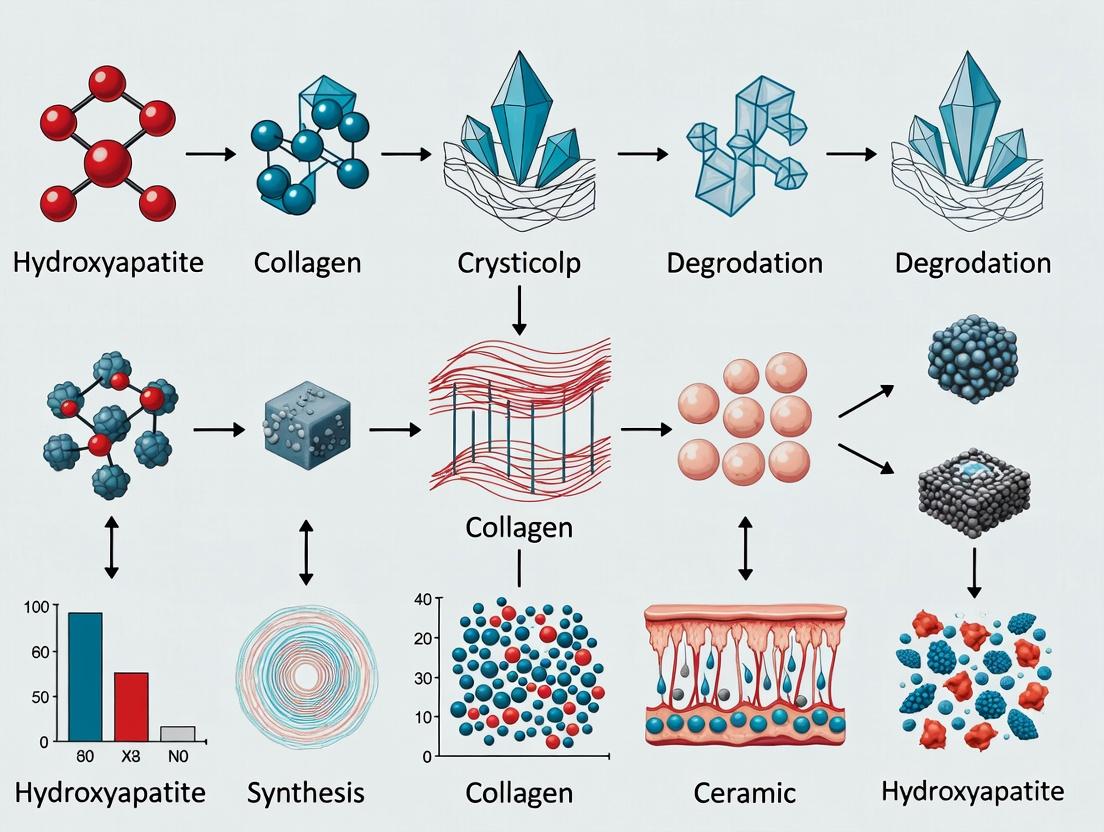
This article provides a systematic exploration of the fundamental properties that define bioceramic biomaterials, crucial for researchers and drug development professionals.
Bioceramic Biomaterials: A Comprehensive Guide to Properties, Applications, and Latest Innovations for Biomedical Research
Abstract
This article provides a systematic exploration of the fundamental properties that define bioceramic biomaterials, crucial for researchers and drug development professionals. It covers the core composition and classification (foundational), modern synthesis and application techniques (methodological), common challenges and performance optimization strategies (troubleshooting), and finally, comparative analysis and validation against clinical benchmarks. The synthesis of these four intents offers a holistic, state-of-the-art resource for the strategic selection and development of bioceramics in regenerative medicine and therapeutic delivery.
Understanding the Core: The Fundamental Composition and Properties of Bioceramics
Within the broader thesis on the fundamental properties of bioceramic biomaterials, classification by biological response is paramount. This technical guide delineates bioceramics into three principal classes based on their interaction with the physiological environment: Bioinert, Bioactive, and Biodegradable (Bioresorbable). Understanding these classifications is foundational for selecting materials for specific clinical applications, from permanent implants to temporary scaffolds for tissue regeneration and drug delivery systems.
Core Classifications: Properties and Mechanisms
The interaction of a bioceramic with host tissue is governed by its surface chemistry and dissolution kinetics.
Bioinert Ceramics
These materials exhibit minimal chemical or biological interaction with host tissue. Their stability provides long-term mechanical performance. The primary host response is encapsulation by a non-adherent fibrous membrane.
Key Material: Alumina (Al₂O₃) and Zirconia (ZrO₂).
- Application: Load-bearing components like femoral heads in hip arthroplasty.
- Key Property: High wear resistance and compressive strength.
Bioactive Ceramics
Bioactive ceramics form a direct, adherent bond with living bone through a series of surface reactions. The hallmark is the formation of a biologically active hydroxyl-carbonate apatite (HCA) layer, which integrates with collagen fibrils.
Key Materials: Hydroxyapatite (HA, Ca₁₀(PO₄)₆(OH)₂) and Bioactive Glasses (e.g., 45S5 Bioglass).
- Mechanism: Upon implantation, ions (e.g., Ca²⁺, SiO₄⁴⁻) leach from the surface, leading to HCA precipitation and bonding.
- Application: Coatings for metallic implants, bone defect fillers, dental applications.
Biodegradable (Bioresorbable) Ceramics
These materials are designed to gradually dissolve in the body, being replaced by regenerating natural tissue. The resorption rate must match the rate of new tissue formation.
Key Materials: Tricalcium Phosphate (TCP, particularly β-TCP) and certain bioactive glass compositions.
- Mechanism: Dissolution via cellular (osteoclastic) activity and physicochemical processes. Ions released can stimulate new bone growth.
- Application: Porous scaffolds for bone tissue engineering, drug delivery carriers.
Quantitative Data Comparison
Table 1: Comparative Properties of Key Bioceramic Classes
| Property | Bioinert (Al₂O₃) | Bioactive (Hydroxyapatite) | Biodegradable (β-TCP) |
|---|---|---|---|
| Primary Interaction | Fibrous encapsulation | Chemical bonding (HCA layer) | Bulk dissolution & replacement |
| Bonding to Bone | No direct bond | Direct chemical bond | Bonds during resorption phase |
| Resorption Rate | Essentially non-resorbable | Very slow (<5% per year) | Tunable (months to years) |
| Compressive Strength (MPa) | 3000 - 5000 | 300 - 900 | 2 - 10 (porous scaffold) |
| Fracture Toughness (MPa·m¹/²) | 3 - 5 | 0.8 - 1.2 | ~0.7 |
| Key Clinical Use | Femoral heads, dental implants | Coatings, granular fillers | Porous scaffolds, bone graft substitutes |
Table 2: Ion Release Profiles Influencing Bioactivity/Resorption
| Material | Key Ions Released | Primary Biological Effect | Typical Concentration in SBF (ppm)* |
|---|---|---|---|
| 45S5 Bioglass | Si, Ca, Na, P | Stimulates osteogenesis, HCA formation | Si: 60-80; Ca: 90-110 |
| Hydroxyapatite | Ca, P (slow) | Osteoconduction, direct bonding | Ca: 15-30; P: 10-20 |
| β-Tricalcium Phosphate | Ca, P (sustained) | Osteoconduction, supports remodeling | Ca: 40-70; P: 25-45 |
*Example data after 7 days in Simulated Body Fluid (SBF). Concentrations are material/structure-dependent.
Key Experimental Protocols
In Vitro Bioactivity Assessment (SBF Test)
Aim: To predict in vivo bone-bonding ability by assessing HCA layer formation. Protocol:
- SBF Preparation: Prepare a simulated body fluid solution with ion concentrations nearly equal to human blood plasma (e.g., Kokubo's recipe) at 36.5°C, pH 7.4.
- Sample Immersion: Immerse sterile bioceramic samples (e.g., discs, granules) in SBF at a surface-area-to-volume ratio of 0.1 cm⁻¹.
- Incubation: Maintain at 36.5°C for predetermined periods (e.g., 1, 3, 7, 14 days) without agitation.
- Surface Analysis: Remove samples, rinse gently, and dry.
- Scanning Electron Microscopy (SEM): Analyze surface morphology for apatite spherulites.
- Fourier-Transform Infrared Spectroscopy (FTIR): Detect characteristic phosphate (P-O) bands (~560, 600, 1040 cm⁻¹).
- Thin-Film X-ray Diffraction (TF-XRD): Identify crystalline HCA peaks.
In Vivo Osteointegration & Degradation
Aim: To evaluate bone bonding and resorption kinetics in a living model. Protocol (Rodent Calvarial Defect):
- Animal Model: Use skeletally mature rats or rabbits.
- Surgery: Create a critical-size bone defect (e.g., 5mm diameter) in the parietal bone.
- Implantation: Implant the test bioceramic scaffold into the defect. Leave one defect empty as a negative control, and use an autograft as a positive control.
- Time Points: Euthanize groups at 4, 8, and 12 weeks post-op.
- Analysis:
- Micro-Computed Tomography (μCT): Quantify new bone volume (BV/TV) and scaffold degradation (residue volume).
- Histology (H&E, Masson's Trichrome): Assess bone-scaffold interface, cellular infiltration, and evidence of osteoclastic resorption.
- Histomorphometry: Quantify percent bone ingrowth and residual implant area.
Visualizations
Title: Bioceramic Classification by Biological Response Pathways
Title: Standard In Vitro to In Vivo Bioceramic Testing Workflow
The Scientist's Toolkit: Research Reagent Solutions
Table 3: Essential Materials for Bioceramics Research
| Reagent / Material | Function / Purpose | Key Considerations |
|---|---|---|
| Simulated Body Fluid (SBF) | In vitro bioactivity testing; simulates ion exchange at physiological pH. | Use Kokubo or Tasaki formulations; prepare fresh, maintain precise ion concentrations and pH (7.4). |
| Primary Osteoblast Cells | Assess cytocompatibility, cell adhesion, proliferation, and differentiation on bioceramics. | Source (e.g., murine MC3T3-E1, human hFOB); use early passages for consistency. |
| Osteogenic Media Supplements (Ascorbic acid, β-glycerophosphate, Dexamethasone) | Induce and maintain osteoblastic phenotype during in vitro culture. | Critical for meaningful differentiation assays (ALP, mineralization). |
| AlamarBlue / MTT Assay Kit | Quantify metabolic activity of cells on bioceramics (cytotoxicity/viability). | Ensure scaffold material does not interfere with absorbance/fluorescence readings. |
| Triton X-100 | Positive control (lytic) for cytotoxicity assays. | Use at low concentration (e.g., 1%) to induce complete cell death. |
| Paraformaldehyde (PFA), 4% | Fix cell-seeded scaffolds or explanted tissue for histology/immunostaining. | Perfuse in vivo samples promptly; standard fixation time is 24-48h. |
| Critical-Size Defect Animal Model (Rat, Rabbit, etc.) | Gold standard for evaluating osteointegration and degradation in vivo. | Species, defect site (calvaria, femur), and size must be justified and consistent. |
| Poly(methyl methacrylate) (PMMA) Embedding Kit | For hard-tissue histology; infiltrates and supports mineralized bone/scaffold during sectioning. | Superior to paraffin for preserving bone-implant interface integrity. |
| Masson's Trichrome Stain | Differentiates collagen (blue/green) from mineralized bone (red) and cells (dark nuclei) in histological sections. | Essential for visualizing new bone formation adjacent to the implant. |
This whitepaper establishes the fundamental principles of crystal structure and phase chemistry as the primary determinants of material behavior, specifically framed within the ongoing thesis research on the basic properties of bioceramic biomaterials. For biomedical researchers and drug development professionals, mastering this relationship is critical for the rational design of implants, scaffolds, and drug delivery systems. The biological performance—including bioactivity, degradation rate, mechanical integrity, and protein adsorption—is not a direct function of bulk composition, but is mediated by atomic-scale arrangement and phase stability.
Core Crystallographic Concepts for Bioceramics
The crystalline state is defined by a unit cell repeating in three-dimensional space, characterized by lattice parameters (a, b, c, α, β, γ) and a space group symmetry. For bioceramics, common structures include:
- Hydroxyapatite (HA): Hexagonal (P6₃/m). Ca₁₀(PO₄)₆(OH)₂.
- β-Tricalcium Phosphate (β-TCP): Rhombohedral (R3cH). Ca₃(PO₄)₂.
- Calcium Silicates (e.g., Wollastonite): Monoclinic/triclinic.
- Zirconia (Y-TZP): Tetragonal (P4₂/nmc) at room temperature (metastable).
Phase chemistry governs the stability ranges of these structures under varying temperature, pressure, and composition. In the CaO-P₂O₅ system, for example, the phase equilibrium diagram dictates whether HA, TCP, or their mixtures form, directly influencing in vivo dissolution and bone bonding.
Quantitative Data on Key Bioceramic Phases
Table 1: Crystallographic and Property Data for Primary Bioceramic Phases
| Phase | Crystal System / Space Group | Lattice Parameters (Å, °) | Key Properties (Typical Range) | Primary In Vivo Behavior |
|---|---|---|---|---|
| Hydroxyapatite (HA) | Hexagonal / P6₃/m | a=9.424, c=6.879 | Compressive Strength: 300-900 MPa; Elastic Modulus: 80-110 GPa | Slow, surface-mediated dissolution; osteoconductive |
| β-Tricalcium Phosphate (β-TCP) | Rhombohedral / R3cH | a=10.439, c=37.375 (hex. setting) | Compressive Strength: 100-500 MPa; Solubility: ~12x greater than HA | Relatively rapid biodegradation; osteoconductive |
| Biphasic Calcium Phosphate (BCP) | Mixed HA/β-TCP | Dependent on HA:TCP ratio | Properties vary linearly with phase ratio | Tunable degradation via phase ratio control |
| Yttria-Stabilized Zirconia (3Y-TZP) | Tetragonal / P4₂/nmc | a=3.605, c=5.180 | Flexural Strength: >1000 MPa; Fracture Toughness: 5-10 MPa·m¹/² | Bioinert; high toughness; susceptible to low-temp degradation |
| Bioactive Glass (45S5) | Primarily Amorphous | N/A (Glassy) | Vickers Hardness: ~4.5 GPa | Rapid surface reaction forming hydroxyl-carbonate apatite layer |
Data compiled from recent literature and crystallographic databases.
Experimental Protocols for Phase Analysis
Protocol 4.1: X-ray Diffraction (XRD) for Phase Identification and Quantification
- Objective: To identify crystalline phases present and perform quantitative phase analysis (e.g., HA/β-TCP ratio in BCP).
- Materials: Powdered or solid bioceramic sample, X-ray diffractometer (Cu Kα radiation, λ=1.5406 Å).
- Methodology:
- Grind sample to fine powder (<45 µm) to minimize orientation effects.
- Load powder into a standard holder, ensuring a flat surface.
- Scan parameters: 2θ range from 10° to 60°, step size 0.02°, count time 2s/step.
- Analyze diffraction pattern using Rietveld refinement software (e.g., TOPAS, MAUD). Refine lattice parameters, phase scale factors, and microstructure parameters.
- For quantitative analysis, use the refined scale factors and the crystal structure model's theoretical intensity to calculate weight fractions: % Phase A = [SA / (SA + S_B)] * 100, where S is the refined scale factor.
Protocol 4.2: Fourier Transform Infrared Spectroscopy (FTIR) for Functional Group Analysis
- Objective: To determine the local chemical bonding and detect amorphous phases or carbonate substitution in apatites.
- Materials: KBr powder, hydraulic press, FTIR spectrometer.
- Methodology:
- Mix ~1 mg of bioceramic powder with 200 mg of spectroscopic-grade KBr.
- Press mixture under vacuum at 8-10 tons for 2 minutes to form a transparent pellet.
- Acquire spectrum in transmission mode from 4000 to 400 cm⁻¹ at 4 cm⁻¹ resolution.
- Identify key vibrational modes: PO₄³⁻ (v₄ at 560-600 cm⁻¹), OH⁻ (3572 cm⁻¹), CO₃²⁻ (870, 1415, 1455 cm⁻¹ for substitution).
Visualization of Key Relationships
Title: Determinants of Bioceramic Biological Performance
Title: Bioactivity Pathway from Structure to Integration
The Scientist's Toolkit: Research Reagent Solutions
Table 2: Essential Research Reagents and Materials for Bioceramic Phase Analysis
| Item | Function / Application |
|---|---|
| High-Purity Precursor Powders (e.g., CaCO₃, (NH₄)₂HPO₄, Tetraethyl orthosilicate, ZrOCl₂·8H₂O) | Starting materials for wet-chemical or sol-gel synthesis of bioceramics. Purity >99.5% is critical to avoid impurity phases. |
| SBF (Simulated Body Fluid) Solution (Kokubo recipe) | In vitro bioactivity test. Ion concentration approximates human blood plasma. Formation of apatite layer on sample surface indicates bioactivity. |
| NIST Standard Reference Materials (e.g., SRM 2910b - Calcium Hydroxyapatite) | Certified reference materials for calibrating XRD, FTIR, and chemical analysis equipment. |
| KBr for FTIR Spectroscopy | Spectroscopic-grade potassium bromide used as a transparent matrix for preparing solid samples for FTIR analysis. |
| Polyvinyl Alcohol (PVA) or Stearic Acid | Binders for powder compaction before sintering to form green bodies with sufficient handling strength. |
| ISO 10993-Compatible Cell Culture Media (e.g., α-MEM with 10% FBS) | For direct in vitro cytocompatibility testing of bioceramic extracts or direct contact assays. |
| Alumina or Zirconia Milling Media | Used in ball milling for particle size reduction and homogeneous mixing of precursor powders, avoiding metallic contamination. |
| Platinum Crucibles | For high-temperature sintering (>1200°C) or melting of glasses without reaction; essential for thermal analysis (DTA/TGA). |
This technical guide examines the fundamental physical properties governing bioceramic biomaterial performance. Within the broader thesis of basic biomaterials research, porosity, surface area, density, and mechanical strength are identified as interconnected pillars dictating biological integration, degradation kinetics, and functional utility in orthopedics, dentistry, and drug delivery. This whitepaper synthesizes current methodologies, quantitative benchmarks, and experimental protocols essential for advanced research and development.
Bioceramics, including hydroxyapatite (HA), beta-tricalcium phosphate (β-TCP), and bioactive glasses, serve as scaffolds, coatings, and delivery vehicles. Their efficacy is not defined by composition alone but by a suite of interdependent physical properties. Porosity dictates cellular infiltration and vascularization; specific surface area influences protein adsorption and degradation rate; density affects structural integrity and resorption profiles; and mechanical strength determines load-bearing capability. This document provides an in-depth analysis of these properties, their measurement, and their role in the design logic of modern bioceramic biomaterials.
Quantitative Property Benchmarks
The following tables summarize target property ranges for common bioceramic applications, derived from recent literature (2023-2024).
Table 1: Target Property Ranges for Bioceramic Scaffolds by Application
| Application | Total Porosity (%) | Macro-Pore Size (µm) | Specific Surface Area (m²/g) | Apparent Density (g/cm³) | Compressive Strength (MPa) |
|---|---|---|---|---|---|
| Bone Tissue Engineering | 70-90 | 100-500 | 20-120 | 0.3-1.2 | 2-15 |
| Dental Implant Coatings | 20-40 | 1-50 (microporosity) | 5-50 | 2.5-3.2 | 50-300 (coating adhesion) |
| Drug Delivery Carriers | 40-70 | 10-100 (meso/macro) | 50-400 | 0.5-1.8 | 1-10 |
| Load-Bearing Implants | 30-50 | 100-350 | 5-30 | 1.5-2.8 | 100-500 |
Table 2: Typical Values by Bioceramic Type
| Bioceramic Material | Typical Porosity (%) | Typical SSA (BET, m²/g) | Skeletal Density (g/cm³) | Typical Compressive Strength (MPa) |
|---|---|---|---|---|
| Hydroxyapatite (Sintered) | 20-40 | 1-10 | 3.16 | 100-900 |
| β-TCP (Macroporous) | 65-80 | 15-40 | 3.07 | 2-12 |
| 45S5 Bioglass (Foam) | 75-90 | 30-100 | 2.7-2.8 | 0.5-5 |
| Biphasic HA/β-TCP (60/40) | 50-75 | 10-60 | ~3.12 | 5-50 |
Detailed Experimental Protocols
Protocol: Mercury Intrusion Porosimetry (MIP) for Porosity & Pore Size Distribution
Objective: To measure total porosity, pore volume, and pore-size distribution. Materials: Mercury porosimeter (e.g., Micromeritics AutoPore), high-purity mercury, dry bioceramic sample (~0.5g), penetrometer. Procedure: 1. Sample Preparation: Dry sample at 150°C for 2 hours to remove moisture. Cool in a desiccator. 2. Loading: Weigh the empty penetrometer stem and cup. Place sample in cup, reassemble, and weigh to obtain sample mass. 3. Evacuation: Place penetrometer in the low-pressure port. Evacuate to <50 µm Hg to remove air from sample pores. 4. Low-Pressure Analysis: Fill the penetrometer with mercury at low pressure (0.5 psia). Measure intruded volume as a function of applied pressure (up to 30 psia) to characterize macropores (>50 nm). 5. High-Pressure Analysis: Transfer to high-pressure chamber. Increase pressure stepwise to 60,000 psia. The Washburn equation relates pressure to pore diameter (D = -4γcosθ/P, where γ=485 dyn/cm, θ=130°). 6. Data Analysis: Software calculates cumulative intrusion volume, total porosity, and differential pore-size distribution.
Protocol: Brunauer-Emmett-Teller (BET) Surface Area Analysis
Objective: To determine specific surface area (SSA) via nitrogen gas adsorption. Materials: Surface area analyzer (e.g., Quantachrome Nova), liquid N₂, He gas, degassing station, bioceramic sample. Procedure: 1. Sample Degassing: Weigh sample tube. Add ~0.1-0.5g of sample. Attach to degassing station. Heat at 200°C under vacuum or flowing He for 12 hours to remove adsorbed contaminants. 2. Cooling: Transfer sample to analysis port. Immerse in liquid N₂ (77 K) bath. 3. Adsorption Measurement: Introduce controlled doses of N₂ gas. Measure the quantity adsorbed at each relative pressure (P/P₀) point across a range (typically 0.05-0.30). 4. BET Plot: Plot P/(V(P₀-P)) vs. P/P₀. The linear region yields slope (s) and intercept (i). Monolayer volume Vₘ = 1/(s+i). SSA = (Vₘ * N * σ)/(M * V), where N is Avogadro's number, σ is N₂ cross-sectional area (0.162 nm²), M is molar mass, V is molar volume.
Protocol: Archimedes' Principle for Apparent Density and Porosity
Objective: To measure bulk/apparent density, skeletal density, and open porosity. Materials: Analytical balance with density kit, distilled water, vacuum impregnation setup, dry sample. Procedure: 1. Dry Weight (Wd): Weigh the dried sample. 2. Suspended Weight (Ws): Immerse sample in water. Use a vacuum to evacuate air from open pores for 30 minutes. Weigh the sample suspended in water. 3. Saturated Weight (W{sat}): Remove sample, blot surface lightly with damp cloth to remove adhering droplets, and weigh in air. 4. Calculations: - Bulk Volume = (W{sat} - Ws) / ρwater. - Open Pore Volume = (W{sat} - Wd) / ρwater. - Apparent Density = Wd / Bulk Volume. - Skeletal Density = W_d / (Bulk Volume - Open Pore Volume). - % Open Porosity = (Open Pore Volume / Bulk Volume) * 100.
Protocol: Uniaxial Compressive Strength Testing
Objective: To determine mechanical failure strength under compression. Materials: Universal mechanical testing machine (e.g., Instron), load cell calibrated for expected strength, flat platens, cylindrical sample (H/D ratio 2:1, e.g., 6mm D x 12mm H). Procedure: 1. Sample Preparation: Machine or mold samples to precise dimensions. Ensure parallel end faces. 2. Calibration: Calibrate load cell and zero the machine. Place sample centrally on lower platen. 3. Testing: Apply preload of ~1N. Set crosshead speed to 0.5 mm/min (ASTM D695/C773). Apply compressive load until fracture or 80% strain. 4. Data Analysis: Record load-displacement curve. Compressive Strength = Maximum Load / Original Cross-sectional Area. Report mean ± SD for n≥5 samples.
Visualization of Property Interrelationships and Workflows
Diagram 1: Core Property Interdependence in Bioceramics
Diagram 2: Physical Property Characterization Workflow
The Scientist's Toolkit: Essential Research Reagents & Materials
Table 3: Key Research Reagent Solutions for Bioceramic Property Analysis
| Item | Function & Relevance |
|---|---|
| High-Purity Mercury (Triple Distilled) | The intrusion fluid for MIP. Its high surface tension and non-wetting behavior allow pore size calculation via the Washburn equation. |
| Nitrogen Gas (N₂), 99.999% Purity | Adsorbate gas for BET surface area and BJH pore volume analysis. Must be ultra-pure to avoid contamination of the sample surface. |
| Krypton Gas (Kr) | Alternative adsorbate for low-surface-area samples (<1 m²/g). Used at 77 K (liquid N₂) for higher accuracy. |
| Degassing Station (He/vacuum) | Prepares samples for BET by removing physisorbed water and gases. Controlled temperature (150-300°C) prevents sintering. |
| Silicone Oil (Low Viscosity) | Used in Archimedes' density measurements for hydrophobic materials or to avoid water solubility issues with certain bioceramics (e.g., unsintered CaP). |
| Phosphate Buffered Saline (PBS) pH 7.4 | For in situ mechanical testing or pre-soaking samples to simulate physiological conditions before property measurement. |
| Polyurethane Foam Templates (Reticulated) | Common sacrificial porogen for creating controlled macroporosity in scaffold fabrication, defining the final pore structure. |
| Simulated Body Fluid (SBF) | Used in bioactivity testing; its ion adsorption and apatite formation rate are directly influenced by the scaffold's surface area and porosity. |
| Fluorescein Isothiocyanate (FITC)-Dextran Probes | Molecules of defined size used in permeability experiments to quantify effective interconnectivity of porous networks. |
| Image Analysis Software (e.g., ImageJ, BoneJ) | For quantifying porosity and pore architecture from micro-CT or SEM images, providing 3D structural data complementary to MIP. |
The design and application of bioceramic biomaterials are fundamentally guided by the quartet of porosity, surface area, density, and mechanical strength. These properties are not isolated but exist in a critical balance, often requiring trade-offs (e.g., strength vs. porosity). Mastery of their precise measurement through standardized protocols, as outlined, is essential for advancing research from in vitro characterization to successful in vivo performance and clinical translation. Future research will continue to refine these relationships, particularly through advanced manufacturing like 4D printing, which promises dynamic control over these properties in response to physiological stimuli.
1. Introduction
This technical guide details three core chemical properties underpinning bioceramic biomaterial research. Within the broader thesis that a material's basic properties dictate its biological fate, understanding controlled degradation, ionic signaling, and interfacial pH stability is paramount. These properties determine the material's lifespan, bioactivity, and biocompatibility, directly influencing therapeutic outcomes in bone regeneration, drug delivery, and implant integration for researchers and drug development professionals.
2. Degradation Rates
Degradation is the controlled chemical dissolution and physical disintegration of a bioceramic in vivo. The rate dictates the material's structural support duration and its replacement by new tissue.
2.1 Key Determinants of Degradation Rate
- Material Chemistry: Amorphous phases degrade faster than crystalline ones. Beta-tricalcium phosphate (β-TCP) degrades faster than highly crystalline hydroxyapatite (HA).
- Porosity & Surface Area: Higher macro/micro-porosity increases surface area exposed to physiological fluids, accelerating degradation.
- Environmental Factors: Local pH, enzyme activity, and cellular (osteoclastic) resorption modulate in vivo rates.
2.2 Experimental Protocol: In Vitro Degradation (Mass Loss)
- Principle: Simulate physiological degradation by immersing material in a buffered solution.
- Method:
- Pre-weigh dry samples (W₀).
- Immerse in Tris-HCl or simulated body fluid (SBF) at pH 7.4, 37°C, under sterile conditions.
- Agitate on an orbital shaker at ~60 rpm.
- At predetermined timepoints (e.g., 1, 3, 7, 14, 28 days), remove samples, rinse, dry, and re-weigh (Wₜ).
- Calculate mass loss percentage: [(W₀ - Wₜ) / W₀] × 100%.
- Analyze solution for ion concentration (e.g., Ca²⁺, PO₄³⁻ via ICP-OES) and monitor pH.
3. Ion Release Profiles
Bioceramics like HA, TCP, and bioactive glasses release biologically active ions (e.g., Ca²⁺, Si⁴⁺, Mg²⁺, Sr²⁺, Zn²⁺). These ions act as signaling molecules, stimulating cellular responses.
3.1 Biological Impact of Key Ions
- Calcium (Ca²⁺): Promotes osteoblast proliferation, differentiation, and regulates osteoclast activity.
- Silicate (Si⁴⁺): Stimulates collagen type I synthesis and osteoblast mineralization.
- Strontium (Sr²⁺): Dual action: promotes bone formation and inhibits resorption.
3.2 Experimental Protocol: Ion Release Kinetics (ICP-OES)
- Principle: Use Inductively Coupled Plasma Optical Emission Spectrometry to quantify ionic concentrations in degradation media.
- Method:
- Prepare degradation media as in Section 2.2.
- At each timepoint, collect an aliquot of the supernatant and filter (0.2 µm).
- Acidify the sample with 2% nitric acid (trace metal grade) to stabilize ions.
- Prepare standard calibration curves for each target ion (e.g., Ca, P, Si, Sr, Mg).
- Run samples via ICP-OES, measuring emission wavelengths specific to each element.
- Calculate cumulative ion release (µg/mL or ppm) normalized to sample mass/surface area.
3.3 Ion-Induced Signaling Pathways
Diagram: Ion Release Activates Osteogenic Signaling Pathways
4. pH Stability
The local pH at the material-tissue interface is critical. Excessive alkalinization (from bioactive glasses) or acidification (from polymer degradation) can cause cytotoxicity and inflammation. Ideal bioceramics exhibit buffering capacity to maintain a physiological pH (~7.4).
4.1 Experimental Protocol: pH Monitoring
- Principle: Track pH changes in the immersion medium over time to assess material buffering capacity.
- Method:
- Immerse material in a weakly buffered solution (e.g., 0.1M Tris-HCl) or unbuffered saline to amplify pH changes.
- Maintain at 37°C under static or agitated conditions.
- At defined intervals, measure pH using a calibrated, high-precision pH meter with a micro-electrode.
- Record pH versus time. Compare to a control (solution without material).
5. Integrated Data Summary
Table 1: Comparative Chemical Properties of Select Bioceramics
| Material | In Vitro Degradation Rate (Mass Loss, 4 wks) | Key Ions Released | Typical pH Change Trend (in Unbuffered Medium) | Primary Application Context |
|---|---|---|---|---|
| Hydroxyapatite (HA) | 1-5% (Low) | Ca²⁺, PO₄³⁻ | Minimal (Slight decrease) | Long-term structural grafts, coatings |
| Beta-Tricalcium Phosphate (β-TCP) | 15-30% (High) | Ca²⁺, PO₄³⁻ | Moderate decrease (Acidic) | Bone void filler, medium-term resorption |
| 45S5 Bioactive Glass | 5-20% (Medium) | Ca²⁺, Na⁺, PO₄³⁻, Si⁴⁺ | Significant increase (Alkaline) | Bioactive coating, bone regeneration |
| Silicate-doped HA | 3-10% (Low-Medium) | Ca²⁺, PO₄³⁻, Si⁴⁺ | Minimal to slight decrease | Enhanced osteogenesis implants |
Table 2: Core Ion Functions & Target Concentrations
| Ion | Optimal In Vitro Concentration Range | Primary Cellular/Genetic Targets | Biological Effect |
|---|---|---|---|
| Ca²⁺ | 6-12 mM | Calcium-sensing receptor (CaSR), MAPK pathway | Osteoblast proliferation, differentiation |
| Si⁴⁺ (Silicate) | 1-3 mg/L | Osteoblast progenitors, collagen I genes | Enhanced osteoblastic activity, angiogenesis |
| Sr²⁺ | 0.5-1.5 mM | CaSR, RANKL/OPG system | Anabolic & anti-catabolic bone activity |
6. The Scientist's Toolkit: Essential Research Reagents & Materials
Table 3: Key Reagent Solutions for Bioceramic Chemical Analysis
| Item | Function/Brief Explanation |
|---|---|
| Simulated Body Fluid (SBF) | Ion concentration & pH similar to human blood plasma; standard solution for in vitro bioactivity & degradation tests. |
| Tris-HCl Buffer (0.1M, pH 7.4) | Standard buffered immersion medium for controlled degradation studies. |
| Trace Metal Grade Nitric Acid | For acidifying samples prior to ICP analysis to prevent precipitation and adsorption of ions. |
| ICP Multi-Element Standard Solutions | Certified reference materials for calibrating ICP-OES/MS instruments to ensure accurate ion quantification. |
| High-Precision pH Buffer Solutions (pH 4.01, 7.00, 10.01) | For three-point calibration of pH meters, essential for accurate, reproducible pH monitoring. |
| Alpha-MEM (Minimum Essential Medium) w/ FBS | Cell culture medium for in vitro assays linking ion release to cellular responses (proliferation, differentiation). |
7. Standard Experimental Workflow
Diagram: Integrated Workflow for Testing Bioceramic Chemical Properties
Within the field of bioceramic biomaterials research, a comprehensive understanding of three fundamental biological properties—bioactivity, osteoconductivity, and bioresorbability—is paramount. These properties are not mutually exclusive but are deeply interconnected, defining the performance and clinical success of materials like calcium phosphates (e.g., hydroxyapatite, β-tricalcium phosphate), bioactive glasses, and calcium sulfates. This whitepaper provides an in-depth technical analysis of these core properties, framed within the broader thesis that optimal biomaterial design requires a delicate, tunable balance between surface reaction kinetics, biological response, and controlled material degradation to support native tissue regeneration.
Bioactivity: Definition and Mechanisms
Bioactivity refers to the property of a material to elicit a specific biological response at the interface, resulting in the formation of a direct, strong bond with living bone tissue. The hallmark mechanism, first described for Bioglass by Hench, is the formation of a biologically active carbonated hydroxyapatite (HCA) layer on the material surface in vivo.
Mechanistic Pathway: The process involves a series of surface reactions:
- Ion Exchange: Alkali ions (e.g., Na⁺, K⁺) from the bioceramic rapidly exchange with H⁺ (or H₃O⁺) from body fluid, leading to a local increase in pH.
- Network Dissolution: The silica network undergoes hydrolysis, breaking Si-O-Si bonds and releasing soluble silica (Si(OH)₄) into solution.
- Silica Gel Formation: A silica-rich (SiO₂-rich) layer forms on the surface.
- Reprecipitation: Amorphous calcium phosphate (ACP) nucleates on the silica-rich layer from the Ca²⁺ and PO₄³⁻ in the material and surrounding fluid.
- Crystallization: The ACP crystallizes into carbonated hydroxyapatite (HCA), incorporating carbonate (CO₃²⁻) anions from the physiological fluid. This HCA layer is chemically and structurally similar to the mineral phase of bone, facilitating strong bonding.
Diagram: Sequence of Surface Reactions Leading to Bioactive Bonding
Experimental Protocol for In Vitro Bioactivity Assessment (Simulated Body Fluid Test):
- Objective: To assess the ability of a bioceramic to form an HCA layer in an acellular, simulated physiological environment.
- Materials: Powdered or dense bioceramic samples, Simulated Body Fluid (SBF) prepared according to Kokubo's formulation (ions: Na⁺, K⁺, Mg²⁺, Ca²⁺, Cl⁻, HCO₃⁻, HPO₄²⁻, SO₄²⁻), polypropylene containers, water bath/shaker.
- Procedure:
- Sterilize samples and pre-weigh.
- Immerse each sample in SBF (surface area/volume ratio ~0.1 cm⁻¹) in a sealed container.
- Incubate at 36.5–37.0°C for predetermined periods (e.g., 1, 3, 7, 14 days) without agitation.
- At each time point, remove samples, rinse gently with deionized water, and dry.
- Analyze surface via Scanning Electron Microscopy (SEM) for morphological changes, Fourier-Transform Infrared Spectroscopy (FTIR) for phosphate/carbonate bands, and Thin-Film X-ray Diffraction (TF-XRD) for HCA crystallization peaks.
Osteoconductivity: Definition and Influencing Factors
Osteoconductivity is the ability of a biomaterial to serve as a scaffold or template that supports the migration, attachment, and growth of osteogenic cells (osteoprogenitors, osteoblasts) and the subsequent deposition of new bone along its surface. It is a consequence of appropriate bioactive and physical properties.
Key Determinants:
- Surface Chemistry & Bioactivity: The formed HCA layer promotes osteoblast adhesion via integrin binding.
- Macro-/Micro-Porosity: Interconnected porosity (>100 µm) is critical for vascular ingrowth and bone tissue invasion.
- Surface Topography (Roughness): Micron-scale roughness enhances cell attachment and differentiation.
- Mechanical Properties: The scaffold must provide adequate initial structural support.
Quantitative Comparison of Osteoconductive Properties:
Table 1: Comparative Osteoconductive Properties of Common Bioceramics
| Bioceramic Material | Typical Porosity (%) | Pore Size (µm, ideal) | In Vivo Bone Ingrowth Rate (Approx.) | Key Mechanism |
|---|---|---|---|---|
| Hydroxyapatite (HA) | 30-70 | 200-500 | Slow-Moderate (6-12 months) | Direct bioactive bonding, slow resorption |
| β-Tricalcium Phosphate (β-TCP) | 40-75 | 100-500 | Moderate (3-6 months) | Osteoclastic resorption followed by bone deposition |
| Biphasic Calcium Phosphate (HA/β-TCP) | 50-70 | 200-600 | Tailorable (3-9 months) | Combines HA stability with TCP resorbability |
| Bioactive Glass (45S5) | 50-90 | 100-600 | Rapid (1-3 months) | Rapid HCA formation, ionic release (Si, Ca) |
Diagram: Factors Governing Osteoconductivity
Experimental Protocol for In Vivo Osteoconductivity Evaluation (Critical-Sized Defect Model):
- Objective: To quantitatively assess new bone formation within a bioceramic scaffold implanted in a bone defect that would not heal spontaneously.
- Animal Model: Rat calvarial, rabbit femoral condyle, or sheep tibial defect.
- Procedure:
- Create a standardized critical-sized defect (e.g., 8 mm diameter in rat calvarium).
- Implant the sterilized bioceramic scaffold into the defect (control: empty defect or sham).
- Sacrifice animals at multiple time points (e.g., 4, 8, 12 weeks).
- Process explanted samples for histological analysis (undecalcified sections stained with Toluidine Blue, von Kossa, or Stevenel's Blue) and micro-computed tomography (µCT).
- Quantification: Measure Bone Volume/Total Volume (BV/TV) and bone-scaffold contact percentage histomorphometrically, and determine mineral density via µCT.
Bioresorbability: Definition, Mechanisms, and Measurement
Bioresorbability (or biodegradability) is the controlled degradation of a biomaterial in vivo, with the dissolution products being metabolized or excreted, ultimately being replaced by regenerated tissue.
Degradation Mechanisms:
- Physicochemical Dissolution: Driven by solubility product (Ksp) and local pH (e.g., TCP degrades faster than HA due to higher solubility).
- Cell-Mediated Resorption: Osteoclasts attach to the material surface, create an acidic sealed compartment via the V -ATPase proton pump, and dissolve the mineral phase.
- Fluid-Driven Processes: Bulk erosion and granular disintegration.
Table 2: Bioresorption Characteristics of Key Bioceramics
| Material | Primary Resorption Mechanism | Approximate In Vivo Resorption Timeline (for porous form) | Key Influencing Factors |
|---|---|---|---|
| Hydroxyapatite (HA) | Slow osteoclastic activity | >12-24 months | Crystallinity (↓ crystallinity = ↑ resorption), porosity |
| β-Tricalcium Phosphate (β-TCP) | Physicochemical dissolution & osteoclastic resorption | 6-18 months | Phase purity, porosity, specific surface area |
| Calcium Sulfate (Plaster of Paris) | Physicochemical dissolution | 1-3 months | Purity, implant site vascularity |
| Bioactive Glass (45S5) | Surface reaction layer dissolution & phagocytosis | 6-12 months | Composition (SiO₂ content), particle size |
Experimental Protocol for In Vitro Degradation Study (Mass Loss & Ion Release):
- Objective: To monitor mass loss, pH change, and ion release kinetics in a controlled environment.
- Materials: Pre-weighed bioceramic discs, Tris-HCl buffer (pH 7.4) or SBF, orbital shaker, inductively coupled plasma optical emission spectrometry (ICP-OES), precision scale.
- Procedure:
- Record initial dry mass (W₀) and immerse samples in buffer (e.g., 50 mg/mL) at 37°C under constant, gentle agitation.
- At defined intervals (e.g., 1, 3, 7, 14, 28 days), remove the solution completely for analysis and replace with fresh buffer.
- Ion Release: Analyze collected solutions via ICP-OES for Ca, P, Si, etc.
- pH Monitoring: Record the pH of the solution at each time point before changing.
- Mass Loss: At the final time point, rinse samples, dry thoroughly, and record final dry mass (Wf). Calculate percentage mass loss: [(W₀ - Wf) / W₀] × 100%.
The Scientist's Toolkit: Essential Research Reagents & Materials
Table 3: Key Research Reagent Solutions for Bioceramics Characterization
| Item | Function/Application | Example & Brief Explanation |
|---|---|---|
| Simulated Body Fluid (SBF) | In vitro bioactivity testing (HCA formation). | Kokubo's SBF: An acellular solution with ionic concentrations nearly equal to human blood plasma, used as a standard for predicting in vivo bioactivity. |
| α-MEM / Osteogenic Media | Cell culture with osteoblast-like cells (e.g., MC3T3-E1, hMSCs). | Minimum Essential Medium Eagle, Alpha modification: Supplemented with 10% FBS, 50 µg/mL ascorbic acid, 10 mM β-glycerophosphate, and 10⁻⁸ M dexamethasone to induce osteogenic differentiation. |
| RANKL & M-CSF | Generating osteoclasts for cell-mediated resorption studies. | Receptor Activator of NF-κB Ligand & Macrophage Colony-Stimulating Factor: Essential cytokines to differentiate monocyte/macrophage precursors into mature, bone-resorbing osteoclasts in culture. |
| Alizarin Red S & von Kossa Stains | Histological detection of calcium deposits/mineralization. | Alizarin Red S: Binds to calcium salts, producing a red-orange stain for in vitro mineralization nodules. von Kossa: A silver nitrate-based stain for phosphate in mineralized tissue (black stain). |
| Tris-HCl Buffer (pH 7.4) | Standard medium for in vitro degradation studies. | Provides a stable, physiological pH environment to study material dissolution and ion release without the complex buffering of SBF. |
| Cell Adhesion Protein Solutions | Coating surfaces to study cell-biomaterial interactions. | Fibronectin or Vitronectin (10-20 µg/mL): Applied to material surfaces to enhance initial cell attachment by providing integrin-binding sites. |
| TRAP Staining Kit | Identification and quantification of osteoclasts. | Tartrate-Resistant Acid Phosphatase (TRAP): A enzymatic marker for active osteoclasts; kits provide reagents for histochemical or solution-based detection. |
| Live/Dead Viability/Cytotoxicity Kit | Assessing cell viability and proliferation on materials. | Contains calcein-AM (labels live cells green) and ethidium homodimer-1 (labels dead cells red) for fluorescent imaging of cell health on 3D scaffolds. |
The clinical efficacy of a bioceramic is dictated by the dynamic interplay of these three properties. An ideal material for bone regeneration exhibits:
- Sufficient initial bioactivity to bond with host bone and recruit cells.
- Strong osteoconductivity to guide and support rapid new bone formation.
- Controlled, synchronized bioresorbability that matches the rate of new bone deposition, eventually transferring mechanical load to the healed tissue.
Advanced research focuses on precisely tuning these properties through composite design (e.g., HA/TCP), doping with therapeutic ions (e.g., Sr²⁺, Mg²⁺, Zn²⁺), or engineering sophisticated porosity gradients. The ultimate goal remains the development of "smart" bioceramics that actively participate in the regenerative process, fulfilling the core thesis that mastering these basic biological properties is the foundation for next-generation biomaterials.
Within the broader thesis on the basic properties of bioceramic biomaterials, this guide provides a technical analysis of five primary material families. These materials are fundamental to orthopedic, dental, and maxillofacial applications due to their biocompatibility, mechanical properties, and biological performance. Their intrinsic properties dictate their classification as bioinert, bioactive, or bioresorbable, guiding their selection for specific clinical and research applications.
Material Families: Properties and Applications
Alumina (Al₂O₃)
A high-purity polycrystalline oxide ceramic, alumina is classified as bioinert. It exhibits excellent corrosion resistance and high compressive strength, making it suitable for load-bearing implants such as femoral heads in total hip arthroplasty. Its low friction coefficient and wear resistance are critical for articulating surfaces. The primary limitation is its brittleness and low fracture toughness.
Zirconia (ZrO₂)
Zirconia, particularly yttria-stabilized tetragonal zirconia polycrystal (Y-TZP), is a bioinert ceramic known for its high fracture toughness and flexural strength—a phenomenon known as transformation toughening. It is used in dental crowns, abutments, and orthopedic bearings. Recent concerns over low-temperature degradation (aging) have led to the development of novel stabilized composites.
Hydroxyapatite (HA, Ca₁₀(PO₄)₆(OH)₂)
Hydroxyapatite is a calcium phosphate ceramic that closely mimics the mineral component of natural bone. It is bioactive, forming a direct chemical bond with living bone tissue (osseointegration). Its resorption rate is slow. HA is widely applied as a coating on metallic implants to enhance bone attachment and as a filler in bone defects.
Bioactive Glasses (e.g., 45S5 Bioglass)
Bioactive glasses are surface-reactive silicate-based materials. Upon implantation, they form a hydroxycarbonate apatite (HCA) layer, which bonds to bone and soft tissue. Their dissolution products (Si, Ca, P ions) upregulate osteogenic gene expression (osteostimulation). They are used in bone graft substitutes, dental applications, and wound healing.
Calcium Phosphates (e.g., β-Tricalcium Phosphate (β-TCP))
This family includes various compounds (e.g., TCP, Biphasic Calcium Phosphate (BCP)) with Ca/P ratios different from HA. They are typically bioactive and bioresorbable. β-TCP, for instance, degrades more rapidly than HA via osteoclastic activity, making it suitable for bone regeneration scaffolds where new bone growth is expected to replace the material.
Comparative Property Tables
Table 1: Basic Physical and Mechanical Properties
| Material Family | Example Formula | Young's Modulus (GPa) | Compressive Strength (MPa) | Fracture Toughness (MPa·m¹/²) | Bioactivity Classification |
|---|---|---|---|---|---|
| Alumina | α-Al₂O₃ | 380 - 420 | 3000 - 5000 | 3 - 5 | Bioinert |
| Zirconia | 3Y-TZP | 200 - 210 | 2000 | 5 - 10 | Bioinert |
| Hydroxyapatite | Ca₁₀(PO₄)₆(OH)₂ | 80 - 120 | 400 - 900 | 0.6 - 1.0 | Bioactive |
| Bioactive Glass | 45S5 | 30 - 35 | 1000 | ~0.7 | Bioactive |
| Calcium Phosphate | β-TCP | 90 - 110 | 450 - 700 | ~0.8 | Bioactive/Bioresorbable |
Table 2: Key Biological and Chemical Properties
| Material Family | Ca/P Ratio | Primary In Vivo Behavior | Key Bonding Mechanism | Typical Degradation Rate |
|---|---|---|---|---|
| Alumina | N/A | Fibrous encapsulation | Mechanical interlock | Negligible |
| Zirconia | N/A | Fibrous encapsulation | Mechanical interlock | Negligible (subject to aging) |
| Hydroxyapatite | 1.67 | Osseointegration | Apatite layer bonding | Very Slow (years) |
| Bioactive Glass | N/A (Si-based) | Osseointegration & osteostimulation | HCA layer formation & ionic release | Moderate (months-years) |
| Calcium Phosphate | 1.5 (TCP) | Osseointegration & resorption | Apatite layer bonding & osteoclast-mediated resorption | Moderate-Fast (months) |
Experimental Protocols for Key Evaluations
Protocol: In Vitro Bioactivity Assessment (Simulated Body Fluid Test)
Objective: To evaluate the formation of an apatite layer on a material's surface, indicating bioactivity.
- Sample Preparation: Prepare polished discs (Ø10mm x 2mm) of each material. Sterilize by autoclaving.
- SBF Preparation: Prepare Simulated Body Fluid (SBF) with ion concentrations nearly equal to human blood plasma, as per Kokubo's recipe. Buffer to pH 7.40 at 36.5°C using Tris-HCl.
- Immersion: Place each sample in a sealed polyethylene bottle with 30 mL of SBF. Incubate at 36.5°C for periods of 1, 7, 14, and 28 days.
- Post-Immersion Analysis: Rinse samples gently with distilled water and dry.
- Surface Characterization: Analyze via Scanning Electron Microscopy (SEM) for apatite morphology, Energy-Dispersive X-ray Spectroscopy (EDS) for Ca/P ratio, and Thin-Film X-ray Diffraction (TF-XRD) to identify hydroxyapatite peaks.
- Control: Use a known bioactive material (e.g., 45S5 Bioglass) as a positive control and an inert material (e.g., medical-grade alumina) as a negative control.
Protocol: Biaxial Flexural Strength Test (for Brittle Ceramics)
Objective: To determine the flexural strength of disc-shaped bioceramic specimens.
- Sample Fabrication: Fabricate disc specimens (e.g., Ø12mm, thickness 1.0 ± 0.2mm) using sintering/pressing techniques. Polish to a mirror finish.
- Test Setup: Use a piston-on-three-ball fixture according to ISO 6872. Place the disc on three symmetrically arranged steel balls (120° apart) supporting the specimen's periphery.
- Loading: Apply a load at the center of the disc's upper surface via a piston at a crosshead speed of 0.5 mm/min in a universal testing machine.
- Calculation: Record the fracture load. Calculate the biaxial flexural strength (σ) using the standard formula accounting for Poisson's ratio, load, disc thickness, and support geometry.
- Statistical Analysis: Test a minimum of 10 specimens per material group. Report mean strength and Weibull modulus (reliability indicator).
Signaling Pathways in Bioactivity
The Scientist's Toolkit: Essential Research Reagents & Materials
Table 3: Key Reagents for Bioceramics Research
| Item | Function/Application | Example Product/Catalog |
|---|---|---|
| Simulated Body Fluid (SBF) Reagents | For in vitro bioactivity testing; contains ions in concentrations similar to human blood plasma. | NaCl, NaHCO₃, KCl, K₂HPO₄·3H₂O, MgCl₂·6H₂O, CaCl₂, Na₂SO₄, (CH₂OH)₃CNH₂ (Tris) |
| Cell Culture Media (Osteogenic) | For in vitro cytocompatibility and osteoinduction assays with relevant cell lines. | α-MEM or DMEM, supplemented with Fetal Bovine Serum (FBS), Penicillin-Streptomycin, L-Ascorbic acid, β-Glycerophosphate, Dexamethasone |
| Primary Osteoblast Cells | Gold-standard cell type for evaluating bone-binding materials. | Isolated from rodent calvaria or commercially available human osteoblast-like cells (e.g., SaOS-2, MG-63). |
| AlamarBlue/MTT/XTT Assay Kits | Colorimetric or fluorometric assays for quantifying cell viability and proliferation on material surfaces. | Thermo Fisher Scientific (AlamarBlue), Sigma-Aldrich (MTT based) |
| Alkaline Phosphatase (ALP) Assay Kit | Key early marker for osteoblast differentiation; measures enzymatic activity. | SensoLyte pNPP ALP Assay Kit (AnaSpec) |
| RNA Isolation Kit (for Hard Materials) | Extracts high-quality RNA from cells cultured on bioceramics for qPCR analysis of osteogenic genes. | TRIzol Reagent or RNeasy Mini Kit (Qiagen) with optional DNase treatment. |
| Osteocalcin (OCN) ELISA Kit | Quantifies a late-stage osteoblast differentiation marker secreted into the culture medium. | Human Osteocalcin ELISA Kit (Abcam) |
| Scanning Electron Microscopy (SEM) Fixatives/Stains | For preparing cell-seeded scaffolds for imaging cell morphology and attachment. | Glutaraldehyde, Osmium Tetroxide, Hexamethyldisilazane (HMDS) |
From Powder to Prototype: Synthesis Methods and Cutting-Edge Applications in Biomedicine
This technical guide details three pivotal synthesis methods for bioceramic biomaterials—sol-gel, solid-state reaction, and additive manufacturing (3D printing)—framed within a broader thesis exploring the foundational structure-property relationships critical to biomedical applications. Mastery of these techniques enables precise control over microarchitecture, phase purity, and bioactivity, directly influencing cellular response, degradation kinetics, and drug delivery efficacy.
Sol-Gel Synthesis
The sol-gel process is a versatile, low-temperature wet-chemical route for producing high-purity, homogeneous bioceramics (e.g., silica, titania, bioactive glasses) with tailored porosity and high specific surface area, advantageous for drug loading and rapid bioresorption.
Key Experimental Protocol: Synthesis of Mesoporous Bioactive Glass (MBG) 58S
- Precursor Solution Preparation: Under acidic catalysis (0.1M HNO₃), tetraethyl orthosilicate (TEOS) is hydrolyzed for 30 minutes. Triethyl phosphate (TEP) and calcium nitrate tetrahydrate (Ca(NO₃)₂·4H₂O) are sequentially added with 1-hour stirring intervals to ensure homogeneity. The molar ratio is 60% SiO₂, 36% CaO, 4% P₂O₅.
- Template Introduction & Gelation: A non-ionic surfactant template (e.g., Pluronic P123) is dissolved in the sol. The mixture is stirred for 24 hours at room temperature, then transferred to a sealed container for gelation over 72 hours.
- Ageing & Drying: The wet gel is aged in its mother liquor at 60°C for 24 hours to strengthen the network, followed by slow drying at 130°C for 48 hours.
- Calcination: The dried gel is thermally treated at 600-700°C for 5 hours (heating rate: 1-5°C/min) to remove organic templates and consolidate the inorganic network, yielding the final MBG powder.
Data Summary: Sol-Gel-Derived 58S Bioactive Glass Properties
| Property | Value Range | Measurement Technique | Relevance to Biomaterials Thesis |
|---|---|---|---|
| Specific Surface Area | 150 – 350 m²/g | N₂ Adsorption (BET) | Directly correlates with degradation rate and protein/drug adsorption capacity. |
| Average Pore Diameter | 4 – 8 nm | N₂ Adsorption (BJH) | Determines accessibility for biomolecules and influences apatite formation kinetics. |
| Apatite Formation Onset | <24 hours in SBF | XRD, FTIR | Primary indicator of in vitro bioactivity; linked to in vivo bone bonding. |
| Crystallite Size | 10 – 30 nm | XRD (Scherrer) | Affects mechanical strength and dissolution profile. |
Solid-State Reaction
This conventional, high-temperature ceramic processing method involves the direct reaction of solid precursor oxides/carbonates to form crystalline, high-strength bioceramics like hydroxyapatite (HA) and β-tricalcium phosphate (β-TCP), often used in load-bearing implants.
Key Experimental Protocol: Synthesis of Stoichiometric Hydroxyapatite (HA)
- Precursor Weighing & Mixing: Calcium hydrogen phosphate dihydrate (CaHPO₄·2H₂O) and calcium carbonate (CaCO₃) are weighed in a molar Ca/P ratio of 1.67.
- Mechanical Milling: Precursors are mixed via ball milling (zirconia balls, ethanol medium) for 6-12 hours to achieve particle homogeneity and reduce particle size.
- Calcination (First Stage): The dried mixture is calcined at 900°C for 2 hours (heating rate: 5°C/min) in a muffle furnace to decompose carbonates and initiate HA formation.
- Pelletization & Sintering: The calcined powder is uniaxially pressed into pellets and sintered at 1200-1250°C for 2-4 hours in an air atmosphere to achieve >95% density and desired mechanical integrity.
Data Summary: Solid-State Synthesized HA vs. β-TCP Properties
| Property | Hydroxyapatite (HA) | β-Tricalcium Phosphate (β-TCP) | Relevance to Biomaterials Thesis |
|---|---|---|---|
| Ca/P Molar Ratio | 1.67 | 1.50 | Dictates phase stability, solubility, and biological resorbability. |
| Crystallographic Phase | Hexagonal | Rhombohedral | Influences anisotropy in mechanical properties and protein interaction. |
| Sintering Temperature | 1100 – 1300°C | 1000 – 1150°C | Critical for grain growth, density, and final mechanical strength. |
| Compressive Strength | 300 – 900 MPa | 100 – 400 MPa | Determines suitability for load-bearing versus non-load-bearing applications. |
| Degradation Rate | Very Slow (<5%/year) | Moderate to Fast | β-TCP is osteoconductive and resorbable; HA is stable for long-term support. |
Additive Manufacturing (3D Printing)
AM enables the fabrication of complex, patient-specific bioceramic scaffolds with controlled macro-porosity for vascularization and bone ingrowth. Techniques include binder jetting, material extrusion (direct ink writing), and vat photopolymerization (stereolithography).
Key Experimental Protocol: Direct Ink Writing (DIW) of β-TCP Scaffolds
- Ink Formulation: A shear-thinning hydrogel-based ink is prepared. It consists of 40-50 vol% β-TCP powder dispersed in a viscoelastic medium (e.g., Pluronic F-127 or alginate solution).
- Rheology Optimization: The ink’s viscosity and yield stress are tuned to ensure smooth extrusion and shape retention post-printing.
- Printing Process: The ink is loaded into a syringe barrel and extruded through a conical nozzle (150-400 µm diameter) via pneumatic pressure. A 3-axis robotic stage deposits the material in a layer-by-layer, 0/90° pattern to create a porous lattice structure.
- Post-Processing: Printed green bodies are dried slowly (24-48 hours) and then sintered at 1100-1150°C for 2 hours to achieve mechanical cohesion.
Data Summary: 3D-Printed Bioceramic Scaffold Design Parameters
| Parameter | Typical Target Range | Impact on Biomaterial Function |
|---|---|---|
| Filament/Pore Size | 200 – 500 µm | Influences cell infiltration, mechanical stability, and nutrient diffusion. |
| Porosity | 50 – 70% | Balances mechanical strength with space for tissue ingrowth and vascularization. |
| Pore Interconnectivity | >95% | Essential for uniform cell distribution, vascularization, and waste removal. |
| Compressive Strength | 2 – 20 MPa | Must match the mechanical environment of the target bone tissue (cancellous/trabecular). |
The Scientist's Toolkit: Essential Research Reagents & Materials
| Item | Function in Bioceramics Synthesis |
|---|---|
| Tetraethyl Orthosilicate (TEOS) | Primary silica precursor in sol-gel synthesis for bioactive glasses. |
| Calcium Nitrate Tetrahydrate | Common, soluble calcium precursor for wet-chemical methods (sol-gel). |
| Pluronic P123 / F127 | Non-ionic surfactant used as a pore template (P123) or rheology modifier for printing inks (F127). |
| Simulated Body Fluid (SBF) | Ionic solution mimicking human blood plasma; standard for in vitro bioactivity testing (apatite formation). |
| Hydroxyapatite Nanopowder | Reference material for phase and property comparison; also used as a feedstock for composites. |
| Alginate, Carboxymethyl Cellulose | Natural polymers used as binders or viscosity modifiers in bioceramic printing inks. |
| Zirconia Milling Media | Used in ball milling for homogeneous mixing and particle size reduction of solid-state precursors. |
Visualization of Synthesis Pathways & Workflows
Diagram 1: High-Level Workflow of Three Synthesis Techniques
Diagram 2: Research Pathway to Core Thesis
This whitepaper, framed within a broader thesis on the basic properties of bioceramic biomaterials, examines the fundamental role of sintering parameters in determining the final microstructure and performance of bioceramics. As critical processing steps, sintering temperature and atmosphere directly dictate density, phase purity, grain size, mechanical strength, and bioactivity—properties paramount for applications in bone grafts, dental implants, and drug delivery systems. This guide provides researchers and drug development professionals with a detailed technical analysis, standardized experimental protocols, and contemporary data to optimize sintering for desired clinical outcomes.
Bioceramics, such as hydroxyapatite (HA), β-tricalcium phosphate (β-TCP), and bioactive glasses, are essential in regenerative medicine. Their efficacy hinges on properties like porosity for bone ingrowth, controlled dissolution rates, and mechanical compatibility. Sintering—the thermal treatment of compacted powder—is the pivotal process that consolidates the material and develops these properties. This document elucidates how systematic variation of sintering temperature and atmosphere (air, vacuum, argon, nitrogen, or controlled humidity) governs the final material characteristics, directly linking processing science to biomedical function.
The Influence of Sintering Temperature
Temperature is the primary driver of densification and grain growth. The balance between these phenomena controls structural integrity.
Key Mechanisms and Outcomes
- Low-Temperature Sintering (<1100°C for HA): Produces fine grain size, high specific surface area, and often higher solubility. Useful for bioresorbable implants but results in lower density and mechanical strength.
- Intermediate-Temperature Sintering (1100-1300°C for HA): Achieves near-theoretical density, optimal strength, and controlled grain growth. Critical for load-bearing applications.
- High-Temperature Sintering (>1300°C for HA): Leads to excessive grain growth, potential decomposition (e.g., HA to α-TCP), and reduced specific surface area, which can diminish bioactivity.
Table 1: Effect of Sintering Temperature on Hydroxyapatite (HA) Properties in Air Atmosphere
| Sintering Temp. (°C) | Relative Density (%) | Average Grain Size (µm) | Vickers Hardness (HV) | Phase Purity (HA wt.%) | Key Notes |
|---|---|---|---|---|---|
| 1000 | 85-90 | 0.5-1.0 | 2.5 - 3.5 | >99 | High porosity, resorbable. |
| 1200 | 96-99 | 1.5-3.0 | 4.5 - 6.0 | >98 | Optimal strength/bioactivity balance. |
| 1300 | >99 | 5.0-10.0 | 5.5 - 6.5 | 95-98 | Onset of decomposition, reduced solubility. |
| 1400 | >99 | 15.0-25.0 | 6.0 - 7.0* | 85-90 | Significant α-TCP phase, low bioactivity. |
*Hardness may increase but fracture toughness often decreases due to large grains.
The Role of Sintering Atmosphere
The atmosphere controls the partial pressure of volatile species (e.g., H₂O, CO₂), influences defect chemistry, and prevents or promotes reduction/oxidation reactions.
Atmosphere Types and Effects
- Air/Oxygen-Rich: Standard for oxide bioceramics. Can lead to minor carbonate loss from HA above 1100°C.
- Vacuum/Inert (Ar, N₂): Prevents hydroxide loss and decomposition in materials like HA. Can promote oxygen vacancies, affecting surface reactivity.
- Humidified/Controlled Gas: Used to maintain stoichiometry by providing a partial pressure of water vapor to prevent dehydroxylation.
- Reducing Atmospheres (e.g., H₂/N₂ mix): Rare for bioceramics; can alter valence states of dopant ions.
Table 2: Effect of Sintering Atmosphere on HA Sintered at 1250°C for 2 Hours
| Sintering Atmosphere | Relative Density (%) | Ca/P Molar Ratio | Phase Purity (HA wt.%) | Biaxial Flexural Strength (MPa) | Key Notes |
|---|---|---|---|---|---|
| Ambient Air | 98.5 | 1.60 | 97.5 | 90-100 | Slight carbonate loss, stable. |
| Dry Argon | 99.1 | 1.62 | 99.8 | 105-115 | Inhibits decomposition, higher density. |
| Vacuum (10⁻² Pa) | 99.3 | 1.63 | >99.9 | 110-120 | Maximum phase purity, possible O vacancies. |
| Water-Vapor Saturated | 97.8 | 1.598 | >99.9 | 85-95 | Preserves stoichiometric hydroxyl groups. |
Detailed Experimental Protocols
Protocol: Systematic Study of Sintering Temperature
Objective: To correlate sintering temperature with density, microstructure, and phase composition of hydroxyapatite.
Materials: High-purity, synthetic hydroxyapatite powder (e.g., Sigma-Aldrich 04238), polyvinyl alcohol (PVA) binder solution (2 wt.%).
Method:
- Powder Preparation: Mix HA powder with 2 wt.% PVA binder solution in ethanol. Ball mill for 24 hours.
- Pellet Formation: Uniaxially press powder at 200 MPa to form green pellets (e.g., 10mm diameter x 3mm).
- Binder Burn-out: Heat pellets at 600°C for 1 hour in air (heating rate: 2°C/min).
- Sintering: Divide pellets into groups. Sinter each group in a muffle furnace (in air) at a fixed rate (5°C/min) to one of the following hold temperatures: 1000°C, 1100°C, 1200°C, 1300°C, 1400°C. Hold for 2 hours. Cool at 5°C/min.
- Characterization:
- Density: Measure geometric dimensions and mass. Calculate bulk density. Compare to theoretical density of HA (3.156 g/cm³).
- Microstructure: Analyze fracture surfaces via Scanning Electron Microscopy (SEM). Use image analysis (e.g., ImageJ) to determine average grain size.
- Phase Analysis: Perform X-ray Diffraction (XRD). Use Rietveld refinement to quantify phase percentages (HA, α-TCP, β-TCP).
- Mechanical Properties: Perform Vickers microhardness testing with a 500g load, hold time 15s.
Protocol: Investigating Sintering Atmosphere
Objective: To determine the impact of different atmospheres on the phase stability and strength of HA sintered at a fixed temperature.
Materials: As in Protocol 4.1.
Method:
- Powder Preparation & Pellet Formation: Follow Steps 1-3 from Protocol 4.1.
- Sintering: Use a tube furnace with gas/vacuum control. Sinter separate pellet sets at 1250°C for 2 hours (5°C/min ramp) under the following atmospheres:
- Ambient Air: Flow of laboratory air.
- Dry Argon: Purge with high-purity argon (>99.999%) at 100 ml/min.
- Vacuum: Maintain dynamic vacuum at ≤10⁻² Pa.
- Humidified Argon: Bubble argon through a water bath at 60°C before entering furnace.
- Characterization:
- Phase Purity & Stoichiometry: Perform XRD and Fourier-Transform Infrared Spectroscopy (FTIR) to detect OH⁻ and CO₃²⁻ bands.
- Chemical Analysis: Determine Ca/P ratio via Inductively Coupled Plasma Optical Emission Spectrometry (ICP-OES).
- Strength Testing: Perform biaxial flexural strength (piston-on-three-balls) test, n ≥ 10 per group.
Visualizations
Effect of Sintering Temperature on HA Properties & Applications
Controlled Sintering Process with Atmosphere Input
The Scientist's Toolkit: Research Reagent Solutions
Table 3: Essential Materials for Bioceramic Sintering Studies
| Item | Function & Relevance | Example Supplier / Catalog |
|---|---|---|
| High-Purity Hydroxyapatite Powder | The primary model bioceramic material. Nanometer-scale, stoichiometric (Ca/P=1.67) powder ensures reproducible sintering studies. | Sigma-Aldrich, 04238; Berkeley Advanced Biomaterials, Inc. |
| β-Tricalcium Phosphate (β-TCP) Powder | A key bioresorbable phase. Often used in biphasic (HA/β-TCP) systems; sinters at lower temperatures than HA. | Sigma-Aldrich, 542991 |
| Polyvinyl Alcohol (PVA) | A common binder for forming "green" ceramic compacts before sintering. Burns out cleanly at ~400-600°C. | Sigma-Aldrich, 363138 |
| Alumina Crucibles / Setter Plates | High-temperature stable containers to hold samples during sintering without reaction. | CoorsTek, Alumina (99.8%) |
| Sintering Furnaces | Programmable furnaces with precise temperature control and atmosphere (gas/vacuum) capabilities. | Thermcraft, Carbolite Gero, Nabertherm |
| XRD Reference Standards | Certified standard materials (e.g., NIST SRM 2910 for HA) for accurate phase quantification. | National Institute of Standards & Technology (NIST) |
| ICP-OES Calibration Standards | Certified single-element standards for accurate Ca/P ratio determination. | Inorganic Ventures |
| Gas Purification Traps | Removes trace O₂ and H₂O from inert gases (Ar, N₂) to ensure truly dry/controlled atmospheres. | Sigma-Aldrich, Z106024 (Oxy-Trap) |
The development of advanced bioceramic biomaterials is a cornerstone of regenerative medicine. Within the broader scope of bioceramic research—which investigates fundamental properties like bioactivity, mechanical strength, and degradation kinetics—bone tissue engineering (BTE) emerges as a critical application. This guide details the scaffold-centric approach, where the scaffold acts as a synthetic, temporary extracellular matrix (ECM). Its fabrication and structural design are paramount, dictating cellular response, tissue integration, and ultimate clinical success.
Core Structural and Functional Requirements for BTE Scaffolds
The ideal bone scaffold must satisfy a complex set of interdependent requirements, which can be quantitatively summarized.
Table 1: Quantitative Requirements for an Ideal Bone Tissue Engineering Scaffold
| Requirement | Optimal Range / Value | Functional Rationale |
|---|---|---|
| Porosity | 50-90% | Facilitates cell migration, vascular ingrowth, and nutrient/waste diffusion. |
| Pore Size | 100-500 µm (macropores); <10 µm (micropores) | Macropores for bone ingrowth; micropores for enhanced protein adhesion and fluid dynamics. |
| Interconnectivity | >95% | Ensures continuous cell distribution and prevents necrotic cores. |
| Compressive Strength | 2-12 MPa (trabecular bone range) | Matches mechanical environment of implantation site to avoid stress shielding. |
| Elastic Modulus | 0.5-20 GCPa (cancellous to cortical range) | Provides appropriate mechanical cues (mechanotransduction) to cells. |
| Surface Area/Volume Ratio | High (>5 m²/g for some bioceramics) | Maximizes sites for cell attachment and protein adsorption. |
| Degradation Rate | 0.1-1.0 mm/month (surface erosion) | Synchronized with new bone formation; maintains structural integrity during healing. |
Key Scaffold Fabrication Methodologies for Bioceramics
Additive Manufacturing (3D Printing)
- Protocol (Digital Light Processing - DLP of Hydroxyapatite (HA) Slurry):
- Slurry Preparation: Disperse nano-hydroxyapatite (nHA) powder (60-70 wt%) in a photocurable monomer solution (e.g., polyethylene glycol diacrylate - PEGDA) containing a photoinitiator (e.g., phenylbis(2,4,6-trimethylbenzoyl)phosphine oxide).
- De-aeration: Place slurry in a vacuum desiccator to remove entrapped air bubbles, ensuring layer uniformity.
- Printing: Upload a 3D CAD model (e.g., .stl file) of the scaffold to the DLP printer. The build platform is lowered into the slurry vat, leaving a gap of 50-100 µm. A digital light projector flashes a patterned image of a single layer, curing the exposed resin-nHA composite.
- Layer-by-Layer Fabrication: The platform rises, the vat is recoated, and the process repeats until the scaffold is complete.
- Post-Processing: Wash in ethanol to remove uncured resin. Thermally sinter at 1200-1300°C for 2 hours to burn out the polymer binder and densify the HA ceramic, achieving final mechanical strength.
Solvent Casting & Particulate Leaching (for Porous Foams)
- Protocol (Polymer-Bioceramic Composite Foam):
- Solution Preparation: Dissolve a biodegradable polymer (e.g., Poly(L-lactide) - PLLA) in an organic solvent (e.g., chloroform) to create a 10% w/v solution.
- Composite Mixing: Incorporate sieved sucrose or sodium chloride (NaCl) particles (150-300 µm) as porogen and bioceramic powder (e.g., β-Tricalcium Phosphate, β-TCP) at a defined ratio (e.g., 30% TCP, 50% porogen by weight) into the polymer solution. Mix thoroughly.
- Casting & Evaporation: Pour the mixture into a mold. Allow the solvent to evaporate fully under a fume hood for 48 hours.
- Leaching: Immerse the solid composite in deionized water for 72 hours, changing water every 12 hours, to dissolve the porogen particles, leaving behind an interconnected porous network.
- Drying: Lyophilize the scaffold to remove all residual moisture and preserve pore structure.
Freeze Casting (Ice-Templating)
- Protocol (Aligned Porous HA Scaffold):
- Suspension Preparation: Create a stable aqueous suspension of HA nanoparticles (20-30 vol%) using a dispersant (e.g., ammonium polyacrylate).
- Directional Freezing: Pour the suspension into a mold placed on a copper cold finger cooled by liquid nitrogen. A uniaxial temperature gradient is established, causing ice crystals to grow directionally, pushing the HA particles into the interstices.
- Sublimation: Transfer the frozen construct to a freeze-dryer (lyophilizer) under vacuum for 48 hours to sublimate the ice crystals, leaving a porous HA scaffold with lamellar or columnar pores replicating the ice structure.
- Sintering: Sinter the green body at 1350°C for 2 hours to achieve cohesion and strength.
The Scientist's Toolkit: Key Research Reagent Solutions
Table 2: Essential Materials for Bioceramic Scaffold Research & Characterization
| Item | Function / Rationale |
|---|---|
| Nano-Hydroxyapatite (nHA) Powder | Synthetic analog of bone mineral; provides osteoconductivity and bioactivity. |
| β-Tricalcium Phosphate (β-TCP) Powder | Biodegradable bioceramic with higher solubility than HA; promotes osteoclast-mediated remodeling. |
| Biphasic Calcium Phosphate (BCP) | A controlled mixture of HA and β-TCP; allows tuning of degradation and bioactivity. |
| Photocurable Resin (PEGDA) | A biocompatible monomer used in vat photopolymerization to create pre-ceramic green bodies. |
| Dulbecco's Modified Eagle Medium (DMEM) | Standard cell culture medium for in vitro osteoblast seeding and proliferation studies. |
| Fetal Bovine Serum (FBS) | Essential supplement for cell culture media, providing growth factors and proteins for cell attachment. |
| AlamarBlue or MTT Assay Kit | Colorimetric/fluorometric assays for quantifying metabolic activity and cell viability on scaffolds. |
| Osteogenic Supplements (Ascorbic Acid, β-Glycerophosphate, Dexamethasone) | Chemical induces to differentiate mesenchymal stem cells (MSCs) down the osteogenic lineage. |
| Phalloidin (FITC conjugate) & DAPI | Fluorescent stains for visualizing F-actin (cytoskeleton) and cell nuclei, respectively, for confocal microscopy. |
| Simulated Body Fluid (SBF) | Ion solution with ionic composition similar to human blood plasma; used to test scaffold bioactivity via apatite formation. |
Signaling Pathways in Osteogenesis on Bioceramic Scaffolds
Diagram Title: Osteogenic Signaling Cascade on Bioceramic Scaffolds
Experimental Workflow for In Vitro Scaffold Evaluation
Diagram Title: In Vitro Bioceramic Scaffold Evaluation Workflow
The design and fabrication of scaffolds for bone tissue engineering represent a precise synthesis of materials science and biological principle. Framed within bioceramic biomaterials research, success hinges on rigorously meeting quantitative structural requirements—porosity, strength, degradation—through advanced fabrication techniques like additive manufacturing and freeze casting. When paired with a thorough in vitro evaluation protocol, these engineered scaffolds become more than passive implants; they become instructive microenvironments capable of guiding the complex cellular signaling cascades necessary for functional bone regeneration. This scaffold-centric approach remains foundational to translating basic bioceramic properties into clinical therapeutic outcomes.
This whitepaper details the application of bioceramic biomaterials as carriers for drug and gene delivery, situated within a broader thesis investigating their fundamental properties. The core thesis posits that the chemical composition, porosity, crystallinity, and surface chemistry of bioceramics—primarily calcium phosphates (e.g., hydroxyapatite), bioactive glasses, and calcium carbonates—dictate their interaction with biological molecules and directly govern loading efficiency and release kinetics. Understanding these basic material properties is essential for engineering next-generation, stimuli-responsive delivery systems for bone regeneration, cancer therapy, and genetic disease treatment.
Core Loading Mechanisms
Drug and gene loading onto bioceramics occurs via distinct physical and chemical mechanisms, determined by the cargo and material properties.
2.1. Physical Adsorption & Surface Deposition This non-specific mechanism relies on weak interactions (electrostatic, van der Waals, hydrogen bonding). Positively charged drugs (e.g., doxorubicin) adsorb onto negatively charged bioceramic surfaces. It is simple but offers low control over release.
2.2. Pore Encapsulation (Trapping) A predominant method where therapeutic agents are incorporated into the material's macro-/meso-pores during or after synthesis (e.g., during precipitate formation or by soaking a sintered scaffold in a concentrated solution). Release is controlled by pore size, connectivity, and degradation rate.
2.3. Chemical Conjugation Covalent bonding of molecules (e.g., peptides, siRNA) to surface-functionalized bioceramics (using silanes, phosphonates). Provides the strongest attachment, requiring material degradation or bond cleavage for release.
2.4. Co-precipitation Incorporation of the therapeutic agent during the synthesis of the bioceramic particle itself (e.g., during wet precipitation of nano-hydroxyapatite). The agent is embedded within the crystal matrix, offering high loading efficiency and sustained release tied to dissolution.
2.5. Electrostatic Complexation (for Genes) Cationic bioceramics or bioceramics coated with cationic polymers (e.g., polyethylenimine) electrostatically complex with negatively charged DNA or RNA, protecting them from degradation and facilitating cellular uptake.
Controlled Release Profiles and Governing Factors
The release profile is a function of the loading mechanism and material properties. Key release mechanisms include:
- Diffusion-Controlled Release: Dominant early phase; drug diffuses through interconnected pores or a hydrogel coating.
- Degradation-Controlled Release: The primary mechanism for bioactive glasses and certain calcium phosphates; release is coupled to the dissolution of the ceramic matrix.
- Ion-Exchange Release: Specific to bioactive glasses; therapeutic ions (e.g., Sr²⁺, Ag⁺) or adsorbed drugs exchange with H⁺ or Ca²⁺ in the surrounding fluid.
- Stimuli-Responsive Release: Engineered systems where release is triggered by local pH (tumor microenvironment), enzymes (matrix metalloproteinases), or magnetic fields.
Table 1: Influence of Bioceramic Properties on Loading and Release
| Material Property | Effect on Loading | Effect on Release Profile | Typical Quantitative Range |
|---|---|---|---|
| Porosity (%) | Higher porosity increases loading capacity. | Higher porosity often accelerates initial release (burst). | 50-90% (scaffolds), 0-50% (dense granules) |
| Pore Size (nm, µm) | Mesopores (2-50 nm) adsorb proteins/genes; macropores (>50 µm) trap cells/large molecules. | Smaller pores slow diffusion, prolonging release. | Macropores: 100-500 µm; Mesopores: 5-50 nm |
| Surface Area (m²/g) | Larger area enables higher adsorption. | Larger area can increase initial burst release. | Hydroxyapatite nano: 30-150 m²/g; Micron: 1-10 m²/g |
| Crystallinity | Lower crystallinity (amorphous phases) allows higher incorporation via co-precipitation. | Lower crystallinity increases solubility, accelerating degradation-controlled release. | Hydroxyapatite crystallinity: 30-95% |
| Degradation Rate | Not directly related. | Directly controls long-term, sustained release. | Bioactive glass (4555): ~1 µm/day in SBF; HA: <0.1 µm/day |
Table 2: Representative Release Kinetics for Different Bioceramic Systems
| Bioceramic System | Loaded Agent | Loading Mechanism | Primary Release Mechanism | Reported Release Duration | Key Parameter |
|---|---|---|---|---|---|
| Mesoporous SiO₂-Bioactive Glass | Doxorubicin (Chemo) | Pore Encapsulation | Diffusion + Ion Exchange | > 14 days (sustained) | Pore Size: ~5 nm |
| Nano-Hydroxyapatite | BMP-2 (Protein) | Adsorption/Co-precipitation | Diffusion + Degradation | 5-21 days | Particle Size: 50-100 nm |
| β-Tricalcium Phosphate Scaffold | Vancomycin (Antibiotic) | Pore Encapsulation | Diffusion | 7-10 days (with initial burst) | Porosity: 70% |
| Cationic Polymer-Coated HA | pDNA (Gene) | Electrostatic Complexation | Degradation/Complex Dissociation | Transfection peak at 48-72h | N/P Ratio: 5-20 |
| pH-Sensitive Apatite | siRNA | Chemical Conjugation | pH-Triggered Cleavage | Triggered release at pH 5.5 | Conjugation Efficiency: ~60% |
Experimental Protocols
Protocol 1: Drug Loading via Pore Encapsulation & In Vitro Release Testing Objective: To load a model drug (e.g., bovine serum albumin - BSA) into a porous bioceramic scaffold and characterize its release profile.
- Scaffold Preparation: Sterilize a porous hydroxyapatite scaffold (Φ5mm x 3mm, ~75% porosity) via autoclaving.
- Loading Solution: Prepare a 2 mg/mL solution of FITC-labeled BSA in phosphate-buffered saline (PBS).
- Loading Process: Immerse the scaffold in 1 mL of the BSA solution. Place under vacuum (0.1 bar, 15 min) to evacuate air from pores. Return to atmospheric pressure and incubate at 4°C for 24h under gentle agitation.
- Washing & Quantification: Remove scaffold, rinse briefly in PBS, and blot dry. Determine loading efficiency by measuring the decrease in fluorescence (Ex/Em: 495/519 nm) of the loading solution against a standard curve.
- Release Study: Place the loaded scaffold in a tube with 1 mL of release medium (PBS + 0.1% w/v sodium azide, pH 7.4, 37°C). Under gentle agitation, periodically collect the entire release medium (and replace with fresh) at time points: 1, 3, 6, 24, 48, 96, 168h.
- Analysis: Measure FITC-BSA concentration in each sample via fluorescence. Calculate cumulative release. Fit data to models (e.g., Higuchi, Korsmeyer-Peppas).
Protocol 2: Gene Complexation with Cationic Bioceramic Nanoparticles Objective: To formulate and characterize polyethylenimine (PEI)-coated hydroxyapatite nanoparticles (PEI-HA) for plasmid DNA (pDNA) delivery.
- Nanoparticle Synthesis & Coating: Synthesize nano-hydroxyapatite (nHA) via wet precipitation (Ca(NO₃)₂ + (NH₄)₂HPO₄, pH 10-11). Incubate 1 mg of nHA with 10 µL of branched PEI (1 mg/mL, 25 kDa) in HEPES buffer for 1h. Centrifuge (12,000g, 10 min) to pellet PEI-HA, wash, and resuspend.
- Complex Formation (Polyplexes): Dilute pDNA (e.g., encoding GFP) to 0.1 µg/µL in nuclease-free water. Mix varying volumes of PEI-HA suspension with a fixed amount of pDNA (e.g., 2 µg) to achieve N/P (Nitrogen/Phosphate) ratios from 5 to 30. Vortex and incubate 30 min at room temperature.
- Gel Retardation Assay: Load complexes onto a 1% agarose gel (with GelRed stain). Run at 100 V for 45 min in TAE buffer. Image under UV. Complete pDNA retardation indicates full complexation.
- Size and Zeta Potential: Dilute polyplexes (N/P=15) in 1 mM KCl. Measure hydrodynamic diameter and zeta potential using dynamic light scattering (DLS).
Visualizations
Diagram 1 Title: From Bioceramic Properties to Release Profile
Diagram 2 Title: Experimental Workflow for Drug Release Study
The Scientist's Toolkit: Research Reagent Solutions
Table 3: Essential Materials for Bioceramic Drug/Gene Delivery Research
| Reagent/Material | Function/Application | Key Considerations |
|---|---|---|
| Hydroxyapatite (HA) Nanopowder (<200 nm) | Model bioceramic for composite fabrication, adsorption studies, and gene carrier base. | Check crystallinity (XRD), Ca/P ratio (~1.67), and specific surface area (BET). |
| Mesoporous Bioactive Glass (MBG) Particles (e.g., 80SiO₂-15CaO-5P₂O₅) | High-surface-area carrier for high-capacity drug loading and ion-exchange release. | Pore size/distribution (BJH method) and degradation rate in SBF are critical. |
| β-Tricalcium Phosphate (β-TCP) Porous Scaffolds | Fast-degrading bioceramic for bone void filling and sustained antibiotic/protein delivery. | Ensure interconnected macroporosity (>100 µm) for cell ingrowth and vascularization. |
| Branched Polyethylenimine (PEI), 25 kDa | Cationic polymer for coating bioceramics to enable electrostatic gene complexation. | High transfection efficiency but potential cytotoxicity; optimize N/P ratio carefully. |
| Fluorescently-Labeled Model Drug (e.g., FITC-Dextran, FITC-BSA) | Tracer molecule for visualizing distribution and quantifying loading/release kinetics. | Choose molecular weight comparable to target drug; confirm label stability at pH 7.4. |
| Simulated Body Fluid (SBF), pH 7.4 | Standard solution for in vitro bioactivity and degradation testing (ISO 23317). | Prepare meticulously to avoid precipitation; use for long-term release studies. |
| Plasmid DNA (pDNA) Encoding Reporter Gene (e.g., GFP, Luciferase) | Model gene for transfection efficiency assays with bioceramic-based vectors. | Ensure high purity (A260/A280 >1.8), endotoxin-free preparation for cell studies. |
| Cell Culture Media for Osteoblasts (e.g., α-MEM + FBS) | For in vitro cytocompatibility and efficacy testing of drug/gene-loaded bioceramics. | Use relevant cell line (e.g., MC3T3-E1, hMSCs) for bone-targeting applications. |
Surface Functionalization and Coating Strategies for Enhanced Integration
This technical guide addresses a critical subdomain within the thesis on the basic properties of bioceramic biomaterials. While bioceramics (e.g., hydroxyapatite, β-tricalcium phosphate, bioactive glasses) possess inherent biocompatibility and osteoconductivity, their clinical integration and functional performance are often suboptimal. Surface functionalization and coating strategies are employed to modulate the material-biological interface, thereby enhancing osseointegration, controlling drug release, and imparting antibacterial properties. This document provides an in-depth analysis of current strategies, supported by experimental data and protocols.
Key Functionalization Strategies and Quantitative Outcomes
Table 1: Comparison of Major Surface Functionalization Strategies for Bioceramics
| Strategy | Core Method | Target Bioceramic | Key Quantitative Outcome (vs. Unmodified Control) | Reference Year |
|---|---|---|---|---|
| Biomimetic Coating | Immersion in Simulated Body Fluid (SBF) | Porous β-TCP Scaffold | ~250% increase in apatite layer thickness (7 days); 40% improvement in in vivo bone ingrowth at 4 weeks. | 2023 |
| Polymer Grafting | Surface-Initiated Atom Transfer Radical Polymerization (SI-ATRP) of PEGMA | Bioactive Glass Nanoparticles | Reduction in protein adsorption by 92%; Sustained release of BMP-2 over 21 days with retained bioactivity. | 2024 |
| Peptide Conjugation | Covalent grafting of RGD peptide via silanization | Hydroxyapatite Coating on Ti | 75% increase in osteoblast adhesion density at 24h; 2.1-fold upregulation of Runx2 gene expression at 7 days. | 2023 |
| Antibacterial Coating | Layer-by-Layer (LbL) assembly of Chitosan/Ag-NP | 3D Printed HA Scaffold | 99.8% reduction in S. aureus colonization; No cytotoxic effect on osteoblasts at Ag⁺ release rate of 0.08 µg/day. | 2024 |
| Biofunctional Drug Loading | Dopamine-assisted co-deposition of DEX & VEGF | Porous Calcium Silicate | Synergistic release: DEX (80% in 10 days), VEGF (60% in 5 days); 3.5-fold increase in local neovascularization in vivo. | 2023 |
Detailed Experimental Protocols
Protocol: Biomimetic Apatite Coating via SBF Immersion
Objective: To deposit a bone-like carbonate apatite layer on a porous β-TCP scaffold. Materials:
- Porous β-TCP scaffold (5mm x 5mm x 5mm)
- Reagents for 5x Concentrated Simulated Body Fluid (5x SBF): NaCl, NaHCO₃, KCl, K₂HPO₄·3H₂O, MgCl₂·6H₂O, CaCl₂, Na₂SO₄, Tris buffer. Method:
- Pre-treatment: Sonicate scaffolds in ethanol and DI water for 15 min each. Dry at 60°C.
- 5x SBF Preparation: Dissolve reagents sequentially in DI water at 37°C. Adjust pH to 7.40 with HCl and Tris buffer. Filter (0.22 µm).
- Coating: Immerse pre-wet scaffolds in 5x SBF at 37°C for 7 days without agitation.
- Post-processing: Rinse gently with DI water to remove loosely bound ions. Lyophilize for 24h.
- Characterization: Analyze coating morphology (SEM), composition (EDS, FTIR), and crystallinity (XRD).
Protocol: SI-ATRP for Polymer Brush Functionalization
Objective: To graft poly(poly(ethylene glycol) methacrylate) (PEGMA) brushes from bioactive glass nanoparticles (BGN). Materials:
- Amino-silanized BGNs (NH₂-BGNs)
- α-Bromoisobutyryl bromide (BIBB), Triethylamine (TEA), PEGMA (MW 500), CuBr, PMDETA, Anhydrous Toluene. Method:
- Initiator Immobilization: Suspend NH₂-BGNs in anhydrous toluene with 3x molar excess TEA. Add BIBB dropwise (0°C, N₂ atmosphere). React for 12h at RT. Wash with toluene and methanol.
- ATRP Polymerization: Degas PEGMA monomer, toluene, and PMDETA ligand. Add to a flask with BIBB-BGNs under N₂. Add CuBr catalyst to initiate polymerization. React at 60°C for 4h.
- Termination: Expose to air, dilute with THF. Centrifuge and wash repeatedly with water/ethanol.
- Verification: Confirm grafting via TGA (weight loss step), FTIR (C-O-C stretch), and ζ-potential shift.
Visualizations
Diagram Title: Surface Mod Strategies Lead to Integration
Diagram Title: Osteogenic Signaling Post-Functionalization
The Scientist's Toolkit: Essential Research Reagents
Table 2: Key Reagent Solutions for Surface Functionalization Experiments
| Reagent / Material | Primary Function | Application Example | Critical Consideration |
|---|---|---|---|
| (3-Aminopropyl)triethoxysilane (APTES) | Introduces primary amine (-NH₂) groups for covalent conjugation. | Silanization of oxide surfaces (TiO₂, SiO₂ in bioceramics) for subsequent peptide or polymer grafting. | Requires strict anhydrous conditions during reaction for uniform monolayer formation. |
| Dopamine Hydrochloride | Forms adherent polydopamine (PDA) coatings via self-polymerization, enabling secondary functionalization. | Creating a universal, hydrophilic coating on any bioceramic for drug (e.g., dexamethasone) immobilization. | Polymerization kinetics are pH-sensitive (requires Tris buffer, pH ~8.5). |
| Sulfo-SANPAH (N-Sulfosuccinimidyl 6-[4'-azido-2'-nitrophenylamino]hexanoate) | Heterobifunctional crosslinker for UV-mediated photo-conjugation of biomolecules. | Grafting collagen or RGD peptides onto bioceramic surfaces under mild, aqueous conditions. | UV activation step must be optimized to prevent biomolecule denaturation. |
| Simulated Body Fluid (SBF) | Ionic solution supersaturated with respect to apatite, for biomimetic mineralization. | Assessing bioactivity or depositing bone-like apatite coatings on scaffolds. | Ion concentration, pH, and temperature must precisely mimic human blood plasma. |
| EDC/NHS (1-Ethyl-3-(3-dimethylaminopropyl)carbodiimide / N-Hydroxysuccinimide) | Zero-length crosslinkers for catalyzing amide bond formation between carboxyl and amine groups. | Covalent attachment of proteins or peptides to carboxylated bioceramic surfaces. | Reaction efficiency is highly dependent on pH (4.5-7.2) and requires fresh preparation. |
Within the broader thesis on the basic properties of bioceramic biomaterials, this guide examines their translation into three critical emerging applications. Bioceramics, encompassing bioactive glasses, calcium phosphates (e.g., hydroxyapatite, HA), and zirconia, are defined by fundamental properties—bioactivity, osteoconductivity, mechanical strength, and chemical stability—that are systematically engineered for specific clinical outcomes. This document provides a technical analysis of material selection, functionalization strategies, and experimental validation for dental implants, craniofacial reconstruction, and antibacterial implants, targeting researchers and development professionals.
Dental Implants: Osseointegration and Mechanical Performance
Modern dental implants leverage bioceramics to improve bone-to-implant contact (BIC) and long-term stability.
Key Material Strategies
- Zirconia (Y-TZP): Used for monolithic implants due to high fracture toughness (5-10 MPa√m), biocompatibility, and aesthetic appeal. Research focuses on reducing low-temperature degradation.
- Hydroxyapatite (HA) Coatings: Applied via plasma spraying or magnetron sputtering onto titanium substrates to enhance early osseointegration. Crystallinity (>70%) and purity are critical for stability.
- Surface Functionalization: Micro-/nano-scale patterning (via acid-etching, SLA) and incorporation of bioactive ions (Sr²⁺, Mg²⁺) to accelerate osteogenesis.
Table 1: Quantitative Performance Metrics of Dental Implant Materials
| Material/Coating | Average BIC at 8 weeks (%) | Flexural Strength (MPa) | Fracture Toughness (MPa√m) | Key Advantage |
|---|---|---|---|---|
| Titanium (Ti-6Al-4V) | ~65% | 900-1100 | 50-110 | Proven mechanical reliability |
| Zirconia (Y-TZP) | ~75% | 900-1200 | 5-10 | Excellent aesthetics, biocompatibility |
| Plasma-Sprayed HA Coating | ~85% (early stage) | Coating strength: ~60 | N/A | Enhanced early bone apposition |
| SLA-treated Ti surface | ~70% | Substrate-dependent | Substrate-dependent | Improved cell adhesion & differentiation |
Experimental Protocol:In VivoAssessment of Osseointegration
Objective: Quantify bone-to-implant contact (BIC) and bone area fraction occupancy (BAFO) for a new bioceramic-coated implant.
- Implant Fabrication: Coat Ti-6Al-4V cylinders (Ø 2.2mm, length 6mm) with nanocrystalline HA via pulsed laser deposition (PLD). Maintain coating thickness at 50±5 µm.
- Animal Model & Surgery: Use 12 adult New Zealand White rabbits. Create bicortical defects in femoral condyles. Insert test (HA-coated) and control (machined Ti) implants contralaterally.
- Histomorphometry: Euthanize at 4 and 12 weeks (n=6 per time point). Process undecalcified bone-implant segments in methylmethacrylate. Section longitudinally (≈80 µm thick) using a diamond saw and stain with Toluidine Blue.
- Analysis: Capture images under light microscopy. Using ImageJ, measure total implant perimeter (P) and length in direct contact with mature bone (B). Calculate BIC (%) = (B/P)*100. Measure BAFO within 500 µm of the implant surface.
Diagram Title: In Vivo Osseointegration Assessment Workflow
Craniofacial Reconstruction: Patient-Specific Scaffolds
Craniofacial defects require materials that support complex geometries, load-bearing, and integration with soft and hard tissue.
Key Material Strategies
- β-Tricalcium Phosphate (β-TCP) & HA Scaffolds: Often combined in biphasic calcium phosphate (BCP) composites to balance bioresorption (TCP) and stability (HA). Ideal porosity: 60-80% with interconnected pores >100 µm for vascularization.
- Additive Manufacturing: Robocasting or selective laser sintering of bioceramic pastes enables patient-specific scaffold fabrication from CT data.
- Growth Factor Delivery: Scaffolds are functionalized with BMP-2 or VEGF via physical adsorption or encapsulation in polymeric coatings (e.g., PLGA) for controlled release.
Table 2: Properties of Craniofacial Scaffold Materials
| Material | Compressive Strength (MPa) | Porosity (%) | Degradation Time (Months) | Primary Clinical Use |
|---|---|---|---|---|
| β-TCP | 2-10 | 70-80 | 6-18 | Non-load bearing defect filling |
| HA | 5-15 | 50-70 | >24 | Orbital floor, augmentation |
| BCP (60/40 HA/TCP) | 5-12 | 60-75 | 12-24 | General craniofacial reconstruction |
| PEEK-Bioceramic Composite | 80-110 | Solid/composite | Non-resorbable | Load-bearing cranial flaps |
Experimental Protocol:In VitroOsteogenic Differentiation on 3D Scaffolds
Objective: Evaluate the osteoinductive potential of a VEGF-loaded BCP scaffold.
- Scaffold Preparation: Fabricate BCP (70% HA/30% β-TCP) scaffolds (5x5x5 mm) with 75% porosity via 3D printing. Sterilize by autoclaving.
- Growth Factor Loading: Immerse scaffolds in 1 mL of PBS containing 500 ng/mL recombinant human VEGF165 for 24h at 4°C.
- Cell Seeding: Seed human bone marrow-derived mesenchymal stem cells (hBM-MSCs, passage 3-5) at a density of 2x10^5 cells/scaffold. Cultivate in osteogenic medium (DMEM, 10% FBS, 50 µM ascorbate, 10 mM β-glycerophosphate, 100 nM dexamethasone).
- Analysis (Day 21):
- ALP Activity: Lyse cells, measure p-nitrophenol release from pNPP substrate. Normalize to total protein (BCA assay).
- Gene Expression (qRT-PCR): Extract RNA, synthesize cDNA. Measure expression of RUNX2, OSX, OCN vs. housekeeping gene (GAPDH).
- Mineralization (Alizarin Red S, ARS): Fix scaffolds, stain with 40mM ARS (pH 4.2), elute with 10% cetylpyridinium chloride, quantify absorbance at 562 nm.
Antibacterial Implants: Combating Infection
Implant-associated infections (e.g., peri-implantitis) are addressed by endowing bioceramics with intrinsic antibacterial properties.
Key Material Strategies
- Ion-Doped Bioceramics: Incorporation of Ag⁺, Zn²⁺, Cu²⁺, or Ga³⁺ ions into HA or bioactive glass matrices. Ions are released locally, disrupting bacterial membranes and metabolic pathways.
- Photodynamic/Catalytic Surfaces: Coatings with TiO₂ or ZnO nanoparticles that generate reactive oxygen species (ROS) under light (photocatalysis) or physiological conditions.
- Topographical Modification: Creating nano-pillar or nano-needle surfaces that physically rupture bacterial membranes.
Table 3: Antibacterial Efficacy of Functionalized Bioceramics
| Doping Agent/Modification | Typical Loading (wt.%) | Bacterial Reduction (S. aureus) | Cytotoxicity Threshold (Mammalian Cells) | Primary Mechanism |
|---|---|---|---|---|
| Silver (Ag⁺) | 0.5-2% | >99% (24h) | <5 ppm (Ag⁺ release) | Membrane damage, protein denaturation, ROS |
| Zinc (Zn²⁺) | 1-5% | >90% (48h) | <100 ppm (Zn²⁺ release) | Membrane disruption, inhibition of metabolism |
| Copper (Cu²⁺) | 1-3% | >95% (24h) | <50 ppm (Cu²⁺ release) | ROS generation, enzyme inhibition |
| Nano-TiO₂ Coating | 10-20% layer | >99.9% (UV, 1h) | Low (localized) | Photocatalytic ROS production |
Experimental Protocol: Evaluating Antibacterial Activity (ISO 22196)
Objective: Quantify the bactericidal activity of Zn-doped HA discs.
- Sample Preparation: Press and sinter Zn-HA powder (2 wt.% Zn) into discs (10mm diameter, 2mm thick). Sterilize under UV light for 1h per side.
- Inoculation: Prepare bacterial suspension (Staphylococcus aureus ATCC 6538) in nutrient broth at 3.0 x 10^5 CFU/mL. Pipet 400 µL onto each test disc (in a 24-well plate). Cover with a sterile polyethylene film to spread inoculum evenly.
- Incubation: Incubate inoculated discs at 35°C ± 1°C and >90% relative humidity for 24 hours.
- Neutralization & Enumeration: Transfer each film and disc into 10 mL of neutralizing solution (e.g., D/E Neutralizing Broth). Vortex vigorously for 1 min. Perform serial dilutions, plate on agar, and count colonies after 24h incubation.
- Calculation: Antibacterial Activity (R) = log₁₀(C₀/C) where C₀ is the mean CFU recovered from control (unmodified HA) and C is from the test sample (Zn-HA).
Diagram Title: Mechanisms of Bioceramic Antibacterial Action
The Scientist's Toolkit: Research Reagent Solutions
Table 4: Essential Materials for Bioceramics Implant Research
| Reagent/Material | Function & Application | Example Supplier/Cat. No. |
|---|---|---|
| Synthetic Hydroxyapatite Powder (nanocrystalline, >98%) | Benchmark material for coating fabrication, composite formation, and control groups in bioactivity studies. | Sigma-Aldrich, 677418 |
| β-Tricalcium Phosphate (β-TCP) Powder | Key component for creating resorbable scaffolds and biphasic calcium phosphates (BCP). | Merck, 21218 |
| Human Bone Marrow Mesenchymal Stem Cells (hBM-MSCs) | Primary cell model for in vitro osteogenesis, adhesion, and proliferation assays on implant surfaces. | Lonza, PT-2501 |
| Osteogenic Differentiation Medium BulletKit | Complete media supplement for inducing and maintaining osteogenic differentiation of MSCs. | Lonza, PT-3002 |
| Recombinant Human BMP-2/VEGF | Growth factors for functionalizing scaffolds to enhance bone regeneration and vascularization. | PeproTech, 120-02 / 100-20 |
| AlamarBlue Cell Viability Reagent | Fluorescent resazurin-based assay for quantifying cell proliferation and metabolic activity on 3D scaffolds. | Thermo Fisher, DAL1025 |
| Alizarin Red S Solution (40 mM) | Histochemical stain for detecting and quantifying calcium deposits in mineralized extracellular matrix. | ScienCell, 0223 |
| Live/Dead BacLight Bacterial Viability Kit | Fluorescent staining (SYTO9/PI) for simultaneous visualization of live and dead bacteria on implant surfaces. | Thermo Fisher, L7012 |
| ISO 22196 Neutralizing Broth | Standardized medium for neutralizing and recovering bacteria from antimicrobial test surfaces. | E&O Labs, NBD001 |
| Osteocalcin (OCN) ELISA Kit | Quantitative measurement of osteocalcin protein secretion, a late-stage marker of osteogenic differentiation. | R&D Systems, DY1419 |
Navigating Challenges: Solving Common Issues in Bioceramic Development and Performance
Thesis Context: Within the fundamental research on bioceramic biomaterials, a paramount challenge limiting their clinical application in load-bearing orthopedics and dental implants is their inherent brittleness and low fracture toughness. This whitepaper provides an in-depth technical analysis of two primary material science approaches—composite fabrication and microstructural grain size control—to engineer bioceramics with enhanced mechanical reliability.
Bioceramics such as hydroxyapatite (HA), alumina (Al₂O₃), and zirconia (ZrO₂) exhibit excellent biocompatibility and osteoconductivity. However, their catastrophic brittle failure under tensile or cyclic stress poses significant risks. Fracture toughness (KIC) is the critical property, representing a material's resistance to crack propagation. Untouched bioceramics often exhibit KIC values below 1 MPa·m¹/².
Composite Strategies: Reinforcing the Matrix
The composite approach involves incorporating a second phase (particles, whiskers, fibers, or a ductile metal) into the bioceramic matrix to divert, bridge, or blunt propagating cracks.
Key Reinforcement Architectures
| Reinforcement Type | Example Materials | Primary Toughening Mechanism | Typical K_IC Improvement |
|---|---|---|---|
| Particle | ZrO₂ (t-ZrO₂) in Al₂O₃, Ti particles in HA | Crack deflection, transformation toughening (t-ZrO₂) | 1.5x to 3x base matrix |
| Whisker/Nanotube | SiC whiskers, Carbon nanotubes (CNTs) in HA | Crack bridging, fiber pull-out | 2x to 4x base matrix |
| Layered/Laminated | HA/Ti, Al₂O₃/ZrO₂ layers | Crack deflection at interfaces, residual stresses | 3x to 10x monolithic |
| Polymer Infiltrated | PMMA infiltrated HA scaffold | Plastic deformation of polymer, stress redistribution | Can exceed 1 MPa·m¹/² |
Experimental Protocol: Fabrication of HA-CNT Nanocomposite via Spark Plasma Sintering (SPS)
Objective: To synthesize a hydroxyapatite-carbon nanotube composite with enhanced fracture toughness.
- Powder Preparation: Synthesize nano-hydroxyapatite powder via wet precipitation (e.g., from Ca(NO₃)₂ and (NH₄)₂HPO₄ solutions). Functionalize multi-walled carbon nanotubes (MWCNTs) with acid treatment to introduce -COOH groups for improved dispersion.
- Dispersion & Mixing: Disperse functionalized MWCNTs (1-3 wt%) in ethanol using ultrasonic probe sonication for 30 minutes. Gradually add HA powder to the suspension and continue sonication for 1 hour. Dry the slurry in a rotary evaporator.
- Sintering: Load the mixed powder into a graphite die. Sinter using a Spark Plasma Sintering system under vacuum. Typical parameters: heating rate 100°C/min, temperature 950-1050°C, pressure 50 MPa, dwell time 5-10 minutes.
- Characterization: Measure bulk density via Archimedes' principle. Evaluate Vickers hardness (Hv) under a 9.8 N load. Determine fracture toughness (KIC) via the indentation fracture method using Anstis’ equation: *KIC = 0.016 (E/H)^0.5 (P / c^1.5)*, where E is Young's modulus, H is hardness, P is indentation load, and c is crack length.
Diagram Title: Key Toughening Mechanisms in Bioceramic Composites
Grain Size Control: The Hall-Petch Relationship
Reducing the average grain size (G) of a polycrystalline bioceramic is a fundamental method to increase strength and, within a critical range, fracture toughness, as described by the Hall-Petch relationship: σ_y = σ_0 + k_y * G^(-1/2), where σ_y is yield strength.
Effect of Grain Size on Alumina Mechanical Properties
| Average Grain Size (µm) | Vickers Hardness (GPa) | Fracture Toughness, K_IC (MPa·m¹/²) | Flexural Strength (MPa) |
|---|---|---|---|
| > 10 | 15 - 17 | 3.0 - 3.5 | 300 - 400 |
| 1 - 5 | 18 - 20 | 3.5 - 4.5 | 500 - 600 |
| < 1 (Submicron) | 20 - 23 | 4.5 - 5.5 | 600 - 800 |
| < 0.1 (Nanocrystalline) | 24 - 28* | 5.5 - 8.0* | > 800* |
*Theoretical/experimental values from current research; densification remains a challenge.
Experimental Protocol: Achieving Ultra-Fine Grained HA via Two-Step Sintering
Objective: To densify hydroxyapatite while suppressing final-stage grain growth.
- Powder Compaction: Uniaxially press nano-HA powder at 100 MPa into green pellets, followed by cold isostatic pressing (CIP) at 300 MPa.
- Two-Step Sintering (TSS) in Air:
- Step 1 (High-T): Rapidly heat the pellet in a conventional furnace to a peak temperature T1 (e.g., 1050°C) to achieve an intermediate density (>75% theoretical density) with minimal dwell time (<5 min).
- Step 2 (Low-T): Immediately cool the sample to a lower temperature T2 (e.g., 950°C) and hold for a prolonged period (10-20 hours) to achieve full densification (>98%) via grain boundary diffusion, while grain boundary migration (and thus growth) is suppressed.
- Control: Sinter a control batch using conventional single-step sintering at T1 for 2 hours.
- Characterization: Determine average grain size via image analysis of SEM micrographs. Measure density and mechanical properties as in 2.2.
Diagram Title: Microstructural Control via Sintering Pathways
The Scientist's Toolkit: Research Reagent Solutions
| Reagent/Material | Supplier Examples | Function in Research |
|---|---|---|
| Nano-Hydroxyapatite Powder | Sigma-Aldrich, Berkeley Advanced Biomaterials, Fluidinova | Primary matrix material for bone-substitute composites. |
| Yttria-Stabilized Zirconia (YSZ) Powder | Tosoh Corporation, Inframat Advanced Materials | Reinforcement phase for transformation toughening in alumina or HA matrices. |
| Functionalized Carbon Nanotubes | Nanocyl, Cheap Tubes | Nano-reinforcement to improve crack bridging and mechanical strength. |
| Spark Plasma Sintering (SPS) System | Fuji Electronic Industrial, Dr. Fritsch Sondermaschinen | Enables rapid, low-temperature densification of composites with minimal grain growth. |
| Field Emission Scanning Electron Microscope (FE-SEM) | Hitachi, JEOL, Zeiss | Critical for characterizing grain size, crack paths, and composite microstructure. |
| Micro-Indentation/Hardness Tester | Shimadzu, Buehler, ZwickRoell | Measures Vickers hardness and generates cracks for indentation fracture toughness calculation. |
| Sintering Additives (MgO, SiO₂) | Alfa Aesar, Merck | Dopants to control grain boundary mobility and final grain size during sintering. |
A foundational thesis on the basic properties of bioceramic biomaterials must address the critical challenge of degradation kinetics. Predictable, tailored degradation is paramount for bone regeneration, as it must synchronize with new bone formation. Unpredictable or rapid degradation leads to premature mechanical failure, inflammatory responses, and therapeutic failure. This whitepaper details two core, interdependent strategies—compositional doping and microstructure design—to exert precise control over degradation, framed as essential chapters in understanding bioceramic structure-property relationships.
Core Principles: Degradation Drivers
Bioceramic degradation proceeds via two primary mechanisms:
- Physicochemical Dissolution: Driven by solubility product (Ksp), pH, and ionic strength of the surrounding fluid.
- Cell-Mediated Resorption: Osteoclasts and macrophages acidify the local environment via the V-ATPase proton pump and secrete hydrolytic enzymes (e.g., cathepsin K).
The rate of these processes is governed by material properties directly influenced by doping and microstructure.
Strategy I: Compositional Doping for Controlled Ion Release
Doping introduces trace cations or anions into the crystal lattice of bioceramics like hydroxyapatite (HA) or beta-tricalcium phosphate (β-TCP) to modulate stability, solubility, and bioactivity.
3.1 Key Dopants and Their Quantitative Effects
Table 1: Effects of Common Cationic Dopants on Hydroxyapatite Properties
| Dopant Ion | Ionic Radius (Å) | Typical Concentration (wt.%) | Primary Effect on Degradation Rate | Mechanism | Effect on Compressive Strength |
|---|---|---|---|---|---|
| Magnesium (Mg²⁺) | 0.72 | 0.5 - 2.0 | Increases | Distorts lattice, increases solubility | Decreases (~15-30% at 1wt.%) |
| Zinc (Zn²⁺) | 0.74 | 0.5 - 1.5 | Decreases | Stabilizes structure, antibacterial | Increases (~10-20% at 1wt.%) |
| Strontium (Sr²⁺) | 1.18 | 1.0 - 5.0 | Increases (low conc.) / Decreases (high conc.) | Substitutes for Ca²⁺, modifies crystallinity | Variable, often decreases slightly |
| Silicon (Si⁴⁺) | 0.26 | 0.5 - 1.5 | Increases | Creates SiO₄⁴⁻ substitution for PO₄³⁻, increasing lattice vacancies | Increases (~20-35% at 0.8wt.%) |
Table 2: Effects of Anionic Dopants on Apatite Stability
| Dopant Ion | Substitution Site | Typical Concentration | Effect on Degradation Rate | Biological Effect |
|---|---|---|---|---|
| Carbonate (CO₃²⁻) | OH⁻ (A-type) or PO₄³⁻ (B-type) | 4 - 8 wt.% | Significantly Increases | Creates a more bone-like, soluble apatite |
| Fluoride (F⁻) | OH⁻ | 0.5 - 2.0 wt.% | Markedly Decreases | Forms more stable fluorapatite, reduces acid solubility |
| Silicate (SiO₄⁴⁻) | PO₄³⁻ | 0.5 - 1.5 wt.% | Increases | Enhances osteoblast activity and bioactivity |
3.2 Experimental Protocol: Synthesis of Doped Hydroxyapatite via Wet Precipitation
Objective: Synthesize Si-doped HA (Si-HA) with 0.8 wt.% silicon. Reagents: Calcium nitrate tetrahydrate (Ca(NO₃)₂·4H₂O), diammonium hydrogen phosphate ((NH₄)₂HPO₄), tetraethyl orthosilicate (TEOS, Si source), ammonium hydroxide (NH₄OH, pH adjuster). Procedure:
- Dissolve 0.5M Ca(NO₃)₂·4H₂O in deionized water. For doping, pre-hydrolyze TEOS in a 1:4 molar ratio with 0.1M HNO₃ for 30 min.
- Prepare 0.3M (NH₄)₂HPO₄ solution. Add pre-hydrolyzed TEOS dropwise to this phosphate solution under stirring.
- Slowly add the Ca²⁺ solution to the mixed PO₄³⁻/Si solution at a rate of 2 mL/min using a peristaltic pump, maintaining pH at 10.5±0.2 with NH₄OH, temperature at 90±2°C, and vigorous stirring.
- Age the suspension for 24 hours at 90°C.
- Filter, wash with hot deionized water until filtrate pH is neutral, and dry at 110°C for 24h.
- Calcine the powder at 800°C for 2h to obtain crystalline Si-HA. Characterization: Confirm doping via Inductively Coupled Plasma Optical Emission Spectrometry (ICP-OES) and lattice parameter changes via X-ray Diffraction (XRD).
Strategy II: Microstructure Design for Predictable Degradation
Microstructural parameters provide a physical handle on degradation independent of composition.
Table 3: Microstructural Parameters Governing Degradation
| Parameter | Typical Range for Bioceramics | Correlation with Degradation Rate | Rationale |
|---|---|---|---|
| Porosity (%) | 20-80% | Positive (Exponential) | Increases surface area for dissolution and cell attachment. |
| Pore Size (µm) | Macro: >100, Micro: 1-10 | Macro: Positive, Micro: Complex | Macropores facilitate cell infiltration and vascularization. Micropores increase ionic exchange. |
| Grain Size (nm) | 50 - 500 nm | Negative (Inverse) | Smaller grains increase grain boundary area, which is more susceptible to dissolution. |
| Interconnectivity (%) | >60% desired | Strong Positive | Determines the depth of fluid and cell penetration into the scaffold. |
4.1 Experimental Protocol: Fabrication of a Bimodal Porous β-TCP Scaffold via Foam Replication and Porogen Leaching
Objective: Fabricate a β-TCP scaffold with bimodal (macro/micro) porosity. Reagents: β-TCP powder (<5µm), polymeric sponge (e.g., polyurethane, 45-60 ppi), polyvinyl alcohol (PVA, binder), ammonium bicarbonate (NH₄HCO₃, porogen). Procedure:
- Prepare a stable ceramic slurry: Ball mill β-TCP powder with 5 wt.% PVA in deionized water for 24h to achieve a viscous, homogeneous slurry.
- Macropore Creation (Replication): Immerse a polymeric sponge template (10x10x10 mm) into the slurry. Compress and release repeatedly to ensure complete coating. Remove excess slurry by squeezing.
- Micropore Creation (Porogen Addition): Before the slurry dries, roll the coated sponge in granular NH₄HCO₃ (150-250 µm particle size) to embed porogen particles into the wet ceramic layer.
- Dry the composite structure at room temperature for 12h, then at 80°C for 24h.
- Perform a two-stage thermal treatment: a) Burnout at 600°C for 2h (1°C/min ramp) to remove the sponge, PVA, and porogen. b) Sinter at 1150°C for 4h (3°C/min ramp) to densify the β-TCP struts.
- The resulting scaffold exhibits interconnected macroporosity (~400-600 µm) from the sponge and microporosity (~10-50 µm) from the porogen.
The Scientist's Toolkit: Key Research Reagent Solutions
Table 4: Essential Materials for Degradation Control Studies
| Item Name | Function/Application | Example Supplier/Product Code |
|---|---|---|
| Simulated Body Fluid (SBF) | In vitro degradation and bioactivity testing (apatite formation). | Kokubo recipe, prepared in-lab or commercially available (e.g., Merck, SBF Tablets). |
| α-MEM (without phenol red) | Cell culture medium for osteoclast differentiation and resorption assays. | Gibco, 41061-029. |
| Receptor Activator of NF-κB Ligand (RANKL) | Key cytokine to differentiate monocytes/macrophages into osteoclasts. | PeproTech, 310-01. |
| Macrophage Colony-Stimulating Factor (M-CSF) | Required alongside RANKL for osteoclastogenesis. | PeproTech, 300-25. |
| Cathepsin K Activity Assay Kit | Quantify osteoclast-specific enzymatic resorption activity. | Abcam, ab65300. |
| Alizarin Red S Solution | Stains calcium deposits, used to visualize and quantify osteoblast mineralization. | Sigma-Aldrich, TMS-008-C. |
| Scanning Electron Microscope (SEM) with EDX | For high-resolution imaging of microstructure, degradation surfaces, and elemental mapping of dopants. | Thermo Fisher, FEI Quanta series. |
Integrated Pathways and Experimental Logic
The fundamental quest in bioceramic biomaterials research is to understand and control the basic properties that dictate biological performance. Bioactivity—the ability of a material to elicit a specific, beneficial response from living tissue—is not an inherent property but a consequence of precisely engineered surface characteristics. This whitepares explores the synergistic interplay between two core surface properties: topography (physical structure) and chemical reactivity (surface chemistry and energy). Within the broader thesis of bioceramic science, mastering this interplay is paramount for advancing applications in bone regeneration, dental implants, and drug delivery systems.
Foundational Principles: How Topography and Chemistry Dictate Bioresponse
Surface topography directly influences cell behavior through contact guidance, altering cell morphology, migration, and differentiation. Chemical reactivity, governed by surface hydroxyl groups, zeta potential, and dissolution kinetics, controls protein adsorption, ion exchange, and the formation of a biologically active apatite layer. The convergence of these signals modulates intracellular signaling cascades, ultimately directing cell fate.
Key Experimental Data & Quantitative Comparisons
Table 1: Impact of Surface Topography Parameters on Osteoblast Response
| Topography Feature | Typical Scale (µm) | Cell Adhesion (%) vs. Flat | Alkaline Phosphatase Activity (Fold Increase) | Key Observed Effect |
|---|---|---|---|---|
| Nanopits (ordered) | 0.1 - 0.3 | 120-150% | 2.5 - 3.2 | Promotes osteogenic differentiation |
| Micro-grooves | 1 - 10 | 110-130% | 1.8 - 2.2 | Contact guidance; aligned cell growth |
| Micro-porosity (3D) | 50 - 300 | 90-110% | 3.0 - 4.5 | Enhanced vascular ingrowth & bone infiltration |
| Random Nanoroughness (Ra 0.2-0.5µm) | 0.05 - 0.5 | 130-160% | 2.0 - 2.8 | Increased focal adhesion formation |
Table 2: Effect of Surface Chemical Modifications on Bioactivity Metrics
| Surface Treatment | Contact Angle (°) | Zeta Potential at pH 7.4 (mV) | Apatite Formation in vitro (Days) | Protein Adsorption Capacity |
|---|---|---|---|---|
| Acid-Etching (HA) | 15 ± 3 (Hydrophilic) | -12 ± 2 | 1 - 2 | High, non-specific |
| Silanization (APTES) | 65 ± 5 | +25 ± 3 | >28 (inhibited) | Medium, amine-reactive |
| Plasma Polymerization (Acrylic Acid) | <10 (Super-hydrophilic) | -45 ± 5 | 3 - 5 | Very High, ionic binding |
| Biomimetic Peptide Grafting (RGD) | 50 ± 10 | Variable | >28 (inhibited) | Highly Specific, integrin-mediated |
Detailed Experimental Protocols
Protocol 4.1: Fabrication of Topographically Patterned Bioceramic Substrates via Nanoimprint Lithography
- Master Mold Creation: Fabricate a silicon master mold with the desired inverse pattern (e.g., 200 nm pillars) using electron-beam lithography and reactive ion etching.
- Polymer Replica Molding: Cast polydimethylsiloxane (PDMS) against the silicon master, cure, and peel off to create a flexible intermediate mold.
- Ceramic Slurry Preparation: Prepare a stable suspension of hydroxyapatite (HA) nanopowder (particle size <100 nm) in a UV-curable monomer solution (e.g., ethoxylated trimethylolpropane triacrylate).
- Imprinting: Deposit the HA slurry onto a polished titanium substrate. Press the PDMS mold into the slurry under controlled pressure (2-5 bar).
- UV Curing & Demolding: Cure the slurry through the transparent PDMS mold using UV light (365 nm, 10 mW/cm² for 300 s). Carefully demold the PDMS.
- Sintering: Thermally sinter the green body in a furnace. Use a stepped profile: 400°C for 1 hr (binder burnout), then 1100°C for 2 hrs under atmospheric conditions to achieve densification.
Protocol 4.2: Assessing Chemical Reactivity viaIn VitroBioactivity (Simulated Body Fluid Test)
- SBF Preparation: Prepare Simulated Body Fluid (SBF) with ion concentrations equal to human blood plasma, following Kokubo's recipe. Dissolve reagents (NaCl, NaHCO₃, KCl, etc.) in deionized water in sequence. Buffer to pH 7.40 at 36.5°C using Tris-HCl and HCl.
- Sample Immersion: Sterilize bioceramic samples (e.g., 10mm x 10mm x 2mm) by autoclaving. Immerse each sample in 50 mL of SBF within a sterile polystyrene container. Maintain at 36.5°C in a shaking incubator (120 rpm).
- Monitoring: At predetermined time points (1, 3, 7, 14 days), remove samples from SBF. Rinse gently with DI water and dry in a desiccator.
- Analysis:
- Scanning Electron Microscopy (SEM): Image the surface to observe apatite crystal morphology.
- Energy Dispersive X-ray Spectroscopy (EDS): Quantify Ca/P ratio of the deposited layer.
- Thin-Film X-ray Diffraction (TF-XRD): Identify crystalline phases (e.g., hydroxyapatite vs. octacalcium phosphate).
Protocol 4.3: Integrated Cell Response Assay on Modified Surfaces
- Surface Pre-conditioning: Sterilize all topography/chemistry samples under UV light for 1 hr per side. Pre-incubate in basal cell culture medium (α-MEM) for 24 hrs at 37°C.
- Cell Seeding: Seed human mesenchymal stem cells (hMSCs) at a density of 10,000 cells/cm² in osteogenic medium (α-MEM, 10% FBS, 50 µM ascorbate-2-phosphate, 10 mM β-glycerophosphate, 100 nM dexamethasone).
- Focal Adhesion & Cytoskeleton Staining (Day 3): Fix cells with 4% PFA, permeabilize with 0.1% Triton X-100. Stain with primary antibody against vinculin, followed by Alexa Fluor 488 secondary antibody. Co-stain F-actin with phalloidin (e.g., TRITC-conjugated) and nuclei with DAPI. Image using confocal microscopy.
- Quantitative PCR for Osteogenic Markers (Day 14): Extract total RNA using a commercial kit. Synthesize cDNA. Perform real-time PCR using TaqMan probes for RUNX2, OPN, OCN, and a housekeeping gene (GAPDH). Analyze using the ΔΔCt method.
- Statistical Analysis: Perform experiments in triplicate (n=3). Use one-way ANOVA with post-hoc Tukey test (p < 0.05 considered significant).
Visualizing Signaling Pathways and Workflows
Title: Integrated Signaling from Surface Cues to Osteogenesis
Title: Experimental Workflow for Bioactivity Optimization
The Scientist's Toolkit: Essential Research Reagents & Materials
Table 3: Key Research Reagent Solutions for Bioactivity Studies
| Item Name / Category | Function / Purpose | Example Product/Composition |
|---|---|---|
| Simulated Body Fluid (SBF) | Standardized in vitro test for apatite-forming ability (bioactivity). Predicts bone-bonding potential. | Kokubo's recipe: NaCl, NaHCO₃, KCl, K₂HPO₄·3H₂O, MgCl₂·6H₂O, CaCl₂, Na₂SO₄, Tris buffer. |
| Osteogenic Differentiation Medium | Induces stem cell commitment to the osteoblast lineage for functional assays. | Basal medium (α-MEM/DMEM) supplemented with Dexamethasone, Ascorbic Acid, and β-Glycerophosphate. |
| Integrin-Binding Peptide Solutions | Chemically functionalizes surfaces to promote specific cell adhesion. | RGD (Arg-Gly-Asp) peptide solution, typically in sterile PBS or acetate buffer for surface coupling. |
| Plasma Surface Treatment System | Modifies surface chemistry (e.g., introduces -OH, -COOH, -NH₂ groups) and cleans/activates surfaces. | Low-pressure plasma systems using gases like O₂, N₂, Ar, or acrylic acid vapor. |
| Live/Dead Cell Viability Assay Kit | Quantifies cell adhesion and viability on novel surfaces at early time points. | Calcein-AM (live, green fluorescence) and Ethidium homodimer-1 (dead, red fluorescence). |
| Focal Adhesion Staining Kit | Visualizes and quantifies integrin-mediated adhesion structures, linking topography to cell mechanics. | Antibodies against vinculin, paxillin, or talin, combined with fluorescent phalloidin for F-actin. |
| Hydroxyapatite Nanopowder | Base material for fabricating bioceramic test substrates with high purity and controlled morphology. | Synthetic HA, <100 nm particle size, Ca/P ratio ~1.67, high crystallinity grade. |
| Silane Coupling Agents | Creates a molecular bridge for covalent attachment of organic molecules to inorganic ceramic surfaces. | (3-Aminopropyl)triethoxysilane (APTES) for amine groups; (3-Glycidyloxypropyl)trimethoxysilane. |
Ensuring Batch-to-Batch Consistency in Synthesis and Sintering
Within bioceramic biomaterials research, the fundamental thesis posits that the ultimate biological performance—osteoinductivity, osteoconductivity, biodegradation, and drug release kinetics—is a direct and predictable function of a material's basic properties. These properties, including phase composition, crystallinity, particle size distribution, porosity, and surface chemistry, are not inherent but are imprinted during synthesis and consolidated during sintering. Therefore, ensuring batch-to-batch consistency in these manufacturing processes is not merely a production concern but a foundational scientific prerequisite for establishing reliable structure-property-function relationships. This guide details the rigorous protocols and control strategies required to achieve such consistency.
Core Principles of Consistency
Batch-to-batch consistency requires control over three domains: Input Material Fidelity, Process Parameter Uniformity, and Output Property Verification. Variability in any domain propagates, compromising the validity of comparative research and translational development.
Synthesis Protocols for Common Bioceramics
Wet Chemical Precipitation (for Nano-Hydroxyapatite, nHA)
This method is prevalent for producing stoichiometric and ion-substituted apatites.
Detailed Protocol:
- Precursor Solutions: Prepare 0.5 M calcium nitrate tetrahydrate (Ca(NO₃)₂·4H₂O) and 0.3 M ammonium dihydrogen phosphate (NH₄H₂PO₄) solutions using deionized (DI) water (18.2 MΩ·cm). Filter through 0.2 µm membranes.
- Reaction: Heat the phosphate solution to 85°C under constant stirring (500 rpm) and N₂ purge to exclude CO₂. Adjust pH to 10 using ammonium hydroxide (NH₄OH, 28%).
- Titration: Add the calcium solution dropwise (2 mL/min) via a precision peristaltic pump. Maintain pH at 10 ± 0.2 via automated titration with NH₄OH.
- Ageing: After addition, maintain suspension at 85°C for 24 hours.
- Washing & Drying: Centrifuge (10,000 g, 15 min) and wash the precipitate 3x with DI water and 1x with absolute ethanol. Disperse in ethanol and spray-dry (inlet: 180°C, outlet: 90°C, feed rate: 5 mL/min).
Critical Control Parameters:
- Precursor molarity and pH
- Titration rate and temperature stability (±1°C)
- Ageing time and atmosphere
- Washing medium volume and centrifugation force/time
Sol-Gel Synthesis (for Silicate Bioceramics, e.g., 45S5 Bioglass)
Offers excellent homogeneity for multi-component glasses.
Detailed Protocol:
- Alkoxide Solution: In a dry N₂ glovebox, mix tetraethyl orthosilicate (TEOS) with absolute ethanol (1:4 molar ratio). Stir for 10 min.
- Hydrolysis: Add a mixture of DI water, 2N HNO₃ (catalyst), and ethanol dropwise (TEOS:H₂O:H⁺ molar ratio = 1:2:0.01). Stir for 90 min for hydrolysis.
- Doping: Sequentially add calcium nitrate tetrahydrate and triethyl phosphate (TEP) with 60 min stirring intervals.
- Gelation: Cast solution into PTFE molds, seal, and allow to gel for 72 hours at 25°C.
- Ageing & Thermal Treatment: Age gels in ethanol for 48 hours, then dry at 120°C for 24h. Mill and sieve (< 90 µm) before calcining at 700°C for 2h (heating rate: 5°C/min).
Critical Control Parameters:
- Atmospheric humidity during alkoxide handling
- Catalyst concentration and hydrolysis time
- Gelation temperature and time
- Controlled thermal ramp rates
Quantitative Data from Synthesis
Table 1: Key Analytical Metrics for As-Synthesized Bioceramic Powders
| Material | Target Phase | Primary Particle Size (nm) | Specific Surface Area (SSA, m²/g) | Ca/P Molar Ratio | Crystallinity (XRD, %) |
|---|---|---|---|---|---|
| nHA (Precipitation) | Hydroxyapatite | 50 ± 15 | 65 ± 5 | 1.67 ± 0.02 | > 95 |
| 45S5 Bioglass (Sol-Gel) | Amorphous | 100 - 500 (agglomerates) | 80 ± 10 | - (Composition: 45% SiO₂, 24.5% CaO, 24.5% Na₂O, 6% P₂O₅) | 0 (Fully amorphous) |
| β-Tricalcium Phosphate (β-TCP) | β-Ca₃(PO₄)₂ | 200 ± 50 | 12 ± 3 | 1.50 ± 0.02 | > 98 |
Sintering Protocols for Density and Phase Control
Sintering transforms powder compacts into cohesive bodies, dictating density, grain size, and phase stability.
Pressureless Sintering of HA/TCP
Detailed Protocol:
- Powder Processing: Mix calcined powder with 2 wt.% polyvinyl alcohol (PVA) binder in a planetary ball mill (zirconia media, 200 rpm, 2h).
- Compaction: Uniaxially press at 100 MPa into 10mm diameter pellets.
- Binder Burnout: Heat to 600°C at 1°C/min, hold for 2h.
- Sintering: Heat to target temperature (e.g., 1100°C for HA, 1150°C for β-TCP) at 5°C/min. Hold for 4 hours. Cool at 3°C/min to 600°C, then furnace cool.
- Atmosphere: Ambient air for HA; for TCP, controlled atmosphere (N₂) may be used to prevent phase decomposition.
Spark Plasma Sintering (SPS) for Nanocrystalline Densification
Detailed Protocol:
- Die Preparation: Load 1.0 g of powder into a graphite die (Ø 15mm) lined with graphite foil.
- SPS Cycle: Place in SPS chamber, evacuate to < 10 Pa. Apply uniaxial pressure of 50 MPa. Heat at 100°C/min to 900-950°C (for HA). Hold for 5-10 min.
- Cooling & Removal: Release pressure and power, cool rapidly. Eject sample.
Critical Control Parameters:
- Heating/cooling rates
- Maximum dwell temperature and time
- Applied pressure (for SPS/HIP)
- Furnace atmosphere
Table 2: Sintering Outcomes for Different Bioceramics
| Material | Sintering Method | Temperature / Time | Final Density (% Theoretical) | Average Grain Size (µm) | Key Phase (Post-Sintering) |
|---|---|---|---|---|---|
| HA | Pressureless | 1100°C / 4h | 96 ± 2 | 1.5 ± 0.5 | HA (Minor β-TCP if Ca-deficient) |
| β-TCP | Pressureless | 1150°C / 4h | 94 ± 3 | 2.0 ± 0.8 | β-TCP |
| Biphasic HA/β-TCP | Pressureless | 1250°C / 2h | 95 ± 2 | 3.5 ± 1.0 | HA + β-TCP |
| Nanocrystalline HA | SPS | 950°C / 5 min | > 99 | 0.3 ± 0.1 | HA |
Title: Sintering Process Control Workflow
The Scientist's Toolkit: Key Research Reagent Solutions
Table 3: Essential Materials for Bioceramic Synthesis & Sintering
| Item | Function & Critical Specification | Example Vendor/Product |
|---|---|---|
| High-Purity Calcium Precursor | Source of Ca²⁺ ions. Consistency requires ≥99.0% purity, controlled trace metal (e.g., Sr, Mg) content, and consistent hydration state. | Sigma-Aldrich: Calcium nitrate tetrahydrate, Puriss. p.a. |
| High-Purity Phosphate/Silicate Precursor | Source of PO₄³⁻ or SiO₄⁴⁻. For sol-gel, alkoxide purity and lot-to-lot hydrolysis kinetics are critical. | Alfa Aesar: Triethyl phosphate (TEP), 99.8%; Tetraethyl orthosilicate (TEOS), 99.9% |
| pH & Concentration Standards | For calibrating titrators and probes. NIST-traceable standards ensure accurate reaction condition replication. | Honeywell: Fluka pH calibration buffers (4.01, 7.00, 10.01) |
| Organic Binder (PVA/PEG) | Facilitates green body forming. Molecular weight and degree of hydrolysis must be specified for consistent burnout. | Sigma-Aldrich: Polyvinyl alcohol, Mw 89,000-98,000, 99+% hydrolyzed |
| Sintering Atmosphere Gas | Inert or reactive gas for furnace. High purity (≥99.999%) prevents unwanted reactions (e.g., carbonate formation). | Linde: Nitrogen, Oxygen 5.0 (High Purity) |
| Zirconia Milling Media | For particle size reduction and mixing. Consistent diameter and density ensure reproducible milling energy input. | Tosoh: Yttria-stabilized Zirconia (YSZ) balls, Ø 5mm |
| Graphite Dies & Foils (for SPS) | Mold for SPS. Consistent graphite grade and foil thickness ensure uniform heating and pressure application. | Électrodes de Graphite: ISO-63 Graphite |
Quality Assurance and Characterization Cascade
Consistency is verified through a cascade of complementary techniques.
- Chemical/Phase: XRD (phase, crystallinity), FTIR (functional groups), ICP-OES (bulk composition).
- Physical: BET (SSA), Laser Diffraction (particle size), Helium Pycnometry (true density).
- Sintered Body: Archimedes' principle (bulk density), SEM (grain size, porosity), Mercury Porosimetry (pore size distribution).
Title: QA Characterization Cascade for Bioceramics
Achieving batch-to-batch consistency in bioceramic synthesis and sintering is a meticulous, multi-variable endeavor. It demands standardized protocols for precursor handling, reaction control, and thermal treatment, coupled with a rigorous, multi-technique characterization cascade. By implementing the controls and validation steps outlined here, researchers can produce biomaterials with reproducible basic properties. This reproducibility is the essential bedrock upon which valid, predictive correlations between material structure and biological function—the core thesis of advanced biomaterials research—can be reliably built, accelerating the development of effective clinical applications.
Within the broader thesis on the basic properties of bioceramic biomaterials—encompassing osteoconductivity, biodegradation kinetics, and mechanical competence—scaling production is the critical bridge translating fundamental research into clinical impact. This guide details the technical and regulatory journey from gram-scale synthesis in research laboratories to kilogram-scale Good Manufacturing Practice (GMP) production for clinical applications, focusing on prevalent bioceramics like hydroxyapatite (HA), β-tricalcium phosphate (β-TCP), and biphasic calcium phosphate (BCP).
Fundamental Properties Dictating Scale-Up Strategy
The scaling pathway is intrinsically linked to the material's intended function, governed by its basic properties.
Table 1: Key Properties Influencing Bioceramic Scale-Up
| Property | Lab-Scale Focus | Scale-Up Challenge | Clinical Impact |
|---|---|---|---|
| Phase Purity | XRD confirmation. | Reproducibility of thermal treatment across large batches. | Influences degradation rate and biological response. |
| Crystallinity | Controlled via sintering T° & time. | Uniform heat distribution in large furnaces. | Affects protein adsorption and dissolution. |
| Porosity & Pore Size | Templating agents, foaming. | Maintaining interconnectivity and distribution. | Critical for cell migration, vascularization, and bone ingrowth. |
| Particle Size / Morphology | Precipitation kinetics, milling. | Agglomeration control, consistent milling/classification. | Impacts injectability, packing density, and bioreactivity. |
| Surface Area | BET analysis. | Precise control of precipitation and sintering to maintain target. | Directly correlates with dissolution rate and bioactivity. |
| Sterilization Stability | Often small-scale validation. | Method (autoclave, gamma, ETO) must not alter properties. | Ensures safety and consistent performance post-sterilization. |
Lab-Scale Synthesis: Foundational Protocols
Protocol 2.1: Wet Precipitation Synthesis of Nanostructured Hydroxyapatite
- Objective: To synthesize high-purity, nano-crystalline HA.
- Reagents: Calcium nitrate tetrahydrate (Ca(NO₃)₂·4H₂O), Diammonium hydrogen phosphate ((NH₄)₂HPO₄), Ammonium hydroxide (NH₄OH) for pH adjustment.
- Procedure:
- Prepare 0.5M Ca(NO₃)₂·4H₂O and 0.3M (NH₄)₂HPO₄ solutions in separate vessels using deionized water.
- Heat the Ca solution to 90°C under vigorous stirring (500 rpm). Adjust pH to 10-11 using NH₄OH.
- Add the P solution dropwise (5 mL/min) using a peristaltic pump. Maintain pH at 10-11 throughout addition.
- After addition, age the suspension at 90°C for 24 hours under continuous stirring.
- Cool to room temperature, filter, and wash the precipitate with deionized water until effluent pH is neutral.
- Dry at 80°C for 24h, then manually grind in an agate mortar.
- Calcination: Heat in a muffle furnace at 600°C for 2 hours (ramp: 5°C/min) to obtain crystalline HA.
- Characterization: XRD for phase purity, FTIR for functional groups, BET for surface area, SEM for morphology.
Lab-Scale HA Synthesis Workflow
The Scale-Up Translation: Technical Hurdles and Solutions
Moving from ~50g batches to >5kg batches introduces engineering challenges.
Table 2: Scale-Up Challenges & Mitigation Strategies
| Unit Operation | Lab-Scale Method | Pilot/Industrial Method | Critical Process Parameter (CPP) Control |
|---|---|---|---|
| Mixing/Precipitation | Magnetic stirrer, beaker. | Jacketed reactor with high-shear impeller & baffles. | Temperature homogeneity, local pH gradients, shear force. |
| Aging & Reaction | Hot plate with flask. | Temperature-controlled reactor with recirculation. | Precise residence time control, uniform mixing energy. |
| Solid-Liquid Separation | Vacuum filtration (Buchner). | Sparkler filter or continuous centrifugation. | Washing efficiency, cake resistance, particle loss. |
| Drying | Oven, freeze-dryer. | Spray dryer or tray dryer with controlled humidity. | Inlet/outlet temperature, feed rate, particle aggregation. |
| Calcination/Sintering | Muffle furnace (batch). | Rotary kiln or tunnel kiln with defined atmosphere. | Temperature profile, gas flow, particle bed dynamics. |
| Milling/Sieving | Mortar & pestle, manual sieve. | Jet mill or ball mill with inline sieving/classification. | Milling energy, particle size distribution (PSD), contamination. |
Protocol 3.1: GMP-Compliant Wet Milling and Classification
- Objective: To reduce particle agglomerates and achieve a defined PSD for a sintered β-TCP powder.
- Equipment: Agitated bead mill (e.g., with zirconia beads), in-line laser diffraction particle size analyzer, vibro sifter.
- Procedure:
- Prepare a slurry of β-TCP powder in deionized water (e.g., 30% w/w). Adjust pH for optimal dispersion (e.g., pH 8-9).
- Pre-mix slurry using a high-speed disperser for 15 minutes.
- Pump slurry through the bead mill at a defined flow rate (e.g., 50 L/h). Mill chamber pressure and agitator speed are CPPs.
- Circulate slurry for a predetermined number of passes, sampling after each pass for PSD analysis (D10, D50, D90).
- Once target D90 is achieved (< 20 µm), discharge slurry into a holding tank.
- Pump milled slurry to a spray dryer for granulation or to a filter dryer.
- Pass dried granules through a GMP vibro sifter with a defined mesh (e.g., 150 µm) to remove oversized particles.
Pathway to Clinical-Grade Manufacturing
GMP ensures identity, strength, quality, and purity. The process is governed by a Quality by Design (QbD) framework.
QbD Framework for GMP Manufacturing
Table 3: Comparison of Key Documentation for Different Production Scales
| Document Type | Lab-Scale (Research) | GMP Clinical Manufacturing |
|---|---|---|
| Protocol/SOP | Detailed lab notebook entry. | Validated Standard Operating Procedure (SOP). |
| Batch Record | Informal notes on parameters. | Executed Batch Record (EBR), signed by two operators. |
| Material Tracking | Reagent bottle labels. | Full traceability with Certificate of Analysis (CoA) for all raw materials. |
| Quality Control | Periodic characterization. | In-process controls (IPC) and release testing per pre-set specifications. |
| Change Control | Not formalized. | Formal Change Control protocol requiring assessment and approval. |
| Environment | Standard lab. | ISO-classified cleanrooms for critical steps. |
The Scientist's Toolkit: Key Research Reagent Solutions
Table 4: Essential Materials for Bioceramic Synthesis & Characterization
| Item | Function/Application | Key Consideration for Scale-Up |
|---|---|---|
| High-Purity Calcium & Phosphate Salts (e.g., Ca(NO₃)₂, Ca(OH)₂, H₃PO₄, (NH₄)₂HPO₄) | Precursors for precipitation reactions. | Supplier qualification, consistent impurity profile (heavy metals, trace elements). |
| Polymeric Porogens (e.g., Polyurethane foams, PVA, PEG) | To create macroporous structures. | Batch-to-batch consistency in molecular weight and purity; complete removal during sintering. |
| Dispersing Agents (e.g., Ammonium polyacrylate, TMAH) | Stabilize suspensions for shaping or spray drying. | Biocompatibility, effect on sintering, and ease of burn-out. |
| Sintering Aids / Dopants (e.g., MgO, SiO₂, SrCO₃) | Modify sintering temperature, stability, or bioactivity. | Precise, homogeneous mixing at low concentrations in large batches. |
| GMP-Grade Packaging Materials (e.g., USP Class VI double-bag, Tyvek lids) | Primary container closure for sterile final product. | Bioburden control, stability, and validation of sterilization method (e.g., gamma radiation). |
| Reference Standards (NIST standard reference material for HA) | Calibration of analytical equipment (XRD, FTIR). | Essential for method validation and demonstrating analytical comparability across scales. |
Scaling bioceramic production is a multidimensional exercise in translating fundamental property relationships into controlled, robust processes. Success hinges on a deep understanding of how synthesis parameters dictate the basic material properties that define clinical performance, and on implementing a systematic, QbD-driven approach to navigate the complexities of GMP manufacturing. This ensures that the osteoconductive, resorbable, and mechanical characteristics meticulously studied at the lab bench are faithfully reproduced in the clinical-grade product.
Within the broader thesis of bioceramic biomaterials research, the interplay between mechanical strength, controlled porosity, and predictable degradation rate forms the foundational challenge. These properties are inherently antagonistic; enhancing one often compromises another. This whitepaper provides an in-depth technical guide to navigating this triad, synthesizing current research to offer methodologies for achieving optimal balance for specific biomedical applications, such as bone tissue engineering and controlled drug delivery.
Quantitative Analysis of the Property Interplay
The following tables summarize core quantitative relationships established in recent literature.
Table 1: The Antagonistic Relationship in Common Bioceramic Systems
| Bioceramic System (e.g., Calcium Phosphate) | Porosity Range (%) | Compressive Strength Range (MPa) | Degradation Rate (Mass Loss %/week)* | Primary Tuning Method |
|---|---|---|---|---|
| Dense Hydroxyapatite (HA) | <5 | 100-500 | 0.1-0.5 | Sintering Temperature |
| Macroporous β-Tricalcium Phosphate (β-TCP) | 50-70 | 2-10 | 5-15 | Porogen Content/Size |
| Biphasic Calcium Phosphate (BCP) HA/β-TCP | 40-60 | 5-20 | 2-8 | HA/β-TCP Ratio |
| Mesoporous Silica (e.g., SBA-15) | 60-80 (pore vol.) | 1-5 (brittle) | Variable (pH-dependent) | Template Concentration |
| 3D-Printed Calcium Sulfate/Phosphate | 30-50 | 10-30 | 3-10 | Ink Formulation, Print Path |
Degradation rate is highly dependent on *in vitro conditions (e.g., pH, buffer) and is presented for comparative illustration.
Table 2: Impact of Pore Architecture on the Triad
| Pore Characteristic | Typical Size Range | Effect on Strength | Effect on Degradation Rate | Primary Function |
|---|---|---|---|---|
| Macropores | >100 μm | Significantly decreases | Increases | Vascularization & tissue ingrowth |
| Micropores | 1-10 μm | Moderately decreases | Increases | Protein adsorption, improved bioactivity |
| Mesopores (e.g., in silica) | 2-50 nm | Slightly decreases | Greatly increases (surface area) | High-density drug loading |
| Interpore Connectivity | N/A | Decreases | Increases | Cell migration, nutrient diffusion |
Experimental Protocols for Characterization
Protocol 3.1: Fabrication of Tunable Biphasic Calcium Phosphate (BCP) Scaffolds
- Objective: To create scaffolds with systematically varied HA/β-TCP ratios to study the triad.
- Materials: HA powder, β-TCP powder, polyethylene glycol (PEG) binder, ammonium bicarbonate (NH₄HCO₃) as porogen.
- Method:
- Mixing: Prepare powder blends with HA/β-TCP ratios (w/w) of 100/0, 80/20, 60/40, 40/60, 20/80, 0/100.
- Porogen Addition: To each blend, add 60 vol% NH₄HCO₃ particles (200-300 μm).
- Compaction: Uniaxially press at 200 MPa to form green bodies.
- Sintering: Sinter in air at 1150°C for 2 hours with a controlled heating/cooling cycle (3°C/min).
- Post-processing: Wash in distilled water to remove any residual porogen.
Protocol 3.2: Tri-axial Mechanical-Porosity-Degradation Testing Workflow
- Objective: To concurrently evaluate the three key properties on a single scaffold batch.
- Workflow:
- Sample Preparation: Cut and dimension scaffolds (e.g., 10mm diameter x 5mm height cylinder). Measure dry mass (M₀) and dimensions.
- Porosity Measurement: Use Archimedes' principle (ASTM C373) or micro-CT analysis to calculate total porosity (%).
- Mechanical Testing: Perform unconfined compressive strength test (e.g., ASTM D695) at a crosshead speed of 1 mm/min. Record peak stress.
- In Vitro Degradation: Immerse samples in simulated body fluid (SBF) at 37°C, pH 7.4, under static conditions. Refresh solution weekly.
- Monitoring: At weekly intervals (t=1,2,3,4 weeks):
- Remove sample, rinse, dry, and weigh (Mₜ).
- Calculate mass loss:
(M₀ - Mₜ)/M₀ * 100%. - Optionally, retest a subset for residual strength.
Visualizing Relationships and Workflows
Title: The Antagonistic and Synergistic Triad Relationship
Title: Integrated Tri-Property Characterization Workflow
The Scientist's Toolkit: Key Research Reagent Solutions
Table 3: Essential Materials and Reagents for Triad Research
| Item/Category | Example Product/Specification | Primary Function in Research |
|---|---|---|
| Base Ceramic Powders | Hydroxyapatite (HA, Ca₁₀(PO₄)₆(OH)₂), β-Tricalcium Phosphate (β-TCP, Ca₃(PO₄)₂), >99% purity, nano or micron grade. | Fundamental building blocks; ratio determines intrinsic solubility and base strength. |
| Porogens | Ammonium Bicarbonate (NH₄HCO₃), Sucrose, Poly(methyl methacrylate) (PMMA) microspheres. Defined particle size ranges (e.g., 100-200μm, 200-400μm). | Create controlled macroporosity via particle leaching; size and shape dictate pore interconnectivity. |
| Binders & Rheology Modifiers | Polyethylene Glycol (PEG), Polyvinyl Alcohol (PVA), Alginate, Pluronic F-127. | Provide green strength for shaping/scaffolding and control viscosity for 3D printing inks. |
| Simulated Body Fluid (SBF) | Kokubo's recipe or commercial equivalents (e.g., Thermo Fisher). Ion concentrations match human blood plasma. | Standard in vitro medium for assessing bioactivity, degradation, and apatite-forming ability. |
| Cell Culture Media for In Vitro Tests | α-MEM, DMEM, supplemented with 10% FBS, antibiotics, and osteogenic factors (ascorbic acid, β-glycerophosphate, dexamethasone). | Evaluate cell response (viability, proliferation, differentiation) on scaffolds in a biologically relevant environment. |
| Characterization Standards | NIST standard reference materials for XRD/mechanical calibration, ISO/ASTM protocols for degradation testing. | Ensure reproducibility, accuracy, and comparability of experimental data across studies. |
Benchmarking Success: Comparative Analysis and Validation Protocols for Bioceramics
Within the broader thesis on the fundamental properties of bioceramic biomaterials, in vitro validation stands as the critical, foundational pillar for predicting biological performance. This technical guide details the core triad of standardized tests—Cytocompatibility, Apatite Formation, and Ion Release—that collectively inform on a material's safety, bioactivity, and functional degradation. These pre-clinical assays are indispensable for researchers and development professionals navigating the pipeline from material synthesis to potential clinical application.
Standardized Cytocompatibility Assessment
Cytocompatibility evaluates the non-toxic and supportive nature of a biomaterial towards living cells, a fundamental prerequisite for any implantable device.
Key Quantitative Assays
Table 1: Core Cytocompatibility Assays and Their Quantitative Outputs
| Assay Name | ISO Standard | Measured Parameter | Common Output Metrics | Key Interpretation |
|---|---|---|---|---|
| MTT/XTT/WST-1 | ISO 10993-5 | Metabolic Activity (via mitochondrial reductase) | Absorbance (e.g., 450 nm); Relative cell viability (%) | Viability > 70% vs. control typically indicates non-cytotoxicity. |
| Direct Contact & Extract Elution | ISO 10993-5 | Cell morphology, proliferation, and lysis. | Qualitative scoring (0-4), Zone of inhibition, % viability. | Grade 0 (non-cytotoxic) to 4 (severely cytotoxic). |
| Live/Dead Staining | Common Practice | Membrane integrity (Calcein-AM / EthD-1). | Fluorescence counts; % live vs. dead cells. | Direct visual assessment of cytotoxicity and cell distribution. |
| Lactate Dehydrogenase (LDH) Release | ISO 10993-5 | Cytoplasmic membrane damage. | Absorbance (490 nm); % LDH release vs. total. | High release indicates loss of membrane integrity and cell death. |
Detailed Protocol: MTT Assay for Bioceramic Extracts
- Sample Preparation (Extract): Sterilize bioceramic samples (e.g., 3 cm²/mL surface area). Incubate in complete cell culture medium (e.g., DMEM + 10% FBS) at 37°C for 24±2h under 5% CO₂. Filter the extract (0.22 µm).
- Cell Seeding: Seed relevant cell line (e.g., MG-63 osteoblasts, L929 fibroblasts) in a 96-well plate at a density of 5x10³ - 1x10⁴ cells/well. Incubate for 24h to allow attachment.
- Exposure: Aspirate medium from wells. Add 100 µL of serial dilutions (e.g., 100%, 50%, 25%) of the bioceramic extract to test wells. Include negative control (medium only) and positive control (e.g., 1% Triton X-100).
- MTT Incubation: After 24h exposure, add 10 µL of MTT reagent (5 mg/mL in PBS) per well. Incubate for 2-4h at 37°C.
- Solubilization & Measurement: Carefully aspirate medium. Add 100 µL of solubilization solution (e.g., DMSO or acidified isopropanol). Shake gently to dissolve formazan crystals. Measure absorbance at 570 nm with a reference filter of 650 nm.
- Calculation: % Cell Viability = (Mean Absorbance of Test Sample / Mean Absorbance of Negative Control) x 100.
Cytocompatibility Assessment Workflow
Standardized Apatite-Formation (Bioactivity) Testing
The formation of bone-like carbonated hydroxyapatite (HAp) on a material's surface in simulated body fluid (SBF) is the gold-standard in vitro predictor of in vivo bioactivity—the ability to bond directly to living bone.
Key SBF Solutions and Characterization Methods
Table 2: Common Simulated Body Fluid Formulations
| SBF Type | Ionic Concentration (mM) | Key Characteristics | Use Case |
|---|---|---|---|
| Kokubo's c-SBF | Na⁺ 142.0, K⁺ 5.0, Mg²⁺ 1.5, Ca²⁺ 2.5, Cl⁻ 147.8, HCO₃⁻ 4.2, HPO₄²⁻ 1.0, SO₄²⁻ 0.5 | Ion concentrations equal to human blood plasma. | Standard bioactivity test (ISO 23317). |
| Tris-buffered SBF | As above, but buffered with Tris/HCl. | More stable pH (7.40) during long immersion. | Extended studies (>28 days). |
| Revised SBF (r-SBF) | HCO₃⁻ increased to 27.0 mM. | Better carbonate substitution match to biological apatite. | Mimicking physiological bicarbonate levels. |
Table 3: Techniques for Apatite Layer Characterization
| Technique | Primary Information | Typical Results for Bioactive Ceramics |
|---|---|---|
| Scanning Electron Microscopy (SEM) | Surface morphology & layer thickness. | Spherical, globular clusters (0.5-5 µm) covering surface. |
| Energy Dispersive X-ray Spectroscopy (EDS) | Elemental composition (Ca/P ratio). | Ca/P molar ratio approaches ~1.67 (stoichiometric HAp). |
| Thin-Film X-ray Diffraction (TF-XRD) | Crystalline phase identification. | Diffraction peaks matching hydroxyapatite (JCPDS 09-0432). |
| Fourier-Transform Infrared Spectroscopy (FTIR) | Chemical bonding and groups. | Phosphate (PO₄³⁻) and carbonate (CO₃²⁻) bands appear. |
Detailed Protocol: Apatite Formation Test per ISO 23317
- SBF Preparation: Prepare c-SBF by dissolving reagent-grade chemicals (NaCl, NaHCO₃, KCl, etc.) in deionized water in the order specified by Kokubo's recipe. Buffer to pH 7.40 at 36.5°C using Tris and 1M HCl.
- Sample Immersion: Sterilize and weigh bioceramic samples. Place each sample in a separate polystyrene container. Add SBF at a volume-to-surface area ratio of at least 0.2 mL/mm². Seal container to prevent evaporation and CO₂ exchange.
- Incubation: Place containers in a shaking water bath at 36.5°C for predetermined periods (e.g., 1, 3, 7, 14, 28 days). The SBF is NOT refreshed for standard tests.
- Post-immersion Processing: Remove samples gently, rinse with distilled water, and dry at room temperature.
- Analysis: Analyze surface via SEM/EDS for morphology and Ca/P ratio, and TF-XRD for crystalline phase confirmation.
Apatite Formation Process & Analysis
Standardized Ion Release Profiling
For biodegradable or bioactive ceramics (e.g., calcium phosphates, bioactive glasses), the kinetics of ion release (Ca, P, Si, Mg, Sr) directly influence cellular response and material evolution.
Analytical Techniques and Typical Data
Table 4: Techniques for Monitoring Ion Release
| Technique | Principle | Ions Detectable | Sensitivity |
|---|---|---|---|
| Inductively Coupled Plasma Optical Emission Spectrometry (ICP-OES) | Emission spectroscopy of excited ions in plasma. | Simultaneous multi-element (Ca, P, Si, Mg, Sr, etc.). | ppb to ppm range. |
| Inductively Coupled Plasma Mass Spectrometry (ICP-MS) | Mass spectrometry of ionized atoms. | Ultra-trace multi-element & isotopic analysis. | ppt to ppb range. |
| Ion-Selective Electrode (ISE) | Potentiometric measurement with selective membrane. | Specific ions (e.g., Ca²⁺, F⁻). | ppm range. |
Table 5: Example Ion Release Data from 45S5 Bioglass (over 28 days)
| Time Point | Ca²⁺ Release (ppm) | SiO₄⁴⁻ Release (ppm) | PO₄³⁻ Release (ppm) | pH of Solution |
|---|---|---|---|---|
| 1 Day | 45 - 65 | 120 - 180 | 8 - 15 | 7.8 - 8.2 |
| 7 Days | 80 - 120 | 250 - 350 | 15 - 25 | 8.0 - 8.5 |
| 28 Days | 110 - 160 | 400 - 600 | 25 - 40 | 8.2 - 8.8 |
Detailed Protocol: ICP-OES for Ion Release
- Immersion: Immerse samples in a buffered solution (e.g., Tris-HCl, pH 7.4) or simple saline (0.9% NaCl) at a defined surface area/volume ratio (e.g., 0.1 cm²/mL) in triplicate. Use polyethylene containers. Incubate at 37°C under static or agitated conditions.
- Sampling: At each time point (e.g., 1h, 6h, 1d, 3d, 7d, 14d), withdraw a precise aliquot (e.g., 5 mL) of the immersion solution. Filter immediately through a 0.22 µm syringe filter to remove any particulates. Acidify the aliquot with 2% ultrapure HNO₃ to prevent ion adsorption to vial walls. Store at 4°C until analysis.
- Calibration: Prepare a series of multi-element standard solutions covering the expected concentration range (e.g., 0.1, 1, 10, 50 ppm) in a matrix matching the immersion fluid (acidified). Include a blank.
- ICP-OES Analysis: Analyze samples and standards. Set instrument parameters (nebulizer flow, RF power, observation height) for optimal sensitivity. Select appropriate emission wavelengths for each element (e.g., Ca: 317.933 nm, Si: 251.611 nm, P: 213.618 nm).
- Calculation: Calculate concentration from calibration curve. Account for dilution from acidification and aliquot removal. Report as cumulative mass released per unit surface area (µg/cm²) or concentration vs. time.
The Scientist's Toolkit: Research Reagent Solutions
Table 6: Essential Materials for In Vitro Validation of Bioceramics
| Reagent/Material | Function/Principle | Example Use Case |
|---|---|---|
| Dulbecco's Modified Eagle Medium (DMEM) + 10% Fetal Bovine Serum (FBS) | Standard cell culture medium for preparing bioceramic extracts. Provides nutrients and mimics physiological fluid. | Cytocompatibility testing per ISO 10993-5. |
| MTT (Thiazolyl Blue Tetrazolium Bromide) | Yellow tetrazolium salt reduced to purple formazan by mitochondrial succinate dehydrogenase in live cells. | Quantifying metabolic activity and cell viability. |
| Calcein-AM & Ethidium Homodimer-1 (EthD-1) | Live/Dead fluorescent double stain. Calcein-AM (green) stains live cells; EthD-1 (red) stains dead cells with compromised membranes. | Direct visualization of cytotoxicity. |
| Kokubo's SBF Reagent Kit | Pre-measured salts for preparing standardized Simulated Body Fluid (NaCl, NaHCO₃, KCl, etc.). | Ensures reproducibility in bioactivity (apatite formation) testing. |
| Tris-HCl Buffer (1.0M, pH 7.4) | Biological buffer for maintaining stable pH during long-term ion release or SBF immersion studies. | Prevents pH drift from influencing dissolution kinetics. |
| ICP Multi-Element Standard Solution (Ca, P, Si, Mg) | Certified reference material for calibrating ICP-OES or ICP-MS instruments. | Quantifying specific ion release concentrations from bioceramics. |
| 0.22 µm PES Syringe Filters | Sterile filtration of cell culture media, bioceramic extracts, and immersion solutions. | Removes particulates and ensures sterility for biological assays or clear samples for ICP. |
| Glutaraldehyde (2.5% in buffer) | Fixative for cells and biological-like apatite layers prior to SEM imaging. | Preserves delicate surface morphology for high-resolution microscopy. |
This whitepaper provides an in-depth technical guide on the mechanical benchmarking of synthetic bioceramics against natural bone. This analysis is framed within the core thesis of basic properties of bioceramic biomaterials research, which posits that the successful clinical translation of synthetic bone grafts is fundamentally dependent on achieving a biomimetic mechanical profile that includes not just static strength, but also dynamic fatigue performance and elastic compatibility with host tissue. Failure to replicate this holistic mechanical environment can lead to stress shielding, implant loosening, and ultimately, revision surgery.
Target Mechanical Properties of Natural Bone
Natural bone is a complex, anisotropic composite with mechanical properties that vary by type, location, age, and health. Successful biomaterial design must target these ranges.
Table 1: Key Mechanical Properties of Human Cortical and Trabecular Bone
| Property | Cortical Bone | Trabecular Bone | Critical Implication for Biomaterials |
|---|---|---|---|
| Compressive Strength (MPa) | 100 - 230 | 2 - 12 | Implant must withstand physiological loads without fracture. |
| Tensile Strength (MPa) | 50 - 150 | 1 - 5 | Resistance to bending and tensile forces is crucial. |
| Elastic Modulus (GPa) | 5 - 25 | 0.05 - 0.5 | Must match to avoid stress shielding; low modulus is often targeted. |
| Fracture Toughness (MPa·m¹/²) | 2 - 12 | ~0.1 | Resistance to crack propagation under load. |
| Fatigue Strength (MPa) | ~70-80 (at 10⁷ cycles) | Not typically measured | Implant must endure millions of cyclic loading cycles in vivo. |
Experimental Protocols for Mechanical Benchmarking
Quasi-Static Mechanical Testing
- Objective: Determine compressive/tensile strength and elastic modulus.
- Protocol (ASTM F449 / ISO 13314):
- Specimen Preparation: Machine bioceramic samples (e.g., ø5mm x 10mm cylinders) and/or machined bone specimens to precise dimensions. Ensure parallel ends.
- Hydration: Test in simulated body fluid (SBF) at 37°C to replicate physiological conditions.
- Mounting: Place specimen between platens of a universal testing machine (e.g., Instron).
- Loading: Apply uniaxial load at a constant strain rate (typically 0.01 mm/s for compression).
- Data Acquisition: Record load (N) and displacement (mm) continuously.
- Analysis: Calculate compressive strength as maximum stress (σ = F/A). Calculate Elastic Modulus (E) from the linear elastic slope of the stress-strain curve (E = σ/ε).
Fatigue Resistance Testing
- Objective: Assess resistance to failure under cyclic loading.
- Protocol (Adapted from ASTM E466):
- Specimen Preparation: As per 3.1.
- Test Setup: Use a servo-hydraulic testing system with an environmental chamber containing SBF at 37°C.
- Loading Profile: Apply a sinusoidal cyclic load between a maximum stress (σmax) and a minimum stress (σmin). A stress ratio (R = σmin/σmax) of 0.1 is common.
- Frequency: Typically 2-5 Hz to avoid heating and fluid dynamics artifacts.
- Run-Out: Define a target number of cycles (e.g., 10⁷) representing years of in vivo loading.
- Analysis: Generate an S-N (Wöhler) curve by testing multiple samples at different stress levels. Plot stress amplitude vs. cycles to failure. Report the fatigue limit (stress below which failure does not occur within run-out).
Benchmarking Data: Bioceramics vs. Natural Bone
Table 2: Mechanical Properties of Common Bioceramics vs. Cortical Bone
| Material | Compressive Strength (MPa) | Elastic Modulus (GPa) | Fracture Toughness (MPa·m¹/²) | Fatigue Limit (MPa, est. at 10⁷ cycles) |
|---|---|---|---|---|
| Dense Alumina (Al₂O₃) | 3000 - 5000 | 380 - 420 | 3 - 5 | 200 - 300 |
| Dense Hydroxyapatite (HA) | 400 - 900 | 80 - 120 | ~0.8 - 1.2 | 30 - 50 |
| β-Tricalcium Phosphate (β-TCP) | 200 - 500 | 40 - 100 | ~0.6 - 1.0 | 15 - 30 |
| Bioactive Glass (45S5) | 1000 (monolith) | 35 - 75 | ~0.7 - 0.9 | N/A |
| Biphasic Calcium Phosphate (BCP) | 300 - 600 | 60 - 110 | ~0.9 - 1.1 | 20 - 40 |
| Cortical Bone (Reference) | 100 - 230 | 5 - 25 | 2 - 12 | ~70 - 80 |
Key Analysis: Traditional dense bioceramics (Alumina, HA) exhibit high strength but a critical mismatch in Elastic Modulus, leading to stress shielding. Their fatigue resistance, while high, is not beneficial if modulus mismatch causes bone resorption. Porous scaffolds (see below) address modulus but drastically reduce strength and fatigue performance.
The Scientist's Toolkit: Research Reagent Solutions
Table 3: Essential Materials for Mechanical Benchmarking Experiments
| Item | Function & Rationale |
|---|---|
| Simulated Body Fluid (SBF) | Ion-balanced solution (Na⁺, K⁺, Mg²⁺, Ca²⁺, Cl⁻, HCO₃⁻, HPO₄²⁻, SO₄²⁻) replicating blood plasma for physiologically relevant hydrated testing. |
| Universal Testing Machine | Servo-mechanical or servo-hydraulic system for applying controlled tensile/compressive loads and measuring displacement/force. |
| Servo-Hydraulic Fatigue Testing System | Specialized equipment for applying high-frequency cyclic loads with precise control over waveform, amplitude, and mean load. |
| Environmental Chamber | Maintains constant temperature (37°C) and immerses specimen in SBF during testing to simulate in vivo conditions. |
| Extensometer / Strain Gauge | Directly measures small strains on the specimen surface for accurate Elastic Modulus calculation, superior to crosshead displacement. |
| Scanning Electron Microscope (SEM) | Used for post-failure fractography to analyze fracture origins, crack propagation paths, and microstructure-fatigue relationships. |
Visualizing the Research Workflow and Property Relationships
Diagram 1: Bioceramic Mechanical Benchmarking R&D Workflow (81 chars)
Diagram 2: The Biomimetic Mechanical Property Trade-Off (70 chars)
True mechanical benchmarking extends beyond simple strength comparisons. It requires a holistic approach that prioritizes elastic modulus matching to prevent stress shielding, while ensuring sufficient strength and fatigue resistance under dynamic physiological loads. Current bioceramics often force a trade-off between porosity (for bioactivity and modulus reduction) and mechanical integrity. Future research, aligned with the core thesis on basic properties, must focus on advanced manufacturing (e.g., 3D printing of graded structures), nanocomposites, and hybrid materials to decouple these properties and achieve the biomimetic ideal—a scaffold that is both mechanically compliant and durable.
Thesis Context: This whitepaper presents a comparative analysis of three principal classes of bioceramics—bioactive glasses, calcium phosphates, and inert oxides—as a core component of a broader thesis investigating the fundamental structure-property relationships governing bioceramic biomaterials for therapeutic and regenerative applications.
Bioceramics are engineered materials designed to interact with biological systems. Their performance is dictated by their response in vivo: bioactivity (bonding to bone), biodegradability, or bioinertness.
Bioactive Glasses (e.g., 45S5 Bioglass): Silicate-based glasses containing Na₂O, CaO, P₂O₅, and SiO₂. Their key characteristic is the rapid exchange of Na⁺/Ca²⁺ with H⁺ from body fluid, leading to the formation of a hydroxycarbonate apatite (HCA) layer that bonds to bone. They also release ionic dissolution products (Si, Ca) that stimulate osteogenesis.
Calcium Phosphates (e.g., Hydroxyapatite (HA), β-Tricalcium Phosphate (β-TCP)): Crystalline ceramics chemically similar to bone mineral. Their properties vary with Ca/P ratio, crystallinity, and porosity. HA is slowly osteoconductive, while β-TCP is more rapidly resorbable. Their bioactivity stems from their similarity to biological apatite.
Inert Oxides (e.g., Alumina (Al₂O₃), Zirconia (ZrO₂)): High-strength, corrosion-resistant ceramics with minimal chemical interaction with tissue. Their biocompatibility arises from structural integrity and low ion release, making them suitable for long-term load-bearing implants (e.g., femoral heads).
Quantitative Comparative Data
Table 1: Basic Compositional & Property Comparison
| Property | Bioactive Glasses (45S5) | Calcium Phosphates (HA) | Inert Oxides (Al₂O₃) |
|---|---|---|---|
| Primary Composition | 45% SiO₂, 24.5% Na₂O, 24.5% CaO, 6% P₂O₅ (wt%) | Ca₁₀(PO₄)₆(OH)₂ | α-Al₂O₃ (>99.5%) |
| Ca/P Ratio | ~5.0 (in HCA layer) | 1.67 | N/A |
| Crystallinity | Amorphous | Highly Crystalline | Highly Crystalline |
| Tensile Strength (MPa) | 40-60 | 40-100 | 200-400 |
| Compressive Strength (MPa) | ~500 | 400-900 | 3000-4500 |
| Fracture Toughness (MPa·m¹ᐟ²) | ~0.5-1.0 | 0.5-1.2 | 3-6 |
| Young's Modulus (GPa) | 30-35 | 80-110 | 380-420 |
| Bioactivity Index* | >8 | ~3-4 | 0 |
| Apatite Formation in SBF | <8 hours | 1-7 days | None |
| Primary Tissue Response | Bioactive & Osteostimulative | Osteoconductive | Bioinert (Fibrous Encapsulation) |
*Bioactivity Index defined by Hench: I_B = (100 / t_{0.5bb}), where t_{0.5bb} is time for >50% bone bonding.
Table 2: In Vitro & In Vivo Performance Metrics
| Parameter | Bioactive Glasses | Calcium Phosphates | Inert Oxides |
|---|---|---|---|
| Ion Release Rate | High (Si⁴⁺, Ca²⁺, Na⁺) | Low (Ca²⁺, PO₄³⁻) | Negligible |
| Degradation Rate | Controllable (weeks-years) | HA: Very Slow; β-TCP: Moderate (months) | Essentially Zero |
| Osteogenic Gene Upregulation | High (RUNX2, OPN, OCN) | Moderate (OPN, OCN) | None |
| Angiogenic Potential | High (VEGF stimulation) | Moderate | None |
| Typical Applications | Bone grafts, coatings, dental, soft tissue repair | Bone void fillers, coatings, composites, drug delivery | Joint replacements, dental implants, bearings |
Key Experimental Protocols
Protocol 1: Assessment of Apatite-Forming Ability in Simulated Body Fluid (SBF)
- Objective: To compare the surface bioactivity of bioceramics.
- Materials: Polished bioceramic discs (Φ10x2 mm), Kokubo SBF solution (pH 7.4, 37°C).
- Method:
- Sterilize samples and immerse in 30 mL SBF per sample at 37°C.
- Agitate gently in a shaking water bath.
- Remove samples at predetermined intervals (1h, 8h, 1d, 7d, 14d).
- Rinse gently with deionized water and dry.
- Analyze surface via Scanning Electron Microscopy with Energy Dispersive X-ray Spectroscopy (SEM/EDS) for spherical apatite morphology and Ca/P ratio, and Thin-Film X-ray Diffraction (TF-XRD) for hydroxyapatite peaks.
Protocol 2: Evaluation of Osteogenic Differentiation In Vitro
- Objective: To quantify the osteostimulatory effect of bioceramic dissolution products.
- Materials: MC3T3-E1 pre-osteoblast cells, bioceramic ionic extracts (prepared by soaking 1 mg/mL in culture medium for 24h), osteogenic assay kits.
- Method:
- Prepare test media by supplementing growth medium with 10-25% (v/v) bioceramic extract.
- Seed cells in 24-well plates and culture in test media (control: standard osteogenic medium).
- At Day 7 and 14: Perform Alkaline Phosphatase (ALP) activity assay (colorimetric, pNPP substrate) and normalize to total protein (BCA assay).
- At Day 21: Quantify calcium deposition via Alizarin Red S staining (ARS, 2% w/v, pH 4.2) and elution with cetylpyridinium chloride for absorbance measurement.
- Conduct RT-qPCR for osteogenic markers (RUNX2, COL1A1, OPN) at Day 10.
Protocol 3: In Vivo Bone Regeneration Model (Rat Calvarial Defect)
- Objective: To compare new bone formation for different bioceramics.
- Materials: 12-week-old male Sprague-Dawley rats, bioceramic granules (300-500 μm), critical-size defect (5 mm diameter).
- Method:
- Create bilateral full-thickness cranial defects under anesthesia.
- Implant test bioceramic granules into one defect (randomized), leave contralateral as empty control or use a clinical standard (e.g., autograft).
- Euthanize groups at 4, 8, and 12 weeks post-op (n=6/timepoint).
- Harvest calvaria, fix, and scan via micro-Computed Tomography (μCT) to quantify Bone Volume/Tissue Volume (BV/TV) and trabecular number/thickness.
- Process for undecalcified histology (methyl methacrylate embedding), section, and stain with Goldner's Trichrome or Stevenel's Blue for histomorphometry (e.g., percent new bone area).
Visualizations
Diagram 1: Bioactive Glass Surface Reaction & Signaling Pathway (100 chars)
Diagram 2: Bioceramic Evaluation Experimental Workflow (99 chars)
The Scientist's Toolkit: Key Research Reagent Solutions
Table 3: Essential Materials for Bioceramic Research
| Reagent/Material | Function/Description | Key Application |
|---|---|---|
| Kokubo's SBF Solution | Ion concentration nearly equal to human blood plasma; assesses in vitro apatite-forming ability. | Bioactivity testing (ISO 23317). |
| AlamarBlue / MTT/XTT Assay | Colorimetric or fluorometric assays measuring cellular metabolic activity as a proxy for viability/cytotoxicity. | Initial cytocompatibility screening. |
| p-Nitrophenyl Phosphate (pNPP) | Substrate for Alkaline Phosphatase (ALP), producing a yellow product measurable at 405 nm. | Quantifying early osteogenic differentiation. |
| Alizarin Red S (ARS) Solution | Anthraquinone dye that chelates calcium salts, staining mineralized nodules red. | Quantifying late-stage matrix mineralization. |
| TRIzol Reagent | Monophasic solution of phenol and guanidine isothiocyanate for simultaneous RNA/DNA/protein isolation. | RNA extraction for RT-qPCR of osteogenic markers. |
| Osteogenic Medium Supplements | Typically: Ascorbic acid (50 μg/mL), β-glycerophosphate (10 mM), Dexamethasone (10⁻⁷ M). | Positive control medium for in vitro osteogenesis assays. |
| Polymethyl Methacrylate (PMMA) Embedding Kit | For undecalcified histological processing; preserves mineralized bone and implant interface. | Hard tissue histology post-in vivo study. |
| Triton X-100 Solution | Non-ionic surfactant used for cell lysis and permeabilization in biochemical assays. | Cell lysis for ALP, protein, or ARS elution protocols. |
Thesis Context: This guide is situated within a comprehensive thesis investigating the fundamental properties of bioceramic biomaterials, focusing on their interactions with biological systems. In vivo pre-clinical assessment is the critical bridge between in vitro material characterization and clinical application, providing indispensable data on biocompatibility, bioactivity, and functional integration.
Core In Vivo Models for Bioceramic Assessment
In vivo models are selected based on the research question, with considerations for bone physiology, healing capacity, and immune response similarity to humans.
Table 1: Common Animal Models for Osseointegration Studies
| Model | Typical Site | Key Advantages | Limitations | Ideal Study Duration |
|---|---|---|---|---|
| Rat (Femur/Tibia) | Femoral condyle, tibial metaphysis | Low cost, rapid bone turnover, ease of housing; good for initial screening. | Small size limits implant design, cortical bone thinner than human. | 4-12 weeks |
| Rabbit (Femur/Tibia) | Femoral condyle, tibial metaphysis | Larger size than rat, distinct cortical/cancellous bone, good for porous ingrowth. | More expensive, rapid healing may overestimate performance. | 6-12 weeks |
| Sheep (Femur/Tibia) | Femoral condyle, tibial metaphysis | Size allows human-sized implants, Haversian remodeling similar to human. | Very high cost, specialized facilities needed, slow bone turnover. | 12-26 weeks |
| Canine (Mandible/Femur) | Mandibular defect, femoral epicondyle | Oral bone model, spontaneous periodontal disease useful for dental studies. | Ethical concerns, requires specialized veterinary care. | 8-16 weeks |
| Murine Calvarial Defect | Parietal bone | Minimal load-bearing, excellent for isolating material-driven osteogenesis. | Non-load-bearing, membrane bone healing distinct from long bones. | 4-8 weeks |
Key Quantitative Assessment Methodologies
Table 2: Quantitative Metrics for Assessing Osseointegration & Inflammation
| Assessment Category | Specific Metric | Technique/Method | Quantitative Output | Significance |
|---|---|---|---|---|
| Structural Integration | Bone-Implant Contact (BIC) | Histomorphometry (stained sections) | Percentage (%) of implant surface in direct contact with bone. | Primary measure of osteoconductivity. |
| New Bone Area (NBA) | Histomorphometry (stained sections) | Percentage (%) of region of interest occupied by new bone. | Measures volume of de novo bone formation. | |
| Removal Torque (RTQ) | Biomechanical testing (torque meter) | Force (N·cm) required to rotate/remove implant. | Functional measure of mechanical fixation strength. | |
| Bone Architecture | Bone Volume/Total Volume (BV/TV) | Micro-Computed Tomography (µCT) | Ratio of segmented bone volume to total tissue volume. | 3D assessment of bone ingrowth into porous structures. |
| Trabecular Thickness (Tb.Th) & Number (Tb.N) | µCT analysis | µm and 1/mm, respectively. | Quality of the newly formed bone network. | |
| Inflammatory Response | Immuno-cell Count | Immunohistochemistry (IHC) | Cells/mm² for specific markers (e.g., CD68+ macrophages). | Quantifies severity and type of chronic inflammatory response. |
| Cytokine Expression Level | Quantitative PCR (qPCR) or ELISA | Fold change vs. control (qPCR) or concentration pg/mL (ELISA). | Molecular profiling of pro/anti-inflammatory milieu (IL-1β, TNF-α, IL-10). |
Detailed Experimental Protocols
Protocol A: Rat Femoral Condyle Implantation for Histomorphometry
Objective: To evaluate early-stage osseointegration and tissue response to a bioceramic implant.
- Animal & Anesthesia: Use 12-16 week-old Sprague-Dawley rats. Induce anesthesia via intraperitoneal injection of ketamine (75 mg/kg) and xylazine (10 mg/kg).
- Surgical Site Prep: Shave and disinfect the distal femur region. Perform a medial parapatellar incision. Dislocate the patella laterally to expose the femoral condyle.
- Osteotomy & Implantation: Drill a bicortical defect (e.g., 2.0 mm diameter) in the condyle using a sequential saline-cooled drill. Press-fit the sterile bioceramic implant (e.g., 2.0x4.0 mm cylinder). Irrigate copiously with saline.
- Closure & Post-op: Reposition the patella. Suture the muscle fascia and skin in layers. Administer analgesia (buprenorphine, 0.05 mg/kg) for 72 hours.
- Termination & Sample Processing: Euthanize at endpoint (e.g., 4 weeks). Excise femora and fix in 4% paraformaldehyde for 48h. Dehydrate in ethanol series, embed in methylmethacrylate (MMA) resin. Section using a diamond saw (≈100 µm) and grind/polish to ~30-40 µm. Stain with Toluidine Blue or Masson-Goldner Trichrome.
- Analysis: Perform histomorphometry on 3-5 non-consecutive sections per sample under light microscopy. Calculate BIC and NBA using image analysis software (e.g., ImageJ).
Protocol B: Micro-CT Analysis of Bone Ingrowth
Objective: To quantify 3D bone architecture within and around a porous bioceramic implant.
- Sample Preparation: Scan the excised, formalin-fixed bone-implant construct from Protocol A. Mount securely in a low-density foam holder to prevent movement.
- Scanning Parameters: Using a high-resolution µCT system (e.g., SkyScan 1272), set voltage to 80 kV, current to 125 µA, and use a 0.5 mm aluminum filter. Set isotropic voxel size to 8-15 µm depending on implant detail. Perform a 180° rotation with a rotation step of 0.4°. Use frame averaging of 3 to reduce noise.
- Reconstruction: Use manufacturer's software (e.g., NRecon) to reconstruct cross-sectional images. Apply consistent beam hardening and ring artifact correction.
- Analysis:
- Global Volume of Interest (VOI): Draw a cylindrical VOI starting 0.5 mm proximal to the implant and extending 1 mm distal, encompassing the implant and peri-implant bone.
- Segmentation: Apply a global threshold to differentiate bone from soft tissue and implant. For bioceramics like hydroxyapatite, a dual-threshold may be needed to separate bone from the implant material.
- Calculations: Use CTAn software to calculate BV/TV, Tb.Th, Tb.N, and connectivity density within the VOI. For porous implants, a separate VOI confined to the implant's pores can assess Ingrowth Volume.
Protocol C: Immunohistochemical Staining for Macrophage Phenotyping
Objective: To characterize the innate immune response and macrophage polarization at the implant-tissue interface.
- Sectioning: Decalcify paraformaldehyde-fixed samples in EDTA (14%, pH 7.4) for 2 weeks if necessary. Process through graded ethanol, clear in xylene, and embed in paraffin. Section at 5 µm thickness.
- Deparaffinization & Antigen Retrieval: Bake slides at 60°C for 1h. Deparaffinize in xylene and rehydrate through graded ethanol to water. Perform heat-induced epitope retrieval in citrate buffer (pH 6.0) or Tris-EDTA (pH 9.0) for 20 minutes in a pressure cooker.
- Blocking & Primary Antibody: Block endogenous peroxidase with 3% H₂O₂. Block non-specific binding with 5% normal goat serum for 1h. Incubate with primary antibody overnight at 4°C (e.g., Anti-CD68 (pan-macrophage, 1:200), Anti-iNOS (M1 marker, 1:150), Anti-CD206 (M2 marker, 1:200)).
- Detection & Visualization: Apply appropriate HRP-polymer secondary antibody for 1h at room temperature. Develop with DAB chromogen for 2-5 minutes. Counterstain with Hematoxylin. Dehydrate, clear, and mount.
- Quantification: Image 5 random high-power fields (400x) at the implant interface. Use image analysis software to count positively stained (DAB brown) cells. Express as cells per mm².
Signaling Pathways in Osseointegration and Inflammation
Diagram Title: Bioceramic-Induced Immune-Osteogenic Signaling Cascade
Experimental Workflow for Comprehensive Pre-Clinical Study
Diagram Title: Comprehensive Pre-Clinical Assessment Workflow
The Scientist's Toolkit: Essential Research Reagents & Materials
Table 3: Key Research Reagent Solutions for Osseointegration Studies
| Item Category | Specific Product/Kit | Primary Function in Assessment |
|---|---|---|
| Bone Stain | Van Gieson's Picrofuchsin, Masson-Goldner Trichrome | Differentiates mature (red) from new (blue/green) bone and collagen in undecalcified sections. Critical for histomorphometry. |
| Immunohistochemistry (IHC) | Anti-Osteocalcin Antibody, Anti-Runx2 Antibody | Specific markers for osteoblast activity and early osteogenic differentiation in tissue sections. |
| Macrophage Phenotyping | Anti-CD68 (Pan), Anti-iNOS (M1), Anti-CD206 (M2) | Antibody panels to identify and quantify macrophage populations and their polarization state at the implant interface. |
| RNA Isolation & qPCR | RNeasy Fibrous Tissue Mini Kit, Osteogenesis RT² Profiler PCR Array | Isolate high-quality RNA from bone/implant tissue and profile expression of 84 key osteogenesis-related genes. |
| µCT Analysis Software | CTAn, Dragonfly (ORS) | Advanced 3D image analysis software for precise segmentation and quantification of bone morphometric parameters from µCT scans. |
| Bone Decalcifier | 14% EDTA, pH 7.4 | Gentle chelating agent for complete decalcification of bone tissue prior to paraffin embedding, preserving antigenicity for IHC. |
| Resin for Undecalcified Histology | Methylmethacrylate (MMA) Glycol Methacrylate (GMA) | Hard plastic embedding media allowing thin-sectioning of mineralized bone and bioceramic implant together for BIC measurement. |
| ELISA Kits | Rat/Mouse TNF-α, IL-1β, IL-10 ELISA | Quantify systemic or local cytokine levels in serum or homogenized tissue to assess inflammatory response. |
| Bone Labeling Fluorochrome | Calcein Green, Alizarin Red S | In vivo administered labels that incorporate into mineralizing bone. Sequential labels allow dynamic measurement of bone apposition rates. |
| Cell Culture for Co-Culture Models | RAW 264.7 (Macrophages), MC3T3-E1 (Osteoblasts) | Standardized cell lines for in vitro studies of bioceramic effects on immune response and osteoblast behavior. |
Regulatory Pathways and Standards (ISO, ASTM) for Material Characterization
Within the broader thesis investigating the basic properties of bioceramic biomaterials—such as hydroxyapatite, beta-tricalcium phosphate, and bioactive glasses—the rigorous characterization of physical, chemical, and biological properties is paramount. This guide details the established international regulatory pathways and consensus standards that govern these characterization processes, ensuring scientific validity, reproducibility, and regulatory compliance for applications in bone grafts, dental implants, and drug delivery systems.
Key Standards for Bioceramic Material Characterization
ISO (International Organization for Standardization) Standards
ISO standards provide globally recognized frameworks for bioceramic evaluation, emphasizing biological safety and performance.
Table 1: Core ISO Standards for Bioceramic Characterization
| Standard Number | Title | Primary Scope / Measured Parameters | Relevance to Bioceramics |
|---|---|---|---|
| ISO 10993-1 | Biological evaluation of medical devices – Part 1: Evaluation and testing within a risk management process | Risk management framework for biocompatibility testing. | Mandates a matrix of tests based on device nature and body contact duration. |
| ISO 10993-5 | Tests for in vitro cytotoxicity | Cell lysis, inhibition of cell growth. | Quantitative assessment of leachables from bioceramics using L-929 or MG-63 cell lines. |
| ISO 10993-12 | Sample preparation and reference materials | Preparation of extraction media (e.g., NaCl, culture medium with serum). | Standardizes eluate preparation for consistent biological testing. |
| ISO 10993-22 | Guidance on nanomaterials | Specific characterization for nanostructured bioceramics. | Addresses particle size, agglomeration, and surface area for nano-hydroxyapatite. |
| ISO 23317 | In vitro evaluation for apatite-forming ability | Formation of bone-like apatite layer in simulated body fluid (SBF). | Key for bioactivity assessment of glasses and ceramics. |
| ISO 13175-3 | Implants for surgery – Calcium phosphates – Part 3: Hydroxyapatite and beta-tricalcium phosphate bone substitutes | Chemical composition, crystallinity, phase purity, solubility. | Defines requirements for two major bioceramic classes. |
ASTM (American Society for Testing and Materials) International Standards
ASTM standards provide detailed, validated test methods for material properties.
Table 2: Core ASTM Standards for Bioceramic Characterization
| Standard Number | Title | Primary Scope / Measured Parameters | Typical Quantitative Values / Outputs |
|---|---|---|---|
| ASTM F2024 | Standard Practice for X-ray Diffraction Determination of Phase Content of Plasma-Sprayed Hydroxyapatite Coatings | Quantification of crystalline HA, amorphous phases, and other calcium phosphate phases. | Reports % Crystallinity, % HA phase. Amorphous content >70% may indicate poor stability. |
| ASTM F1580 | Standard Specification for Titanium and Titanium-6 Aluminum-4 Vanadium Alloy Powders for Coatings of Surgical Implants | Particle size distribution, morphology (though for metals, adapted for ceramic powders). | D10, D50, D90 values; affects sinterability and porosity. |
| ASTM E562 | Standard Test Method for Determining Volume Fraction by Systematic Manual Point Count | Porosity and phase distribution via metallography. | Volume fraction percent porosity. Optimal for bone ingrowth: 30-70%. |
| ASTM C773 | Standard Test Method for Compressive (Crushing) Strength of Fired Whiteware Materials | Compressive strength of monolithic or porous scaffolds. | Strength in MPa. Cortical bone: ~100-200 MPa; Porous scaffolds: 2-15 MPa. |
| ASTM E92 | Standard Test Method for Vickers Hardness of Metallic Materials (adapted) | Microhardness of dense bioceramic surfaces. | Vickers Hardness Number (HV). Dense HA: ~500-600 HV. |
Detailed Experimental Protocols
Protocol 1: ISO 23317 –In VitroBioactivity Assessment via Apatite Layer Formation
Objective: To evaluate the apatite-forming ability of a bioceramic in simulated body fluid (SBF) as an indicator of in vivo bioactivity.
Materials & Reagents:
- Ion-exchanged, deionized water.
- Reagent-grade chemicals: NaCl, NaHCO₃, KCl, K₂HPO₄·3H₂O, MgCl₂·6H₂O, CaCl₂, Na₂SO₄, (CH₂OH)₃CNH₂.
- pH meter, polyethylene bottles, water bath/shaker.
- Specimen (e.g., bioactive glass disc, 10mm dia. x 2mm thickness).
Methodology:
- SBF Preparation: Prepare 1.0 L of SBF with ion concentrations equal to human blood plasma (Na⁺ 142.0, K⁺ 5.0, Mg²⁺ 1.5, Ca²⁺ 2.5, Cl⁻ 147.8, HCO₃⁻ 4.2, HPO₄²⁻ 1.0, SO₄²⁻ 0.5 mM). Dissolve reagents sequentially in 500 mL water at 36.5°C. Adjust pH to 7.40 with Tris and HCl.
- Specimen Immersion: Sterilize specimen. Place in sterile container with SBF ratio of 10 mL per 1 cm² of specimen surface area. Incubate at 36.5°C for predetermined periods (e.g., 1, 3, 7, 14 days).
- Solution Maintenance: Replace the SBF solution every 48 hours to maintain ionic concentration.
- Post-immersion Analysis: Remove specimen, rinse gently with water, and dry.
- Surface Analysis: Analyze via Scanning Electron Microscopy (SEM) for surface morphology and apatite spherulite formation.
- Compositional Analysis: Use Energy Dispersive X-ray Spectroscopy (EDS) to confirm Ca/P ratio (~1.67).
- Phase Analysis: Use Thin-Film X-ray Diffraction (TF-XRD) to identify hydroxyapatite peaks (e.g., (002), (211)).
Protocol 2: ASTM F2024 – Phase Analysis of Hydroxyapatite via X-ray Diffraction
Objective: To determine the phase composition and crystallinity of plasma-sprayed or sintered hydroxyapatite coatings/monoliths.
Materials & Reagents:
- XRD instrument (Cu Kα radiation, λ=1.5406 Å).
- Standard reference HA powder (NIST SRM 2910).
- Specimen holder.
Methodology:
- Specimen Preparation: Grind a portion of the coating to a fine powder (<45 μm). For coatings, analyze directly if possible.
- Data Acquisition: Set XRD scan parameters (e.g., 2θ range 20° to 60°, step size 0.02°, count time 2s/step). Acquire diffraction pattern for specimen and reference HA.
- Phase Identification: Identify peaks corresponding to crystalline HA (e.g., 25.9°, 31.8°, 32.2°, 32.9°). Identify secondary phases like α- or β-tricalcium phosphate (TCP), tetracalcium phosphate (TTCP), or calcium oxide.
- Crystallinity Calculation:
- Amorphous Content: Measure the total area under the diffraction hump between ~25° and 35° 2θ (Atotal).
- Measure the area of the crystalline peaks (Acrystalline) after subtracting a baseline.
- Crystallinity (%) = (Acrystalline / Atotal) * 100.
- Quantitative Phase Analysis: Use Rietveld refinement software with internal standard methods to quantify weight percentages of HA, TCP, and other phases.
Visualization of Workflows and Pathways
Diagram 1: Regulatory Pathway for Bioceramic Characterization
Diagram 2: Experimental Workflow for ISO 23317 Bioactivity Test
The Scientist's Toolkit: Key Research Reagent Solutions
Table 3: Essential Materials for Bioceramic Characterization Experiments
| Item / Reagent Solution | Function & Relevance | Typical Supplier Examples |
|---|---|---|
| Simulated Body Fluid (SBF) Kit | Provides standardized reagents for in vitro bioactivity testing per ISO 23317. Ensures consistent ion concentration for apatite formation studies. | Sigma-Aldrich, Kokubo Recipe-based kits. |
| Cell Culture Media (DMEM/F12) & Fetal Bovine Serum (FBS) | Medium for cell-based assays (cytotoxicity ISO 10993-5). Serum provides growth factors and proteins mimicking in vivo conditions. | Gibco (Thermo Fisher), Corning. |
| Mouse Fibroblast (L-929) or Human Osteoblast (MG-63) Cell Line | Standardized cell models for mandated cytotoxicity testing. MG-63 is particularly relevant for bone-interfacing materials. | ATCC, ECACC. |
| AlamarBlue or MTT Assay Kit | Colorimetric or fluorometric assays for quantifying cell viability and proliferation in response to material extracts. | Thermo Fisher, Abcam. |
| NIST SRM 2910 (Hydroxyapatite) | Certified reference material for calibrating XRD and chemical analysis, ensuring accurate phase quantification per ASTM F2024. | National Institute of Standards and Technology (NIST). |
| High-Purity Calcium Phosphate Powders (HA, β-TCP) | Reference controls for comparative studies of synthesis outcomes, solubility, and biological performance. | Berkeley Advanced Biomaterials, Sigma-Aldrich. |
| Critical Point Dryer | Essential for preparing porous, delicate bioceramic scaffolds for SEM imaging without structural collapse. | Leica, Tousimis. |
Within the broader thesis on the basic properties of bioceramic biomaterials, a critical research pillar involves translating fundamental material characteristics—such as bioactivity, mechanical strength, degradation kinetics, and osteoconductivity—into predictable clinical performance. This case study examines how these core properties, established in vitro, manifest in the clinical setting for leading commercial bioceramic products used primarily in dental and orthopedic bone repair. The objective is to correlate material science principles with real-world outcomes to guide future biomaterials research and development.
Core Material Classes & Commercial Products
Bioceramics for bone regeneration fall into two primary classes: bioinert (e.g., zirconia for load-bearing implants) and bioactive (e.g., calcium phosphates, bioactive glasses). This study focuses on bioactive ceramics. Key commercial products include:
- Calcium Phosphate Cements (CPCs): Norian SRS (Synthes), BoneSource (Stryker)
- Hydroxyapatite (HA) Granules/Ceramics: Bio-Oss (Geistlich), Pro Osteon (Ceramed)
- Tricalcium Phosphate (β-TCP): Vitoss (Stryker), Cerasorb (Curasan)
- Biphasic Calcium Phosphate (BCP - HA/β-TCP mix): Mastergraft (Medtronic), MBCP (Biomatlante)
- Bioactive Glass (SiO₂-CaO-P₂O₅): NovaBone (NovaBone Products), Bioglass 45S5 (PerioGlas)
Table 1: Basic Properties &In VitroPerformance
| Product (Example) | Material Class | Porosity (%) | Crystallinity | Compressive Strength (MPa) | In Vitro Degradation Rate | In Vitro Apatite Formation (Bioactivity) |
|---|---|---|---|---|---|---|
| Norian SRS | Carbonated Apatite CPC | ~50% | Low | 10-55 (sets in situ) | Very Slow (>12 months) | High (converts to carbonated apatite) |
| Bio-Oss | Anorganic Bovine Bone (HA) | 70-80% | High | ~2-4 (granules) | Extremely Slow (residual after years) | Low (osteoconductive scaffold) |
| Vitoss | β-TCP | 75-90% | High | ~1-3 (granules) | Moderate (6-18 months) | Moderate |
| Mastergraft | BCP (60% HA/40% β-TCP) | ~70% | High | ~3-5 (granules) | Tunable (β-TCP degrades, HA remains) | High |
| NovaBone | Bioactive Glass (45S5) | 50-60% | Amorphous | 20-100 (putty/composite) | Surface reaction (weeks-months) | Very High (rapid silica gel/HA layer) |
| Product Class | Primary Clinical Indication | Average New Bone Formation (6 months) | Graft Material Resorption (12 months) | Key Clinical Advantages | Reported Limitations |
|---|---|---|---|---|---|
| CPCs (e.g., Norian) | Craniofacial, metaphyseal fracture void filler | 25-40% | 10-20% | Moldable, self-setting, immediate mechanical support | Brittle, slow remodeling, limited porosity |
| HA (e.g., Bio-Oss) | Alveolar ridge preservation, sinus lift | 20-35% | <5% | Excellent space maintenance, proven long-term track record | Very slow resorption, may impede full bone remodeling |
| β-TCP (e.g., Vitoss) | Cystic bone defects, periodontal defects | 35-50% | 60-80% | Highly osteoconductive, predictable resorption | Low mechanical strength, rapid resorption in large defects |
| BCP (e.g., Mastergraft) | Spine fusion, orthopedic defects | 30-45% | 30-50% (β-TCP phase) | Tunable degradation, balance of stability & remodeling | Complex fabrication, variable batch consistency |
| Bioactive Glass (e.g., NovaBone) | Periodontal repair, contained defects | 40-55% | Surface reaction only | High bioactivity, antibacterial ions (e.g., Sr, Ag) | Brittle, prone to particle migration, pH rise concern |
Experimental Protocols for Key Cited Evaluations
Protocol 1:In VitroBioactivity Assessment (Simulated Body Fluid - SBF Test)
Objective: To evaluate the surface bioreactivity and apatite-forming ability of bioceramics. Methodology:
- SBF Preparation: Prepare 1.0L of SBF with ion concentrations nearly equal to human blood plasma (Na⁺ 142.0, K⁺ 5.0, Mg²⁺ 1.5, Ca²⁺ 2.5, Cl⁻ 147.8, HCO₃⁻ 4.2, HPO₄²⁻ 1.0, SO₄²⁻ 0.5 mM) as per Kokubo protocol. Adjust pH to 7.40 at 36.5°C.
- Sample Immersion: Sterilize bioceramic samples (n=5/group). Immerse each in 50 mL of SBF in a sterile polyethylene bottle. Maintain at 36.5°C in a shaking water bath.
- Time Points: Remove samples at intervals (1, 3, 7, 14, 28 days). Rinse gently with deionized water and dry.
- Analysis: Analyze surface via Scanning Electron Microscopy (SEM) for apatite spherulite morphology, Energy Dispersive X-ray Spectroscopy (EDS) for Ca/P ratio, and X-ray Diffraction (XRD) for crystalline phase identification.
- Quantification: Measure apatite layer thickness via cross-sectional SEM or use image analysis software to calculate surface coverage.
Protocol 2:In VivoOsteoconduction & Degradation (Rat Calvarial Defect Model)
Objective: To quantitatively assess new bone ingrowth and material resorption. Methodology:
- Defect Creation: Anesthetize adult male Sprague-Dawley rats (n=8/group). Create two 5-mm diameter critical-size defects in the parietal bone using a trephine bur under saline irrigation. Leave one empty as a control.
- Graft Implantation: Fill the contralateral defect with the test bioceramic granules (consistent particle size, 0.5-1.0 mm), lightly packed.
- Termination: Euthanize animals at 4, 8, and 12 weeks post-op.
- Histomorphometry: Process calvaria for undecalcified histology (methylmethacrylate embedding). Section and stain with Toluidine Blue or Masson-Goldner Trichrome.
- Quantitative Analysis: Use computer-assisted image analysis on multiple sections/defect. Calculate: % New Bone Area = (New Bone Area / Total Defect Area) x 100; % Residual Graft Material = (Graft Area / Total Defect Area) x 100; Graft-Bone Contact = (Graft perimeter in direct contact with bone / Total graft perimeter) x 100.
Visualizations
Diagram 1: Bioactive Ceramic Clinical Performance Decision Pathway
Diagram 2: Key Signaling Pathways in Bioceramic Osteoinduction
The Scientist's Toolkit: Essential Research Reagents & Materials
Table 3: Key Reagents for Bioceramic Performance Evaluation
| Item/Category | Example Product/Specification | Primary Function in Research |
|---|---|---|
| Simulated Body Fluid (SBF) | Prepared per Kokubo & Takadama protocol (TRIS-buffered) | Standardized in vitro assay for assessing apatite-forming bioactivity of materials. |
| Cell Culture Media for Osteogenesis | α-MEM, supplemented with 10% FBS, 50 µg/mL ascorbic acid, 10 mM β-glycerophosphate, 10 nM dexamethasone | Supports the growth and differentiation of osteoblast precursor cells (e.g., MC3T3-E1, hMSCs) on bioceramic substrates. |
| Live/Dead Cell Viability Assay Kit | Calcein-AM (live, green) / Ethidium homodimer-1 (dead, red) | Fluorescent staining to quantify cell attachment, spreading, and viability on bioceramic surfaces. |
| qPCR Assays for Osteogenic Markers | Primers/probes for ALP, OCN, RUNX2, COL1A1 | Quantifies mRNA expression levels to evaluate the osteoinductive potential of bioceramic materials. |
| Micro-CT Calibration Phantom | Hydroxyapatite phantoms of known density (e.g., 0.25, 0.75 g HA/cm³) | Enables accurate quantification of bone mineral density (BMD) and 3D morphometry of new bone in animal defect models. |
| Histology Stains for Bone | Toluidine Blue, Masson-Goldner Trichrome, Von Kossa / Stevensel's Blue | Differentiates between mineralized bone (pink/red), osteoid (blue/green), and residual bioceramic (black/brown) in undecalcified sections. |
| Protein Assay for Adsorption Studies | Micro BCA Protein Assay Kit | Measures the amount and conformation of key proteins (e.g., fibronectin, BMP-2) adsorbed onto bioceramic surfaces, influencing cell response. |
Conclusion
The development and application of bioceramic biomaterials require a nuanced understanding that spans from foundational chemistry to clinical validation. This article has synthesized key insights across four critical intents: the intrinsic properties that define material classes (Intent 1), the methodologies to shape them for specific functions (Intent 2), the strategies to overcome inherent limitations (Intent 3), and the rigorous comparative frameworks needed for validation (Intent 4). The future of bioceramics lies in intelligent, multi-functional design—such as smart composites with tailored degradation and drug-eluting capabilities, and patient-specific implants via advanced manufacturing. For researchers, a holistic approach that simultaneously considers material synthesis, property optimization, and biological response is paramount for translating promising bioceramics from the bench to transformative clinical therapies in regenerative medicine and beyond.